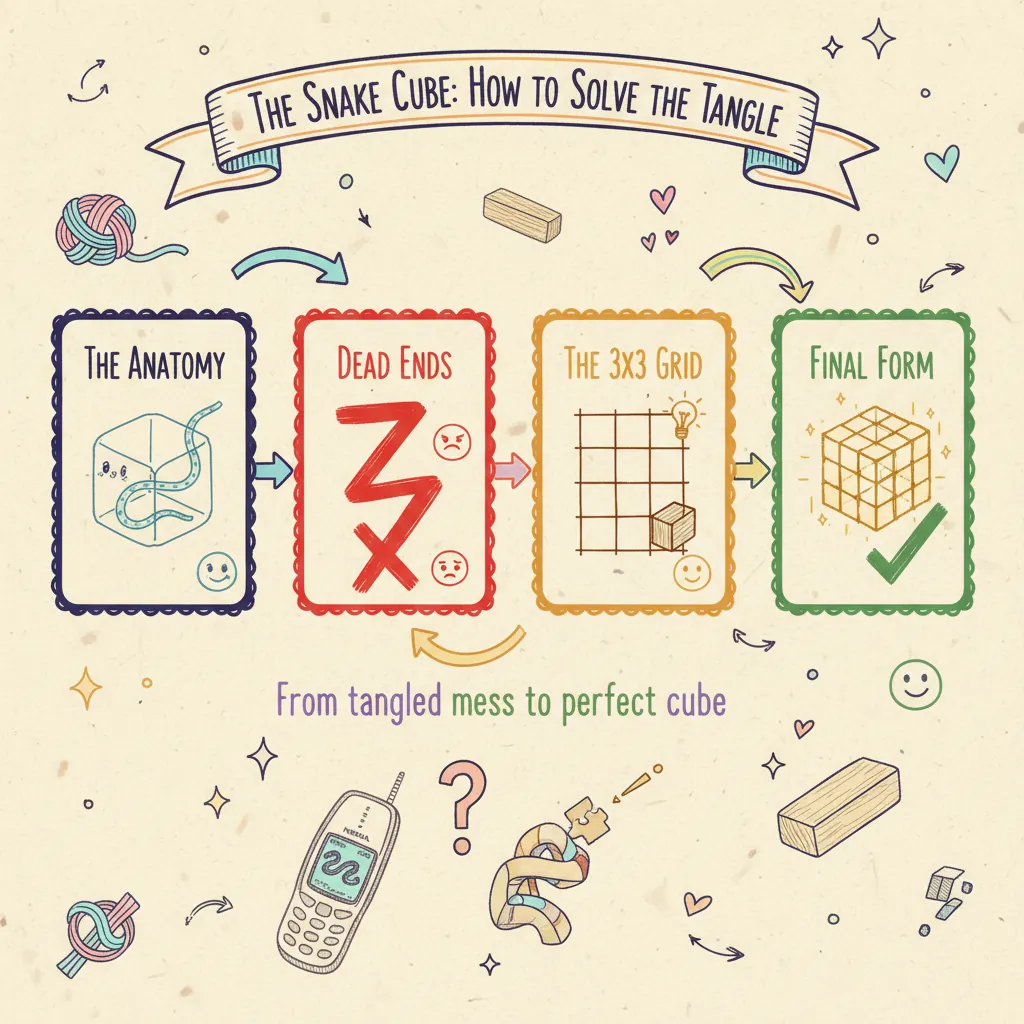
The first time I picked up a snake cube, I was sitting in a terminal at O’Hare with forty minutes to kill. It looked like a simple string of 27 wooden blocks, connected by a piece of elastic that had seen better days. I figured I’d have it back in a cube before the pre-boarding announcement. Two hours later, somewhere over Nebraska, I was still staring at a jagged wooden “Z” that refused to cooperate.
Solving a snake cube is less about seeing the next turn and more about identifying the “dead ends” before you reach them. Most people fail because they focus on the immediate connection rather than the final 3x3x3 footprint. After testing over 200 mechanical puzzles, from simple wire tangles to complex sequential discovery boxes, I’ve realized the snake cube is the ultimate test of “spatial honesty.” You can’t fake your way through it.
My thesis is simple: the snake cube isn’t a math problem; it’s a structural one. If you treat it like a Rubik’s Cube, you’ll lose. If you treat it like a game of digitally relive the classic Nokia era where you can’t touch your own tail, you’re halfway to the solution.
The Anatomy of a Tangled Mess
Before you start twisting, look at what you’re actually holding. A standard snake cube consists of 27 small cubes. These aren’t just random blocks; they are a mix of “straight” pieces and “elbow” pieces. The elastic cord runs through the center, and its tension is the only thing keeping the whole thing from becoming a pile of kindling.
I’ve handled versions where the elastic was so tight it felt like it would snap your thumb, and others so loose the cube would collapse under its own weight. The sweet spot is a tension that allows a 90-degree turn with a distinct “thump” but holds the shape once placed. When you’re dealing with mechanisms that require a specific sequence of moves, that tactile feedback is your best friend.
A snake cube is essentially a Hamiltonian path problem. In layman’s terms, you are trying to visit every point in a 3×3 grid using a single, non-intersecting line. The catch? The line is already pre-bent. You aren’t choosing where to turn; the cube has already decided that for you. Your only job is to decide which way that turn faces.
Why Your Intuition is Failing You
Most beginners start at one end and try to “wrap” the snake around itself. This is the fastest way to end up with a leftover tail of three blocks that have nowhere to go. The problem is that the snake cube has a very specific “parity.”
If you look at the sequence of blocks, you’ll notice some sections have three cubes in a straight line, while others turn immediately. The “straights” are the most restrictive. They dictate exactly where the next turn must happen. If you place a straight section along the edge of your 3×3 footprint, you’ve already limited your options for the next two moves.
I’ve found that the most successful solvers are the ones who look for the “corners” first. In a 3x3x3 cube, there are eight corners. Your snake must pass through all of them. If you can identify which parts of the chain must be corners, the rest of the puzzle starts to solve itself. It’s similar to how transparent challenges that show the internal mechanism allow you to see the logic before you apply the force.
The Step-by-Step Anatomy of the 3x3x3 Solve
If you’re staring at a pile of blocks right now, stop. Lay the snake out flat. You need to identify the “head” and the “tail.” While they look identical, one end usually leads into a sequence that is much easier to manage.
- The Foundation: Start by forming a 2×2 square at one corner. This usually involves the first six or seven blocks. If you can’t get a solid 2×2 base, you’re starting from the wrong end.
- The First Layer: Once you have your 2×2 base, the snake will naturally want to “climb.” Let it. You’re looking to complete the first 3×3 layer.
- The Snake’s Coil: This is where most people mess up. As you move to the second layer, the snake must zig-zag. If you find yourself with a straight section of three blocks, it must lie along one of the faces of the cube. It cannot go through the center unless it’s the very middle block.
- The Final Three: The last three blocks are the “check.” If they don’t fold perfectly into the remaining gap, you made a wrong turn about ten moves ago. Don’t just force them. Backtrack.
I once spent forty-five minutes trying to force the last two blocks of a wooden snake into a gap that was clearly too small. It was a lesson in humility. The wood has a slight warmth to it, but it doesn’t compress. If it doesn’t fit, you’re wrong. Period.
Metal vs. Wood: Which Material Teaches You More?
While the classic snake cube is almost always wood, the logic of the solve carries over to other materials. I often tell people to start with wood because the friction helps hold the pieces in place while you’re thinking. However, if you want to sharpen your logic, metal is the way to go.
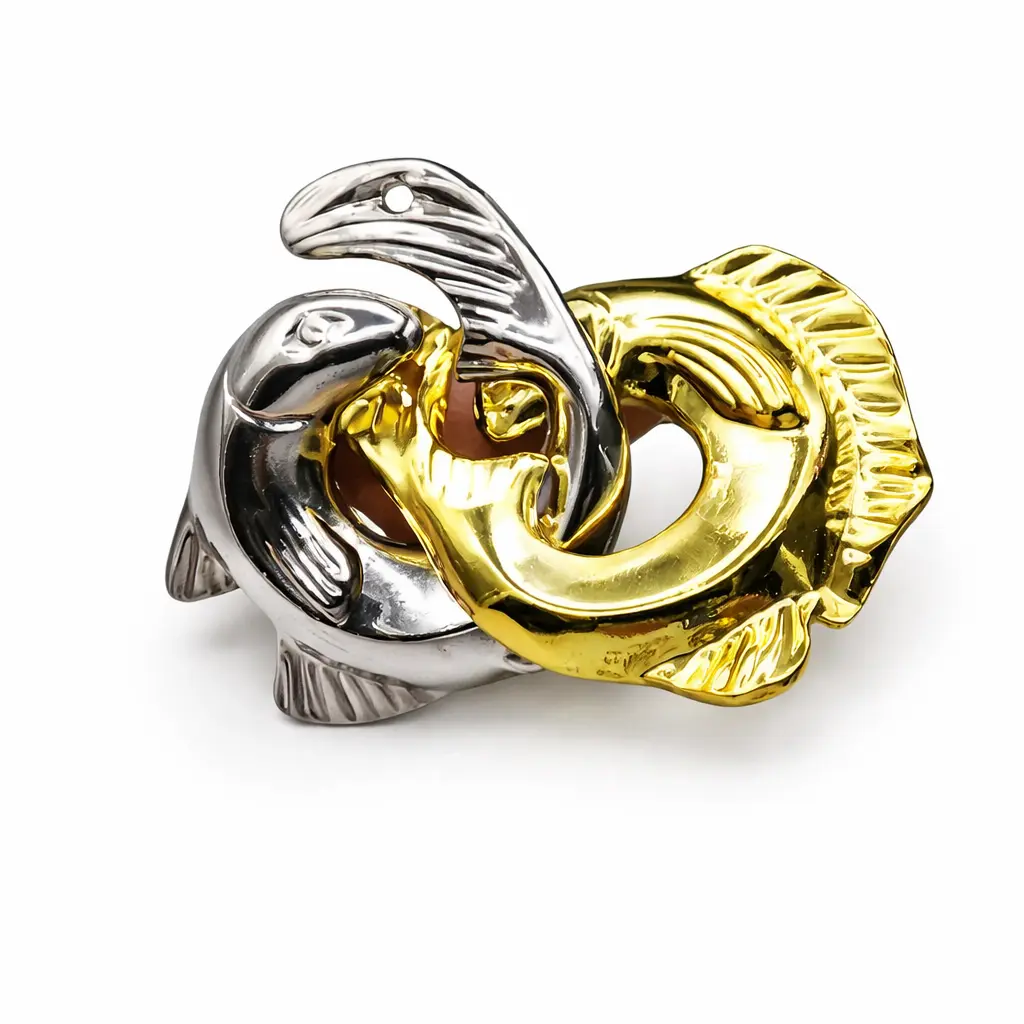
Metal puzzles don’t hide their secrets. They are cold, precise, and unforgiving. When I’m not wrestling with a snake, I’m usually fiddling with something like the Cast Keyhole Gold & Silver ($13.99). It’s a different kind of challenge, but it uses the same spatial reasoning.
Cast Keyhole Gold & Silver

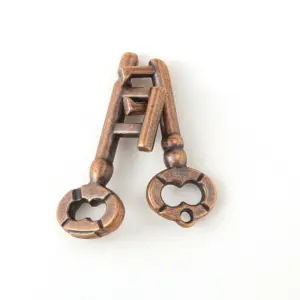
The Cast Keyhole Gold & Silver is what I call a “pocket-sized ego check.” At $13.99, it’s an affordable way to realize that your eyes are easily deceived. It consists of two interlocking pieces—one gold, one silver—that look like they should just slide apart. They don’t. The flat surfaces hide an internal 3D maze that requires you to visualize the interior without being able to see it. It’s 75mm of polished frustration that fits perfectly in one hand. I’ve had this on my desk for three weeks, and I still find the “re-assembly” more challenging than the “disassembly.” It rewards the same patience you need for the snake cube: slow, deliberate movements over brute force.
If you enjoy the “locked in” feeling of a solved snake, you might also like the Gold Silver Double Fish Metal Puzzle ($13.99). It’s a palm-friendly 60mm format that focuses on calm problem-solving. It’s a great piece for old-school gaming breaks when your brain needs a different kind of stimulation.
The Peak Insight: The “Two-Step Rule”
After solving dozens of these, I noticed a pattern that nobody seems to talk about in the instruction manuals. I call it the Two-Step Rule.
In a 3x3x3 snake cube, you can almost never make three consecutive moves in the same plane without hitting a wall or trapping yourself. Think of it like this: if you turn left, then turn up, your next move should probably be a “forward” or “backward” move relative to your original position.
If you keep your turns rotating through all three axes (X, Y, and Z), you’re much more likely to fill the volume of the cube efficiently. The moment you make two turns that keep you on the same “face” of the cube, you’re likely creating a void in the center that you won’t be able to fill later.
This is the “Peak Moment” for most solvers. The realization that you aren’t building a wall; you’re filling a void. If you’re struggling, try to visualize the center block of the 3x3x3 cube. Only one piece of the snake can occupy that spot. If you can identify which block in the chain is the “center,” the rest of the snake must wrap around it like a protective shell.
Graduation Day: Moving Beyond the Snake
Once you’ve mastered the 3x3x3, you might feel like a genius. Enjoy it for a minute, then realize there are 4x4x4 versions and even “cursed” snakes that have unique sequences. If the snake cube has become muscle memory for you, it’s time to move on to more complex joinery.
The Chinese have been doing this for millennia. Long before plastic elastic-cord puzzles, they had the Luban Lock.
Luban Lock Set 9 Piece
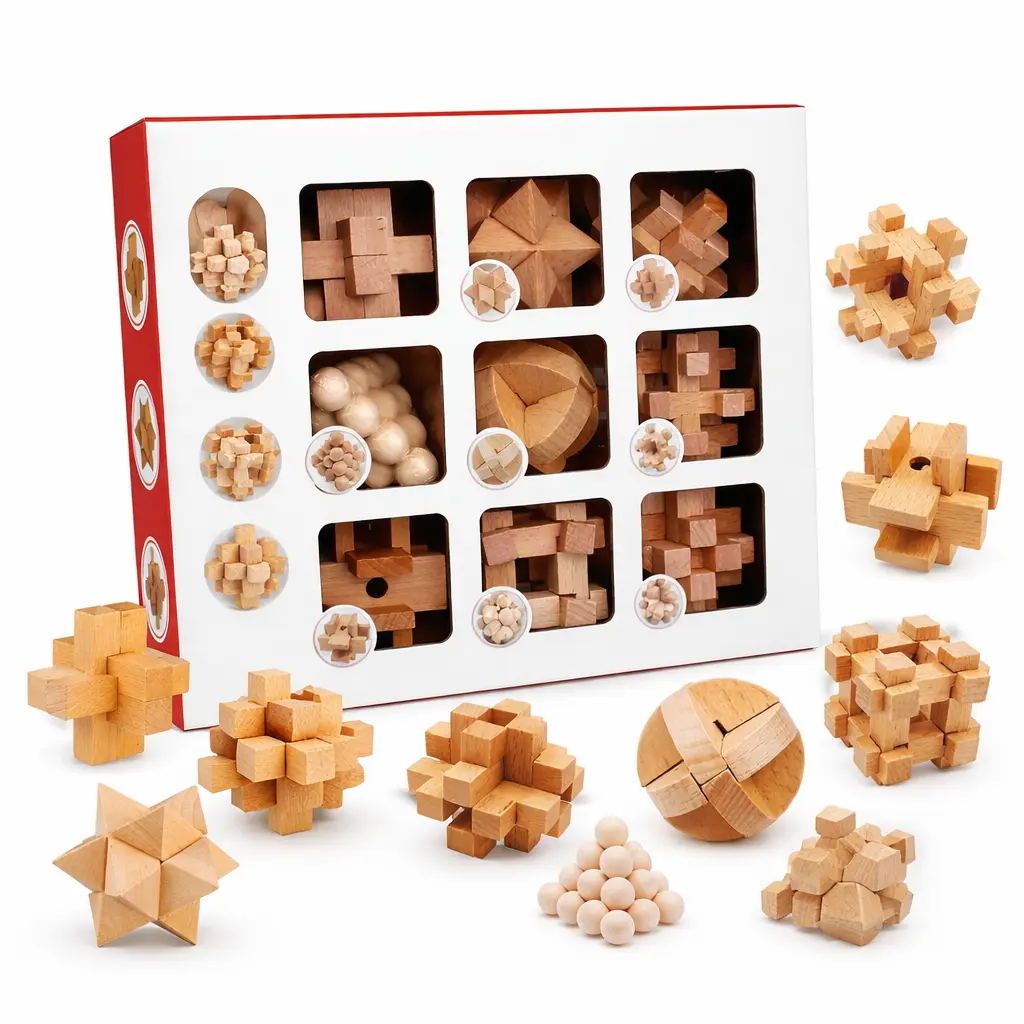
The Luban Lock Set 9 Piece ($39.99) is essentially the PhD program for snake cube survivors. While the snake cube uses an elastic cord to keep things together, these puzzles use nothing but geometry. Based on 2,500-year-old mortise-and-tenon techniques, each of the nine puzzles in this set requires you to find the one “key” piece that allows the rest to slide apart. It’s wood-on-wood logic at its finest. I handed one of these to a mechanical engineer friend, and it took him twenty minutes just to find the first move. At roughly forty dollars for the set, it’s the best value for anyone who wants to understand how shapes lock together without the “crutch” of a string.
If you find the Luban locks too abstract, you might prefer something with a more literal goal. For instance, the

Galleon Ship 3D Wooden Puzzle Model Kit (check current pricing) offers a different type of satisfaction. Instead of figuring out how it fits, you’re following a complex blueprint to create a desktop replica of a historic vessel. It’s less of a “brain teaser” and more of a “focus builder.”
The Complexity of Choice: Metal Alternatives
Sometimes you don’t want a long, winding snake. Sometimes you want a single, dense object that feels like a piece of jewelry until it ruins your afternoon. This is where the “Cast” series of metal puzzles excels.
5 Piece Cast Spiral Metal Puzzle
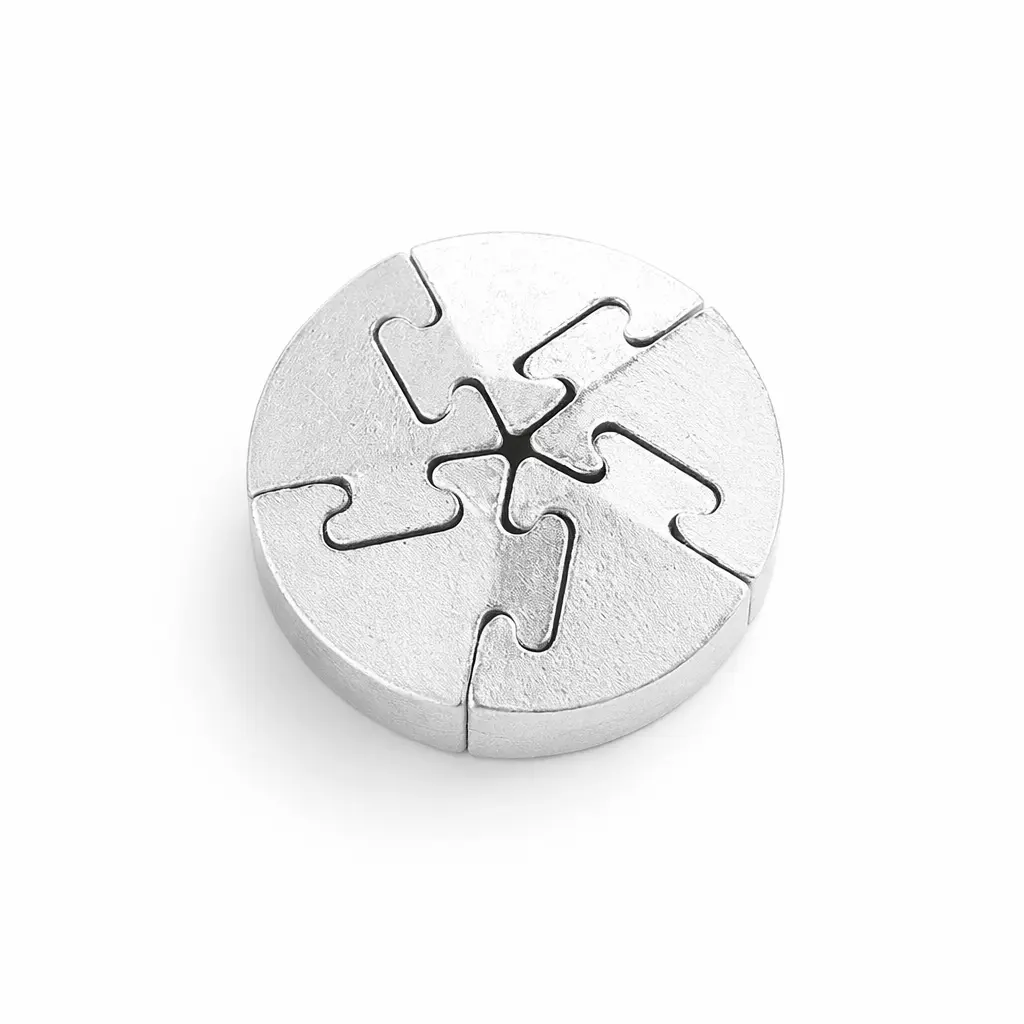
The 5 Piece Cast Spiral Metal Puzzle (check current pricing) is a masterclass in deception. It’s a 4cm disc made of five precision-machined wedges. When it’s assembled, it looks like a solid piece of alloy. The trick is finding the one wedge that has the clearance to move. Once it’s apart, the real nightmare begins. Because the pieces are nearly identical, putting it back together is a lesson in permutation. I’ve solved this in five minutes before, and I’ve also spent an hour staring at it in total confusion. It’s the perfect desk toy for someone who likes magnetic desk toys that snap into place but wants something with a bit more “bite.”
For those who want something even more aesthetically pleasing, there’s the
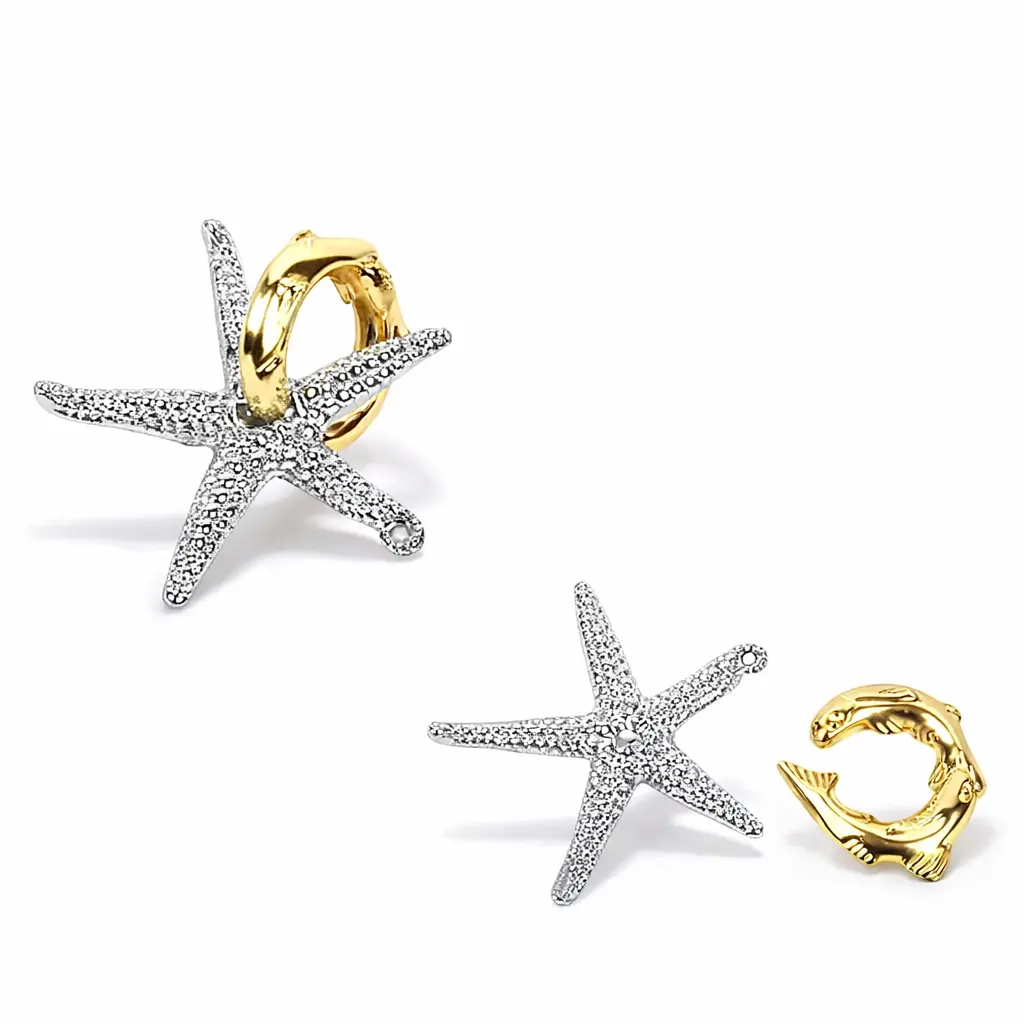
Metal Starfish Puzzle Ring — $13.99
Metal Starfish Puzzle Ring ($13.99). It looks like a piece of modern art—a chrome starfish caught on a gold ring—but the logic required to separate them is surprisingly deep. It’s the kind of thing a coworker picks up off your desk and then can’t put down for the rest of the meeting.
The Builder’s Pivot: From Solving to Creating
Not every puzzle needs to be a “how do I get this apart?” challenge. Sometimes the solve is in the assembly. If you’ve spent too much time frustrated by the snake’s elastic cord, you might find solace in a high-quality 3D kit.
DIY Castle Music Box Night Light Shadow Box Kit

The DIY Castle Music Box Night Light Shadow Box Kit ($33.99) is a 28-piece build that results in something genuinely beautiful. It’s not a “puzzle” in the sense that you’re searching for a hidden trick, but the laser-cut panels require a level of precision that will feel familiar to any snake cube enthusiast. It features six LED color modes and an integrated mechanical music box. I built one of these with my niece, and the “click” of the panels fitting together was just as satisfying as finally coiling that wooden snake. It’s a therapeutic break from the high-stress world of brain teasers.
If you like the mechanical aspect but want something with a bit more “edge,” the
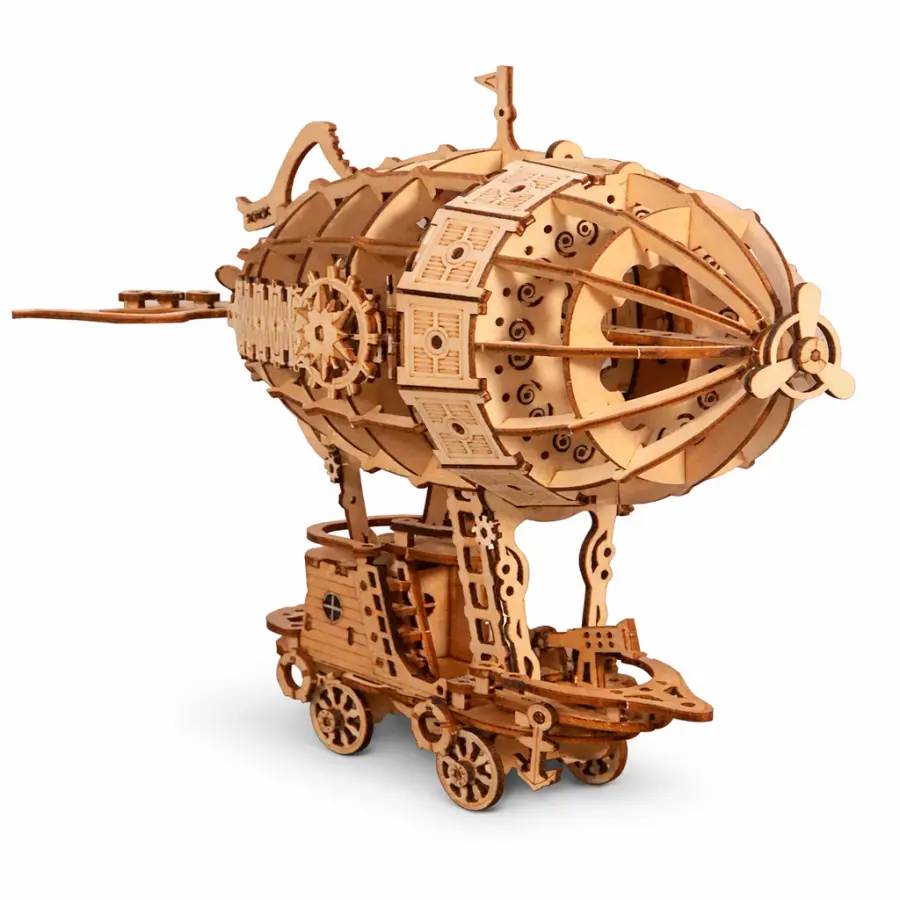
Steampunk Airship 3D Wooden Puzzle ($26.66) or the

3D Wooden Cello Puzzle Model Kit ($29.99) are excellent choices. The cello, in particular, is a great nod to the history of craftsmanship, and research has shown that these types of visual-spatial puzzles can actually support cognitive health as we age.
Finally, if you’re looking for a quick metal fix, the
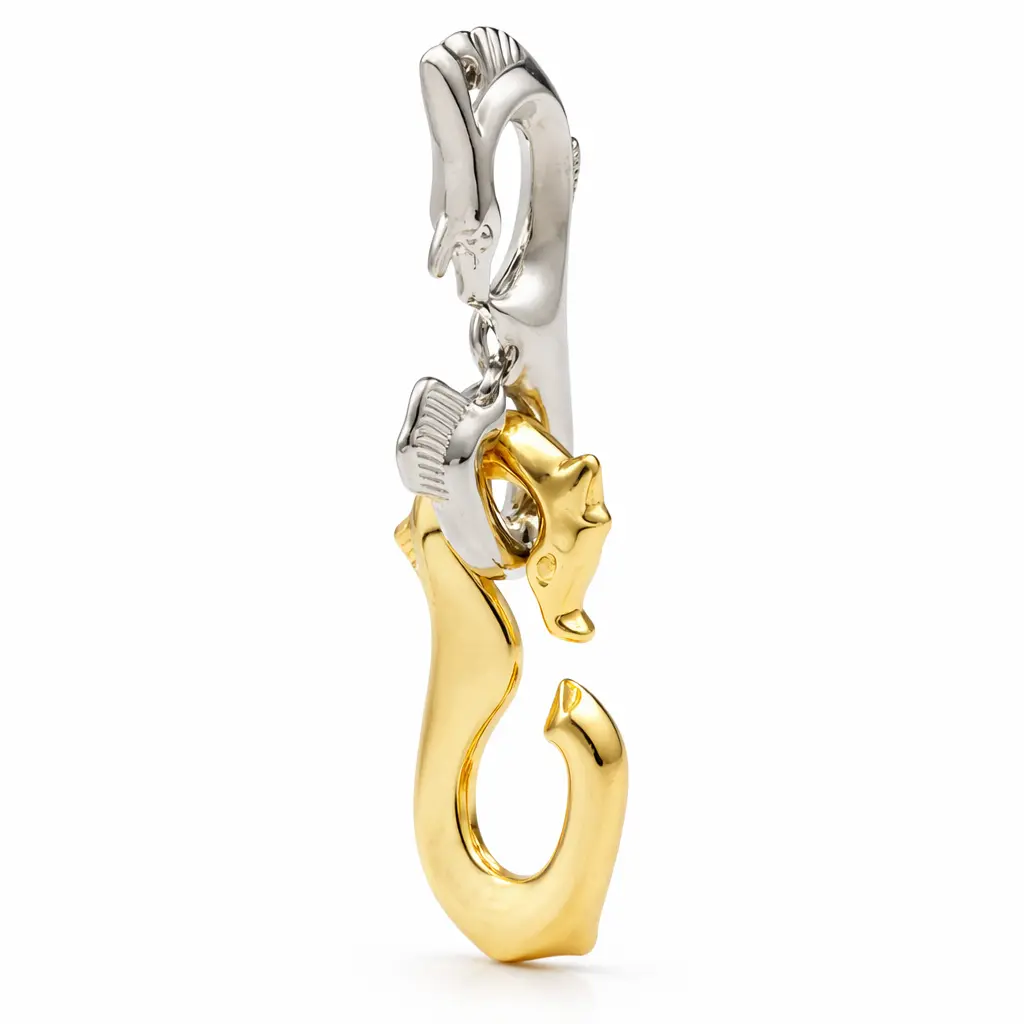
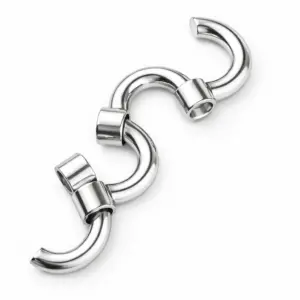
Dual Seahorse Gold & Silver Brain Teaser ($14.99) uses a hidden threaded mechanism that is incredibly satisfying to “unscrew” once you find the path.
FAQ: Everything You’re Afraid to Ask About the Snake
How do I know if I’m starting from the right end?
Most snake cubes are symmetrical in theory, but in practice, one end often leads into a “straight-elbow-elbow” sequence that is much easier to visualize as a corner. If you’ve tried one end five times and keep failing, flip it. According to Wikipedia’s entry on the snake cube, while they look identical, the sequence of turns is what defines the difficulty. I always suggest starting from the end that has a “straight” section of three blocks early on—it helps anchor your first layer.
My elastic cord feels like it’s going to snap. Is it supposed to be this tight?
Tension varies wildly by manufacturer. A high-quality wood or plastic snake should have enough tension to hold a shape against gravity but not so much that it leaves indentations in your fingers. If it feels like it’s going to snap, it might be a cheap balsa wood version. Real enthusiasts often graduate to magnetic desk toys that snap into place because they offer that satisfying “click” without the risk of a snapped cord.
Is every 3x3x3 snake cube the same?
No. This is a common misconception. While the goal is always a 3x3x3 cube, the internal sequence of “straights” and “elbows” can vary. There are actually several different “species” of snake cubes. If you find a solution online and it doesn’t work for your cube, it’s not because you’re doing it wrong—it’s because your snake is “built different.” This is why understanding the Hamiltonian path logic is more important than memorizing steps.
What’s the record for solving one?
Speed-cubers can do these in under three seconds. For the rest of us, anything under two minutes is “expert” territory. If it takes you twenty minutes, you’re in the “smart consumer” bracket. If it takes you two days, you’re a “persistent hobbyist.” All are valid.
Can I make other shapes besides a cube?
Absolutely. Just like the Rubik’s Snake (invented by Ernő Rubik himself), you can form dogs, swans, and geometric zig-zags. However, the “snake cube” is specifically designed to have exactly one solution that results in a perfect 3x3x3 solid. Other shapes are just “fiddling.”
Is this a good gift for a 10-year-old?
It depends on the 10-year-old. It requires a high degree of frustration tolerance. If they like Lego or Minecraft, they’ll probably enjoy the spatial aspect. If they prefer fast-paced games, they might throw it across the room. For younger kids, I often recommend starting with tactile logic puzzles that have a more obvious “win” state.
How do I clean a wooden snake cube?
Don’t use water. It will swell the wood and ruin the tolerances. Use a slightly damp microfiber cloth and immediately dry it. If the wood feels “scratchy,” a tiny bit of beeswax or mineral oil on a rag can restore the finish. Just be careful not to get it on the elastic cord.
Why is it called a “Snake” cube?
Because when it’s unsolved, it’s a long, articulated line that looks like a snake. When it’s solved, it’s a “coiled” cube. It’s a bit of marketing flair from the 1980s that stuck.
My snake has 64 cubes. Is that normal?
That’s a 4x4x4 version. The logic is the same, but the difficulty is exponential. You’re no longer looking for one center block; you’re looking for a 2×2 core. I’d stay away from those until you can solve the 3×3 blindfolded.
Can I fix a broken elastic cord?
You can, but it’s a nightmare. You need a long needle, some high-tension shock cord, and the patience of a saint. Most people just buy a new one. At the price point of most wooden puzzles, your time is usually worth more than the replacement cost.
Does solving these actually make you smarter?
“Smarter” is a loaded word. Does it improve your visuospatial reasoning? Yes. Does it help you think three moves ahead? Yes. Does it help you find your car keys? Probably not. It’s a specific mental muscle, much like the ones used in visual-spatial puzzles.
What’s the best material for a beginner?
Wood. It’s forgiving, it has a nice weight, and it doesn’t slide around as much as plastic. Metal is for when you want a challenge that feels like a piece of engineering.
What 40 Hours of Wood and Frustration Actually Taught Me
The snake cube is a metaphor for most problems in life: if you keep trying the same move and expecting a different result, you’re going to stay tangled. The moment I stopped fighting the wood and started listening to the sequence of the blocks, the puzzle “solved itself.” It wasn’t a victory of force; it was a victory of observation.
If you’re just starting out, don’t rush. Feel the blocks. Notice where they want to go. If you find that the snake cube has whetted your appetite for mechanical challenges, skip the plastic junk. Start with something that has some weight to it. The Cast Keyhole Gold & Silver ($13.99) is my top recommendation for a “next step.” It moves the challenge from a string of blocks to a hidden internal maze, and it’s a much more satisfying object to keep on your desk.
Whether you’re coiling a wooden snake or unlinking a pair of seahorses, the goal is the same: to find the order in the chaos. If you find that this kind of spatial reasoning clicks for you, our collection of magnetic desk toys offers a modern twist on these classic principles.
The snake is waiting. Don’t let it win.