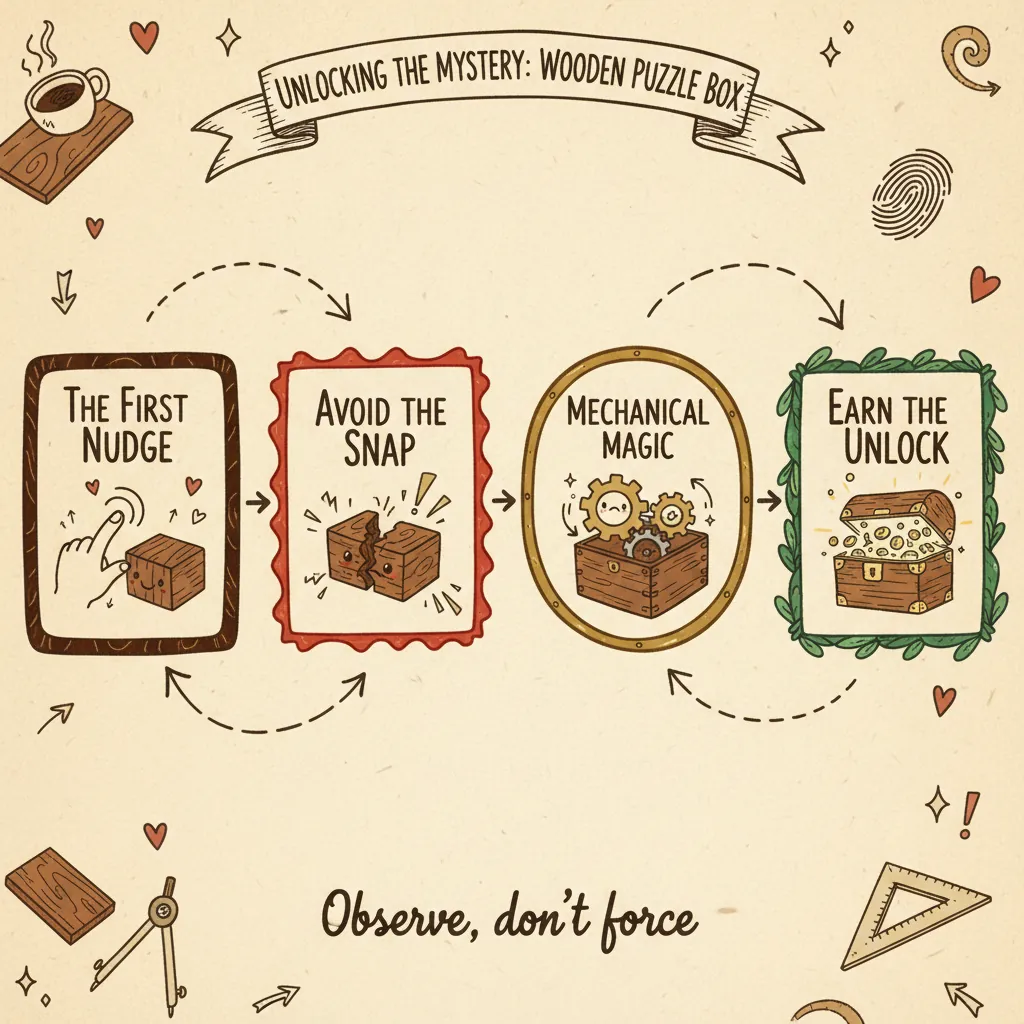
The third time the brass pin slipped past my thumb, I set the box down and made coffee. My office was quiet, but my head was loud. I had been staring at a seamless block of walnut for forty minutes, convinced the maker had simply glued it shut as a cruel joke. Then, as I reached for my mug, I saw it. A grain line on the corner didn’t quite line up with the rest. I gave it a lateral nudge—no more than a millimeter—and the entire side panel sighed open.
That single millimeter is why we do this. A wooden puzzle box isn’t just a container; it’s a contract between the maker and the solver that rewards observation over force. In twenty years of reviewing mechanical enigmas, I’ve learned that wood is the most honest medium. It expands with humidity, warms to the touch, and tells you exactly when you’re being too aggressive. If you try to bully a wooden joint, it snaps. If you listen to it, it reveals secrets that have been part of human culture for centuries.
The current market is flooded with cheap, laser-cut kits that look great in photos but feel like sandpaper in your hands. I’ve spent the last few months testing the latest batch of “secret” boxes and mechanical builds to see which ones actually deserve a spot on your shelf. My thesis is simple: the best puzzles punish impatience. If you’re looking for a quick hit of dopamine, buy a lottery ticket. If you want to earn your satisfaction, you look for the grain.
The Geometry of Frustration: Why We Start with the Lock
Most people think a puzzle box needs a key. They’re wrong. The most sophisticated boxes use the structure itself as the locking mechanism. This isn’t a new idea. Long before modern CAD software, master carpenters were using joinery to create “impossible” objects.
Luban Lock Set 9 Piece
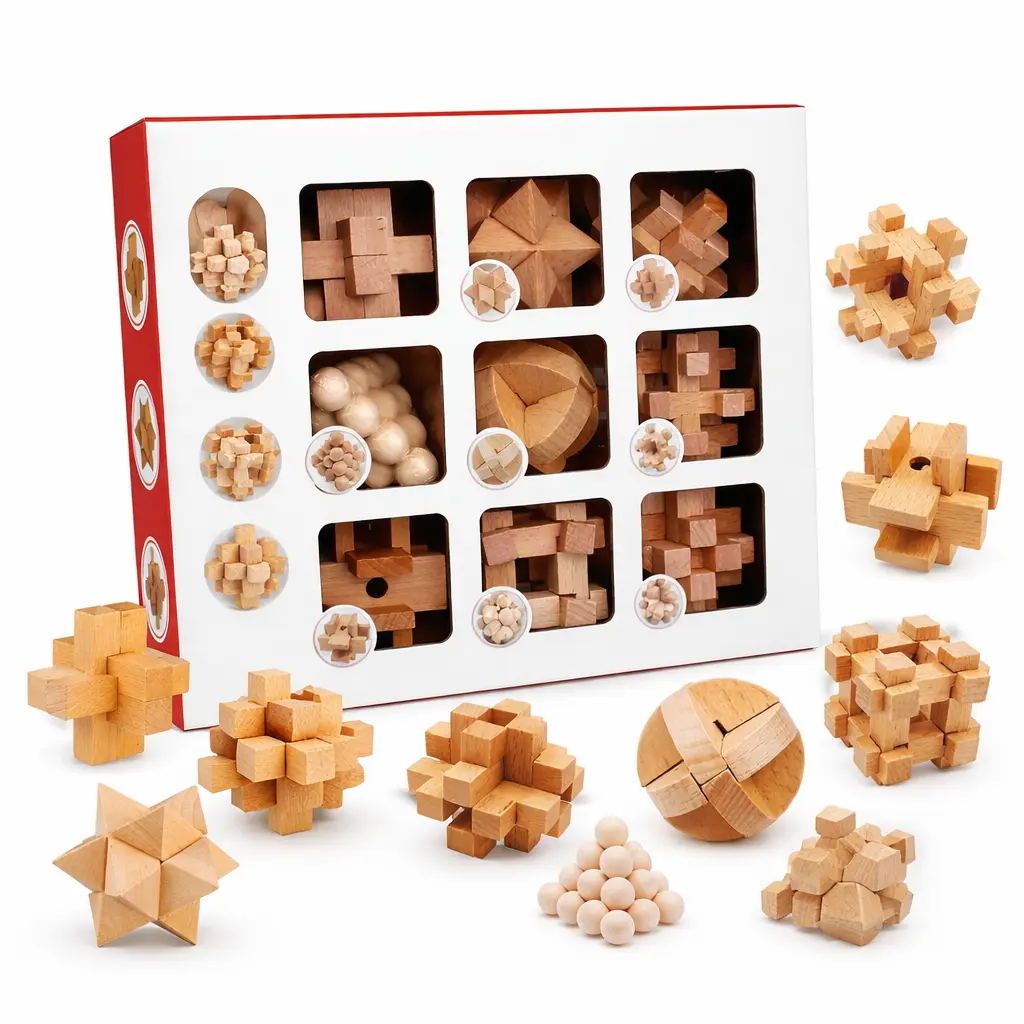
The $39.99 Luban Lock Set is essentially a crash course in 2,500 years of Chinese engineering. When I first pulled these out of the box, I expected the standard “burr” experience. Instead, I found a masterclass in mortise-and-tenon joinery. These aren’t just toys; they are recreations of the tests Lu Ban allegedly gave his students around 500 BCE.
Each of the nine pieces in this set relies on the friction of wood against wood. There are no nails and certainly no glue. The challenge is purely spatial. I handed the “six-way” cross to a friend who handles logistics for a living; he had it apart in three minutes and spent the next forty-five trying to remember which notched bar slid in third. That’s the beauty of the Luban design—it’s easy to destroy, but rebuilding it requires you to internalize the logic of the maker. For under forty dollars, you’re getting a collection that demonstrates the cognitive benefits most puzzle sellers won’t mention regarding long-term spatial memory.
Why Your Fingers Are Your Worst Enemy
The biggest mistake I see beginners make is trying to “think” their way through a box. They stare at it. They try to visualize the internals. But wood is a tactile medium. You have to feel for the tolerances.
When you hold a well-made Six-Piece Burr, your eyes are almost secondary. Your fingertips will find the piece that has a fraction of a millimeter more “give” than the others.
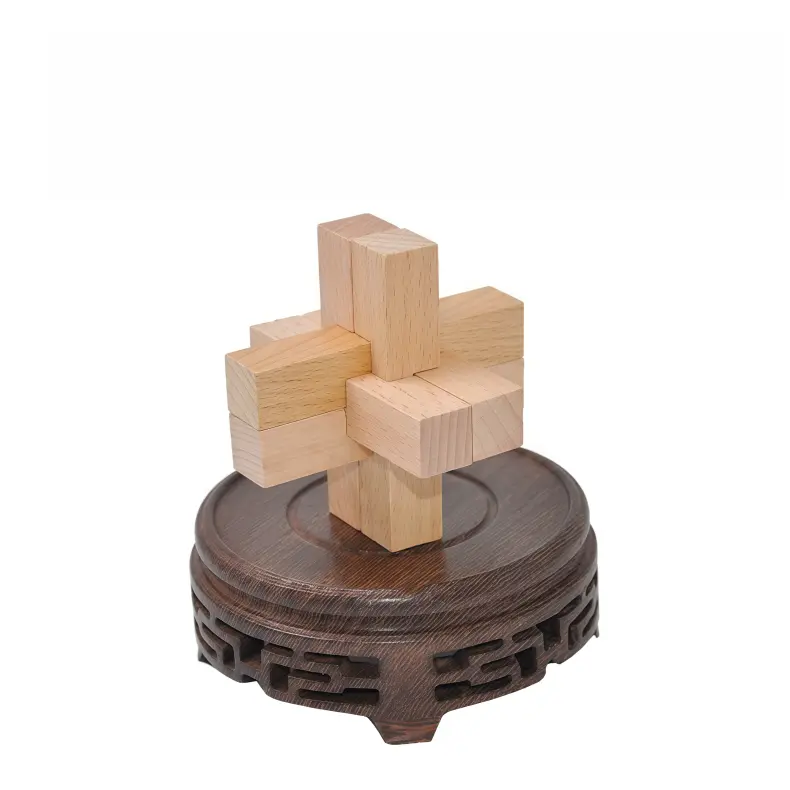
Six-Piece Burr — $17.99
I’ve had this specific burr on my desk for three weeks, and it’s become my go-to fidget. Unlike plastic cubes that click with a hollow, cheap sound, this hardwood interlocking design has a muted, organic thud. It whispers rather than shouts. It’s a screen-free brain teaser that forces a mental reset. If you find yourself stuck on a work project, ten minutes of trying to realign these notched bars is more effective than a third cup of espresso.
Sometimes, the complexity is even more stripped down. The 6 Piece Wooden Puzzle Key is a perfect example of minimalist frustration.
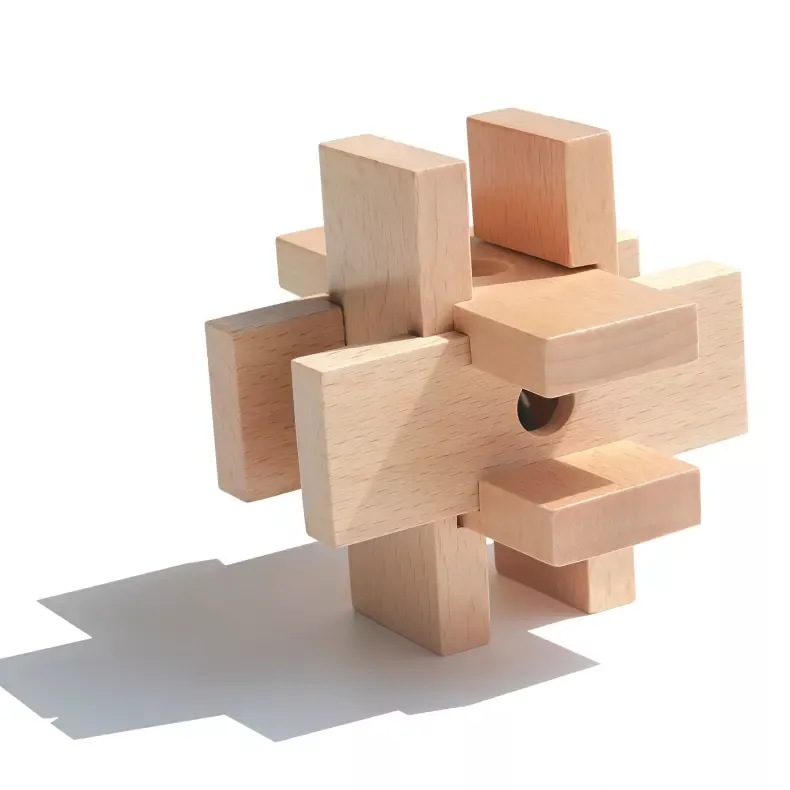
6 Piece Wooden Puzzle Key — $12.99
It’s priced at just under thirteen dollars, making it an easy add-on, but don’t let the low piece count fool you. It’s a “key” in name only; the real key is realizing that force is your enemy. I’ve seen people try to yank these apart, only to realize that the solution is a gentle, rotating slide. It’s a physical manifestation of the sequential discovery boxes that high-end collectors pay hundreds for, but at a fraction of the cost.
The Architecture of the Secret: Mechanical 3D Kits
In the last five years, the “puzzle box” category has expanded to include mechanical kits. These are boxes that you build yourself, which some purists argue isn’t a “puzzle.” I disagree. Building a mechanical lock from 100+ pieces is the ultimate way to understand how to break one.
Mechanical 3D Wooden Globe Puzzle

The $28.88 Mechanical 3D Wooden Globe is a standout because it moves the puzzle from the internal mechanism to the external assembly. You aren’t just solving a box; you’re building a gear-drive system. I spent a rainy Saturday afternoon on this one. The laser-cut parts are precise, but you still need a steady hand.
The gear-drive system is the star here. Watching flat plywood transform into a rotating, three-dimensional map is a genuine “eureka” moment. It’s a different kind of challenge—one that focuses on following complex instructions and understanding mechanical advantage. If you’ve ever wondered about the hidden mechanics that leave most people scratching their heads, this kit is your blueprint. The finish is a natural, eco-friendly basswood that takes stain well if you want a more vintage look, though I prefer the raw, “engineered” aesthetic.
The Physics of the Snap-Fit: Engineering in Miniature
We often overlook the sheer engineering required to make wood behave like metal. In a mechanical puzzle, the tolerances are everything. If a piece is off by a hair, the whole thing binds.
3D Wooden Mechanical Pistol Kit

For $29.99, this kit is less about “solving” and more about the tactile feedback of machinery. It’s a 68-piece build that results in a functional fidget toy. The internals use rubber bands to simulate the rack of a slide and the break of a trigger.
I’ll be honest: I tossed the instructions after step three because I wanted to see if the logic of the sear and hammer made sense on its own. It did. There’s a deeply satisfying “click-clack” that occurs when you pull the trigger. It’s the same principle as those heavy metal pens people click in meetings, but with the warmth of wood. It’s a great way to understand the brain-boosting properties of these wooden challenges without the frustration of a “stuck” box.
Why Two Music Movements Matter
Most wooden music boxes are an afterthought—a cheap wind-up tucked into a pretty shell. But when a maker pays attention to the acoustics of the wood, the result is something else entirely.
Wooden Ferris Wheel Music Box Kit
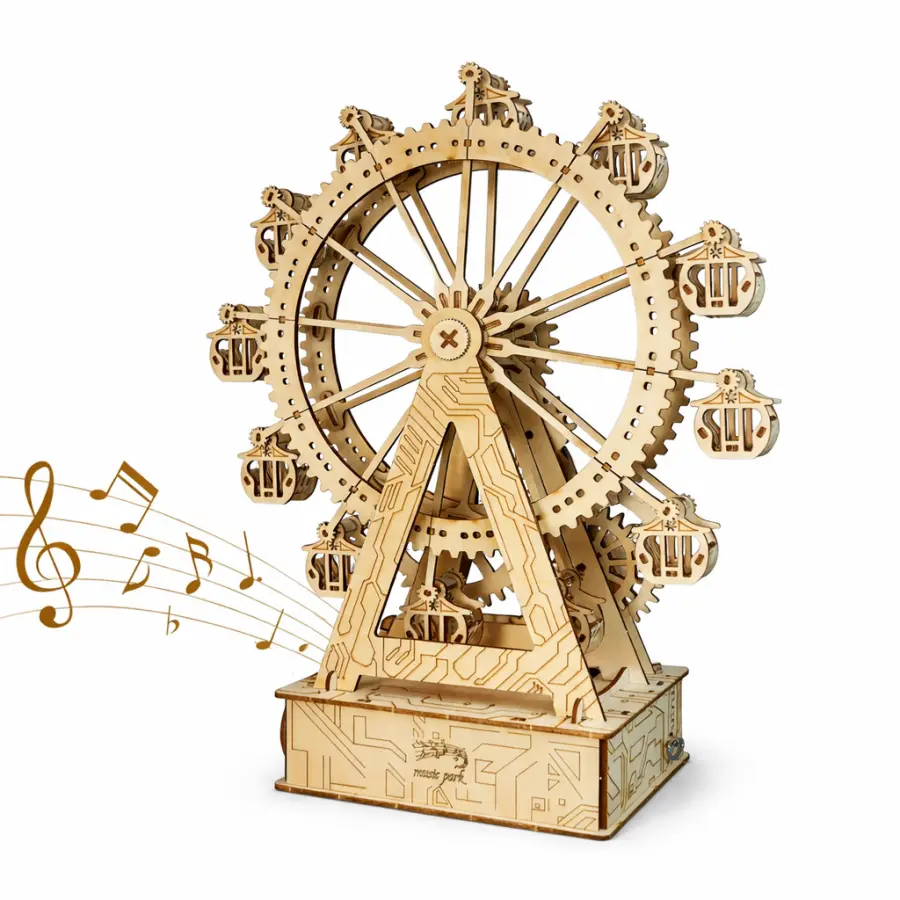
The $59.99 Ferris Wheel kit is the most expensive item on this list, and it’s also the most complex. Most boxes use a single music movement. This one uses two. This creates a layered, orchestral sound that you simply don’t get from a single steel comb.
The build is a tribute to George Ferris’s 1893 World’s Fair marvel. As you crank the handle, the wheel rotates while the hidden drawer in the base stays tucked away—waiting for someone to find the release. It took me about four hours to assemble. The trick is in the gears; if you don’t wax them (use a standard tea light candle), the movement will stutter. It’s a lesson in maintenance that applies to all mechanical puzzles. It’s a sophisticated piece of home decor that happens to be a brain teaser in disguise.
The Maritime Tradition: Ships in a Box
There is a long history of sailors carving puzzles from scrap wood during long voyages. This “maritime” style of puzzling usually involves complex rigging and hidden compartments.
Galleon Ship 3D Wooden Puzzle Model Kit
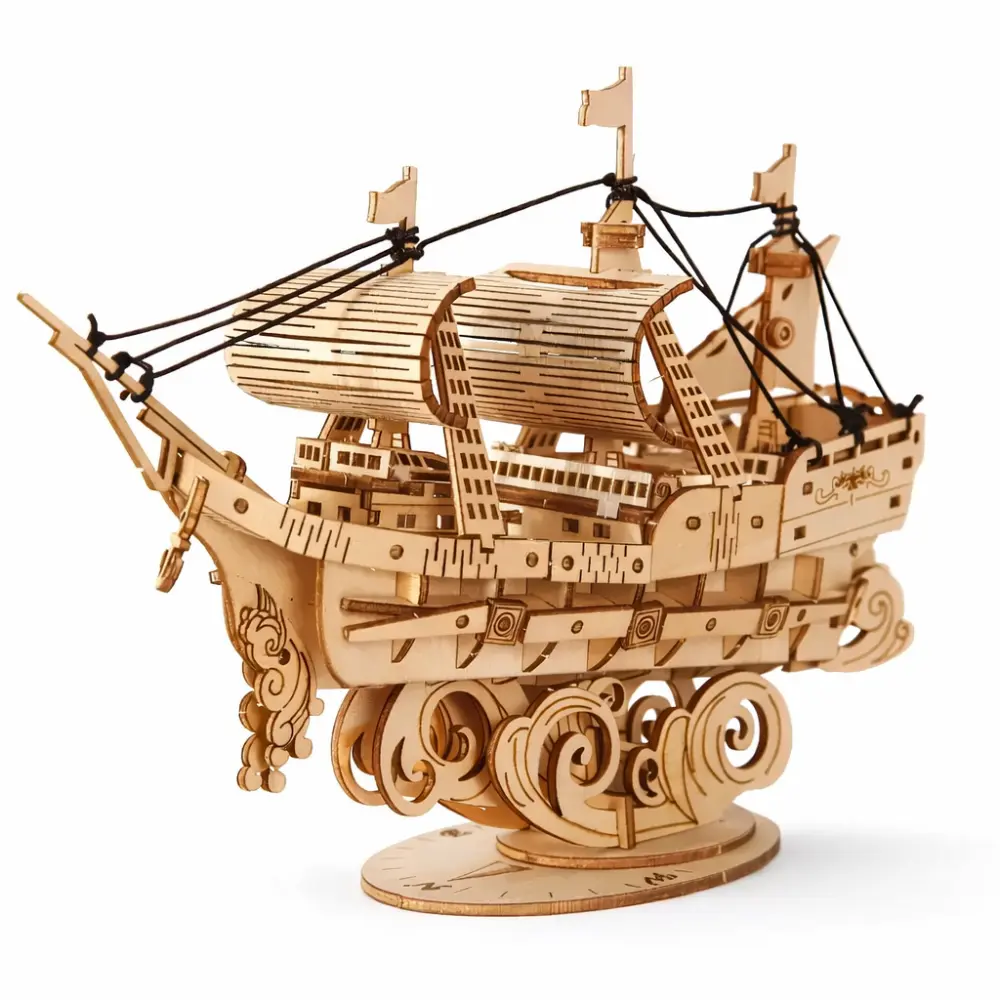
The Galleon Ship kit is a desktop replica of the vessels that dominated trade routes for 150 years. This isn’t a “box” in the traditional sense, but the assembly is a puzzle of the highest order. You are recreating the transition from the carrack to the faster, more stable galleon.
The snap-fit plywood pieces are surprisingly sturdy. I’ve had this on my shelf for months, and even with the rigging stretched taut, the masts haven’t bowed. It’s a deep-dive into maritime history through assembly, requiring a level of fine motor skill that most modern hobbies ignore. For those who find the ghost xtreme challenges too abstract, building a ship provides a concrete, historical context for the work.
We see a similar focus on history in the Wooden Sailboat 3D Puzzle.

This 57-piece kit is a bit more accessible than the Galleon. It’s based on the idea that ship models have evolved from ancient Greek artifacts into modern educational tools. It’s a smaller commitment of time, but it still offers that “visuospatial cognition” boost that researchers love to talk about. If you’re feeling burnt out, taking a mental reset with a quick game or building a small model like this can do wonders for your focus.
Fairytales and Friction: The Royal Carriage
Sometimes, a puzzle is about the aesthetic as much as the solve. The Royal Carriage 3D Wooden Puzzle is a perfect example of this.
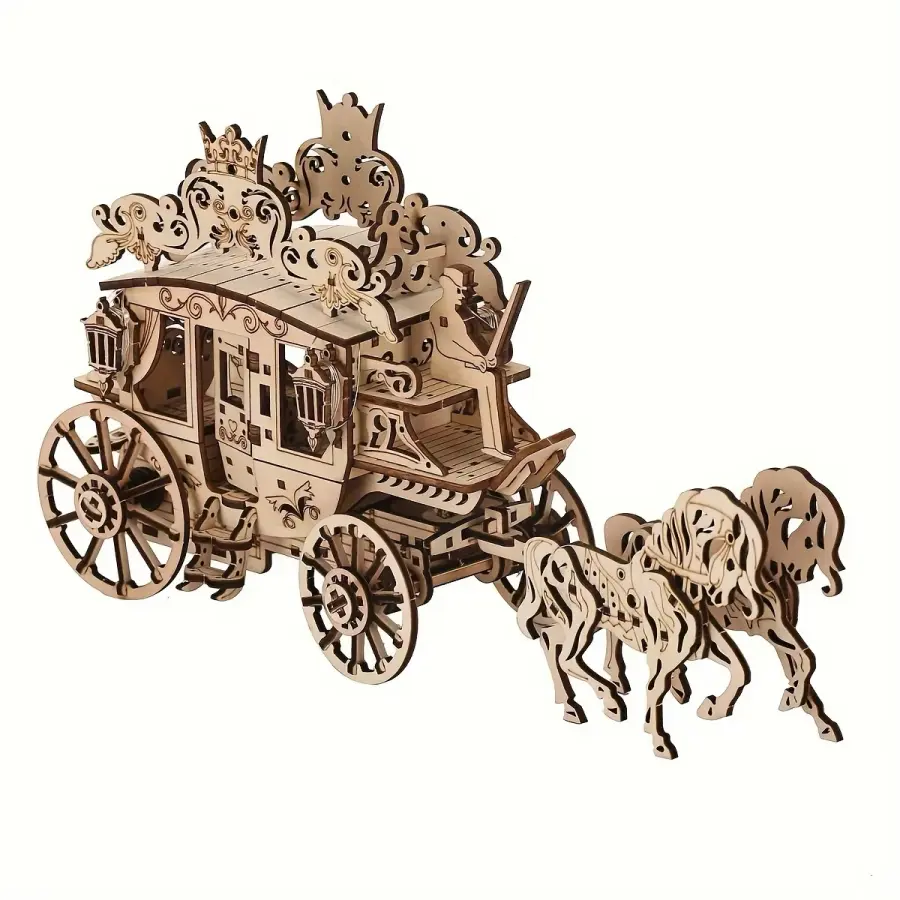
It’s an intermediate build—expect to spend three to five hours on it—but the result is a 11.6-inch long display piece that actually moves. The horses “gallop” as the wheels turn. It’s a mechanical wonder that requires no glue. I found the tolerances on the wheels to be particularly tight; you really have to be precise with your alignment or the carriage will wobble. It’s a great project for shared family solving sessions, as the larger pieces are easier for younger hands to help with, even if the final assembly requires an adult’s patience.
The Luban Square: A Beginner’s Gateway
If you’re intimidated by the 9-piece set I mentioned earlier, the Luban Square Lock is the logical starting point.
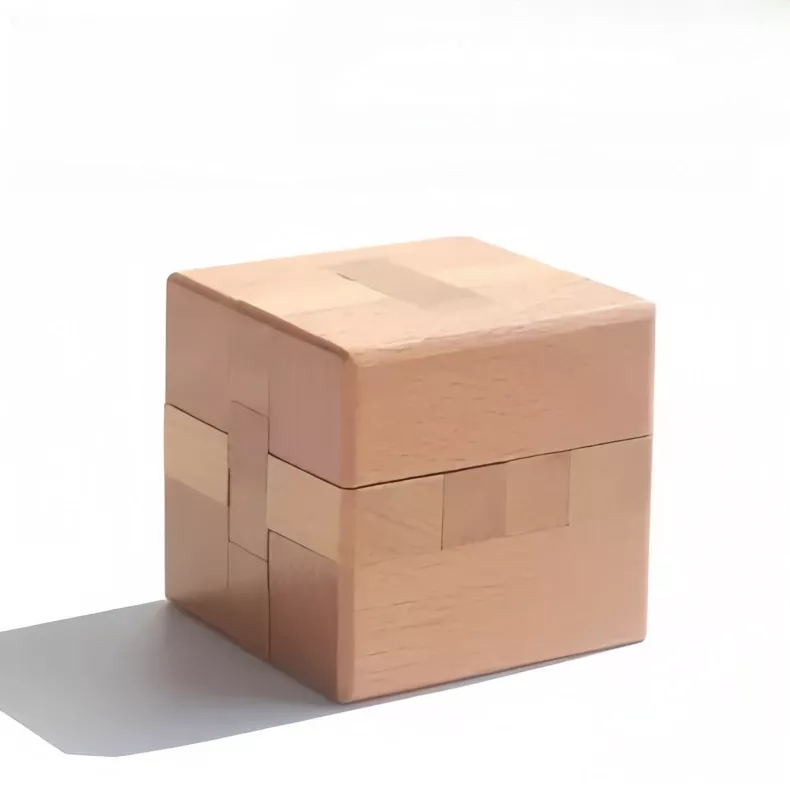
Luban Square Lock — $21.99
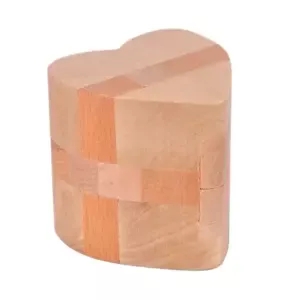
It’s a solid hardwood cube held together by pure mortise-and-tenon joinery. No nails. No glue. Just geometry. It’s the “purest” form of the wooden puzzle box. I keep one of these in my bag for flights. It’s small, silent, and infinitely more satisfying than scrolling through a phone. When you finally slide that last bar into place and the cube becomes a solid, unmoving object, you understand why this design has survived for two millennia. If you need a break from the physical world, you can always pivot to nostalgic digital breaks, but there’s no substitute for the weight of hardwood in your palm.
Frequently Asked Questions About Wooden Puzzle Boxes
What is the best wood for a puzzle box?
In my experience, hardwoods like walnut, maple, and cherry are superior for secret compartment boxes because they hold their shape over time. For 3D kits, high-grade birch or basswood plywood is the standard. Plywood is used because it doesn’t warp as easily with humidity changes, which is crucial for complex gear systems like the Mechanical Globe. If you buy a box made of cheap pine, expect the “secret” panels to stick or become loose within a year.
How do I open a puzzle box without the instructions?
Stop pulling. Most people try to use force when they get frustrated, which is the fastest way to ruin a wooden mechanism. Instead, use “the light touch.” Hold the box gently and tilt it in every direction. Listen for the sound of a sliding pin or a falling marble. Look for “seams” that don’t match the grain. Often, the solution involves a sequential discovery—moving one piece allows a second piece to slide, which eventually releases the lock.
Are wooden puzzles better than metal ones?
They are different tools for different jobs. Metal puzzles, like the Hanayama series, offer tighter tolerances and a different kind of “logic.” However, wood offers a sensory experience that metal can’t match. There is a warmth and a “give” to wood that makes the solve feel more organic. For beginners, wood is often more forgiving. For collectors, a wooden puzzle box is often a work of art as much as a challenge.
My wooden puzzle is stuck. What should I do?
Humidity is the most common culprit. Wood is a living material that expands when it’s damp. If a panel won’t slide, don’t force it. Try moving the puzzle to a drier room or near a dehumidifier for 24 hours. If it’s a kit you built yourself, you likely forgot to wax the joints. A bit of paraffin wax or even a dry bar of soap on the sliding surfaces can make a world of difference.
Can these puzzles help with memory or brain health?
While I’m a reviewer, not a doctor, there is significant research suggesting that spatial reasoning tasks—like those found in complex 3D builds—help maintain cognitive flexibility. It’s about “neuroplasticity.” By forcing your brain to map a 3D object from 2D parts, you’re exercising parts of the brain that modern life usually lets atrophy.
What is a “sequential discovery” puzzle?
This is the gold standard for many collectors. A sequential discovery puzzle is one where you must find “tools” hidden within the puzzle to help you progress. For example, you might slide a panel to find a small wooden peg, which you then use to poke a hidden release in a different part of the box. The Luban Lock Set touches on this, though it’s more about interlocking parts than hidden tools.
Are these kits suitable for children?
Most of the products I’ve reviewed here, like the Royal Carriage or the Galleon Ship, are rated for ages 14 and up. This isn’t because they are dangerous, but because they require a level of patience and fine motor control that younger children often haven’t developed. However, a child working with an adult can find these incredibly rewarding. It’s a great way to teach the “measure twice, cut once” philosophy of engineering.
How do I care for my wooden puzzles?
Keep them out of direct sunlight, which can fade the wood and cause it to become brittle. A light coating of mineral oil once a year can keep hardwood boxes looking new. For plywood kits, just keep them dusted. If you live in an extremely dry or extremely humid climate, try to keep your collection in a climate-controlled room to prevent the wood from moving too much.
Why are some puzzle boxes so expensive?
You’re paying for the “fit.” In a $10 box, the pieces might rattle or have large gaps. In a high-end box, the seams are invisible. The Ferris Wheel Music Box is a good example of why price matters—you’re getting two music movements and a complex gear system that has been engineered to work perfectly every time you turn the crank.
What should I look for in a “secret compartment” box?
Look for “blind seams.” A good maker will hide the opening along the natural grain of the wood. Also, check the weight. A box that feels too light often uses thin, cheap wood that won’t stand up to repeated solving. The Luban Square Lock is a great example of a solid, heavy piece that feels substantial in the hand.
Can I stain or paint my wooden puzzle kit?
Yes, but be careful. If you paint the “mating surfaces” (the parts where two pieces touch or slide), the puzzle will likely seize up. If you want to customize your Mechanical Globe, I recommend using a light wood stain or markers on the exterior surfaces only. Avoid thick acrylic paints on any moving parts.
What’s the hardest puzzle on this list?
The Luban Lock Set 9 Piece offers the most sustained challenge because you have nine different logic systems to master. While the Galleon Ship is a harder build, the Luban locks are harder to solve once they are apart. It’s the difference between following a map and being dropped in the middle of a forest with a compass.
Is it “cheating” to look at the solution?
In the hobbyist community, we call it “the reset.” If you’ve been stuck for three days and you’re no longer having fun, look at the first step of the solution. Often, that’s all you need to get moving again. The goal is engagement, not torture. However, there is a unique satisfaction in that “click” that only comes when you find it yourself.
Why do people collect these?
For many of us, it’s about the “Aha!” moment. We spend our lives dealing with “fuzzy” problems that have no clear answer. A wooden puzzle box is a closed system. It has a beginning, a middle, and a definitive end. When that box opens, the world feels a little more orderly for a second.
What’s the best way to gift a puzzle box?
Put something inside it. Whether it’s a gift card, a piece of jewelry, or just a handwritten note, having a “prize” at the end makes the struggle feel more purposeful. It transforms the puzzle from a toy into an experience.
The Final Click: Why Wood Wins
The humidity in my office hit 60% last Tuesday, and suddenly, my favorite Karakuri box wouldn’t budge. I didn’t reach for a screwdriver. I didn’t try to pry it. I just waited. Two days later, the air dried out, and the box opened with the same smooth, buttery slide it always has.
That’s the lesson of the wooden puzzle box. It teaches you to work with the material, not against it. Whether you’re trying to reconstruct a Luban Square Lock or navigating the complex rigging of a Galleon Ship, you are participating in a tradition of craftsmanship that values patience above all else.
If you’re just starting out, don’t go for the most complex kit on the shelf. Start with something tactile, like the Six-Piece Burr. Feel the wood. Listen for the click. And when you finally find that secret panel, remember: it wasn’t the box that changed. It was your ability to see the grain.
For the serious seeker, I recommend the Luban Lock Set 9 Piece. It’s the most honest representation of what this hobby is about. It’s frustrating, it’s beautiful, and it’s a direct link to the engineers of the ancient world. Just remember to keep your coffee close and your temper far away. The wood is always watching.