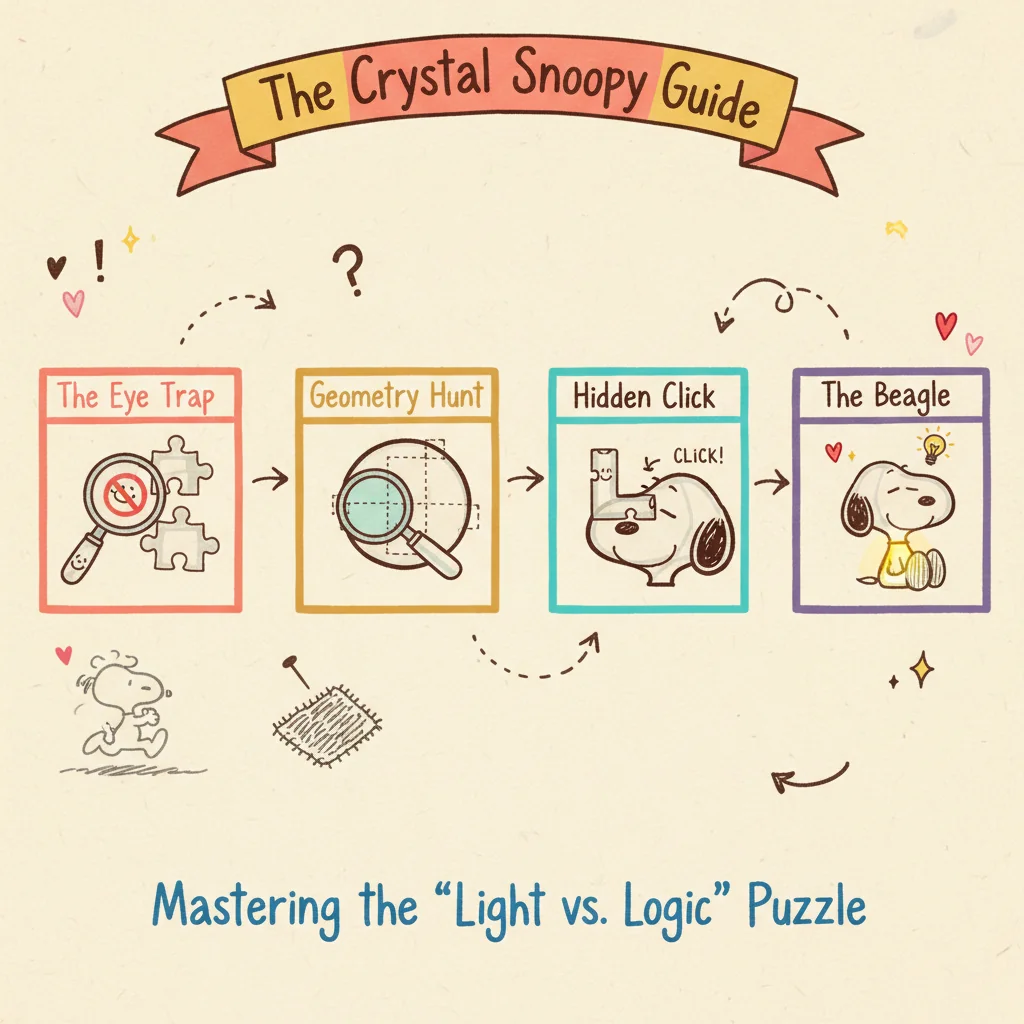
The third time the translucent locking pin slipped through my fingers and vanished into the shag rug, I didn’t curse. I just stared at the half-finished, headless Snoopy on my desk and realized I’d been completely outmaneuvered by 39 pieces of injection-molded plastic. It’s a humbling moment for someone who has disassembled over 200 mechanical puzzles, but that is the specific magic of the Peanuts 3D crystal puzzle line. They look like cheap shelf candy—the kind of thing you’d find in a museum gift shop next to the freeze-dried astronaut ice cream—but they possess a structural complexity that punishes the arrogant and rewards the observant.
My thesis is simple: these aren’t just jigsaws with an extra axis. They are a masterclass in “hidden-axis” assembly where the material itself—the light-refracting, clear acrylic—is the primary antagonist. While a wooden puzzle hides its secrets in the grain, these crystal versions use transparency to lie to your eyes. You can see the notches, the grooves, and the internal locking mechanisms, yet your brain cannot quite map how they interleave until the very moment they click.
Among the various licensed versions of these objects, the Peanuts collection stands out because the character geometry is inherently “anti-puzzle.” Snoopy’s bulbous head and Charlie Brown’s perfectly round cranium don’t offer the easy landmarks of a skyscraper or a castle. You are forced to look at the subtle curvature of the plastic, searching for the one microscopic ridge that differentiates a left ear from a right one. It is a slow, tactile meditation that bridges the gap between traditional jigsaws and the ancient wisdom of interlocking joinery.
The Transparency Trap: Why Your Eyes Are Your Worst Enemy
Most people assume that being able to see through a puzzle makes it easier. If you can see the internal notches, surely you can see how they fit, right? Wrong. In my three weeks of testing the Peanuts line, I discovered what I call the “Ghost Notch” effect. Because the acrylic is translucent, the light refracts through multiple layers of plastic. When you look at a piece, you aren’t just seeing its shape; you’re seeing the reflected edges of the piece behind it and the refracted shadows of the piece below it.
This creates a visual noise that forces you to rely on touch. You stop looking for the “picture” and start feeling for the tolerances. This is where the structural nuances of translucent acrylic builds become apparent. Unlike a 2D jigsaw where the challenge is color-matching, the challenge here is spatial reasoning under visual duress. You have to ignore what your eyes are telling you about the depth of the piece and trust the “click.”
If you’ve ever played with a Luban Sphere Puzzle, priced at $16.99, you know the feeling of pieces that seem like they should fit but refuse to budge.
The Luban Sphere Puzzle is a classic example of this frustration, though its opaque wood is much more honest about its intentions than a crystal Snoopy. In the sphere, the geometry is the only hurdle; in the crystal Peanuts series, the hurdle is your own perception.
The Architecture of a Crystalline Beagle
When you crack open a box like the Snoopy Flying Ace (39 pieces) or the Snoopy Detective (34 pieces), the first thing you notice is the “sprue” marks. These are mass-produced items, and while the finish is generally high-quality, you’ll occasionally find a tiny burr of plastic. I’ve found that a quick swipe with a high-grit sanding stick makes the assembly significantly more “satisfying”—a word I use sparingly in this hobby.
The build usually starts from the bottom up. For Snoopy, this often means his iconic red doghouse or a small patch of “grass.” This base isn’t just for display; it acts as the anchor for the central locking rod. This is a key difference between these and a three-dimensional jigsaw puzzle. In a standard 3D jigsaw, the pieces hold themselves together through friction or foam backing. In a crystal puzzle, the pieces stay together because a long, threaded plastic screw runs through the entire center of the sculpture.
This rod is the source of 90% of the “user error” complaints you see on Reddit. If you don’t have the pieces aligned to within a fraction of a millimeter, the rod won’t pass through. I spent forty-five minutes on the Snoopy Heart puzzle simply because his left paw was tilted two degrees too far to the west. It felt like I was trying to thread a needle in a dark room while wearing oven mitts.
Spotlight: The Crystalline Standard-Bearers
While the Peanuts characters are the stars, the “crystal” category is broad. To understand why the Snoopy series works, you have to look at the foundational designs that paved the way for licensed characters.
3D Crystal Apple Puzzle
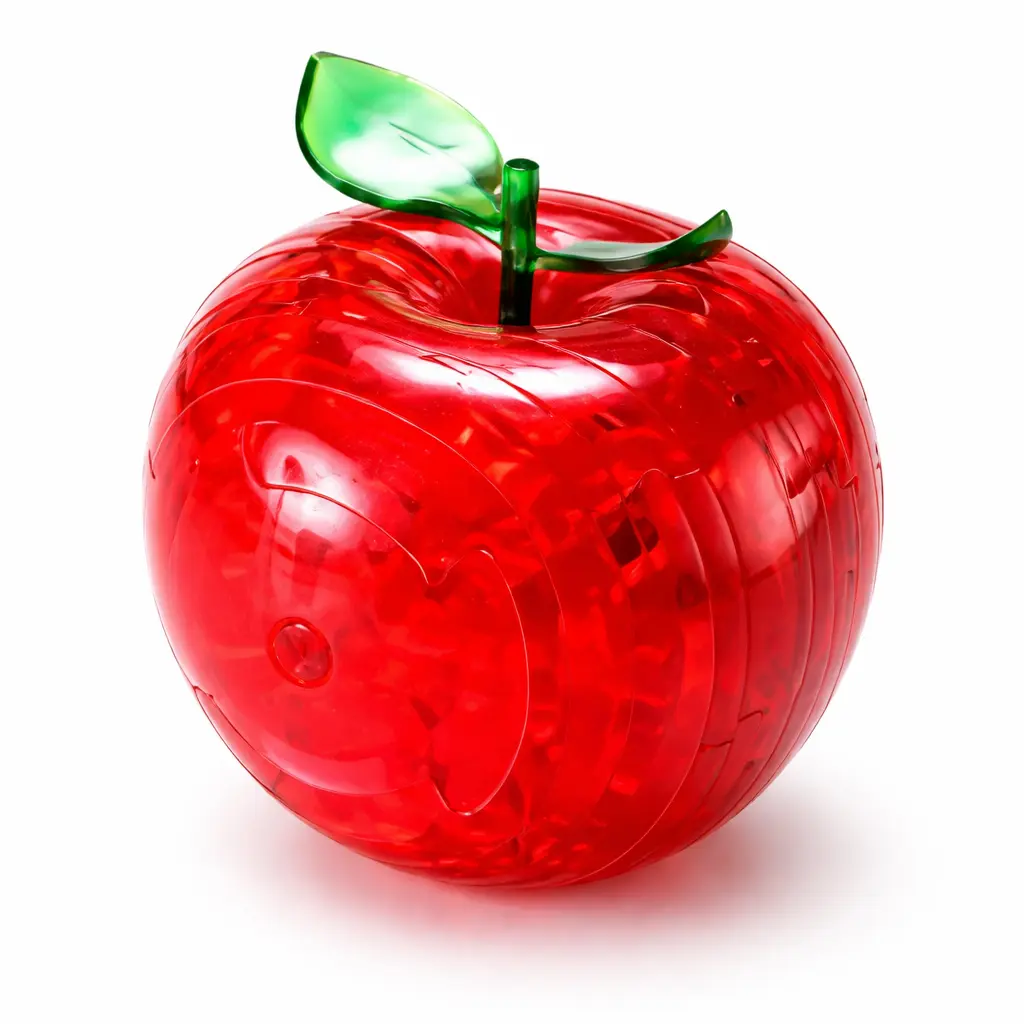
The 3D Crystal Apple Puzzle ($18.88) is the “control group” for this entire hobby. It consists of 44 pieces that form a translucent red fruit. I’ve kept one on my desk for months because it catches the afternoon sun like a piece of expensive Murano glass, despite being priced under twenty dollars. The assembly is rhythmic and predictable, making it the perfect entry point for those who find the character-based puzzles too chaotic. It’s a 7.5cm tall lesson in patience, and the way the green stem locks the final assembly is a moment of pure mechanical closure. If you can’t solve the apple, you have no business attempting Charlie Brown.
12 Piece Crystal Luban Lock Set
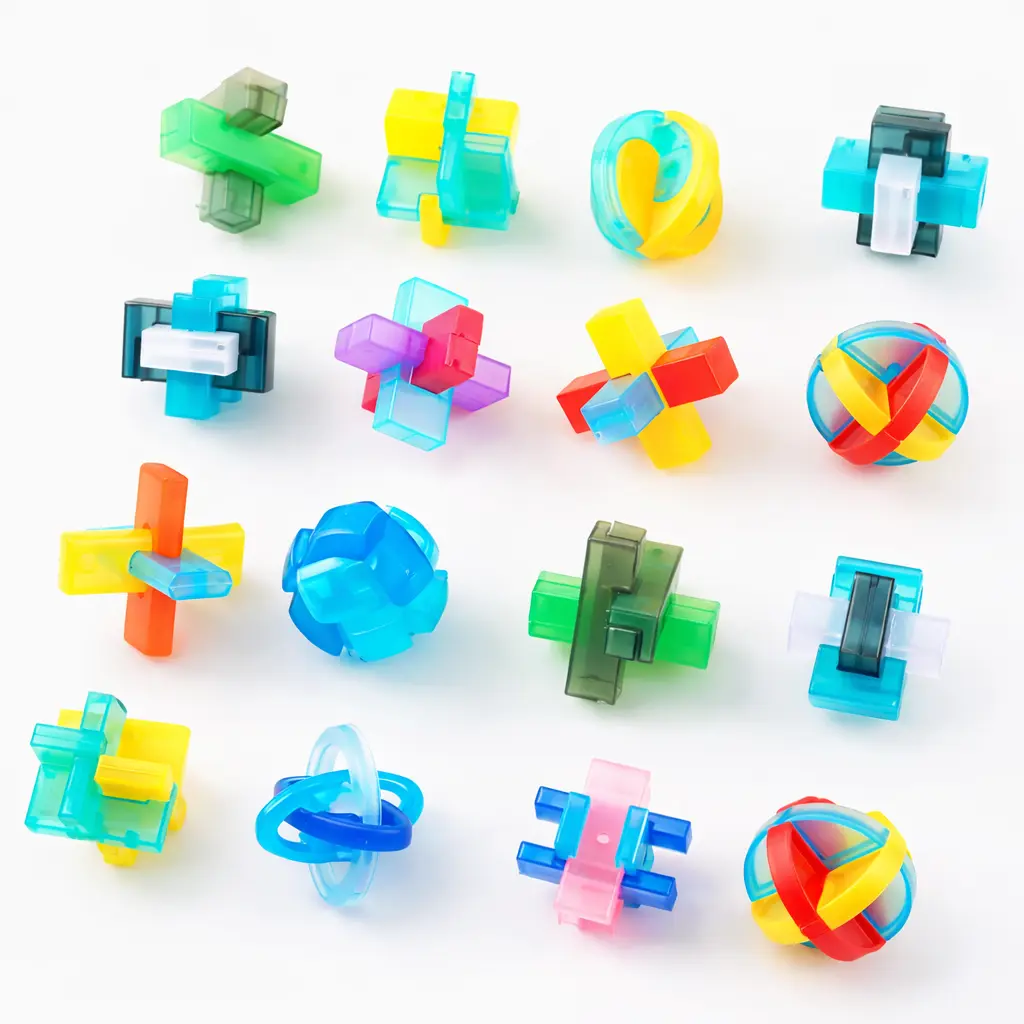
If the apple is the appetizer, the 12 Piece Crystal Luban Lock Set ($28.88) is the main course for purists. These puzzles take ancient joinery rendered in modern polymers and shrink them down to pocket size. Each of the 12 mini-locks (ranging from 3.7cm to 5.5cm) is a different variation of the classic Chinese burr puzzle. Because they are clear, you’d think the solution would be obvious. It isn’t. Seeing the notches doesn’t explain the sequence of moves required to slide the “key” piece out. It’s a fantastic set for travel, though I’d warn against solving them on a plane—dropping a clear piece under an airline seat is a recipe for a very bad day.
Luban Cube Puzzle
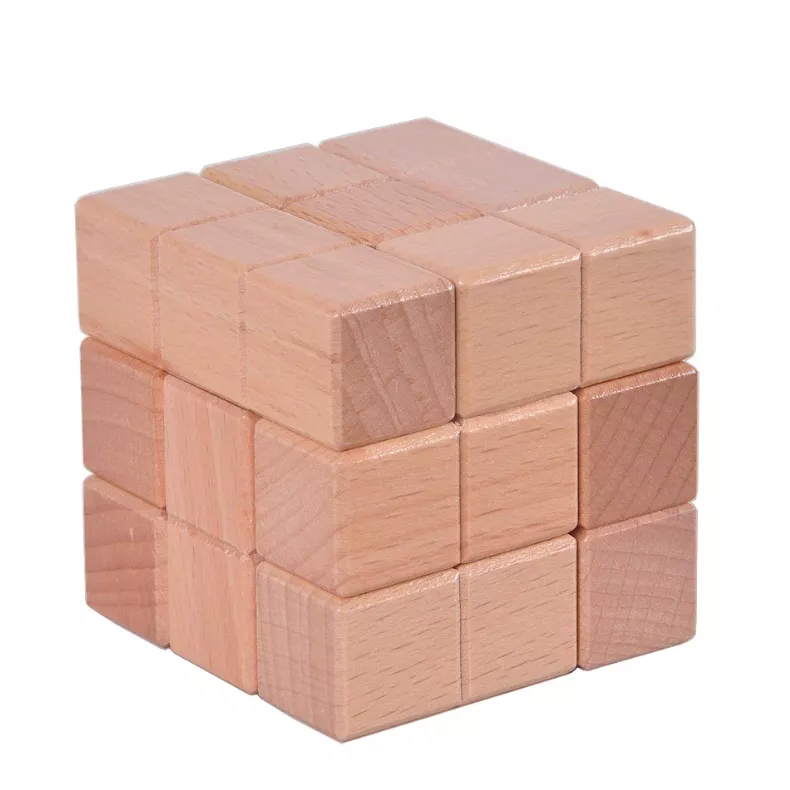
For those who prefer a more organic feel but want the same logical rigor, the Luban Cube Puzzle ($21.99) offers a bridge. While not “crystal” in the plastic sense, it uses the same interlocking philosophy.
The Luban Cube Puzzle challenges you to fit 6 or 7 precisely notched blocks into a perfect 3x3x3 cube. It’s a tactile experience that emphasizes the “hidden magic” of fitment. In my testing, I found that alternating between the slick, unforgiving acrylic of the Peanuts line and the warm, frictional resistance of the Luban Cube helped keep my spatial reasoning sharp. It’s like switching between a digital calculator and an abacus; both get you the answer, but the “feel” of the journey is entirely different.
Interlock Puzzle Sphere
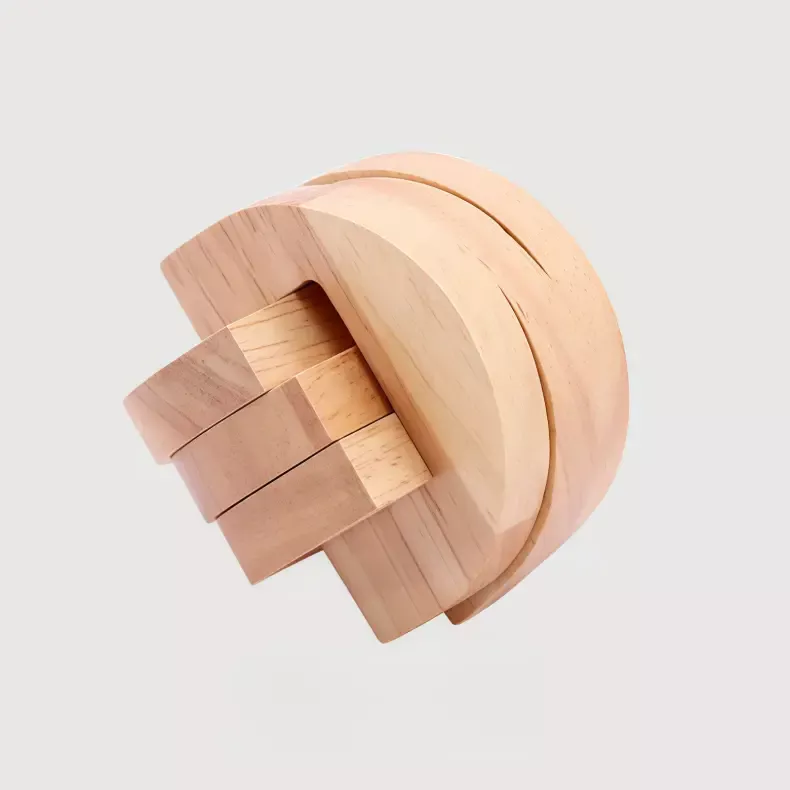
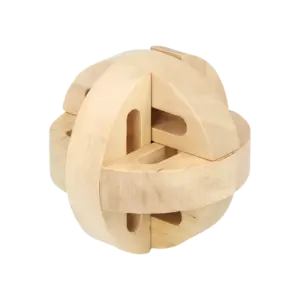
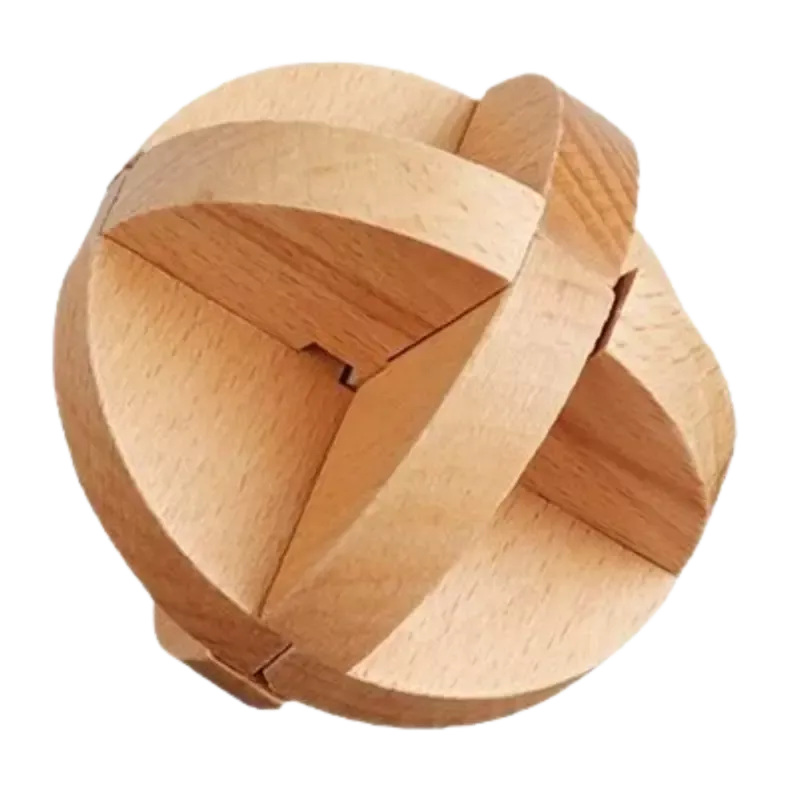
The Interlock Puzzle Sphere ($17.99) is another essential comparison point. It’s a six-piece wooden sphere that disassembles in seconds but can take an hour to rebuild if you lose the thread.
The Interlock Puzzle Sphere is the “ego-checker.” It looks so simple that you’ll be tempted to rush. But like the Peanuts puzzles, if you force a piece, you’ll likely damage the tolerances. The lesson here is universal: the puzzle is never the problem; your impatience is.
The Peak Moment: The “Light vs. Logic” Phenomenon
After testing dozens of these, I hit what I call the “Peak Moment” of the hobby. I was working on the Snoopy and Woodstock on the Green Lawn puzzle. I had the base finished. I had Snoopy’s torso together. But Woodstock—the tiny, yellow, 4-piece nightmare—would not sit correctly.
I realized that the light from my desk lamp was creating a “false edge” on the yellow acrylic. I was trying to fit a tab into a shadow, not a slot. I turned off the lamp and worked by the dim, ambient light of the room, relying entirely on the “click” and the resistance of the plastic. Within two minutes, Woodstock was perched perfectly.
This is the secret that most reviewers miss: The Peanuts 3D crystal puzzle is actually a tactile puzzle masquerading as a visual one. The transparency is a distraction. If you were to close your eyes, you might actually solve it faster. The refraction of light through the 41 pieces of the Snoopy Surf puzzle, for example, is designed to confuse your depth perception. It’s a brilliant bit of unintentional (or perhaps intentional) psychological engineering.
This intersection of physics and geometry is why I often point people toward the intersection of physics and geometry in desktop curios when they finish their first crystal build. There is a specific joy in seeing a physical law—like refraction or momentum—become the primary obstacle between you and a “solved” state.
Why Wood and Metal Still Matter (The Inline Comparison)
While the Peanuts line is a blast, a well-rounded collection needs variety. You can’t live on acrylic alone. Sometimes you need the weight of metal or the “give” of wood to reset your brain.
If you find yourself getting frustrated with the tiny pieces of a Snoopy Detective, I recommend taking a break with something like Looking Back ($16.99).
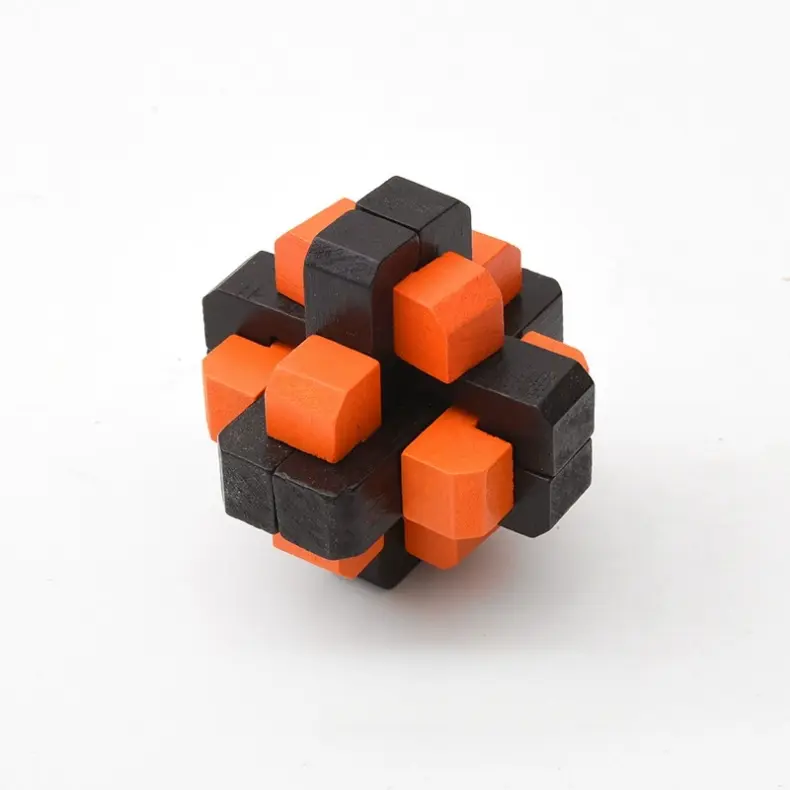
Looking Back — $16.99
The Looking Back puzzle is a 12-stick wooden teaser that uses a “twist and unlock” mechanism. It’s much more forgiving than the brittle snap of a crystal puzzle and offers a “romantic” design inspired by Chinese poetry. It’s the perfect palate cleanser.
Similarly, the Ring Rescue ($14.99) provides a different kind of mental reset.
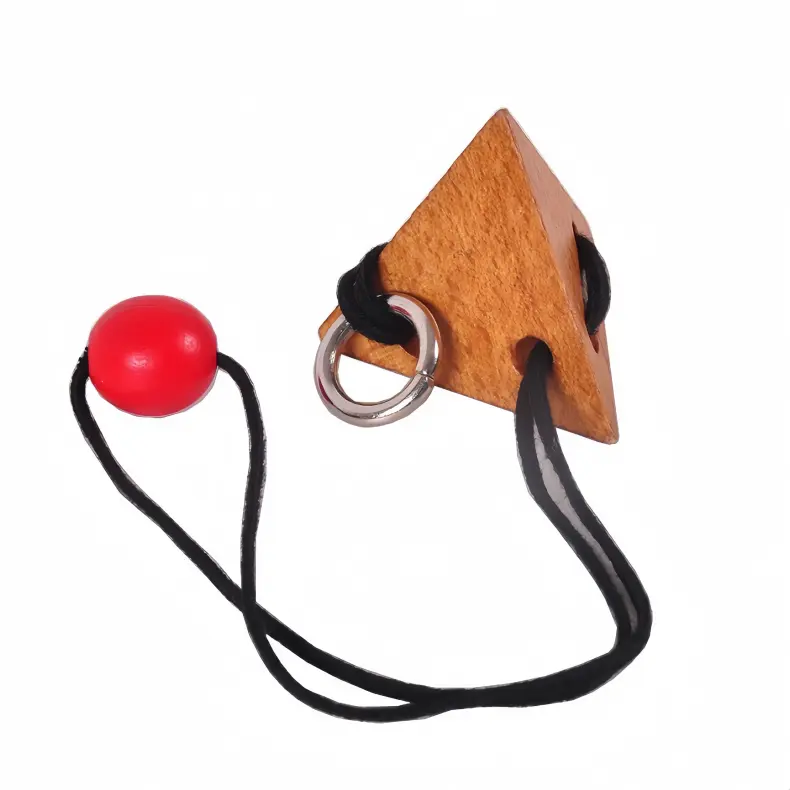
Ring Rescue — $14.99
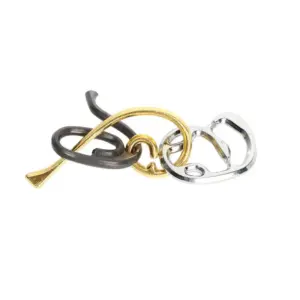
Ring Rescue is a rope-and-ring puzzle. There are no interlocking plastic tabs here; just a black rope, a red bead, and a silver ring. It’s about “seeing the One path,” as the description says. It’s a quiet, meditative challenge that feels like the polar opposite of the chaotic, multi-piece assembly of a 3D Snoopy.
For the “fidgeters” among us, the Metal Screw Interlock Riddle ($13.98) is a must-have.
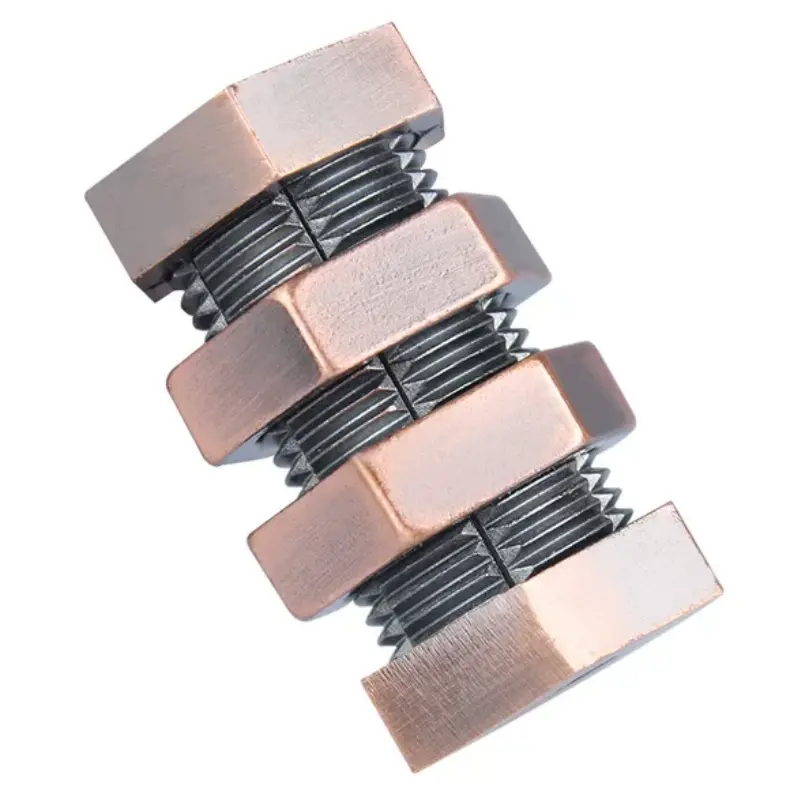
The Metal Screw Interlock Riddle is heavy, portable, and incredibly satisfying to twist. It’s a mechanical lock that requires precision but doesn’t require you to keep track of 40 clear pieces on a table. I keep one in my bag for commutes when I need to keep my hands busy but don’t have the surface area for a full assembly build.
If you’re looking for something with a bit more “heart,” the Love Interlocking Arrow Cross Rings Puzzle ($11.98) is a charming metal alternative.
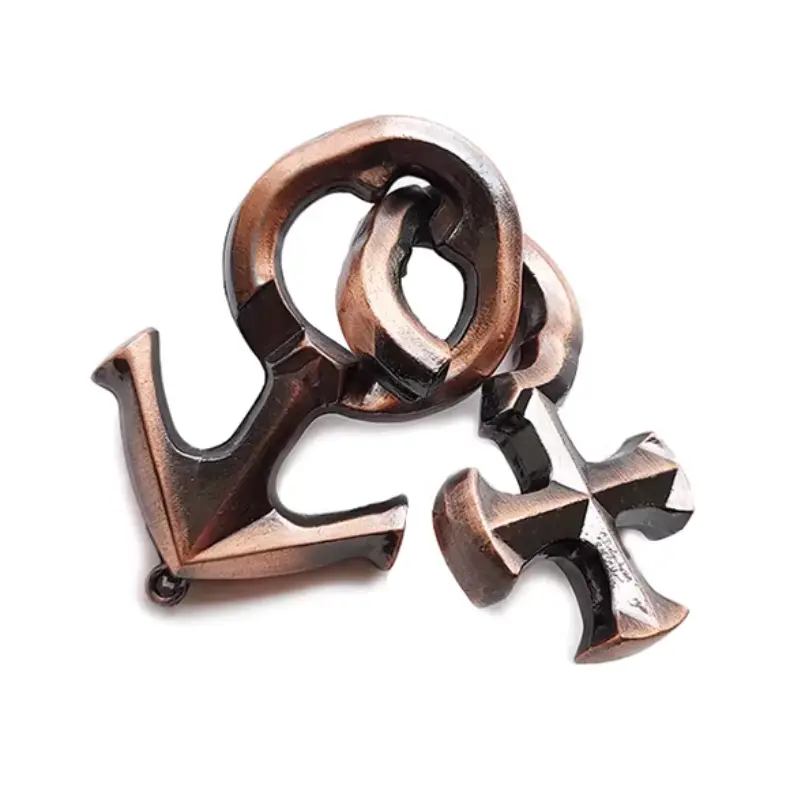
The Love Interlocking Arrow Cross Rings Puzzle features two rings—’him’ and ‘her’—that must be separated. It’s a classic “tavern puzzle” style that feels ancient and durable. It’s a great gift, especially compared to the more fragile nature of a crystal puzzle.
Finally, for the true spatial enthusiasts, there’s the Sphere Morphs Into Cube ($12.00).
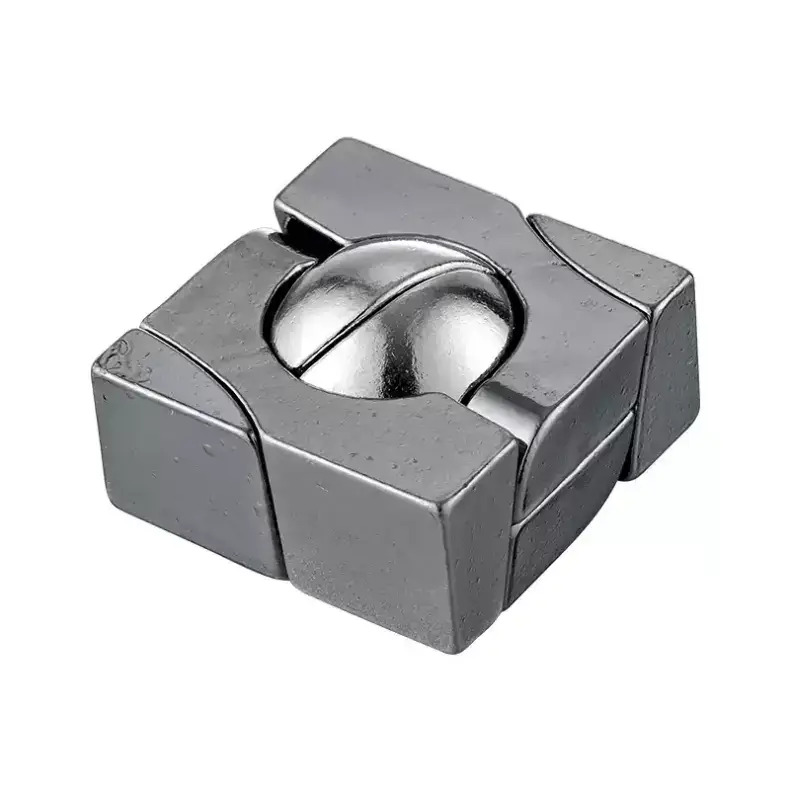
Sphere Morphs Into Cube — $12.00
The Sphere Morphs Into Cube is exactly what it sounds like—a mind-bending transformation puzzle. It’s modern, it’s sleek, and it challenges the same parts of the brain as the Snoopy builds but with a much more “engineered” feel.
Comparative Analysis: Which Peanuts Build is Right for You?
FAQ: Everything You’re Afraid to Ask About Plastic Puzzles
Where can I find Peanuts 3D crystal puzzle instructions?
This is the number one question in the hobby. Most boxes come with a small sheet, but they are notoriously difficult to read because they use tiny numbers on a 2D diagram to represent 3D space. If you’re stuck, I recommend the official site’s limited guide. However, the real “pro tip” is to look for the numbers molded directly onto the plastic pieces. You’ll need a bright light and perhaps a magnifying glass, but almost every 3D crystal puzzle has a sequence number hidden on the tab of each piece. If you follow the numbers in order (1, 2, 3…), the puzzle practically builds itself. But where’s the fun in that?
How do I stop the puzzle from falling apart during assembly?
This is the “frustration peak.” Because these puzzles rely on a final locking rod, they are unstable until the very last step. My advice: use a piece of painter’s tape or a small rubber band to hold the base and the first 10 pieces together as you build. Once you have the central core established, the pieces will naturally “nest” into each other. If you find yourself struggling, take tactical breaks between assembly sessions to clear your head. Coming back with fresh eyes usually reveals the one piece you’ve accidentally flipped upside down.
Should I use glue on my 3D crystal puzzle?
Reddit is divided on this. If you want to display the puzzle permanently, a tiny drop of clear, non-whitening acrylic glue can help. However, standard superglue (cyanoacrylate) will “off-gas” and leave a white, foggy residue on your beautiful clear Snoopy. I personally never glue mine. If it falls over and breaks, that’s just an opportunity to solve it again. If you’re really worried about stability, make sure the final locking rod is screwed in tight—but not so tight that you crack the plastic.
Are these puzzles appropriate for children?
The boxes usually say “Ages 12 and up,” and I agree with that. While a 7-year-old might love Snoopy, the dexterity required to hold 30 slippery pieces in place while threading a plastic rod is beyond most young children. It becomes a “parent-child” project where the parent does the assembly and the child finds the pieces. For a younger audience, I’d suggest numerical logic games that reset your spatial focus as a way to build the foundational skills needed for these 3D challenges.
What do I do if I’m missing a piece?
First, check your floor. Then check the box again. Because the pieces are clear, they are nearly invisible on carpet or patterned tile. If a piece is truly missing, most manufacturers (like BePuzzled) have a replacement part service, though it can take weeks. This is why I always work on a large, dark-colored felt mat. It provides contrast and stops the pieces from bouncing if dropped.
How do I clean my crystal puzzles?
Fingerprints are the enemy of transparency. Once you finish your build, the puzzle will likely be covered in oils from your skin. I use a simple microfiber cloth and a bit of eyeglass cleaner. Avoid harsh chemicals like Windex or acetone, which can “craze” the plastic, creating thousands of tiny internal cracks that ruin the look.
Why does the top piece never seem to fit?
This is usually because the central screw is slightly too high. If the screw isn’t seated perfectly in the base, it will stick out the top by a millimeter, preventing the final “cap” piece (like Snoopy’s hat or the apple’s stem) from clicking in. Back the screw out, realign the torso pieces, and try again. Precision is everything here.
Is the “Peanuts” collection harder than the “Disney” or “Animal” collections?
Generally, yes. Characters with organic shapes (like Snoopy) are harder to map than geometric shapes (like a castle or a star). The “Snoopy on Doghouse” is a great middle-ground because the doghouse provides a stable, easy-to-understand base, while Snoopy himself provides the challenge.
Can these be disassembled and re-solved?
Absolutely. Just unscrew the locking rod and the whole thing will come apart. It’s actually a great way to test your memory. I’ve found that the second solve is often faster, but no less satisfying, as you begin to recognize the “logic” of the designer’s notch placement.
What is the most difficult Peanuts puzzle?
Most enthusiasts agree that the “Snoopy and Charlie Brown” set is the peak. Managing two separate characters and their interlocking bases is a significant step up from a solo Snoopy. It requires a lot of table space and a lot of patience.
Why are some pieces “frosted” while others are clear?
This is a design choice to add contrast. On the Snoopy Flying Ace, for example, the “goggles” or the “scarf” might have a different texture to help them stand out. It also provides a much-needed tactile cue during assembly.
Do these puzzles have any educational value?
Beyond the obvious spatial reasoning, they are a great way to learn about the mechanical puzzle history. They teach the principles of “interlocking” and “sequential discovery” in a way that is accessible and visually rewarding.
Is it worth buying the “Sticker Pack” versions?
Some Peanuts 3D puzzles come with stickers for the eyes and nose. I’m a purist—I think the sculpted plastic looks better without them. However, if you’re displaying them in a dimly lit room, the stickers can help the character’s features “pop.”
The One Puzzle That Teaches You How All the Others Work
If you take nothing else from this deep dive, remember this: the 3D Crystal Apple Puzzle ($18.88) is the key. It is the Rosetta Stone of the crystal puzzle world. It taught me more about the relationship between light, plastic, and patience than any of the more complex licensed characters ever could. When you understand how the layers of the apple stack to allow the locking rod through, you suddenly “see” the skeleton of every other puzzle in the line.
The Peanuts 3D crystal puzzle collection isn’t just about nostalgia for Charlie Brown or a love for Snoopy’s many alter-egos. It’s about the quiet, meditative process of bringing order to a pile of transparent chaos. It’s about that final, beautiful moment when the rod clicks, the pieces tighten, and what was once a jumble of acrylic becomes a solid, light-catching sculpture.
Start with the 3D Crystal Apple Puzzle ($18.88). It’s the perfect introduction to this frustrating, beautiful, and ultimately rewarding hobby. Once you’ve mastered the fruit, the world of Snoopy, Woodstock, and the rest of the gang is waiting to challenge your eyes and your mind.
If this clicked for you, the structural nuances of translucent acrylic builds goes deeper into the manufacturing and design of these modern enigmas. Mechanical puzzles are a journey of a thousand clicks, and the first one is always the most important.