The flight from Chicago was delayed three hours, and the guy in 14C was losing his mind. He wasn’t yelling; he was just vibrating with that specific brand of mid-tier executive anxiety. I reached into my carry-on and handed him a small, interlocking mess of chrome and gold-tone alloy. “Try this,” I said. “It’s harder than it looks, and it doesn’t require Wi-Fi.” For the next ninety minutes, the guy forgot he was stuck in O’Hare. He didn’t solve it—most people don’t on the first try—but the frantic tapping of his loafers stopped.
That is the power of a well-made metal puzzle ring. It’s a physical manifestation of a logic gate. My collection currently sits at 214 pieces, ranging from antique iron locks to precision-machined titanium, but I always come back to the “disentanglement” category. There is something fundamentally honest about two pieces of metal that are physically linked but logically separate. You can’t cheat. You can’t “glitch” the software. You either understand the topology of the object, or you don’t.
Across my decade of testing, I’ve found that the best puzzles aren’t the ones that take the longest to solve, but the ones that make you feel like an idiot for thirty minutes and a genius for five seconds. We live in an era of digital friction, but these objects provide a tactile resistance that our brains are starving for. Whether you are looking for a desk toy to kill time during a Zoom call or a legitimate mental workout, the metal puzzle ring is the gold standard of portable enigmas.
The Geometry of the “Aha!” Moment
To understand why a metal puzzle ring works, you have to understand the concept of a mechanical puzzle. These aren’t just toys; they are physical riddles that rely on Euclidean geometry and, occasionally, a bit of cruel psychological misdirection. Most people approach a metal puzzle with force. They pull, they twist, they get frustrated when the metal doesn’t bend to their will.
The secret, which I learned after ruining a very expensive brass set in 2018, is that these objects are designed with tolerances that allow for exactly one path of travel. If you are forcing it, you are wrong. The metal is teaching you to observe rather than react. This is especially true with “cast” puzzles, where the shapes are often organic and deceptive, hiding their sliding tracks in plain sight.
When you finally find that path—the specific angle where the “key” slides through the “hole”—the feeling is almost electrical. It’s a dopamine hit that no smartphone notification can replicate. It’s a reminder that even the most complex problems have a solution if you’re willing to look at them from a different perspective.
Metal Starfish Puzzle Ring
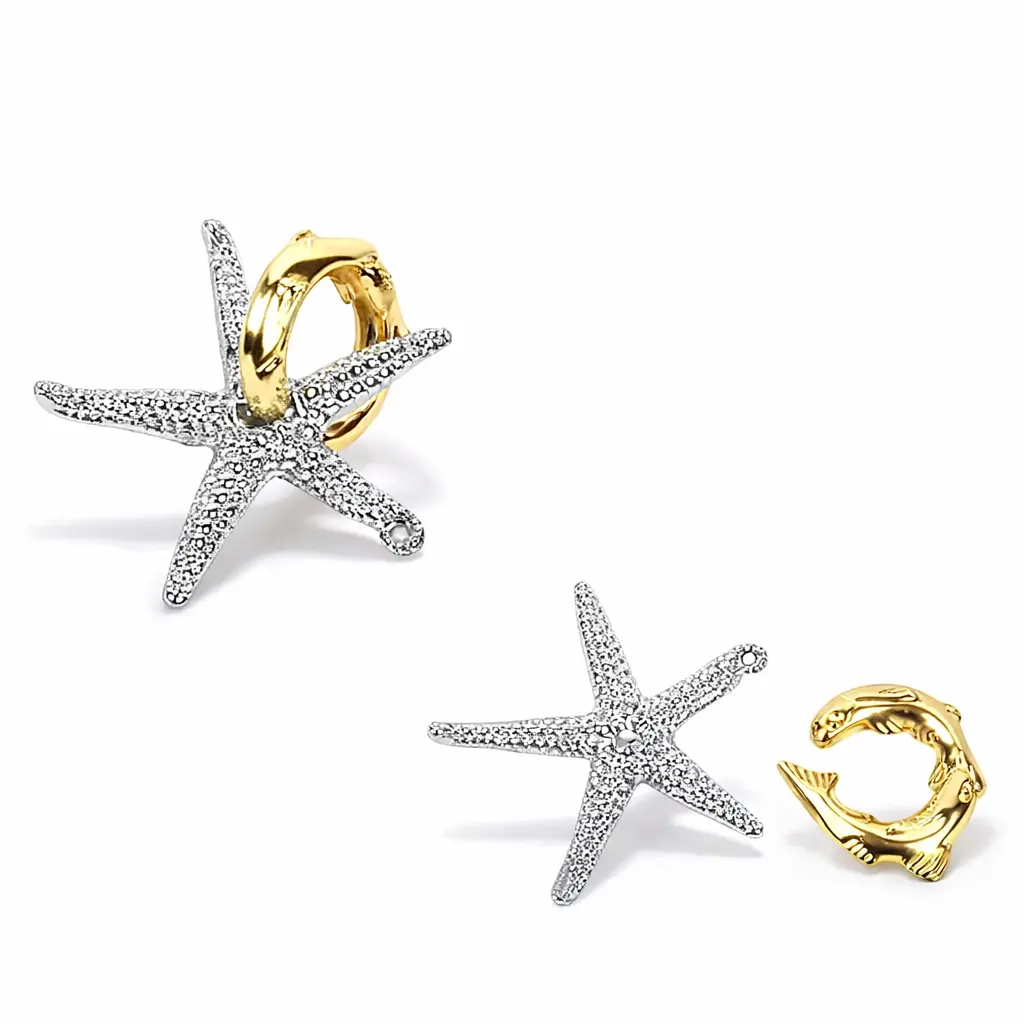
Metal Starfish Puzzle Ring — $13.99
The Metal Starfish Puzzle Ring ($13.99) is what I call a “gateway” puzzle. It looks like something you’d find in a boutique jewelry shop in a coastal town, but it’s actually a clever exercise in rotational logic. The chrome starfish is “locked” onto a gold-tone twisted ring, and the goal is to separate them.
When I first picked this up, I assumed it was a simple “find the gap” challenge. I was wrong. The twisted nature of the ring means the starfish has to follow a specific spiral path. It’s a fantastic desk piece because it’s aesthetically pleasing enough to sit next to a high-end monitor, but it’s also a perfect fidget toy. I’ve found that the chrome finish holds up remarkably well to skin oils—I’ve been “fiddling” with mine for months and it hasn’t lost its luster. It’s the kind of thing you hand to a friend who claims they are good at puzzles, only to watch them go silent for ten minutes while they try to figure out why the starfish keeps getting stuck at the same bend.
Why Cast Alloy Beats Wire for Serious Solvers
In the hobbyist community, there’s a long-standing debate between wire puzzles and cast puzzles. Wire puzzles—the kind you often see in cheap 8-packs at big-box stores—rely on thin loops of steel. They’re fine for kids, but they lack the “heft” and precision of a cast alloy piece. A cast puzzle feels like a tool. It has weight, it has sound, and it has a specific “hand-feel” that wire simply can’t match.
When you move a piece of a cast puzzle, you can feel the machining. There’s a dampened “clink” when the metal hits a dead end. This sensory feedback is crucial for solving. You aren’t just looking for the solution; you are feeling for it. This is why I often recommend tactile logic puzzles to people who spend all day typing. It’s a way to reconnect with the physical world.
Cast Keyhole Gold & Silver
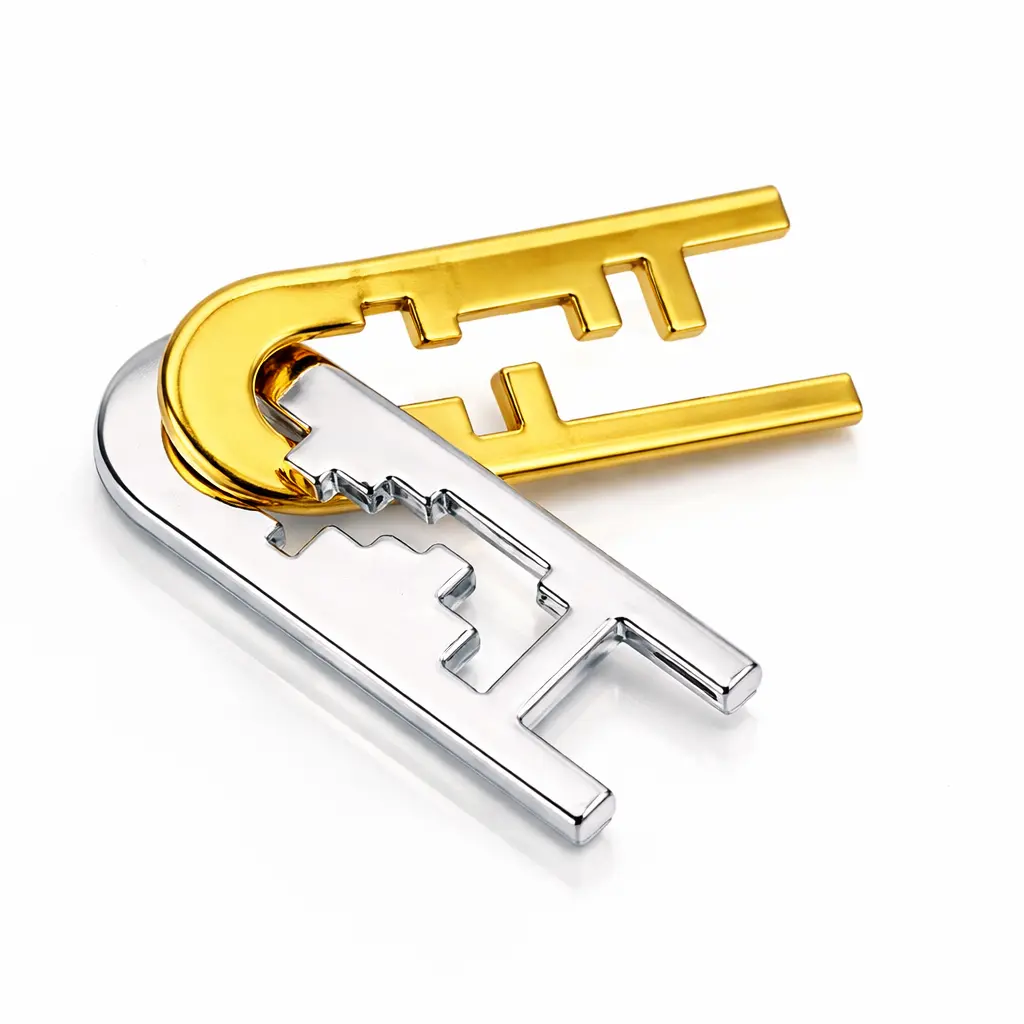
If you want to see a person’s confidence evaporate in real-time, hand them the Cast Keyhole Gold & Silver ($13.99). On the surface, it’s two flat pieces of metal with notched edges. It looks like something you’d find in a locksmith’s scrap bin. But once you slide them together, they form a 3D maze that is genuinely infuriating.
The trick with the Keyhole is that the solution to taking it apart is only half the battle. Putting it back together is the true test. I spent forty minutes separating the silver “key” from the gold “hole” on my first try. I felt like a genius. Then I realized I had no idea how I’d done it. I spent the next two hours trying to re-interlock them. The angled notches are designed to look symmetrical, but they aren’t. It requires a level of spatial visualization that most of us don’t use in our daily lives. At just under fourteen dollars, it’s arguably the best “bang for your buck” in terms of pure challenge hours.
The Psychological Trap of Symmetrical Puzzles
One of the most common tricks puzzle designers use is symmetry. Our brains love patterns; we want things to be even. A designer will create a puzzle where both pieces look identical, leading you to believe that both pieces should move the same way. In reality, one piece is usually the “anchor” and the other is the “traveler.”
I’ve seen engineers—people who build bridges and design engines—get stuck on a simple two-piece metal puzzle because they were trying to move both hands at once. The moment they held one piece still and focused on the movement of the other, the puzzle solved itself. This is a metaphor for life that I’m not quite poetic enough to write about, but the lesson remains: sometimes you have to stabilize one variable to solve for the other.
5 Piece Cast Spiral Metal Puzzle
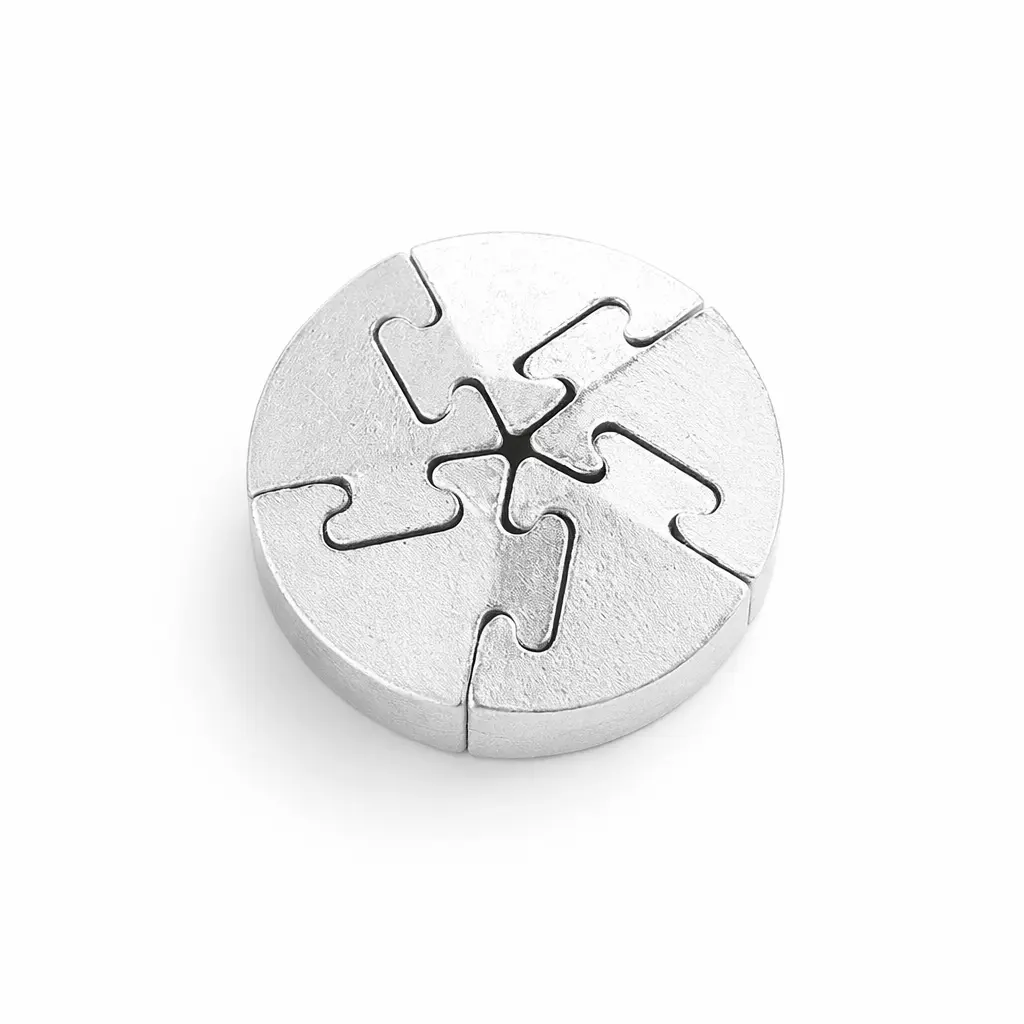
The 5 Piece Cast Spiral Metal Puzzle (check current pricing) takes this symmetry trap and multiplies it by five. It’s a palm-sized disc made of five identical-looking wedges. Most people see it and think it’s a solid object until they see the faint seams.
Finding the one piece that moves is the “hook.” Once you get that first wedge out, the rest of the spiral collapses in a very satisfying way. But, as with the Keyhole, the reassembly is the nightmare. Each wedge has a slightly different internal groove. If you don’t pay attention to the order in which they came out, you’ll be left with a pile of metal that refuses to form a circle. I keep this one on my coffee table. It’s a great “vibe check” for guests. If they can put the spiral back together in under five minutes, I know they’re the kind of person I want on my trivia team. If you find yourself needing a break from the metal, you can always pivot to pattern-matching digital games to reset your brain.
The Peak: Why You Should Solve Puzzles with Your Eyes Closed
Here is a secret that most “pro” solvers won’t tell you: your eyes are lying to you.
When you look at a metal puzzle ring, your brain tries to use visual cues to find the exit. You see a gap, you see a curve, and you try to force the piece through it. But because these are 3D objects with hidden internal tracks, what you see often contradicts how the piece actually moves.
About three years ago, I was stuck on a particularly nasty “Double Fish” design. I’d been staring at it for two hours. My eyes were tired, and I was getting a headache. I closed my eyes, leaned back in my chair, and just started moving the pieces based on how they felt. Without the visual distraction, my fingers found the path in less than ninety seconds.
The “Blind Solve” is a legitimate technique. It forces you to rely on kinesthetic intelligence. You feel the resistance, you feel the “gate,” and you learn the geography of the metal. I highly recommend trying this with any of the two-piece disentanglements. It turns the experience from a visual chore into a meditative exercise. It’s the same kind of “flow state” people look for in hidden compartment and metal locking mechanisms, where the solution is felt rather than seen.
Gold Silver Double Fish Metal Puzzle
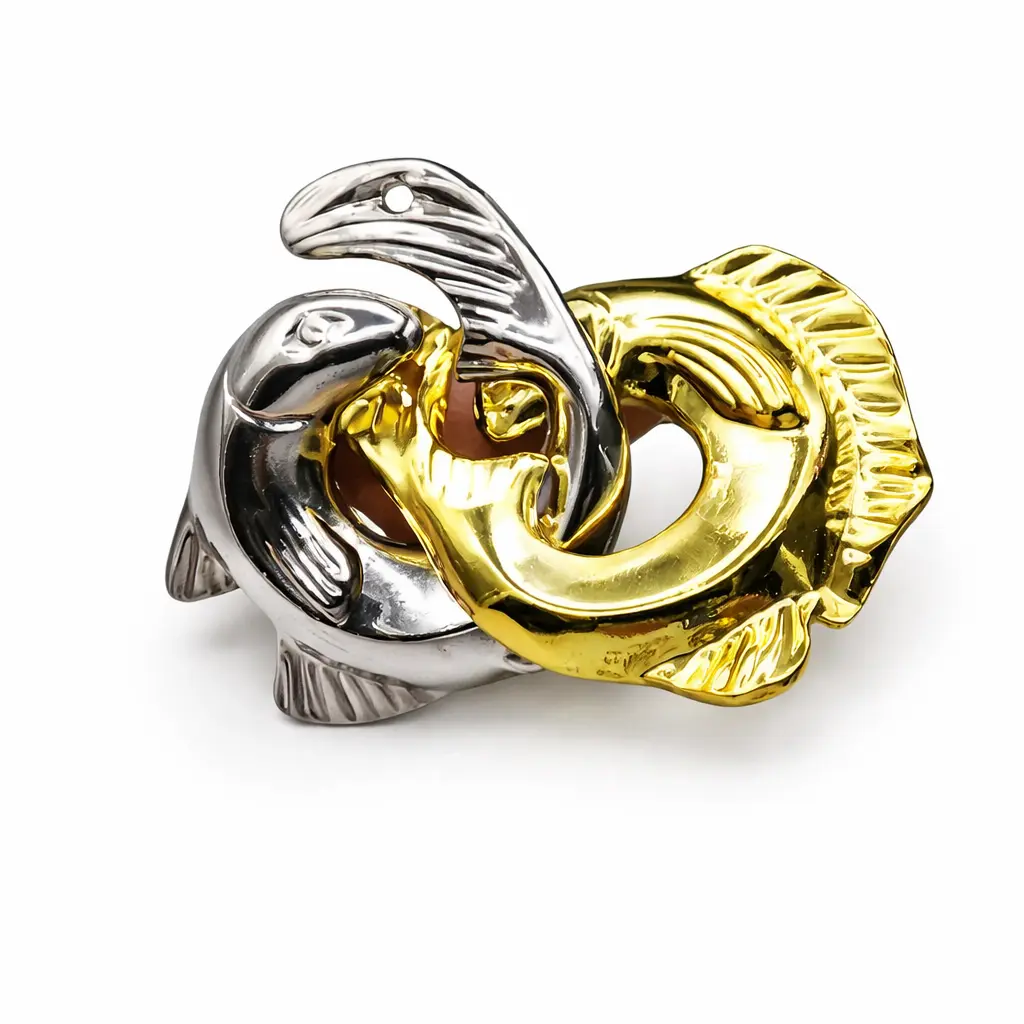
The Gold Silver Double Fish Metal Puzzle ($13.99) is the perfect candidate for the “eyes closed” technique. It’s two interlocking fish, polished to a high shine. The 60mm size is specifically designed for palm-work.
What I love about the Double Fish is the “click.” When you find the right orientation, the two pieces don’t just slide apart; they glide. There’s no friction. It’s a testament to the casting quality that a $14 puzzle can have such tight tolerances. It’s small enough to fit in a pocket, making it my go-to “waiting room” puzzle. While others are doom-scrolling on their phones, I’m sitting there with two metal fish, trying to remember the exact rotation that leads to freedom.
The “Hidden Screw” and the Evolution of the Ring Puzzle
While many metal puzzles rely on sliding or “loop-through-loop” mechanics, there is a sub-genre that uses threading. These are the “hidden screw” puzzles. They look like they should come apart with a simple pull, but they actually require a series of rotations—often in alternating directions—to unthread an internal mechanism you can’t even see.
This is a direct descendant of the Baguenaudier, also known as the “Chinese Rings.” The history of these puzzles is deep, with some versions dating back to the 2nd century. They were used as tests of intelligence and patience for scholars and royalty. Today, we use them to keep from checking our email for the twentieth time before lunch.
Dual Seahorse Gold & Silver Brain Teaser
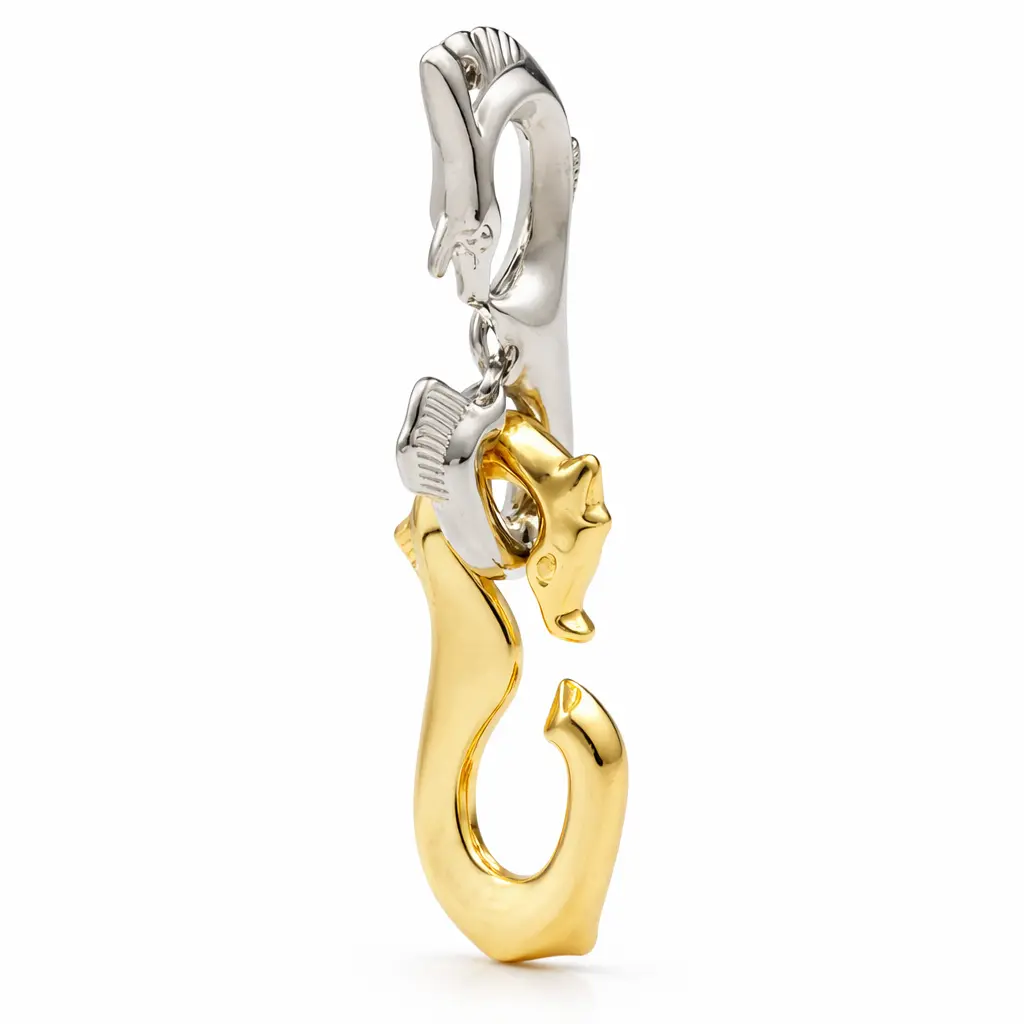
The Dual Seahorse Gold & Silver Brain Teaser ($14.99) is a masterclass in the hidden mechanism. It looks like two seahorses just “hooked” together, but it actually utilizes a threaded connection. You have to twist them in a way that feels counter-intuitive.
The finish on these is mirror-polished, which makes them feel more like a piece of art than a toy. I’ve seen these used as wedding favors or “Secret Santa” gifts because they have a high perceived value. They look expensive. When you hand someone the Seahorses, they expect a simple disentanglement. When they realize they have to “unscrew” the logic of the puzzle, the look on their face is worth the fifteen dollars alone. For those who prefer a more strategic, turn-based challenge, I often suggest exploring strategic board game variants as a palate cleanser after a tough metal solve.
Beyond the Ring: When Metal Meets Wood
Once you’ve mastered the metal ring, the natural progression is toward assembly puzzles. This is where we move away from “how do I get this off?” and toward “how does this even stay together?”
The most famous version of this is the Luban Lock. Allegedly invented by Lu Ban, the patron saint of Chinese carpenters, these puzzles use mortise-and-tenon joinery to create solid shapes held together by nothing but geometry. No glue, no nails, no screws. Just perfectly cut wood.
Luban Lock Set 9 Piece
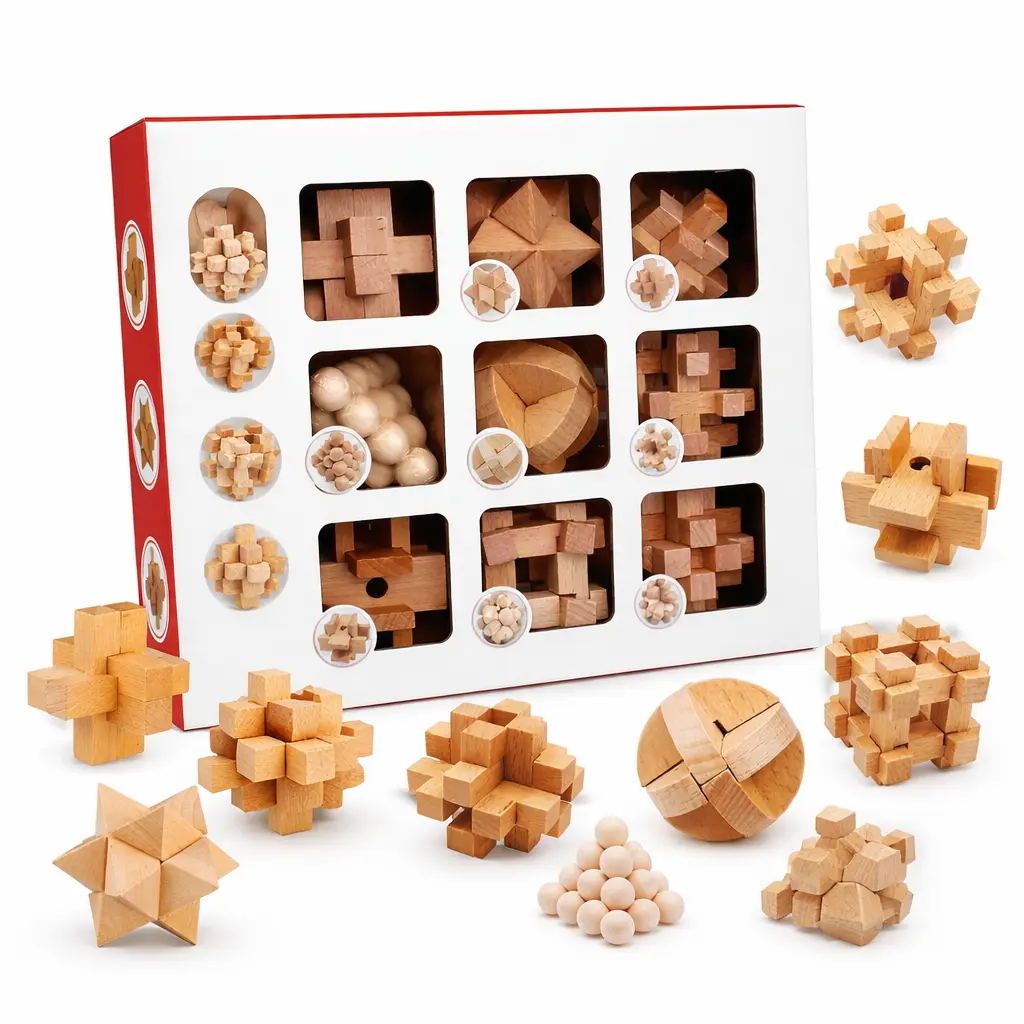
The Luban Lock Set 9 Piece ($39.99) is a crash course in ancient engineering. While the metal puzzles we’ve discussed are great for quick breaks, this set is a weekend project. Each of the nine puzzles represents a different “lock” style.
I’ve found that switching between metal and wood is good for the brain. Metal is about precision and sliding; wood is about friction and structural integrity. The Luban locks are surprisingly difficult because the wood can expand or contract slightly depending on the humidity, adding a natural “variable” that metal doesn’t have. If you can solve all nine without looking at a guide, you have better spatial reasoning than 95% of the population.
For the Desktop Engineer: 3D Mechanical Models
If you find that the “solve and reset” nature of rings isn’t enough, you might be an “assembler.” These are people who want to build the enigma from the ground up. This is where kinetic desktop sculptures and wooden kits come into play.
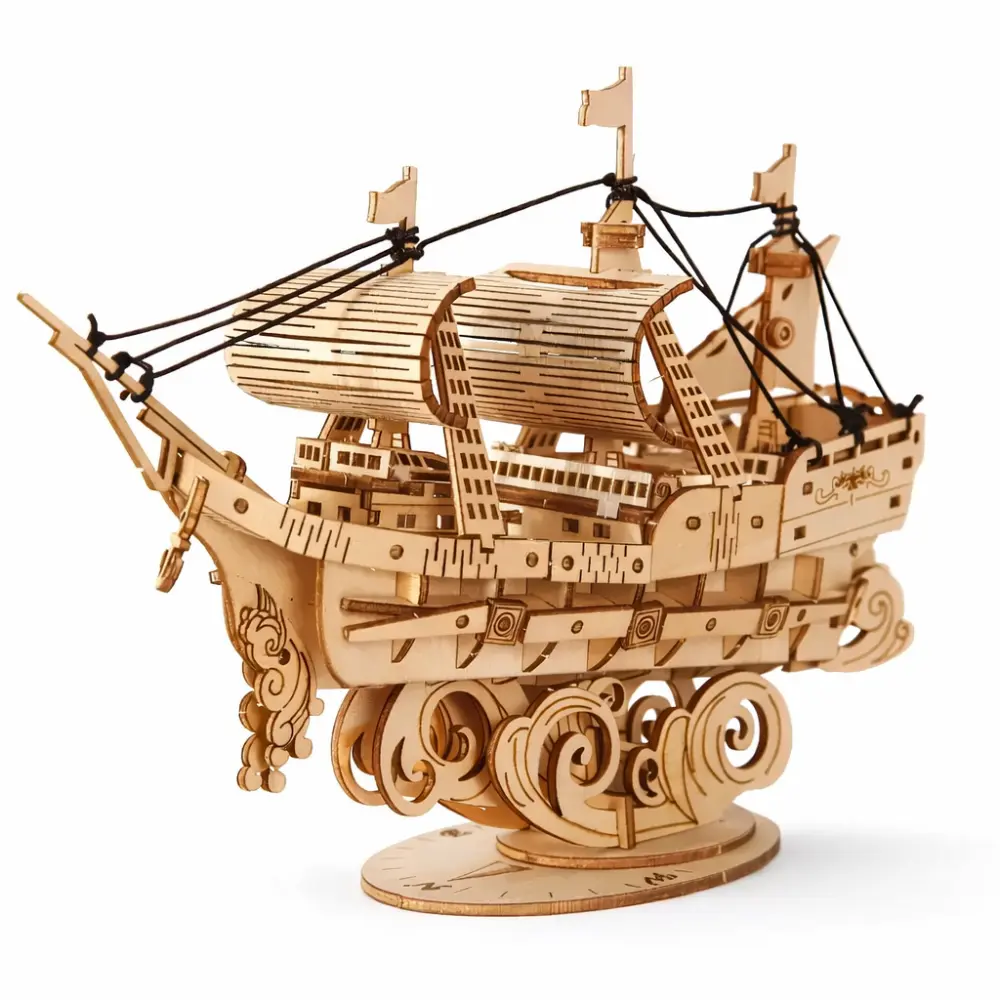
- Galleon Ship 3D Wooden Puzzle Model Kit (check current pricing): This is for the history buff. It’s a snap-fit plywood replica of a 16th-century trade vessel. It’s less about “solving” and more about the meditative process of construction.
- DIY Castle Music Box Night Light ($33.99): This combines a 28-piece 3D puzzle with a functional music box and LED light. It’s a great project to do with a teenager—it’s complex enough to be interesting but has a “functional” payoff at the end.
- Steampunk Airship 3D Wooden Puzzle ($26.66): With 160 pieces, this is a serious time investment. It features a spinning propeller and rolling wheels. It’s the kind of thing that makes people stop at your desk and ask, “Wait, did you build that?”
- 3D Wooden Cello Puzzle Model Kit ($29.99): This is a beautiful tribute to musical craftsmanship. Research, including some cited by the National Institutes of Health, suggests that these kinds of assembly activities are great for maintaining cognitive health as we age.
Comparing the Top Metal Challenges
Before you decide which puzzle deserves a spot on your desk, let’s look at how they stack up in terms of the “frustration-to-satisfaction” ratio.
Metal Puzzle Ring FAQ: Everything You’ve Been Wondering
How do I solve a metal ring puzzle without a guide?
The best strategy is to avoid force at all costs. Hold one piece steady and rotate the other through every possible axis. If you hit a hard stop, don’t pull; back up and try a different rotation. Many of these puzzles rely on a “bottleneck” where the pieces only pass through each other at a very specific 45-degree angle. If you get stuck, try the “Blind Solve” method mentioned earlier—closing your eyes helps you feel the path rather than looking for a gap that might not exist.
What is the history of the puzzle ring?
The puzzle ring has a fascinating history, often associated with the “Turkish Wedding Ring.” Legend has it that a husband would give his wife a puzzle ring so that if she took it off (presumably to hide her marital status), the ring would fall apart, and she wouldn’t be able to put it back together before he returned. While likely apocryphal, the design is centuries old. You can even find examples like the ring puzzle owned by Olive C. Hazlett in the National Museum of American History, proving these have been sophisticated intellectual tools for generations.
Are these puzzles suitable for children?
Most cast metal puzzles are rated for ages 14 and up. This isn’t because they are dangerous, but because they require a level of patience and fine motor control that younger children often lack. A frustrated 8-year-old is likely to try and “solve” a puzzle by stepping on it or using pliers, which ruins the tolerances. For younger kids, I’d suggest starting with translucent 3D assembly challenges which are more visual and less about subtle mechanical “feel.”
Do the finishes wear off over time?
In my experience, the gold and silver “two-tone” finishes are quite durable, but they aren’t invincible. If you have acidic skin oils or keep the puzzle in a pocket with keys, you will eventually see some “character” marks. However, for a desk toy, they stay looking new for years. I actually prefer the look of a slightly worn metal puzzle—it shows that it’s been worked on. If you want something that stays pristine, look for chrome-plated options like the Starfish.
Why does the “Keyhole” puzzle feel harder to put back together?
This is a classic “entropy” problem. Taking something apart is often a matter of finding the one exit. Putting it back together requires you to navigate the entire maze in reverse, often without the visual cues you had during the disassembly. Your brain “forgets” the middle steps of the solve because it was so focused on the end goal. It’s a great lesson in paying attention to the journey, not just the destination.
Can I clean my metal puzzles?
Yes. A simple microfiber cloth is usually enough. If a puzzle gets “sticky” (usually from someone eating snacks while solving), a tiny bit of rubbing alcohol on a cloth will clean it right up. Never use WD-40 or oil; these puzzles are designed to work dry. Adding lubricant will just attract dust and make the mechanism feel “mushy” instead of crisp.
What should I do if I’m genuinely stuck for days?
Walk away. I’ve solved more puzzles in the shower or while driving than I have while actually holding the puzzle. Your subconscious mind continues to work on the spatial problem even when you aren’t looking at it. If you really can’t figure it out, search for the product name + “solution” on YouTube, but consider that a last resort. The “click” of a first-time solve is a one-time high—don’t waste it on a spoiler.
Are these puzzles a good gift for “non-puzzlers”?
Absolutely. In fact, they are often better for non-puzzlers because they don’t carry the “homework” vibe of a jigsaw puzzle or a crossword. They are tactile, shiny, and intriguing. I’ve found that even people who “hate puzzles” will pick up a Metal Starfish and start fiddling with it unconsciously.
How do I know if a puzzle is high quality?
Look at the seams. On a high-quality cast puzzle, the seams where the mold met should be polished down. The movement should be smooth—metal on metal will always have some friction, but it shouldn’t feel “gritty.” All the products mentioned here, from the $13.99 Fish to the $14.99 Seahorses, meet my personal “no-grit” standard.
Why are some puzzles gold and silver?
It’s not just for aesthetics (though it does look great). The contrasting colors help you track which piece is which during a complex solve. When both pieces are the same color, it’s easy to lose track of your rotations. The two-tone design is a “cheat sheet” for your brain.
Can these help with anxiety or ADHD?
While I’m a puzzle reviewer and not a doctor, I can tell you that many people in the hobby community use these as “fidgets.” The heavy weight and the logical requirement of the solve can help ground you during a stressful moment. It forces your brain to switch from “anxiety mode” to “problem-solving mode.”
What is the most difficult metal puzzle type?
In my opinion, “Sequential Discovery” puzzles—where you have to find a hidden tool inside the puzzle to solve the next step—are the hardest. However, in the ring/disentanglement category, the “Spiral” or “Vortex” styles are usually the peak of difficulty because they involve multiple moving parts that all have to align at once.
Where can I find more advanced challenges?
Once you’ve cleared the metal category, advanced sequential discovery boxes are the next logical step. These often involve magnets, gravity pins, and sliding panels that hide tools inside themselves.
What 40 Hours of Brass and Frustration Actually Taught Me
The first time I solved a complex metal ring, I didn’t feel like a genius. I felt lucky. I’d been twisting it aimlessly while watching a movie, and suddenly, the pieces just… fell apart. I couldn’t do it again for three days. That taught me that “solving” isn’t the same as “understanding.”
The true joy of the metal puzzle ring ($13.99) isn’t the moment it comes apart; it’s the moment you can do it three times in a row with your eyes closed. It’s about achieving mastery over a small corner of the physical world. In a life filled with digital abstractions and unsolvable social problems, there is a profound peace in a 60mm piece of chrome that has a definitive, logical answer.
If you are just starting out, grab the Metal Starfish ($13.99). It’s the most approachable of the lot and looks great on a desk. It taught me more about patience and the “spiral path” of logic than any management book I’ve ever read. Once you’ve mastered that, the keyhole ($13.99) will be waiting to humble you all over again.
Start with the starfish, keep your force in check, and remember: the metal never lies. If you find yourself needing a total shift in perspective after a long week of mechanical enigmas, you might find that strategic pattern-matching breaks offer the perfect digital reset for a tired mind. The path to the solution is rarely a straight line, but it’s always there, waiting for you to stop pulling and start looking.