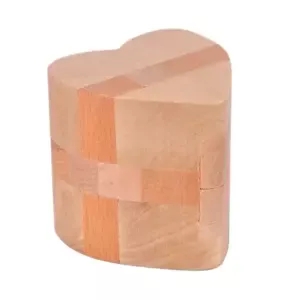
The third time the notched beechwood pin slipped past my thumb and sent five other pieces clattering across my mahogany desk, I didn’t swear. I simply leaned back, took a slow sip of cooling oolong, and stared at the pile of “sticks.” It was 9:30 PM on a Tuesday in February 2026, and I was being thoroughly outsmarted by a design that hasn’t changed much since the Qing Dynasty. There is a specific kind of humility that comes from being defeated by a physical object. Unlike a software bug or a crossword hint you can just Google, a wooden puzzle is a stubborn, silent witness to your lack of spatial reasoning.
Mechanical wood puzzles aren’t just toys; they are tactile lessons in structural integrity where the best designs punish force and reward observation. After testing over 200 mechanical puzzles—from high-end brass cylinders to cheap plastic knockoffs—I’ve returned to wood as my preferred medium. There’s a warmth to the grain, a specific “thunk” when a joint seats properly, and a scent of burnt birch from laser-cut kits that you just don’t get with metal.
If you are looking for a way to reclaim your attention span from the digital abyss, the heritage of classic interlocking designs offers a path that requires no batteries and zero firmware updates. My thesis is simple: the most rewarding puzzles are those that hide their secrets in plain sight, using nothing but friction and geometry to hold the universe together.
The Architecture of the “Aha!” Moment
When you hold a well-crafted wooden brainteaser, you aren’t just holding a game. You are holding a piece of architectural history. Many of the interlocking joints we struggle with today are miniaturized versions of the mortise-and-tenon joinery used in ancient Chinese palaces. These structures stood for centuries without a single nail because the wood itself provided the tension and the lock.
When you finally slide that “key” piece into place, you aren’t just solving a riddle; you are completing a circuit of physical logic. This is why a manual for navigating complex wooden assemblies is often less helpful than just closing your eyes and feeling where the wood wants to move. The wood has a grain, a direction, and a preference. If you fight it, you lose. If you listen to it, the “Aha!” moment arrives not as a shock, but as a graceful inevitability.
6-in-1 Wooden Brain Teaser Set
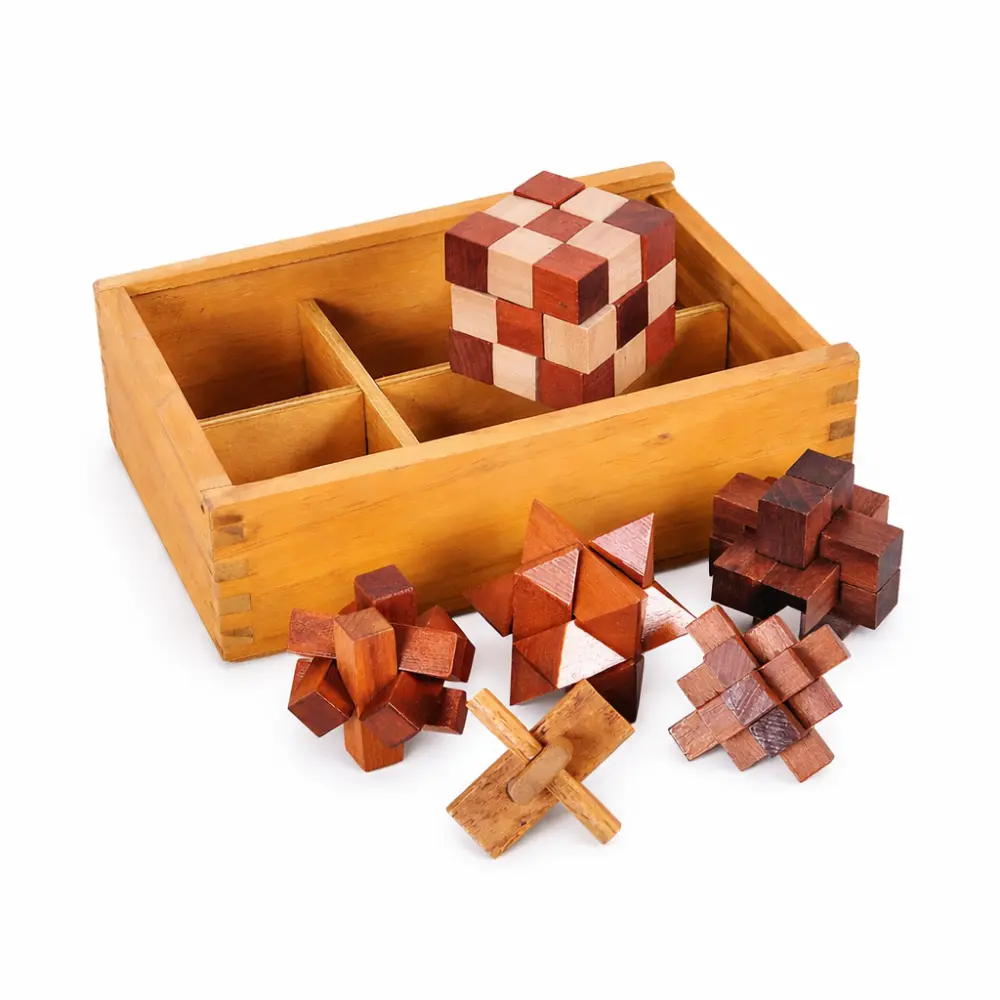
Most people start their journey here, and for good reason. This $38.88 set is essentially a “Greatest Hits” album of traditional Chinese joinery. Each of the six palm-sized puzzles, carved from solid beechwood, represents a different structural challenge. I’ve kept this set on my office coffee table for three weeks, and it is a magnet for anyone who walks in.
The beauty of the 6-in-1 Wooden Brain Teaser Set lies in its deceptive simplicity. You look at the “Burr” puzzle—a ball of notched sticks—and think, “I’ll just pull this apart.” Ten minutes later, you’re staring at a pile of components that look identical but aren’t. Each piece has a subtle notch or a millimetre-off groove that dictates the assembly order. One unlucky “key piece” locks the entire structure. If you don’t find it, you’re just applying useless pressure. At roughly $6.50 per puzzle, the value here is unbeatable for a beginner who wants to test their frustration threshold without breaking the bank.
Why Your Desk Needs a “Productive Distraction”
We live in an era of “micro-stressors.” A notification pings, an email demands a “quick sync,” and our focus is shattered into a thousand jagged pieces. I’ve found that having a mechanical object on my desk acts as a grounding wire. When my brain is looping on a problem I can’t solve, I pick up a puzzle. It forces my prefrontal cortex to switch gears.
You can’t half-solve a Double Cross Cage Puzzle ($18.88). It demands your full sensory engagement. You have to feel the alignment of the twenty-four identical pieces. It’s a tactile meditation. This specific puzzle is a “Level 8” in my book because of the sheer repetition; if you lose your place in the sequence, the whole cage collapses. It’s a fantastic way to “fidget with purpose” during long Zoom calls where you only need to be 50% present.
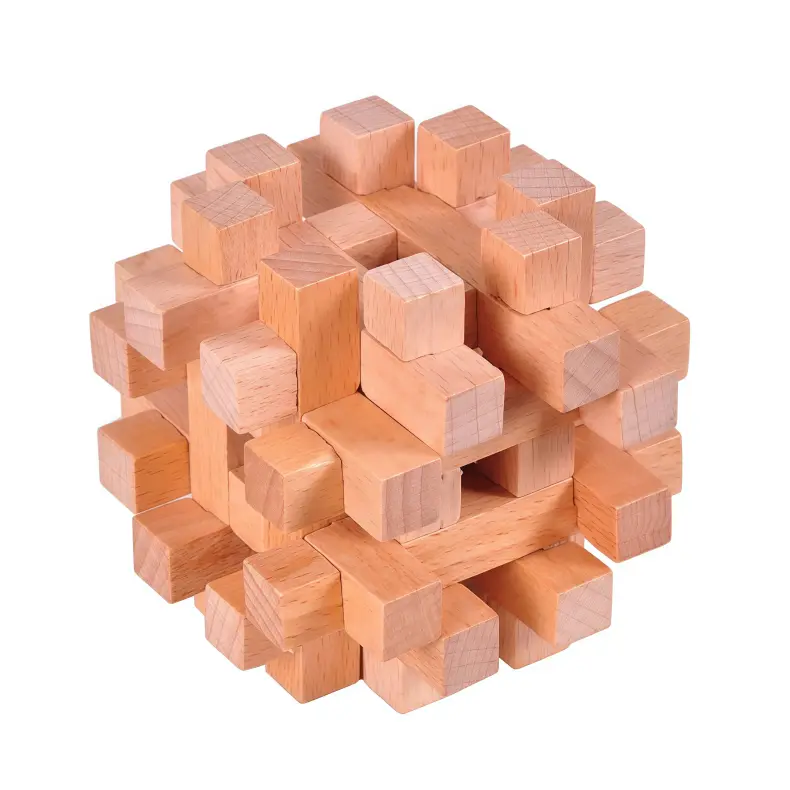
Double Cross Cage Puzzle — $18.88
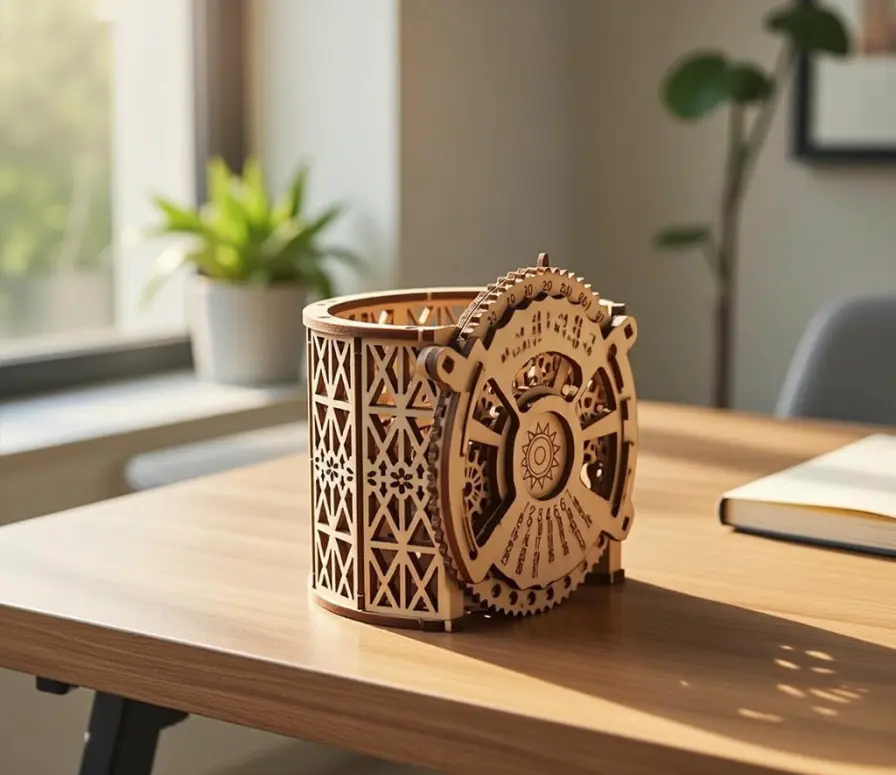
Similarly, the Wooden Desk Organizer with Perpetual Calendar ($19.99) serves a dual purpose. It clears the clutter while providing a small, daily mechanical ritual. Adjusting the date on a perpetual calendar feels significantly more intentional than glancing at the corner of a computer screen. It’s about building a workspace that feels human, not just functional.
The Evolution of the 3D Mechanical Kit
In the last few years, we’ve moved beyond static blocks into the realm of “living” wood. Laser-cutting technology has reached a point where we can create functional gears and escapements out of plywood with tolerances that would make a 19th-century watchmaker weep with envy. These aren’t just brainteasers you solve once; they are engineering projects you inhabit.
Father and Daughter Bicycle 3D Wooden Mechanical Puzzle


This is one of the more sentimental builds I’ve tackled recently. Priced at $29.99, it’s a 115-piece kit that takes about an hour to assemble, but the payoff is in the motion. I built this with my niece over a rainy Saturday, and watching her realize that the tiny wooden chain actually drives the rear wheel was worth every penny.
The Father and Daughter Bicycle 3D Wooden Mechanical Puzzle uses a hand-crank system to animate the pedals and gears. The laser-cut pieces are precise enough that you don’t need glue, which is a huge plus for those of us with “messy” DIY tendencies. However, a word of advice: keep the wax handy. Plywood-on-plywood friction is the enemy of smooth motion. If you don’t wax the gear teeth during assembly, the “magic” will feel more like a “grind.” It’s a perfect entry-level mechanical kit for anyone who wants to see how a drivetrain actually functions.
Mechanical 3D Wooden Globe Puzzle

If the bicycle is a lesson in motion, this globe is a lesson in perspective. At $28.88, it’s a sophisticated piece of home decor that happens to be a puzzle. Most globes are just spheres on a stick. This one is a gear-driven system that allows you to rotate the Earth through a series of interlocking wooden wheels.
Building the Mechanical 3D Wooden Globe Puzzle is an exercise in patience. You are transforming flat sheets of wood into a curved, rotating map. The “Intermediate” difficulty rating is accurate—you’ll need a steady hand for the smaller gear pins. I’ve had this on my bookshelf for six months, and it still draws eyes. It’s a great example of how the collection of tactile logic challenges has evolved from simple blocks into complex, functional art.
The Peak Moment: When Wood Becomes Music
Most people assume wooden puzzles are silent, static objects. But the true peak of the hobby is when you integrate sound and perpetual motion. This is where the engineering gets serious. I remember the first time I saw a high-end music box kit; I thought it was a gimmick. I was wrong.
Wooden Ferris Wheel Music Box Kit

This is the heavyweight of my current collection. At $59.99, it’s the most expensive item on this list, but it’s also the most impressive. It pays homage to George Ferris’s 1893 masterpiece, a story well-documented in the history of industrial innovation. But this kit adds a layer of complexity the original didn’t have: two music movements.
Most music boxes use a single comb and drum. The Wooden Ferris Wheel Music Box Kit uses two, creating a layered, orchestral sound as the wheel turns. The assembly is a commitment—expect to spend a full afternoon on it—but the “click-clack” of the gears syncing with the melody is the most satisfying sensory experience I’ve had in years. There is even a hidden drawer in the base for small keepsakes. If you want to impress someone who thinks they’ve seen every type of puzzle, this is the one. It’s not just a build; it’s a performance.
The Science of the “Marble Run” and STEM
We often talk about “STEM toys” as if they are a modern invention, but the principles of gravity, momentum, and gear ratios are timeless. A marble run is essentially a physical manifestation of a logic gate. If the marble goes here, the lever flips there.
Electric Wooden Marble Run Kit
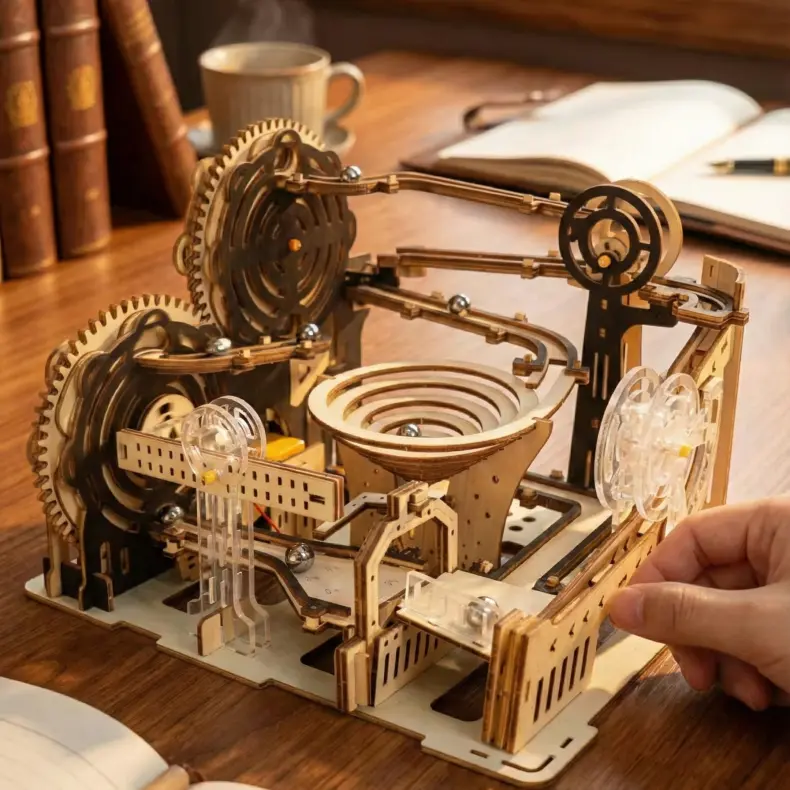
For $51.99, this kit removes the one “annoyance” of traditional marble runs: the need to constantly reset them. It’s powered by an electric motor, creating a perpetual motion machine that sits on your desk. With 168 pieces, it’s a beefy build.
The Electric Wooden Marble Run Kit is what I call “ASMR for engineers.” The sound of the steel marbles hitting the wooden tracks is incredibly grounding. I’ve noticed that when I have this running in the background, my focus on writing actually improves. It’s a steady, rhythmic white noise. However, be warned: the assembly requires precision. If your tracks are off by even a millimeter, the marbles will fly off the rails. It’s a puzzle that teaches you the importance of tolerances. If you need a break from the physical world, you might also enjoy a digital break with some old-school arcade logic, but nothing beats the gravity-fed satisfaction of a marble run.
Functional Puzzles: The Art of Knowing the Date
Sometimes, the best puzzle is one that solves a real-world problem. I’m a sucker for “functional art”—objects that look like they belong in a Victorian explorer’s study but actually do something useful.
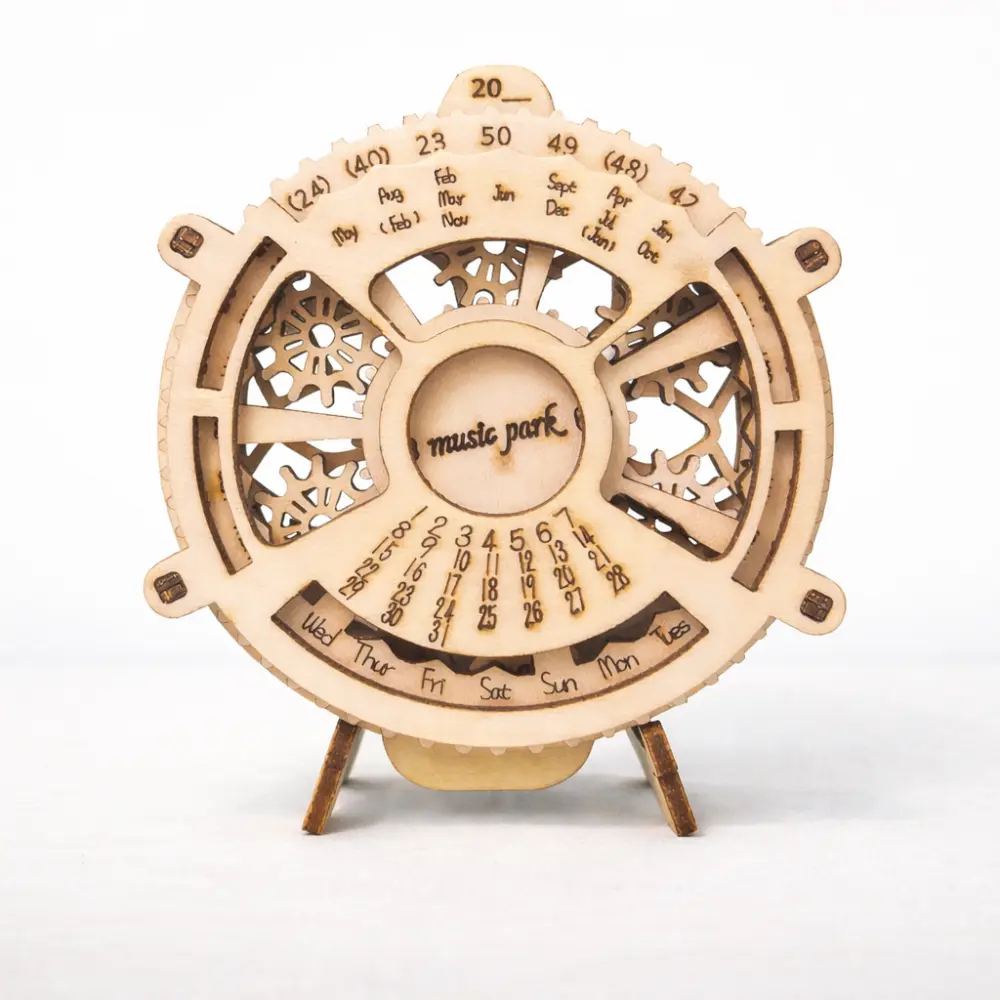
The 3D Wooden Perpetual Calendar Puzzle ($39.99) is a prime example. It uses a series of interlocking gears to calculate the day of the week for any date between 2023 and 2050. It’s based on the same mathematical principles that have governed our calendars for centuries, as noted in the history of science puzzles. Building it feels like you’re constructing a tiny, wooden computer.
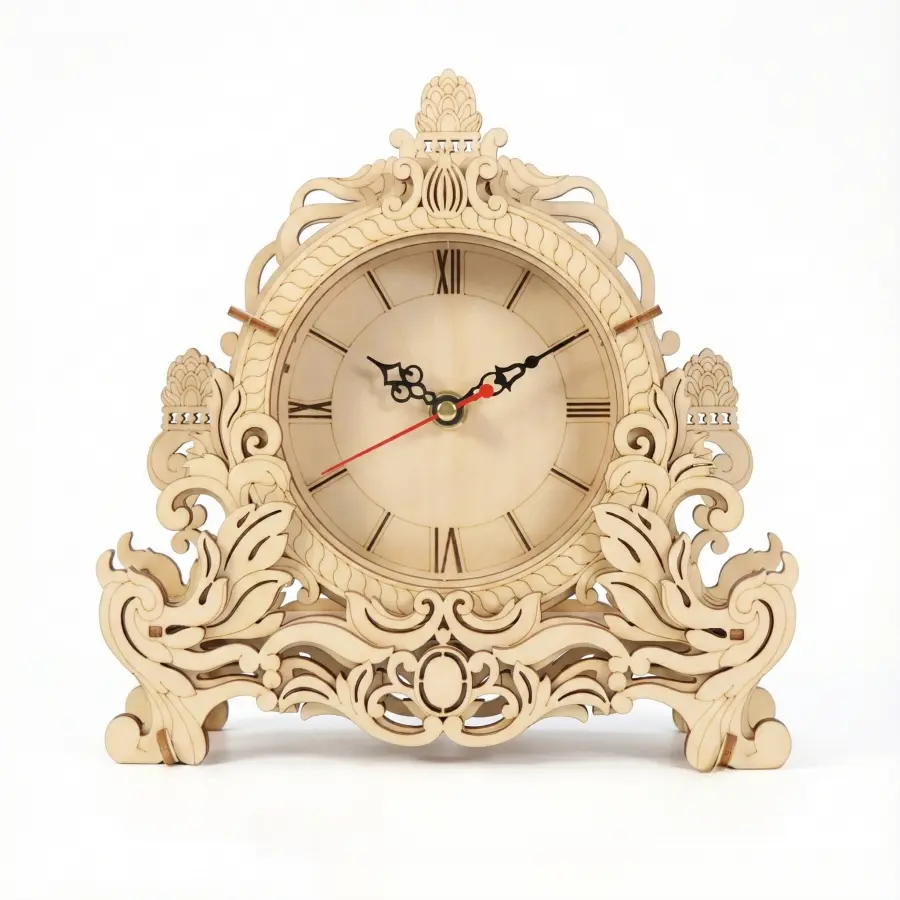
Then there’s the 3D Wooden Puzzle Clock DIY Kit ($26.99). It’s a 28-piece build that you can finish in 30 minutes. It’s not a “deep” puzzle, but it’s a fantastic “gateway” product. It uses a quartz movement, so it actually keeps time once you’re done. It’s the kind of project that makes you feel like a master craftsman without requiring a workshop full of tools.
For those who want to take it a step further into the realm of pure mechanics, the 3D Wooden Mechanical Pistol Kit ($29.99) is a fascinating study in trigger assemblies and recoil simulation. It doesn’t fire anything, but the mechanical feedback of racking the slide is addictive. It’s a fidget toy for people who appreciate the “click-clack” of a well-oiled machine.
How to Choose Your First Wooden Challenge
If you’re new to this, don’t start with the Ferris Wheel. You’ll end up with a pile of broken birch and a headache. Start with the 6-in-1 Wooden Brain Teaser Set. It gives you six chances to succeed.
When choosing, consider these three factors:
1. Material: Solid wood (like beech) is better for “disassembly” puzzles. Plywood is better for “mechanical kits” because it’s more stable and doesn’t warp as easily.
2. Complexity: Look at the piece count. Under 50 pieces is a “quick win.” 100-200 pieces is a weekend project. 300+ is a commitment.
3. The “Why”: Do you want something to fiddle with while you think, or something to build and display? For fiddling, go with the Double Cross Cage Puzzle. For display, the Mechanical 3D Wooden Globe Puzzle is king.
If you find yourself getting stuck on the math of the gears, you might want to brush up with a math-based brain exercise before tackling the more complex gear-driven models.
Frequently Asked Questions
How do I solve a wooden brain teaser without the instructions?
The secret to solving any interlocking wooden puzzle is to look for the “loose” piece. In almost every design—from the 6-in-1 set to the Double Cross Cage—one piece will have slightly more “give” than the others. This is the key. Once you slide that piece out, the structural integrity of the puzzle is compromised, and the rest will follow. I always recommend taking a photo of the puzzle from three different angles before you take it apart. You think you’ll remember how it goes back together. You won’t. If you get really stuck, there are digital archives of historical puzzle solutions that can help you understand the underlying geometry.
What should I do if a piece of my 3D wooden kit breaks?
Plywood is strong but thin. If you apply too much pressure at the wrong angle, snap happens. Most high-quality kits, like the Ferris Wheel or Marble Run, include a few “spare” pieces for the most fragile components. If you break a unique piece, don’t panic. A small drop of wood glue and a piece of painter’s tape to hold it while it dries will fix 90% of breaks. I’ve had to do this more times than I care to admit. The key is to let the glue cure for a full 24 hours before you try to fit the piece back into the assembly.
Are wooden puzzles better than metal ones?
“Better” is subjective, but wood is certainly more forgiving for beginners. Metal puzzles, like the Hanayama series, often require very precise, non-intuitive movements. Wood has a slight “give” to it. It’s also much more satisfying to build a wooden kit from scratch than to simply take a metal one apart. However, metal puzzles are virtually indestructible, whereas wood can be affected by humidity. If you live in a very dry climate, your wooden puzzles might become loose; in a humid one, they might swell and become nearly impossible to move.
What is the best age for these puzzles?
Most mechanical kits are rated for ages 14+, not because of complexity, but because of the dexterity required. A 10-year-old might understand the logic of the 3D Wooden Puzzle Clock DIY Kit, but they might lack the fine motor skills to snap the delicate gears together without breaking them. For younger kids, stick to the solid wood interlocking sets. For adults, there is no upper limit—I know 80-year-old engineers who still get a kick out of a new marble run.
Why do some wooden puzzles smell like they’ve been in a fire?
That’s the smell of laser cutting! To get the precision needed for these gears to work, a high-powered laser literally burns through the wood. The “charred” smell usually dissipates after a few days. If it bothers you, leave the wooden sheets out of the box for 24 hours before you start building. Personally, I’ve grown to love that smell—it’s the scent of a new project beginning.
How do I maintain my wooden puzzles?
Keep them out of direct sunlight, which can make the wood brittle and cause the colors to fade. If a mechanical kit starts to squeak or jam, don’t use oil or WD-40—it will soak into the wood and cause it to swell. Use a plain white candle or a stick of beeswax. Rub it on the gear teeth and any sliding surfaces. It’s a dry lubricant that won’t damage the fibers.
Can these puzzles really help with anxiety or focus?
While I’m not a doctor, I can tell you that “tactile grounding” is a real thing. When you are focused on the physical sensation of wood and the logical problem of a gear assembly, it’s very hard for your brain to continue spiraling on abstract worries. It’s a form of “active rest.” Many of my colleagues in the hobbyist community use these puzzles specifically to wind down after a high-stress day of coding or management.
Is it cheating to look up the solution?
In the puzzle community, we have a saying: “The solution is the destination, but the solve is the journey.” If you look up the solution, you’ve reached the destination, but you’ve missed the scenery. I only look up a solution if I’ve been stuck for more than a week. Sometimes, seeing the first step is enough to unblock your brain so you can finish the rest yourself.
What’s the difference between a “burr” puzzle and a “sequential discovery” puzzle?
A burr puzzle (like those in the 6-in-1 set) is all about interlocking pieces that hold each other in place. A sequential discovery puzzle is like a “puzzle box”—you have to find a hidden tool or a secret compartment to move to the next step. Most of the kits we’ve discussed today are a hybrid; you are building a mechanical system that reveals its logic as you go.
Why are some wooden puzzles so much more expensive than others?
It usually comes down to two things: the type of wood and the complexity of the design. Solid beechwood or rosewood puzzles are more expensive to source and carve than plywood kits. However, some plywood kits (like the Ferris Wheel) command a higher price because of the sheer number of parts and the inclusion of high-quality music movements or motors. You’re paying for the engineering as much as the material.
Can I paint or stain my wooden puzzles?
Yes, but be very careful. Any layer of paint or stain adds thickness to the wood. In a high-precision mechanical kit, even a coat of spray paint can be enough to make the gears jam. If you want to add color, I recommend using wood markers or a very thin water-based stain, and only on the non-functional surfaces (the parts that don’t touch other moving parts).
Do I need any special tools to build these?
Most kits are “no tools required,” but I always keep a few things on my desk: a pair of tweezers for small pins, a hobby knife to trim any burrs off the wood, and a piece of fine-grit sandpaper. Even the best laser-cut kits sometimes have a “stubborn” piece that needs a tiny bit of sanding to fit perfectly.
The One Puzzle That Teaches You How All the Others Work
If I could only keep one item from this list, it would be the 6-in-1 Wooden Brain Teaser Set ($38.88). It’s the “Rosetta Stone” of wooden puzzles. It teaches you the grammar of joinery—the way notches, grooves, and “keys” interact to create strength from seemingly fragile parts. It’s the foundation upon which everything else, including the complex 300-piece mechanical kits, is built.
After 40 hours of fiddling with brass, birch, and beech this month alone, I’ve realized that the frustration isn’t a bug; it’s the feature. The moment of frustration is the moment your brain is being forced to grow. When you finally hear that “click” and the puzzle yields, you aren’t just holding a solved toy—you’re holding a slightly more capable version of yourself.
Start with the 6-in-1 Wooden Brain Teaser Set for just under forty dollars. It taught me more about patience and the value of a “soft touch” than any self-help book ever could. Once those six are solved, the manual for navigating complex wooden assemblies will make a lot more sense, and you’ll be ready to build your own world, one gear at a time. The wood is waiting; don’t force it—just listen.