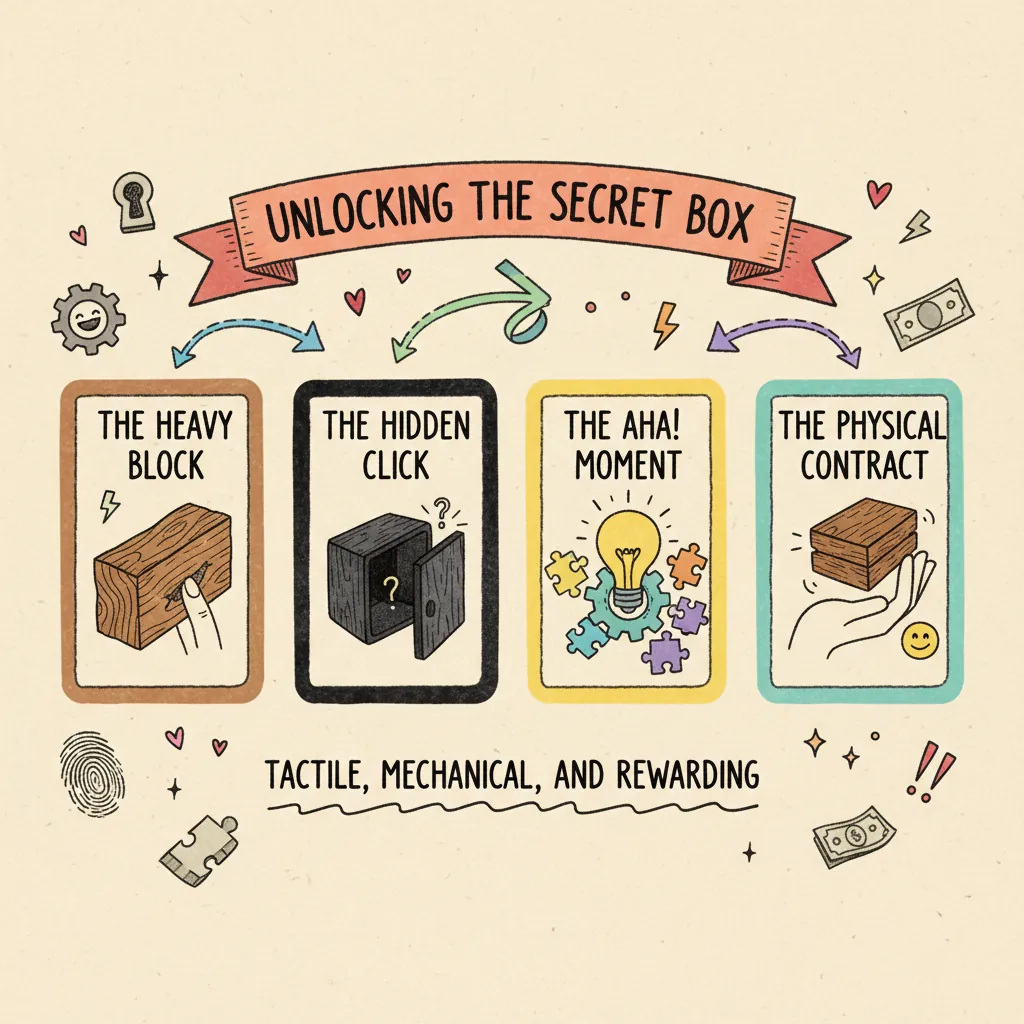
My fingernail was caught in a seam that shouldn’t have existed. It was a rainy Tuesday, and I’d been staring at a block of walnut for forty minutes, trying to figure out why the left side felt heavier than the right. There was no keyhole, no visible hinges, and certainly no instructions. When the panel finally clicked—a sound so soft it was more of a vibration than a noise—and slid back to reveal a hollow core, the rush of dopamine was better than any cup of coffee.
A great wooden puzzle box with a hidden compartment is more than just a place to hide your spare house keys or a folded twenty-dollar bill. It is a physical contract between the maker and the solver. It’s an object that rewards observation and punishes impatience. After testing over 200 mechanical puzzles, I’ve realized that the best ones don’t just sit on a shelf looking pretty; they demand a conversation with your hands.
The thesis of this review is simple: the most rewarding puzzle boxes are those that prioritize tactile feedback and mechanical honesty over sheer complexity. Whether you are looking for a weekend project or a pre-assembled enigma, the wood must speak to you.
Why We Are Hardwired to Love Secret Spaces
There is something deeply primal about a hidden compartment. Historically, these objects weren’t toys. From the elaborate Japanese puzzle boxes (Himitsu-Bako) of the Meiji era to the double-bottomed trunks used by travelers in the 18th century, secret storage was a necessity for survival. Today, we don’t need to hide our gold from highwaymen, but we still crave that sense of “for your eyes only.”
When you hold a mechanical puzzle, you are engaging with a legacy of engineering that predates the microchip by millennia. You aren’t just solving a toy; you are decoding a designer’s intent. Most mass-market products today are designed to be intuitive—you shouldn’t need a manual to use a toaster. But a puzzle box is the opposite. It is intentionally counter-intuitive. It forces you to slow down, which is a rare gift in a world that moves at the speed of a notification.
The Engineering of the “Aha!” Moment
Before we look at the specific models I’ve lived with, we need to talk about joinery. A wooden puzzle box lives or dies by its tolerances. If the wood is too loose, the secret is revealed by a simple shake. If it’s too tight, seasonal humidity will lock your “hidden” compartment away forever.
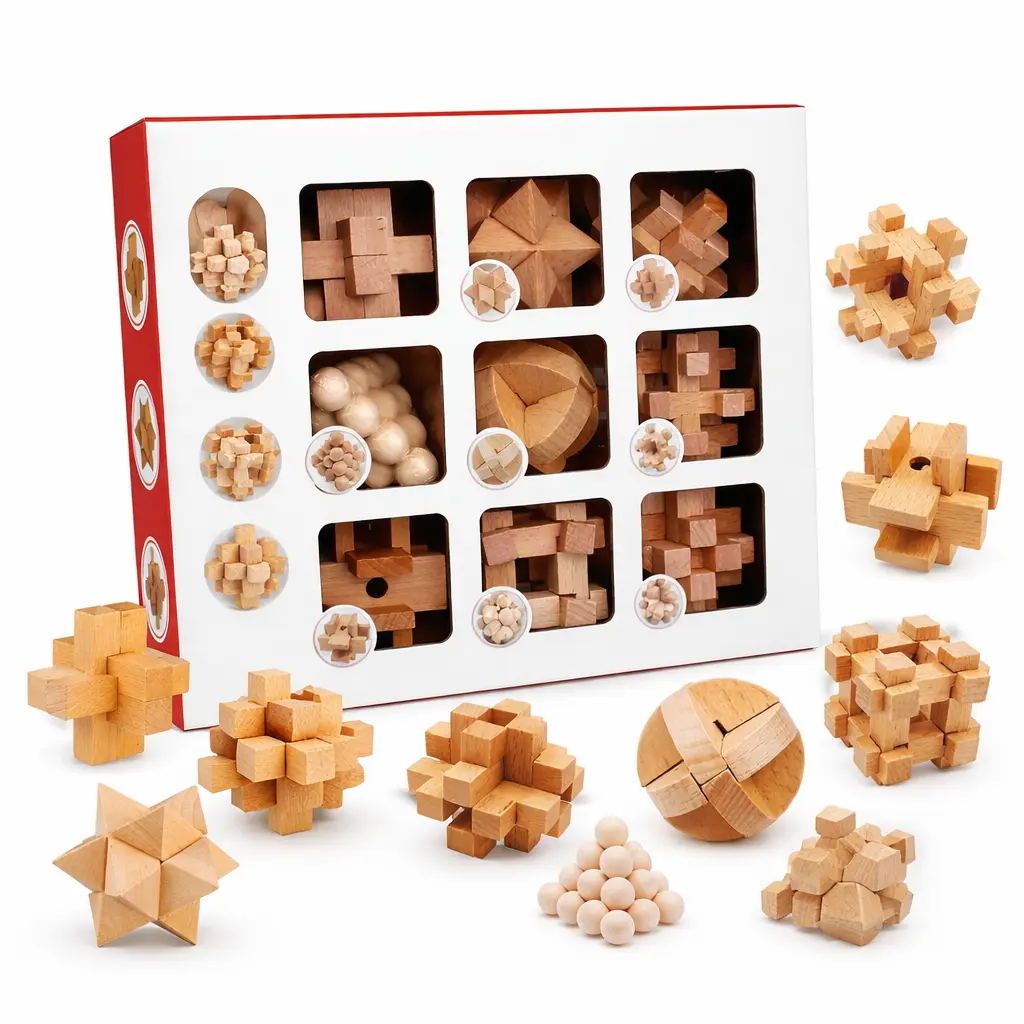
Luban Lock Set 9 Piece
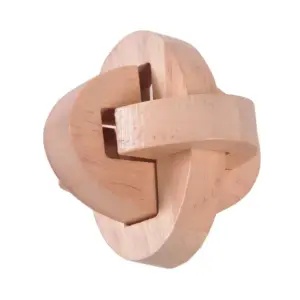
The foundation of almost every wooden puzzle we see today can be traced back to the mortise-and-tenon joints found in the $39.99 Luban Lock Set 9 Piece. I spent a week with this set, and it’s a masterclass in ancient Chinese engineering. Lu Ban, the legendary carpenter of the Zhou Dynasty, supposedly used these to test his son’s wit.
There are no nails here. No glue. Just geometry. When you finally slide the “key” piece out of the 9-piece cross, the entire structure collapses into a pile of timber. Putting it back together is where the real work begins. It’s a humbling experience; you realize that 2,500 years ago, people were already playing with the same spatial logic we use in CAD software today. For the price of a decent lunch, you get nine distinct lessons in structural integrity.
The Rise of the DIY Mechanical Kit
In the last five years, there has been a massive shift from pre-assembled boxes to laser-cut DIY kits. I was skeptical at first. I thought the charred smell of laser-cut plywood would ruin the experience. I was wrong. Building the box yourself gives you an intimate understanding of the “why” behind the “how.”
You learn that a specific gear needs to be sanded just a bit more to rotate smoothly. You understand that the hidden drawer only opens when the internal latch is cleared by a specific centrifugal force. It turns the solve into a long-form narrative.
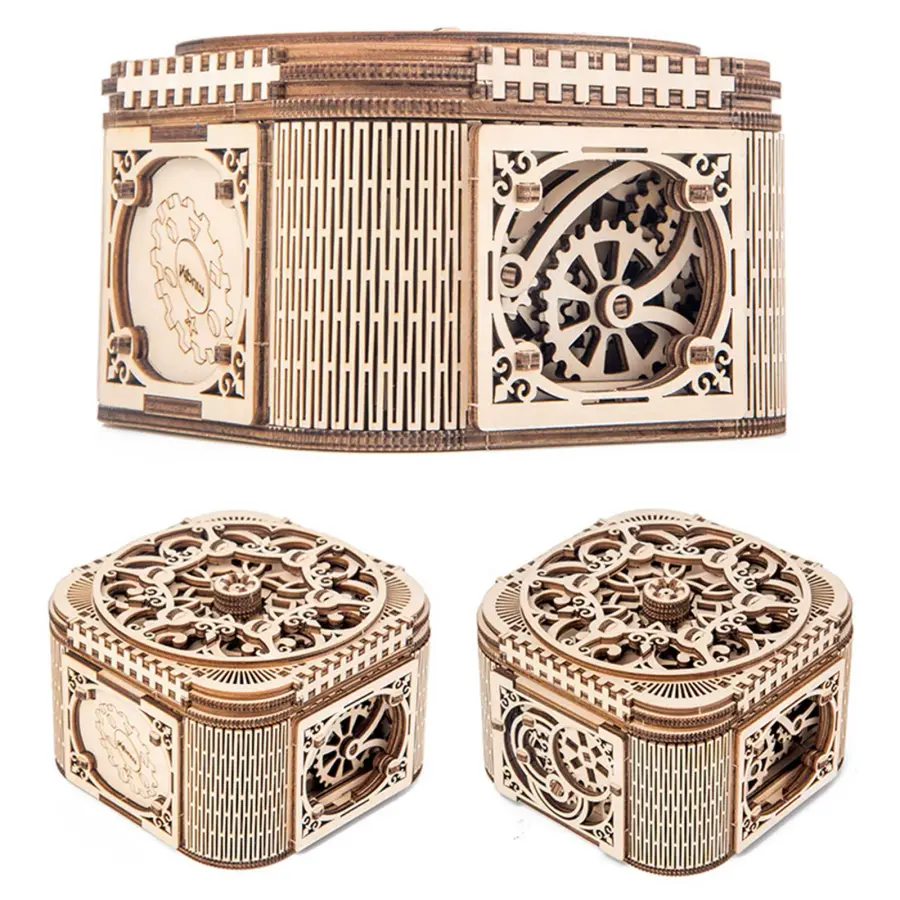
3D Wooden Puzzle Treasure Box
If you want to understand the cognitive perks of complex assembly, start with the 3D Wooden Puzzle Treasure Box. Priced at $29.99, this isn’t just a box; it’s a machine. It uses a series of visible gears on the lid that you have to align to trigger the opening mechanism.
When I built this, I noticed the tolerances were surprisingly tight for plywood. You have to be careful—if you force a piece, it will snap. But once it’s together, the movement is incredibly smooth. The hidden compartment isn’t huge—think jewelry or a small stack of business cards—but the satisfaction of watching those gears turn in unison is worth the three hours of assembly. It’s the kind of piece people can’t help but touch when they see it on your coffee table.
When the Box Becomes a Safe
For some, a “hidden compartment” isn’t enough. They want security. Or at least the illusion of it. This is where the combination lock puzzles come in. These are significantly more complex because they involve internal tumblers that you can’t see.
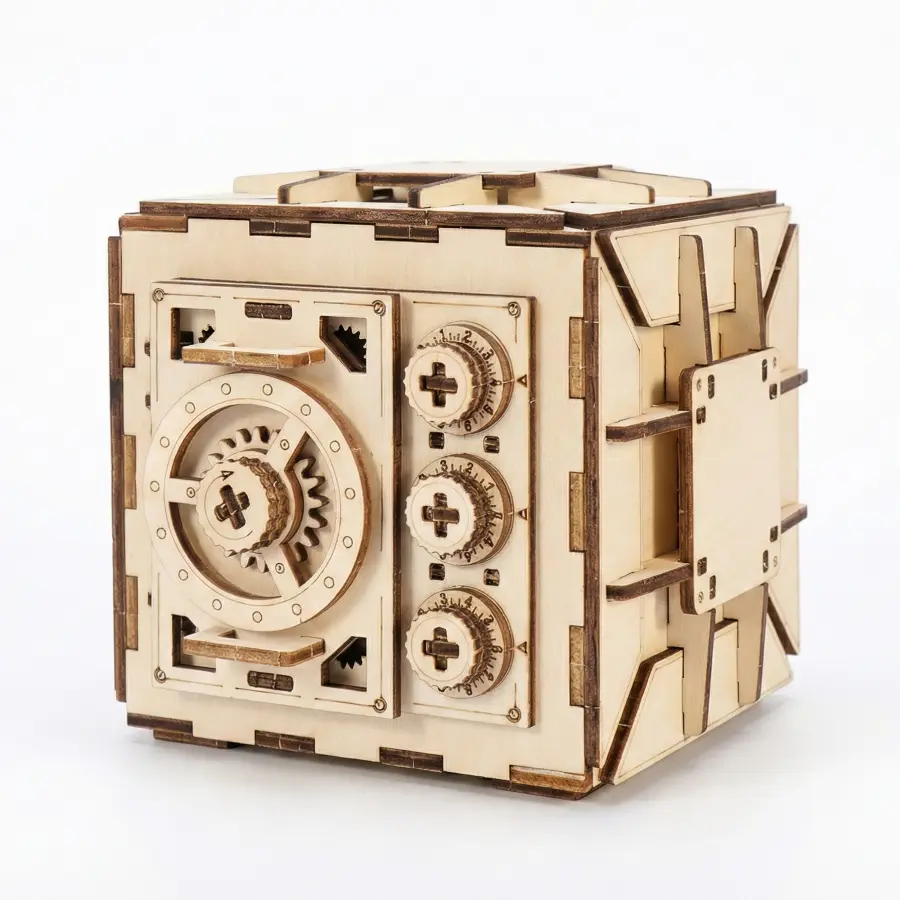
3D Wooden Puzzle Safe with Combination Lock
I’ve had the 3D Wooden Puzzle Safe ($30.99) on my desk for three weeks now. Unlike a traditional puzzle box where you might find the solution by accident, this requires deliberate input. You have to follow a specific sequence of turns—left, right, left—to align the internal notches.
The build is intense. With 111 pieces, it’s not the most parts-heavy kit I’ve done, but it’s one of the most precise. If you don’t wax the gears (use a tea light candle, it works better than the included wax), the combination dial will feel gritty. But when it’s dialed in? It feels like a miniature version of a bank vault. I use mine to store high-value items like my favorite fountain pen nibs. It’s a great way to master the basic mechanics of secret openings before moving on to more expensive boutique puzzles.
The Sensory Experience: Sound and Light
A wooden puzzle box with a hidden compartment doesn’t have to be a silent partner. Some of my favorite pieces in my collection are those that incorporate a secondary sensory element, like music or light.
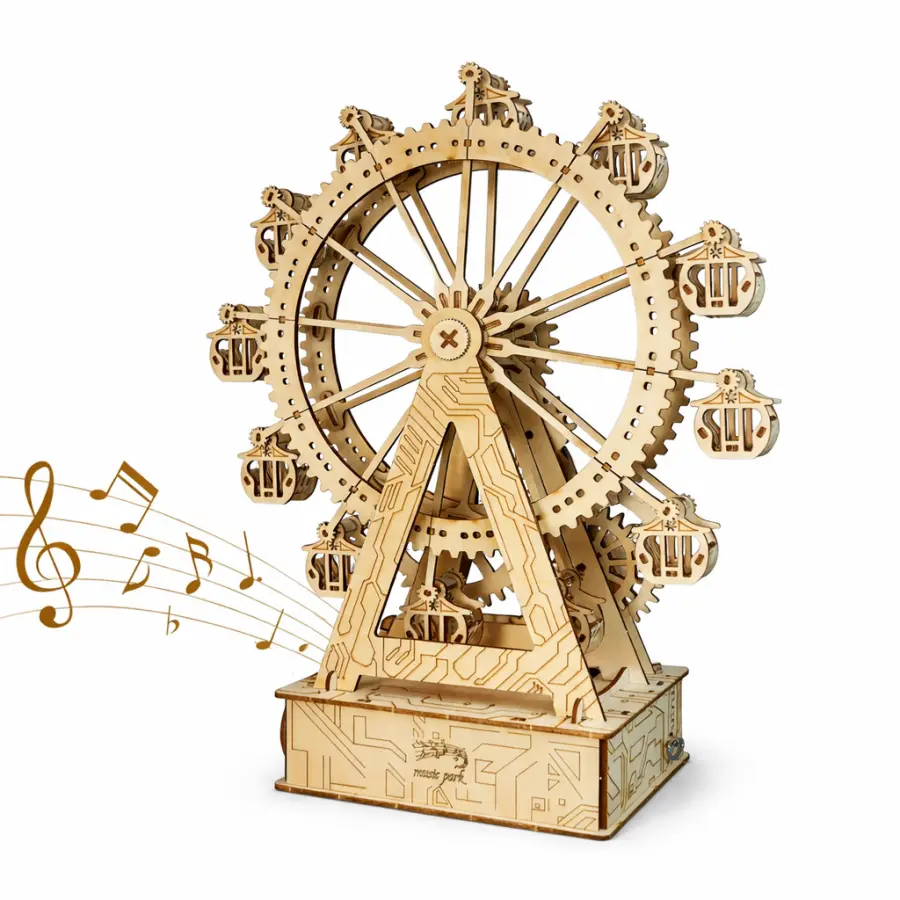
Wooden Ferris Wheel Music Box Kit
The $59.99 Wooden Ferris Wheel Music Box Kit is an outlier in the world of puzzle boxes. Most music boxes are just… boxes. This one is a full-scale kinetic sculpture. What most reviewers miss is the dual-movement system. Most kits use one musical comb; this uses two, creating a layered sound that feels much fuller than the tinny melodies of cheap souvenirs.
The “hidden” element here is a small drawer in the base. It’s not the most difficult “solve” in this list, but the integration of the movement and the music makes it a centerpiece. I found that the assembly of the wheel itself requires a very steady hand—one slip and you’re gluing a spoke back together. It’s a piece that rewards the patient builder. If you’re looking for the evolution of mechanical musical instruments, this is a fantastic starting point.
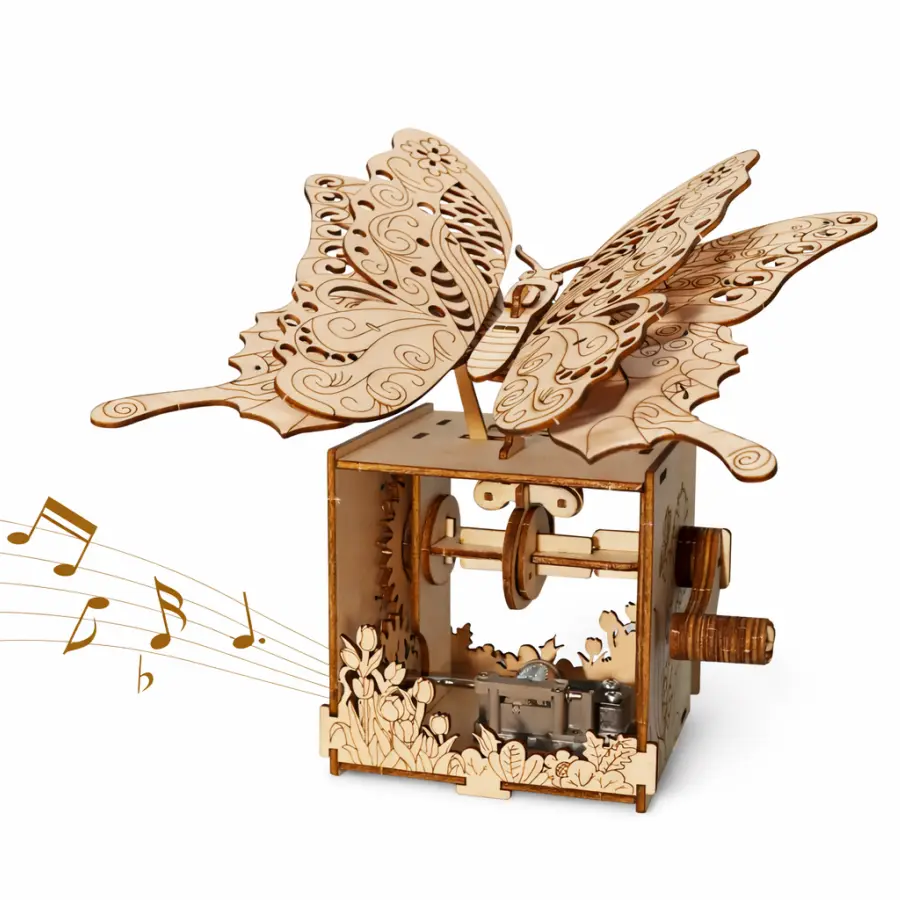
Another excellent option for those who appreciate the auditory side of things is the Layered Butterfly Wooden Music Box ($28.99). It’s a bit more whimsical, but the exposed gear train provides a great visual of how a puzzle actually functions.
The Practical Side of the Puzzle
Not every puzzle needs to be a mystery. Sometimes, the best “hidden” compartment is one that serves a daily purpose. I’m a big fan of “functional art”—objects that look like standard office supplies but hide a secret.
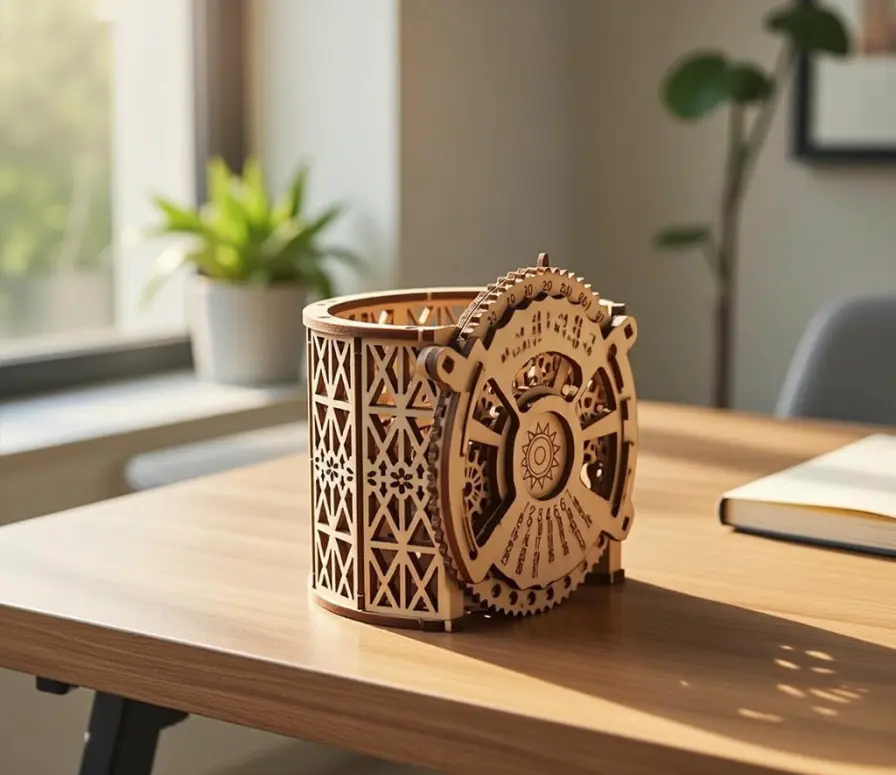
Take the Wooden Desk Organizer with Perpetual Calendar ($19.99). On the surface, it’s just a pen holder. But the perpetual calendar mechanism is a puzzle in itself. You have to align the rings to find the date, a task that forces you to interact with the object every single morning. It’s a great way to keep your brain sharp during those first few minutes of the workday. I’ve found that resetting your brain with a quick pattern game like this can actually improve your focus for the rest of the morning.
For something a bit more aesthetic, the
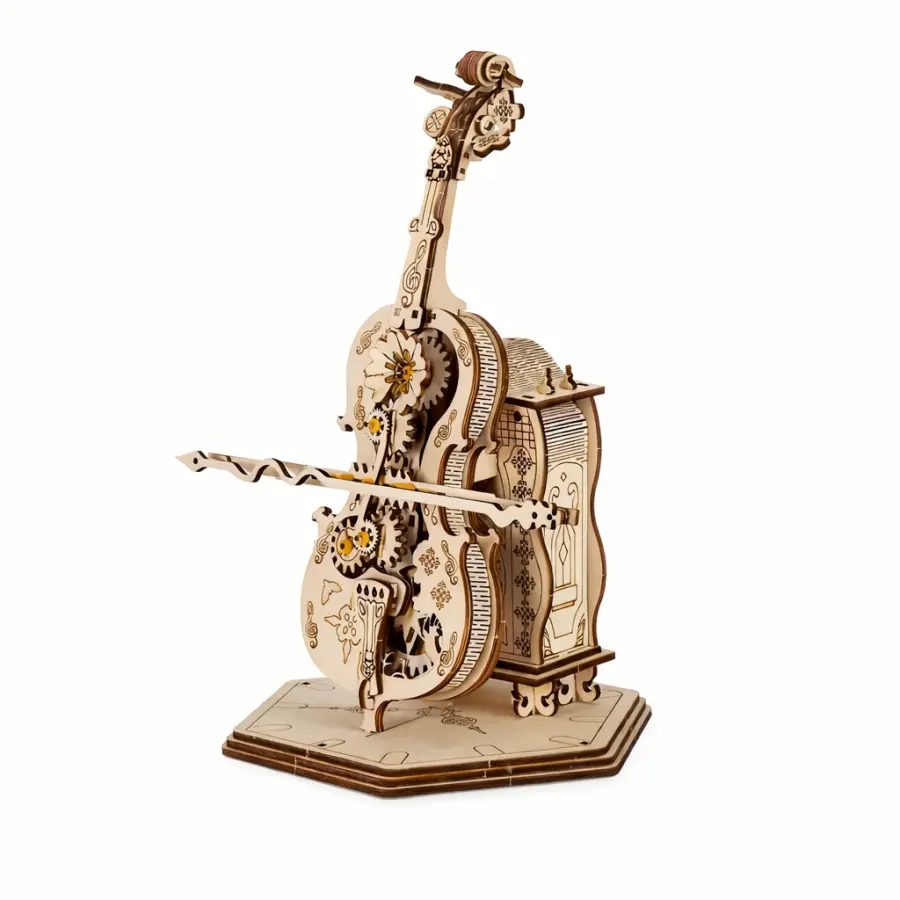
3D Wooden Cello Puzzle Model Kit ($29.99) adds a touch of Victorian steampunk to a shelf. While it doesn’t have a traditional “drawer,” the way the pieces interlock to create the curved body of the instrument is a structural puzzle that will challenge even experienced builders.
Historical Replicas and Storytelling
The best puzzles tell a story. When you are building historical replicas from scratch, you aren’t just fitting Tab A into Slot B. You are recreating a piece of the past.

The Galleon Ship 3D Wooden Puzzle Model Kit (check current pricing) is a perfect example. It’s a complex build that mimics the actual construction of 16th-century vessels. While it lacks a “secret drawer,” the entire hull is essentially a hollow compartment. I’ve known collectors who hide small notes or “treasure” inside the hull during assembly, effectively creating a time capsule that can only be accessed by “wrecking” the ship—or knowing exactly which panel to pry loose.
For a more atmospheric experience, the
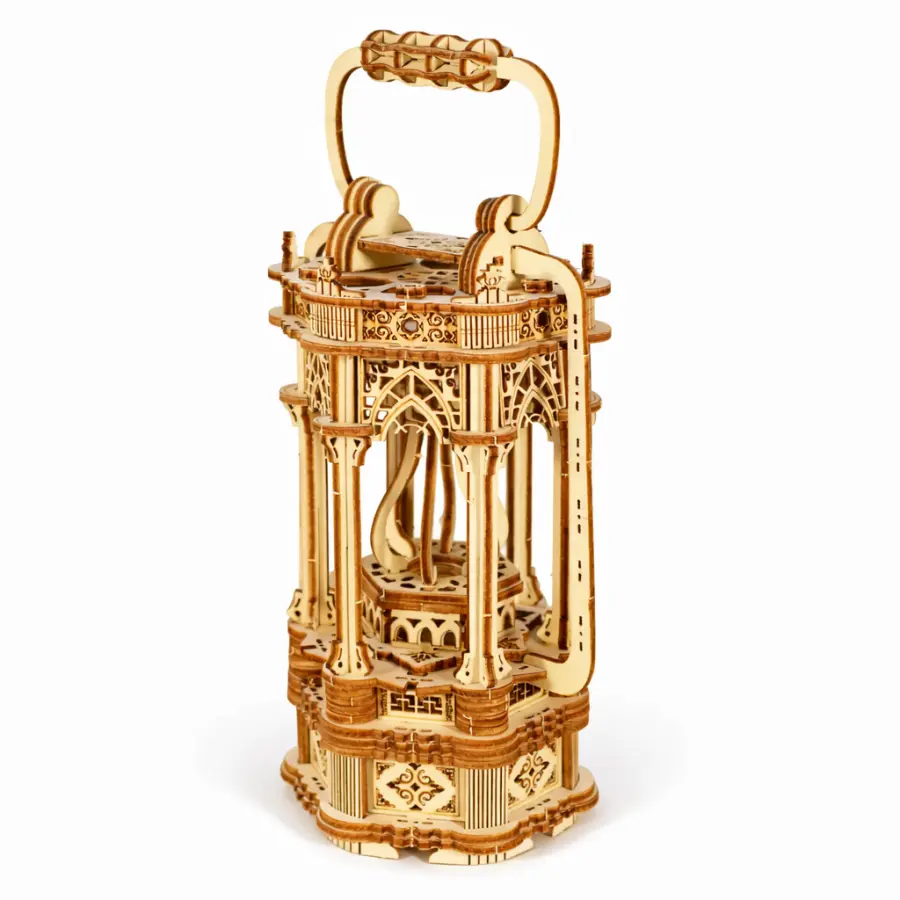
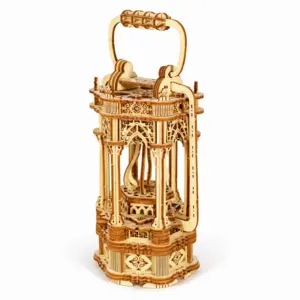
Light-Up Gothic Wooden Lantern 3D Puzzle (check current pricing) uses light to highlight its internal geometry. The “hidden” part here is the battery pack and the wiring, which you have to cleverly integrate into the wooden frame so it remains invisible to the casual observer.
The Minimalist Approach: The “Key” Puzzles
Sometimes you don’t want a box. You want a singular object that defies logic. This is where the “key” or “lock” puzzles come in. They are small, portable, and incredibly frustrating.
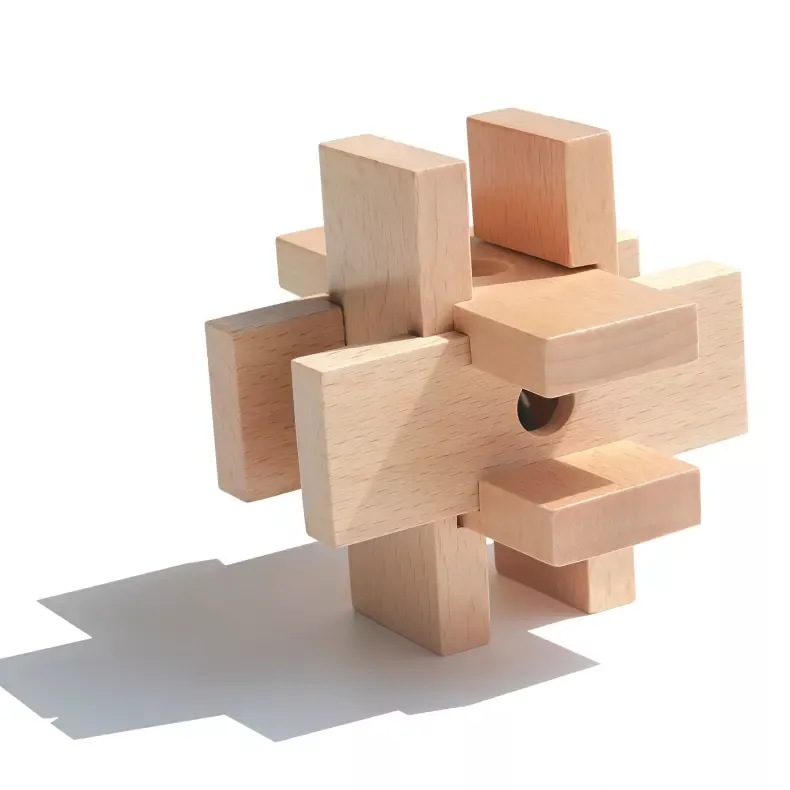
6 Piece Wooden Puzzle Key — $12.99
The 6 Piece Wooden Puzzle Key ($12.99) is the one I give to people who say they are “good at puzzles.” It looks like a simple wooden key. It’s not. There is one specific piece that must move first, but it’s held in place by the friction of the other five. It’s a beautiful example of how insider secrets about modern wooden brain teasers often come down to the simplest movements. If you get stuck, I recommend switching to logic-based grid puzzles for a few minutes to clear your head before coming back to the key.
Honest Negatives: What to Watch Out For
I promised to be fair, and that means talking about the downsides. Wooden puzzles have three main enemies:
- Humidity: Wood is a living material. If you live in a swampy climate, your puzzle box might swell and become un-solvable. If you live in a desert, it might shrink and fall apart. I keep my best pieces in a room with a dehumidifier.
- The “One-and-Done” Factor: Once you know the secret, the puzzle is technically “solved.” However, for the kits mentioned above, the value is in the build and the display. If you want something with infinite replayability, you’re better off looking at extreme trick boxes designed to stump veterans.
- Fragility: These are not toys for toddlers. The laser-cut tabs are thin. If you force a piece during assembly, you will hear a “snap” that will haunt your dreams. Always use the included sandpaper and wax.
How to Choose the Right Box for Your Skill Level
If you are a beginner, don’t start with the Safe. You will get frustrated and throw it across the room. Start with something like the Treasure Box or the Luban Lock set. They provide enough feedback to keep you engaged without making you feel stupid.
If you are buying a gift, think about the recipient’s personality. Is it for a musician? Get the Cello. Is it for a history buff? The Galleon. If you want to involve the whole group, consider engaging the whole family in a solve during your next holiday gathering. It’s a great way to see who has the most patience.
Maintenance and Care for Your Wooden Enigmas
A wooden puzzle box is an investment. To keep the mechanisms smooth:
* Wax everything: I cannot stress this enough. Every moving surface should be rubbed with a bit of paraffin wax or a simple white candle.
* Avoid Sunlight: UV rays will bleach the wood and can make it brittle over time.
* Handle with Clean Hands: Skin oils can build up in the grain, making the “hidden” seams more visible over time.
FAQ: Everything You Wanted to Know About Hidden Compartments
How do I open a wooden puzzle box if I’m stuck?
First, stop pulling. If it doesn’t move with the pressure of a single finger, you are doing it wrong. Most wooden puzzle boxes rely on sliding panels, gravity pins, or centrifugal force. Try rotating the box in different directions while gently tapping the sides. If it’s a DIY kit, look back at the assembly manual—it usually reveals the “key” movement.
Are these boxes actually secure for valuables?
In a word: no. While they have “hidden compartments,” a determined person with a hammer can get into any wooden puzzle box in three seconds. These are for “security through obscurity” and the joy of the mechanism, not for storing your grandmother’s diamonds. Think of them as a fun way to hide a gift card or a small memento.
What is the best wood for a puzzle box?
For DIY kits, high-quality birch plywood is the standard because it’s stable and takes laser cutting well. For pre-assembled boutique boxes, hardwoods like walnut, maple, and rosewood are preferred for their weight and beauty. Avoid anything made of “MDF” or “pressed wood,” as these don’t handle the friction of a puzzle mechanism well.
Can children solve these?
Most of the products listed here are rated for ages 14 and up. This isn’t because the logic is too hard for a 10-year-old, but because the physical pieces are fragile. A child’s instinct is to pull harder when something is stuck, which is the fastest way to break a $30 kit.
Do I need glue for these 3D puzzles?
Most modern laser-cut kits, like the Treasure Box or the Safe, are designed for “snap-fit” assembly. They use friction and clever joinery to stay together. However, I always keep a small bottle of wood glue handy for the occasional accidental break. Just be careful not to get glue on the moving parts!
How long does it take to build a typical puzzle box?
A mid-range kit like the Ferris Wheel or the Treasure Box usually takes between 2 and 4 hours. It’s the perfect “one-afternoon” project. I recommend breaking it up into two sessions: one for punch-out and sanding, and one for final assembly.
Why does my puzzle box smell like a campfire?
That’s the “laser-cut” smell. The pieces are literally burned out of the wood with a high-powered beam. The smell usually fades after a few days. If it bothers you, leave the pieces spread out in a well-ventilated room for 24 hours before you start building.
My combination lock isn’t working on the safe. What happened?
The most common mistake is not aligning the tumblers correctly during the build phase. If the notches aren’t perfectly synchronized when you close the door, the lock won’t engage. You might have to partially disassemble the door to reset the combination. This is why testing the mechanism before you finish the build is crucial.
Is there a community for puzzle box enthusiasts?
Absolutely. There are massive forums and subreddits dedicated to “Metagrobology”—the study of puzzles. Collectors often trade rare boxes and share tips on how to solve the most difficult boutique pieces. It’s a welcoming community, though they are very strict about not posting “spoilers” without a warning.
Can I paint my wooden puzzle?
You can, but be extremely careful. Paint adds thickness to the wood. A single coat of acrylic can be enough to make a sliding panel seize up. If you want to add color, I recommend using wood stains or “washes” that soak into the grain rather than sitting on top of it.
What happens if I lose a piece?
Most reputable manufacturers include a few “spare” parts for the most fragile pieces. If you lose a unique gear, you might be out of luck, though some people have had success using 3D printers to create replacements.
Are these puzzles good for brain health?
There is significant research, including studies mentioned in the National Institutes of Health database, suggesting that spatial puzzles help maintain cognitive flexibility. They force your brain to switch between 2D instructions and 3D reality, which is a fantastic workout for your visuospatial reasoning.
Conclusion: The Final Click
The third time the brass pin slipped past my thumb on that rainy Tuesday, I didn’t get angry. I laughed. I realized I was trying to solve the box the way I wanted it to work, rather than listening to the way it was actually built.
A wooden puzzle box with a hidden compartment is a reminder that the world doesn’t always yield to force. Sometimes, you just have to find the right sequence. If you’re looking for a place to start, I can’t recommend the Luban Lock set enough—it’s the DNA of everything else on this list. But if you want that “vault” feeling, go for the Safe.
Whatever you choose, remember: sand the edges, wax the gears, and never, ever force the wood. The secret is already there; you’re just waiting for the click.