Quick Answer
For an adult who likes hands-on builds and desk-worthy objects, a 3D Wooden Perpetual Calendar Puzzle is a strong gift. Choose a gear-driven model with a verified multi-year range, and pick a piece count under 200 if the recipient is a first-time model builder.
The “perpetual” claim refers to a mechanical movement: interlocking gears automatically advance the day and month based on the current date, so the recipient never flips a card or replaces a page. That mechanism is what separates this gift from a regular wooden desk calendar, and it is the single feature worth confirming on the product page before checkout. If the listing shows only printed number blocks or rotating cubes without a visible gear train, the calendar still requires daily manual input.
Three checks determine whether this gift is worth the money for your specific recipient:
- Mechanism type — gear-driven (automatic date shift) vs. printed block (manual daily flip)
- Assembly scope — piece count and advertised build time matched to recipient experience
- Recipient experience — desk display size, materials, and how the finished model functions day-to-day
Use the table below to match the recipient scenario to the right product path.
| Recipient scenario | Check that matters most | Recommended product path | What to verify on the product page |
|---|---|---|---|
| First-time model builder, desk display priority | Piece count, assembly time | 3D Wooden Perpetual Calendar Puzzle — $39.99 | Gear-driven movement, laser-cut plywood, under 200 pieces, assembled dimensions, date range through 2050 |
| Experienced builder who wants a shorter hands-on session | Mechanism clarity, no-glue construction | Same hero product if gear-driven; alternatives only if the recipient prefers a non-calendar build | Verify snap-fit or no-glue claim and that instructions are included |
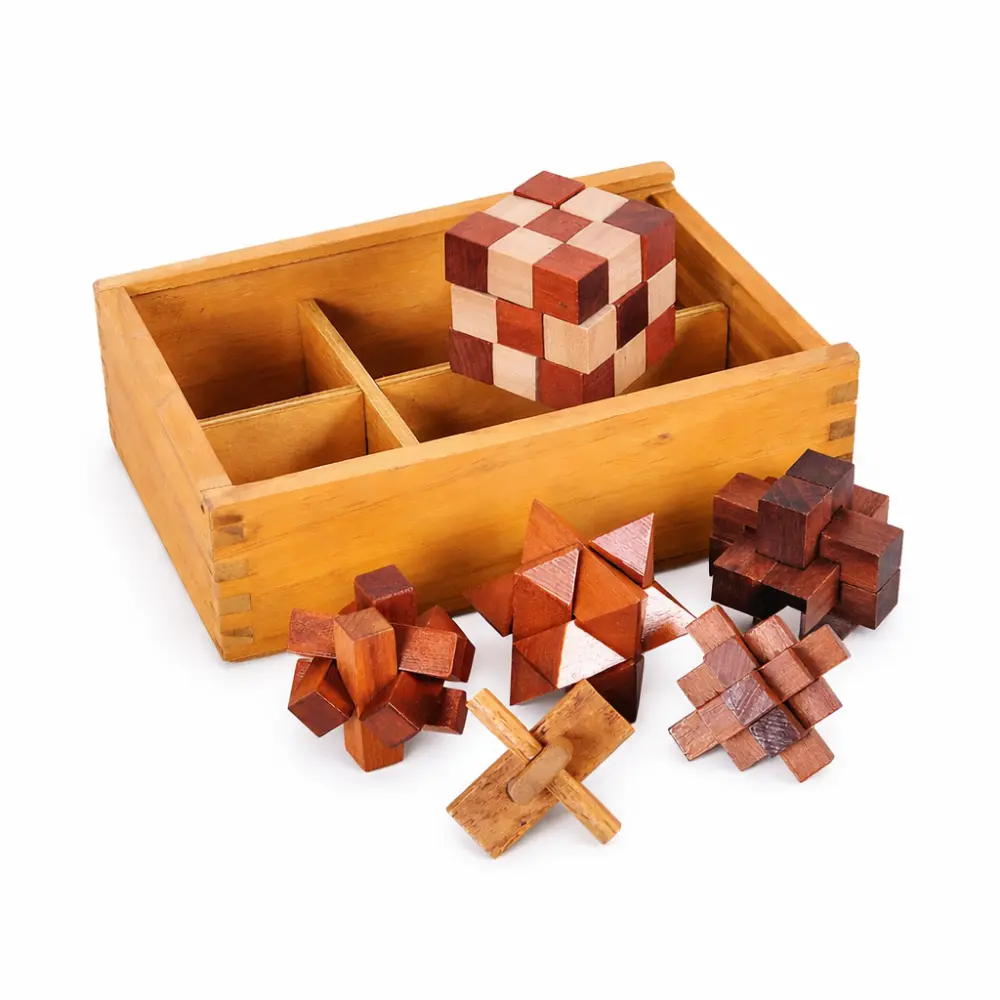
| Recipient who already owns a desk calendar puzzle | Mechanism uniqueness, display size | 6-in-1 Wooden Brain Teaser Set — $38.88 (varied mechanism types, compact display) | Mechanism type, piece count, finished footprint |
| Gift paired with a smaller secondary puzzle | Price band, complementary build | Hero product + Kongming Lock Color Match — $16.99 | That the primary product’s mechanism is gear-driven, not manual |
If the recipient has never built a wooden model kit before, the gear mechanism does the convincing — not the marketing language. Confirm the listing names a gear train, a date range past the current year, and laser-cut pre-cut parts before you commit.
01. How a Gear-Driven Perpetual Calendar Mechanism Actually Updates the Date
If the recipient cares about the mechanism feeling real rather than decorative, choose a model whose listing describes a visible gear train and a printed year range past the current year; that is the only way to confirm the “perpetual” claim is mechanical, not just marketing language. A gear-driven perpetual calendar puzzle advances the day, month, and year through an internal train of interlocking wooden cogs, so the user turns one knob or dial to set the date once and the mechanism does the rest from there. The “perpetual” label in this product category means the mechanism can account for varying month lengths and leap years within its printed range, not that the calendar runs forever on its own power.
Most desk-calendar puzzles sold in this category are a different product entirely. They are typically flip-card or block-replacement designs, where the user manually swaps the day tile each morning and adjusts the month and year by hand when the calendar turns. The build experience is similar — laser-cut plywood, snap-fit pieces, no glue — but the daily interaction is closer to a traditional tear-off desk calendar. The gear-driven version replaces that daily chore with a single weekly or monthly turn of a dial, which is the actual feature a gift buyer is paying for when they choose a perpetual model.
The mechanical movement has a longer backstory than most gift listings acknowledge. Tracking the day of the year has driven mechanical invention for centuries, and the gear-train layout in a wooden perpetual calendar is a simplified echo of the same problem that clockmakers worked on for generations. Readers who want the full arc, from the early calendar reforms to the wooden gear solutions of today, can trace it in the 440 year quest to know what day it is.
Here is what to look at on the product page to tell the two apart:
- Gear visibility: Photos should show exposed cogs, axles, and a turning knob. If every image shows a closed wooden box with a single number visible, the mechanism is likely decorative or simplified.
- Printed year range: Listings that mention a specific end year (such as 2044) confirm the gear train is sized to cycle through a known date window, not just the current month. The 3D Wooden Perpetual Calendar Puzzle falls into this category, with its date range engineered from 2023 through 2050 and a visible gear-driven movement.
- Mechanism type in the description: Words like “gear-driven,” “mechanical movement,” or “gear train” signal a real mechanism. Vague terms like “rotating” or “adjustable” usually mean manual turning.
- No-glue or snap-fit claim: This confirms the gear train is held together by precision-cut tabs rather than adhesive, which is what keeps the movement smooth over years of use.
The gear train itself is the puzzle within the puzzle. Each wheel is cut with teeth that match the next wheel’s teeth at a specific ratio, so turning the day-dial rotates the month-wheel by the correct fraction and the year-wheel by a smaller fraction still. A 31-tooth day wheel paired with a 12-position month wheel and a multi-year wheel is what makes the “no manual adjustment” claim mechanically true within the printed range.
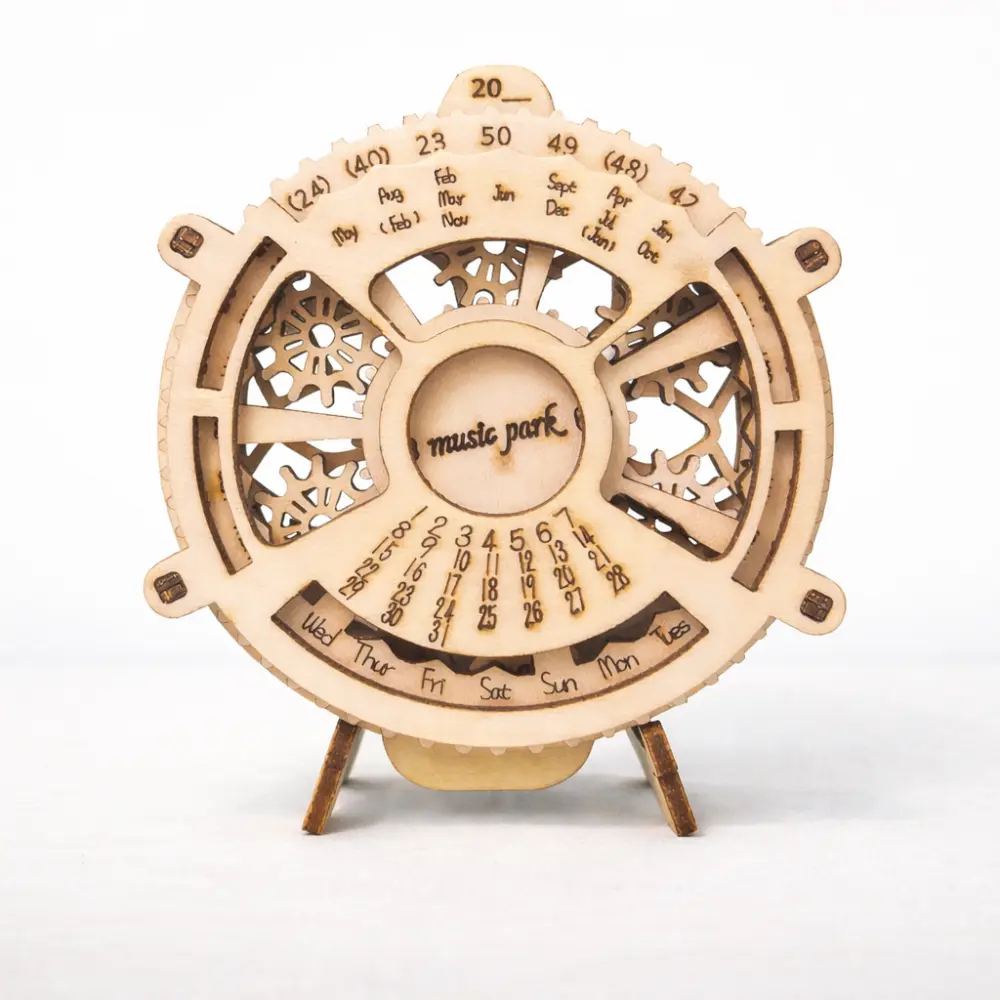
One more check worth doing before checkout. Read the Q&A or reviews section for any mention of the dial feeling loose, the gears slipping, or the date advancing more than one day per turn. Those are the failure modes specific to a gear-driven model, and they are the only way to catch a poorly tuned mechanism before it ships. A well-cut gear train should turn with light, consistent resistance and click into each day position without skipping.
The mechanism is what separates a $40 perpetual calendar puzzle from a $20 desk-calendar novelty. Once the buyer can read a product page and see the difference between “gear-driven, verified multi-year range” and “rotating date block,” the gift decision becomes a lot simpler.
02. Who This Gift Suits — Matching Piece Count and Assembly Time to the Recipient
Once the gear mechanism is verified, the gifting decision reduces to one question: does the build scope match the recipient? Three piece-count bands signal the build experience clearly. Under 100 pieces suits a first-time builder or a same-day gift moment, 100 to 250 pieces fits an engaged hobbyist who enjoys a weekend project, and 250 or more pieces rewards an experienced modeler expecting a multi-day build. The advertised piece count on the product page is the most useful number for sizing the gift.
Under 100 pieces: same-day build, low commitment, gift-occasion friendly. A sub-100 piece perpetual calendar is unusual in this category because the gear train alone tends to push the count higher, but adjacent wooden puzzle gifts in this range typically complete in a single sitting. Tool needs are minimal — fingers and the included push-out tabs handle almost everything. Instructions fit on a single fold-out sheet. The gift moment works for office Secret Santa, last-minute birthday gifts, or someone who has never built a wooden model before. The trade-off is a simpler mechanism and a more decorative than mechanical finished object.
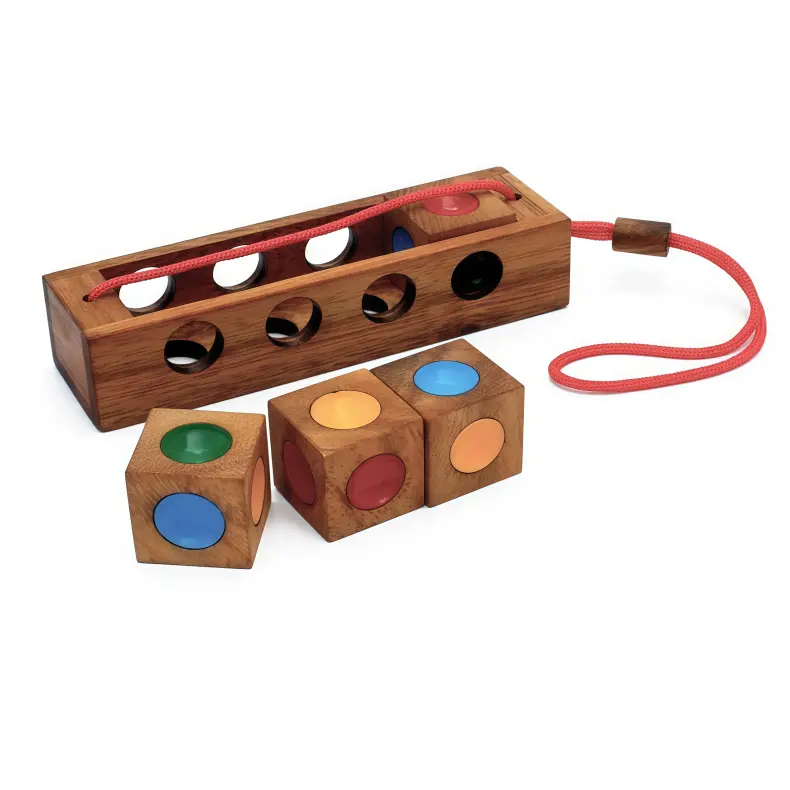
Kongming Lock Color Match — $16.99
100 to 250 pieces: weekend project, the sweet spot for a hobbyist. Most gear-driven perpetual calendar puzzles land in this range. The build typically spans one or two sittings, with the gear train assembly being the most concentration-heavy stage. A small Phillips screwdriver is often the only extra tool required. Instructions are multi-step, sometimes with separate sheets for the frame, the gear train, and the date wheels. This band signals a recipient who has built at least one wooden model before and enjoys the process as much as the finished object. Birthday, retirement, and Father’s Day gifting all sit naturally here. The 3D Wooden Perpetual Calendar Puzzle at $39.99 sits in this zone, with its gear-driven mechanism and verified date range from 2023 through 2050.
250 or more pieces: experienced modeler, multi-day commitment. Above 250 pieces, the recipient should expect to set the build aside and return to it. Instruction complexity rises sharply, tweezers may be needed for small gear axles, and the assembly stretches across multiple sessions. The reward is a more intricate gear train and a more display-worthy finished object. This band fits a recipient who already builds wooden models, airplane kits, or complex brick sets. It is not a gift for a casual recipient, and the open-and-build same-day moment is gone.
Who this gift does not suit. Skip a wooden perpetual calendar puzzle for a recipient who dislikes fiddly parts, has low tolerance for written instructions, or wants a finished desk object with no build phase. For those recipients, a small wooden brain teaser that arrives pre-assembled or assembles in minutes is the better fit.
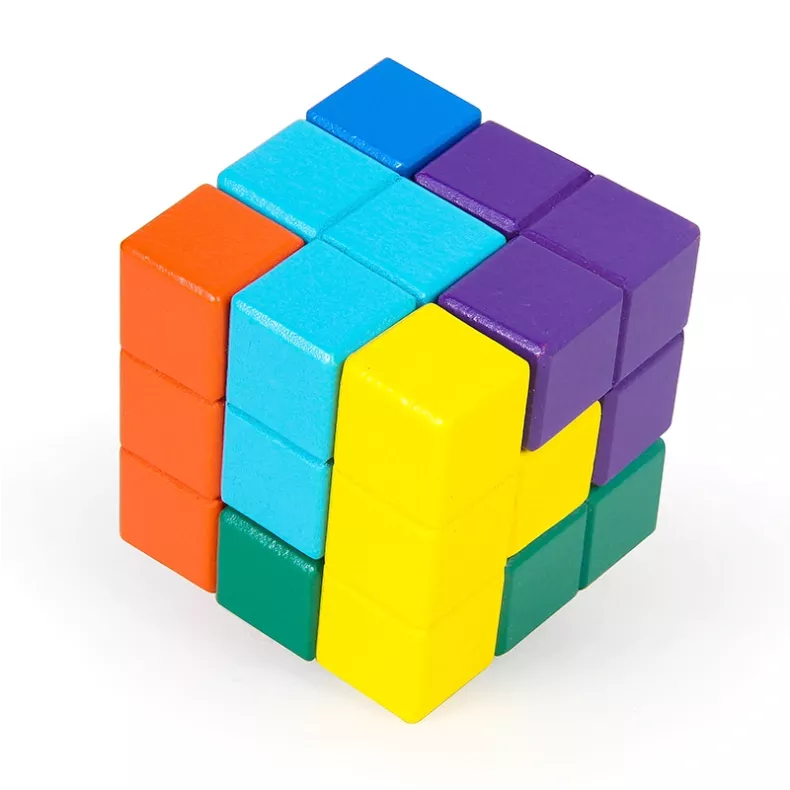
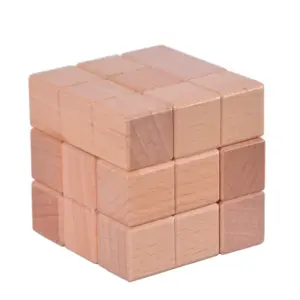
7 Color Soma Cube Puzzle — $21.88
The next action. Before checkout, note the piece count and the advertised assembly time on the product page, then match that pair to the recipient’s tolerance for a multi-hour project. For a more grounded read on what piece counts and build times actually translate to in adult builds, see what 40 builds taught me about 3D wooden jigsaw puzzles.
03. The Five-Point Product Page Checklist Before You Buy
Five product-page checks separate a genuinely gear-driven perpetual calendar puzzle from a printed date wheel housed in a wooden frame. The checklist below lets a gift buyer verify the claim, the build, and the desk fit before money changes hands, using only the language and images a listing actually shows.
Check 1: Mechanism type — gear-driven or printed wheel?
A perpetual calendar in a mechanical puzzle context means the gear layout automatically advances the date display based on the day of the month, eliminating manual flipping at the end of every month. A listing that only shows printed month and number tiles behind a static frame is a regular desk calendar, not a perpetual mechanism. Look for product photos that show exposed gears, pinions, or toothed wheels connecting the day, date, and month displays. If the listing describes “flip the numbers each morning” or “rotate the dial by hand,” the “perpetual” label is decorative language rather than a mechanical feature.
Check 2: Verified date range
The functional or printed year span tells you whether the calendar will still be useful on the recipient’s desk in 2030. One product listing in this category, from OutletTrends, specifies the calendar as “Mechanical Wooden 3d Puzzle Calendar Carving Laser Engraving To 2044,” which sets a clear year-range expectation. Cross-check that figure against the listing’s image of the date wheel; if the wheel only shows 12 months and 31 days but no year indicator, the 2044 figure may refer to the print date or a marketing ceiling rather than a working range. A good rule: the longer the verified range, the fewer times the recipient will need to reset the mechanism.
Check 3: Piece count and matched assembly time
You already know the piece count band that fits your recipient. The second half of that check is the advertised assembly time on the product page, usually listed in hours or as a range such as “3–5 hours.” A 120-piece kit advertised at one hour is almost certainly understating the build, while a 300-piece kit marked at eight hours may suit only an experienced modeler. When in doubt, read user-submitted build photos for the actual time taken; a wide gap between advertised and reported time is a signal to budget more evening hours than the listing suggests.
Check 4: Assembled dimensions for desk fit
A perpetual calendar puzzle sits on a desk permanently, so footprint matters more than the build challenge. Check the assembled length, width, and height in the specifications, then measure the recipient’s likely spot: a small home-office shelf can usually accept something up to about 20 cm wide, while a deep executive desk handles 25–30 cm models comfortably. Listings that omit dimensions or show only a stylized render with no scale reference should be treated as unverified for desk fit; message the seller or look for a user photo with a ruler in frame before committing.
Check 5: Material, cut precision, and assembly method
Laser-cut plywood is the category standard for adult wooden model kits, and the listing should name the material explicitly. A “no glue required” claim paired with laser-cut interlocking tabs signals a cleaner build and a more accurate final fit than a kit that asks the buyer to apply adhesive. Pre-cut parts should pop cleanly from the plywood sheets without splintering; listings that show rough edges or visible tear-out in their photos suggest lower cut tolerances and a fiddlier build.
The one red flag that overrides all five checks
If a listing uses the word “perpetual” but shows no moving gear assembly in any photo, or describes a manual rotation as “automatic,” every other check becomes secondary. A perpetual calendar puzzle without a visible gear-driven date advance is a decorated block of wood, and no amount of piece count, material quality, or price advantage recovers the core gift promise. Walk away, or contact the seller for a photo of the back of the assembled model where the mechanism should be visible.
For a broader comparison across wooden puzzle sets, including difficulty, recipient fit, and price band, see the definitive buyers framework for wooden puzzle sets.
04. Which Gift Occasion Fits Which Piece-Count Band
Now that the five checks confirm the mechanism is real and the build quality is sound, the next decision shifts from product verification to occasion fit. The piece-count band on the listing is the single number that controls how the recipient experiences the gift, because it determines whether the build finishes in a single evening or stretches across multiple sessions of focused work.
A 3D Wooden Perpetual Calendar Puzzle in the mid-band of roughly 100 to 200 parts is the natural fit for a birthday, where the giver can expect the recipient to spend a focused weekend on assembly and then keep the finished calendar on a desk for years. The combination of a satisfying build and an immediate, functional display matches the birthday format: one moment of unwrapping, followed by a project, followed by a permanent reminder of the giver. It also works for a retirement gift, because the recipient has both the time and the desk space to enjoy a multi-session build that becomes a desk piece marking the transition. Readers leaning toward a more reveal-driven birthday format can compare the moment-of-opening feel in puzzle box birthday gifts that make the moment unforgettable.
For an office Secret Santa, the mid-band perpetual calendar is usually the wrong scale. The build takes too long, the finished piece is too large, and the recipient may not want a year-round calendar on a shared desk. A smaller wooden brain teaser that fits in one hand and solves in an evening is a more measured fit for an exchange where the giver does not know the recipient’s desk setup or build tolerance. Two options that match that scale:
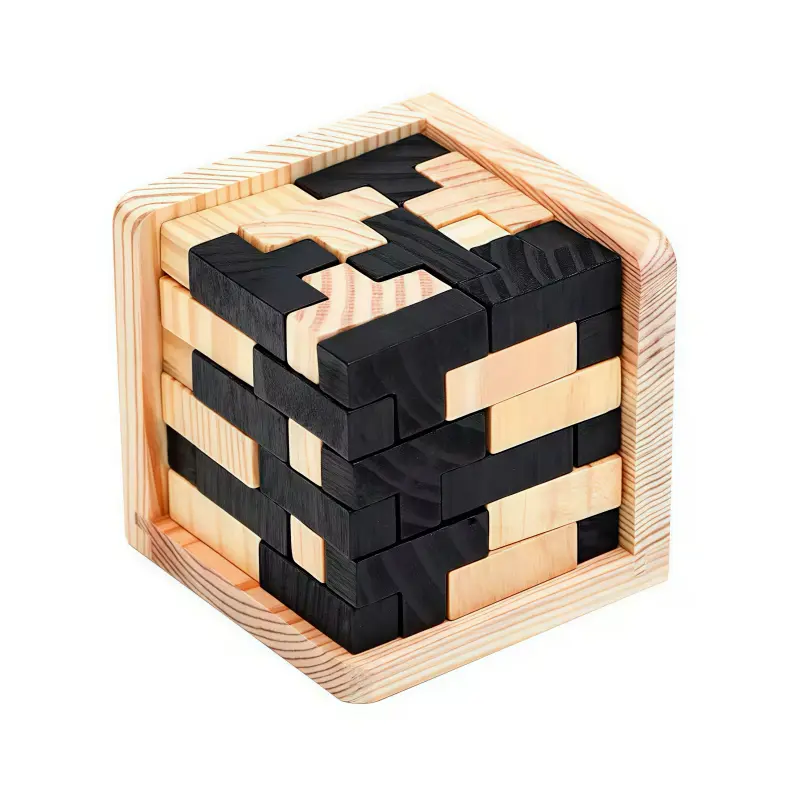
54‑T Cube Puzzle — $18.99
For an anniversary, the piece-count band depends on how well the giver knows the recipient as a hobbyist. If the recipient already builds wooden models, a higher piece-count model that pushes their skill is a credible anniversary gift. If the recipient has never built a model kit, the anniversary is a better occasion for a smaller, faster build that finishes in one evening and gets used immediately, rather than a multi-day project that competes with dinner plans.
The one occasion where a perpetual calendar puzzle is the wrong gift is a white elephant exchange, a gag-gift format, or any present meant to be disposable. The build time and the permanent desk footprint work against the humor of those formats, and the recipient is more likely to admire the mechanism in the box than to actually finish the assembly. For gifting contexts that value surprise over utility, a smaller wooden puzzle that gets opened, solved, and laughed about in the same evening is the better match. For more Secret Santa format ideas, see these brain teaser Secret Santa gifts that solve the gift exchange.
The practical next step is to check the piece count on the product page, then match that number to the occasion band above. If the build scope and the moment align, the gift is ready to order.
05. Decision Table — Side-by-Side Comparison of the Buying Criteria
Now that the occasion is matched, the final filter is the product page itself. Six verifiable checks turn a marketing listing into a purchase decision a gift buyer can stand behind. The table below pairs each criterion with what a gift buyer should look for and how to confirm it before checkout — no guesswork, no assumed specs.
| Check | Why It Matters for a Gift Buyer | What to Look For on the Page | How to Verify Before Checkout |
|---|---|---|---|
| Mechanism type | A gear-driven movement is the whole point of a “perpetual” claim; a printed block you flip by hand is just a decorative puzzle. | Explicit mention of “gear-driven,” “mechanical movement,” or “self-updating” in the product title or description. | Read the mechanism section of the listing; if gears are not pictured or described, the perpetual claim is decorative. |
| Date range | The calendar only feels permanent if the printed range covers the recipient’s realistic use window. | A stated end year, often 2044 or later, printed on the dial or date block. | Check the product photos for year markings on the faceplate; if no year is visible, ask the seller before checkout. |
| Piece count | Piece count is the single best proxy for build time and difficulty, and the cleanest match to the occasion band you already chose. | A specific number in the title, specs, or “what’s in the box” section. | Cross-reference the number with the recipient-experience band from section 02; well below 100 is a one-evening build, well above 200 is a multi-day project. |
| Assembled size | A perpetual calendar lives on a desk permanently, so the footprint has to fit the recipient’s workspace, not the box it ships in. | Length × width × height in centimeters or inches, ideally in both. | Measure a similar object already on the recipient’s desk before ordering; a smaller build is unobtrusive, a larger one is a statement piece. |
| Material | Laser-cut plywood is the category standard; thinner MDF or printed card changes the feel and the longevity of the finished piece. | “Laser-cut plywood” or “basswood” in the materials list, with a stated sheet thickness if possible. | Look at the parts photo; clean-cut edges and consistent wood color point to real plywood, not printed card stock. |
| Instruction clarity | A confusing manual turns a gift into homework, and the recipient is less likely to finish a build they cannot follow. | A referenced instruction manual, step count, or a linked assembly video. | Check the listing for a “manual included” line or a linked PDF or video; absent both is a red flag worth flagging in a question. |
The row that most often decides the purchase is mechanism type — a perpetual calendar that does not actually drive itself through gears is not a perpetual calendar, and no amount of piece count or material quality fixes that gap. If that one check passes, the rest of the table becomes a fit question rather than a deal-breaker.
Frequently Asked Questions
Buy with confidence once the product page confirms a gear-driven mechanism, a piece count that matches the recipient’s build experience, and a no-glue laser-cut plywood construction. The answers below resolve the remaining questions with specific language to look for on the listing rather than generic advice.
How long does assembly actually take?
Most kits in this piece-count band list an estimated assembly time on the product page. Treat that estimate as a baseline, then add about 30 percent for a first-time builder and budget a quiet afternoon for the full build. If a listing does not state an estimate, ask the seller before ordering.
Does the date really change on its own?
A true gear-driven perpetual calendar advances the date through the mechanical movement — no manual flipping required once the build is set. The key word is gear-driven: a calendar that only shows pre-printed dates on rotating disks still requires you to turn them by hand. Check the product page for explicit language about a mechanical movement, gear train, or self-advancing mechanism, and treat listings that describe only the finished calendar without explaining the drive system as a red flag.
Is this a good gift for someone who has never built a wooden model kit before?
Yes, when the piece count stays under about 200 and the manual includes step-by-step diagrams or a linked assembly video. Above 250 pieces, first-timers often abandon the build around the halfway mark and the gift goes back in the box. Pair the kit with a two-hour block of quiet time and a short note, and the recipient experience becomes a complete project rather than a pile of parts.
How big is the finished model on a desk?
The product page should list the assembled height, width, and depth. A common range for a desk-display calendar puzzle is compact enough to sit beside a monitor or a coffee mug, but the actual size varies by model. If the listing omits dimensions, message the seller or check user-submitted photos for a scale reference before committing.
Are the pieces pre-cut and do I need glue?
Most kits in this category are laser-cut and ship as a no-glue build, with pieces that slot and tab together. A small pair of tweezers and a craft knife help with removing parts from the sheet, and a flat ruler keeps the base square during assembly. No specialty tools required.
How does the price compare to other adult mechanical puzzles?
The 3D Wooden Perpetual Calendar Puzzle from Tea-Sip is listed at $39.99, which sits below most metal disentanglement puzzles from specialty brands and above simple wooden brain teasers. The value comes from the gear-driven mechanism and the desk display piece, not just the build itself. For a shorter build in the same category, the 7 Color Soma Cube Puzzle at $21.88 or the Kongming Lock Color Match at $16.99 are both listed in the Wooden Puzzles > Puzzle Toys cluster.
Ready to buy?
Open the product page, confirm the five checklist items pass, and order with enough lead time to gift it on the intended occasion. If the recipient has never built a wooden model kit, include a short note suggesting a quiet weekend afternoon as the build window — that single gesture is what turns a boxed kit into a finished desk piece.
Where to Start
If the recipient and occasion checks above match, start with 3D Wooden Perpetual Calendar Puzzle. Check the current product page for the specifications that matter to your choice.
Sources and verification
- Product details and current specifications: Tea-Sip product page
Last updated: August 28, 2026