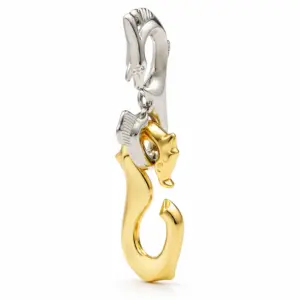
Quick Answer: Choosing a Cast Metal Puzzle Gift for Someone Who Has Everything
Yes, a cast metal puzzle is a strong gift for someone who has everything — start with the Cast Hook Metal Brain Teaser, which works best when the recipient enjoys small tactile challenges, has a desk or shelf for an unsolved object, and would rather receive something to think about than something to unwrap. The decision turns on three checks: recipient personality match, difficulty versus patience, and display style versus drawer storage. Start with a compact cast disentanglement puzzle in the entry-to-intermediate range, then adjust by mechanism.
Start with the Cast Hook Metal Brain Teaser when the recipient is a curious beginner who likes hand problems. It weighs little, sits well on a desk, and solves in a sitting rather than a weekend.
The three checks that change the pick:
- Personality fit. A patient problem-solver takes to sequential discovery; a collector of small objects prefers a burr or coil display piece; a social desk-dweller wants something repeatable and showable.
- Difficulty versus patience. Entry-level disentanglement puzzles solve in minutes to an hour. Collector-tier sequential puzzles can take days.
- Display versus drawer. A cast puzzle is a desk object, not a drawer object. If the recipient’s workspace is already full, a smaller pocket-friendly shape beats a display-grade piece.
| Puzzle category | Patience needed | Display style | Repeat-play | Best for recipient |
|---|---|---|---|---|
| Cast disentanglement (hook, ring, orbit) | Low to medium | Compact desk object | High | Curious beginner, fidget-friendly desk |
| Cast coil / sequential discovery | Medium to high | Sculptural display piece | Low | Patient problem-solver |
| Cast burr / multi-piece assembly | High | Statement desk object | Medium | Collector of small objects |
For a broader look at cast and non-cast puzzle options for the same hard-to-shop-for recipient, see Tea Sip’s 13 puzzle gifts for someone who has everything, tested.
If any check fails, move to a different mechanism rather than a different brand. The category matters more than the maker.
01. Why a Cast Metal Puzzle Stays a Gift After the Wrapping Comes Off
The mechanism, not the maker, is what turns a cast metal puzzle into a gift that keeps asking. A cast metal puzzle is one of the few presents that remains a gift every time the recipient looks at it — unsolved, sitting on the shelf, waiting for the next quiet moment.
Most gifts stop being gifts the moment they are opened. A watch tells time. Wine empties. A book finishes. A cast metal puzzle behaves differently: it arrives in a state of incompletion, and it stays that way until the recipient decides to engage. According to the Wikipedia definition of a mechanical puzzle, these objects are “physical objects whose solution requires ingenuity rather than luck or speed.” That requirement for ingenuity is exactly what makes the gift keep working — it asks for attention, and it rewards attention, but only on the recipient’s schedule.
This is the “sitting unsolved” argument, and it is the reason a cast puzzle fits the person who has everything. The recipient does not need another thing. They need something to do with a small, idle moment. A cast metal puzzle on a desk is, in a quiet way, an invitation — to put down the phone, to think without an outcome, to return to a problem that does not hurry them. Unlike most modern gifts, it has no battery, no app, no subscription, no update, and no account to create. It is a mechanism made of cast metal and patience, and it does the same thing in five years that it does today.
The physical object also earns its place in a room. Cast metal puzzles develop a patina with handling, and a well-made piece reads as a desk object — closer to a small sculpture than to a toy. The recipient sees it while working, picks it up between tasks, puts it back unsolved. Each glance is a small reminder that someone chose a gift specifically for the way this person thinks, not for what this person owns.
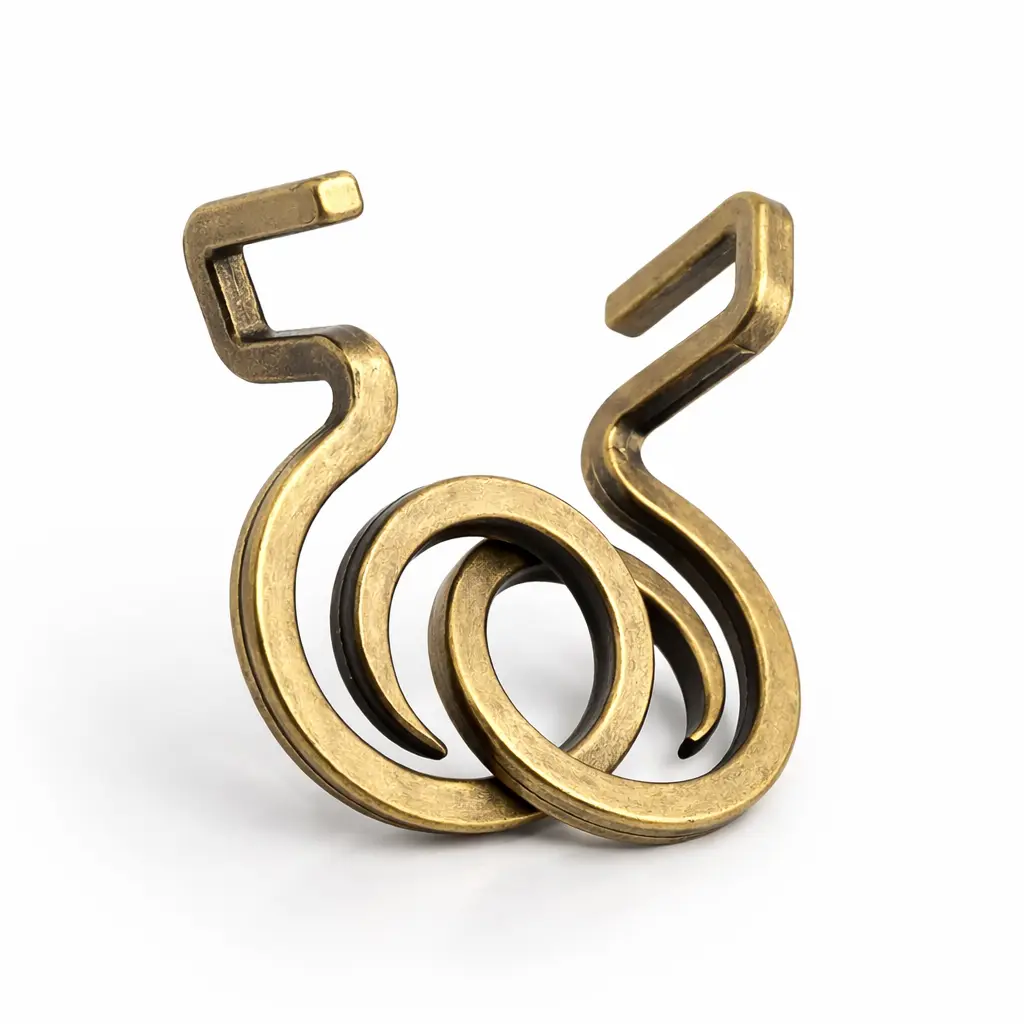
A disentanglement puzzle — two interlocked pieces that must be separated without force — fits the person who likes a clear start and a clear finish. A sequential discovery puzzle, sometimes called a puzzle box, hides a small revelation inside an outer shell. Both are single-object, single-session mechanisms with strong repeat-play value, which is what makes them easy to gift: the recipient knows what success looks like, even if the path to it is not yet visible.
The metal mechanism does not require the recipient to be a “puzzle person.” A cast disentanglement or sequential puzzle asks for ordinary patience and a quiet hand. Someone who enjoys crosswords, mechanical watches, or a slow Sunday morning will find the entry point familiar. Someone who does none of those things may still find that a small, well-made object on their desk becomes a five-minute habit.
The practical check before buying is simple: would this recipient enjoy a small object that asks for attention over weeks rather than minutes? If the answer is yes, the mechanism — any cast metal disentanglement or sequential discovery — is a strong fit. If the answer is no, the gift will be appreciated for a day and then sit in a drawer, which is a different problem entirely and one the mechanism cannot solve.
02. Which Puzzle Category Matches Which Recipient Personality
If the answer was yes — if the recipient would happily live with a small unsolved object for weeks — the next question is which puzzle category fits which personality. Three archetypes cover most hard-to-shop-for recipients: the patient problem-solver, the collector of small objects, and the social desk-dweller. Each archetype points to a different cast metal puzzle category, and the category you pick changes both the patience required and how the gift looks once it sits on the recipient’s desk.
The patient problem-solver is the archetype most gift guides assume, and for good reason: they are easy to recognise, easy to please, and the most natural cast metal puzzle category maps cleanly onto their habits. They are the person on your list who does jigsaw puzzles over a long weekend, restores mechanical watches at a kitchen table, or folds origami from a single square of paper. A disentanglement puzzle — where the goal is to separate two or more interlocked pieces or free a trapped piece, with no assembly required — matches this personality directly, because the solution is mechanical, repeatable, and depends on observation rather than trivia. According to Wikipedia’s entry on disentanglement puzzles, the format asks the solver to find a path through interlocked parts without forcing, which suits someone who treats small problems as a quiet ritual. Patience needed is moderate to high, the display need is low, and repeat-play value is high, because the puzzle returns to its starting state every time it is solved. This person keeps the puzzle in a coat pocket or a desk drawer and returns to it between tasks, sometimes for months at a time, and the mechanism is what they came for.
The collector of small objects is the archetype most likely to leave a cast puzzle sitting on the shelf, unsolved, for the long term — and that outcome is exactly what the gift is for. They are the person on your list who curates a row of small brass objects on a windowsill, collects old compasses, or keeps a single Japanese puzzle box as a permanent display piece. A sequential discovery puzzle, where a series of hidden moves unlocks a final reveal, or a burr-style puzzle, which asks the solver to take apart and reassemble an interlocking assembly, rewards someone who treats the object as part of a curio row rather than a task to finish. The mechanism carries the gift because the mechanism is the gift. Patience runs long, the display style is high, and repeat-play value is intentionally low — and that is fine, because this recipient buys the second and third puzzle from the same maker once the first one finds a permanent home on the bookshelf. A patina develops over time on cast metal, which is part of the appeal for this archetype, and which is why the material choice is doing real work here, not just decoration.
The social desk-dweller is the third archetype, and the easiest one to misjudge. They are not a deep puzzle hobbyist and do not want to be one. They are the colleague, partner, or friend whose desk is part office, part stage, and who keeps a small, tactile desk object within reach for the five minutes between meetings. A compact disentanglement puzzle — the kind that solves in under an hour and resets cleanly without a manual — fits this person because the mechanism becomes a conversation starter. Patience needed is low to moderate, the display style is high, and repeat-play value is high, because half of the joy is watching a visitor try and fail. The unsolved object on the desk is itself the social signal, and the gift works precisely because it does not require the recipient to become anything other than who they already are — the puzzle adapts to the desk, not the other way around.
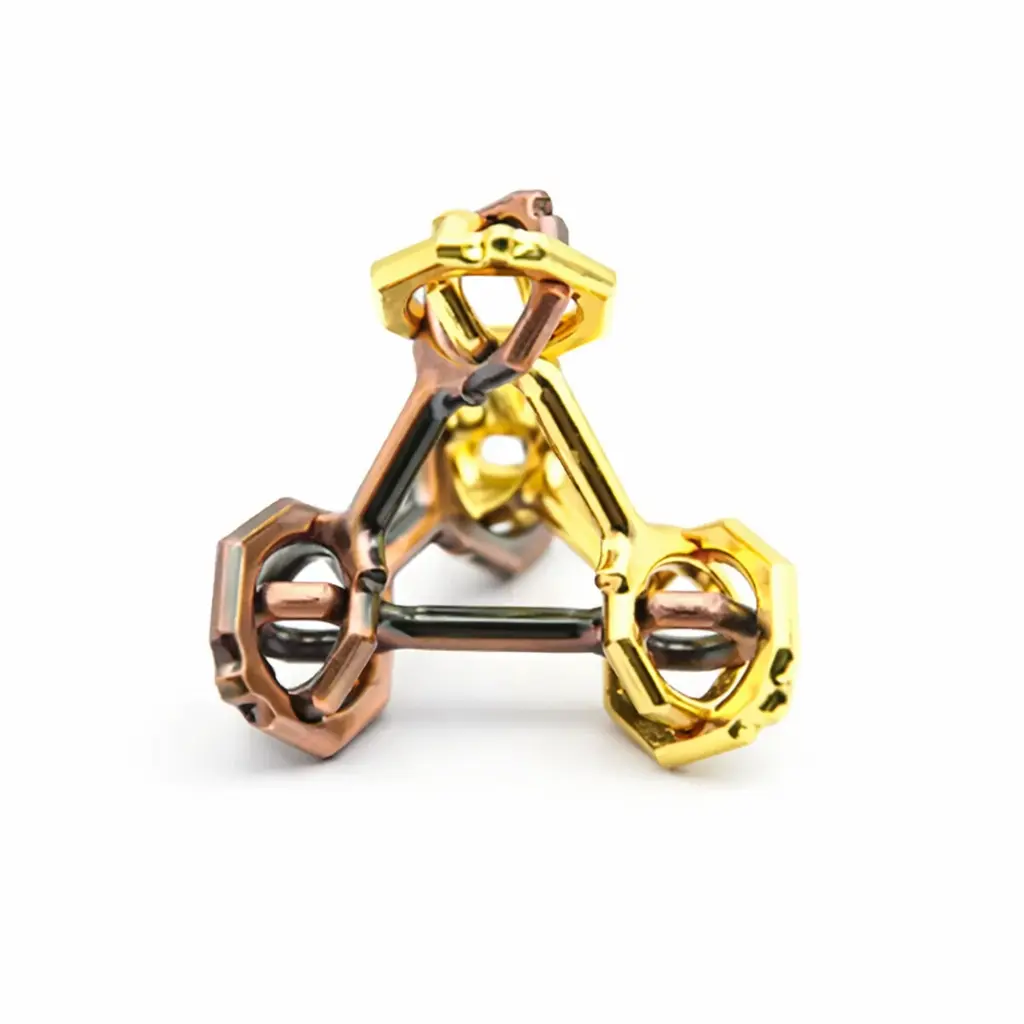
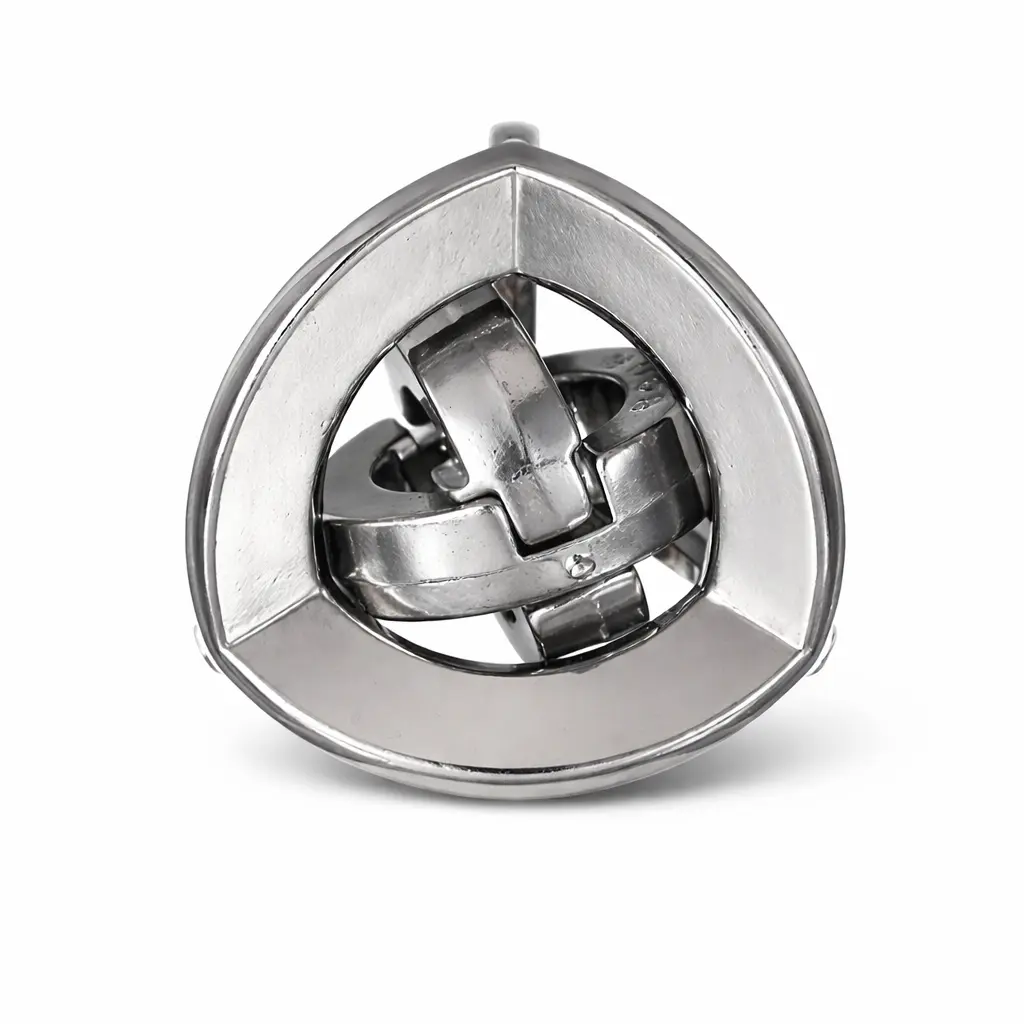
Cast Coil Triangle Puzzle — $25.99
The one-line check before you commit: ask whether the recipient would rather be seen trying, be seen owning, or be seen solving. The answer points to a category, and the category points to a specific cast puzzle that earns its place on the desk.
For a taxonomy of the main mechanism families an adult buyer will encounter, the six types of metal puzzles adults actually buy first lays out the landscape.
03. How to Choose Difficulty Using Mechanism, Not Brand
Mechanism predicts solve time more reliably than the maker’s name on the box. A compact disentanglement cast puzzle gives a recipient a repeatable, screen-free hand challenge they can reset in seconds; a sequential-discovery cast puzzle trades repeat-play for one satisfying reveal; a burr-style cast puzzle asks for the most patience and rewards it with the deepest mechanical satisfaction.
The category you already picked in section 02 has a built-in difficulty range. Learning the mechanism tier inside it is how you avoid buying a puzzle that ends up sitting unsolved on the shelf for a year, which is the opposite of the gift you intended.
Entry tier: disentanglement first.
Disentanglement puzzles are the entry tier. The mechanism asks the recipient to free a trapped piece or separate two interlocked ones, and the repeat-play value is high: once solved, the recipient can reset it in under a minute and hand it to the next curious person at the desk. This is where a first-time solver belongs, and where a patient problem-solver archetype will still find a small daily ritual rather than a weekend project.
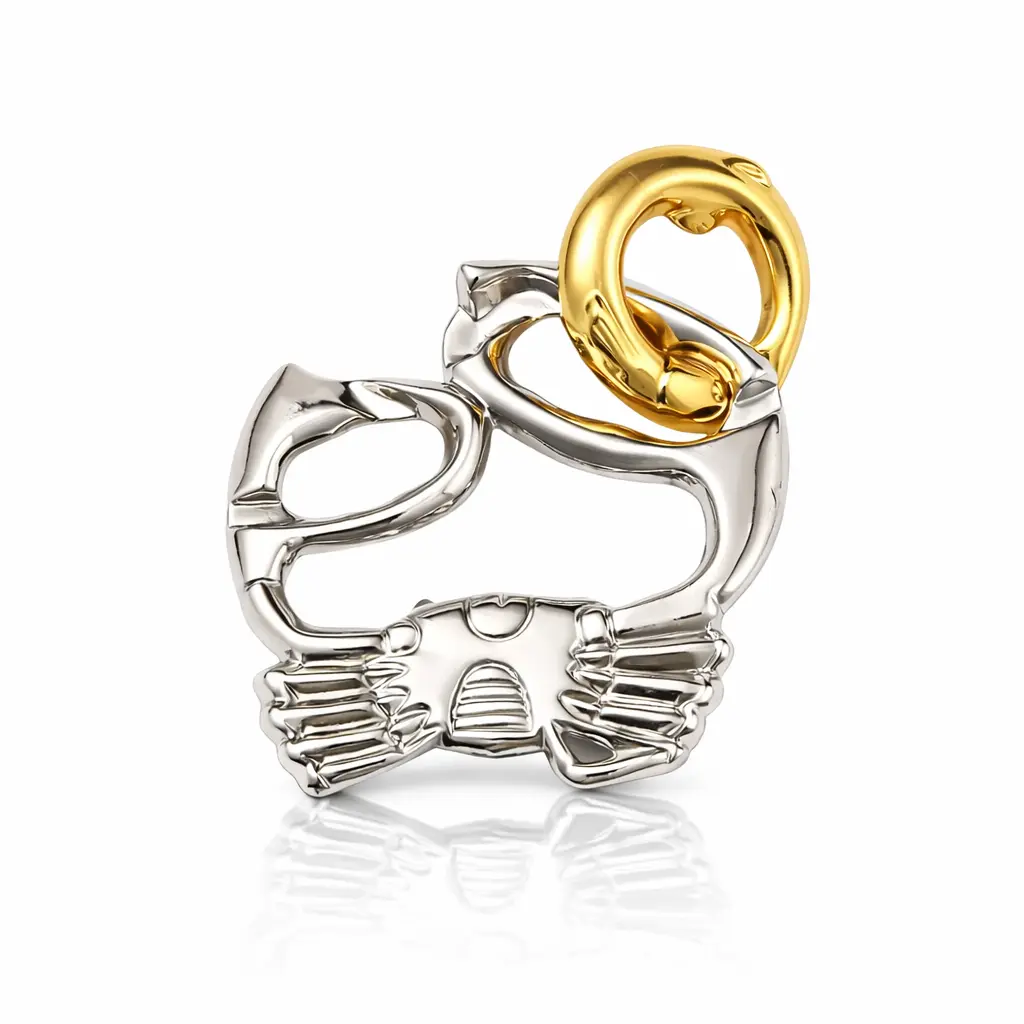
The Cast Coil Pocket Puzzle sits squarely in this tier and works as a first cast metal puzzle for a recipient who has never held one before.
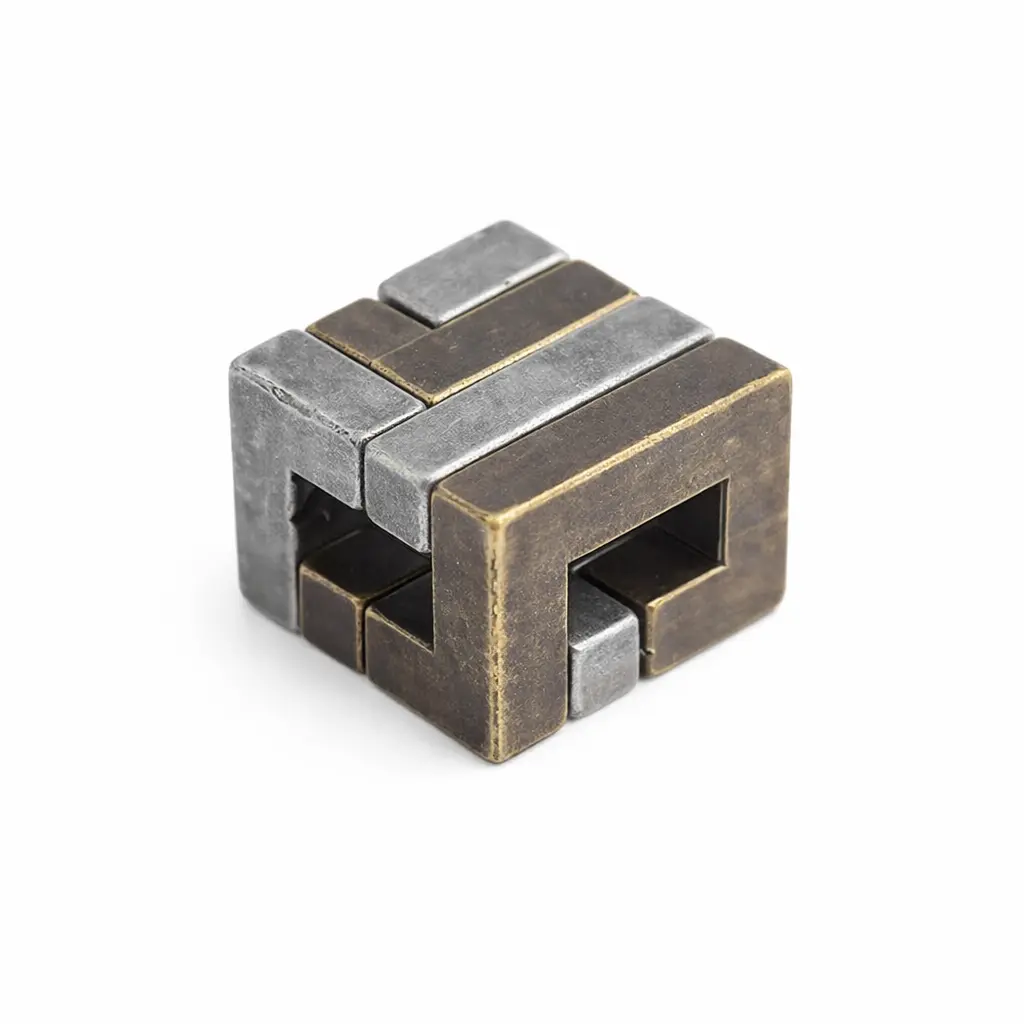
Cast Coil Pocket Puzzle — $18.99
Intermediate tier: sequential discovery.
Sequential-discovery puzzles are the intermediate tier. The mechanism hides a final state behind a series of steps, gives the solve a clear ending, and delivers one satisfying reveal rather than many small resets. This tier fits a social desk-dweller who wants something to talk about, and a collector of small objects who values the single reveal as a story worth keeping.
Collector tier: burr-style and beyond.
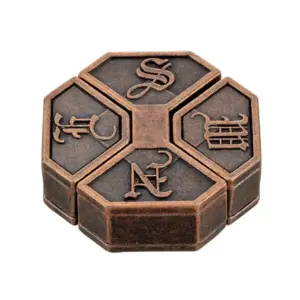
Burr-style cast puzzles are the collector tier. The mechanism involves interlocking pieces that must be moved in a specific order, which is the most patience-intensive of the three categories. A burr-style cast puzzle rewards a recipient who treats it as a multi-session project rather than a coffee-break challenge. This tier is not the right fit for a curious beginner, even if the price looks similar to entry-level options; mismatching a burr-style mechanism with a casual recipient is how a cast puzzle ends up in a drawer instead of becoming a desk object.
A level rating from a single maker is useful for that maker’s own range, but it doesn’t always translate across mechanisms; that’s why a level 4 cast puzzle can be harder than a level 6 from the same line.
The tactile check.
A secondary use worth noting: cast metal disentanglement and sequential-discovery puzzles are also used as tactile fidget objects, which is why the weight and mechanism of a cast piece invites that kind of quiet handling between longer desk tasks. That is not a therapeutic claim, simply an observation about how the mechanism lives in the hand. A cast puzzle that gets picked up repeatedly is a gift that stays in the recipient’s hand and on their mind, the long version of “sitting unsolved.”
The one-line check before you commit to a tier.
Ask whether the recipient would solve the puzzle once and put it down, solve it and keep resetting it for visitors, or leave it on the desk as a work-in-progress object. The answer points to a tier. Pick the tier, then match it back to the archetype from section 02: the patient problem-solver and the collector of small objects both tolerate a longer sequential-discovery solve, while the social desk-dweller benefits from the fast reset of a disentanglement.
One practical next action.
Decide on the tier first, then narrow to the mechanism shape that matches the recipient’s workspace. A ring-shaped disentanglement fits a shallow desk tray. A coil-shaped cast puzzle reads from across the room and develops a patina with handling. Both are desk objects that earn their place; neither needs a brand name to justify the price.
04. Cast Metal Puzzle Categories Compared for Gifting
Start with the recipient archetype from section 02. Match that archetype to one row in the table below, then pick a cast shape that fits the desk the gift will live on, and the buying decision stops being abstract.
| Category | Patience Needed | Display Style | Repeat-Play Value | Best For Recipient |
|---|---|---|---|---|
| Disentanglement (hooks, rings, chains) | Short — coffee break | Compact desk object, ring-shaped reads as jewelry-adjacent | High — resets in seconds | Social desk-dweller, hands-busy thinkers |
| Sequential Discovery (spiral, multi-piece) | Medium — quiet evening | Sculptural, develops a patina with handling | Medium — repeat feels like ritual | Patient problem-solver, collector of small objects |
| Coil / Burr-style cast | Medium to long — several sessions | Reads from across the room, weighty presence | Medium | Patient problem-solver who curates the workspace |
| Puzzle Ring (interlocking bands) | Short to medium | Wearable display, pocket-friendly | High | Recipient who prefers personal carry over desk display |
How to read the columns.
Patience Needed refers to a typical first-solve session, not a published minutes-to-solve rating. The supplied product data does not list a solve-time figure, so short, medium, and long work as relative markers: short means a coffee break, medium means a quiet evening, long means several sessions. The reader can verify exact solve times only by handling the specific piece, which is why the gift is best matched to patience rather than to a clock.
Repeat-Play Value matters because some recipients reset a puzzle the same day a visitor asks “what’s that?” while others treat the solved object as a finished trophy. Disentanglement pieces reset in seconds and survive social use. Sequential discovery puzzles reward a slower, more deliberate return to the mechanism.
Matching the table back to section 02.
The patient problem-solver tolerates a longer sequential discovery solve and will leave the mechanism sitting unsolved on the desk for weeks. The collector of small objects responds to the sculptural cast form, the patina, the weight in the hand. The social desk-dweller benefits from a fast reset and a piece that explains itself in one sentence to a curious visitor.
The cleanest entry into the short-patience, high-reset row is a disentanglement cast as two interlocking hooks. The Cast Hook Metal Brain Teaser is the clearest example: it reads as an object before anyone knows it is a puzzle, and it asks for the hand rather than the brain. For the person who has everything, a small cast mechanism like this is the rare present that becomes more interesting the longer it stays on the desk.
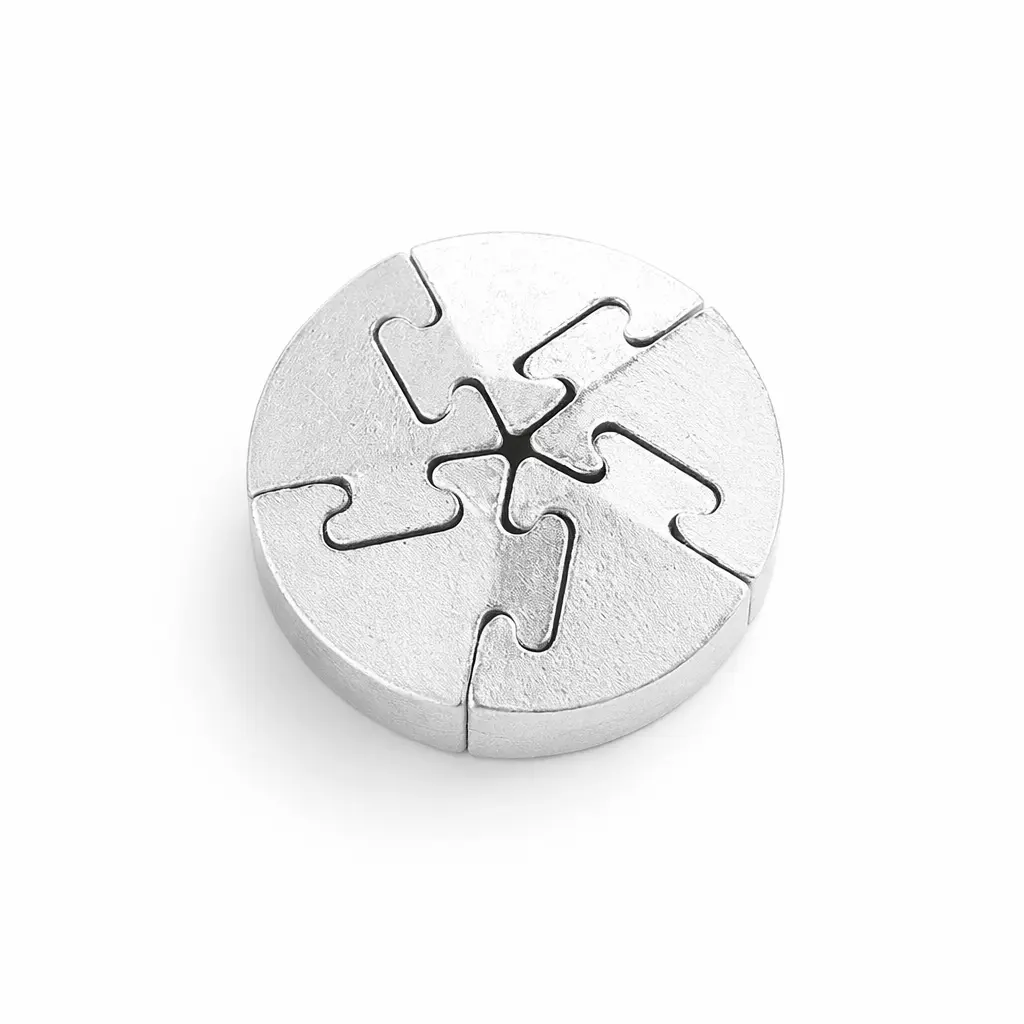
A sequential discovery piece like the 5 Piece Cast Spiral Metal Puzzle occupies the medium-patience row. The spiral form is sculptural enough to justify desk space before it is ever solved, which matters for the collector archetype who treats unsolved objects as décor.
One mismatch to avoid.
Do not give a coil or burr-style piece to the social desk-dweller. A long-solve mechanism does not survive being handed around at a meeting or a dinner party; the recipient will feel pressure to perform a solve in front of others. A disentanglement or puzzle ring is the safer match when the desk is a shared surface.
One practical next action.
Pick the row that matches the recipient archetype, then choose the cast shape that fits the desk. A hook or ring disentanglement suits a shallow tray. A coil or spiral suits a deeper shelf.
05. Desk Space, Dexterity, and Display: Three Final Checks Before Buying
Once a category and difficulty are settled, three final checks decide whether a cast metal puzzle earns its spot in the recipient’s daily view. The checks are desk space, finger dexterity, and how the unsolved object will sit. A cast puzzle is a desk object, not a drawer object, and the wrong mechanism for the wrong hands can turn a thoughtful gift into something the recipient quietly shelves.
Check one: desk space.
A cast metal puzzle rewards being seen before it is solved. A small hook or ring fits in a tray beside a laptop. A taller coil or spiral needs a deeper shelf, a windowsill, or a dedicated desk corner. The mechanism matters less than the footprint, because a puzzle kept in a drawer is a puzzle the recipient will forget about. For someone with a tidy or shared workspace, a compact disentanglement sits flat enough to leave out without crowding. A piece the recipient cannot display will not be picked up, no matter how clever the mechanism.
For office-desk contexts specifically, Tea Sip’s office desk specific picks for metal puzzles walk through footprint and visual weight in more detail.
Check two: dexterity.
Mechanism dictates the hand demands more than difficulty rating does. A disentanglement puzzle often requires fine finger movement to slide one piece past another, which can frustrate an older recipient whose grip has weakened. A burr-style or sequential-discovery piece can demand two hands and more whole-arm rotation, which is gentler on tired fingers but harder for someone with limited reach. The check is observable: if the recipient has stopped doing close-work hobbies like knitting or fiddling with jewelry clasps, lean toward a sequential-discovery form with larger pieces. If small objects are still handled with ease, a disentanglement is fair game.
Check three: display style.
The unsolved object has to earn its place visually. A brass or bronze piece develops a soft patina over months of sitting on the shelf, which is part of the appeal for a collector of small objects. A silver or chrome piece stays bright and reads as more modern. The shape should also suit the desk: a geometric burr or triangle looks structured on a minimalist surface, while a ring or hook reads as casual. The wrong visual style is the mismatch the recipient is least likely to mention but most likely to feel.
One practical next action.
Choose one category from the earlier table, one difficulty tier, and one display spot on the recipient’s actual desk. Then buy. The Cast Hook Metal Brain Teaser is a compact disentanglement that fits a shallow tray and asks for repeat-play without demanding long solve sessions. Confirm the listed price on the product page before checkout, since prices can change.
06. Cast Metal Puzzle Gift Questions, Answered
A cast metal puzzle earns its place on a hard-to-shop-for recipient’s desk when the mechanism matches their patience, the shape matches their space, and the weight feels intentional in the hand. The questions below address the real buying decisions a gift buyer faces.
Is a cast metal puzzle a good gift for someone who has everything?
Yes, when the recipient engages with small tactile challenges and keeps a curated workspace. A puzzle remains unfinished when received, so it occupies attention long after unwrapping. The gift keeps asking.
What difficulty should I buy for a beginner adult?
Start at the entry tier: a disentanglement or simple sequential-discovery piece described as level 1 or 2. Check the mechanism type and level rating on the product page before buying.
Are Hanayama and Huzzle the same thing?
Huzzle is the consumer-facing name for the Hanayama cast puzzle line from Japan. Mechanism quality is comparable; labeling differs by region. Neither brand is necessary; other cast metal makers exist in the same tier.
Will the recipient think a puzzle is a cheap gift?
Perceived value depends on material weight and how the gift is framed. A solid cast piece paired with a short note explaining the mechanism reads as considered. Avoid the cheapest hollow castings. For a buyer worried about quality at this price tier, 5 in-hand tests to spot a knockoff cast puzzle walks through what separates a well-made cast from a thin copy.
Can a metal puzzle stay on a desk and look good?
Yes. Cast metal puzzles are designed as desk objects, not drawer objects. Brass develops patina over months; silver stays bright. Match the shape to the desk’s visual language: geometric for structured surfaces, ring or hook for casual ones.
How long does it take to solve a Hanayama-level puzzle?
Solve time varies widely by mechanism. Entry pieces may solve in minutes; collector pieces can take days. The maker’s level rating is the most reliable signal — check the product description before buying.
What is the difference between disentanglement and sequential discovery?
A disentanglement puzzle separates interlocked pieces or frees a trapped piece, with no assembly required. A sequential discovery puzzle hides an internal mechanism that unlocks step by step. Disentanglement rewards repetition; sequential discovery rewards patience.
Are cast metal puzzles suitable for older recipients with arthritis?
Some are. Smooth rounded shapes and large grip surfaces suit arthritic hands; tiny pins and pinch-grip requirements do not. Check the product dimensions and mechanism description before buying.
One practical next step.
The Cast Hook Metal Brain Teaser is a compact disentanglement with a smooth handle suited for one-handed play. Confirm the current price on the product page, then order with a short note explaining the mechanism. That note is what makes the gift feel intentional.
Where to Start
If the recipient and occasion checks above match, start with Cast Hook Metal Brain Teaser. Check the current product page for the specifications that matter to your choice.
Still comparing options? Compare the same decision criteria across the related cast metal puzzle products, rather than restarting the search from scratch.
Sources and verification
- Product details and current specifications: Tea-Sip product page
Last updated: August 28, 2026