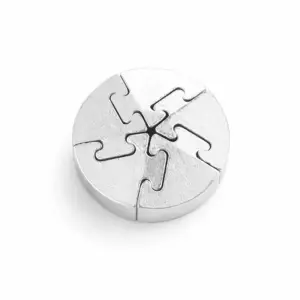
Quick Answer: 3D Wooden Puzzle Gift for Seniors: Match the Build to the Person
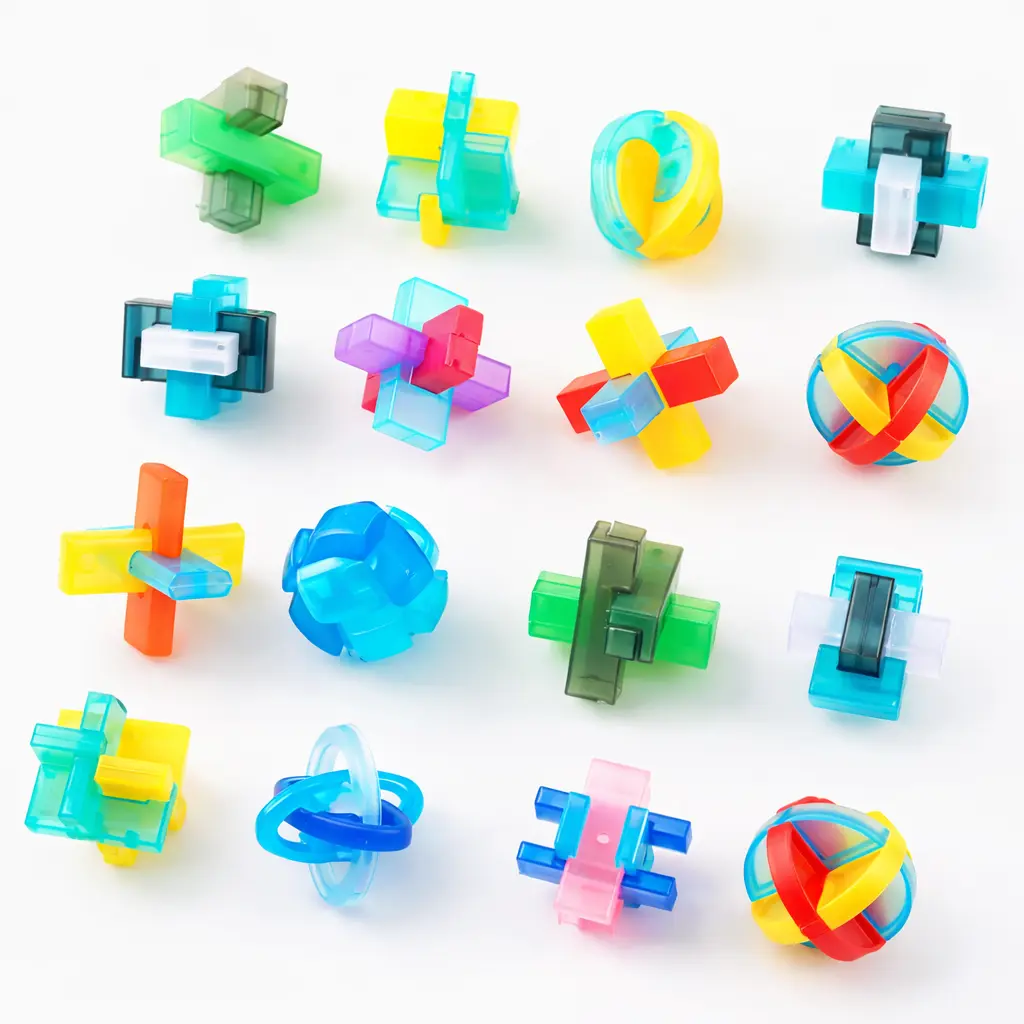
Yes — a 3D wooden puzzle can work as a senior gift. The 12 Piece Crystal Luban Lock Set is the top pick for most seniors: only 12 pieces, tool-free assembly, and a finished size the recipient can lift and dust with one hand. For active hobbyists, a geared clock or marble maze adds display-worthy mechanical interest. The four checks below determine which route fits.
The four checks before you buy:
- Piece count — Under 200 for solo seniors; under 50 for memory-care recipients. Hand-crafted wooden puzzles for dementia typically contain 24–48 pieces.
- Tools required — No glue, no cutting. Snap-fit only. Self-assembling kits with no adhesive are the senior-friendly standard.
- Finished display — The senior must be able to lift, dust, and reposition the completed model. Avoid builds that are heavy, fragile, or awkward to move.
- Theme fit — Match the recipient’s interests: clocks for retirees who like mechanics, book nooks for readers, small vehicles for former hobbyists.
Skip these for seniors: 300+ piece kits, models requiring glue or hobby knives, snap tabs smaller than a fingernail, and finished builds that are hard to lift or dust.
Decision Table: Which Puzzle Fits Which Senior
| Senior Profile | What to Check | Why It Matters | Starting Pick |
|---|---|---|---|
| Active retiree, good dexterity | 100–200 pieces, mechanical movement in finished model | Provides weeks of engagement and a display piece | Geared clock or marble maze |
| Arthritis-limited builder | Snap-fit pieces, no tools, large grip surfaces | Avoids frustration; still engages the hands | Compact 12-piece brain-teaser set |
| Early memory-care recipient | 24–48 pieces, chunky shapes, wood tray | Matches established dementia-puzzle conventions | Simple shape-sorting or soma-cube set |
| Grandparent–grandchild companion project | Two-person assembly, forgiving tolerances, short sessions | Builds shared activity without requiring precision | Vehicle kit or book nook, built jointly |
When the recipient’s profile is unclear, default to the lowest-difficulty option. A puzzle that’s too easy still offers calm, screen-free focus; a puzzle that’s too hard gets shelved in a drawer. For brain-teaser formats specifically tested with older builders, see best brain teaser puzzles for seniors tested by our puzzle club.
01. Which 3D Wooden Puzzle Fits Each Senior Profile
Match the build to the person, not to the box art. Four senior profiles map to four puzzle categories, and the right match depends on grip strength, piece size, session length, and whether the build is solo or social. The active retiree handles a geared clock; the arthritis-limited builder needs a snap-fit brain teaser; the early memory-care recipient works best with a chunky 24–48 piece set; the grandparent–grandchild pair needs a two-person vehicle or book nook. Use the decision table above as a shortcut, then read the profile notes below for the trade-offs.
Active retiree with good dexterity. This is the senior who already does crossword puzzles, cross-stitch, or 500-piece jigsaws and wants a project that lasts. A geared clock or a marble maze fits them because the finished model does something — the hands move, the marble rolls. Piece count between 100 and 200 keeps engagement high without becoming a chore. Self-assembling laser-cut wood with no glue or cutting required is the norm in this category, so the build itself is the activity, not a tool hunt. The finished display should fit a shelf or mantel so the accomplishment stays visible. Finished size around 7–10 inches works for most shelves. For the active retiree, the gift is the project, the reveal, and the daily use of the object afterward.
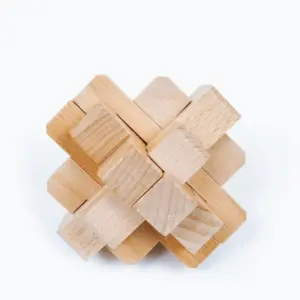
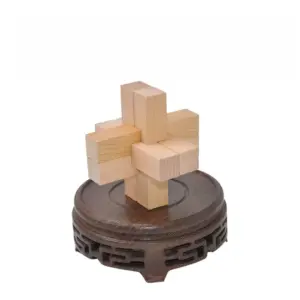
Arthritis-limited builder. Skip anything with tiny snap tabs or pieces smaller than a fingernail — those snap-fit joints demand pinch grip force that swollen or stiff fingers often cannot deliver. Instead, choose a compact brain-teaser set with chunky wooden pieces and clear separation points, where the motion is rotation or sliding rather than compression. The Luban Lock family of interlocking puzzles fits this brief because each piece is a smooth, hand-sized block, and the “solve” is figuring out how the shapes release each other, not forcing tabs together.
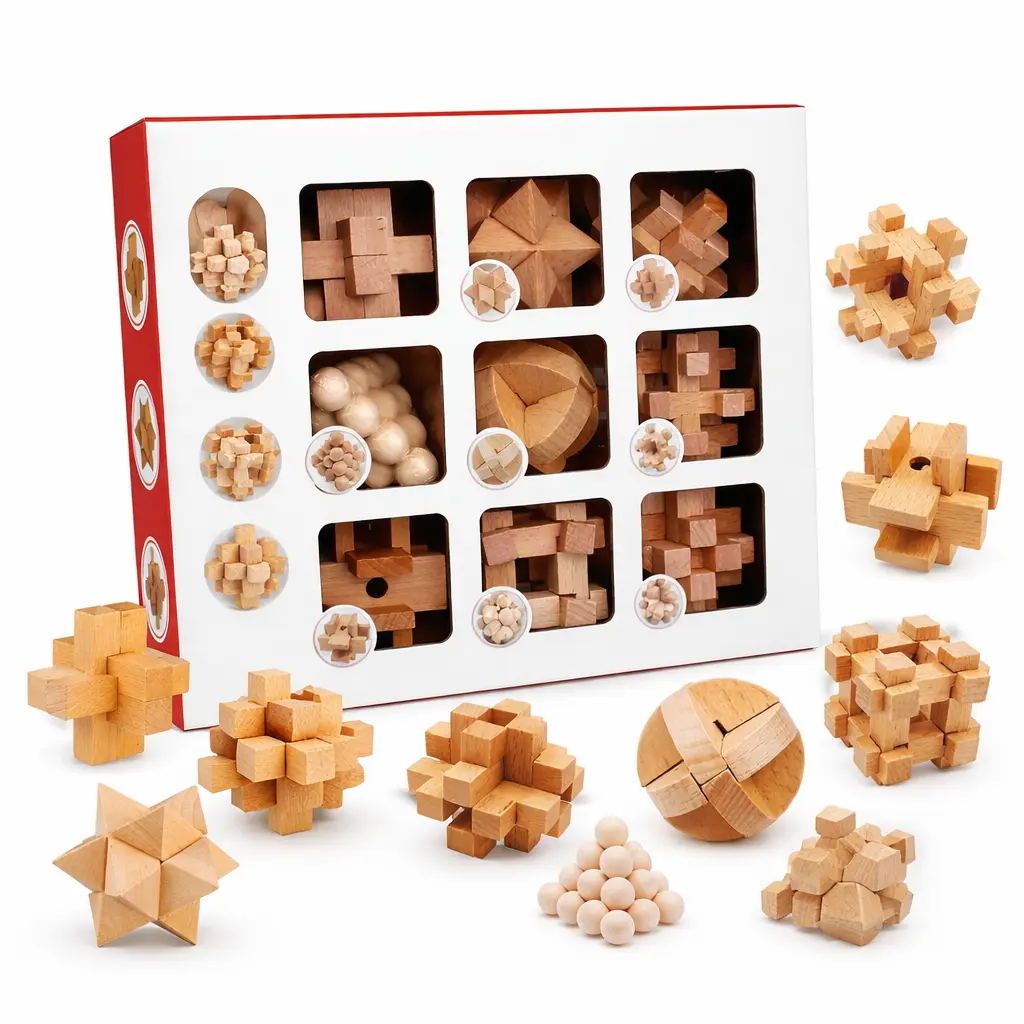
Luban Lock Set 9 Piece — $39.99
No glue. No cutting. Sessions can be 10 minutes or an hour. The cognitive benefit is the same pattern-recognition that adult puzzling is associated with in general craft descriptions — mental exercise that feels like a calm ritual, not a test. For the arthritis-limited builder, the gift is a way to keep hands engaged without fighting the tools.
Early memory-care recipient. This profile borrows directly from the dementia-puzzle convention: hand-crafted wooden sets with 24 to 48 pieces, chunky shapes, and a fitted wood tray that keeps pieces contained and signals the starting position. The Alzstore product data on wooden puzzles for dementia, stroke, and memory loss confirms this 24–48 piece range as the established standard. The puzzle is a familiar shape-matching activity with a clear “finished” state, not a 200-piece geometric challenge. Piece size matters more than theme here — each shape should be easy to pick up, easy to place, and forgiving of misplacement. The gift works when the recipient can start, succeed, and see the completed picture without help. The tray itself becomes a repeatable surface for repeated calm sessions.
Grandparent–grandchild companion project. This is the social category, and it is the one most competitor guides ignore. When the gift is meant to be built together during a visit, the puzzle needs forgiving tolerances, two-hand-friendly subassemblies, and a finished display that both generations will be proud of. A small vehicle kit or a book nook — something with a clear “we made this” payoff — works better than a clock mechanism with one finicky spring. Sessions should be completable in a single afternoon so a child does not lose interest mid-build.
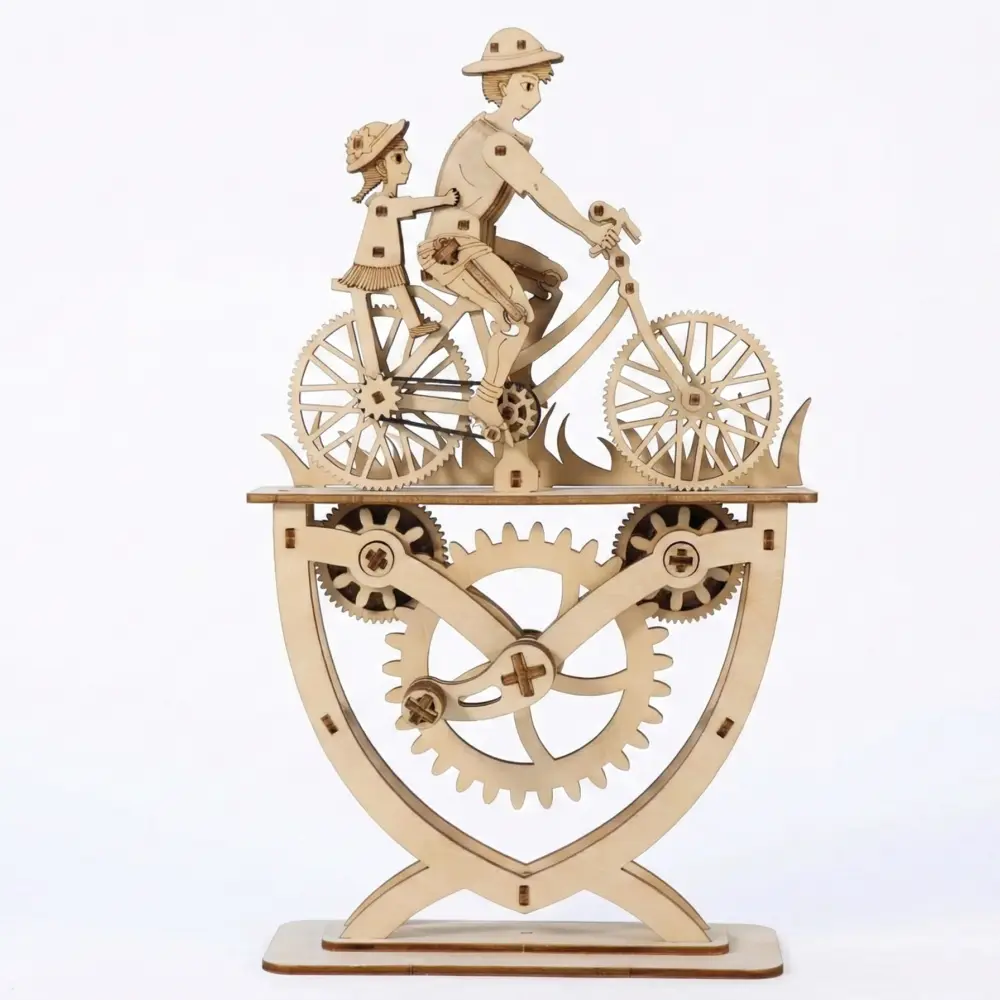
The figure-on-bicycle theme in this mechanical puzzle lands as a sentimental display piece that a grandparent will keep on a shelf long after the grandchild goes home, which is the point of the gift.
When the recipient’s profile is genuinely unclear, default downward in difficulty. A puzzle that is slightly too easy still offers calm, screen-free focus and a sense of completion. A puzzle that is slightly too hard gets abandoned, and an abandoned gift sends the wrong message. Verify finished size, piece count, and tool requirements on the product page before you buy, because those three numbers — not the box art — are what make the gift senior-friendly.
02. How to Read the Box Before You Buy a 3D Wooden Puzzle for a Senior
Read the box like a gift buyer, not a hobbyist — the question is whether the senior can build it, lift it, and display it. The box art shows a finished model. The spec sheet shows whether the build is realistic for reduced grip strength, slower processing, and the kind of dexterity a 70- or 80-year-old hand can sustain. Four numbers decide the gift.
Check one: piece count and assembly complexity. A senior-friendly 3D wooden puzzle rarely needs more than 200 pieces. For an active retiree comfortable with model kits, 150–250 pieces is realistic. For someone with arthritis or early memory concerns, stay under 100 pieces and prefer fewer sub-assemblies. The Alzstore convention for hand-crafted wooden dementia puzzles — typically 24 to 48 pieces — is a useful floor reference for the memory-care end of the spectrum, and a reminder that piece count is the single strongest signal of senior appropriateness.
Check two: tools required — glue, cutting, sanding. Most 3D wooden puzzles in the senior-gift range are designed for snap-fit, no-glue assembly, which removes the two tasks that frustrate older hands: applying even pressure to a small bottle cap and waiting for a bond to set. Skip any kit that lists glue, a craft knife, or sanding among the required tools. Those three steps introduce fine-motor work that arthritis or tremor can turn into a chore. Look instead for language like “no glue,” “self-assembling,” or “laser-cut snap tabs” on the product page.
Check three: finished display size and weight. A 3D puzzle gift is only senior-friendly if the senior can lift, dust, and reposition the completed model themselves. A finished clock mechanism or marble maze that weighs more than a hardcover book — or that needs a second pair of hands to move — will end up stored in the original box. The sweet spot for shelf or mantel display is a model under 10 inches in any dimension and light enough to pick up with one hand. Wooden.City’s 3D range and similar laser-cut kits generally clear this bar; large 300-piece vehicles and architectural models do not.
Check four: theme fit for the recipient’s space and eyesight. A marble maze or geared clock relies on tactile and mechanical feedback, not on small printed detail, which makes both categories strong choices for seniors with reduced vision. Models covered in fine printed decals — miniature storefronts, detailed vehicle dashboards, intricate book nooks — depend more on close-up reading and may be harder to enjoy without strong reading glasses or a magnifier. Theme fit also means asking whether the finished object will look at home on the recipient’s shelf: a maritime puzzle given to someone who never travels is a mismatch the recipient will politely store.
The skip list for senior gifts is short and worth memorizing. Avoid kits over 300 pieces. Avoid anything that requires glue, cutting, or sanding. Avoid models with snap tabs smaller than a fingernail — the kind that need a thumbnail or a tool to seat, because thumbnail pressure is exactly what arthritis compromises first. Avoid finished models that are heavy, fragile, or taller than a breadbox.
The single next action before adding to cart: confirm piece count and tool list on the product page. If both numbers and the tool line pass the four checks above, the gift is appropriate. If either number or the tool line is missing or unclear, treat the absence as a reason to choose a different kit rather than a reason to hope for the best. For a broader sense of how different piece counts and build types actually feel across many kits, see what 40 builds taught about 3D wooden jigsaw puzzles.
03. Best 3D Wooden Puzzle Categories for Senior Gifts
Marble mazes and geared clocks are the safest senior-gift categories; small vehicles and book nooks are the right pick when the recipient has prior kit-building experience. The difference comes down to mechanism tolerance, meaning how forgiving the build is when a snap tab doesn’t seat perfectly the first time, and how forgiving the finished object is when it sits on a shelf for years.
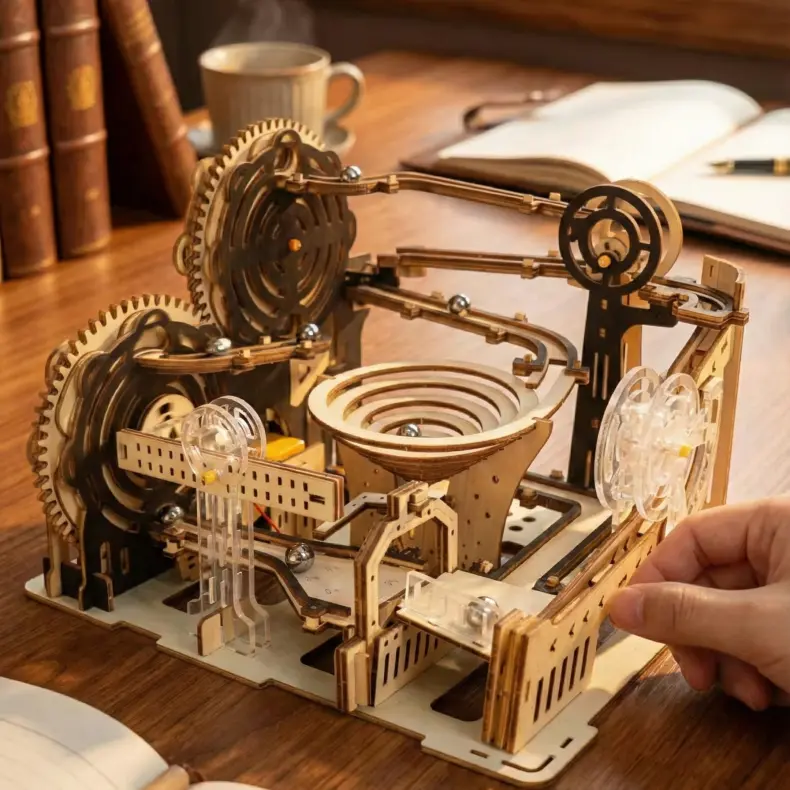
Marble Mazes
Marble mazes suit the arthritis-limited builder. The mechanism is a gravity path: tilt the frame, guide a steel ball through channels, and the puzzle reveals itself in play rather than in final assembly. Once the maze is built, the senior can use it over and over as a hand-and-eye exercise. No small parts to lose after the build. Display result: a hands-on object that lives on a coffee table or side stand, not a fragile model in a glass cabinet. Verify on the product page whether the mechanism includes any small ball bearings or loose marbles, since these can pose a swallowing risk for seniors with cognitive decline. Most adult-targeted marble runs use balls larger than a shooter marble, but the listing should confirm the actual size before ordering.
Wooden Mechanical Clocks
A wooden mechanical clock fits the active retiree who wants a finished object with daily utility. The assembly is mostly frame-and-gear construction; once built, the clock tells time, which makes it shelf-worthy in a way a decorative-only model is not. Finished size is typically mantel-scale and light enough to reposition with one hand. Verify three things on the product page: whether the movement is included or requires a separate quartz insert, whether the gear mechanism needs lubrication, and whether the finished model sits flat without a weighted base. These are the practical questions that decide whether the clock ends up on a mantel or back in its box.
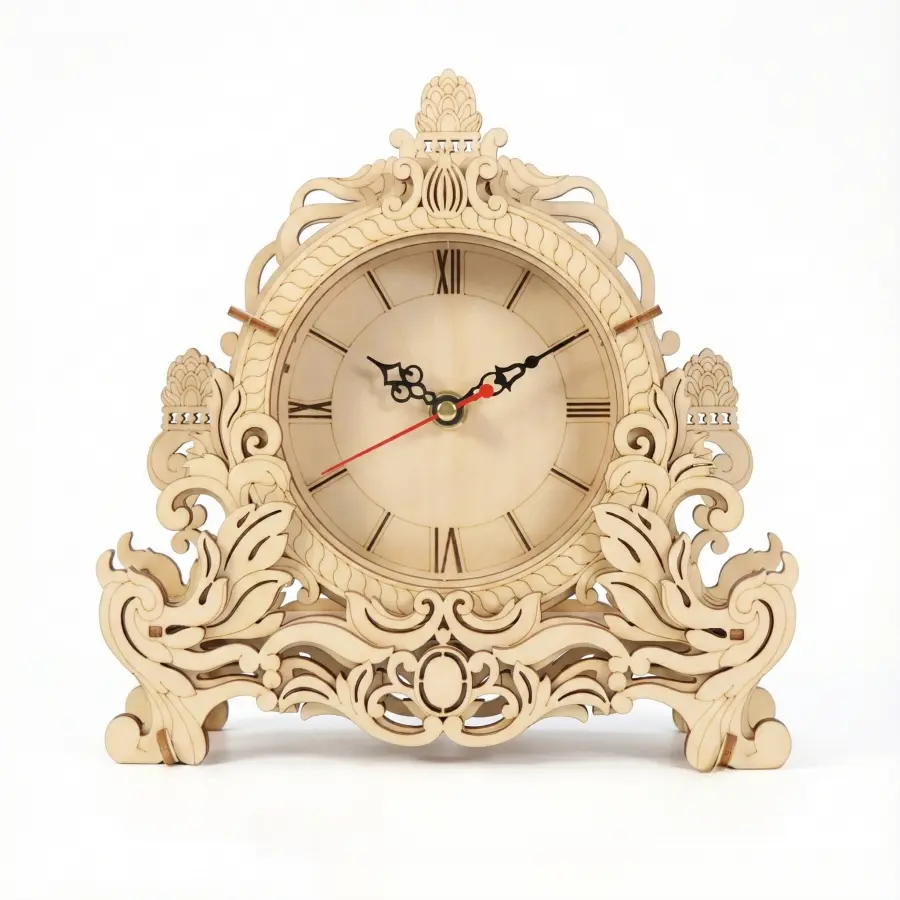
The 3D Wooden Puzzle Clock DIY Kit at $26.99 sits in this category. Confirm the included mechanism type, the finished dimensions, and the tool requirement directly on the Tea Sip product page before ordering.
Small Vehicle Models
Small vehicle models, including vintage cars, trams, and tankers, work for the grandparent-grandchild companion project. A child handles the larger frame pieces while the senior fits the detailed parts. The category also tends to run a higher piece count, so it belongs in the prior-experience lane rather than as a first kit. Finished size is usually a small footprint that fits on a desk or bookshelf. Verify on the product page whether the wheels actually turn once assembled and whether the total piece count is under 200; the answer separates a casual afternoon project from a multi-week undertaking.
Book Nooks and Miniature Scenes
Book nooks and miniature house scenes are the riskiest senior-gift category, and the reason is vision. These models depend on printed details, tiny accessories, and paint-by-number-style assembly guides that reward close-up fine work many seniors find tiring after 70. They also tend to carry the highest piece counts in the 3D wooden puzzle space. Skip this category for arthritis-limited builders and memory-care recipients. Include it only for the active hobbyist who has built a kit before and already enjoys the miniature-hobby workflow.
Solo vs. Social Building
A marble maze is a solo quiet-time hobby that becomes social the moment a grandchild visits and asks to try the path. A geared clock is a solo project with a payoff the senior enjoys alone every day. A small vehicle is the natural companion build for an afternoon visit, with a hand-off point that lets both generations contribute. A book nook is almost always a solo project, and a long one. The finished-display check is the final filter: the senior must be able to lift the completed model, dust it with one hand, and reposition it on a shelf without help. If any of those three actions is a strain, the gift is the wrong size or weight, regardless of how the model looks in the unboxing photo.
The next action: pick one category, then confirm piece count, tool requirement, and finished dimensions on the product page before placing the order. Once a kit is chosen, the universal 6-step method for solving 3D wooden puzzles walks through the build sequence with checks for piece orientation, tab seating, and dry-fit pauses.
04. 3D Wooden Puzzle Decision Table: Match Senior Profile to Category
Choose the 12 Piece Crystal Luban Lock Set ($28.88) when the senior has any grip limitation, vision change, or you want a gift that fits in one hand and solves in a single sitting. The table below matches each of the four senior profiles to its best-fit category, with the Crystal Luban Lock Set as the top pick for the arthritis-limited builder and 3D wooden builds (clock, vehicle, book nook) for the other three.
| Senior Profile | Best Category | Tea-Sip Pick | Skip Signals | What to Check on the Product Page |
|---|---|---|---|---|
| Arthritis-limited builder (top pick) | Compact lock puzzle, 9–12 piece set | 12 Piece Crystal Luban Lock Set ($28.88) | Kits requiring glue or cutting; oversized finished models | Piece size, grip diameter, tool requirement (should be none) |
| Active retiree who already builds kits | Geared clock, small vehicle, marble maze | 3D Wooden Puzzle Clock DIY Kit ($26.99) | Snap tabs smaller than a fingernail; 300+ piece kits | Piece count, gear mechanism quality, finished weight |
| Memory-care recipient (early-stage) | Low-piece-count wooden set, 18–24 pieces | 18 Piece Wooden Puzzle ($16.99) | Multi-day assembly steps; tiny detachable parts | Piece count (target 24–48 per dementia-puzzle guidance), tray included, partial-assembly reset |
| Grandparent–grandchild companion build | Mid-difficulty, visible payoff, repeatable | Luban Lock Set 9 Piece ($39.99) | Frustration-prone single-flow builds; glue-required kits | Difficulty, hand-off point, reusability after first solve |
For the arthritis-limited builder, the most common senior-gift constraint, the 12 Piece Crystal Luban Lock Set meets all four checks at once: low piece count, no-glue assembly, grip-friendly scale, and a repeatable challenge that doesn’t end in a dusty display model. The tradeoff: it’s a brain-teaser format, not a build-and-display format. If the senior specifically wants a finished model to show off, pair it with a geared clock for a second gift.
For the active retiree, a geared clock gives a daily-use payoff that most other 3D wooden puzzle categories can’t match. The finished clock winds, keeps time, and sits on a shelf or mantel where visitors see it. The tradeoff: clock mechanisms are the most fiddly sub-category in the space, with more snap tabs per square inch than almost any other build type. Verify piece count and gear quality before committing.
For the memory-care recipient, the piece-count convention for hand-crafted wooden dementia puzzles runs 24–48 pieces, a range confirmed by Alzstore’s product data for wooden Alzheimer’s and dementia sets. The principle transfers to 3D wooden builds: keep piece counts low, choose a kit with a tray or base, and avoid anything that requires remembering a multi-step sequence across more than one sitting. A partial-assembly reset is the most common reason a 3D build fails as a memory-care gift.
For the grandparent–grandchild afternoon, the best categories have a visible hand-off point — one person holds while the other fits, or one solves a section while the other watches. A 9-piece Luban set is short enough that a visiting grandchild stays engaged through the full build. The tradeoff: the senior may finish it alone before the visit. Plan a second, harder set if the first is solved in a single afternoon.
The next buying action: confirm piece count, tool list, and finished dimensions on the product page before placing the order. If the product page is silent on any of these, contact the seller directly — a one-line email asking “Does this kit require glue, and what is the finished model weight?” eliminates most senior-gift mismatches. For a wider comparison of 3D wooden puzzle options across categories and budgets, see 7 best wooden 3D puzzles for adults in 2025.
05. Frequently Asked Questions
A 3D wooden puzzle works as a senior gift when four conditions hold: under 200 pieces, no glue or cutting required, a finished model that lifts with one hand, and a theme the recipient already cares about. The questions below cover the edge cases — grip strength, eyesight, memory concerns, and retirement timing — that change which specific kit to choose.
Are 3D wooden puzzles too hard for seniors?
Not when piece count stays low and no tools are required. A 12 Piece Crystal Luban Lock Set, for example, fits in one hand, solves in minutes, and never needs glue — a safer starting point than a 300-piece vehicle model. Match difficulty to the recipient’s last completed kit, not to a number on the box.
Which 3D wooden puzzles don’t require glue?
Look for explicit “snap-fit” or “no glue required” language on the product page. The 3D Wooden Puzzle Clock DIY Kit, the Father and Daughter Bicycle 3D Wooden Mechanical Puzzle, and the Electric Wooden Marble Run Kit are all part of the no-glue 3D wooden puzzle category. Kits that stay silent on the tools question usually need wood glue — ask the seller to confirm before checkout.
What is a good wooden puzzle gift for someone with arthritis?
Choose a kit with large tabs, few pieces, and no pressure fits. The 12 Piece Crystal Luban Lock Set is a 12-piece kit, and the Luban Lock Set 9 Piece is a 9-piece set, both with hand-sized wooden blocks. A marble maze such as the Electric Wooden Marble Run Kit works too — the hands rest on the frame, the wrists tilt.
How many pieces should a senior-friendly 3D wooden puzzle have?
Under 200 for an active builder with steady dexterity. Under 50 for a memory-care recipient — Alzstore’s hand-crafted wooden dementia puzzles run 24–48 pieces, a range that keeps the build contained. Between those two benchmarks, judge by the last kit the recipient finished, not by their age.
Can a senior with limited eyesight do a 3D wooden puzzle?
Yes, if the laser-cut tabs are large enough to feel by touch. Avoid kits with snap tabs smaller than a fingernail. A magnifying lamp on a swing arm, bright overhead lighting, and a plain white sheet under the build surface help pieces stand out. Have reading glasses on before the bag is opened.
What is the difference between a 3D wooden puzzle and a wooden model kit?
A 3D wooden puzzle is a type of mechanical puzzle — solved as the activity itself, where the build is the engagement. A wooden model kit is built to use afterward: clocks, music boxes, and gear-driven vehicles. For seniors, a small puzzle becomes a quiet-time hobby; a finished model rewards the builder every time the clock ticks or the carousel turns.
What is a good retirement gift for a senior who likes crafts?
A shelf-worthy mechanical model with a visible moving part. The 3D Wooden Puzzle Clock DIY Kit and the Father and Daughter Bicycle 3D Wooden Mechanical Puzzle both finish as display objects that earn a place in a living room. Pair the kit with a handwritten note suggesting a Saturday-morning build ritual — the time-based framing makes the gift feel personal rather than generic.
Are 3D wooden puzzles good for dementia patients?
Only the simplest ones, and only with company. Hand-crafted wooden dementia puzzles in the Alzstore catalog run 24–48 pieces and come in a tray, and that same low-piece, spatially contained convention applies to 3D kits. A build with more than 50 pieces or a multi-step sequence across sittings will frustrate a memory-care recipient. Choose a small Luban lock or the 18 Piece Wooden Puzzle instead, and build it together as a shared activity.
Before clicking buy, run the four checks one more time — piece count, glue requirement, finished weight, and theme fit. If any answer is unclear on the product page, send that one-line email to the seller asking “Does this kit require glue, and what is the finished model weight?” A 90-second confirmation now prevents a senior gift that sits unopened in a drawer.
Where to Start
If the recipient and occasion checks above match, start with 12 Piece Crystal Luban Lock Set. Check the current product page for the specifications that matter to your choice.
Sources and verification
- Product details and current specifications: Tea-Sip product page
Last updated: August 12, 2026