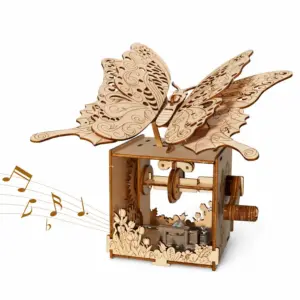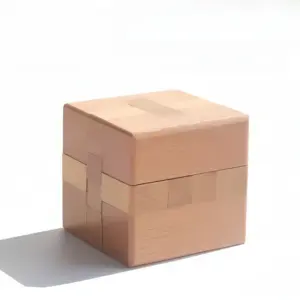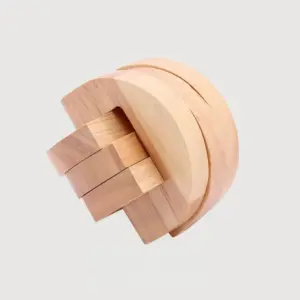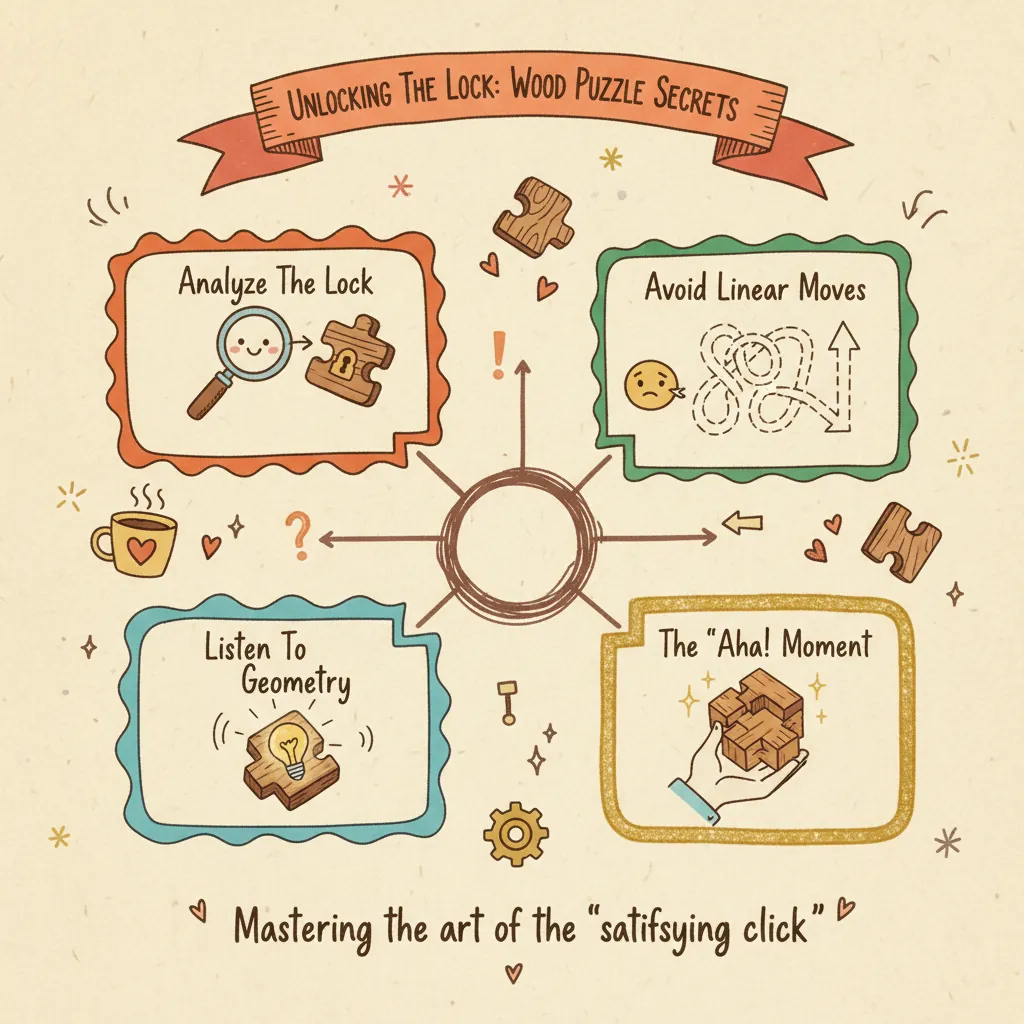
The third time the notched cherry-wood bar slipped past my thumb and sent the entire assembly clattering onto my desk, I did what any sane person would do: I walked away and made a very strong cup of coffee. It was a rainy Tuesday, and I was three hours into a “level four” burr puzzle that promised a “satisfying click” but was currently delivering nothing but a bruised ego. That specific frustration—the feeling of being 99% of the way to a solution only to realize your foundation is backward—is the hallmark of a great mechanical challenge.
My thesis after testing over 200 of these objects is simple: the best 3D wooden puzzle solutions aren’t found in a PDF or a YouTube video; they are discovered the moment you stop trying to force the wood to move and start listening to what the geometry is telling you. Whether you are holding a 2,500-year-old Chinese design or a modern laser-cut airship, the logic remains the same. If you have to push hard, you’ve already lost.
The Anatomy of a Lock: Why We Get Stuck
Most people approach a 3D puzzle like a standard jigsaw. They look for edge pieces or visual patterns. But with a three-dimensional wooden object, you aren’t just matching shapes; you are navigating a 3D maze where the walls move. The primary reason solvers hit a wall is “linear thinking.” We expect Piece A to move left so Piece B can move down. In reality, many complexities of hidden-compartment trick boxes require simultaneous movement—a “coordinated slide” that feels like picking a lock.
Wooden puzzles, specifically those using mortise-and-tenon joints, rely on friction. Unlike metal, wood breathes. It expands with humidity and shrinks in the dry heat of an office. This means a solution that worked yesterday might feel “sticky” today. Understanding this tactile reality is the first step toward becoming a veteran solver. You aren’t just a hobbyist; you’re a micro-engineer.
Luban Lock Set 9 Piece
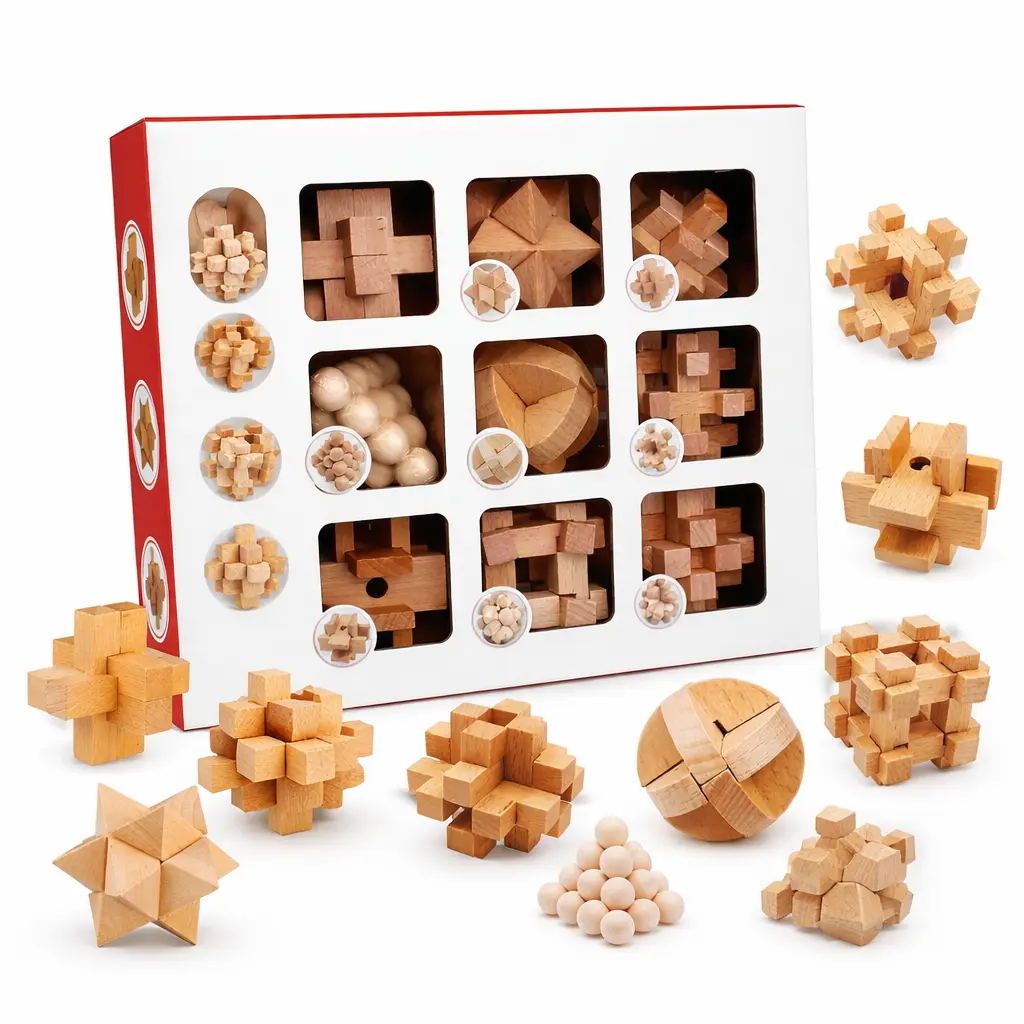
If you want to understand the DNA of every wooden puzzle on the market today, you have to start with the Luban Lock Set 9 Piece. Priced at $39.99, this isn’t just a toy; it’s a masterclass in ancient structural engineering. These puzzles are attributed to Lu Ban, a legendary Chinese carpenter from 500 BCE. The genius here is the total absence of glue or nails. Everything is held together by geometry alone.
I spent a weekend with this set, and what struck me was the variation in “solve logic.” One puzzle might require you to find the “key” piece—the only one with a straight-through cut—while another requires a rotational move that feels completely counterintuitive. The wood has a raw, honest finish that provides excellent grip, which is necessary because some of these tolerances are tight. If you’re buying this for a teenager, be prepared for them to ask for help, and be prepared to realize you don’t have the answer either. It’s a humbling, rewarding experience that serves as the perfect introduction to the tactile history of wooden storage riddles and their more complex descendants.
Metal vs. Wood: Choosing Your First Frustration
While this guide focuses on wooden solutions, you cannot ignore the metal counterparts that often sit on the same desks. The experience is fundamentally different. Wood is warm, forgiving, and quiet. Metal is cold, precise, and provides a distinct “clink” when you find the right path.
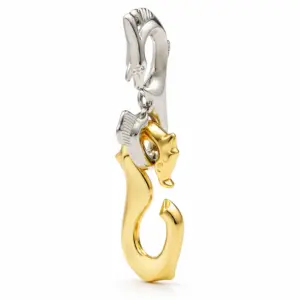
I often suggest that beginners start with a hybrid approach. If the grain of the wood is making you cross-eyed, switching to a two-tone metal puzzle can help reset your spatial reasoning. For instance, the Gold Silver Double Fish Metal Puzzle, available for $13.99, uses the same interlocking logic as a wooden burr but in a 60mm palm-sized format. It’s a great “palate cleanser” between larger wooden builds. Similarly, the
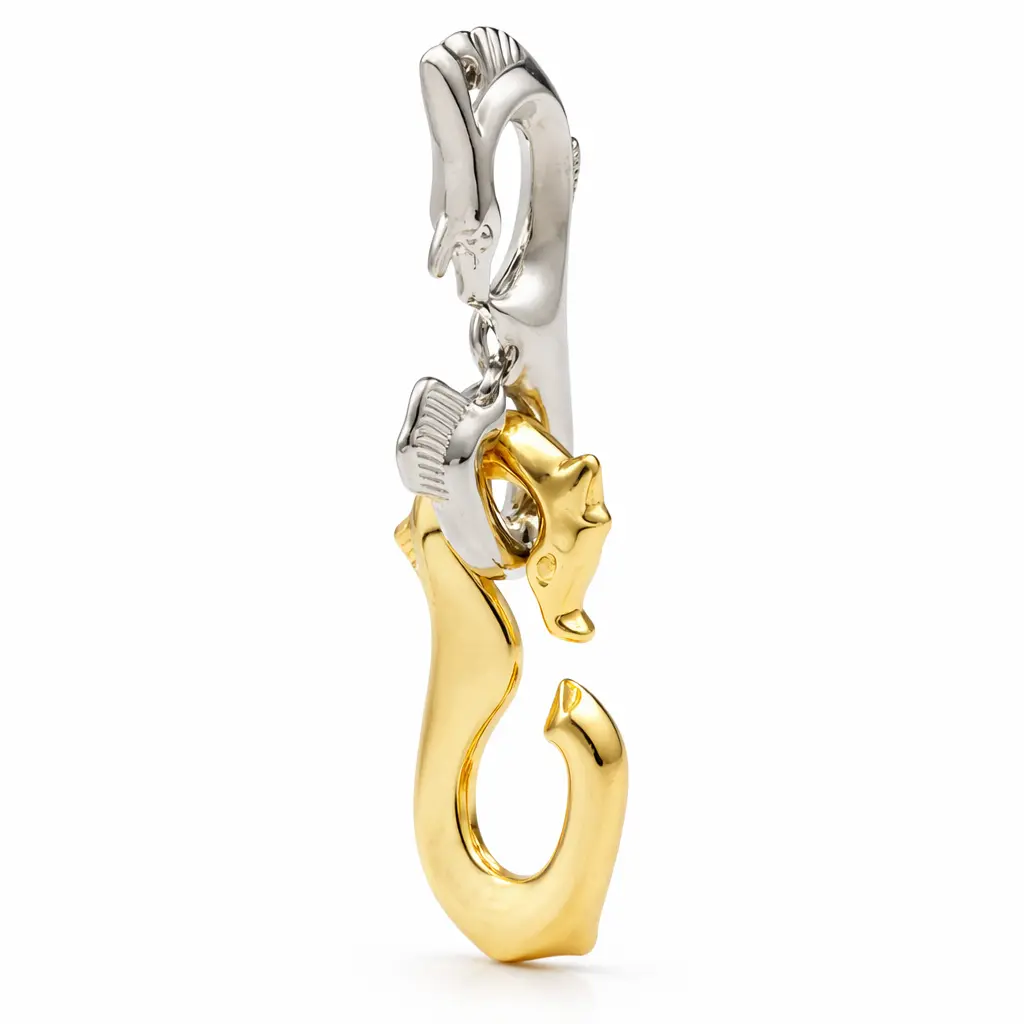
Dual Seahorse Gold & Silver Brain Teaser ($14.99) introduces a threaded mechanism that you rarely see in wood, forcing you to think about “twist” instead of just “slide.”
The Build vs. The Solve: Two Different Disciplines
It is important to distinguish between “assembly puzzles” and “disassembly puzzles.” A burr puzzle (like the Luban locks) is a disassembly challenge—the goal is to take it apart and, more importantly, put it back together. An assembly puzzle, like a 160-piece model kit, is about the journey of construction.
Steampunk Airship 3D Wooden Puzzle
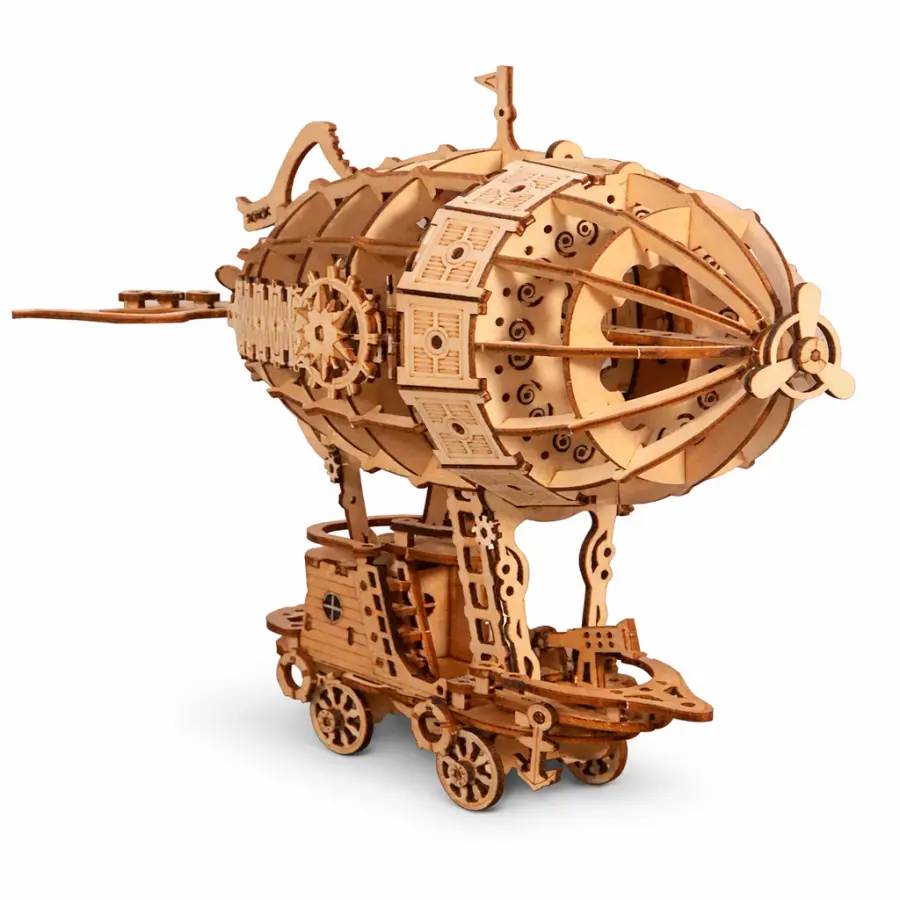
The Steampunk Airship 3D Wooden Puzzle ($26.66) falls firmly into the assembly category, but don’t let that fool you into thinking it’s easy. This is a 160-piece Victorian fever dream. When I built mine, I found that the propeller mechanism required a level of delicate pressure that would make a surgeon nervous. The laser-cut plywood is precise, but wood is still a natural material; it has a breaking point.
The “solution” here isn’t a secret move; it’s a sequence. You are following a logic path laid out by the designer. The payoff is a functional desk piece with rolling wheels and a captain’s cabin. It’s less about “cracking the code” and more about the meditative process of bringing a machine to life. If you find your brain getting fried by the 160 pieces, I highly recommend taking a quick digital logic break to reset your focus before diving back into the gears.
3D Wooden Cello Puzzle Model Kit
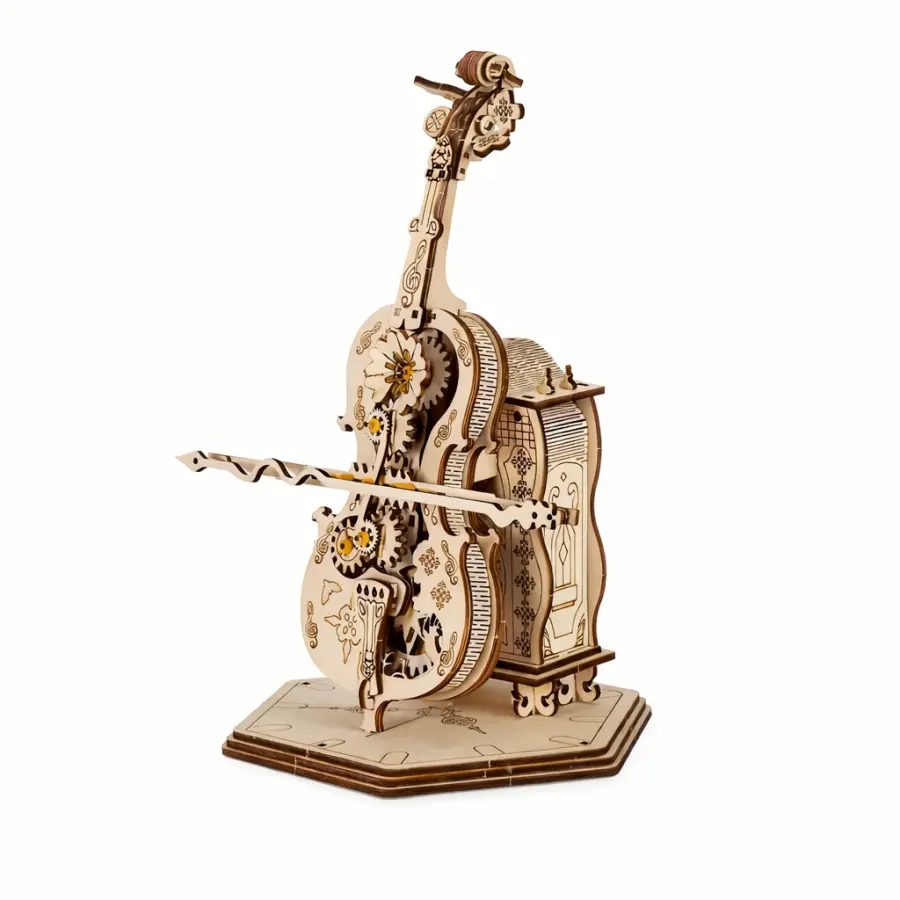
For those who prefer elegance over gears, the 3D Wooden Cello Puzzle Model Kit ($29.99) offers a different kind of satisfaction. It trades the “how does this move?” question for “how does this fit?” The Victorian engravings on the body are a nice touch, but the real challenge is the curvature of the cello’s frame.
I’ve noticed that musical instrument puzzles tend to attract a more patient solver. According to research from the National Institutes of Health, engaging in these types of visuospatial activities can actually support long-term cognitive health. When I finished the cello, it didn’t just sit on my shelf; it felt like a trophy. It’s a bit more fragile than the airship, so I wouldn’t recommend it for households with curious toddlers, but as a desk accessory for a professional, it’s hard to beat.
The “Aha!” Moment: A Study in Spatial Logic
Here is the peak insight I’ve gained after hundreds of hours of fiddling: your brain is a liar. When you look at a puzzle like the
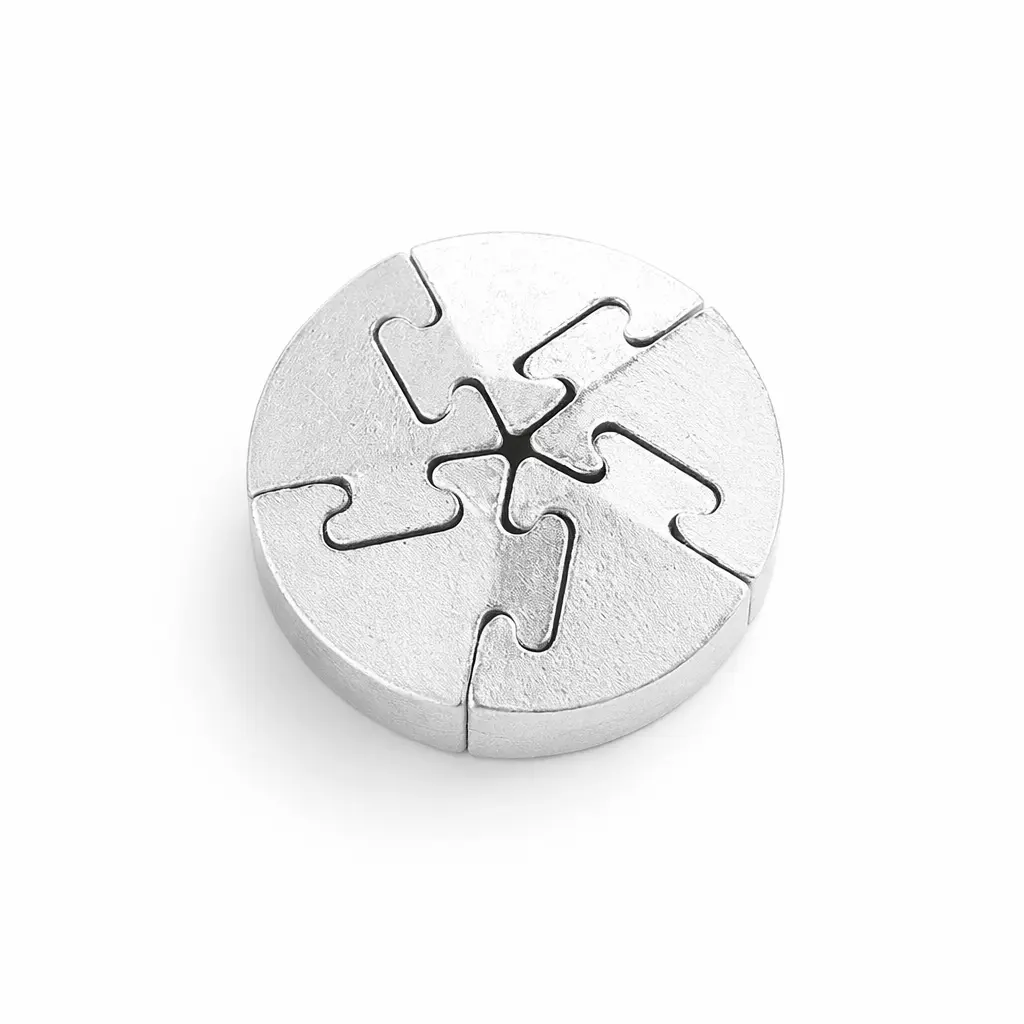
5 Piece Cast Spiral Metal Puzzle, your brain sees five identical wedges and assumes they are interchangeable. It looks for a symmetrical solution because humans love symmetry. But the “trick”—the moment the pieces finally fall away—usually happens because of a single, tiny asymmetry that you’ve been ignoring.
I once watched a mechanical engineer spend forty minutes trying to solve a spiral puzzle through pure mathematical deduction. He was looking for the “key” piece based on weight and volume. Meanwhile, his ten-year-old daughter picked it up and solved it in three minutes. Why? Because she wasn’t looking for a formula; she was feeling for the “wiggle.” In 3D puzzles, the “wiggle” is the most important piece of data you have. It tells you where the tolerances are loose and where the designer has left you a path. This same principle applies to the translucent logic of crystal assemblies, where light helps you see the internal voids that your fingers can’t reach.
When Instructions Fail: Developing a Solver’s Intuition
If you find yourself searching for “3d wooden puzzle solutions” online, you’ve likely reached the stage of “constructive frustration.” Most instructions that come in the box are, frankly, terrible. They are often poorly translated or rely on diagrams that look like an explosion in a matchstick factory.
To develop your own intuition, follow these three rules:
1. The Gravity Test: Turn the puzzle over in every possible orientation. Sometimes a pin or a locking bar is held in place by a simple internal gravity latch.
2. The Mapping Method: If you manage to get one piece out, stop. Take a photo. Note the orientation. The biggest mistake people make is taking a puzzle apart and realizing they have no idea how it looked five seconds ago.
3. The No-Force Rule: If you are turning red in the face trying to slide a piece, you are doing it wrong. Wood will snap long before the puzzle “gives up.”
For a change of pace, I sometimes move from the physical to the strategic. If I’m stuck on a mechanical move, I’ll play a few rounds of classic strategic positioning to keep my “if-then” logic sharp. It’s all the same mental muscle.
Puzzles as Kinetic Art: The Display Factor
A puzzle shouldn’t just be a plastic box you hide in a drawer. The best ones serve as conversation starters. This is where wood really shines over metal. A well-made wooden model has a presence on a bookshelf that a chrome ring simply can’t match.
DIY Castle Music Box Night Light Shadow Box Kit

The DIY Castle Music Box Night Light Shadow Box Kit ($33.39) is the ultimate example of this. With 28 pieces, it’s not the most difficult build in terms of piece count, but it is the most rewarding in terms of the “final reveal.” It combines a mechanical music box with LED lighting.
When I assembled this, the “solution” was more about cable management and delicate layering than traditional interlocking logic. But the result—a multi-layered, glowing fantasy castle—is something people actually stop and ask about. It bridges the gap between a “brain teaser” and “home decor.” For those who find the burr puzzle too abstract, this provides a tangible, beautiful goal.
The Pocket-Sized Enigmas
Not every solution requires a dedicated afternoon at a desk. Some of the most satisfying “clicks” come from things you can fiddle with during a Zoom call.
The Cast Keyhole Gold & Silver ($13.99) is a personal favorite for this. It looks like two flat pieces of metal, but the “maze” is cut into the edges. It’s a 3D puzzle disguised as a 2D one. Similarly, the

Metal Starfish Puzzle Ring — $13.99
Metal Starfish Puzzle Ring ($13.99) uses a “ring and post” logic that dates back centuries. These are the “fidget spinners” for people with high IQs. They don’t just spin; they demand your attention.
If you’re looking for something with a historical nautical flair, the

Galleon Ship 3D Wooden Puzzle Model Kit (check current pricing) offers a desktop-sized replica of the ships that dominated the Atlantic. It’s a snap-fit kit, meaning no glue, which is the gold standard for high-quality wooden puzzles.
Quick-Reference Comparison Table
FAQ: Everything You Wanted to Ask While Frustrated
How do I solve a 3D wooden puzzle if I lost the instructions?
First, don’t panic. Most instructions for things like the Soma cube or burr puzzles are better off in the recycling bin anyway. Your best bet is to look for “sequential discovery” clues. Look for the piece with the most “give” or wiggle room. In a wooden puzzle, there is almost always one “key” piece that must be removed first before any others will budge. If you can’t find it, try applying gentle pressure to different axes simultaneously.
Why are some pieces so hard to move? Is it a defect?
Usually, no. Wood is a living material. If you live in a humid environment, the fibers can swell, making the fit tighter than intended. Professional solvers sometimes use a tiny bit of paraffin wax or a “dry” lubricant on the joints. Never use oil or WD-40, as this will stain the wood and eventually cause it to rot. If a piece is truly stuck, try putting the puzzle in a sealed bag with a silica gel packet for 24 hours to draw out moisture.
What is the best age for these puzzles?
While many boxes say “14+,” it really depends on the child’s fine motor skills. A 10-year-old with experience in strategic positioning games might solve a Luban lock faster than an adult. However, for mechanical kits like the Airship, the 14+ rating is more about the fragility of the pieces. You need “adult hands” to apply the right amount of pressure without snapping the plywood.
Can these puzzles be solved more than once?
Disassembly puzzles (like the metal fish or wooden locks) are meant to be mastered. The first solve is an accident; the second solve is understanding; the third solve is a performance. Assembly kits, like the Cello or the Galleon, are generally “one and done,” though the satisfaction comes from the display value. If you want something you can solve repeatedly, stick to the interlocking burr sets.
Are 3D wooden puzzles good for seniors?
Absolutely. The tactile nature of wood provides excellent sensory feedback. Many occupational therapists recommend them for maintaining hand-eye coordination and cognitive flexibility. The key is to choose puzzles with larger pieces and clear contrast, as tiny metal slivers can be frustrating for those with declining vision or arthritis.
What should I do if I break a piece?
Most high-quality kits come with a few “spare” parts for the most fragile components (like gears or thin struts). If you break a unique piece, a tiny drop of wood glue and a toothpick is usually enough to fix it. Just make sure the glue is completely dry before you attempt to fit the piece back into the assembly, or you’ll end up with a permanently “solved” (and stuck) puzzle.
How do I know if a puzzle is “too hard” for me?
Difficulty is subjective. If you enjoy the process of “failing better,” a level 5 puzzle is great. If you just want a cool object for your desk, stick to level 2 or 3. I personally think the translucent logic of crystal assemblies offers a more forgiving learning curve because you can see what’s happening inside.
Is there a “cheat code” for 3D puzzles?
The closest thing to a cheat code is understanding the “burr” classification system. Most 3D wooden puzzles are variations of the 6-piece burr. Once you learn the “standard” internal notch patterns, you’ll start to recognize them in almost every other puzzle you encounter. It’s like learning the chords to a song; once you know the basics, you can play almost anything.
Why choose wood over 3D printed plastic?
Plastic is precise, but it has no soul. Wood has grain, scent, and a variable friction that makes the solve feel more “organic.” Also, a 3D printed puzzle will look the same in ten years; a wooden puzzle will develop a patina from the oils in your hands, becoming a personal artifact.
Are these puzzles travel-friendly?
The metal ones, like the

Cast Keyhole Gold & Silver — $13.99
Cast Keyhole, are perfect for planes. The wooden model kits, however, are a nightmare to travel with. One bump in the road and your half-finished airship becomes a pile of kindling. If you need a travel challenge, stick to the pocket-sized metal line.
What 40 Hours of Brass and Frustration Actually Taught Me
If you’ve read this far, you’re likely the kind of person who doesn’t mind a bit of a struggle. You understand that the “solution” isn’t just the final state of the object—it’s the mental shift that happens when you finally see the hidden path.
I think back to that rainy Tuesday with the cherry-wood burr. When I finally solved it, it wasn’t because I followed a guide. It was because I stopped looking at the pieces as individual blocks and started seeing them as a single, fluid system. That realization is the “peak” of the hobby. It’s why we keep buying these things even when they make us want to pull our hair out.
If you’re ready to start your own collection, I genuinely recommend starting with the Luban Lock Set 9 Piece ($39.99). It’s the most honest representation of what 3D puzzling is all about. It will frustrate you, it will teach you, and eventually, it will give you that “satisfying click” you’ve been looking for. Once you’ve mastered the wood, you can move on to the complexities of hidden-compartment trick boxes and see how far the rabbit hole really goes.
The next time you’re stuck, remember: don’t push harder. Just look closer. The wood is already trying to tell you the answer.