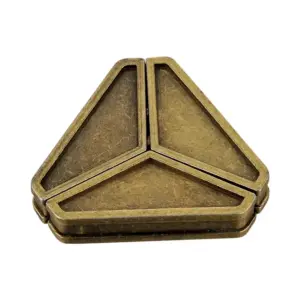
The Weight in Your Hand: More Than a Metal Brain Teaser
It’s heavy. It’s cold. The first time you pick up a precision cast puzzle, the immediate impression is one of unexpected density—a zinc alloy totem weighing between 40 and 80 grams, the solid heft of a worn coin or a fine pocketknife. This isn’t a disposable trinket; it’s a palm-sized conundrum built to last centuries, presenting a wordless challenge you can feel in your fingertips and your prefrontal cortex. In a world of infinite, weightless digital distractions, here is a finite, physical problem.
There is a deep, human fascination with locked objects. The click of a lock, the slide of a bolt, the quiet ‘aha’ of a mechanism yielding. This allure is the DNA of the cast disentanglement puzzle. You are handed two or more intricately machined pieces, fused together by logic rather than glue. There are no instructions. Just a quiet, three-dimensional problem waiting to be decoded. For the curious adult who first encounters one in a museum shop or sees it solved in a video, the question shifts from “What is this?” to “What is this for?”
The answer is more profound than a simple challenge. While competitors list these as mere “metal brain teasers,” the reality is they function as kinetic sculpture and tools for enforced mindfulness. The precision required to manufacture them—the flawless machined finish, the hair’s-breadth tolerance between parts—isn’t just for show. That manufacturing quality is the foundation of the experience. It transforms fumbling frustration into a flow state of tactile exploration. Each slight rotation, each tested slide, delivers unambiguous tactile feedback. A cheap puzzle will grate and stick. A great one moves with a silent, fluid promise, making the eventual separation a revelation of elegant engineering.
This is where the object transcends its one-time solve. Post-enlightenment, it doesn’t go in a drawer. It becomes a desk totem. Its cool weight and intricate form invite handling, turning the solved puzzle into a superior tactile fidget puzzle. Running your thumb over its patina, tracing the solution path with your fingers—it becomes a physical anchor for thought, a puzzle as sculpture that rewards repeated interaction long after the secret is known.
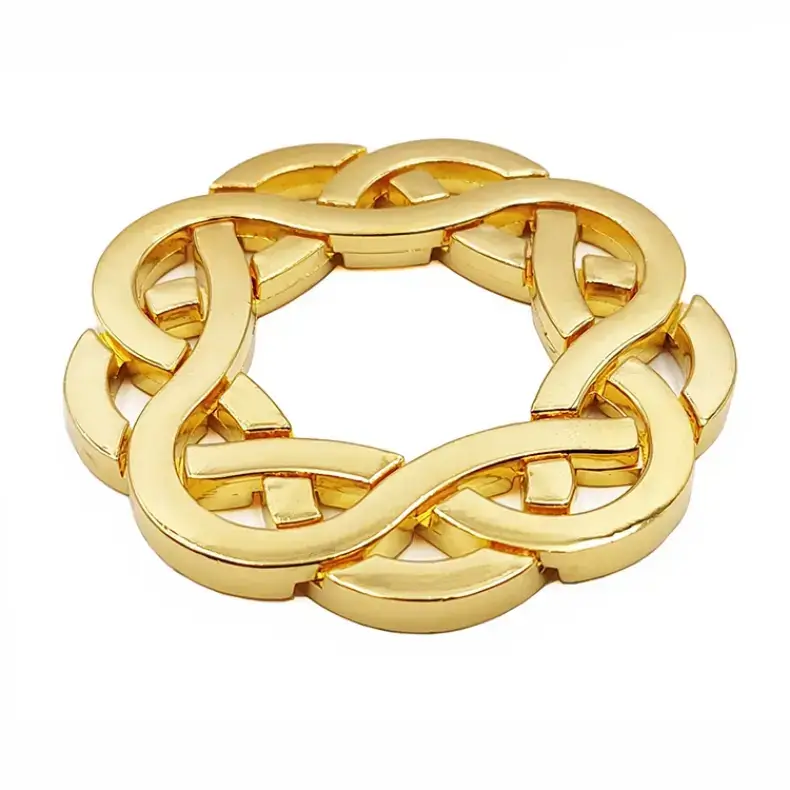
Consider the Golden Chinese Knot, a piece that embodies this duality. Its form is instantly recognizable, a gleaming artifact that could sit beside a bookend. But in your hand, it becomes a labyrinth of interlocked curves. The initial intimidation is real—the pieces seem impossibly married. Yet, that feeling gives way to enlightenment once you realize it’s not about force, but about finding the specific alignment, the hidden channel. The attempt itself becomes a meditative exercise in focus, a departure from the ping of notifications. For more on this ancient-meets-modern appeal, our exploration of how metal puzzles engage the brain and offer a tactile escape delves deeper.
This article, then, is a curator’s guide. We move beyond catalog listings to evaluate these objects by the criteria that matter long-term: the poetry of their mechanism, the quality of their tactile feedback, and their life on your desk after the triumph (or temporary frustration) of the solve. It’s about finding the piece that matches your mind, whether you seek a disentanglement puzzle for adults that soothes or one that strategically vexes. The journey from curiosity to confident selection begins with recognizing the weight in your hand for what it truly is: a quiet invitation to engage a different part of your mind. As noted in our piece on why professionals turn to metal puzzles for mindful unwinding, the value lies in the forced pause, the tactile reset.
Decoding the Jargon: Cast Metal, Tolerance, and the Hanayama Scale
The weight you’re feeling is the first clue to quality. That substantial, cool heft almost always comes from a zinc alloy—a material prized for its ability to capture intricate details in a precision cast, resulting in a dense, durable piece typically weighing between 40 and 80 grams. This isn’t flimsy, springy wire bent into shape; it’s a solid object created by injecting molten metal into a mold engineered to thousandths-of-an-inch accuracy. That word, tolerance—the microscopic gap between moving parts—is what separates a great puzzle from a cheap, jangly imitation. In a masterfully designed piece, the tolerance is so fine that the parts move with a deliberate, hydraulic smoothness, not a loose rattle. It’s the difference between a vault door and a garden gate.
Understanding this foundation demystifies the entire category. A disentanglement puzzle (a category formally documented on Wikipedia) is the broad term for any object where the goal is to separate two or more seemingly interlocked pieces. The precision cast variant, like those from Hanayama, elevates this concept into kinetic sculpture. The pieces aren’t just tangled; they are architecturally intertwined, with hidden channels, cleverly obstructed paths, and solutions that rely on precise alignments rather than force. (A note on force: if you’re applying any, you’re doing it wrong. These are exercises in logic and finesse.)
This brings us to the universal question: “How hard is it?” The market’s most trusted barometer is the Hanayama cast puzzle difficulty levels. Mensa-rated and standardized on a 1-to-6 scale (1 being simple, 6 being fiendishly complex), this scale is your best starting guide. But what does a “Level 4” actually feel like? For a personalized framework, start with our guide on understanding the Hanayama puzzle difficulty scale. To truly appreciate the craft, you need to be decoding the key terms of cast metal puzzle design. Let’s translate the levels into experience:
- Levels 1-2 (The Confidence Builders): Often solvable in under 30 minutes. The solution path is relatively linear, offering a clear “aha” moment. Ideal for understanding basic principles like rotation and alignment. Perfect for the tentative newcomer.
- Levels 3-4 (The Sweet Spot): This is where most enthusiasts live. A solve might take an hour to an afternoon. These puzzles introduce misdirection and non-linear thinking. The satisfaction comes from discovering a sequence of moves you’d never see at first glance. They offer challenge without soul-crushing frustration.
- Levels 5-6 (The Expert’s Domain): Expect days, if not weeks. Solutions often involve counter-intuitive moves, blind explorations, and multiple interdependent steps. The risk here isn’t just difficulty, but obscurity—the solution can feel arbitrary rather than elegant. For the dedicated frustration-seeker who views the puzzle as a multi-session nemesis.
So, how do you choose? Ignore the allure of the highest number. A well-designed Level 3 is often more profoundly satisfying than a convoluted Level 5. Consider your goal: is it the euphoric click of discovery, or the protracted campaign of a logical brute force siege? For a first foray, a Level 3 or 4 provides the ideal balance of accessible intrigue and genuine accomplishment. It’s the difference between learning a beautiful song on the piano and attempting a virtuoso concerto on day one. One builds a loving relationship with the form; the other may end with the object in a drawer.
Ultimately, the jargon points to a simple truth: you are buying a physical algorithm. The zinc alloy is the medium, the precision cast is the craftsmanship, and the tolerance is the silent governor of the entire experience. The scale merely hints at the length of the conversation you’re about to have with it.
The Anatomy of Satisfaction: A Framework for Choosing Your Puzzle
Choosing a great cast puzzle isn’t about picking the hardest level; it’s about matching four key pillars of quality to your personal sensibility. A premium puzzle, like those from Hanayama, outperforms generic sets in three measurable ways: superior metal density for a 60-80g heft, machining tolerances often under 0.1mm for a seamless fit, and a solution path that prioritizes logical elegance over convoluted trickery. This framework transforms a purchase from a gamble into a curated selection.
That prior discussion of scales and tolerance wasn’t academic—it’s the foundation for a more meaningful evaluation. Anyone can list products. The real craft is understanding why one cold piece of metal feels like a timeless artifact and another feels like a disposable gimmick the moment you pick it up. As a curator, I assess every puzzle through four lenses: its presence as an object, the language of its mechanics, the narrative of its solution, and its life after the “aha” moment.
Heft & Finish: The Desk Totem. This is the first and most honest test. A quality precision cast puzzle has a specific, substantial density. It feels deliberate in the hand—the weight of a heavy watch or a well-balanced tool. This isn’t just about ounces; it’s about mass distribution and the cool, smooth machined finish that invites touch. Cheap alloys feel light, hollow, and sometimes gritty. The best have a satin or slightly textured patina that catches the light without glare, earning its place as a kinetic sculpture on your desk. It’s there even when you’re not solving, a quiet monument to physical logic. (This is the “Desk Totem” quality competitors ignore entirely.)
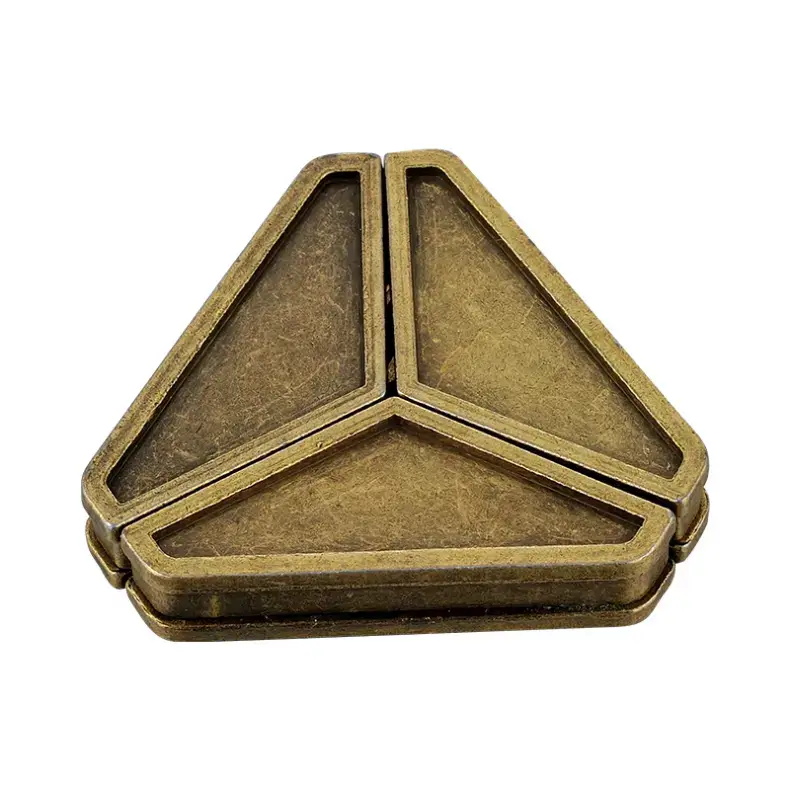
The ‘Click’ Test: Tactile Feedback as Language. This is the heart of From Machining to Mindfulness. When components align in the correct sequence, a well-made puzzle communicates through a definitive, often audible, click. It’s not a rattle. It’s a positive, satisfying engagement—the sound and feel of perfect alignment. This tactile feedback is your primary guide. It tells you when you’re on the path, when a move is locked, and ultimately, when you’ve found the move. Cheap puzzles are mute or, worse, grind unpleasantly. The ‘click’ is the difference between a crisp mechanical keyboard and a mushy membrane one. It transforms random manipulation into a dialogue.
Solution Path Elegance: Difficulty vs. Satisfaction. Here is where we answer the core question of Difficulty vs. Elegance. A high-difficulty rating can simply mean more steps or a well-hidden initial move. But an elegant puzzle, regardless of its level, presents a clear, logical (if clever) sequence. Once discovered, the solution feels inevitable, even beautiful. You can trace your way back. A poorly designed puzzle relies on logical brute force—forcing you to try dozens of nearly identical positions until something gives. The former teaches you a language; the latter feels like guessing a combination lock. This is why a thoughtfully crafted Level 3 can provide more genuine satisfaction than a convoluted, frustrating Level 5. The best puzzles feel like you’re uncovering a secret, not defeating a foe.
Post-Solve Life: Beyond the “Aha”. Finally, consider what the puzzle becomes after you know its secret. Does it retire to a box, its single purpose spent? Or does it earn a permanent spot on your desk? The best puzzles have high fidget and display value. Their components move with a pleasing smoothness, making them satisfying to manipulate absently while thinking. They are compact sculptures, their intertwined forms a visual reminder of the solved state. This long-term value is what separates a disposable challenge from a durable forever toy. It’s the difference between a fireworks display and a well-made lamp.
Applying this framework makes the answer to “Do more expensive brands actually feel better?” unequivocal. Yes. The premium goes directly into that heft, that precise tolerance enabling the silent, smooth slide and the definitive click, and into a design philosophy that values the solver’s journey as much as the destination. For a hands-on comparison that applies a machinist’s rigor to this very question, our guide to a machinist’s perspective on what makes a quality metal puzzle delves deeper. With these four pillars in mind, you’re no longer just buying a puzzle. You’re selecting a piece of interactive design.
The Curated Collection: A Puzzle for Every State of Mind
The perfect puzzle isn’t the “best” one; it’s the one whose language of resistance speaks directly to your own mind. After testing dozens against our framework of heft, finish, mechanism, and solution elegance, five distinct solver archetypes emerged, each with a puzzle that feels like it was cast specifically for them. This is a gallery of kinetic personalities, not a ranking.
The Minimalist Beginner: Seeking Elegance Over Agony
This solver is intrigued, not masochistic. They want a logical, satisfying introduction—a proof of concept that these objects are solvable systems, not maddening traps. The ideal candidate is aesthetically clean, offers clear tactile feedback, and has a solution path that feels discovered, not forced. For this, the Hanayama Cast Harmony (Level 2) is the undisputed primer. Its two interlocked pieces have a warm, almost silvery sheen and a substantial, coin-like weight (roughly 65g). The movement is smooth, with a gentle magnetism that guides more than it obstructs. The solve is a lesson in mechanical empathy; you learn to listen to the pieces, feeling for the one precise alignment where they simply slide apart with a quiet, definitive click. It’s the best cast puzzle for beginners because it teaches the fundamental grammar of the form: patience, observation, and the reward of a perfectly logical conclusion. It lives on a desk not as a trophy of struggle, but as a reminder of a quiet moment of understanding.
The Patient Logician: The Pursuit of the ‘Aha’
This person doesn’t just want to solve; they want to be outsmarted, then enlightened. They crave that seismic shift in perception where the impossible becomes obvious. The puzzle must be a pure, fair logic problem rendered in metal, where frustration is always a prelude to revelation. The Hanayama Cast Enigma (Level 4) is a Mensa rated brainteaser built for this specific epiphany. It presents as an alien, asymmetrical knot. The initial exploration feels hopeless—every path seems blocked. But the Enigma’s genius is its rigid adherence to its own internal rules. There is no trick, no hidden spring, only a sequence of rotations and passes that must be executed in exact order. The moment of solution isn’t a loud click, but a silent, almost shocking disassembly. The pieces are in your hand, and the elegant, looping path you just navigated rewires your perception of the object. It’s a masterclass in spatial reasoning.
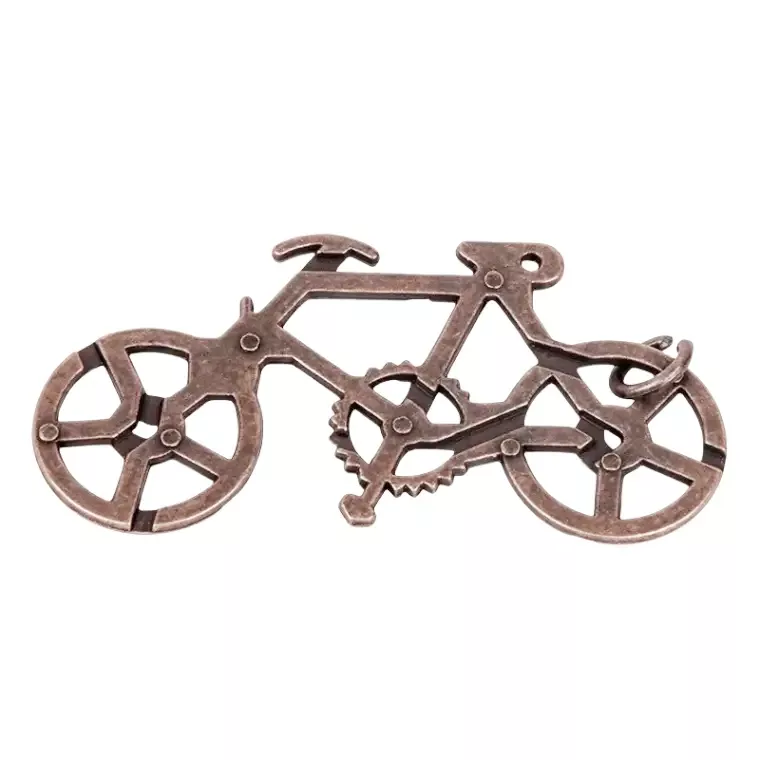
For a similar logical journey with a more thematic presentation, the Intelligent Bike Lock Puzzle offers a comparable mental workout. Its mechanism cleverly mimics a real lock’s action, requiring a sequence of precise manipulations that feel both familiar and novel. The satisfaction is in decoding the physical algorithm.
The Frustration-Seeker: Volume and Variety
Some want a marathon, not a sprint. Their goal is a sprawling campaign of challenges, a value proposition measured in sheer quantity of head-scratching moments. For them, a single elegant solve feels like an amuse-bouche. They want the smorgasbord. The True Genius ‘Viking Forge’ set is their arena: four distinct zinc alloy puzzle toys in one box, ranging from moderate to genuinely grueling. The finish is utilitarian—a dark, matte coating over solid metal—and the heft is satisfyingly chunky. The appeal here is diversity: a twisting disentanglement, a sequential discovery puzzle, a ring-and-hook classic, and a modular assembly. You can bounce between them over weeks. The tactile feedback is more rugged, the solutions sometimes leaning toward clever logical brute force. It’s the workshop bench of puzzles, where the joy is in the cumulative effort across multiple fronts. (A note: If this archetype also tends toward overthinking, you can explore more of the best metal puzzles for adult solvers with targeted recommendations.)
The Tactile Fidgeter: Kinetic Sculpture as Companion
This person’s primary relationship with the puzzle begins after the solve. They seek an object for the hands, something to orbit a coffee cup or live beside a keyboard, providing continuous, satisfying kinetic play. The puzzle must be endlessly manipulable, its movements buttery and its components solid. The Hanayama Cast Marble (Level 3) is a tactile fidget puzzle par excellence. Two cage-like pieces enclose a free-spinning steel ball bearing. The goal is to separate them, which involves navigating the marble through a labyrinth of pathways—a supremely satisfying process in itself. But even solved, it shines. The pieces reconnect with a magnetic snap, and you can then roll the marble silently around its track for minutes on end. The cool heft, the soft spin of the bearing, the smooth glide of the components: it’s a sensory loop. This is where the question of are disentanglement puzzles good for anxiety finds its strongest “yes.” For the fidgeter, it’s a focus anchor, a physical ritual that pulls the mind away from the scroll and into the immediate, calming world of touch and motion—a prime example of a true fidget toy with substance.
The Gift-Giver: The Object as Art
The gift-giver needs a puzzle that succeeds on multiple levels: as a striking visual object, a tangible sign of thoughtfulness, and a solvable challenge that doesn’t permanently sour a relationship. The priority shifts to immediate aesthetic appeal and post-solve presence. It must look like a designed artifact, not a torture device.
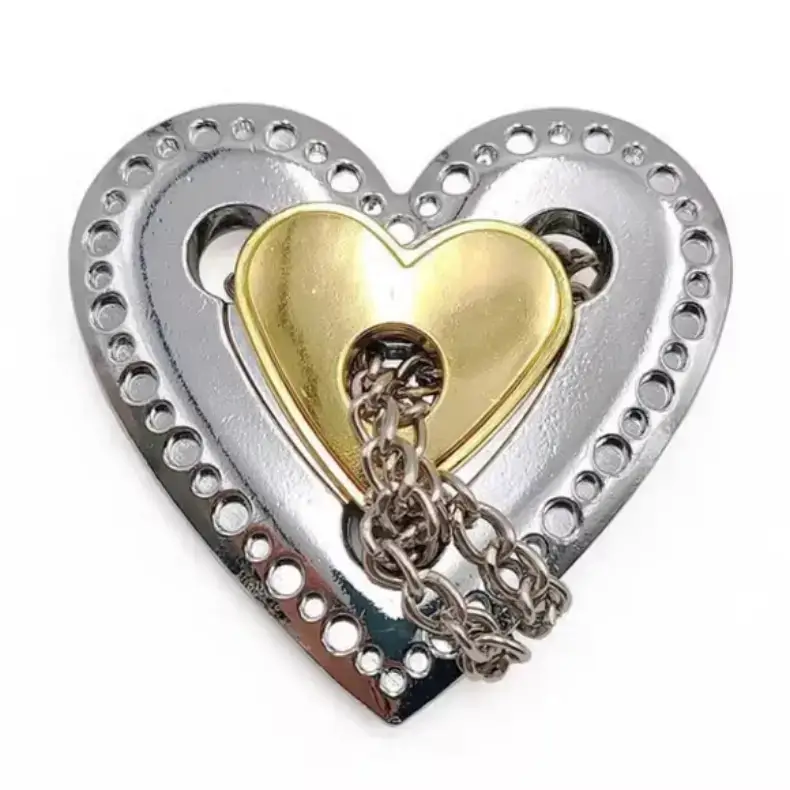
The Cupid’s Heart Chain Puzzle excels here. Its thematic design is immediately understandable and charming, lowering the initial intimidation barrier. The pieces have a pleasing, substantial feel, and the solution is clever without being inscrutable—it’s a fair challenge that leads to a satisfying “of course!” moment. Once solved, the separated heart and chain remain a lovely pair of desk totems, a small sculpture with a story. It embodies the principle that a great puzzle gift is, first, a great object.
The Silent Companion: Life After the Solve
The moment of separation—the final, quiet click—is not an ending. For the dedicated solvers I’ve surveyed, a solved cast puzzle isn’t shelved; it finds a permanent home on the desk, becoming what I term a desk totem. This is the dimension competitors miss entirely, where the puzzle transcends its primary function and reveals its long-term value as an object of industrial art and tactile solace. The short answer to whether you can disassemble and reassemble them is a definitive yes; the mechanism’s elegance is built for infinite cycles, not a single eureka moment.
A solved puzzle shifts purpose. Its heft becomes a paperweight. Its intricate, now-understood form becomes a kinetic sculpture for idle hands. The cool, machined finish invites touch, turning it into a superior tactile fidget puzzle for moments of deep thought or digital fatigue. You’re not just replaying the solution; you’re appreciating the geometry, the precision of the zinc alloy casting, the way light catches its now-familiar contours. It becomes a physical bookmark in your day.
This is where the quality of manufacture pays perpetual dividends. A cheaply cast knock-off feels hollow, its seams rough, its motion grating. It’s discarded. A Hanayama or True Genius puzzle, however, has a satisfying, rhythmic action even after you’ve memorized the solution path. The smooth glide and positive click provide a type of tactile feedback that is inherently grounding. It’s a tool for focus, a mechanical anchor in a scattered world. (I keep a Cast Vortex by my keyboard for this exact reason; its paired rotation is a perfect, silent rhythm for thinking.)
And then there’s the community. Your solitary triumph is just the first step. Online forums like those on Puzzle Place or the dedicated subreddits transform your object into a key for connection. Here, you dissect difficulty level 3-5 puzzles, share non-spoiler hints in a shared language of frustration and breakthrough, and discover the vast universe of designs beyond your first purchase. The puzzle becomes a token of membership.
So, when selecting one, ask not only “Can I solve it?” but “Do I want to live with it?” The best puzzles offer a lasting dialogue between hand and mind, long after the initial secret is known. They are silent companions, witnesses to your focus, and miniature monuments to the quiet joy of precision.
Side-by-Side: The Click, The Heft, The Solve
Understanding the framework is one thing; seeing it applied is another. Let’s place three archetypes—the premium single, the mid-tier set, and the generic multi-pack—under direct scrutiny. The difference isn’t just price; it’s in the hand, the sound, and the very logic of the challenge, with weights typically falling between 40 and 80 grams of cool zinc alloy.
Take the Hanayama Cast Enigma (difficulty 4). Its weight is dense, centralized. The machined finish is uniform, with a fine, almost satiny texture that resists fingerprints. The famous ‘Click’ Test is definitive here: when the pieces align in the correct solution path, they separate with a quiet, precise snick—the sound of perfect tolerance. The solve feels discovered, not forced.
Now, consider a representative from the True Genius ‘Viking Forge’ set (three puzzles, ~$25). The heft is present, but the finish is slightly rougher, a touch more industrial. The castings are clean, but the moving parts have a whisper of play. The click is there, but it’s a softer thud. The solves are clever, but the mechanisms can feel more like sequential steps than a single, elegant revelation. For the price, the value is excellent, offering a sampler of legitimate disentanglement puzzle for adults designs.
Finally, a generic twelve-pack from Amazon. They are light. The metal feels thin, sometimes sharp at the seams. The zinc alloy often has a brittle, painted-on look that chips. This is where you experience the false solve: pieces jam, bind, and require logical brute force that feels like wrestling, not reasoning. There is no click—only a grating separation or, worse, no separation at all. They are puzzles in form only, missing the core tactile feedback and intellectual integrity.
The choice, then, maps to intent. The Hanayama is a definitive object, a kinetic sculpture whose pleasure is in its flawless execution. The True Genius set is a workshop—a way to explore multiple mechanical concepts with good, not great, tactile feedback. The multi-pack is a disposable experiment; it answers “what is this?” but fails at “why would I care?”
Your desk deserves a totem, not a trinket. The upfront cost of a single precision-cast puzzle buys a lasting dialogue, while the bargain bin often delivers only a momentary, frustrating acquaintance. In this world, you truly feel what you pay for.
Where to Buy & The Knock-Off Conundrum
The quest for a worthy precision cast puzzle ends not with a frantic search, but with a targeted one. The difference between the profound click of a solution and the silent disappointment of a jammed mechanism is often the retailer. Your single best guarantee of quality is purchasing from a dedicated puzzle shop like Puzzle Master or Cubezz, or authorized game retailers like Barnes & Noble. These sellers curate for enthusiasts, not impulse buyers, and consistently stock genuine Hanayama cast puzzle sets and reputable brands like True Genius.
Amazon is a minefield. It contains both legitimate listings from official distributors and a flood of generic multi-packs. These knock-offs are masters of visual deception in product photos but fail utterly in the hand. Spot them by their descriptions: vague titles (“Metal Puzzle Brain Teaser 12 PCS”), lack of any brand mention, and reviews complaining of sharp edges, loose fits, or unsolvable designs. The zinc alloy puzzle toys in these sets are often hollow-feeling, with a painted finish that chips to reveal a dull grey underneath. Their fatal flaw is tolerance—the gaps are either too large (making the solution trivial and unsatisfying) or too small (leading to binding and friction, the antithesis of a logical solution path).
Purchasing from a specialist has a secondary, profound benefit: you gain access to a community. Reputable shops often link to or host solution guides, forums, and difficulty ratings that align with the actual solving experience—a resource far more valuable than the fleeting thrill of a cheaper price tag. For a deeper dive into spotting quality from the first touch, the guide on how to choose durable metal puzzles that won’t break or disappoint is an invaluable companion.
Ultimately, buying a precision-cast puzzle is an act of trust in the craftsman. You are paying for the silent, millimeter-perfect engineering that turns frustration into flow. Investing $15-$25 in a single, authenticated object from a trusted source secures that trust. It guarantees the weight, the cool touch, the satisfying click—the very qualities that transform a mere metal brain teaser desk toy into a durable metal puzzle worthy of your desk and your focus.
Your First Move: From Intimidation to Focused Flow
Selecting your puzzle from a trusted source is the first act of confidence. The second is learning how to approach it. The most common question from a newcomer is one of temperament: Are these suitable for someone who gets easily frustrated? Absolutely, provided you start with the right mindset and a puzzle rated between a 2 and 4 on the Hanayama scale. The key is to treat frustration not as a failure, but as a signal from the puzzle to step back and observe.
Place the cool weight in your palm. This is now a system to study, not a lock to force. Your first move is always observation. Run a thumb over the seams, note the gaps, listen to the faint sounds the pieces make when shifted. This is the tactile feedback that separates a quality cast from a cheap imitation. Then, apply the non-spoiler mantra of every seasoned solver: Listen, Observe, Walk Away. If your manipulations produce grinding or binding, you’re on the wrong solution path. If you hit a mental wall after ten minutes, set it down. Let your subconscious work. The ‘aha’ moment often arrives not in the struggle, but in the pause after it.
For a structured approach to that initial intimidation, it helps to adopt a 3-step mindset to solve any metal ring puzzle. It reinforces that these are exercises in focused flow, not logical brute force. Your goal isn’t to win, but to engage. The solve is the journey, and the satisfying click of separation is merely a punctuation mark.
So, your final, confident selection? If you seek a meditative quality, begin with the smooth, cyclical logic of a Cast Vortex (Difficulty 4). If your aim is a desk totem with perpetual kinetic sculpture potential, the ever-shifting Cast Radix (Difficulty 3) awaits. Each is a lesson in patience, a precision cast lesson in how to turn overwhelming complexity into a series of simple, tangible steps.
Your next move is simple. Order one. Not a set. One. Feel its heft, study its machined finish, and let it teach you how to be still. The quiet, three-dimensional problem is waiting.