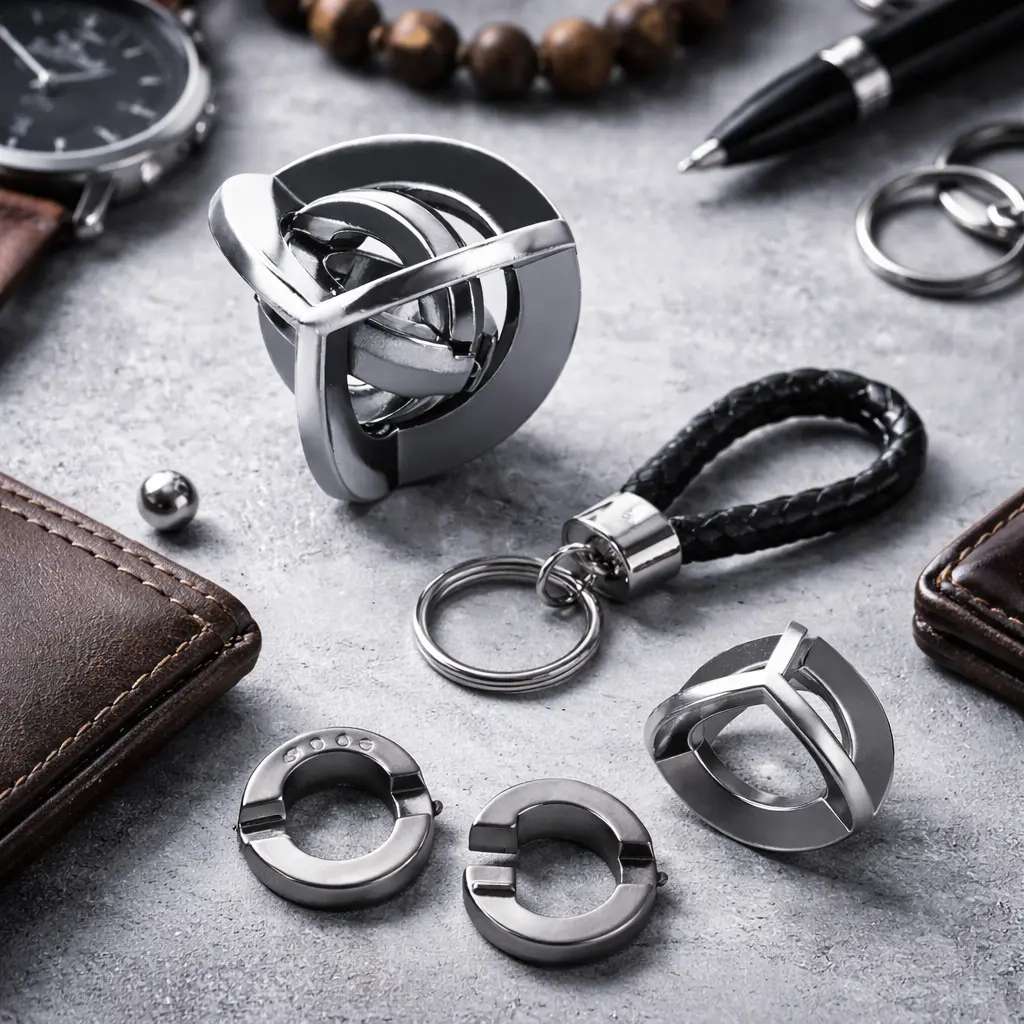
You’ve seen it in puzzle stores, on Amazon wishlists, and in the hands of frustrated colleagues: a chrome sphere trapped inside a triangular frame, spinning endlessly while the solver searches for an escape route that seems to exist everywhere and nowhere at once.
This is the world of orbital ring cast puzzles—a category of metal brain teasers that has frustrated, delighted, and occasionally driven puzzle enthusiasts to the brink of obsession since the early 2000s. The most famous example is the Hanayama Cast Equa, designed by legendary Dutch inventor Oskar van Deventer. But it’s far from the only option.
This guide covers everything: what orbital ring puzzles are, why the Cast Equa became legendary, how to actually solve these geometric nightmares, and which version might be right for you—including some alternatives that solve the Equa’s most frustrating problems while preserving its elegant challenge.
What Are Orbital Ring Cast Puzzles?
Orbital ring cast puzzles belong to the disentanglement puzzle family—mechanical puzzles where the goal is to separate interlocked pieces. Unlike assembly puzzles (put pieces together) or sequential movement puzzles (like Rubik’s Cube), disentanglement puzzles require you to find the precise path that allows pieces to pass through or around each other.
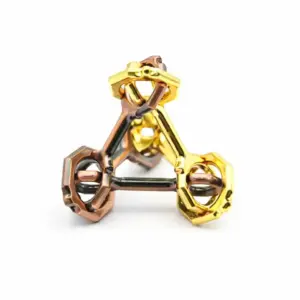
The “orbital ring” design specifically features:
- An outer frame (typically triangular, representing a planetary orbit)
- Two inner rings (C-shaped pieces that interlock within the frame)
- Rotational freedom (pieces can spin but appear trapped)
- Three total pieces when fully disassembled
The design mimics an astronomical model: a planet (the inner rings) surrounded by its orbital ring (the outer frame). This celestial theme earned the original Cast Equa its keyword “Heaven.”
Why Orbital Ring Puzzles Are Uniquely Challenging
Most disentanglement puzzles offer clear visual feedback. With wire puzzles, you can see the path. With string puzzles, the topology is visible. Orbital ring puzzles hide their secrets within three-dimensional rotational space.
The inner rings appear to have escape routes—gaps that suggest the pieces should separate. They don’t. At least not until you discover the precise sequence of rotations that creates a momentary alignment. Miss that window, and you’re back to spinning endlessly.

According to the Lilly Library mechanical puzzle collection at Indiana University, disentanglement puzzles specifically require “topological thinking”—understanding how objects can move through and around each other in three-dimensional space. The orbital ring design pushes this requirement to its limit.
The History: From IPP24 to Global Phenomenon
Oskar van Deventer and the Birth of Cast Equa
The orbital ring puzzle as we know it was created by Oskar van Deventer, a Dutch puzzle inventor with over 500 designs to his name. Van Deventer is known for elegant geometric puzzles that feel inevitable once solved—designs where the solution emerges from spatial understanding rather than hidden mechanisms or tricks.
The Cast Equa debuted at IPP24 (International Puzzle Party) in Tokyo in 2004, where puzzle inventors and collectors gather annually to exchange ideas and compete. Van Deventer’s design stood out for its deceptive simplicity: three pieces that looked like they should come apart easily but refused to cooperate.
Hanayama, the Japanese manufacturer famous for high-quality cast metal puzzles, licensed the design for commercial production in 2008. They gave it the keyword “Heaven”—appropriate for both its celestial aesthetics and the patience required to solve it.
The Difficulty Controversy
When Hanayama first released the Cast Equa, it was rated Level 6—the highest difficulty in their system. This made sense. Solving it typically requires multiple sessions spanning days.
Around 2014, Hanayama downgraded it to Level 5. Not because the puzzle became easier, but because newer designs (Cast Vortex, Cast Trinity) pushed the difficulty ceiling even higher. The Equa became a stepping stone rather than a summit.
This downgrade created confusion. Many solvers, expecting Level 5 difficulty, found themselves facing something far more challenging. Review after review describes the same experience: “This should be Level 6” or “much harder than other Level 5 puzzles.”
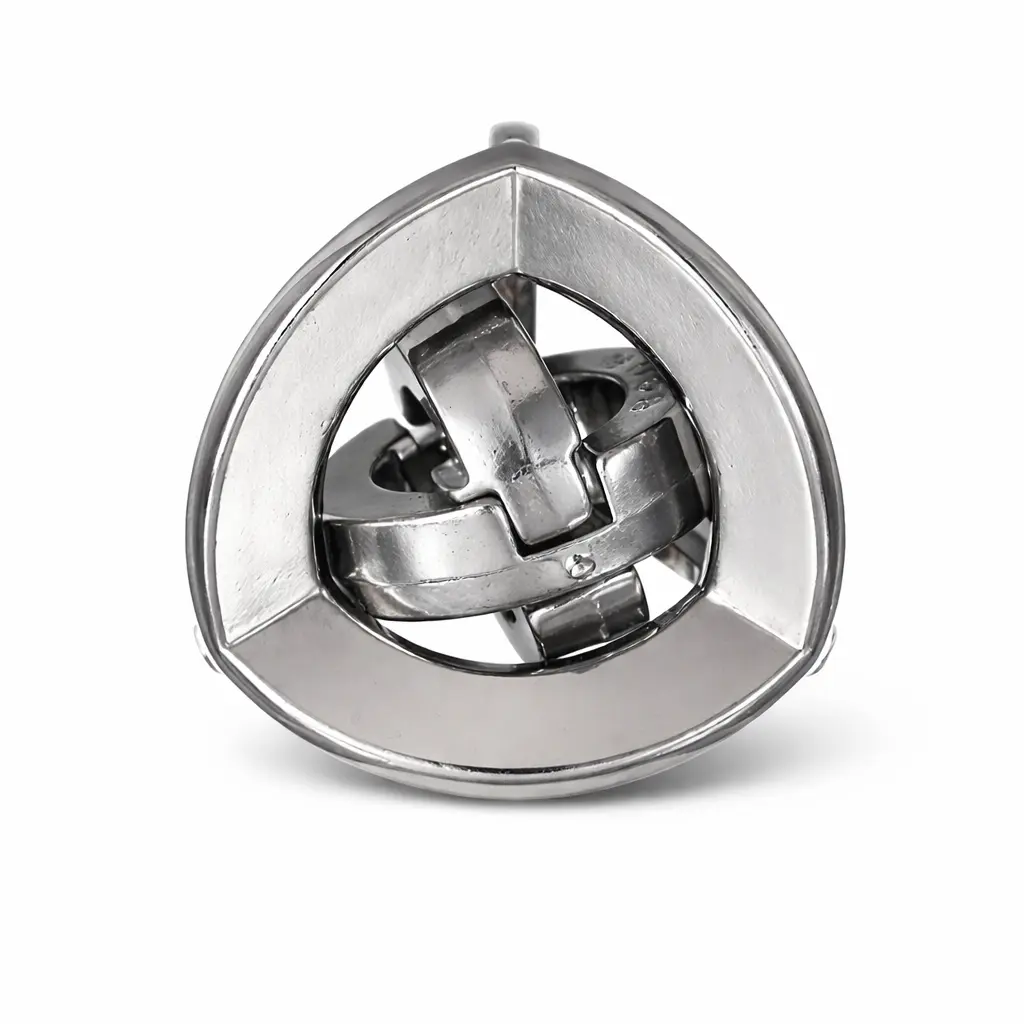
The puzzle community largely agrees: Cast Equa plays like Level 6, regardless of official rating.
Why Cast Equa Became Legendary
Several factors combined to make the Cast Equa the most discussed orbital ring puzzle:
- Beautiful design — The chrome finish and celestial theme made it aesthetically distinctive
- Perfect difficulty — Hard enough to be satisfying, not so hard as to be impossible
- Hanayama quality — Precise machining ensured smooth rotation without slop
- Oskar’s reputation — Collectors sought out his designs specifically
- Viral frustration — Online reviews describing multi-week solving journeys created intrigue
But legendary status came with problems.
Cast Equa Deep Dive: Why It’s So Difficult
After working through my own Cast Equa over four days (and reading hundreds of community reviews), I can identify three core difficulty factors:
1. Deceptive Simplicity
The Cast Equa looks solvable. Two rings with gaps. A frame with openings. Surely if you just rotate things correctly, the pieces will slip apart.
They don’t.
The gaps align in dozens of configurations that feel promising. You’ll find yourself cycling through the same “almost there” positions repeatedly, convinced the solution is moments away. This psychological trap—where progress feels imminent but never arrives—is what makes the Equa uniquely frustrating.
2. Precision Requirements
Unlike forgiving puzzles where “close enough” works, the Cast Equa demands exact positioning. The solution window is narrow. One degree of rotation off, and the pieces lock against each other.
From a Puzzle Master review that captures this perfectly:
“In order to solve this puzzle, there seems to be a lot of places and directions to move the two rings, but there is actually only one, and you can barely discover the difference.”
You can’t force your way through. You can’t approximate. You must find the precise path.
3. The Reassembly Problem
Here’s what catches most solvers off guard: disassembly is only half the puzzle.
When the rings finally slip free, you’re holding three separate pieces—and most people have no idea how to get them back together. Without documenting your solution, reassembly becomes a second puzzle potentially harder than the first.
A PuzzleMad reviewer described giving the disassembled Equa to friends:
“Some have had it for an hour or two and really got nowhere with it. Most have given up in disgust.”
What Real Solvers Say
I compiled feedback from multiple puzzle communities. The pattern is remarkably consistent:
The Enthusiasts:
- “Solving this one gave me a real sense of achievement—it was really pretty difficult.” — PuzzleMad
- “The best puzzle I ever bought.” — Puzzle Master reviewer
- “I would display this puzzle in its disassembled state as a trophy.” — Puzzle Score
The Frustrated:
- “This is maybe the 25th Hanayama puzzle I have… this one jams up easily.” — Crux Puzzles
- “Whole families are not able to solve this puzzle for YEARS.” — Puzzle Score
- “Most have given up in disgust.” — PuzzleMad
The Conflicted:
- “Well-made and good-looking… But definitely too difficult to be a level five.” — Puzzle Master
Common Problems with the Original Cast Equa
Despite its legendary status, the Cast Equa has documented issues that affect the solving experience:
Finish Durability
Multiple reviews mention the chrome coating wearing off with extended handling:
“The shining coating is not very durable and comes off rapidly when fiddling with it.” — Crux Puzzles reviewer
“The black finish started chipping almost immediately.” — Puzzle Master reviewer
For a puzzle that requires hours of manipulation, finish degradation is more than cosmetic—it affects grip and feel.
Jamming Issues
The precision that makes the Equa challenging also makes it prone to jamming:
“This one jams up easily even when it isn’t forced.” — Crux Puzzles reviewer
When pieces jam, solvers must carefully backtrack without knowing if they’re undoing progress or escaping a dead end.
Availability and Price
As a Hanayama product distributed through various retailers, the Cast Equa often goes out of stock. Prices fluctuate significantly ($14-25 USD depending on source and availability).
No Solution Included
Hanayama deliberately omits solutions. While this preserves the discovery experience, some solvers find themselves permanently stuck with no recourse except YouTube tutorials—which defeats the purpose.
Metal Orbit Ring Cast Puzzle: A Modern Alternative
For those drawn to the orbital ring concept but concerned about the Cast Equa’s issues, there’s another option worth considering.
The Metal Orbit Ring Cast Puzzle shares the fundamental geometry that makes orbital ring puzzles compelling while addressing several common complaints:
What It Is
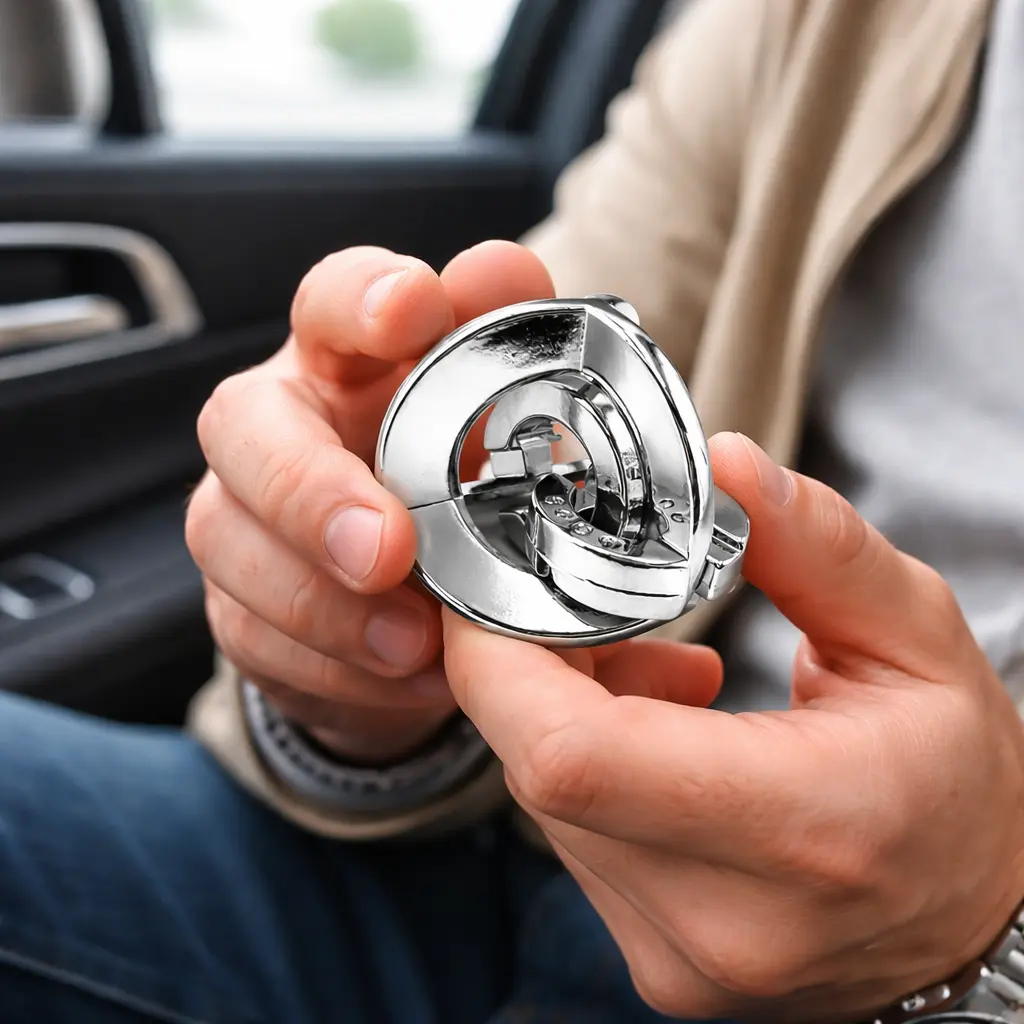
Like the Cast Equa, the Metal Orbit Ring features:
- Three precision-cast metal alloy pieces
- Triangular outer frame (the “orbit”)
- Two interlocking C-shaped inner rings (the “planet”)
- 44mm compact size
- Polished chrome finish
- Rotational disentanglement mechanics
The puzzle operates on the same principles: rotate the inner rings through the precise sequence that allows them to escape the frame, then reverse the process for reassembly.
Key Differences
Finish durability — The polished chrome alloy maintains its appearance through extended handling. Some users report developing a “patina” over time that actually improves grip without degrading the surface.
Machining tolerances — Smooth rotation without the jamming issues some Equa batches exhibit. The pieces glide rather than catch.
Consistent availability — Direct sourcing means stable stock and pricing.
Difficulty calibration — While still genuinely challenging (this is not a beginner puzzle), the tolerances allow slightly more forgiveness in the solution window. You still need to find the right path, but micro-positioning is less punishing.
Specifications
| Attribute | Metal Orbit Ring Cast Puzzle |
|---|---|
| Material | Cast metal alloy (polished chrome) |
| Dimensions | 44mm × 44mm |
| Pieces | 3 |
| Difficulty | Advanced (Level 5 equivalent) |
| Age | 14+ |
| Style | Geometric / Orbital / Disentanglement |
Who It’s For
The Metal Orbit Ring Cast Puzzle is ideal if you:
- Want the orbital ring experience without finish durability concerns
- Prefer slightly more forgiving tolerances while maintaining genuine challenge
- Value consistent availability over brand-name recognition
- Plan to gift it (the quality-to-price ratio makes sense for presents)
- Already own Cast Equa and want a comparison piece
Real Experience
I’ve worked with both puzzles. The solving logic is similar—you’re navigating the same three-dimensional rotational maze. The Metal Orbit Ring feels marginally more forgiving in execution while preserving the “aha moment” when pieces finally separate.
For collectors who want both experiences, they complement each other well. For those choosing one, the Metal Orbit Ring offers excellent value without sacrificing the core challenge.
→ View the Metal Orbit Ring Cast Puzzle
How to Solve Orbital Ring Puzzles: Strategy Guide
Whether you’re working with a Cast Equa, Metal Orbit Ring Cast Puzzle, or similar design, these principles apply:
Phase 1: Exploration (First 30 Minutes)
Don’t try to solve it yet. Spend your first session simply understanding how the pieces move:
- Which rotations are possible?
- Where do the gaps align?
- What blocks movement in each configuration?
- Are there any positions that feel “different”?
Map the puzzle mentally before attempting solutions.
Phase 2: Pattern Recognition
After exploration, you’ll notice that certain configurations feel more promising than others. The inner rings can reach positions where they seem to have more freedom—like the frame is “releasing” them slightly.
These positions are your landmarks. Learn to reach them reliably.
Phase 3: Sequential Discovery
The solution isn’t one move—it’s a sequence. Each correct move opens the possibility for the next.
Document your progress. When you find a new configuration that feels significant, note what you did:
- “Ring A rotated clockwise while tilting frame toward position 3”
- “Gap of Ring B aligned with frame opening”
Without documentation, you’ll lose progress to forgotten sequences.
Phase 4: The Breakthrough
It happens when you stop forcing. You’ll be in a familiar position, apply a rotation you’ve done dozens of times, and suddenly the first ring slips free. The second follows.
The moment is genuinely satisfying—proportional to the struggle preceding it.
Phase 5: Reassembly
Do not skip reassembly. Solving a disentanglement puzzle means both directions: apart and together.
Immediately attempt reassembly while the solution is fresh. If you can’t reverse the process, you haven’t truly solved it.
Universal Tips
- Never force. If it’s not moving smoothly, you’re not in the right position.
- Work in sessions. 20-30 minutes at a time prevents frustration fatigue.
- Rotate in hand. Viewing from different angles reveals paths invisible from one perspective.
- Notice “peculiar features.” Small geometric variations in each ring are intentional clues.
Time Expectations
| Solver Type | Expected Time |
|---|---|
| Complete Beginner | Days to weeks |
| Experienced (Level 3-4) | 4-8 hours across sessions |
| Expert (Level 5+) | 1-3 hours |
→ Get the Metal Orbit Ring Cast Puzzle and test your skills
Who Should Buy Which Version?
Buy the Original Cast Equa If You:
- Want the “original” Oskar van Deventer design
- Collect Hanayama puzzles specifically
- Don’t mind potential finish wear
- Prioritize brand recognition over practical considerations
- Can find it in stock at a reasonable price
Buy the Metal Orbit Ring Cast Puzzle If You:
- Want the orbital ring experience with better durability
- Prefer more consistent machining quality
- Plan to gift it to someone
- Value price-to-quality ratio
- Want reliable availability
- Already own Cast Equa and want a comparison piece
- Are building a metal puzzle collection beyond Hanayama
Start Elsewhere If You:
- Are new to metal puzzles (try Level 2-3 first)
- Get frustrated by multi-session challenges
- Need puzzles with included solutions
- Want something for children under 14
- Prefer immediate gratification
Recommended Entry Points Before Orbital Ring Puzzles
If you’re not ready for orbital ring difficulty, build skills with these:
- Alloy Triangle Lock Puzzle — Similar triangular geometry, more approachable
- Interlocking Double-Ring Lian Puzzle — Two-ring mechanics training
- 4 Band Puzzle Ring — Classic ring disentanglement
- Horseshoe Lock Puzzle — Traditional design, accessible difficulty
- Alloy S Lock Puzzle — Entry-level cast metal puzzle
Once you’ve conquered 3-4 of these, you’re ready for orbital ring challenges.
Complete Specifications Comparison
| Attribute | Cast Equa (Hanayama) | Metal Orbit Ring Cast Puzzle |
|---|---|---|
| Designer | Oskar van Deventer | Based on orbital ring geometry |
| Manufacturer | Hanayama (Japan) | Tea-sip |
| Dimensions | ~46 × 46 × 46 mm | 44 × 44 mm |
| Pieces | 3 | 3 |
| Material | Cast zinc alloy | Cast metal alloy |
| Finish | Chrome (variable durability) | Polished chrome (durable) |
| Official Difficulty | Level 5 | Advanced (Level 5 equivalent) |
| Actual Difficulty | Level 6 equivalent | Level 5 |
| Jamming Issues | Reported by some users | Minimal |
| Solution Included | No | No |
| Typical Price | $14-25 USD | Competitive |
| Availability | Variable | Consistent |
| Age Recommendation | 12+ | 14+ |
Frequently Asked Questions
General Orbital Ring Questions
What makes orbital ring puzzles different from other metal puzzles?
Orbital ring puzzles hide their solution within rotational space rather than linear movement. Unlike wire puzzles where you can see the path or interlocking puzzles where pieces clearly fit together, orbital designs require discovering invisible alignments through systematic exploration.
How long does it take to solve an orbital ring puzzle?
Highly variable. Some experienced puzzlers solve in 30-60 minutes. Many take multiple sessions across days or weeks. Some never solve at all. The Metal Orbit Ring Cast Puzzle and Cast Equa both fall into the “multi-session challenge” category for most solvers.
Are there multiple solutions?
Puzzle community discussions suggest some solvers find alternate paths. Whether these are truly distinct solutions or variations within the same approach is debated. Both disassembly directions and reassembly paths may differ.
Cast Equa Specific Questions
Why was Cast Equa downgraded from Level 6 to Level 5?
Around 2014, Hanayama introduced even harder puzzles (Cast Vortex, Cast Trinity) that pushed the difficulty ceiling. The Equa was reclassified rather than becoming objectively easier. Most solvers still consider it Level 6 difficulty in practice.
Is Cast Equa worth the price?
For Hanayama collectors: yes. For someone wanting an orbital ring experience without brand loyalty: the Metal Orbit Ring Cast Puzzle offers comparable challenge with better value.
Where can I find Cast Equa solutions?
Hanayama doesn’t include solutions. PDF guides exist on puzzle websites, and YouTube has video walkthroughs. Note that watching solutions diminishes the satisfaction of discovery.
Metal Orbit Ring Questions
How does the Metal Orbit Ring Cast Puzzle compare to Cast Equa?
Similar geometry and solving logic. The Metal Orbit Ring offers more durable finish, more consistent machining, and slightly more forgiving tolerances while preserving genuine challenge. It’s not “easier”—it’s more refined.
Is it a Cast Equa copy?
No. Orbital ring geometry predates the Cast Equa—it’s a puzzle category, not a single design. The Metal Orbit Ring is an independent implementation of the same fundamental concept.
Is the Metal Orbit Ring good for gifts?
Excellent. The quality-to-price ratio makes it appropriate for gifting, and the challenge level ensures it won’t be solved and forgotten in five minutes. Good for puzzle enthusiasts ages 14+.
Solving Questions
Can I damage the puzzle by solving incorrectly?
With normal manipulation, no. Both Cast Equa and Metal Orbit Ring are solid metal construction. However, forcing pieces when stuck can create jams. Always use gentle, deliberate movements.
What if I get permanently stuck?
For Cast Equa: YouTube solutions exist. For Metal Orbit Ring: online puzzle communities discuss general approaches for orbital ring designs without spoiling specific sequences.
Is reassembly harder than disassembly?
Often yes. Many solvers who separate the pieces cannot reverse the process. Documenting your solution path prevents this frustration.
Related Resources
For Building Toward Orbital Ring Difficulty
- 8 Metal & Wooden Brain Teasers for Logic Lovers — Skill progression guide
- 14 Collector’s Brain Teasers — Curated intermediate challenges
For Gift-Giving
- 11 Thoughtful Brain Teaser Gifts for Logic Lovers — Gift guide across difficulty levels
- Exploring Traditional Chinese Metal Brain Teasers — Cultural context for meaningful gifts
For Advanced Collectors
- Top 10 Brain-Boosting Metal Puzzles for Adults — Expert recommendations
- Mind Over Metal: 12 Intricate Puzzles — Deep challenge exploration
Similar Difficulty Puzzles
If you enjoy orbital ring designs, these offer comparable challenge:
- Cast Coil Triangle Puzzle — Geometric interlocking with triangular frame
- Four-Square Lock Puzzle — Four interlocking squares
- Golden Chinese Knot Metal Puzzle — Traditional knot design in metal
- Three Brothers Lock Puzzle — Triple ring interlocking design
- Cast Coil Pocket Puzzle — Compact cast metal challenge
Browse the complete metal puzzles collection for more options.
Final Thoughts: Choosing Your Orbital Ring Puzzle
The orbital ring puzzle category offers something rare in the puzzle world: genuine challenge without gimmicks. No hidden catches, no obscure mechanisms—just elegant geometry that rewards patience and spatial understanding.
The Cast Equa earned its legendary status through beautiful design and punishing difficulty. For Hanayama collectors, it remains essential.
The Metal Orbit Ring Cast Puzzle offers the same fundamental experience with practical improvements: durable finish, consistent quality, reliable availability. For those wanting the orbital ring challenge without brand-loyalty pricing, it’s the logical choice.
Both will frustrate you. Both will teach you something about three-dimensional space. And both will deliver that incomparable moment when pieces that seemed permanently locked suddenly slip free.
The only question is whether you’re ready.
Ready for the challenge?
→ Order the Metal Orbit Ring Cast Puzzle Now
True understanding often emerges not from relentless effort, but from patient observation—allowing the solution to reveal itself when the mind grows still and the hands learn to listen.