You can tell when a room was made by someone who understood thresholds. The air changes before you sit down. Sound softens. Your shoulders drop without asking permission. You do not think, “What a clever floor plan.” You just stay longer than you meant to.
Traditional Chinese builders had a blunt explanation for that effect: proportion and sequence decide whether a space supports life or drains it. Decoration matters, but it comes late. The first job is to measure relationships between front and back, outer and inner, open and closed, movement and pause. Those ideas were not treated as abstract philosophy. They were treated as jobsite rules, close enough to the hand that a carpenter could feel them in timber and layout lines.
A good modern introduction to this mindset appears in The Carpenter Who Wrote the Rules, where craft wisdom is framed less like superstition and more like design discipline. The useful part for us is practical: if your house feels noisy, scattered, or oddly tiring, you do not fix that with better throw pillows. You fix it by adjusting how space receives and releases attention.
The easiest way to learn those old principles is not to read fifty opinions online. It is to handle objects that force your hands to respect sequence. The Luban Sphere Puzzle is a good example: six interlocking parts that seem obvious until you try to reverse them. You discover quickly that force is expensive, order is cheap, and patience is not a personality trait. It is a method.
Principle 1: Proportion Comes Before Ornament
One recurring rule in traditional building practice is simple enough to sound boring: get the dimensional relationships right before you discuss style. But this is exactly where modern interiors often fail. We pick a visual mood first, then try to cram circulation, storage, and breathing room into whatever is left. The old method reverses that sequence. It starts with width-to-depth harmony, gate-to-courtyard pacing, and ceiling-to-column balance, then lets finish choices sit on top of a stable framework.
If you want a direct bridge from historical language to present-day interpretation, Lu Ban Jing: Ancient Carpentry Text Behind Modern Puzzles lays out why proportional thinking was tied to daily well-being, not just ceremonial correctness. The central insight is that dimensions are behavioral instructions. A cramped entry tells visitors to hurry. A properly scaled transition tells them to arrive.
The same logic sits behind tactile learning sets like this wooden brain teaser and Luban lock collection guide, where each form only works when load paths and contact points stay in proportion. That is not mystical language. It is structural truth wearing everyday clothes.
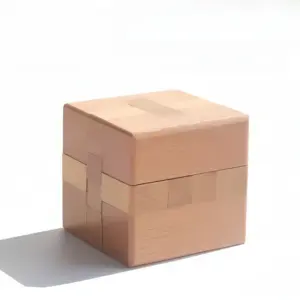
The Luban Square Lock is a compact training tool for this principle because the finished cube only appears when each notched bar occupies its exact geometric role. No piece is decorative. Each one is proportional labor. In a home context, that is the same standard your entry, desk area, and dining zone should meet: each part carries its share of function, and no zone steals from the next.
Luban Lock Set 9 Piece
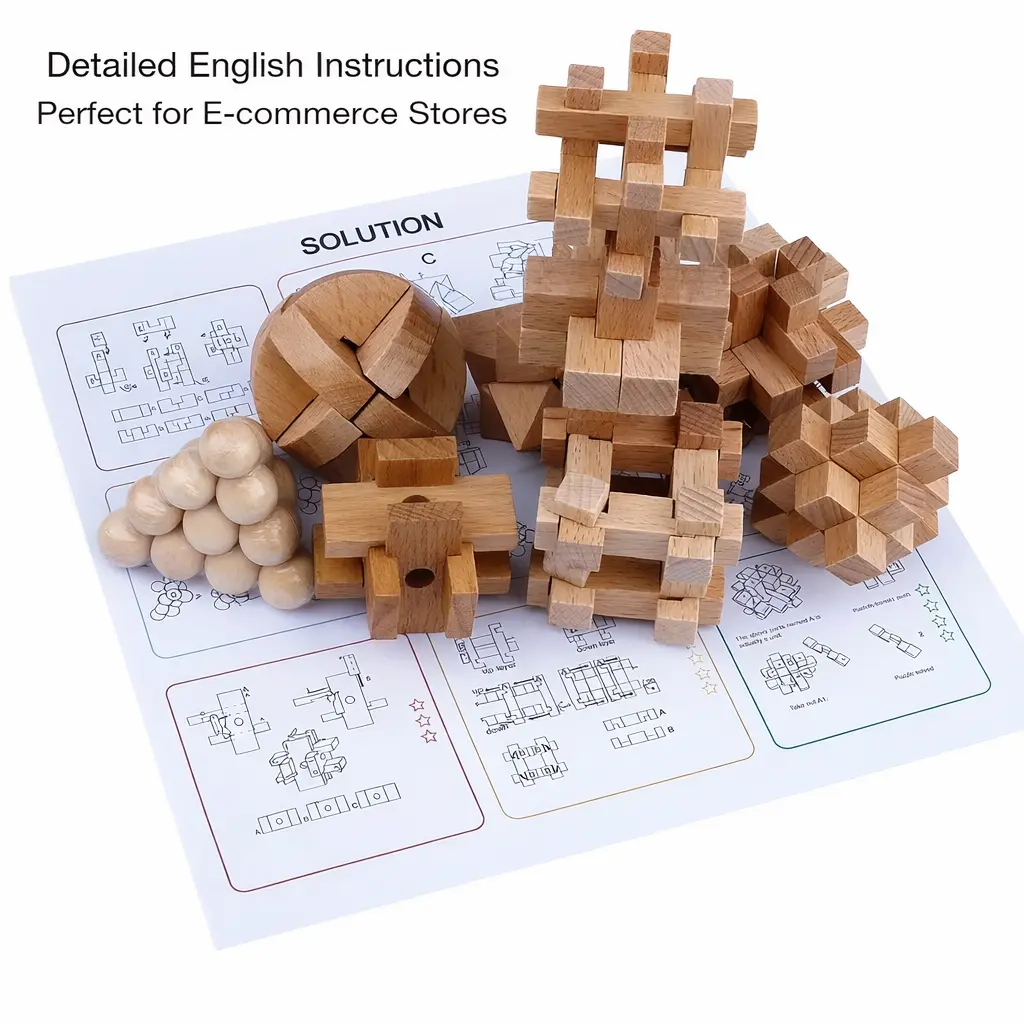
The Luban Lock Set 9 Piece is the best “learn the grammar first” object in this catalog. You move from easy forms to harder interlocks without changing materials or visual language, so your brain notices sequence and ratio rather than novelty. That mirrors traditional craft training: repeat core logic across multiple forms until your judgment sharpens.
Who should skip this item: people who only want one quick solve and no repetition. The value here is progression, not a single dopamine spike.
- Price: $39.99
- Material: Natural beechwood
- Set contents: 9 wooden puzzles in a presentation box
- Difficulty range: Beginner to expert progression
Principle 2: Thresholds Should Slow the Body, Not Trap It
Older building rules spend unusual energy on gates, door order, and passage width. That makes perfect sense once you treat movement as a design material. A door is not only an opening in a wall. It is a behavioral checkpoint. Too abrupt, and people cut through your house like a hallway. Too constricted, and traffic gets tense. Too aligned, and attention leaks straight through without settling.
This is where many open-plan homes accidentally underperform. The layout looks generous on paper, but the transitions are unresolved, so daily movement never decelerates. Shoes spill into living areas, work items drift onto dining surfaces, and the nervous system never gets a clear signal that one mode has ended and another has begun. Traditional passage logic solves that by giving each threshold a role: entry for orientation, corridor for pacing, room edge for commitment. You do not need walls for this. You need intentional sequence markers that teach the body how to move.
That is why lock forms became cultural symbols as well as mechanical devices. They represented controlled passage: open with intent, not by accident. The modern equivalent is whether your front zone offers a moment of orientation before the rest of the home unfolds. The Puzzle Locks topic collection is useful here because it frames lock puzzles as focus tools, not novelty trinkets, and that framing is exactly right.
The Chinese Koi Puzzle lock fits this threshold theme elegantly. Its fish form nods to flow and continuity, but the mechanism insists on correct entry angle and sequence. If your design decisions are usually rushed, this kind of object trains a slower first move. You stop guessing. You observe, then act.
Chinese Old Style Fu Lock with Key
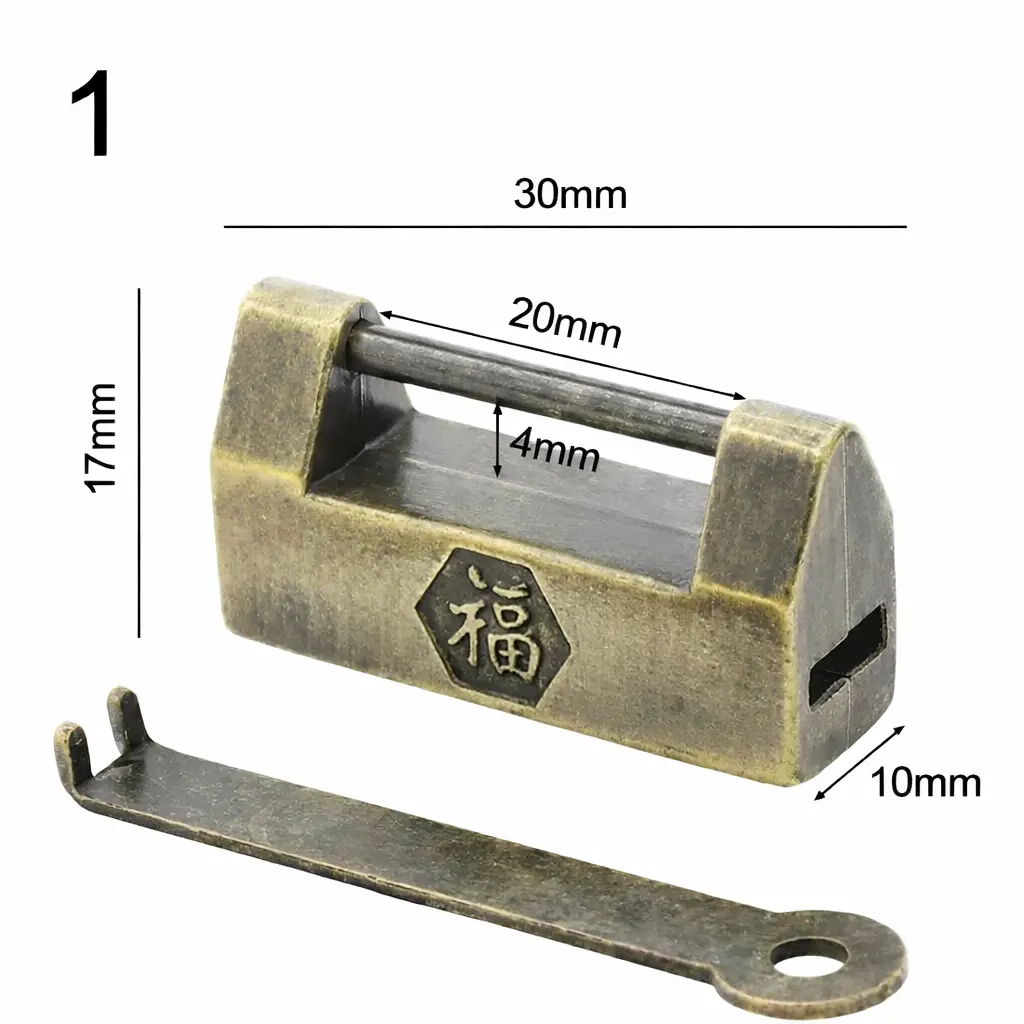
A direct threshold artifact is the Chinese Old Style Fu Lock with Key. It works as a functional object, but more importantly it carries a clear design lesson: security and welcome can coexist when entry is legible. The piece feels ceremonial without becoming fragile, which is rare in decorative hardware.
Who should skip this item: anyone expecting modern anti-theft performance from a heritage-style lock form. This is best used as a symbolic and educational piece, not as your sole critical security layer.
- Price: $19.99
- Material: Zinc alloy
- Finish: Antique bronze patina
- Lock size: 30 x 17 x 10 mm
Principle 3: Yin and Yang Is a Design Constraint, Not a Slogan
When people hear “yin and yang,” they often think brand graphics, incense packaging, or internet quotes. In craft terms, it means something less poetic and more useful: every strong condition needs a balancing condition. If a room has heavy visual mass, it needs breathing intervals. If circulation is very open, it needs places to stop. If work areas are intense, recovery zones must be obvious and near.
In practical design terms, this means pairing opposite qualities on purpose. A hard surface needs a soft counterweight nearby. Bright task light needs lower ambient light in the periphery. A tightly scheduled workday needs a repeatable decompression ritual within five minutes of stopping time. Most people break this balance by chasing optimization everywhere at once. They over-illuminate, over-store, and over-schedule, then wonder why the house feels efficient but joyless. Yin-yang logic says efficiency without recovery is a short-term gain with long-term debt.
The framework in The Yin-Yang Algorithm is practical because it treats balance as timing and allocation, not mood. You can apply that immediately: pair deep-focus tasks with short reset rituals, pair rigid schedules with small unstructured windows, pair high stimulation with tactile grounding.
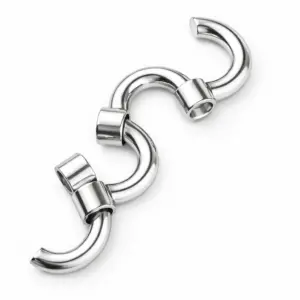
The Bagua Lock Puzzle translates this balancing logic into metal form. It combines an angular symbolic language with interlocking mechanical resistance, so you feel both order and friction at once. That is a good reminder that harmony is not “easy.” It is negotiated structure.
Yin-Yang Taiji Lock
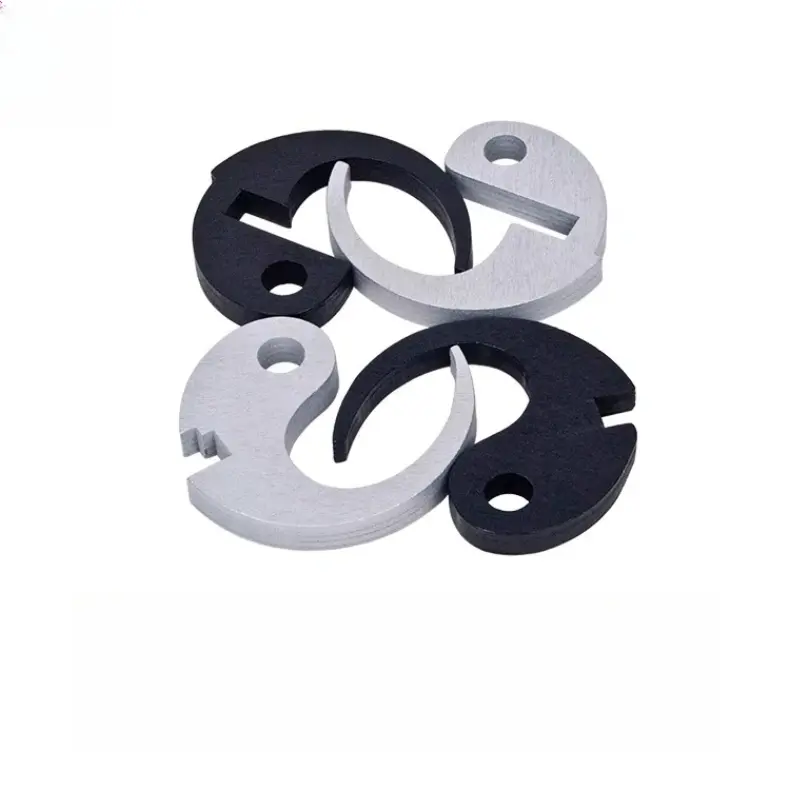
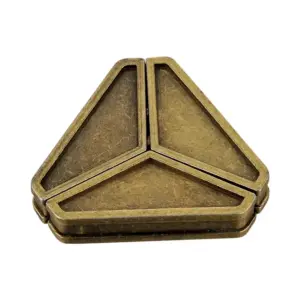
The Yin-Yang Taiji Lock is ideal for people who want a daily object that functions as a calibration ritual. Four interlocking wooden pieces are enough complexity to require attention, but not so much that practice becomes exhausting. Use it before work blocks, not after burnout. It is a preventive tool, not a rescue tool.
Who should skip this item: people who dislike iterative practice and want immediate mastery. This lock rewards repetition and subtlety, not brute-force progress.
- Price: $15.88
- Construction: 4 interlocking hardwood pieces
- Material note: Handcrafted aged hardwood
- Theme: Yin-yang balance translated into solve sequence
Principle 4: Learn by Hand or Stay Theoretical
There is a hard limit to what concept-only learning can do for design judgment. You can read excellent essays on structure and still make clumsy spatial decisions if your hands have never negotiated resistance, sequencing, and fit. Traditional craft cultures solved this by pairing verbal instruction with object training. You were expected to think and manipulate, not pick one.
A broad starting point is this mechanical puzzle collection guide, which maps different families of interlocking and sequential challenges. The value is not collecting everything. It is selecting a few forms that expose your habitual mistakes, then practicing until those mistakes become visible early.
The Luban Cube Puzzle is especially good for identifying overconfidence because the pieces look forgiving until one misread notch collapses the whole sequence.
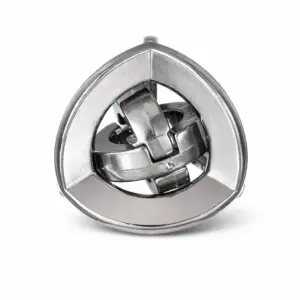
The Kongming Ball Lock teaches rotational attention in a different way; you cannot solve it by staring harder from one angle. You have to change perspective, literally and repeatedly.
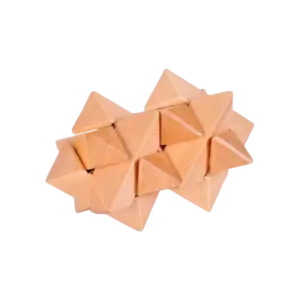
The Plum Blossom Lock adds a different lesson: symmetry can hide asymmetrical dependency. Many modern layouts fail for the same reason. They look balanced in plan view but place unequal stress on circulation, storage, or social flow. When a puzzle exposes that mismatch in your hands, you start spotting it in rooms faster.
A useful side effect appears after two or three weeks of practice: you start noticing where you are forcing outcomes in daily life. You push clutter behind closed doors instead of redesigning storage flow. You buy another organizer instead of removing one redundant task. You chase visual neatness while keeping a chaotic sequence of actions. Tactile puzzle training does not just improve puzzle skill. It improves error detection in your routines, which is why it transfers so well to spatial planning and household systems.
12 Piece Crystal Luban Lock Set
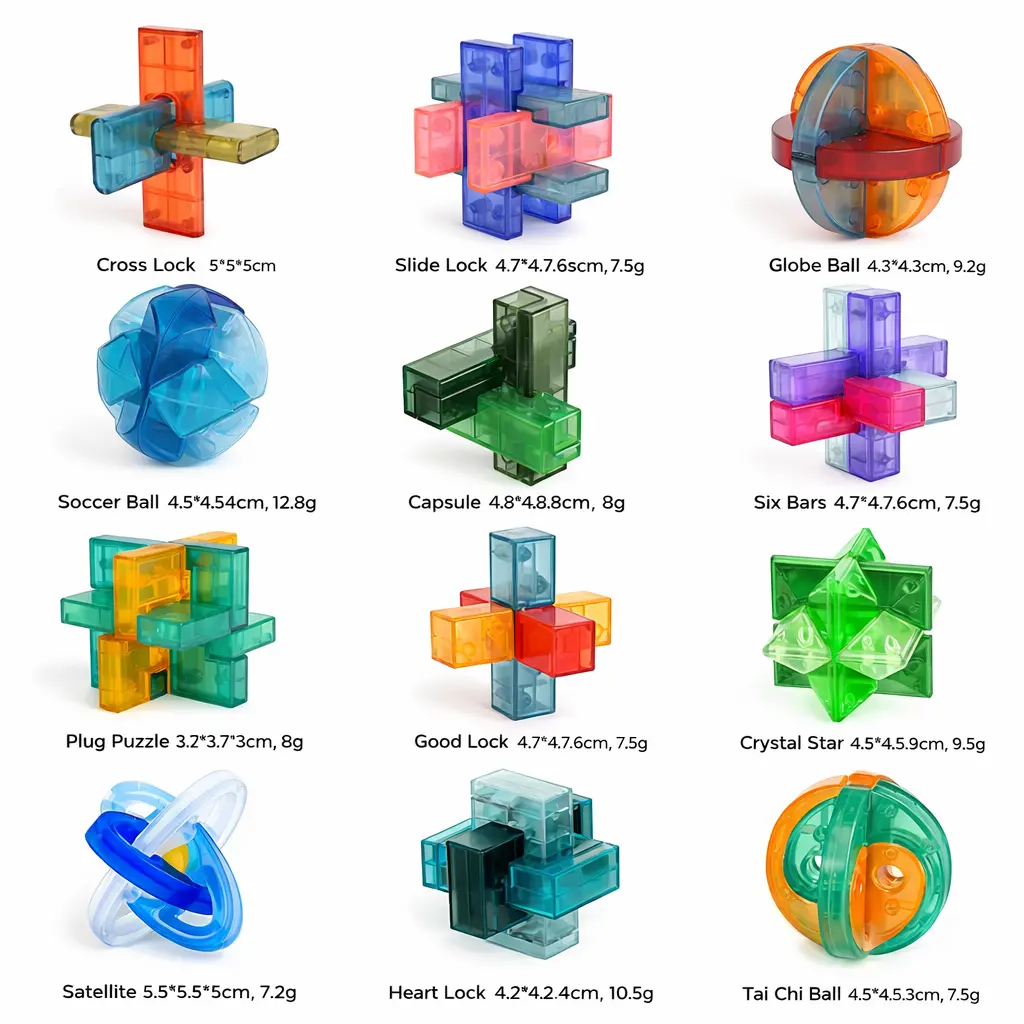
The 12 Piece Crystal Luban Lock Set gives a rare advantage: visibility. Because the material is transparent, internal relationships are easier to inspect, which helps new solvers understand why a move works rather than merely memorizing it. For teaching kids, design teams, or curious adults, that clarity shortens the path from confusion to transferable insight.
Who should skip this item: traditionalists who strongly prefer natural wood textures and do not enjoy transparent acrylic aesthetics.
- Price: $28.88
- Format: 12-piece progression of interlocking challenges
- Difficulty spread: Beginner through advanced forms
- Teaching strength: Transparent structure reveals internal mechanics
A Practical 30-Day Reset for a Western Home
You do not need to rebuild walls to apply this tradition. Start by choosing one threshold that currently fails: front entry, office doorway, kitchen transition, or bedroom approach. For the first week, remove visual noise from that zone and restore legibility. A clear landing surface, one coherent light source, and one intentional object can outperform an expensive redesign. The goal is not minimalism as style. The goal is directional clarity.
In week two, test sequence instead of aesthetics. Use your entry in three steps every day: arrive, pause, then proceed. If you need a structured cognitive break, run one short round of the Yin Yang puzzle game before making layout decisions. It trains binary balance under constraints, which is exactly what threshold design demands: open versus closed, direct versus buffered, fast versus calm.
In week three, move deeper into the house and audit competing functions. If a room must handle work, recovery, and social use, define the first move for each mode so your body knows what “start” feels like. A light shift, chair angle, or object placement is enough. If you need a second mental training loop, solve a few boards of Kurodoko; it rewards connected visibility and punishes isolated islands, which is also what good spatial planning requires.
In week four, stabilize the system with one durable tactile habit. A single puzzle object near your transition zone can become a reliability anchor. The wooden locking puzzles collection is useful for choosing that anchor by difficulty and feel, so you can match challenge level to your actual schedule rather than your idealized one. Consistency beats intensity here.
Five Mistakes That Break the Method (and Quick Fixes)
The first mistake is treating every room as a multipurpose arena with no priority mode. In theory that sounds flexible. In practice it creates background friction because your brain never gets a stable behavioral cue. If one room must serve many functions, assign a clear dominant mode and make other modes secondary. This single decision resolves more daily tension than a full weekend of reorganizing bins.
The second mistake is designing for photos instead of transitions. Camera-ready corners do not automatically produce usable flow. People live in motion, not in still frames. If movement lines cross too often, your space feels crowded even when square footage is generous. One way to retrain this perception is to study progression-based challenge sets like this wooden brain teaser puzzles guide, where each stage depends on clean sequencing rather than visual spectacle.
The third mistake is solving discomfort with acquisition. Most threshold problems are ordering problems, not shopping problems. Additions can help, but only after role clarity is established. A tray can support a transition only if the transition already has a purpose. Without that purpose, the tray becomes a new pile location in under ten days. Traditional craft logic is unsentimental here: function first, object second, ornament third.
The fourth mistake is relying on willpower instead of environment cues. If your evening reset routine requires heroic discipline, it is poorly designed. Good spatial systems make the preferred action the easiest action. Place what you need at handoff points, not deep storage. Remove one step from high-frequency tasks. Add one second of pause between entry and dispersal. Tiny frictions removed at the right place outperform grand resolutions made in the wrong place.
The fifth mistake is abandoning calibration too early. People test a new setup for three days, hit one chaotic week, and declare the model invalid. Craft traditions expect iteration because life conditions change. The goal is not a forever-perfect arrangement. The goal is a resilient method that can be tuned quickly when seasons, workloads, or family rhythms shift. Measured calm is not a static look. It is a maintenance skill.
Product Pairings That Fit This Method
Use products as practice instruments, not decoration trophies. One object should train proportion, one should train sequencing, and one should train composure under friction. If an item does not improve one of those abilities, skip it.
For proportion training, the Luban Sphere Puzzle stays valuable longer than most desk toys because its apparent simplicity hides strict geometric dependency.
For threshold symbolism and conversation value, the Chinese Koi Puzzle lock works well in entry-adjacent shelving where guests can handle it and immediately understand that this home values attentive movement.
For balance practice, the Bagua Lock Puzzle offers metal weight and clear interlock feedback, which many people find easier to read than lightweight wooden pieces at first touch.
For compact daily drills, the Luban Cube Puzzle remains one of the strongest options because it is easy to pick up for five minutes yet hard to fake your way through.
Who Should Skip This Entire Approach
If you want overnight transformation, skip this method. It is deliberately slow. You are training perception and sequence judgment, and that develops over repeated small exposures. If your schedule only permits one intense weekend every three months, you will likely prefer a turnkey interior package and a professional install.
If you dislike ambiguity, skip it as well. Craft-based principles do not deliver one universal formula. They deliver bounded ranges and tradeoffs. That can feel uncomfortable if you want absolute certainty before moving a lamp three feet. People who thrive here are willing to prototype, observe, and adjust.
If you are shopping only for decorative impact, begin with a gift-focused roundup like this crystal Luban lock topic page and stop there. That is a valid choice. Just do not mistake visual heritage signals for trained spatial intuition. They are not the same thing.
Finally, if you hate logic constraints in any form, this is not your lane. A quick session in Kurodoko will tell you immediately whether structured problem-solving feels energizing or draining for you. Better to know early than force a routine you will abandon.
The Real Payoff: Measured Calm That Compounds
The strongest argument for old carpentry principles is not nostalgia. It is performance over time. Spaces built on proportion, thresholds, and dynamic balance age better because they rely less on trend-sensitive styling and more on behavioral fit. They keep working when paint colors change, when furniture rotates, and when your life schedule shifts.
That is also why hands-on puzzle practice is not a random side hobby here. It is a compact simulator for the same logic that governs good rooms: sequence before force, relation before ornament, calibration before intensity. You can read that sentence once and agree with it intellectually, or you can train it until your decisions get better under pressure.
If you want to keep exploring this bridge between craft reasoning and modern cognition, Puzzle Solving Through the Lens of Architecture is a strong next read. Then pick one object, one threshold, and one month. Small disciplined changes beat dramatic unfocused ones. Ancient builders knew that. Your home can prove it.