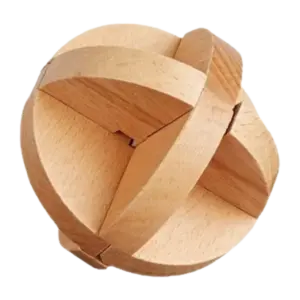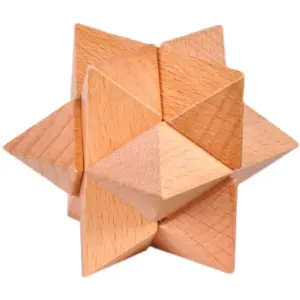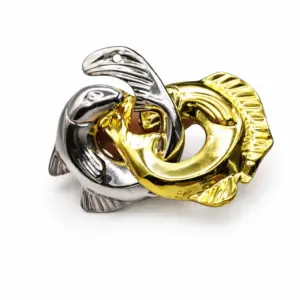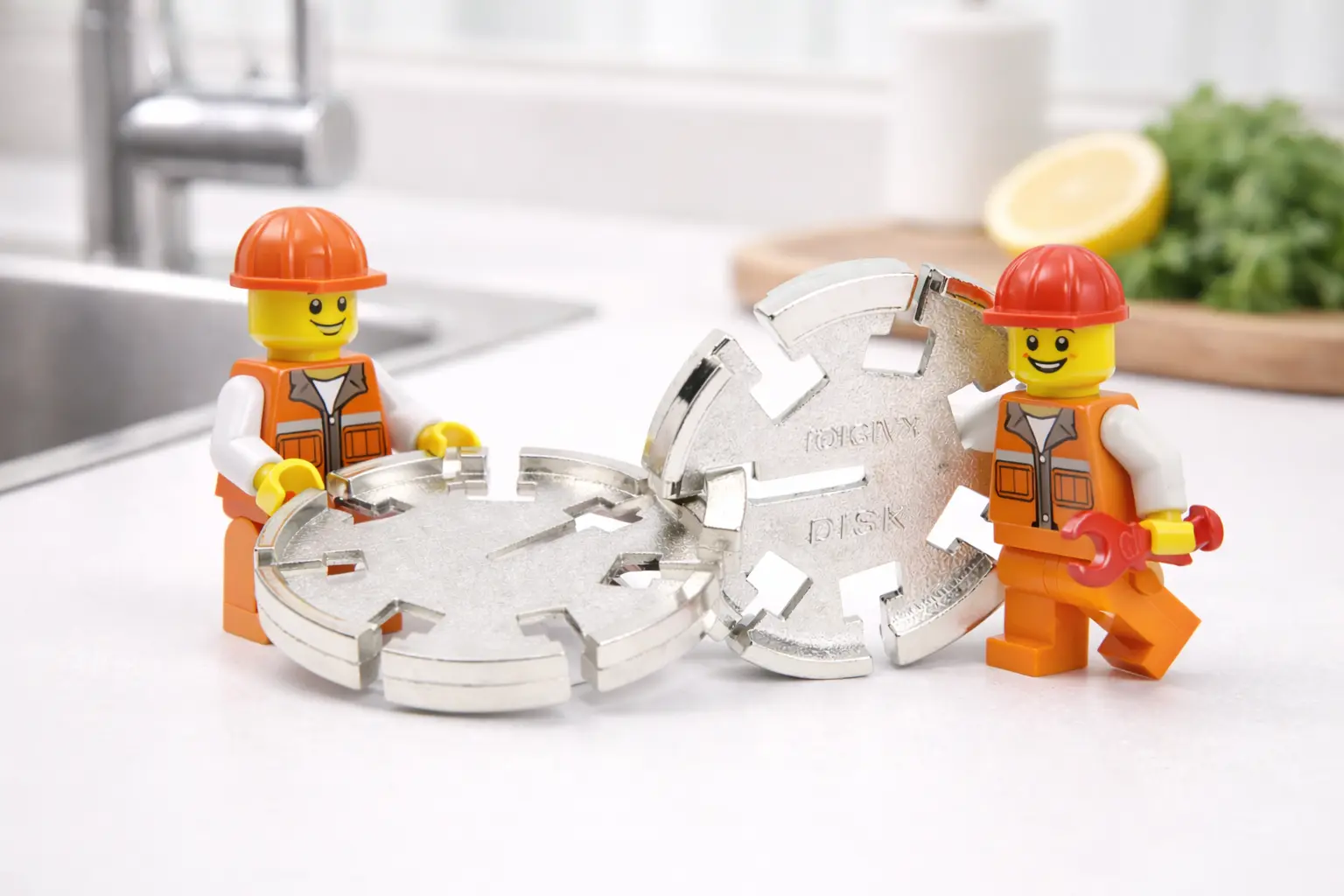
Most people make the same mistake with an interlocking metal disk puzzle around the third minute: they move faster instead of thinking more clearly. That one habit explains why this category looks easy in product photos but feels technical in real use. Tea Sip positions this model as a compact two-piece rotational puzzle at roughly 4.6 cm (1.8 in), built for short, repeatable sessions rather than one long solve. If you want a decision guide instead of sales language, this article is the full picture: how the mechanism behaves, what first sessions usually feel like, where buyers get stuck, what ownership looks like after the novelty phase, and who should skip it. The goal is simple: help you predict real ownership experience before checkout, not after.
Why The Interlocking Metal Disk Puzzle Category Keeps Growing
A good interlocking metal disk puzzle is deceptively simple. It has very few parts, but the legal move path is narrow. That combination creates high thinking density without requiring a large setup.
This is exactly why the category keeps earning permanent desk space. You can pick it up instantly, run a 3-10 minute focus loop, and put it down without opening an app, charging a battery, or clearing a table. For many adults, that low-friction usage model matters more than raw difficulty labels.
From a category standpoint, this format sits at the overlap of three puzzle families:
- Rotational alignment puzzles
- Two-piece disentanglement puzzles
- Portable metal brain teaser products
If you are still mapping the broader category, Tea Sip’s metal puzzle lineup and full puzzle assortment are good orientation pages. For structure and progression logic, mechanical puzzle collection guide and locking puzzle brain teasers help you place this interlocking metal disk puzzle against lock-style and sequence-heavy alternatives.
Historically, mechanical puzzle collections have always worked on the same core principle: geometry is the lock. The constraint is physical, not digital, and usually not force-based (Indiana University Lilly Library, Smithsonian collection reference). That continuity is one reason the interlocking metal disk puzzle still feels relevant for modern adults even with a minimalist form.
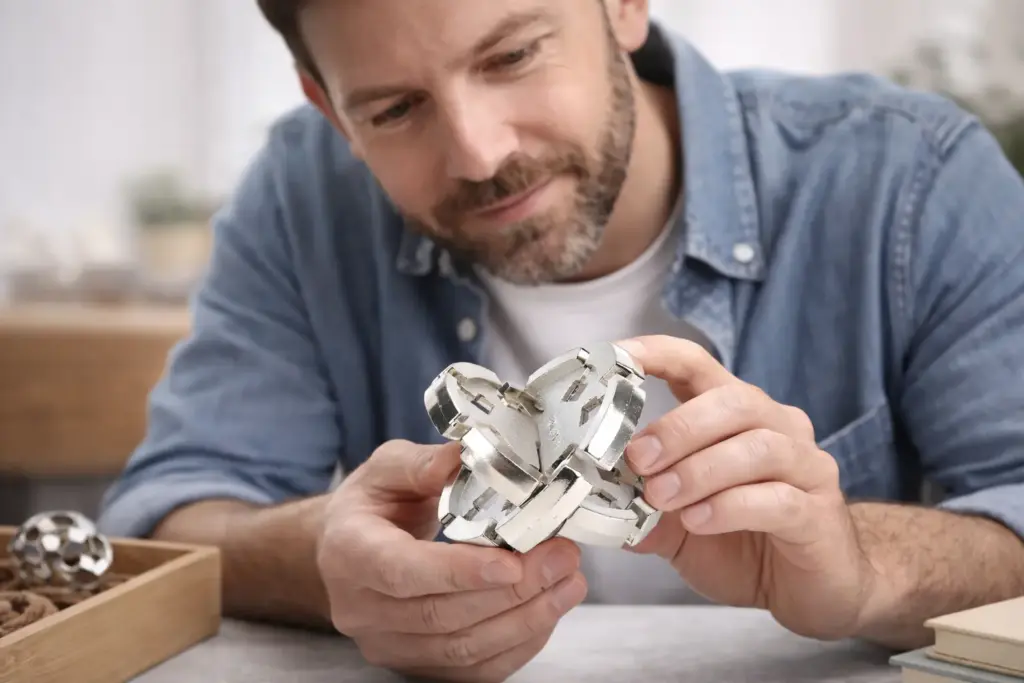
What A First Session Actually Feels Like (No-Spoiler Timeline)
Most product pages flatten the experience into one sentence. Real solving is not linear. It usually moves through predictable phases: confidence, friction, recalibration, and a sudden breakthrough. Knowing these phases in advance reduces frustration because you can interpret setbacks as part of the normal solve curve.
Minute 0-4: False control
At first, most users assume speed creates progress. They rotate quickly, switch grips often, and test random directions. This produces motion, not information. If this is your first cast puzzle disk style product, this stage can feel deceptively productive.
Minute 5-11: Friction and overcorrection
You begin hitting near-alignments that look promising. This is where many people start pushing harder. In a real interlocking metal disk puzzle, sharp resistance is usually evidence that sequence is wrong, not evidence that success is close. The better response is to pause and preserve precision before trying the same endpoint again.
Minute 12-18: Pattern map begins
The solve changes when you stop asking “What works?” and start asking “What is clearly blocked?” Once blocked states are identified, random loops drop and decision quality improves. This is usually the first moment the puzzle feels learnable instead of arbitrary.
Minute 19-27: Sequence discovery
You notice a move that previously failed now works after a different setup move. This is the key insight: an interlocking metal disk puzzle is order-dependent, not just angle-dependent.
Minute 28+: Separation and immediate humility
Separation often happens with less force than expected. Then reassembly quickly tells you whether you understood the route or stumbled into an exit. For most people, reassembly is the deeper test. This is also where long-term replay value starts, because repeatability becomes the new challenge.
Tea Sip’s two-piece challenge analysis describes this exact pattern: “I got it apart, now I cannot reliably put it back.”
The Mechanism: Why Two Pieces Can Still Feel Hard
On paper, two parts should feel easy. In practice, a quality interlocking metal disk puzzle creates conditional pathways where each move changes what is legal next.
Think of the solve as three coupled variables:
- Orientation state
- Rotation direction
- Move order
Most failed attempts come from optimizing one variable while accidentally breaking another. The angle may look right, but if the prior micro-rotation was off, the next transition remains blocked.
The most useful mental model is “constrained path” instead of “hidden trick.” You are not looking for a single magical move. You are finding a legal route through a narrow state space. Once you frame it this way, failed attempts become useful data rather than wasted time.
Patent literature on disentanglement geometry reflects this same design logic: apparent symmetry can hide asymmetric legal paths (Google Patents). Tea Sip’s mechanical engineering lens article translates that concept into plain language for non-engineers.
No-Spoiler Solve Method That Improves Win Rate
If your goal is repeatable success on an interlocking metal disk puzzle, method beats speed.
Step 1: Set no-force rule
Any move that needs extra push is likely invalid in the current state. Treat resistance as feedback, not a challenge to overpower.
Step 2: Build a blocked-state log
Track 4-6 clearly blocked orientations. This simple habit reduces repeated dead-end testing.
Step 3: Change one variable at a time
Do not change grip, direction, and orientation in the same attempt. One-variable testing feels slower moment to moment, but it solves faster over full sessions.
Step 4: Track transitions, not just positions
A position can look close and still be dead. What matters is whether the current state transitions cleanly to the next one.
Step 5: Reassemble right after first separation
First separation confirms an outcome. Immediate reassembly builds an internal model.
If you want parallel training for sequence memory, Tea Sip’s compact maze logic guide pairs well with this no-spoiler method.
Why Reassembly Is The Real Skill Test
Many users think they “know” an interlocking metal disk puzzle once they separate it once. Then they fail reassembly several times in a row.
That is normal for three reasons:
- Separation can include a lucky final transition.
- Reassembly demands full route awareness.
- Return paths usually punish sloppy sequencing more aggressively.
A practical benchmark is not first-solve speed. It is whether you can separate and reassemble twice in a row without hints.
Common Failure Modes (And Exact Fixes)
Failure mode 1: “I keep reaching the same almost-open position.”
Fix: You are likely repeating the same pre-transition setup. Back up two moves, then change direction before retrying the endpoint.
Failure mode 2: “It feels tighter every attempt.”
Fix: You are escalating force and losing precision. Pause, reset your grip, and restart from neutral orientation.
Failure mode 3: “I solved it once and now I cannot repeat it.”
Fix: This is usually memory compression, not a capability issue. Narrate the route in simple language: rotate, pause, align, reverse.
Failure mode 4: “This is marked easy-medium. Why am I stuck?”
Fix: Labels are broad. A two-piece interlocking metal disk puzzle can still punish impatience and poor move order.
Failure mode 5: “I cannot tell if I am improving.”
Fix: Run 8-minute blocks and track unique blocked states discovered. In this category, progress is often informational before it becomes mechanical.
Material Behavior, Handling, and Real-World Wear
Tea Sip confirms compact size and two-piece rotational format, but does not publish full alloy-grade detail in public copy. So claims should stay grounded in observable behavior.
What is safe to say:
- This interlocking metal disk puzzle is a reflective metal handheld object.
- Fingerprints are normal on polished surfaces.
- Loose-pocket carry with keys can increase cosmetic friction marks.
Handling protocol that protects both feel and appearance:
- Use controlled pressure, never brute torque.
- Stop when resistance spikes.
- Wipe with a soft dry cloth.
- Store in a pouch for frequent carry.
For compliance and age suitability, refer to local frameworks and standards context, including U.S. and EU guidance (CPSC toy safety guidance, EU toy-safety standards overview, ISO 8124-1 reference page).
Does This Type Of Puzzle Help Focus?
An interlocking metal disk puzzle is not a medical or therapeutic claim product. But it can function as a structured attention loop: observe, test, adjust, repeat.
Research on spatial training and puzzle activity suggests engagement of visuospatial reasoning and working-memory systems, with outcomes tied to task design and usage consistency (PubMed 34017098, PubMed 30327598, Frontiers in Psychology).
Practical translation: treat it as a short, intentional cognitive reset, not a guaranteed intelligence upgrade.
Interlocking Metal Disk Puzzle Review: Buy/Skip Clarity
Where this puzzle delivers
- Strong short-session utility for desks, travel, and work breaks.
- High replay value if you practice reassembly, not just first separation.
- Compact footprint with clear tactile identity.
- Good social behavior as a gift: people naturally pass it around and compare approaches.
Real limitations you should know first
- It is not a multi-hour, high-piece expert gauntlet.
- Reflective surfaces will show handling evidence over time.
- If you hate repeated near-miss states, frustration can build quickly.
Who should not buy this interlocking metal disk puzzle
- You only enjoy long, high-part-count sequence chains.
- You need guaranteed one-minute wins every session.
- You tend to force puzzles when stuck.
- You require perfect cosmetic finish under rough pocket carry.
Best-fit scenarios
- Desk decompression user: needs a reliable 3-10 minute reset.
- Gift buyer: wants interaction value, not static shelf decor.
- Progression buyer: wants a two-piece foundation before harder sequence puzzles.
If you want a harder follow-up path, five-piece cast spiral is a logical next step. If you want a gentler entry, antique bronze keyring puzzle is usually friendlier.
Price-to-use framing
At Tea Sip’s listed price point ($14.99 at time of writing), value depends more on behavior than on specs:
- Solve once and shelve: moderate value.
- Use repeatedly as a desk focus loop: high value.
- Use as a recurring screen-free puzzle gift: very high social value.
The best metric is cost per meaningful session, not one-time excitement.
Interlocking Metal Disk Puzzle Vs Other Puzzle Types
A common buyer question is simple: “Is this interlocking metal disk puzzle the right starting point, or should I choose another format first?” The answer depends on what kind of friction you enjoy.
Interlocking metal disk puzzle vs wire disentanglement puzzle
Wire puzzles often look more complex but allow broader exploratory movement. They usually have lower rotational precision demands.
A two-piece interlocking metal disk puzzle is usually the opposite: visually minimal, mechanically strict. Small orientation errors matter more, and near-miss loops are common.
Choose disk-first if you prefer:
- tighter tactile feedback
- compact carry format
- sequence discipline over visual complexity
Choose wire-first if you prefer:
- wider free exploration
- lower tolerance pressure
- faster visible state changes
Interlocking metal disk puzzle vs multi-piece cast sequence puzzle
Multi-piece cast puzzles move difficulty from micro-rotation control to longer sequence management. If you enjoy long disassembly chains and memory-heavy routes, multi-piece options may feel richer.
The interlocking metal disk puzzle is better when you want shorter sessions with repeatable challenge density. It is excellent for office resets because one full attempt fits into a tight time window.
Interlocking metal disk puzzle vs lock-style puzzle mechanisms
Lock-style puzzles often include symbolic key actions or narrative cues. The disk format is more tactile and less theatrical. It asks your hands and eyes to coordinate under tight constraints.
If you want broader lock-style exploration after this model, Tea Sip’s puzzle locks topic and locking puzzle brain teasers are useful progression paths.
Interlocking metal disk puzzle vs app-based logic games
Apps are great for puzzle volume, but they do not train hand pressure control or tactile micro-alignment. A physical interlocking metal disk puzzle adds real-world friction management that screens cannot reproduce.
For many desk users, that physical layer is exactly why this becomes a long-term object instead of a short-lived novelty.
30-Day Ownership Notes: What Changes After Week One
Week one is mostly about solving at all. Weeks two and three are where quality and repeatability start to separate casual use from real skill.
Week 1: Novelty and friction
You learn how the object reacts. Progress feels inconsistent. Expectations are usually wrong in either direction.
Week 2: Model building
You begin recognizing transition families, not isolated moves. That is where an interlocking metal disk puzzle starts feeling tactical instead of random.
Common week-two shifts:
- fewer brute-force attempts
- slower hands with better outcomes
- faster recognition of dead-end angles
Week 3: Reassembly confidence
You move from “I can separate it sometimes” to “I can run a clean full cycle.” This is the point where the puzzle becomes reusable skill practice.
Week 4: Personal style and progression choice
By now, your failure profile is clear:
- If you still misread angles, stay with two-piece rotational variants.
- If angles are stable but routes feel too short, move to deeper sequence puzzles.
- If motivation drops after mastery, add timer constraints to renew challenge.
Tea Sip options like star-shaped ring challenge, orbit ring cast puzzle, and five-piece cast spiral map well to those three progression patterns.
A useful monthly benchmark is not “my fastest lucky solve.” It is “clean no-force separation plus clean no-force reassembly under mild time pressure.”
No-Spoiler Hint Ladder For Stalled Sessions
If you are stuck, do not jump directly to a full solution video. Use a hint ladder. Each step should unlock progress without killing discovery.
Hint level 1: Constraint reminder
If a move needs force, treat that move as invalid for the current state.
Hint level 2: State reduction
Track three blocked orientations and stop retesting them immediately.
Hint level 3: Transition framing
Ask “What move sets this up?” instead of “How do I finish now?”
Hint level 4: Sequence shape
Look for a rotate-pause-shift rhythm instead of continuous spinning.
Hint level 5: Reverse logic
Imagine reassembly first. Reverse thinking often clarifies separation pathways in an interlocking metal disk puzzle.
Hint level 6: Controlled reset
Take a full two-minute break, then restart from neutral grip. Many failed sessions are hand fatigue disguised as logic failure.
Hint level 7: External context, not full answer
Read conceptual analysis, not step-by-step spoilers. Tea Sip’s two-piece challenge analysis and mechanical engineering lens article are useful because they explain behavior without giving a full shortcut.
This ladder usually builds better long-term retention than full spoilers, especially for reassembly confidence.
Gift-Fit Scenarios: Who Actually Enjoys This Puzzle
“Puzzle gift for adults” is a broad search phrase, but gift success depends on fit, not category.
Strong-fit recipients
- Process-oriented thinkers: people who enjoy iterative problem solving.
- Desk workers with focus fatigue: people who need short non-screen resets.
- Hands-on learners: people who trust tactile feedback more than abstract instructions.
- Low-clutter buyers: people who prefer compact objects with repeat utility.
Medium-fit recipients
- People who like puzzles mainly in social settings.
- People who enjoy novelty but rarely revisit objects.
- People who want fast reward loops.
These users can still enjoy an interlocking metal disk puzzle, but expectation setting matters.
Weak-fit recipients
- People who strongly dislike near-miss repetition.
- People who force objects under frustration.
- People who want instant-win entertainment every time.
For weak-fit recipients, a simpler option or broader category browsing through screen-free gifts topic is usually safer.
Gift presentation tips that improve outcomes
- Present it as a no-force challenge, not an “easy puzzle.”
- Frame the first session as exploration, not competition.
- Suggest a simple ritual: two short attempts per day for one week.
Small framing changes often double perceived value because expectations match how an interlocking metal disk puzzle actually behaves.
14-Day Skill Protocol For Faster Mastery
Days 1-2: Map constraints
No hints, no force, and short logs of blocked states plus one promising transition.
Days 3-4: Controlled solve loops
Run three short attempts per day. Change one variable per attempt.
Days 5-6: Reassembly-first training
Start sessions with reassembly before separation attempts.
Days 7-8: Speed control, not speed chasing
Use a timer, but reward clean recall over fast hands.
Days 9-10: Stress test under distraction
Run one session in a mildly noisy context and compare error patterns.
Days 11-12: Teach-back method
Explain your no-spoiler logic to someone else. Teaching quickly exposes weak model areas.
Days 13-14: Progression decision
If orientation memory is still weak, stay in two-piece rotational formats. If orientation is stable but sequence depth is now the bottleneck, move to multi-piece progression.
Tea Sip’s puzzle locks topic, mechanical collection guide, and screen-free gifts topic are useful progression maps by use case.
Advanced Practice Drills For Long-Term Improvement
Once you can separate and reassemble consistently, the question changes from “Can I solve it?” to “Can I solve cleanly under constraints?” These drills improve precision without turning the puzzle into mindless speed-chasing.
Drill 1: One-hand stability test
Run controlled transitions with your non-dominant hand off the puzzle except for safety resets. This reveals whether your grip mechanics are efficient or compensating for instability.
What this drill reveals:
- whether thumb pressure is too high
- whether wrist angle causes hidden drift
- whether transitions depend on unnecessary micro-corrections
Goal standard:
- one clean separation run without forced corrections
- one clean reassembly run with the same hand pattern
Drill 2: Slow-motion sequence run
Set a six-minute timer and solve deliberately slower than normal. Every transition should be intentional.
Why this works:
- reduces impulsive trial-and-error
- improves tactile signal detection
- strengthens route memory with lower stress
This is one of the fastest ways to increase consistency on a two-piece cast puzzle, because speed errors often mask logic errors.
Drill 3: Blind transition rehearsal
Do not solve fully blind. Rehearse one or two known transitions with reduced visual dependence, then restore full visual attention.
Method:
- look away for a single transition
- look back before the next state
- repeat 5-10 cycles
Result:
- stronger tactile calibration
- lower dependence on visual over-checking
Drill 4: Error journaling protocol
After each session, write two lines:
- Where did I stall?
- What changed before the successful transition?
Most people remember outcomes and forget causes. This tiny journal captures causes and accelerates learning.
Drill 5: Pressure ceiling control
Set a pressure ceiling rule: if two consecutive moves feel resistant, pause and reset. This protects finish quality and prevents frustration spirals.
In practice, this drill improves both performance and product longevity.
Common Ranking-Signal Questions Buyers Ask Before Purchase
Search behavior around metal puzzle products is predictable. Buyers look for direct answers before they trust a page enough to buy.
Common high-intent questions include:
- Is this metal disk puzzle worth buying for adults?
- How hard is a two-piece cast puzzle in real use?
- How do I solve a cast puzzle disk without spoilers?
- Is reassembly really harder than separation?
- Is this a good desk puzzle for focus breaks?
- Does daily use cause visible scratches?
- Is this an educational metal puzzle or just novelty?
- Is this a stress relief desk puzzle that people actually keep using?
This guide addresses informational, comparison, and near-transaction intent in one place, which is usually what serious buyers want before checkout. It also reduces post-purchase mismatch because expectations are calibrated before the first attempt.
What Most Buyers Miss Before Checkout
The biggest mismatch is usually expectation framing, not mechanism quality.
Miss 1: confusing “easy-medium” with “instant”
A puzzle can sit in easy-to-medium range and still require disciplined method in early sessions.
Miss 2: treating first solve as the finish line
Most long-term value comes from repeat cycles and reassembly fluency.
Miss 3: ignoring handling protocol
No-force handling is not optional etiquette. It is part of ownership and directly affects both experience and wear.
Miss 4: choosing by appearance only
Looks matter, but hand behavior determines long-term satisfaction.
Miss 5: underestimating context
Short focused windows improve results. Distracted sessions can create false difficulty.
Interlocking Metal Disk Puzzle FAQ
1) Is the interlocking metal disk puzzle hard for beginners?
It is beginner-friendly but not instant. Most first-time users improve quickly once they stop random spinning, track blocked states, and apply no-force sequencing.
2) How long does it take to solve a metal disk puzzle the first time?
A realistic first-win range is usually 10-40 minutes, depending on puzzle background and method quality. Reassembly can take longer than separation on day one.
3) Is this an easy or medium metal brain teaser?
For many adults, it lands in easy-to-medium territory. If this is your first interlocking metal disk puzzle, it may feel more technical than expected because sequence discipline matters more than strength.
4) How to solve metal puzzle designs without spoilers?
Use state mapping instead of answer hunting. Track blocked orientations, vary one parameter at a time, and avoid forcing near-miss transitions.
5) Why does reassembly feel harder than separation?
Separation can happen with partial luck. Reassembly requires full route understanding and cleaner move order.
6) Can this puzzle scratch or wear out quickly?
Functionally, it is durable under normal handling. Cosmetically, reflective metal can show marks, especially with loose-pocket carry. A pouch and no-force use help preserve appearance.
7) Is this interlocking metal disk puzzle good for desk focus breaks?
Yes. It works especially well in 3-10 minute blocks between cognitively demanding tasks.
8) Is this a good puzzle gift for adults?
Yes. It is compact, tactile, and socially reusable. It works in office and home settings where people naturally compare approaches.
9) Is this suitable for teens?
Suitability depends more on maturity and handling habits than age label alone. Check local guidance and supervise where needed.
10) What should I buy after this puzzle?
If you want deeper sequencing, move to options like five-piece cast spiral. If you want similar two-piece rotational behavior in a different geometry, try star-shaped ring challenge or orbit ring cast puzzle.
11) What if I keep getting stuck at the last move?
That usually means the setup state before the last move is wrong. Backtrack two steps and change direction before retrying the same endpoint.
12) Can this puzzle help hand-eye coordination and logical thinking?
It can train specific skills such as sequence control, spatial mapping, and error correction through repeat tactile feedback. It should be framed as practice, not a guaranteed cognitive transformation.
13) Is this better as a one-time novelty or a long-term desk tool?
It becomes a long-term tool only if reassembly and repeat sessions are part of your routine. One-and-done behavior reduces value.
14) How do I get better without watching full solution videos?
Use no-spoiler progression: short timed attempts, blocked-state logs, immediate reassembly drills, and weekly error review.
Final Verdict
Tea Sip’s interlocking metal disk puzzle is a high-value choice for buyers who want compact tactile quality, repeatable short-focus challenge, and meaningful reassembly depth instead of one-time novelty.
It rewards controlled thinking, not aggressive force.
If that matches your use case, start here: Interlocking Metal Disk Puzzle.