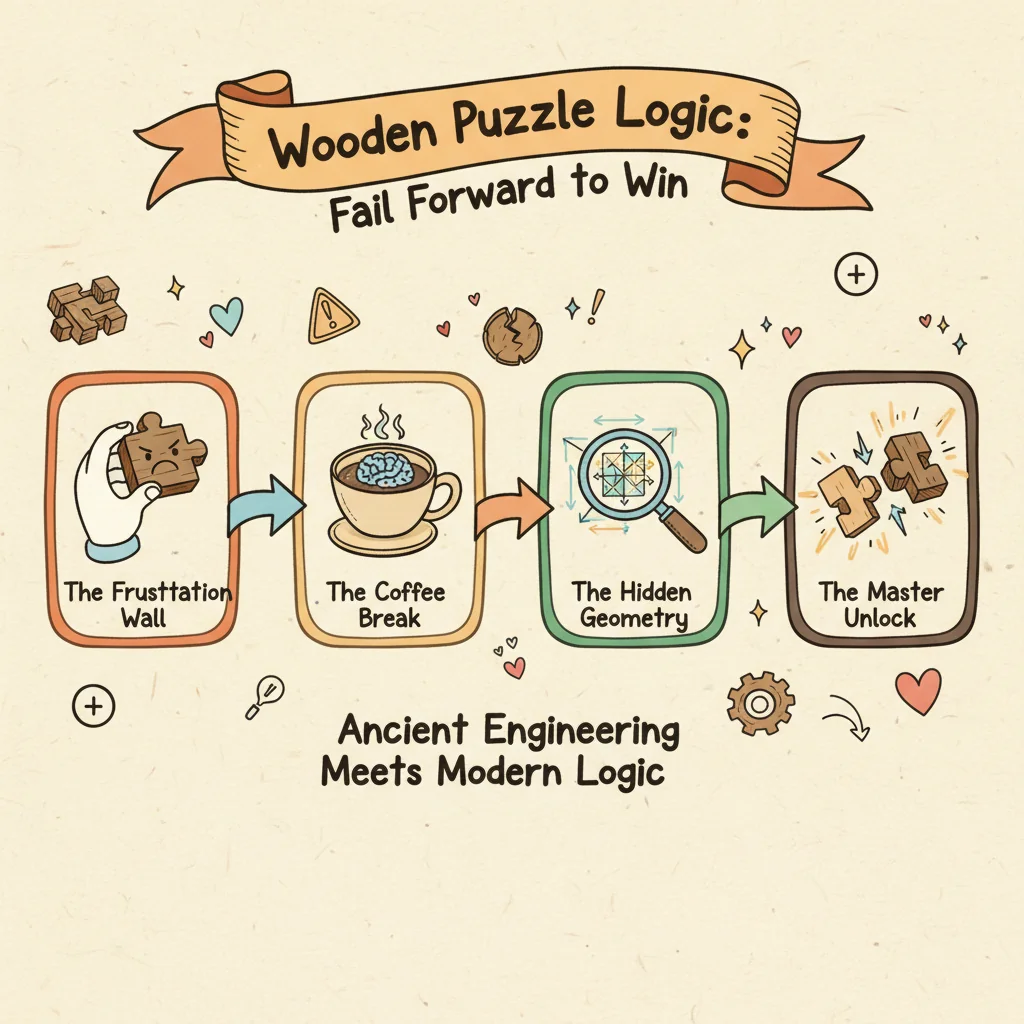
The third time the notched beechwood pin slipped past my thumb and clattered onto the floor, I didn’t swear. I didn’t even sigh. I simply set the remaining five pieces down, walked to the kitchen, and made a very slow cup of coffee. This is the ritual of the veteran solver. You learn quickly that the wood isn’t the problem; your heartbeat is.
Among the 200+ mechanical challenges I’ve handled over the last decade, wooden brain teaser puzzles remain the most honest. Unlike high-end metal puzzles that rely on microscopic tolerances and hidden magnets, wood relies on geometry, friction, and the ancient art of joinery. If a piece doesn’t move, it’s because you haven’t understood the logic yet. There is no “forcing” a wooden puzzle. If you try, you’ll hear that sickening crack of grain—a sound that signifies immediate defeat and a ruined investment.
My thesis after years of calloused fingertips is simple: The best wooden puzzles punish impatience and reward observation. They are tactile lessons in humility. Whether you are looking for a desk toy to keep your hands busy during a Zoom call or a centerpiece that will humble your smartest friends, the current 2026 market has shifted toward a blend of ancient Chinese engineering and modern laser-cut precision.
Why Your Logic Hits a Wall (And Why That’s Good)
Most people approach a new puzzle with a “brute force” mindset. They wiggle, they pull, and they hope for a lucky break. But wooden puzzles, particularly those based on the Luban lock tradition, are designed to fail under that approach. These objects are essentially mechanical puzzles that utilize mortise-and-tenon joints—the same structural logic that has held together Asian architecture for millennia without a single nail.
When you hit a wall, it’s usually because you’re looking at the pieces as individual actors rather than a collective system. I’ve found that strategies for overcoming a mental block often involve looking for the “key” piece—the one element with slightly more play than the others. Once that first piece slides, the entire structural integrity of the object shifts. It’s a moment of pure, unadulterated clarity that a digital screen simply cannot replicate.
If you find yourself getting too frustrated, I often suggest taking a break with something entirely different, like digital physics-based challenges, to reset your spatial reasoning before returning to the physical grain of the wood.
The Ghost of Lu Ban: Ancient Engineering on Your Desk
If you want to understand the DNA of this hobby, you have to start with the Luban Lock. Allegedly invented by the master carpenter Lu Ban around 500 BCE to test his son, these puzzles are the grandfathers of the modern “burr” puzzle.
Luban Lock Set 9 Piece
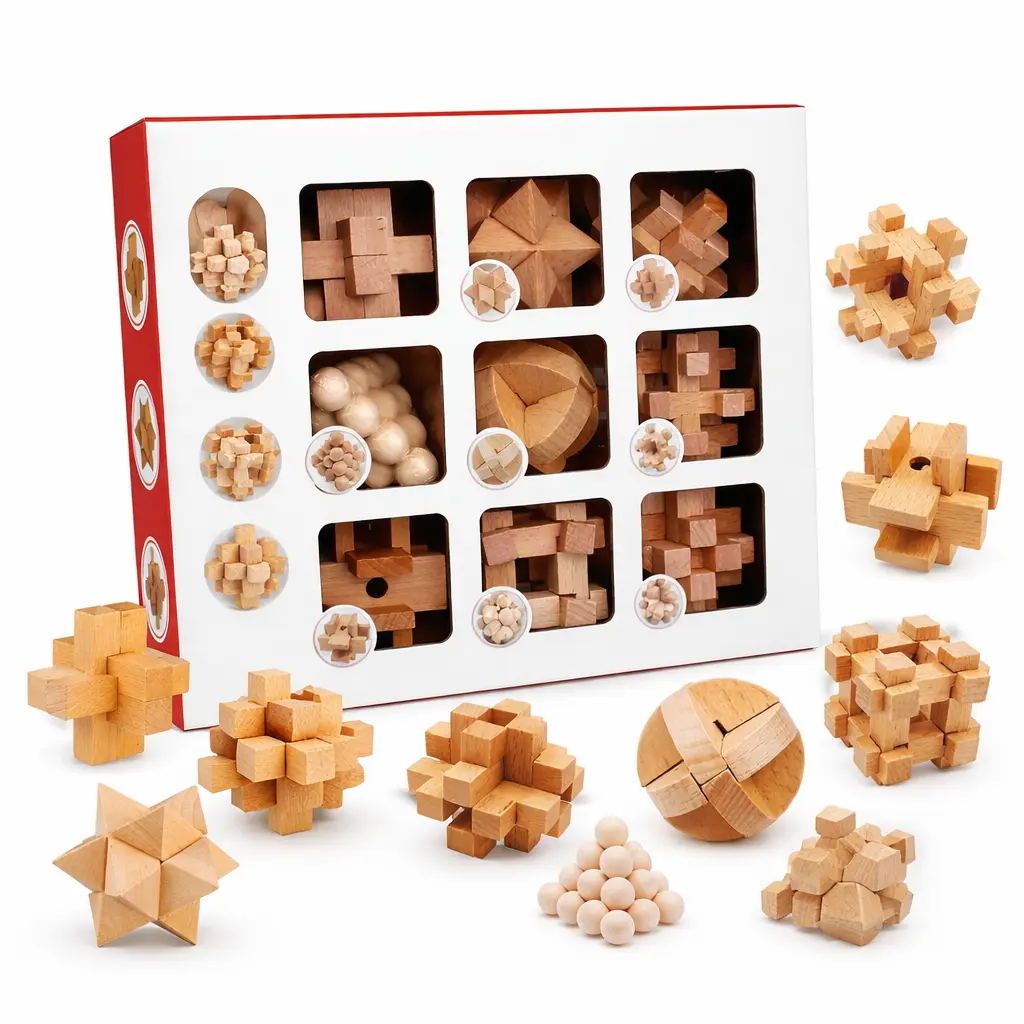
The Luban Lock Set 9 Piece ($39.99) is essentially a masterclass in 2,500 years of Chinese engineering humor. When I first unboxed this set, I was struck by the variety of shapes. You aren’t just getting nine versions of the same thing; you’re getting nine distinct geometric problems. Each puzzle uses that classic mortise-tenon joinery. There’s a specific weight to these pieces that feels substantial in the hand, though I will note that because they are natural wood, the fit can vary slightly depending on the humidity in your room.
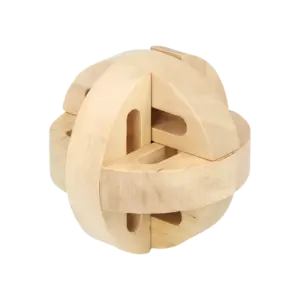
In my testing, the “ball” shaped burr in this set was the standout. It looks deceptively simple, but the internal void requires you to move three pieces simultaneously—a move I call the “spider grip.” It’s frustrating, it’s beautiful, and at roughly four dollars per puzzle, it’s one of the best values for a collector. The only downside? If you lose one piece, the entire puzzle is a paperweight. Keep them in the box.
6-in-1 Wooden Brain Teaser Set
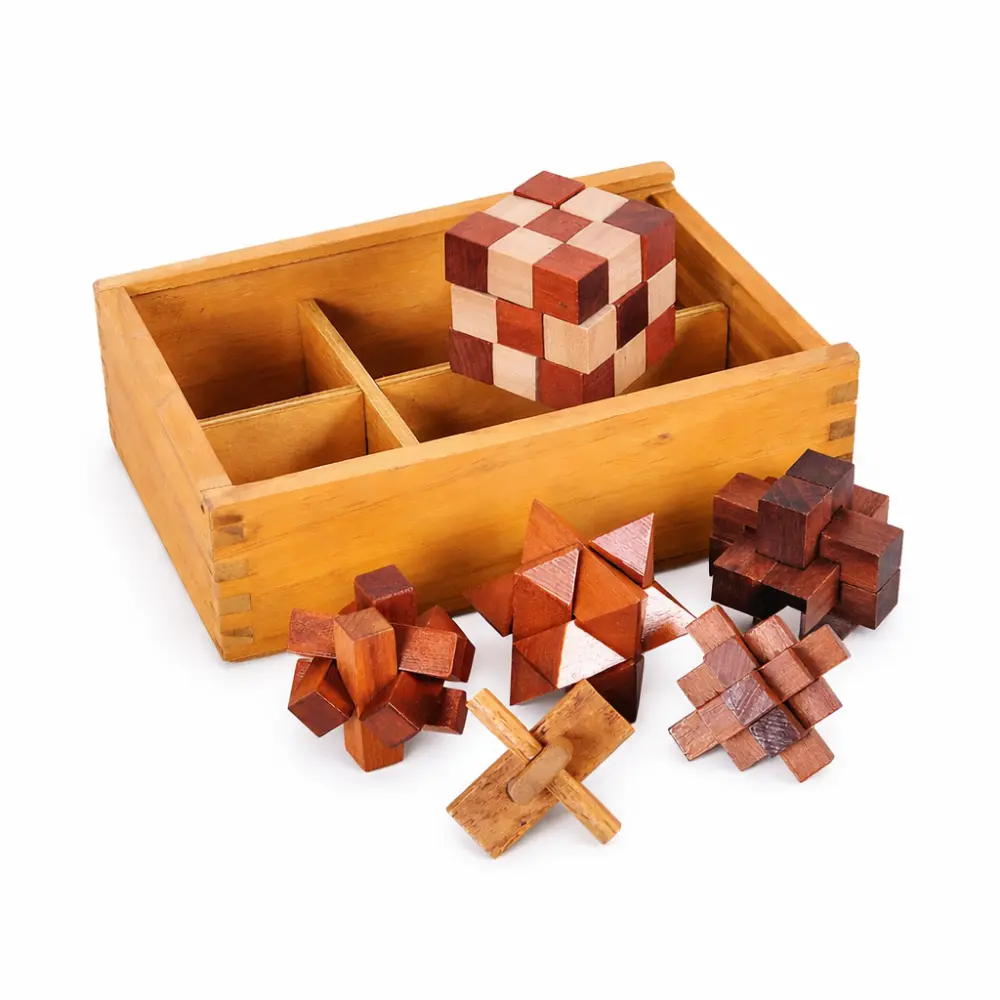
If the 9-piece set is the “advanced course,” the 6-in-1 Wooden Brain Teaser Set ($38.88) is the perfect entry point for someone who wants a high-quality desk fidget. Carved from solid beechwood, these are palm-sized and surprisingly durable. I’ve kept the “cross” puzzle from this set on my office desk for three weeks, and it has become the ultimate “meeting puzzle.”
The beechwood has a smooth, matte finish that feels better the more you handle it. The oils from your skin actually help the pieces slide more fluidly over time. My favorite in this set is the star-shaped burr. It has one “unlucky” key piece that locks everything in place. Pull it wrong, and you’re staring at a pile of notched sticks that seem impossible to recombine. For just under forty dollars, it’s a solid gift for a coworker who thinks they’re a genius.
The Sensory Appeal: Why Wood Beats Metal
I often get asked why I still collect wooden pieces when the 4-piece metal brain teasers are so popular right now. Metal is cold. Metal is loud. Metal is precise to the point of being clinical.
Wood, however, has a “give” to it. There is a sensory appeal of a successful solve in wood that metal can’t touch—that soft, muffled thunk when the final piece seats itself. It’s organic.
For those who appreciate this more philosophical side of puzzling, the Wood Knot Puzzle is a great example.
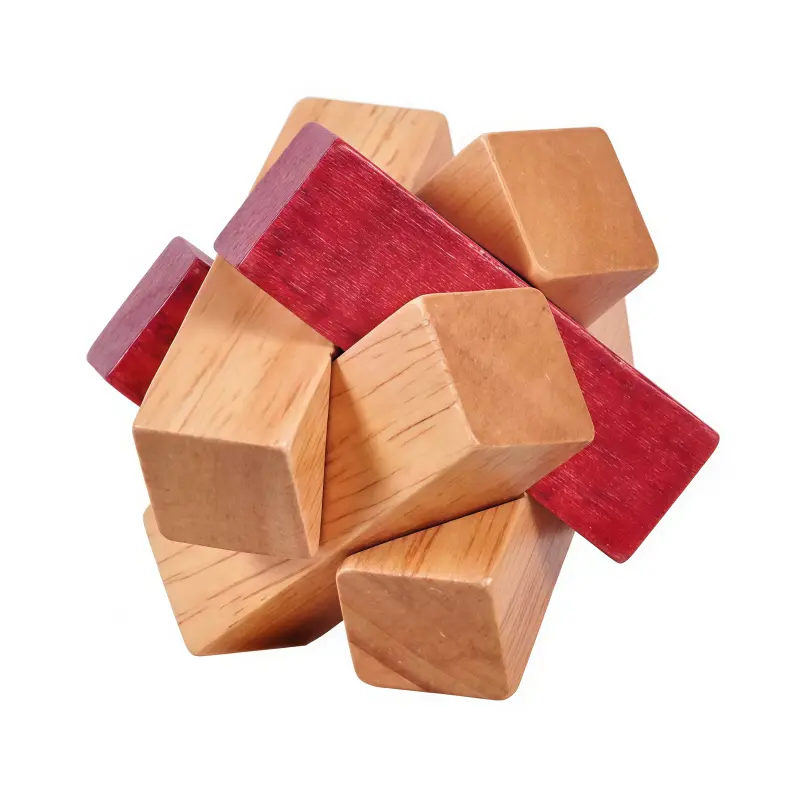
Wood Knot Puzzle — $16.99
It’s marketed with Taoist leanings, and while I’m usually skeptical of marketing fluff, there is something meditative about the six-piece hardwood construction. It demonstrates “great form has no shape” by appearing like a solid knot until you find the single axis of movement. It’s a budget-friendly way to see if you actually enjoy the “burr” style before committing to a larger set.
Mechanical Kits: When Puzzles Become Architecture
In the last few years, we’ve seen a massive surge in “3D DIY kits.” These aren’t just about taking something apart; they are about the labor of creation. This is where the comprehensive breakdown of different styles becomes necessary, because building a gear-driven globe is a very different mental workout than solving a 6-piece knot.
Mechanical 3D Wooden Globe Puzzle

The Mechanical 3D Wooden Globe Puzzle ($28.88) is a project, not a quick fix. You’re looking at several hours of assembly with precision laser-cut parts. What I love about this kit is the functioning gear-drive system. Most wooden “puzzles” are static once built, but this results in a rotating map of the Earth.
The material is natural, eco-friendly balsa and plywood, which is great for the planet but requires a gentle hand. I broke a small gear tooth on step 14 because I was rushing. Use the included wax or a bit of candle stub on the moving parts—it makes the rotation buttery smooth. For under thirty dollars, the level of engineering here is staggering. It’s the kind of thing that makes you appreciate the nested logic of complex challenges where one gear depends on the perfect placement of ten others.
Wooden Ferris Wheel Music Box Kit
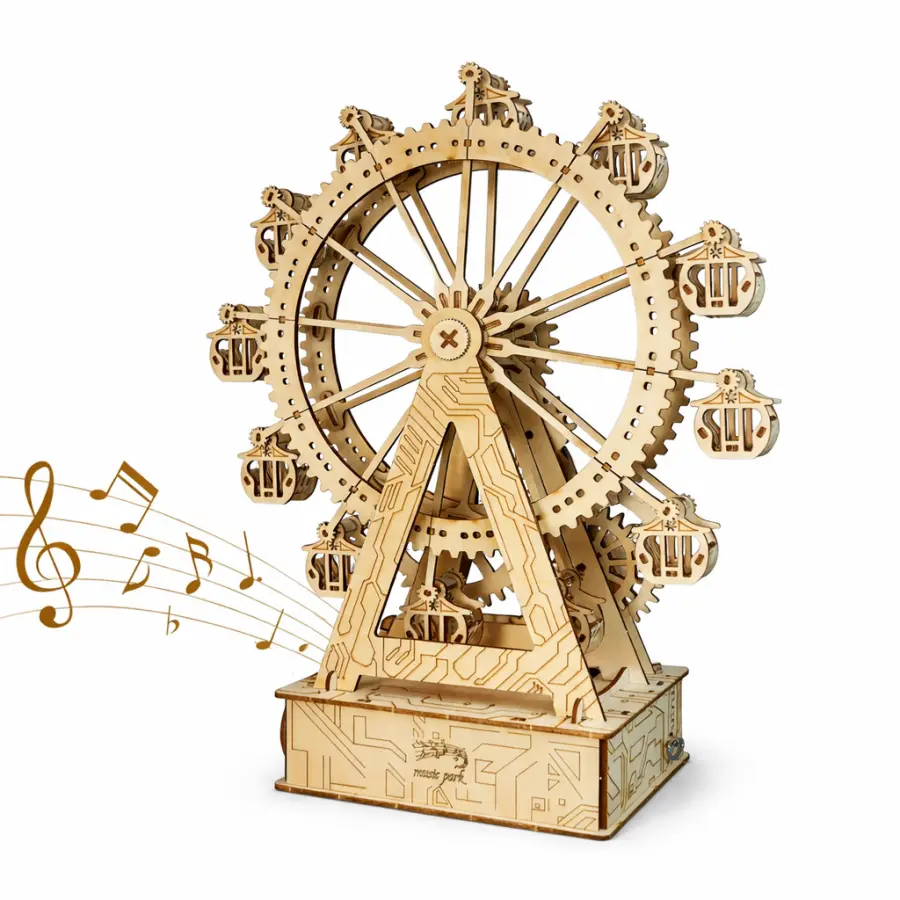
If you want to go even deeper into the mechanical rabbit hole, the Wooden Ferris Wheel Music Box Kit ($59.99) is the “final boss” of this category. Most music box kits are cheap and tinny. This one uses two music movements to produce a layered melody that actually sounds like a vintage fairground.
Building this reminded me of the 1893 Chicago World’s Fair stories. The sheer number of tiny gondolas you have to assemble can be tedious, but the payoff of watching the wheel rotate while the music plays is immense. There’s even a hidden drawer in the base—a nice nod to the “trick box” tradition. It’s the most expensive item on my list, but the complexity justifies the price. It’s a centerpiece, not a toy.
The “Key” Piece: A Lesson in Collective Strength
There is a specific type of puzzle that relies on identical pieces held together by a single outlier. This is a common theme in locking puzzle brain teasers, and it’s a great metaphor for structural engineering.
18 Piece Wooden Puzzle
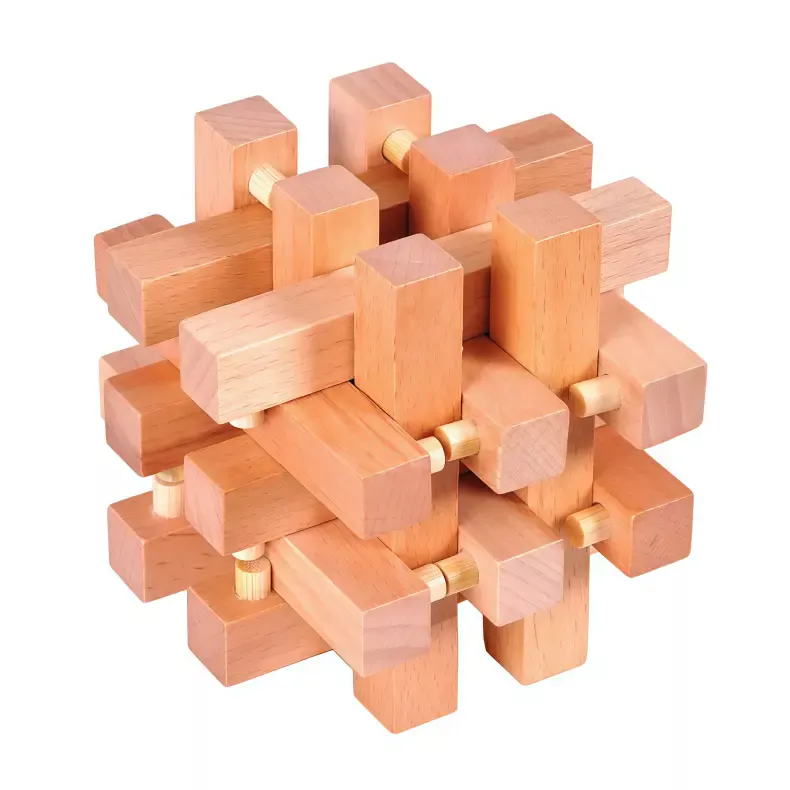
The 18 Piece Wooden Puzzle ($16.99) is the one I use to humble “smart” people. It consists of seventeen identical pieces and one “key” piece. When it’s assembled, there is zero wiggle room. It feels like a solid block of wood. The challenge here isn’t just taking it apart—it’s the absolute nightmare of putting it back together.
I dropped mine on my hardwood floor last night, and it exploded into eighteen identical-looking sticks. It took me forty minutes to find the orientation of the internal notches. This puzzle is for the person who values silence and focus. It’s a “silent master” that doesn’t need bells or whistles to be difficult. For the price of a fancy cocktail, you get a challenge that will likely last you a lifetime.
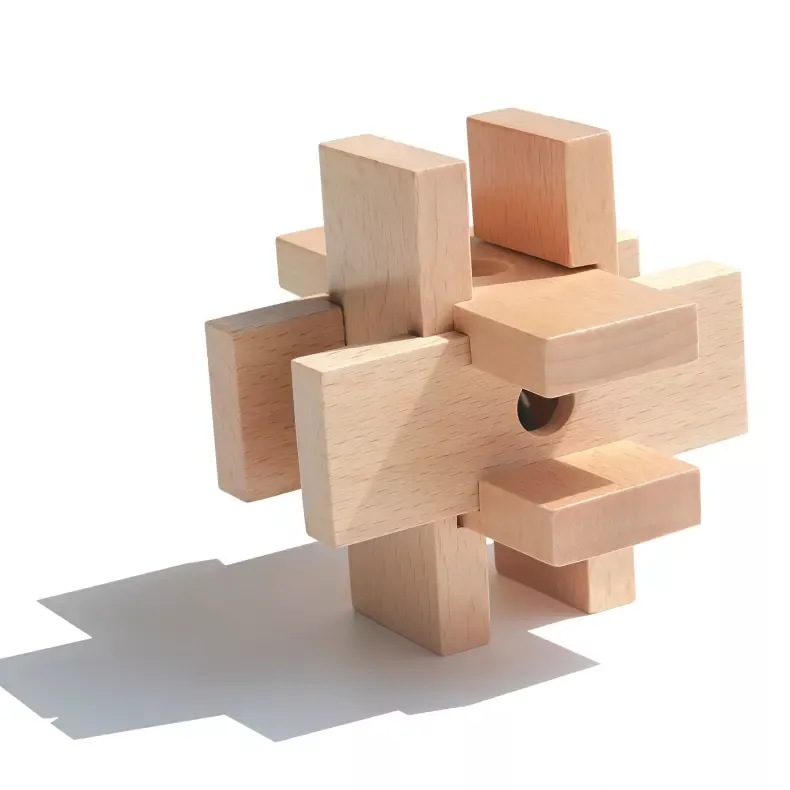
If 18 pieces feels like too much of a commitment, the 6 Piece Wooden Puzzle Key offers a similar “Wu Wei” philosophy of effortless action.
6 Piece Wooden Puzzle Key — $12.99
It’s smaller, fits in a pocket, and is a great way to introduce kids to the concept of interlocking geometry without overwhelming them.
The Utility Puzzles: Function Meets Frustration
Not every puzzle has to be a useless (but beautiful) object. Some of the most interesting designs in 2026 are those that serve a purpose once the “solve” is complete.
For example, the 3D Wooden Perpetual Calendar Puzzle is a working date calculator.
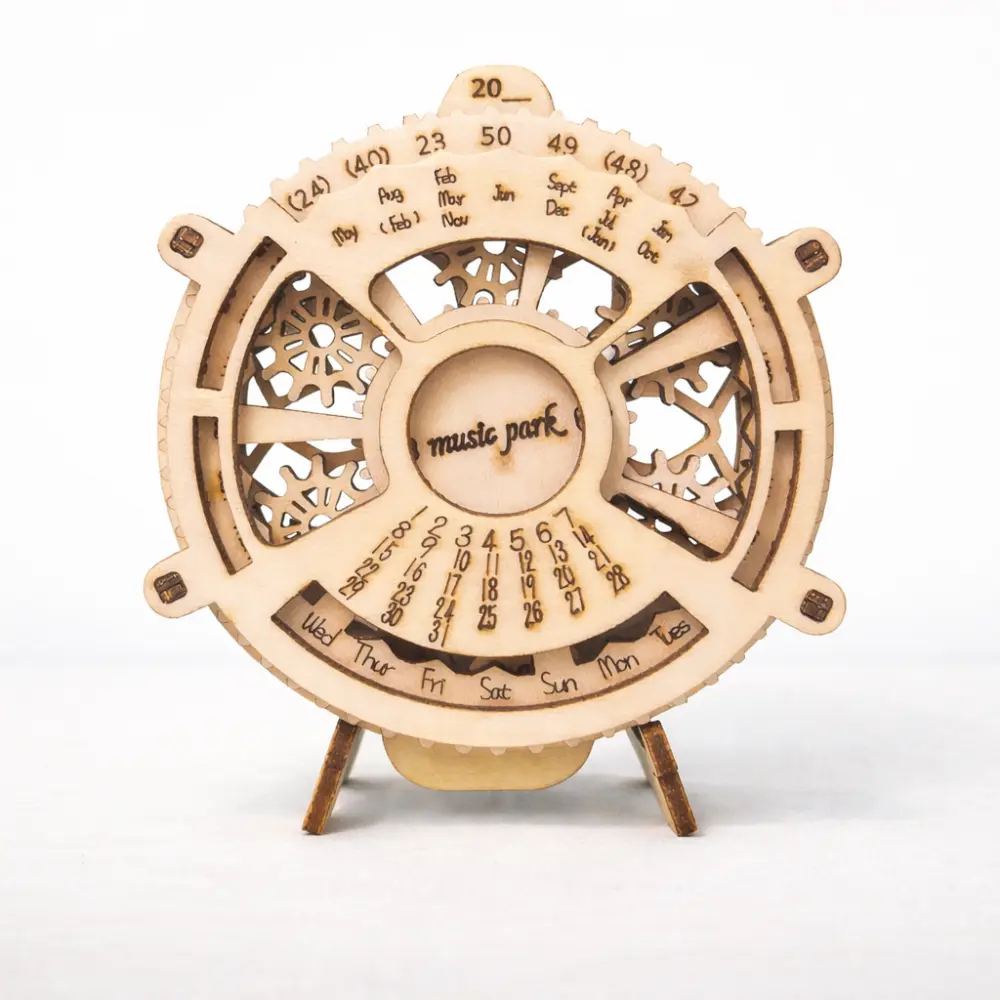
You build the gear system yourself, and once it’s done, you can calculate the day of the week for any date between 2023 and 2050. It’s based on mathematical principles that have existed since the 1500s. I keep mine on my desk not just for the “cool factor,” but because rotating the gears to the current date is a satisfying morning ritual that keeps my brain sharp before the emails start flooding in.
Then there’s the Tricky Wooden Ring Puzzle.
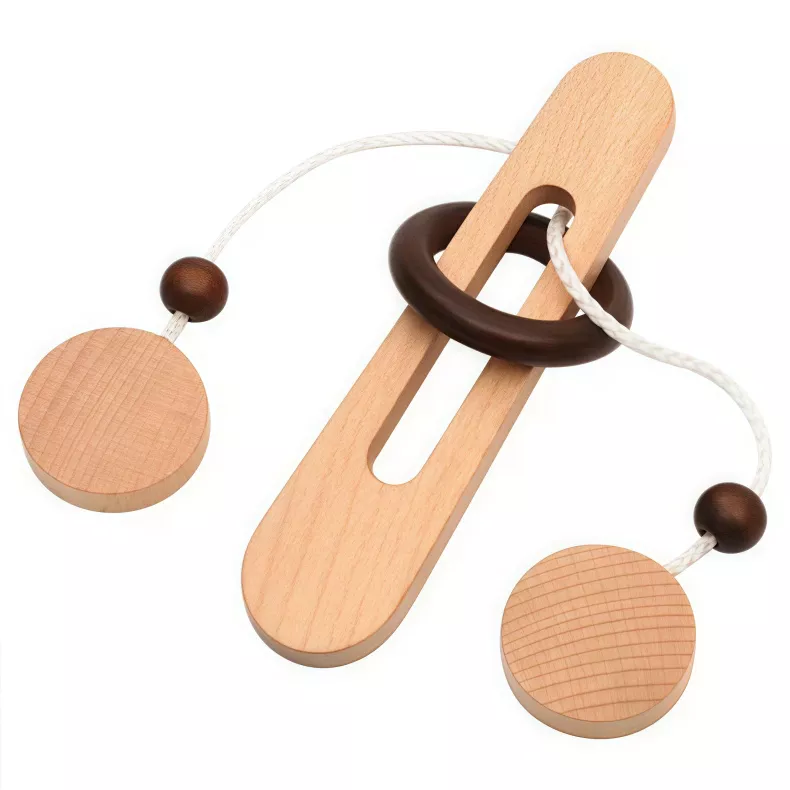
Tricky Wooden Ring Puzzle — $12.89
This is a classic disentanglement challenge. The goal is to free the ring from the wooden structure. It’s a different kind of brain teaser—less about structural geometry and more about finding hidden pathways. It’s the kind of thing you’d find in an old-school wooden brain teaser puzzles guide from the 1970s, but the modern wood quality is much higher now.
Lastly, for those who enjoy a bit of maritime history, the Wooden Sailboat 3D Puzzle Kit is a 57-piece build that results in a surprisingly elegant display model.

It’s not as mechanically complex as the Globe, but it’s a great way to spend a rainy afternoon. My brother-in-law, who usually has the attention span of a goldfish, spent two hours straight on this at Thanksgiving. It’s a fantastic entry point into the world of model building.
Quick-Reference Comparison Table
| Product | Type | Difficulty | Solve/Build Time | Best For |
|---|---|---|---|---|
| Luban Lock 9-Piece | Burr / Set | Medium to Hard | 20-60 min each | Collectors & Variety seekers |
| 6-in-1 Teaser Set | Burr / Set | Medium | 15-30 min each | Office Desk / Gifting |
| Mechanical Globe | Mechanical Kit | Intermediate | 4-6 hours | Hobbyists / Decor |
| Ferris Wheel Kit | Mechanical Kit | Hard | 6-10 hours | Serious Builders / Music lovers |
| 18 Piece Puzzle | Burr | Hard | 45+ mins | Patient Solvers / Purists |
FAQ: Everything You’re Afraid to Ask About Wood
1. How do you solve a wooden puzzle without the instructions?
The secret is observation. Before you move anything, look for the piece with the most “play” or wiggle. Wooden puzzles almost always have a “key” piece that must move first to unlock the others. If you’re stuck, try the “rotation” principle—sometimes a piece doesn’t slide; it pivots. If you’ve completely lost your way, there are digital resources for common puzzle solutions that can help you visualize the internal structure.
2. Why are some wooden puzzles so hard to put back together?
Disassembly is easy because gravity is on your side. Reassembly is hard because you have to fight gravity while aligning multiple notches simultaneously. This is where “spatial reasoning” comes in. You have to imagine the internal “void” of the puzzle and how the pieces fill it. It’s a common reason why your brain stalls—you’re trying to remember the sequence instead of understanding the logic.
3. Can these puzzles help with dementia or cognitive decline?
While I’m a reviewer and not a doctor, there is significant research suggesting that brain teasers and tactile problem-solving can help maintain neuroplasticity. The act of manipulating 3D objects engages the motor cortex and the parietal lobe in ways that a crossword puzzle doesn’t. It’s a “full-brain” workout.
4. My puzzle is stuck. Should I use WD-40 or oil?
NEVER use liquid lubricants on wood. Wood is porous; it will soak up the oil, swell, and become permanently stuck. If a puzzle is tight, use a dry lubricant like a graphite pencil or a bit of beeswax. Sometimes, simply moving to a drier room will help, as humidity causes wood to expand.
5. Are these safe for kids?
Most of the products I’ve reviewed here are rated for ages 14+ due to small parts and the complexity of the logic. For younger kids, stick to the 6-piece sets. Always supervise, because a frustrated child might try to “force” a piece and end up with a splinter or a broken toy.
6. What’s the difference between a “Burr” puzzle and a “Locking” puzzle?
A burr puzzle is typically a 3D interlocking structure where the pieces support each other (like the Luban locks). A locking puzzle often involves a hidden mechanism or a “trick” that you have to discover to open a compartment. Both are great, but burr puzzles are generally more focused on pure geometry.
7. Why does my wooden puzzle smell like burnt toast?
That’s the smell of progress! Most modern wooden kits, like the Ferris Wheel or the Globe, are laser-cut. The laser literally burns through the wood to create those precise edges. The smell usually fades after a few days, but I actually find it quite pleasant—it reminds me of a woodshop.
8. How do I clean my wooden puzzles?
A simple, slightly damp (not wet!) microfiber cloth is all you need. Don’t use harsh chemicals. If the wood looks dry after a few years, a tiny bit of food-grade mineral oil on a rag can restore the luster, but be careful not to get it into the joints where it might cause swelling.
9. What should I do if I break a piece?
Most high-quality kits come with a few spare parts for the most delicate gears. If it’s a solid wood burr puzzle, a tiny drop of wood glue and a clamp for 24 hours usually does the trick. Just make sure you wipe away any excess glue so it doesn’t interfere with the puzzle’s movement.
10. Are wooden puzzles better than metal ones?
“Better” is subjective. Wood is more tactile and “warm,” while metal allows for much tighter tolerances and “impossible” hidden mechanisms. If you’re a beginner, I recommend wood. It’s more intuitive. If you want something that feels like a piece of jewelry, go with metal.
11. Why are some puzzles $10 and others are $60?
It comes down to three things: material quality (beechwood vs. plywood), complexity (6 pieces vs. 300 pieces), and licensing/engineering. A music box kit with moving parts requires significantly more engineering than a static 6-piece cross.
12. Can I solve these while watching TV?
I wouldn’t recommend it for the harder ones. These require “active” focus. If you want something for “passive” fiddling, the 3Emojimatch game is a better bet for low-stakes relaxation. Physical puzzles demand your full attention—that’s why they’re so good for stress relief.
The Final Click: A Recommendation
If I had to pick just one to start your collection, I’d go with the 6-in-1 Wooden Brain Teaser Set. It’s the most “honest” representation of the hobby. It’s not about flashy gears or music; it’s about six different ways to realize that your eyes are lying to you.
The first time you slide that key piece into place and feel the entire structure become rigid in your hand, you’ll understand the obsession. It’s a small, quiet victory in a world that is often loud and confusing. Just remember: when you get frustrated—and you will—don’t force it. The wood is waiting for you to catch up.
Go make a cup of coffee. The solution isn’t going anywhere.