The third time the silver coral reef slipped through my fingers, I stopped. I didn’t throw it. I didn’t force the metal. I simply set it down on my mahogany desk, walked to the kitchen, and waited for the kettle to whistle. My heart rate had spiked over a piece of zinc alloy weighing less than a deck of cards. That is the specific, maddening magic of a well-made mechanical challenge. It isn’t just about the solution; it is about the physical confrontation between your spatial reasoning and a designer’s clever geometry.
Most people treat these as stocking stuffers or “coffee table junk.” After testing over 200 of these objects, I’ve realized that the best metal brain teaser puzzle designs are actually tools for cognitive recalibration. They punish the impatient. They reward the observant. If you try to bully a metal puzzle, it will win every time by simply refusing to budge. But if you listen to the subtle clicks and feel the microscopic tolerances, the metal eventually yields.
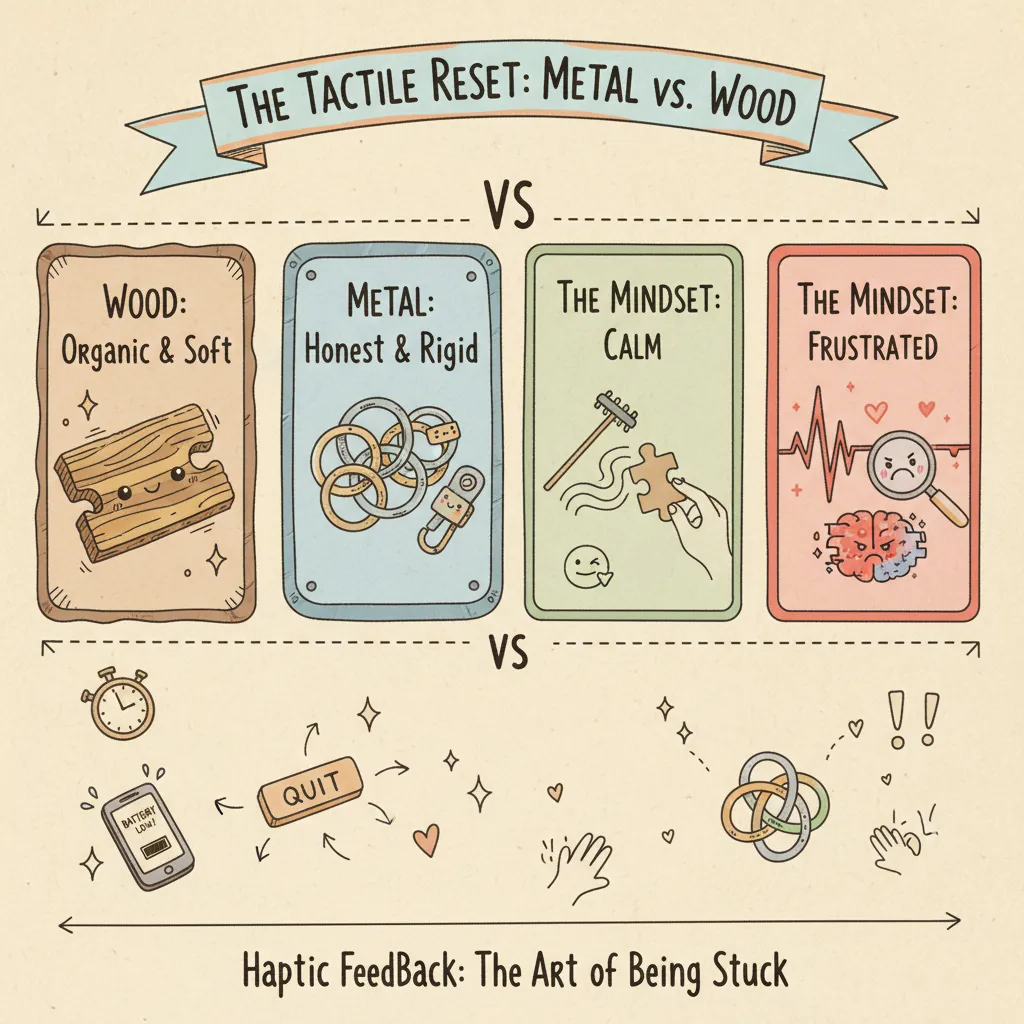
Today is February 17, 2026, and we are currently living in an era of peak digital exhaustion. My thesis is simple: metal puzzles are the ultimate tactile reset because they require a level of presence that a smartphone screen cannot simulate. They provide a “haptic feedback” loop that forces your brain to drop its background tabs and focus on a single, physical problem.
The Physics of Frustration: Why Metal Beats Wood
When you pick up a wooden brain teaser puzzles guide, you’re looking at friction and organic expansion. Wood changes with the humidity. It has a “give” that metal lacks. Metal, specifically the cast zinc alloys and brass used in modern disentanglement challenges, is honest. It either fits or it doesn’t.
There is a specific category known as disentanglement puzzles where the goal is to separate two or more joined pieces. In wood, you might wiggle a piece through. In metal, you need precision. This precision is why I often recommend metal for serious desk work. You can feel the quality of the machining. When you hold the Cast Coil Triangle Puzzle ($25.99), the weight alone tells your brain this isn’t a toy. It’s a miniature industrial sculpture that demands respect.
The weight of these objects—often between 50 and 150 grams—creates a grounding effect. It’s a concept called “proprioceptive input.” By engaging the small muscles in your hands and the pressure receptors in your palms, you’re effectively telling your nervous system to “downshift.” This is why I keep a Cast Coil Pocket Puzzle ($18.99) in my bag for transit. While everyone else is scrolling through doom-news, I’m trying to find the sliding angle of a silver-and-bronze coil.
The “Desk Reset” and the End of the Fidget Spinner
We’ve all seen the plastic fidget toys that flooded the market years ago. They were mindless. A metal brain teaser is “mindful fidgeting.” It gives your hands something to do while your brain is processing a complex email or a difficult coding problem. I’ve found that the Interlocking Metal Disk Puzzle ($14.99) is the perfect “meeting companion.” Its rotational sequence is quiet, and because it’s only 1.8 inches, it stays hidden in your palm.
Unlike digital games where you might find yourself breaking assumptions about 4-piece logic, a physical puzzle has no “reset” button. If you get it into a weird configuration, you have to work your way out. That “no-exit” philosophy is exactly what builds the mental stamina required for high-level problem solving. It’s a low-stakes way to practice staying calm under pressure.
Spotlight: The Engineering Marvels
Cast Coil Triangle Puzzle
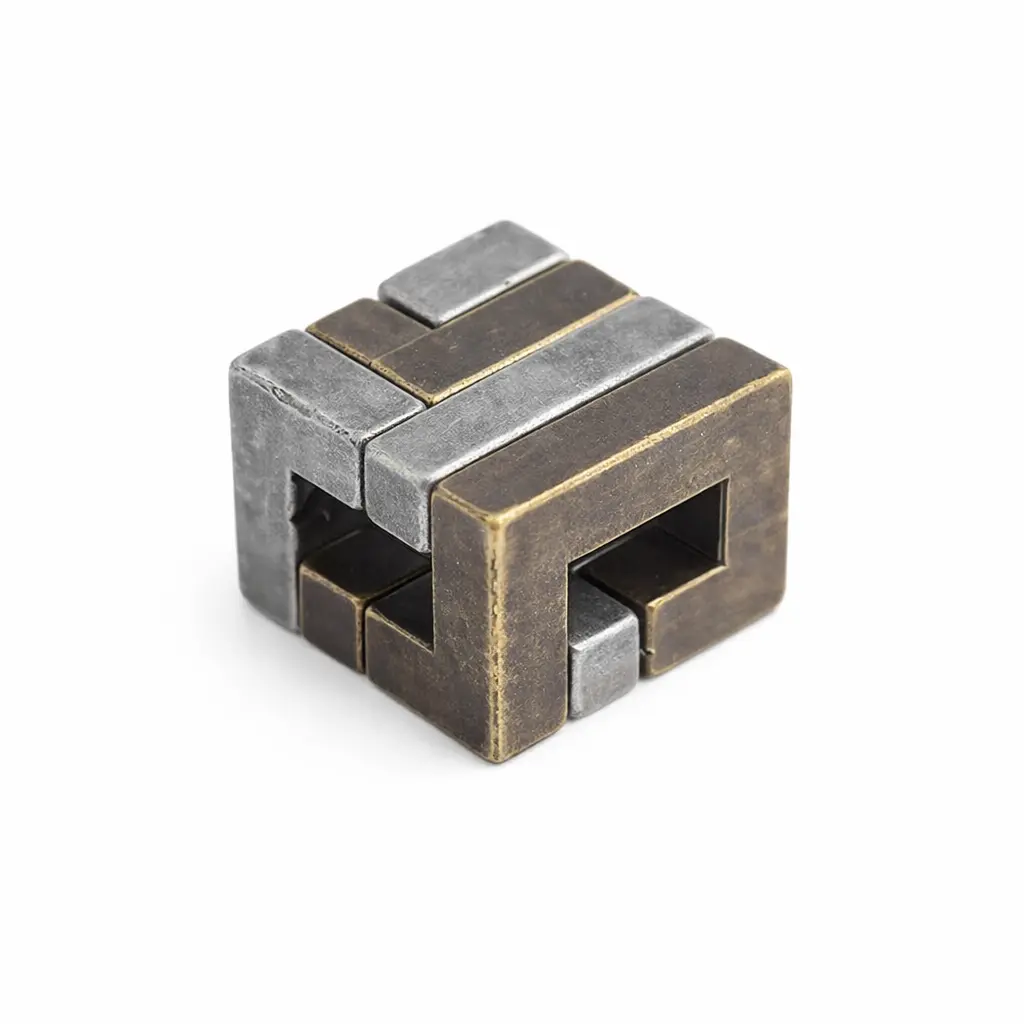
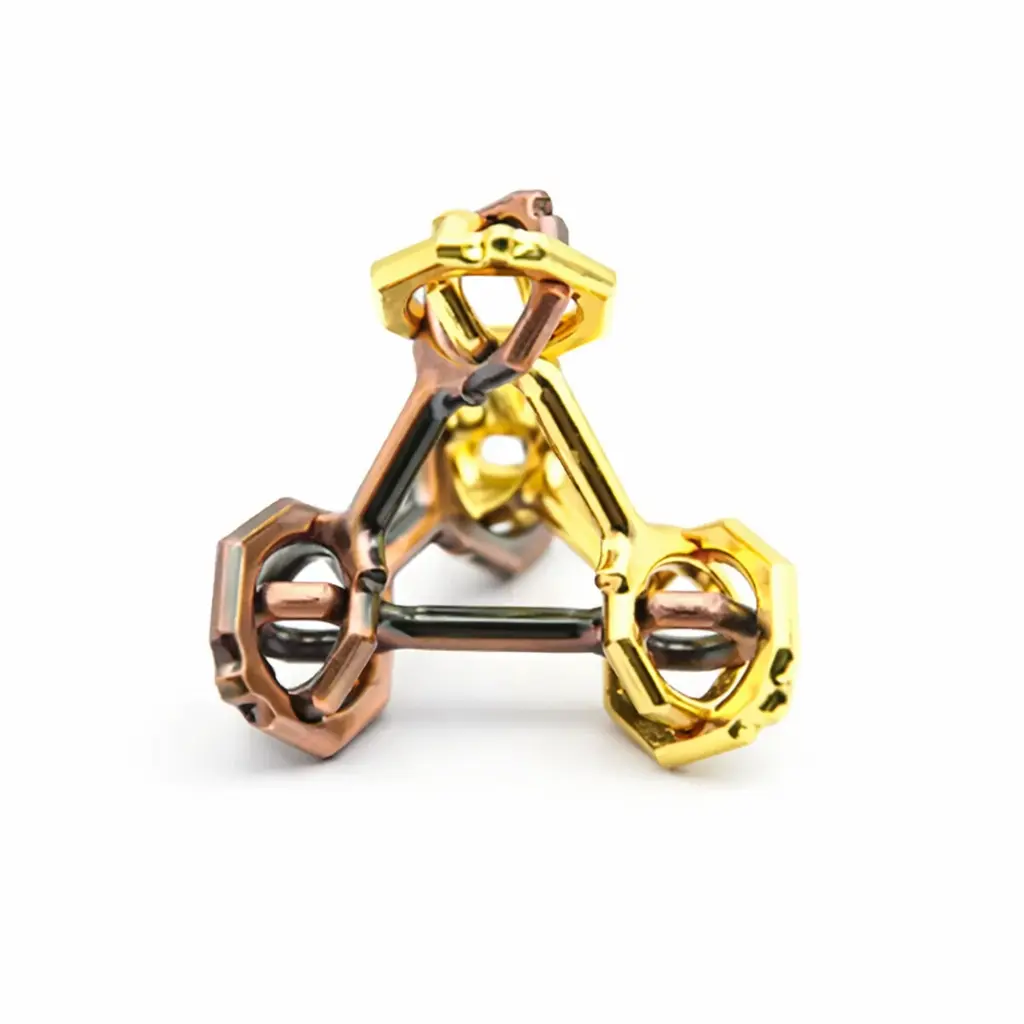
Cast Coil Triangle Puzzle — $25.99
This is the one I show people when they claim puzzles are for kids. The Cast Coil Triangle Puzzle ($25.99) looks like a piece of hardware scavenged from a 1950s aerospace lab. It consists of three interlocking geometric rings that form a stereoscopic triangle. The dual-tone finish—brass and bronze—isn’t just for aesthetics; it helps you track the movement of the pieces as they rotate.
What I love about this specific piece is the “chunky” feel. It’s substantial. The solution isn’t a trick; it’s a sequence. You have to understand how the three rings occupy the same spatial coordinates. It’s a masterclass in 3D geometry. I’ve had this on my shelf for months, and even after knowing the solution, I find myself picking it up just to feel the rings glide against each other. It’s a high-end experience for under thirty dollars.
5 Piece Cast Spiral Metal Puzzle
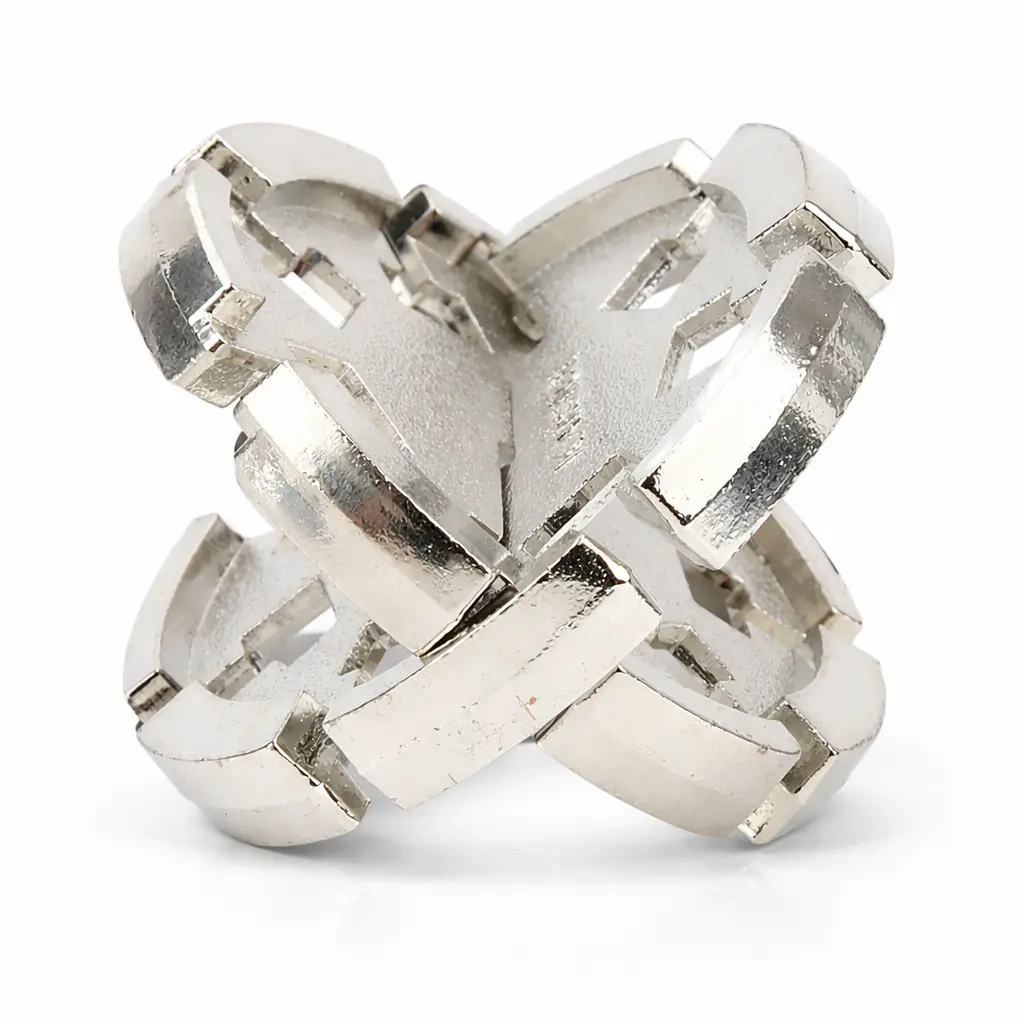
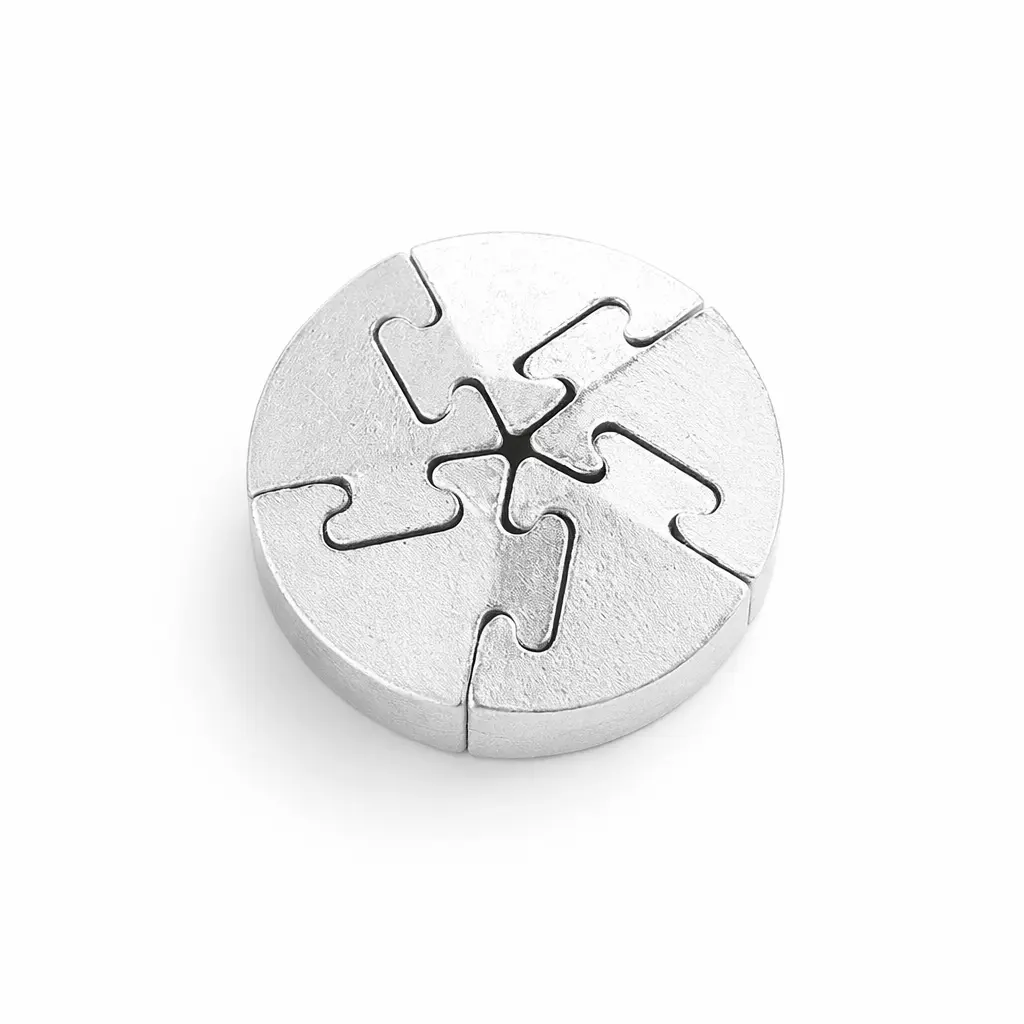
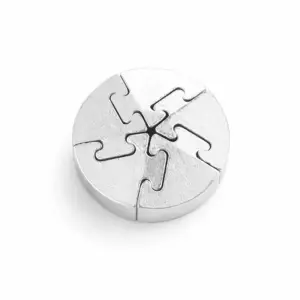
The 5 Piece Cast Spiral Metal Puzzle (check current pricing) is a trap. I mean that as a compliment. It looks like a simple, flat disk divided into five wedges. You think, “I’ll just slide one out.” Then you realize the pieces are keyed into each other with such tight tolerances that only one piece can move, and only in one specific direction.
The “Aha!” moment when the spiral finally collapses into five identical-looking wedges is satisfying, but the reassembly is where the real challenge lies. Most people can take it apart in three minutes. Putting it back together took me twenty. It’s a perfect example of how nested logic creates layers of difficulty that aren’t immediately apparent. If you’re gifting this, don’t give them the solution. Let them suffer the “reconstruction phase” naturally.
Metal Orbit Ring Cast Puzzle
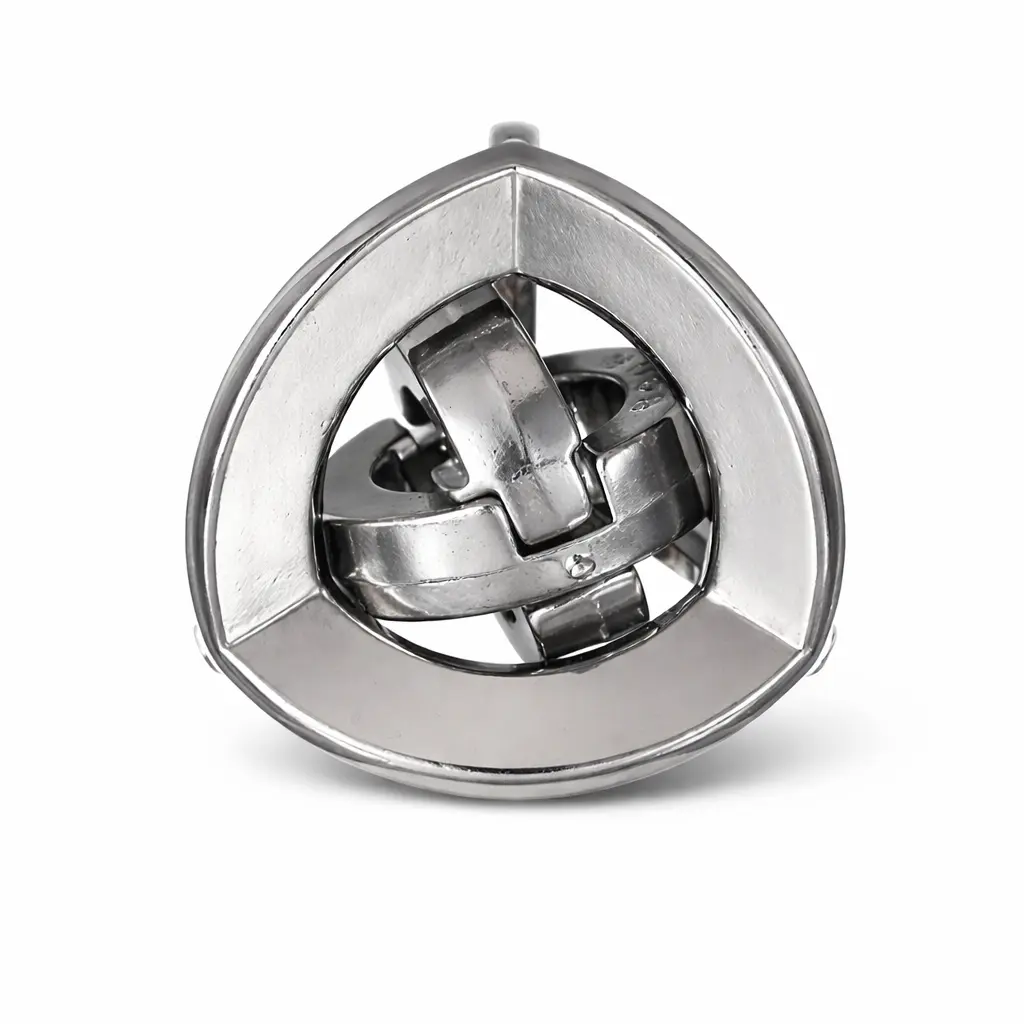
If you enjoy the feeling of “impossible” objects, the Metal Orbit Ring Cast Puzzle ($14.99) is your best bet. It’s only 44mm across, but it contains a triangular frame and two nested C-rings that seem physically incapable of separating. This is a “spatial reasoning” puzzle. You have to be able to visualize the “void space” inside the triangular cage.
I’ve found that this one is particularly polarizing. People with a background in CAD or mechanical engineering often solve it within ten minutes. Those who think more linearly can struggle for an hour. It’s a great litmus test for how your brain processes 3D shapes. The polished alloy construction is incredibly durable; I’ve dropped mine on tile several times with no visible scuffing.
Gold Fish & Silver Coral Reef Cast
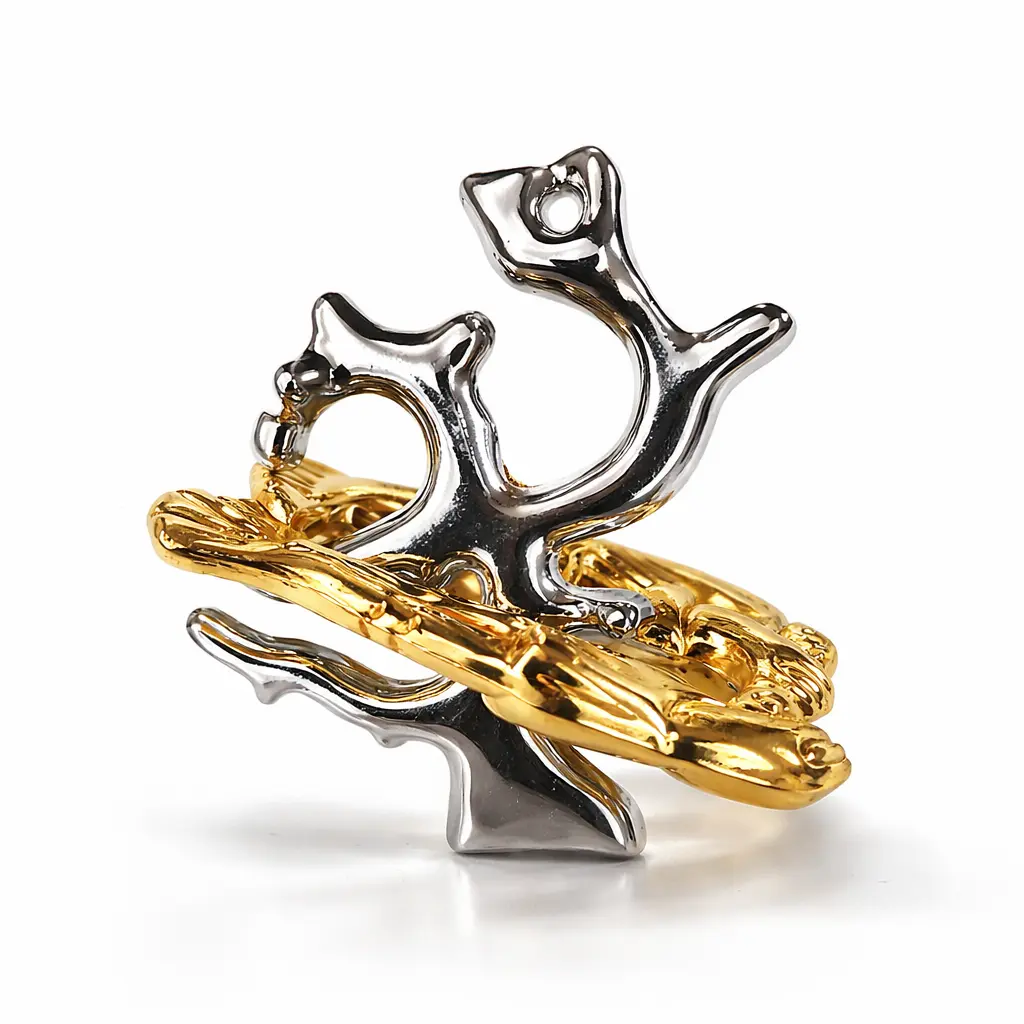
The Gold Fish & Silver Coral Reef Cast ($13.99) is what I call a “pathfinder” puzzle. Unlike the Spiral, which is about finding the one moving part, the Fish is about navigating a maze. You have to guide the gold fish through the silver coral branches. It’s a two-tone beauty that looks more like a sculpture than a brain teaser.
At roughly 51 × 56 mm, it’s a palm-sized challenge that rewards patience. If you try to pull the fish through a gap that’s too small, you’ll feel the metal resist. That’s your cue to stop and rethink. I often recommend this for beginners because the goal is clear: get the fish out. It’s an intuitive objective that doesn’t need an instruction manual.
Brass Cube Maze Puzzle Keychain
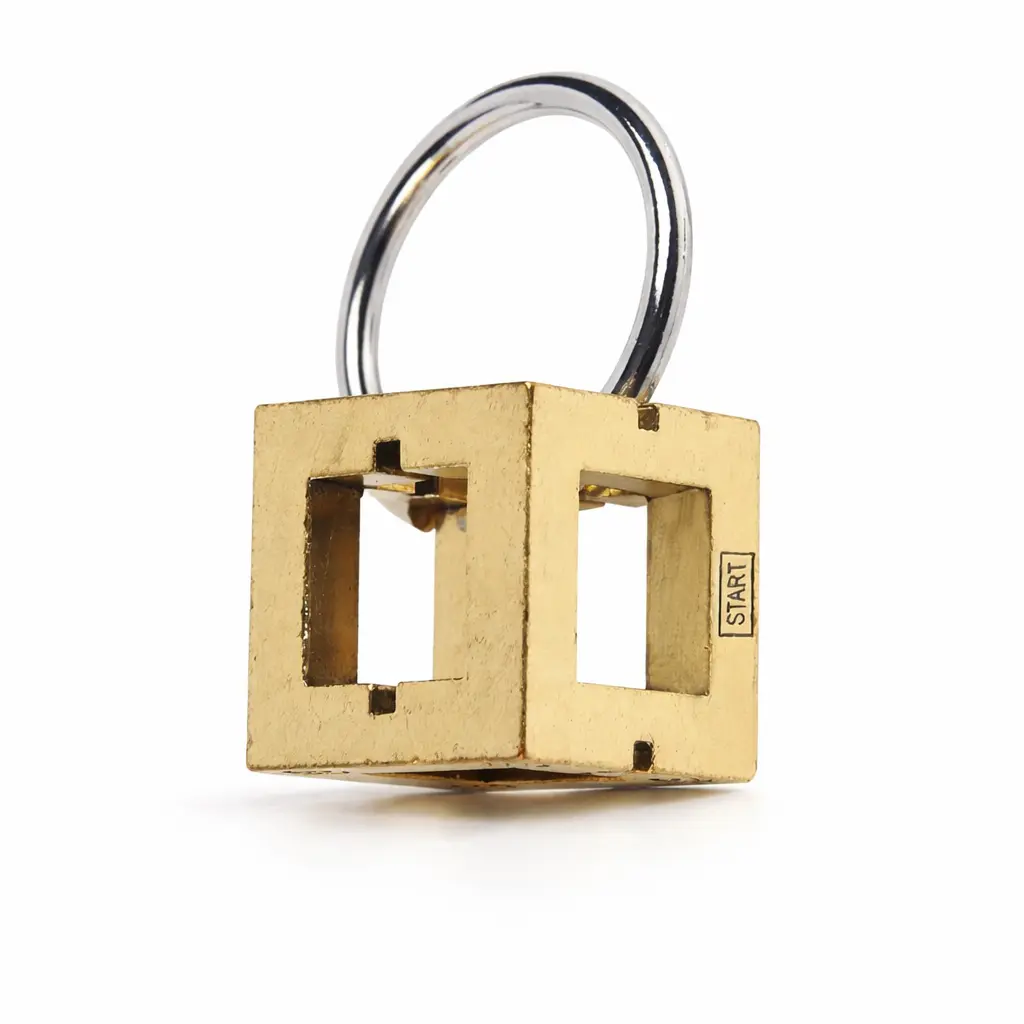
Every enthusiast needs an “Everyday Carry” (EDC) puzzle. The Brass Cube Maze Puzzle Keychain ($16.99) fits that niche perfectly. It’s a 31mm polished brass cube with a chrome ring locked inside a hidden internal maze. You can’t see the path; you have to feel it.
This is a “blind” puzzle. You are navigating by touch and sound. It’s a fantastic way to keep your hands busy while standing in line or sitting on a train. Because it’s brass, it will develop a beautiful patina over time, making it look like a vintage heirloom. It’s one of the few everyday carry puzzle options that actually provides a legitimate mental challenge rather than just being a simple fidget.
The Peak: The Engineer vs. The Artist
Last month, I conducted a small experiment. I handed the Metal Crab Puzzle Cast Brain Teaser with Gold Ring ($13.99) to two friends: a software engineer and a landscape painter.
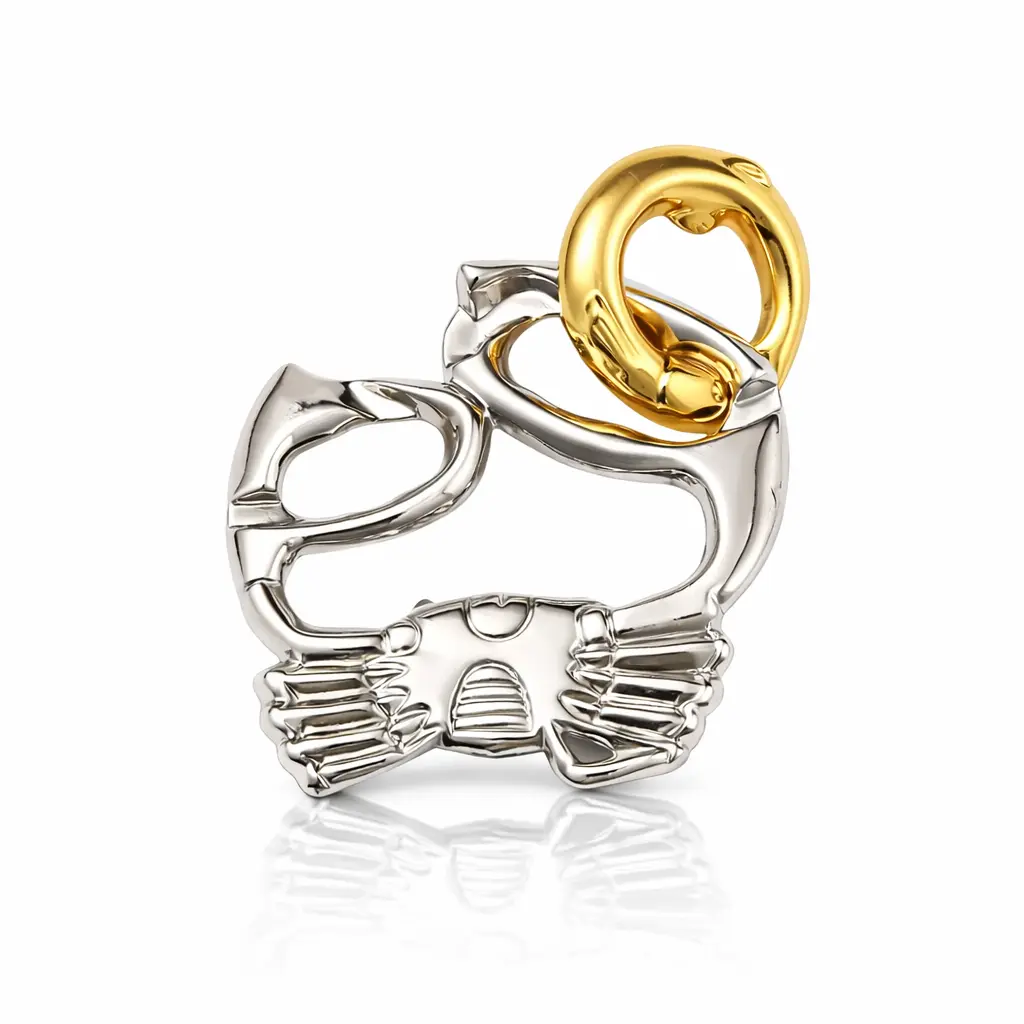
The engineer immediately began looking for the “seams.” He was trying to reverse-engineer the manufacturing process to find the weakness. He was logical, methodical, and increasingly frustrated when the gold ring wouldn’t slide past the crab’s claw. He spent fifteen minutes trying to apply “logic” to a problem that requires “feeling.”
The artist, on the other hand, just started moving the pieces randomly. She wasn’t looking for a pattern; she was looking for a “flow.” She solved it in four minutes by accident, then spent the next ten minutes trying to figure out how she did it.
This is the peak insight of the hobby: The solution is often the least interesting part of the puzzle. The real value is the transition from “this is impossible” to “I understand the language of this object.” Whether you are studying the mechanics of cast disentanglement or just fiddling with the Metal Starfish Puzzle Ring ($13.99) during a Zoom call, you are engaging in a dialogue with a designer.
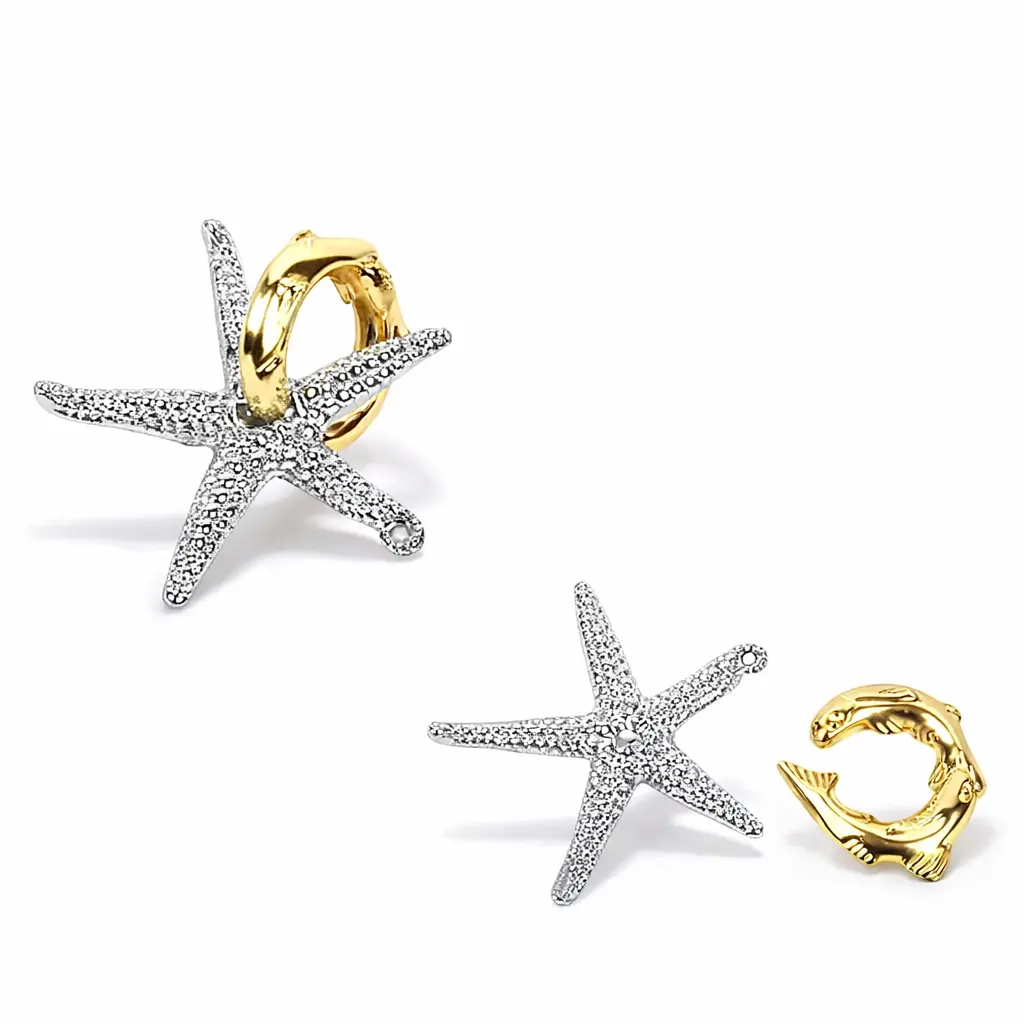
Metal Starfish Puzzle Ring — $13.99
The Starfish puzzle, for instance, is a classic “ring and loop” challenge. It’s priced at $13.99 and looks like a piece of jewelry. But the “twisted ring” geometry is a clever bit of topology. If you understand the mathematics of a Möbius strip, you’ll see the solution instantly. If not, you’ll spend a very enjoyable forty minutes wondering how a solid chrome starfish can pass through a solid gold ring.
Why We Get “Stuck” (And Why That’s Good)
On Reddit, you’ll often see people posting photos of metal puzzles they’ve had for five years, still unsolved. There’s a certain honor in that. A puzzle that you solve in thirty seconds is a toy. A puzzle that stays on your desk for a year is a mentor.
I’ve found that when I’m stuck on a project at work, picking up a Cast Coil Pocket Puzzle ($18.99) for five minutes actually helps. It’s a “lateral thinking” exercise. By forcing my brain to solve a physical problem, I often find the solution to the digital one. If you find yourself hitting a wall, sometimes you just need a digital puzzles for a quick mental palate cleanser before returning to the metal.
If you’re just starting your collection, don’t feel pressured to buy the most expensive “Level 10” challenge. Start with something that has a great tactile feel, like the Interlocking Metal Disk Puzzle ($14.99). It’s about the habit of play, not the ego of the solve.
Quick-Reference Comparison Table
Frequently Asked Questions
How do I solve a metal puzzle without the instructions?
The secret to solving any metal brain teaser puzzle is to stop trying to “solve” it and start trying to “understand” it. Most people make the mistake of pulling and pushing with force. Instead, hold the puzzle loosely. Rotate the pieces through every possible orientation. Watch for the “gap.” In cast puzzles, the manufacturing process often leaves a tiny, intentional seam or a slight narrowing that allows the pieces to slide past each other. If you’re really stuck, I recommend rhythmic strategy games to clear your head before coming back with a fresh perspective.
Are metal puzzles better than wooden ones?
It depends on what you value. Metal puzzles offer tighter tolerances and a more “premium” tactile feel. They don’t warp with the weather, which is why collecting high-end metal boxes is such a popular niche for adults. Wood is warmer and quieter, but metal feels more like a permanent mechanical enigma. If you want something that lasts a lifetime and can be passed down, metal is the clear winner.
What is the best metal puzzle for a complete beginner?
I always point people toward the Gold Fish & Silver Coral Reef Cast ($13.99). The goal is visually obvious, and the movements are smooth. It builds the “muscle memory” needed for harder challenges without being so difficult that it ends up in the trash. It’s a great introduction to the language of cast metal disentanglement.
Can these puzzles be solved by kids?
While many are rated for ages 8 and up, I’ve found that the “sweet spot” is 12 and older. Younger children often lack the fine motor control or the patience to avoid using brute force. If a child tries to bend the metal, the puzzle is ruined. However, the Brass Cube Maze Puzzle Keychain ($16.99) is surprisingly resilient and can withstand a bit of rougher handling than the delicate ring puzzles.
Why are some puzzles two-toned (gold and silver)?
It isn’t just for looks. The two-tone finish—like on the Metal Crab Puzzle Cast Brain Teaser with Gold Ring ($13.99)—is a functional design choice. It helps the solver keep track of which piece is which during complex rotations. When everything is the same color, it’s easy to lose your place. The contrast allows your brain to map the movement more effectively.
Do metal puzzles ever “wear out”?
High-quality cast zinc and brass puzzles actually get better with age. As the pieces rub against each other, they “self-polish,” making the movements smoother. I have a ten-year-old coil puzzle that feels like silk compared to a brand-new one. However, avoid using lubricants like WD-40; they just attract dust and gunk up the mechanism. Your natural skin oils are usually enough to keep them moving.
What should I do if a piece gets stuck?
First, stop pulling. If a piece is stuck, it’s usually because it’s at a slight angle that the designer didn’t intend. Gently jiggle the pieces while holding the puzzle upside down. Sometimes gravity is the missing ingredient. Never use pliers or tools. If you can’t solve it, put it away for a week. Your brain will continue to process the geometry in the background.
Are these good for stress relief?
Absolutely. There is a reason many therapists recommend tactile toys. The weight and the cold temperature of the metal provide sensory grounding. Focusing on the mechanics of physical locks pulls your attention away from abstract anxieties and into the physical present. It’s a form of “active meditation.”
What is “Cast” metal?
Most of the puzzles mentioned here are “Cast Zinc Alloy.” This means molten metal was poured into a precision mold. This allows for complex, organic shapes—like the Metal Starfish Puzzle Ring ($13.99)—that would be impossible to machine from a solid block. Casting allows for the “hidden paths” and internal notches that make these puzzles so devious.
How do I know if a puzzle is “high quality”?
Look at the seams. On a cheap puzzle, you’ll see rough edges or “flash” from the mold. On a quality piece like the Cast Coil Triangle Puzzle ($25.99), the finish is uniform, and the pieces move without grinding. The weight is also a giveaway; quality puzzles feel “solid,” not hollow.
Is the 3D Crystal Rose Puzzle a “metal” puzzle?
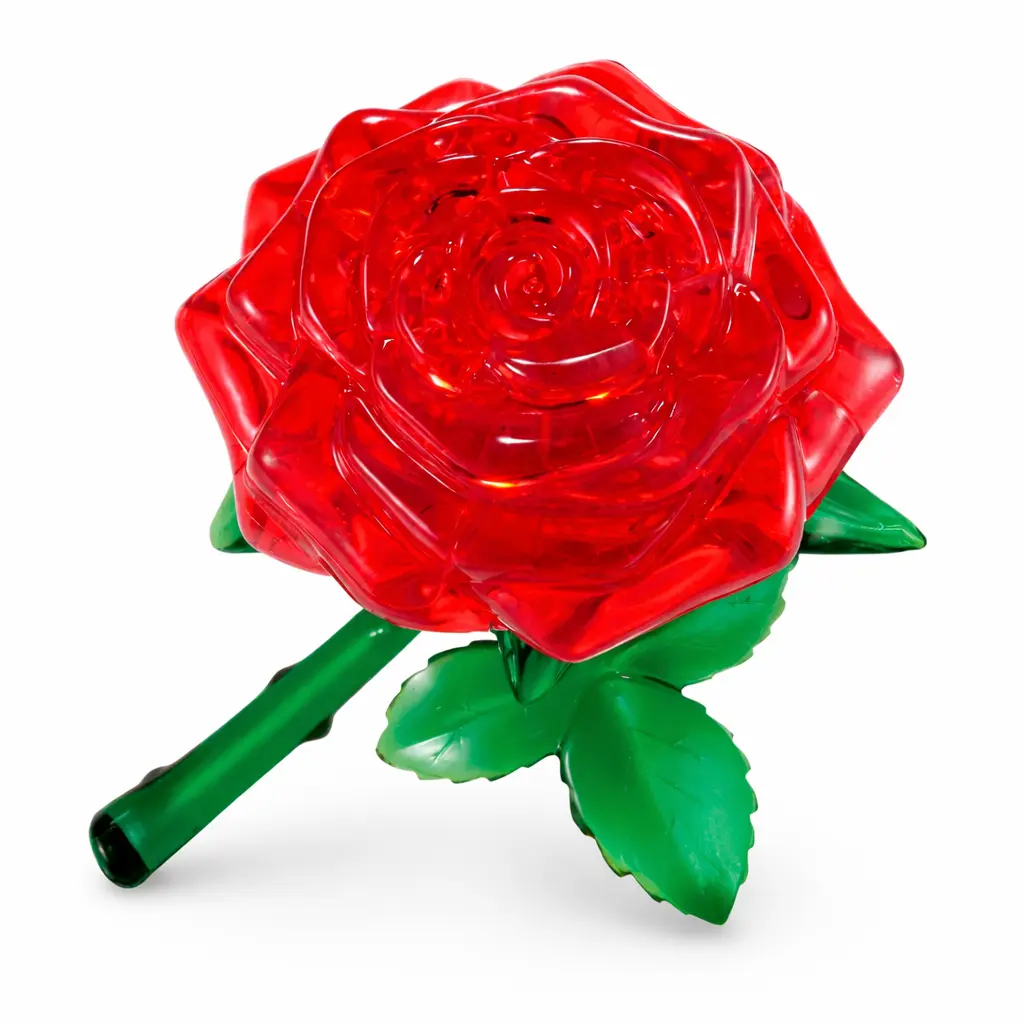
No, the 3D Crystal Rose Puzzle ($19.99) is made of translucent plastic. I include it here because it’s a great “palate cleanser” for those who find metal too cold. It’s an assembly puzzle (44 pieces) rather than a disentanglement one. It’s less about logic and more about patience and following a build-path. It’s a beautiful gift, but purists should stick to the cast alloys.
Why do some puzzles have keychains?
Portability is a huge factor in the hobby. Having a Brass Cube Maze Puzzle Keychain ($16.99) means you always have a mental reset tool on hand. It turns “dead time” (waiting for the bus, sitting in a waiting room) into “growth time.” Plus, it’s a great conversation starter.
What is the “Hanayama” style?
You’ll often hear collectors refer to “Hanayama.” This is a Japanese brand that popularized the “Cast” metal puzzle. While not every puzzle is a Hanayama, many modern designs—like the Metal Orbit Ring Cast Puzzle ($14.99)—follow their philosophy: beautiful objects that are also incredibly difficult to solve.
Can I solve these while watching TV?
I actually recommend it. Solving a puzzle like the Interlocking Metal Disk Puzzle ($14.99) while your “main brain” is busy with a show allows your “subconscious brain” to take over the tactile work. This is often when the breakthrough happens. You’ll be half-watching a movie and suddenly feel the pieces slide apart. It’s a wonderful feeling.
How do I clean my metal puzzles?
A simple microfiber cloth is all you need. If a puzzle gets particularly dirty, you can use a damp cloth with a tiny bit of mild soap, but dry it immediately. Brass puzzles can be polished with a specialized brass cleaner if you want them to stay shiny, but most collectors prefer the natural patina that comes with use.
What 40 Hours of Brass and Frustration Actually Taught Me
After years of doing this, I’ve realized that the “solve” is a fleeting high. The real joy is in the frustration. When you are stuck, you are actually learning. You are training your brain to handle ambiguity. You are learning that “force” is rarely the answer to complex problems.
If you want to start this journey, don’t buy a dozen puzzles at once. Buy one. Start with the Cast Coil Pocket Puzzle ($18.99). It’s heavy, it’s beautiful, and it will teach you more about patience in an afternoon than any self-help book. It’s a small investment in your own mental resilience.
Once you’ve mastered the coils and the rings, you might find yourself looking for how wood differs from metal in tactile response or moving into the world of sequential discovery. But for now, just pick up a piece of cold metal and let your fingers find the path. The solution is already there; you just have to stop trying so hard to find it.
The best puzzles don’t just challenge your mind; they change the way you look at the world, one stubborn metal ring at a time.