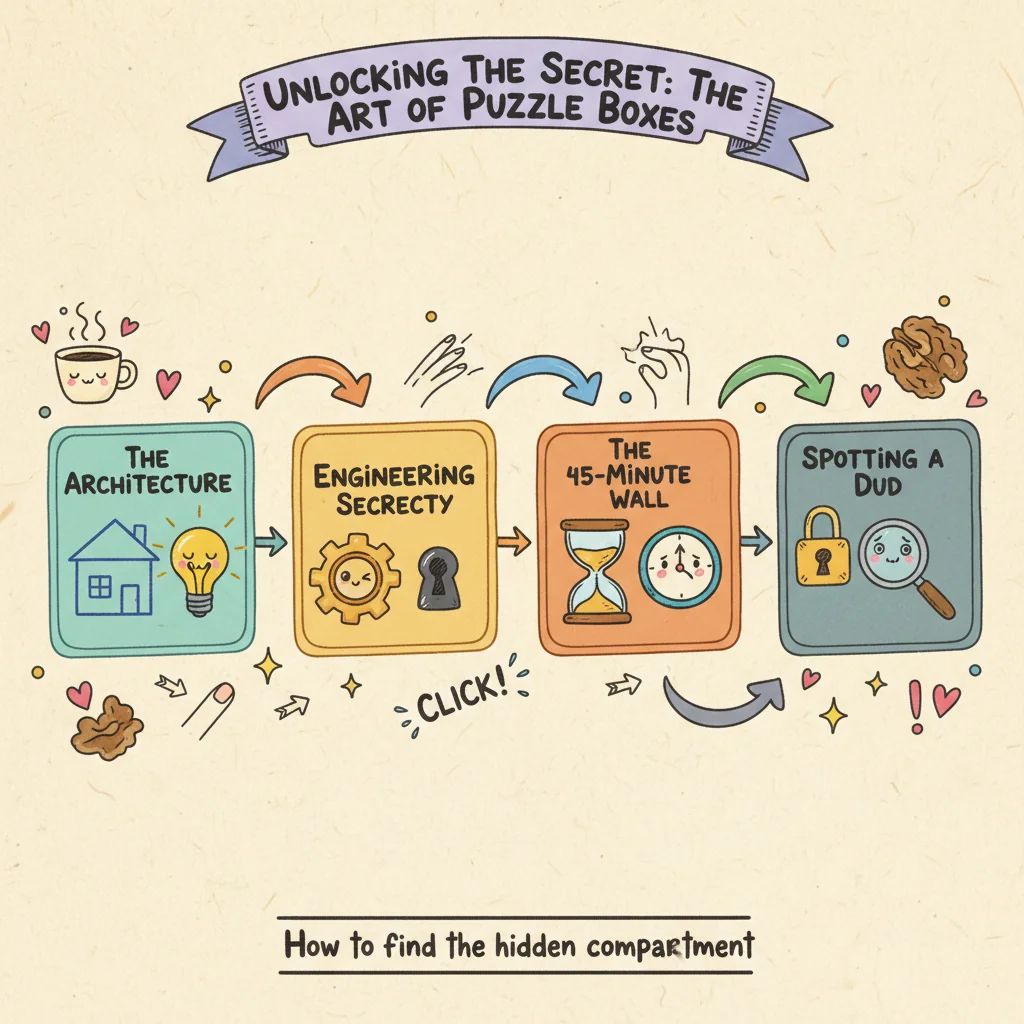
The third time the brass pin slipped past my thumb, I set the box down and made coffee. It was 2 AM, and I was losing a battle of wits against a cube of walnut that didn’t even have a battery. My fingernails were sore from searching for a seam that didn’t exist, and my ego was bruised. But that is the fundamental contract of a puzzle box with a hidden compartment: it doesn’t owe you its contents. You have to prove you’re observant enough to deserve them.
I have spent the better part of a decade reviewing mechanical curiosities, from $500 Japanese masterworks to the latest laser-cut kits. What I’ve learned is that the best puzzle boxes aren’t just storage; they are mechanical filters that reward observation over brute force. If you try to bully a well-made box, it will simply lock tighter. If you listen to it—literally and figuratively—it will eventually yield with a click that is more satisfying than any digital notification.
In this deep dive, I want to move past the marketing fluff. We’re going to look at the engineering of secrecy, why your brain craves the “aha” moment of a sliding panel, and which specific boxes are worth the space on your desk in 2026.
The Architecture of the “Aha” Moment
We live in an era of instant access. If you want to know something, you search for it. If you want to open something, you press a button. A puzzle box with a hidden compartment is a deliberate middle finger to that culture of immediacy. It forces a “slow-down.”
Most people assume these boxes are just about finding a hidden key. In reality, the best ones utilize what we call “sequential discovery.” This means the first move doesn’t open the box; it gives you the tool or the insight needed for the second move. It’s a narrative told through wood and metal. This is why many hobbyists find themselves exploring different difficulty tiers to see how designers can hide things in plain sight.
The psychology here is fascinating. There is a specific dopamine release that occurs when a physical object behaves in a way that contradicts your eyes. You see a solid side panel; your fingers find it slides two millimeters to the left. That tiny movement is the “hook.” It’s the same feeling you get when you finally spot a pattern in a matching game—a sudden alignment of chaos into order.
The Engineering of Secrecy: Wood vs. Metal
When you’re looking for a puzzle box with a hidden compartment, the material choice isn’t just aesthetic—it dictates the “feel” of the solve.
Wooden Puzzles: The Art of the Friction Fit
Wood is the traditionalist’s choice. Because wood breathes and expands, the tolerances in a high-end wooden box are a feat of engineering. If a seam is too tight, the box won’t open in humid weather. If it’s too loose, the secret is revealed by a simple shake.
The mechanical puzzle tradition in wood often relies on the “void.” You aren’t just looking for a button; you’re looking for where the wood isn’t. This is beautifully demonstrated in the Six-Piece Burr, priced at $17.99.
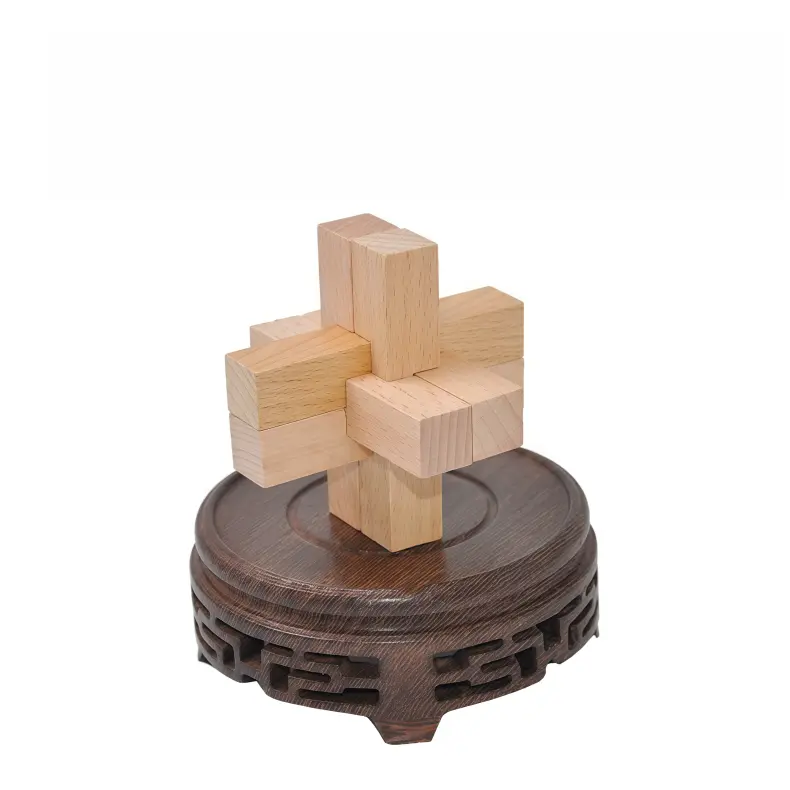
Six-Piece Burr — $17.99
The Six-Piece Burr is a masterclass in what I call “interlocking logic.” At $17.99, it’s a budget-friendly way to understand how six pieces of wood can create a structure that feels like a solid brick. There’s no hidden compartment here in the traditional sense, but the “secret” is the order of operations. If you don’t find the “key” piece—the one that has just enough wiggle room to slide out—the whole thing remains an impenetrable knot. I’ve seen people try to pull these apart for thirty minutes, only to realize that a gentle push on the right axis solves the whole riddle. It’s a humbling reminder that force is the enemy of understanding.
Metal Puzzles: Precision and Weight
Metal puzzles, often called “cast” puzzles, offer a different sensation. They are cold, heavy, and unforgiving. While they rarely have “compartments” for jewelry, the internal mechanisms are often more complex, involving magnets, ball bearings, or gravity pins. They feel like industrial secrets.
Why Your First Solve Will Probably Be an Accident
If you’re new to this, don’t be discouraged if your first “win” feels like a fluke. I’ve had moments where I was fidgeting with a box while watching a movie, and suddenly—thunk—a drawer popped out. I didn’t “solve” it; I stumbled into the solution.
True mastery comes when you can close the box and do it again, intentionally. This is the difference between a toy and a tool for mental discipline. When you’re teaching younger family members about logical sequences, this accidental discovery is often the spark that leads to a lifelong obsession.
The Spotlight: Boxes That Actually Hold Something
If you’re specifically looking for a puzzle box with a hidden compartment to use as a gift vessel or a desk stash, you need to look at mechanical kits. These are particularly popular right now because they combine the joy of the solve with the pride of the build.
3D Wooden Puzzle Safe with Combination Lock
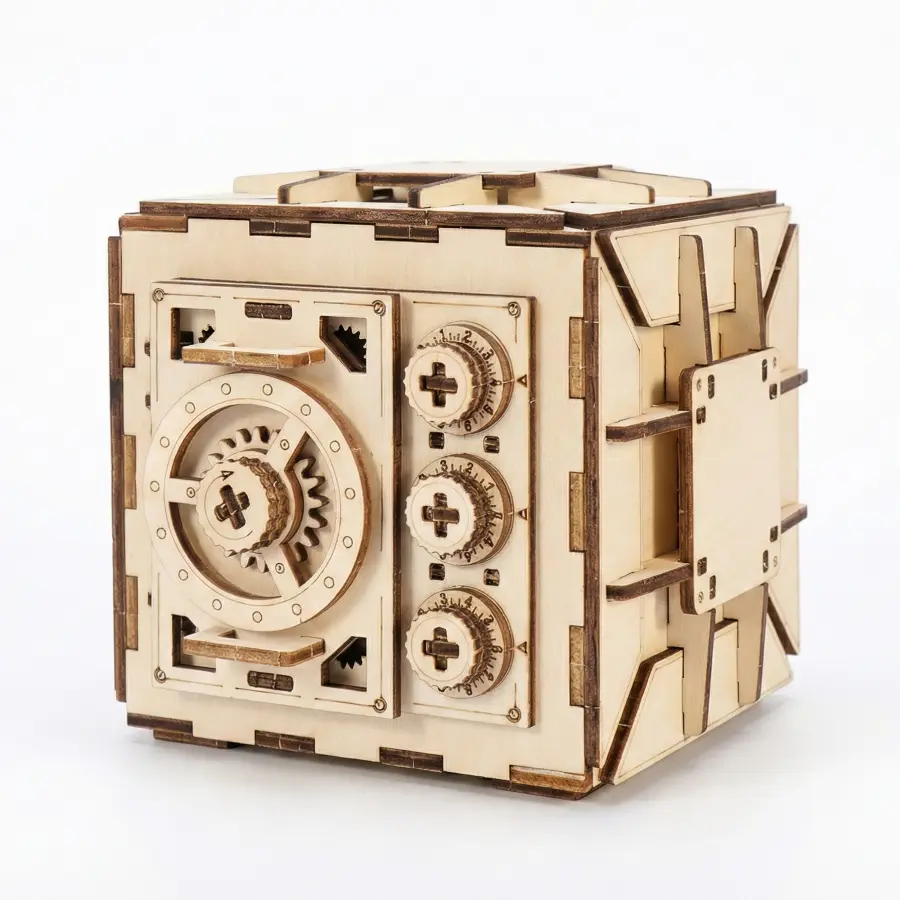
At $30.99, the 3D Wooden Puzzle Safe with Combination Lock is one of the most honest products on the market. It doesn’t hide the fact that it’s a machine. You can see the gears through the laser-cut plywood. I spent about two hours putting this together, and I’ll be honest: if you aren’t patient with the sandpaper (which is included), the 3-digit combination lock will be finicky. But once it’s dialed in, the mechanical feedback of the tumblers dropping is incredibly satisfying. It’s not just a box; it’s a functional piece of engineering that you built. I use mine to store spare keys, and there’s a certain smugness in knowing that anyone who wants them has to either know my code or spend twenty minutes trying to “crack” a wooden safe.
3D Wooden Puzzle Treasure Box
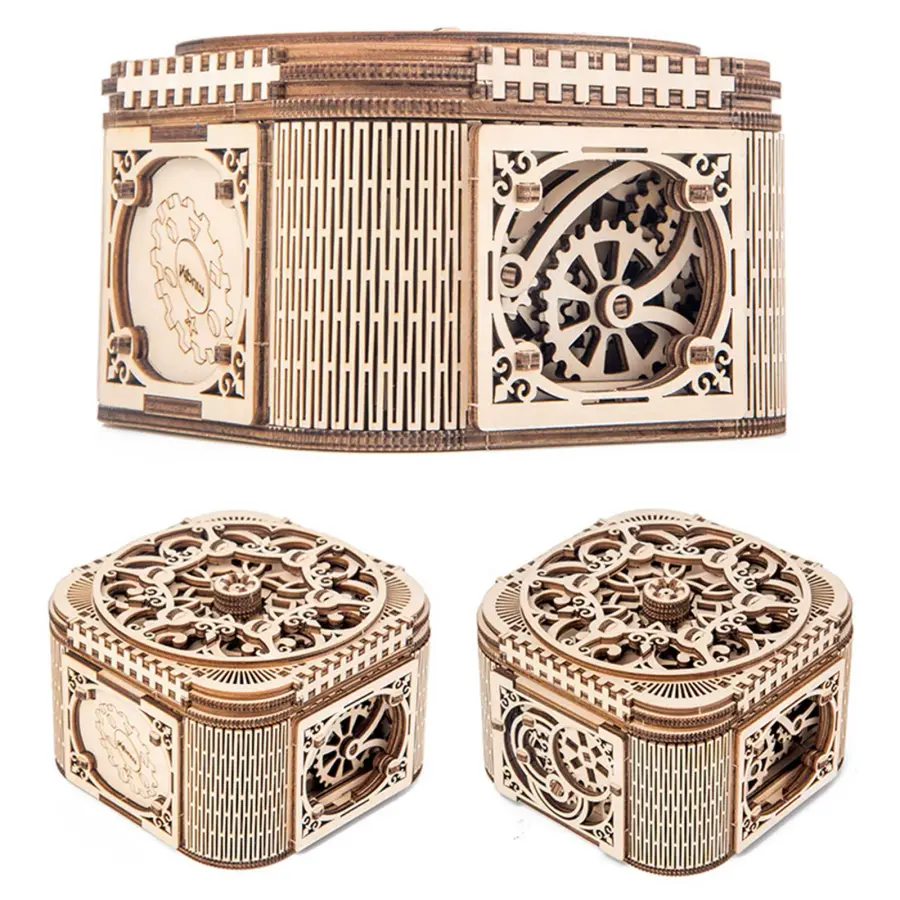
If the Safe is about “security,” the 3D Wooden Puzzle Treasure Box is about “elegance.” Priced at $29.99, this is the one I recommend for gifting. It features a visible gear system on the lid that moves as you turn the key. I’ve given this to three different people, and the reaction is always the same: they spend more time watching the gears move than looking at what’s inside. It requires about 150 pieces to assemble, which sounds daunting, but the instructions are surprisingly clear. The “hidden” aspect here is the key itself—it’s integrated into the design, meaning the box is its own guardian. It’s a great example of how modern laser-cutting technology has revived a centuries-old craft.
The Philosophy of the “Blockade”
Sometimes, a hidden compartment isn’t a drawer; it’s a state of being. Ancient Chinese puzzles often focused on the idea of “The Blockade.” The goal isn’t just to open something, but to navigate a path that seems closed.
Take the Blockade Puzzle, which sits at a very accessible $16.99. This isn’t a box you’d put a diamond ring in, but it’s a “mental box.” You are trapped by the geometry. To solve it, you have to embrace the Taoist principle of “gaining through letting go.” You often have to move a piece away from the exit to eventually clear the path. It’s a perfect desk toy for when you’re stuck on a work project and need to reset your spatial reasoning for a few minutes.
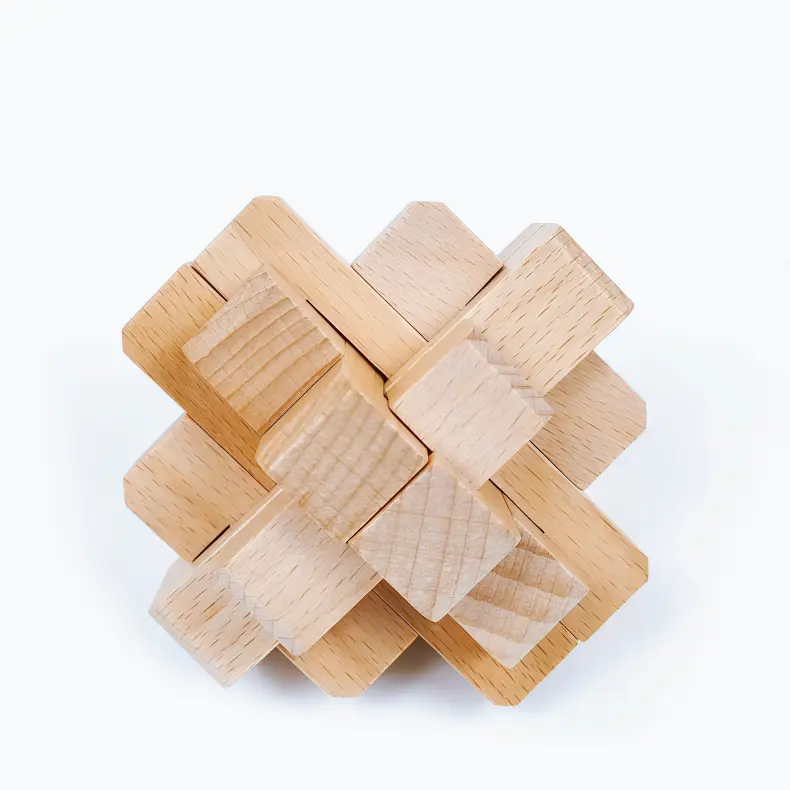
Blockade Puzzle — $16.99
The Peak: The 45-Minute Wall
After testing over 200 puzzles, I’ve noticed a phenomenon I call the “45-Minute Wall.”
Here is what usually happens:
1. 0-5 Minutes: Pure excitement. You’re shaking the box, sliding everything that moves, feeling for magnets.
2. 5-20 Minutes: Systematic exploration. You start to realize there’s a pattern. You find the first “click.”
3. 20-45 Minutes: The Frustration Zone. You’ve found the first two moves, but the third is invisible. This is where most people quit. They assume the box is broken or “too hard.”
4. The Peak Moment: You stop trying to force the solution. You take a breath, look at the seams again, and notice a tiny notch you missed ten times before. You apply a light pressure, and the hidden compartment slides open with a whisper.
I once watched a mechanical engineer friend of mine spend an hour on a “Level 3” box. He was trying to calculate the internal volume to figure out where the cavity was. My 10-year-old nephew walked up, noticed a piece of the trim looked slightly darker than the rest, pushed it, and the box popped open. The engineer was looking for math; the kid was looking for anomalies.
The best puzzle boxes punish the overthinker and reward the observer. This is why they are such effective tools for keeping the mind sharp as we age.
The “Invisible” Puzzles: When the Box Isn’t a Box
Sometimes the keyword “puzzle box with hidden compartment” leads people to things that don’t look like boxes at all. In the hobby, we call these “trick locks” or “interlocking solids.”
The Jiutong Lock ($16.99) is a prime example. It looks like a skeletal frame, but it functions exactly like a high-end secret box. It has eight unique pieces and one “master key” piece. If you don’t find that master key, the whole thing is as solid as a rock. It’s an “open” hidden compartment—the secret is right in front of you, but your brain refuses to see it because it’s looking for a lid.
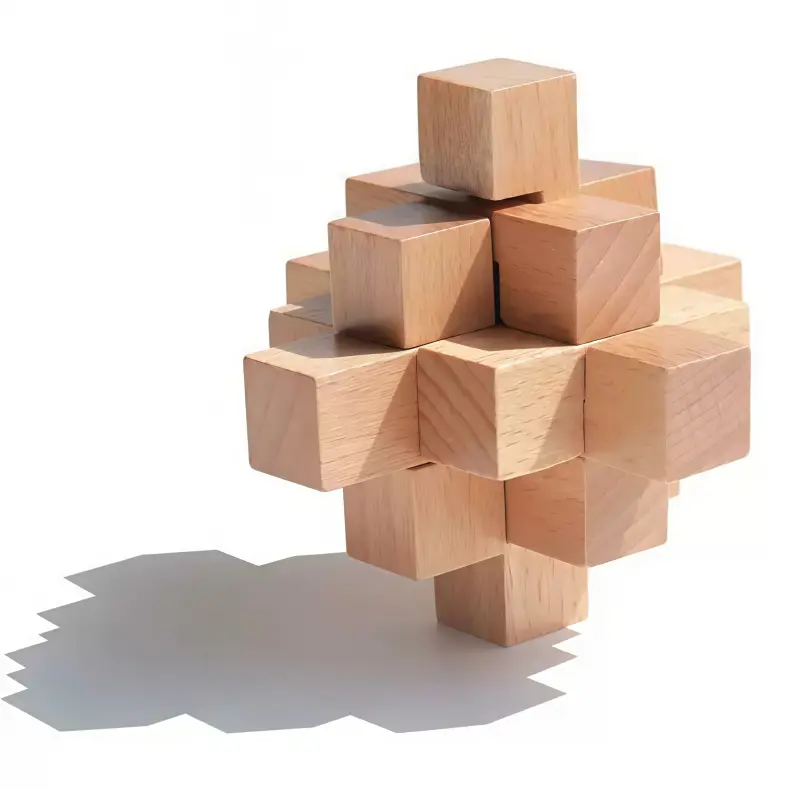
Jiutong Lock — $16.99
Similarly, the Besieged City ($16.99) uses an ancient mechanism that challenged Emperor Taizong.
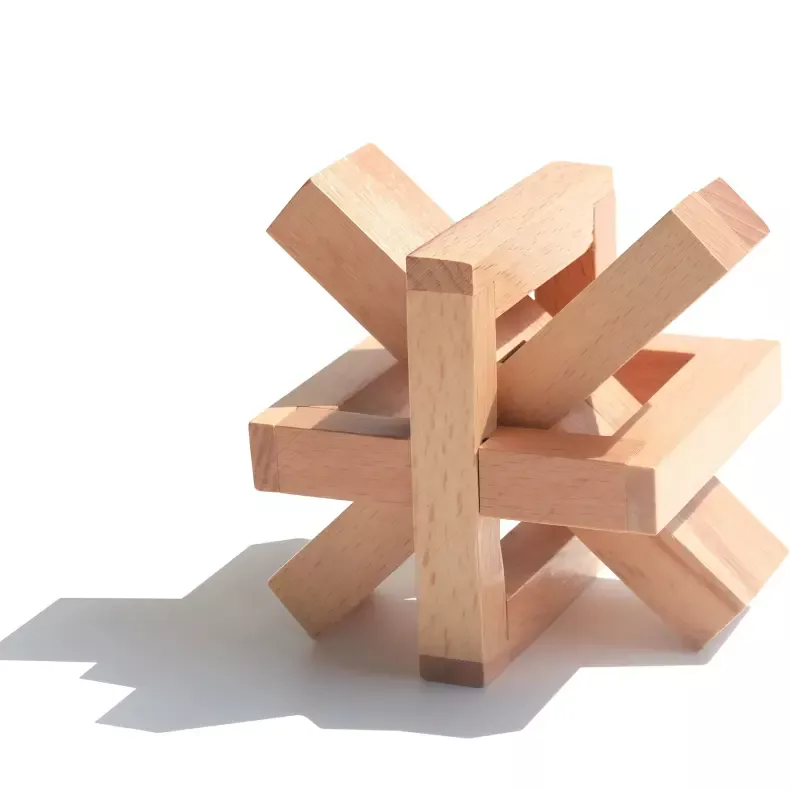
Besieged City — $16.99
The Besieged City is one of those puzzles that feels like it has a soul. It’s based on the idea that “great fullness appears empty.” At just under seventeen dollars, it’s a tactile meditation. You’re trying to navigate a “city” of wooden blocks, and the solution requires a level of patience that most modern games simply don’t ask for. It’s the perfect companion for someone who enjoys deep-dive logic challenges.
How to Spot a “Dud” (A Skeptic’s Guide)
Not all puzzle boxes are created equal. Since I’m writing for people who value their money, here is my “red flag” list for puzzle boxes:
- The “Shaker” Test: If you pick up a box and it sounds like a bag of loose nails, the tolerances are poor. A good hidden compartment should be silent until it’s activated.
- The “Force” Requirement: If the instructions say “apply significant pressure,” throw them away. No well-designed puzzle box requires you to strain your fingers. If it’s not moving, you haven’t found the trick yet.
- The “Glue-Heavy” Kit: If you’re buying a DIY kit like the 3D Wooden Puzzle Safe, it should ideally be “no glue required.” Glue is a “cheat” for poor engineering. Precision-cut plywood should snap together like a dream.
Speaking of kits, if you find that you enjoy the assembly process more than the solve, you might want to pivot toward something like the Electric Wooden Marble Run Kit ($51.99).
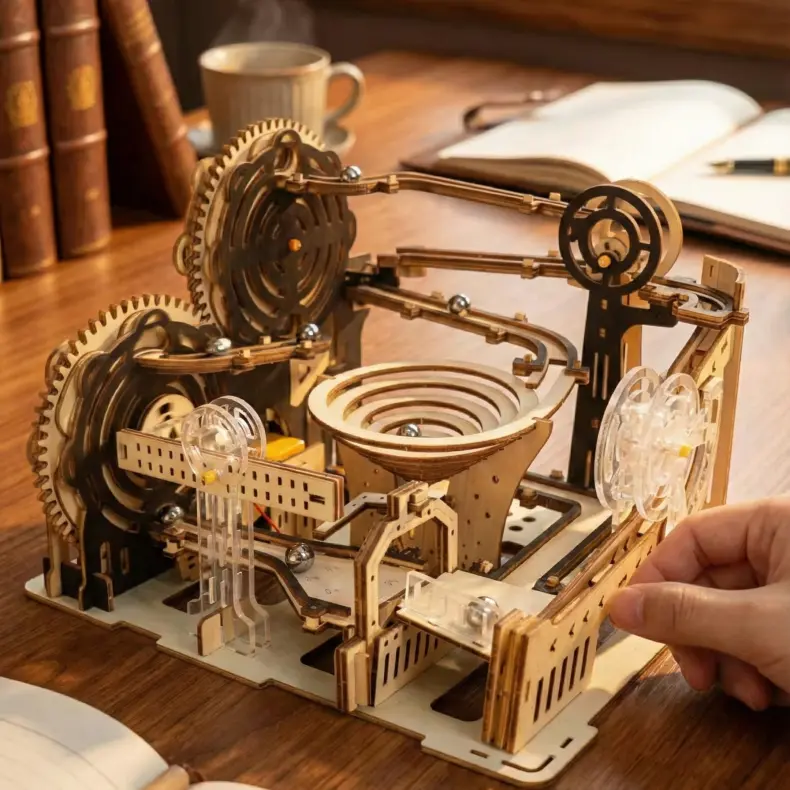
The Electric Wooden Marble Run Kit isn’t a puzzle box, but it uses the same “mechanical curiosity” muscles. At $51.99, it’s a more significant investment, but it’s essentially a perpetual motion machine for your desk. I’ve found that people who love the 3D Wooden Puzzle Safe usually end up buying a marble run within six months. It’s the natural progression of the hobby.
Quick-Reference Comparison Table
FAQ: Everything You Wanted to Ask (But Were Too Frustrated to Type)
How do I open a puzzle box if I’m completely stuck?
First, stop pulling. Most modern puzzle boxes with hidden compartments rely on gravity or sliding motions. Try holding the box in different orientations—upside down, on its side—and gently tapping it. Sometimes a internal pin is stuck due to friction, and a light “centrifugal” flick can dislodge it. If you’re really desperate, search for the specific model name followed by “solution,” but I promise you, the regret of spoiling it is worse than the frustration of being stuck.
Are these boxes actually secure for valuables?
Let’s be real: they are made of wood. Anyone with a hammer or a screwdriver can “solve” any wooden box in three seconds. These are for privacy, not security. They keep curious roommates or children away from your small treasures. If you want true security, buy a steel safe. If you want a conversation piece that hides your emergency $100 bill, a 3D Wooden Puzzle Safe ($30.99) is perfect.
What age is appropriate for these?
Most of the kits I review, like the 3D Wooden Puzzle Treasure Box ($29.99), are rated for ages 14 and up. This isn’t because they are dangerous, but because they require fine motor skills and patience. A 10-year-old can certainly solve them, but they might struggle with the assembly. For younger kids, I recommend starting with simpler interlocking wooden brain teasers to build their confidence.
My box is “crunchy” when I move the pieces. Is it broken?
If it’s a wooden kit, you probably skipped the waxing step. Most kits include a small piece of paraffin wax. You should rub this on any moving gears or sliding surfaces during assembly. If the box is already built, you can sometimes puff a little graphite powder (the stuff for door locks) into the seams to smooth things out.
Why are some Japanese puzzle boxes so expensive?
Traditional Himitsubako (secret boxes) are handmade using Yosegi-zaiku, a type of wood mosaic. The price reflects the artisan’s hours and the complexity of the “steps” (some require 72+ moves to open). For most casual hobbyists, the laser-cut versions like the Besieged City ($16.99) provide a similar mechanical thrill without the three-figure price tag.
Can I put a gift card inside a puzzle box?
Yes, but check the internal dimensions! A standard gift card is about 3.3 inches by 2.1 inches. The 3D Wooden Puzzle Safe fits them easily, but some of the smaller “trick boxes” are designed only for rings or folded cash. Always look for the “compartment size” in the specs before buying for a gift.
Are there “unsolvable” boxes?
No, but there are “sequential discovery” boxes that require you to find a hidden tool inside the box to open the next stage. If you find a small metal pin or a magnet, don’t set it aside—it’s likely the “key” to the hidden compartment. This is a common feature in more advanced trick boxes.
How do I maintain my wooden puzzles?
Keep them out of direct sunlight and away from the humidifier. Wood is a living material; it warps. If a piece gets too tight, I usually put the puzzle in a dry room for a few days to let the wood shrink slightly.
What is the most common mechanism used?
The “Sliding Panel” is king. Almost every puzzle box with a hidden compartment starts with a panel that looks like part of the frame but slides just enough to reveal a button or a keyhole.
Is it better to buy a pre-built box or a kit?
If you want a beautiful object for your shelf, buy pre-built. If you want to understand why the box works, build a kit. Building the Double Cross Cage Puzzle ($18.88), for instance, teaches you more about geometric harmony than just solving it ever could.
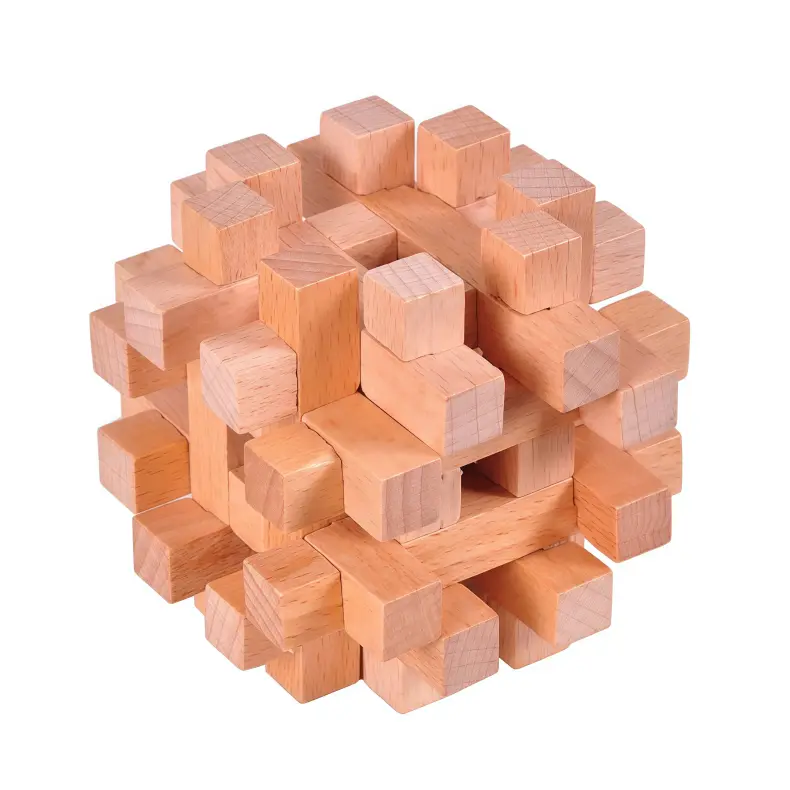
Double Cross Cage Puzzle — $18.88
The Double Cross Cage Puzzle ($18.88) is actually a great “entry drug” for the hobby. It’s 24 identical pieces that create an incredibly strong structure. It’s a tactile meditation on how individual parts contribute to a whole—a philosophy that applies to every mechanical puzzle ever made.
Why do some puzzles have Taoist or philosophical names?
Many of these designs originate from ancient Chinese and Japanese traditions where puzzle-solving was seen as a form of mental cultivation. The Wood Knot Puzzle ($16.99), for example, is often used to teach the idea that “great form has no shape.”
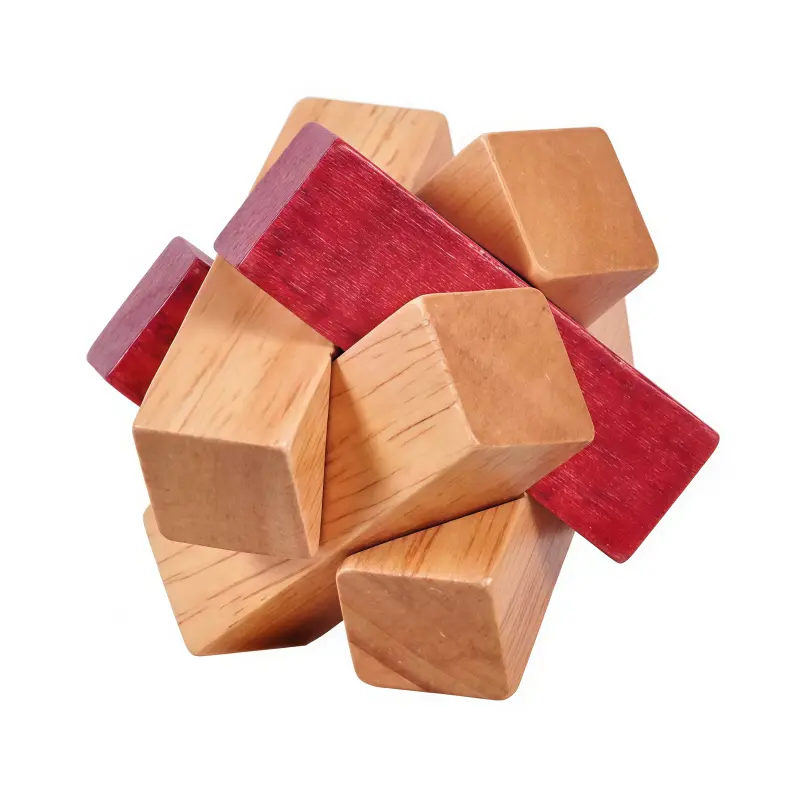
Wood Knot Puzzle — $16.99
The Wood Knot Puzzle is a classic six-piece interlocking challenge. At just under seventeen dollars, it’s the kind of thing you leave on a coffee table. It’s not a box, but it’s a “secret” in its own right. I’ve seen people take it apart in seconds and then spend two days trying to put it back together. It’s a reminder that destruction is easy, but creation requires a foundation.
Can I design my own puzzle box?
Absolutely. Many people start by modifying existing designs or using laser-cutting services to create their own “hidden latch” boxes. It’s a rabbit hole that combines woodworking, engineering, and a bit of deviousness.
The One Puzzle That Teaches You How All the Others Work
If you’ve read this far, you’re likely looking for a place to start. If I had to pick one object that embodies the soul of the “hidden compartment” without the $50 price tag, it’s the The Mystic Orb Lock.
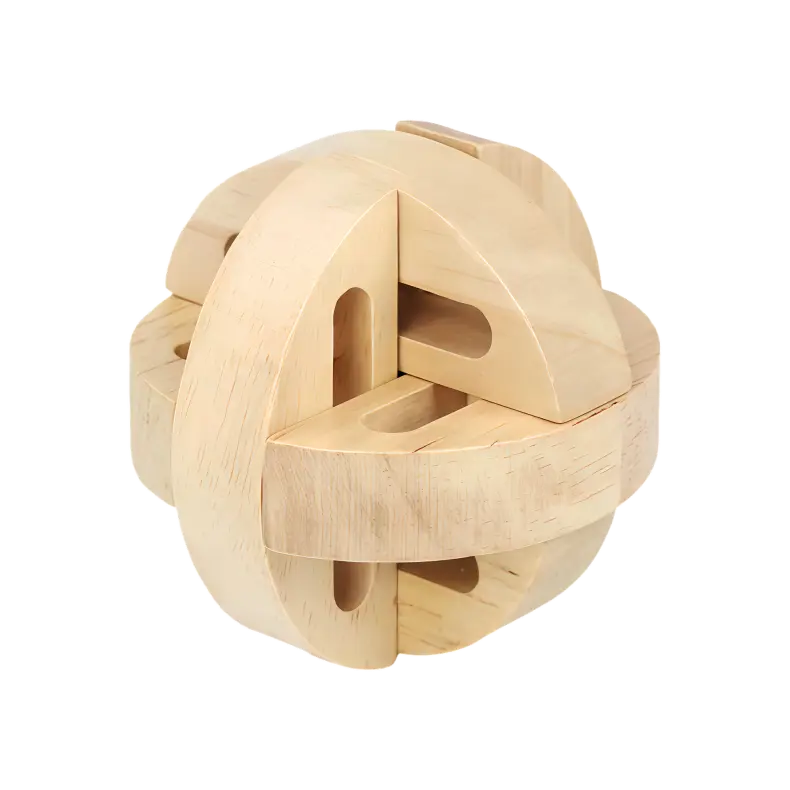
The Mystic Orb Lock — $16.99
Priced at $16.99, The Mystic Orb Lock is a beautiful, spherical challenge. It consists of six semi-circular pieces that lock together. The “hidden compartment” is the center of the orb, but to get there, you have to find the “place where death cannot enter”—the one specific gap that allows the first piece to slide. It’s smooth, it’s tactile, and it’s the perfect introduction to the “yield to succeed” mindset.
Looking back at that 2 AM coffee I made, I realize I wasn’t actually mad at the box. I was mad that I was trying to outsmart it with speed. I went back to the table, sat down, and instead of pulling, I just… tilted it. I heard a small brass pin slide. The box opened.
That’s the takeaway: the secret isn’t in the wood or the metal. The secret is in your ability to stop, look, and listen. If you’re ready to start your own collection, I’d suggest beginning with the 3D Wooden Puzzle Treasure Box ($29.99). It’s the perfect balance of assembly and mystery, and it’ll teach you more about patience than any self-help book ever could.
Once you’ve mastered the physical boxes, you might find that your brain is still hungry for patterns—that’s when you should try your hand at digital logic puzzles to keep those gears turning. Just remember: if it’s not moving, don’t pull harder. Look closer.