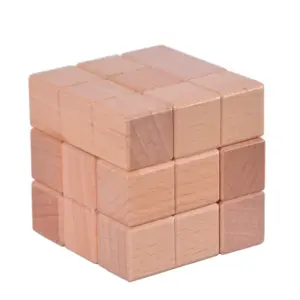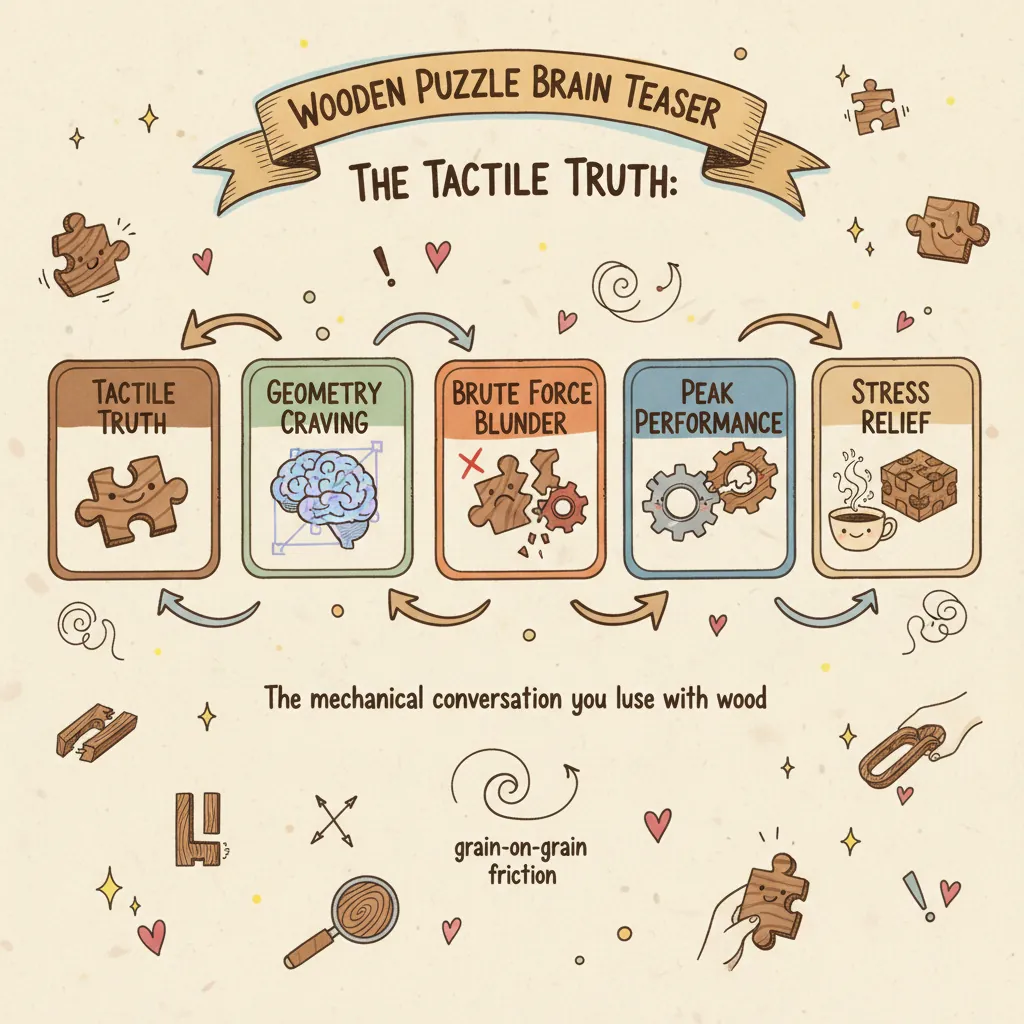
The third time the cedar-scented pin slipped past my thumb and rattled onto the floor, I didn’t swear. I just set the half-collapsed frame down and walked to the kitchen to make a fresh pot of coffee. That is the reality of living with a high-quality wooden puzzle brain teaser. It isn’t a toy you beat; it is a mechanical conversation you have with a piece of hardwood that has been dead for fifty years and is still smarter than you are.
My collection currently sits at 214 puzzles, and while the brass and steel ones look better on a bookshelf, the wooden ones are the ones I actually touch. There is a specific friction to wood—a grain-on-grain resistance—that tells you exactly when you are forcing a solution versus finding one. My thesis is simple: the best puzzles don’t hide their secrets behind complex locks; they hide them in plain sight, relying on your own impatience to keep you from seeing the path. If you try to “win,” you lose. If you try to understand the geometry, the wood eventually yields.
The Tactile Truth About Wooden Joinery
Most people assume a puzzle is just a jigsaw that went 3D, but the physics are entirely different. When you hold a mechanical puzzle, you are interacting with tolerances measured in fractions of a millimeter. In a wooden piece, these tolerances are affected by the humidity in your room, the oil on your skin, and the specific way the grain was cut.
I’ve spent hours analyzing how different woods behave under pressure. A walnut piece has a certain “thump” when it seats correctly, while maple is crisper, almost clinical. This tactile feedback is why I often steer people toward foundational wooden enigmas before they ever touch a metal one. Metal is binary—it either moves or it doesn’t. Wood whispers. It tells you if you’re close by the way the friction changes.
Why Your Brain Craves 3D Geometry
We spend most of our lives staring at 2D screens, which makes our spatial reasoning lazy. When you pick up a 6 Piece Wooden Puzzle Key, your brain has to reboot. You aren’t just looking for a “fit”; you are looking for a sequence. This is what the pros call sequential discovery, though in the world of burr puzzles, it’s more about the “internal dance” of the pieces.
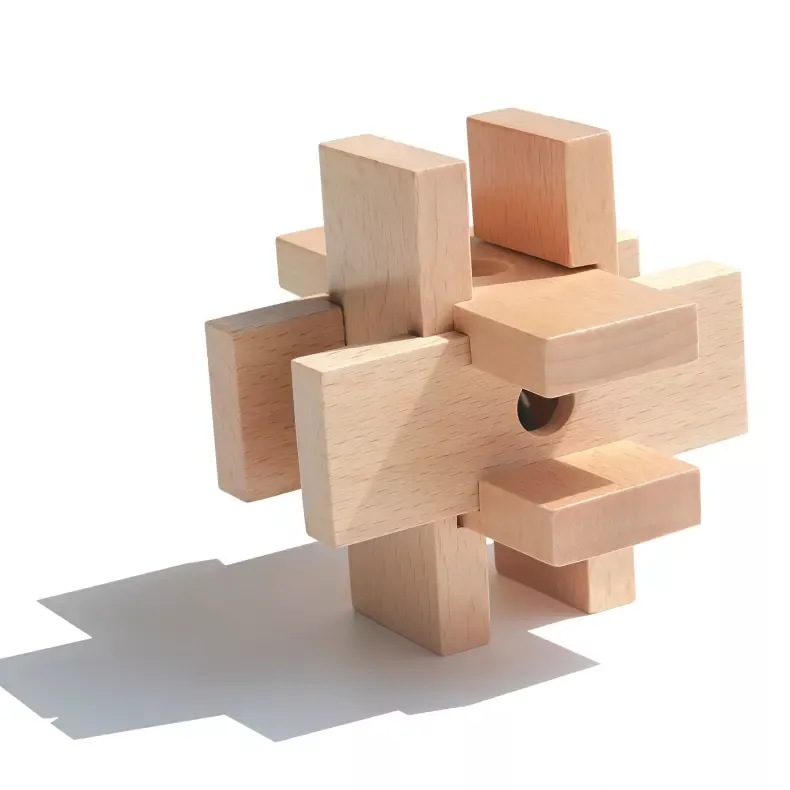
6 Piece Wooden Puzzle Key
The 6 Piece Wooden Puzzle Key is the quintessential “desk toy” that I’ve seen break the smartest people I know. At $12.99, it’s priced like a stocking stuffer, but the engineering is pure Wu Wei—the art of effortless action. It consists of six hardwood pieces that look identical at a glance but possess subtle, devious notches. The first time I solved this, it wasn’t because I “figured it out” through logic; it was because I stopped trying to pull it apart and let the pieces slide where they wanted to go. It’s a lesson in not forcing the universe to match your expectations. The finish is smooth enough that it won’t snag on a sweater, but it has enough tooth to provide that necessary feedback. If you’re looking for a gateway into the hobby that doesn’t require a degree in structural engineering, this is the $12.99 investment that will keep you quiet for an afternoon.
The “Aha!” Moment vs. The Brute Force Blunder
There is a specific type of person who tries to solve a wooden puzzle brain teaser by pulling as hard as they can. I call this the “gorilla approach.” In my ten years of reviewing, I have seen more puzzles ruined by brute force than by actual wear and tear.
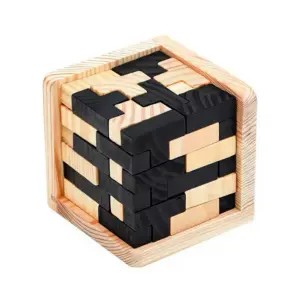
The Double Cross Cage Puzzle is the perfect antidote to this behavior. It uses 24 identical pieces, which is a psychological trap. You assume that because the pieces are the same, the solution must be repetitive. It isn’t. It requires a level of alignment that feels almost like safe-cracking.
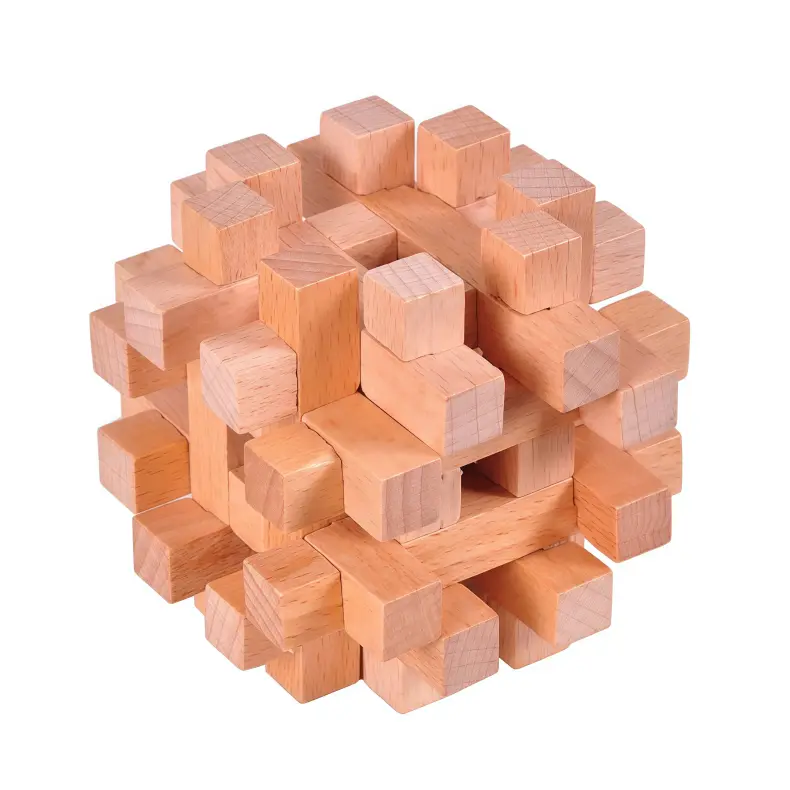
Double Cross Cage Puzzle
Priced at $18.88, the Double Cross Cage Puzzle is a masterclass in “Harmony Over Force.” This is the one I give to people who think they are “good at puzzles.” Watching a cocky engineer realize that 24 identical pieces can create an impossible-to-penetrate cage is one of my favorite hobbies. The build quality here is exceptional for under twenty dollars; the joints are tight enough that there’s zero wobble, but they don’t bind. It feels like a solid block of wood until you find the “softness”—that one specific alignment where the structure yields. It’s a tactile meditation on the idea that true strength comes from balance, not mass. My only gripe? Reassembling it is actually harder than taking it apart. If you lose your place in the sequence, you’re looking at an hour of trial and error to get that cage back together.
The Evolution of the Burr: From Ancient China to Your Desk
We can’t talk about these objects without acknowledging the “Kongming Lock” or “Luban Lock” tradition. These originated from ancient Chinese joinery—the same techniques used to build temples that stood for centuries without a single nail. When you solve a Kongming Ball Lock, you are essentially reverse-engineering a 2,000-year-old architectural secret.
I often find that people who get bored with traditional jigsaw puzzles find a second home in these interlocking spheres. There is something deeply satisfying about a sphere that shouldn’t exist, held together only by the pressure of its own components.
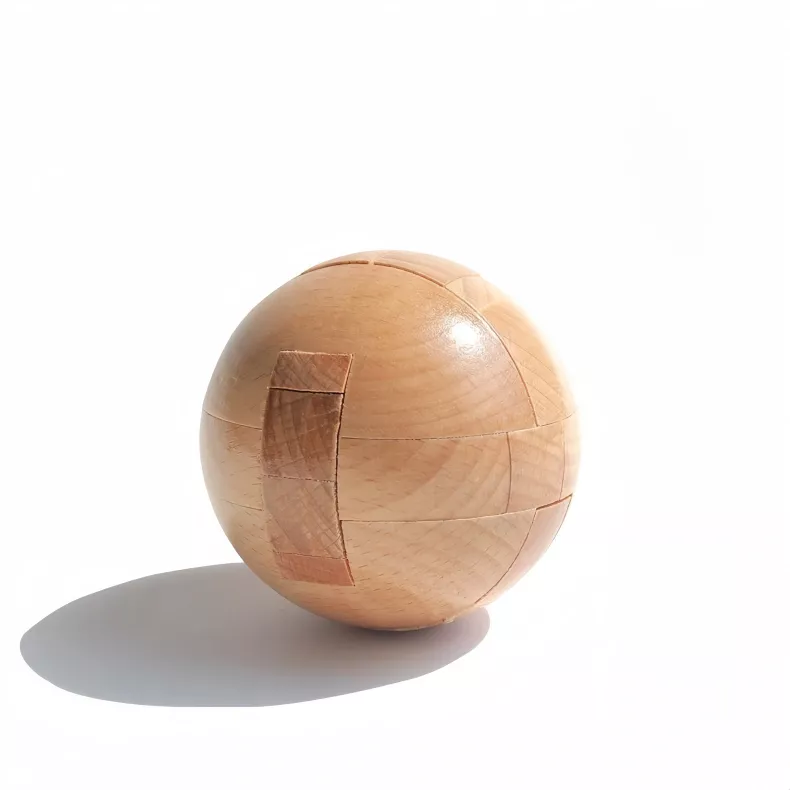
Kongming Ball Lock
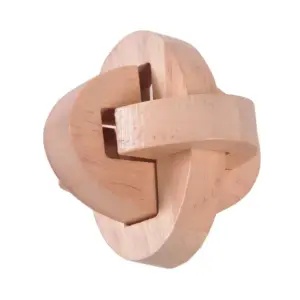
The Kongming Ball Lock ($20.99) is the most “giftable” item in this lineup. While the Landmine Lock Puzzle ($18.89) is all about sharp angles and hidden slides, the Ball Lock is about the elegance of the sphere. It’s made from premium maple or walnut, and you can feel the warmth of the wood as you rotate it in your palms. I’ve had this on my coffee table for three weeks, and every single guest has picked it up. It’s an “aha!” machine. The dopamine hit you get when the final piece slides into the core of the sphere is better than any notification on your phone. It’s a $20.99 reminder that spatial reasoning is a muscle, and most of us are letting it atrophy.
The Peak Moment: The Engineer vs. The Child
Last month, I conducted a small experiment. I handed the Ring Rescue ($14.99) to a mechanical engineer friend and then to my 11-year-old nephew.
The engineer spent fifteen minutes trying to calculate the rope’s length and the bead’s diameter, convinced there was a “trick” involving the elasticity of the cord. My nephew, however, just looked at it for thirty seconds, traced the path of the rope with his finger, and slid the ring off in one smooth motion.
This is the “Peak Moment” of the puzzle world: the realization that complexity is often a mask for a very simple, singular path. The Ring Rescue isn’t a test of math; it’s a test of attention. It’s about “getting the One,” as the Taoists say—finding that single thread that connects the beginning to the end. Most adults fail because they over-complicate the problem. We assume that because we are smart, the solution must be difficult. The wood proves us wrong every time.
Why Wood Beats Metal for Daily Stress Relief
I love my Hanayama metal puzzles, but they have a “coldness” to them. When you’re stressed at work, the last thing you want is a heavy piece of zinc clanking on your desk. Wooden puzzles are quiet. They are “warm.”
Something like the Wood Knot Puzzle ($16.99) functions more like a worry stone than a challenge. You can fiddle with it during a Zoom call without making a sound, slowly working the pieces until they click.
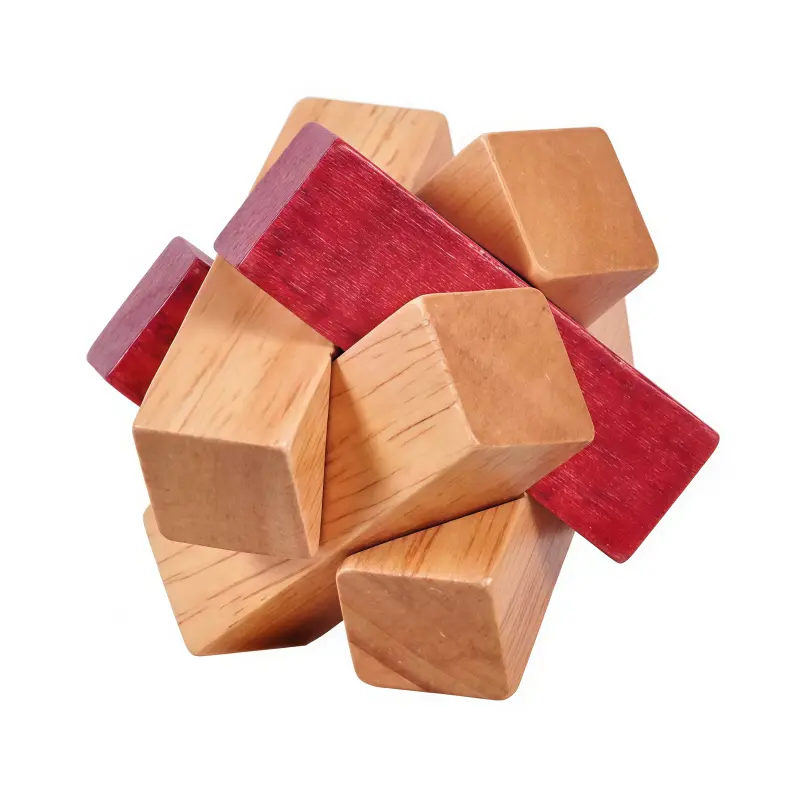
Wood Knot Puzzle
The Wood Knot Puzzle is a $16.99 philosophical exercise disguised as six pieces of wood. It’s based on the idea that “great sound is barely heard”—it doesn’t announce its solution with a snap; it just glides. I’ve carried this in my laptop bag for months. The hardwood is durable enough to take a beating, and the lack of glue or screws means there’s nothing to break. It’s pure geometric harmony. If you’re the type of person who needs to keep your hands busy to keep your mind focused, this is the one to get. It’s not the hardest puzzle in my collection, but it’s the most “mindful.”
The Psychological Trap of the “Lock”
There is a subset of these brain teasers known as complex interlocking mechanisms that behave like security devices. The Landmine Lock Puzzle is the king of this category. It doesn’t just challenge you to take it apart; it threatens to “lock up” if you make a wrong move.
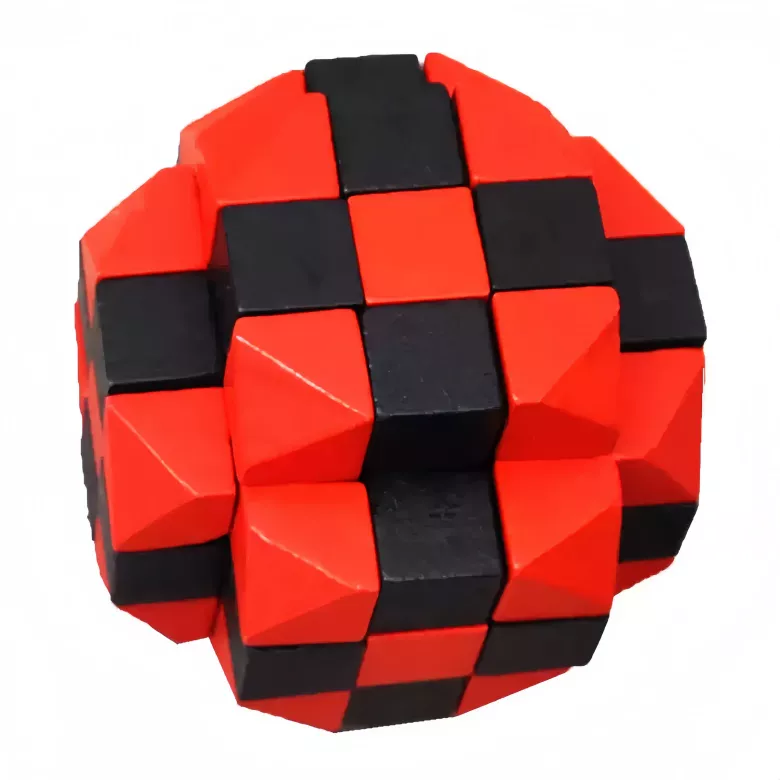
Landmine Lock Puzzle
The Landmine Lock Puzzle ($18.89) is probably the most frustratingly brilliant design I’ve tested this year. It uses precise mortise-and-tenon joints that fit together with zero tolerance. If you slide a piece the wrong way, the entire mechanism binds, much like disarming an actual mine. It’s a $18.89 lesson in precision. I’ve seen people get so angry with this thing that they almost threw it across the room, only to realize that the “lock” was caused by their own lack of alignment. It requires a steady hand and a quiet mind. If you have a short temper, stay away. If you want to train yourself to be more patient, buy two.
Comparing the Top Performers
If you’re trying to decide which of these to put on your desk, I’ve broken down the heavy hitters based on my personal testing time and the “frustration-to-reward” ratio.
Beyond the Spotlight: Other Notable Enigmas
While the spotlight products are my personal favorites, there are other variations that serve specific niches. For instance, if you want something with a romantic or poetic backstory, the
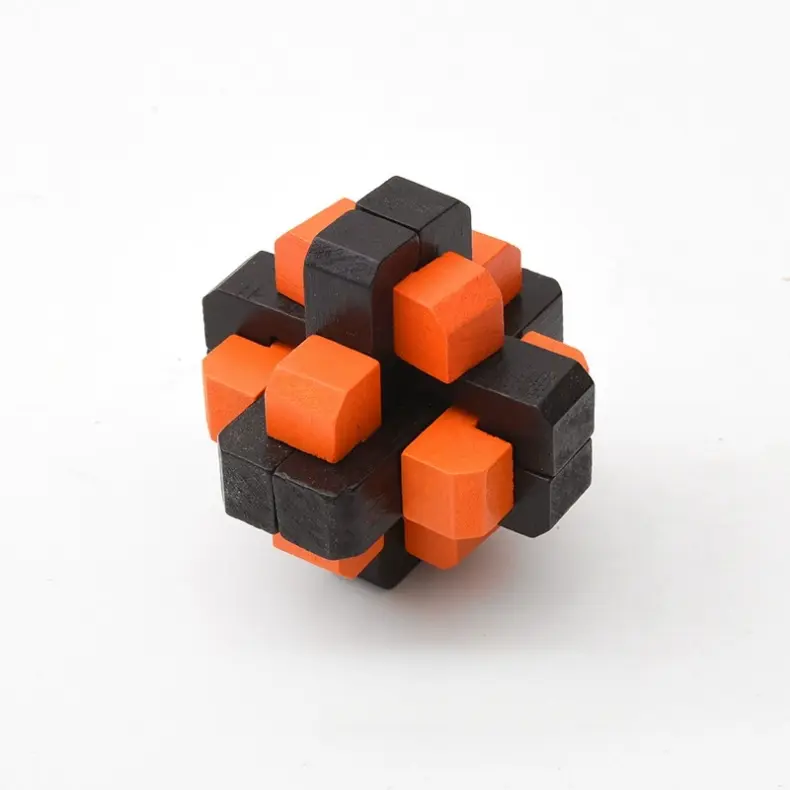
Looking Back — $16.99
Looking Back ($16.99) uses a mix of short and long sticks to tell a story of insight through a simple twist. It’s less “mechanical” and more “trick-based.”
If you’re a fan of traditional soccer or sports geometry, the
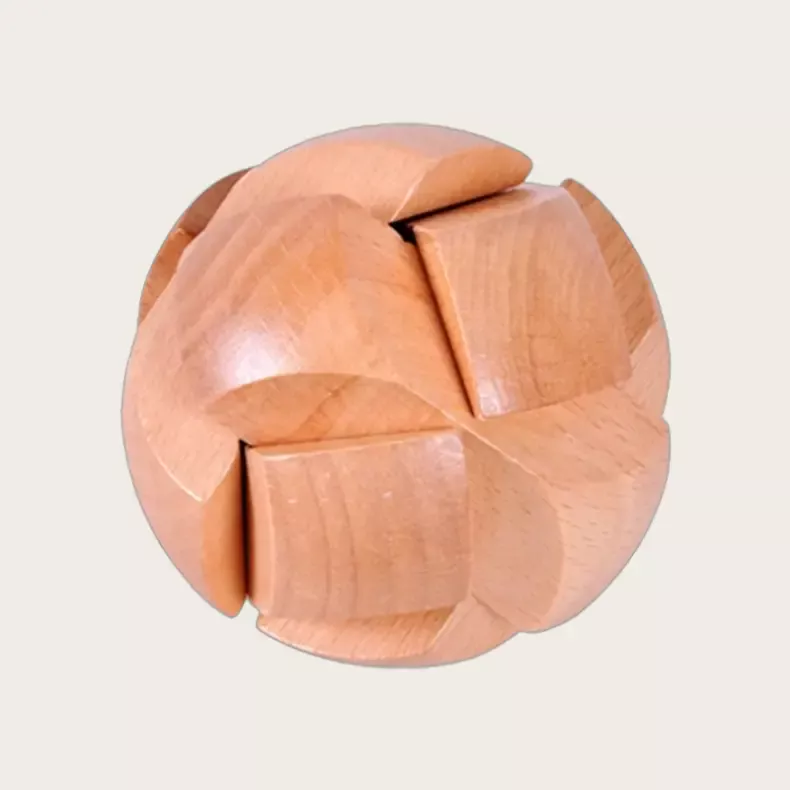
Mortise-and-Tenon Soccer Ball Puzzle ($16.89) is a fantastic study in how ancient Chinese joinery can recreate modern shapes. It’s a bit of a nightmare to reassemble, but it looks incredible on a shelf.
For those who want to hold history in their hands, the
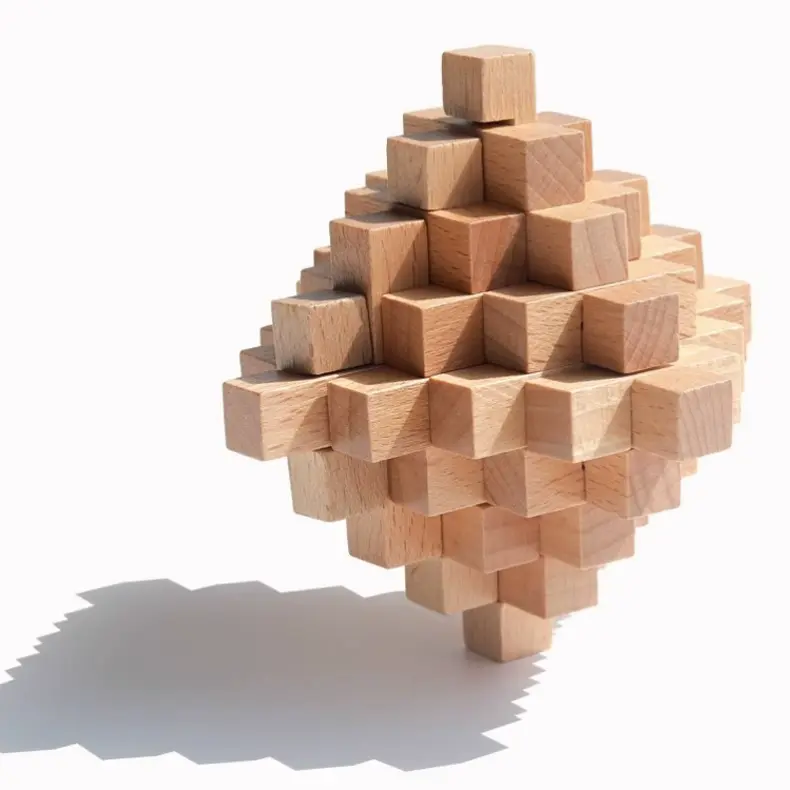
Big Pineapple Yellow Emperor Puzzle Lock ($17.99) is based on the “Heaven and Earth Mechanism” attributed to the Yellow Emperor. It feels substantial, like something you’d find in an archeological dig.
If you prefer pure simplicity, the
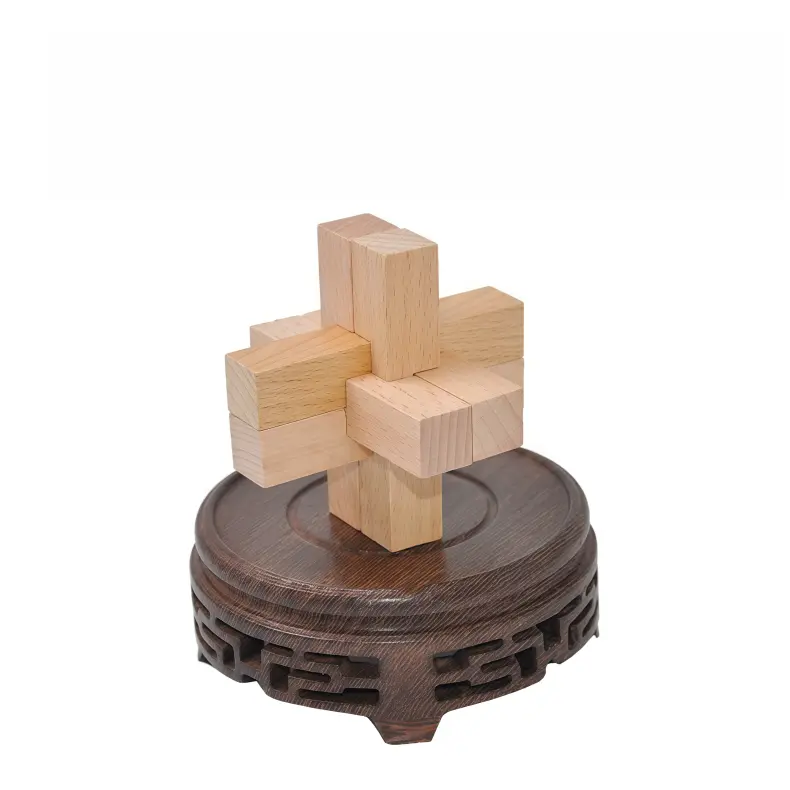
Six-Piece Burr — $17.99
Six-Piece Burr ($17.99) is the “standard” by which all others are measured. It’s the vanilla ice cream of puzzles—perfect in its basic form. And for a change of pace, the
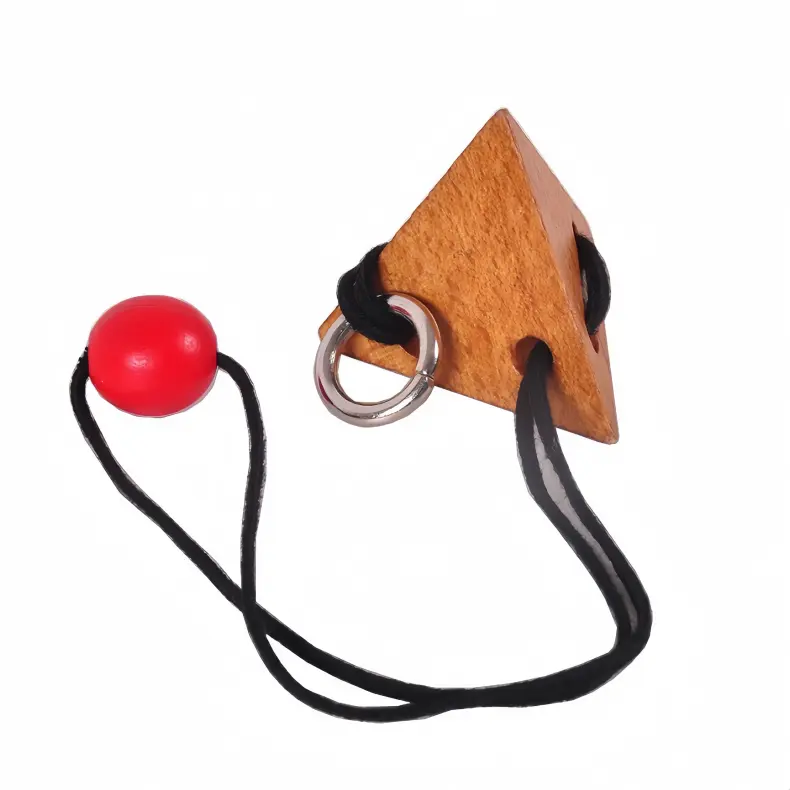
Ring Rescue — $14.99
Ring Rescue ($14.99) offers a rope-and-bead challenge that breaks up the monotony of wooden blocks.
Frequently Asked Questions
How do I solve a 3D wooden brain teaser without the instructions?
The first rule is to stop trying to “solve” it and start trying to “understand” it. Most wooden puzzles rely on one “key” piece that has more room to move than the others. Find that piece first. If you’re truly stuck, you can find 3D wooden brain teaser hints online, but I recommend against it. The satisfaction of a wooden puzzle is 90% the discovery and 10% the actual disassembly. If you cheat, you’re just paying $15 to move wood around.
Are wooden puzzles better than metal ones?
They aren’t better; they’re different. Metal puzzles (like the Hanayama series) are about precision and often involve internal mechanisms you can’t see. Wooden puzzles are about the material itself. Wood has a “soul”—it expands and contracts, it has grain, and it has a smell. If you want a clinical challenge, go metal. If you want a tactile, warm experience that feels like a piece of art, go wooden. I usually suggest people take a break from the wood with some simple side-scrolling games if their brain starts to overheat.
What is the history behind these puzzles?
Most of the interlocking designs we see today originated from the “Kongming Lock,” named after Zhuge Liang (Kongming), a legendary strategist from the Three Kingdoms period in China. They were used to teach military strategy and architectural joinery. You can read more about the general history of the mechanical puzzle on Wikipedia, but the gist is that these were the original STEM toys, designed to build spatial intelligence before “STEM” was a buzzword.
My puzzle is stuck. Should I use lubricant?
Never use WD-40 or oil on wood. It will soak into the grain, cause the wood to swell, and potentially ruin the finish. If a puzzle is sticking, it’s usually due to humidity. Try moving it to a drier room for 24 hours. If you must use a lubricant, a tiny bit of dry wax or a graphite pencil rubbed on the sticking point is the only safe bet. But usually, “stuck” just means you haven’t found the right path yet.
Are these suitable for kids?
Most are rated for ages 8 and up, but I’ve seen 6-year-olds solve them faster than 40-year-olds. The main concern is the small pieces, which can be a choking hazard. Beyond that, they are excellent for building fine motor skills and patience. If a child gets frustrated, I often suggest they switch to retro gaming diversions to reset their brain before coming back to the wood.
Why do some puzzles have 6 pieces and others have 24?
The number of pieces usually dictates the “level” of the burr. A 6-piece burr is the traditional starting point. As you move to 12, 18, or 24 pieces, the number of possible movements increases exponentially. However, more pieces don’t always mean more difficulty; sometimes, a 6-piece puzzle with very complex internal notches is harder than a 24-piece puzzle with identical parts.
How do I clean my wooden brain teasers?
A slightly damp (not wet) microfiber cloth is all you need. Wipe them down and then immediately dry them with a separate cloth. Don’t use household cleaners or furniture polish, as these can leave a residue that makes the pieces “tacky” or sticky, which ruins the solve experience.
What wood is best for puzzles?
Hardwoods like maple, walnut, and teak are the gold standard. They are dense enough to hold a sharp edge and won’t compress over time. Avoid cheap balsa wood or “mystery wood” puzzles often found in bargain bins; they will splinter and lose their fit after three solves.
Can I solve these if I have poor eyesight?
Actually, yes. One of the reasons I love wooden puzzles is that they are highly “haptic.” You can solve many of them with your eyes closed just by feeling where the pieces have “give.” It’s a great way to sharpen your sense of touch.
What should I buy for a beginner?
Start with something that has a clear logic, like the 6 Piece Wooden Puzzle Key. It’s affordable and teaches you the “language” of burr puzzles without being so difficult that you want to quit the hobby entirely.
Do these puzzles help with dementia or brain health?
While I’m a reviewer and not a doctor, there is significant research suggesting that spatial reasoning tasks and fine motor activities help maintain cognitive flexibility. Anything that forces your brain to build new neural pathways—like figuring out a 3D sphere—is better than passive entertainment.
Why is reassembly often harder than disassembly?
When you take a puzzle apart, you are usually just looking for the “weak point.” When you put it back together, you have to understand the entire system. Gravity is also working against you during reassembly; you often need three hands to hold the pieces in place until the “key” piece locks them all together.
Start Here, Then See Where the Rabbit Hole Goes
After testing over 200 of these things, I’ve realized that the most expensive puzzle isn’t always the best one. The real value of a wooden puzzle brain teaser is the “quiet” it brings to your desk. We live in a world of constant digital noise, and these objects are the mute button.
If you are just starting out, or if you want a gift that will actually be used and not just sit on a shelf, start with the 6 Piece Wooden Puzzle Key. At $12.99, it is the most honest puzzle I own. It doesn’t pretend to be an ancient relic; it just challenges you to be a little more patient and a little more observant. Once you’ve mastered that, the complex interlocking mechanisms will be waiting for you.
The moment that last piece of the key slides into place, and you feel that seamless, solid weight in your hand, you’ll understand why I’ve spent a decade chasing this feeling. It’s not about beating the wood; it’s about finally being quiet enough to hear what it’s trying to tell you.
Start with the basics, keep your hands off the brute force, and remember: if it doesn’t move, you’re probably just thinking too hard.