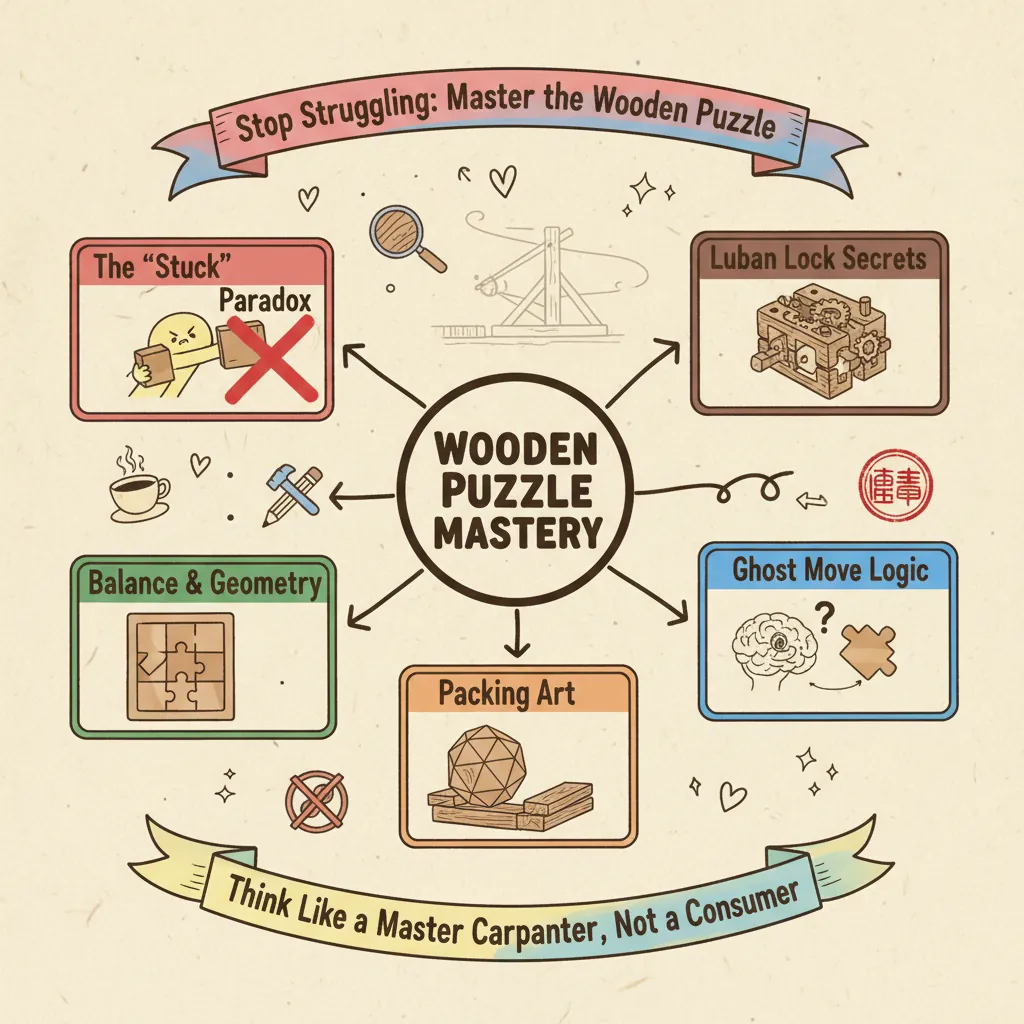
The third time the small notch on the mahogany-stained block failed to clear the central axis, I didn’t reach for a hammer. I set the puzzle down, walked into the kitchen, and made a very slow cup of coffee. That is the first lesson of mechanical puzzles: the moment you feel the urge to use force is the exact moment you have lost the game.
I have spent the better part of fifteen years testing over 200 mechanical enigmas—from $5 plastic stocking stuffers to $500 limited-edition Karakuri boxes. I’ve seen grown men, mostly engineers and architects, reduced to quiet whimpering by six pieces of interlocking wood. The problem isn’t their intelligence; it’s their approach. Most people search for “wooden puzzle solutions” looking for a cheat code—a sequence of moves like a Konami code for wood. But true mastery isn’t about memorizing a sequence; it’s about learning to read the physical language of joinery.
The thesis of this guide is simple: The most difficult wooden puzzles don’t hide their secrets in complexity, but in the assumptions you bring to the table. If you want to solve these, you have to stop thinking like a consumer and start thinking like a carpenter from the Han Dynasty.
The “Stuck” Paradox: Why Brute Force is Your Worst Enemy
Most beginners encounter a “stuck” piece and assume the wood has swollen due to humidity or that the tolerances are poor. While I’ve certainly reviewed some cheap mass-produced garbage where that’s true, in a well-crafted wooden puzzle, “stuck” is usually a feature, not a bug.
Wood is a tactile medium. Unlike metal, which has a cold, unforgiving precision, wood has “give.” This give is a trap. If you pull too hard on a Luban Square Lock, you create friction on the internal notches that actually prevents the key piece from sliding. I’ve had this specific puzzle on my desk for three weeks, and I’ve watched three different people fail to open it simply because they were gripping it too tightly.
The secret to most hidden mechanics of trick boxes is a concept called “gravity pins” or “centrifugal locks.” If a piece won’t move, it might need to be spun, tilted, or tapped against a palm. If you’re used to the digital logic of classic arcade challenges or mathematical tile sliding, the physical reality of a mechanical puzzle can be jarring. You aren’t just solving a logic gate; you’re negotiating with physics.
The Architecture of the Luban Lock: China’s 2,000-Year-Old Secret
To understand wooden puzzle solutions, you have to understand the Burr puzzle tradition. In China, these are known as Luban Locks or Kongming Locks, named after the legendary carpenter Lu Ban and the strategist Zhuge Liang. The core principle is the mortise-and-tenon joint—a method of joining wood without a single nail or drop of glue.
Luban Square Lock
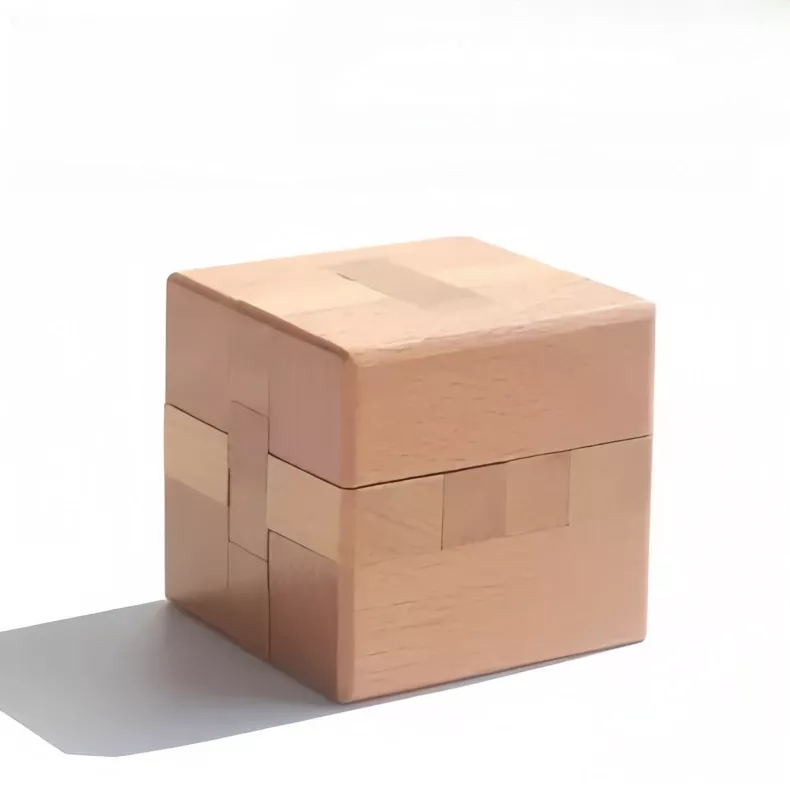
Luban Square Lock — $21.99
The Luban Square Lock ($21.99) is the “Hello World” of the interlocking puzzle world, but don’t let the “beginner” tag fool you. It consists of six to twelve precision-notched bars. When I first took this out of the box, the natural finish of the solid hardwood felt substantial, not like the balsa wood knock-offs you find in big-box toy stores.
The challenge here is the “key” piece. In almost every Luban-style puzzle, one piece is slightly different—it lacks the deep notches of the others, allowing it to slide out first. The problem? It looks identical to the others once assembled. My personal verdict: this is the best desk toy for someone who needs to fidget during long Zoom calls. It trains spatial reasoning and, more importantly, patience. If you can’t find the key piece, you’re just holding a very expensive paperweight.
Luban Cube Puzzle
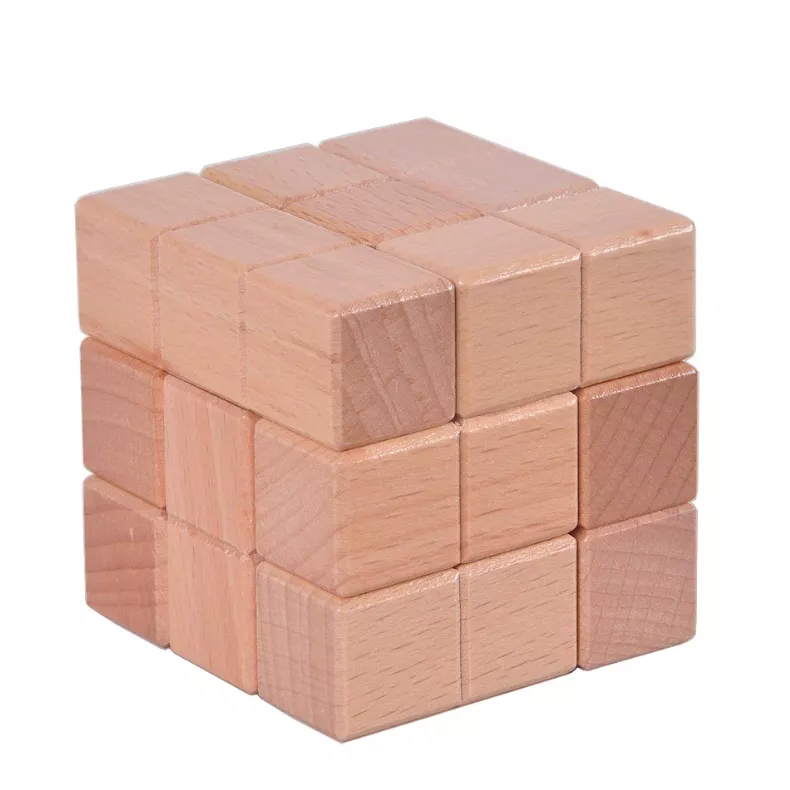
Luban Cube Puzzle — $21.99
If the square lock is the introduction, the Luban Cube Puzzle ($21.99) is the midterm exam. This 3x3x3 challenge requires you to fit six or seven blocks into a perfect cube. What makes this particularly devious is that every piece has exactly one spot.
I’ve seen people try to solve this by looking at the outer faces, but the solution lies in the negative space inside. You have to visualize the “voids” where the notches will overlap. When I solved this for the first time, it took about 40 minutes of trial and error. The “magic” moment happens when the final piece slides in with a nearly airtight fit. If you’re buying this as a gift, be warned: the instructions are essentially a series of cryptic diagrams that I found more confusing than the puzzle itself. Toss them and solve it by feel.
Spherical Geometry and the Mortise-and-Tenon Mystery
Moving away from the cubic, we enter the realm of spherical joinery. This is where most people’s spatial mapping breaks down. We are used to 90-degree angles. We are not used to 60-degree interlocking arcs.
Mortise-and-Tenon Soccer Ball Puzzle
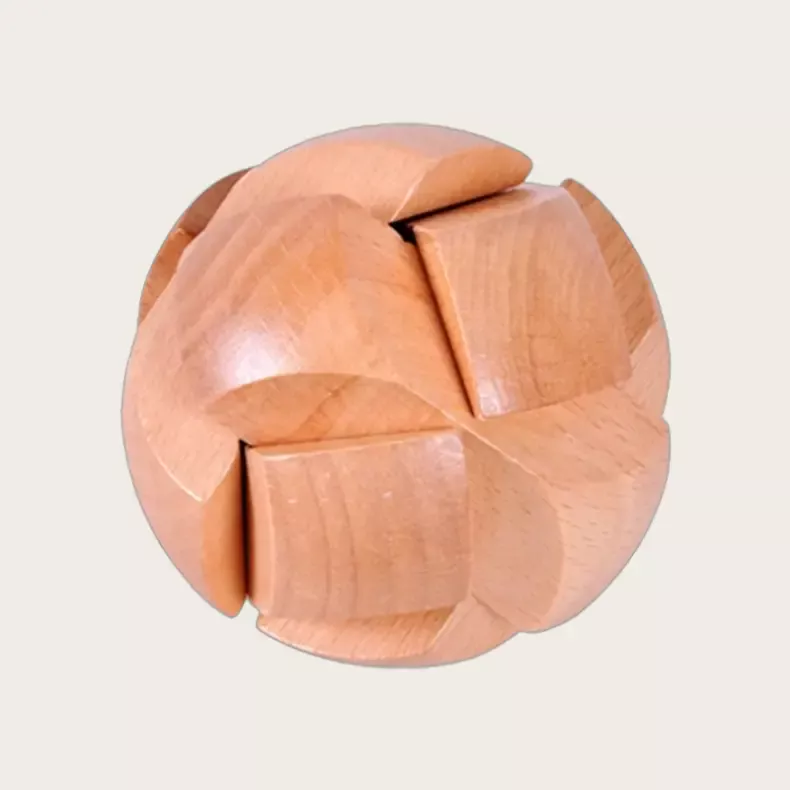
The Mortise-and-Tenon Soccer Ball Puzzle ($16.89) is a masterclass in traditional Chinese craftsmanship. Unlike the translucent 3D challenges which rely on visual transparency, this is a blind solve. You are working with premium wood that has been handcrafted to fit into a complex sphere.
The first time I disassembled this, I made the classic amateur mistake: I didn’t pay attention to the order of removal. Reassembling it was a four-hour odyssey. The trick is to identify the “equator” of the ball. There are specific pieces that act as the structural foundation, and if you don’t start with those, the whole thing collapses like a house of cards. It’s a journey into the history of engineering, proving that ancient craftsmen understood 3D geometry long before CAD software existed.
Philosophical Puzzles: Solving for Balance, Not Just Completion
Some puzzles aren’t just about the “how,” but the “why.” There is a subset of Chinese wooden puzzles that are deeply rooted in Taoist philosophy. These are often the most frustrating because they require a mindset shift. You aren’t “beating” the puzzle; you’re bringing it into balance.
Yin-Yang Taiji Lock
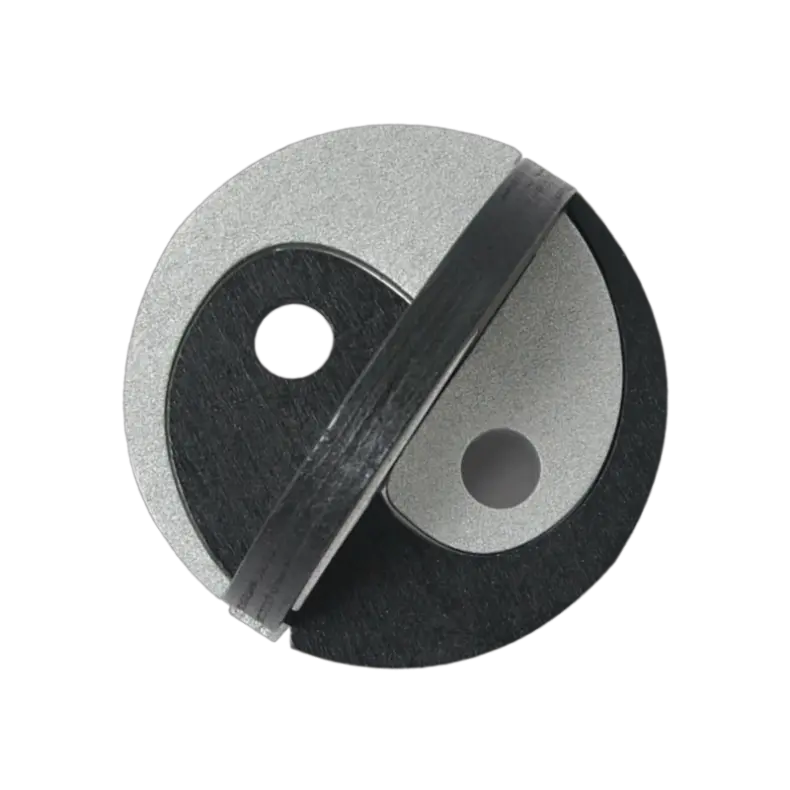
Yin-Yang Taiji Lock — $15.88
The Yin-Yang Taiji Lock ($15.88) is perhaps my favorite “meditation” puzzle. It consists of four interlocking pieces that form the classic Taiji symbol. The description mentions Laozi’s “Dao De Jing,” and while that might sound like marketing fluff, it actually informs the solution.
“The Tao that can be told is not the eternal Tao.” In puzzle terms: the move you think is obvious is usually the wrong one. This puzzle requires a very light touch. If you try to pull the Yin from the Yang, they lock tighter. You have to find the point of equilibrium where the pieces almost float apart. I’ve found that this is a great stress-relief tool. When I’m stuck on a coding problem, five minutes with the Taiji lock helps reset my brain’s logic circuits.
King Wen of Zhou heart-lock puzzle
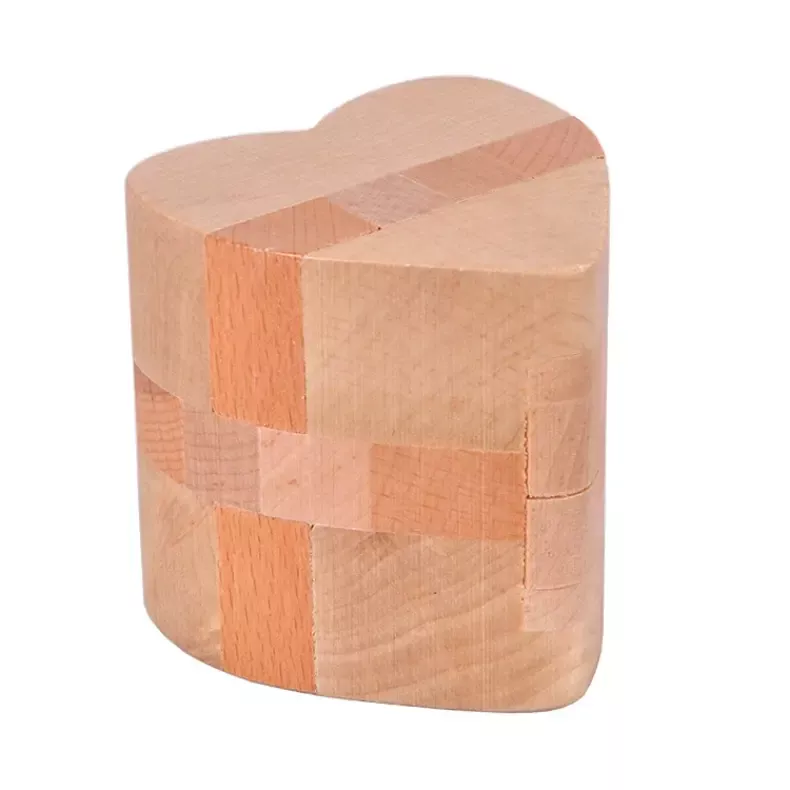
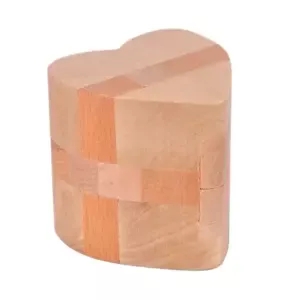
Then there is the King Wen of Zhou heart-lock puzzle ($17.99). This is a tactile fable. It’s based on the love story of King Wen and Tai Si, and the mechanics reflect that—interlocking grooves and notches that require a specific “dance” to separate.
This puzzle is surprisingly heavy in the hand, and the notches are deeper than you’d expect. It’s less about spatial geometry and more about “pathfinding.” You are essentially navigating a 3D maze that you can’t see. I recommend this for couples or as a high-quality wedding gift; it’s one of the few puzzles that feels romantic rather than just clinical.
The Peak Moment: The “Ghost Move” and Why Your Brain Lies to You
After testing hundreds of these, I’ve identified a phenomenon I call the “Ghost Move.” This is the peak experience of puzzle solving. It happens when you have explored every possible movement—up, down, left, right—and concluded the puzzle is impossible.
The Ghost Move is the solution that exists in a dimension you haven’t considered. Maybe it’s a simultaneous movement of two pieces in opposite directions. Maybe it’s a rotation that only becomes possible when the puzzle is held upside down.
I remember testing a prototype of a sequential discovery box. I spent forty-five minutes convinced the lid was glued shut. I had tried everything. Then, I accidentally dropped my pen, and as I reached to pick it up, I tilted the box at a 45-degree angle. A small brass pin inside slid out of the way with a microscopic click. That click is the “Aha!” moment that keeps hobbyists like me coming back. It’s the moment the puzzle stops being an object and starts being a conversation between you and the designer.
If you’re struggling with a wooden puzzle solution right now, ask yourself: “What movement am I assuming is impossible?” Usually, that’s where the answer lies.
Packing Puzzles: The Art of Subtraction
Not all wooden puzzles are about taking things apart. Some are about fitting things into a confined space. These are known as “packing puzzles,” and they are notoriously difficult because they exploit our brain’s tendency to look for symmetry.
Wooden Bead Pyramid Puzzle

The Wooden Bead Pyramid Puzzle ($18.88) is a deceptive little beast. It looks simple: six strands of wooden beads that you need to stack into a 3D pyramid.
Most people start by building the base. That is a mistake. Because the strands are of different lengths and configurations, the base dictates the top—but the top is the most restricted part of the geometry. This puzzle is a meditation on the “Art of Effortless Action.” You have to subtract the unnecessary moves. I’ve handed this to a mechanical engineer who spent an hour failing, only to have a 10-year-old solve it in five minutes because the child didn’t assume the pieces had to be symmetrical. It’s a sophisticated brain teaser that rewards patient insight over brute force.
Metal Cross-Pollination: When Wood Meets Ancient Siege Tactics
While this article focuses on wood, the history of wooden puzzle solutions is inextricably linked to metal casting. Some of the best “wooden” logic actually comes from metal designs that mimic ancient engineering.
Besieged City
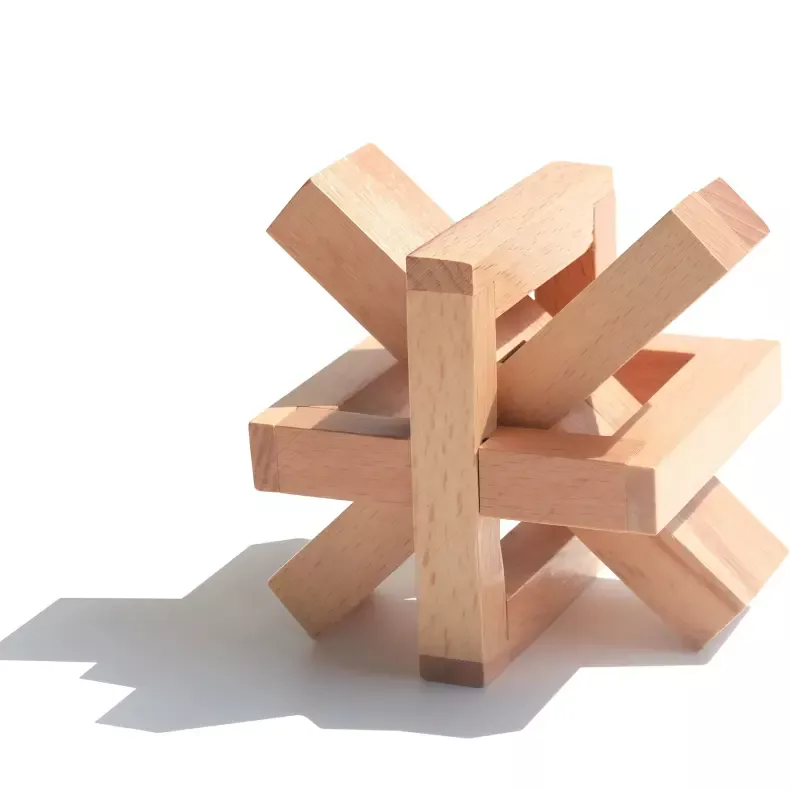
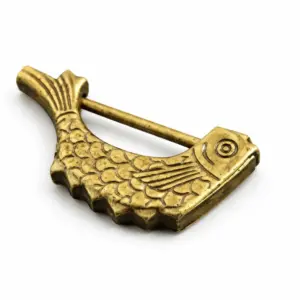
The Besieged City ($16.99) is technically a metal puzzle, but it embodies the same Taoist wisdom found in the best wooden locks. It features a mechanism that reportedly challenged Emperor Taizong. The philosophy here is that “great fullness appears empty.”
The solution is hidden in plain sight. It’s a reminder that the most direct path isn’t always the most obvious one. I include it here because if you enjoy the tactile nature of navigating the world of wooden containers, the Besieged City offers a similar “ancient wisdom” vibe. It hones spatial reasoning through engineering that feels thousands of years old.
Looking Back
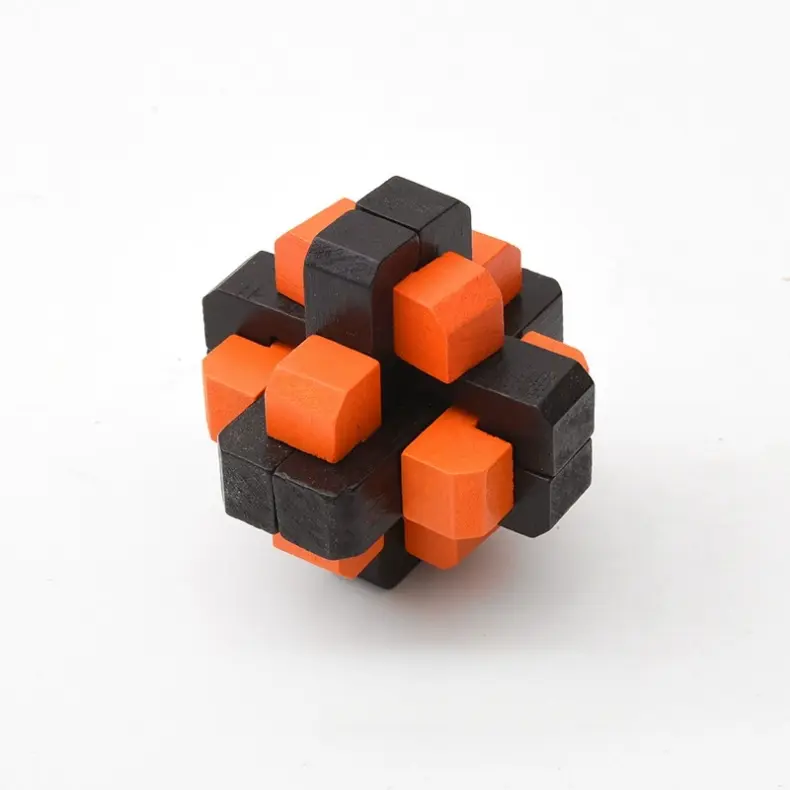
The Looking Back ($16.99) is a hybrid—a wooden brain teaser inspired by the legend of the poet Xin Qiji. It uses 12 sticks (6 short, 6 long) that unlock with a specific twist.
This is what I call a “romantic” design. It’s tricky, but not mean-spirited. Some puzzles feel like they’re trying to make you feel stupid; “Looking Back” feels like it’s inviting you to a dance. The reassembly is just as fun as the disassembly, which is a rarity in the hobby. It’s a perfect solo challenge for a rainy afternoon.
Kongming Lock Color Match
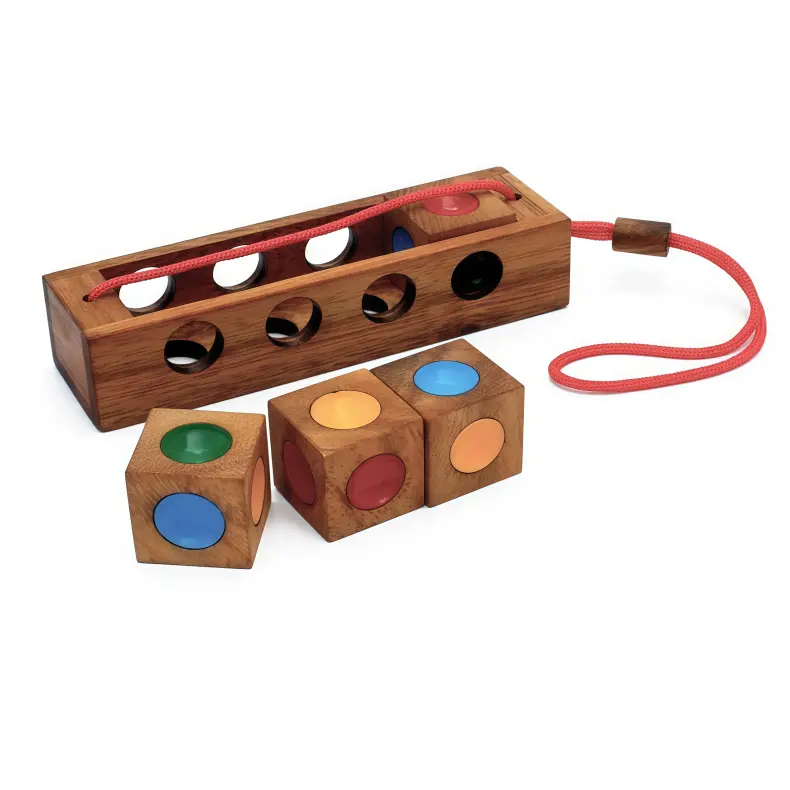
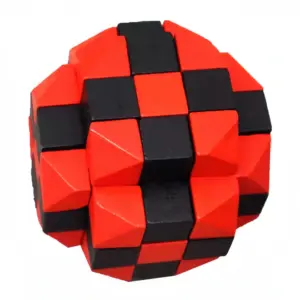
Finally, for those who find the natural wood look a bit monotonous, the Kongming Lock Color Match ($16.99) adds a layer of complexity: color theory. You aren’t just fitting four chaotic blocks together; you’re ensuring the colors align in harmony on every side.
This adds a “constraint satisfaction” element to the standard mortise-and-tenon solve. It’s not enough to make the pieces fit; they have to fit correctly. It’s a great example of how a simple addition—paint—can turn a moderate puzzle into a high-level challenge.
Big Three-Link Wooden Puzzle
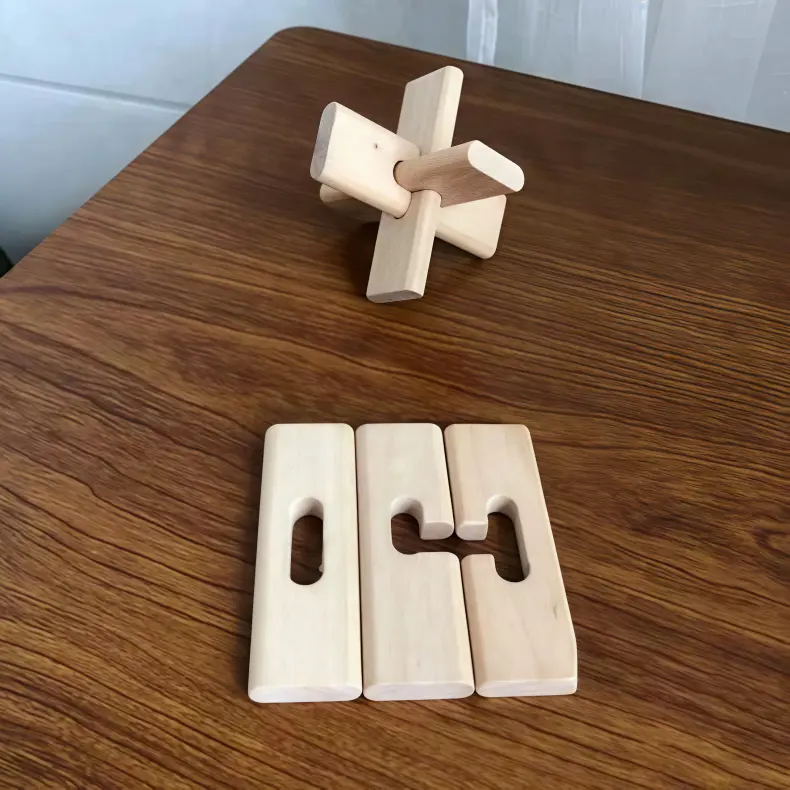
If you’re looking for something more portable, the Big Three-Link Wooden Puzzle ($17.88) is a solid choice. It’s an eco-friendly, three-piece challenge that focuses on pure interlocking logic. It’s finely sanded and toxin-free, making it a safe bet for family game nights. I often throw this in my bag for flights; it’s compact but has enough depth to keep me occupied for the duration of a layover.
Quick-Reference Comparison Table
FAQ: Everything You Wanted to Know About Wooden Puzzles
How do you solve a 3D wooden puzzle?
The short answer: observation over operation. Most people start moving pieces immediately. Instead, spend five minutes just looking at the puzzle. Look for the “seams” and identify which pieces have more freedom of movement than others. In almost all Burr puzzles, there is one “key” piece that must be moved first. If you find that piece, the rest of the solution usually falls into place like a sequence of dominoes.
Why is my wooden puzzle stuck?
Wood is a natural material that reacts to the environment. If you live in a high-humidity area, the fibers can swell, making the tolerances tighter. However, before you blame the weather, check for “interlocking constraints.” Many puzzles, like the Yin-Yang Taiji Lock, are designed to lock tighter if you pull them the wrong way. Try pushing the pieces together first to reset the internal pins, then try a different direction.
Are wooden puzzles good for adults?
Absolutely. While many are sold as toys, the high-level ones require a level of spatial reasoning and deductive logic that challenges even seasoned engineers. They are excellent for maintaining cognitive flexibility. In fact, there are cognitive benefits most puzzle sellers won’t mention, such as improved short-term memory and better problem-solving stamina.
What is the hardest wooden puzzle?
Difficulty is subjective, but generally, “spherical burrs” like the Mortise-and-Tenon Soccer Ball Puzzle are considered among the toughest. This is because they lack the 90-degree reference points our brains use to map objects. When every piece is an arc, it’s much harder to visualize how they interlock.
How do I reassemble a wooden puzzle I took apart?
This is the “dark side” of the hobby. Taking it apart is often easy; putting it back together is the real puzzle. My advice: take a photo of the puzzle at every stage of disassembly. If it’s too late for that, look for “assembly diagrams” online, but be warned that many traditional Chinese puzzles use ancient joinery techniques that aren’t easily explained in a 2D drawing.
Can I use tools to solve a wooden puzzle?
Never. If you need a screwdriver, pliers, or a hammer, you aren’t solving the puzzle; you’re breaking it. The only “tool” you should ever use is a small piece of sandpaper if a specific notch has a burr from the manufacturing process, but even then, use it sparingly.
Are these puzzles suitable for children?
Most of the puzzles listed here are best for ages 12 and up. Small children often lack the fine motor skills and patience required, which leads to them forcing the pieces and breaking the wood. For younger kids, I’d recommend starting with something simpler like the Big Three-Link Wooden Puzzle.
What’s the difference between a Burr puzzle and a Kongming lock?
They are essentially the same thing. “Burr” is the Western term (referring to the seed pod of a burr plant), while “Kongming” or “Luban” are the traditional Chinese names. Both refer to three-dimensional interlocking puzzles made of notched bars.
How do I clean my wooden puzzles?
Avoid water at all costs. Water will cause the wood to swell and ruin the tolerances. Use a dry, lint-free cloth to wipe away dust. If the wood looks dry, a tiny amount of mineral oil or beeswax can be used to restore the finish and keep the pieces sliding smoothly.
Do wooden puzzles make good gifts?
They are fantastic gifts because they are “low-tech” in a “high-tech” world. They look beautiful on a bookshelf or coffee table and serve as an immediate conversation starter. I’ve found that the King Wen of Zhou heart-lock puzzle is a particularly hit gift for anniversaries or housewarmings.
Why do some puzzles have a “burnt” smell?
Many modern wooden puzzles are laser-cut for precision. This leaves a slight charred smell on the edges. It usually dissipates within a few days of being out of the box. If it bothers you, leaving the puzzle in a well-ventilated area—or even near a bowl of coffee grounds—will neutralize the scent quickly.
What if I lose a piece?
Unfortunately, because these are precision-fit objects, a single missing piece usually makes the puzzle unsolvable. I keep my collection in small dedicated boxes or pouches to prevent this. If you do lose a piece, it’s often cheaper to buy a new puzzle than to try and have a custom piece machined.
Is it “cheating” to look up the solution?
In the hobbyist community, we call it “resorting to the scrolls.” It’s not cheating if you’ve genuinely hit a wall and are no longer having fun. The goal is enjoyment, not self-torture. However, I always suggest looking at a “hint” (like the first move) rather than the full solution video.
How long do these puzzles last?
If kept in a climate-controlled environment (away from extreme heat or dampness), a high-quality hardwood puzzle can last for generations. I have a Luban lock passed down from my grandfather that still fits together as perfectly as the day it was made.
Why are some puzzles so much more expensive than others?
It comes down to wood quality and tolerances. A $5 puzzle is likely made of plywood or soft pine with loose joints. A $25+ puzzle, like the Luban Square Lock, uses solid hardwoods and precision machining to ensure that the “click” of a solve is satisfying and repeatable.
Start Here, Then See Where the Rabbit Hole Goes
After 40 hours of wrestling with brass pins and mahogany notches, what I’ve actually learned has nothing to do with geometry. It’s about the “Stuck” Paradox. We spend our lives trying to force solutions—in our jobs, our relationships, and our puzzles. But the wood teaches us that the solution is already there; we’re just the ones creating the friction.
If you’re ready to start your own collection, don’t jump into the deep end with a spherical burr. Start with the Luban Square Lock ($21.99). It’s the most honest introduction to the hobby. It will frustrate you, it will make you question your own eyes, and eventually, it will reward you with that single, perfect slide that makes everything else make sense.
Once you’ve mastered the square, the sequential discovery boxes are the natural next step. They take the interlocking logic you’ve learned and add hidden compartments and tools. It’s a rabbit hole that goes deep, but the view from the bottom is worth every second of frustration.
The last thing you need to remember is this: a puzzle is not a problem to be solved, but a mechanism to be understood. Stop pulling, start observing, and let the wood tell you where it wants to go.