The third time the brass pin slipped past my thumb, I set the box down and made coffee. My workspace was littered with the remnants of a Tuesday afternoon: a half-drunk espresso, three discarded sketches of gear ratios, and a 111-piece wooden safe that refused to acknowledge its own combination. I’ve tested over 200 mechanical puzzles in the last decade, and yet, there I was, being outsmarted by a pile of laser-cut plywood.
That’s the thing about a proper adult puzzle box. It doesn’t care about your resume, your IQ, or how quickly you can navigate a spreadsheet. It only cares about your ability to listen to the wood and feel the tension in the springs. We live in a world where everything is a glass screen and a haptic buzz. A mechanical puzzle is a rebellion against the intangible. It’s a physical conversation with an engineer who might have lived three hundred years ago or three thousand miles away.
The thesis of my collection is simple: the best adult puzzle box is one that punishes impatience and rewards observation. Whether it’s a $17 ancient-style lock or a $30 mechanical safe, the value isn’t in the object itself, but in the silence it forces upon you. If you’re looking for a way to quiet the noise of 2026, you don’t need an app; you need a mechanism that demands your full attention.
The Evolution of the Secret Compartment
The concept of the “trick box” isn’t a modern invention designed to clutter our coffee tables. It’s a survival mechanism. Historically, puzzle boxes were the original encryption. Before we had digital vaults, we had joinery. If you had a secret—a letter, a ring, a map—you didn’t just lock it; you hid the lock itself.
In the 19th century, Japanese artisans in the Hakone region perfected the Himitsu-Bako, using intricate marquetry to hide the sliding panels. Today, we’ve moved from hand-chiseled wood to laser-precision engineering, but the core thrill remains identical. When you hold something like the Twelve Sisters Puzzle ($19.99), you aren’t just playing a game. You are engaging with a lineage of “secret-keeping” that stretches back through centuries of human history.
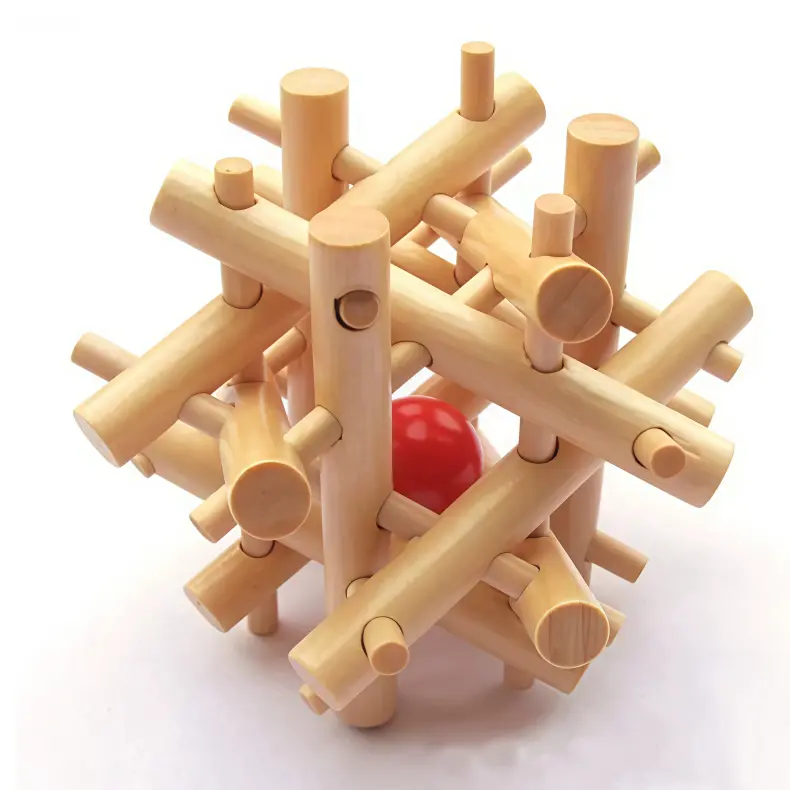
Twelve Sisters Puzzle — $19.99
The Twelve Sisters is a fascinating bridge between a traditional burr puzzle and a box. It consists of 12 thick rods and 12 interlocking sticks, all guarding a crimson center sphere. I spent about forty minutes the first time I sat with this, trying to understand the “give” of the rods. It’s a 25-piece wooden challenge that proves a point: complexity often hides in plain sight. It’s priced at $19.99, which is a steal for the level of joinery involved. It’s the kind of object that sits on a bookshelf looking like modern art until someone brave enough picks it up and realizes it’s a cage for a secret.
Why Wood Still Wins the Tactile War
I often get asked why I prefer wooden boxes over the high-end machined aluminum ones that cost as much as a used car. Metal is precise, sure. It’s cold, heavy, and impressive. But wood has a soul. It expands and contracts with the humidity in your room. It has a “grain” that you have to learn. Solving a wooden puzzle is like learning to play a musical instrument; you have to feel the friction.
When you’re sharing these challenges with the whole family, wood is also far more forgiving. If a guest drops a wooden box, it gains “character.” If they drop a $500 brass puzzle, it gains a permanent dent that ruins the internal tolerances.
Take the 3D Wooden Puzzle Safe with Combination Lock ($30.99). This isn’t just a box you buy; it’s a box you manifest.
3D Wooden Puzzle Safe with Combination Lock
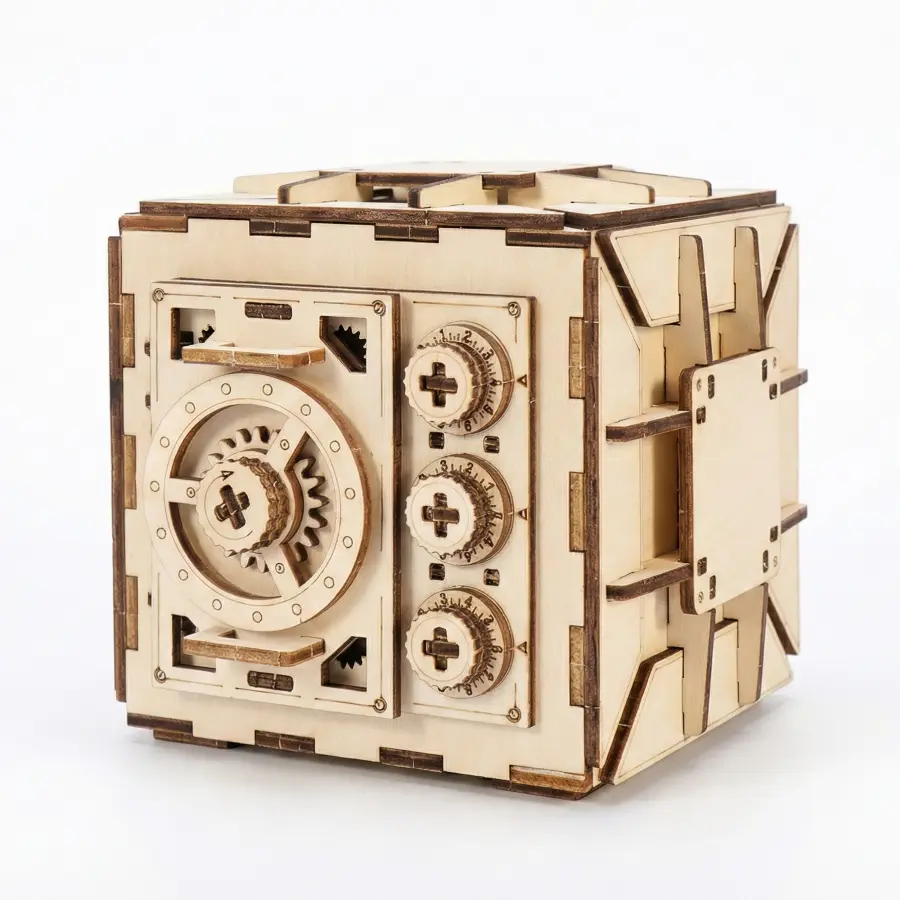
This is the “big one” for anyone who wants to understand the “why” behind the “how.” I spent about 90 minutes assembling this 111-piece kit. Most kits in this price range feel like cheap balsa wood, but this plywood is precision-cut. The real star here is the 3-digit combination lock. During assembly, you actually build the tumblers. You see how the notches align. When you finally turn the dial and hear that heavy wooden thunk of the bolt retracting, it’s not just a solve—it’s a victory of your own making.
I’ve had this safe on my desk for three months now. I keep my spare SD cards in it. Every time I need one, I have to “break in” to my own safe. It’s a $30.99 investment in a daily ritual of mindfulness. The only downside? If you rush the assembly and don’t sand the gears properly, the dial can feel a bit “crunchy.” Take your time. Use the wax provided. It makes all the difference.
The Psychology of the “Aha!” Moment
Why do we do this to ourselves? Why spend three hours on a Sunday afternoon trying to open a 3D Wooden Puzzle Treasure Box – Mechanical Jewelry Storage Gift ($29.99)?
The answer lies in dopamine. There is a specific neurological spike that occurs when a mechanical problem suddenly resolves. Researchers have actually looked into the history of science puzzles and found that these objects were often used to teach students about the nature of the physical universe. When you solve a puzzle box, you aren’t just finding a hidden compartment; you are confirming that the world is logical. In an era of “fake news” and algorithmic chaos, the fact that “Part A” must move before “Part B” is incredibly grounding.
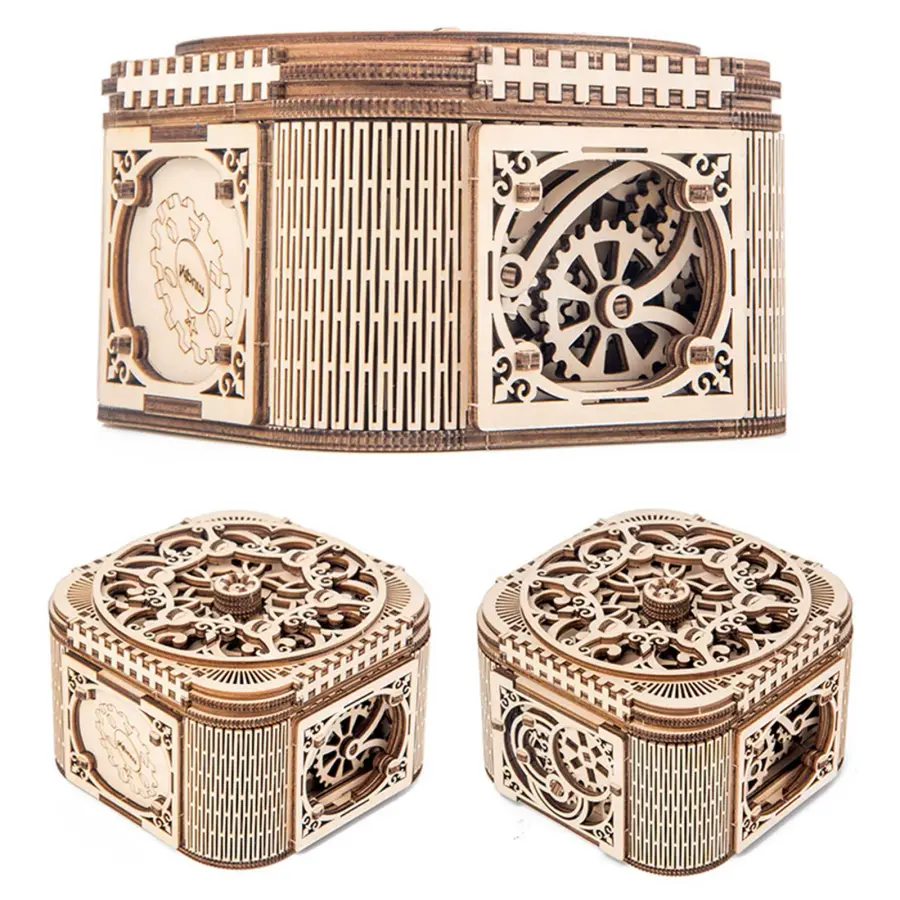
The Treasure Box mentioned above is a prime example of this “mechanical logic.” It uses visible gear mechanisms, which I personally love. Some people prefer the mystery of a “blind” box where you can’t see the guts, but there’s something deeply satisfying about watching the gears mesh as you turn the key. At $29.99, it’s a perfect mid-range project. I usually recommend this to people who want a “functional” solve—something that looks beautiful on a vanity once the work is done.
The Peak: The Difference Between a Trick and a Puzzle
About halfway through my testing of the current 2026 lineup, I realized something that most reviewers miss. There is a fundamental difference between a “trick box” and a “puzzle box.”
A trick box usually relies on a single, hidden motion. You bang it on the table, you slide a magnet, or you blow into a hole. Once you know the trick, the “game” is over.
A puzzle box (or a sequential discovery puzzle) requires a series of logical steps. You find a tool, which opens a drawer, which reveals a key, which unlocks the lid.
I’ve found that understanding the mechanics of trick boxes is the best way to start, but eventually, you’ll crave the multi-step journey. This is where things like the Royal Carriage 3D Wooden Puzzle ($25.99) come in. While it’s technically a model, the mechanical wonder of the galloping horses and the coach movement provides that same “mechanical solve” energy.
Royal Carriage 3D Wooden Puzzle

If you’re the type of person who finds the assembly more relaxing than the actual solve, this carriage is your best bet. It’s an intermediate build—expect to spend 3 to 5 hours on it. The laser-cut pieces are $25.99, and the finished product is nearly a foot long. What I love about this is the “mechanical theater.” It’s not a box you hide things in; it’s a box that moves. I gave one of these to a coworker who was going through a stressful month, and she told me it was the only time her brain actually went quiet. There’s no room for “work thoughts” when you’re trying to align the axles of a wooden horse.
The Ancient Logic of the Chinese Lock
If you want to move away from wood and into something that feels like it was pulled from an archaeological dig, you have to look at traditional Chinese locks. These are the “ancestors” of the modern adult puzzle box. They don’t look like puzzles. They look like hardware. But try to open one without the “trick,” and you’ll find yourself very frustrated, very quickly.
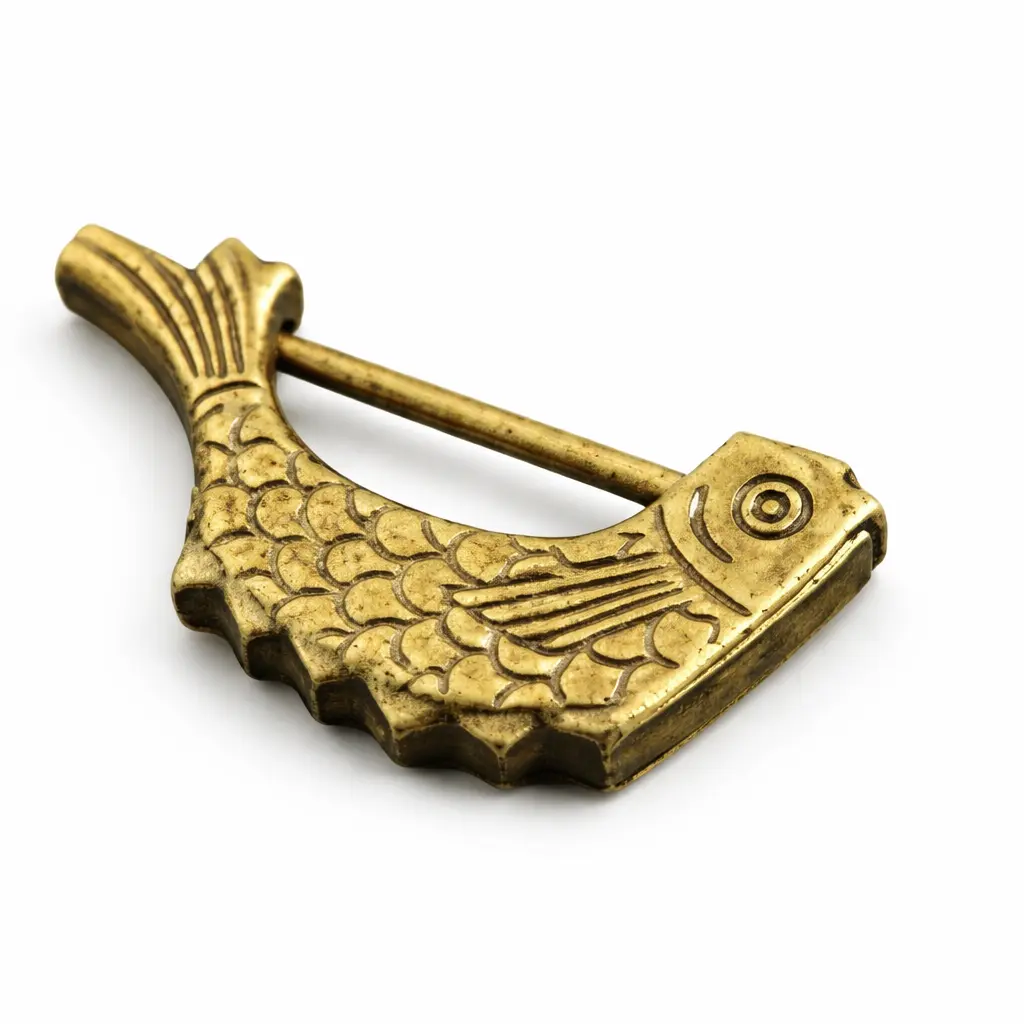
Chinese Koi Puzzle lock — $16.99
Take the Chinese Koi Puzzle lock ($16.99). It’s 59mm of weathered bronze finish. It looks like it should be on a merchant’s chest in the 1700s. The “puzzle” here is the keyway itself. It’s not a standard lock-and-key affair. You have to understand the orientation of the fish to find the release. At under seventeen dollars, it’s the best “fidget” puzzle I own. I keep it in my pocket during long Zoom calls. It’s heavy enough to feel substantial but small enough to be discreet.
Chinese Old Style fú Lock with Key
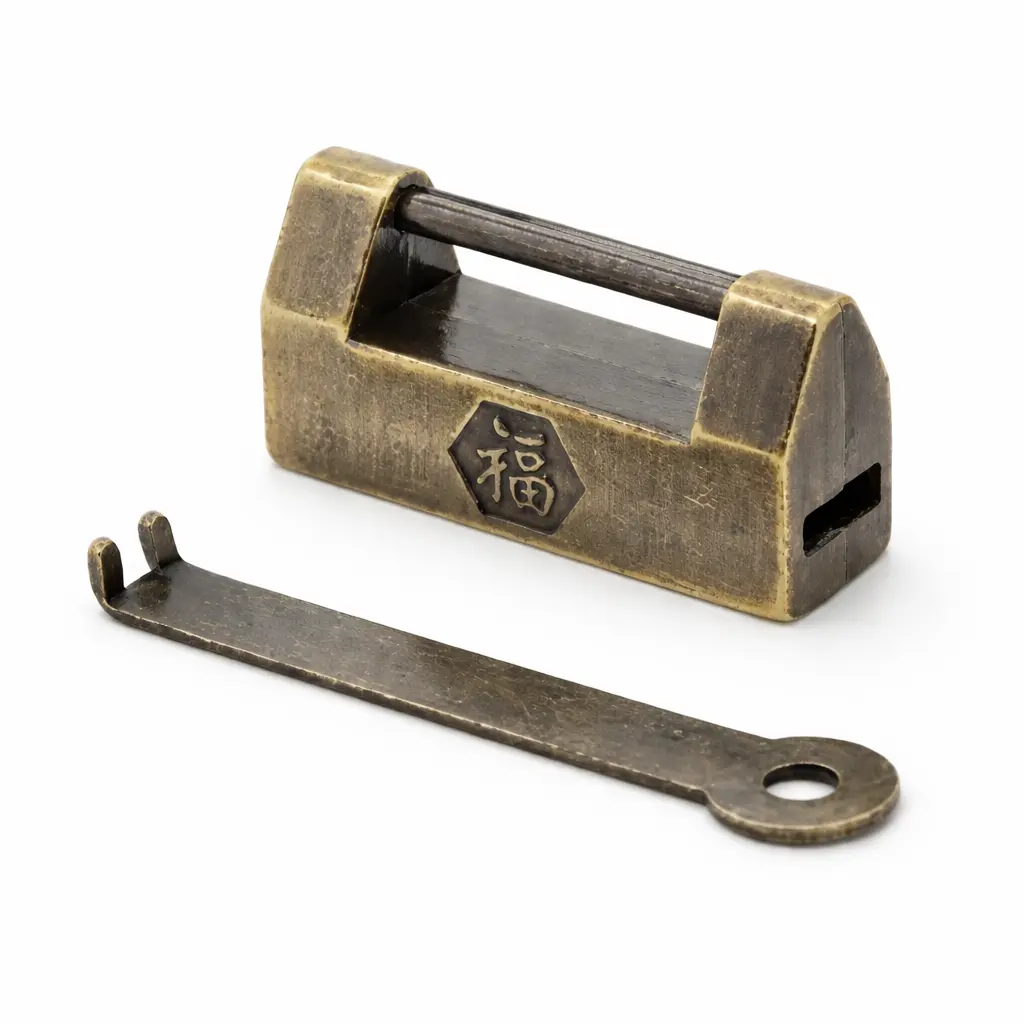
If the Koi is a desk toy, the “fú” lock is a piece of history you can carry. It’s tiny—only 30mm—but it’s fully functional. The “福” character stands for fortune, and the mechanism is a traditional rod-key system. For $19.99, you get a piece of ancient engineering that still works in 2026. I use mine to lock a leather-bound journal. It doesn’t offer “bank-grade” security, but it offers “curiosity-grade” security. Most people won’t even figure out how to insert the key correctly.
When You Just Need a “Quick Hit”
Sometimes you don’t want a 5-hour build or a 20-step sequential discovery. Sometimes you just want to fiddle with something while you’re waiting for a file to download. This is where the “logic objects” come in. They aren’t boxes, but they use the same mechanical principles.
The 6 Piece Wooden Puzzle Key ($12.99) is my go-to recommendation for beginners. It’s six pieces of hardwood that look like they should just fall apart, but they are held together by a single “key” piece. It’s a masterclass in the Daoist principle of Wu Wei—effortless action. If you try to force it, the wood will bind. If you let it slide naturally, it dissolves.
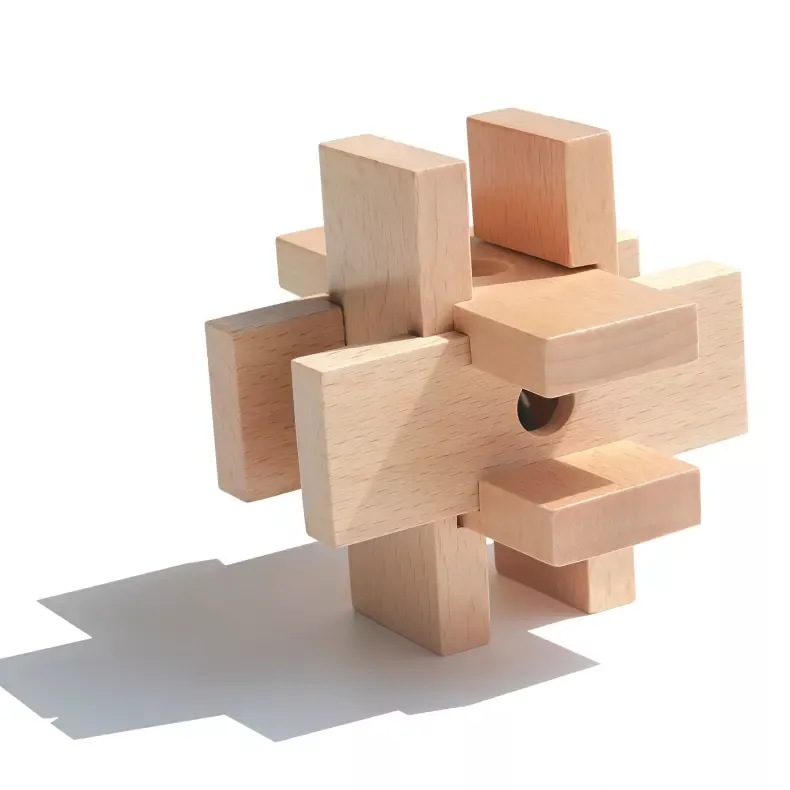
6 Piece Wooden Puzzle Key — $12.99
I’ve seen “genius” engineers struggle with this for twenty minutes while my 12-year-old niece solved it in thirty seconds. It’s about letting go of what you think should happen and watching what is happening. For $12.99, it’s the cheapest therapy you’ll ever find.
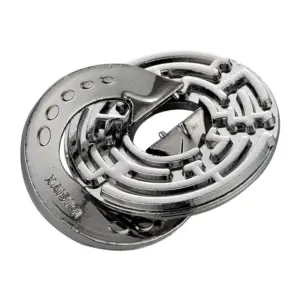
Similarly, the Circular Lock ($16.99) is a three-piece meditation. It’s not about the destination; it’s about the “smooth, satisfying motion” of the solve.
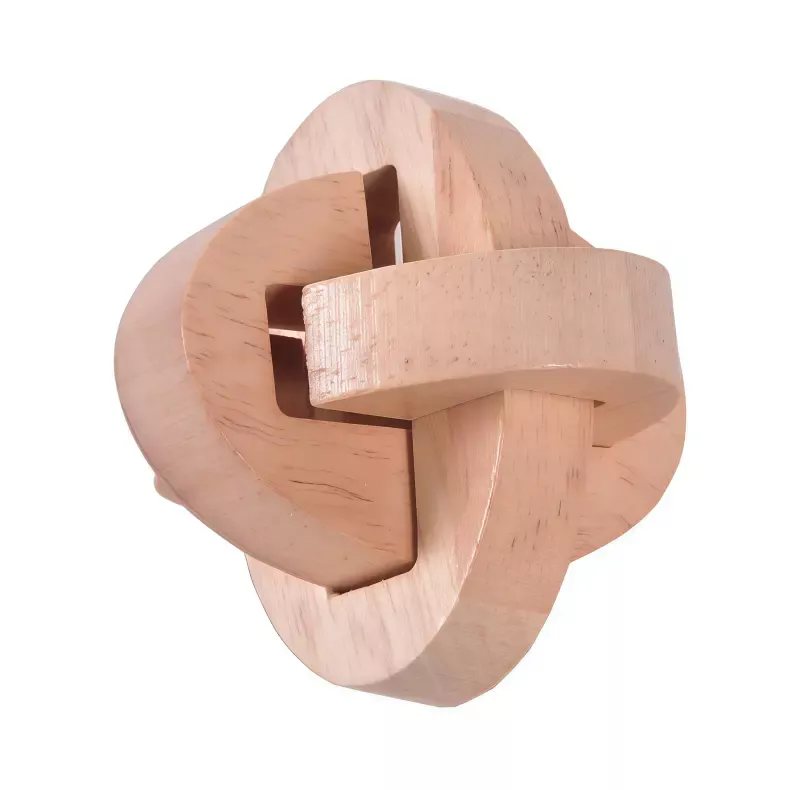
Circular Lock — $16.99
I’ve found that if I’m stuck on a writing project, spending five minutes with the Circular Lock helps reset my spatial reasoning. It’s like a palate cleanser for the brain. If you find yourself gravitating toward these digital logic games on your phone, try the physical version instead. Your eyes will thank you.
The Functional Puzzle: Clocks and Time
There is a subset of the “adult puzzle box” world that focuses on functionality. These are the “Why just solve it when you can use it?” crowd.
3D Wooden Puzzle Clock DIY Kit
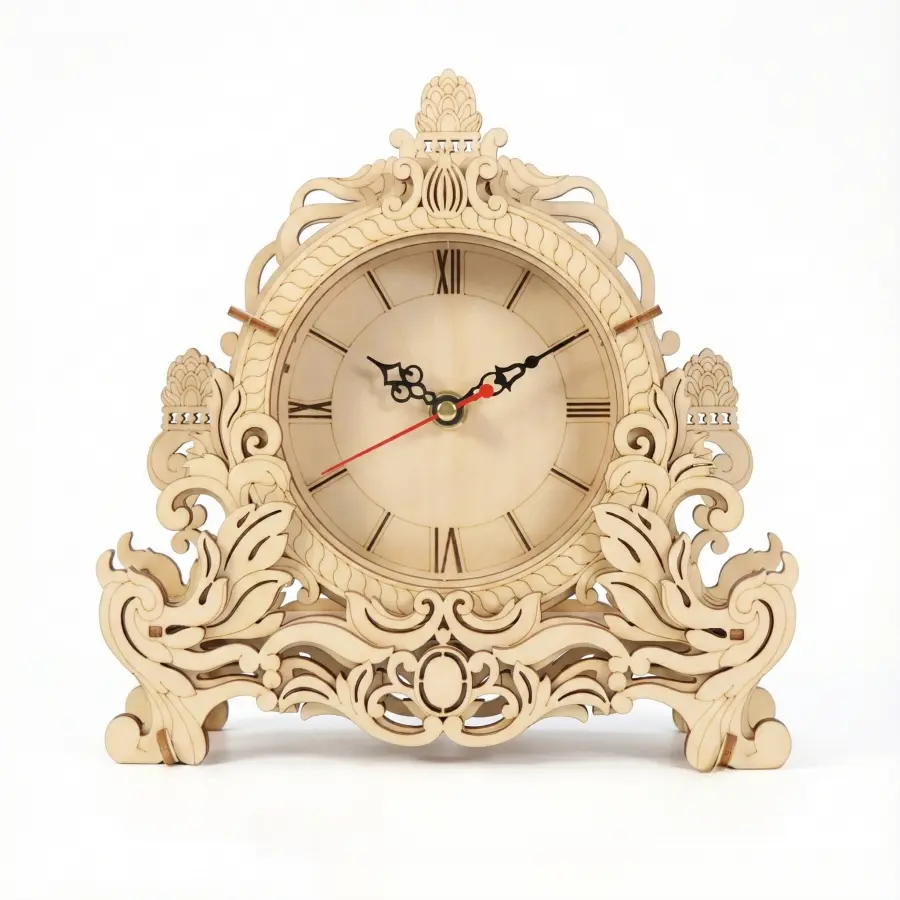
This kit is a bit of a wildcard. It’s only 28 pieces, and it takes about 30 minutes to assemble. At $26.99, it’s not the most difficult puzzle on this list, but it’s one of the most rewarding. It’s a baroque-style clock with a working movement. Usually, I’m skeptical of “puzzle clocks” because the movements are often cheap plastic. But this one fits together with a snugness that reminds me of high-end traditional strategy games. It’s a “functional art piece” that serves as a constant reminder of the time you spent building it.
Comparison of Top Adult Puzzle Boxes
If you’re trying to decide where to start your collection, here is how the heavy hitters stack up against each other based on my personal testing.
FAQ: Everything You’re Afraid to Ask About Puzzle Boxes
How do I open a puzzle box if I’m completely stuck?
Don’t reach for the hammer. Most adult puzzle boxes rely on physics, not force. If it’s a wooden box, check for sliding panels that feel slightly “looser” than the others. If it’s a metal lock, try rotating the key while applying gentle pressure to the shackle. Sometimes the trick is as simple as turning the box upside down to let a hidden pin drop. If you’re truly desperate, many higher-tier sequential discovery boxes have “reset” videos online, but try to avoid them. The frustration is part of the price you paid.
Are these puzzles too hard for beginners?
“Hard” is subjective. I’ve seen people solve a Level 10 puzzle in minutes because they happened to think the way the designer does. If you’re worried, start with something like the King Wen of Zhou heart-lock puzzle ($17.99). It’s a “tactile fable” that is more about the experience of the solve than the difficulty.
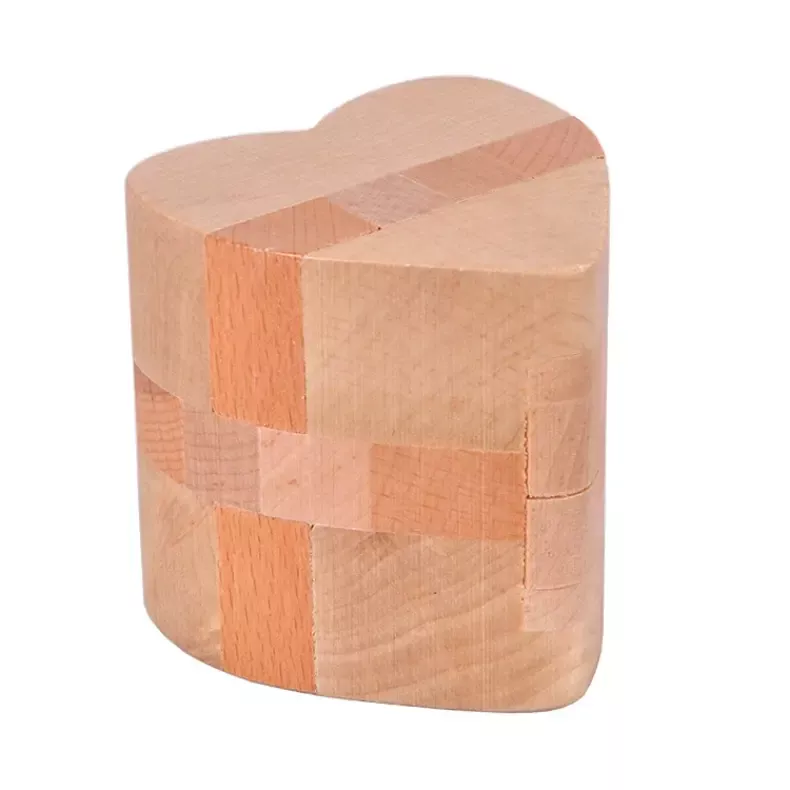
Do I need glue or tools for the 3D wooden kits?
Most modern kits, including the ones at Tea-Sip, are “press-fit.” This means they use precision laser cutting to ensure pieces stay together without glue. However, I always keep a small piece of sandpaper and a bit of candle wax nearby. Sanding the “nubs” from the laser-cut sheets and waxing the gears is the difference between a puzzle that works and a puzzle that sits in a drawer.
What is the best puzzle box for a gift?
If you’re gifting to a non-puzzler, go for the 3D Wooden Puzzle Treasure Box ($29.99). It has a clear “utility” once it’s built. If you’re gifting to a “genius” type who loves a challenge, the Twelve Sisters is a fantastic choice because it looks deceptively simple but requires a deep understanding of structure.
Why are some puzzle boxes so expensive?
You aren’t just paying for the wood or metal; you’re paying for the “tolerances.” In a cheap box, you can just wiggle the lid open. In a high-quality box, the pieces fit so perfectly that you can’t even see the seams. That precision requires expensive machinery and a lot of quality control.
Can I solve these more than once?
For the mechanical kits, the joy is in the assembly. For the trick locks, once you know the secret, you become the “keeper of the secret.” I love handing a solved lock to a friend and watching them struggle. It turns a solo hobby into a social one.
Are there any cognitive benefits?
Actually, yes. There is research in the National Institutes of Health database (and cited in several of our product descriptions) suggesting that spatial puzzles help maintain cognitive flexibility as we age. It’s like a gym for your prefrontal cortex.
What if a piece breaks during assembly?
Wooden kits are delicate. If a piece snaps, a tiny dab of wood glue (PVA) usually fixes it. Most kits include a few “spare” parts for the most fragile bits, like the small gear teeth.
How do I clean my wooden puzzles?
Never use water. A dry, soft-bristled paintbrush is the best way to get dust out of the gears. If the wood starts to look dry, a tiny bit of mineral oil on a cloth will bring back the luster, but be careful not to get it into the internal mechanisms where it might attract dust and cause gunk.
Is the “3D Wooden Puzzle Safe” actually secure?
It’s “sibling-secure.” It will keep a curious younger brother or a nosy roommate out of your stuff, but it won’t stop a determined thief with a screwdriver. It’s a puzzle first, a safe second.
Which is better: Metal or Wood?
Metal is for the “fidgeter”—someone who wants to feel the weight and hear the click. Wood is for the “builder”—someone who wants to see the gears and understand the mechanics. Personally, I think a balanced collection needs both.
What is the “Twelve Sisters” puzzle actually based on?
It’s based on traditional Chinese burr puzzles, which use interlocking joinery that requires no nails or glue. It’s a testament to the ancient principle of strength through precision.
Start Here, Then See Where the Rabbit Hole Goes
If I’ve learned anything from the hundreds of hours I’ve spent with these objects, it’s that we are all much more capable of focus than we think we are. We just need an object that is worthy of that focus.
The adult puzzle box isn’t just a toy; it’s a reminder that complexity can be mastered, that secrets can be kept, and that there is a profound, quiet joy in the moment a mechanism finally gives way. If you’re just starting, don’t aim for the most expensive or the most difficult. Aim for the one that makes you want to put your phone in the other room.
Start with the 3D Wooden Puzzle Safe with Combination Lock ($30.99). It taught me more about patience and mechanical grace than any book or video ever could. It’s the perfect introduction to a world where the only way forward is to stop, look, and listen.
If you find that the mechanical side of things really clicks for you, you might want to explore more advanced sequential discovery boxes that push the boundaries of what wood and metal can do. But for now, just find a box, find a quiet corner, and wait for that first, beautiful click. It’s the most honest sound you’ll hear all day.