The third time the brass pin slipped past my thumb, I set the box down and made coffee. It was 2:14 AM on a Tuesday, and I was being outsmarted by a piece of beechwood no larger than a deck of cards. This is the reality of the hobby. We don’t buy these objects because they are functional; we buy them because they represent a private, silent conversation between a designer’s wit and our own stubbornness.
When you set out to achieve a puzzle box solve, you aren’t just looking for a compartment. You are looking for the “Aha!” moment—that physiological spike of dopamine that occurs when a physical barrier suddenly yields to logic. After testing over 200 mechanical enigmas, from $10 cast-metal “fidgets” to $500 sequential discovery masterpieces, I’ve realized that most people approach these the wrong way. They use force. They use luck. They treat the box like a safe to be cracked rather than a story to be read.
The truth is, the most rewarding solves aren’t found in the most expensive boxes. They are found in the ones that force you to unlearn your assumptions about how physical objects should behave. Whether you are looking for a way to foster deeper family connections through shared challenges or you just want something on your desk that makes you look smarter than you feel during a Zoom call, understanding the mechanics of the solve is the first step toward mastery.
The Five Stages of Every Puzzle Box Solve
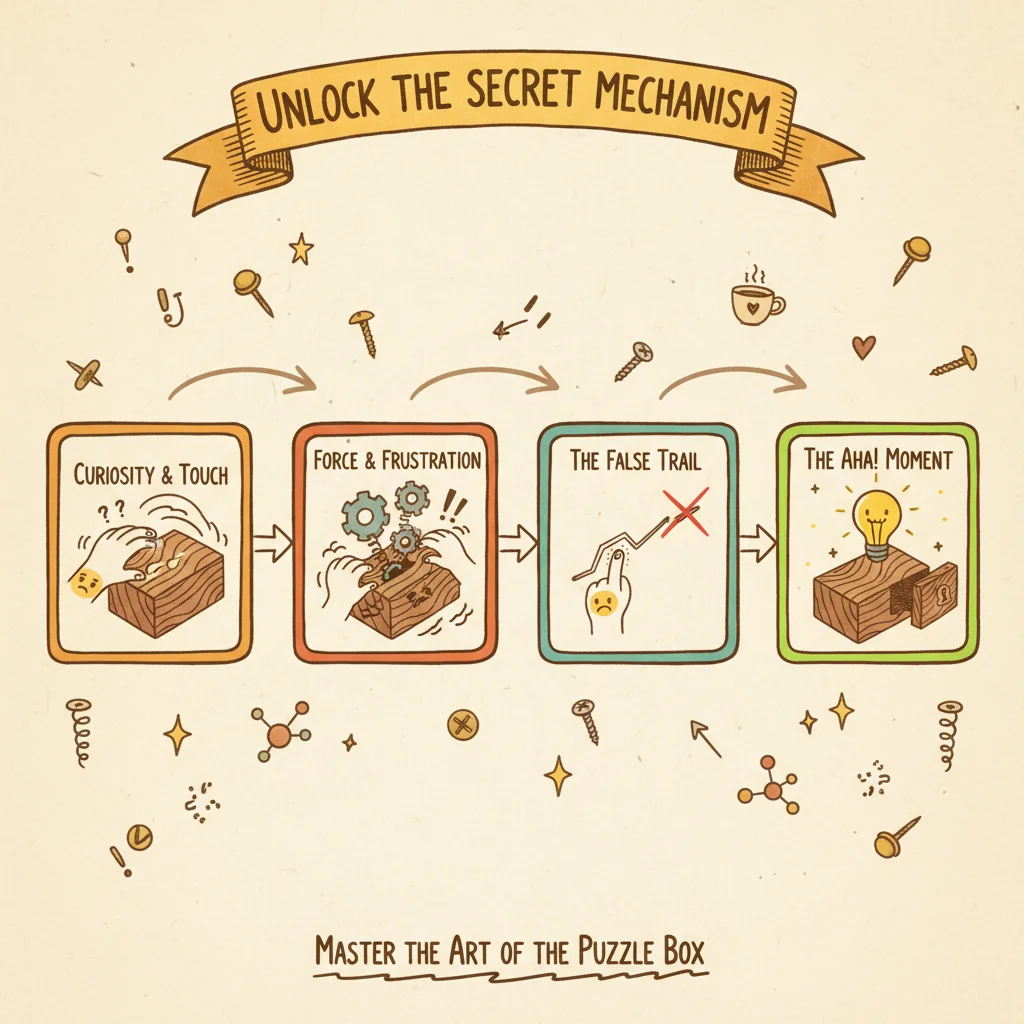
Every enthusiast goes through the same emotional arc. First, there is Curiosity, where you admire the finish and the weight. Then comes Exploration, the stage where you poke, prod, and shake. This is followed by Frustration, the “plateau” where nothing seems to move. If you don’t give up, you reach The Breakthrough, where a panel slides or a pin drops. Finally, there is Reassembly, which—as any veteran will tell you—is often harder than the opening itself.
Most beginners get stuck at the Frustration stage because they expect the box to play fair. It won’t. Master designers like those who created the Japanese Himitsubako traditionally used the wood’s grain to hide seams. In 2026, we see this same philosophy applied to modern materials. If you can’t see the solution, it’s because you are looking at the object as a whole rather than a collection of independent moving parts.
Why Your First Move Should Always Be “Nothing”
When I handed the Cast Keyhole Gold & Silver to a mechanical engineer friend last month, he immediately tried to pull the two pieces apart with enough force to bend the zinc alloy. He failed. Ten minutes later, my eight-year-old nephew picked it up, turned it over twice, and let gravity do the work. The pieces slid apart like silk.
Cast Keyhole Gold & Silver

Cast Keyhole Gold & Silver — $13.99
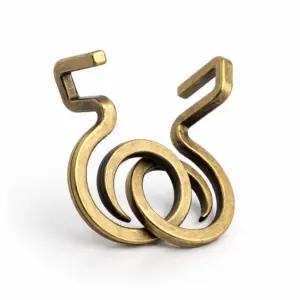
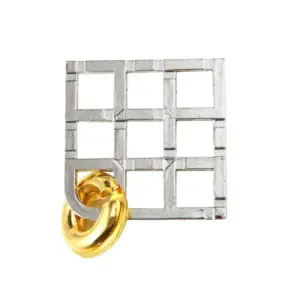
The Cast Keyhole Gold & Silver ($13.99) is a masterclass in spatial deception. At first glance, it looks like two flat, interlocking keys. The gold and silver finishes are polished to a mirror shine, making it feel more like a piece of jewelry than a brain teaser. However, the “key” is actually a three-dimensional maze hidden within the flat-looking cuts. You have to navigate the silver piece through the internal notches of the gold piece, but because you can’t see the internal track, you have to “feel” your way through.
I’ve spent hours with this one, and even after knowing the solution, putting it back together requires a level of spatial awareness that most $100 puzzles don’t demand. It’s small enough to fit in a watch pocket, making it the ultimate “wait-at-the-doctor’s-office” companion. The weight is substantial for its size, and the way the two metals click together is immensely satisfying. If you’re just starting out, this is the one that will teach you to stop pulling and start feeling.
The Architecture of Deception: Wood vs. Metal
There is a fundamental difference in how you approach a wooden solve versus a metal one. Wood is organic; it breathes. It allows for intricate joinery that mimics ancient architectural techniques. Metal, on the other hand, is about precision and tolerances. A metal puzzle can hide a mechanism that is accurate to a thousandth of an inch, making the solve feel like you’re operating a piece of high-end machinery.
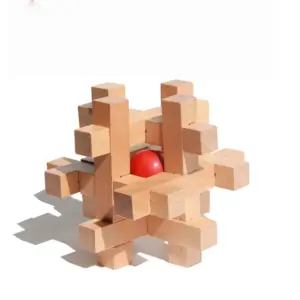
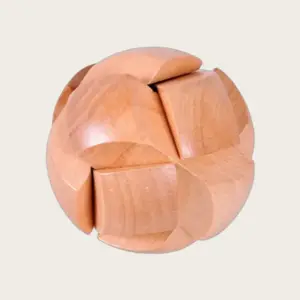
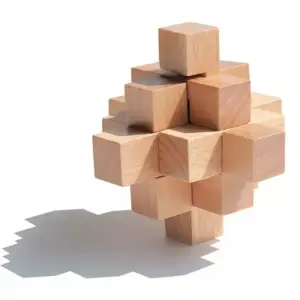
Take the 6-in-1 Wooden Brain Teaser Set ($38.88) as an example. These aren’t “boxes” in the traditional sense, but they use the same “key piece” logic that defines the genre.
6-in-1 Wooden Brain Teaser Set
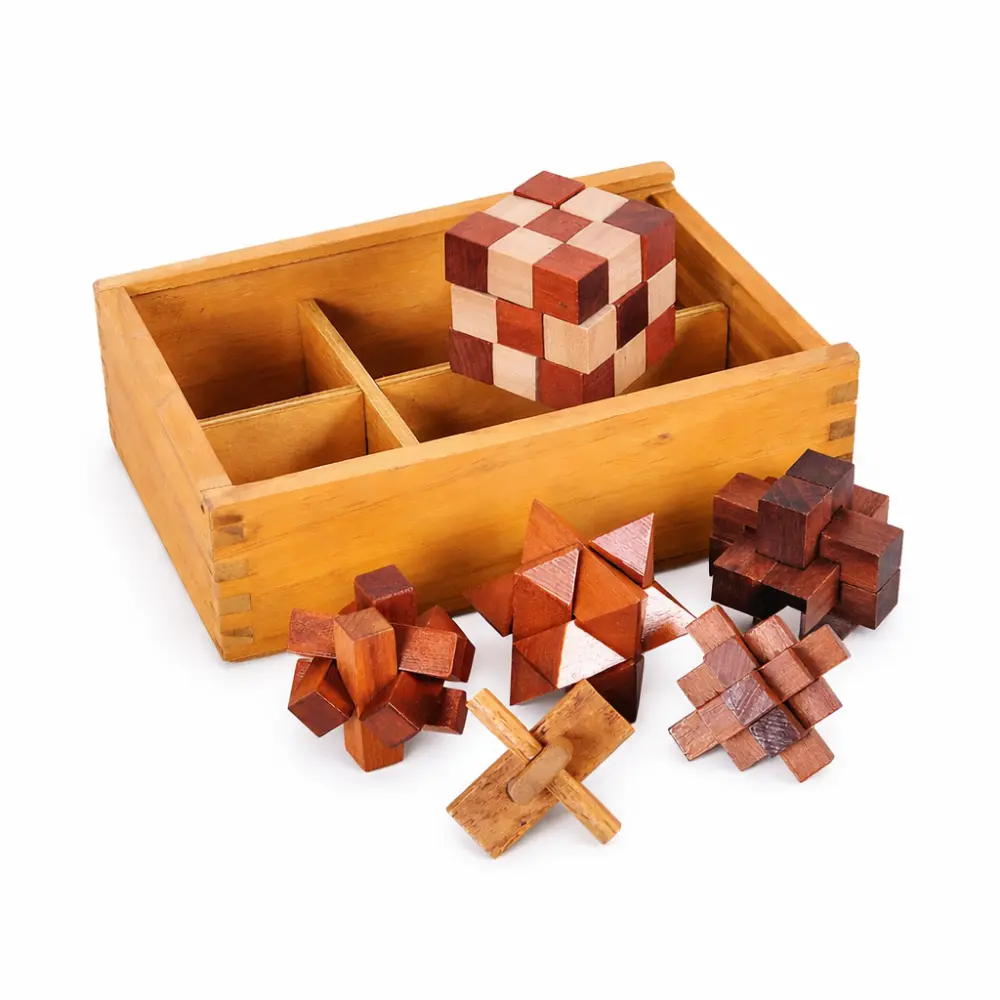
This set is essentially a history lesson in a box. Carved from solid beechwood, these six puzzles utilize mortise-and-tenon joinery—the same nail-free construction used in the Forbidden City. I keep these in my living room because they are incredibly tactile. There is a “key” piece in each one; find it, and the entire structure collapses into a pile of notched sticks. The real challenge, however, is rebuilding them.
I’ve watched smart, capable adults spend forty minutes trying to reassemble the “Burr” puzzle after it fell apart in five seconds. The wood has a dry, earthy scent and a slight friction that metal lacks. It’s a softer solve, one that rewards patience over brute force. At roughly $6.50 per puzzle, this set is the best value for someone who wants to understand the foundational logic of interlocking structures. It’s also a great way to introduce younger family members to mechanical reasoning without the risk of them breaking a delicate internal spring.
The “False Trail” and the Peak of Frustration
The most brilliant puzzles include what we call a “false trail.” This is a movement that feels like progress but actually leads to a dead end. It is the designer’s way of mocking your linear thinking. You find a sliding panel, move it, hear a click, and think you’re halfway there—only to find that you’ve actually locked the second step.
This brings us to a crucial realization: The solve is rarely a straight line. It is a loop. Sometimes you have to move backward to go forward. This is why many people find traditional strategy games like chess to be good training for puzzle boxes; both require you to see three moves ahead while dealing with the reality of the current board.
I remember testing a prototype box where the first step was to shake it, and the second step was to wait exactly thirty seconds for a thermal spring to retract. I spent two days on it. I felt like a genius when I finally opened it, and then I felt like an idiot when I realized the “clue” was written in plain sight on the packaging.
When the Solve Becomes a Sculpture
Sometimes, the “box” isn’t a box at all, but a mechanical assembly. The solve here isn’t about finding a hidden compartment, but about the journey of construction. This is where 3D wooden kits come in. They are essentially “reverse puzzle boxes”—you start with the solution (the finished model) and have to work your way through the complexity to get there.
Mechanical 3D Wooden Globe Puzzle

The Mechanical 3D Wooden Globe Puzzle ($28.88) is less about a “trick” and more about the “snap.” Building this requires you to understand gear ratios and rotational physics. I spent about four hours on this one, and the most rewarding part wasn’t finishing it—it was the moment the gear-drive system actually turned the globe for the first time.
The laser-cut parts are incredibly precise, but you have to be careful. If you don’t wax the gears (I use a bit of candle wax), the friction will ruin the solve. It’s a meditative process. Unlike the Cast Keyhole Gold & Silver, which is about sudden discovery, the Globe is about incremental progress. It’s the perfect project for a rainy Sunday when you want to disconnect from your phone and engage with something physical.
Royal Carriage 3D Wooden Puzzle

If the Globe is about engineering, the Royal Carriage 3D Wooden Puzzle ($25.99) is about aesthetics. I’ve built a lot of these kits, and the Carriage stands out because of the horses. Capturing the sense of motion in flat plywood is a design feat in itself.
The solve here is intermediate. You won’t need glue, but you will need a pair of tweezers and a steady hand. I noticed that the tolerances are tight—which is a good sign of quality—but it means you can’t rush the assembly. It’s about 11 inches long once finished, making it a substantial desk piece. For those who find the complexity of high-end trick boxes too frustrating, these kits provide a guaranteed “win” that still challenges the brain.
The Peak Moment: The Engineer vs. The Child
Here is the insight I promised you, the one that changed how I review every product: Expertise is a handicap in puzzle solving.
I once ran an informal experiment. I took a sequential discovery box—one with multiple hidden tools inside—and gave it to a senior mechanical engineer. He spent twenty minutes analyzing the seams with a flashlight and talking about “internal sliding dovetails.” He didn’t move a single piece. Then, I gave it to a ten-year-old. She shook it, heard a rattle, turned it upside down, and a hidden pin fell out. She was halfway through the solve before the engineer had even touched the box.
The lesson? We often look for complexity where there is only simplicity. We assume the “solve” must be a sophisticated mechanical sequence, so we ignore the most obvious solution: gravity. This is why something like the Interlocking Metal Disk Puzzle is so effective. It looks simple, so your brain searches for a complex hidden trick, only to realize the solution is right in front of your eyes.
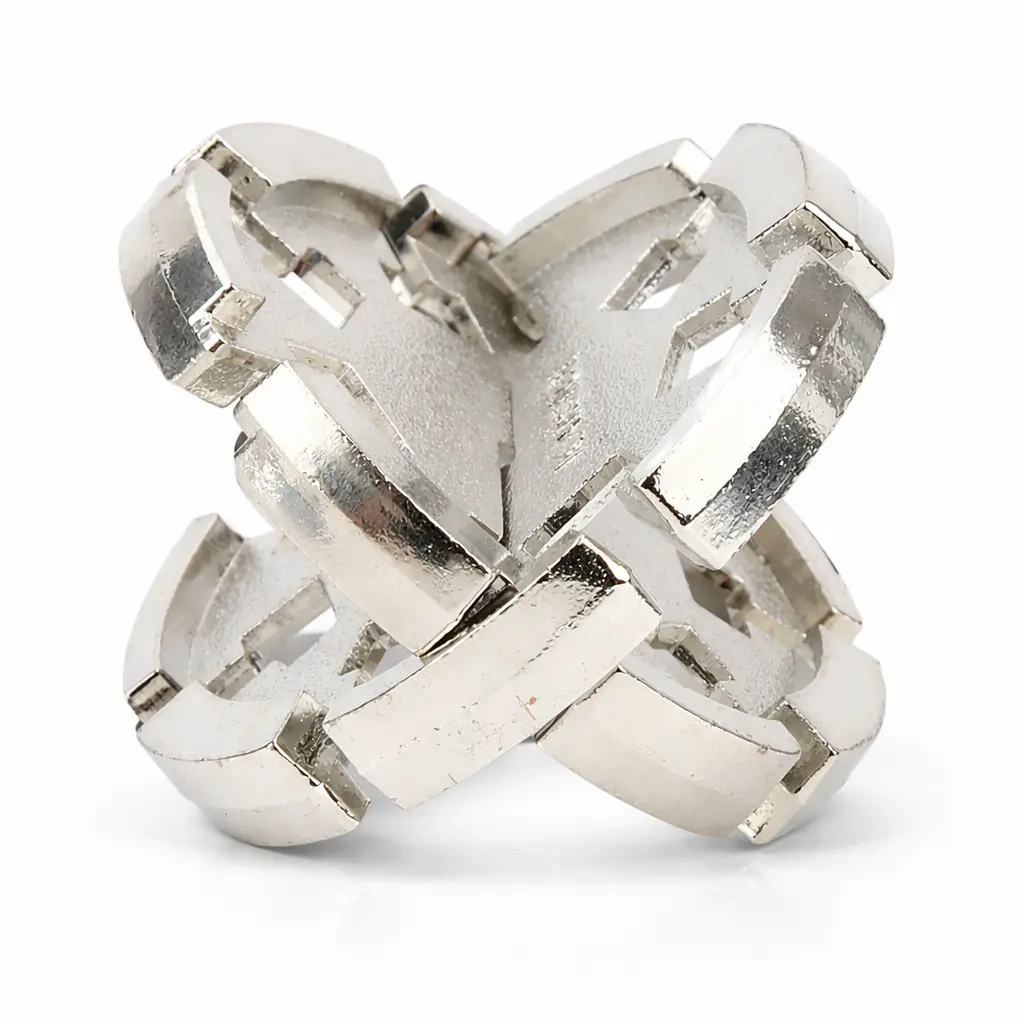
The Interlocking Metal Disk Puzzle ($14.99) is my current favorite “fidget” solve. It’s two disks that rotate through a specific sequence of slots. It’s small—under two inches—and fits perfectly in the palm. I use it during long phone calls. It doesn’t require the deep focus of a Gothic Lantern build, but it keeps the “lizard brain” occupied so the rest of your mind can focus. It’s a tactile reset button for your desk.
The Psychology of the “Aha!” Moment
Why do we do this to ourselves? Why spend $20 or $200 on something that is designed to make us feel stupid for an hour? The answer lies in the work of Edward Thorndike, a psychologist who studied “trial-and-error” learning. He found that the “accidental” success—the moment you stumble upon the right move—creates a powerful neural pathway.
Solving a puzzle box is a rare opportunity in adult life to experience “pure” learning. We aren’t reading a manual or following a tutorial; we are using our senses to map an unknown system. It’s the same satisfaction you get from mastering a complex game of logic. It’s a reminder that we are capable of figuring things out on our own.
Moving Beyond Wood and Metal: The Crystal Solve
Not every solve has to be about gears or sliding panels. Sometimes, it’s about the intersection of light and geometry. Crystal puzzles are a different beast entirely. They are translucent, meaning you can see the internal structure, but that transparency is its own kind of deception. The reflections and refractions make it difficult to tell where one piece ends and another begins.
3D Crystal Rose Puzzle
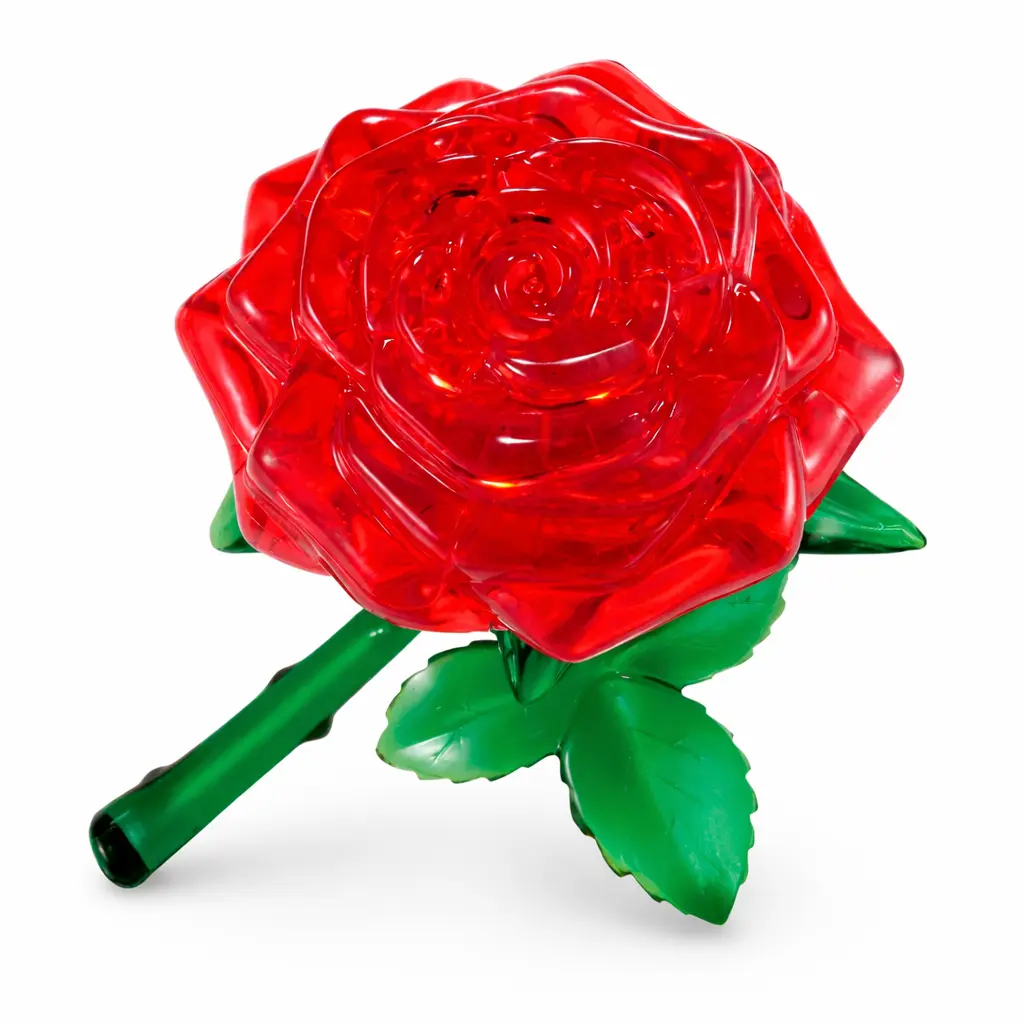
I usually find “decorative” puzzles a bit tacky, but the 3D Crystal Rose Puzzle ($19.99) won me over. It’s 44 pieces of translucent red plastic that, when assembled, looks like a piece of Swarovski crystal. The solve is surprisingly tricky because the pieces are “interlocking stacks.” If you get one layer wrong, the central “locking” rod won’t slide through.
I gave this to my wife for our anniversary (alongside real flowers, because I’m not a total geek), and she ended up spending more time on the puzzle than she did looking at the bouquet. It’s a different kind of solve—less about “tricks” and more about visual pattern matching. It’s a great entry point for people who find traditional mechanical puzzles a bit too “cold” or industrial.
3D Crystal Apple Puzzle
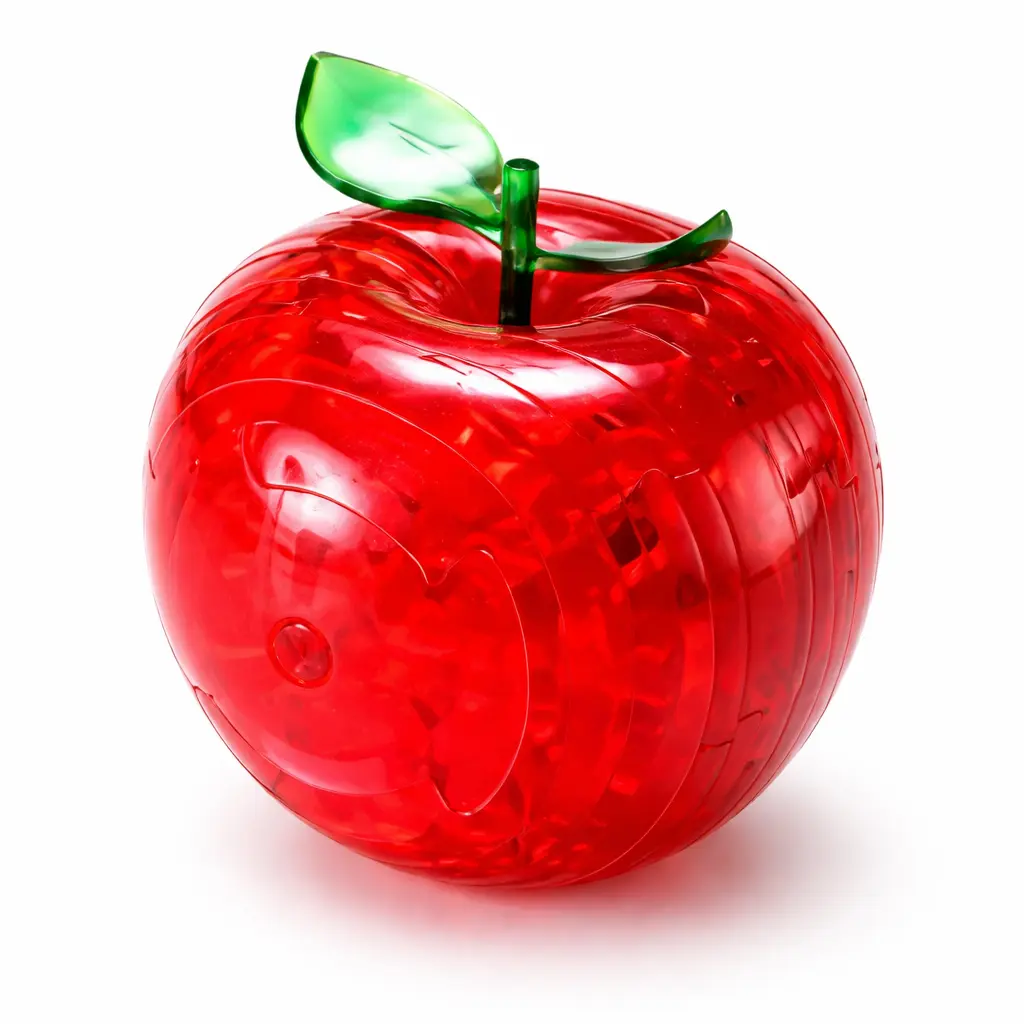
Similarly, the 3D Crystal Apple Puzzle ($18.88) uses 44 pieces to create a life-sized translucent fruit. This one is a bit more forgiving than the rose, but the final locking mechanism—the stem—is a classic “puzzle box” move. You build the entire structure, and it feels loose and unstable until that final piece clicks into place, tensioning the entire assembly. It’s a great desk toy because it catches the light beautifully, and it’s a subtle way to show off your solving chops to coworkers.
The Industrial Beauty of the Triangle
If you want something that feels like it was stolen from a 19th-century laboratory, you go for heavy cast metal. There is a weight to these that wood simply can’t match. They feel permanent.
Cast Coil Triangle Puzzle
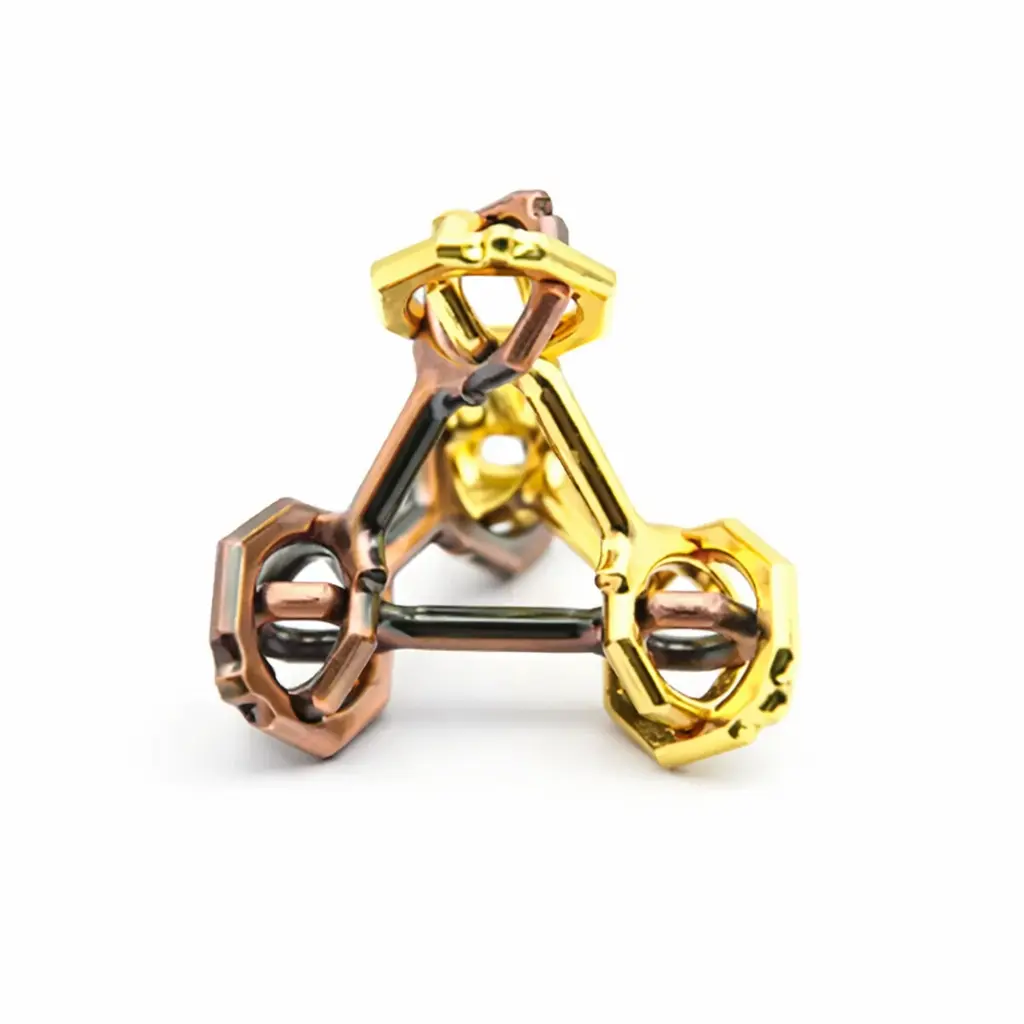
The Cast Coil Triangle Puzzle ($25.99) is one of those objects you just want to hold. It’s a stereoscopic triangle made of three interlocking rings with a brass-and-bronze finish. The solve is purely geometric. There are no hidden springs or magnets; it’s just about finding the exact orientation where the pieces can slide past each other.
I’ve had this on my coffee table for six months, and it’s the one guests always pick up. It’s “fidget-friendly,” but the solve is difficult enough that most people can’t do it on their first try. It reminds me of the history of science puzzles, where physical objects were used to demonstrate mathematical principles. It’s chunky, precise, and looks like a mechanical gemstone.
When Logic Meets Light: The Gothic Solve
For the ultimate “solve as a reward” experience, you need a puzzle that does something when you finish it. This is why the Light-Up Gothic Wooden Lantern 3D Puzzle is such a standout in the 2026 market.
Light-Up Gothic Wooden Lantern 3D Puzzle

This isn’t just a build; it’s a piece of functional decor. With 154 pieces, it’s a more significant time investment than the 3D Wooden Puzzle Tanker Truck. The solve involves assembling intricate pointed arches and delicate wooden “tracery.” But the real magic happens when you install the LED wick.
The way the shadows hit the wall through the wooden cutouts is genuinely beautiful. It’s a “solve” that you get to live with every night. I noticed that the wood quality here is slightly higher than some of the cheaper kits I’ve tested; it’s less prone to splintering, which is crucial when you’re dealing with 150+ small parts. If you’ve already conquered the basic trick boxes, this is a rewarding next step that results in something you’ll actually want to display.
3D Wooden Puzzle Tanker Truck Kit

On the other end of the spectrum is the 3D Wooden Puzzle Tanker Truck Kit ($22.99). This is for the person who loves mechanical action. The wheels roll, the cabin doors open, and the entire thing “snaps” together without a drop of glue. It’s a 3-5 hour solve that is more about the tactile joy of construction than hidden secrets. I particularly liked the laser-etched “flame” design on the side—it adds a bit of personality to what could have been a generic model. It’s a solid, rugged build that can handle being handled.
Quick-Reference Comparison Table
Frequently Asked Questions About the Puzzle Box Solve
How do I open a puzzle box without instructions?
Start by applying gentle pressure to every surface. Most boxes rely on a sliding panel, but some use “centrifugal force” (you have to spin it) or gravity pins. If nothing moves, try tapping the box gently against your palm to see if you can hear a rattle—that rattle is often the key to the solve. Never use tools or excessive force; these objects are designed to be solved with your fingers, not a screwdriver. If you’re truly stuck, looking at sequential discovery guides can help you identify common mechanical patterns.
What is the hardest puzzle box to solve?
Difficulty is subjective, but “Sequential Discovery” boxes are generally considered the peak of the hobby. These are boxes where you find a tool (like a small metal pin) hidden in one compartment, which you then have to use to unlock a second compartment. Some of the most difficult wooden challenges can take days or even weeks of intermittent fiddling. For a beginner, a “Level 10” Hanayama cast puzzle can feel just as impossible as a $500 artisan box.
Are wooden puzzle boxes durable enough for kids?
It depends on the wood. Beechwood and birch plywood are quite sturdy, but the thin “tracery” on models like the Light-Up Gothic Wooden Lantern can be fragile. I generally recommend cast metal for younger children because it’s nearly indestructible. If you are looking for a family-friendly puzzle experience, stick to the 6-in-1 sets or larger 3D models where the pieces are chunky and easy to handle.
How do I reset a puzzle box once it’s open?
This is where most people fail. Always take a photo of the box in its open state before you start moving pieces back. Reassembling a puzzle like the Cast Keyhole Gold & Silver is often harder because you are working against the “flow” of the internal maze. If a piece won’t go back, don’t force it. It means your internal alignment is off by a fraction of a millimeter.
Why are some puzzle boxes so expensive?
You aren’t just paying for the material; you’re paying for the tolerances. A high-end box has seams so tight they are invisible to the naked eye. This requires precision machining or hand-fitting by a master carpenter. While a $20 mass-produced box is a great way to start exploring the hobby, the “boutique” boxes are essentially mechanical art. However, for 90% of people, the $15-$40 range offers plenty of challenge and quality.
Can I solve a puzzle box by just shaking it?
Sometimes! Some boxes use “locking pins” that are held in place by friction or small magnets. Shaking or tapping can sometimes dislodge these. However, modern designers are wise to this and often include “decoy pins” that lock the box even tighter if you shake it. It’s better to use tactile logic and observation than to rely on luck.
What should I do if a wooden piece breaks?
If it’s a laser-cut kit like the Royal Carriage, a tiny drop of wood glue (PVA) and a toothpick will usually fix it. For solid wood puzzles, you might need a bit of sandpaper to smooth out a splintered edge. Avoid using superglue, as it can seep into the mechanism and permanently lock your puzzle.
Do puzzle boxes help with anxiety or ADHD?
Many people, myself included, use “fidget solves” like the Interlocking Metal Disk Puzzle to manage focus. The tactile feedback provides a “grounding” effect. It’s a more productive way to keep your hands busy than scrolling through a phone. Even engaging in a quick game of chess can have a similar calming effect by forcing the brain into a state of “flow.”
How do I maintain my metal puzzles?
Over time, the oils from your hands can dull the finish of zinc or brass puzzles. A quick wipe with a microfiber cloth is usually enough. For puzzles with tight tolerances, a single drop of dry PTFE lubricant can keep the movement smooth. Avoid WD-40, as it attracts dust and will eventually gum up the solve.
Is there a “universal” trick to solving these?
The only universal trick is observation. Look at the grain of the wood. Look for tiny scuff marks that indicate a panel has been moved before. Look for symmetry—or the lack of it. Most solves are hidden in plain sight. If you treat the puzzle like a strategic logic game, you’ll start to see patterns that others miss.
What is “Sequential Discovery”?
This is a sub-genre where the solve happens in stages. You don’t just “open” the box; you find a hidden compartment, which contains a tool, which helps you open a second compartment, and so on. It’s like a tiny, physical escape room. These are often the most satisfying but also the most challenging puzzles for advanced collectors.
Can I build my own puzzle box?
Absolutely. Many people start by modified existing boxes or following plans online. However, the precision required is high. Starting with a kit like the Mechanical 3D Wooden Globe is a great way to learn how gears and locking mechanisms work before you try to design your own from scratch.
The One Puzzle That Teaches You How All the Others Work
If you only buy one thing to start your journey into the puzzle box solve, make it the Cast Keyhole Gold & Silver ($13.99). It is the perfect distillation of everything I’ve learned after testing 200+ puzzles. It’s affordable, it’s beautiful, and it will absolutely infuriate you in the best possible way.
It taught me that my eyes are usually lying to me and that my hands have a logic of their own. It closed the loop on that 2 AM coffee-fueled frustration and replaced it with the quiet confidence of someone who knows that every problem has a solution—if you’re willing to look at it from a different angle.
Once you’ve mastered the keyhole, the rest of the world starts to look a bit different. You’ll find yourself looking at door hinges, cabinet latches, and even the mechanics of traditional board games with a new sense of curiosity. The solve isn’t just about the box; it’s about the moment you realize that “impossible” is just a word for a move you haven’t found yet. Start with the small wins, and before you know it, you’ll be tackling the most complex trick boxes in the collection.
The click is waiting. Go find it.