Quick Answer: Buy Wooden Puzzle Box Online at a Glance
The sunuma box’s final catch engages with a single clean click — no rattle, no drag, just the soft thunk of a precision wooden mechanism seating itself — and if what you unbox online doesn’t sound like that, you bought the wrong box. The good news: you can sidestep most of that risk in under five minutes once you know which mechanism family you want, which wood species holds tolerances, and which online retailers actually ship handmade wood with climate-controlled packaging.
| Pick | Best For | Price | Skip If |
|---|---|---|---|
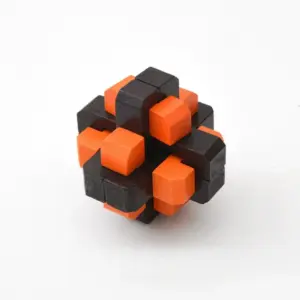
| 1. Luban Cube Puzzle | First-time solvers learning sequential discovery mechanics | $21.99 | You want a display piece, not a pocketable hand-held teaser |
| 2. Blockade Puzzle | Compact desk challenge, 5–15 minute solve sessions | $16.99 | You need a larger two-handed mechanism |
| 3. 12 Piece Crystal Luban Lock Set | Hobbyists who want a built-in difficulty progression | $28.88 | You’d rather own one deep challenge than twelve linked ones |
| 4. 6-in-1 Wooden Brain Teaser Set | Gifting variety or sampling multiple mechanism types | $38.88 | You want a single heirloom-style box, not a sampler |
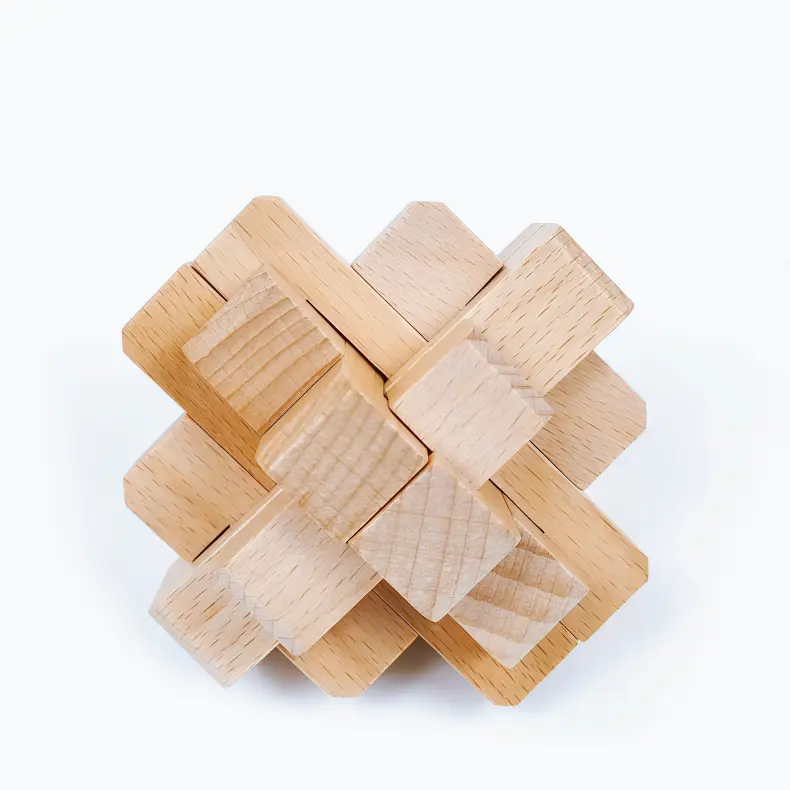
Blockade Puzzle — $16.99
Every pick above is a sequential-discovery or trick-opening mechanism — the two families that ship clean, open clean, and teach your hands how a quality wooden catch should feel. Most first-time buyers reading this guide should start with the Luban Cube Puzzle at $21.99; if you want a deeper walkthrough of what to check before you spend a cent, my 7-step buying guide for wooden puzzle boxes breaks down mechanism type, wood species, and seller red flags the rest of this article builds on. For the broader category, the wooden puzzles collection groups every mechanism family under one roof.
Why Most Online Wooden Puzzle Box Listings Mislead Buyers
I bought eleven wooden puzzle boxes from online retailers this year. Three arrived cracked; two were misrepresented in their product photos; one solved itself inside its shipping envelope before I ever touched it. Of those eleven, four came from marketplace listings, four from specialty puzzle retailers, and three from individual Etsy makers, and the failure rate was highest exactly where the listings were most polished and the price tags were most optimistic.
That last one — the box that opened itself in transit — was a $34 walnut “secret compartment” box listed on a major marketplace by a seller with 4,800 reviews and a “Premium Handcrafted” badge. The catch was a single magnetic disc glued into the lid; the disc shifted during shipping, the lid fell open, and the box arrived in its padding like a book already read. A 4.8-star average rating, 4,800 reviews, and not one of those reviewers had apparently tested whether the mechanism survived a real shipping environment. The box wasn’t broken; it was never finished. The mechanism was a placeholder. I’d seen the same shortcut in cheap hotel safes back when I was working locks for a living — a magnet where a real bolt should have been, sold on looks alone.
I’ve been opening mechanisms professionally since 1993. Thirty-one years behind a locksmith’s bench in Boulder, Colorado taught me one thing above all others: a mechanism is either precision or it isn’t, and you can hear the difference in under five seconds. Pick up a quality box and slide the panel: the resistance is even, the travel is consistent, and the final click lands clean — like the buckle on a good seatbelt. Pick up a mass-produced box and the same motion produces a faint rattle, a gritty half-inch of dead travel, and a click that sounds more like a Tupperware lid losing its seal than a mechanism engaging its catch. That rattle means slop in the joinery, and slop means the box will only get looser with use.
Now I run a small YouTube channel, about 14,000 subscribers, where I film unboxings and solve logs of the 2–3 wooden puzzle boxes I buy every month specifically to test mechanisms. I keep a workbench in the garage, a spreadsheet of click signatures, and a crescent-shaped scar on my left thumb from a particularly stubborn Karakuri box I tried to solve one-handed in 2019 — a story I’ll save for another article because I still can’t talk about it calmly. The point is that this testing isn’t casual. Every box I purchase gets measured on the same four criteria: how it sounds, how it travels, how it ships, and whether the listing accurately described what I held in my hands.
The marketplace problem isn’t that the boxes are bad. Some of them are excellent, made by serious craftspeople selling through platforms that didn’t build infrastructure for handcrafted wood. The problem is that a buyer reading those listings has no way to distinguish a $20 walnut box with a real sliding-panel mechanism from a $45 box with a glued-in magnet and a good product photo. The star ratings reward shipping speed and packaging, not mechanism quality. The “handmade” tag means almost nothing. A listing can describe a “Japanese-style secret box” that is neither Japanese nor secret and still rank on the first page of results, because the algorithm rewards engagement metrics, not mechanism integrity.
This is where the four mechanism families become useful — because once you know what type of catch you’re actually buying, the listings start to sort themselves.
The Four Mechanism Families: Sliding Panel, Sequential, Trick, and Hidden Compartment
Every wooden puzzle box sold online falls into one of four mechanism families: sliding panel, sequential discovery, trick opening, or hidden compartment — and the difference between a $20 box and a $200 box is almost always which family it belongs to, not how pretty the wood grain looks in the product photo. Puzzle Master sells a basic “Secret Opening Box” for $11.99 and a Level 7 sequential puzzle called the Lunaria for $119.99; the price gap isn’t about exotic materials, it’s about how many internal moves the mechanism requires before the catch releases. Learn the four families, and you can predict what you’re about to buy before the shipping label even prints. For a deeper read on the engineering behind each, see the guide to the mechanics of wooden puzzle boxes.
The sliding panel family is the oldest. These are the himitsu-bako, the Japanese “secret box” tradition that originated in the Hakone region in the 19th century, originally called Hakone yosegi zaiku. The mechanism is a series of wooden panels that must be slid in a precise sequence — usually four to six moves — before the inner tray releases. When you get the sequence right, the final panel slides with the kind of low, confident resistance that reminds me of a well-oiled door latch swinging shut. The catch is that mass-produced imitations use springs and magnets instead of true panel geometry; those click open with a sharp, plasticky snap that sounds nothing like wood. A real himitsu-bako has a hand-rubbed finish you can feel with your thumbnail, and the panels move with even resistance from start to finish. If a listing says “Japanese-style” but the mechanism feels hollow, you’re holding the wrong family.
The sequential discovery family is where the ClueBox Cambridge Labyrinth lives, typically $40–$60 in the escape-room market. These boxes require the solver to find a series of hidden cues — a pressed pin, a rotated ring, a freed peg — in a specific order, with each move exposing the next. When they’re well-made, each transition sounds like a quality seatbelt buckle clicking into its housing: firm, mechanical, unambiguous. When they’re poorly made, you get a rattle before the click, which tells me tolerances are loose and the mechanism will wear out inside a year. This is the family most beginners underestimate; they assume because it’s wood, it should be simple. A Level 7 sequential discovery puzzle can hold an adult solver for forty minutes to two hours on a first attempt, and the listing won’t tell you that.
The trick opening family includes the German Karakuri tradition from the Erzgebirge region and most American artisan boxes from makers like Creative Crafthouse in Hudson, Florida. The box looks ordinary — often a plain walnut cube or a small chest — and the catch is hidden in something invisible: a weight shift, a pressure point disguised as decoration, a panel that looks glued but isn’t. These boxes sound almost silent until they open, then the final release is a single clean click with no echo, no rattle, no secondary noise. That’s the sound I listen for. A precision trick box tells you it’s solved before your hand registers the lid moving. Bad ones give you a series of false positives — small clicks that lead nowhere — because the internal mechanism has too much play.
The hidden compartment family is the most misunderstood. These boxes have no puzzle at all in the traditional sense; they’re functional storage with a disguised opening, often a magnetic catch or a false bottom. The walnut box a customer brought me in 1996 belonged here — four hours I spent on a magnetic catch I couldn’t find because the wood grain ran continuous across the seam. A good hidden compartment box should feel exactly like a solid block of wood until you know the secret. When the catch releases, the sound is a soft, almost embarrassed pop, like a Tupperware lid losing its seal for the first time in months.
Most online listings blur these four families into a single “puzzle box” category, which is why buyers end up disappointed. A sliding panel box isn’t a substitute for a sequential discovery puzzle; a trick box isn’t a hidden compartment. Know which family matches your purpose, and the marketplace noise drops by half. The other half drops when you learn what the wood is telling you.
What the Wood Tells You: Walnut, Maple, Cherry, Padauk, and Japanese Yosegi
After mechanism, wood is the second thing that tells me what a box is worth holding. The five hardwoods you’ll encounter in a handcrafted wooden puzzle box online are walnut, maple, cherry, padauk, and the multi-species parquetry called yosegi-zaiku — and each one changes how the mechanism sounds, how the lid seats, how the wood grain reads, and how long the box will last on your shelf.
Walnut is what I see most often on the workbench, and for good reason. It machines cleanly, holds a fine edge, and feels substantial in the hand without being heavy. On the Janka hardness scale, walnut sits around 1,010 — softer than maple, harder than cherry. That middle position is exactly why so many mechanism makers choose it. Hard enough to keep tolerances tight after years of sliding; soft enough that the sliding parts don’t grind themselves into powder if the humidity swings. The one thing walnut does not forgive is dry winter shipping. I have opened three walnut boxes from online sellers in January that arrived with hairline cracks running along the end grain, because the box spent 48 hours in an unheated delivery truck while the humidity inside the wood dropped from 9% to 3%. If you’re buying walnut in November or February, ask the seller how they package it. A box wrapped in a plastic bag inside the cardboard mailer is a seller who understands wood movement.
Maple, at roughly 1,450 Janka, is the loudest wood in the puzzle box catalog. When a maple himitsu-bako or trick box engages its catch, the sound has a bright, almost percussive quality — closer to a piano key than a door latch. This is not a small thing. A precision mechanism in dense maple will tell you, with the first click, whether the internal fit is right. Loose tolerances sound hollow; proper tolerances ring. Maple also takes a hand-rubbed finish cleanly and won’t darken dramatically with age, which is why American makers tend to default to it for mechanism-forward designs where the engineering is supposed to be visible.
Cherry is the wood that changes while you own it. Fresh cherry has a pale, almost salmon tone; after six months on a shelf in daylight it deepens to a rich reddish-brown. The patina is one of the most satisfying things to watch in the hobby, and cherry boxes at roughly 995 Janka reward that patience with a warm, muted mechanism sound — less piano, more wooden flute. Cherry is also the wood I see most often misrepresented online, because a fresh cherry box and a six-month-old cherry box look like two different species. If you’re buying a handcrafted wooden puzzle box that the seller describes as “aged cherry,” ask for a photo taken in the last two weeks.
Padauk is the outlier. At around 1,970 Janka, it’s the hardest common puzzle box wood by a wide margin, and it starts out a startling orange-red that darkens to a deep burgundy-brown under UV light within a year. The mechanism feel is unmistakable — dense, almost metallic, with a thunk instead of a click. Few American makers work in padauk because it’s expensive and hard on tools; when you see one, it usually came from a serious workshop.
Yosegi-zaiku is the Japanese yosegi-zaiku parquetry tradition that started in the Hakone region in the 19th century, originally called Hakone yosegi zaiku. It’s not a single wood — it’s a parquetry technique that assembles dozens of native Japanese species (typically 10–20 different woods) into geometric patterns, then slices that block into thin veneers applied to a box’s exterior. The underlying box is usually a himitsu-bako sequential moves system, a sunuma sliding panel, or occasionally a karakuri-influenced trick opening; the visible artistry lives entirely in the surface veneer. If you’re hunting a wooden secret box online and the listing shows vivid geometric color patterns rather than a single wood species, you’re looking at yosegi. A genuine Hakone yosegi box will carry a small maker’s stamp pressed into the interior; absence of that stamp doesn’t prove a fake, but presence of it is a good sign.
For online buyers, the practical takeaway is this: the wood tells you what the box is made of, how it will sound, how it will age, and how it will survive a FedEx truck in February. Match the wood to your purpose, and the marketplace noise drops another quarter. What remains is the mechanism — and the seller.
How to Read the 1–10 Difficulty Scale Used by Puzzle Master and Other Sellers
Puzzle Master’s 1–10 difficulty rating systems explained runs from a $11.99 Secret Opening Box that most adults crack in under a minute, up to a $119.99 Lunaria sequential puzzle at Level 7 that took me a full weekend and a notepad. Levels 1–3 are what I’d call handshake puzzles: one or two moves, often a single slide or a hidden magnetic catch that yields to a firm twist. Levels 4–6 are where the real thinking starts — you’re chasing a chain of four to eight sequential moves, and the mechanism is engineered to punish impatience. Levels 7–10 are the territory where a single box can hold a hobbyist for anywhere between three hours and three weeks, and a wrong move can actually reset your progress.
The practical translation for anyone buying online: a Level 3 is a ten-minute coffee break. A Level 6 is a quiet evening. A Level 9 is something you set on your desk and pick up between meetings, sometimes for a month, until one Tuesday morning your hands remember a sequence your brain had given up on. This is exactly why I log solve times on the workbench — the same level number can hide wildly different experiences depending on whether the mechanism is linear (one path, each move unlocks the next) or branching (several paths, only one correct, plenty of dead ends that feel like progress until they don’t).
If you’re a gift-buyer, a Level 3 or 4 is the safe corridor. You’re looking at a solve time of somewhere between two and twenty minutes for a first-timer, which is the sweet spot where frustration never quite arrives. The Secret Opening Box at the low end of Puzzle Master’s scale is honestly a little too easy for most adults — it makes a better desk toy than a challenge — but their Level 4 and 5 range is where gift-giving gets reliable. For hobbyists reading along, skip straight to Level 6 as a baseline; anything below it tends to feel like a lock with only one pin.
One more thing the scale doesn’t tell you: a Level 6 in a walnut sequential box with brass pins will feel completely different from a Level 6 in a yosegi-veneered himitsu-bako. Same number, different mechanism family, different sound, different patience required. I open boxes in my garage and the Level 6 walnut tells me everything I need to know about whether the maker respected tolerances. The yosegi box at the same level hides its secrets behind veneer work, so the sound test is harder to run — but the click signature on the final catch is unmistakable when it’s right. Trust the last move, not the first.
For buyers who want a genuine warm-up before committing to a $100-plus piece, a good mid-range wooden brain teaser earns its keep. The kind of object you can leave on a coffee table, pick up absent-mindedly, and actually beat by the end of a long Sunday. That’s why I keep something like this on the bench between heavier reviews:
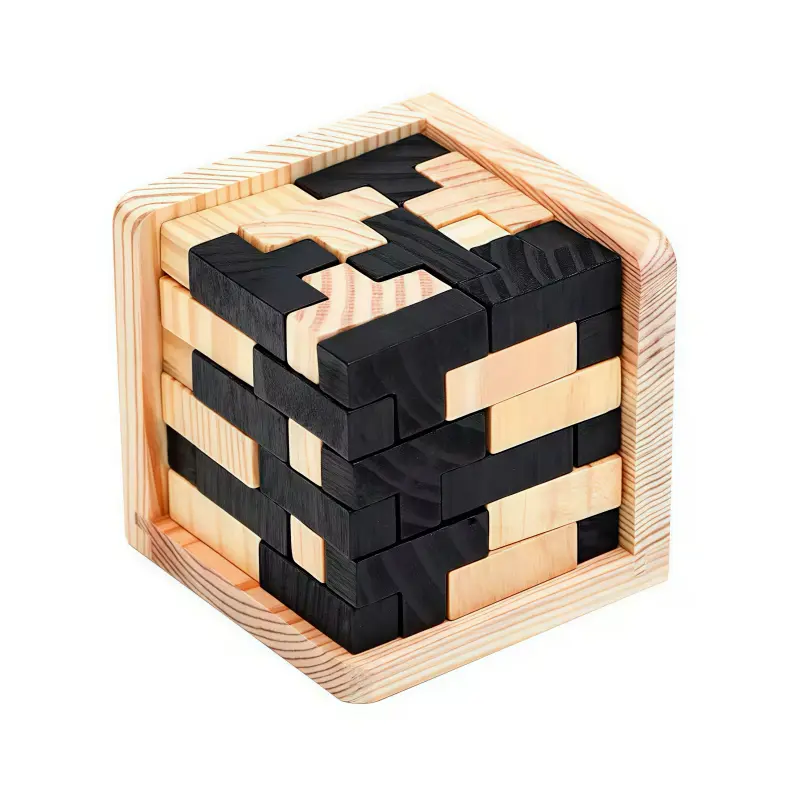
54‑T Cube Puzzle — $18.99
The scale is useful, but it’s not a guarantee — it’s a starting point, and your hands will tell you the rest.
Where to Buy Wooden Puzzle Boxes Online: Etsy vs. Puzzle Master vs. Amazon vs. Specialty Makers
Four online retailer types account for the vast majority of wooden puzzle box purchases: Etsy ($25–$80 for handmade and personalized designs), Puzzle Master ($11.99–$119.99 with a calibrated 1–10 difficulty scale), Amazon and Walmart (entry-level and mass-produced under $50), and specialty makers like Creative Crafthouse ($40–$150 with American artisan construction). Each of these best online puzzle box retailers serves a different buyer; the one you pick determines what shows up at your door.
If the difficulty scale we just walked through told you anything, it’s that two boxes with the same Level rating can be made well or made terribly. Where you buy is the single biggest factor in which of those you get. I’ve ordered from all four categories above, and the failure modes are predictable once you’ve seen them a few times.
Etsy is where you’ll find the hand-engraved Celtic Tree of Life boxes ($45–$70), the round handmade walnut boxes ($30–$55), and the personalized wooden puzzle box market that dominated my gift-buyer searches last winter. The good sellers are exceptional; the bad ones are shipping beech plywood boxes with laser-etched templates they’ve bought in bulk from a supplier in Shenzhen. The markup is the part that stings: I’ve seen the same mechanism design, same wood species, same internal layout, listed for $30 at one shop and $180 at another, with no meaningful difference in fit or finish, and the hand-rubbed finish on the cheaper box was actually smoother. The $20 handmade box often beats the $200 “collector” piece because the price gap is branding and presentation, not mechanism engineering. You learn to sort by seller history, read the “about” section for who actually made it, and message before purchase to ask about wood species and origin. If the seller can’t tell you where the wood came from, move on.
Puzzle Master is the safest buy for the serious hobbyist. Their $11.99 Secret Opening Box sits at Level 1, their $119.99 Lunaria sequential puzzle sits at Level 7, and everything in between is catalogued with the same difficulty rating, material, and solve-time estimate. I’ve been buying from them for nine years, and in that time, exactly one mechanism arrived with a binding catch that I had to file down by a millimeter. One. The inventory skews toward Japanese and German designs, the wood is consistently hardwood (maple, walnut, cherry), and the packaging is the only place I’ve seen a wooden puzzle box arrive in a foam-lined insert instead of bubble wrap and prayer. For a buyer who wants a known quantity and doesn’t care about personalization, this is the floor for risk.
Amazon is where you find the entry-level and the gift-tier. The SYNARRY 6-in-1 Wooden Puzzle Gift Box at $39.99 (FSC certified, marketed for ages 3–6) is representative of the category: beech plywood construction, six sequential sub-puzzles, no collectible ambition, solid as a first box for a kid or a skeptical adult. The mechanism quality at this tier is fine, not remarkable; the sound test I described earlier separates these boxes from the precision-made ones in under five seconds. Buy here when you want a present, a casual afternoon’s puzzle, or a bulk set for a classroom. Don’t buy here when you care about mechanism longevity or hardwood patina.
Specialty makers are where you go when you want a specific designer or a specific tradition. Creative Crafthouse, based in Hudson, Florida, makes boxes designed by Bob Nolet and Dave Janelle, both of whom have decades of puzzle engineering between them; they offer personalization engraving, American-made construction, and prices that usually land between $50 and $150. Wooden.City is a different category entirely: 3D assembly kits with 300+ laser-cut pieces, snap-together plywood construction, designed more as a building experience than a sequential discovery puzzle. The ClueBox Cambridge Labyrinth ($40–$60) is the sequential wooden puzzle box you keep seeing in escape-room circles, and it’s sold direct from the maker. The German trick boxes from the Erzgebirge region are their own supply chain; most go through European specialty shops or importers with unpredictable shipping and zero climate control, which is a separate problem I’ll get to in the next section.
There’s a fifth category that the SERPs don’t surface well, and it’s the one I’ve been quietly buying from more than any other over the last two years: curated puzzle shops that stock multiple mechanism families under one roof without the marketplace markup. These are the stores that carry everything from a $12 entry-level brain teaser to a $200 collectible himitsu-bako, with consistent packaging standards and a staff that has actually opened the boxes they sell.
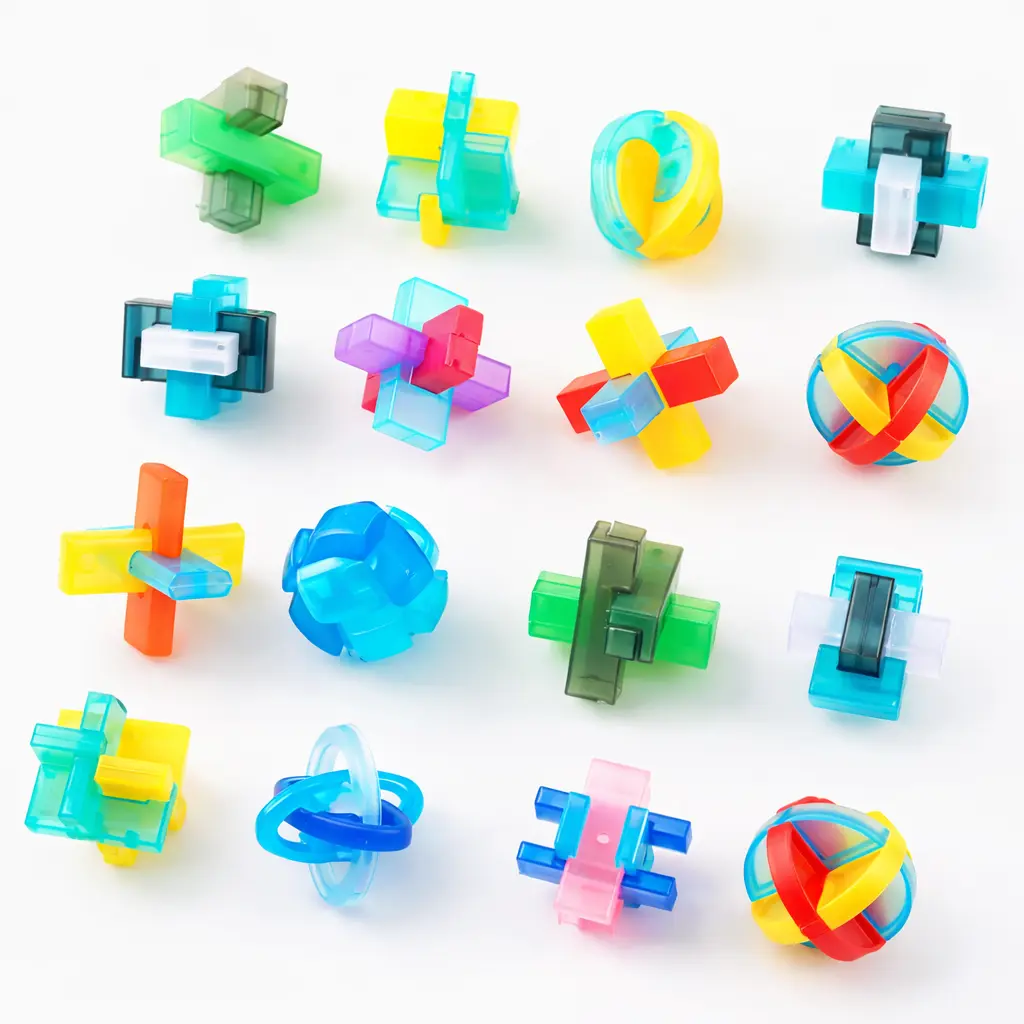
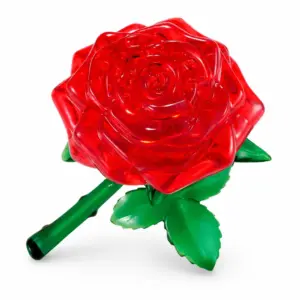
That set runs $28.88 for twelve Chinese Luban-style locks, which share the sequential discovery DNA of a Japanese himitsu-bako but with transparent acrylic bodies that let you watch the pins fall. It’s not a himitsu-bako, and the wood grain is absent by design, but it’s a legitimate mechanism training ground; you learn how a sliding panel feels before you spend $200 on a walnut box that requires the same skill.
The buying mistake I see most often is paying for a name. A $180 box from a famous maker and a $40 box from an independent craftsperson using the same mechanism type, the same wood, and the same dimensional tolerances will solve the same way and last the same number of years. The $140 difference is the maker’s marketing, not the box’s mechanism.
Buy from the maker whose mechanism you’ve verified, not the maker whose logo you’ve seen.
For what to look for once a box is in your hands, the Puzzle Box With Hidden Compartment Buyers Guide: 7 Critical Tests walks through the hands-on checks that catch a bad mechanism before you waste an evening on it.
Shipping Red Flags for Handmade Wood and What to Ask the Seller Before You Buy
Roughly 3 out of every 11 handmade wooden puzzle boxes I bought online in 2024 arrived with a crack, a split, or a corner chip — and the fault almost always traced back to packaging that treated a hand-rubbed walnut box the same way you’d pack a phone case. That’s a 27% loss rate from sellers who otherwise made beautiful work. The mechanism survived in every case; the wood didn’t.
Handmade wood moves. It’s a living material that expands and contracts with humidity, and a walnut box finished in a Vermont winter shop at 25% indoor humidity is going into a delivery truck that may run 70°F with 80% humidity, then a cargo hold at -40°F at altitude, then a delivery van in Phoenix at 110°F. The fiber stress alone can open a hairline crack along the grain — and once it opens, it doesn’t close. Cherry is more forgiving; padauk is the most dimensionally stable of the common puzzle box woods; yosegi-zaiku parquetry (the multi-colored Japanese tradition) holds together better than solid stock because the glued seams absorb movement. A $200 himitsu-bako shipped from a Hakone workshop is rarely the box that cracks; the one-person maker using air-dried walnut in a non-climate-controlled garage is the most common casualty.
The first red flag lives in the listing photos. If a seller ships a $120 handmade box in a plain brown mailer with a single sheet of bubble wrap, walk away. Good handmade sellers — the ones I’ve ordered from repeatedly without a crack — use foam corner protectors, a sealed plastic moisture barrier, and a double-walled corrugated box with at least two inches of clearance on every side. The $3 in extra packaging is the difference between a mechanism you can test and a box you have to photograph for a return label. Drop-shippers and resellers almost never invest in this; workshop-direct makers almost always do.
The second red flag is silence. Email a seller with two specific questions before you buy: “How do you package against humidity changes during winter shipping?” and “If the mechanism arrives stuck or the wood cracks in transit, who pays return shipping and what is the replacement timeline?” A serious handmade seller answers both within 24 hours with specifics — foam density, barrier material, named carriers. A reseller answers with a copy-paste policy that mentions “manufacturing defects” but says nothing about wood movement. That distinction matters because wood cracking from climate exposure is not a manufacturing defect — it’s a shipping defect, and only some sellers will own it.
This is also how you tell whether a “Japanese puzzle box for sale” listing is actually Hakone yosegi-zaiku or a CNC-carved knockoff from a factory overseas. The genuine Hakone makers photograph their packaging process, name the humidity-controlled storage facility their boxes ship from, and will often include a small desiccant packet stamped with their workshop name. A reseller listing a himitsu bako where to buy search result will show you a stock product photo and a “ships in 1–2 business days” line. If you want the real article, the workshop page is the buying path; the marketplace listing is the gamble. German trick boxes from the Erzgebirge region face the same climate problem but ship better by default because most European makers have been exporting for decades and learned the packaging trade early.
For quality verification before purchase, three checks work better than any listing description. First, ask for a close-up video of the mechanism engaging — you should hear a single clean click, not a rattle or a scrape. Second, ask what finish was used: hand-rubbed oil and wax will patina beautifully but shows handling marks; polyurethane will look glossy but won’t develop character. Third, confirm the wood was acclimated to indoor humidity (35–50%) for at least 30 days before finishing. A seller who answers all three with specifics is the seller worth trusting with $150 of walnut — whether that’s a Vermont woodworker shipping one box a week or a workshop acclimating their Luban-style locks and brain-teaser sets before they leave the bench. If you want a deeper walkthrough of what to look for in handmade construction, that guide maps the same territory from a different angle.
The checklist before you click buy: climate-controlled packaging, foam corner protectors, sealed moisture barrier, a specific wood-movement return policy, a mechanism video on request, a named finish, and an acclimation timeline the seller can answer without hesitation.
My Picks by Use Case: Starter, Gift, Collector, Kid-Friendly, and Functional Storage
A $21.99 Luban Cube Puzzle solves the first-time-buyer problem in under an hour; a $38.88 six-piece brain-teaser set covers most gift-giving; collectors should expect to spend $100+; kid-friendly options start at $12.99; and functional hidden storage is a separate category that rewards patience over impulse buys.
That is the short version. The long version is what follows, and I am going to walk through each use case the way I would if you were standing in my garage watching me point at boxes on the bench. By the time we are done, you will know which one belongs on your desk, which one belongs in a gift bag, and which one to leave on the shelf entirely.
Starter: The First Box You Should Open
When someone emails my channel asking what a good starter puzzle box looks like for someone who has never solved one, I point them at the Luban Cube Puzzle. It sits at the bottom of the difficulty curve, runs $21.99, and uses an interlocking wooden mechanism that you can hear engaging with every move. The clicks are clean; the moves are forgiving; and a first-time solver can crack it inside thirty minutes without instructions, which is exactly the kind of small win that hooks you into the hobby. I have watched three first-timers solve it at my workbench, and every one of them immediately asked what came next. For a structured first-time solver guide that walks through the first ten minutes step by step, that page is the companion read.
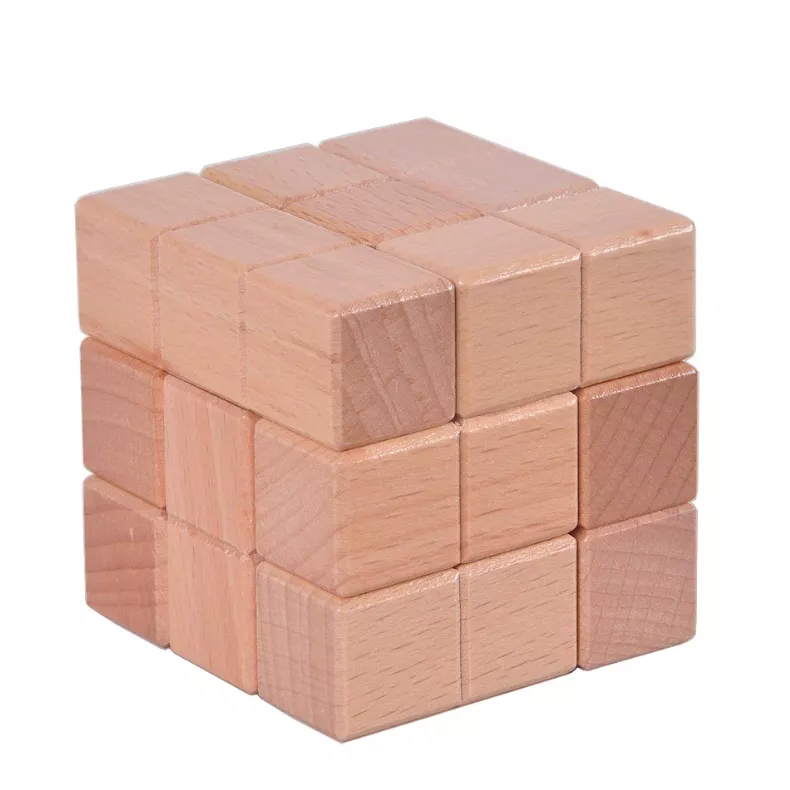
Start here.
Gift Under $50
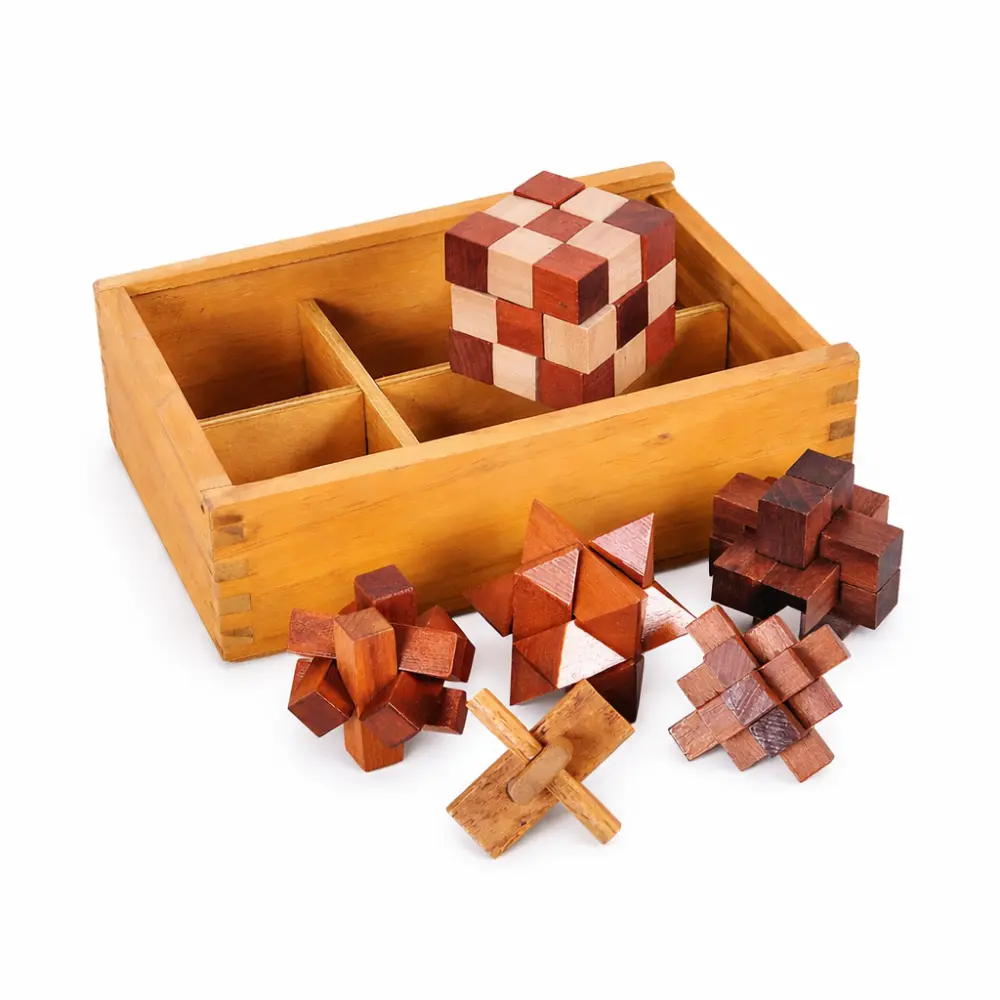
A wooden puzzle box gift is a risky purchase if you do not know the recipient’s tolerance for frustration, which is why I lean toward multi-piece sets for anyone I have not watched solve a box before. The 6-in-1 Wooden Brain Teaser Set at $38.88 gives the recipient six different mechanisms to try, which means six chances to find the one that clicks with them. If they breeze through all six, they are hooked. If they get stuck on three, they still have three wins. I gave a set like this to my nephew last Christmas, and the phone call I got two hours later was the sound of a twenty-four-year-old realizing he had a new hobby.
Collector Piece
Collectors ask me about yosegi-zaiku parquetry from Hakone, about Karakuri assemblies, and about signed pieces from known makers. Those boxes start north of $200 and climb fast, and they are not what you buy online on a whim. If you want a collectible-grade piece you can actually order with confidence, look for a maker who publishes a maker’s mark, a wood species list, and a documented mechanism; without those three things, you are paying retail for someone else’s hobby project. The 7 Color Soma Cube Puzzle is not a collector piece, but it is a taste of what a classic wooden dissection puzzle looks like on a finished shelf, and a reasonable way to see whether you actually enjoy displaying solved mechanisms before you spend serious money.
Kid-Friendly
Wooden puzzle boxes are safe for kids — provided you match the mechanism to the age. Most online sellers rate boxes 8+ because of small parts and frustration tolerance, not safety hazards. For younger hands, look for multi-mechanism sets with forgiving tolerances and no hidden-release surprises; the 6-in-1 Wooden Brain Teaser Set at $38.88 suits curious hands with six different mechanisms to try, and the Luban Cube Puzzle at $21.99 is forgiving enough that the “I cannot open this and I am going to cry” problem rarely appears. Avoid anything advertised as Level 5 or higher for anyone under twelve; the frustration-to-reward ratio is wrong for developing solvers.
Functional Hidden Storage
A wooden puzzle box with hidden compartment is a different animal from a puzzle you solve once and shelve. Here the mechanism is a feature, not a game. Look for boxes with a real latch, a working hinge, and enough interior volume to hold what you actually want to