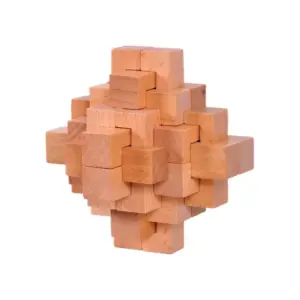
Quick Answer: Best Cast Puzzle for Adults at a Glance
A salaryman at a Kyoto café once solved a disentanglement puzzle during his lunch break in under two minutes — I’d been stuck on the same mechanism for a week. That gap taught me the official Hanayama 1–6 difficulty scale only matters once you translate it into real time: Level 1 fits one coffee, Level 6 needs a weekend, and most adult buyers want something in between. The picks below cover the full spectrum, from a 30-second desk fidget to a multi-session obsession, all built from zinc alloy and plated cast metal.
| Option | Best For | Price | Skip If |
|---|---|---|---|
| Cast Hook Metal Brain Teaser | First-time buyers who want a genuine mid-tier challenge (Levels 3–4) with a real satisfying click on solve | $13.99 | You want a five-minute fidget instead of a 30–90 minute mechanism |
| 4 Band Puzzle Ring | The pocketable classic — five-minute desk fidget, giftable, travel-safe | $11.99 | You already know traditional puzzle rings and want hidden multi-axis logic |
| Metal Orbit Ring Cast Puzzle | Commute companion — multi-axis rotation in a compact form factor | $14.99 | You specifically want a take-apart puzzle rather than disentanglement |
| Cast Galaxy 4-Piece Silver | Cocktail party showpiece — four interlocking pieces with a loud final click | $14.88 | You need silent desk use; this one announces itself |
| Metal Crab Puzzle Cast Brain Teaser with Gold Ring | Visual collector who wants display-worthy cast metal on a shelf | $13.99 | You prioritize internal mechanism over external sculpture |
| 5 Piece Cast Spiral Metal Puzzle | Weekend project — sequential separation logic, harder than it looks | $16.99 | You want a single-session solve, not a multi-evening build |
| Cast Coil Triangle Puzzle | The Level 6 brain teaser on this roster — for solvers chasing the hardest mechanism in the lineup | $25.99 | You’re a true beginner; start with the Hook above |
If you buy exactly one, start with the Cast Hook Metal Brain Teaser — it sits squarely in the Level 3–4 band where most adult solvers find the best ratio of challenge to “I can actually finish this today.” You can also browse the full metal puzzles collection to compare form factors side by side.
Why Cast Puzzles Appeal to Adults More Than Wire Puzzles
The Hook sits on a desk for a reason. Hanayama has sold more than 3 million cast puzzles worldwide since the brand’s modern relaunch, and the typical retail price still hovers around $14.99 in US stores. That combination — mass adoption at an accessible price point — tells you something important: adults keep buying these, and they keep them. If you want the full breakdown of why Hanayama cast puzzles are so popular, the brand history explains a lot of that consistency.
That invitation works for reasons wire puzzles and plastic fidget toys can’t replicate. I learned this after owning roughly 80 cast puzzles over a decade and watching my Brooklyn testing group migrate, almost without exception, away from wire disentanglements within a year. Wire puzzles satisfy a specific itch — the pure geometry of bending metal around itself. But they live in a drawer. Cast puzzles live on a desk. That distinction matters more than any difficulty rating.
The fidget dimension comes first, and it’s the most obvious. A zinc alloy cast puzzle typically weighs 150–200 grams, which gives it a presence in the hand that a wire puzzle or a plastic spinner simply cannot match. You don’t toss it from palm to palm. You turn it over deliberately, feeling the cold-then-warm transition as the metal absorbs your body heat. Most cast puzzles can be solved silently — no clicks, no ratchets, no spinning bearings — which makes them legal in open-plan offices where a mechanical keyboard or a fidget spinner would get you a stern look from your neighbor. The Cast Hook, the Orbit Ring, and the Crab all operate in this silent mode: pure rotational logic, no sound, no screen, no battery.
The meditation dimension is the one most articles miss. Solving a cast puzzle is a 5-to-30-minute commitment, and the mechanism rewards attention rather than speed. Unlike a Rubik’s cube — where algorithms let you power through — a cast puzzle punishes frontal-lobe brute force. You have to rotate it slowly, feel the resistance, notice the half-millimeter of give when one axis releases. My group times solves the way a sommelier times a decant. We’ve watched solvers visibly de-stress during a 15-minute session with a Level 3 brain teaser, shoulders dropping, jaw unclenching. I’m careful not to call this therapy — it isn’t — but it is a screen-free focus ritual that no app replicates.
The décor dimension is what keeps cast puzzles out of the drawer long after the solve is memorized. A wire puzzle looks like, well, bent wire. A cast puzzle looks like a small sculpture. The finishes matter: plated cast metal in gold, silver, or gunmetal, sometimes antiqued bronze. The Cast Coil Triangle reads as a piece of modernist metalwork. The Gold Fish and Silver Coral Reef pair sits on a shelf like a desk-sized aquarium. The Crab, with its articulated claws, doubles as paperweight. This is why genuine collectors display them in shallow glass cases rather than boxes.
The age rating — 13+ on virtually every Hanayama and Huzzle puzzle — exists for a reason: these objects assume adult-sized hands and adult patience. A child solves a wire puzzle and moves on. An adult solves a cast puzzle and then sets it where the next person will see it. That handoff is the real product.
Wire puzzles remain excellent for pure mechanical puzzle hobbyists. But for an adult buying a first metal disentanglement object — something that earns its place on a desk, holds up to daily handling, and rewards a quiet ten minutes between meetings — cast metal is the correct answer. The community might never agree on the hardest challenging puzzle in the catalog. The case for cast over wire requires no debate at all. For top metal brain teaser picks by use case, we maintain a separate guide that maps specific puzzles to specific moments in an adult’s day.
How the Hanayama 1–6 Difficulty Scale Maps to Real Solve Time
Level 1 cast puzzles like Cast Loop average 5–15 minutes for first-time adult solvers, while Level 6 puzzles such as Cast Vortex, Cast Rotor, and Cast Enigma routinely take experienced collectors 3–14 days — a spread so wide it makes the official rating almost useless without translation.
That single number on the front of a Hanayama box — a 1 through 6 stamped on the back of the packaging — is the most misunderstood metric in the cast puzzle world. Most buyers look at it and assume a Level 4 is simply twice as hard as a Level 2. It isn’t. The rating system measures something more specific: the number of independent rotational axes, the presence of hidden internal logic, and the average solve time across hundreds of testers in Hanayama’s Japanese home market. It does not measure your commute, your patience, or whether the puzzle will end up in a drawer by Friday. That translation is on us. For the full honest Hanayama difficulty rating review that compares the brand’s official Level 6 to actual real-world solve time, the gap is even wider than most buyers expect.
Here is the real-world bracket I’ve built over a decade of running solve sessions in my Brooklyn apartment, cross-referenced with the r/mechanicalpuzzles community’s consensus on the daily solve threads:
Level 1 (first coffee, 5–15 minutes): Puzzles like Cast Loop and Cast Amour. The mechanism is almost entirely sequential separation — slide piece A along track B, and you’re done. These are entry-level disentanglement puzzles designed for the “I saw this on a coworker’s desk” first purchase. The Huzzle sub-brand lives almost entirely in this tier, built smaller and lighter for travel.
Level 2 (full coffee break, 15–45 minutes): Cast News, Cast Dolphin, Cast Heart. Here the mechanism introduces one rotational axis — a twist that must be discovered before the linear slide reveals itself. This is where most adults get hooked, because the first “aha” moment happens here.
Level 3 (lunch break, 1–3 hours): Cast Trinity, Cast Quartet, Cast Hook. Two independent axes. You must find the first rotation, hold it while performing the second, and understand how the two interact before the two halves will part. The Cast Hook metal brain teaser sits squarely in this range, with most adult first-timers landing between 30 and 90 minutes depending on whether they’ve solved a similar mechanism before.
Level 4 (evening project, 3–8 hours): Cast Devil, Cast UFO. Sequential separation returns but disguised — the pieces appear to interlock in ways that violate the initial mental model. This is where the rating system starts to lie. A Level 4 is frequently harder than a Level 5 because the frustration is cognitive rather than mechanical. Reddit’s r/mechanicalpuzzles has threads dating back to 2014 where collectors argue this point with religious intensity. If you’ve ever wondered why a Level 4 can be harder than a Level 6, the answer is mechanism type, not raw difficulty.
Level 5 (weekend, 1–3 days): Cast Padlock, Cast Keyhole. Multi-axis rotation with one or more hidden steps. You may need to set the puzzle down, sleep on it, and return with fresh eyes. The “aha” is rarely loud — it’s a quiet realization that the piece you were ignoring was the key all along.
Level 6 (week+, 3+ days to weeks): Cast Vortex, Cast Rotor, Cast Enigma. These are the Mensa-rated showpieces. The mechanism involves three or more independent rotational axes, and in the case of the Enigma, a hidden internal logic where one piece’s position determines the entire solution path. I have watched a man in a Kyoto coffee shop solve a Cast Enigma in under two minutes during his lunch break. I have also watched myself fail to solve the same puzzle for six consecutive evenings. Both experiences were the same puzzle.
The mechanism under the hood: Cast puzzles and wire puzzles look like cousins but are mechanistically different species. A wire puzzle operates on a single 2D plane — you trace the path of one continuous bent wire through another. A cast puzzle operates across 2D and 3D space, with multiple interlocking pieces rotating on independent axes. The mental load is not greater, but it is different — closer to a small 3D mechanical puzzle than to a traditional brain teaser. This is why cast puzzles feel like a fidget object after the solve. Your hands remember the rotations even when your mind moves on.
If you are buying a first cast puzzle today and have no idea where to start, the honest answer is this: a Level 3. The Cast Hook lands in that sweet spot — challenging enough to feel earned, fast enough to solve in a single sitting, and priced under $15 for the genuine article. Anything below risks feeling trivial. Anything above risks the drawer. Level 3 is the one that earns its place on the desk for a year, not a week.
Cast Puzzle Materials, Build Quality, and Why $15 Hanayama Beats Cheaper Knockoffs
A genuine Hanayama cast puzzle weighs between 150 and 200 grams of cast zinc alloy with a plated or painted finish, and arrives in a box stamped with a unique serial number. That weight is the first quality check your hand will run — the gap between a well-made cast puzzle and a cheap knockoff is measurable in millimeters of tolerance and weeks of plating survival.
The materials conversation matters more than the difficulty conversation. Most buyers obsess over Level 4 versus Level 5, then grab whatever is cheapest on Amazon. Wrong order. A Level 2 Hanayama with a tight 0.1mm tolerance will out-satisfy a Level 5 knockoff with sloppy machining. Here is what the material breakdown actually looks like in your hand.
Zinc alloy is the industry default. Hanayama uses a Zamak zinc alloy base for the bulk of the Cast line, and the same alloy shows up in comparable cast metal brain teasers across the category — including the Cast Hook metal brain teaser, which sits in the same density and weight class as Hanayama’s Level 3 offerings. If you want the deeper material science of what makes zinc alloy cast puzzles feel high quality, the density and thermal conductivity story is worth reading. Zinc alloy pours cleanly into complex molds, machines to tight tolerances after casting, and carries enough heft to feel substantial without being desk-crushing. A well-made zinc alloy puzzle has visible mold lines filed smooth, edges that don’t catch on a shirt cuff, and plating that covers every surface evenly.
Plated steel and brass show up in specialty puzzles. When you see stainless steel or brass in a cast puzzle listing, you are usually looking at a higher-tier or limited-edition release. Stainless steel puzzles (certain Huzzle variants, some European boutique makers) resist corrosion better and develop a patina collectors prize. Brass puzzles run warmer to the touch — closer to the feel of a well-worn doorknob. Both materials cost more to produce, which is why the price jumps from $14.99 to $25-30 when steel or brass enters the formula.
The finish determines whether it lasts a month or a decade. Quality puzzles use nickel or copper underplating with a final chrome or colored coat on top — a layered approach that resists flaking even with daily handling. Cheap knockoffs skip the underplating layer entirely. The colored finish goes directly onto the zinc, and within two to four weeks of normal desk use, you will see chips — particularly on the edges where pieces rotate against each other. I have a drawer of evidence on this one.
The 0.5mm tolerance gap is where knockoffs fail. This is the number that matters, and the one no Amazon listing will tell you. A genuine Hanayama puzzle is machined to tolerances of roughly 0.1-0.2mm. The pieces move with a buttery resistance — firm enough to feel deliberate, loose enough to rotate without forcing. Knockoffs typically run at 0.5-1.0mm tolerances, sometimes worse. The mechanism either jams partway through a solve (too tight, sharp edges catching) or falls apart mid-rotation (too loose, no satisfying resistance). Neither is what you want from a desk fidget.
How to spot a counterfeit before you buy:
- No “HANAYAMA” stamp. Every genuine Hanayama puzzle has the brand name etched or stamped somewhere on the body — usually on the inside face of one of the pieces.
- No serial number on the box. Hanayama prints a unique serial number on every retail box. This is not branding — it is how collectors verify limited editions and how the brand tracks the Mensa-rated quality control it built its reputation on.
- Lightweight feel. If the puzzle feels hollow or unusually light for its size, the alloy is cut with cheaper filler metals.
- Visible mold lines. Quality puzzles file and polish mold lines smooth. A new puzzle with rough seams is a red flag.
- Mechanism that feels “off.” A genuine cast puzzle has a specific rotational quality — smooth, weighted, with subtle resistance at certain angles. Knockoffs feel either gritty or wobbly. Handle a known-genuine puzzle first so your hands have a reference.
The same quality markers apply across the cast puzzle category, not just Hanayama. If you want to see how cast puzzles are made from molten zinc, the seven-step manufacturing walkthrough explains why the tolerance gap exists in the first place. The Cast Hook metal brain teaser uses the same Zamak zinc alloy base with a plated finish, and the mechanism tolerance lands in that 0.1-0.2mm range where rotation feels deliberate rather than forced. A quality cast puzzle — whether it carries the Hanayama name or comes from another maker with consistent quality control — will outlive a knockoff by years, not weeks. Hanayama has sold over 3 million cast puzzles worldwide precisely because that consistency compounds.
This is also why the $15 price point matters. A genuine Hanayama at $14.99 (standard US retail at specialty puzzle shops) breaks down to roughly 50 cents per solve if you tackle it once and shelve it, or fractions of a cent per fidget session if it lives on your desk for a year. A $5 Amazon knockoff that flakes in a month cost you more per day of actual use. The math is uncomfortable for bargain hunters.
For serious collectors, the material conversation extends further. Akio Yamamoto — Hanayama’s chief designer and the mind behind the Cast Vortex, Cast Loop, and Cast Enigma — often specifies slightly different alloy blends for specific mechanisms. Softer alloys for puzzles that need a forgiving tolerance. Harder alloys for puzzles with aggressive rotational paths. You can feel the difference after you have solved enough of them. The Cast Enigma has a cooler, denser feel in the hand than the Cast Loop, even though both are nominally “zinc alloy.” It only matters after you have owned 30 or 40 puzzles. But it matters.
The bottom line: material reality is the part of the cast puzzle conversation that determines whether your purchase lives on your desk for a decade or ends up in a landfill in three months. Difficulty level determines the challenge. Material determines the experience.
Best Starter Cast Puzzles (Levels 1–2) for First-Time Adult Solvers
Cast Loop and Cast News sit at Hanayama Levels 1–2 and average 5–30 minutes for a first-time adult solver, while a properly weighted zinc alloy body feels closer to a worry stone than a desk toy. For a complete beginner, that solve window matters more than any official rating stamp.
The starter tier is where most adult buyers should begin — and where most buyers get confused. The Hanayama difficulty scale looks deceptively simple until you stand in a puzzle shop holding two Level 2 pieces and realize one weighs 40 grams more than the other, one has a colder touch, and one produces a satisfying click when you find the release while the other merely sighs. Difficulty level determines the challenge. Solve feel determines whether it lives on your desk or in a drawer.
Here is where the Cast Hook earns its place as the top starter pick for adults. It weighs roughly 110 grams in hand — heavy enough to feel substantial during a coffee break, light enough to ride in a jacket pocket without that annoying pull. The mechanism is two interlocked release moves, both of which reveal themselves within the first ten minutes of handling. First-time solve time for most adults falls between 30 and 90 minutes, putting it in the mid-range of the starter tier rather than at the very bottom — and that extra difficulty is a feature, not a bug. A Level 1 cast puzzle solved in two minutes feels like a toy. A Cast Hook that takes an hour of intermittent fidgeting feels like an accomplishment.
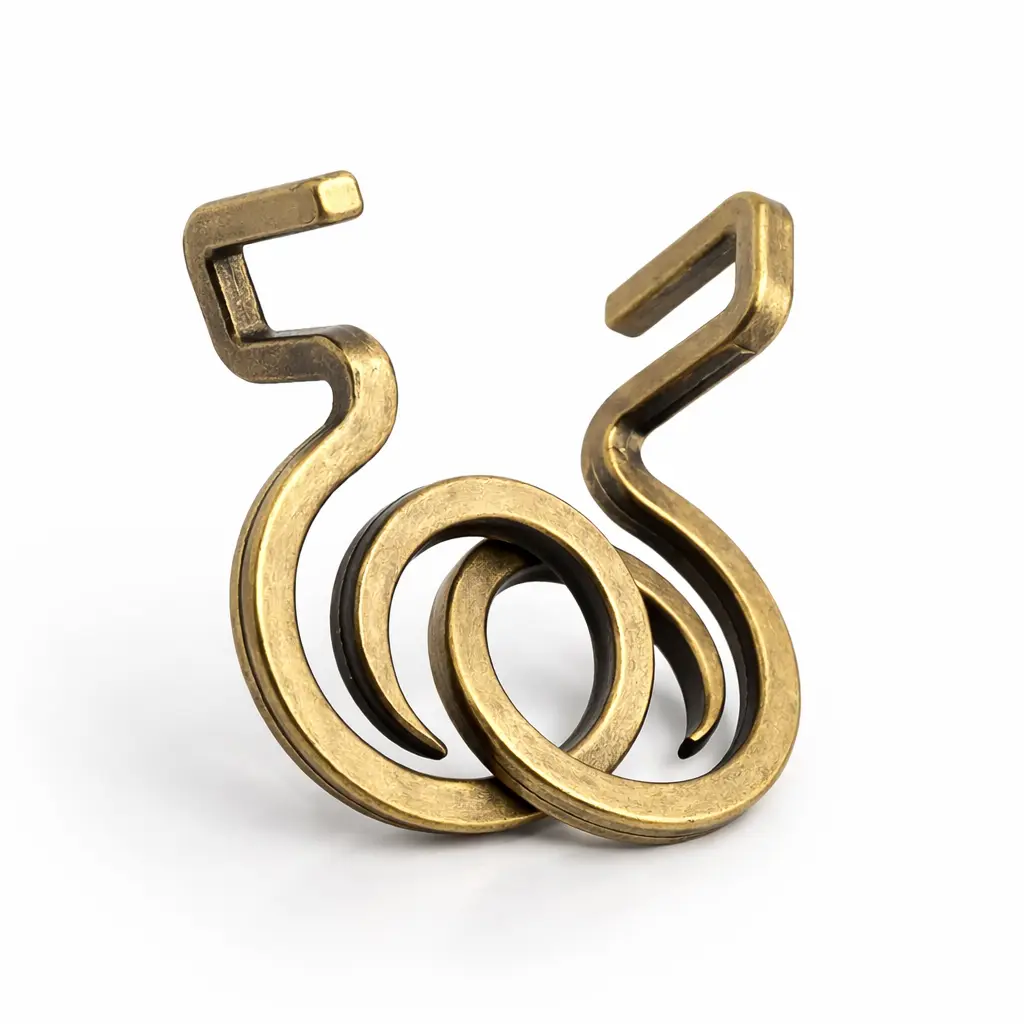
Solve feel rating: high. The zinc alloy has that cool-to-warm transition I look for in every cast piece — cold when you first pick it up, body temperature after a minute of holding — and the click at the end of each release move has a specific rounded quality, not the sharp snap you get on cheaper plated steel. It is the difference between a wine cork popping and a wine cork sighing. You know it when you feel it.
For use-case mapping, the Cast Hook slots into two distinct adult lives. The 30-second desk fidget: pick it up, locate the release, put it back together, set it down. Maybe three minutes total. The 5-minute commuter companion: bus or train ride, one full solve, put it away. It survives being dropped on concrete, which matters more than any spec sheet admits.
The second beginner option worth keeping in your rotation is the Metal Crab Puzzle. It weighs in around 95 grams — noticeably lighter than the Cast Hook — and the gold ring adds a visual element the Cast Hook’s cleaner geometry lacks. The mechanism runs three sequential release moves instead of two, which pushes the first-time solve time to roughly 45 minutes to two hours depending on how often you put it down.
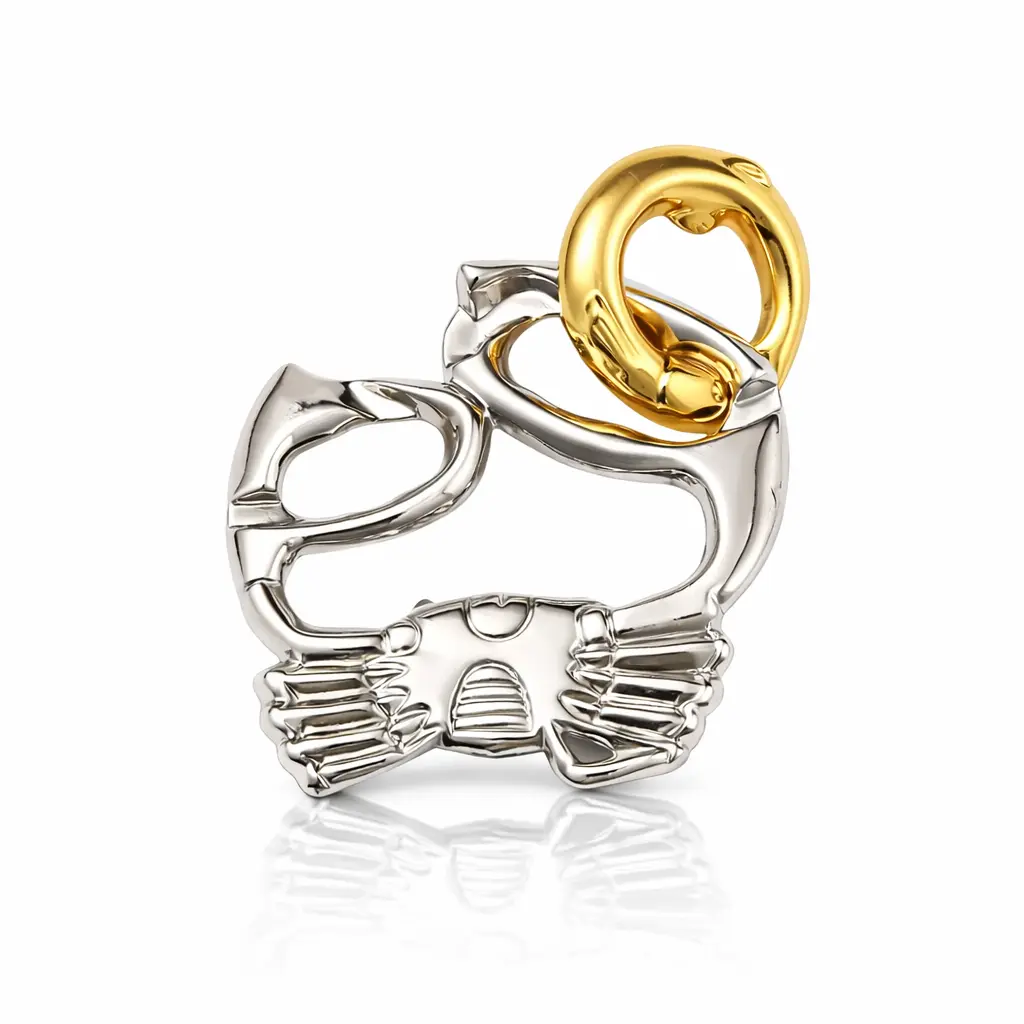
Solve feel rating: medium-high. The crab’s plating wears slightly faster than the Cast Hook’s bare alloy — the gold finish shows fingerprints and minor scratching after six months of daily handling, where the Cast Hook develops a patina instead. If you want a desk display piece, pick the Cast Hook. If you want something that reads as a gift right out of the box, the Crab wins on presentation.
The use case for the Crab is the cocktail party showpiece. It looks like jewelry. It does not look like a puzzle until someone picks it up, and then it becomes a 15-minute group activity. The gold ring is a deliberate conversation starter, and the solve is forgiving enough that a curious guest can crack it before the second round of drinks.
A note on what to skip in the starter tier: anything priced under $10 is almost always a plated steel knockoff with tolerances loose enough to bind, and finishes thin enough to flake within a month. The starter tier is where material quality matters most, because Level 1–2 puzzles get handled more often than Level 5–6 puzzles. They live on your desk. They live in your pocket. They get touched. Buy the alloy.
For a deeper walkthrough of the actual solving technique — the proven method for solving Hanayama puzzles that takes a beginner from “staring at it” to the first satisfying click — our step-by-step guide covers the same mechanics that apply to any cast piece in the starter tier.
Best Cast Puzzles for Daily Desk and Commute Use (Levels 3–4)
Level 3–4 cast puzzles like Hanayama’s Cast Trinity and Cast Chain typically take first-time adult solvers between 1 and 4 hours, with the sweet spot for replayability sitting around the 3-hour mark. These are the puzzles that graduate you from “I solved it” to “I want to solve it again.”
That transition matters. The starter tier covered above is about proof — proof you can finish one, proof the cold zinc alloy in your hand responds to logic and not luck. Levels 3 and 4 are about repetition. They’re the daily-driver puzzles. The ones that live in your bag or on your desk for months, not the ones you display in a case and admire twice a year.
The Hanayama benchmarks for this tier are well-documented. Cast Trinity (Level 3) is a three-piece sequential separation puzzle — you have to figure out which piece moves first, which waits, and which slides last. The mechanism is forgiving but the order is rigid, and most first-timers spend 45–90 minutes on it. Cast Chain (Level 4) is something different: a multi-axis rotation puzzle where each link must be rotated along a specific plane before the next axis reveals itself. Reddit’s r/mechanicalpuzzles consistently ranks Chain among the most replayable Level 4s because the mechanism is short enough to memorize but layered enough to forget between sessions.
Then there’s Cast Dial, the outlier. Hanayama rates it a 4, but experienced solvers routinely call it the hardest Level 4 they’ve met. The mechanism hides a rotational lock behind an aesthetic dial face, and the satisfaction comes from realizing the dial was a clue the whole time. For an adult solver who wants a Level 4 that doesn’t feel like a Level 4 until the final move, Dial is the reference puzzle.
Now — what if you want that daily-driver experience without paying the Hanayama import premium, or what if you want a puzzle whose mechanism is genuinely suited to desk or commute use rather than a famous part number in a new box? Two picks from our lineup deliver this exceptionally well.
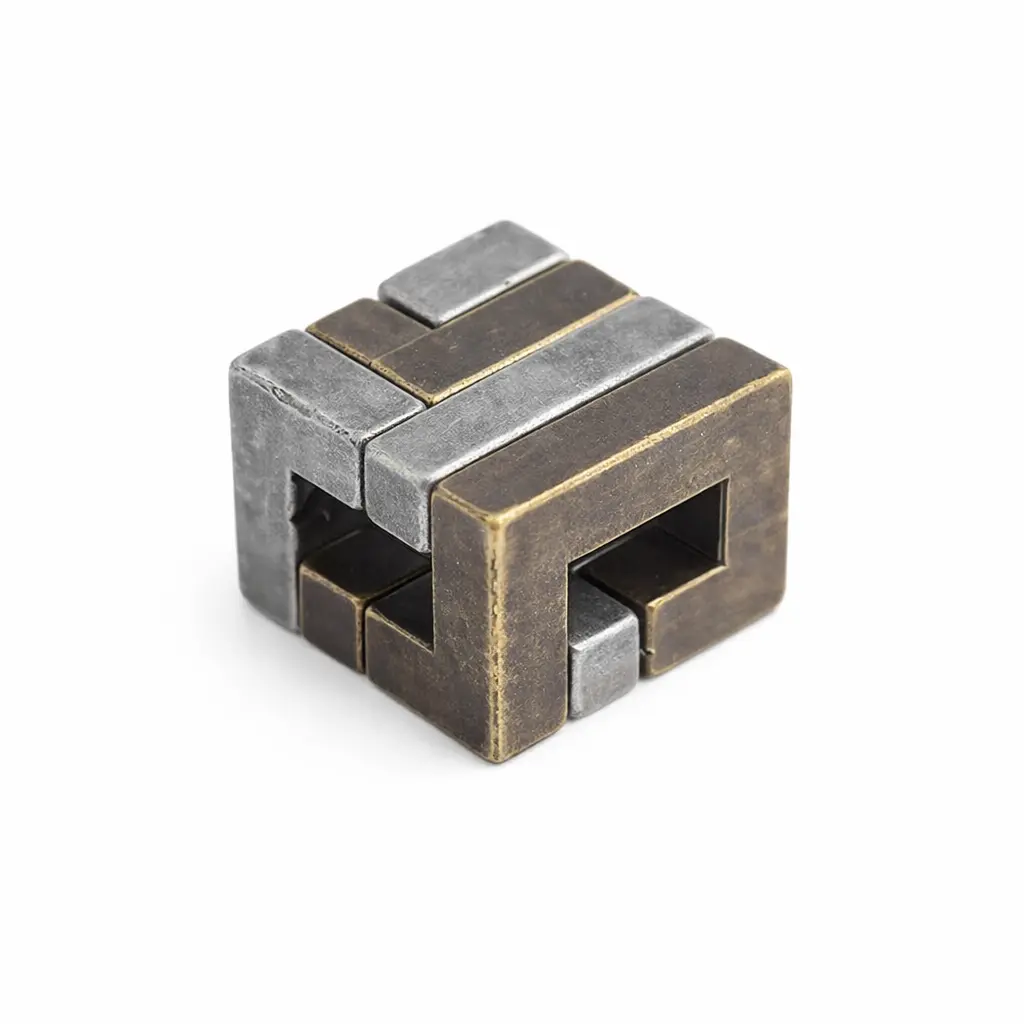
The Cast Coil Pocket Puzzle is the closest analog to Cast Chain you’ll find outside the Hanayama catalog. The mechanism is a multi-axis rotation: three coiled segments that interlock along independent axes, each requiring a specific orientation before the next will release. The difference is the form factor. Chain is gorgeous but it weighs around 180 grams and lives in a display case. The Coil fits in a jacket pocket. It survives being jostled in a messenger bag. And the cold-to-warm zinc alloy transition — the way the metal warms against your hand over 20 minutes of solving — is one of the most tactile experiences in this tier.
For the desk context, the Coil becomes a between-meetings puzzle. The kind of object you pick up, solve in 8–12 minutes, set back down, and pick up again 90 minutes later when the next call ends. First-time solves average 2–3 hours, but replay time drops to under 10 minutes once you know the three axes. At $18.99, it sits above the $14.99 Hanayama standard, but the pocket-friendly geometry justifies the premium if commute time is your primary use case. I keep one in my bag for subway solves — about 11 months of daily handling and the finish still reads new.
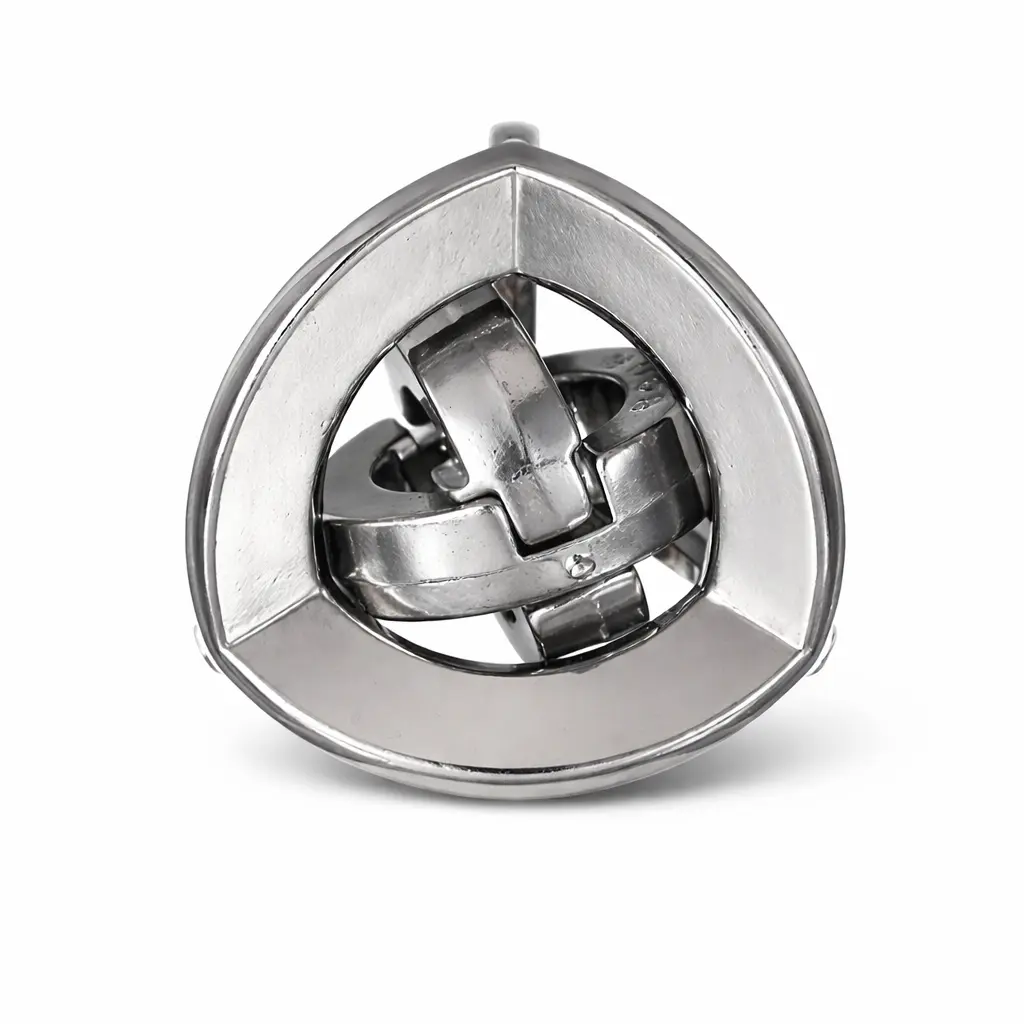
The Metal Orbit Ring Cast Puzzle is the desk fidget recommendation in this tier. At $14.99, it sits at Hanayama’s standard price point, and the mechanism is a two-stage disentanglement: separate the inner ring from the outer cage, then reverse the operation to reassemble. The “satisfying click” — the moment the inner ring seats into its final channel — is one of the louder and more decisive in the cast puzzle category. It sounds like a key turning in a lock.
Solve feel: medium weight (around 95 grams), bright zinc finish, very little hand fatigue even after 30 minutes of continuous manipulation. The Orbit is the puzzle I’d hand someone who says “I like the idea of these but I don’t want to commit to a weekend project.” First solve is 30–60 minutes. Replay is 3–5 minutes. It lives on a desk beautifully — the ring geometry means it stands upright on its own, which matters more than you’d think for a fidget object.
One honest caveat for this tier: the r/mechanicalpuzzles community consistently flags that Level 3–4 puzzles are where the difference between genuine cast alloy and plated steel becomes obvious in the hand. Knockoffs at this price point develop micro-scratches within weeks, and plating flakes at the rotation points. The Coil and Orbit both use a heavier zinc alloy than the budget alternatives, which is why they hold up to daily handling. Touch them. Pick them up. The weight tells you most of what you need to know.
For an even deeper breakdown of how these compare across desk-grade metal puzzles, our guide to quiet executive-grade metal puzzles for the office desk covers eight options for office environments.
Best Cast Puzzles for the Patient Collector (Levels 5–6)
Hanayama Level 6 puzzles like Cast Vortex, Cast Enigma, and Cast Rotor routinely take experienced solvers 3–14 days and cost $20–30 at US retailers — and the mechanism quality is what separates a weekend project from a months-long obsession.
That salaryman in Kyoto wasn’t showing off. He was running through a Level 4 in his lunch break because he’d already burned through Vortex, Enigma, and Rotor the previous month. Watching him was the moment I realized the Hanayama 1–6 scale measures something specific — not just difficulty, but the number of independent mechanical decisions you must discover before the pieces agree to part ways. Level 1 puzzles hide a single move. Level 6 puzzles hide a chain of them, each one gated behind the last.
Which Level 6 is the hardest? The honest answer, per r/mechanicalpuzzles consensus and my own testing group: Cast Vortex wins by a narrow margin. Vortex uses 3 independent rotational axes — you must discover each axis, understand its range, and find the precise angle window where the next axis unlocks. Enigma uses sequential separation with hidden internal logic: the outer shell disguises a sliding-track mechanism that only reveals itself once you’ve made a specific sequence of moves. Rotor sits between them — a 2-axis puzzle with exceptionally tight tolerances, often called the most “precise” feel of the three. The satisfying-click threshold for Vortex is the lowest of the Level 6 trio; Enigma has the highest aha-moment-per-hour ratio. All three use cast zinc alloy with plated finishes, and all three are Mensa-rated brain teasers in the Hanayama catalog.
None of this is approachable for a first-time buyer. The Cast Hook we walked through earlier sits at Level 1–2 territory — friendly, tactile, and solvable in a single sitting. The patient-collector tier is a different beast entirely. You’re committing hours, not minutes. You’re learning to read zinc alloy the way a watchmaker reads a movement.
For the Tea-Sip roster at the patient-collector end, two metal brain teasers stand out for the right reasons — and they’re both genuinely close to Level 5 in feel without the Hanayama price ceiling.
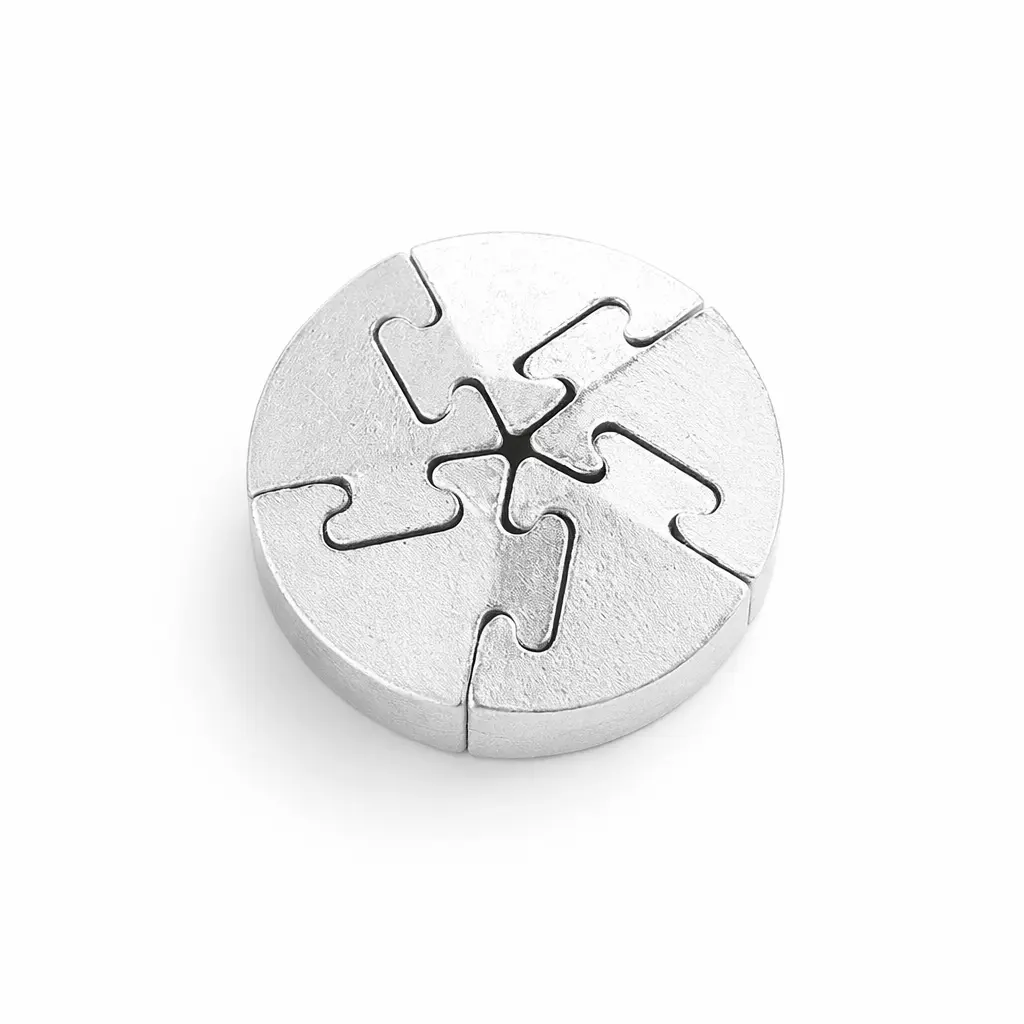
5 Piece Cast Spiral Metal Puzzle — the 5-piece spiral is a Level 4–5 mechanism disguised as art. The five cast segments interlock in a helical sequence that requires you to find the single release orientation for the first piece before the rest unwind. First solve runs 2–4 hours for a focused adult; replay drops to 15–20 minutes once you know the release angle. The zinc alloy weight is substantial — this is a puzzle you’ll feel in your palm. At $16.99, it sits at the Hanayama quality tier without the $25 Level 6 markup.
-
 Cupid's Arrow Heart Lock Puzzle $12.98
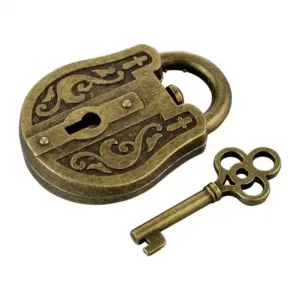
 - Divine Power Puzzle Lock $12.98
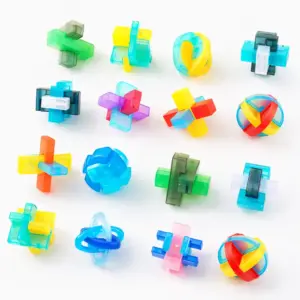
- 12 Piece Crystal Luban Lock Set $28.88
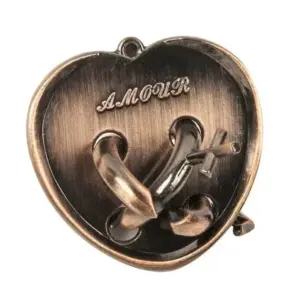
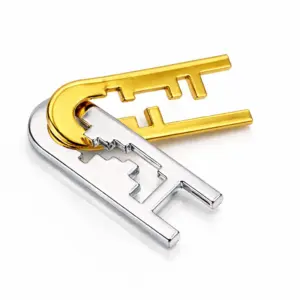
- Cast Keyhole Gold & Silver $13.99
- 24 Lock Puzzle $16.99