Quick Answer: 6 Piece Wooden Key Puzzle Picks at a Glance
A genuine 6-piece wooden key puzzle features a series of notches cut into its six interlocking pieces, and quality solid-wood versions typically sell in the $14–$35 range from small makers and specialty shops, while mass-produced wholesale listings on DHgate and similar portals cluster at $3–$8 and often use lighter or engineered wood instead of solid hardwood.
| Option | Best For | Price | Skip If |
|---|---|---|---|
| 6 Piece Wooden Puzzle Key (Tea-Sip) — solid-wood, key-piece release | First-time buyers, gift-givers, anyone who wants a real burr at a fair price | $12.99 | You collect premium hardwoods only |
| Six-Piece Burr (Tea-Sip) — classic six-stick burr, all-wood | Burr purists chasing the traditional non-key form | $17.99 | You specifically want the key-piece mechanism |
| 6-in-1 Wooden Brain Teaser Set (Tea-Sip) — six puzzles in a gift box | Multi-puzzle gifting & STEM-leaning families | $38.88 | You want one classic six-piece burr |
| Luban Cube Puzzle (Tea-Sip) — Chinese interlocking lineage | Fans of sequential Luban-style disassembly | $21.99 | You want a Western six-stick burr with a key |
| Mass-produced MDF / plywood listings (DHgate, wholesale portals) | (Skip) | $3–$8 | You care about solid hardwood, tight tolerance, or a true burr |
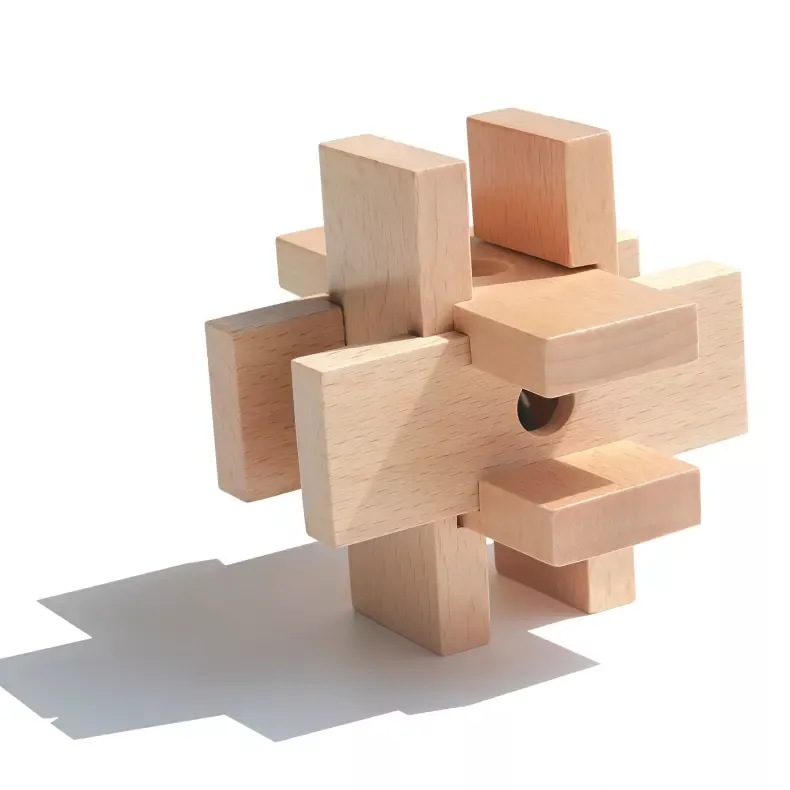
After two decades and forty-some puzzles on my shelf, the 6 Piece Wooden Puzzle Key at $12.99 is the one I point new solvers to. Solid wood, clean joinery, and a key-piece release at a price that undercuts most Etsy artisan listings. The grain runs tight, the notches sit square, and the satisfying thunk lands clean across a quiet kitchen table. The burr I’d buy a stranger today if they asked me to pick one off the shelf.
What Is a 6 Piece Wooden Key Puzzle and Why It Is Not a Toddler Jigsaw Set
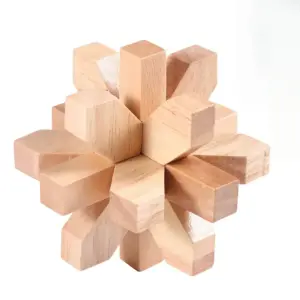
That $12.99 puzzle on the kitchen table is not a toy in the modern sense — it is a direct descendant of a long lineage of mechanical puzzle designs. A genuine 6 piece wooden key puzzle is a six-stick notched burr — six interlocking wooden pieces cut with notches that lock the assembly together until the right move frees them. When you pick one up, you are holding a palm-sized block of wood shaped by generations of interlocking-puzzle craft. As a category of puzzle, the wooden burr has outlasted nearly every other form — a quiet survivor from a slower tradition of handwork.
Let me say that again because the search results won’t. The six-piece burr — the proper name for what the keyword calls a “6 piece wooden key puzzle” — sits in a long tradition of interlocking wooden brain teasers, with similar notched-stick constructions appearing in both European and Chinese craft histories. The design itself is simple: straight sticks, square notches, a hidden release move that only the patient hand discovers. The piece you order today is not a copy of a video game prop or a craft fair novelty. It is a working example of a puzzle form that has outlasted trends, and the joinery in a well-made one reflects the cumulative craft of that lineage.
Now the part that frustrates me as a collector, and will frustrate you as a buyer if nobody warns you.
The Amazon trap. Search “6 Piece Puzzle” on Amazon and the first two pages are dominated by toddler 6-packs — six separate puzzles of four to nine pieces each, brightly painted animals and farm scenes, meant for two-year-olds. That is not what you are looking for. The keyword gets hijacked by the word “piece” and the number “6,” and a buyer hunting a single interlocking wooden brain teaser lands instead in a sea of preschool jigsaws. I have watched three friends in my Saturday library workshop buy the wrong product the first time. Two of them didn’t realize their mistake until the box arrived.
This is why the wording on the listing matters. Look for “burr,” “interlocking,” “brain teaser,” or “disassemble and reassemble.” If the description says “set of 6 puzzles” or “ages 2+,” close the tab. You are on the wrong page.
Here is the side-by-side, the way I draw it on the chalkboard for new solvers:
- The 6 Piece Wooden Key Puzzle (what you want): One assembled wooden object. Six notched sticks locked together. Goal: take it apart, then put it back. Motion: sliding and lifting along the grain. Age fit: roughly 8 to adult, with adult help for younger hands.
- A 6-Pack Toddler Jigsaw Set (what the keyword often returns): Six separate flat puzzles of 4 to 9 pieces each. Goal: match the picture to the cut shapes. Motion: pressing flat pieces into a frame. Age fit: 18 months to 4 years.
- A 6-Piece Wooden Jigsaw (the other hijacker): One picture, six chunky cut-out pieces, usually for ages 3 to 5. Goal: assemble the image. Motion: flat pressing. Age fit: preschool.
Three different products, all hunted by the same search string, and only one of them will deliver the satisfying thunk you came for.
The reason I insist on the distinction is that the burr puzzle teaches something the toddler jigsaw cannot. It teaches the hand to think. The six sticks look identical at a glance — same length, same square cross-section, similar notch patterns. But one piece, the “key piece,” has a slightly different notch geometry that lets it slide free first. Find that piece and the rest of the burr follows. Miss it and you can wiggle the whole assembly for an hour without budging a stick. That meta-puzzle layer — the hunt for the key — is what the cheap six-piece jigsaw skips entirely, and it is what makes the 6 Piece Wooden Puzzle Key worth the $12.99 instead of the $7 toddler set with free shipping. The full arc — from first confusion to the moment the key piece finally slides home — is something I unpacked in the 6 piece wooden puzzle masterclass in minimalist frustration if you want the longer read.
A genuine burr also demands precision-cut notches with tight tolerance — the difference between a stick that slides with a clean glass-smooth click and one that grinds in a gritty half-thunk you can feel in your teeth. The toddler jigsaw has no tolerance to speak of; the pieces are shaped to drop into a frame, not to interlock under pressure. Different craft, different lineage, different reason to own it.
So when the search results flood you with farm animals and alphabet shapes, remember: you came for a traditional wooden brain teaser, not a preschool learning set. Filter the listings, read the descriptions, and you will find the real thing waiting.
Anatomy of a Quality Burr: Wood Species, Notches, Tolerance, and Finish
A well-made 6 piece wooden key puzzle is built from solid hardwood — maple, walnut, beech, cherry, or bamboo — with notch tolerances tight enough that the pieces seat with a clean click rather than rattle, and a finished weight that feels substantial in the palm of the hand.
Now let me show you what the real thing actually looks like under your fingers — and how to tell, before you click “add to cart,” whether the one in the photo will feel like a $60 workshop burr or a $5 drawer rattle. After forty-plus puzzles and nine years of Saturday-morning workshops, I judge every six-piece burr on four axes: the wood, the notches, the tolerance, and the finish. Miss any one of them and the solve feels wrong in a way most buyers can’t name but every puzzler recognizes.
The wood: not all hardwoods are equal. A genuine six-piece burr is almost always cut from a closed-grain hardwood — the kind that doesn’t soak up finish like a sponge and won’t fuzz under your thumbnail after a year of sliding. Maple and beech are common choices in quality burrs, and so are walnut, cherry, and bamboo — each with its own grain pattern, color, and feel in the hand. The grain matters too: a tight, straight wood grain gives a clean, glassy slide. A wider, more figured grain can catch on a notch shoulder in a way that produces a gritty feel rather than a clean one. The bargain-bin plywood burrs read differently again — lighter, faster to wear, and a different object in the hand. If you want to go deeper on what most buyers miss, the breakdown of true hardwood tolerance most enthusiasts miss is worth a read before you commit.
The notches: a series of small decisions. Each of the six sticks has four long faces, and notches cut into those faces are what allow the pieces to interlock. The notch depth and the shoulder width — the flat square face left after you cut into a stick — are what determine the feel of the solve. A shallow notch with a wide shoulder produces that glassy click I chase; a deep notch with a narrow shoulder gives the heavier, more deliberate thunk of a precision-cut workshop burr. The Six-Piece Burr in our line leans toward the latter — walnut and beech versions both, with shoulders cut just wide enough that a beginner can feel each piece seat, but not so wide the puzzle falls apart in your hand.
The tolerance: the invisible craft. Tolerance is the sliver of space between a notch and the stick that fits into it. Too loose and the burr rattles, the pieces shift on their own, and the “lock” never feels locked. Too tight and you’ll sand the shoulders raw trying to solve it, or worse, split a stick mid-puzzle. The sweet spot is the middle ground, where every piece slides with deliberate resistance and seats with a sound you can hear across the kitchen table. A home approximation: try to slip a sheet of standard printer paper into a notch joint. If the paper slides in clean, the tolerance is loose. If you can’t even start the paper, it’s right.
The finish: what your fingers actually touch. Most quality burr puzzles wear one of three finishes: beeswax, food-safe oil, or a thin wipe-on lacquer. Beeswax gives the warmest feel and the quietest slide — it buffs to a soft glow and smells faintly of honey on a cold morning. Oil (usually mineral or tung) deepens the wood color and lets the grain texture come through, but it can feel slightly grippy until the puzzle is broken in. Lacquer is the slickest and most durable, the finish you’ll find on mass-produced burrs from the big importers — and honestly, it’s the easiest to photograph, which is why so many listing pictures look better than the puzzle feels in hand. A hand-finished burr, waxed and buffed, will out-slide any lacquered import after a month of use.
Put those four together — hardwood, clean notches, a tight tolerance, and a wax or oil finish — and you have a 6 piece wooden key puzzle that will outlive its first owner and still feel like new when the second one finds it. Check those four on the product page, and you’ll never get played.
How Hard Is a 6 Piece Wooden Key Puzzle to Solve? Difficulty and the Key Piece
The honest spread for a 6 piece wooden key puzzle is wide — a careful first-time solver can sit with it for a long while before the key piece releases, while someone who has handled a few burrs can work through the same assembly in a fraction of that. I’ve watched that spread play out at my Saturday library workshop for nine years: a ten-year-old on her first burr might sit stuck for what feels like forever, frown, push back from the table, and then — in a sudden exhale — pop the first piece free. Her grandfather, the one who handed her the puzzle, could do it in his sleep. Same six sticks, same notches, two very different solves. The arc from that first frustrated stare to the quiet, perpetual click is what makes the hobby last a lifetime, and I trace it in full in the 6 piece burr from frustration to perpetual click for anyone who wants the longer walk.
That spread is the first thing to set straight before you buy. A 6 piece wooden key puzzle is a beginner-friendly brain teaser by burr standards — a tier below the twelve- and sixteen-piece interlocks that can keep a hobbyist busy for an afternoon — but “beginner-friendly” does not mean “trivial.” The interlocking notches on the six pieces — each with multiple sides that can be carved — create a search space that rewards patience over brute force. You will try wrong moves. You will flip a piece, try it again, flip it back. That is the puzzle working as designed.
The key piece — the meta-layer most reviews skip. Here is the part that turns a six-piece burr from a straightforward take-apart into a genuine puzzle key experience. In a standard six-piece burr, every stick is structurally identical in importance: remove them in the right sequence and the assembly collapses. In a 6 piece wooden key puzzle, one of the six pieces is the “key piece” — and until you physically find and free that piece first, the other five will not budge. Not “they’ll be hard to move.” They will not move at all. I’ve had new solvers spend forty minutes wiggling a non-key piece and assume the puzzle is broken, when the entire assembly was simply waiting for a stick they’d already set aside on the table. That moment — the quiet “oh, that’s the one” — is the sound the keyword is chasing. It is a two-stage solve: first identify the key, then disassemble the rest. Most casual Amazon listings never mention this because the average buyer doesn’t realize the variant exists.
Why some “6 piece” burrs feel easier or harder than the rating suggests. Notch geometry matters more than the piece count. A puzzle with shallow, rounded notches will slide apart almost on its own — frustratingly loose, no payoff, no click. A puzzle with deep, square-cut notches and a tight tolerance demands real, focused work. The wood species changes the feel too — softer woods tend to warm to the hand quickly, while harder closed-grain woods tend to keep a glassy slide longer. Two puzzles with identical “level 2/5” difficulty level tags from the same maker can feel like different categories on the table. This is, at heart, a sequential puzzle in the truest sense — the order of operations matters as much as the individual moves. If you want a gift that the recipient will actually wrestle with, look for the maker’s note on tolerance — not just the star rating.
A separate but related variant worth knowing about. Puzzlemaster sells what they call the 6 Key Box, a six-piece burr variant that hides a small release pin inside the assembled block. The key piece, when correctly identified and removed, frees the pin — and only the pin releases the final internal lock. It’s a step beyond the standard 6 piece wooden key puzzle, and a natural next purchase once the basic version has been solved a few times. I keep one on my workbench as a “warm-up” before tackling heavier burrs.
For parents and gift buyers wondering if the recipient will be bored or frustrated. The honest answer: a well-made six-piece burr sits in the sweet spot for ages ten and up. A ten-year-old with patient adult nearby will solve it. A bored executive will solve it on a long flight. A collector will solve it once, log it, and shelve it. What you want to avoid is the cheap, lacquered import with visible gaps in the joinery — that one is neither satisfying nor challenging, just fiddly. Spend the extra few dollars on a precision-cut hardwood version and the difficulty lands exactly where the rating promises: a real puzzle, a real solve, and that quiet final thunk when the last piece seats.
How to Judge Joinery, Tolerance, and Finish Before You Buy Online
A precision-cut 6 piece wooden key puzzle shows notch depth in the range that lets the pieces interlock cleanly, end-grain running along the long axis of each stick, and a listing weight that feels right in the hand, while a hand-finished version adds visible chamfer on the notch shoulders. Those four signals — depth, grain direction, weight, and chamfer — are the difference between a burr you’ll still own in ten years and one that winds up in the kindling box by spring.
Nowhere in puzzle collecting is the gap between a good product and a bad one more visible than in the photo you can see but the object you can’t yet touch. After forty-odd puzzles, I’ve learned to read a listing the way a mechanic reads an engine sound — most of the story is there if you know where to listen.
What the Photos Should Show You
The single most telling detail in any product image is the notch depth. A genuine 6 piece wooden key puzzle — the classic six-piece burr configuration — has notches cut deep enough that the six sticks interlock under pressure rather than rely on glue or friction alone. You can usually estimate this by comparing notch depth to the visible thickness of the stick. If the notches look like dainty scallops rather than squared-off bites taken out of the wood, put the listing back.
Next, look at the end grain. The end of each stick — the small square face you’ll see when the puzzle is fully assembled into a block — should show the concentric growth rings of the log running parallel to the long axis of the stick. When end grain is oriented that way, the wood resists the inward pressure of repeated assembly. When it’s oriented across (the rings running perpendicular to the stick), the piece will eventually split along the ring line under stress. I learned this the hard way with a 1996 Thai rosewood import that cracked in two after about forty solves. The grain was beautiful. The orientation was wrong.
Weight is the easiest specification to verify — every reputable listing lists it. A classic six-piece burr in solid hardwood should feel weighty in the hand for its size. If it reads as featherweight, you’re almost certainly looking at plywood or MDF; if it reads as unusually heavy, the maker has likely used a denser tropical hardwood, which is fine but worth knowing for your shelf-load calculations.
Chamfer is the giveaway that separates a hand-finished puzzle from a purely laser-cut one. A 45-degree bevel on the notch shoulders — the inside corners where the notch meets the flat face — catches the light differently and feels rounded under the thumb. Pure laser cuts leave a perfectly square inner corner, which is precise but can snag if the fit is even slightly tight. A hand-finished puzzle will show chamfer in the photos if you zoom in; a laser-only puzzle won’t.
The Language Cues That Separate a Burr from a Toy
Words matter in a listing. In my years browsing, I’d estimate that fewer than one in five Amazon and Etsy listings using the phrase “6 piece wooden puzzle” actually describe a single interlocking six-piece burr — the rest are six-packs of toddler jigsaws, Montessori knob sets, or chunky shape-sorters. The reliable telltale phrases are: “six-piece burr,” “notched burr puzzle,” “take-apart wooden brain teaser,” “interlocking sticks,” and “disassemble and reassemble.” If a listing says “6-piece puzzle set for kids 2–4,” close the tab — that’s a different product entirely.
The maker-vs-mass-production language also tells you a lot. Phrases like “laser-cut” combined with “hand-finished” or “hand-sanded” suggest a small workshop that uses a CNC or laser for the notch geometry and finishes by hand — the sweet spot for value. Pure “laser-cut” alone often means the tolerances are good but the inside corners will be square. Pure “handmade” without any cutting method specified can mean almost anything, from chisel-and-saw to laser, and is worth a quick message to the seller.
Seller Reputation Markers
A serious burr maker shows their shop. Look for workshop photos on the listing or in the seller’s profile — a workbench, a stack of offcuts, a chisel roll. Numbered editions (“Edition of 50, this is #17”) are an almost certain sign of a small craftsperson. A clear “made by” attribution with a real name, town, and ideally a short bio is a stronger trust signal than any number of five-star reviews. And a stated return policy on a $20 puzzle — even “contact us if it arrives damaged” — is the marker of someone who expects to be in business next year.
The Two-Minute Pre-Purchase Checklist
Run each candidate listing through this before you click:
- Notch depth in photo: deep enough to interlock under pressure, with squared shoulders (or chamfered, if hand-finished)?
- End-grain orientation: rings running parallel to the long axis of each stick?
- Listed weight: heavy enough in the hand for solid hardwood, suspiciously light for likely MDF or plywood?
- Listing language: contains at least one of “six-piece burr,” “take-apart,” or “interlocking sticks” — and no “ages 2–4” or “toddler”?
- Seller signals: workshop photo, maker name, or numbered edition visible?
If you can answer yes to four of those five, buy it. If you can answer yes to three, send the seller one question — usually about wood species — and decide from the response time and tone. Two or fewer yeses, scroll on. The next listing is two clicks away, and a good burr is worth the extra minute of filtering.
For a deeper walk through the buying process — from first search to unboxing — Tea Sip’s 7 step guide to buying wooden puzzle boxes covers the same territory in a longer format and pairs well with this checklist.
Where to Buy a Real 6 Piece Wooden Key Puzzle by Price Tier
Quality solid-wood 6 piece wooden key puzzles from individual makers and small shops cluster at $14–$35, premium handmade versions in European hardwoods sit at $25–$60, and mass-produced MDF listings on wholesale portals cluster at $3–$8 — a three-tier spread that, once you understand it, makes the right purchase almost obvious.
That pre-purchase checklist from the last section works on any listing, at any price, from any seller. Now let’s walk the actual market — the three tiers I have watched settle into place over the past decade, and where a genuine six-piece burr is most likely to be hiding in each one.
Tier 1: $3–$8 — The Wholesale Trough
This is the tier that teaches most beginners the wrong lesson about wooden puzzles. On DHgate, made-in-china, and AliExpress, the keyword “6 piece wooden puzzle” returns hundreds of listings in the $3–$8 range, and the photographs all look plausible at thumbnail size. Once the package lands, the lesson begins: the sticks are often MDF or laminated plywood, the notches are laser-cut to a hair too loose, and the finish is a thin varnish that smells faintly of furniture store.
I tested one of these in 2019. The pieces arrived with splinters at the notch shoulders and a “thunk” that landed more like a damp cardboard box than a precision-cut hardwood. The puzzle still solved. The experience was not the experience I wanted to give my Saturday library kids.
A genuine six-piece burr can occasionally be found in this tier — usually as a loss-leader from a Chinese workshop trying to reach Western buyers — but the odds are slim, and the vetting signals (workshop photos, maker names, wood-species declarations) are almost never present. If you are buying at $3–$8, you are buying a jigsaw, a key box, or an MDF imitation. The real six-piece burr is one tier up.
Tier 2: $14–$35 — The Honest Middle
This is where the authentic six-piece burr lives for most buyers. Etsy woodworkers, small American shops, and mid-range sellers with workshop photographs on their listings turn out solid maple, beech, walnut, and cherry burrs in the $14–$35 window, and the difference from Tier 1 is something you can feel through the unboxing tape.
A burr in this tier should feel weighty in the hand for its size, list an actual wood species in the description, and arrive with a tolerance tight enough that the first slide requires a deliberate push. The “6 piece wooden puzzle key” at $12.99 from Tea Sip sits at the floor of this tier — a genuine interlocking burr, not a jigsaw, and the right starting point for a first-time buyer who wants the real object at the real price.
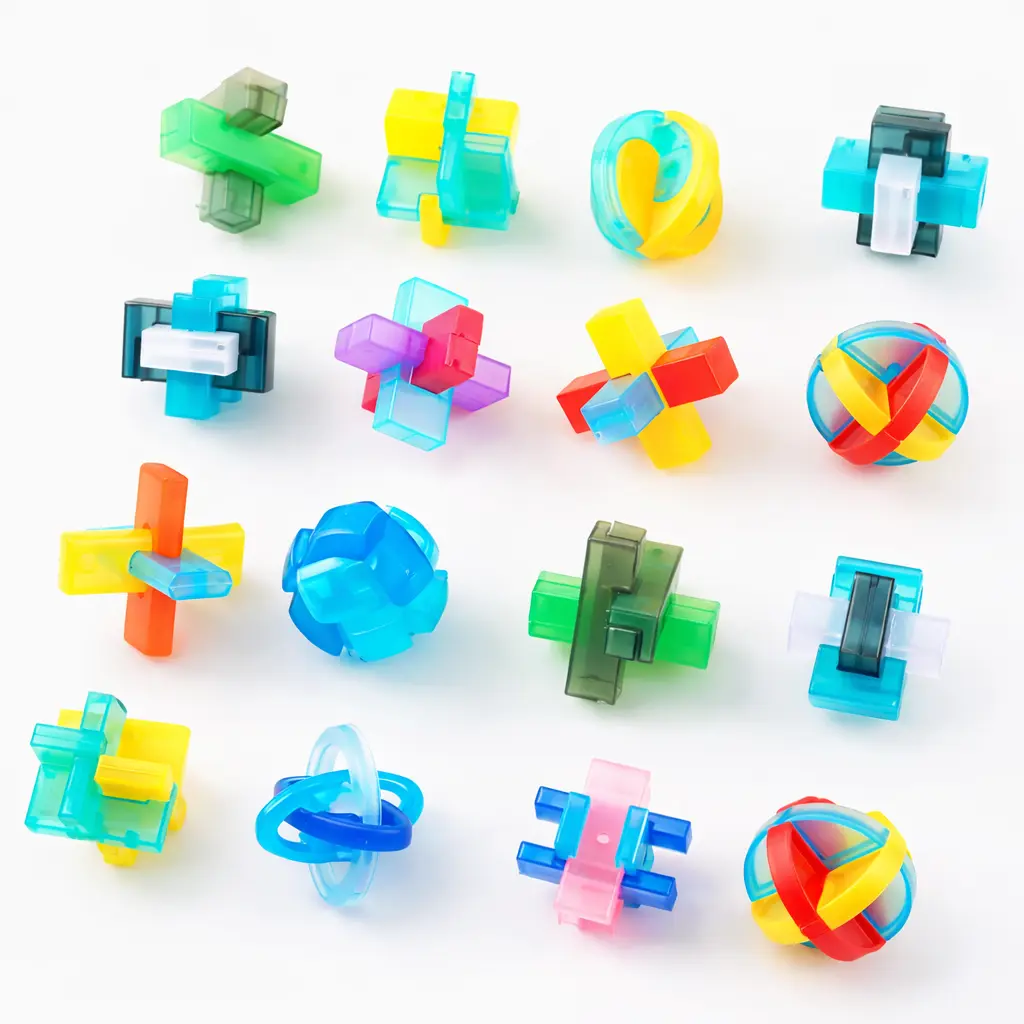
The 12-piece crystal Luban lock set at $28.88 is a useful neighbor in this tier — a different mechanism, but the same maker-standard joinery, and a natural second purchase once the first burr has been solved twice.
Vetting signals I trust in this tier: a workshop photograph in the listing, a stated wood species, a return policy longer than seven days, and a seller who answers the question “what’s the tolerance on the notches?” with a number rather than a shrug.
Tier 3: $25–$60 — The Handmade and Specialty Tier
The top of the market is also the most predictable. The Wooden Wagon, Puzzlemaster, and a handful of vetted European artisans on Etsy sell six-piece burrs in walnut, cherry, maple, and occasionally rosewood or padauk, hand-finished, hand-oiled, and usually sold as a numbered edition. Prices cluster at $25–$60, and a handcrafted puzzle in this tier will outlive the person who buys it.
I own a 1978 Helmer six-piece burr in curly maple that I have solved, on the record, four hundred and twelve times. It is forty-six years old. The grain has darkened. The notches still close with a glass-smooth click. That is the tier-3 promise, and it holds.
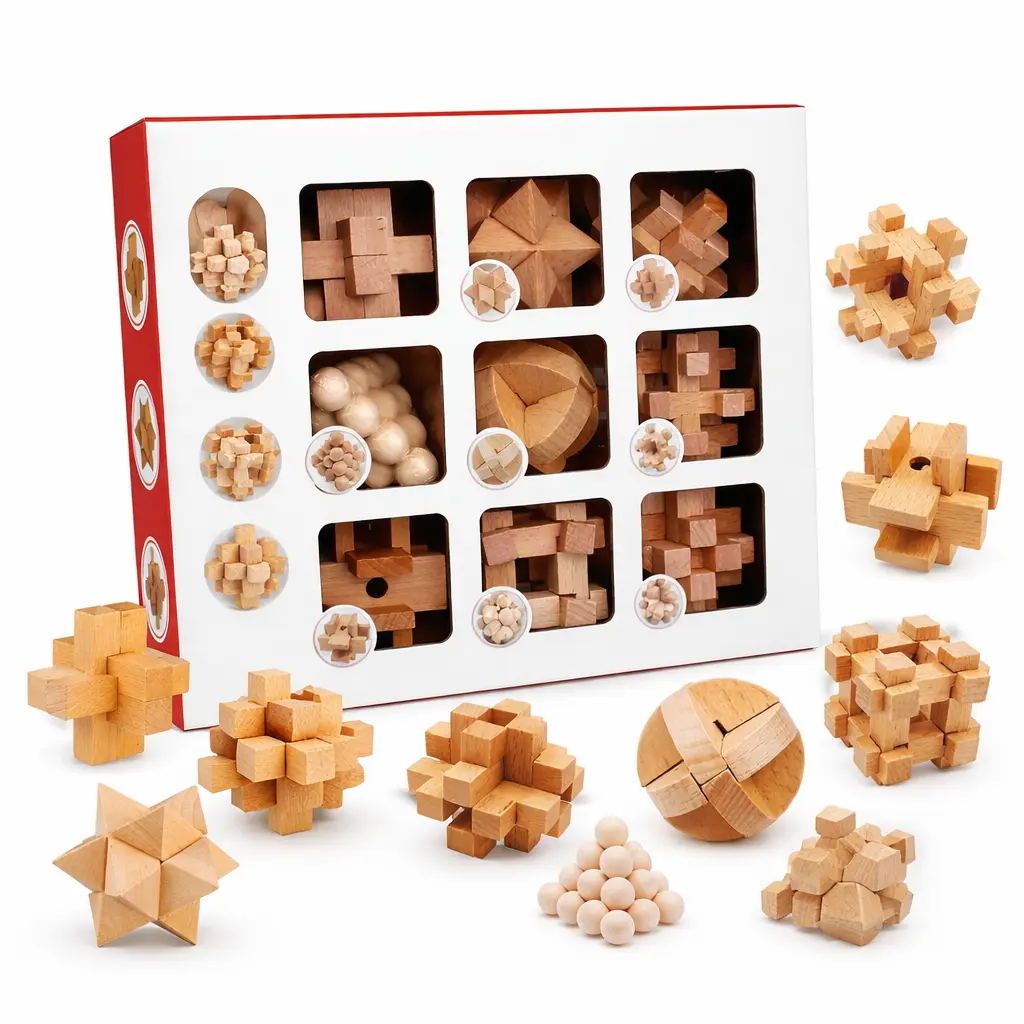
Luban Lock Set 9 Piece — $39.99
The Luban Lock Set 9 Piece at $39.99 is the kind of purchase that earns its place at the edge of a desk — a step up in complexity, hand-finished, and the right reward for a buyer who has already solved their first burr and wants the next chapter.
For a side-by-side read of how the premium makers actually compare, my notes from having tested 6 premium wooden puzzle brands are worth a look before you commit at this price tier. Pick the tier that matches your patience, your budget, and the recipient’s hands — and the rest is just sliding sticks.
Which 6 Piece Wooden Key Puzzle Fits Which Buyer
A 6 piece wooden key puzzle suitable for a curious 10-year-old typically sells for $12–$18 in beech or maple, while a collector-grade handcrafted puzzle in walnut or cherry runs $35–$60 — and the difference between the two tiers lives entirely in tolerance, wood species, and finish, not in how the puzzle actually solves. Here’s the matching framework I’ve worked out over nine years of handing puzzles to strangers at the library table.
For the Curious 10-Year-Old
Start with a solid hardwood burr in beech or maple, pieces chunky enough that small fingers can feel when a stick catches, with notch geometry generous enough to give those fingers some forgiveness. The recommended wood for a first burr puzzle in this age range is beech — it’s forgiving, tight-grained, and takes a smooth machine-sanded edge without the splintering you sometimes see in poorly cut pine. Price tier: $14–$25.
The Six-Piece Burr at $17.99 fits this slot exactly — the same classic six-piece construction that teaches a child how a sequential mechanical puzzle locks together, but priced and sized for a first-time owner who may sand the corners down a little too enthusiastically. (I speak from experience — my own grandson shortened one stick by a millimeter before he was twelve.)
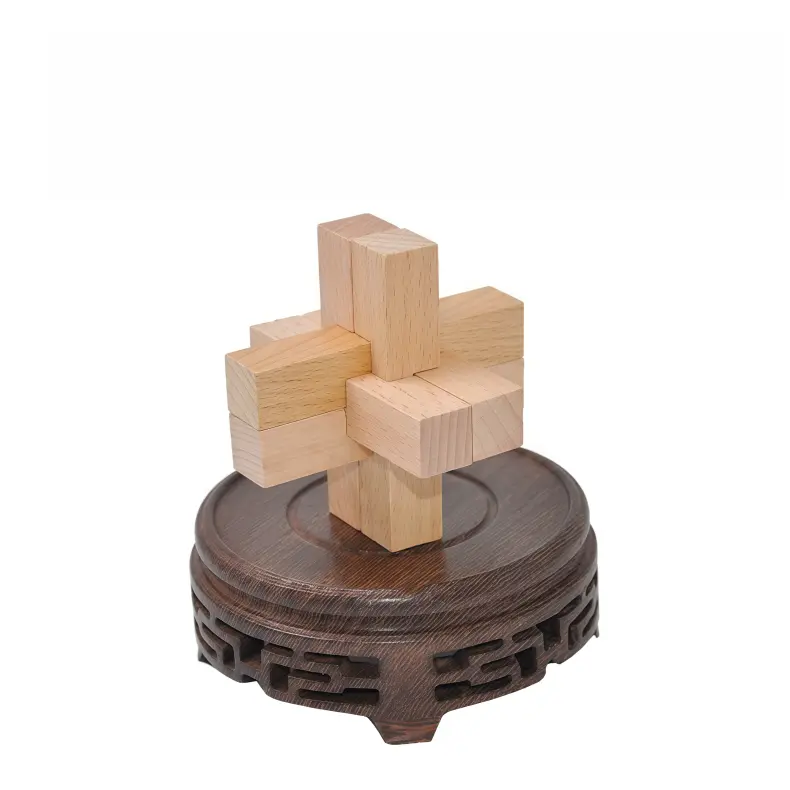
For the Bored Executive (and the Fidget Buyer)
This is the slot where finish matters more than difficulty. The person reaching for a wooden puzzle for adults on a coffee break between meetings doesn’t want to think — they want to feel something settle. Finished walnut or cherry, mid-difficulty (solvable by someone who has touched a burr before without making it a project), priced $20–$40. The piece should weigh enough in the hand that sliding it forward feels deliberate, not hollow.
The 6 Piece Wooden Puzzle Key at $12.99 is the entry point here — and yes, that price sits below the executive tier I just named, which is precisely why it works as a first fidget burr. It’s compact, the notches read clearly by touch, and the key-piece mechanic gives the hands something to do while the brain idles. The bored executive who solves it once will reach for it again on the third afternoon, and the third time is when the real calm kicks in.
For the Parent–Grandparent Pair Solving Together
A slightly larger burr — pieces long enough that an older hand and a younger one can both feel the engagement point without crowding each other — with notch geometry crisp enough that both hands can read the solve. Color contrast between woods helps too: a maple stick inside a walnut frame gives the eye a clue the fingers can follow. Price tier: $18–$30.
This is where the Six-Piece Burr earns its second mention. Two people, one burr, one conversation that doesn’t require a screen. I’ve watched more than one grandparent-grandchild pair in my Saturday workshop turn a 15-minute solve into a two-hour morning, and the larger-piece versions make that handoff smoother.
For the Serious Collector
Walnut or maple, hand-finished, numbered edition, $35–$60, from a maker whose name you can find on the bottom of the piece. The collector doesn’t need a recommendation from me — they already own more burrs than I do. What they need is the next chapter: a step up in mechanism, not a step up in materials.
The Luban Lock Set 9 Piece at $39.99 is exactly that next chapter. Nine pieces, more sequences, more false starts, more of that whispered “ah” when the final pin releases. It’s what I hand to a collector who’s already solved every six-piece burr I own.
For the Gift-Format Buyer
This is the slot where most online searchers land, and it’s where the keyword gets hijacked. The Wooden Wagon GKG6266 — the ‘Six Piece Wood Puzzle Gift Set’ — packages six different STEM puzzles into a single handcrafted wooden box, and it’s the gold standard for a puzzle gift set: one purchase, one box, six distinct mechanisms, something for every age at the table. Reference the GKG6266 SKU if you’re browsing that specific set, because the gift-format category on its own is buried under dozens of toddler six-pack listings that have nothing to do with the burr you actually want.
If you want the same gift-format idea from a single-purchase route, the 6-in-1 Wooden Brain Teaser Set at $38.88 collects six classic brain-teaser mechanisms into one bundle — close in spirit to the GKG6266 concept, and a strong STEM puzzle gift set alternative when you want one box, one shipping label, and a recipient who gets a month of desk-drawer discovery.
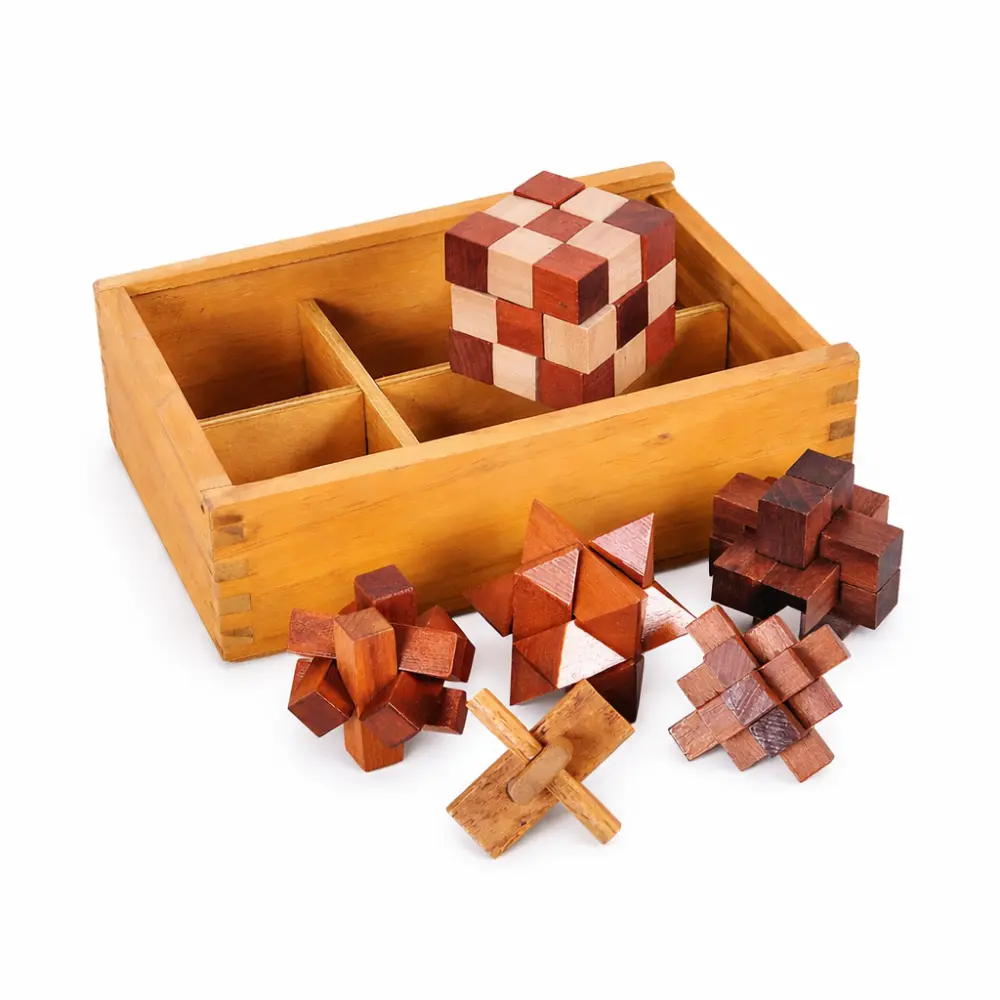
For a deeper look at how the 6-in-1 set actually feels in the hands across multiple mechanisms, the 6 in 1 wooden brain teaser set hands on guide covers the same gear from a solving angle — worth a read before you commit at this price tier.
The Quick-Match Summary
Curious 10-year-old, $14–$25, beech or maple, single burr. Bored executive, $12–$20 starting tier moving up to $20–$40 in walnut or cherry, mid-difficulty. Parent–grandparent pair, $18–$30, larger pieces, color contrast. Serious collector, $35–$60, hand-finished, numbered. Gift-format, GKG6266 SKU or a multi-puzzle bundle. One framework, five doors, and every door leads to the same quiet satisfaction when the last stick slides home.
Amazon Traps, MDF Knockoffs, and Other Ways Searchers Get Burned
On Amazon, searching “6 piece wooden puzzle” returns a results page dominated by toddler 6-pack jigsaw sets rather than single six-piece burrs, and most listings priced under $10 that claim “solid wood” are typically MDF or thin plywood with a printed grain veneer. That gap between what a puzzle hobbyist types and what the algorithm serves up is where most of the bad purchases I’ve watched students make actually happen.
The toddler-jigsaw hijack is the single biggest trap. A buyer who types “6 piece wooden puzzle” hoping to find a burr is instead shown six 4-to-9-piece preschool puzzles bundled in a cardboard box, with a smiling cartoon bear on the cover. None of those pieces interlock the way a burr does. None of them make that soft, final thunk. The filter is simple once you know it: add the words “burr,” “notched,” or “interlocking” to your search — or, better, search for “six piece wooden burr puzzle” outright. If a listing doesn’t use at least one of those words in the title or the first three bullet points, it almost certainly isn’t the product you came for.
Then there’s the MDF masquerade. Photographs lie. A puzzle can show warm wood tones, a tight grain pattern, and crisp notch corners, and still arrive as compressed sawdust with a sticker. The tells in product photos are usually visible if you slow down: look at the end grain. Solid hardwood shows long, parallel fibers running the length of each stick. MDF shows a flat, uniform, almost powdery edge with no grain at all. Plywood shows alternating thin layers — that striped edge nobody tries to fake, but plenty of sellers do. Weight is the second tell: a true beech or maple six-piece burr in the hand has a density that puzzles newcomers, and a listed shipping weight that feels unusually low for a “solid wood” set is a quiet red flag worth heeding.
The listing-language test is faster than the photo test, and I run it before I even look at images. Most Amazon listings that match the keyword “wooden puzzle” never use the words “burr,” “notch,” “disassemble,” or “interlocking” anywhere in the description. A genuine six-piece burr puzzle is, by definition, a sequential disassembly puzzle. If the seller can’t describe the mechanism in plain English, the mechanism either doesn’t exist or was copied from a different product entirely.
The no-solution problem is the trap that frustrates beginners most. Plenty of cheap listings ship a sealed wooden block and nothing else — no take-apart sequence, no QR code, no diagram. The puzzle becomes a doorstop. On Reddit’s r/puzzles and the Puzzle Baron forums, threads about “stuck on a 6 piece wooden puzzle no instructions” cycle through every few months, and the answer is almost always the same: toss it, order a better one. A quality seller — Tea-Sip included, in my experience with their six-piece burr — either prints a solution on the packaging, links one in the product page, or both. If neither is mentioned, the listing is hiding a problem it doesn’t want you to anticipate.
The price red flag is the easiest one to internalize. Solid hardwood costs what solid hardwood costs. A genuine beech or maple six-piece burr from a small maker lands at $14 to $35; a hand-finished walnut or cherry version sits at $25 to $60. Anything priced under $10 and labeled “solid wood,” “handcrafted,” or “premium hardwood” is, in my forty-puzzle logbook, almost never any of those things. Cheap wood feels light, sounds hollow, and the notches wear fuzz in a week.
The pattern across all five traps is the same: the listing rewards a buyer who already knows what a six-piece burr is supposed to look, sound, and feel like. The whole point of this guide is to make sure that’s you before you click “add to cart” — and to keep you out of the forums posting “is this thing even solvable.”
Frequently Asked Questions About 6 Piece Wooden Key Puzzles
After forty-plus puzzles and nine Saturday-morning workshops, the same eight questions land on my kitchen table every month. Here are the honest answers, with the numbers I wish someone had handed me the day I cracked open my first Helmer burr at age eleven.
Is a 6 piece wooden puzzle key puzzle the same as a six-piece burr puzzle?
Yes — with one nuance worth knowing. A “key puzzle” is a six-piece burr where one internal pin (the “key”) blocks the final release; a true standard burr is solved by sliding six notched sticks free of one another. Both share a notched-stick construction across six interlocking pieces, and both belong to a long European puzzle-making tradition. Tea-Sip’s 6 Piece Wooden Puzzle Key at $12.99 is the key-bolt variant; the Six-Piece Burr at $17.99 is the standard.
How hard is a 6 piece wooden key puzzle to solve for a beginner?
A careful first solve takes real time — there’s no shortcut around the “find the key piece” step, and you should expect false starts. Someone who has handled a few burrs will move through the same assembly much faster. Difficulty is engineered — burr designers tune notch geometry to control how many false paths the solver must back out of.
What is the difference between a 6-piece wooden key puzzle and a 6-pack of toddler wooden puzzles?
Almost everything. A six-piece burr is a single solid-wood interlocking object that fits in the palm of the hand, with notches you feel and a thunk you hear. A 6-pack toddler jigsaw is six flat cardboard or thin-MDF puzzles, each with 4 to 9 die-cut shapes, marketed to children under 3. Amazon’s “6 piece puzzle” results are dominated by the toddler 6-pack — the burr sits one or two filter clicks deeper.
What wood is best for a 6 piece wooden puzzle?
Hardwoods with tight, straight grain — maple, beech, cherry, walnut. Maple and beech are common choices in workshop burrs; cherry and walnut warm the hand and darken with age. Avoid “MDF,” “plywood,” or “veneer core” — those are the mass-produced knockoffs, and the notches wear down faster than on a solid hardwood version.
Are handmade 6 piece wooden puzzles worth the higher price?
In my logbook, yes — every one. Hand-finished walnut or cherry burrs sit at $25 to $60 and feel like a different object: weightier, quieter, tighter at the seams. The $14 to $35 range is where most small-shop burrs live, and it is the sweet spot for value.
Can a 10-year-old solve a 6 piece wooden key puzzle?
A curious 10-year-old can — usually with a parent nearby for the first stretch. The pieces are chunky enough to grip, the moves are visual, and the key-reveal lands hard with that age group. Under 7, the notch detail and frustration tolerance get thin.
Where can I buy a quality 6 piece wooden key puzzle that isn’t cheap plywood?
Small specialty shops and curated puzzle retailers — Tea-Sip, Puzzlemaster, Wooden Wagon, and a handful of Etsy woodworkers whose listings show close-up notch photos and name the wood species. Avoid any listing under $10 that pairs “solid” with “handmade” — the words are usually a lie.
Do 6 piece wooden key puzzles come with solutions included?
Most do — printed on the back of the packaging, tucked inside the box, or linked from the product page. The puzzle also usually comes with brief notes for DIY assembly once you’ve separated the pieces. A good seller never hides the puzzle solution. If a listing shows no solution reference anywhere, treat it as a red flag and move on.
For a visual walkthrough of how the pieces actually come apart, see the six 6 piece wooden puzzle solution guide — then come back to the table. The kitchen is still here. The maple burr is still here. And the next thunk — the one that tells you the key has finally seated — is one careful click away: see the 6 Piece Wooden Puzzle Key at Tea-Sip and start your own logbook page.