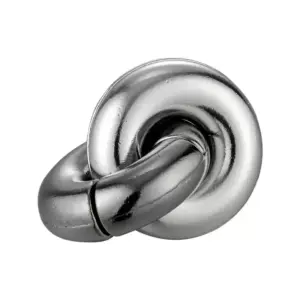
Quick Answer: Wooden Puzzle Review: Which Tier Is Worth the Money?
Wooden jigsaw puzzles are worth trying if you want a tactile, slower, more design-driven build than cardboard offers, but the experience varies sharply by brand. Match your pick to three conditions: piece count (wooden feels roughly twice as complex per piece as cardboard), whimsy tolerance, and budget. Under $30 is entry, $30–$80 is mid, and $80+ is heirloom.
Three checks can shift your pick to a different tier: whether you prefer real-wood substrate over MDF, whimsy pieces or traditional cuts, and how long you want the build to last.
| Tier | Price band | Audience | What to verify |
|---|---|---|---|
| Entry | Under $30 | First-time wooden puzzler, gift buyers, anyone curious about the format | Substrate (real wood vs MDF veneer); piece thickness; snug fit |
| Mid | $30–$80 | Returning puzzlers, design-driven solvers | Laser-cut precision; whimsy complexity; FSC-certified materials |
| Heirloom | $80+ | Collectors, repeat assemblers, keepsake buyers | Hand-cut vs laser-cut; piece weight; replacement-piece policy |
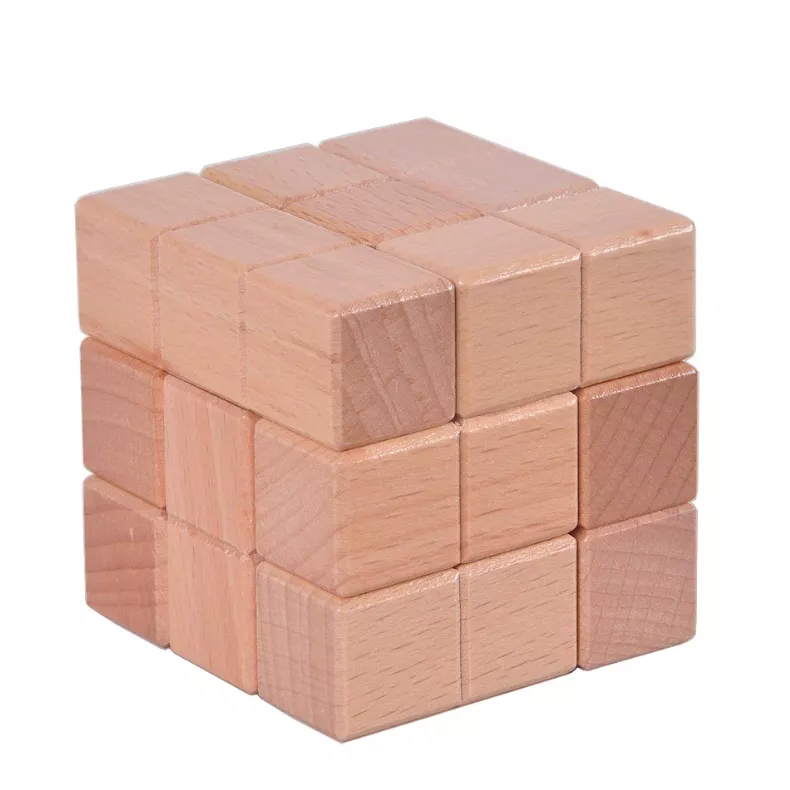
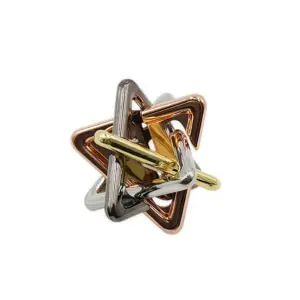
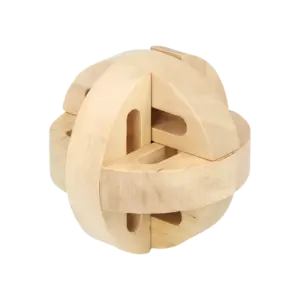
The entry tier is where most first-timers land. If a 250-piece jigsaw still feels like too much commitment, a compact wooden brain teaser at the same price point is the most accessible way to test whether you enjoy the tactile, screen-free focus the category offers before scaling up.
01. What a Wooden Puzzle Actually Is (and Isn’t) Compared to Cardboard
Before spending $30 or more, understand that “wooden” covers everything from solid birch plywood to MDF with a paper-thin veneer, and the difference shows up the moment you slot your first piece. A wooden jigsaw puzzle is a die-cut or laser-cut assembly of thicker pieces, usually 3–5mm, printed on real wood or composite, not a cardboard replica.
A puzzle is a problem or toy designed to test ingenuity or knowledge, and a mechanical puzzle is a physical object whose assembly requires logic, reasoning, or dexterity. Wooden jigsaw puzzles sit at the intersection of both: they test pattern recognition and demand manual piece-by-piece reasoning. The “wooden” framing is what changes the experience, not the underlying definition.
Four observable differences separate a $25 wooden puzzle from a $120 one. None of them are marketing copy; you can see or feel each one with a single piece in your hand.
Substrate. This is the most consequential variable, and the one most often glossed over. Heirloom-tier construction uses FSC-certified birch plywood or solid hardwood, with the FSC mark tied to independently verified sustainable sourcing. Mid-tier construction often combines an MDF core with a printed veneer, which can feel solid if the press is tight and the cut precise. The cheapest tier, the $15–$25 wooden puzzles flooding marketplaces, uses thin MDF with a paper veneer that can chip at the edges after a few builds. Reddit’s r/Jigsawpuzzles has multiple threads where buyers describe these cheaper pieces as “sloppy,” moving once placed and leaving visible gaps along the seams. The substrate is what determines whether a wooden puzzle will be a 20-year keepsake or a one-time assembly.
Piece weight and thickness. Cardboard jigsaw pieces are typically 1.5–2mm thick; wooden pieces run 3–5mm. That thickness change has three downstream effects. Pieces feel heavier and more substantial in the hand, which is the tactile feedback most people mention first. They stand up to repeated assembly without bending or fraying; reviewers in one roundup note that owners rebuild their puzzles “to enjoy them again” rather than gluing and framing. And they require a different insertion motion: instead of snapping flat, wooden pieces often slide in from the top before settling into their final position.
Cut style. Cardboard puzzles are die-cut in long ribbons with repeating patterns. Wooden puzzles are almost always laser-cut, which means each piece can have a unique outline, including the figurals and special-shaped pieces the category is known for. Laser cutting also produces the precise tolerances that create a “snug fit”: pieces slot together with a satisfying resistance rather than rattling loose or jamming. One roundup specifically calls out that the “simplicity of piece cut” on a 300-piece wooden build made it surprisingly difficult to finish.
Design language. Wooden puzzles are the only category where whimsy pieces, themed figurals and puzzle-within-puzzle inserts, are standard rather than optional. The brands that built the category all anchor their reputations partly on this design density. The cut style is also more likely to be a Victorian cut, with irregular flowing outlines shaped like ribbons or florals, rather than the grid-and-ribbon pattern of mass-market cardboard. If you want a build where no two pieces feel alike, this is the differentiator that matters most.
One practical check before you buy. Email the brand or read the product fine print and ask what substrate they use. The answer tells you almost everything. “Birch plywood” or “FSC-certified” is a strong signal at the heirloom tier. “MDF with paper veneer” is acceptable at the mid tier if the cut precision is high. “Wooden-style” or no answer is a reason to walk away. This single question filters out most poorly-made wooden puzzles before they reach your door.
If you want to see how these mechanical differences play out across specific builds, this honest comparison of six premium wooden puzzle brands walks through each one against the same four checks.
A note on third-party context: the broader wooden-puzzle market includes artisan names like Liberty, Stave, Artifact, Nautilus, Elms, and Wentworth at the heirloom end, and Ravensburger, JaCaRou, Stumpcraft, Victory, and Trefl in the entry and mid bands. Tea-Sip does not stock these and is not affiliated with them; they are mentioned only to clarify the wider market the tier definitions reference.
02. The Four Mechanical Checks That Separate a $25 Wooden Puzzle From a $120 One
The price gap between a $25 wooden puzzle and a $120 one is explained by four observable mechanics: substrate type, cut precision, whimsy design complexity, and piece thickness. Each can be checked from a product photo, a specification sheet, or by asking the brand one direct question. Together they predict how the build will feel in your hands, how long it will hold together, and whether the experience justifies the spend.
1. Substrate: birch plywood vs MDF core with a paper veneer. Heirloom-tier construction uses birch plywood or FSC-certified hardwood throughout. The mid tier often uses an MDF core wrapped in a thin paper veneer printed with the artwork. MDF is not automatically bad; a tightly pressed core with a clean laser cut can feel fine. The problem appears when the cut is shallow and the veneer chips at the edges, or when the press is loose and pieces flex under finger pressure. If a brand’s product page uses the phrase “wooden-style” or never names the substrate, assume the cheapest option is in play.
2. Cut precision: laser-cut, die-cut, or hand-cut. Laser-cut pieces have crisp, slightly darker edges where the beam kissed the wood; the kerf is consistent from piece to piece, so the fit feels uniform. Die-cut pieces can show fiber tear-out and more variation piece to piece. Hand-cut pieces carry visible tool variation and are individually unique, but they are also the most expensive because they do not scale. Check the product photo at 100% zoom: are the edges uniformly dark, or do you see fraying? Are the curves smooth, or do they look pinched?
3. Whimsy design complexity. Whimsies are themed pieces cut into the puzzle’s silhouette: a fox curled around a tree, a fish where the river bend is. The tier difference shows up in three places: how many whimsies per puzzle, how recognizable they are at a glance, and whether the surrounding filler pieces still feel designed rather than generic. A $30 wooden puzzle might include three or four simple whimsies; a $100+ heirloom piece might include a dozen, with shapes that reference the artwork directly.
4. Piece thickness and weight. This is the check Reddit users describe when they say a cheap wooden puzzle “felt sloppy and the pieces moved.” Substrate is part of it, but thickness is the lever. Heirloom pieces often run 4–6mm thick with a satisfying weight in the palm; budget wooden puzzles may be 2–3mm and flex. Thicker pieces also resist sliding once seated, which is what produces the snug fit that reviewers consistently call out. Tactile feedback is sharper, and the build feels deliberate rather than fiddly.
The tactile and visual checklist for the “sloppy pieces” complaint. If the worry is that pieces will move or feel loose, three things to look for before checkout:
- Substrate disclosure in the product copy. If it is not named, the puzzle is almost certainly MDF or thinner.
- Edge color in the photo at 100% zoom. Laser-cut edges are dark and crisp; die-cut edges look fuzzy or torn.
- Piece thickness in millimeters, if listed. Anything under 3mm is likely to flex; 4mm and up holds its seat.
The next action before you click buy. Open the product image at 100% on a real screen, not a thumbnail, and inspect the piece edges. Look for uniform dark cut lines, no fiber fraying, and consistent thickness across the visible stack. If the photo is staged, too small, or shows only the finished puzzle from above, email the brand and ask for a single piece photographed on its side. Brands that stand behind their substrate answer that email quickly; brands that do not, usually do not answer at all.
This definitive buyers framework for wooden puzzle sets covers the same four mechanics with brand-specific callouts if you want a side-by-side reference.
03. Matching Tier to Puzzler: Entry, Mid, and Heirloom Tiers Compared
The decision rule builds on those verification steps. Match tier to piece count tolerance, whimsy appetite, and budget. Entry under $30 suits first-timers testing whether the format clicks at all. Mid $30–$80 is the sweet spot for design-driven solvers who want a tactile upgrade without heirloom pricing. Heirloom $80+ is for keepsake builds, gifts that double as display objects, and puzzlers who want a real challenge.
Where that rule breaks is when the reader assumes a brand name alone tells them which tier it lives in. It does not. The same brand can sit in two tiers depending on piece count, whimsy density, and substrate. What actually separates tiers is the four mechanics from the prior section: substrate, cut precision, whimsy complexity, and piece thickness. Once a reader can see those four numbers, the tier name becomes shorthand rather than a guess.
The entry tier under $30. First-time buyers should look for two signals. First, the brand names a substrate (birch plywood or solid wood over MDF). Second, the piece count sits between 150 and 300, because below 150 the format feels more like a brain teaser than a jigsaw. Sub-$20 listings on marketplaces can ship with pieces that “move” or feel “sloppy” per r/Jigsawpuzzles threads, so verify the substrate before checkout.
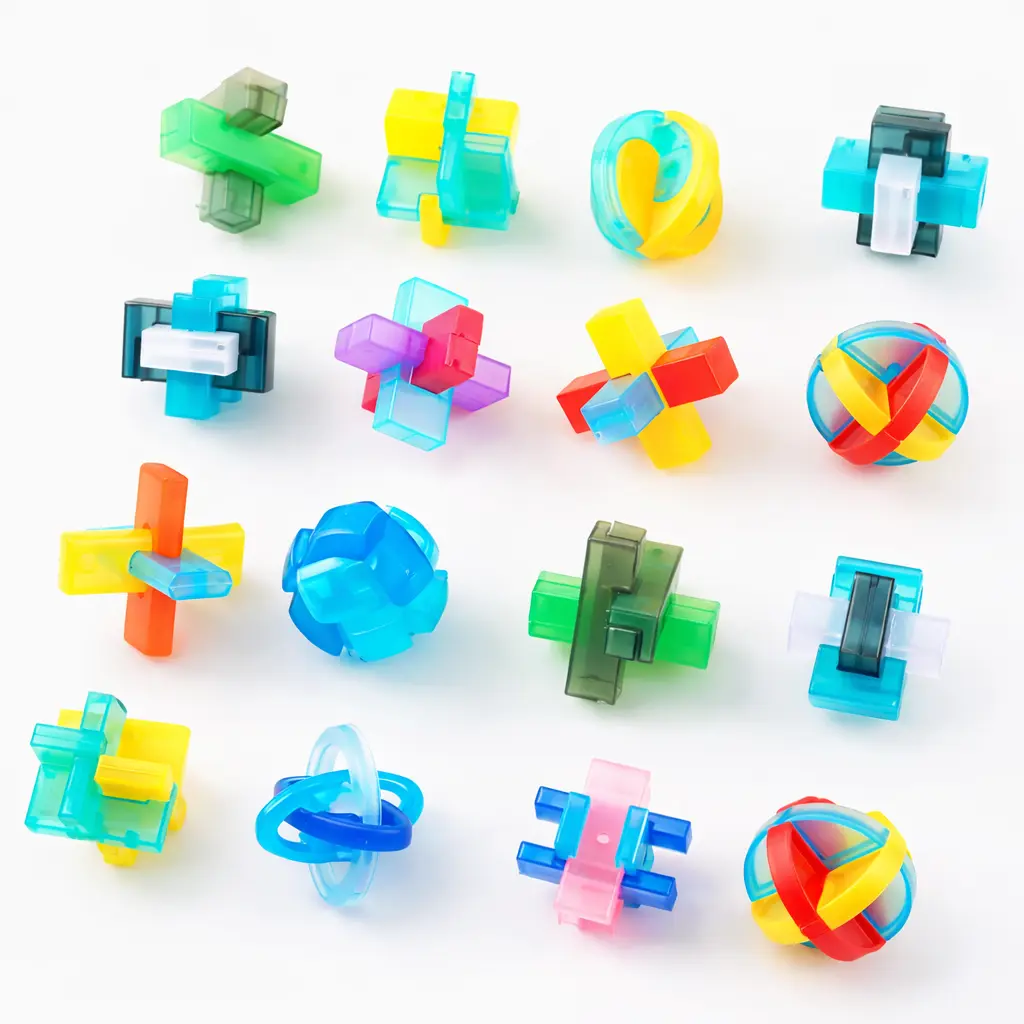
If the reader is not yet sure a jigsaw-shaped wooden puzzle is the right first step, a compact entry-tier interlocking format can be a useful dry run for the tactile feel.
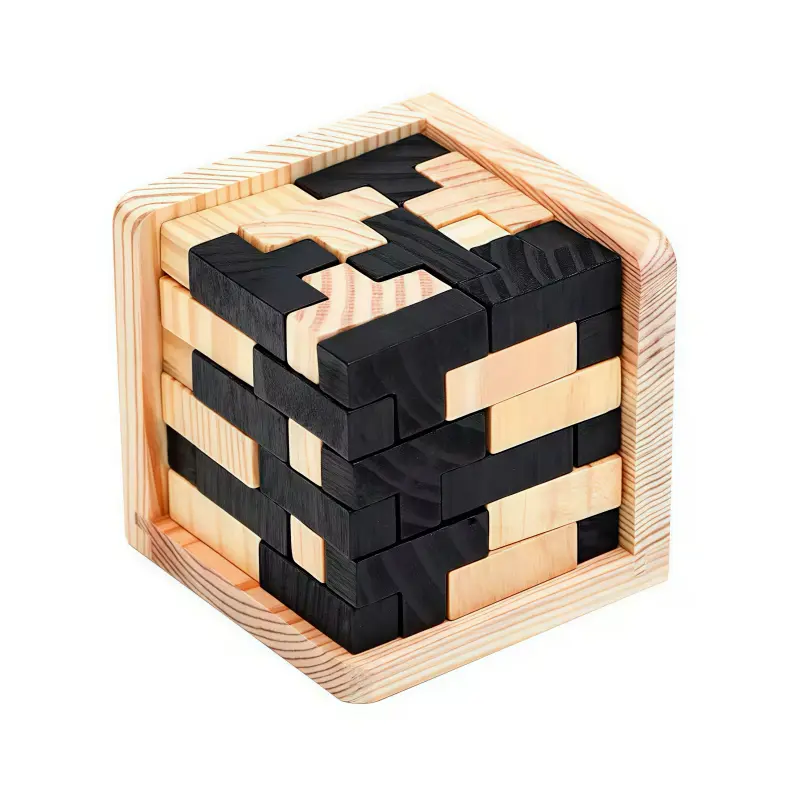
54‑T Cube Puzzle — $18.99
For readers who want to see how these compact wooden formats compare head-to-head on substrate, cut, and tactile feel, this roundup of tested wooden 3D puzzles for adults applies the same four mechanical checks to each option.
The mid tier $30–$80. This is where most adult jigsaw hobbyists land, because it is the first band where whimsy pieces start appearing in meaningful density. The My Jigsaw Journal five-brand experiment, where the author purchased puzzles from five different companies to compare them directly, found that mid-tier brands tend to deliver the strongest ratio of tactile quality to price, with a snug fit that holds its seat during assembly. The bottom of this band is also where FSC-certified packaging starts to show up as a verifiable buying criterion.
The heirloom tier $80+. Heirloom is the right tier for keepsake builds and gift-quality presents, but only if the recipient has done at least one mid-tier wooden puzzle first. Handing an heirloom piece to a first-timer usually produces a quiet shelf ornament, not a finished puzzle. Verification here leans on hand-cut signatures, 4–5mm piece thickness, and FSC certification on the box.
The piece count calibration. The single most useful data point for matching tier to a specific reader is the r/Jigsawpuzzles consensus that wooden puzzles feel roughly twice as complex as cardboard. A user there noted they “opt for around 250 pieces or less in a wooden puzzle” when they would normally do a 500-piece cardboard. Apply that ratio across tiers: a 250-piece heirloom at 4mm piece thickness is not a beginner’s puzzle. It is a 500-piece cardboard equivalent in difficulty, and the patience cost climbs fast with each tier up.
The next action. Pick the tier that matches the lowest piece count the reader has actually finished in cardboard, then halve it. That single calculation removes the most common mismatch — a first-timer who buys a 500-piece heirloom and never opens the box.
04. Decision Table: Tier, Audience, Price Band, and What to Verify Before You Buy
The halving rule from the previous section only resolves once the reader has chosen a tier, and tier is the harder call. Match the tier to the lowest piece count the reader has actually finished in cardboard, then halve it to find a comfortable wooden equivalent. The rows below are decision rows, not a ranking. Each maps a price band to a puzzler type, then pairs it with a tactile or visual check the reader can apply at the product page or in-hand.
How to read the table. Start in the left column with the tier the buyer can actually afford; move right to the puzzler profile that matches the recipient; end in the right column with one thing to verify before checkout. If the verification step fails, the tier is wrong, not the price.
| Tier | Best-For Puzzler | Price Band | Example Tea-Sip Pick | What to Verify |
|---|---|---|---|---|
| Entry | First-timer finishing 250–500-piece cardboard puzzles | Under $30 | Luban Cube Puzzle, 54‑T Cube Puzzle, Blockade Puzzle | Substrate label (solid wood or FSC-certified, not MDF veneer); test-fit a piece — no rattle |
| Mid | Regular puzzler wanting variety and 250+ piece designs | $30–$80 | 6-in-1 Wooden Brain Teaser Set | Laser-cut precision; 3–4mm piece thickness; multiple formats bundled |
| Heirloom | Experienced puzzler or keepsake-gift buyer expecting lifetime use | $80+ | (No current Tea-Sip option at this tier) | Hand-cut signature or laser-cut precision; 4–5mm piece thickness; FSC certification on the box |
For readers who want a wooden tactile challenge but not a flat jigsaw, the format options run wider than many buyers realize. Two 3D wooden builds sit in the under-$25 band: the 7 Color Soma Cube Puzzle ($21.88 — check the product page for the current price), a 3D dissection challenge that fits on a desk rather than a table, and the Luban Cube Puzzle, the primary Tea-Sip entry point for wooden brain-teaser builds.
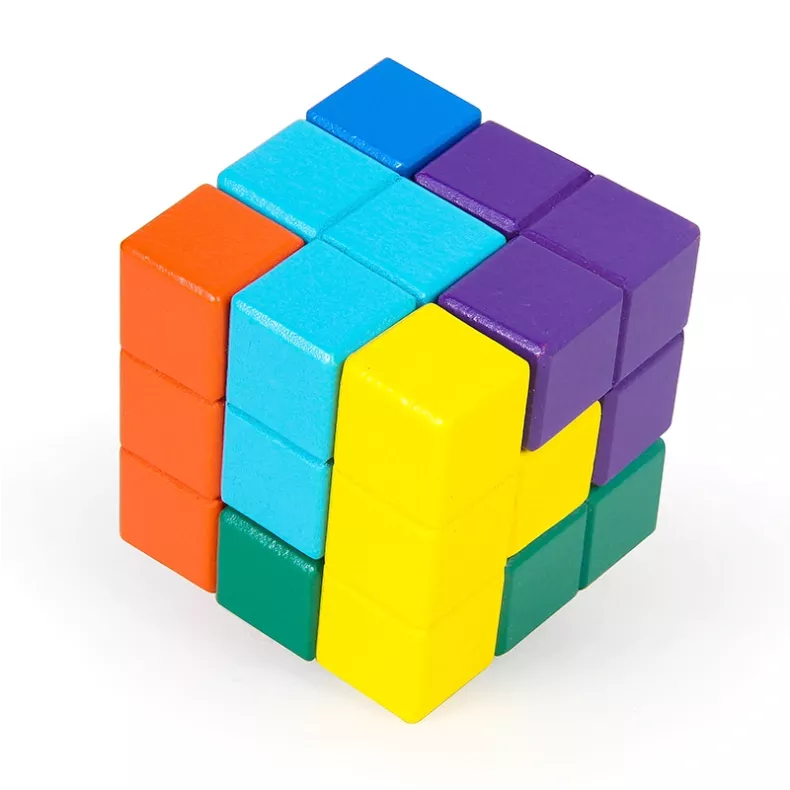
7 Color Soma Cube Puzzle — $21.88
One sustainability note worth checking before checkout: the strongest verification signal is an FSC-certified mark printed on the box or shown on the product page, tied to independently verified sustainable sourcing. Treat the certification as a verifiable label, not a marketing tagline. If a product page uses “eco-friendly wood” without naming the standard, ask the seller which body issued it; the Lubiwood checklist and the r/Jigsawpuzzles community both treat FSC as the only sustainability claim that survives that check.
05. The Bottom Line: One Check Before You Click Buy
Before any tier choice, run one verification: open the product page, scan the substrate line, and confirm the puzzle uses solid wood, birch plywood, or FSC-certified stock rather than MDF with a printed veneer. This single check filters out the loose, “sloppy” feel that r/Jigsawpuzzles users report and protects you from paying heirloom prices for entry-tier construction.
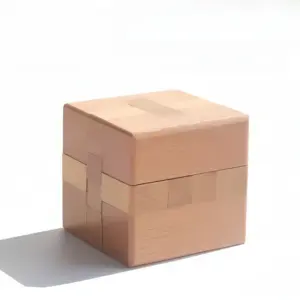
For a first wooden-puzzle purchase in the entry tier, the Luban Cube Puzzle at $21.99 delivers the same tactile, screen-free focus that defines the category, in a compact, repeatable format that tests the format without a $40+ commitment. The Luban Cube Puzzle is a strong starting point because it answers the “are wooden puzzles worth it” question for under $25. Visit the product page, confirm the substrate line, and you’ll know within a single solve whether to size up.
Your three change-conditions, restated: piece count (how long you want to sit), whimsy tolerance (themed shapes versus pure solve), and budget (under $30, $30–$80, or $80+). Answer all three honestly before you browse.
Decision rule by tier: first-time buyer on a sub-$30 budget, land at entry tier; experienced puzzler who wants whimsy and has $30–$80, move to mid tier; collecting or gifting a re-frameable heirloom, commit to the heirloom tier and verify FSC certification on the box.
Frequently Asked Questions
The eight questions below cover what most adult puzzlers ask before committing $30–$150 to a wooden jigsaw. The practical factor that changes every answer is the same one from the bottom line: substrate. A $25 MDF-veneer piece feels nothing like a $120 birch-plywood piece, and whether you enjoy the category depends almost entirely on that single distinction. Each answer ends with a concrete check so you leave with a specific next action.
Are wooden jigsaw puzzles actually better than cardboard, or is it just hype?
They deliver a different experience, not a strictly better one. Wooden puzzles offer thicker pieces, more tactile feedback, and whimsy shapes; cardboard still wins on price-per-piece and image complexity. Check: hold one piece between two fingers and feel whether it has weight and grain, or feels like printed cardboard with a thin wood veneer.
How much harder is a wooden puzzle compared to a cardboard jigsaw of the same piece count?
Significantly harder per piece, because whimsy shapes and irregular cuts remove the color-sort shortcut. One r/Jigsawpuzzles regular summarized the calibration clearly: they halve their piece count when switching from cardboard to wood, treating a 250-piece wooden puzzle like a 500-piece cardboard one in time and difficulty. To verify, look for whether the box lists piece count and finished dimensions together.
Why are wooden jigsaw puzzles so much more expensive?
The substrate, cut method, and design time all cost more. Birch plywood and FSC-certified boards run several times the price of greyboard; laser-cut dies and hand-finished whimsy add labor; small batches lack cardboard’s scale. If the price looks too low for “wooden,” the pieces may be MDF with a printed veneer, a known shortcut in budget listings reported by r/Jigsawpuzzles users.
What should I look for to avoid a cheaply made wooden puzzle?
Three checks. First, the substrate: real wood or MDF, listed on the product page. Second, the cut: sharp, consistent edges with no frayed fibers. Third, the fit: pieces should slide with a snug feel, not rattle. The single tactile check from the bottom line (lift a piece, try to wiggle it) filters out most of the “sloppy” experiences buyers report on r/Jigsawpuzzles.
Are wooden puzzles a good gift for someone who only does cardboard puzzles?
Yes, if you match the tier to their puzzle personality. A cardboard regular who enjoys 500 pieces will likely warm to a compact, repeatable wooden format before committing to a 750-piece heirloom. For a contained gift under $20 that still carries the wooden draw, the Blockade Puzzle fits a stocking or desk drawer.
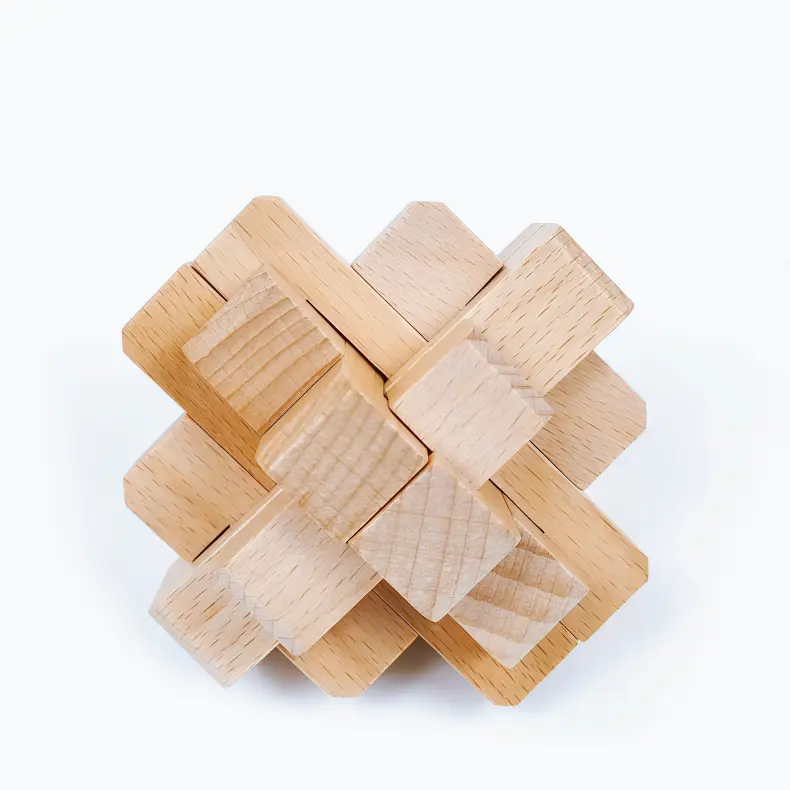
Blockade Puzzle — $16.99
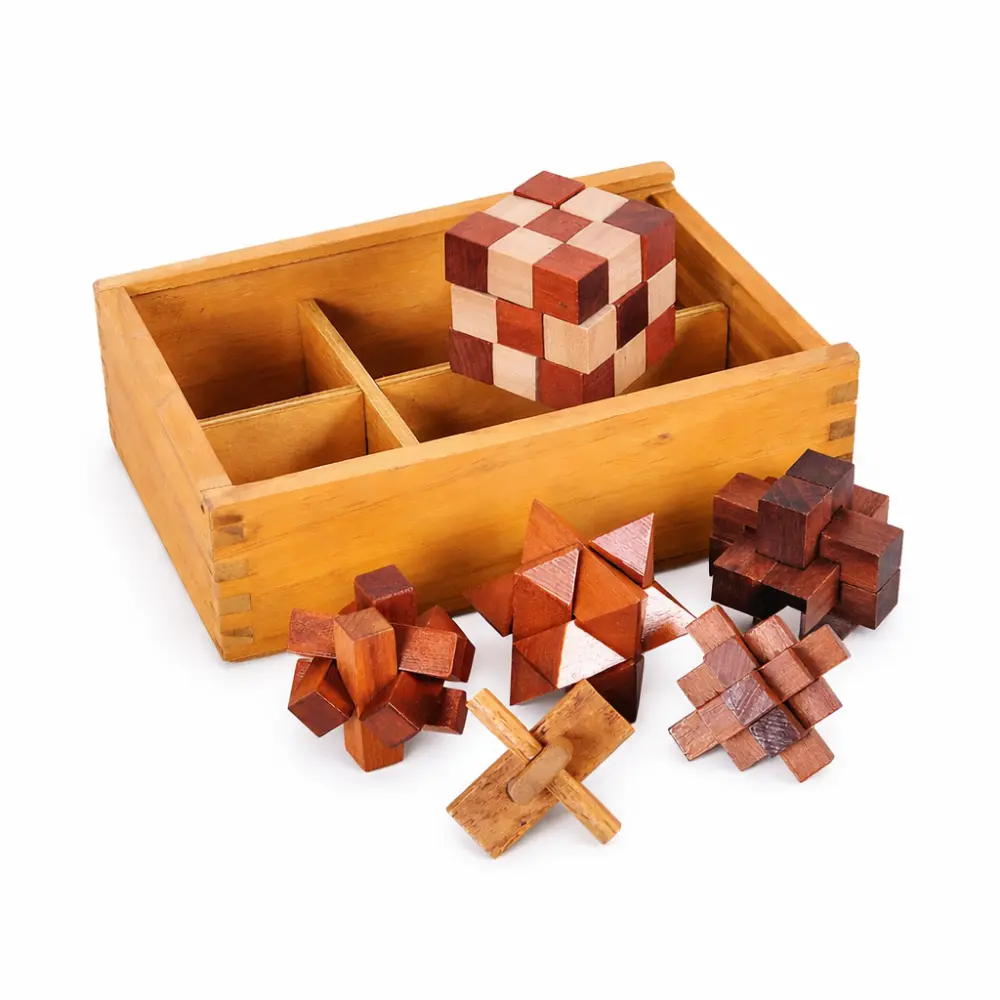
For a recipient who wants more variety in one box, the 6-in-1 Wooden Brain Teaser Set bundles multiple wooden formats at a mid-tier price.
How long does a wooden jigsaw typically take to finish?
It depends on piece count and whimsy density, but a 150–300 piece wooden puzzle with heavy whimsy commonly fills a long evening or a relaxed weekend afternoon. The same count in cardboard solves in roughly half the time, because whimsy pieces remove the color-sort shortcut and force you to read shape alone.
Do wooden puzzles come with missing or replacement pieces?
Some brands in the heirloom and mid tiers do offer replacement policies, though the process varies. The hand-finished, small-batch nature of artisan pieces means replacement is often a custom job rather than a stock-part shipment, and policies are not standardized across the category. Check the brand’s replacement policy on its site before purchase.
Which wooden puzzle brands are worth the money?
The decision rule from the bottom line still applies: match the brand to your tier, not the other way around. Look for a brand that discloses its substrate (real wood, MDF, or veneer), names the cut method (laser-cut, die-cut, or hand-cut), and publishes its piece thickness. Brands that hide any of those three details are usually relying on “wooden” as a marketing word, not a construction specification. A single neutral aside earlier in this article lists the artisan and mainstream names that anchor the broader market, for readers who want to see who sits at each tier.
Next step: open the Luban Cube Puzzle product page, confirm the substrate line, and run the single tactile check on the first piece you lift. If it passes, you’ll know within one solve whether to size up to a 500-piece heirloom or stay in the compact-wooden format. That single check is the bridge between “are wooden puzzles worth it?” and your own answer.
Where to Start
If the difficulty, mechanism, and use-case checks above match, start with Luban Cube Puzzle. Check the current product page for the specifications that matter to your choice.
Sources and verification
- Product details and current specifications: Tea-Sip product page
Last updated: August 3, 2026