Quick Answer: Beginner Puzzle Set Gift for Nurse: How to Choose One They’ll Finish
For a nurse who has never done a jigsaw before, choose a 70–150 piece themed wooden or cardboard puzzle with nurse imagery and a personalization option; skip 500+ piece sets and skip brain-teaser activity books unless the nurse already puzzles. The three checks below explain why.
The pick shifts if the nurse has any puzzling background, if the gift is for Nurses Week, graduation, or retirement, and if you want the puzzle to double as desk decor after solving.
Three checks that decide it:
- Difficulty → 70–150 piece count on wood or thick cardboard. Finishable in one sitting, not a weekend project.
- Theme + personalization → Stethoscope, scrubs, or RN badge imagery with a name, date, or short message turns a hobby item into a present with weight.
- Format fit → Jigsaw suits graduation and thank-you. A wooden or crystal brain-teaser set suits Nurses Week, retirement, and desk display. An activity book only suits a confirmed puzzler.
| Format | Beginner signal | Best occasion | Skip if |
|---|---|---|---|
| 70–150 piece themed jigsaw | “Beginner” label, ≤150 pieces | Graduation, thank-you | The nurse avoids tabletop hobbies |
| Wooden or crystal brain-teaser set | 6–12 pieces, no glue, no assembly | Nurses Week, retirement, desk display | True first-timer who dislikes small objects |
| Activity book (crosswords, word searches) | 50+ pages of word puzzles | Stocking stuffer, Secret Santa | Recipient is brand-new to puzzling |
| 3D printed figurine kit | Needs assembly, sometimes glue or sanding | Retirement display only | Beginner — too fiddly for first-timers |
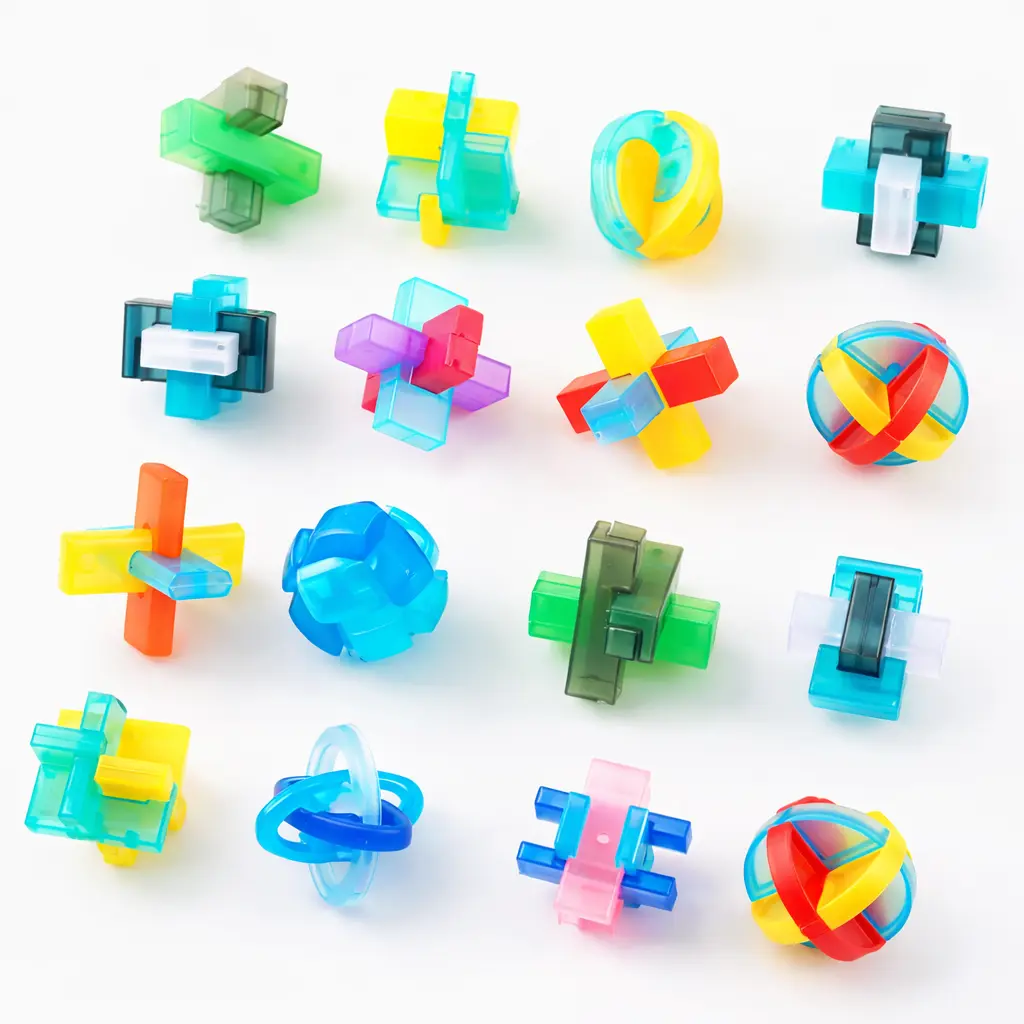
Tie-breaker: Brand-new to puzzling → start under 150 pieces with nurse imagery. Already keeps a small hand puzzle on the desk → a 12-piece crystal Luban lock set is the smarter pick: compact, displayable, and solvable between shifts. Check the product page for the current price and personalization options before checkout. For pocketable break-room options, the 8 best fidget toy gifts for nurses with real RN reviews roundup covers what working RNs actually reach for between patients.
01. What ‘Beginner’ Actually Means for an Adult Nurse Who Has Never Puzzled
That tie-breaker above is the shortcut. The full picture explains how each part of it actually works on a listing page, so a buyer can verify the call before checkout rather than trust a single product photo.
For a nurse who has never done a jigsaw, beginner means 70 to 150 pieces, oversized pieces, a theme the nurse can read across the surface without a reference image, and a finishable time under one sitting. Anything outside that range tends to end up framed on a shelf rather than finished on the floor, and the gift stops feeling personal the moment a puzzle becomes homework after a long shift.
Piece count is the fastest beginner signal on any listing. The 70-piece “I Am A Nurse” wooden jigsaw sold online is a useful reference point: it is explicitly marketed as a “Beginner Jigsaw Puzzle for Adults” and built around nurse-themed artwork, and the box is large enough that each piece can be matched to a section of the image without a printed reference photo. That one-sitting solve window is what separates a nurse gift from a nurse chore. If the listing is buried in 500, 1000, or 1500 piece counts, the box will likely move from the gift table to the donation pile before a nurse ever opens it after a 12-hour rotation.
Material changes how a beginner handles a puzzle, even before the first piece is placed. Wooden jigsaw pieces are thicker, hold their shape, and survive being picked up, set down, and passed to a colleague at the nurses’ station. Cardboard pieces are fine for a flat dining-room table, but they bend, peel, and lose their fit when they are nudged off a tray. For a recipient who may solve in short bursts between shifts, wood is the lower-friction material. The 70-piece set mentioned above is a fair representative of the wooden beginner format; cheaper cardboard sets with 100 to 150 pieces can work, but verify the cut and thickness on the listing photos before checkout.
Theme readability is the most under-appreciated beginner criterion. A nurse can finish a puzzle faster when the artwork itself tells her where the next piece belongs. A stethoscope-shaped wooden brain teaser, scrubs-patterned jigsaw, or anatomical heart illustration gives the solver visual anchors a true beginner can lean on. A generic landscape, no matter how pretty, removes those anchors and turns a relaxing screen-free break into a frustrated stare-down. Look for nurse-specific imagery in the listing photos before clicking, and skip any image that looks identical to a non-nurse version with a logo swapped in.
Solve time is the finishable signal. A 70 to 150 piece wooden jigsaw is built to finish in a single sitting for a first-timer, which fits inside one evening or one long break. A 500-piece set typically requires multiple sittings across several days, which collides with rotating shifts, family time, and sleep. The gift works when the nurse can complete it in one stretch, set the finished puzzle on the desk or break-room shelf, and feel the small pride of finishing something she started. The original 70-piece listing explicitly names stress relief as a use case, which is shorthand for that one-evening reset.
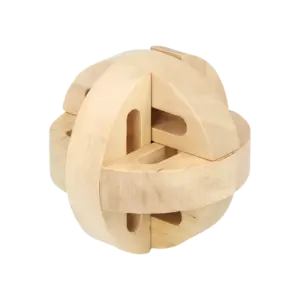
Once a nurse has finished a beginner set, a slightly more tactile option can stretch the gift into a second project. A compact wooden twist or interlock puzzle, kept on a break-room counter, offers a five-minute reset between patient calls and still lives in the beginner-friendly range because the solve is short, the size is small, and the reward is a completed object that lives on a shelf. The 54‑T cube is one such option for a nurse who already enjoys a small hand puzzle and wants something to fidget with during a charting break.
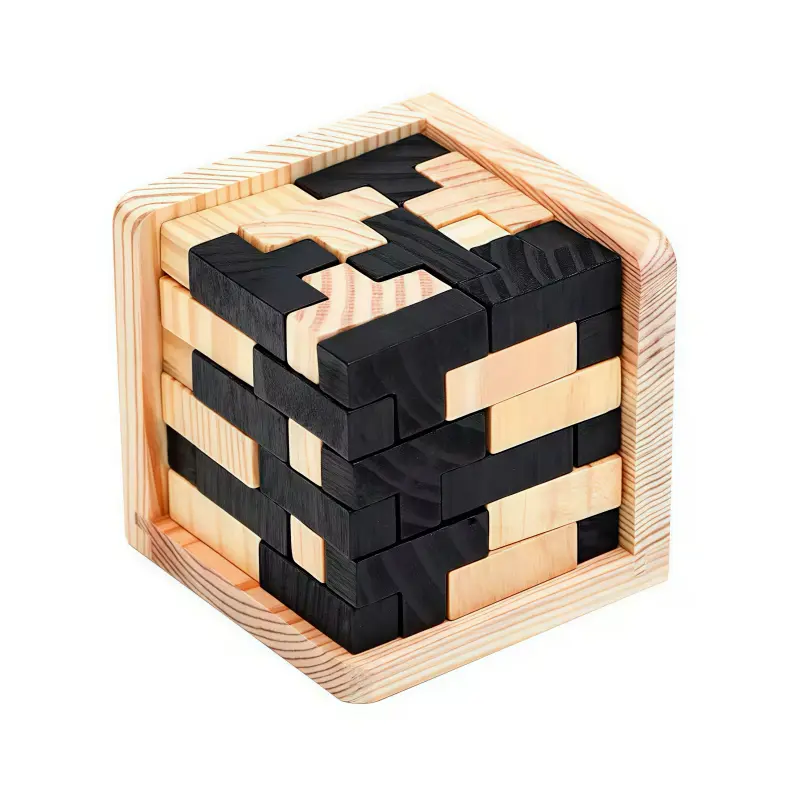
54‑T Cube Puzzle — $18.99
Skip 3D printed assembly kits, escape-room-style boxes, and any puzzle that lists glue, paint, or adult-sized patience in the description: a first-time puzzler who works 12-hour shifts does not have a clean table or a full afternoon to give to a kit project. Stay under 150 pieces, stay with wood when the budget allows, and stay with imagery the nurse will recognize from her own scrubs pocket.
If the listing does not state a piece count, move on.
02. Puzzle Formats Compared: Jigsaw, Wooden Brain Teaser, Activity Book, 3D Figurine
Match format to gifting moment, not to puzzle enthusiasm: jigsaw for relaxation, wooden brain teaser for desk display, activity book for Nurses Week filler, 3D figurine only for collectors. Piece count and material are sorted; the next decision is the format itself. The four formats solve different gifting jobs, and the wrong one turns a thoughtful present into a shelf ornament the nurse never opens.
The four formats sit in different parts of the gift. A themed jigsaw is flat interlocking pieces with nurse imagery printed on the box — a one-sitting solve, then a flat object the nurse stores or frames. A wooden brain teaser uses laser-cut wood or crystal pieces (stethoscope, IV bag, and nurse hat shapes appear in nurse-themed versions) that click together to form a single shape, often with a name engraved on the largest piece; it earns desk space rather than closet space. An activity book is a paperback of crosswords, word searches, and word scrambles — it is a book, not a jigsaw, and it fits in a tote bag for break-room reading. A 3D figurine or 3D printed assembly kit is a printed nurse character or a buildable 3D object, usually aimed at collectors rather than first-timers.
| Format | Mechanism | Skill required | Best for | What to check on the listing |
|---|---|---|---|---|
| Themed jigsaw | Flat interlocking pieces, picture on box | None to low (under 150 pieces) | Shift decompression, one-sitting solve | Piece count, material (wood vs cardboard), personalization field |
| Wooden brain teaser | Laser-cut wood or crystal pieces, physical assembly | Low to moderate (mechanical logic) | Desk display, repeatable challenge | Piece count, material thickness, whether a name can be engraved |
| Activity book | Pen-and-paper puzzles in a printed book | None (word puzzles) | Travel, Nurses Week filler, stocking stuffer | Page count, puzzle variety, book dimensions |
| 3D figurine / printed kit | 3D printed parts, sometimes glue required | Moderate to high (assembly, patience) | Collectors, display shelves | Whether glue is needed, part count, finished size |
Match the format to the occasion. A Nurses Week thank-you that travels in a break-room envelope calls for an activity book — small, light, solves in five-minute breaks. A nursing school graduation earns a 70–150 piece wooden jigsaw with the graduate’s name on the box: the piece count signals a milestone, the personalization signals thought. A retirement gift that lands on a home-office shelf is where a wooden brain teaser earns its place — the nurse solves it once, sets it on a bookshelf, and remembers who gave it.
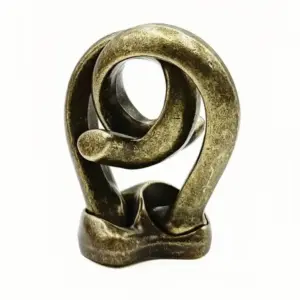
Where a mechanical brain teaser fits the nurse-gift brief. A generic, well-made mechanical puzzle is any puzzle solved entirely by physical manipulation, and wooden brain teasers and metal disentanglements sit squarely in that family — the format that does not need nurse imagery to read as personal. A crystal disentanglement set with roughly a dozen interlocking pieces (a beginner count that finishes in one sitting) gives the nurse a tactile, screen-free reset between shifts without leaning on stethoscope art that might read as on-the-nose. The 12 Piece Crystal Luban Lock Set is the cleanest fit in this slot: twelve crystal pieces, a single solve, and a display object on a nurses’ station desk — check the product page for the current price and the exact piece dimensions before checkout.
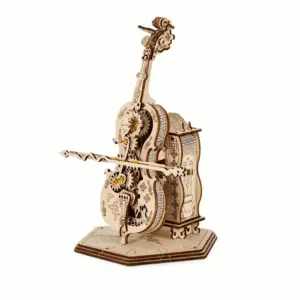
For nurses who already keep a hobby knife and wood glue in a drawer, a 3D wooden assembly kit steps the format up. These kits use laser-cut wooden parts that snap together dry, finishing as a small mechanical object the nurse built herself. The format rewards patience and produces a display piece — a different gift than a one-sitting brain teaser, and a step beyond a first-timer.
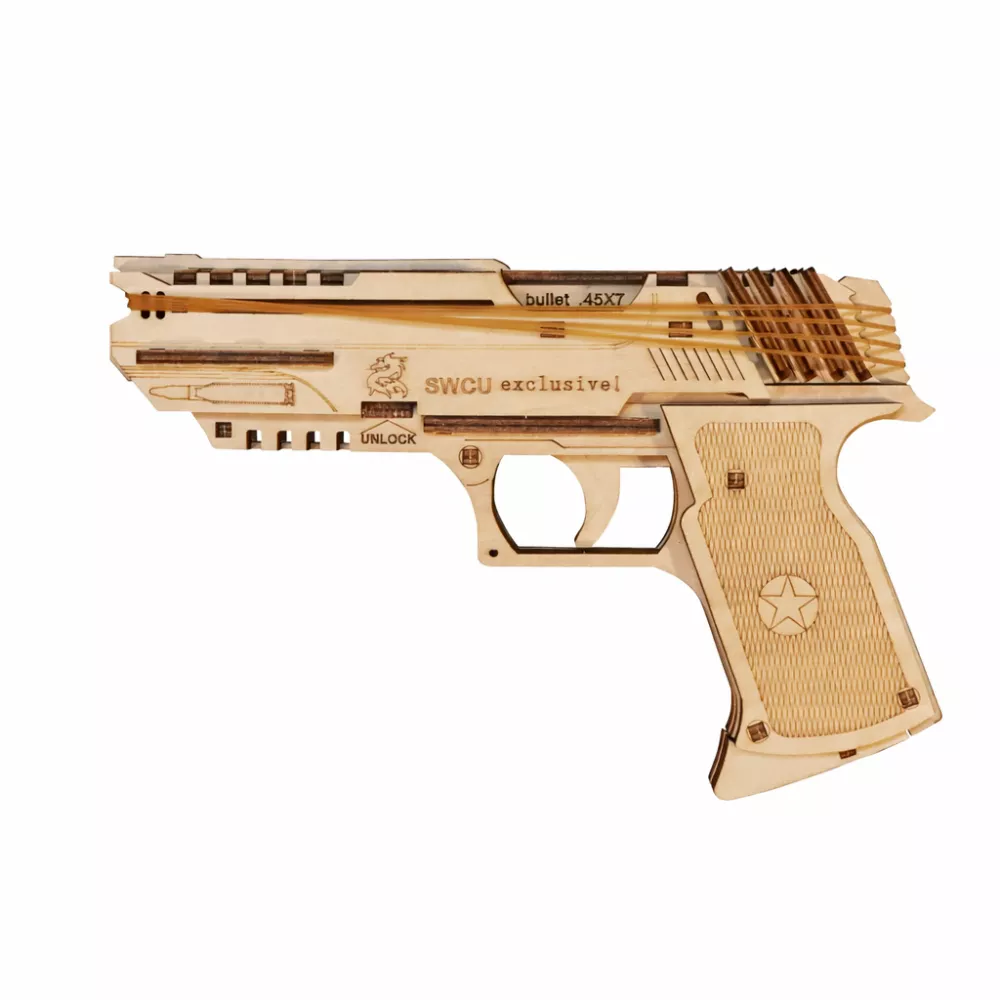
Format to avoid for true beginners. Skip 3D printed assembly kits that list glue, paint, or cure time in the description. A nurse coming off a 12-hour shift does not have a clean table for a glue-and-paint project, and a half-finished figurine on a kitchen counter reads as a chore, not a gift. The wooden snap-fit kits above avoid that problem because the pieces click together dry.
Tie-breaker. If the nurse has never finished a puzzle, choose a jigsaw; if the nurse already puzzles, choose a brain teaser.
03. Personalization, Engraving, and Presentation Checks Before You Order
Custom engraved puzzles cannot be returned, so every personalization choice must be triple-checked on the listing before checkout. Once the format decision is made (jigsaw for first-timers, brain teaser for experienced puzzlers), the next failure point is the engraving or message line, where one misspelled name or missing proof step turns a thoughtful gift into a wasted purchase.
Four listing-page checks before you click pay. These apply to any custom-order listing, whether it is a wooden nurse brain teaser with a name engraved on the back or a cardboard jigsaw with a personal message printed on the box lid.
Proof approval process. The listing should explicitly describe a step where the seller emails a digital mockup or photo of the engraved item for the buyer to approve before production begins. Listings that ship immediately with no proof step leave the buyer fully exposed to typos. A wooden nurse brain teaser from Creative Craft House, for example, lets buyers add a name to the design, but the buyer should still confirm the proof step exists in the listing photos or Q&A before ordering. The Nurse Puzzle sold on Amazon also offers a personalized message option, and the listing should state how that message is reviewed before it ships.
Spelling, characters, and special symbols. Most sellers impose a character limit for engraving and reject emojis or unusual punctuation. The buyer should type the name exactly as it should appear, including capitalization, and check whether accents (é, ñ) are accepted. A misspelled “JENIFER” engraved into wood is permanent.
Lead time for custom orders. Personalized items typically need additional business days of production on top of shipping. For Nurses Week (May 6–12), nursing school graduation ceremonies, or end-of-year thank-you gifts, the buyer should add buffer time. Last-minute orders on custom puzzles frequently arrive after the occasion, which defeats the purpose of a dated gift.
What happens if the engraving is wrong. This is the single most overlooked check. The buyer should scroll to the refund and return policy section and look for the phrase “personalized items are non-returnable.” If the seller does not explicitly state what they will do if they make the typo (not the buyer), the purchase is a gamble. A reputable seller will offer a remake or partial refund on their own error; an unstated policy usually means the buyer absorbs the loss.
The presentation layer most buyers miss. A personalized wooden puzzle doubles as a desk object between shifts, which is a value-add that listing photography rarely shows. A nurse working three 12-hour shifts a week does not always have the energy to open a closet and pull out a puzzle. A small wooden brain teaser engraved with their name, however, can sit on a break-room counter or nursing-station shelf, where it functions as a fidget toy and a low-key reminder that someone appreciated their work. That dual use (solve it once, display it after) is what separates a personalized wooden puzzle from a generic one and is the part of the gift the recipient will mention to colleagues.
Tie-breaker. If the listing does not show a proof step, choose a different seller.
04. Matching the Puzzle to the Gift Occasion: Nurses Week, Graduation, Retirement, Thank-You
Match format to occasion: Nurses Week and thank-you gifts call for a small personalized jigsaw; nursing school graduation calls for an engraved wooden brain teaser that doubles as a desk object; retirement calls for a larger themed jigsaw the nurse can finish over a weekend. Piece count, material, and personalization type change with the occasion, not just the theme printed on the box.
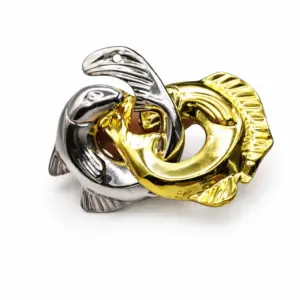
Nurses Week (May 6–12, anchored by National Nurses Day on May 6). This is the busiest gift-buying moment of the year for healthcare workers, which is why mugs, badge reels, and tumblers flood every registry. A puzzle answers the reader question “What is a good Nurses Week gift that is not another mug or badge?” because it signals that you thought about the nurse’s downtime, not their uniform. Stay at 70–150 pieces in a nurse-themed wooden jigsaw with a short personalization line (first name, “RN,” graduation year). Anything larger turns the gift into homework, and the nurse will quietly leave it in a break-room drawer. For a co-gift or stocking-stuffer at this price point, the 4 Band Puzzle Ring reads as wearable and travels in a scrub pocket.
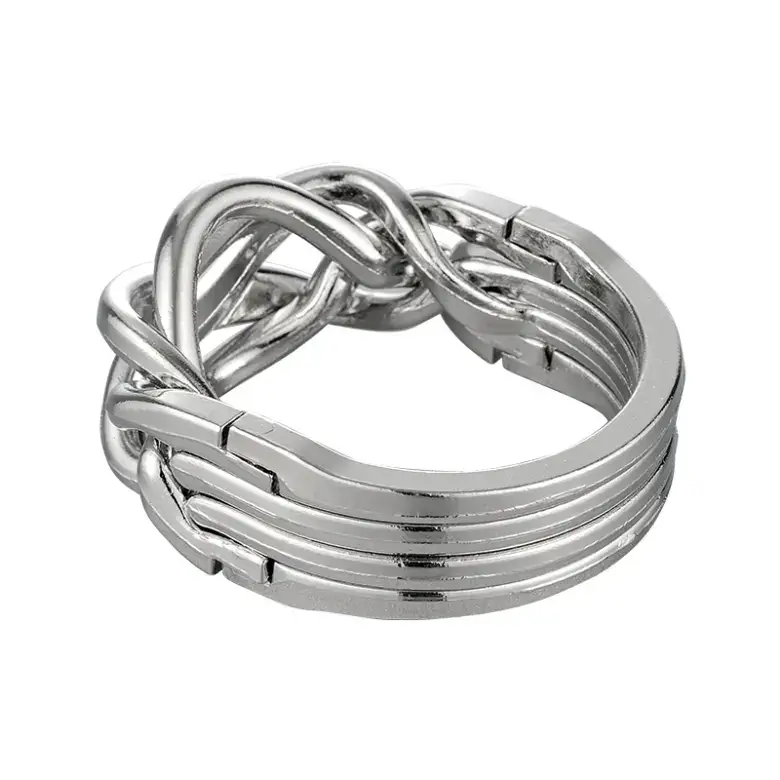
4 Band Puzzle Ring — $11.99
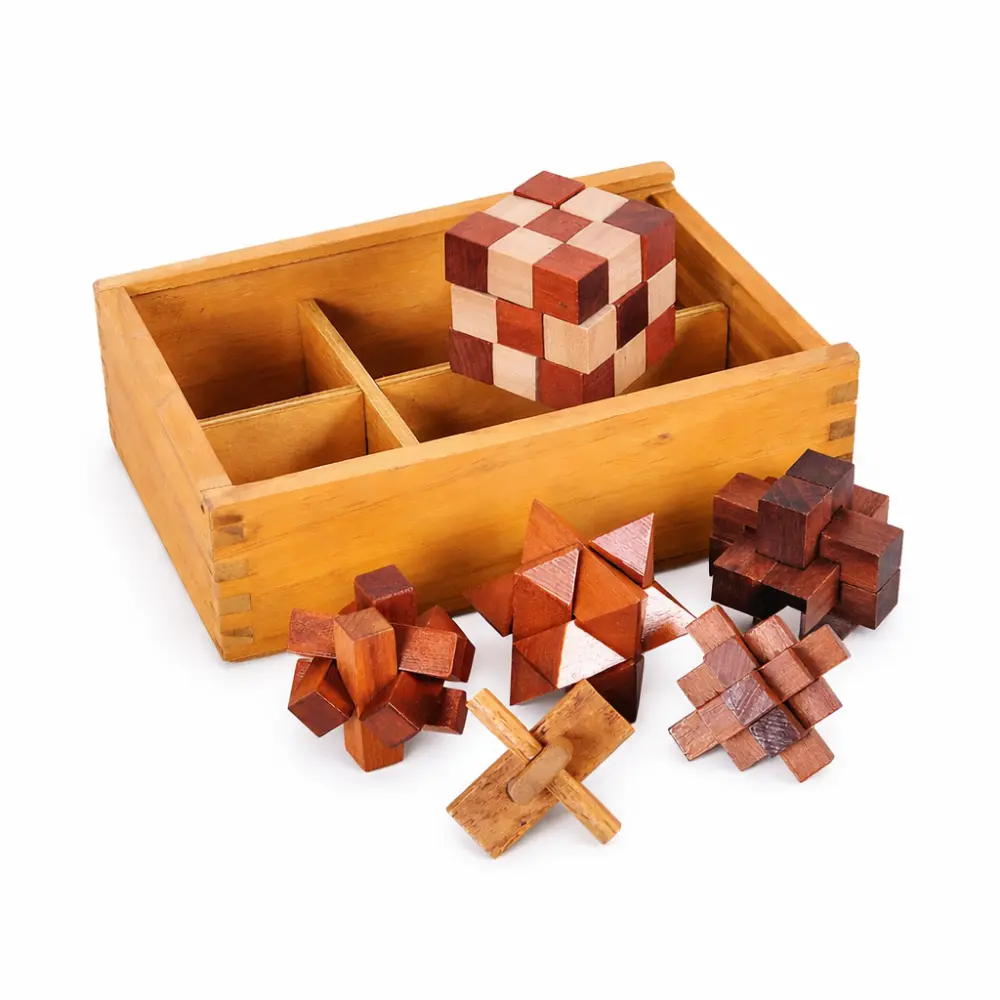
Nursing school graduation (May–June). The graduate has just cleared exam pressure, so the gift should celebrate the milestone without creating more studying. A wooden brain teaser set that can be solved once and then displayed on a desk is the right shape of present, and the piece count is irrelevant here because the mechanism is the point. The 6-in-1 Wooden Brain Teaser Set covers six different solve styles in a single box, which is useful when you do not yet know which mechanism the graduate prefers. If you want a longer read on graduation gifting logic, the 7 puzzle gifts for graduation that beat cash guide walks through the same occasion-matching approach with more examples.
Retirement. A retiring nurse has decades of memorabilia and probably a mantle or office shelf that is already crowded. Choose a larger themed jigsaw the nurse can finish over a weekend — 300 to 500 pieces, nurse-themed art, no personalization required because the occasion itself is the personalization. Skip anything that has to be displayed permanently (a 3D figurine assembly kit, a perpetual calendar build) because the retiree is usually downsizing, not collecting. The verification step is simple: check the assembled dimensions on the listing and picture it next to a coffee mug before checkout.
One-off thank-you. This is the wildcard occasion — a charge nurse who covered a hard shift, a preceptor who trained a new grad, a coworker who stayed late. The gift needs to be inexpensive enough to feel casual and personal enough to feel specific. A compact puzzle under $30 that the nurse can keep at a nursing station is the right call, and the 12 Piece Crystal Luban Lock Set at $28.88 fits because the pieces read as a small desk object once solved. Verify the listing specifies the material (plastic, wood, or metal) so the gift lands as a deliberate choice, not a last-minute grab from a hospital gift shop.
Tie-breaker. If the occasion is Nurses Week, skip anything larger than 150 pieces.
05. How to Verify a Nurse Puzzle Before You Click Checkout
Once the occasion is matched to a format, the next step is reading the listing like a checklist, not a love letter. Five listing-page checks separate a nurse puzzle that arrives gift-ready from one that arrives in a brown box with a typo, and a sixth check protects the theme from looking generic on opening day.
- Piece count is stated in the title or the first image. If the number is buried below the fold, the seller is signaling it’s not the main selling point. For a true adult beginner, a search-result line that reads “70 piece wooden jigsaw” or “80 piece personalized puzzle” confirms the difficulty signal in one glance. A listing that only says “wooden puzzle” or “nurse gift” is hiding the number on purpose.
- Material is named, with thickness where relevant. Wooden puzzles should state the wood thickness in the listing details. Cardboard jigsaws should state chipboard or greyboard. A plastic brain-teaser like the 12 Piece Crystal Luban Lock Set should call out plastic so the buyer knows it is not wood, which matters for both weight and display feel on a nursing station desk.
- Personalization field shows a character limit. A “custom name” field that accepts a reasonable number of characters is doing real work; one that just says “add a note at checkout” usually means the seller is handwriting whatever arrives. Confirm the character cap, the font, and whether the engraving is on the box, the puzzle itself, or a separate tag.
- Lead time is stated in writing for custom orders. Any personalized item ships in days, not hours. The listing should give a production window plus a shipping window, so the gift can land before Nurses Week or the graduation date.
- Return policy is stated, and custom engraved puzzles are typically non-returnable. This is the check most buyers skip. A custom-engraved wooden nurse puzzle is almost always a final sale, so a typo on the name is a typo the buyer pays for twice.
Theme clarity is the sixth check. The nurse imagery (stethoscope, scrubs, caduceus, RN lettering, nurse cap, or a clear “I Am A Nurse” title) must be visible on the box image, not only described in the bullet points. A box photo that shows the artwork at full size tells the buyer exactly what the recipient will see on opening.
Tie-breaker. If any of these checks is missing, message the seller before paying — a one-line question (“What is the lead time for the engraved version?”) is cheaper than a return that isn’t available.
Frequently Asked Questions
Choose a puzzle under 150 pieces for a nurse who has never done one, and confirm engraving, lead time, and theme visibility before checkout. The four questions below answer the most common sticking points buyers hit when they actually open the listing page.
How many pieces should a beginner puzzle for an adult nurse have?
Start with 70 pieces. The 70-piece nurse wooden jigsaw on Amazon is explicitly marketed as a “Beginner Jigsaw Puzzle for Adults,” and that piece count is the sweet spot — large enough to feel like a real puzzle, small enough to finish in one sitting. Step to 100–150 pieces for an occasional puzzler; skip 500+ for a true first-timer.
Can you get a nurse puzzle engraved with a name?
Yes. Creative Craft House’s “Nurse Puzzle” is a wooden brain teaser with medical-themed pieces and ships with a custom name engraved on the surface. Before paying, confirm the character cap, the proof policy, and the lead time — custom engraved puzzles are typically non-returnable, so a typo is a typo the buyer pays for twice.
Is a wooden brain teaser harder than a jigsaw for a beginner?
Usually yes. A wooden brain teaser has a single correct solution path, while a jigsaw shows the picture on the box. A themed wooden jigsaw is the gentler on-ramp; a brain teaser fits a recipient who already enjoys logic games. For a calm coffee-break challenge, a compact metal disentanglement is the lightest touch.
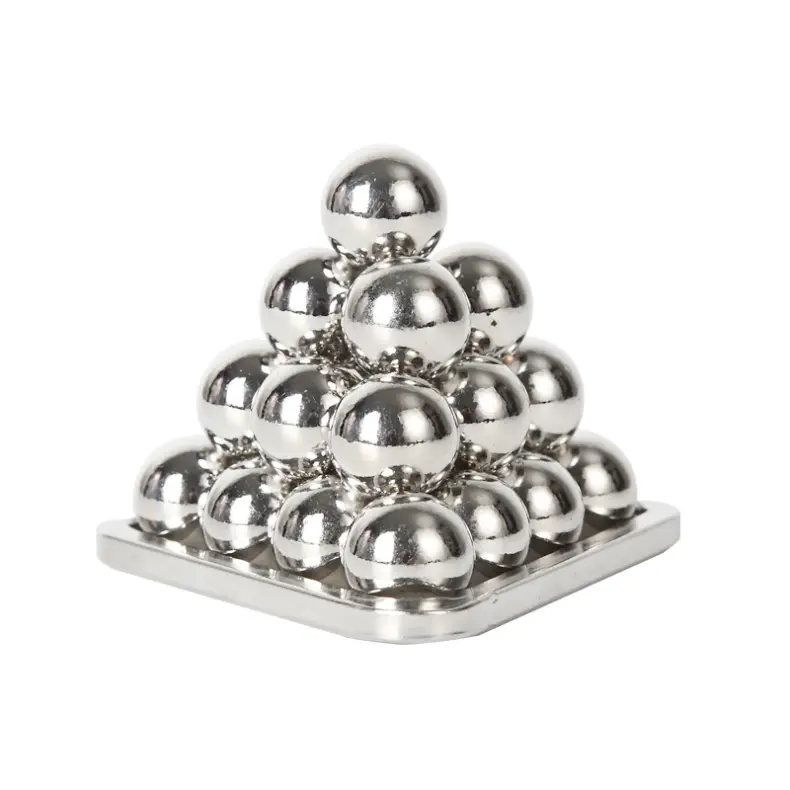
The 6 Piece Steel Ball Pyramid Puzzle is a small metal disentanglement that fits in a scrub pocket and resets in seconds, a practical break-room option rather than a sit-down project.
Are nurse activity books considered puzzles or just books?
Both, technically. The “Ultimate Nurse Activity Book” on Amazon bundles word searches, crosswords, and hidden-picture puzzles into one paperback. It works for a nursing student on a commute, but it lacks the “moment of opening” factor of a physical puzzle, so for Nurses Week most buyers pair the book with a small wooden or metal puzzle as the visible gift.
What is the best puzzle gift for a nursing school graduate?
A personalized wooden puzzle with the graduate’s name and “RN” or a graduation-year engraving lands hardest. The previous checks still apply: confirm engraving location, lead time, and beginner-friendly piece count. A 70–80 piece wooden jigsaw with the name on the box is the cleanest match.
If those checks line up — piece count under 150, theme visible on the box, personalization confirmed in writing, lead time inside the gift date — the order is decision-ready. Pick the format that matches the occasion, and order with enough lead time that engraving does not eat the date.
Where to Start
If the recipient and occasion checks above match, start with 12 Piece Crystal Luban Lock Set. Check the current product page for the specifications that matter to your choice.
Sources and verification
- Product details and current specifications: Tea-Sip product page
Last updated: August 16, 2026