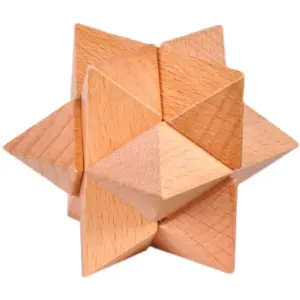
Quick Answer: Beginner Puzzle Set Gift for Teacher: How to Choose in 3 Checks
For a teacher who doesn’t already puzzle, choose a small 3–6 piece beginner brain-teaser set as a desk keepsake, or pick a 100–300 piece jigsaw with a thank-you image for a relaxation activity. Match the choice to three quick checks: how often the teacher already puzzles, where the gift will live (classroom or home), and whether presentation or hands-on play matters more.
The three checks that decide the gift:
Teacher’s puzzle experience — Casual (rarely or never solves one) → keep it under 6 pieces or under 100 jigsaw pieces so it stays beginner-friendly. Active puzzler → a 3D wooden build or mechanical set still works, just confirm it lists beginner difficulty.
Where the puzzle will live — Classroom desk → compact, quiet, no loose small parts that roll away. Home coffee table → a jigsaw or 3D model kit has room to spread out and stay in progress.
Keepsake vs. activity value — A puzzle box or decorative metal piece earns display space after solving. A jigsaw or build kit earns play time, then folds into a drawer.
For the dominant situation — a teacher who doesn’t already puzzle, a gift that will sit on a school or home desk, and a presentation that should look like a real gift — a compact beginner brain-teaser set is the strongest fit.
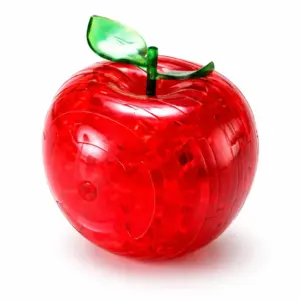
Top pick: 12 Piece Crystal Luban Lock Set ($28.88). A 12-piece beginner lock-and-key set gives enough variety to feel like a “set” rather than a single trinket, while each piece stays solvable in a short sitting. It’s compact, classroom-appropriate, and display-worthy once opened.
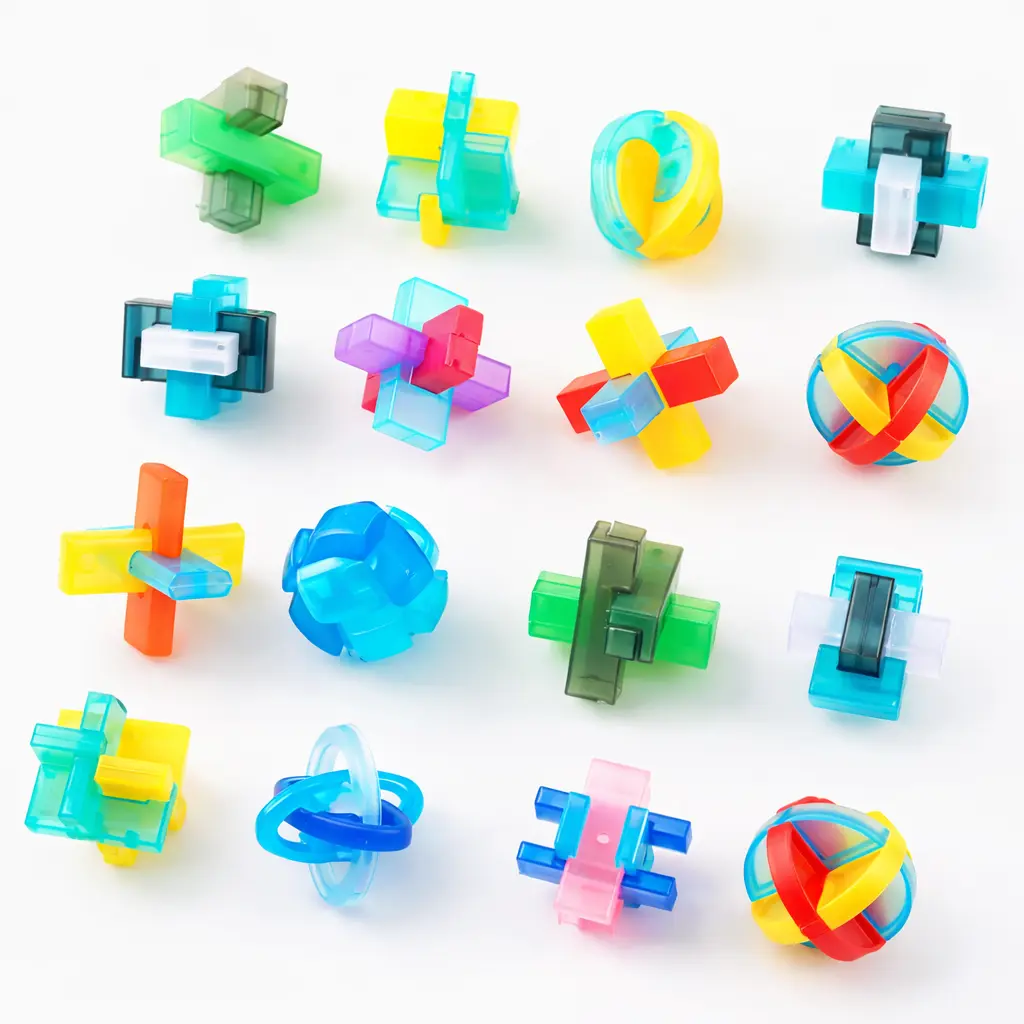
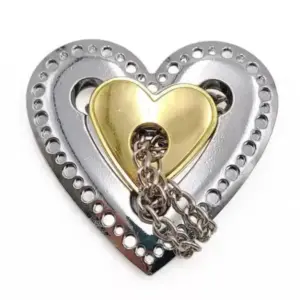
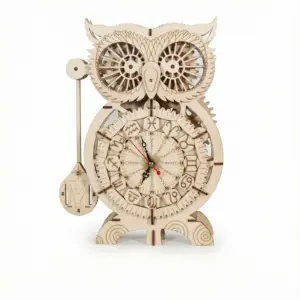
If the teacher already enjoys puzzles, a 3D wooden build kit (mechanical pistol, perpetual calendar, or zodiac owl clock) gives a longer project that still finishes in an evening or two. For a thank-you card on a budget under $15, a single metal disentanglement puzzle or wooden key puzzle carries the same desk-keepsake appeal without looking like a filler gift. For a wider range of teacher-specific brain-teaser gifts, see brain teaser teacher appreciation gifts that aren’t another mug.
01. The Three Checks That Pick the Right Beginner Puzzle Set for a Teacher
Those quick picks assume you’ve already matched the puzzle to the teacher, and most gift lists skip this step entirely. The real decision between a compact lock set, a small jigsaw, and a 3D build comes down to three checks you can run in under a minute, and each one changes which type of puzzle is right. Skip the checks, and you risk a gift that either feels generic, sits unopened on a shelf, or quietly gets regifted by spring break.
Check 1: Start with the teacher’s puzzle habits.
This is the most common place first-time gift buyers go wrong, because the word “beginner” means different things to different people. A casual puzzler who finishes a jigsaw once a year does well with a single metal or plastic disentanglement puzzle that solves in roughly 15 to 45 minutes and looks attractive sitting on a corner of the desk. An active puzzler who already works through 500-piece jigsaws or twisty cubes will find a beginner lock set too light and may prefer a 3D wooden build that fills an evening or a quiet weekend afternoon. For someone who has never solved a puzzle alone, the safest match is a compact brain-teaser set with 3 to 6 pieces, no instructions needed in front of other people, and a clear “solved” state so the gift doesn’t quietly become a source of guilt on a cluttered desk.
Check 2: Match the puzzle to where it will actually live.
The setting quietly rules out a lot of options, especially for teachers who share a classroom. A classroom desk calls for something compact, quiet, and visually tidy, like a single lock or small wooden key puzzle that fits in a pencil cup and doesn’t make noise during instruction. A home shelf or coffee table invites a larger object with display value, such as a 3D crystal puzzle or a wooden perpetual calendar that becomes part of the room’s decor after solving. A weekend table can host an activity-style gift, like a 100 to 300 piece jigsaw with a thank-you or art image, because the teacher has the time and table space to spread pieces out and return to the build across a Saturday morning.
Check 3: Decide whether the box or the solving is the gift.
These two priorities pull in opposite directions, and trying to serve both usually serves neither. If presentation matters most, choose a puzzle that looks gift-worthy before it is even opened, with a finished form that doubles as desk decor after it is solved, such as a zodiac owl clock or a crystal rose on a small stand. If the joy is in solving, a brain-teaser set or small jigsaw delivers a few minutes of focused, screen-free time without adding permanent clutter to a small apartment or shared office. The Lakeshore Beginner’s Peg Puzzle Set, which includes 4 quality-crafted puzzles measuring 8″ x 11½”, sits in a different category entirely: it is designed for young children to build fine motor skills, not as a personal gift for an adult educator, and that is the most common confusion this keyword surfaces in search results.
The line most gift lists blur: puzzle-as-gift versus puzzle-for-teaching.
Most results for “teacher puzzle” split into two camps that don’t help a buyer decide. Marketplace pages treat the puzzle as a personal present, while classroom-supply listings like Lakeshore and printable TPT resources treat the puzzle as instructional material for students to use during lessons. The present path looks for desk-worthy objects, beginner difficulty, and visual warmth. The teaching path looks for curriculum fit, self-correcting pieces, and classroom durability. Knowing which one you are shopping for prevents the most common mismatch of all: buying a child’s peg puzzle for an adult teacher because it had “teacher” in the title.
Run the three checks in order, and the dozens of listings collapse into a short, specific shortlist you can act on in a single checkout.
02. Beginner Puzzle Set Types Compared by Mechanism and Use Case
With the three checks behind you, the shortlist collapses into four puzzle categories — and each one fits a different teacher and a different desk. Match the mechanism to the recipient: a hand-held disentanglement for the fidget-friendly teacher, a small jigsaw for the visual relaxer, a puzzle box for the “I love a reveal” type, and a 3D wooden build for the hands-on maker.
Mechanical and brain-teaser sets: the compact desk keepsake. These are the small objects (typically 3–6 pieces) that sit on a shelf and beg to be picked up between classes. The mechanical puzzle category — physical objects solved through manipulation — covers wire disentanglements, wooden burrs, and interlocking locks. It’s widely described as suitable “for every level,” and that beginner-friendly tier is the gift sweet spot — a solve time of roughly 15–45 minutes, short enough to finish in one sitting, long enough to feel like an actual accomplishment. The Puzzlocks homepage describes its mechanical locks as “an unexpected gift” pitched at the full skill range, which mirrors what most listings in this category claim. The category is also the easiest to wrap, since a single object in a small box beats a flat jigsaw box for presentation.
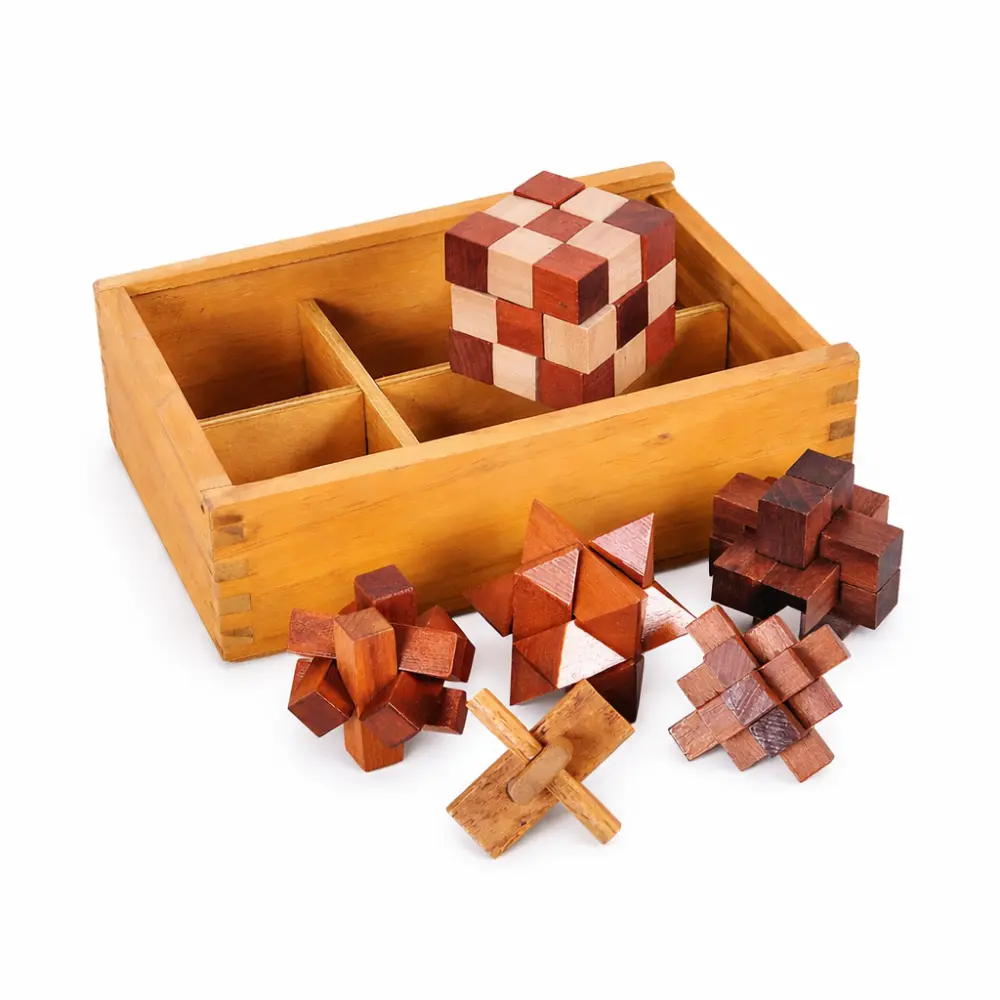
A 6-in-1 set covers the casual puzzler (one or two easy pieces) and the curious tinkerer (the harder interlocks), so the gift does not need to be re-graded to the teacher’s tolerance for frustration.
Small jigsaws: the 15–45 minute relaxation gift. This is the type most people picture first — a 100–300 piece picture puzzle with an art print or thank-you illustration. The Creative Crafthouse Teacher Appreciation Puzzle, a 16-piece wooden jigsaw marketed specifically as a teacher gift, is an observable example in the under-25-piece range. For adults, the typical landing zone is around 100–200 pieces, which the r/Jigsawpuzzles beginner thread suggests finishes inside an evening rather than a weekend. Buyers should verify the listed piece count and finished dimensions on the product page, because miniature “teacher” jigsaws designed for kids (16 pieces, peg-handled) are easy to mistake for an adult gift.
Puzzle boxes: the reveal moment. A puzzle box is a container that must be solved open, so the gift is twofold: the object on the shelf afterward, and the step-by-step solve in the moment. Kubiya Games markets its wooden puzzle gift boxes with varying difficulty levels and names “The Player Subscription Puzzle Box” as its beginner option. For a teacher who already keeps small objects on a desk, a puzzle box doubles as a keepsake. What to check on the listing: the mechanism (slide, sequential, magnetic), the stated beginner level, and whether the interior is empty, lined, or holds a separate note — because teachers often use these as jewelry or memory boxes.
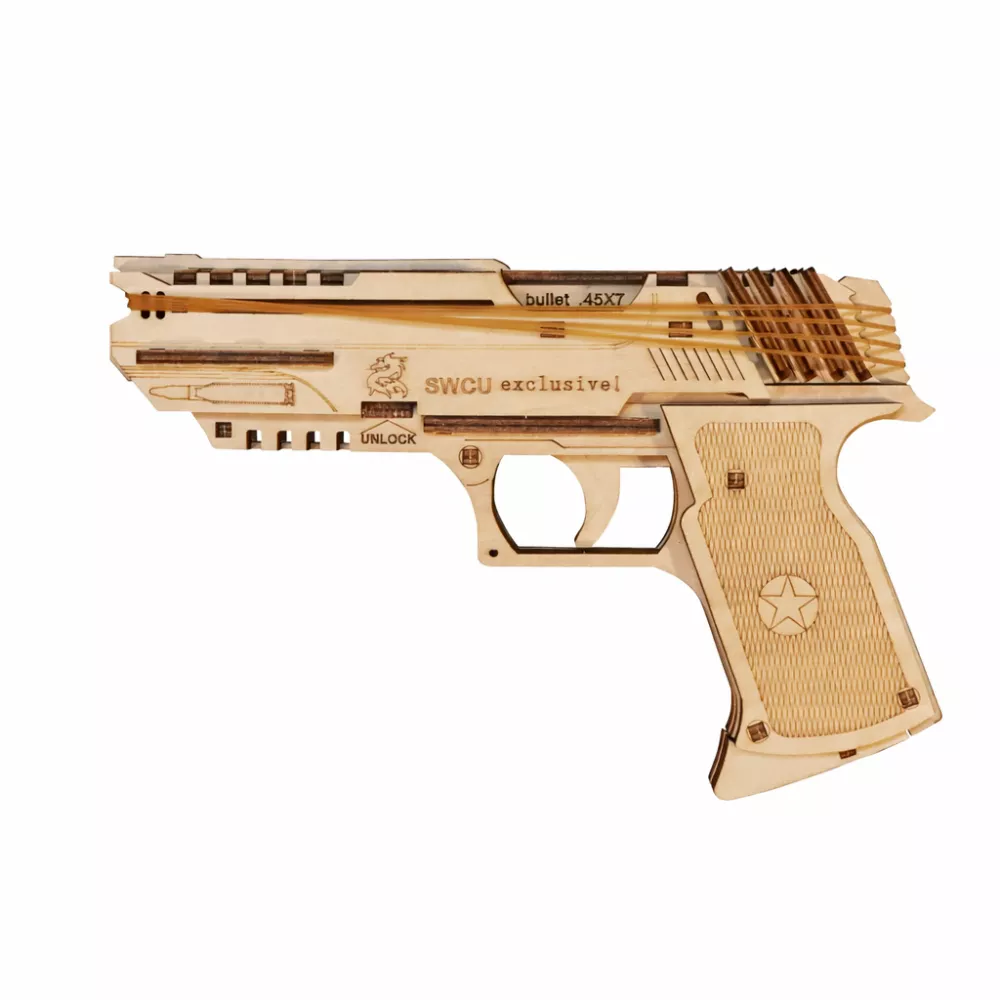
3D wooden puzzle kits: the build-it project. These are flat-pack wooden sheets that assemble into a finished model — a pistol, a clock, a treasure box, a perpetual calendar. Solve time ranges from about 30 minutes to several hours depending on piece count, so they read more as a project than a desk fidget. The 3D Wooden Mechanical Pistol Kit sits at the lighter end of that range and finishes as a displayable object rather than a disassembled puzzle, which matters for a teacher who does not have time to fiddle between classes.
The single practical next action: pick the mechanism that matches the teacher’s daily ritual, then check that the listing labels the difficulty as beginner and the solve time as under an hour.
03. Price Tiers Mapped to Beginner Puzzle Set Types (Under $25, $25–$50, $50+)
Now that the mechanism is picked, the next practical step is matching price to gift intent rather than just budget. Beginner difficulty matters more than dollar amount — a $15 set the teacher will actually solve beats a $60 jigsaw the teacher has to clear shelf space for and never finish.
The right price tier depends on whether the gift is meant to be a one-time desk keepsake, a repeatable 15–45 minute activity, or a presentation piece the teacher opens in front of colleagues. Tier the budget to that intent, not the other way around.
Under $25: Compact Desk Sets and Pocket Brain-Teasers
This is the sweet spot for first-time puzzlers and tight appreciation budgets. A compact metal or 3D wooden desk set (3–6 pieces) fits in a tote bag, lives on a school desk, and solves in under an hour. Teachers in r/Teachers threads repeatedly flag that small, low-pressure gifts land better than oversized ones that demand a weekend to assemble.
What to verify before purchase:
– Piece count is 3–6, not 10+ (smaller sets signal beginner difficulty)
– Listed solve time is under 45 minutes
– Material is wood or polished metal, not flimsy plastic
– The box or tin presentation stands on its own as gift wrap
Two compact options that match this tier:
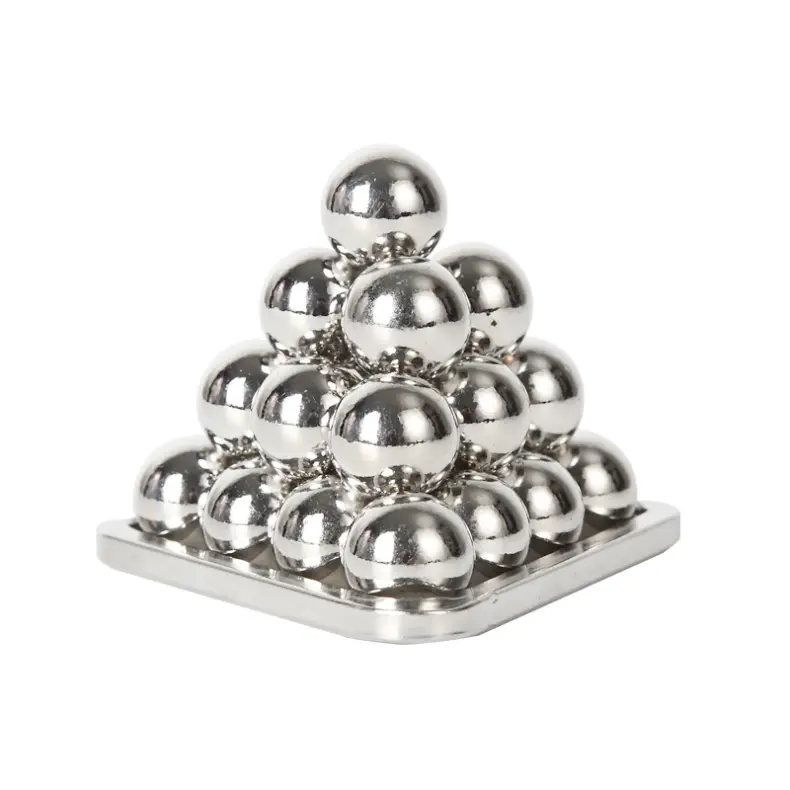
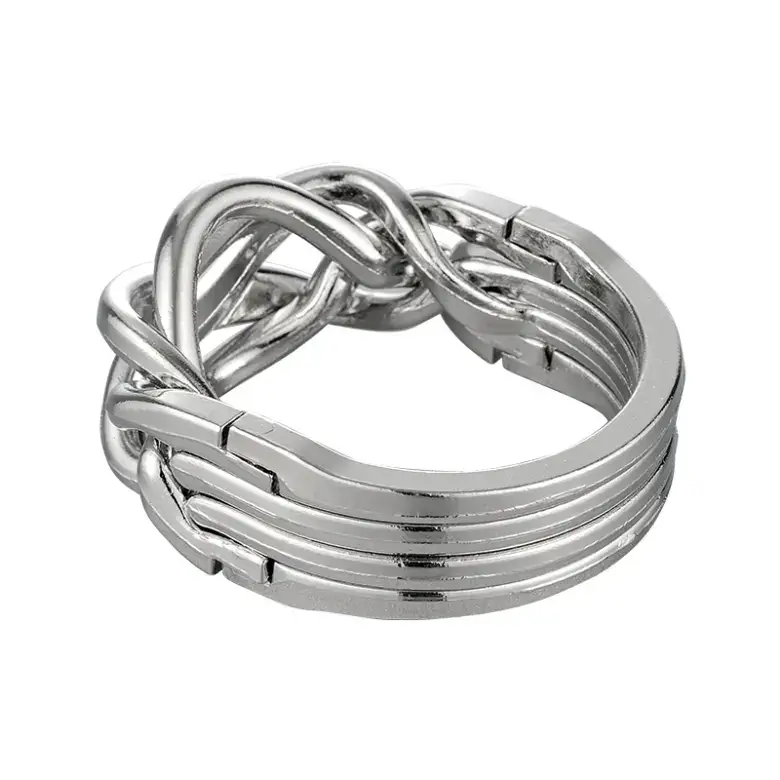
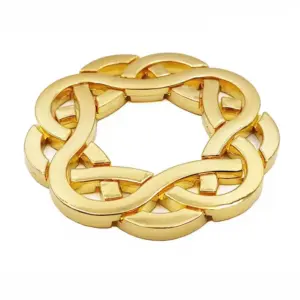
4 Band Puzzle Ring — $11.99
Both sets meet the under-$25 benchmark, fit in a greeting card pocket, and double as fidget-style focus objects between class periods. For deeper coverage of budget options, see brain teaser toys under $20 tested for frustration ROI.
$25–$50: Small Jigsaws and Mid-Range Wooden Models
This tier is the right call when the teacher is a casual but active puzzler who wants a real activity, not just desk decor. Look for 100–300 piece jigsaws with art or thank-you imagery, or mid-range 3D wooden assembly kits that take 30–60 minutes. The gift reads as “I thought about what you’d enjoy,” which matters more than the dollar figure.
What to verify:
– Piece count is 100–300 for jigsaws (500+ signals an experienced puzzler)
– Image is art, map, or thank-you themed rather than cartoon
– Wooden model kits include a storage tray or instruction card
– Finished size fits a desk drawer or shelf, not a dining table
$50+: Handcrafted Puzzle Boxes and Premium Wooden Sets
This tier only works when the gift presentation is the point — a retirement, end-of-year, or milestone appreciation moment. Handcrafted wooden puzzle boxes, mechanical safes, and premium brain-teaser sets in this range typically solve in 15–60 minutes but live on a shelf as keepsakes afterward.
What to verify:
– The box itself is a display piece, not plain cardboard packaging
– Difficulty is explicitly labeled beginner or “Level 1”
– A solution card is included in case the teacher gets stuck
– Material is solid wood, not MDF or printed veneer
The single practical next action: set a price ceiling first, then filter by mechanism from Section 02 — never browse the other way around.
04. Presentation, Gift Tags, and Avoiding Classroom-Awkward Wrapping
Pick a puzzle that is ready to gift as-is — avoid anything that needs assembly instructions in front of the class. A compact, pre-solved-looking item that arrives in a small box or bag lets the teacher enjoy it on their own time without a workspace interruption.
The single biggest presentation mistake is choosing a puzzle that requires a desk, tools, or a quiet hour the moment it is opened. Teacher forum guidance is direct on this point: avoid anything that needs assembly instructions in front of the class. A small, finished-looking wooden or metal brain-teaser in a kraft gift bag with a handwritten card wins far more often than a 500-piece jigsaw that has to come home and find a flat surface.
Match the wrapping to the format. A 3D wooden keepsake or crystal lock set arrives best in tissue paper inside a small rigid box — the weight and finish already signal “gift” before the card is read. A flat jigsaw travels well in a gift bag with the card taped on top. Puzzle subscription boxes and larger mechanical kits need a larger box and a note that the contents are “to open at home.”
The card wording matters more than the wrapping. Phrase the note as a wind-down, not a task.
- “A small something for your desk — take 20 minutes whenever you need it.”
- “A thank-you puzzle, not homework. Promise.”
- “For the rare quiet moment between classes.”
These lines frame the puzzle as a personal retreat rather than another item on the teacher’s to-do list. Avoid tags that say “good luck solving this!” or include a stopwatch joke — a gift that reads as a challenge can quietly become a source of guilt if the teacher never gets to it.
Match the wrapping moment to the occasion. End-of-year and retirement gifts can be larger and more formal — a wooden model kit or puzzle box with a printed card is appropriate. Holiday gifts and casual thank-you moments work better at the compact, sub-$30 scale with a simple kraft tag. Back-to-school gifts should lean small and portable so they fit in a tote bag on the first day.
The single practical next action: write the gift tag first, then choose the puzzle that fits the note. A note that already sounds right will narrow the format, the size, and the price tier before you start browsing.
05. Beginner Puzzle Set Gift Decision Table
With the gift tag written, the next decision is which set type actually fits the note. Match the set type to three things: the teacher’s puzzle experience, where the puzzle will live, and whether the gift reads as a keepsake or a quick activity. A compact brain-teaser set wins for a desk keepsake; a small jigsaw wins for a relaxing weekend; a puzzle box wins when the reveal itself is the gift.
Use the table below to map each type to recipient, difficulty, price, and the one detail to verify on the listing. For numbers the listing has to confirm, the right-hand column says so explicitly.
Decision table: beginner puzzle set types for a teacher gift
| Set Type | Best For | Skill Level | Price Range | What to Verify |
|---|---|---|---|---|
| Compact brain-teaser set (12-piece lock style) | Teacher who doesn’t already puzzle; desk keepsake; 15–45 min mental break | Beginner | ~$15–$30 | Piece count, material, whether instructions are needed, stated solve time — comparable in scale to the 16-piece Creative Crafthouse wooden figure |
| 100–300 piece jigsaw (art or thank-you image) | Casual puzzler who enjoys a quiet weekend at home | Beginner to low-intermediate | ~$15–$30 | Finished size, piece thickness, image style; check dimensions against the 8″ x 11½” Lakeshore beginner peg set as a minimum reference |
| Puzzle box (wooden, opens via steps) | Milestone or retirement gift where the reveal is the gift | Varies — pick a labeled beginner box | ~$25–$50 | Stated difficulty, number of steps, whether a solution card is included |
| 3D wooden puzzle (model kit) | Hands-on teacher who likes displayable finished objects | Low to mid | ~$25–$50 | Build time, whether tools and glue are included, finished display size |
| Small wooden mechanical set (locks, pins, gears) | Teacher who enjoys “figure-it-out” hand challenges | Beginner to mid | ~$10–$25 | Material (wood vs. plastic), part count, whether instructions are required |
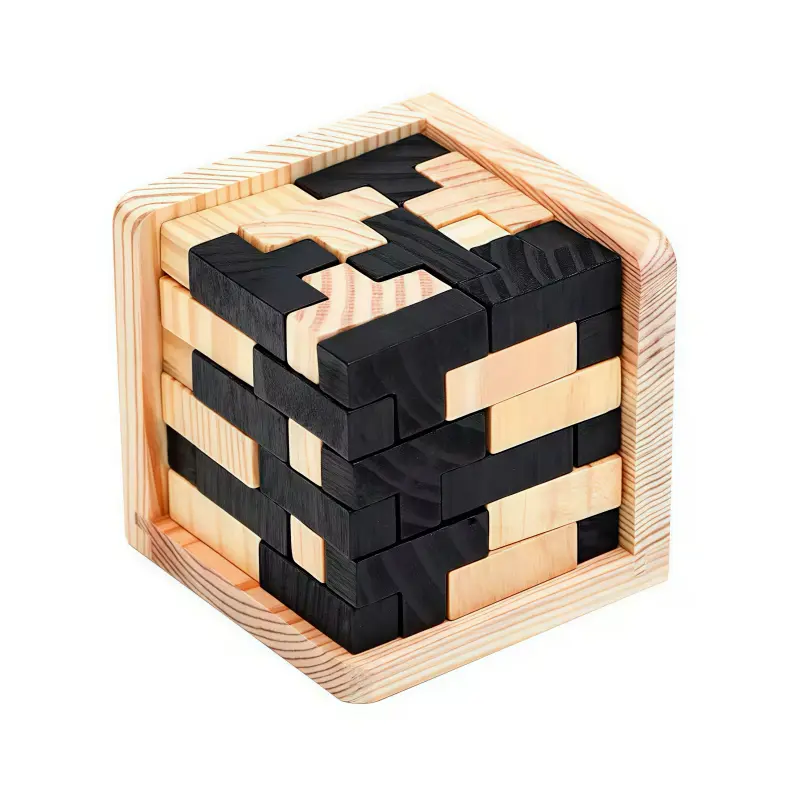
54‑T Cube Puzzle — $18.99
Two readers can pick different rows from the same table and both be right.
For a teacher who doesn’t already puzzle, a compact brain-teaser set is the most forgiving first gift. The 12 Piece Crystal Luban Lock Set is the top pick in this row: visually distinct pieces, a 12-piece count, and a short, non-frustrating solve. The 54‑T Cube Puzzle above suits a teacher who prefers wood grain and a single-object challenge.
For a casual or returning puzzler, a 100–300 piece jigsaw with a thank-you or art image is the better row. A 3D wooden model kit fits a teacher who likes the finished object on display, and a puzzle box fits a milestone gift where the unwrapping is the experience.
The single practical next action: pick one row, open the product page, and check exactly two things — stated solve or build time, and the material. If both check out, you’ve found the gift.
Frequently Asked Questions
The right beginner puzzle set gift for a teacher depends on one factor: whether the teacher already puzzles or is trying one for the first time. The decision table above sorts by that habit plus setting and keepsake value, and the same logic answers the questions teacher gift-buyers ask most often.
What is a good puzzle gift for a teacher who doesn’t do puzzles?
A compact brain-teaser set is the most forgiving first gift. The 12 Piece Crystal Luban Lock Set is the top match for a non-puzzler teacher: 12 visually distinct pieces, a beginner-level solve, and a finished object that fits a desk drawer or bookshelf. It also matches the 15–45 minute beginner range that keeps a gift from becoming a guilt object.
Are wooden or metal puzzles better for beginners?
Both work; the difference is feel, not difficulty. Wooden puzzles offer warm grain, calm weight, and a quiet desk presence — the 6-in-1 Wooden Brain Teaser Set or 54‑T Cube Puzzle fits this lane. Metal puzzles like the 6 Piece Steel Ball Pyramid Puzzle or 5 Piece Cast Spiral Metal Puzzle feel cooler and more tactile, which some teachers prefer. The Luban Lock Set, despite its crystal-look finish, reads as display-friendly and beginner-tractable, so it works even when the recipient has never solved a puzzle before.
How do I know if a puzzle is too hard for someone as a gift?
Use the 15–45 minute target solve time. If the product page lists a longer expected solve, a build requiring tools, or assembly instructions that take more than a page, step down. Teacher gift forums on Reddit repeatedly flag anything that demands visible assembly in front of a class, so the safer gift is one the teacher can solve alone in a few minutes of downtime.
Should I give a jigsaw puzzle or a brain-teaser set to a teacher?
Pick a brain-teaser set for a teacher who doesn’t already puzzle, and a small jigsaw (100–300 pieces) for a casual or returning puzzler. Jigsaws need table space and a longer uninterrupted session, which a classroom schedule rarely allows. Brain-teasers reset between attempts, so they work for short breaks at school or a single evening at home.
What size puzzle set is best to gift a teacher?
For desk keepsakes and brain-teasers, 3–12 pieces is the sweet spot. For jigsaws, 100–300 pieces is the right beginner range. A 12-piece set like the Luban Lock hits the middle: substantial enough to feel like a real gift, small enough to solve in one sitting, and compact enough to live on a teacher desk without crowding it.
The single practical next step: open the 12 Piece Crystal Luban Lock Set product page, check the stated solve time and the material, and match those two facts to the teacher you have in mind. If both check out, you’ve found the gift.
Where to Start
If the recipient and occasion checks above match, start with 12 Piece Crystal Luban Lock Set. Check the current product page for the specifications that matter to your choice.
Sources and verification
- Product details and current specifications: Tea-Sip product page
Last updated: August 19, 2026