Quick Answer
Yes, an 18-piece wooden puzzle works as a gift for adults when matched to the recipient. The 18-piece count is a real burr-design tradition, not a marketing number. Pick a classic burr for casual puzzlers, a sphere or globe for display-focused buyers, and a Grandfather Burr only for hard-mechanical collectors. Match the person first, the puzzle second. Most buyers do best by also weighing tolerance for challenge and budget for presentation.
Three checks that decide the right pick:
- Difficulty calibration — Will they appreciate a multi-hour challenge, or want a 10–30 minute desk break?
- Material and finish — Hardwood, tight tolerances, and a visible key piece separate a $12 burr from a $45 heirloom.
- Gift presentation — Packaging, personalization options, and a solvable solution sheet matter as much as the puzzle itself.
Recipient-Matched Starting Point
| Recipient | Best 18-piece style | Trade-off to name out loud | What to check before buying |
|---|---|---|---|
| Casual coworker / casual adult | Classic burr (17 identical pieces + 1 smooth-ended key piece) | May finish it in one sitting; low replay value | Confirm a solution sheet is included or available online |
| Hobbyist parent or partner | Interlocking sphere or globe | Display-first, puzzle-second; less “Eureka” moment | Check the piece count and finished diameter on the product page |
| Retiree or desk-display buyer | Wooden burr with presentation box | Heavier wood = harder to manipulate with arthritis | Verify piece size, weight, and whether pieces can be ordered personalized |
| Dedicated puzzler | Grandfather Burr–style 18-piece (W. L. van der Poel design) | High difficulty; may already own a classic version | Confirm maker, tolerances, and return policy before gifting |
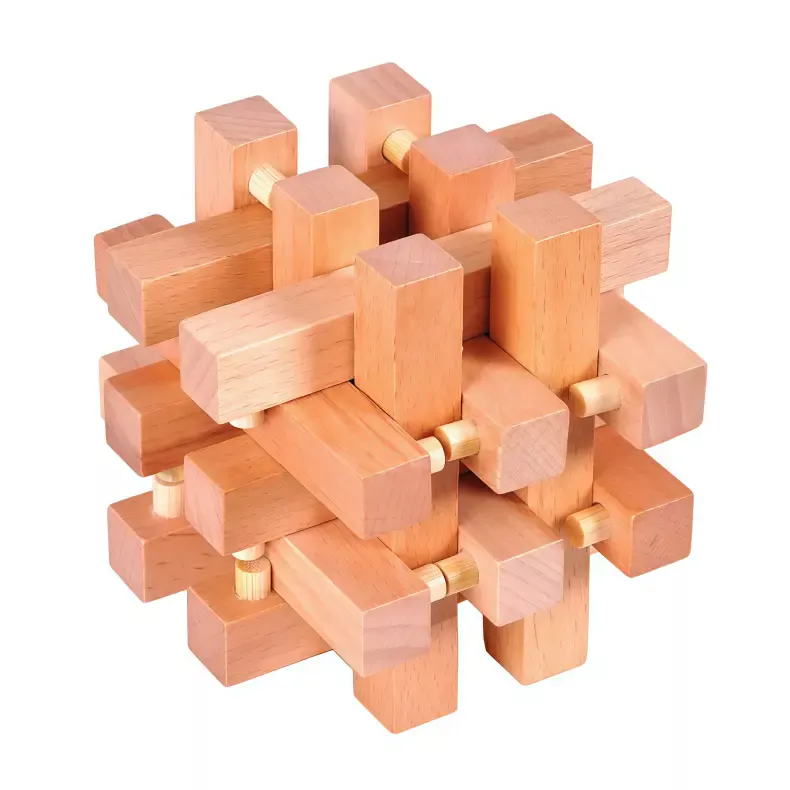
Your 10-second check: Before you commit, look at the recipient’s desk or coffee table — do they already display small objects, or hide them in a drawer? That single observation tells you whether to prioritize a display-worthy sphere or a pocketable burr. For a deeper breakdown of how the 18-piece format compares across categories, the full 18-piece wooden puzzle buying guide walks through craft signals and presentation tiers in more detail.
01. Which 18-Piece Puzzle Style Fits Each Type of Recipient
Start with the recipient, not the puzzle type. The desk observation only tells you where a finished puzzle will live — on a shelf or in a drawer — but the harder decision is matching the puzzle style to who the recipient actually is. A casual coworker needs a low-notion burr, a hobbyist parent needs a display-worthy sphere, a retiree needs large grippable pieces in a presentation box, and a dedicated puzzler needs a high-notion burr such as the 18-piece format. Choose by person first, mechanism second.
An 18-piece wooden burr is a specific object with a specific audience. It belongs to the broader category of mechanical puzzles — objects that require ingenuity to separate or reassemble rather than knowledge or luck. Forcing an 18-piece burr onto the wrong person is the fastest way to turn a thoughtful gift into a drawer-orphan, so below is a four-scenario match — casual coworker, hobbyist parent, retiree, dedicated puzzler — with the trade-off named for each pairing.
The casual coworker. A secretary, a teammate, a neighbor who once said they “like puzzles” but never names a type. The trade-off: you want something that feels substantial without asking for a weekend of study. A low-notion burr — a classic six-piece assembly that comes apart in a handful of disassembly moves — lands here. A notion, in mechanical-puzzle language, is a single internal move that shifts the assembly one step closer to release, and a six-piece burr typically involves only a handful. The 18 Piece Wooden Puzzle from Tea-Sip is built around seventeen identical pieces plus one smooth-ended key piece, and most casual puzzlers find it solvable in a single sitting without prior experience. If you want something even more forgiving for a first-time recipient, the Six-Piece Burr is the most approachable entry point in the burr family.
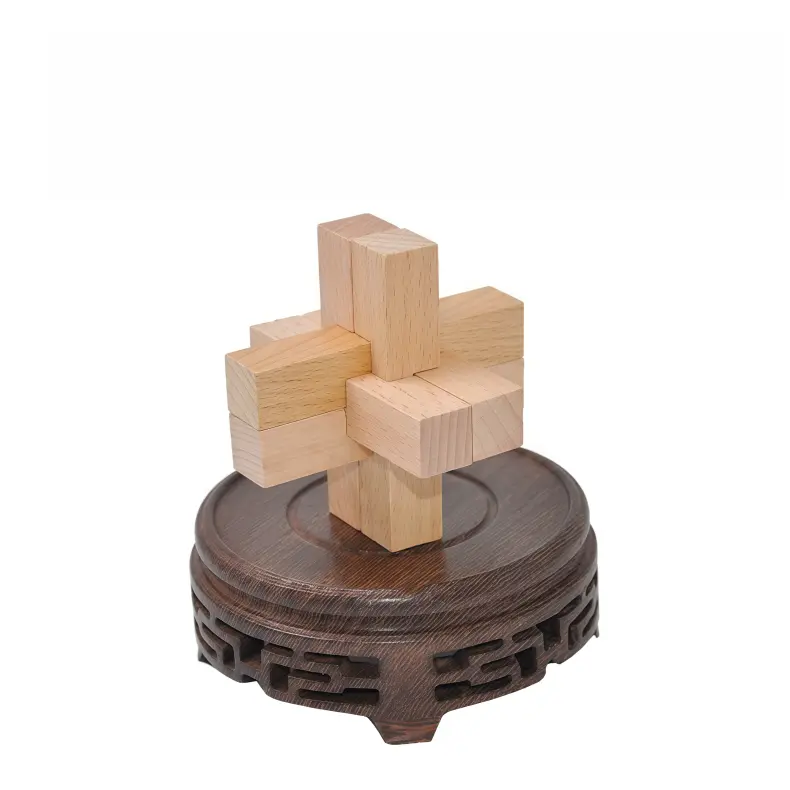
Six-Piece Burr — $17.99
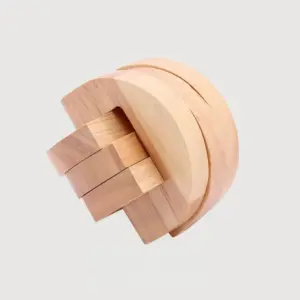
The hobbyist parent. Someone who already keeps a shelf of objects with meaning — a chess set, a fountain pen, a mechanical watch. The trade-off: they will judge the gift by how it looks unboxed. A wooden burr solved once and then lived in a drawer is not the right shape for this person; a sphere or globe stays on the desk as a conversation piece, and it lets the recipient show the puzzle rather than explain it. A step-by-step interlock sphere disassembly guide helps the recipient understand the mechanism before they commit an evening to it.
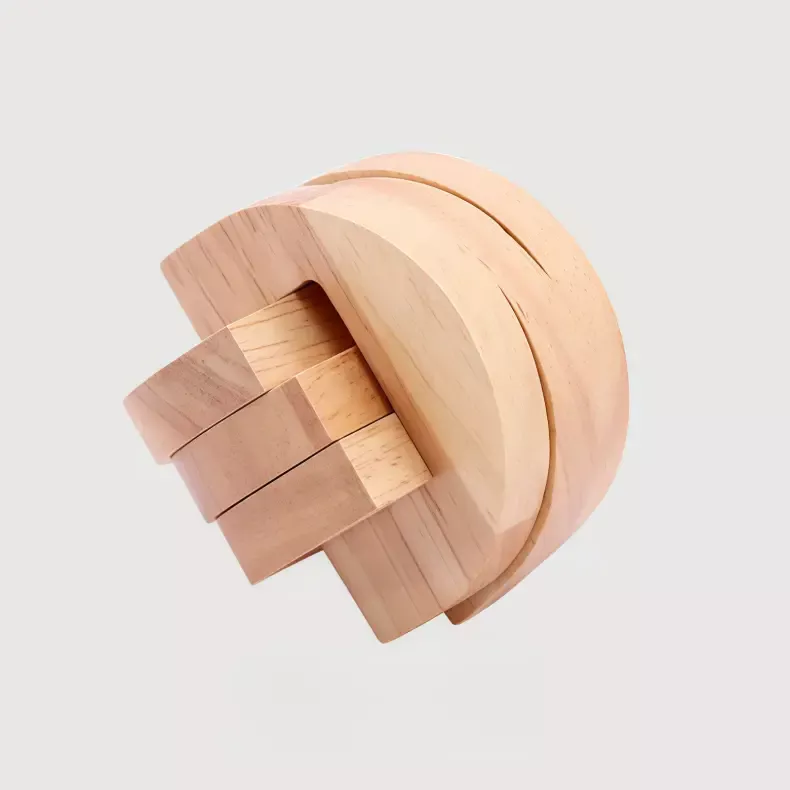
Interlock Puzzle Sphere — $17.99
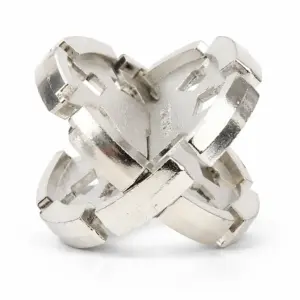
The retiree. Someone with time and patience, possibly arthritic hands, who values tactile satisfaction over speed. The trade-off: pieces must be large enough to grip comfortably, and the mechanism should reward slow, methodical moves rather than the brute-force wiggling that some metal disentanglement puzzles demand. Wooden burrs at the 18-piece count are usually comfortable to handle, and a presentation box lets the puzzle be set down and picked back up across many sessions rather than rushed in one sitting.
The dedicated puzzler. This is where the 18-piece format earns its name. The 18-piece count is a specific tradition in burr-puzzle design — the Grandfather Burr, designed by Dutch computer scientist W. L. van der Poel, is the canonical example, and it sits at the high end of difficulty for interlocking burrs. A burr’s notion count — the minimum number of moves required for disassembly — is the standard difficulty measure in this hobby, and 18-piece designs typically push that count well above casual territory. The 18 Piece Wooden Puzzle from Tea-Sip belongs to this family of higher-notion burrs, where each piece looks identical to the next and the key piece — the one with a smooth end that releases the assembly — is the only visible hint. This is the right gift for someone who already collects mechanical puzzles and wants another notch on the shelf.
Your 10-second check: Ask the recipient, directly or through a partner, whether they already own a traditional wooden burr. If they do, choose the sphere or a sequential-discovery box instead — a second classic burr reads as a duplicate, while a new format reads as attention.
02. What ’18 Pieces’ Actually Means in a Burr Puzzle
In burr-puzzle design, 18 pieces is a specific tradition tied to high-notion interlocking puzzles, not an arbitrary count. The number traces directly to the Grandfather Burr, designed by Dutch computer scientist W. L. van der Poel, which is still positioned as one of the hardest interlocking puzzles in any serious maker’s collection. When a product page advertises an “18-piece” burr, that label signals a deliberate step up from casual six-piece desk toys without crossing into expert territory.
A traditional 18-piece burr follows a predictable construction. Seventeen of the pieces are notched sticks, cut so they interlock into a roughly cuboid shape, and the eighteenth is the key piece — a stick with a smooth, un-notched end that slides free last and lets the assembly collapse. This 17-plus-1 pattern is the fingerprint of a classic burr. The Tea-Sip 18 Piece Wooden Puzzle follows exactly that construction: seventeen identical-looking pieces plus one smooth-ended key piece that lock together with zero wiggle room. The genius, and the quiet cruelty, of the design is that the pieces look interchangeable from the outside. The key piece hides in plain sight, and finding it — or rather, finding the correct sequence of moves that releases it — is the entire puzzle.
The mechanical-puzzle hobby measures difficulty in notions, the minimum number of individual internal moves required to disassemble the burr. Entry-level six-piece burrs typically solve in a handful of notions, which is why they show up in party-favor bags and as impulse desk toys. Eighteen-piece designs push that count substantially higher, which is why an 18-piece burr reads as a “real” challenge to someone who already finishes jigsaws and crosswords but has never met a mechanical puzzle before. This is also why the 18-piece count keeps reappearing in product listings: it occupies a sweet spot that is intimidating enough to feel like a real gift, yet solvable enough that a determined adult can finish it without abandoning it in a drawer. If the recipient has already solved a six-piece burr, an 18-piece version is the natural next rung on the ladder — not a duplicate, but a graduation.
The practical consequence for a gift-buyer is straightforward. If the product listing does not show all 18 pieces laid out in the photo, treat that as a yellow flag rather than an immediate deal-breaker. A genuine 18-piece burr should display the full set of sticks beside the assembled block, ideally with the key piece called out or shown separately so you can verify the 17-plus-1 construction. On a gift purchase, the listing photo is the only inspection you will get before the recipient opens the box, so it is worth clicking through the full image gallery rather than trusting the thumbnail.
Your 10-second check: Count the pieces in the product photo. You should see 18 sticks total, with 17 sharing the same notched profile and 1 — the key piece — distinguishable by a smooth end. If you cannot count 18 distinct pieces, move on to a listing that shows them.
03. How to Judge Craft Quality in a Wooden Burr Before You Buy
A buyer can judge an 18-piece wooden burr from a product photo and a 30-second in-hand check without disassembling it. Craft quality lives in the wood species, the precision of the notches, the finish on the key piece, and whether the maker stands behind the return policy. Run these seven checks before checkout.
Now that you can identify the key piece and count 18 sticks, the next question is whether those pieces will survive a gift opening and feel worth the price on a desk. A $12 burr and a $45 heirloom use the same 17-plus-1 logic — what separates them is the build, not the difficulty on the box. For the longer argument on why craft beats difficulty as a gift criterion, see why puzzle craftsmanship matters more than difficulty rating. None of the following signals require you to solve the mechanical puzzle. Each can be verified from a listing photo, a marketplace close-up, or a quick unboxing check before wrapping.
1. Wood species and density. Maple, beech, and walnut are the hardwoods most associated with precision-cut burrs because they hold a clean notch without splintering. Bamboo is lighter, faster-growing, and common in budget sets — serviceable, but with a different hand feel. Check the product description for the species by name; if the listing says only “wood” or “natural wood,” message the seller before buying for a recipient who cares about material.
2. Grain direction on the key piece. A well-made key piece runs with the grain along its long axis, so notches shear across the fibers rather than splitting along them. In a product photo, the key piece’s end grain should look tight and parallel, not fuzzy. A smooth end is the design feature — a smooth end with visible tear-out is a manufacturing shortcut.
3. Visible glue lines. A precision-cut interlocking burr should need no adhesive. Run your eye along the seams in the product photo; if you see glue squeeze-out or a colored fillet between sticks, the maker is compensating for sloppy tolerances. The same check applies to the assembled block — clean corners where three sticks meet are the goal.
4. Tolerance wobble on a single stick. Take one stick out of the box and hold it at the ends. Twist gently. A well-cut stick has almost no play; a budget stick will rock a fraction of a millimeter and you will feel it. This is the fastest in-hand test for whether the notches were cut to a tight tolerance or a loose one.
5. Laser-cut versus CNC-cut edge char. Laser cutters leave faint darkening — a micro-char — along the cut edge, especially visible on light woods like maple and beech. CNC routers leave a clean, pale edge with no burn. Neither is wrong, but heavy charring across every face suggests a worn laser and can rough up the sliding fit during disassembly.
6. Surface finish. Oil and wax finishes feel soft, grippy, and slightly matte — the traditional choice for hand-held burrs. Lacquer feels harder and glossier and can make tight notches feel sticky until the surface wears in. For a gift recipient who will hold this often, oil or wax is the friendlier finish.
7. Maker reputation and return policy. Workshop photos, a named maker, a stated origin, and a return window are the four signals that a seller expects to be held accountable. Listings with stock photography only, no maker name, and “no returns” are a yellow flag on a gift — if the burr arrives warped or with a sloppy key piece, you have no fallback.
Your 10-second check: Before wrapping, hold one stick between two fingers and twist. If it rocks even slightly, the tolerances are loose — return it or pick a different listing.
04. How to Present an 18-Piece Puzzle on a $20, $30, or $50 Budget
The same burr you just inspected for tolerances becomes a stocking stuffer, a birthday gift, or a milestone present depending on three presentation tiers — and the tier should follow the occasion, not the other way around. The right tier for the recipient is the one whose added cost matches the occasion’s weight, not the one with the most extras. For a walkthrough that focuses squarely on the gift side of the decision, see the no-fluff way to present a wooden puzzle as a gift.
Under $20 — the puzzle only. At this tier, the gift is the object itself. You are paying for the burr, its box or sleeve, and nothing more. The right upgrades here are free: a kraft-paper wrap, a handwritten note on cardstock, and a brief line explaining what a burr is and that the recipient should look for the smooth-ended key piece before assuming any stick is removable. What to verify on the listing: whether the puzzle ships in any protective packaging at all — some budget burrs arrive loose in a padded mailer — and whether the seller offers a gift receipt option for exchanges.
$20 to $40 — the gift-ready upgrade. This is the band where an 18-piece wooden puzzle stops looking like a desk toy and starts looking like a present. The additions that matter: a fitted presentation box the burr sits in fully assembled, a small cloth pouch to protect the wood during storage, and a printed solving-hint card that names the notion count or difficulty tier without giving the solution away. For a recipient who has never held a mechanical puzzle, the hint card is the single most useful add-on — it prevents the “I can’t open it, it must be broken” moment that ends many burr puzzles in a drawer. What to verify: that the box is included, not sold separately, and that the maker confirms the puzzle can be reassembled with the card’s guidance.
$40+ — the milestone presentation. At this tier, you are signaling a specific occasion — a retirement, a wedding favor, a 50th birthday — and the puzzle becomes a keepsake. Common upgrades: laser engraving of the recipient’s name, initials, or a date directly onto one stick or the box lid; a hardwood upgrade from beech or bamboo to walnut or maple; and a hand-tied ribbon or wax seal. What to verify before paying: the engraving lead time (custom work can extend the standard production time), whether the maker offers a proof image, and whether the listing confirms the puzzle can be shipped directly to the recipient in gift packaging.
A budget rule that holds across all three tiers: confirm the maker ships in a gift-ready box before paying for one separately. A modest wrap on a mid-priced burr still beats a generic presentation box added on at checkout.
Your 10-second check: Before checkout, read the shipping line. If it says “ships in padded envelope,” step up one tier or pick a seller whose default packaging already does the presenting.
05. What to Give Instead If They Already Own a Classic Burr
A padded envelope is the smaller problem. The bigger one is finding out, on their birthday, that they already own the burr you bought. If the recipient already has a six-piece or classic 18-piece burr, the right move is to change the puzzle category, not the puzzle brand — three mechanisms read as a genuinely new gift even to a seasoned puzzler, and each one offers a different kind of reward.
1. A sequential-discovery puzzle box. This shifts the pleasure from disassembly to a sequence of small reveals — slide a panel, open a hidden drawer, trigger a catch. The challenge lives in the order of moves, not in freeing sticks from a notch. What to verify on the listing: a reset card or printed instructions so the box can be returned to its solved state after gifting, a working internal mechanism (not glued shut), and wood thickness that feels solid in the hand.
2. A 3D sphere or globe at the same desk scale. A globe assembly changes both the shape and the motion — the recipient builds outward instead of pulling apart, and the finished object earns a permanent spot on a desk or shelf. This is the move for a recipient who has more burrs than shelf space.

What to verify: whether the globe comes pre-cut and ready to assemble (not requiring glue and clamps), the listed piece count, and whether a printed step-by-step guide ships with the kit for a recipient who has never built a 3D wooden model.
3. A personalized burr with engraving. A custom engraving on the key piece, a stick, or the box lid turns a familiar puzzle into a one-of-one keepsake — a retirement date, initials, or a short message. This is the move when the occasion itself is the gift and the puzzle is the vehicle. What to verify: the character limit (engraving is usually 15–25 characters depending on font and surface), whether the maker sends a digital proof before cutting, and the lead time added to standard production.
If the recipient has moved past burrs entirely, an assembly puzzle like the Soma Cube changes the category one more time — you build a cube from seven colored pieces rather than disassemble a cube of sticks. Different motion, different display, same screen-free focus.
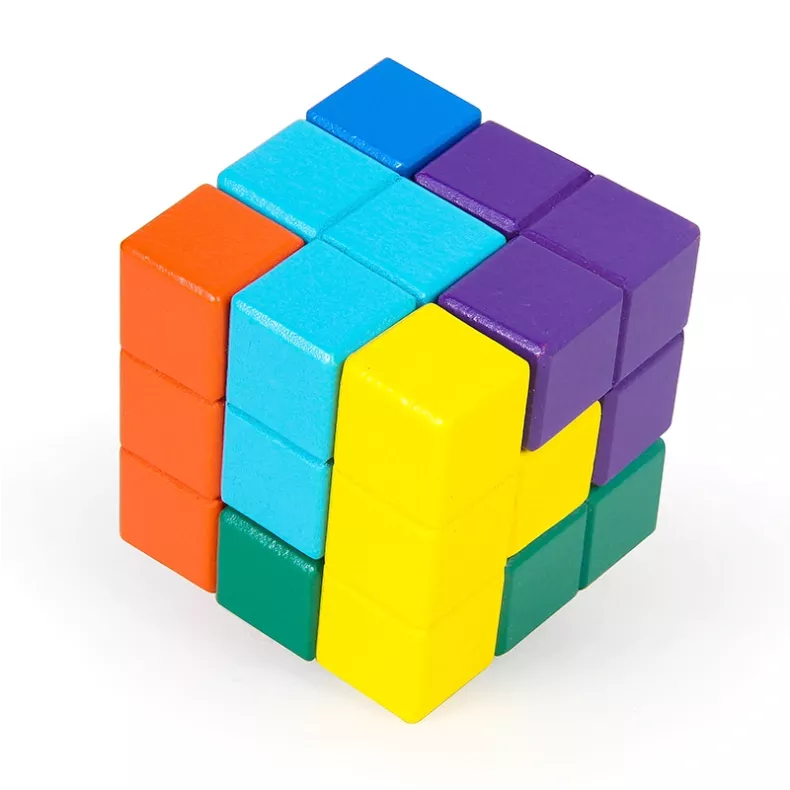
7 Color Soma Cube Puzzle — $21.88
Your 10-second check: Ask one mutual contact whether the recipient collects burrs, boxes, or spheres before choosing. Two minutes of text messages beats an awkward exchange on a milestone birthday.
Frequently Asked Questions
Choose an 18-piece wooden burr when the recipient enjoys hands-on mechanical challenges and the box matters as much as the puzzle; skip it for someone who only collects flat jigsaws. A quick text to a mutual contact — the same check behind the gifter’s escape hatch — confirms which side of that line your recipient falls on.
How hard is an 18-piece wooden puzzle for an adult who already does puzzles?
Piece count alone doesn’t set the difficulty — design does. An 18-piece burr can be an afternoon exercise or, in designs like the Grandfather Burr by W. L. van der Poel, “one of the hardest interlocking puzzles in our collection,” per the listing maker. The Tea-Sip 18-Piece Wooden Puzzle uses seventeen identical pieces plus one smooth-ended key piece, so the challenge is in the move sequence, not memorizing shapes. Ask the seller for a difficulty grade before buying.
Is this the same puzzle from Indiana Jones or escape rooms?
No. Film prop puzzle boxes and escape-room props use sequential-discovery boxes with hidden latches, not the interlocking burr format. The number 18 traces to the Grandfather Burr, designed by Dutch computer scientist W. L. van der Poel — a separate tradition from film or game design.
Does an 18-piece wooden burr come with a solution?
It depends on the seller. Some include a step-by-step solution sheet, others note the solution is not available, and the Tea-Sip product page describes the key-piece mechanic that lets the recipient feel disassembly moves without written instructions. Check the “includes” line before checkout — if a solution matters, message the seller directly.
Is it appropriate for a senior or someone with arthritis?
Wooden burrs use solid hardwood pieces with no small loose parts, easier to handle than tiny jigsaw tabs. The risk is grip strength during disassembly — someone with severe arthritis may struggle to pull pieces free. Look for puzzles with rounded edges and pieces large enough to wrap a full hand around. If grip is a concern, the box’s display value may matter more than the solve.
Can I personalize or engrave the puzzle for a retirement or wedding?
Some makers, including Tea-Sip, accept laser-engraving on the presentation box lid, though availability varies. Add the request at checkout or message the seller — engraving the box rather than the puzzle keeps the pieces unmodified, so the recipient can still solve and reassemble. A date, initials, or a short line on the inside lid is the cleanest approach.
What if the recipient already owns a classic burr?
That’s the gifter’s escape hatch. From the Tea-Sip roster, the Interlock Puzzle Sphere, the Mechanical 3D Wooden Globe Puzzle, the 7 Color Soma Cube Puzzle, and the 6 Piece Steel Ball Pyramid Puzzle all sit in the same general catalog but solve in completely different formats — a sphere reassembles from the outside in, a globe builds out into a desktop display, a Soma cube demands spatial packing, and a steel-ball pyramid separates metal pieces in a different motion. None overlap with a traditional burr, so the gift still lands as new.
Your 10-second check: Before checkout on the 18-Piece Wooden Puzzle product page, confirm three things — a solution is included or available on request, the wood species is named, and the seller offers returns if the recipient already owns it. Those three lines cover most of the gift-day risk.
Where to Start
If the recipient and occasion checks above match, start with 18 Piece Wooden Puzzle. Check the current product page for the specifications that matter to your choice.
Still comparing options? Revisit the recipient match and the three checks above to narrow the list before re-searching.
Sources and verification
- Product details and current specifications: Tea-Sip product page
Last updated: August 22, 2026