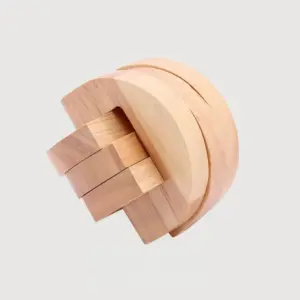
Quick Answer: 3D Wooden Puzzle Gift for Software Developers: A Decision Map
A 3D wooden puzzle is a strong software-developer gift when it rewards logic over dexterity and looks clean on a monitor-lit desk; skip it if the recipient prefers software-side puzzles or has no patience for tactile assembly. The right pick hinges on four checks: puzzle type, difficulty curve, desk footprint, and whether the mechanism mirrors a developer’s mental model of states and conditions.
Four checks that decide the pick:
- Puzzle type — logic gate, interlocking burr, geometric, or sculptural. Match the recipient’s cognitive mode rather than browse a generic catalog.
- Difficulty curve — piece count and solve time should stretch without frustrating. Too easy condescends; too hard becomes shelfware.
- Desk footprint — under monitor light, a puzzle becomes a permanent object. Size, noise, and visual weight all matter.
- Code/work metaphor — burr and Luban-lock puzzles model the same states-and-transitions thinking engineers practice daily, which is why mechanical puzzle fans and software engineers overlap more than expected.
Decision Table: Match the Pick to the Recipient
| Recipient profile | Top fit | Why it fits | What to verify before purchase |
|---|---|---|---|
| Backend / systems engineer | 12 Piece Crystal Luban Lock Set | Interlocking unlock sequences mirror state-machine logic | Piece count, solve time, logic-first (not dexterity-first) mechanism |
| Full-stack generalist | 6-in-1 Wooden Brain Teaser Set | Variety respects the shifting focus of a coding day | Set includes logic, geometric, and burr types |
| Data / ML engineer | 7 Color Soma Cube Puzzle | Spatial partition problems resemble array reshaping | Piece geometry on the product page |
| Frontend / UI engineer | Kongming Lock Color Match | Visual pattern matching for a visual mind | Color accuracy and desk display presence |
| Newcomer to puzzles | 54‑T Cube Puzzle | Low piece count with a layered challenge | Assembly time and beginner-appropriate difficulty |
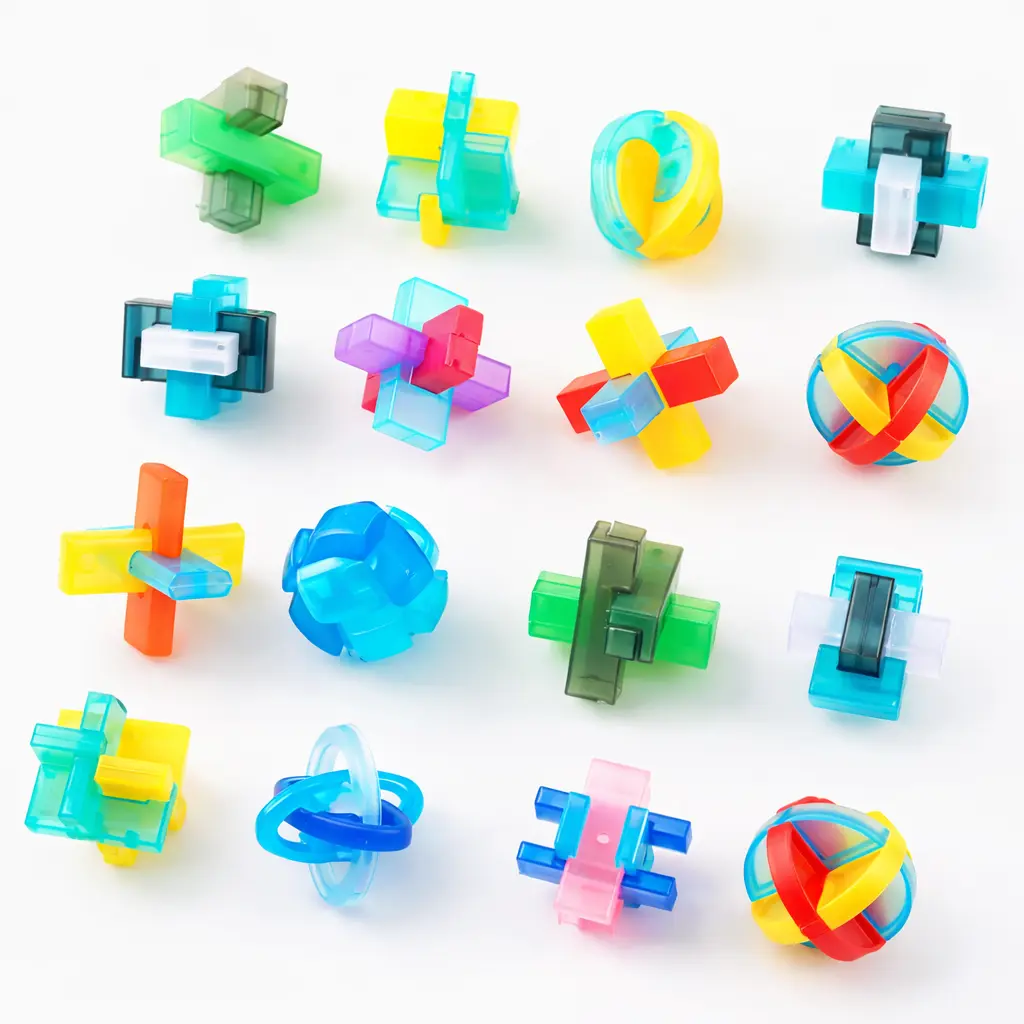
Start with the 12 Piece Crystal Luban Lock Set for most developers — a dozen interlocking challenges, a clean desk footprint, and the same logical-state thinking the recipient already exercises in code. Check the product page for the current price and listed solve-time guidance.
For a broader comparison of desk puzzles for software developers, see the Tea-Sip desk puzzle roundup.
01. Match the Puzzle to the Developer’s Cognitive Mode
A 3D wooden puzzle fits a software developer’s desk when it mirrors how that person already thinks — by state, by motion, by symmetry, or by pattern. The fastest way to choose is to ask which kind of problem the recipient reaches for first during a debugging session; the answer reveals the puzzle family that will feel intuitive rather than arbitrary.
Most software engineers don’t debug the same way twice. Some trace state transitions through branching logic, watching each variable flip from one condition to the next. Others reach for the mouse and visually rearrange components until the layout clicks into place. A third group thinks in shapes and symmetries — rotating a mental cube until the faces align. A fourth hunts for the pattern hiding in the noise, the same instinct that spots an off-by-one in a wall of logs. Each of these cognitive styles maps cleanly onto a different wooden puzzle category, which is why a Luban lock can delight one developer and bore another, even when both are equally sharp.
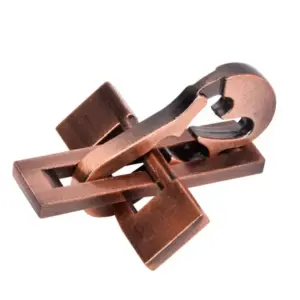
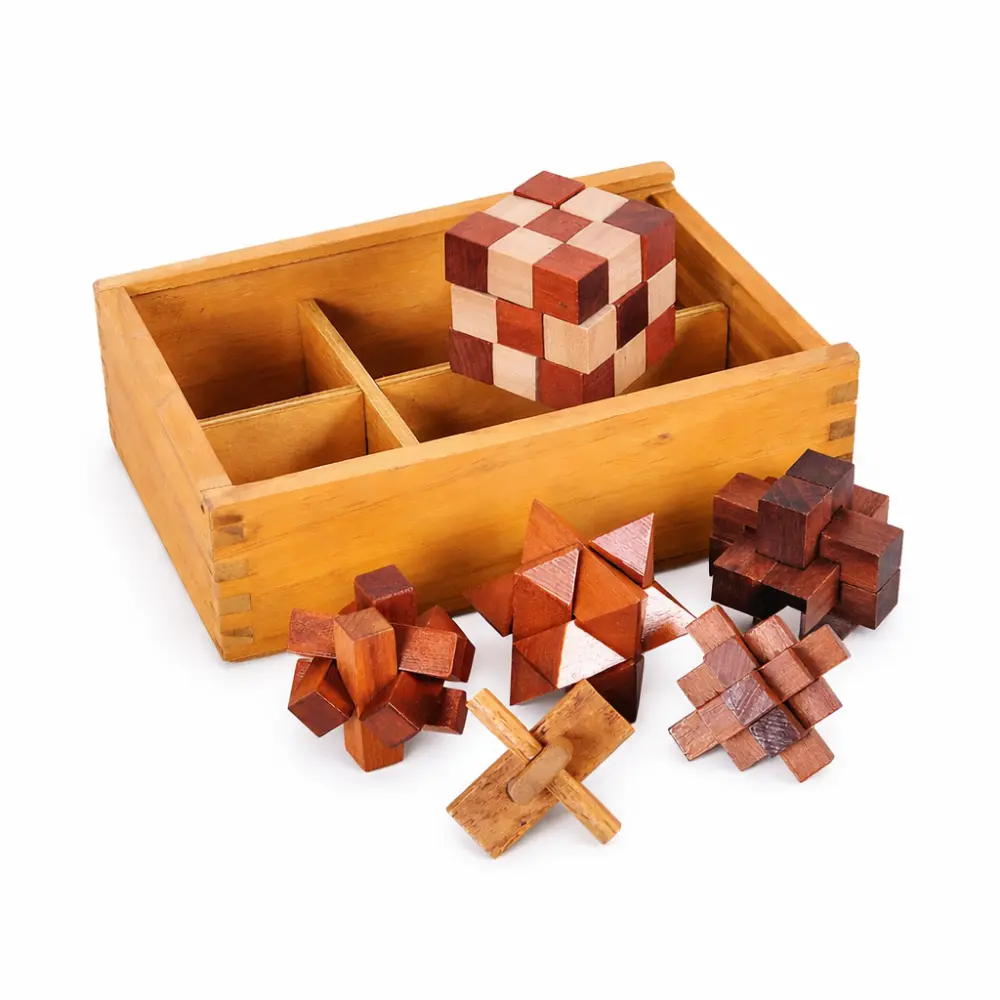
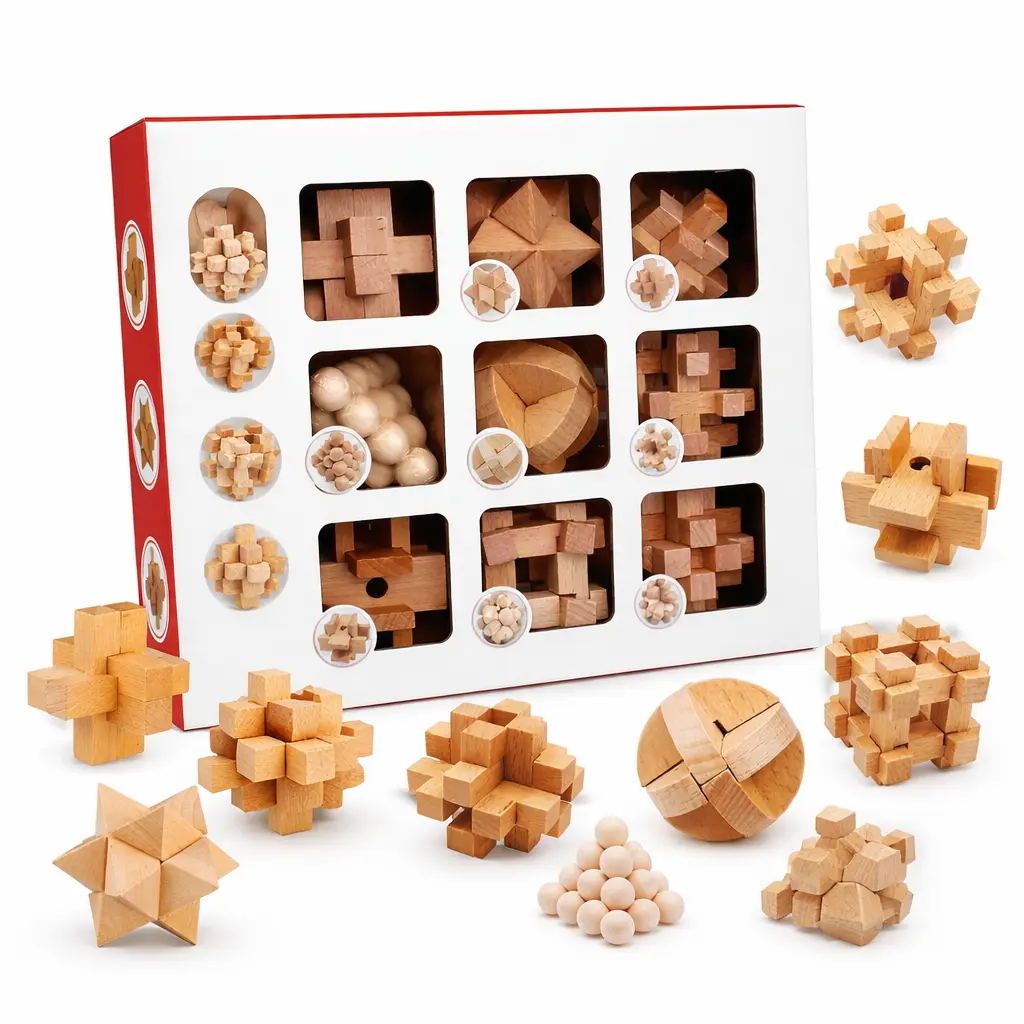
State-driven thinkers — typically backend, platform, or systems engineers who spend their day modeling transitions and side effects — tend to gravitate toward interlocking burr puzzles. The mechanism is exactly what the Wikipedia definition of a mechanical puzzle describes: a physical object whose solution depends on understanding its structure rather than guessing randomly. A Luban lock rewards the reader who traces how each piece constrains the others, asks “what happens if I move this first?”, and works backward from the locked state to the open one. For this profile, the 12 Piece Crystal Luban Lock Set is the cleanest entry point — a dozen small challenges, a compact desk footprint, and the same state-machine thinking the recipient already practices in code. When you want to widen the variety, a multi-puzzle set multiplies the options without inflating the footprint:
Motion-driven thinkers — usually frontend, UI, or game developers who think in transitions, easing curves, and the way a thing moves from one frame to the next — respond better to mechanical motion puzzles: gear trains, linkage assemblies, and crank-driven boxes where the solution is felt as much as reasoned. The puzzle isn’t “what’s the state?” but “what’s the next move?” If your recipient writes React, builds animations, or maintains a design system, this category is worth a closer look during your selection. A visible check before you buy: the mechanism should move smoothly under slow finger pressure — no springs snapping, no glued joints. If you can hear a satisfying click when a linkage seats, the recipient probably will too.
Symmetry thinkers — data engineers, graphics programmers, and the spatial-reasoning contingent — tend to light up over geometric dissection puzzles. Soma cubes, T-shaped block assemblies, and packing challenges appeal to the same brain that visualizes tensor shapes or plots a 3D scatter in their head. Piece count matters less here than the proportion between pieces and the cube they form. A compact, well-proportioned option in this family:
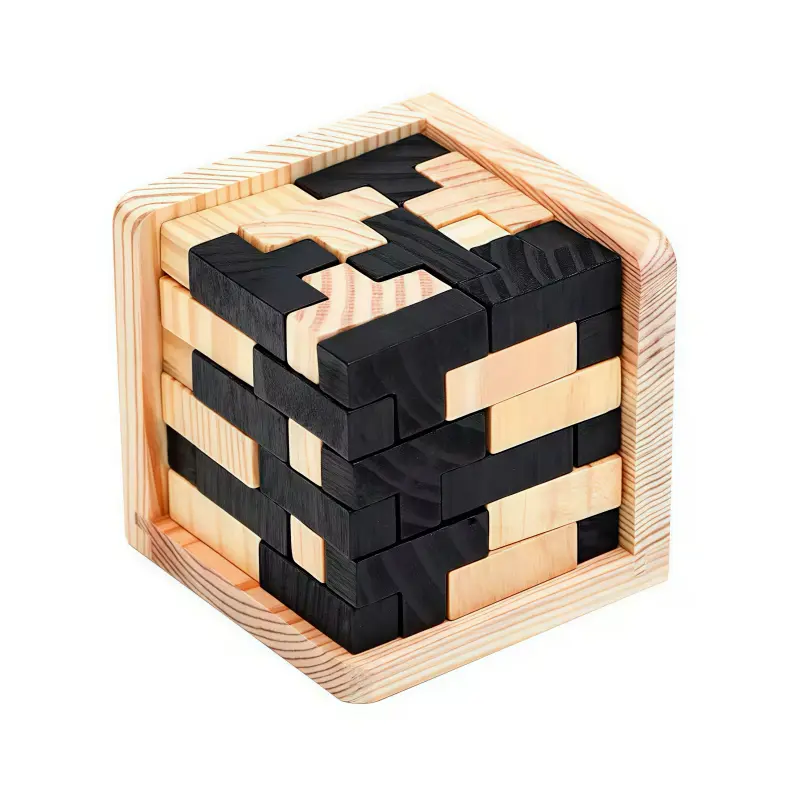
54‑T Cube Puzzle — $18.99
Pattern hunters — the data-scientist, quant, or anomaly-detection type — enjoy numbered-cube grids and wooden sudoku variants, where the goal is to satisfy a constraint across a small grid. The mechanism is closer to constraint satisfaction than to disassembly, which is why this category can feel different from the others even though it shares the same physical form. A piece count in the 30–60 range generally lands in the right difficulty band for an experienced engineer; fewer pieces and the solve time drops below the threshold where the recipient feels challenged, more pieces and the cognitive load drifts into the same fatigue they just left at the monitor.
A one-minute self-check before you commit: ask which keyboard shortcut the recipient reaches for when a build breaks — git bisect (state trace), cmd+Z (motion unwind), a visual diff tool (symmetry compare), or grep with a clever regex (pattern match). The shortcut that surfaces first is usually the cognitive mode the puzzle should match. If two feel equally natural, prefer the interlocking burr — it maps onto the broadest developer population, doubles as a tactile break between commits, and is the category that most often survives a full year on a real working desk without being quietly shelved.
02. Decode the Difficulty Label and Piece Count
Piece count tells you assembly time — difficulty lives in the mechanism. Choose a wooden puzzle by how many constraints each move must satisfy, not by how many parts the box contains, because a six-piece burr with dense interlocking often demands a longer solve than a fifty-piece geometric assembly, and that gap is exactly what the marketed “difficulty” label on most product pages hides.
The five-star scale on a wooden puzzle listing is one of the least reliable data points a gift-giver can rely on. A vendor’s rating usually reflects their internal team solving the puzzle after they already built it — they know the trick, and the curve is calibrated to their caffeine that morning. For a software developer, the useful question is not “is this rated hard” but “does the mechanism force me to think in states, sequences, or constraints I don’t already have a mental model for?” A constraint-satisfaction puzzle like the 7 Color Soma Cube rewards exactly the constraint-propagation thinking a developer uses when writing a solver or reasoning about a state machine, which is why it lands harder than its piece count suggests and softer than its “expert” label implies.
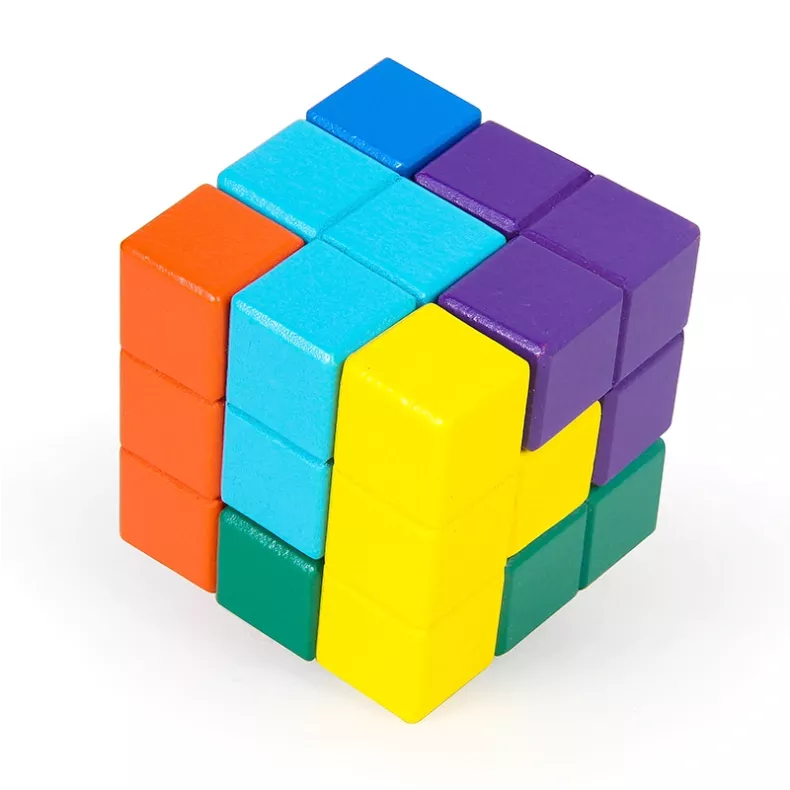
7 Color Soma Cube Puzzle — $21.88
Three checks will let you verify difficulty before purchase without solving the puzzle yourself.
1. Interlocking point count, not piece count. A six-piece burr where every piece interlocks with four others is harder than a twelve-piece assembly where most pieces only connect at two surfaces. Look at the product photos — if you can count the notches and tabs visible on a single piece, you can roughly estimate the constraint density. More contact points per piece means more states to track, which maps onto the same combinatorial load a developer feels debugging a system with many interacting services, and the puzzle doubles as a tactile break between commits.
2. Presence of hidden fasteners or trick hardware. If the product description mentions screws, glue, rubber bands, or a “secret compartment” held by a magnet, the puzzle has bypassed its own mechanism. The reward collapses from “I understood the structure” to “I followed the included hardware list.” For a software engineer, that is the difference between refactoring a legacy class and copy-pasting Stack Overflow — both finish the job, but only one teaches anything. Real mechanical puzzles expose their state through the pieces themselves, the way good code exposes its state through the function signature rather than a hidden global.
3. Instruction quality as a proxy for mechanism honesty. Read the included-instructions line on the product page. If the instructions are two pages of exploded diagrams with no mechanism explanation, the vendor is treating assembly as the puzzle. If the instructions include a short paragraph on the underlying principle — why the pieces are shaped this way, what state the lock sits in before the first move — the puzzle is selling mechanism, not busywork. Wooden puzzle catalogs across the category vary widely in instruction quality; some entries ship with a one-line “assemble as shown,” others include a full mechanism note.
The numbered-grid category — the wooden sudoku cube and its variants — sits at a different point on this map. There, piece count matters more than the disassembly mechanism, because the cognitive load is carried by the constraint grid rather than the lock sequence. A 30-to-60-piece numbered grid is a good difficulty band for an experienced engineer; below that the solve time falls below the threshold where the puzzle feels earned, above that the assembly drifts into the same fatigue they just left at the monitor, and the gift stops being a cognitive offload and starts feeling like more work.
The practical next step is to pick two candidate puzzles, count their visible interlocking points in the product photos, and read the instruction line on each product page. The one that scores higher on constraint density and mechanism honesty — and that has clean desk presence under monitor light — is the gift worth shipping. If the recipient ever gets stuck mid-solve and needs to recover a partially disassembled burr or Soma shape, the brain teaser wooden puzzle solutions and reassembly method walks through the standard recovery sequence for the most common shapes.
03. Evaluate Desk Footprint, Noise, and Material Quality
The two-candidate shortlist from the previous step still has to clear a desk audit. A developer desk has roughly 60 cm of clear space next to a mechanical keyboard — and that strip is the only honest real estate for a desk puzzle. Choose a puzzle that fits in that footprint without crossing the mouse-hand line, because anything wider interrupts the primary reach zone and gets pushed to a shelf within a week.
The 60 cm rule sounds arbitrary until you measure a standard 60% keyboard — it spans about 30 cm, the mouse takes another 8–10 cm of reach, and the developer’s forearm needs a clear arc. What remains is a narrow channel between keyboard edge and monitor base. A Luban-style lock cube at 7–8 cm fits with room to spare. A 15 cm numbered grid also fits. A 40 cm assembled mechanical gearbox does not — and reassembling it on a working desk means clearing the entire workspace, which a developer will not do twice.
Noise is the check most gift guides skip, and it decides whether the puzzle stays visible or migrates to a drawer. Loose unassembled pieces rattle during solve, click against each other when the desk is bumped, and produce a soft clatter on every keyboard reflex. A pre-integrated assembly — a single block that comes apart through a sequence rather than by removing individual pieces — stays quiet under hand and on display. For developers on shared office floors or Zoom calls with the camera pointed at the desk, the noise floor is not a minor preference; it is the difference between daily use and a drawer. The short version: fewer loose parts, more integrated mechanism.
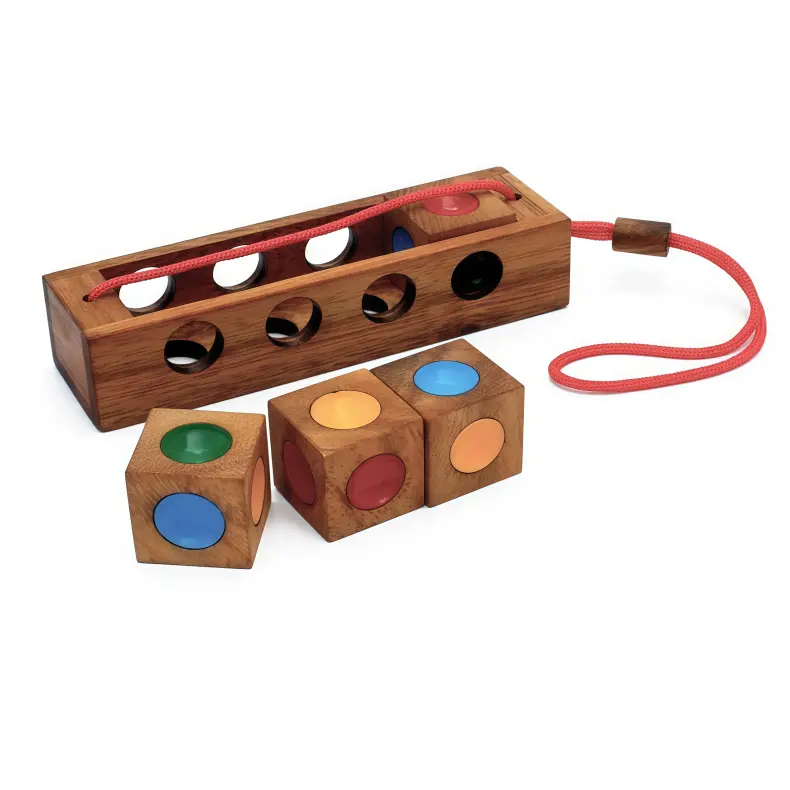
Kongming Lock Color Match — $16.99
Material quality is the third check, and the easiest to fake from photos. Plywood puzzles show visible layer lines on the cut edge and chip if dropped; solid wood — beech, walnut, or acacia — shows continuous grain and survives repeated handling. Run a fingernail across the cut edge in the product photo: if you can count the layers, the puzzle is plywood and will not age well. If the grain runs continuously, it will soften with handling rather than degrade.
Frame this as a cognitive offload — the pattern in fidget-tool design where the hands take a small, repeatable challenge while the mind rests from screen work. A well-chosen wooden burr or Luban lock does exactly that: a tactile break with a solvable state machine, not a toy that demands the same sustained focus a developer has already spent eight hours supplying.
Desk-fit checklist before clicking buy:
– Measure the clear zone next to the keyboard. If the assembled puzzle is wider than that zone, skip it.
– Look for “disassembles as a single unit” rather than “build from individual pieces” — the former is quieter.
– Inspect the cut edge in the product photo for continuous grain. Plywood layers mean a shorter lifespan.
– Check the product page for finish details. Unfinished or raw wood catches on skin and looks unfinished under monitor light.
– Confirm piece count against the 30–60 band from Section 02 — outside that range, the solve time stops feeling like a break and starts feeling like more work.
The next move: take a ruler to the desk, photograph the clear zone, and only then open the product page. The puzzle that fits the zone, runs quiet, and shows solid grain on the cut edge is the one that will still be on the desk in six months. For a wider set of options that clear the quiet-desk bar, the roundup of the best desk toys for remote workers and quiet calls maps the full category.
04. What Software Developers Actually Want at Their Desk (and What to Skip)
Take the desk-fit checklist from Section 03 one step further: software developers want a tactile break that rewards repeatable mechanism discovery, not a one-and-done assembly kit. A puzzle that comes apart and reassembles — the way a Luban lock or a six-piece burr does — stays on the desk. A “build it once, admire it forever” kit usually migrates to a shelf within a month, because once the assembly is done, the cognitive payoff is gone.
The connection between burr puzzles and developer thinking is closer than it looks. Burr puzzles — including most Luban lock designs — are built from interlocking notched pieces that only fit together when moved through a specific sequence of positions, a mental model that lines up with how software engineers already reason about state machines: the assembly is locked in one configuration, a move transitions it toward another, and the goal state is reachable only by a valid path. The Wikipedia entry on mechanical puzzles defines the category as objects whose solution depends on understanding the structure and mechanism — a definition that fits the way developers already think, and one that explains why a clean burr puzzle ages well on a monitor-lit desk.
A burr puzzle earns its desk presence because the challenge is the mechanism, the mechanism is the reward, and the reward is the kind of thing engineers already enjoy reasoning about during a standup or a slow build. The fidget-toy literature — covered on the Wikipedia fidget toy page — describes the same use case: a small, repeatable hand challenge that lets the mind rest from sustained focus without demanding more of it. A wooden burr on a developer’s desk serves the role of cognitive offload, and it does so without producing the noise, the moving parts, or the distraction profile of a clicky plastic alternative. The solve time stays short enough to feel like a break, not a project.
Look for the phrase “disassembles and reassembles” or “challenge is to take it apart and put it back together” on the product page. That single line separates desk toys from display models, and it is the line most gift guides skip.
What NOT to buy for a developer
Three categories reliably frustrate the same minds that enjoy clean code:
- Puzzles shipped with photo-only instructions. If the product page shows step diagrams and no text-based walkthrough, the frustration-to-reward ratio tips the wrong way. Developers read; they expect a written spec. A puzzle that requires reverse-engineering from photos is solvable, but it is the wrong kind of challenge for a desk-toy gift.
- Theme-park novelty kits. Pistol-shaped assemblies, pirate treasure boxes with motorized parts, and music-box kits lean on dexterity and decoration rather than mechanism. The appeal is visual; the solve disappears after the first build, and the kit ends up in a drawer next to the cables and chargers.
- Anything marketed as a “coding puzzle” or “STEM coding toy.” The claim that a physical puzzle improves programming skill is unsupported, and a developer will spot the gap between the marketing copy and the product within seconds. Skip this category entirely — and gift-wrap the doubt as a favor to the recipient.
The state-machine framing matters because it explains why burr and Luban puzzles hold up on a developer’s desk: the challenge is the mechanism, the mechanism is the answer, and the answer is the kind of thing engineers already enjoy reasoning about. A puzzle that respects that mental model earns its corner of the desk — and the wider Luban lock cluster, from the 9-piece starter set up to the 12-piece crystal version, scales the same logic for different desk footprints and experience levels.
The next move: open the Luban Lock Set 9 Piece product page for a first gift, or step up to the 12 Piece Crystal Luban Lock Set if the recipient already has a starter burr on the desk. Confirm the piece count sits inside the 30–60 band covered in Section 02 and inspect the product photo for continuous grain on the cut edges. If those three checks pass, the gift matches the brief. For a closer look at the burr family specifically — including the classic six-piece form, solve sequencing, and what separates an entry-level burr from its larger cousins — the six-piece burr puzzle complete buying and solving guide covers the fundamentals.
05. Decision Table: Puzzle Categories Matched to Developer Personas
Match the puzzle to the recipient’s working mental model, not the one that photographs best — a backend engineer responds to state-machine burrs, a frontend engineer thinks in spatial geometry, a data engineer wants pattern transforms. The table below pairs each archetype with a mechanism and the verification step to run before checkout.
Every persona runs on a different kind of logic — sequential, spatial, or transformational — and a mechanical puzzle, as the Wikipedia entry on mechanical puzzles defines it, is “a physical object where the solution relies on understanding its structure and mechanism.” That definition is the through-line for every row.
| Persona | Puzzle Type | Mechanism Hook | Desk Footprint | What to Check |
|---|---|---|---|---|
| Backend / systems engineer | 12 Piece Crystal Luban Lock Set — $28.88 | Interlocking burr with sequential disassembly | Palm-sized; sits flat beside a monitor | Confirm assembled pieces form one solid block; verify piece count on the product page |
| Frontend / UI engineer | 7 Color Soma Cube Puzzle — $21.88 | Spatial assembly with color-constrained parts | Small, mug-sized | Verify color vs monochrome variant; count configurations on the product page |
| Data / ML engineer | 54-T Cube Puzzle — $18.99 | Geometric transformation of the whole structure | Compact, rewarding in-hand | Check transformation count and rated difficulty on the product page |
| Full-stack / generalist | 6-in-1 Wooden Brain Teaser Set — $38.88 | Six distinct mechanism families in one box | Medium; needs a small shelf | Verify the six puzzles look visibly different, not six variants of the same trick |
| DevOps / SRE | Kongming Lock Color Match — $16.99 | Color-based disassembly; ordered release | Pocketable; smallest footprint | Confirm color requirement suits the recipient; check piece count on the product page |
| Junior developer / first tactile puzzle | Luban Lock Set 9 Piece — $39.99 | Burr with fewer pieces; lower entry barrier | Compact; ideal first burr on a shared desk | Confirm piece count is 9, not 30+; verify it’s labeled starter, not advanced |
The persona column names a working mental model; the mechanism column names the object feature that exercises it; the “What to Check” column is the verification step the gift-giver runs in under a minute on the product page.
Next action before checkout: open the product page for the puzzle that matches the recipient’s persona, confirm the mechanism column matches the table, and check that the listed piece count fits a band the recipient will finish in one sitting rather than abandon in frustration.
Frequently Asked Questions
A 3D wooden puzzle rewards a developer when the mechanism mirrors their day job. State tracking, sequential disassembly, spatial reasoning — the same moves they make in code. Skip it if the recipient has no patience for tactile assembly; they won’t take a tactile break from the screen with this.
Before you click buy, run the persona from the table above against these questions. Most gift failures come from skipping the last 30 seconds of verification.
What is a Luban lock and is it the same as a burr puzzle?
A Luban lock (Kongming lock, named for the Chinese strategist) is a specific style of interlocking burr puzzle — the pieces look impossible to separate until the right internal rod is found. Burr is the category; Luban is a flavor. The 12 Piece Crystal Luban Lock Set is a textbook example.
How long does assembly take?
A 6-to-12 piece set typically runs 20 to 60 minutes per puzzle for a first-time solver. Check the listed piece count and difficulty on the product page to estimate solve time — aim for puzzles the recipient finishes in one sitting, not abandons in frustration. If the recipient stalls partway through a solve, the how to solve 3D wooden puzzles the universal method walkthrough applies to most burr, Soma, and Luban shapes.
Are these quiet enough for an open office?
Yes. Interlocking wooden pieces release with a soft click and need no dedicated work surface. A pocket-sized Kongming Lock Color Match can be solved during a meeting break — a quiet tactile break from the screen.
Will it sit on the desk, or end up in a drawer?
Plain wood burrs and Luban locks read as desk presence rather than desk toy — they share the visual language of a mechanical keyboard or a brass paperweight, not a spinning USB gadget. The 54-T Cube Puzzle appeals to engineers who like combinatorial problems where the same shapes recombine into multiple figures, and it stays on the desk after solving.
Where can I find the full collection?
All wooden burrs, brain teasers, and Luban sets live in the wooden puzzles category. Filter by piece count and mechanism to match the persona table above.
Where to Start
If the recipient and occasion checks above match, start with 12 Piece Crystal Luban Lock Set. Check the current product page for the specifications that matter to your choice.
Still comparing options? Use the matching Tea-Sip collection to compare the same decision criteria, rather than restarting the search from scratch.
Sources and verification
- Product details and current specifications: Tea-Sip product page
Last updated: August 26, 2026