Quick Answer: 3D Wooden Puzzle Gift for Adults with Anxiety: How to Choose
For most adults with anxiety, the right 3D wooden puzzle fits the hands comfortably, has 100–400 pieces with a forgiving assembly path, and produces a displayable object rather than a discardable toy. If the recipient is easily frustrated or has limited fine-motor stamina, choose a pre-cut kit with fewer moving parts. If they crave sustained focus, choose a mechanical or geared puzzle with 300+ pieces.
This guide uses four checks before you buy: piece count matched to stamina, complexity versus fine-motor comfort, scent and material sensitivity, and whether the finished object earns desk or shelf space.
The four checks at a glance
- Stamina match — piece count to available focus window.
- Complexity — moving parts versus frustration tolerance.
- Scent and material — laser-cut wood can off-gas; air the kit out before gifting.
- Display value — does the finished object feel like a keepsake, not clutter?
Decision table: match the puzzle to the person
| Recipient profile | What to check | Why it matters |
|---|---|---|
| Easily frustrated, low-stamina days | 6–24 piece kits, single mechanism | Quick wins prevent abandonment |
| Craves sustained focus | 100–400 piece mechanical or geared puzzle | Rewards longer hands-on focus sessions |
| Scent-sensitive or migraine-prone | Untreated wood or low-odor material; air out 24h before wrapping | Burnt-wood smell can be a real obstacle |
| Values display objects | Desk-sized kits under 6″ tall | Finished object becomes a keepsake, not a drawer item |
A strong starting pick for most gift situations is a 12-piece luban lock set. Twelve separate lock puzzles, each solving in a few minutes, match a recipient whose focus window varies day to day — and the assembled pieces sit handsomely on a desk once solved.
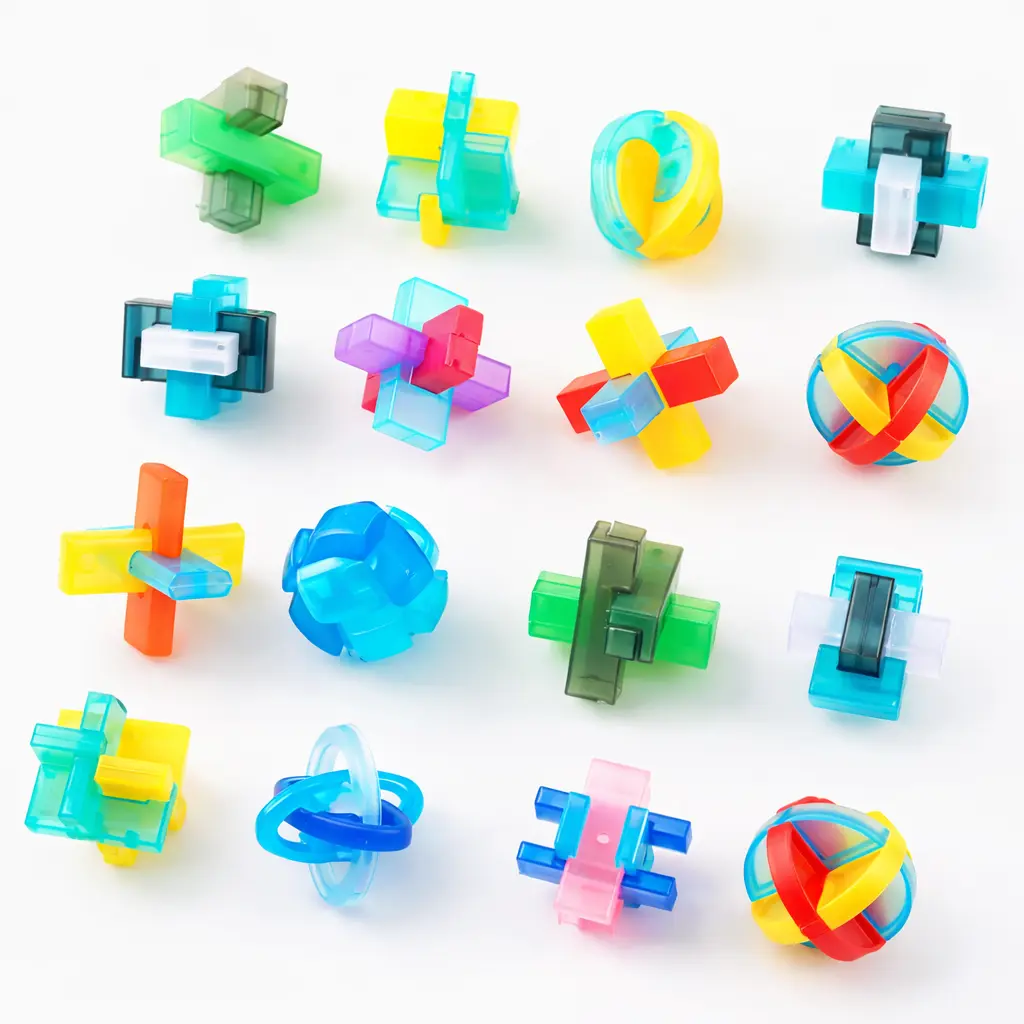
If the recipient is drawn to repetition, they can solve the same twelve locks again and again. That repeatability is what makes the gift feel like a ritual rather than a one-time project.
01. Why a 3D Wooden Puzzle Can Calm an Anxious Adult
A 3D wooden assembly puzzle calms an anxious adult when it delivers three observable mechanisms at once: tactile hand grounding, a flow-state rhythm of small sequential steps, and visible progressive assembly that confirms the work is real. If any of those three is missing — if the puzzle is flat, opaque-ended, or visually unchanging during the build — the calming effect thins out and the kit becomes another thing on a shelf.
The mechanism worth naming is hand grounding. A fidget toy, in its simplest definition, is an object handled to channel restless energy or support focus. A mechanical puzzle extends that handling into a solvable structure — something the hands do to rather than with. When the recipient slides a wooden burr piece or lines up a notched joint, the fingers get information the rest of the nervous system can follow. The hands settle. The breathing slows. This is not therapy; it is sensory redirection, and it is what differentiates a 3D assembly puzzle from a flat jigsaw laid on a table. For adults who have already tried standalone fidgets and found them too passive, a deeper look at 23 fidget puzzles compared for anxiety relief maps where handheld puzzles fit on the spectrum.
The second mechanism is the rhythm of small, completable steps. A flat jigsaw reveals its progress mostly as a growing rectangle of color. A 3D wooden puzzle reveals a shape — a sphere, a treasure box, a clock face — that becomes recognizable halfway through. That visible partial completion is what carries someone through a hard afternoon. Competitor framing in this category leans on “calm and creativity” as the purchase reason, which is on-market but rarely explained. The explanation is the partial-visibility feedback loop: each joined piece changes how the object looks, and the eyes register that change before the conscious mind does.
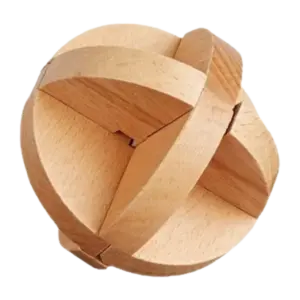
The third mechanism is what happens after the final piece clicks in. A 3D wooden puzzle is built to be kept. The Luban Sphere, for instance, is a solid wooden orb designed to sit on a desk and be picked up again, not packed away. That matters for anxious adults, who often value objects that hold the memory of a completed task rather than objects meant to be discarded.
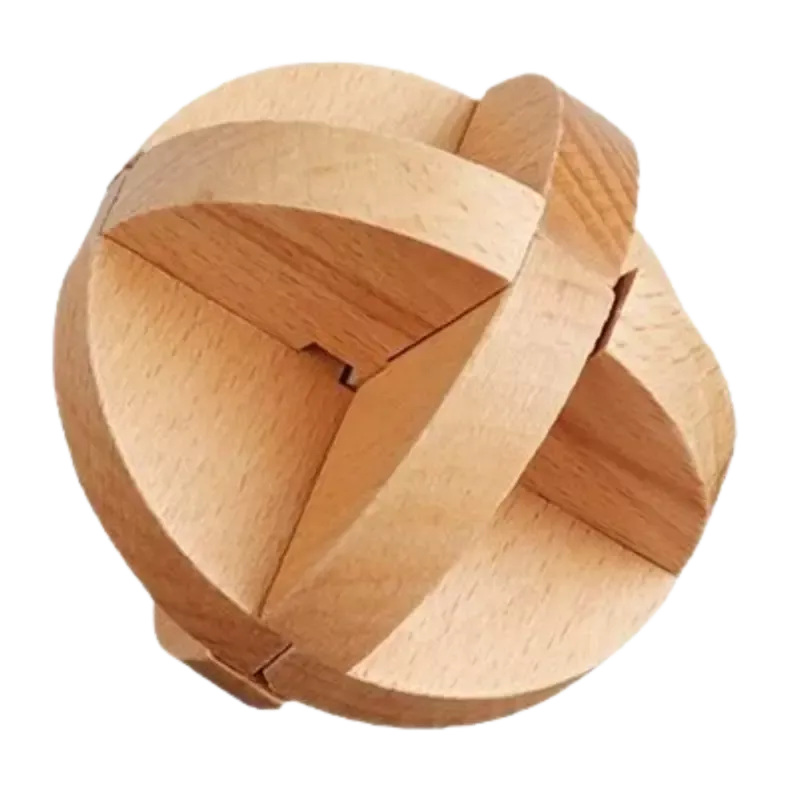
Luban Sphere Puzzle — $16.99
A gentle note on scope. A repetitive hand challenge can be a screen-free complement to rest, good sleep, and human company. It is not a substitute for clinical support. If the person you are buying for is in active treatment or describing worsening symptoms, the kindest framing is to give the puzzle alongside whatever professional care is already in place — not instead of it. The gift is a quiet companion to recovery, not the recovery itself.
The next decision is which physical features turn those three mechanisms into an actual calming experience and which features quietly cancel them out. That is where piece count, materials, and scent come in.
02. What to Check Before Buying a 3D Wooden Puzzle for an Anxious Adult
Now that the calming mechanism is clear, the practical work begins. Run five pre-purchase checks before adding any 3D wooden puzzle to your cart, and most anxiety-related gift failures disappear before they start. The checks are: piece count matched to the recipient’s stamina, tool requirement, material scent, finished size, and instruction clarity. Skip any kit that fails even one of them.
For most adults with anxiety, the right piece count sits between 100 and 400 pieces. This range rewards a single evening or weekend of focus without outlasting the attention window. Below 100, the build feels trivial and the sense of accomplishment fades. Above 400, the project starts to feel like a second job — and an anxious adult is more likely to set it aside than push through on a hard day.
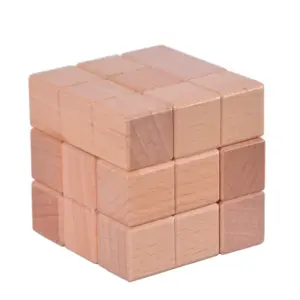
For recipients who have low-stamina days or get frustrated easily, adjust the range downward. A puzzle in the 20–80 piece range — or a non-assembly brain teaser like a Soma-style cube or a Luban lock — can be completed in one sitting and then solved again. The puzzle becomes a repeatable ritual rather than a one-time project. That is part of its value.
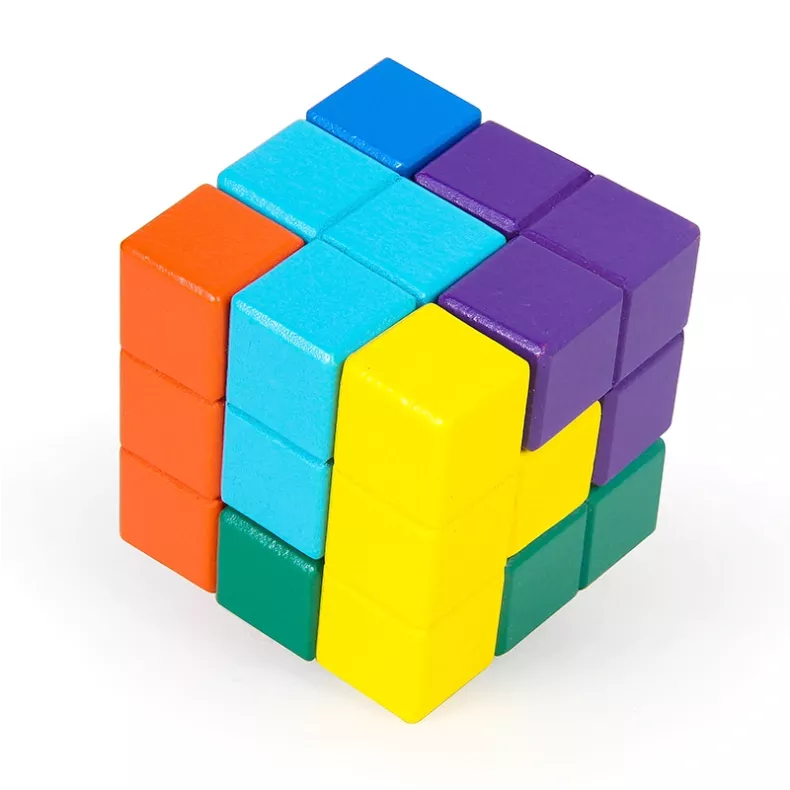
7 Color Soma Cube Puzzle — $21.88
A tool-heavy kit introduces friction. If the recipient has to dig out glue, sandpaper, or hobby snippers before they can start, the barrier between a stressful day and a calming activity grows taller than it needs to be. Pre-cut, snap-together kits that need nothing but the hands — or a single small push-pin for one or two tight joints — are friendlier. The question to ask the listing is simple: does this require any tool not already in a kitchen drawer? If the answer is no, the kit passes.
Material scent is the check no Amazon-style product page raises. Laser-cut plywood kits, especially those cut on CO2 lasers, can carry a burnt-wood smell that lingers inside the box. For most adults it is a curiosity. For a recipient who is scent-sensitive, migraine-prone, or chemically sensitive, the same smell can be disqualifying. The verification step is to look for language in the listing such as “low-VOC finish”, “pre-conditioned wood”, or “ventilated before packing”. If the listing is silent on scent, a short note to the seller is a reasonable ask before purchase.
Finished size matters because the post-assembly object is part of the gift. A 3D wooden puzzle that assembles into something too large for the recipient’s desk or shelf is more likely to be broken down for storage. A compact, displayable keepsake — between four and ten inches in the longest dimension — tends to stay on the desk, where the calming association is reinforced each time the object is seen. Verify the finished dimensions in the product description before buying.
Instruction clarity is the abandoned-hobby risk in disguise. Most adult puzzle gifts fail not because the recipient lacks interest but because the instructions assume a baseline of patience the recipient does not have on a hard day. Look for kits that publish a step-by-step photo or diagram preview, not just a list of part numbers. A listing that shows only a photo of the finished model and a vague “assembly required” line is a red flag.
The abandoned-hobby risk is worth naming directly. A gifted puzzle that sits half-built in a closet becomes a small, silent reminder of a thing the recipient could not finish. For an adult managing anxiety, that is a worse outcome than never receiving the gift. The five checks above are designed to keep that from happening.
The practical next step is to shortlist two kits that pass all five checks — one in the 20–80 piece range for low-stamina days, and one in the 200–400 piece range for sustained-focus weekends. Compare the two listings side by side, confirm the finished dimensions and tool requirements, and choose the one that best matches the recipient you actually know. For longer builds, phase-by-phase 3D wooden puzzle assembly tips help pace the work in short blocks rather than one long sit.
03. Matching the Puzzle to the Person’s Day and Stamina
Size the gift to a typical Tuesday, not the worst one. Anxious adults have more steady days than hard ones, and the right puzzle should feel inviting on both — a kit that only works on a calm afternoon becomes a kit that goes back in the box on a difficult morning.
Two recipient profiles cover most gift situations. The low-anxiety-day kit fits mornings when hands tremble slightly, attention drifts, or patience is thin. The high-focus-day kit fits weekends, quiet evenings, or any window when the recipient can settle into sustained hands-on focus.
The low-anxiety-day kit sits in the 20–80 piece range, fits in one hand or on a small tray, and resolves in 15–40 minutes. The mechanism should be forgiving — pieces that slot in from one direction, no tiny screws, no glue line that demands steady hands. The finished object should be displayable on a desk or shelf so the recipient sees a completed keepsake, not a toy that returns to a drawer. Color-coded parts help because the eye finds the next piece without hunting. Kits positioned around calm and creativity — wooden animal assemblies, color-match challenges, small keepsake boxes — fit this profile well. The Kongming Lock Color Match is a compact color-sorting assembly with a small piece count and a finished object that sits neatly on a desk. Confirm the listed price and finished size on the product page before ordering.
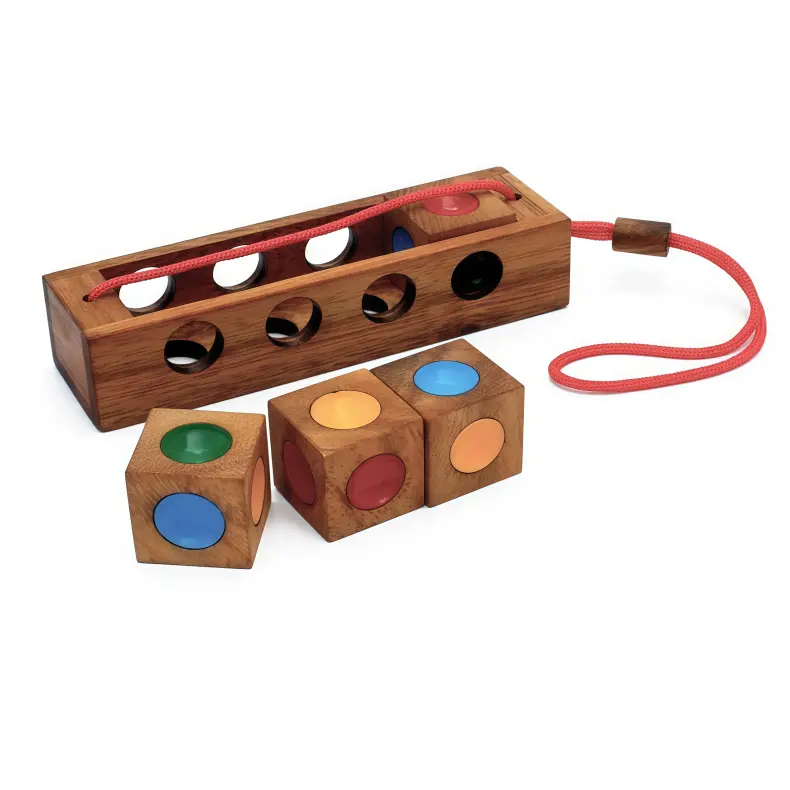
Kongming Lock Color Match — $16.99
The high-focus-day kit runs 150–400+ pieces, takes 2–6 hours across one or more sittings, and rewards sustained flow state. Look for mechanical assemblies, geared builds, clock movements, or calendar models — anything where the finished object functions as a real desk item rather than a paperweight. These builds ask for patience with fine-motor work, so the recipient should already enjoy model-making, jigsaws, or hands-on hobbies. A DIY clock model kit that becomes a working desk clock gives the recipient a reason to keep the finished object visible every day. The 54‑T Cube Puzzle offers a higher piece count and a more intricate assembly path suited to longer sittings. The listed price on the product page is $18.99.
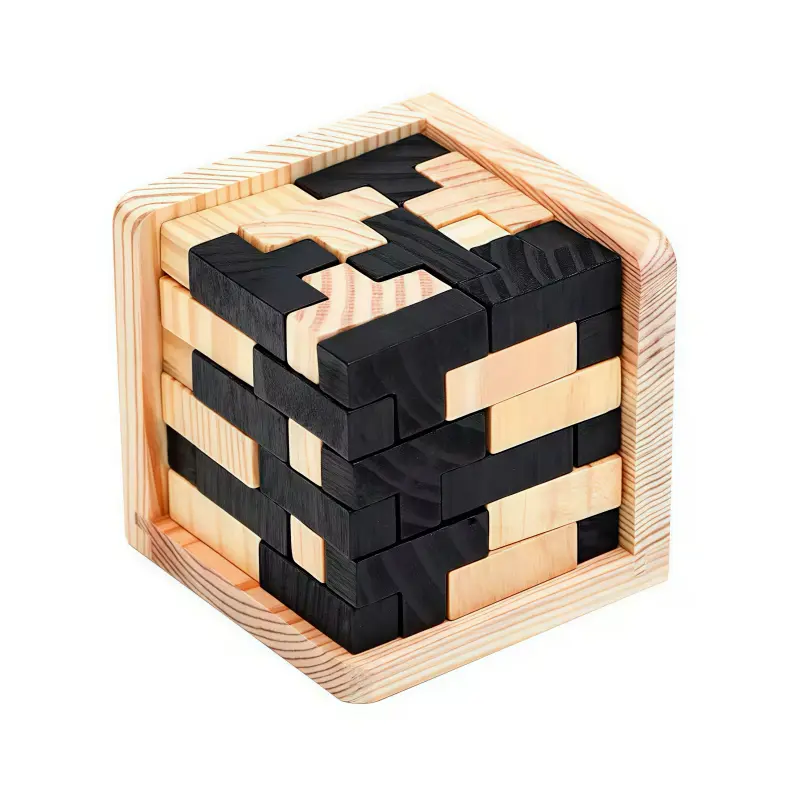
54‑T Cube Puzzle — $18.99
The mismatch to avoid is buying the high-focus-day kit for a recipient whose hands shake on difficult days. A 300-piece assembly handed to someone in an anxiety spiral becomes another abandoned project, and that outcome does more harm than the gift does good. When in doubt, size down and let the recipient graduate to a bigger build when they ask for one.
The practical next step: pick one kit from each profile, confirm the finished dimensions, tools, and instruction format on each product page, and choose the one that matches the recipient you actually know — not the recipient you hope they become on a hard day. If the recipient wants guidance once the box is open, phase-by-phase 3D wooden puzzle assembly tips breaks longer builds into blocks small enough to sit alongside a difficult afternoon. For more on how a finished wooden puzzle can become a calming desk fixture rather than closet clutter, a zen-meets-desk guide to wooden puzzles walks through the display side of the decision.
04. 3D Wooden Puzzle Comparison: Use Case and Difficulty
Now that the recipient’s likely week is mapped, the next decision is which specific kits fit each profile. Read this table as a set of days, not a set of people — each row names a different kind of afternoon, and the right row is the one that matches the recipient you actually know right now. The wrong row is the one you hope they grow into on a hard day.
Four rows cover the spread from a quick hand-warmer to a longer screen-free project. Every “what to check” cell exists because the exact piece count, tool list, and instruction format vary between kits — the product page is the source of truth on any number in this guide.
| Use Case | Skill/Stamina Level | Piece Range (what to check) | Mechanism (what to check) | Finished Object (what to check) | Why It May Suit an Anxious Adult |
|---|---|---|---|---|---|
| Beginner calming kit — 12 Piece Crystal Luban Lock Set | Beginner; short, repeatable sessions | Confirm low piece count on the product page | Confirm assembly type before gifting | Confirm finished size; should fit in one hand | Quick wins, calming repetition, low commitment |
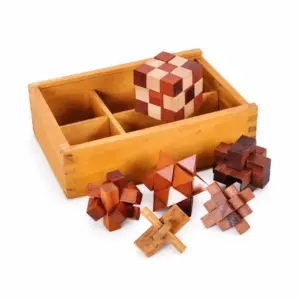
| Mid-range variety build — 6-in-1 Wooden Brain Teaser Set | Beginner to intermediate; medium sessions | Confirm puzzles and pieces per puzzle on the product page | Confirm each puzzle’s mechanism — mechanical, shape-fit, or both | Confirm what each solved puzzle looks like and where it sits | Variety prevents the all-or-nothing feeling of a single long build |
| Mechanical sustained-focus kit — 54‑T Cube Puzzle | Intermediate; longer focused sessions | Confirm piece count and assembly steps on the product page | Confirm interlocking parts and assembly direction | Confirm finished size and display orientation | Complex assembly supports sustained hands-on focus and a working desk object |
| Keepsake-quality display model — Luban Sphere Puzzle | Beginner to intermediate; medium sessions | Confirm piece count on the product page | Confirm spherical assembly pattern and how the final shape locks | Confirm finished size; should fit on a desk or shelf | Solid wooden orb designed to sit on a desk and be picked up again |
The 12 Piece Crystal Luban Lock Set sits at the top because it is the lowest-stakes way to test whether hands-on assembly feels regulating at all. If the recipient enjoys a single short session, the next gift is a longer build — not a repeat of the same one.
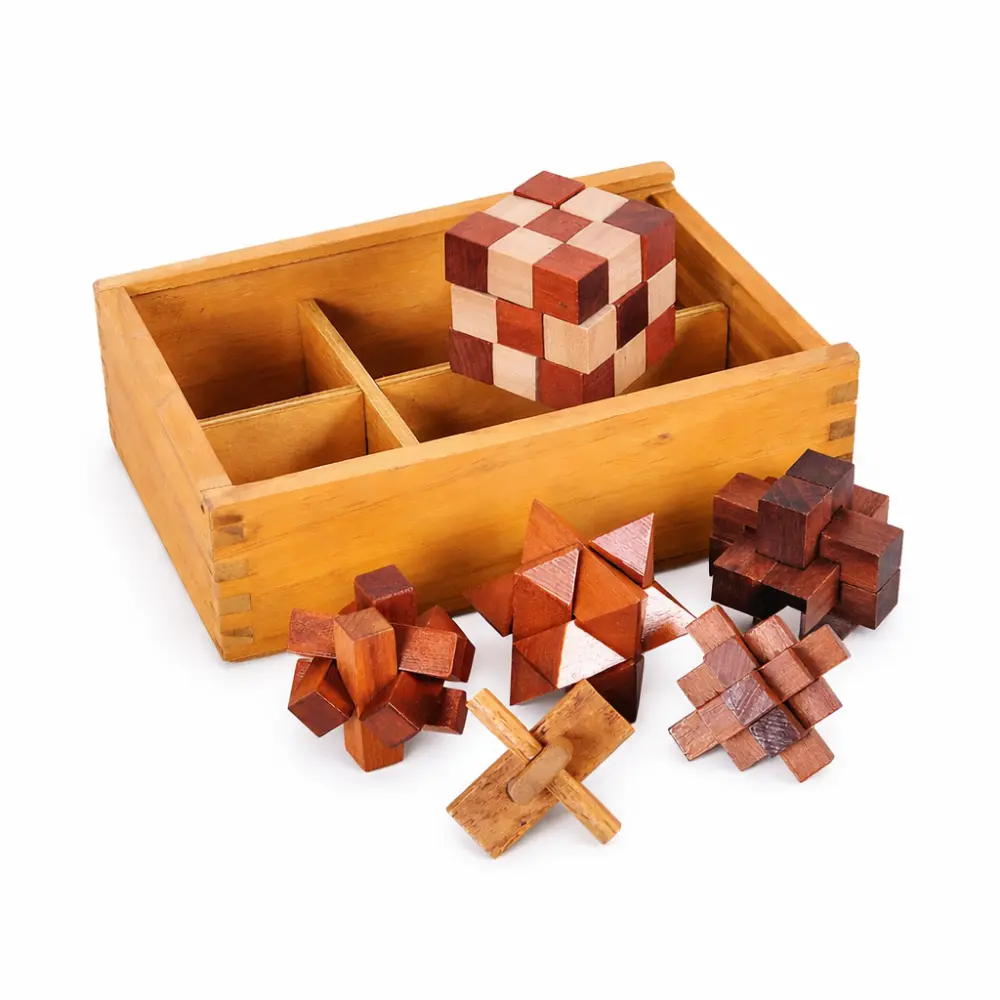
The 6-in-1 set sits in the middle of the table on purpose. It offers six short wins instead of one long climb. For an anxious adult whose focus dips and returns, that structure turns mindful assembly into something repeatable rather than intimidating — one puzzle can be set aside without abandoning the whole kit. For a broader comparison of mid-range options, a mid-range wooden 3D puzzle roundup walks through additional choices.
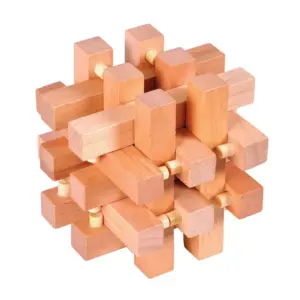
The 54‑T Cube and Luban Sphere rows fit a recipient who has already shown patience with longer assembly. The 54‑T offers a higher piece count for a longer sit; the Luban Sphere produces a solid wooden orb designed to sit on a desk and be picked up again. Both reward sustained hands-on focus and produce a displayable object that quietly functions on a shelf or desk long after assembly day. The hands settle. The finished object stays.
Reader action: pick the row that matches the recipient’s current week, not the recipient’s worst week. Confirm finished dimensions, tools, and instruction language on each product page before ordering, and present the kit without any expectation of completion. The gift is the act of opening the box, not the act of finishing it.
05. How to Present a 3D Wooden Puzzle Gift Without Adding Pressure
Present a 3D wooden puzzle as an open invitation rather than an obligation by leaving it sealed, writing a card without instructions, and placing the kit where the recipient will see it on their own terms. A loaded gift creates pressure. A neutral gift creates permission.
The line between thoughtful and condescending is mostly language and pacing. “I thought you might enjoy this when you have a quiet hour” lands very differently from “This is supposed to help with your anxiety.” The first is an offering. The second is a prescription.
For card language, keep it short and low-stakes. Avoid the word “calm” and any mention of stress. The puzzle is a hobby, not a remedy. “For your desk” or “something to do with your hands” names the object without framing it as treatment. If you are still narrowing down which kit to wrap, wooden brain teasers for people who dread gift shopping lays out 14 options that cut decision fatigue for the buyer.
Whether to assemble together is a real question. Some recipients welcome the company. Others experience shared assembly as being watched. The safer default is to hand the kit over sealed and let the recipient decide. If they open it in front of you, sit nearby without commentary. If they set it aside, let the set-aside stand.
Placement in the room matters more than most gift guides admit. A puzzle box on a crowded desk becomes a quiet obligation. The same box on a low shelf beside a favorite chair becomes an available option. Placement signals whether the gift is something to do or something free to reach for.
Frame the post-assembly object as a displayable keepsake rather than a disposable toy. A finished clock, a music box, or a solved Luban lock that sits on a shelf quietly holds the story of an afternoon. The 12 Piece Crystal Luban Lock Set and other wooden Luban locks in the Tea-Sip collection fall into this category: solved shapes that represent completed effort. For adults who measure anxious days in small wins, a visible finished object can carry more meaning than the assembly itself.
After-care matters. A short check-in a week later — “Did you ever open it?” without follow-up pressure — respects autonomy. Avoid asking whether the puzzle “worked.” If the recipient mentions enjoying the time, follow their lead. If not, the gift still served its purpose by being there.
This gift is a complement to professional support, not a substitute. If the adult in your life is navigating ongoing anxiety that disrupts sleep, work, or relationships, a thoughtful gift sits alongside therapy, medication, and trusted people. A puzzle can offer a screen-free hour. It cannot offer clinical care. Knowing the difference is part of choosing well.
Frequently Asked Questions
The gift is chosen, the after-care is set, and the line between a self-care gesture and clinical support is clear. Before you commit to a purchase, these are the practical questions most buyers still ask. Each answer points to what can be verified now: piece count, scent, solve time, and how the gift is framed.
Do 3D wooden puzzles actually help with anxiety, or is that just marketing?
The calming effect most people describe comes from sustained, hands-on focus. Mechanical puzzles are objects solved through physical manipulation, and fidget toys are designed to channel restless energy through handling. A 3D wooden puzzle combines both: a tactile assembly loop with a visible progress marker. Whether it feels regulating depends on the person, the day, and how well the puzzle fits their hands and stamina. It is a complement to other supports, not a clinical tool.
How many pieces suit an adult beginner who gets frustrated easily?
For a first-timer, 100 to 200 pieces with a forgiving assembly path usually works. Anything above 300 pieces often needs uninterrupted time and a calm environment, which an anxious day rarely offers. The universal six-step method for 3D wooden puzzles helps the recipient pace the work in short blocks rather than one long sit.
What if the recipient has trouble focusing?
Choose a single-session puzzle over a multi-day build. Luban locks and disentanglement puzzles often solve in 15 to 60 minutes, which suits short attention windows. If a larger model is preferred, set it up beside a comfortable chair with a small tray for parts. The key is permission to stop mid-assembly without guilt.
How long does a 3D wooden puzzle take to assemble?
Simple kits solve in under an hour. Clock and music box builds often run 3 to 6 hours across one or two sittings. Check the product page for the listed build time, then plan around the recipient’s schedule rather than yours.
Do wooden puzzles have a strong smell?
Some laser-cut plywood kits carry a burnt-wood scent that lingers for days. For scent-sensitive recipients, unsealed beech or birch models tend to smell milder, and air-out time in a ventilated room helps. Open the package yourself before gifting if possible, and let the recipient decide whether to proceed.
Could a puzzle gift feel condescending?
It can, if framed as a fix. Present it as a quiet project, not a remedy. A simple “I saw this and thought of you” respects autonomy. If the kit is never opened, that is the recipient’s choice too.
What about a gift for someone who already owns fidget cubes or spinners?
That is a good signal. They like tactile objects with a defined end state. A wooden Luban lock or brain-teaser set is a natural next step: more visual, more gift-like, and solved rather than endlessly repeated. The 12 Piece Crystal Luban Lock Set is a balanced first choice. Check the current price and availability on the product page, then add a handwritten note that gives the recipient permission to assemble it whenever they choose — or never.
Where to Start
If the recipient and occasion checks above match, start with 12 Piece Crystal Luban Lock Set. Check the current product page for the specifications that matter to your choice, and compare the two product tabs side by side to review dimensions, piece count, and instructions on each before you commit.
Sources and verification
- Product details and current specifications: Tea-Sip product page
Last updated: August 26, 2026