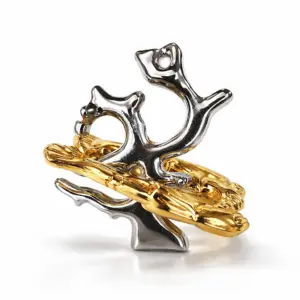
Quick Answer: Antique Bronze Keyring Puzzle Gift for Adults: How to Choose
Choose a cast-bronze keyring puzzle when the recipient values a tactile, desk-worthy object with a real mechanism and lasting patina; pick a plated-zinc alternative only when budget matters more than weight in hand. Four checks decide between the two — material authenticity, puzzle type, mechanism integrity, and gift-recipient fit.
| Check | What to look for | What to verify before you buy |
|---|---|---|
| Material authenticity | Cast bronze, brass alloy, or bronze-plated base metal | Ask the seller for the exact alloy and weight in grams |
| Puzzle type | Disentanglement, sequential, hinged, or combination-lock | Confirm the parts actually move and require manipulation |
| Mechanism integrity | Smooth action, no forcing, satisfying click at solution | Watch a working video or test the move range yourself |
| Gift-recipient fit | Match mechanism complexity to solver experience | Decide between pocket carry, desk display, or both |
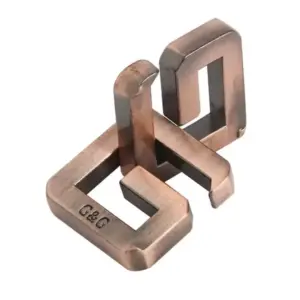
The Antique Bronze Metal Keyring Puzzle is the strongest starting point for most adult gift situations — cast-metal construction, a real disentanglement mechanism rather than a decorative charm, and a desk-object weight that signals quality at first touch.
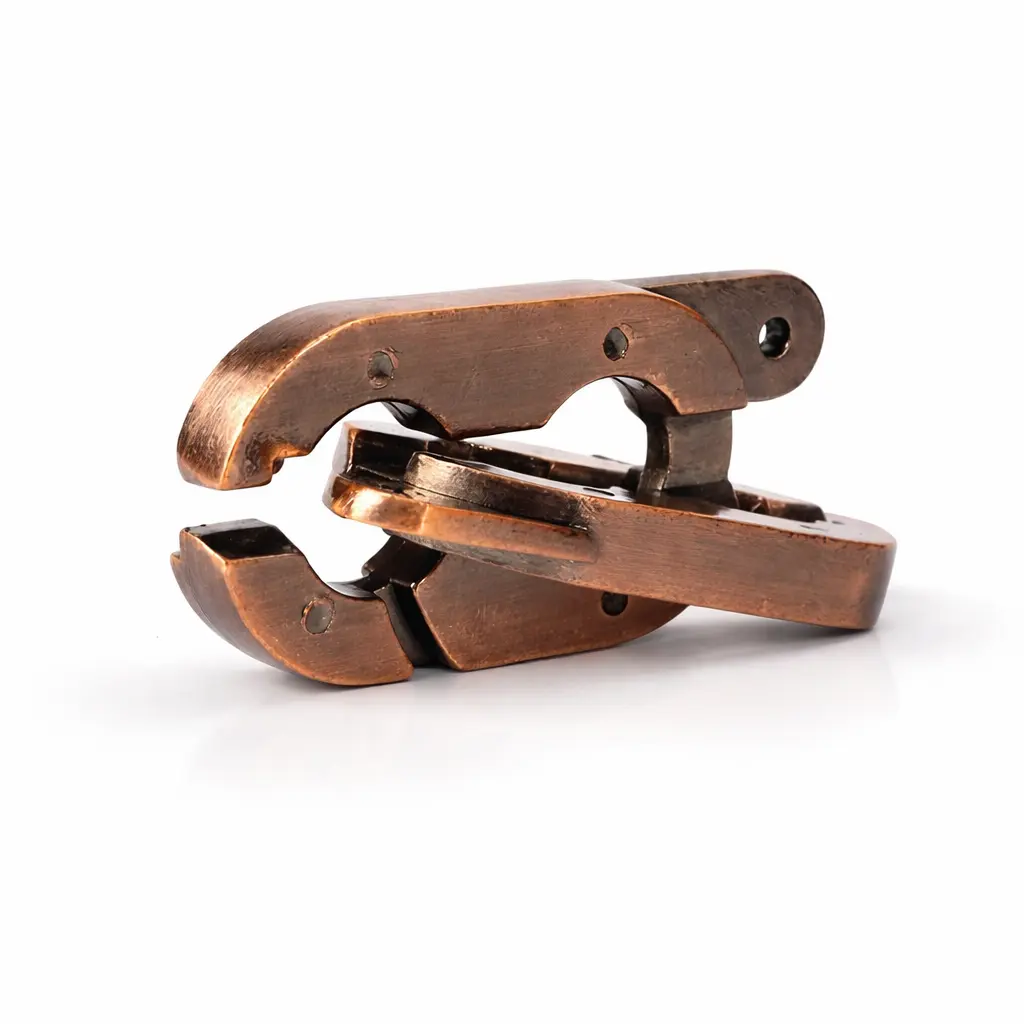
If the recipient solves the bronze keyring quickly and wants a follow-up, the Brass Cube Maze Puzzle Keychain or the Cast Hook Metal Brain Teaser offer different mechanisms in the same pocket-friendly format — both cast-metal, both from the same Tea Sip range, both designed to sit beside the keyring on a desk.
Run the four checks before you commit — and ask the seller what alloy it is. For a broader view of how the bronze keyring puzzle sits inside the wider adult metal-puzzle category, see the six types of metal puzzles for adults and what to buy first.
01. What Actually Counts as a Bronze Keyring Puzzle
Before the four checks make sense, the object needs a working definition. A bronze keyring puzzle is a handheld object that passes two tests: it carries an antique-bronze finish, and it contains a manipulable mechanism that requires ingenuity to solve. A solid casting with no moving parts is a charm or historical replica, not a puzzle — regardless of how convincing the patina looks. The mechanical-puzzle category includes any physical object solved through manipulation of its parts.
That baseline matters because the market is full of look-alikes wearing the word “puzzle” loosely. Many bronze or copper keyring listings on handmade marketplaces are decorative objects — crescents, amulets, Roman-replica key rings — that carry genuine weight and an attractive aged finish but offer no mechanism to manipulate. The buyer who treats these as puzzles will be disappointed on opening day; the buyer who treats them as jewelry will be perfectly happy. The confusion starts when a listing uses “puzzle” in a cultural or spiritual sense, or when a product photo shows a shape that implies interlocking parts while the casting is actually one solid piece.
The ten-second check is mechanical, not aesthetic. Hold the object — or look closely at the listing photos — and ask: do any parts move against each other? Are there visible joints, hinges, sliding channels, threaded sections, or interlocking rings? Can the shape be taken apart, rearranged, or solved into a new configuration? A genuine bronze keyring puzzle will have at least one axis of motion, one removable element, or one geometric relationship between parts that requires the solver to think before the hands cooperate. The Antique Bronze Metal Keyring Puzzle, for instance, separates and reassembles through a mechanism the hand learns within a few attempts — the satisfaction comes from the satisfying click when the parts seat correctly into their solved state, not from staring at a fixed silhouette. The weight in hand is a separate signal we’ll cover in the material section; for now, the question is whether anything moves at all.
This is where the contrast with competitor listings becomes genuinely useful for a buyer. One widely sold copper-and-bronze crescent-moon charm is marketed as a unisex protection talisman — handmade, attractive, and entirely static; nothing on the product page describes a mechanism, and the object itself is a single piece of metal. A second listing, framed as an Ancient Roman key-ring replica, is sold as solid-bronze historical jewelry, again with no puzzle function described. Both are legitimate products in their own categories and make fine gifts for the right recipient. Neither qualifies as a mechanical puzzle. The buyer who wants a gift that engages the hands and the mind needs to look past the patina and verify the mechanism before the alloy question even comes up.
The disentanglement family of keyring puzzles, by contrast, lives or dies on its moving parts — two interlocking castings must be separated and rejoined through a specific sequence of rotations. The mechanism is the product. The bronze tone and the pocket-friendly size are how it gets carried, set on a desk as a desk object, or used during a long meeting. That inversion — mechanism first, material second — is the framework this whole guide applies, and it is the single biggest differentiator between a real bronze keyring puzzle and a decorative bronze keyring.
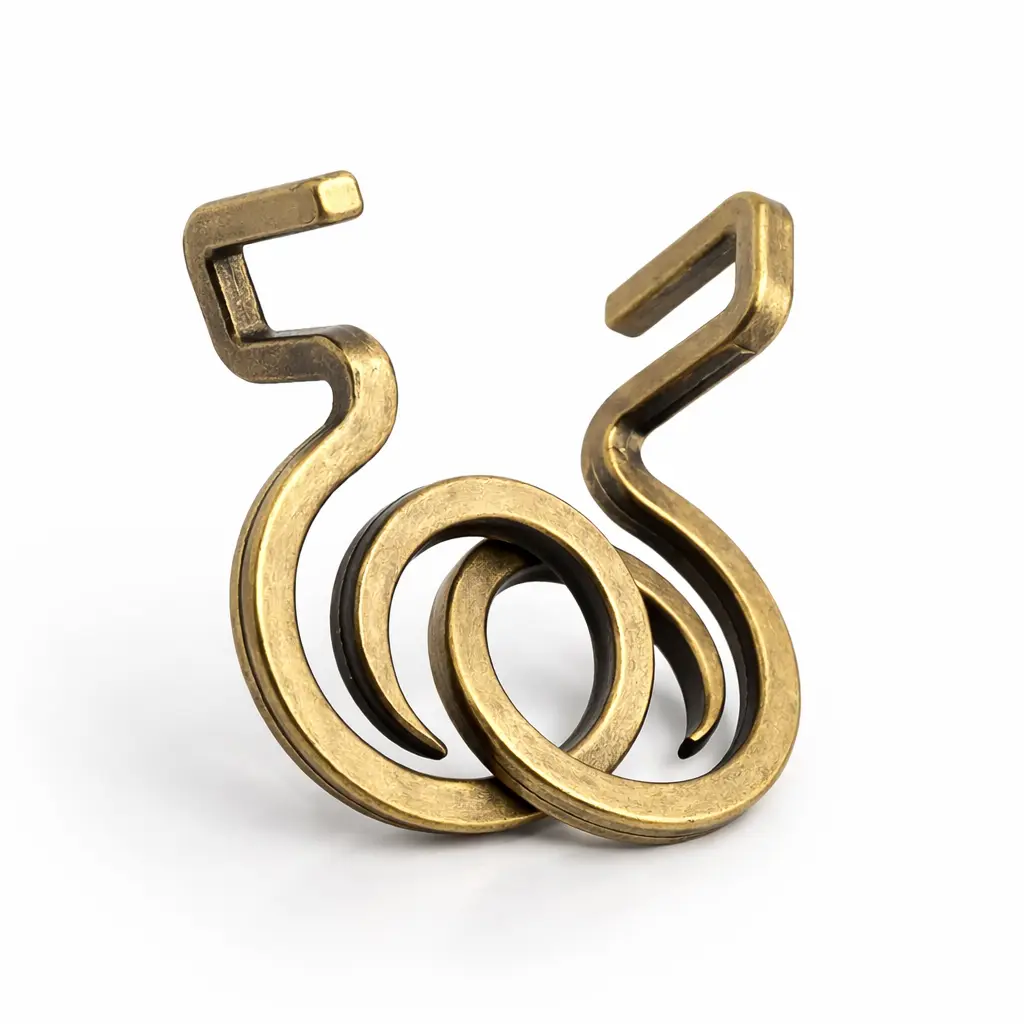
A quick readiness checklist before continuing: does the listing name a mechanism type (disentanglement, sequential, hinged, combination-lock)? Does at least one product photo show parts separated, sliding, or in mid-rotation? Does the seller specify an alloy — cast bronze, brass alloy, bronze-plated steel — rather than the catch-all phrase “antique bronze finish”? If the answer to all three is yes, the object is almost certainly a puzzle. If the answer to any one is no, the object is probably a charm wearing puzzle clothing.
If nothing moves, it is not a puzzle.
02. The Four Mechanical Puzzle Types Sold in Keyring Form
Choose a disentanglement puzzle when the recipient wants a repeatable, one-handed hand challenge; choose a combination-lock keyring when satisfaction comes from lining up tiny symbols. Sequential-move and hinged-clasp keyrings sit between those extremes, rewarding patience over dexterity — and the type you pick changes how the puzzle feels in the hand far more than the material does.
Once an object has been confirmed to actually move, the next decision is what kind of movement it offers. Keyring puzzles fall into four mechanical families, and each produces a distinctly different solving experience — the moment of separation in one, the procedural build in the second, the crisp snap of a third, the alignment of a tiny dial in the fourth. Knowing these four feels is the fastest way to match a gift to a person before weight, finish, or alloy ever comes into the conversation.
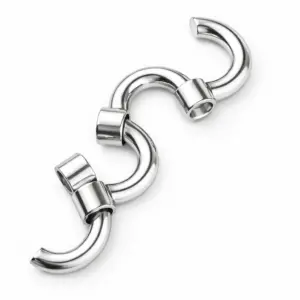
Disentanglement puzzles are defined by a single goal: separate two or more parts without forcing. A textbook example is the Cast Hook Metal Brain Teaser, where a metal ring is trapped on a curved bar and slides free only when held at one specific angle. In the hand, solving a disentanglement feels like fishing a thread off a button — small wrist rotations, a sense that the answer is geometric, then a sudden give when the parts release. The same family includes coil-based designs like the Cast Coil Pocket Puzzle, where metal must travel along a hidden path before the two halves come apart.
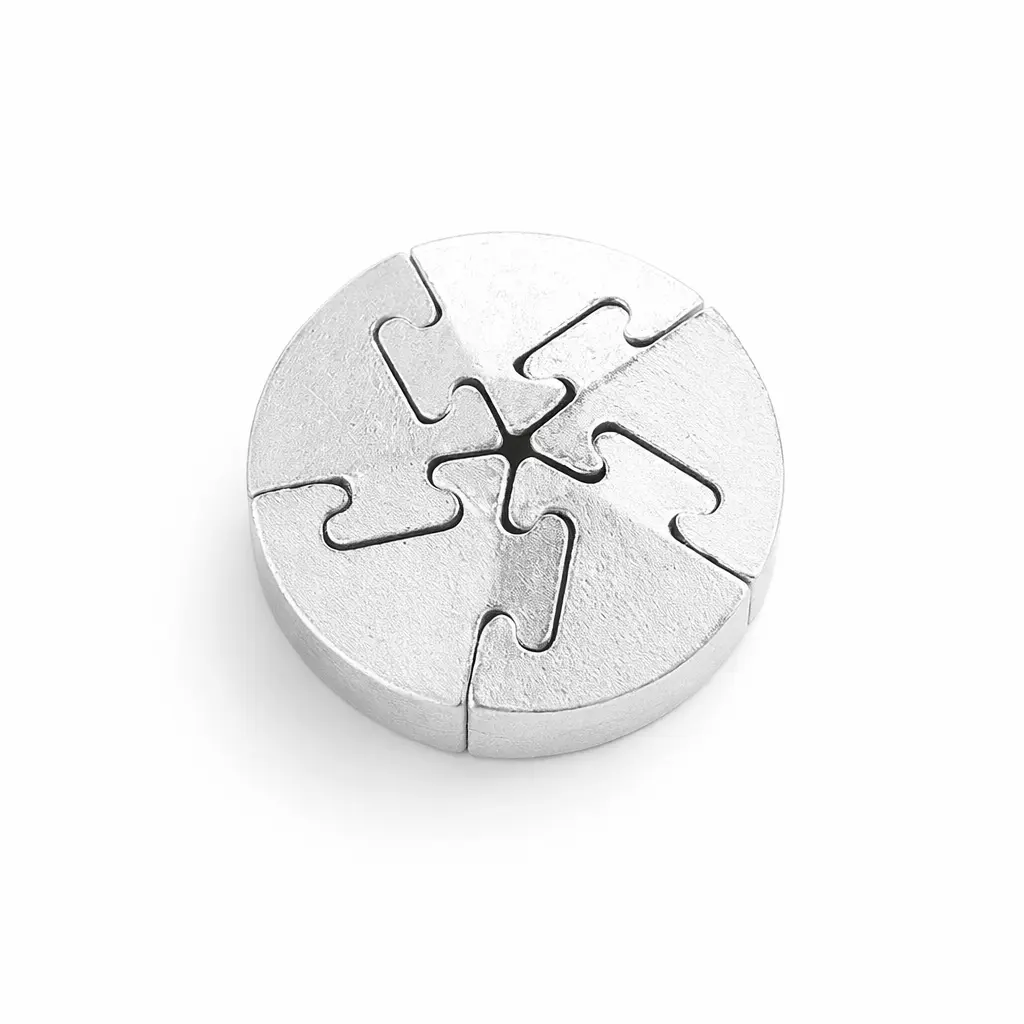
Sequential-move puzzles demand a series of manipulations in the correct order — one move unlocks the next, and skipping a step stalls the solution. The 5 Piece Cast Spiral Metal Puzzle is a clear representative: five cast rings that must be threaded and rotated in sequence to assemble or take apart the spiral. Physically, a sequential puzzle feels procedural — you can almost count the steps, and the rewarding moment is less a single “aha” than a series of small correct placements that end with a finished form resting in the palm.
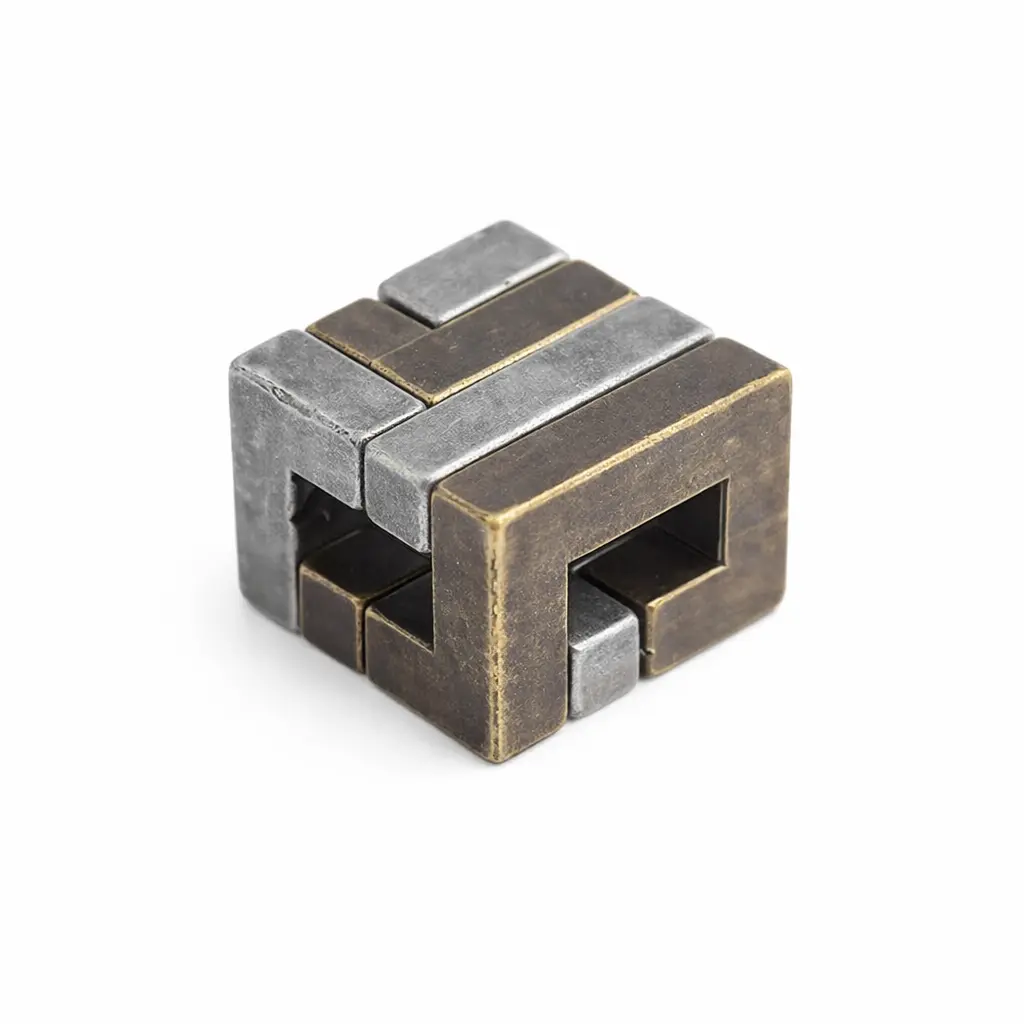
Cast Coil Pocket Puzzle — $18.99
Hinged-clasp keyrings mimic a miniature mechanism — a door, a latch, a small box — that opens only when a specific pin, tab, or pivot is engaged. The feel is closer to operating a tiny safe than to solving a riddle: a tactile hunt for the hidden release, then a crisp snap as the clasp gives. These read as desk objects more than fidget toys, which makes them well suited to a recipient who likes to leave a puzzle on display once it has been solved rather than carry it loose in a pocket.
Combination-lock keyrings carry rotating dials, sliding tumblers, or lettered wheels that must be aligned before the shackle or body releases. Solving one feels precise and slow — the thumb turning a tiny wheel a fraction at a time, eyes narrowing at the symbols — and the payoff is the small but unmistakable click of a correctly aligned mechanism. The antique-bronze keyring format is especially well suited to this style, because the dial can be cast into the body of the object and still read as a single ornamental piece rather than a gadget.
A practical rule to carry into the next section: the puzzle type, not the patina, decides how the recipient experiences the gift. Match the feel you want to the type you buy.
03. Bronze, Brass, or Plated: How to Read the Material
The next decision sits one layer below the puzzle type: what the listing actually means by “antique bronze.” Once the mechanism is chosen, the metal determines the weight, the patina behavior, and whether the object will look the same in five years or quietly shift in tone. A disentanglement or combination-lock keyring that reads as cast bronze in the hand delivers a fundamentally different gift than the same mechanism finished in plated zinc — and only one of the two will earn a place on a desk rather than a drawer.
On a marketplace listing, “antique bronze” can refer to four genuinely different materials, and only one of them is true cast bronze. The other three are patinated brass, plated steel or zinc, and zinc alloy with a bronze finish. Each behaves differently in the hand, ages differently on a desk, and signals a different price tier to the recipient.
Cast bronze is a copper-tin alloy poured into a mould, then finished by hand or machined to clean the edges. It is heavy for its size — a keyring-format puzzle should sit in the palm with a definite, grounding weight — and it is non-magnetic, so a small fridge magnet placed against the body will slide off cleanly. True cast bronze develops a patina over months of skin contact and pocket carry: the high points lighten slightly, the recesses darken, and the overall tone deepens rather than flaking or wearing off. The Antique Bronze Metal Keyring Puzzle, in the format this guide treats as the reference object, sits squarely in this category — and the reason the descriptor “antique” applies without quotation marks is because the colour is the metal, not a finish laid on top of it.
Bronze-plated steel or zinc starts as a base metal — steel for strength, zinc for cast detail — electroplated or chemically finished with a thin bronze-coloured coating. The result looks similar to cast bronze in a product photo but is markedly lighter in the hand, and the plating tends to wear at the raised edges first: the corners of a cube, the tip of a hook, the rim of a dial. Once the plating wears through, the base metal shows in a different colour, and the object stops reading as bronze altogether.
Patinated brass is a copper-zinc alloy that has been chemically darkened to imitate age. It carries a warm, slightly yellower undertone than cast bronze — visible if the finish is scratched at a hidden spot — and has a satisfying weight in hand, though usually a touch lighter than true bronze. Patinated brass is a legitimate and widely used material in mechanical puzzle craft; the giveaway is the warm undertone and the fact that the colour is part of the metal rather than sitting on top of it.
Zinc alloy with a bronze finish is the lightest of the four and the most common in budget listings. It does not develop a patina, the colour does not deepen, and the surface can pit or dull over time rather than age gracefully. For a recipient who values the desk-object feel and the weight in hand, zinc alloy is the material most likely to disappoint.
The practical check before buying is direct. Ask the seller two questions: what alloy is the body, and what is the weight in grams. A genuine cast-bronze keyring puzzle will list a specific alloy and a weight that feels substantial for its size. If the listing says only “antique bronze finish” or “bronze-tone,” the colour is almost certainly on the metal rather than in it.
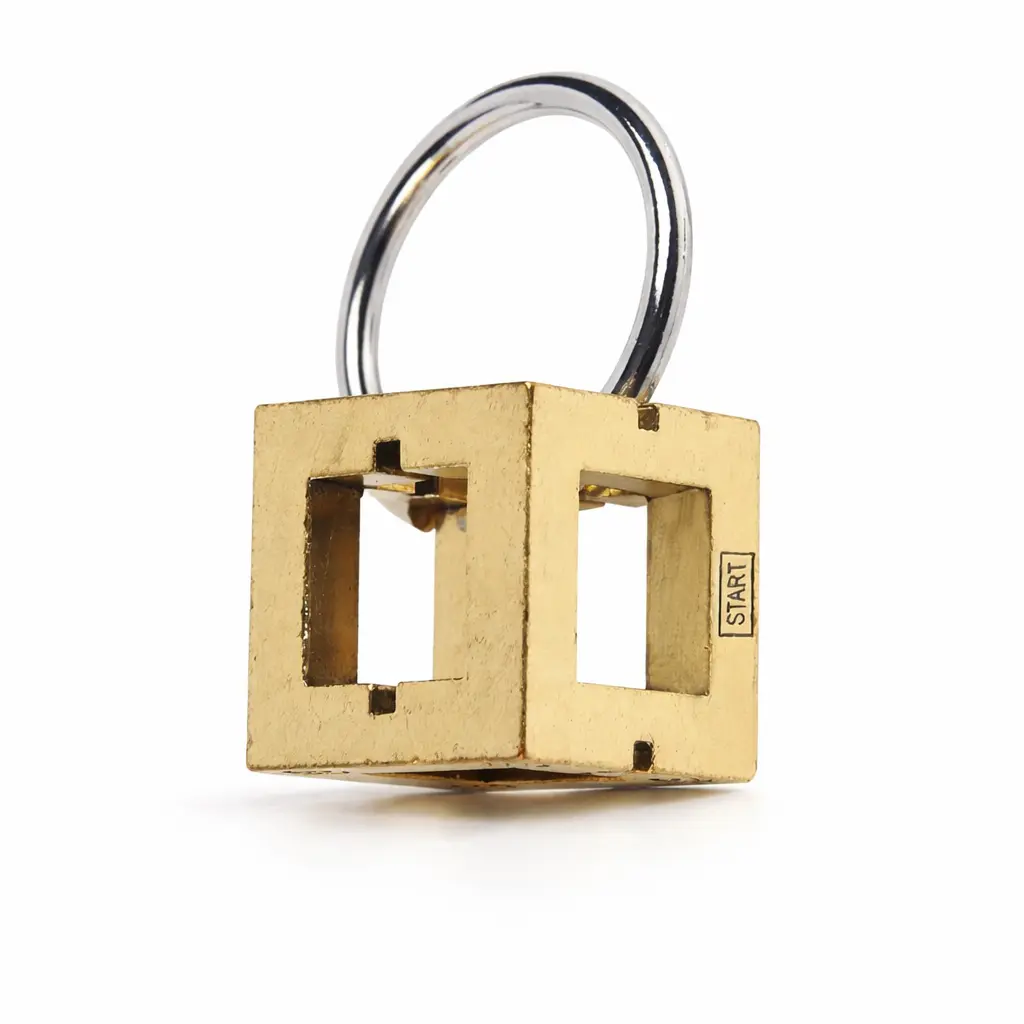
A keyring-format puzzle that sits in the brass family and carries the weight buyers expect from a desk object is the Brass Cube Maze Puzzle Keychain — a concrete example of how the brass category reads in a real product listing.
A magnet test and a weight check together catch most mislabeling: cast bronze and brass are both non-magnetic, plated steel will pull the magnet, and plated zinc sits in between depending on the base. The product page should confirm the alloy and list a weight in grams that matches the size of the object shown in the photo. For a deeper read on how antique-finish metal puzzles are described and grouped across the category, a guide to antique style metal brain teasers walks through the same material territory in more detail.
Ask the seller what alloy it is.
04. Matching the Puzzle to the Recipient’s Personality
Once the material question is settled, the next filter is temperament. Match the recipient’s tolerance for repetition and patience to the puzzle type — not the finish, not the photo on the listing. A bronze-toned keyring that looks like a serious desk object can still disappoint if the mechanism inside is too trivial for the person holding it, or too punishing for a casual carry.
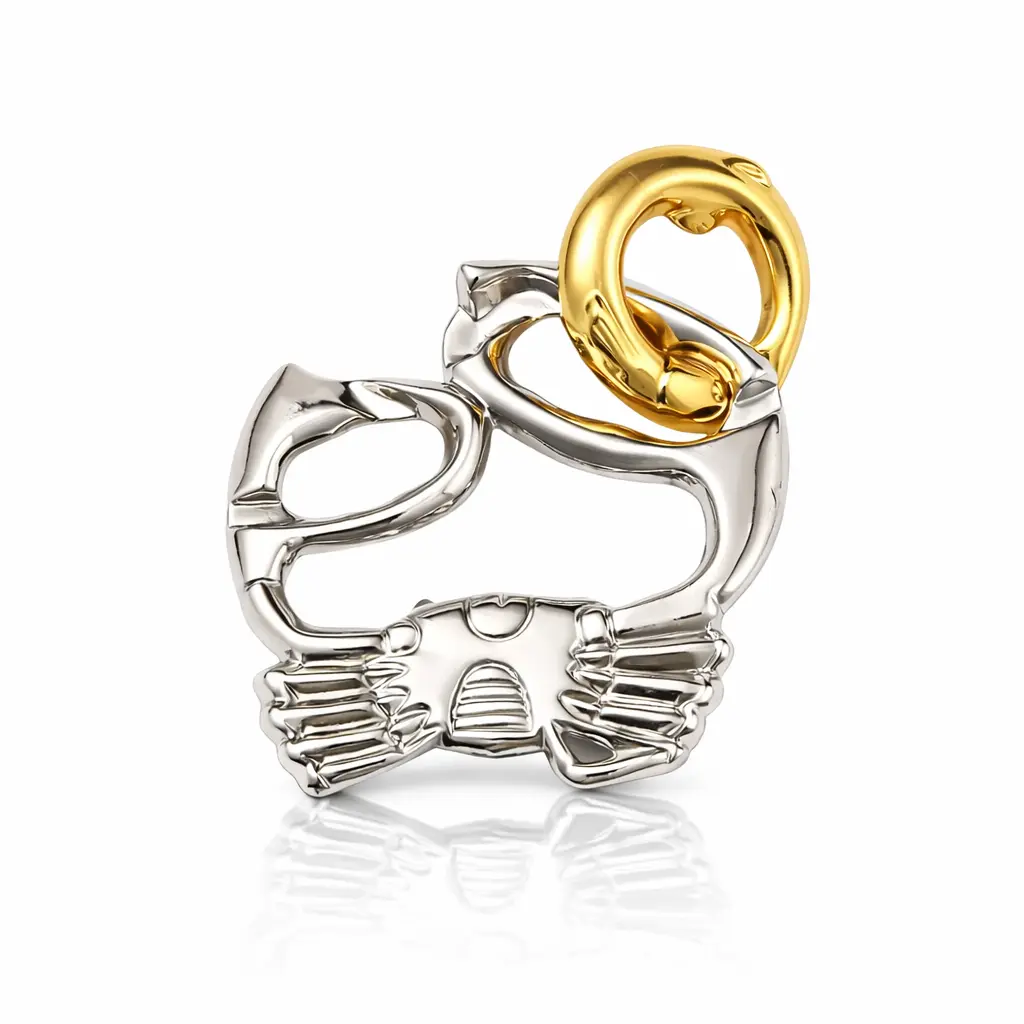
The engineer wants a mechanism that rewards repeated solving. Disentanglement puzzles — where two or more parts must be separated and rejoined without forcing — fit this profile because the satisfaction of the satisfying click when the pieces release is the entire point, and the puzzle can be reset by hand in seconds. The Metal Crab Puzzle Cast Brain Teaser with Gold Ring, for example, uses interlocking metal segments around a gold ring that must be worked free — a repeatable challenge for someone who keeps puzzle pieces in a desk drawer and works through them methodically.
The history lover cares about the patina and the lineage. A patinated brass or cast-bronze keyring with a visible mechanism — Roman-replica key forms, for instance — gives them a tactile artifact with a real puzzle to solve rather than a charm to hang. Weight in hand matters more here than difficulty, because the object will be examined and held, not raced through.
The fidgeter needs something solved in seconds and reset in seconds. A hinged clasp, a short sequential move, or a one-piece disentanglement works because the appeal is the repetitive motion itself — the same way fidget toys provide tactile stimulation between tasks. If the puzzle takes ten minutes to solve, the fidgeter will solve it once and lose interest; if it takes ten seconds and resets cleanly, it earns a permanent pocket position.
The desk collector wants something that looks like a small sculpture and opens. Combination-lock and hinged-box style keyring puzzles serve this profile because the display value — the patina, the cast detail, the weight — is at least as important as the solve. Verify the piece sits stably on a flat surface before buying, because a keyring built to dangle won’t behave well on a shelf.
Mismatch warnings: do not buy a long-solve disentanglement for the fidgeter, or a hinged clasp for the engineer. Do not buy a plated-zinc piece for the history lover, since the patina will not deepen over time the way real bronze does. Ask the recipient — or yourself — how the object will actually be used on a Tuesday afternoon, not how it will look in a gift box.
Buy the type that matches how they will use it, not the one that looks best in the listing photo.
05. What to Verify Before You Buy
A bronze keyring puzzle is worth buying only when the listing or seller can answer four specific questions — about alloy, mechanism, weight in hand, and finish. If any answer is vague, the same wording almost certainly describes both a real cast-bronze mechanical puzzle and a plated-zinc charm that looks identical in the listing photo. Match the purchase to how the recipient will actually use it on a Tuesday afternoon, not to how the piece photographs in a gift box.
Start with the material, because everything else depends on it. The phrase “antique bronze” on a marketplace can mean cast bronze, bronze-plated steel, patinated brass, or zinc alloy with a bronze-colored finish. The first three deepen in patina over years of pocket carry; the last one flakes, lightens at the edges, and feels light in the hand. Ask the seller what the alloy is — a real answer is “cast bronze,” “brass alloy,” or “stainless with bronze plating.” A vague answer of “metal alloy” or “antique-style alloy” is a signal to keep looking.
Then verify the mechanism. The listing should name one of the four puzzle families covered earlier and describe what the solver actually does — separate two interlocking pieces, rotate a sequence, lift a hinged clasp, or turn a combination dial. Vague phrases like “brain teaser” or “fun challenge” without a solve description are a red flag that the piece is decorative, not a real mechanical puzzle. A genuine keyring puzzle such as the Antique Bronze Metal Keyring Puzzle sits in the Metal Puzzles > Puzzle Toys category, which signals that the seller treats it as a puzzle first and an accessory second.
Weight in hand is the single fastest material check at home. Cast bronze has a dense, cool feel and a satisfying click when the parts engage; plated zinc feels lighter and the sound is thinner. If the seller gives a weight in grams, compare it against a known object — a US quarter weighs roughly 5.7 g, so a keyring puzzle noticeably heavier than two stacked quarters is likely a real metal cast. If no weight is listed, request one before paying.
Finish is the last and most visible check. Natural patina is uneven, darker in the recesses, lighter on the raised edges, and never glossy. Painted or lacquered “antique bronze” finishes are uniform, slightly shiny, and will wear at the corners within weeks of pocket carry. Accept a finish the seller describes as cast and patinated; reject a finish described as coated, painted, or plated when the price is high.
| Check | What to Ask | What to Accept | What to Reject |
|---|---|---|---|
| Material (alloy) | What metal is this made from? | Cast bronze, brass alloy, or stainless steel with bronze plating | “Metal alloy,” “antique-style alloy,” or no answer |
| Mechanism (type + solve) | What puzzle family is this, and how is it solved? | A named family — disentanglement, sequential, hinged/clasp, combination — with a one-line solve description | “Brain teaser,” “challenge,” or any wording that does not name the mechanism |
| Weight in hand | How many grams does it weigh? | What to check: a number the seller can repeat; cast bronze keyring puzzles sit dense for their size | “Lightweight” with no number, or refusal to weigh the piece |
| Finish (patina) | Is the patina natural or applied? | A natural or accelerated patina on cast metal | A painted, lacquered, or coated “antique” finish paired with a solid-bronze price |
For a broader take on which retailers carry cast-metal puzzles worth trusting, where to buy cast metal puzzles from trusted US retailers walks through the sourcing side of the category.
Email the seller four questions before you pay — what alloy, what mechanism, what weight in grams, and whether the finish is natural. A serious seller answers in under a day; a vague response means the listing is built around the photo, not the piece.
Frequently Asked Questions
The four-question seller check covers the technical side, but the same buyer questions come up on every bronze keyring puzzle order regardless of mechanism. The answers below treat each question as a decision point — so you can move from consideration to purchase with the right facts in hand.
Is a bronze keyring puzzle a real puzzle or just decorative?
It depends on whether the listing names a mechanism. A genuine keyring puzzle belongs to a named family — disentanglement, sequential, hinged/clasp, or combination — with a solve path the seller can describe. The Antique Bronze Metal Keyring Puzzle is described as a mechanical puzzle, placing it in the functional category. A decorative charm uses vague terms like “brain teaser” without naming how it works.
Are these puzzles hard enough to be interesting for adults?
The mechanism type, not the price, determines engagement. Disentanglement puzzles reward patience — adults who enjoy slow logic find them satisfying. Sequential puzzles with multiple steps run longer, and a cast-bronze version adds weight-in-hand interest. Ask the seller for an expected solve range if the listing does not mention one.
Can I use it as a regular keyring after solving it?
Yes — once solved, the parts return to a closed or interlinked state that loops onto a key ring. A cast-bronze keyring puzzle is heavier than a standard split-ring keychain, so expect a noticeable pull in a trouser pocket.
Who should skip this gift?
Anyone who wants a purely symbolic charm, does not enjoy tactile problem-solving, or would not appreciate a desk object with visible function. If the recipient prefers plain stamped jewelry, this is not the right fit.
Is it a good gift for someone who likes antiques or history?
The antique-bronze patina is the main draw. Pair the finish with a real mechanism and the object reads as a functional artifact rather than a replica trinket.
Ready to choose? The Antique Bronze Metal Keyring Puzzle is a cast-bronze mechanical keyring in the Tea Sip range — check the product page for the current price and mechanism description.
Where to Start
If the recipient and occasion checks above match, start with Antique Bronze Metal Keyring Puzzle. Check the current product page for the specifications that matter to your choice.
Sources and verification
- Product details and current specifications: Tea-Sip product page
Last updated: August 28, 2026