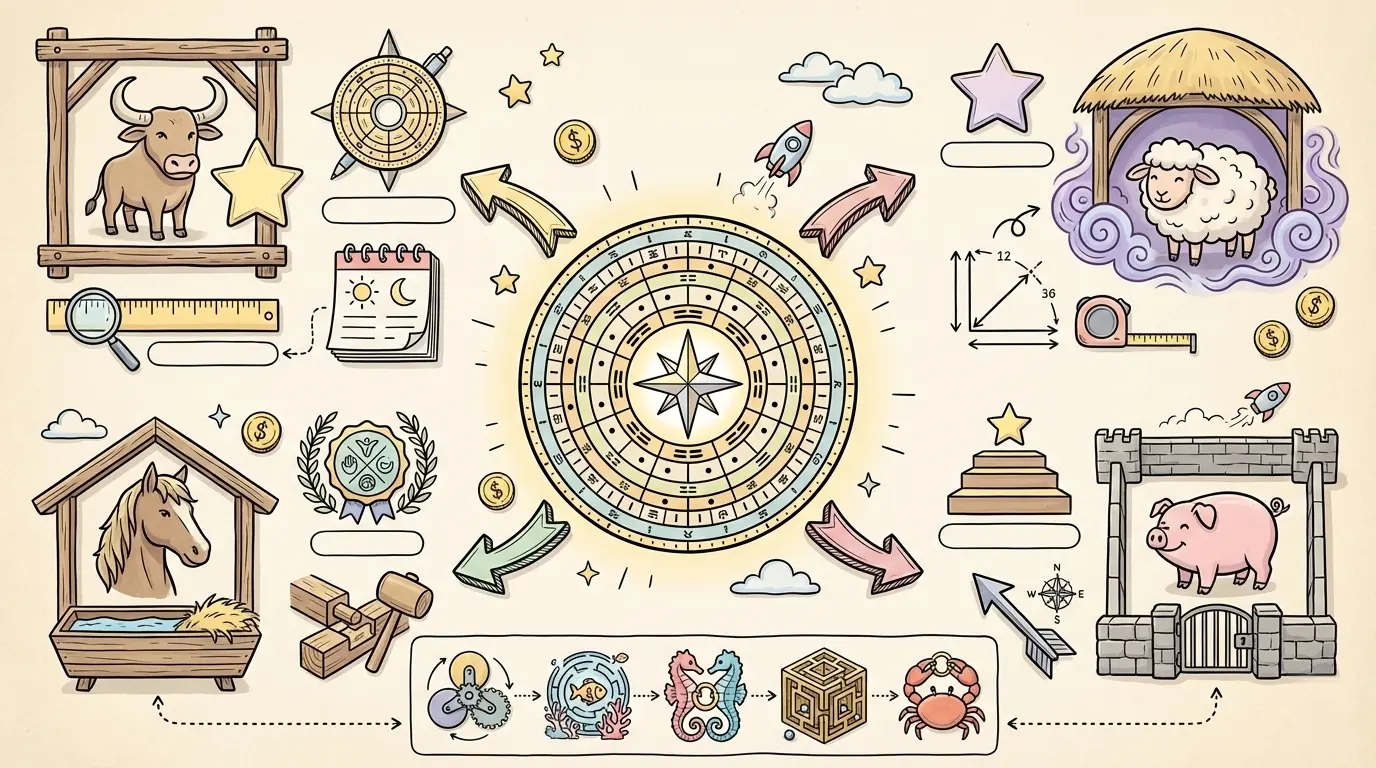
A carpenter walks onto a building site. He is not building a house. He is building a cattle pen. And the first thing he does is pull out a compass.
Not a rough directional check. A full luopan reading—the same geomantic compass used for siting palaces and ancestral halls. He calculates from the center of the owner’s main house, traces a line outward, and locates a specific star position in the compass grid. Only when the pen sits on that star does he drive the first post.
This is not a general principle. It is a recorded procedure for a cow barn.
Among the least-studied chapters of the traditional Chinese building canon are those devoted to livestock architecture—detailed specifications for cattle pens, sheep shelters, horse troughs, and pig enclosures. These chapters appear alongside instructions for temples, bridges, and observation platforms, given equal weight and equal precision. The old builders did not distinguish between important buildings and unimportant ones. They distinguished between careful work and careless work.
What makes these sections remarkable is not just the technical detail. It is the insistence that each animal required its own compass star, its own dimensional logic, its own construction calendar, and—strangest of all—its own mythological identity. The cattle pen was not a simplified version of the horse stable. It was an entirely different design problem, governed by different celestial rules.
For anyone who has tried to understand why certain mechanical puzzle collections feel more coherent than random assortments, this ancient approach offers a useful parallel. The builders were not applying a single template to every structure. They were reading the specific requirements of each inhabitant and building outward from there.
The Ox Who Was a Bodhisattva
The cattle pen specifications begin with a sentence that no modern building code would contain: the ox, records state, was originally surnamed Li and was in fact a Great Power Bodhisattva—a Buddhist guardian figure who chose to serve in animal form so that mortal human strength, which was not sufficient for agricultural labor, could be supplemented.
Read literally, this is mythology. Read as a design philosophy, it is something else entirely. The builders who followed these records were being told, before they cut a single piece of timber, that the animal they were housing was not property. It was a being that had voluntarily descended from a higher station to serve. The quality of its shelter was therefore not a matter of convenience but of obligation.
This framing had practical consequences. The cattle pen required a master craftsman—not an apprentice, not a general laborer. The text specifies that the builder must first “employ techniques skillfully” and consult with the owner’s household before beginning. Timing mattered: a twelve-month calendar of auspicious days governed when construction could start, with each month assigned specific heavenly stem and earthly branch combinations. January required a Bing-Yin day. July demanded a Geng-Wu day. Building on the wrong date did not merely invite bad luck—it risked the health and productivity of the animals housed within.
The physical specifications were equally particular. Posts stood six chi tall—roughly two meters—using a single column per section. The text insists on eastern-facing spruce wood, and the columns had to be measured with exact proportions: the length-to-width ratio could not be guessed. Tolerances were expressed in cun and fen—units of roughly three centimeters and three millimeters respectively. For a barn.
The door opening was prescribed at one chi six cun, calculated to land on the “Six White” segment of the traditional builder’s ruler—a measurement associated with auspicious energy flow. The reasoning was part geomantic, part practical: a door too narrow would injure cattle entering and exiting. A door too wide would fail to retain warmth in winter. The mystical framework, once again, functioned as a constraint system that produced good design outcomes.
Anyone who has held a well-made metal puzzle and noticed how precisely the pieces must align to separate understands this principle intuitively. The tolerance is the design. If you want to experience what three-millimeter precision feels like in your hands, a cast metal brain teaser with interlocking rings is an honest place to start—the gap between “almost right” and “actually right” is exactly the gap those old builders were managing across an entire structure.
The Compass and the Qi Luo Star
The most technically demanding instruction in the cattle pen chapter is not about wood or dimensions. It is about navigation.
The text prescribes that before construction begins, the builder must stand at the center of the owner’s main house and take a full compass reading using a luopan—the traditional Chinese geomantic compass, divided into concentric rings representing celestial bodies, earthly directions, and temporal cycles. From that reading, the builder must locate a position called the Qi Luo Star—a specific point in the compass grid considered auspicious for livestock structures.
The cattle pen was to be built at whatever location the Qi Luo Star occupied relative to the house’s center. If the star fell to the northeast, the pen went northeast. If it fell south, the pen went south. The builder did not choose the location based on convenience, drainage, or proximity to feed storage. The star chose.
This sounds inflexible, but consider the system’s deeper logic. The luopan reading forced the builder to evaluate the entire property before placing any structure. It required understanding the relationships between buildings—how the main house, the pen, the water sources, and the access paths related to each other spatially. A builder who simply dropped a cattle pen wherever flat ground existed might create drainage conflicts, wind exposure problems, or circulation bottlenecks. The compass procedure, regardless of its metaphysical framing, produced site analysis.
The gate had to face a specific direction determined by the same reading. The pen’s depth, width, and column spacing followed from the gate orientation. Every decision cascaded from the initial compass point. There was no room for “we will figure it out as we go.”
This cascading logic—where one initial constraint determines the entire structure—is the same principle behind well-designed puzzle trick boxes. The first move dictates the second, which dictates the third. If the first move is wrong, no amount of cleverness downstream will salvage the outcome.
Interlocking Metal Disk Puzzle
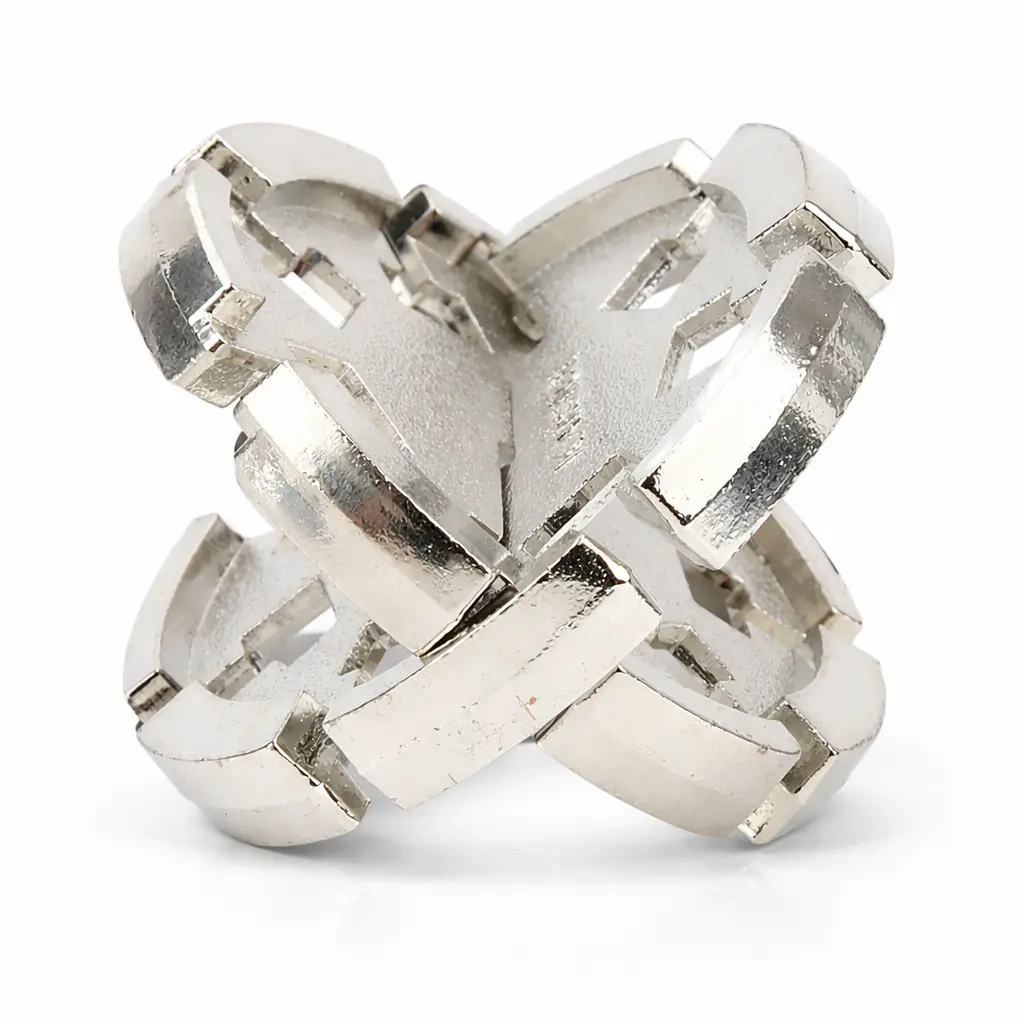
This is a puzzle about circular relationships. Two metal disks interlock through a shared axis, and the only way to separate them is to discover the single rotational path that both pieces can follow simultaneously. Force accomplishes nothing. Guessing accomplishes less. What works is reading the geometry from the center outward—exactly the way a builder reads a luopan from the house’s center to find the star.
The disk puzzle teaches a specific lesson that the old compass siting procedure also teaches: the answer is always already present in the structure. You do not add information to solve it. You learn to see the information that was always there.
- Two interlocking cast metal disks
- Single rotational solution path
- Medium difficulty, satisfying weight
View the Interlocking Metal Disk Puzzle →
Skip this if you prefer puzzles with multiple solution paths. This one has exactly one, and finding it requires patience with circular movement—no shortcuts.
The Cattle Pen Poem and the Bezoar Divination
Buried within the cattle pen chapter is a four-line poem—a verse meant to be memorized by builders as a compressed warning system. The poem describes the consequences of poor construction: a pen built with the wrong orientation will produce cattle that resist the nose ring, refuse the plow, and bring the owner to ruin.
This is not generic cautionary language. The poem names specific failures: the ox will be impossible to lead—literally “the nose cannot be pierced,” meaning the animal will resist the ring used for guiding—the fields will go fallow, and grain harvests will fail. The builders understood that a stressed, poorly housed animal was an unproductive animal, and they encoded that understanding into verse so that even semi-literate carpenters could carry the knowledge.
More unusual still is the bezoar divination system—a method for predicting where an ox might develop a gallstone, a substance prized in traditional medicine. The system cross-references the animal’s position within a sixty-unit calendar cycle with compass directions, beginning at the Kun trigram position (southwest) and cycling through Zhen (east) and Xun (southeast) before returning. Depending on the calculation, the bezoar was predicted to form in a specific part of the animal’s body.
Whether or not this divination had medical validity, it reveals something important about the builders’ worldview: the animal inside the pen was not separate from the pen itself. The structure’s orientation, the timing of its construction, and the health of its inhabitant were treated as a single interconnected system. You could not build badly and expect the animal to thrive. The building was the first act of husbandry.
Modern puzzlers encounter a related insight when working with objects where the container and the contents are inseparable. The Gold Fish and Silver Coral Reef cast puzzle is a good example—a fish and its surrounding reef form one interlocked object. You cannot deal with one piece without understanding the other.
Gold Fish & Silver Coral Reef Cast Metal Puzzle
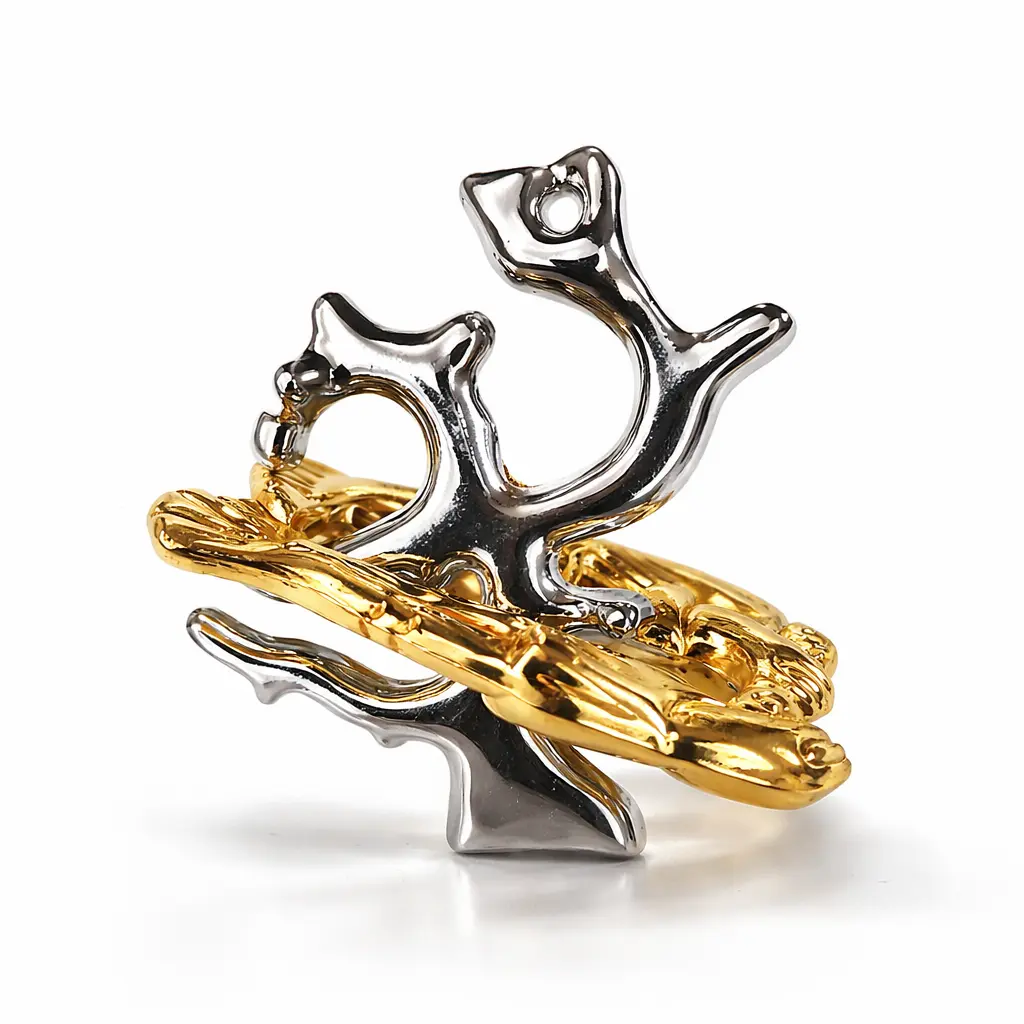
Here is a creature inside a structure, and neither part makes sense alone. The gold-toned fish is physically nested within the silver coral reef, and the puzzle’s challenge is figuring out how the two pieces separate. What makes it thematically apt is the relationship: the reef is not merely a container. It is shaped around the fish, designed to hold precisely this inhabitant and no other.
The quality of the casting is evident in hand—the coral branches have visible texture, and the fish has enough heft to feel like a real object rather than a novelty. The separation mechanism rewards attention to the specific contours of the pieces rather than brute-force pulling.
- Two-piece cast metal design (gold fish + silver reef)
- Textured surfaces with visible detail
- Medium difficulty, compact size
View the Gold Fish & Silver Coral Reef Cast Puzzle →
Not ideal for someone who wants a quick solve. The mechanism is subtle, and people who default to force will struggle. That is, arguably, the point.
The Sheep Shelter and the Purple Qi
The sheep pen specifications introduce a different mythological framework. Sheep, records state, were originally surnamed Zhu—a family name associated with a different celestial lineage than the ox’s Buddhist identity. Where the cattle pen honored a Bodhisattva, the sheep shelter served a creature with its own distinct origin and temperament.
The dimensional requirements reflected this difference. The sheep pen measured six chi six cun in height and depth—slightly different proportions than the cattle pen—with a width of four chi. Column posts were specified at two cun three fen in diameter, a remarkably precise callout for a livestock structure. The columns could be either square or round in cross-section, but the measurements had to match exactly.
The most distinctive instruction concerns placement: the sheep shelter was to be positioned where “Purple Qi” was determined to reside—an auspicious energy associated with imperial authority and celestial favor. Purple Qi was identified through a compass reading distinct from the Qi Luo Star used for cattle. The sheep required its own star, its own energy, its own logic.
The construction calendar was similarly independent. While cattle pen construction followed one set of monthly auspicious days, the sheep shelter used a partially overlapping but distinct calendar. Certain months shared auspicious dates. Others diverged completely. The system treated each animal species as a separate design client with separate requirements—not as variations on a generic livestock pen.
This principle—that similar-looking problems require different solutions—is one of the most useful things puzzle lock mechanisms teach. Two locks may look identical from the outside. The internal mechanism may be completely different. The solver who assumes “I already know how this works” is the solver who gets stuck.
Dual Seahorse Gold & Silver Brain Teaser
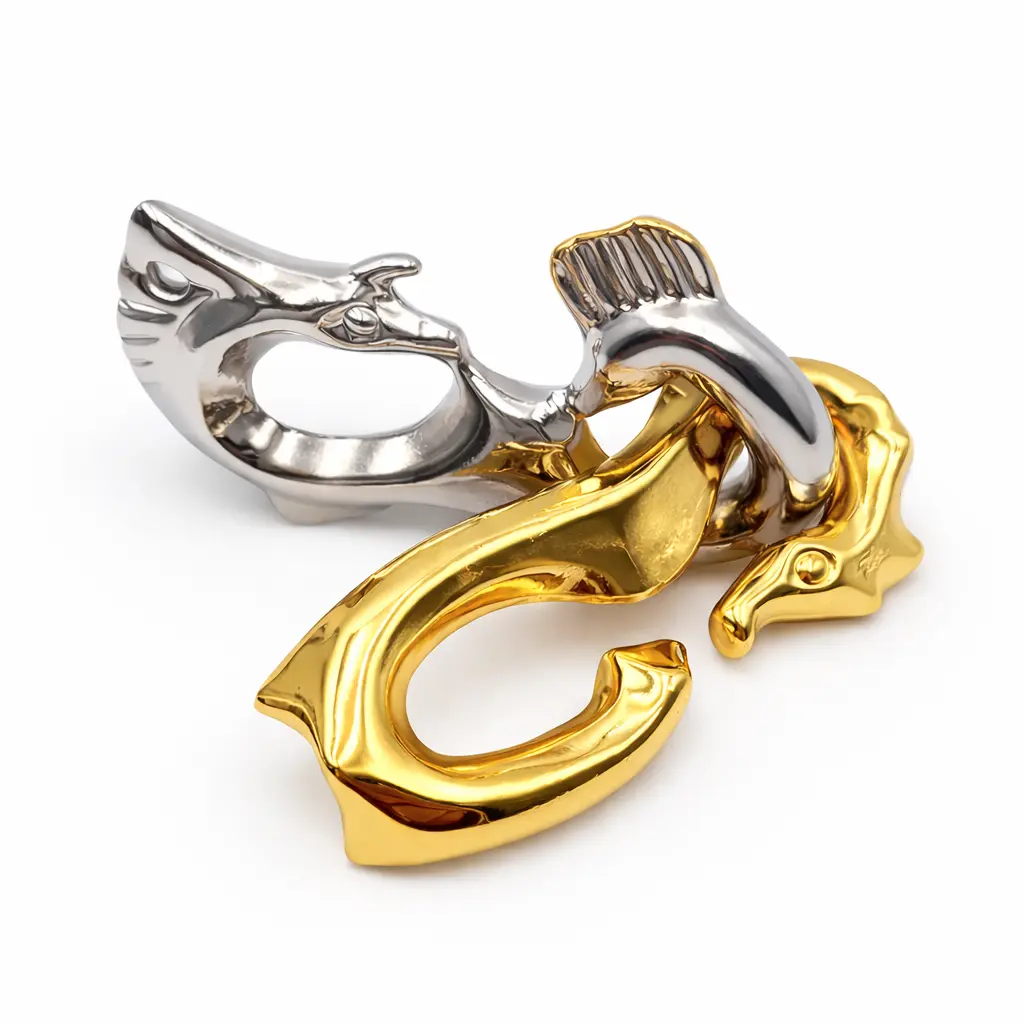
Two seahorses—one gold, one silver—intertwined in a single structure. The puzzle is figuring out how they come apart. The reason it belongs in this article is the paired-but-different logic: two creatures that look similar, occupy the same space, but require completely different handling to separate.
The seahorse pair teaches the same lesson the sheep-versus-cattle sections teach. Similarity of form does not mean similarity of solution. Each piece has its own pivot points, its own path, its own requirements. Treat them identically and you get nowhere.
- Gold and silver cast metal seahorses
- Two-piece interlocking design
- Requires understanding each piece’s individual movement path
View the Dual Seahorse Brain Teaser →
Skip this if you find animal-shaped puzzles too whimsical. The mechanism underneath the seahorse form is legitimate, but the aesthetic is definitely decorative rather than industrial.
The Horse Trough and the Virtue Star
The horse chapter shifts from enclosures to equipment. Rather than a full stable design, the text focuses on the manger—the trough from which the horse feeds—and the saddle rack used for storage. The logic is the same: compass siting, precise dimensions, species-specific requirements.
For the horse trough, the governing celestial body was the Virtue Star. The builder was instructed to use the luopan to find where the Virtue Star fell relative to the property’s center, and to build the trough at that position with the gate facing toward the star. The choice of a star named “Virtue” for the horse—an animal associated in Chinese culture with loyalty, endurance, and military service—was not accidental. The star’s name encoded the cultural values the structure was meant to support.
The trough itself required four square corner posts with six smaller round-tenoned pillars between them. The tenons were specified as small and round—distinct from the larger rectangular tenons used in cattle pen construction. The wood species, the post spacing, the height of the trough walls, and the drainage slope were all prescribed. Even the saddle rack received its own specifications: height, width, and orientation for the rack’s crossbeams, with notes on how to prevent moisture damage to leather.
The monthly calendar for horse structures used yet another set of auspicious dates, partially overlapping with but distinct from both the cattle and sheep calendars. Three different animals, three different star alignments, three different construction schedules—all from the same manual, all given equal architectural attention.
This level of differentiation is what separates a curated collection from a random assortment. The builders who followed these records understood that a horse trough built to cattle pen specifications would fail—not because it looked wrong, but because the proportions would not serve the animal’s feeding posture, the materials would not withstand the animal’s weight, and the orientation would not capture the right light and airflow. Readers who have explored how collectors and casual solvers approach wooden puzzles differently will recognize the same insight: identical objects serve different users in different ways, and good design accounts for that.
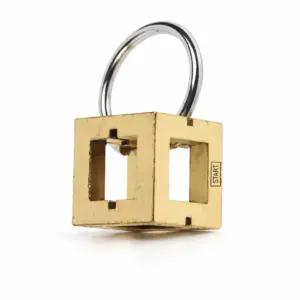
Brass Cube Maze Puzzle Keychain
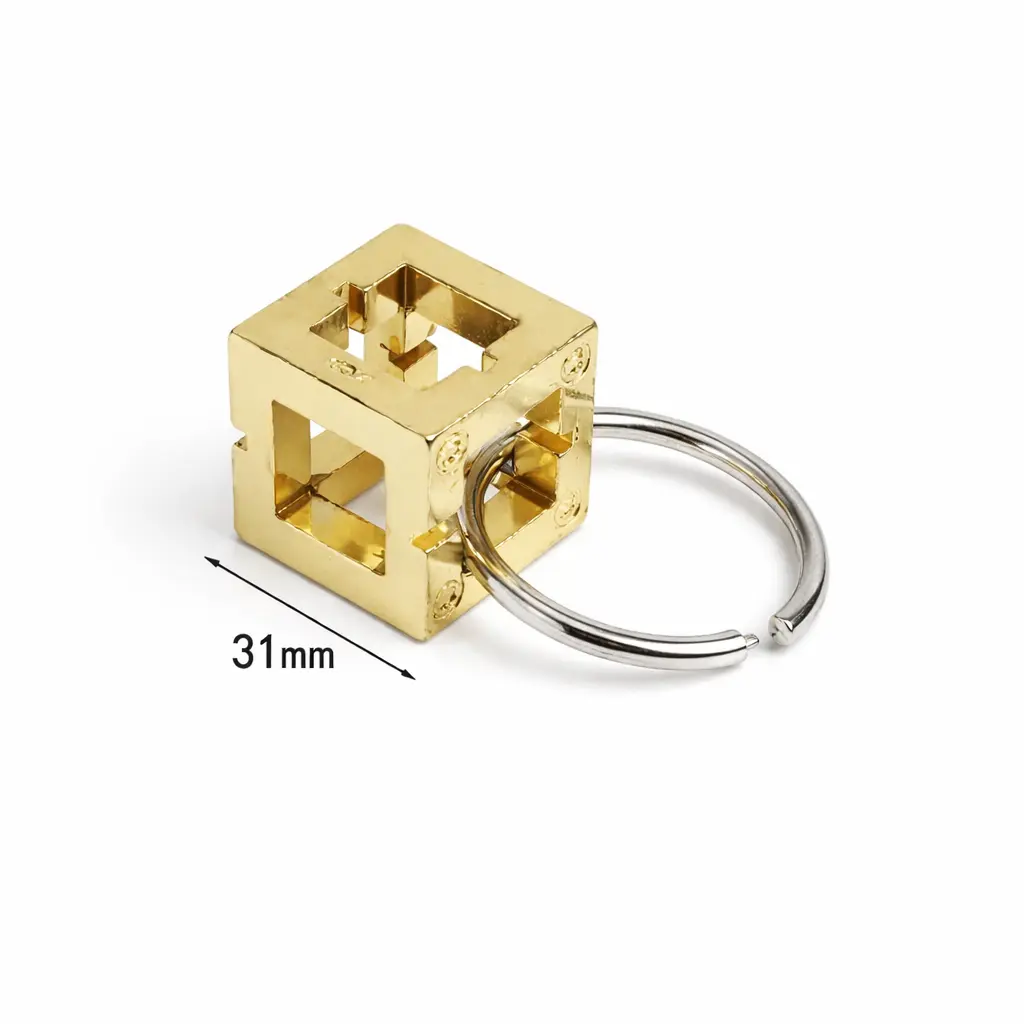
A 31-millimeter brass cube with an internal maze that you navigate by tilting and rotating. The connection to the horse trough chapter is the material and the method: brass, like the bronze fittings in traditional horse equipment, rewards precision handling. The maze inside the cube is invisible from outside—you solve by feel, by orientation, by learning which tilts produce movement and which produce dead ends.
The cube teaches directional thinking. The old builders used a compass to find the Virtue Star. You use the weight of a steel ball rolling inside a brass cube to find the exit. Both require mapping an invisible internal structure through careful attention to feedback.
- Solid brass construction, 31mm cube
- Internal ball maze, solved by tilting
- Pocket-sized, doubles as keychain
- Price: $14.99
View the Brass Cube Maze Puzzle Keychain →
Not for anyone who needs visual feedback. The maze is entirely internal, and solving it requires trusting your spatial sense over your eyes. Some people find that meditative. Others find it maddening.
The Pig Pen and the Three Terraces Star
The pig enclosure chapter completes the quartet with its own celestial alignment: the Three Terraces Star. This star grouping, associated in Chinese astronomy with governance and administrative order, governed the pig pen’s placement. The builder was instructed to find the Three Terraces Star’s position on the luopan and build the pen at that location, with the structure facing northwest toward the Gen trigram direction.
The northwest orientation was specific to pigs and not shared with any other animal structure in the manual. The text adds a blunt practical note: the structure must be “solid,” suggesting that pig enclosures faced particular structural demands—perhaps from the animals’ rooting behavior or their tendency to test enclosure boundaries.
Dimensions were prescribed at two chi six cun in height with a circumference of seven chi—a wider, lower profile than either the cattle pen or the sheep shelter. The crossbeams ran horizontally below the top rail with vertical supports descending to the ground. Four main pillars anchored the structure, with the bottom open enough for drainage and cleaning.
The construction calendar for pig pens was the most restrictive of the four, with certain months entirely prohibited. The text notes that builders must “know this”—and adds, pointedly, that “beginners especially” should take care. The implication is clear: pig pen construction was considered a test of competence. A builder who could not handle the pig pen’s requirements was not ready for more complex commissions.
This gate-keeping principle—where simpler-seeming tasks actually test fundamental skills—appears throughout puzzle design as well. The balance chess strategy game operates on a similar logic: the rules appear simple, but the strategic depth reveals itself only after you have committed to a position and must live with the consequences.
Metal Crab Puzzle Cast Brain Teaser
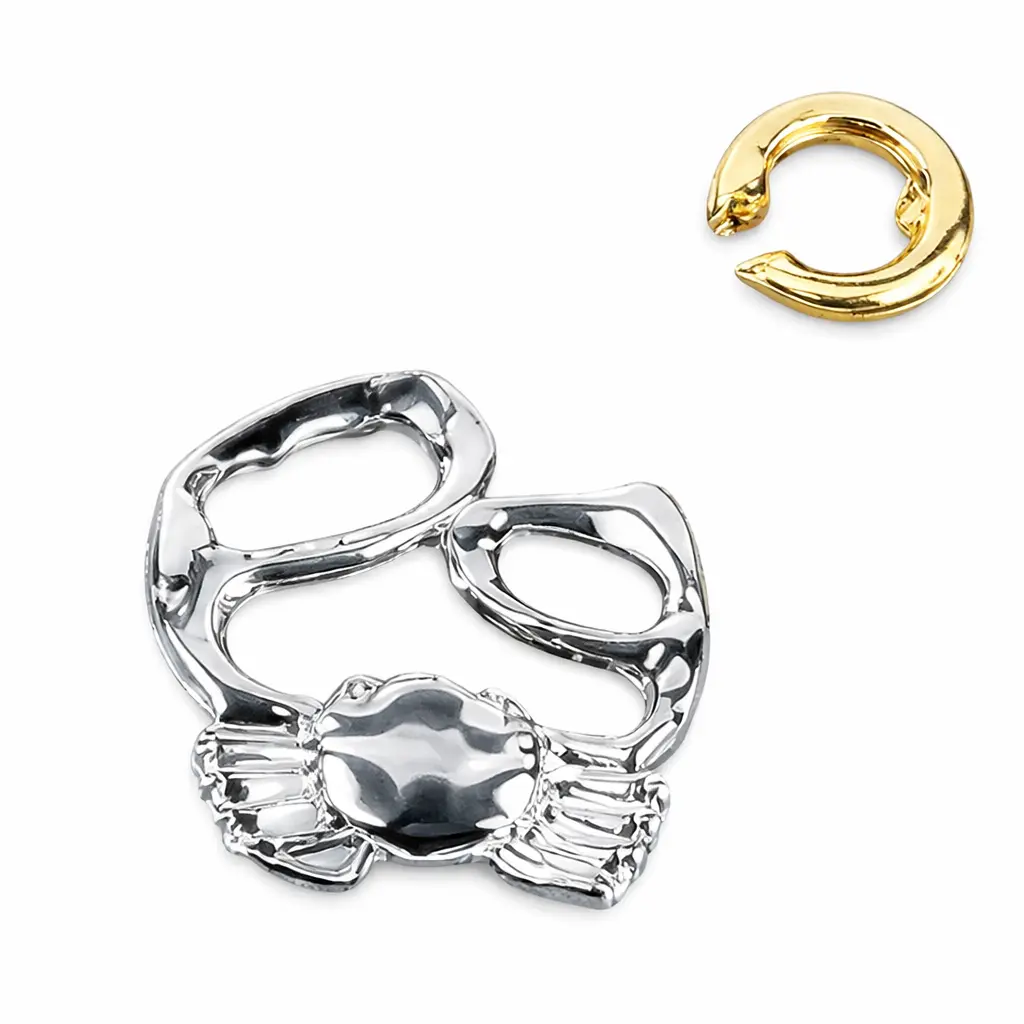
A crab with a gold ring threaded through its body. The puzzle is removing the ring without forcing anything apart. The crab’s form is not just decorative—its legs and claws create multiple possible movement paths, only one of which actually works.
The connection to the pig pen chapter is structural: both involve a contained object—ring inside crab, pig inside pen—where the exit path is not obvious and force is counterproductive. The pig pen text emphasized solidity—a structure that holds firm while allowing the necessary movements of its inhabitant. The crab puzzle does the same: the metal body is rigid, but the ring’s path through it is fluid and specific.
- Cast metal crab with gold ring
- Single solution path through the body
- Satisfying tactile weight and detail
This is not a beginner puzzle. The multiple apparent paths through the crab’s body create deliberate misdirection. If you are patient enough to test each path systematically rather than guessing, you will find the real one. The old builders would have approved of the method.
Who Should Skip All of This
If your interest in traditional architecture stops at visual aesthetics—at the pretty curve of a roofline or the picturesque decay of old timber—this material will bore you. The cattle pen chapters are not beautiful. They are obsessively technical, filled with compass readings, calendrical calculations, and dimensional specifications that make no concession to casual interest.
If you believe that animals are simple and their housing is a solved problem, these records will frustrate you. The builders who wrote them would have found that attitude professionally disqualifying.
And if you approach puzzles as disposable entertainment—something to fidget with during a meeting and then forget—the objects recommended here will disappoint. They are designed, like the old livestock structures, to reward sustained attention and to punish impatience. The memory match challenge game might be more appropriate for casual engagement—it is excellent at what it does, but what it does is fundamentally different from what these metal puzzles demand.
Four Stars, Four Lessons
What the livestock chapters reveal, taken together, is a design philosophy that modern architecture is only now returning to: inhabitant-centered design. The builders did not create one generic pen and resize it for different animals. They started from scratch with each species—different compass stars, different dimensional systems, different construction calendars, different mythological frameworks.
The cattle pen honored a Bodhisattva through precise measurement and eastern-facing timber. The sheep shelter followed Purple Qi to a location determined by the animal’s celestial lineage. The horse trough aligned with the Virtue Star and used round tenons where cattle pens used rectangular ones. The pig enclosure faced northwest toward the Gen trigram and required the most structurally robust construction of all four.
Each of these structures emerged from the same manual, used the same compass, and followed the same basic workflow—but each produced a completely different building. The process was consistent. The outcomes were specific. That distinction matters.
For anyone exploring the broader world of puzzle box designs for families, the same principle applies. A good puzzle collection is not twelve versions of the same mechanism. It is twelve different mechanisms, each requiring its own approach, each teaching its own lesson.
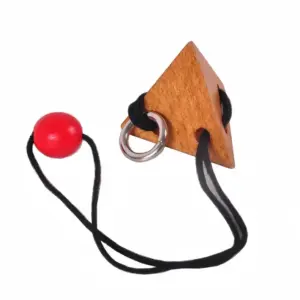
The orbiting ring in the Metal Orbit Ring Cast Puzzle teaches rotational thinking. The five interlocking spiral pieces in the 5-Piece Cast Spiral Metal Puzzle teach sequential disassembly. The triangular coil in the Cast Coil Triangle Puzzle teaches how geometric constraints create hidden flexibility. Each one is a different star for a different structure.
Measuring What Cannot Be Seen
The deepest lesson in these chapters is not about animals or architecture. It is about the relationship between visible structure and invisible intention.
Every cattle pen, sheep shelter, horse trough, and pig enclosure described in these records looks, from the outside, like a simple wooden frame. Posts, crossbeams, a roof, a gate. Nothing remarkable. But embedded in the dimensions, the orientation, the timing of construction, and the specific choice of materials is an entire worldview—a belief that the quality of a space determines the quality of life within it, and that quality is not a matter of decoration but of measurement.
The old builders measured in fen—three-millimeter increments—because they believed that precision at that scale mattered for the well-being of the animals they housed. They consulted compass stars because they believed that spatial relationships between structures affected the health of the entire property. They followed calendars because they believed that timing—when you build, not just how you build—shaped outcomes.
Whether you share those beliefs is irrelevant. The practical results are documented: standardized proportions that produced structurally sound buildings, site planning that accounted for drainage and airflow, construction schedules that avoided weather extremes and labor shortages. The metaphysical framework produced empirical benefits, and the builders knew it.
The article on how ancient carpentry texts connect to modern puzzle design explores a related idea from a different angle—worth reading if the mechanical principles interest you more than the agricultural ones.
One old line from the building tradition captures it simply: a carpenter who measures only what the eye can see builds a house. A carpenter who measures what the eye cannot see builds a home.
The livestock chapters add a corollary: and a carpenter who measures with equal care for every inhabitant—human, ox, horse, sheep, or pig—builds something that lasts.
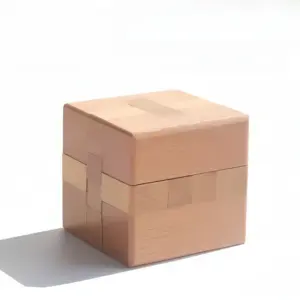
The 3D Wooden Perpetual Calendar Puzzle makes a fitting end point. It is a functional calendar built from interlocking wooden pieces—a timekeeping device that works only if every piece is in its correct position. The old builders would have recognized it immediately: a structure where time and material are inseparable, where the calendar is not consulted but inhabited.