The thousandth piece clicked into place at 2:14 AM on a rainy Tuesday. I stood back, wiped the dust from my palms, and stared at the sprawling map of the moon I’d spent three weeks assembling. It was a triumph of spatial reasoning and sheer stubbornness. But then the panic set in. My dining table was officially a hostage. I couldn’t eat there, I couldn’t work there, and the mere thought of sliding a piece of cardboard under that fragile sea of cardboard felt like performing surgery on a soap bubble.
Most advice on how to frame a puzzle treats the process like framing a cheap poster. They tell you to slap some glue on it and buy a frame from a big-box store. Having ruined a limited-edition 2,000-piece landscape back in 2019 with a “recommended” spray adhesive that turned the image a sickly yellow, I’m here to tell you that framing is actually a mechanical challenge in its own right. It requires a balance of structural integrity and aesthetic honesty. You aren’t just hanging a picture; you’re mounting a trophy.
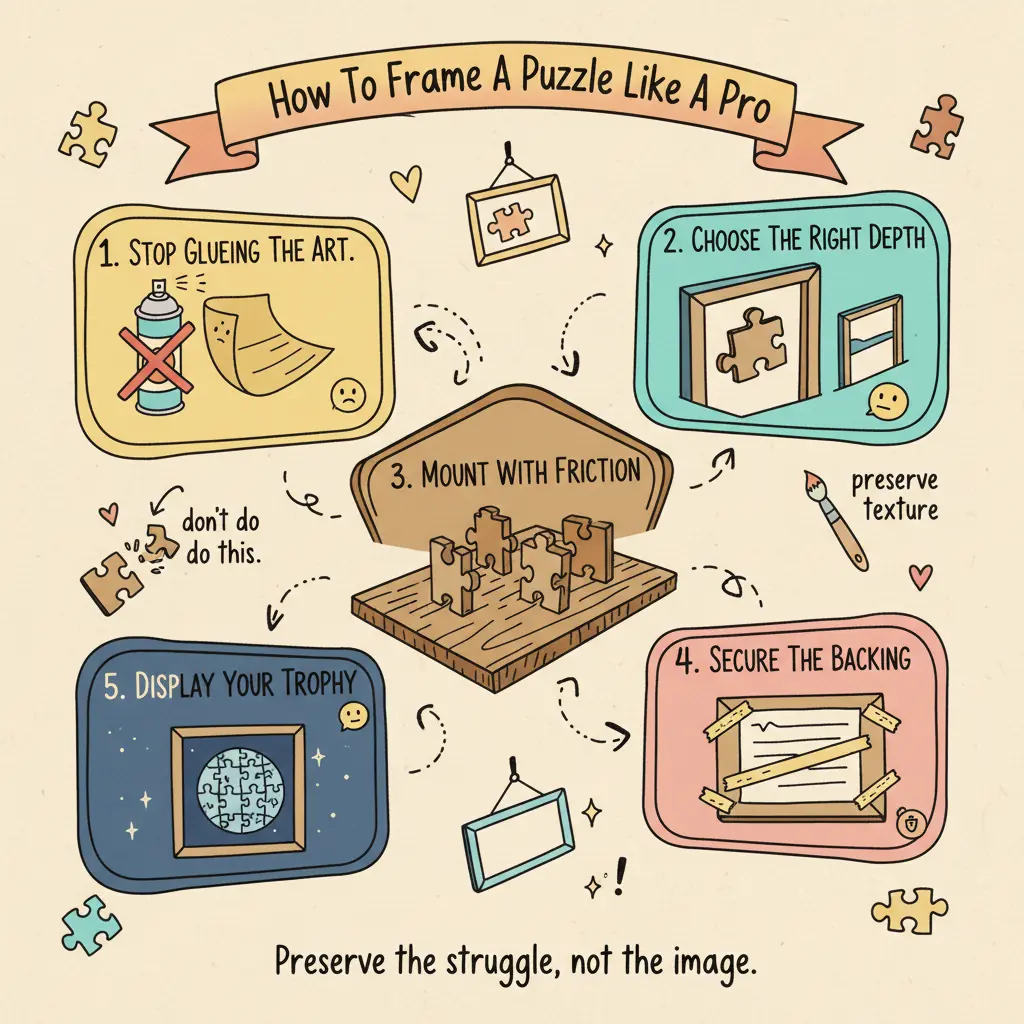
The thesis of this guide is simple: framing a puzzle should be an act of preservation that respects the solve. Whether you are dealing with a classic flat jigsaw or a complex 3D assembly, the goal is to secure the pieces without erasing the texture that makes a puzzle unique. If you wanted a smooth, seamless image, you would have bought a print. You want the seams. You want the evidence of the struggle.
Why Traditional Picture Frames Often Fail the Puzzle Test
If you walk into a craft store and grab a standard 20×27 inch frame, you’re likely headed for a headache. The primary issue is depth. A standard photograph is less than a millimeter thick; a high-quality puzzle, especially those made from premium ESKA board or wood, can be three to four millimeters thick. When you try to force that into a frame designed for paper, the backing clips will bend, the glass will press unevenly, and you’ll often end up with a “bowing” effect in the center.
Furthermore, the history of jigsaw puzzles shows they were originally made of wood—thick, heavy, and never intended to be flattened behind a thin sheet of acrylic. Modern cardboard puzzles are lighter, but they still have “memory.” They want to curl. To frame them correctly, you need to account for this physical tension.
I’ve found that the “sandwich” method is the only way to avoid the heartbreak of a mid-air collapse. This involves a rigid backing board, the puzzle itself, and a protective front layer—usually UV-resistant acrylic. If you’re working with something more sculptural, like the 3D Crystal Apple Puzzle ($18.88), the concept of “framing” shifts entirely toward the shadow box or the dedicated display shelf.
To Glue or Not to Glue: The Preservationist’s Dilemma
This is the most contentious topic in the hobby. The “Gluers” argue that adhesive is the only way to ensure the puzzle stays together over years of hanging. The “Purists” argue that glue is permanent, messy, and potentially damaging to the ink.
I fall somewhere in the middle. If it’s a standard $20 jigsaw, glue is a convenient tool. But if you’ve spent time mastering tactics for opening a trick wooden puzzle box without breaking it, you know that the value is often in the mechanism and the material. You wouldn’t pour glue over a wooden mechanical kit, so why treat a high-end puzzle differently?
If you do choose to glue, avoid the cheap hardware store stuff. You need a dedicated puzzle lacquer that doubles as an adhesive and a finish. I’ve had success with water-based glosses that soak into the seams, creating a plastic-like bond. Just remember: once you glue it, you can never take it apart again. You’ve turned a puzzle into a board.
The “No-Glue” Manifesto: Using Friction and Pressure
For those who find the idea of gluing a puzzle sacrilegious, there is the pressure-fit method. This requires a frame with a very sturdy backing board—think MDF rather than flimsy cardboard.
- The Flip: This is the most dangerous part. You need two pieces of foam core or heavy cardboard. Sandwich the puzzle between them, hold them tight, and flip the whole thing over.
- The Adhesive Sheets: Instead of liquid glue, use clear adhesive sheets on the back of the puzzle. This keeps the front looking pristine while providing the structural strength needed to hang it.
- The Mounting: Once the back is “sheeted,” it’s essentially a single unit. You can then place it into a frame.
This method works exceptionally well for puzzles that have a lot of internal tension. It’s a bit like solving a sequential discovery box—you have to think three steps ahead to make sure the pieces don’t shift during the transfer.
Displaying the Three-Dimensional Solve
Not every puzzle is flat. In my collection, some of the most rewarding pieces to display are the ones that occupy three-dimensional space. These don’t go in a frame; they go in a “scene.”
3D Crystal Apple Puzzle
The 3D Crystal Apple Puzzle ($18.88) is a prime example of why we need to rethink “framing.” This isn’t something you’ve spent weeks on, but the hour you spend navigating its 44 translucent pieces is concentrated and tactile. Once finished, it stands about 7.5cm tall. Framing this in a traditional sense would be a waste of its best feature: how it plays with light.
I keep mine on a floating shelf near a window. The green stem catches the afternoon sun, and the translucent body glows. If you really want to “frame” it, use a small acrylic display cube. It protects the plastic from dust—which is the enemy of any crystal puzzle—without obscuring the geometry. It’s a great piece for someone who wants the visual payoff of a glass sculpture without the fragility or the three-figure price tag.
The Mechanical Gallery: Framing the “Impossible”
Some puzzles are meant to be touched, not just seen. When I think about “framing” my collection of metal brain teasers, I think about accessibility. A “framed” mechanical puzzle is one that sits on a dedicated plinth or a custom-slotted tray.
3D Wooden Mechanical Pistol Kit
The 3D Wooden Mechanical Pistol Kit ($29.99) is a 68-piece build that results in a functional, rubber-band-powered mechanism. Framing this behind glass is a mistake. The joy of this object is the “click-clack” of the slide and the realistic feedback of the trigger.
Instead of a wall frame, I recommend a wall-mounted shadow box with an open front. This allows you to “frame” the pistol as a piece of mechanical art while still letting guests (or yourself) reach in and interact with it. It’s the difference between a museum exhibit and a workshop. The wood grain is beautiful, and after three weeks on my desk, the mechanism hasn’t loosened a bit. It’s a testament to the fact that mechanical puzzle collection guides often emphasize the “play” factor over the “display” factor.
Choosing Your Backing: The Secret to a Flat Hang
The biggest mistake I see in DIY puzzle framing is using the wrong backing material. If you use standard paper or thin cardboard, humidity will eventually cause the puzzle to warp inside the frame. This creates a gap between the puzzle and the glass, which leads to pieces slipping out of place.
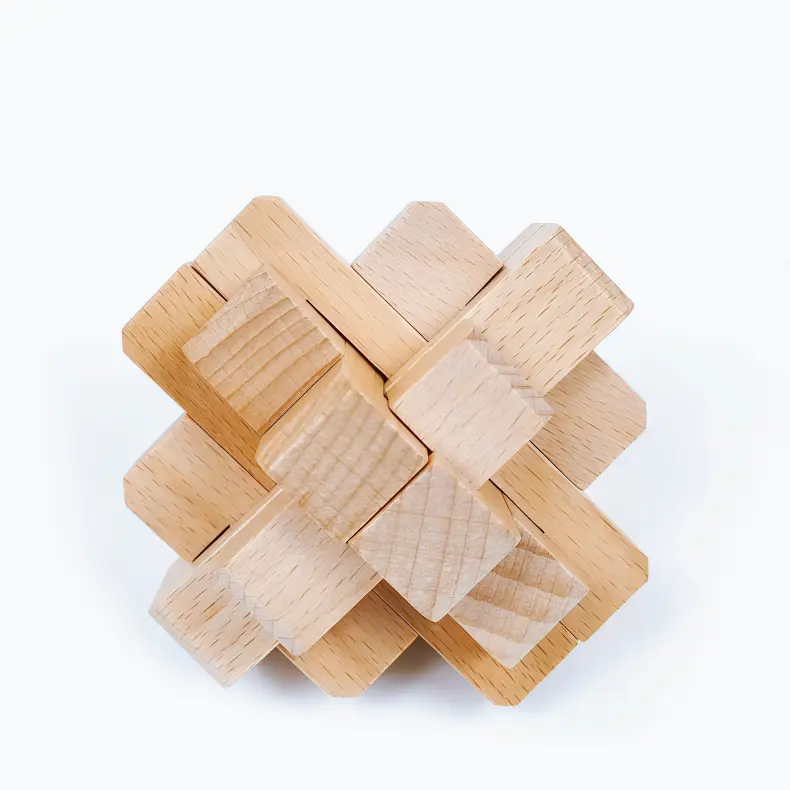
I always use acid-free foam board. It’s rigid enough to support the weight of a 1,000-piece puzzle but light enough that you don’t need heavy-duty wall anchors. For smaller, more delicate wooden puzzles, like the Wood Knot Puzzle ($16.99), you might not even need a frame. These pieces, which embody Taoist philosophy, often look best as standalone objects on a dark wood surface.
The Wood Knot Puzzle is a six-piece hardwood challenge that I’ve found works best as a “meditation frame.” I don’t hide it in a box; I leave it assembled on a small stone coaster. It’s a visual reminder of “Wu Wei” or effortless action. When it’s framed by the simplicity of a desk, it draws the eye and invites a quick five-minute mental reset.
Tools of the Trade: What You Actually Need
Forget the “all-in-one” kits you see advertised on social media. They usually contain low-quality glue and a plastic frame that will yellow within two years. To frame a puzzle like a pro, you need:
- A Rolling Pin: Seriously. Once your puzzle is finished, gently roll it to flatten any pieces that are sitting slightly higher than others. This ensures a flush fit against the glass.
- Precision Tweezers: For that one piece that inevitably shifts when you’re trying to close the frame.
- Microfiber Cloth: To clean the inside of the glass. There is nothing more frustrating than sealing a frame and realizing there’s a thumbprint on the interior.
- Acid-Free Adhesive Sheets: I prefer these over liquid glue for anything I plan to keep for more than five years.
If you’re taking a break from the physical labor of framing, you might find a different kind of focus playing a quick game of Snake or checking out a retro arcade to clear your head. Framing is high-stakes; sometimes you need a low-stakes distraction.
The Shadow Box: For Puzzles with Personality
Some puzzles have a “presence” that a flat frame just can’t capture. These are often the ones that bridge the gap between a toy and a historical artifact.
Blockade Puzzle
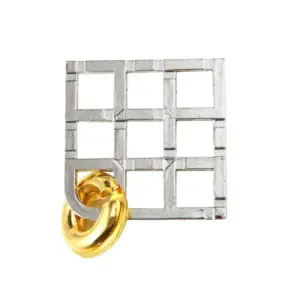
The Blockade Puzzle ($16.99) is a classic example of “ancient wisdom in your hands.” It’s a mental workout that doesn’t just sit there—it challenges you. While it’s technically a disentanglement puzzle, its heavy, cast-metal feel makes it a prime candidate for a shadow box display.
I’ve seen collectors mount these on velvet backing inside a deep frame. It gives the puzzle a “found object” aesthetic, like something you’d see in a Victorian explorer’s study. The dual-tone finish catches the light beautifully, and because it’s a relatively compact piece, it doesn’t overwhelm a gallery wall. It’s a much more sophisticated look than just throwing it in a drawer once you’ve figured out the wooden puzzle solution and why your brain stalls.
Spotlight: The Art of the Small Solve
Not every framed puzzle needs to be a 24×36 inch behemoth. In fact, some of the most striking wall displays come from framing a series of smaller, related puzzles.
Magic Golden Mandarin Lock

The Magic Golden Mandarin Lock ($18.98) is a stunning piece of metalwork. With its two curved columns and sturdy base, it looks less like a toy and more like a ritual object. I’ve found that framing three or four of these “locking” puzzles in a row—perhaps alongside a Blockade Puzzle ($16.99)—creates a cohesive, intellectual theme for an office or library.
The Mandarin Lock, in particular, rewards a display that highlights its “concealed paths.” It’s a conversation starter. When someone asks, “How do you open that?” you have the choice of handing it to them or keeping the mystery “framed” and protected.
Spotlight Products Comparison
| Product | Type | Difficulty | Solve Time | Best For |
|---|---|---|---|---|
| 3D Crystal Apple | Crystal Puzzle | Easy | 45-60 min | Teachers / Desk Decor |
| 3D Mechanical Pistol | Mechanical Kit | Medium | 2-3 hours | Fidgeters / Makers |
| Wood Knot Puzzle | Burr Puzzle | Medium | 30-45 min | Meditation / Minimalists |
| Blockade Puzzle | Puzzle Lock | Hard | 1 hour+ | Collectors / History Buffs |
Integrating the “Pocket” Puzzles into Your Decor
We often think of framing as a permanent, wall-bound activity. But for the veteran collector, “framing” can also mean creating a dedicated space on a desk where a rotating selection of puzzles lives. This is where your metal “EDC” (Every Day Carry) puzzles shine.
The Cast Hook Metal Brain Teaser ($13.99) is a palm-sized challenge that I rarely “frame” in the traditional sense. Instead, I use a small wooden tray as its “frame” on my coffee table. It’s accessible. It’s tactile. And because it’s solid cast metal with an antique bronze finish, it doesn’t look like a plastic toy.
Similarly, the Gold Silver Double Fish Metal Puzzle ($13.99) and the Metal Crab Puzzle with Gold Ring ($13.99) provide a two-tone visual interest that works well in a grouping. I’ve seen people use magnetic strips—the kind used for kitchen knives—to “frame” their metal puzzles on a wall. It’s a modern, industrial look that allows for instant interaction.
If you’re more into the “hidden” aspect, you might prefer the Brass Cube Maze Puzzle Keychain ($16.99). It’s a 31mm polished brass cube that serves as a functional keychain. Its “frame” is your pocket or your bag, but when you set it down, the chrome ring against the brass creates a high-contrast look that demands a second glance. It’s a reminder that even the smallest puzzles have an aesthetic value worth showcasing.
The Final Step: Lighting and Location
Once your puzzle is in the frame, the work isn’t over. According to Britannica’s overview of puzzles, these objects have been used as both entertainment and educational tools for centuries. You want to place them where they can be appreciated without being destroyed.
- Avoid Direct Sunlight: Even with UV-protective acrylic, constant direct sunlight will eventually fade the colors of a jigsaw puzzle.
- Mind the Humidity: Don’t hang a framed puzzle in a bathroom. The steam will penetrate the frame and cause the cardboard to swell and the glue to delaminate.
- Eye Level is Key: Puzzles are detailed. If you hang them too high, you lose the ability to see the individual pieces and the “texture” of the solve.
For wooden pieces like the
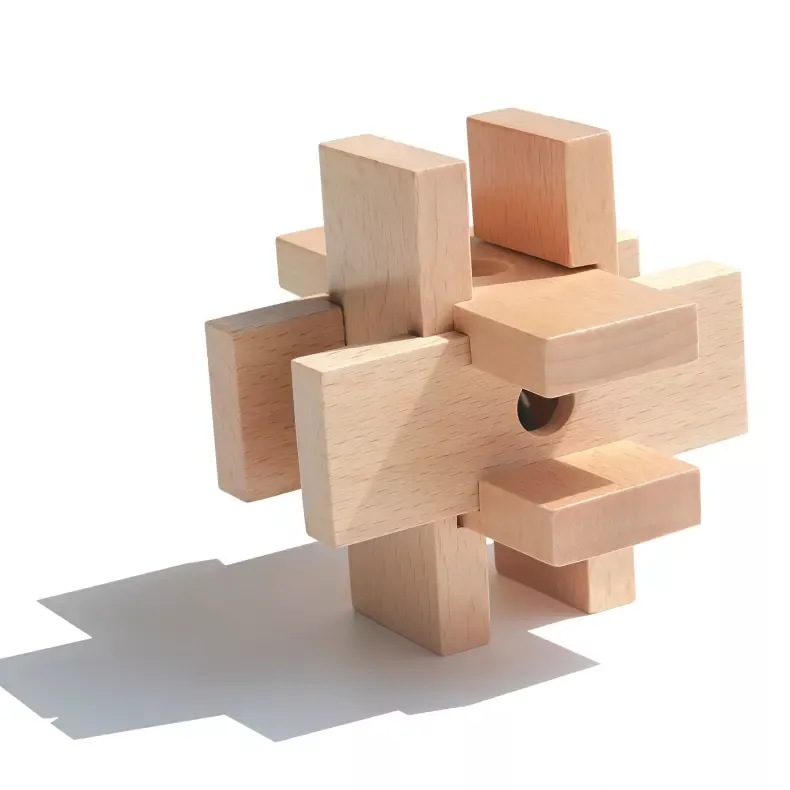
6 Piece Wooden Puzzle Key — $12.99
6 Piece Wooden Puzzle Key ($12.99), lighting is even more important. The shadows created by the interlocking pieces are part of the beauty. A soft, angled light will highlight the craftsmanship and the “Wu Wei” simplicity of the design.
FAQ: Everything You’re Afraid to Ask About Puzzle Framing
How do I move a finished puzzle to the frame without it falling apart?
The “cardboard sandwich” is your best friend. Slide a thin piece of rigid cardboard under the puzzle, then place another piece on top. Grip them tightly together and move the whole unit. If you’re nervous, you can use a few small pieces of painter’s tape on the corners of the top cardboard to keep things from sliding. This is much safer than trying to “slide” the puzzle directly onto the frame’s backing.
Can I use regular white glue to preserve my puzzle?
I wouldn’t. Regular school glue or wood glue is too thick and has a high water content. It can cause the puzzle pieces to swell or the top layer of paper to peel. If you must use a liquid, use a dedicated puzzle sealer. It’s designed to be thin enough to seep into the cracks without saturating the board.
What’s the best way to frame a puzzle cheaply?
If you’re on a budget, look for “poster frames” at big-box retailers. They are usually made of plastic and thin plexiglass, but they work if you use a piece of foam core behind the puzzle to create a tight fit. You can also check thrift stores for old artwork with high-quality frames; just make sure the depth is sufficient for your puzzle’s thickness.
How do I get rid of the “glare” on a framed puzzle?
Use non-glare or “museum” glass/acrylic. It’s more expensive, but it makes a massive difference, especially for puzzles with dark colors. If that’s not in the budget, try to hang the puzzle on a wall that is perpendicular to your windows rather than directly opposite them.
Is it better to use glass or acrylic for a puzzle frame?
For large puzzles, acrylic is almost always better. It’s lighter, which puts less stress on the frame, and it’s shatter-resistant. Glass is fine for smaller pieces, but once you get into the 1,000+ piece range, the weight of the glass alone can be enough to pull a cheap frame apart.
Do I need to use a mat when framing a puzzle?
It’s a personal preference, but a mat can add a lot of “breathing room” to a busy puzzle. It also helps with the thickness issue; the mat acts as a spacer between the puzzle and the glass. Just make sure the mat is acid-free so it doesn’t discolor the edges of your puzzle over time.
How do I frame a puzzle that is an irregular shape?
This is where you need a “float mount.” Instead of the puzzle edges being tucked under the frame or a mat, you adhere the puzzle to a piece of backing board that is larger than the puzzle itself. This leaves a border of the backing board visible around the irregular edges, highlighting the unique shape of the solve.
What if I want to take the puzzle apart later?
Then do NOT use glue. Use the adhesive sheet method on the back, or simply use a tight pressure-fit frame. If you use adhesive sheets, you can usually peel them off later with a bit of patience and a hair dryer to loosen the tack, though there is always a risk of some paper tearing.
How do I clean a framed puzzle?
Treat it like any other piece of art. Use a microfiber cloth and a small amount of glass cleaner (sprayed on the cloth, never directly on the frame). If you have a wooden puzzle like the
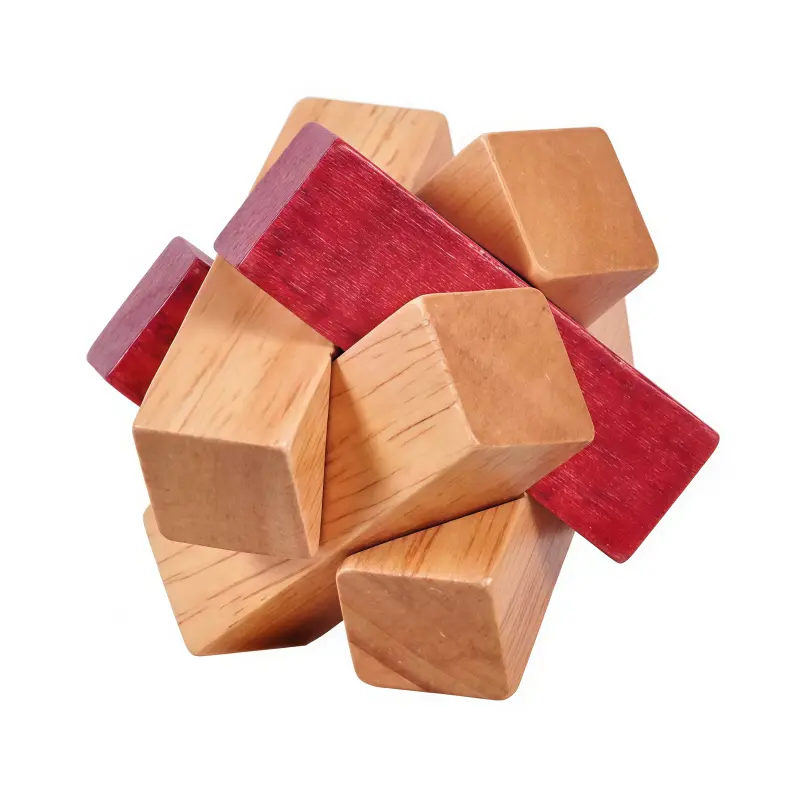
Wood Knot Puzzle — $16.99
Wood Knot Puzzle ($16.99) on display, a simple dry dusting is usually all it needs.
Can I frame a puzzle that I’ve already glued on the front?
Yes, but be careful. Sometimes the glue can create a “haze” that looks worse once it’s behind glass. I always recommend a test patch on a spare piece of cardboard before committing to the whole puzzle.
Why do some people frame puzzles without glass?
Some people prefer the “linen” texture of the puzzle pieces and don’t want any reflection at all. This is fine if you’ve used a high-quality sealer/glue on the front to protect it from dust and UV light. However, without glass, the puzzle is much more vulnerable to physical damage.
How do I handle a puzzle that’s missing a piece?
Don’t let it stop you from framing! You can actually “recreate” a missing piece using a bit of cardboard and some acrylic paint. Or, lean into the “wabi-sabi” aesthetic and frame it as it is—a reminder of the imperfection of the process. I once framed a 5,000-piece map with two missing pieces, and it’s now my favorite conversation piece.
What if my puzzle is too big for any standard frame?
You’ll need to go custom. Many online framers now allow you to order frames to the exact millimeter. It’s more expensive, but for a “bucket list” solve, it’s worth the investment to ensure the piece is preserved correctly. You can also look into the art of the invisible seam for inspiration on how to make your display look as seamless as possible.
Does framing a puzzle decrease its value?
If it’s a rare or vintage puzzle, yes, gluing it will significantly decrease its value to collectors. Collectors want the ability to solve the puzzle themselves. If it’s a modern, mass-produced puzzle, the “value” is in your enjoyment of the finished product, so frame away!
How do I frame a wooden mechanical kit?
As mentioned with the
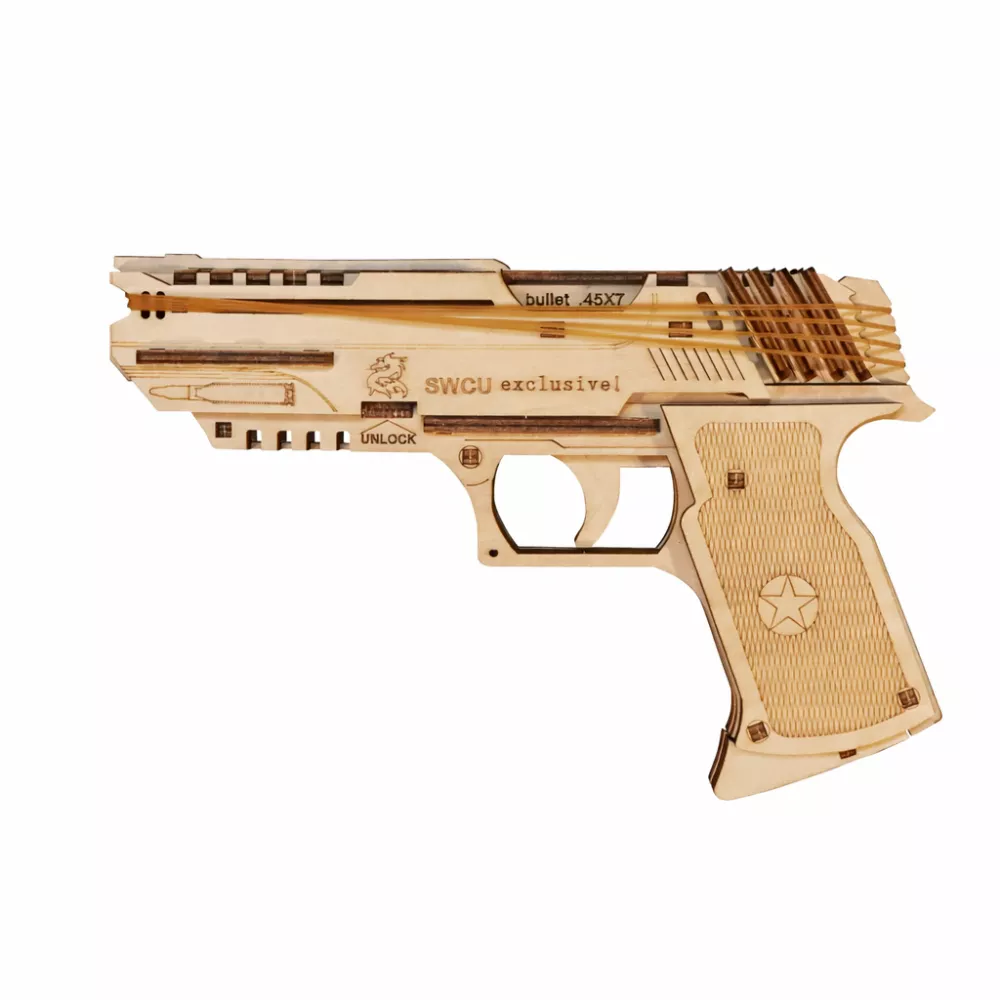
3D Wooden Mechanical Pistol Kit ($29.99), shadow boxes or open-front frames are the way to go. You want to showcase the depth and the mechanical nature of the object. Think of it more as a sculpture than a picture.
Conclusion: The Final Click
Framing a puzzle is the victory lap of the hobby. It’s the moment you stop being a “solver” and start being a “curator.” Whether you’re hanging a sprawling 2,000-piece landscape or displaying a veteran-level wooden cube solution, the goal is the same: to honor the time and mental energy you poured into the task.
I still think back to that moon map. It’s hanging in my hallway now, encased in a heavy black frame with non-glare acrylic. Every time I walk past it, I don’t just see a picture of the moon; I see the three nights I spent trying to figure out the Sea of Tranquility.
If you’re just starting your collection, don’t feel like you have to frame everything. Start with the ones that mean something to you. Maybe it’s the
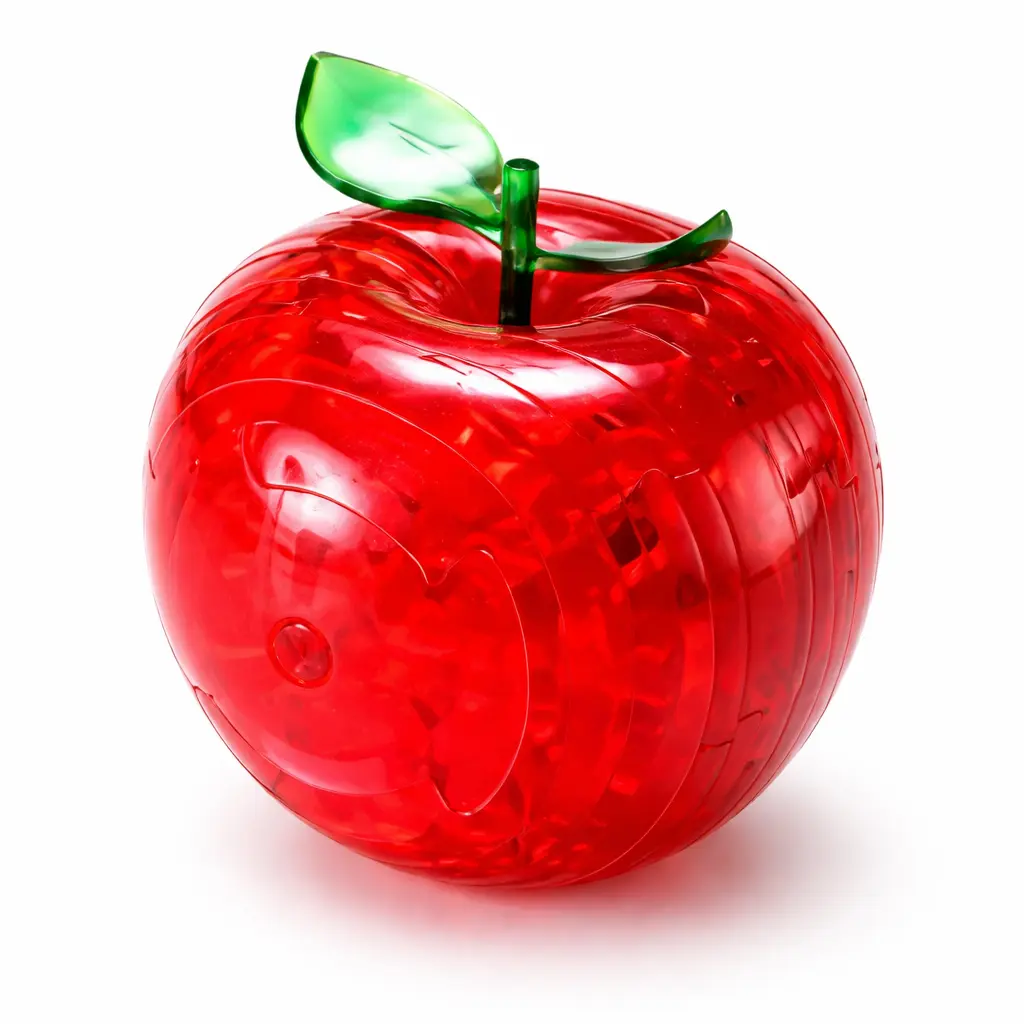
3D Crystal Apple Puzzle — $18.88
3D Crystal Apple ($18.88) that you built with your daughter, or the
Blockade Puzzle — $16.99
Blockade Puzzle ($16.99) that finally clicked after a week of frustration. Frame the memories, not just the cardboard. And whatever you do, keep that rolling pin handy—it’s the secret weapon every puzzle enthusiast needs.