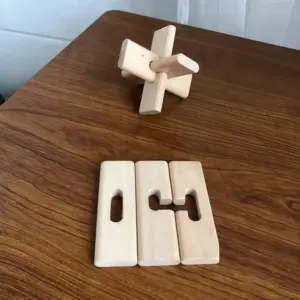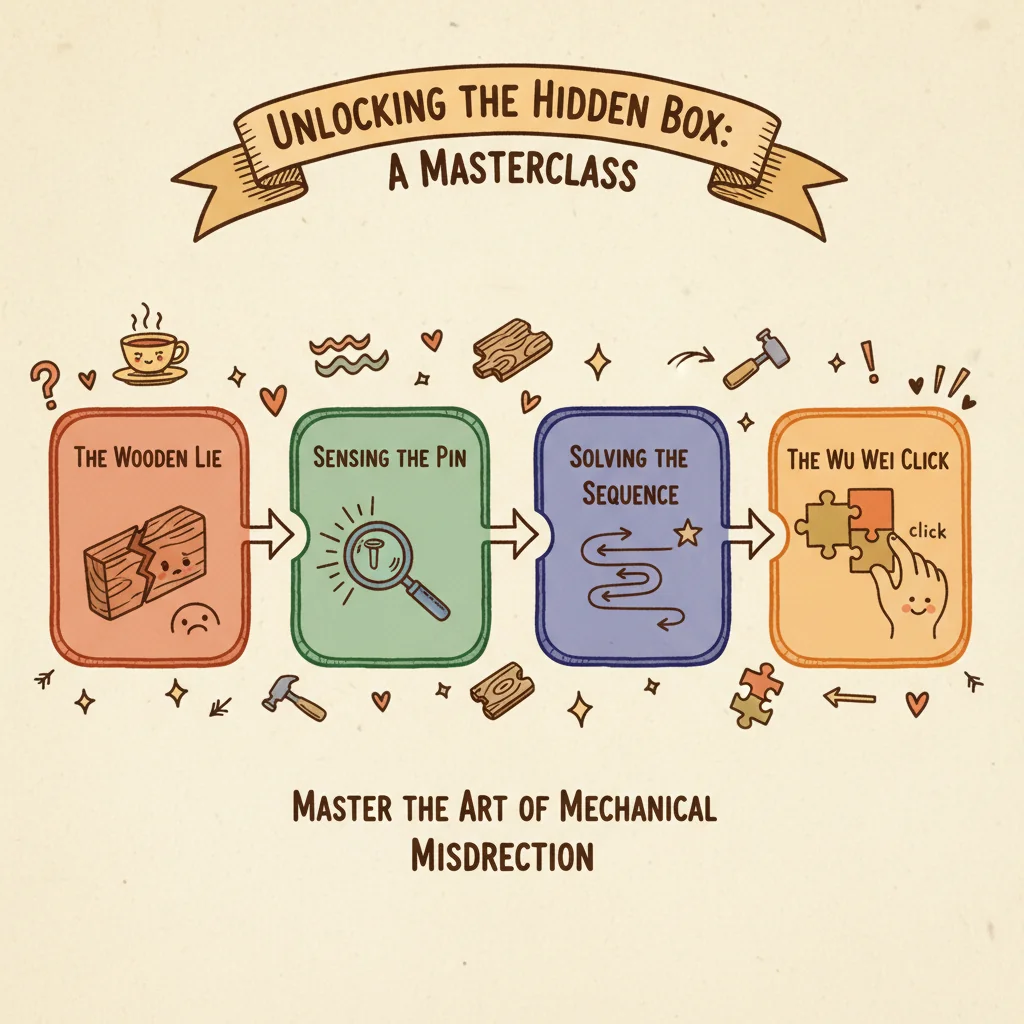
The sun was barely up on a Tuesday last October when I finally heard the “click” I’d been chasing for three days. I was sitting at my workbench, a lukewarm cup of oolong tea at my elbow, holding a particularly stubborn Japanese Himitsu-Bako. My thumbs were sore from applying pressure to every millimeter of the marquetry, and my patience was thinner than the wood veneer. Then, it happened. A panel that looked like a solid piece of cherry wood slid precisely three millimeters to the left.
That single movement changed the entire geometry of the object in my hands. It wasn’t about strength; it was about the realization that the box had been lying to me. Every wooden puzzle box is a masterclass in misdirection. They are designed to exploit your assumptions about how physical objects should behave. If you’re struggling to open one, it’s likely because you’re treating it like a container rather than a mechanical sequence.
The thesis of this guide is simple: The best wooden puzzle boxes punish impatience and reward sensory observation. To open them, you must stop looking for a lid and start looking for the “lie” in the construction. Whether you are holding a 2,500-year-old design or a modern laser-cut marvel, the principles of the solve remain remarkably consistent.
The Lie of the Seamless Joint
When you first pick up a high-quality puzzle box, your eyes will tell you it’s a solid block of wood. This is the first hurdle. Wood grain is a natural camouflage; a skilled craftsman can hide a seam right along the dark line of a growth ring, making it virtually invisible to the naked eye. I’ve spent over twenty years reviewing mechanical puzzles, and the most common mistake I see beginners make is relying purely on their vision.
Your fingertips are much more honest than your eyes. I often close my eyes when I first handle a new acquisition. Run your pads along the edges. You aren’t looking for a gap; you’re looking for a microscopic difference in height or a slight “give” when you apply lateral pressure. In 2026, even with precision CNC machining, wood remains an organic material that breathes. It expands and contracts. That very instability is often your best clue.
If you find a section that feels even slightly loose, that is your starting point. However, don’t just pull. Many boxes require a “sliding” motion rather than a “lifting” one. This is rooted in the ancient mortise-and-tenon traditions of the East, where joinery was meant to hold structures together without a single nail.
Luban Lock Set 9 Piece
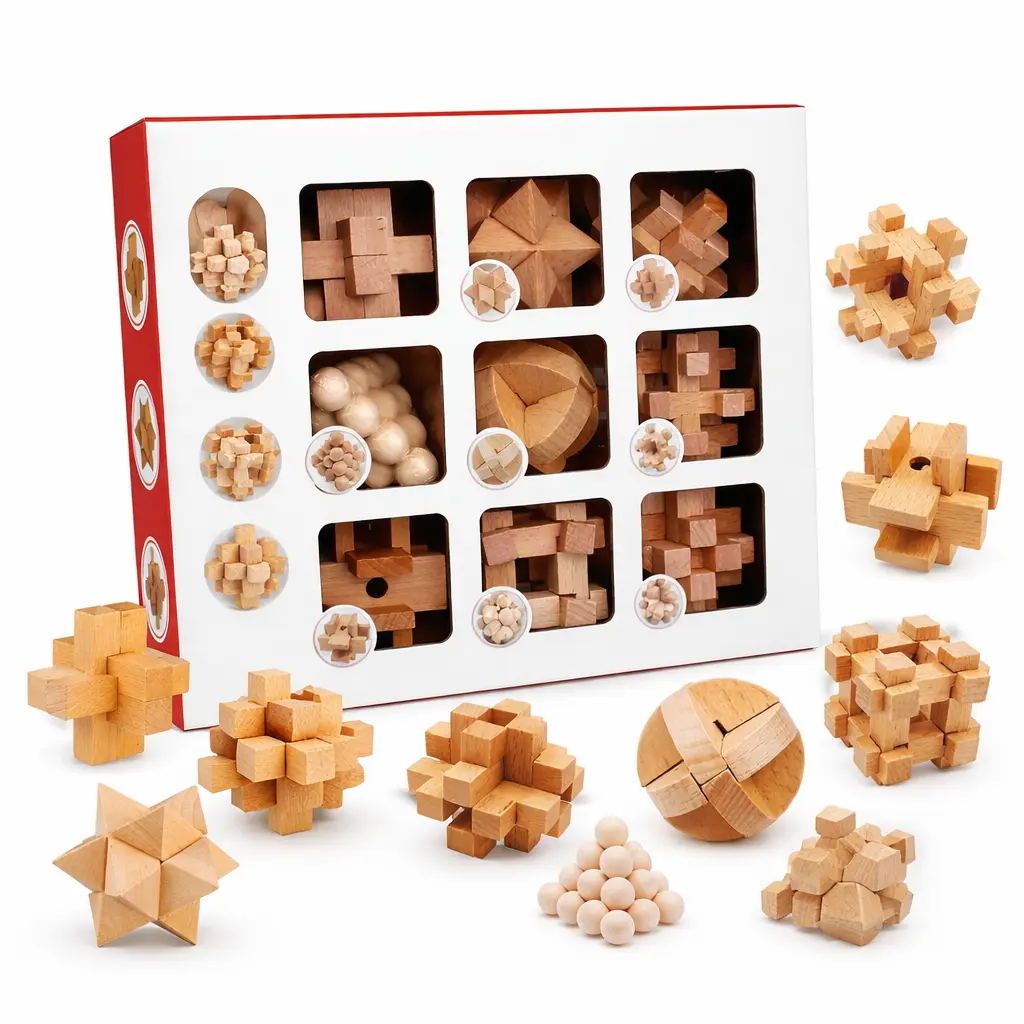
Luban Lock Set 9 Piece — $39.99
The Luban Lock Set 9 Piece ($39.99) is the perfect primer for understanding this type of joinery. While these are technically interlocking puzzles rather than boxes with internal cavities, they teach you the fundamental language of wooden mechanics. I’ve had this set in my library for years, and I still use the “Burr” puzzle from the collection to explain how a single “key piece” can hold an entire structure in tension. These puzzles date back to 500 BCE, allegedly invented by Lu Ban to test his son’s spatial reasoning. When you handle these, you aren’t just playing with a toy; you’re interacting with 2,500 years of Chinese engineering humor. The tolerance on these pieces is impressive for the price—tight enough to feel solid, but loose enough that you don’t need to force anything. If you’re forcing a Luban lock, you’ve already lost the game.
Gravity, Inertia, and the “Hidden Pin”
Not every puzzle box relies on sliding panels. Some of the most devious designs I’ve encountered use internal locking pins that are only moved by gravity or centrifugal force. If you’ve poked, prodded, and slid every inch of a box and nothing has moved, it’s time to start thinking like a physicist.
I remember a specific box from a boutique maker in Germany that arrived with no visible seams at all. I spent an hour trying to slide the top before I realized I could hear a faint thunk when I tilted it. That sound is a “tell.” It means there is a sliding dowel or a ball bearing inside that needs to be in a specific position to clear the path for a panel to move.
Try the “Spin and Slide” technique. Place the box on a flat surface and give it a gentle spin. Centrifugal force can sometimes throw internal locking pins outward, momentarily unlocking the mechanism. Alternatively, a sharp, controlled tap against your palm (never a hard surface!) can sometimes dislodge a pin that has become stuck due to humidity. This is a common issue with older wooden pieces where the wood has “settled” over decades.
The Psychology of the Sequential Solve
Opening a puzzle box is rarely a one-step process. The most challenging boxes are “sequential discovery” puzzles, meaning you might need to find a hidden tool within the box to unlock the next stage. This is where common pitfalls that trap even experienced solvers usually manifest—we tend to assume that once we’ve moved one piece, the box should open.
In reality, a 12-step box might require you to move panel A, which allows panel B to slide, which reveals a small wooden peg, which must be inserted into a hole you found in step one. It’s a mechanical narrative. When I’m stuck, I take a break. I’ve found that realistic timeframes for mastering these mechanisms vary wildly, but the average “aha!” moment usually happens when I’m not actively staring at the puzzle.
6-in-1 Wooden Brain Teaser Set
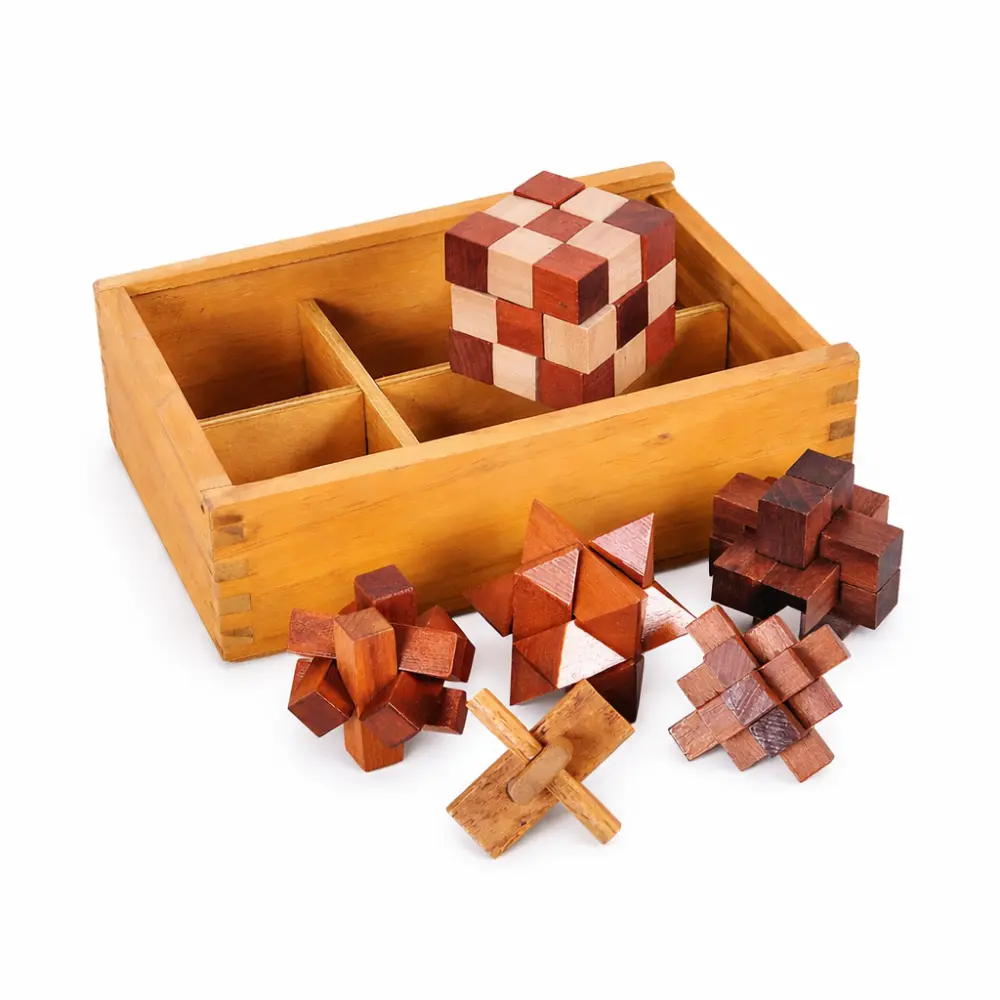
If you want to practice the art of the sequential solve without spending a fortune, the 6-in-1 Wooden Brain Teaser Set ($38.88) is an excellent training ground. Each of these palm-sized puzzles, carved from solid beechwood, operates on the same logic that holds the Forbidden City together. They disassemble in seconds once you find the “key piece,” but rebuilding them is the real test of your spatial memory. I often keep one of these on my desk during long Zoom calls. They provide that tactile feedback that keeps the “fidgety” part of the brain occupied while the analytical part works on other problems. The beechwood has a nice weight to it, and the finish is smooth enough that you won’t get splinters during a particularly frustrated solve.
When Mechanics Meet Modernity: The 3D Puzzle Safe
In the last few years, we’ve seen a surge in laser-cut plywood puzzles. These are a different beast entirely from the traditional solid-wood boxes. Because they are often assembled by the user, the “secret” to opening them is literally built into the process. These puzzles often lean heavily into gear systems and visible clockwork.
While some purists argue that visible gears take away the mystery, I find them fascinating because they demystify the technical breakdown of secret opening mechanisms. You can see the logic of the lock as you build it. It’s less about finding a hidden seam and more about understanding the interaction between a drive gear and a locking bolt.
3D Wooden Puzzle Safe with Combination Lock
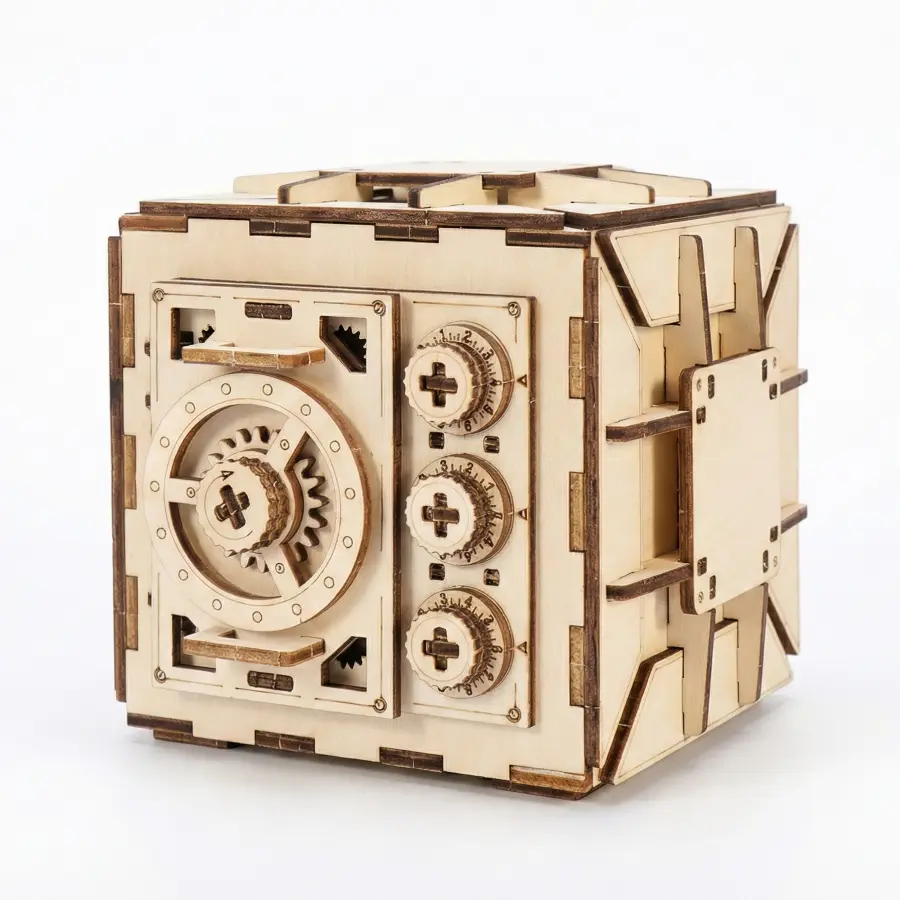
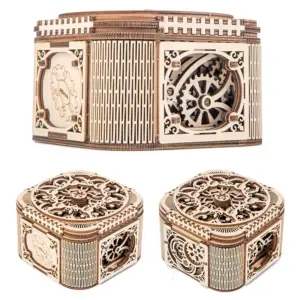
The 3D Wooden Puzzle Safe with Combination Lock ($30.99) is a standout in this category. With 111 pieces, it’s a project that takes about 90 minutes to assemble. What I love about this particular model is the fully functional 3-digit combination lock. Unlike a traditional puzzle box, where the solution is fixed, you’re building the security system yourself. I’ll be honest: the plywood can be a bit delicate. If you’re heavy-handed during assembly, you risk snapping a gear tooth. But once it’s together, the motion is surprisingly fluid. It’s the kind of piece that sits on a bookshelf and looks like a piece of art, but actually serves as a functional (if not exactly bank-grade) vault for small treasures.
The “Wu Wei” Approach: Effortless Solving
There is a concept in Taoist philosophy called Wu Wei, often translated as “non-doing” or “effortless action.” In the world of mechanical puzzles, this translates to the moment you stop forcing the solution and let the patterns emerge naturally. If you are sweating while trying to open a wooden box, you are doing it wrong.
Wood is a forgiving material, but it has limits. If you apply too much torque to a sliding panel, you risk “binding” the mechanism. The friction of the wood-on-wood contact increases, making it feel stuck when it’s actually just being compressed by your own grip. I’ve seen people use pliers on twenty-dollar puzzles, which is a tragedy. The solution is almost always a light touch.
6 Piece Wooden Puzzle Key
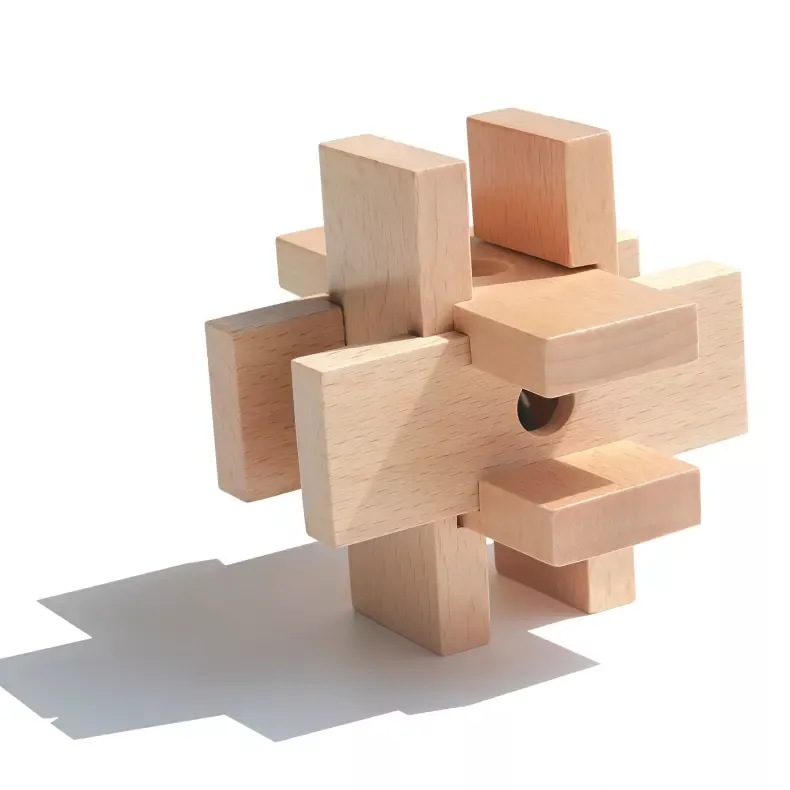
6 Piece Wooden Puzzle Key — $12.99
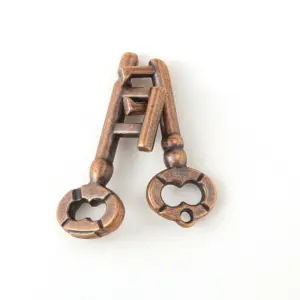
The 6 Piece Wooden Puzzle Key ($12.99) is a masterclass in this philosophy. It’s a minimalist hardwood puzzle that looks deceptively simple. There are no electronics, no magnets, just six pieces of wood that want to stay together. The “Key” is a perfect example of how complexity dissolves when you stop overthinking. I’ve handed this to engineers who spent twenty minutes trying to calculate the angles, only to have a child pick it up and slide the locking piece out by accident. It’s a quiet, humbling reminder that our brains often over-complicate perfectly elegant geometric problems.
Identifying the “Tell”: Sensory Clues You’re Missing
Beyond the visual and the tactile, there is the auditory. A wooden puzzle box is a resonant chamber. If you suspect there is a hidden compartment, tap on different sides of the box with your knuckle. A hollow sound vs. a dull thud can tell you exactly where the “void” is located.
Furthermore, look at the orientation of the wood grain. In a well-made box, the grain on a sliding panel will usually align with the grain of the surrounding frame to hide the seam. However, look at the end-grain. It is much harder to hide a seam on the side where the wood fibers are cut across. If you see a break in the circular pattern of the growth rings on the side of a box, you’ve likely found the track of a sliding drawer.
Circular Lock
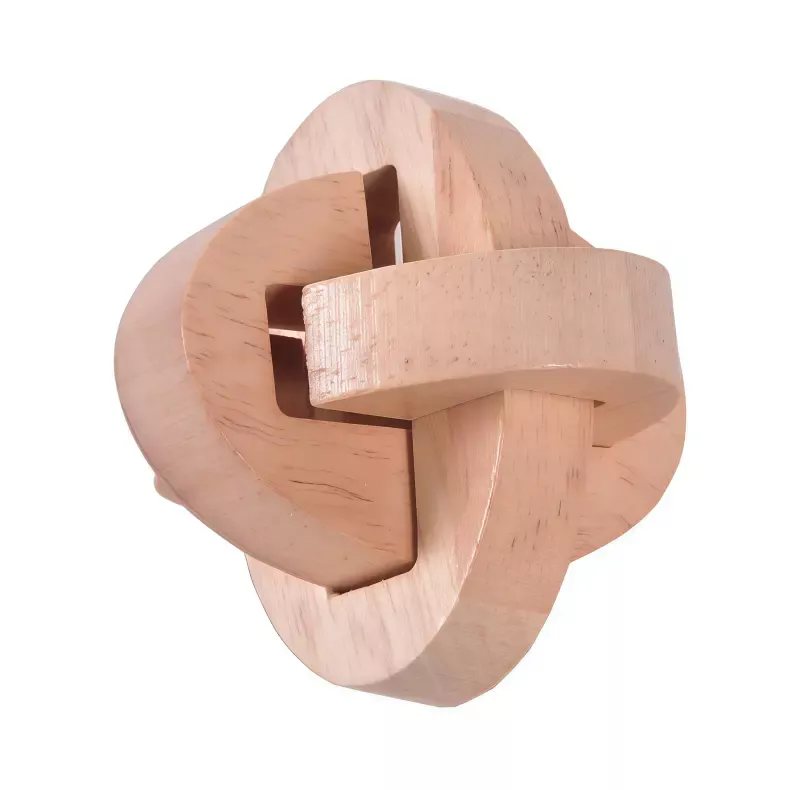
Circular Lock — $16.99
The Circular Lock ($16.99) uses this type of geometric harmony. It’s only three pieces, but they interlock with a motion that feels like it shouldn’t be possible with rigid wood. It’s a “meditation in motion.” When you finally align the pieces correctly, they don’t just come apart—they glide. This is the hallmark of good craftsmanship. If you’re looking for a quick win to boost your confidence before tackling a more complex trick box challenge, this is a solid entry point.
The Ancient Wisdom of the Hidden Vulnerability
Many of the most famous puzzle designs come from a place of military or philosophical history. The “Besieged City” or the “Heart Lock” aren’t just names; they are clues to the mechanism. In ancient Chinese puzzles, the solution often mirrored a philosophical truth—like finding the one point of weakness in an otherwise impenetrable wall.
When you’re stuck on a box that seems to have a “theme,” lean into that theme. Does the name imply a specific movement? Does the shape suggest a certain orientation?
The Mystic Orb Lock
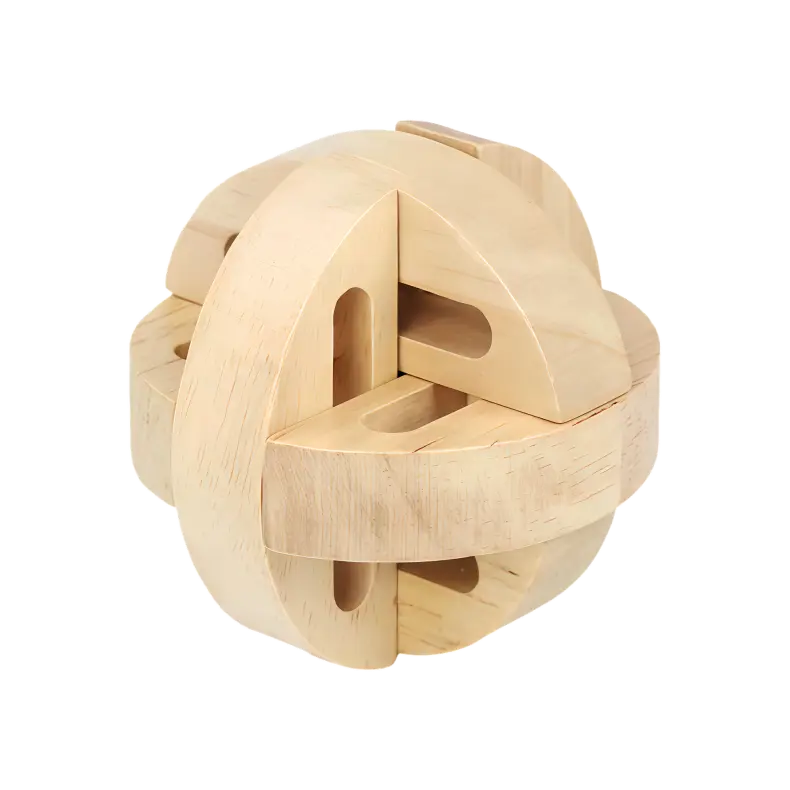
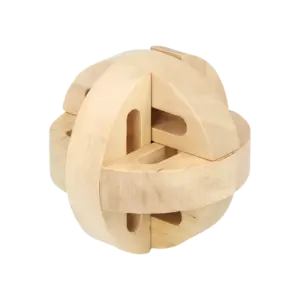
Consider The Mystic Orb Lock ($16.99). This is a sphere made of six semi-circular interlocking pieces. The name and shape evoke the Taoist idea of “the place where death cannot enter”—a hidden vulnerability. In this puzzle, two specific locking pieces control the entire structure. I’ve found that the best way to solve the Orb is to look for the “gap.” In most puzzles, we look for what is there. In the Orb, you have to look for where the wood isn’t. It rewards observation over force. Once you find the slight play in one of the hemispheres, the whole thing yields.
King Wen of Zhou heart-lock puzzle
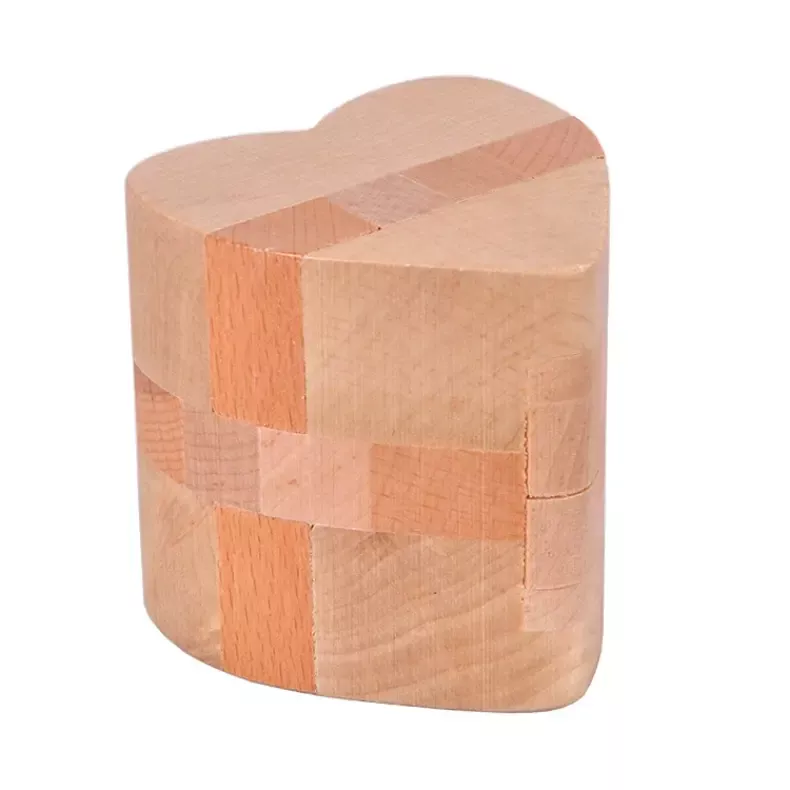
Then there is the King Wen of Zhou heart-lock puzzle ($17.99). This one is personal for me; I gave a similar version to my wife years ago. It’s based on the legend of King Wen and Tai Si, and the mechanics reflect that narrative of loyalty and connection. It’s a tactile fable. To open it, you have to navigate notches that feel like they’re fighting you, mirroring the Daoist principle of returning from confusion to harmony. It’s not a difficult solve—maybe a 3 out of 10 on the frustration scale—but the “feel” of the notches catching and then releasing is incredibly satisfying. It’s less of a brain teaser and more of a “soul teaser.”
Tools of the Trade: When Your Hands Aren’t Enough
While I advocate for the “naked hand” approach, there are times when a few simple tools can help you diagnose a stubborn box without damaging it.
- A Strong Flashlight: Shine it at an oblique angle across the surface of the wood. This will highlight even the slightest indentation or seam that is invisible under overhead lighting.
- A Magnet: Some modern puzzle boxes (especially those from the “Trick Box” category) use internal magnetic pins. Moving a strong neodymium magnet over the surface can sometimes trigger a “click” that wouldn’t happen otherwise.
- A Suction Cup: If you suspect a panel slides but you can’t get a grip on the smooth wood, a small suction cup (the kind used for phone repairs) can give you the leverage you need without scratching the finish.
I’ve used these tools to solve boxes that were designed specifically to frustrate adults, and they are lifesavers. However, use them sparingly. Part of the joy of the solve is the purely human interaction with the object.
Besieged City
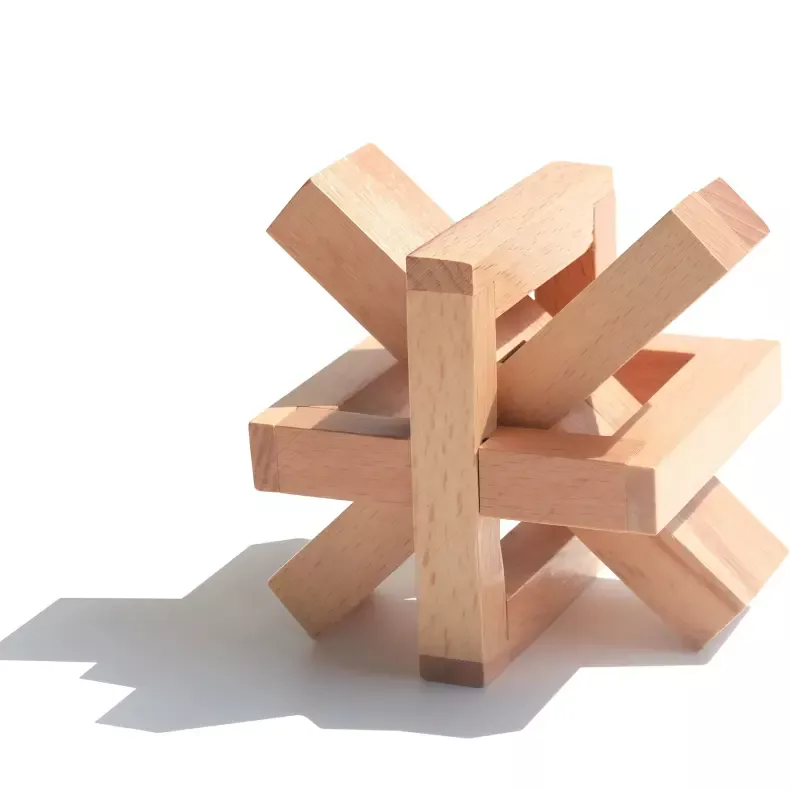
The Besieged City ($16.99) is a puzzle where you might be tempted to reach for tools, but I urge you not to. This mechanism reportedly challenged Emperor Taizong. It embodies the idea that “great fullness appears empty.” To the uninitiated, it looks like a solid cage. But the solution is hidden in plain sight. It hones your spatial reasoning by forcing you to look through the “bars” of the city to see how the internal components are oriented. It’s a reminder that the most direct path—pulling the pieces apart—is rarely the one that works.
Maintenance: Why Your Box Might Be “Broken” (But Isn’t)
Because wooden puzzles are made of a living material, they are susceptible to the environment. I’ve had people email me saying their box is “broken” because a panel won’t slide. 90% of the time, the issue is humidity. Wood swells in the summer and shrinks in the winter.
If a box is too tight, try putting it in a sealed container with a few silica gel packets for 24 hours. This will draw out excess moisture and often shrink the wood just enough to restore the tolerances. Conversely, if a box is so loose that the pieces are falling out, it might be too dry. A tiny bit of high-quality wood wax (I prefer Renaissance Wax) can lubricate a sticking joint without leaving an oily residue.
Wood Knot Puzzle
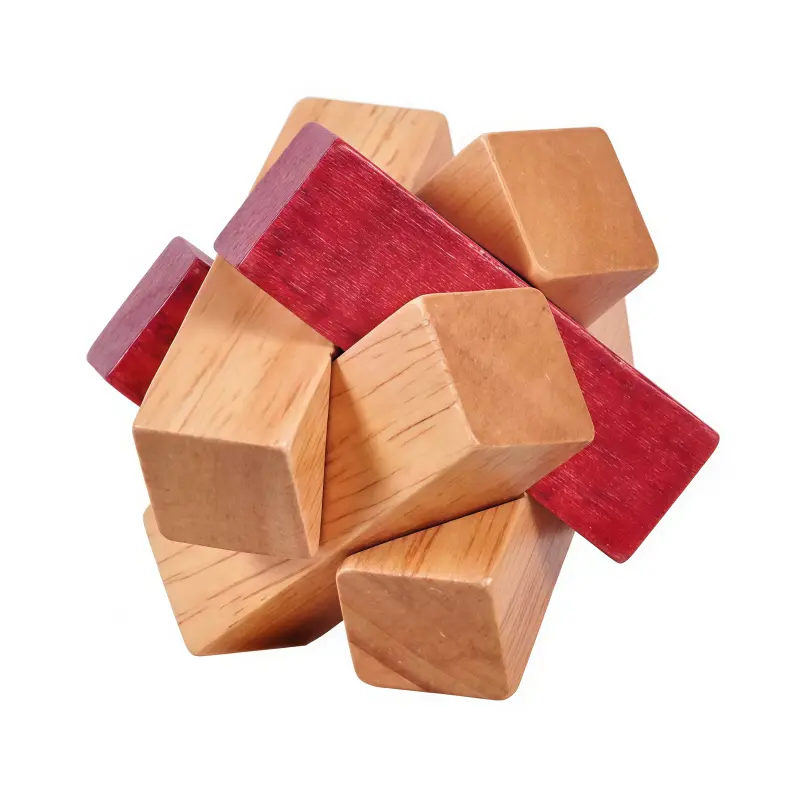
The Wood Knot Puzzle ($16.99) is particularly sensitive to these changes. It’s composed of six precisely crafted hardwood pieces with no glue or screws. When the humidity is just right, the geometric harmony is a thing of beauty. But if it gets damp, those pieces will bind like they’re glued together. Handling this puzzle is a “mindful practice.” It connects ancient Taoist teachings—like “great form has no shape”—with modern engineering. It’s a staple in my collection because it’s a pure test of geometry. If you can’t solve it, it’s not because you’re not strong enough; it’s because you haven’t found the “foundation” of the knot.
The Outlier: When the Puzzle Isn’t a Box
Sometimes, the “box” we are trying to open is actually a topological challenge. These puzzles don’t have sliding panels; they have paths. You are “opening” a path to freedom for a specific piece, like a ring or a bead. These require a completely different mindset—one focused on “tracing” rather than “sliding.”
Ring Rescue
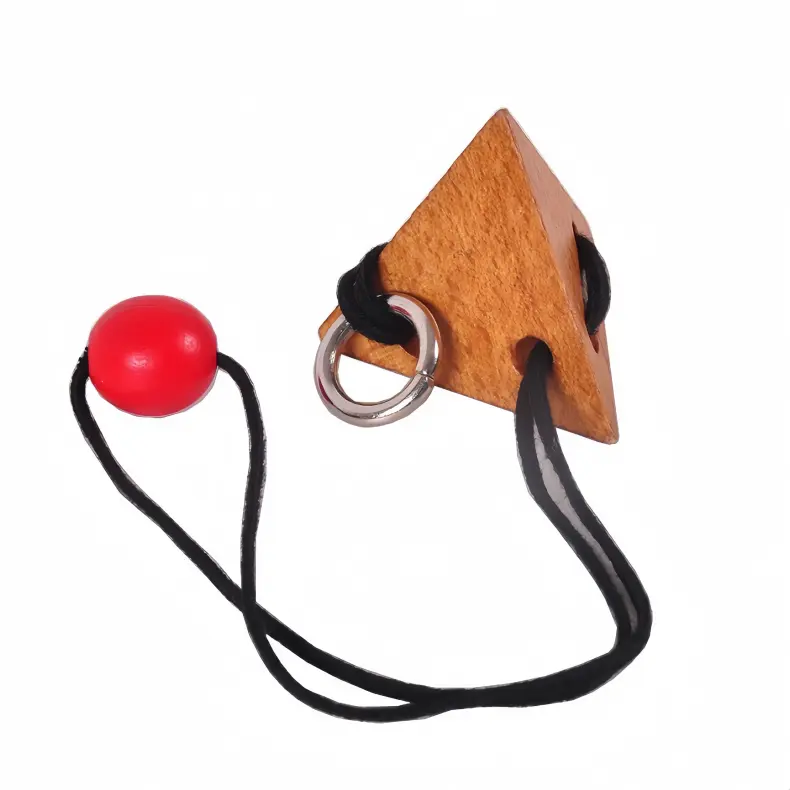
Ring Rescue ($14.99) is the perfect example of this. It’s a wooden triangle with a black rope, a red bead, and a silver ring. Your goal is to “rescue” the ring. If you yank on the rope, you’ll just tighten the knot. This is a lesson in attention. You have to “get the One,” as the old saying goes—trace the path of the rope back to its origin to find the single loop that unlocks the whole mess. It’s a great way to take a break from more rigid mechanical puzzles and engage a different part of your brain. It’s quiet, portable, and infinitely more frustrating than it looks.
FAQ: Everything You’re Afraid to Ask About Puzzle Boxes
How do I open a wooden puzzle box if I’m completely stuck?
First, stop applying pressure. Most people get stuck because they are trying to force a move that isn’t there. Take a high-resolution photo of every side of the box and zoom in on the grain. Look for any break in the pattern. If that fails, try the “tapping” method—gently tap the box against your palm to see if any internal pins rattle. If you still can’t get it, search for the specific name of the box on a guide for trick boxes. Sometimes there is a “hidden” step, like blowing into a hole or using a magnet, that isn’t immediately obvious.
Can I use WD-40 or oil to make the panels slide better?
Absolutely not. Never use liquid lubricants on a wooden puzzle. The wood will absorb the liquid, swell, and potentially ruin the mechanism forever. If you need lubrication, use a dry substance like a tiny bit of powdered graphite or a specialized furniture wax. I’ve seen beautiful Japanese boxes ruined by people trying to “fix” them with spray lubricants.
What is the “standard” number of moves for a puzzle box?
There is no standard. A “trick box” might only have one move, while a high-end Japanese puzzle box can have over 100 steps. For beginners, I usually recommend starting with something in the 6-to-12 move range. It’s enough to be challenging without being demoralizing. If you’re curious about how your skill level stacks up, check out these realistic timeframes for various difficulty levels.
Why are some wooden boxes so much more expensive than others?
It comes down to tolerances and materials. A $15 box is likely mass-produced with looser tolerances, which actually makes it easier to find the seams. A $200 box is often handmade with tolerances so tight that the air pressure inside the box actually provides resistance when you move a panel. The higher the price, the better the “lie.”
Are wooden puzzle boxes good for kids?
Yes, but with a caveat. Younger children (under 8) often lack the fine motor control and patience required for complex boxes and might try to force them open. I recommend starting kids with something like the 3D Wooden Puzzle Safe because the assembly process teaches them how the mechanism works, which discourages them from breaking it later.
My box is rattling. Is something broken inside?
Not necessarily. Many boxes use “locking pins” or gravity weights that are designed to rattle. That sound is actually a clue! It tells you there is a moving part inside that isn’t currently engaged. Your job is to figure out what orientation (upside down, on its side, etc.) stops the rattle and allows the box to open.
What should I do if a piece of wood actually snaps?
If it’s a clean break along the grain, a tiny amount of wood glue (like Titebond II) can fix it. Use a toothpick to apply the glue so you don’t get any on the sliding tracks. If a gear tooth snaps on a 3D puzzle safe, you can sometimes “reconstruct” it with a mix of wood glue and sawdust, but it’s difficult. This is why I always emphasize a light touch.
How do I store my collection to prevent damage?
Keep them out of direct sunlight and away from heat vents. Extreme temperature changes are the enemy of wood. I keep my most valuable pieces in a room with a consistent humidity level (around 40-50%). If you live in a very dry climate, a small room humidifier can save your collection from cracking.
Is there a way to reset a box if I’ve moved things and now it’s “stuck” halfway?
This is a common “mid-solve” crisis. If a panel is jammed, it’s usually because another piece hasn’t been moved back to its “neutral” position. Try to reverse your steps exactly. If you can’t remember them, gently shake the box while trying to slide the jammed panel. Sometimes a locking pin has dropped into a “half-way” position and just needs a little vibration to reset.
Are there any “unsolvable” puzzle boxes?
In the world of mass production, no. But in the world of high-end puzzle art, there are “sequential discovery” puzzles that can take months to solve. Some even require “external tools” that you have to find within your own house (like a specific coin or a toothpick), though those are rare. If you’re looking for a break from the intense mental load, you can always try a digital distraction like Chess Ranger to reset your brain.
What is the best wood for puzzle boxes?
Hardwoods like walnut, maple, and cherry are favorites because they hold a sharp edge and don’t warp easily. Exotic woods like ebony or rosewood are used in high-end pieces for their beauty and density. Plywood is great for “build-it-yourself” kits because it’s dimensionally stable, but it lacks the soul and tactile warmth of solid wood.
Can I make my own puzzle box?
Absolutely. There is a huge community of “makers” who design their own boxes. If you’re interested in the “how-to” aspect, I recommend starting with a simple “sliding lid” design and then adding one “locking” element, like a hidden peg. It’s a great way to appreciate the craftsmanship that goes into professional puzzles.
The Final Click: Why We Keep Searching
As I look at the collection on my shelf—some pieces worn smooth by years of handling, others still as crisp as the day they were carved—I’m reminded that a puzzle box is one of the few objects that requires a true partnership between the creator and the solver. The maker hides a secret, and you, through patience and observation, bring it to light.
Opening a wooden puzzle box is a lesson in humility. It teaches you that your first instinct is often wrong, that force is the enemy of progress, and that the most complex problems often have the most elegant solutions. Whether you’re working through the Luban Lock Set or trying to crack the code on a 3D Wooden Safe, the goal isn’t just to get to the “prize” inside. The goal is the “click” itself—that moment of clarity when the wood yields and the mystery is solved.
My recommendation? Start with the 6-in-1 set. It’s affordable, durable, and covers enough different mechanical principles to give you a solid foundation. Put one in your pocket, take it to a coffee shop, and wait for that moment when the world falls away and it’s just you, the wood, and the sequence. Just remember: if you start to feel frustrated, put it down. The box isn’t going anywhere, and the solution is usually waiting for you just on the other side of a deep breath.