A measurement tool tells you how long something is. A Lu Ban ruler tells you whether a doorway will bring prosperity or ruin. That distinction — between raw data and embedded meaning — sits at the heart of one of the oldest craft traditions still echoing through workshops today. And it raises a question worth sitting with: what happens when a maker encodes intention directly into the act of building?
The records that survive from this tradition read less like instruction manuals and more like operating systems for a worldview. They prescribe which month to break ground. They specify how many rooms bring fortune and how many invite disaster. They detail rituals involving incense, offerings to celestial masters, and prayers to the spirits of the four directions — all before a single joint is cut. To a modern Western reader, this can sound like superstition. But spend enough time with the underlying logic and something sharper emerges: a framework that forced every craftsman to pause, consider consequences, and build with deliberate care.
That forced pause is the part worth stealing.
When the Calendar Told You What to Build
Before any timber was selected, before any site was cleared, the tradition demanded consultation with a calendar system governing construction activities month by month. Each of the twelve months carried specific heavenly stem and earthly branch combinations — cyclical markers from the Chinese sexagenary system — that determined whether a given day was suitable for raising beams, setting foundations, or opening doors.
This was not casual advice. The records lay out dense tables: the first month favors certain stem-branch pairings; the seventh month demands others entirely. Get it wrong, and the text warns of consequences ranging from illness to financial collapse within three years. Dramatic? Certainly. But the practical effect was remarkable: no carpenter could rush a project. The calendar imposed a rhythm on the work that guaranteed reflection between stages.
Modern productivity culture worships speed. Ship fast, iterate, move on. The old construction calendars worked on an opposite principle — that certain kinds of work deserve certain kinds of timing, and that haste in foundational decisions compounds into structural failure. Anyone who has ever rushed through assembling something complex, skipped a step, and ended up disassembling the whole thing knows this instinct is not entirely wrong.
The same patience shows up in places you might not expect. A piece exploring the roots of the Lu Ban craft tradition traces how this deliberate pacing shaped not just buildings but an entire philosophy of making. The calendar was never about astrology. It was about forcing attention onto the process.
The Ritual Before the First Cut
The ceremony described in these records is elaborate and specific. An altar is erected. Offerings are arranged: incense, flowers, candles, wine, fruit — placed in precise configurations. The officiant invokes the masters of the Three Realms, the high immortals of the ten directions, and the star deities of the Northern Dipper. The language is formal, almost contractual. It reads as though the builder is filing a permit with the universe itself.
One passage prescribes the setting up of a wooden framework, the placement of offerings at specific compass points, and the recitation of prayers requesting that the Lu Ban immortal master, along with celestial carpenters, descend to bless the site. The text instructs the practitioner to declare the precise date, the location — down to the county and village — and the name of the household commissioning the work.
What strikes a modern reader is the specificity. This is not vague spiritual language. It is procedural. Step one: erect the altar. Step two: arrange the five-color offerings. Step three: recite the invocation naming the three realms and four directions. Step four: formally request protection from malevolent forces during construction.
Strip away the cosmological framework and what remains is a pre-construction checklist executed with absolute seriousness. Every tradesperson today understands the concept of a pre-flight check. The old ritual was the same impulse dressed in different clothes — a systematic refusal to begin important work casually.
The seriousness of preparation before engaging with something complex translates directly to the world of physical puzzles. Experienced solvers know that the first five minutes of simply observing and handling a new mechanism — without forcing anything — determines whether the next hour is rewarding or frustrating. This is one reason why understanding when a puzzle becomes a practice matters more than most people realize.
What the Door Knows That You Do Not
The most immediately practical section of these records concerns the Lu Ban ruler — a specialized measuring tool divided into segments, each carrying a character representing a specific fortune or misfortune. The eight primary characters cycle across the ruler: wealth, illness, separation, righteousness, officialdom, robbery, harm, and fundamental goodness.
The system works like this. When measuring a door opening, the dimension falls on a particular character. If the measurement lands on “wealth” (財), the door is considered auspicious for prosperity. If it lands on “illness” (病), the household will suffer sickness. “Separation” (離) warns of family members departing. “Righteousness” (義) promises filial harmony and moral conduct. “Officialdom” (官) can mean either government advancement or legal troubles, depending on the sub-division. And so on through the remaining characters.
The records then detail extensive sub-readings within each character. Under “wealth,” for instance, one sub-position promises accumulated treasure while another specifically indicates that the carpenter will bring fortune to the household. Under “illness,” one position warns of lingering disease while another speaks of inevitable departures. The granularity is striking — this is not a binary lucky-or-unlucky system but a nuanced spectrum where exact measurements carry highly specific predictions.
What makes this genuinely interesting, beyond the divination aspect, is what it reveals about how seriously traditional builders took proportion. A door was never just a hole in a wall. It was a threshold — literally and symbolically — between the controlled interior and the chaotic exterior. The Lu Ban ruler encoded that belief into every measurement, which meant that carpenters could not simply cut to a convenient size. They had to cut to a meaningful size.
This insistence that dimensions carry meaning beyond function has a surprising parallel in precision mechanical objects. Anyone who has handled a quality puzzle lock knows that the tolerances in a well-made metal puzzle are not arbitrary. Hundredths of a millimeter determine whether a mechanism slides freely or binds permanently. The old carpenters would have understood immediately: proportion is not decoration. It is destiny.
Lu Ban Lock Set — 9 Piece
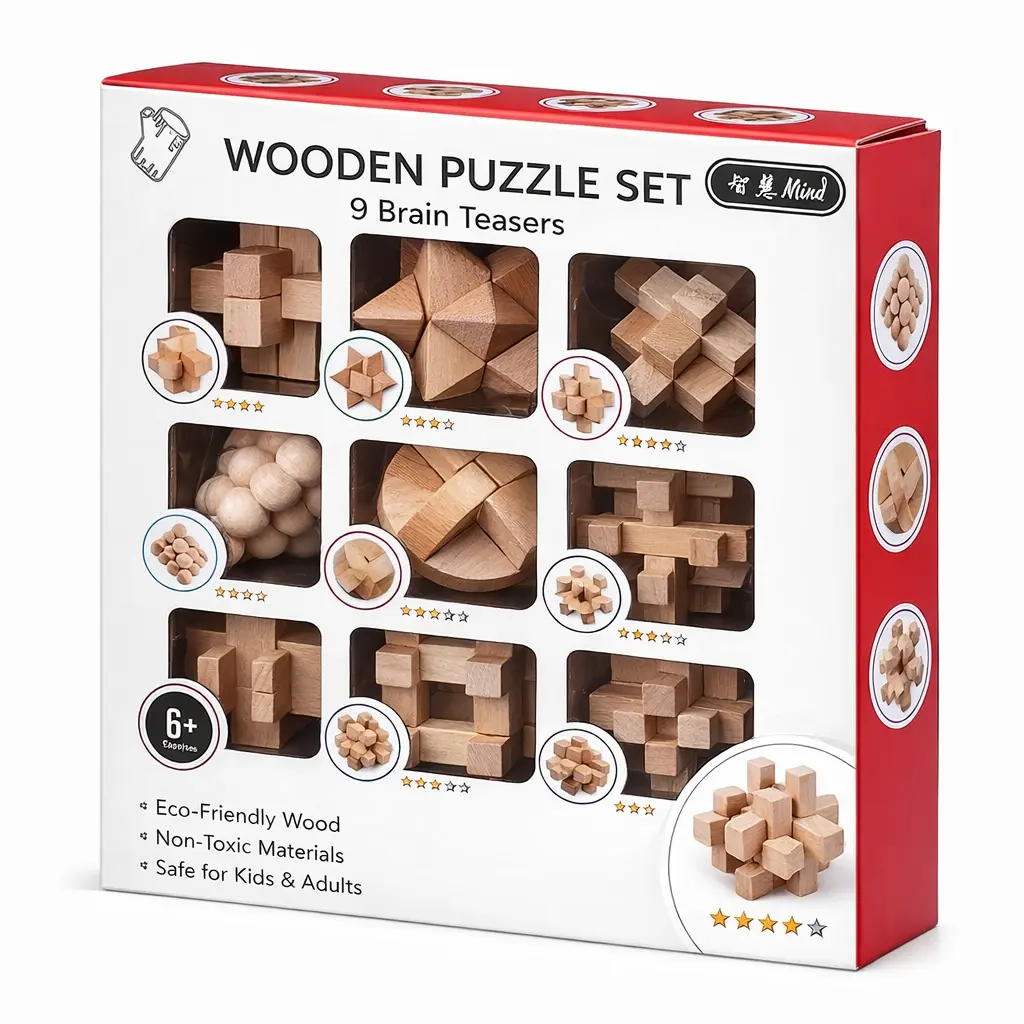
The most direct descendant of the Lu Ban carpentry tradition available today. This set of nine interlocking wooden pieces requires the solver to discover the correct sequence of assembly and disassembly — a process that mirrors the old construction manuals’ insistence on doing things in the right order. Each piece is cut to precise proportions so that the whole holds together without glue, nails, or any visible fastener. The connection to the tradition is not metaphorical; these locks are literally named after the same master carpenter whose ruler system fills the pages of the records. Not suited for anyone looking for a quick solve; some pieces in the set demand real spatial reasoning.
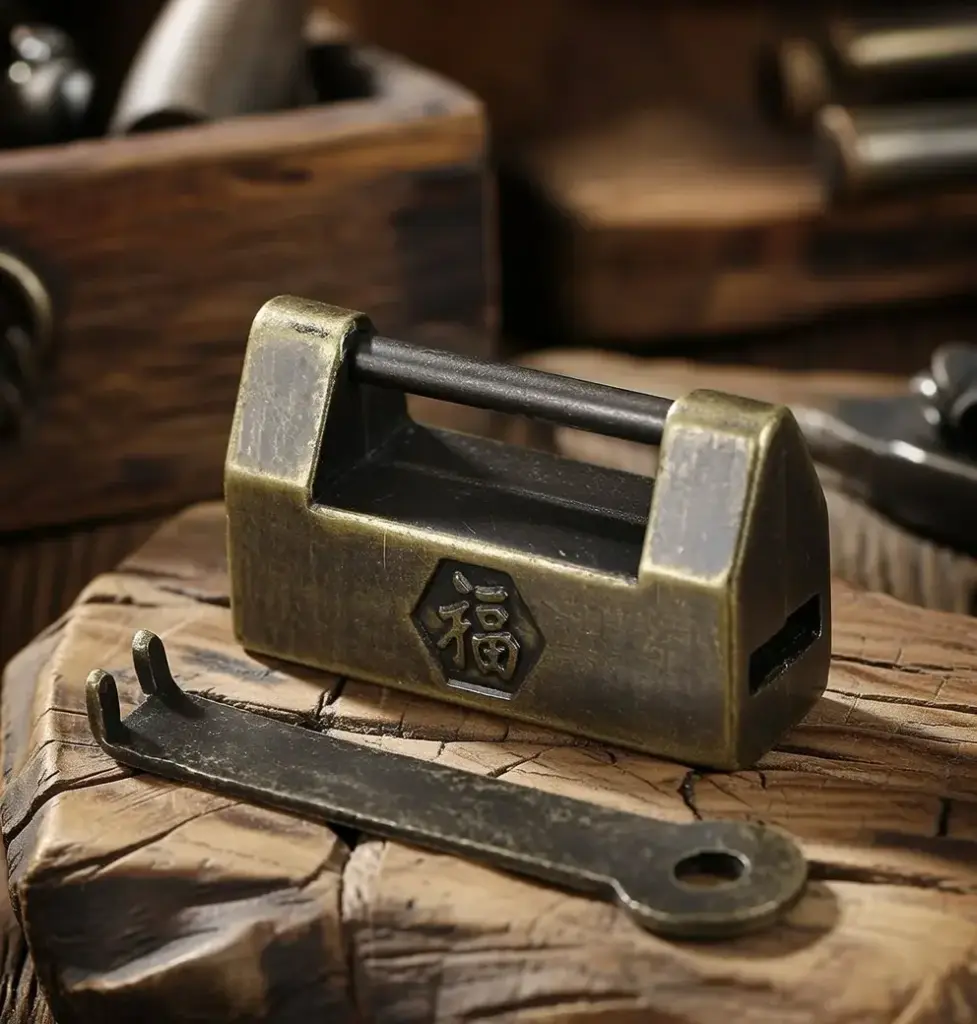
Chinese Old-Style Fu Lock with Key
The character “Fu” (福) means fortune — the same concept that governs the “wealth” division on the Lu Ban ruler. This brass lock uses a traditional spring mechanism hidden inside a decorative body. The key’s path into the lock is not obvious, requiring the user to discover the correct insertion angle. It is a small, tangible version of the Lu Ban principle: the right approach matters more than brute force. The brass develops a natural patina over time, which some find appealing and others do not. Worth confirming dimensions on the product page before purchasing as a gift.
Rooms Counted Like Consequences
One section of the records provides a deceptively simple table. One room: inauspicious. Two rooms: auspicious. Three rooms: inauspicious. Four rooms: auspicious. Five rooms: auspicious. Six rooms: inauspicious. Seven rooms: auspicious. Eight rooms: inauspicious. Nine rooms: inauspicious.
The pattern is not random, but it is also not immediately obvious. What the text reveals when read closely is that the auspiciousness relates to the structural symmetry of the building. The records go on to discuss configurations — a hall of seven bays versus a hall of three bays, the consequences of building a three-bay hall with a seven-bay wing, and the disasters that follow within specific timeframes when proportions are violated.
The specificity of the warnings is chilling in its confidence. A five-room hall built with a three-room wing: within three years, four people will die. A seven-bay hall with improper proportions: within two years, seven deaths. The numbers read like threat rather than guidance. But the underlying principle is entirely rational: buildings with improper structural balance do fail. Roofs sag. Walls buckle. Foundations shift. The dramatic language served a practical function — it made carpenters afraid to take shortcuts.
Fear of consequences is a powerful teacher. Anyone who has attempted a complex wooden brain teaser with a reputation for difficulty understands the moment when confidence tips into caution. That shift — from “I can probably force this” to “maybe I should understand the structure first” — is exactly what the room-counting system was designed to produce.
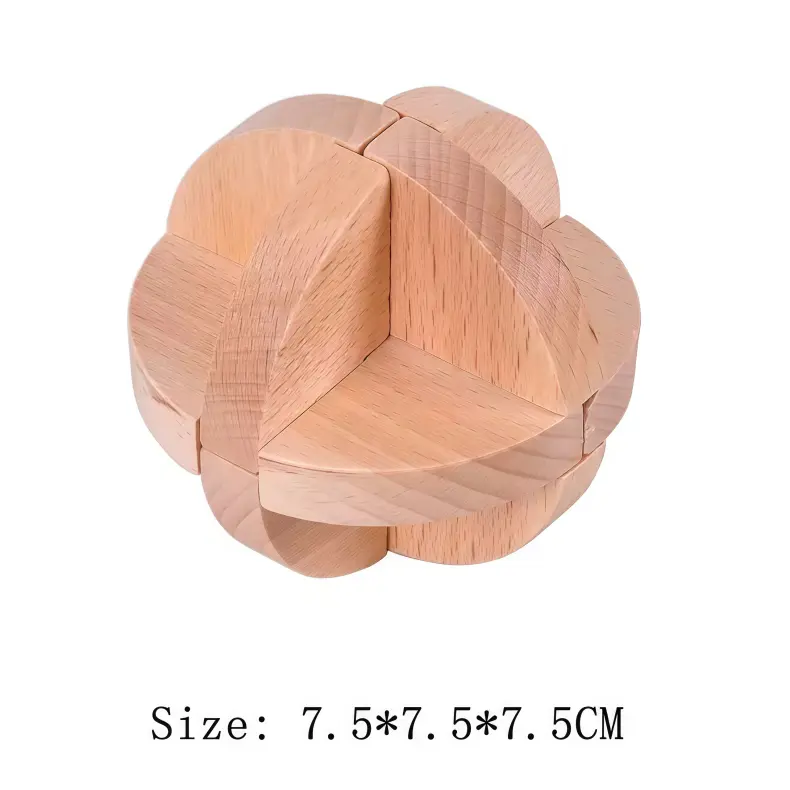
Lu Ban Sphere Puzzle
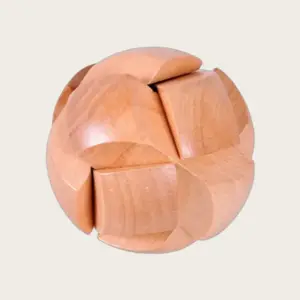
A sphere assembled from interlocking wooden pieces, each cut to fit with only one possible configuration. It tests the same structural logic the old manuals demanded: if one piece is placed incorrectly, the entire assembly fails. The sphere shape adds a layer of difficulty because the curves disguise the joint lines. Unlike flat-sided burr puzzles, there are fewer visual cues to guide placement. This makes it genuinely challenging — and genuinely satisfying when the last piece clicks into place and the sphere holds solid. Not recommended for young children due to the precision required.
Water Finds Its Own Level (And So Should You)
Buried among the ritual prescriptions and fortune tables is a passage of startling practical elegance. It describes the “night quiet water level method” — a technique for ensuring a building foundation is perfectly horizontal.
The method: place a stone in the center of the foundation site. Set upon it a basin of water. Wait until night, when the wind dies and the water stills completely. Then observe the water’s surface relative to markers placed at the foundation’s edges. Where the water level aligns with the markers, the ground is true. Where it does not, the ground must be adjusted.
No lasers. No spirit levels. No digital readouts. Just water, patience, and the understanding that stillness reveals what motion conceals.
This is arguably the most transferable insight in the entire text. Stillness as a diagnostic tool. The old builders trusted that if they could create conditions of sufficient calm — night, no wind, undisturbed water — the truth of their situation would become visible. The answer was always there. It simply required the noise to stop before it could be read.
Modern problem-solving tends to favor adding tools, adding information, adding effort. The water-level method suggests the opposite: remove disturbance and observe what remains. It is a principle that applies far beyond construction. The same idea surfaces in a different context in an essay on ancient systems thinking applied to modern life — the recurring discovery that balance is not something you build so much as something you stop disrupting.
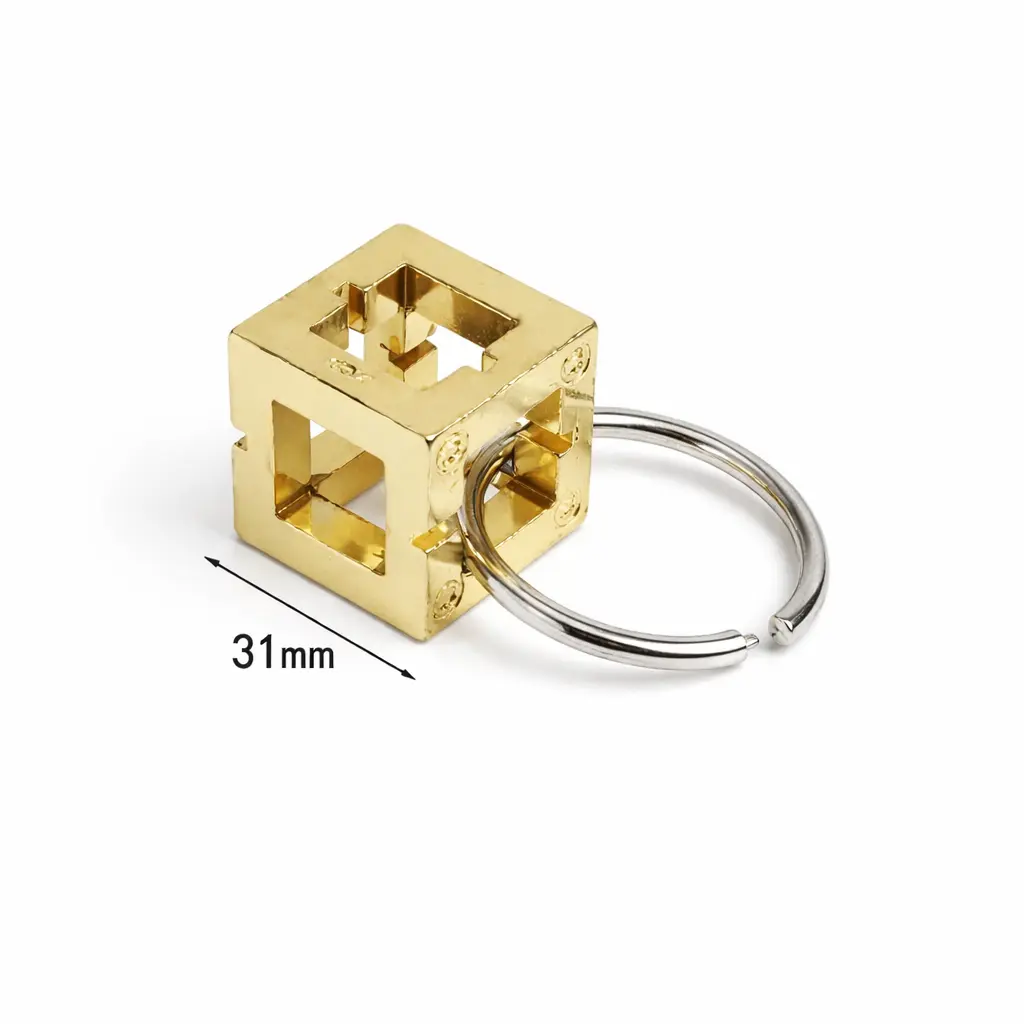
Brass Cube Maze Puzzle Keychain
At just 31mm per side, this brass cube contains an internal ball-bearing maze that you navigate blind — guided only by sound and subtle shifts in weight. The connection to the water-level method is direct: you cannot see the path. You must still your hands and listen for the bearing to find the route. Rushing produces nothing but frustration. Patience and micro-adjustments produce the click of the ball dropping into the exit channel. The keychain format means it travels everywhere, which makes it an excellent conversation piece but also means it can get banged up in a pocket. Brass construction ages well.
The Carpenter’s Ruler as Moral Instrument
The Lu Ban ruler descriptions occupy multiple pages because the system was not simple. Each of the eight primary characters contained further subdivisions, and the records assign highly specific consequences to each. Under the character for “separation” (離), for instance, one sub-position warns specifically that a married couple will part, while another warns that the household head will be forced to leave. Under “righteousness” (義), one sub-position promises that the eldest son will bring honor, while another speaks of charitable donations flowing naturally from the household.
The system effectively turned a measuring tool into a moral instrument. The carpenter was not merely building shelter. Through the ruler’s guidance, the carpenter was shaping the behavioral and relational patterns of the household. A door cut to a “righteousness” dimension would — according to the tradition — foster filial piety, generosity, and social harmony within the family. A door cut to a “robbery” dimension would attract thieves and betrayal.
This is a radical claim, and no modern evidence supports it literally. But as a design philosophy, it contains a kernel that resonates: the objects we build influence the lives lived within them. A doorway too narrow creates friction. A ceiling too low creates oppression. A room without natural light creates depression. The Lu Ban tradition simply took this observable truth and extended it to precise measurements, creating a comprehensive system that linked every dimension to a human outcome.
The idea that a made object shapes its user’s experience is fundamental to good puzzle design as viewed through mechanical engineering. A well-crafted puzzle does not just present a problem — it shapes the solver’s thinking, guides attention through subtle cues, and rewards the right kind of patience.
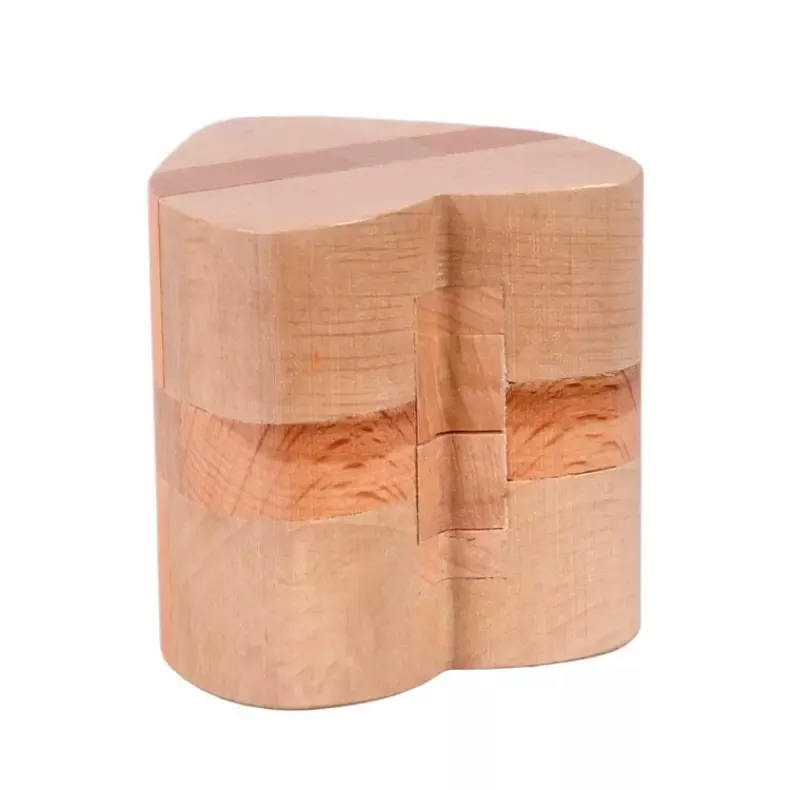
King Wen of Zhou Heart Lock Puzzle
Named after one of the founding figures of the Zhou dynasty — a ruler associated with the I Ching and the philosophical foundations of Chinese cosmology — this brass lock is shaped like a stylized heart. The mechanism requires discovering a hidden keyhole and then manipulating the key through an indirect path. The connection to the Lu Ban ruler tradition is through the shared belief that objects carry meaning beyond their function: the heart shape is not decorative. It signals that this lock is about relationship and commitment. Best suited for someone interested in the cultural layers behind the mechanism. Less interesting if you only care about difficulty level.
Precision as a Form of Respect
The records’ section on carpentry technique — titled “Carpenter’s Methods” (木匠技式) — shifts from the metaphysical to the material. It specifies measurements for structural elements: pillars placed on foundation stones, beams spanning specific numbers of bays, rafters measured against precise proportional formulas. The text provides ratios for three-bay, five-bay, seven-bay, nine-bay, and eleven-bay structures, each with its own set of dimensional relationships.
What emerges from these specifications is a modular system. Every element — pillar height, beam span, rafter length, ridge height — is calculated relative to a base measurement, typically the span between pillars. This means that a carpenter who understood the system could scale any structure up or down while maintaining perfect proportion. The building would look right at any size because the relationships between its parts remained constant.
This modular proportional thinking is precisely how the best wooden puzzles are designed. A piece in the wooden puzzle collection does not work because its parts are a particular size. It works because the relationships between those parts are exact. Scale the whole thing up or down and it still functions, because function lives in proportion, not dimension. The same principle runs through every object in a serious mechanical puzzle collection — from cast metal to carved wood.
The text also discusses the making of doors with unusual specificity. Single-leaf doors, double-leaf doors, decorative screen doors — each with its own measurement rules derived from the Lu Ban ruler system. A double-leaf door for a wealthy household requires different proportions than a single door for a modest home, not because of structural necessity but because the door announces the household’s station to the world. The door, in this system, is the building’s face. It communicates before a word is spoken.
Six Piece Burr Puzzle
Six notched wooden pieces that interlock into a seemingly solid cube. This is the purest expression of the Lu Ban joinery tradition in puzzle form — no glue, no nails, no fasteners. Just wood cut to exact proportions. One piece is the “key” that slides out first; without identifying it, the puzzle will not budge. The proportional relationships between the notches are everything. If this style interests you, the broader world of traditional wooden puzzles offers a wide range of difficulty levels. Affordable, compact, and endlessly re-solvable.
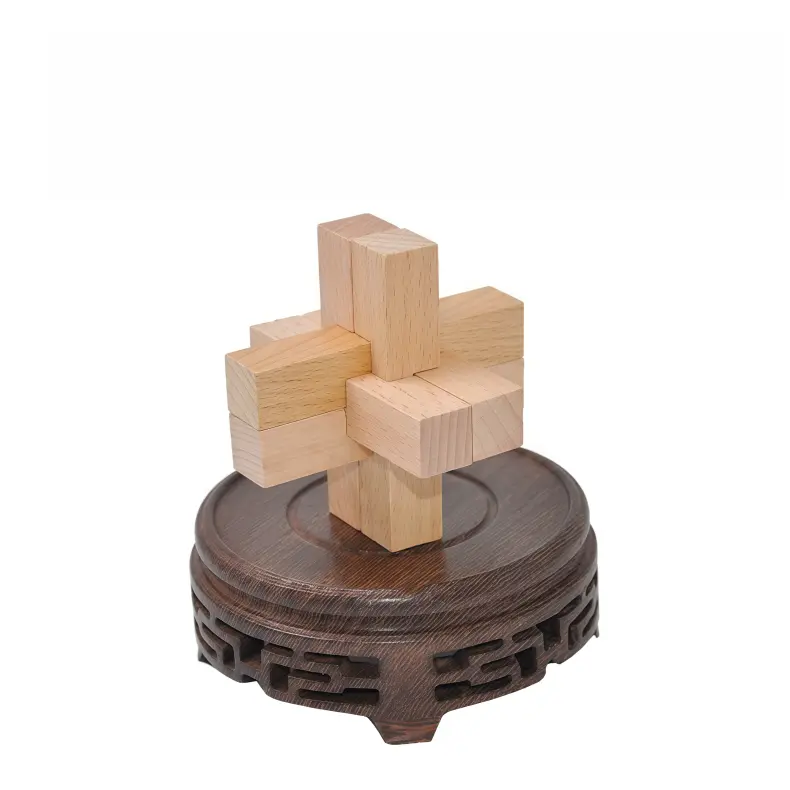
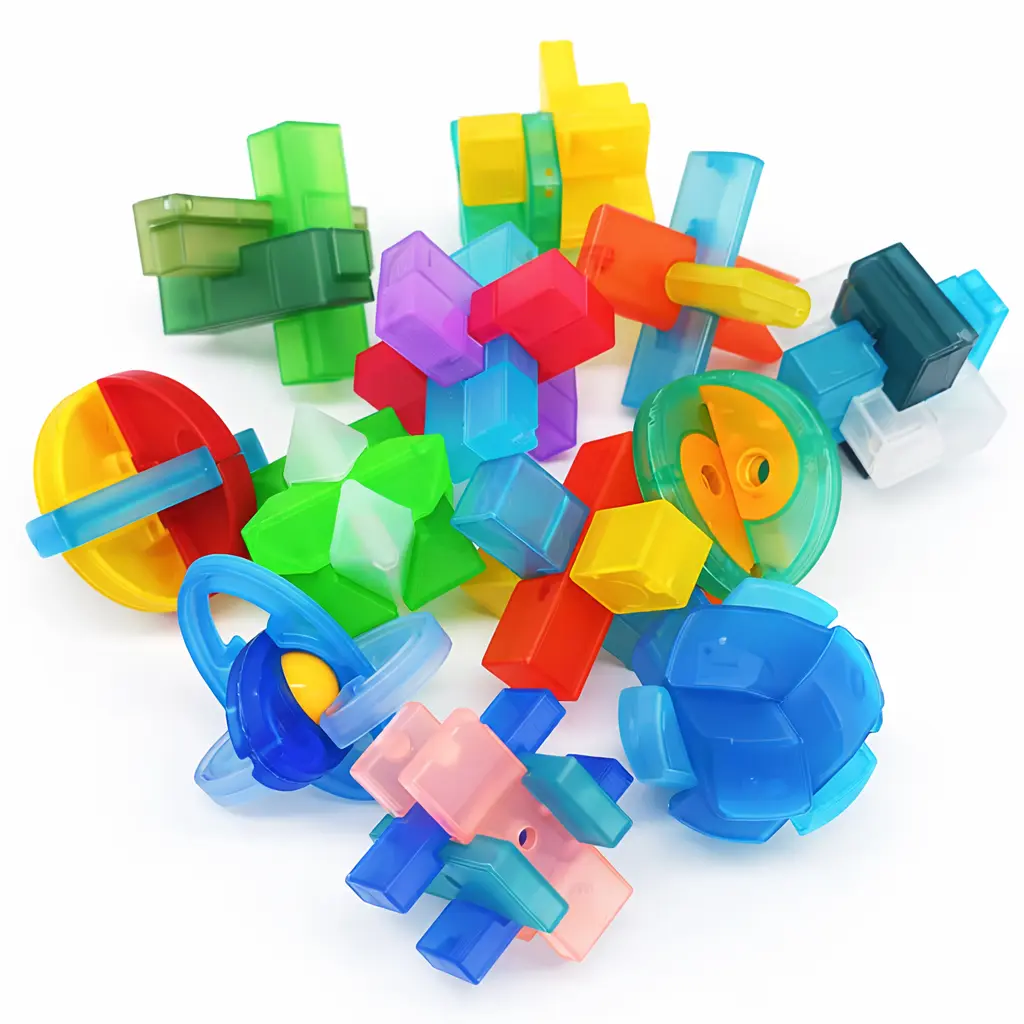
12 Piece Crystal Lu Ban Lock Set
A transparent variant of the traditional Lu Ban lock that lets you see the internal structure as you work. This is surprisingly useful for learning: the crystal material reveals the notch geometry that wooden versions hide. It connects to the Lu Ban text’s emphasis on understanding why proportions work, not just memorizing which ones to use. The trade-off is durability — plastic is lighter and more fragile than wood. Best as a learning tool or display piece rather than a daily-handling puzzle.
Who Should Skip All of This
Not every object needs to carry meaning, and not every person wants their hobbies to come with philosophical footnotes. If you are someone who prefers fast, disposable entertainment — and there is nothing wrong with that — the kinds of objects discussed here will frustrate you. Mechanical puzzles that reward slow observation, craft objects that demand respect for proportion, traditions that insist on ritual before action: these are for people who enjoy the process of understanding, not just the result.
Specifically, skip this if you want puzzles that can be solved in under five minutes. Skip this if you dislike objects without clear instructions. Skip this if the idea of spending forty minutes simply examining something before attempting to manipulate it sounds like a waste of time. If you do want something quicker and screen-based to warm up your spatial thinking, the memory match game offers that kind of instant gratification. But the Lu Ban tradition — and the modern craft objects that echo it — operates on the assumption that understanding is the reward, not the obstacle.
Also worth noting: the metaphysical claims in these records — that specific door measurements determine a family’s fortune, that building on the wrong day causes death — are cultural artifacts, not engineering principles. They are interesting as expressions of how seriously one tradition took the act of building. They should not be taken as literal guidance for modern construction decisions.
What Stillness Teaches the Hands
The water-level method keeps returning to mind because it is so elegant in its simplicity. Wait for night. Wait for stillness. Then look.
There is a version of this in every skilled craft. A woodworker lets a freshly glued joint sit overnight before testing it. A metalworker lets a casting cool completely before finishing. A puzzle solver — the good ones, anyway — lets a mechanism rest in their hands before applying force. The common thread is trust in time. Not passive waiting, but active patience: creating the conditions for truth to reveal itself.
The records describe the water-level method as one step among many, but it reads like the philosophical center of the entire tradition. Every ritual, every calendar consultation, every ruler reading is ultimately about the same thing: slowing down enough to see what is actually there, rather than what you assume is there.
Understanding why most puzzle attempts fail often comes down to this same insight. The mechanism was never hiding. The solver was simply moving too fast to notice what it was showing them. If you want to test this principle right now, try the Yin Yang logic puzzle game — a deceptively simple grid that punishes rushing and rewards the same patient observation the old builders practiced.
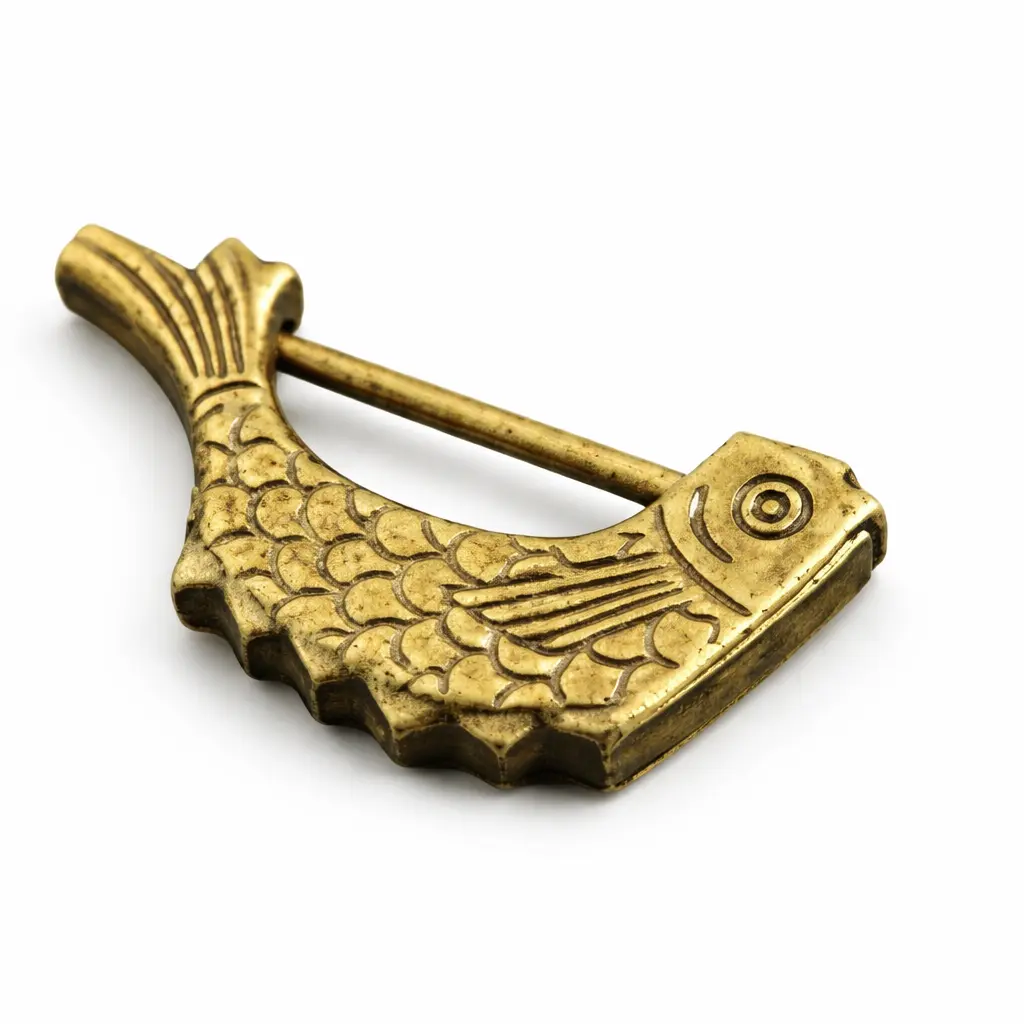
Chinese Koi Puzzle Lock
A brass padlock shaped like a leaping koi fish — a symbol of perseverance and upward transformation in Chinese tradition. The lock mechanism is hidden within the fish’s body, and opening it requires discovering the correct sequence of manipulations. The koi form is not just decorative: in the old tradition, the carp that leaps the Dragon Gate becomes a dragon. The lock rewards the same quality. It belongs to a rich tradition of wooden and metal locking puzzles where the mechanism is the message. There is a detailed review of how this traditional fish-shaped padlock actually works for anyone who wants the full mechanical breakdown. Weight and patina give it a satisfying hand feel.
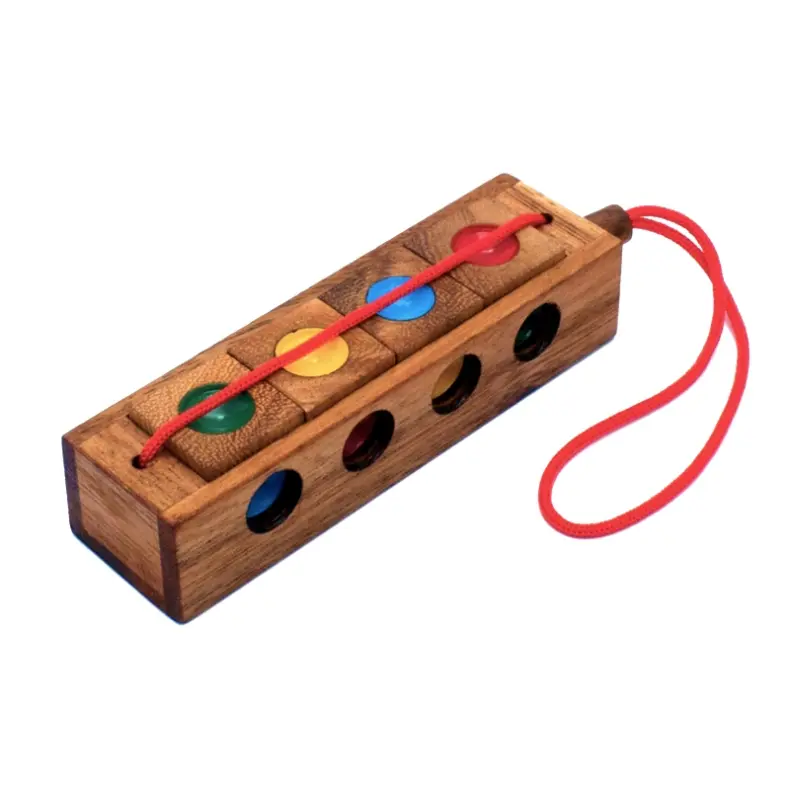
Kongming Lock Color Match
Named after Zhuge Kongming (Zhuge Liang), the legendary strategist whose name became synonymous with cleverness in Chinese culture. This wooden puzzle adds color-matching to the traditional interlocking structure, creating a dual challenge: spatial reasoning plus pattern recognition. The Lu Ban tradition and the Kongming tradition are distinct but parallel — both encode intelligence into physical objects. The color-match variant is more forgiving than the uncolored versions because the colors provide visual feedback on whether a piece is correctly oriented. Good entry point for beginners.
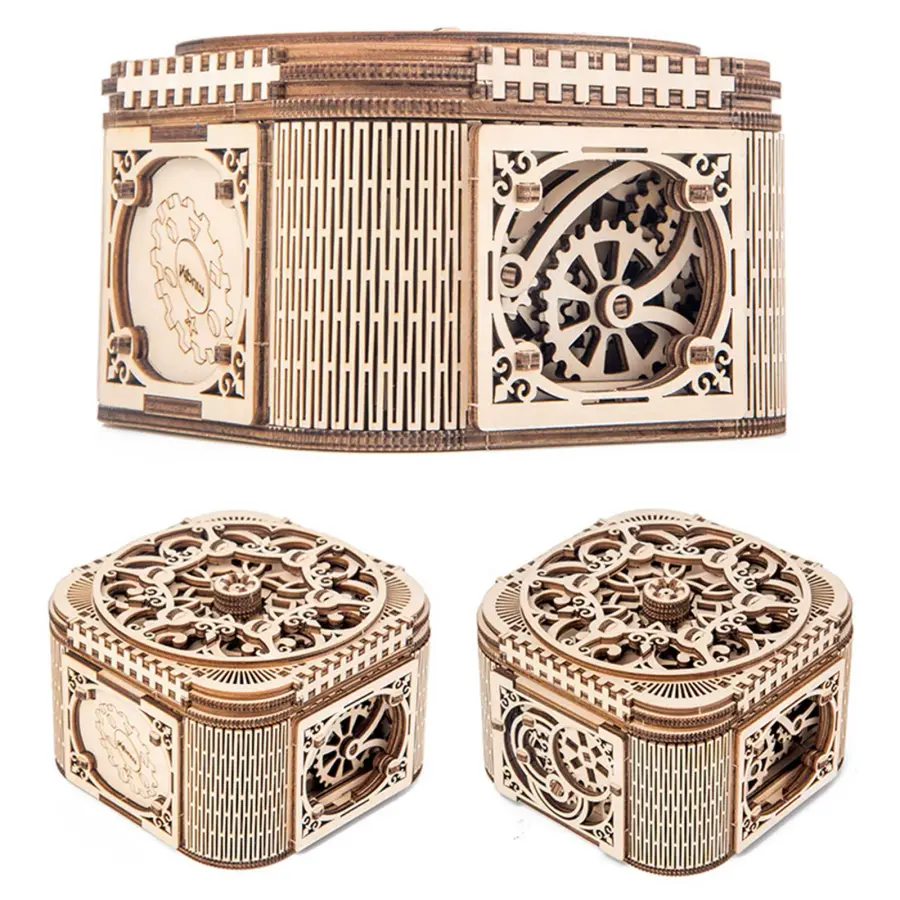
3D Wooden Puzzle Treasure Box
A mechanical jewelry box assembled from laser-cut wooden pieces, featuring hidden compartments and a locking mechanism. The connection to the Lu Ban tradition is through concealment: the old carpenters built hidden storage into furniture using the same joinery principles described in the text. This box requires assembly before it can be used, which means the owner understands exactly how the mechanism works — and how to open the secret compartments. Practical as actual storage once assembled. The build process takes time; check the product page for estimated assembly duration.
A Measure of What Matters
The Lu Ban tradition encoded an entire worldview into the act of measuring wood. Fortune and ruin lived inside specific millimeters. Safety and disaster hinged on the day you began work. Harmony and discord depended on the number of rooms you built and whether your doors faced the right direction.
We do not need to believe any of that literally to recognize what it accomplished. It created a culture of builders who could not treat their work casually. Every measurement was a moral decision. Every construction day was a chosen commitment. Every door was a statement about what kind of life would be lived behind it.
The best modern craft objects carry a faint echo of this seriousness. A handmade puzzle from the shop that took its maker weeks to design and build asks something of the person who encounters it: slow down, pay attention, respect the work that went into this. In a world oversaturated with screens, these are exactly the kind of screen-free gifts that offer something no app can replicate. That request — to match the maker’s care with your own attention — is the Lu Ban tradition’s most durable legacy.
No ruler required. Just the willingness to measure twice before you cut.