
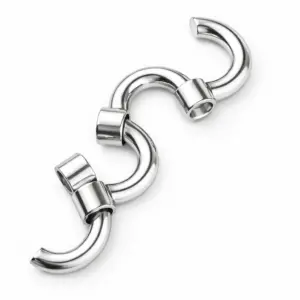
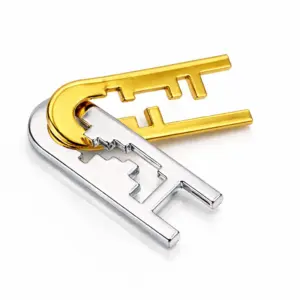
Cast Hook Metal Brain Teaser – Two Identical Pieces, One Deceptive Challenge
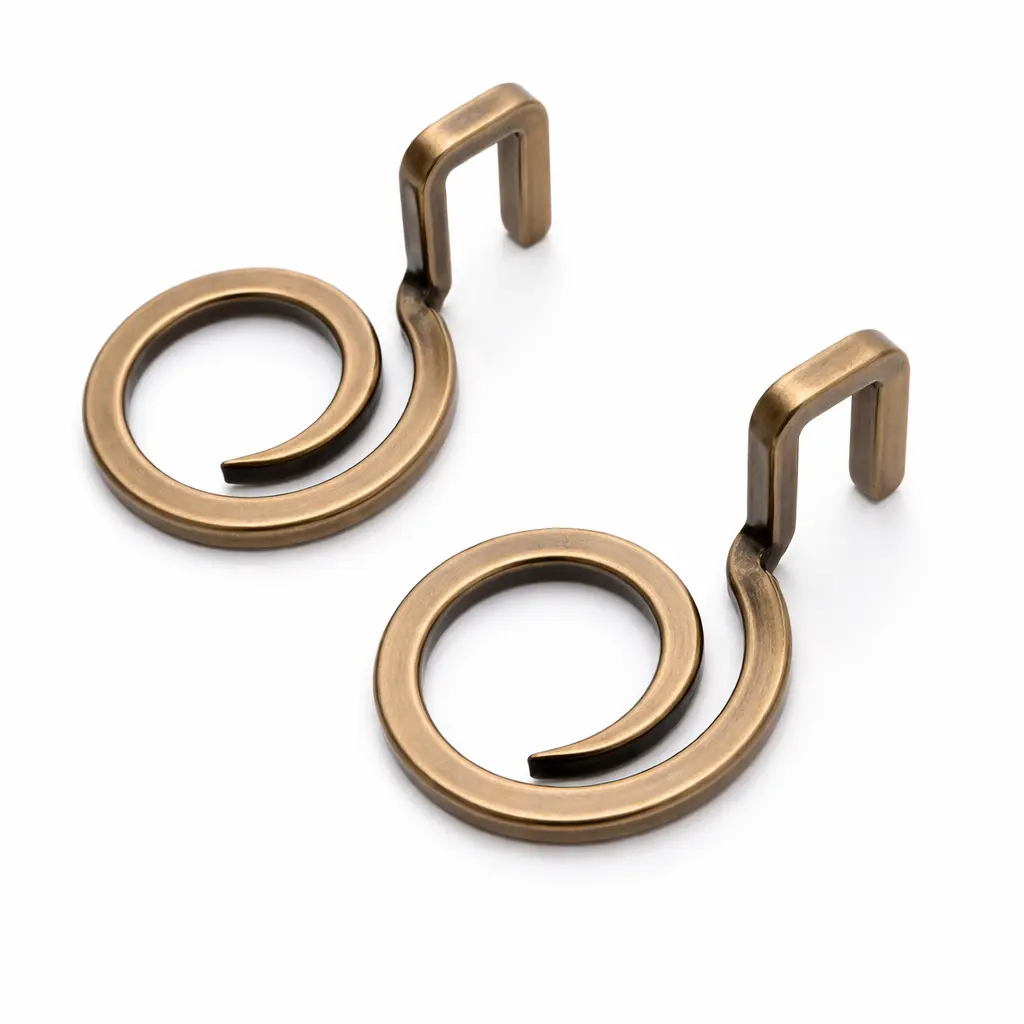
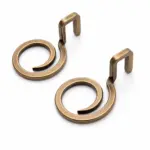
Pick up both pieces. They’re the same shape — same S-curve, same open hook tips, same weight in your palm. Obvious, right? Just slide one off the other. Should take five seconds.
It won’t.
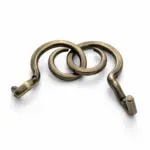
The Cast Hook Metal Brain Teaser belongs to a category of puzzles that weaponize simplicity. Two identical cast metal hooks interlock through a sequence of rotations that feels impossible until the moment it doesn’t. Then the pieces fall apart in your hands, and you think: that was it?
Try putting them back together. That’s when this puzzle actually starts.
The simplest-looking things sometimes hold the deepest reward. What appears obvious still requires patience to truly engage with.
What You’re Holding
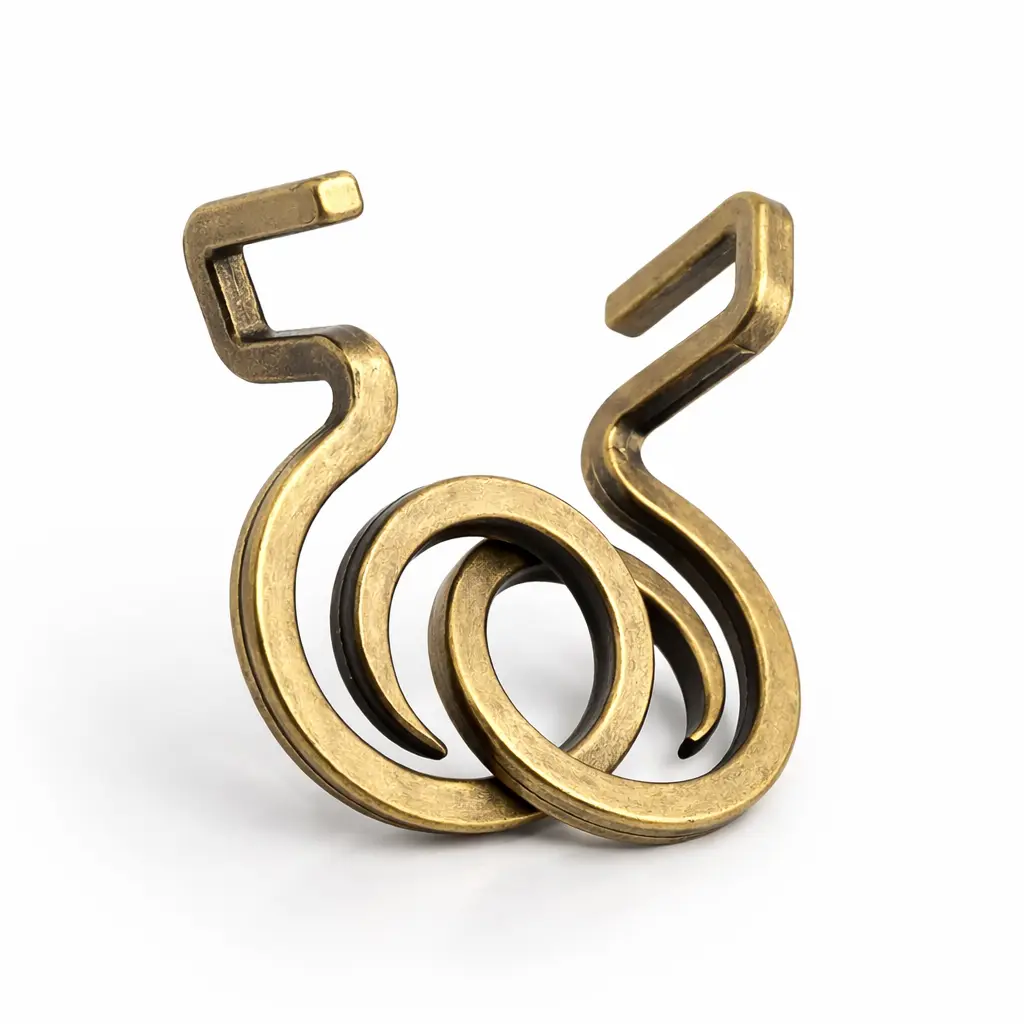
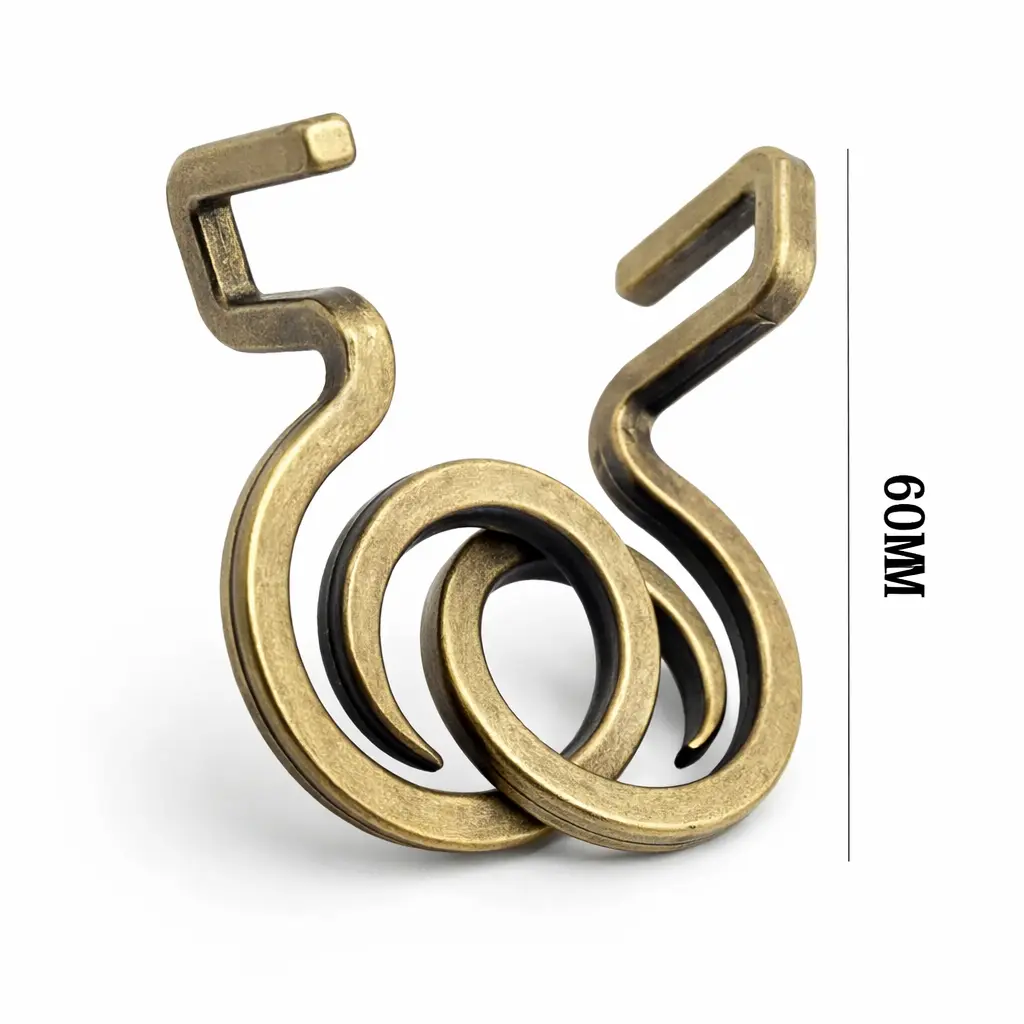
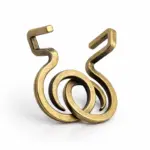
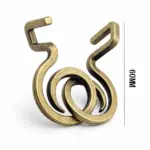
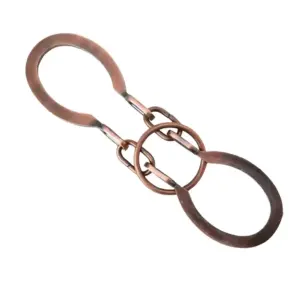
Each piece is a single casting of solid metal alloy finished in an antique bronze tone that catches light in a way that makes it look like something pulled from an old watchmaker’s drawer. At approximately 60mm tall, the pair fits in one hand with room to spare. The hook profile features a smooth S-curve that terminates in flat, rounded tips — no sharp edges, no rough spots. The casting seams are clean and nearly invisible.
Weight-wise, expect something close to a heavy coin or a chunky keychain. Enough heft to feel substantial without being uncomfortable in a jacket pocket. The finish appears durable under normal handling — the kind of patina that improves rather than degrades over time.
If you’ve been exploring pocket-sized metal brain teasers or compact desk puzzles, this one sits right in that category: small enough to carry, interesting enough to revisit, quiet enough for a meeting.
How the Mechanism Works (Without Spoilers)
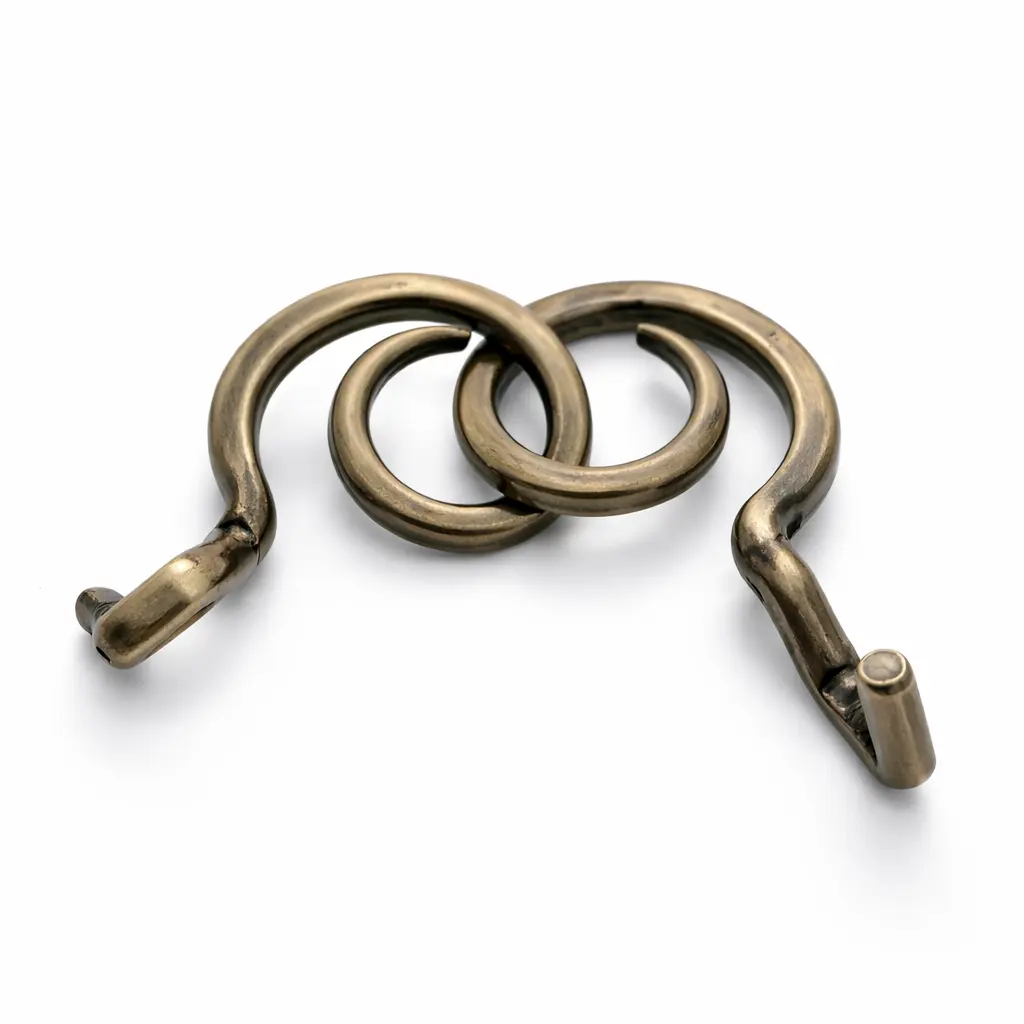
The Cast Hook is a disentanglement puzzle. The goal is to separate the two interlocked pieces and then reconnect them. No keys, no hidden compartments, no moving parts beyond the pieces themselves. Just two identical shapes that intertwine through a specific path.
The trick lies in understanding how curves pass through curves. Your instinct will be to pull, twist, or pry. None of that works. The solution requires a precise rotational sequence — a series of gentle, deliberate movements where one piece navigates through the opening of the other. Think of threading a needle, except the needle is the same shape as the thread.
Here’s what makes it deceptive: because both pieces are identical, there’s a visual symmetry that suggests you should be able to reverse any movement you make. In practice, the geometry only allows passage in specific orientations. Finding those orientations is the puzzle.
Most people separate the pieces within five to fifteen minutes on their first attempt. Some crack it in two. Others spend half an hour convinced it’s welded shut.
The Reassembly Problem
Taking something apart is always easier than understanding how it fits together. That principle applies with particular force here.
Once separated, the two hooks look unassuming. Two small, identical metal shapes sitting on your desk. Surely putting them back together just means reversing what you did?
In theory, yes. In practice, you’ve lost the visual reference of the starting position. You no longer know which orientation was “step one.” And because both pieces are identical, there’s no marking to tell you which end was which.
This is where the Cast Hook separates itself from most entry-level puzzles. Disassembly tests your logic. Reassembly tests your spatial memory. You may find yourself repeating the disassembly multiple times, paying closer attention each round, just to internalize the movement path well enough to reverse it confidently.
Experienced puzzle solvers sometimes note that two-piece puzzles can defeat people who breeze through harder designs — precisely because they underestimate the challenge.
Who This Is For
The person who needs something to do with their hands. You tap pens. You click retractable lids. You spin things. The Cast Hook gives your fingers something genuinely engaging without demanding your full attention. Quiet enough for calls, compact enough for a breast pocket, satisfying enough to keep you coming back.
The gift-giver who’s tired of safe choices. Candles get burned. Gift cards get spent. This stays on someone’s desk for months, occasionally picked up, occasionally solved, always present. It looks more expensive than it is, and the challenge is personal enough to spark conversation. If you’re looking for more screen-free gift ideas, puzzles like this hit the sweet spot between novelty and lasting value.
The puzzle beginner testing the waters. You’ve seen metal brain teasers in shops and online but never bought one. You’re not sure if you’ll like the hobby. The Cast Hook is the right entry point — accessible difficulty, genuine mechanism, no wasted investment. If it hooks you (the pun is unavoidable), you’ll find yourself looking at the full metal puzzle collection within a week.
The collector filling a gap. You own a shelf of puzzles but nothing in the easy-tier disentanglement category. The Cast Hook rounds out a collection by representing the elegant end of simple mechanisms. It also serves as a warm-up piece when showing puzzles to guests who’ve never handled one.
Who Should Skip This
You want a multi-hour challenge. The Cast Hook’s disassembly is measured in minutes, not hours. If you’re after the kind of puzzle that consumes an entire evening, you need something with more pieces and higher complexity — the four-piece cast galaxy puzzle or the five-piece cast spiral would serve you better.
You dislike metal textures. Cast metal is cool, smooth, and unyielding. If you prefer the warmth and give of wood, a six-in-one wooden brain teaser set might suit your hands better.
You’re buying for children under 12. Small metal pieces pose a choking hazard for young children. This is a teen-and-adult puzzle.
What to Expect Honestly
This puzzle is not going to change your life. It’s a small, well-made metal object that provides a specific kind of satisfaction — the click of understanding when the pieces separate, the focused attention when you try to rebuild, the pleasure of carrying something in your pocket that’s both beautiful and functional.
What it won’t do: stump you for days. Impress hardcore puzzle veterans with its complexity. Make you feel like you’ve accomplished something monumental.
What it will do: make you pay attention. Sharpen your spatial awareness for fifteen minutes. Give you a better-than-average desk toy. Provide a genuine conversation starter. And teach you something that applies to problems well beyond metal hooks — sometimes you need to stop pushing and start rotating.
The cast coil pocket puzzle review captures a similar dynamic: small puzzles that teach outsized lessons.
The Mechanism Category: Disentanglement
For context, the Cast Hook sits within the disentanglement family of mechanical puzzles — a tradition stretching back centuries across multiple cultures. These puzzles share a common principle: two or more rigid pieces interlock in ways that seem permanent but allow separation through specific spatial manipulation.
What makes disentanglement puzzles unique is their reliance on spatial reasoning over sequential logic. There’s no combination to memorize, no code to crack. You need to perceive three-dimensional paths through solid objects — a skill that feels intuitive once developed but often confounds first-time solvers.
The Cast Hook represents the entry point of this category. Its two-piece, identical-shape design strips the concept to its core: find the path, execute the movements, remember the sequence. If you enjoy the core mechanic, the mechanical puzzle collection guide maps the progression from beginner to expert.
Tips for Your First Solve
Resist the urge to pull. Disentanglement puzzles never require force. If something feels stuck, you’re approaching from the wrong angle. Change the rotation, not the pressure.
Watch the open ends. The hook tips are your guides. Their position relative to each other tells you whether you’re on the right path or heading into a dead end. When both tips point the same direction, you’re likely in the wrong orientation.
Slow down the separation. When the pieces start to move, fight the impulse to yank them apart. Move slowly through the final steps and pay attention to the exact path each hook follows. This observation is your cheat sheet for reassembly.
If reassembly frustrates you, try this. Hold one piece stationary and move only the other. Start with the hook tips facing opposite directions. Then work through rotations systematically rather than randomly.
Give yourself breaks. Putting the puzzle down and returning with fresh eyes genuinely works. The spatial relationships that confused you at minute ten often resolve themselves at minute one of a second session. There’s a reason the memory match game trains the same faculty — your brain processes spatial information even when you’re not actively trying.
Physical Specifications
The Cast Hook is compact enough to disappear in a pocket and solid enough to survive years of handling. Here’s what you can expect from the physical object:
The two pieces stand approximately 60mm tall when interlocked. Each individual piece is roughly the length of an adult thumb. The antique bronze finish gives the metal a warm, aged appearance that doesn’t look toy-like — it reads more like a vintage curio than a novelty item.
The casting quality appears clean, with smooth curves and no visible roughness on the hook surfaces. The open tips are rounded rather than sharp, making it comfortable to manipulate repeatedly without irritating the fingertips.
For those building a desk or travel collection alongside pieces like the interlocking metal disk puzzle or the alloy S-lock puzzle, the Cast Hook matches the general aesthetic — antique metal, compact form, mechanism-based challenge.
Gift-Giving Notes
The Cast Hook works well as a standalone gift or as part of a curated set. A few practical considerations:
It photographs well. The bronze finish and unusual shape make it genuinely interesting to look at, which matters if you’re wrapping it for someone who appreciates presentation.
It requires zero setup. Open the box, hand it over, watch them try. No instructions needed, no batteries, no app to download.
It travels easily. Small enough for a stocking, light enough for a gift bag, distinctive enough to not look like an afterthought.
Pair it with a harder puzzle for a “journey” gift — start with the Cast Hook, graduate to the metal grenade lock puzzle or the gold fish coral reef cast puzzle. Progression makes any gift feel more thoughtful.
For broader puzzle gifting inspiration, the locking puzzle brain teasers topic page covers options across multiple price points and difficulty levels.
Frequently Asked Questions
Is the Cast Hook puzzle suitable for beginners? Yes. It’s one of the most accessible entry points into cast metal puzzles. The two-piece design and relatively intuitive mechanism mean most people can achieve their first separation within fifteen minutes. Reassembly provides a genuine step up in difficulty without being discouraging.
How long does it take to solve? First-time disassembly typically takes between five and thirty minutes depending on your spatial reasoning experience. Reassembly can take longer — sometimes significantly longer — because it requires recalling the exact path without visual cues.
Does it require force to solve? Absolutely not. If you’re pushing hard, you’re doing it wrong. The mechanism relies on rotational movements, not strength. Gentle, exploratory manipulation is the approach.
Is the finish durable? The antique bronze finish appears resistant to normal handling. Like any metal object carried regularly, it may develop a patina over time. Many puzzle enthusiasts consider this desirable — the piece gains character with use.
Can I solve it accidentally? Unlikely but not impossible. The pieces sometimes shift during handling, which can create the illusion of progress. Deliberate solving requires understanding the full movement path, not just stumbling into the separation point.
Is there a solution guide included? Check your specific packaging. Even without a guide, the puzzle is designed to be solved through observation and experimentation. That learning process is a significant part of the value.
What age range is appropriate? The puzzle is suitable for ages 12 and up. The small metal pieces represent a choking hazard for younger children. For older children and teens, it’s an excellent introduction to spatial reasoning challenges.
How does it compare to multi-piece cast puzzles? The Cast Hook is simpler in structure but not necessarily in experience. Multi-piece puzzles like the five-piece cast spiral puzzle add complexity through additional piece interactions. The Cast Hook focuses depth on a single mechanism — fewer pieces, more attention to the geometry.
Is it a good fidget toy? Excellent. The weight, size, and smooth finish make it comfortable for extended handling. The mechanism provides just enough engagement to occupy restless hands without demanding full concentration. It’s quiet, too — no clicking or rattling.
Can the pieces get permanently stuck? No. The geometry prevents true locking — there’s always a path to separate them. If they feel stuck, you’ve likely rotated into a dead-end position. Return to a neutral orientation and try a different approach.
The Verdict
The Cast Hook Metal Brain Teaser does one thing well: it turns a five-second assumption into a fifteen-minute education. The pieces look trivial. The mechanism is not. And the reassembly challenge gives it a longevity that most entry-level puzzles lack.
It’s not the most difficult puzzle you’ll own. But it might be the one you reach for most often — during calls, during commutes, during those moments when your brain needs something real to work on and your phone isn’t the answer.
Worth owning. Worth gifting. Worth keeping in your pocket.

Reviews
There are no reviews yet.