
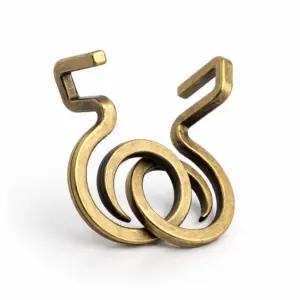
Cast Keyhole Metal Puzzle — Two-Piece Gold & Silver 3D Maze Brain Teaser
The Puzzle That Punishes Assumptions
You pick it up and think: two flat pieces, a few notches, maybe three moves and I’m done. That’s exactly what the puzzle wants you to believe.
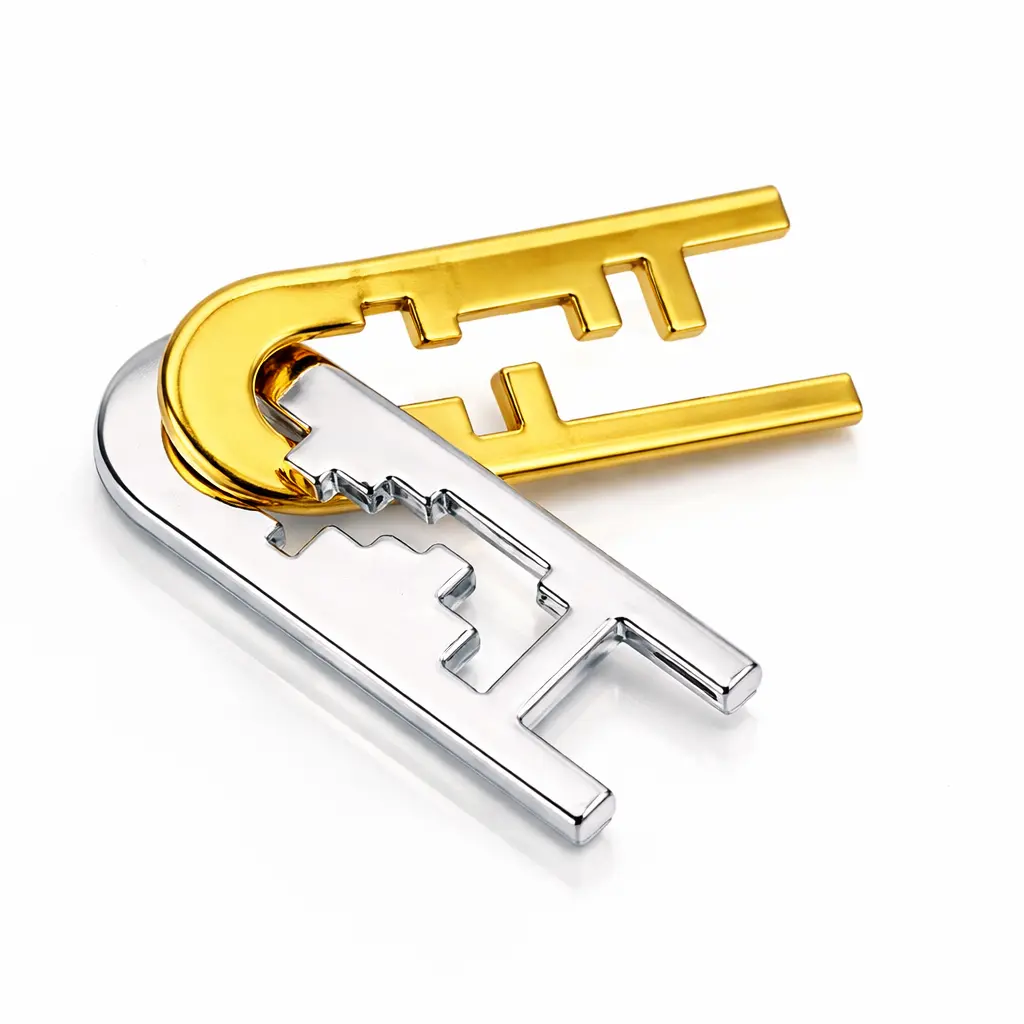
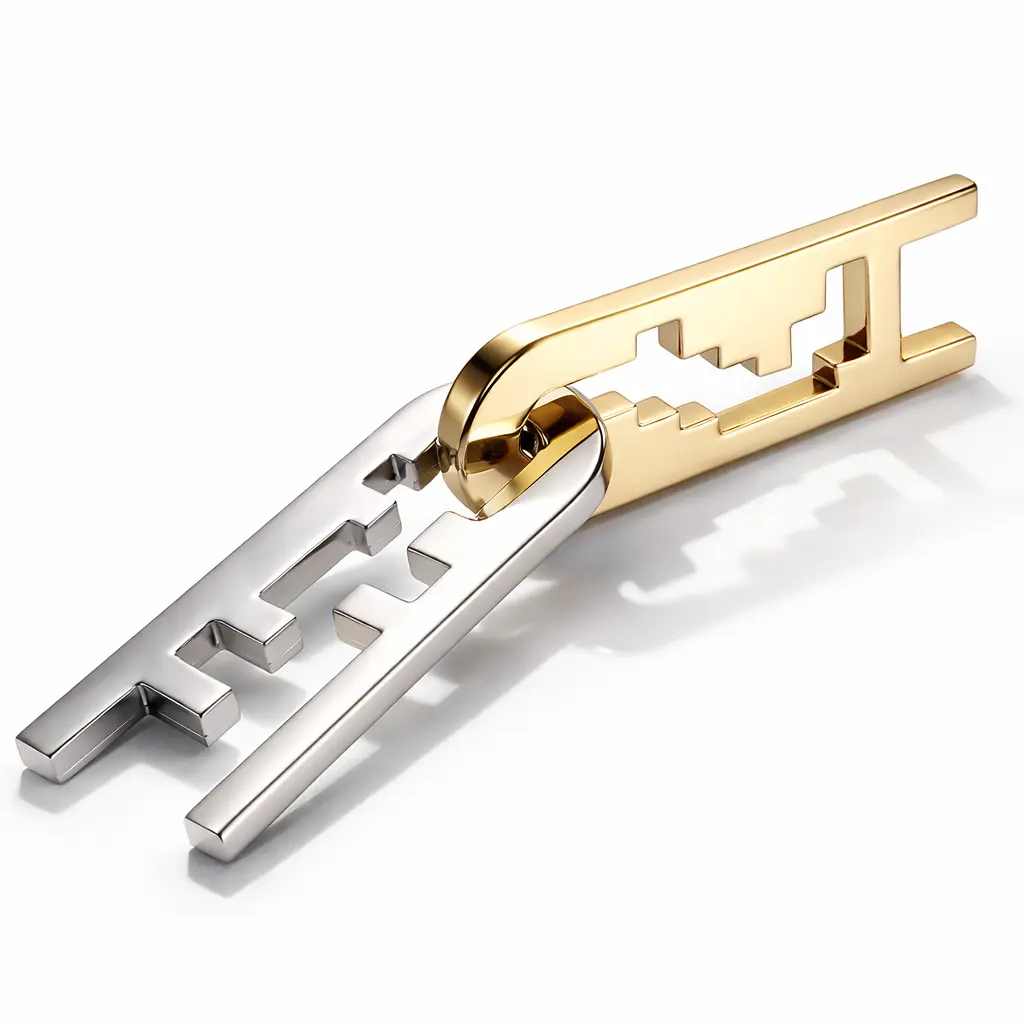
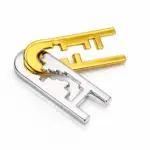
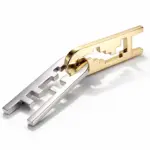
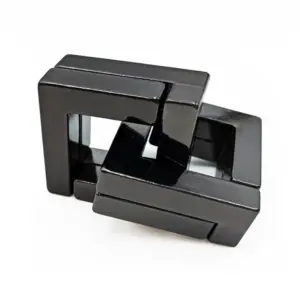
The Cast Keyhole metal puzzle is a two-piece brain teaser built around a deceptively simple idea: two key-shaped metal plates, one gold and one silver, locked together through grooved channels. The channels look shallow. The path looks short. Both impressions are wrong.
What appears to be a quick slide-apart puzzle is actually a twisting 3D maze that operates across two planes simultaneously. You have to rotate, tilt, and backtrack — sometimes all the way to the start — because you misread a curve three moves ago. The grooves in each piece create blind intersections where one wrong turn loops you right back to where you began.
It’s the kind of challenge where knowing your limits is the real advantage. Recognizing that you’re stuck — actually stuck, not just impatient — is when solving begins. The wise approach isn’t to push harder. It’s to pause, reassess, and accept that what you thought you understood about the path was incomplete.
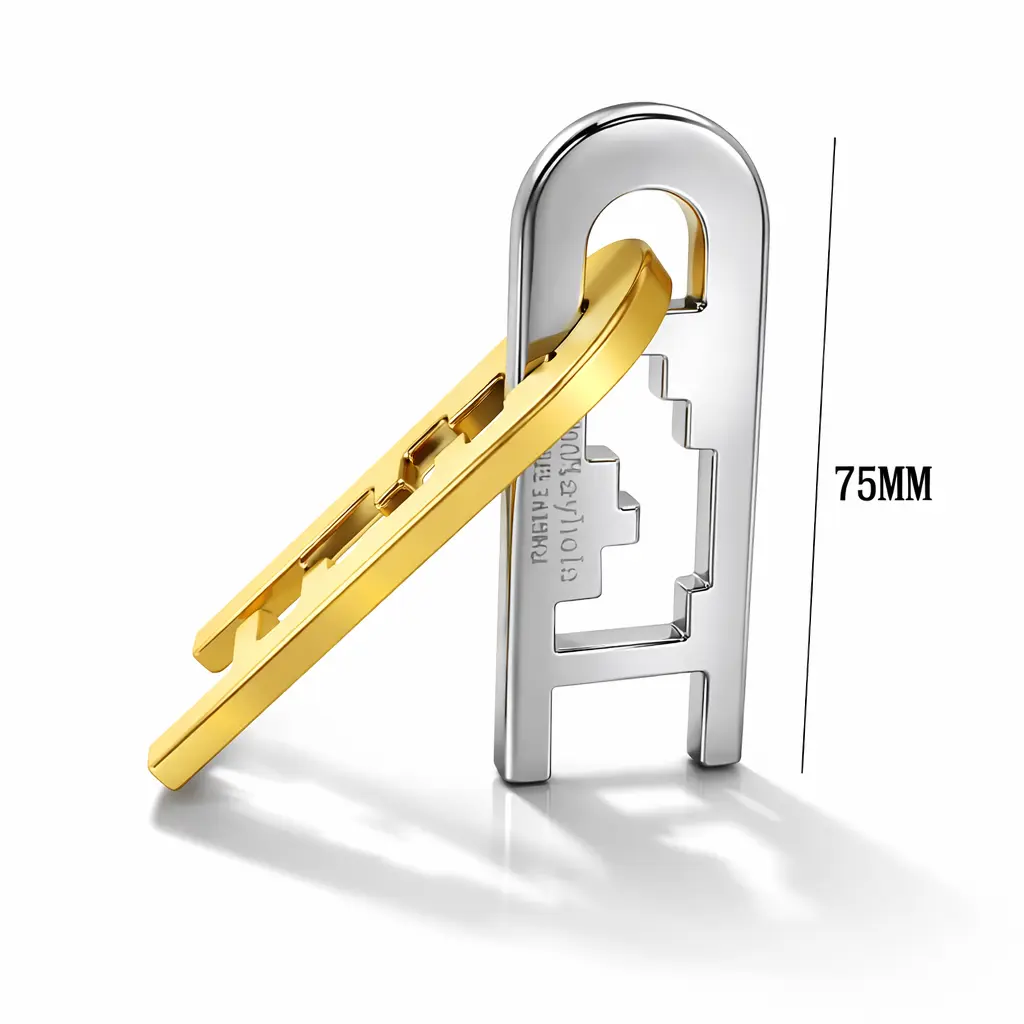
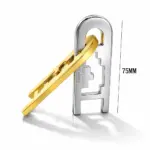
Standing at 75mm tall with a mirror-polished chrome-and-gold finish, this puzzle looks more like a piece of modern jewelry than a brain teaser. It catches light. It draws hands. And once someone picks it up, they don’t put it down quickly.
What It Feels Like in Your Hands
The first thing you notice is the weight. This isn’t a plastic novelty toy — it’s solid cast metal, and the heft matters. There’s a gravitational seriousness to holding these pieces that tells your brain this is real, pay attention.
The chrome piece is cool to the touch. The gold piece warms up faster in your palm. Both surfaces are polished smooth enough to reflect your expression — which, about ten minutes in, is usually some combination of confusion and stubbornness.
Moving the pieces against each other produces a quiet, satisfying metallic whisper. The grooves are precision-cut, so movement feels deliberate rather than sloppy. Each slide has a clean stop point. Each rotation clicks into the next channel with just enough resistance to confirm you’re on the right track — or to give you false hope.
When you’re close to separating them, you can feel the pieces gaining range. The gold piece tilts further. The silver piece slides longer. And then — right when freedom seems one move away — the path dead-ends and you’re circling back. Experienced solvers who review puzzles like this on forums and deep-dive blogs call this the “false summit” effect, and the Keyhole executes it ruthlessly.
Reassembly is harder. Once you’ve separated the pieces, you have two objects in your hands with no obvious re-entry point. Muscle memory from the disassembly helps — but less than you’d expect. Most solvers report the reassembly takes 1.5 to 2 times longer than the initial separation.
Deep Dive: Why Two Pieces Beat Most People
The Dual-Plane Trick
The core mechanism of this puzzle is what puzzle engineers call a “grooved sequential maze.” Each piece has a series of notches and channels cut into its flat surfaces. On their own, each piece looks almost trivially simple — a few steps on a straight path.
But when the pieces interlock, those flat channels combine into a three-dimensional maze. The gold piece slides along the X-axis while simultaneously needing to rotate along the Y-axis to clear the silver piece’s blocking channels. Your brain has to track movement in two planes at once — and human spatial reasoning strongly prefers to work in one plane at a time.
This is why the puzzle is hard. Not because any single move is complex, but because the combination of simple moves across perpendicular planes overloads your working memory. By the time you’ve made five or six correct moves, you can’t clearly remember the first three, which means backtracking feels like starting over. If you’re fascinated by how mechanical engineering principles shape puzzle design, this puzzle is a physical textbook.
The Craftsmanship
The casting quality is visible in the details. Look at the edges of the grooves: they’re clean and uniform, not rough or uneven. The gold and silver plating isn’t just decorative — it serves a practical function. The two-tone color scheme helps you visually track which piece is doing what during the solve, preventing the visual confusion that monochrome cast puzzles often create.
The “Keyhole” text engraved on the silver piece is a design touch that doubles as a landmark. When you’re five minutes deep into a failed reassembly attempt, that engraving becomes your compass: “Keyhole should be facing me, text upright, gold piece entering from the left…”
Who This Puzzle Is For
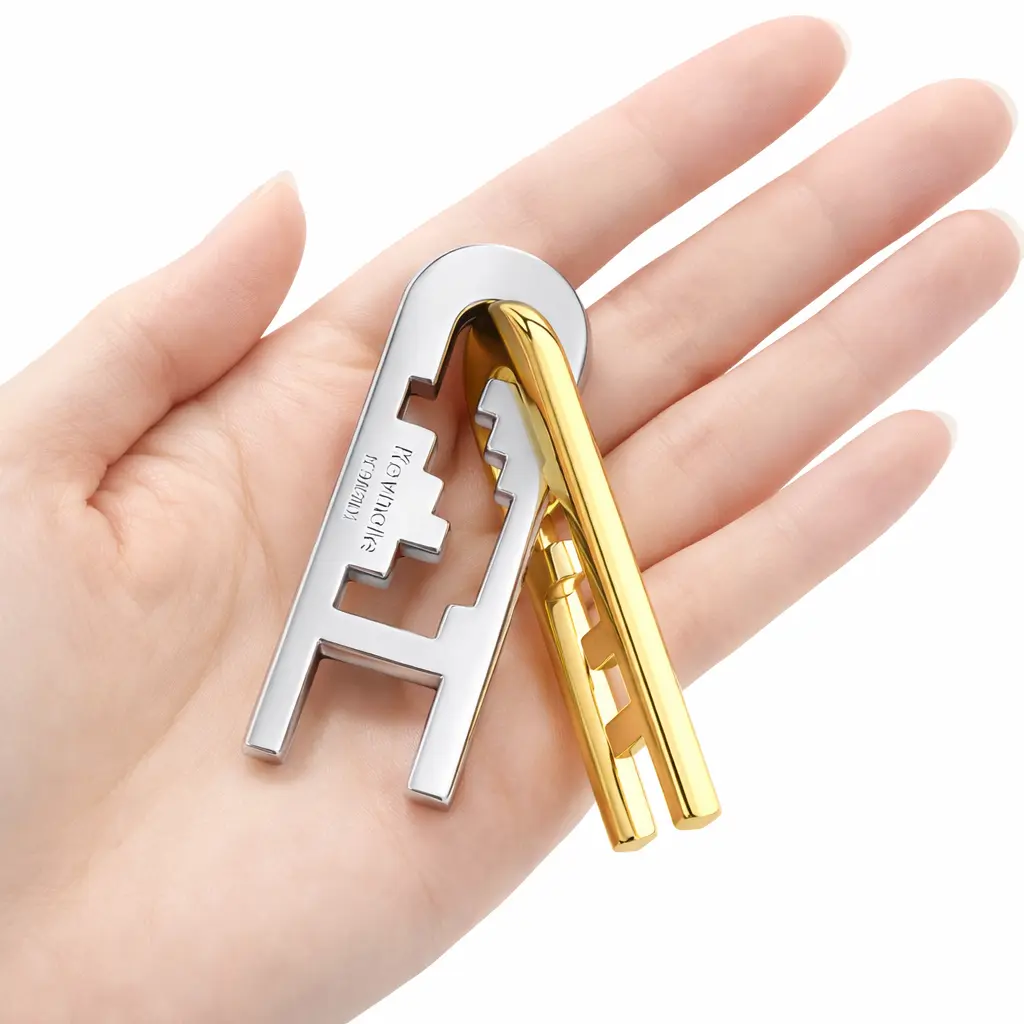
The desk fidgeter. You want something to occupy your hands during calls and meetings. This puzzle is pocket-sized, silent, and looks professional enough that nobody will question it on your desk. Browse the full metal puzzle collection if you’re building a desk rotation.
The gift-giver who’s done with generic options. You need something under $20 that looks like you put thought into it. Gold-and-silver finish, satisfying weight, immediate “what is this?” factor. It works for birthdays, stocking stuffers, coworker gifts, and screen-free gift occasions where you want something tangible and memorable.
The puzzle collector building a shelf. If you already own a few cast metal brain teasers and want to add a groove-based maze to the collection, the Keyhole fills that slot cleanly. Its mechanism is distinct from ring-based, twist-based, or disentanglement puzzles.
The beginner looking for a real challenge. You’ve solved a few easy wire puzzles and want to step up without jumping to expert-level frustration. This puzzle is hard enough to humble you, approachable enough to eventually yield. Average solve time for first-timers appears to be 15 to 45 minutes.
The parent or teacher who wants a thinking tool. For teens and adults, this puzzle builds spatial reasoning, patience, and the ability to hold sequential steps in memory — skills that transfer to math, engineering, and everyday problem-solving.
What to Expect (The Honest Parts)
Things This Puzzle Does Well
Replay value that defies logic. You’d think once you know the path, it’s boring. It isn’t. The 3D maze is long enough that your memory of the exact sequence degrades within a day or two. Solvers consistently report that the third solve is almost as challenging as the first — your fingers remember fragments, but not the whole route. The Cast Hook brain teaser shares a similar replay quality if you’re looking for a companion puzzle.
Premium feel at a budget price. The mirror-polished dual-tone finish gives this the look and weight of something expensive. As a gift, it punches well above its price point in terms of first impressions.
Genuine challenge without frustration spiraling. Unlike higher-difficulty cast puzzles that can leave you stalled for hours with zero progress, the Keyhole gives you partial feedback. You feel the pieces moving. You know you’re making progress. The dead-ends are annoying, not demoralizing.
Things to Know Before You Buy
This is not a speed puzzle. If you want something you can solve in under 60 seconds after learning the trick, this isn’t it. The sequential maze requires deliberate navigation every time.
The solution path doesn’t vary. There’s one correct sequence. Once you’ve truly memorized it (which takes more repetitions than you’d expect), the puzzle becomes a dexterity exercise rather than a cognitive one.
Small parts — not for young children. The pieces are solid metal with precise edges. Not dangerous, but not suitable for kids under 12 without supervision.
Who Should NOT Buy This
- If you hate puzzles without “aha!” trick moments. This puzzle rewards patience and sequential thinking, not sudden insight. There’s no single trick that unlocks everything.
- If you need a fidget toy with no learning curve. A spinner or click cube is simpler. This demands attention.
- If you want extreme difficulty. This is solidly challenging — not punishing. If you’re chasing expert-level frustration, consider multi-piece challenges like the Cast Galaxy or the mechanical complexity of a Jiutong lock puzzle.
How to Approach It (Without Spoiling Anything)
- Hold both pieces and just look. Before making any moves, trace the grooves with your eyes. Notice where channels narrow, where they curve, where they intersect.
- Move slowly and remember your steps. The maze loops. If you rush, you’ll end up back at the start without understanding why. Count your moves mentally if that helps.
- When stuck, reverse. Backtracking in this puzzle isn’t failure — it’s the mechanism working as designed. Some paths are intentional dead-ends that force you to return and find the real route.
- Reassembly: start with the exit. If you remember how the pieces looked right before they separated, use that as your entry point for putting them back together. The sequence reverses, but the spatial orientation can be tricky. For a broader look at solving strategies across cast puzzles, the guide to cast metal brain teasers on our blog covers technique fundamentals.
Frequently Asked Questions
How hard is the Cast Keyhole metal puzzle? It falls in the “challenging” range — not the hardest cast metal puzzle you’ll encounter, but harder than it looks. Most people underestimate it because the two-piece design appears simple. The dual-plane groove maze is where the real difficulty lives. Expect 15 to 45 minutes for a first solve.
Is the reassembly harder than taking it apart? Yes. Consistently. The disassembly gives you progressive feedback — pieces move further as you get closer. Reassembly requires you to navigate the maze in reverse with less intuitive feedback about whether you’re on the right path. Our article on why two-piece puzzles defeat smart people explores this phenomenon in detail.
What metal is it made of? The puzzle is cast metal with a chrome (silver) and gold-tone plated finish. The exact alloy isn’t specified, but cast puzzles in this category typically use zinc alloy (zamak), which is durable, corrosion-resistant, and holds fine detail well.
Will the gold or silver finish wear off? With normal handling, the plating holds up well. Avoid dropping it on hard surfaces (which can chip edges) and store it dry. The finish is decorative plating, not solid gold or silver, so excessive rough handling could cause wear over time.
Is this a good gift for someone who’s never done a metal puzzle? Yes — with one caveat. It’s genuinely challenging, so pair it with realistic expectations. Tell the gift recipient: “This took me [X] minutes” or “The reassembly is the real challenge.” That framing turns potential frustration into a fun challenge. It’s one of the best options in our screen-free gift guide.
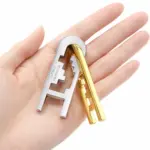
How big is it? Will it fit in a pocket? The assembled puzzle stands 75mm tall (about 3 inches) and fits comfortably in a jacket or pants pocket. It’s slightly larger than a standard house key but similarly shaped — hence the name.
Can I solve it multiple times? Absolutely. The maze is long enough that your memory of the exact sequence fades surprisingly fast. Solving it on Monday, setting it aside, and picking it up again Friday often feels nearly as challenging as the first time.
What’s the difference between this and other two-piece cast puzzles? The Keyhole uses a grooved sequential maze across two planes, which is distinct from twist-based puzzles (like ring puzzles) or disentanglement puzzles (like wire brain teasers). If you enjoy the groove-based mechanism, you’ll also appreciate the Cast Hook brain teaser which uses a similar but distinct channel system.
Is there a solution guide included? Check the packaging when your puzzle arrives. Even if not included, the beauty of a sequential maze is that the solution is always available through patient exploration — no external hints required.
What age range is this suitable for? Teens and adults. The pieces are solid metal with precise edges — not sharp enough to cut, but small enough to be a concern for children under 12. The cognitive challenge is best suited for ages 14 and up.
Related Picks from Tea Sip
Looking to build a collection or find the right next challenge? Here are pieces that complement the Keyhole:
- Cast Hook Metal Brain Teaser — Another gold-and-silver two-piece cast puzzle with a different channel system. Perfect companion piece.
- Gold Fish & Silver Coral Reef Cast Puzzle — Same two-tone aesthetic, different mechanism. For collectors who like matching finishes on a shelf.
- Metal Starfish Puzzle Ring — A wearable metal brain teaser that doubles as a conversation starter. Different category, same satisfying metallic precision.
- Mechanical Puzzle Collection Guide — Not sure what to try next? This guide maps out puzzle types by mechanism, difficulty, and solving style.
If you enjoy the meditative, sequential nature of the Keyhole, you might also find the yin yang puzzle game on our site a satisfying way to warm up your spatial reasoning before your next physical puzzle session.
Recognizing what you don’t yet know about a puzzle’s path — that’s where the real solving begins. The Keyhole doesn’t reward brute force or lucky guesses. It rewards the pause before the next move.

Jacob Rodriguez –
I carry this puzzle toy with me and it’s great for stress – the interlocking design is satisfying to handle. It helps me focus, though occasionally the pieces get stuck together.