
Metal Crab Puzzle Brain Teaser – Gold Ring Cast Disentanglement Challenge
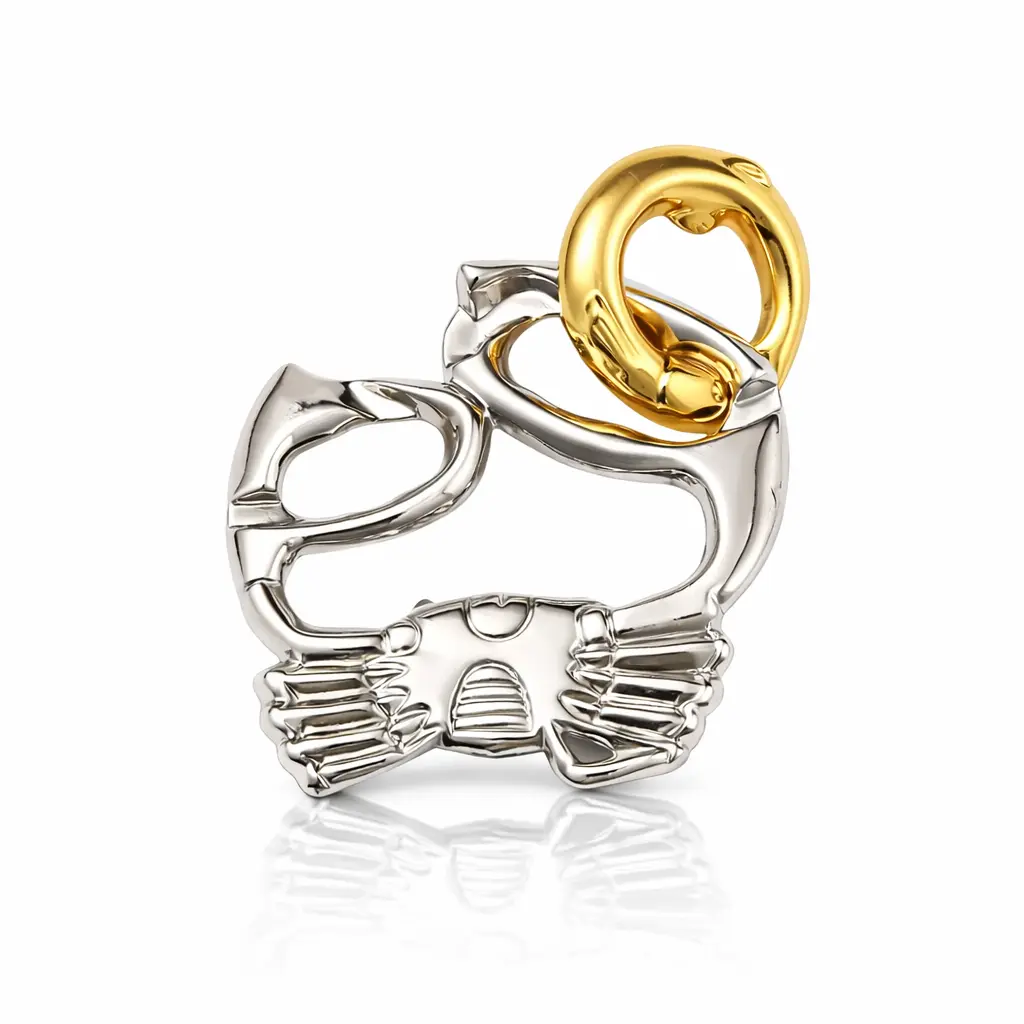
The gold ring sits inside the crab’s claws like it was cast there on purpose. It was. And your job is to figure out the one path that lets it escape.
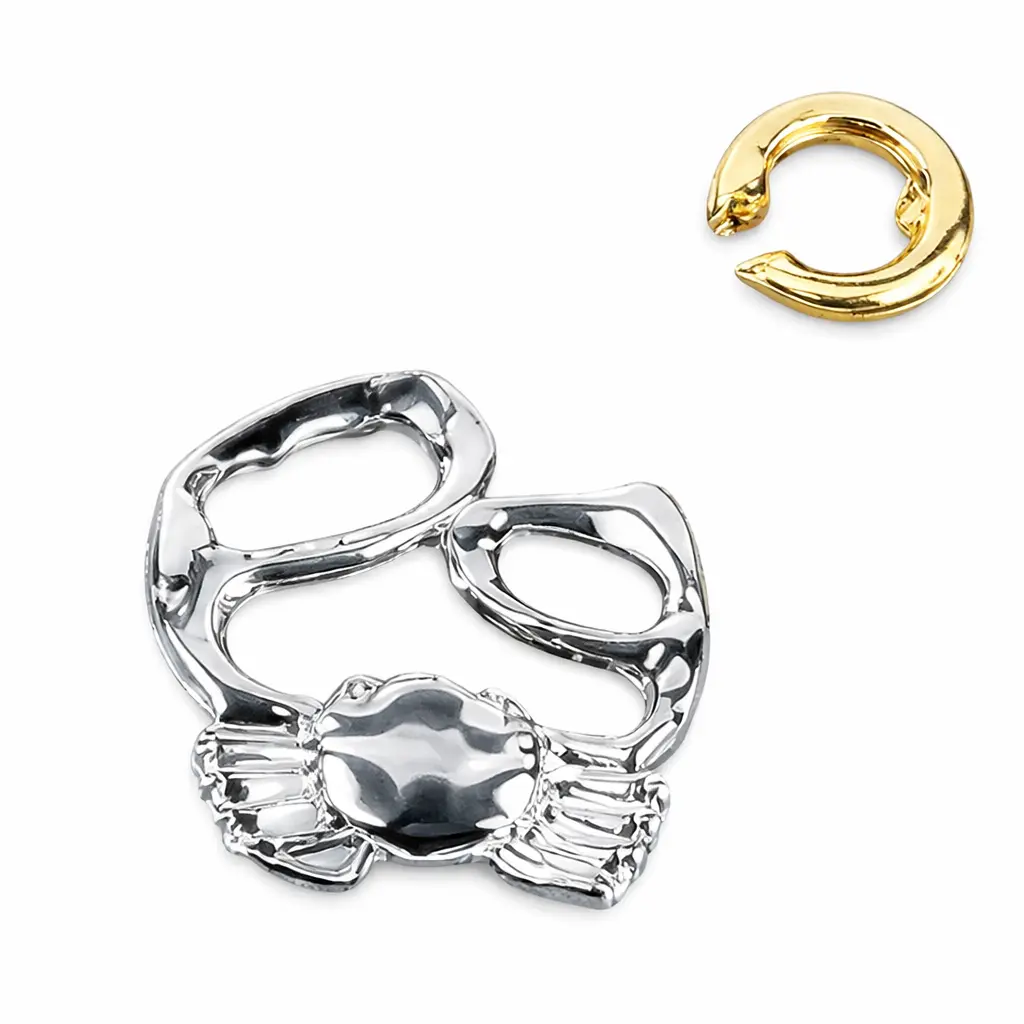
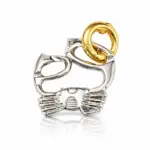
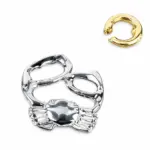
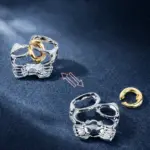
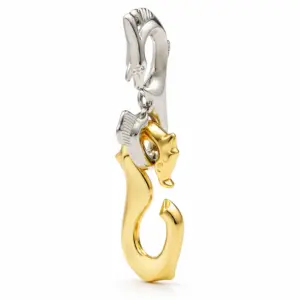
This is a two-piece cast metal crab puzzle — 56 grams of polished silver and gold that fits in one hand and refuses to cooperate with both. The crab body grips a smooth gold ring through a series of interlocking curves that look simple from the outside and feel anything but simple once you start rotating, tilting, and second-guessing yourself.
Medium difficulty. No force required. Just spatial logic, a little patience, and the willingness to accept that a metal crustacean is temporarily smarter than you.
What It Actually Feels Like to Pick This Up
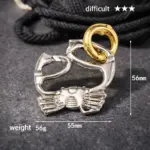
The first thing you notice is the weight. At 56 grams, it’s heavier than a set of keys but lighter than a phone — just enough mass to feel deliberate. The silver-toned crab body has a polished, reflective surface with visible texture along the claws and ribbed detailing on the underbelly. The gold ring contrasts cleanly, smooth and rounded, easy to grip and rotate between your fingers.
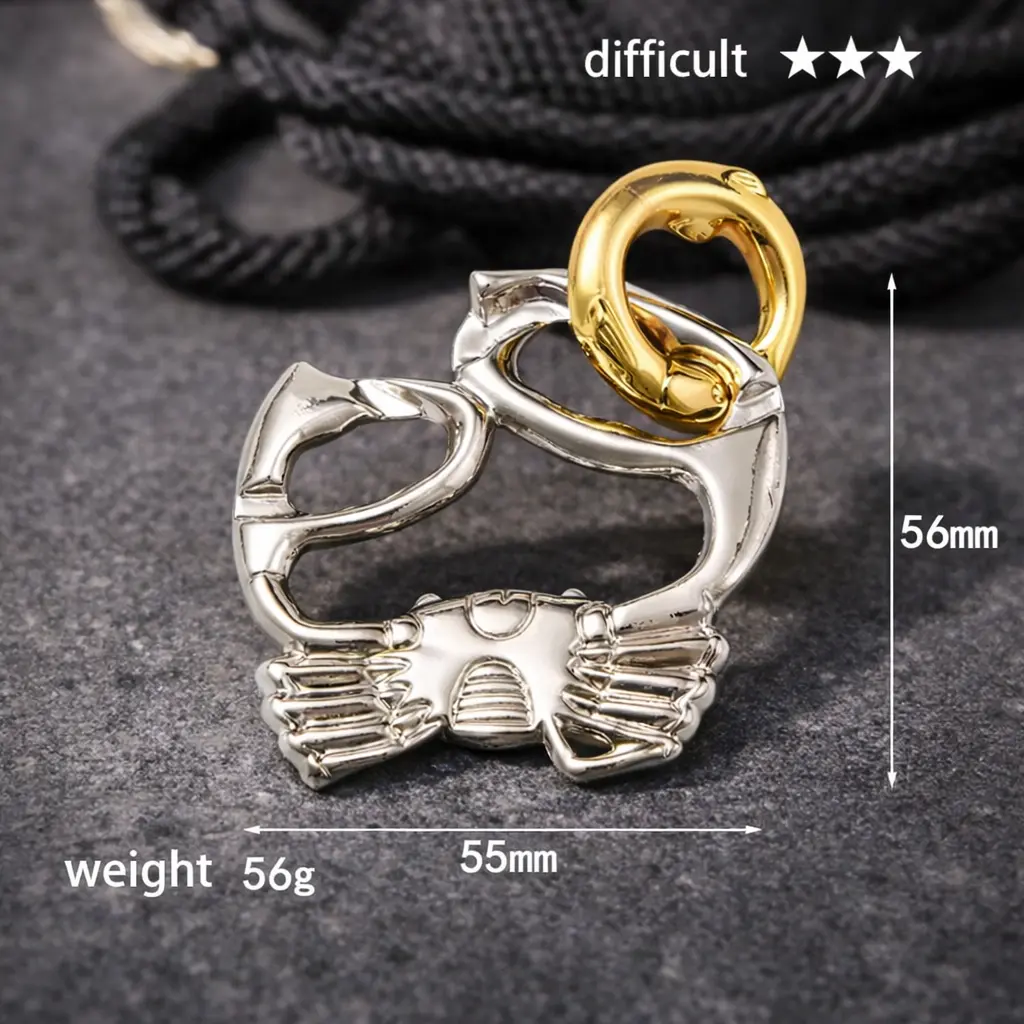
Dimensions land at 55 × 56mm. It fits in a palm, in a pocket, in the gap between “I have five minutes” and “where did the last thirty minutes go.” If you’ve ever handled a cast coil pocket puzzle, the scale is similar — but the crab has a figurative quality that makes it more interesting to look at between attempts.
The interlocking path between the ring and the crab body is not immediately visible. You’ll spend the first few minutes just exploring the geometry — turning the crab upside down, tilting the ring at different angles, testing every opening that looks like it might be the answer. Most of them aren’t.
How the Mechanism Works (Without Spoiling It)
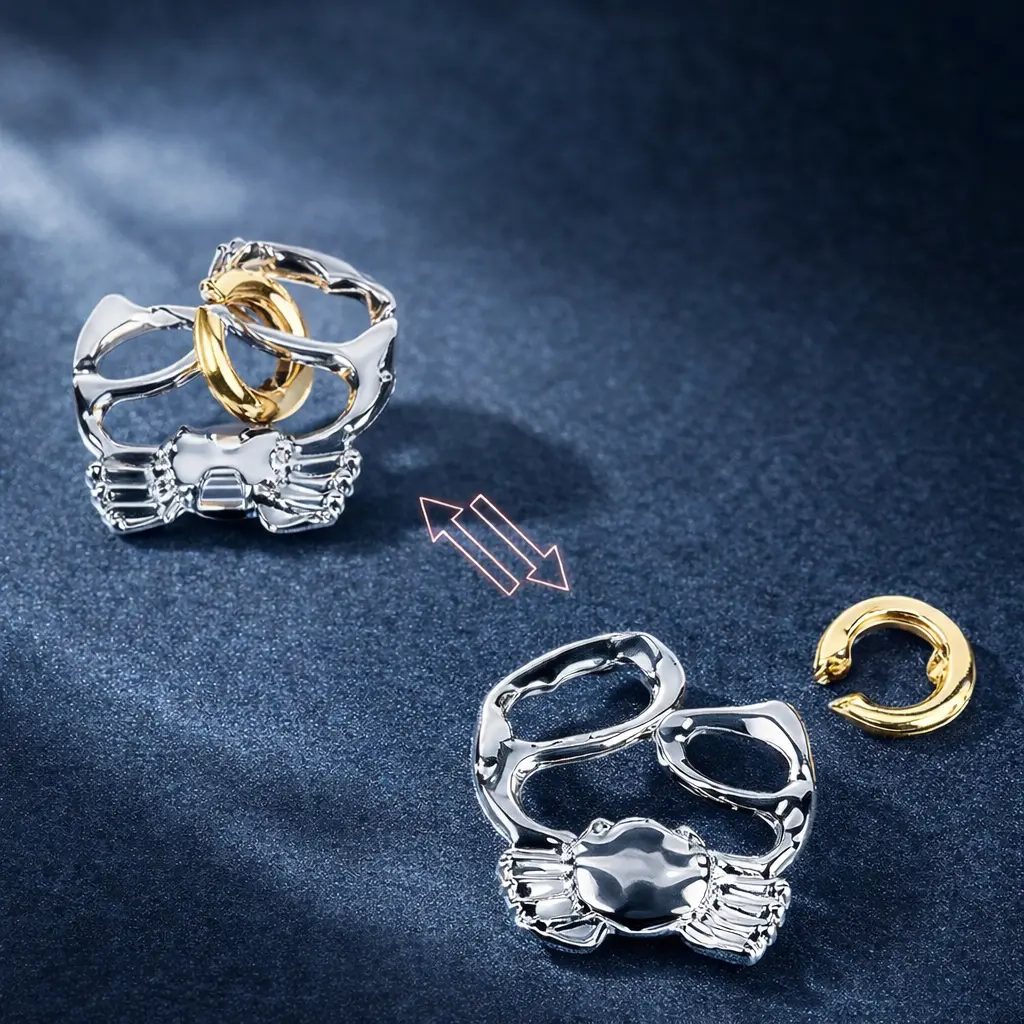
This is a disentanglement puzzle, which means the gold ring is topologically locked inside the crab’s body. The challenge is finding the specific sequence of rotations and slides that threads the ring out through a hidden path.
There are no moving parts inside the crab. No springs, no latches. Everything is cast as solid metal. The “mechanism” is the shape itself — the way the crab’s claws create overlapping curves that guide and trap the ring simultaneously. It’s an old idea, executed well. The earliest disentanglement puzzles date back to at least the 15th century, and the basic principle hasn’t changed: what looks like a dead end is actually a doorway you haven’t oriented correctly yet.
If you enjoy working through the logic of how pieces navigate each other, you’ll appreciate how the crab’s anatomy doubles as puzzle architecture. The claws aren’t decorative. They’re functional barriers. The ribbed section at the bottom isn’t texture for its own sake — it creates the contours the ring must navigate.
For a deeper look at why two-piece puzzles are deceptively difficult, the seahorse separation problem breaks down the psychology well.
Difficulty: What Medium Actually Means Here
Three stars out of six. That places this puzzle in the mid-range — harder than a beginner wire puzzle, easier than the most demanding cast pieces in Tea Sip’s catalog. For most adults with no puzzle experience, expect somewhere between 10 and 40 minutes for a first solve. Experienced puzzlers will likely crack it faster, sometimes under five minutes.
The catch is reassembly. Separating the ring is one challenge. Getting it back in — retracing the path in reverse — is a different kind of frustration. Reassembly is where this puzzle earns its replay value, because muscle memory from the first solve doesn’t always translate to the return trip.
A thing worth knowing: the difficulty rating is not about brute complexity. It’s about how well the mechanism hides the solution path in plain sight. The crab doesn’t have ten moving parts. It has two. And two parts that refuse to separate can feel more maddening than ten parts that come apart one at a time.
If you’re building a mechanical puzzle collection, this sits comfortably as a mid-shelf piece — satisfying enough to keep, approachable enough to hand to a friend.
Who This Is Actually For
The desk fidgeter. You need something heavier than a pen cap and more interesting than a stress ball. This earns its space next to your keyboard. Desk puzzles are increasingly filling this exact role — small metal objects that let you think with your hands during calls and reading.
The gift buyer who’s stuck. It’s under palm-size, it photographs well, and it starts a conversation the moment someone picks it up. It’s the kind of gift that makes someone say “wait, how does this work?” — which is better than a polite “thanks, I love it.”
The puzzle beginner who wants real metal. Wire puzzles are good entry points, but they feel different. Cast metal has weight, permanence, and a mechanical quality that wire lacks. If you’re moving beyond wire and want to feel what a cast disentanglement is like without committing to extreme difficulty, this is the right on-ramp.
The fidget collector expanding shelves. If your desk already holds a metal starfish puzzle ring or a cast coil triangle, the crab fills a different aesthetic slot while using a similar mechanism family.
Who Should Skip This
People who want a multi-hour challenge. This isn’t a level-5 or level-6 puzzle. If you’re chasing serious difficulty, you’ll solve this faster than you want. Look at something like the 5-piece spiral metal puzzle or the thorn out of the cage instead.
People who dislike disentanglement puzzles entirely. If you find ring-and-body puzzles repetitive or spatially frustrating, a crab-shaped version won’t change your mind. The mechanism type is the mechanism type.
Anyone who needs written instructions. No printed solution is included. If you need step-by-step guidance before starting, this puzzle’s trial-and-error approach may frustrate more than it satisfies.
Build Quality and What to Expect Over Time
The crab body and gold ring both appear to be cast from zinc alloy with metallic plating — a standard construction for this category of puzzle. The finish is polished, with clean lines along the casting seams. There’s no visible paint; the color comes from the plating itself.
Practical durability notes: cast metal puzzles in this weight class hold up well to regular handling. The plating may develop a subtle patina over months of heavy use, particularly where fingers grip most often. This is cosmetic, not structural. Avoid storing it loose with keys or coins — metal-on-metal contact in a pocket can scratch the finish faster than normal solving.
No solution card appears to be included, which is consistent with many puzzles in this category. The absence is intentional: half the experience is discovering the path yourself. But if frustration wins, solution videos for ring-body cast puzzles of this style are widely available online.
Two Ideas Worth Carrying Away
Sometimes the most valuable things don’t advertise what they are. A polished surface doesn’t need to explain its material. A well-designed mechanism doesn’t need instructions. What works, works quietly — and what you gain from the process is more than the result.
And giving someone a small, good challenge — one they can hold in their hand — often says more than giving them something large and obvious. The best gifts teach something about patience without ever mentioning it.
Comparison Within the Lineup
If you’re deciding between several metal puzzles and want to match difficulty to your experience level, here’s how the crab fits contextually.
For easier entry, the antique bronze metal keyring puzzle offers a similar two-piece cast challenge with a simpler path and EDC functionality. The guide to cast metal brain teasers covers what separates cast puzzles from wire puzzles and how to pick your starting difficulty.
For something in the same difficulty tier but a different visual language, the metal orbit ring cast puzzle replaces the figurative crab shape with abstract geometric forms. Same mechanical family, different aesthetic experience.
For a step up in complexity and visual drama, the dual seahorse gold-silver brain teaser shares the dual-tone finish but adds a more intricate interlock between the two pieces.
Frequently Asked Questions
How long does it take to solve the metal crab puzzle? Most first-time solvers report 10 to 40 minutes. Experienced puzzle enthusiasts may solve it in under five minutes. Reassembly often takes longer than the initial separation because you’re working the path in reverse without the same visual cues. There’s no single correct time — the value is in the process, not the speed.
Is this safe for children? The puzzle has small parts and is made of solid metal. It’s likely best suited for ages 12 and up, though no specific safety certification is visible. Use your judgment based on the child’s maturity with small metal objects. The 56g weight means it won’t shatter, but it’s not a soft toy.
Does it come with a solution? No solution card appears to be included. This is common for disentanglement puzzles in this category. If you need help, solution walkthroughs for ring-body cast puzzles are available on YouTube. Part of the intended experience is figuring out the path through trial and observation.
Will the finish tarnish or wear off? The metallic plating may develop subtle wear marks with extended daily use, especially at the grip points. This is cosmetic. To slow the process, store it separately from loose metal objects and wipe occasionally with a soft cloth. Avoid moisture exposure.
Can you solve it by force? No. Forcing the ring will not work and may damage the plating. The ring exits through a specific angular path that requires rotation and sliding — not pulling or prying. If it feels stuck, you’re on the wrong path, not applying too little force. Understanding why two-piece puzzles resist brute force helps reframe the approach.
What kind of puzzle is this exactly? This is a cast metal disentanglement puzzle — a subcategory of mechanical puzzles where the objective is to separate interlocked pieces using a hidden path. The mechanism relies on the shape of the cast metal itself, not on moving parts or springs. If you want to explore the broader category, locking puzzle brain teasers covers the landscape.
Can I carry this in my pocket every day? Yes. At 55 × 56mm and 56 grams, it’s comparable to a large keychain. The smooth cast surface won’t snag fabric. Just store it separately from keys or coins to avoid scratching the plating over time.
Is there replay value after I solve it? Yes, for three reasons. First, reassembly is a separate challenge. Second, solving speed improves with practice, which creates its own satisfaction loop. Third, it works as a pass-around object — watching someone else attempt it is genuinely entertaining. Competitive solving between friends is a common use case.
How does this compare to wire disentanglement puzzles? Cast metal puzzles feel fundamentally different from wire puzzles. The weight is greater, the tolerances are tighter, and the solution path is embedded in the shape rather than in the bendability of the wire. Cast puzzles reward careful observation; wire puzzles reward flexible manipulation. Both are good — they’re just different tools for different kinds of thinking.
What’s a good next puzzle after this one? If you enjoy the crab and want to stay in the cast metal category at a higher difficulty, the 5-piece spiral metal puzzle adds more pieces and a more complex disassembly sequence. If you want a different challenge entirely, try the memory match game for a screen-based cognitive break between physical puzzle sessions.
Final Verdict
The metal crab puzzle is a well-built, mid-difficulty cast disentanglement with genuine replay value and strong gift potential. It’s not trying to be the hardest puzzle on your shelf — it’s trying to be the one you pick up most often. At 56 grams and pocket-sized, it does that job well.
If you want a cast metal brain teaser that feels good in the hand, looks good on a desk, and provides 10 to 40 minutes of focused satisfaction per session — this is it.

James –
My kids love this metal crab puzzle, it’s great for kids and provides educational fun as they figure out the disentanglement mechanism, now it’s a family activity we enjoy together.
Elijah –
This crab puzzle is a great addition to my collection, with a solid construction and weight that feels right. I’ve been playing with it for a while now, and the disentanglement mechanism is clever, the plating looks durable, and it’s been a fun challenge to solve and resolve.