The third time the brass pin slipped past my thumb, I set the box down and made coffee. I’ve spent twenty years chasing that specific brand of frustration. Most people buy a wooden box puzzle expecting a simple container with a secret; I buy them because I want to be outsmarted by a piece of dead tree. After testing over 200 mechanical puzzles, I’ve learned that the best ones don’t just hide a compartment—they hide the designer’s intent.
The fundamental truth of this hobby is that the best wooden box puzzles punish impatience and reward observation. We live in a world of “swipe-to-unlock,” but a well-crafted trick box requires a dialogue between your fingertips and the grain of the wood. If you try to force a solve, you’ll likely end up with a handful of splinters and a broken mechanism. If you listen to the wood, the seams eventually reveal themselves.
The Anatomy of a Secret: What Makes a Box a “Puzzle”?
A standard box has a lid and a base. A wooden box puzzle has a series of hidden locks, sliding panels, or internal gravity pins that defy immediate logic. The history of these objects is surprisingly deep, rooted in the 19th-century Yosegi-zaiku tradition of Japan, where artisans created “Himitsu-Bako” (secret boxes) to protect jewelry and documents from thieves.
When I evaluate a box today, I look for “ghost seams.” These are joints so tightly machined that they disappear when the box is closed. If I can see the mechanism from across the room, the puzzle has already failed. I want to hold a solid block of walnut or beech and feel the confusion of where the movement begins. This tactile mystery is why these objects remain popular desk toys for adults who need a mental reset between Zoom calls.
Why Your First Solve Will Be an Accident
There is a specific phenomenon in the puzzle community: the “accidental open.” You’re fiddling with a box, rotating it, perhaps tapping it against your palm, and suddenly—click. The lid slides. You haven’t solved it; you’ve just gotten lucky. The real challenge begins when you try to close it again.
Most beginners approach a wooden box puzzle by looking for a button. There are rarely buttons. Instead, there are sliding panels that only move if the box is held at a 45-degree angle, or internal magnets that require a centrifugal spin to disengage. This is why interactive brain teasers for groups are so entertaining—everyone has a different theory on the “trick,” and usually, the person who thinks the least is the one who finds the solution first.
3D Wooden Puzzle Treasure Box
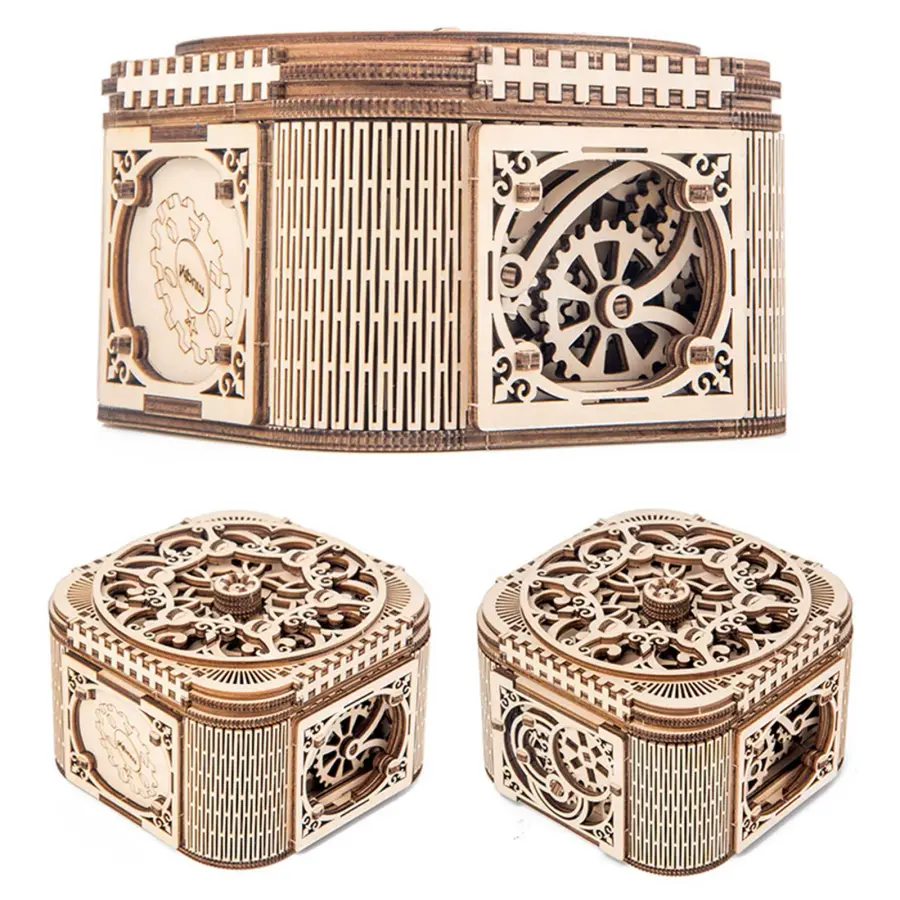
If you want to understand how mechanical advantage works, the 3D Wooden Puzzle Treasure Box ($29.99) is the most honest teacher on my shelf. Unlike traditional trick boxes that hide their secrets inside solid walls, this kit lets you build the secret from the ground up. I spent about two and a half hours on the assembly, and the experience was a masterclass in gear synchronization.
The 150+ laser-cut pieces fit with a precision that I frankly didn’t expect at the thirty-dollar price point. The “aha” moment comes when you realize the key is actually integrated into the lid’s design. It’s not just a box; it’s a mechanical jewelry storage unit that uses visible gears to drive the locking pins. For anyone who enjoys specialty trick box guides, this is a foundational piece. The only downside? If you don’t sand the gear teeth properly during assembly, the movement can feel “crunchy.” Take your time with the included sandpaper.
3D Wooden Puzzle Safe with Combination Lock
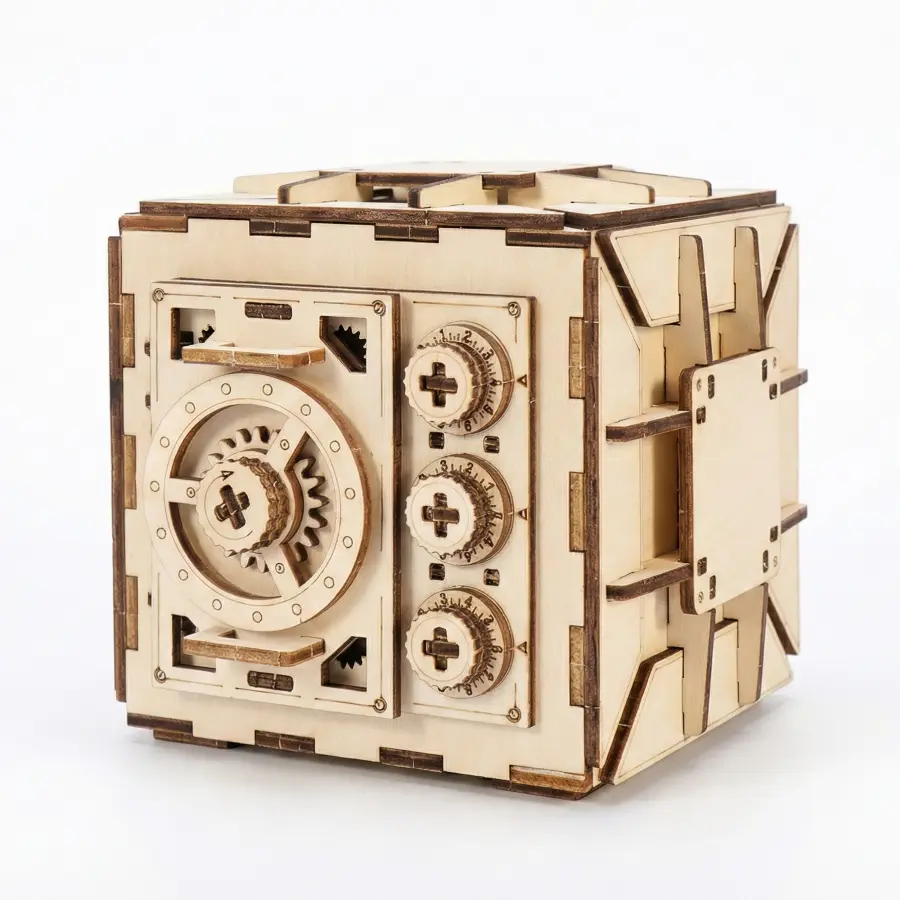
There is something deeply satisfying about a “clunk” that you built yourself. The 3D Wooden Puzzle Safe with Combination Lock ($30.99) is a beast compared to most desk puzzles. It uses a 111-piece construction to create a functional 3-digit combination lock. I’ve had this on my office shelf for six months, and it’s the first thing visitors gravitating toward.
The engineering here mimics a real bank vault. You have to navigate the tumblers and listen for the mechanical engagement. While it’s marketed for ages 14 and up, I’d argue it’s a perfect “project puzzle” for adults who want more than a five-minute distraction. At just over thirty dollars, it offers a much higher “solve-time-to-dollar” ratio than most pre-assembled boxes. I did find that the plywood can be a bit unforgiving if you force the smaller pins, so keep a bit of candle wax nearby to lubricate the moving parts.
Luban Cube Puzzle
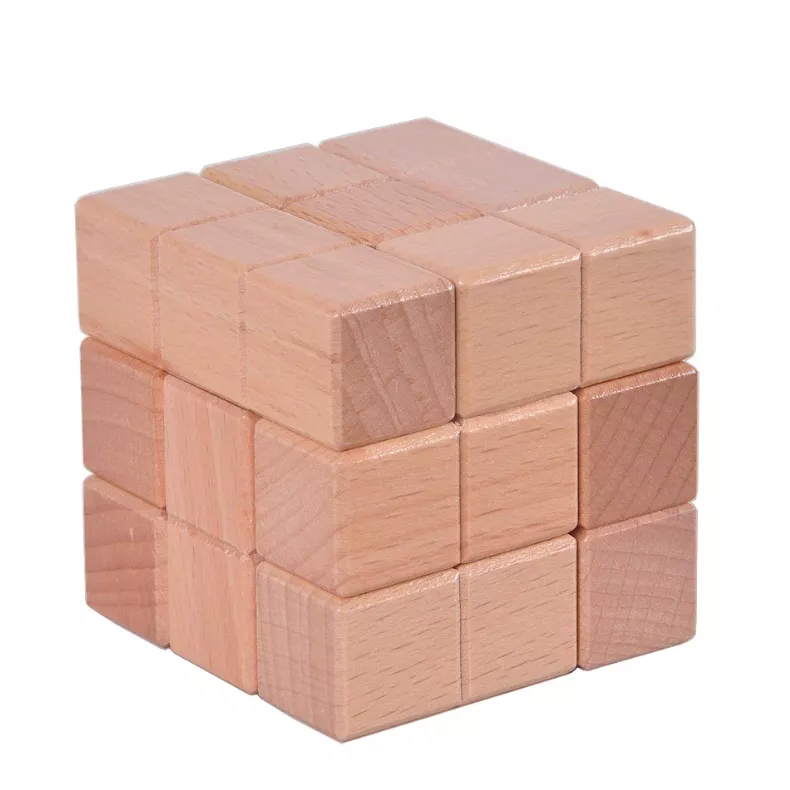
If the treasure boxes represent modern engineering, the Luban Cube Puzzle ($21.99) represents ancient wisdom. This is the “interlocking” category of wooden puzzles, often referred to as mechanical puzzles. It’s based on the mortise-and-tenon joinery used in Chinese architecture for millennia.
I’ve handed this 3x3x3 cube to engineers who couldn’t put it back together. There are no nails, no glue, and no magnets—just geometry. It’s a 6 or 7-piece challenge where one “key piece” holds the entire structure in tension. For twenty-two dollars, it’s the best “fidget” puzzle for a desk because it’s virtually indestructible. You can drop it, toss it in a bag, and it won’t lose its integrity. It’s a pure test of 3D spatial reasoning.
The Peak: Why Engineers Struggle Where Children Succeed
I once ran a small experiment in my workshop. I gave a complex wooden box puzzle to a mechanical engineer friend and his 11-year-old daughter. The engineer spent twenty minutes analyzing the seams, checking for symmetry, and theorizing about internal gravity pins. He was looking for a logical system. The 11-year-old simply shook the box, heard a rattle, and started sliding every piece she could touch. She had it open in four minutes.
This is the “Peak Insight” of the puzzle world: Over-analysis is a barrier to discovery.
Wooden puzzles are tactile objects. They are designed to be felt, not just thought about. The engineer was looking for a blueprint; the child was looking for a movement. When you are stuck on a trick box, stop thinking about how it should work and start feeling for where it wants to move. This is why I often suggest tactile memory exercises to my fellow collectors—training your brain to recognize patterns through touch is more valuable than any logic degree when you’re facing a “ghost seam.”
Beyond the Box: The Architecture of Interlocking Wood
While “boxes” are the gateway drug, the broader world of wooden brain teasers includes interlocking shapes and “burr” puzzles. These are the spiritual cousins of the trick box. They use the same hidden-joinery principles but apply them to open shapes.
Luban Square Lock
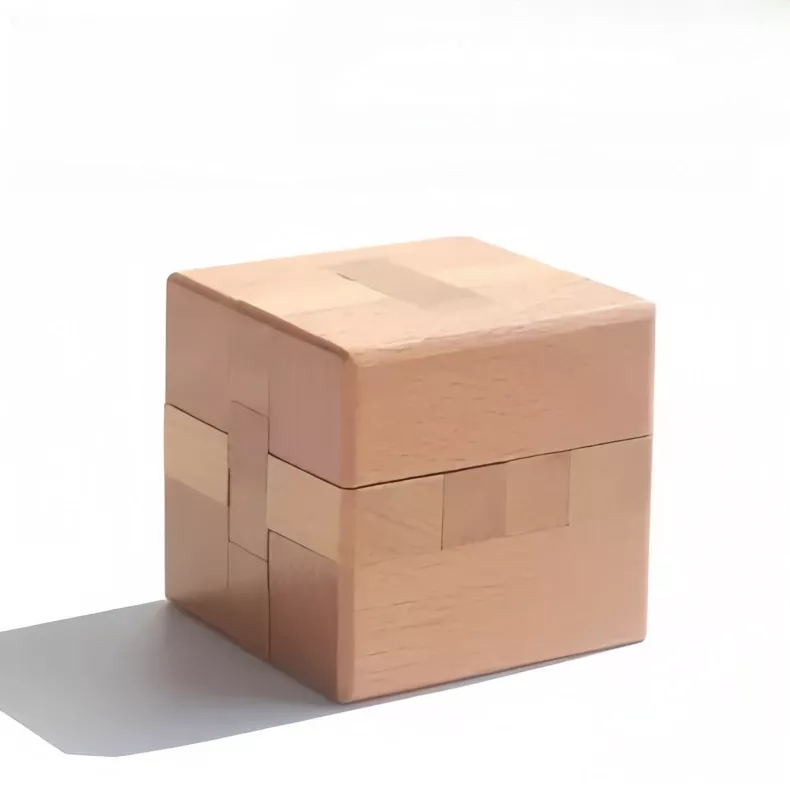
The Luban Square Lock ($21.99) is a variation of the cube but focuses on notched bars. It’s a classic example of “Burr” puzzles. The difficulty here isn’t just taking it apart—that’s the easy part. The real challenge is the orientation. Because the pieces look nearly identical, your brain struggles to map the internal voids. I’ve found that this specific model is a great “waiting room” puzzle. It’s small enough to fit in a coat pocket and provides enough of a challenge to kill twenty minutes without being so difficult that you want to throw it against a wall.
For those who find the square lock too simple, I usually point them toward the Luban Lock Set 9 Piece ($39.99). It’s essentially a curated history of Chinese carpentry in a box. Each of the nine puzzles uses a different interlocking logic. Having this set on a coffee table is a great way to introduce guests to the hobby without the high entry price of individual boutique puzzles.
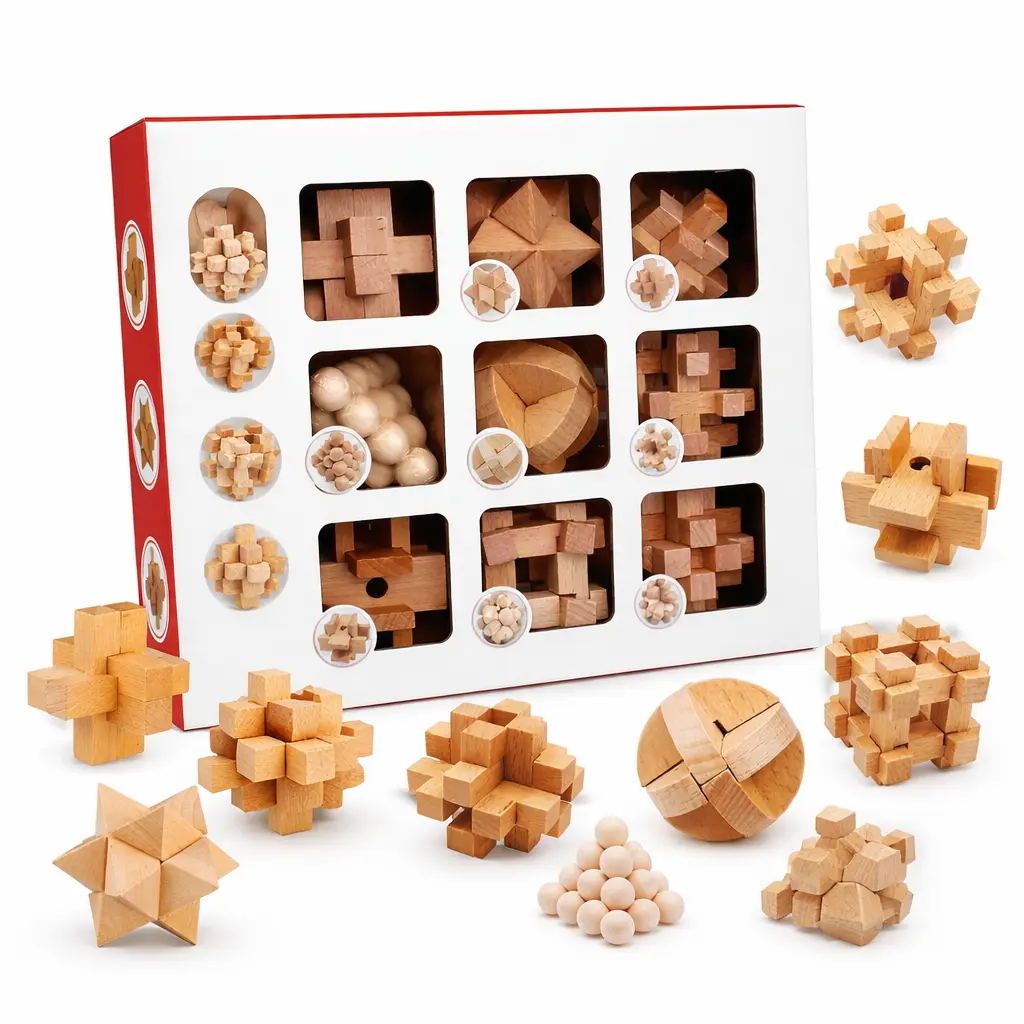
Luban Lock Set 9 Piece — $39.99
When Wood Meets Metal: The Hybrid Challenge
Sometimes, a purely wooden solution feels too… soft. That’s where hybrid puzzles or metal alternatives come in. While this guide focuses on the “wooden box” aesthetic, I’d be remiss if I didn’t mention the alloy puzzles that provide a different tactile feedback.
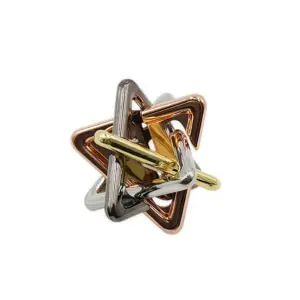
For instance, the Three-Color Alloy Magic Scroll Puzzle ($13.01) offers a precision that wood sometimes lacks. Wood expands and contracts with humidity; metal doesn’t. This allows for tighter tolerances and “maze path” mechanisms that would be impossible in timber. If you enjoy the “sliding path” logic of a trick box, you’ll find the scroll puzzle’s internal channels very familiar. It’s priced at just thirteen dollars, making it a cheap way to see if you prefer the cold weight of alloy over the warmth of beechwood.
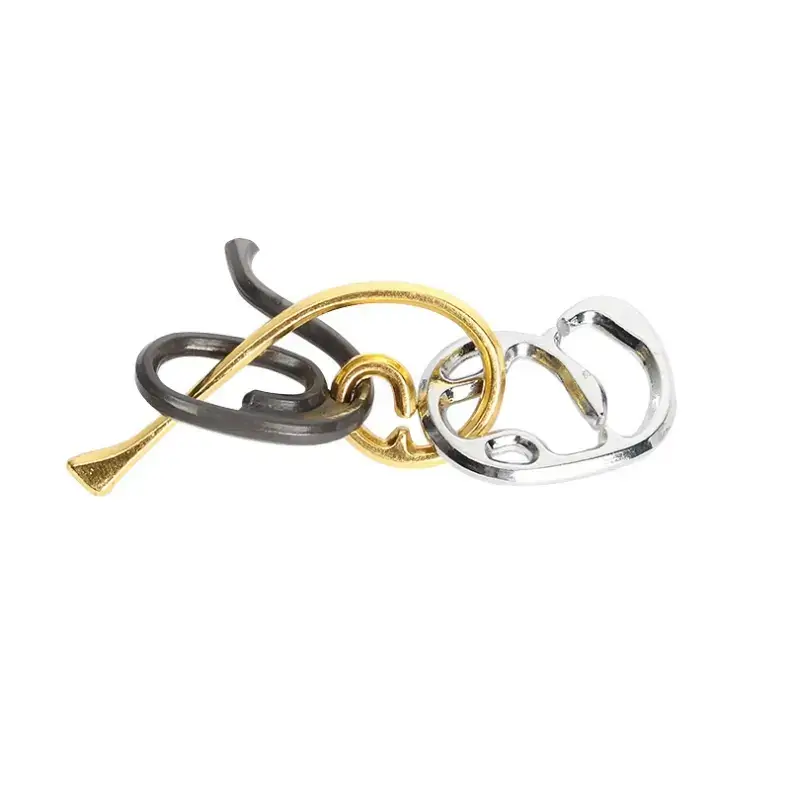
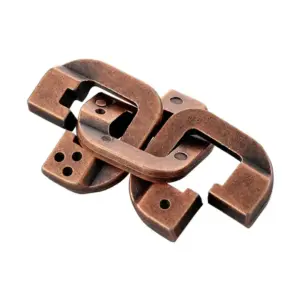
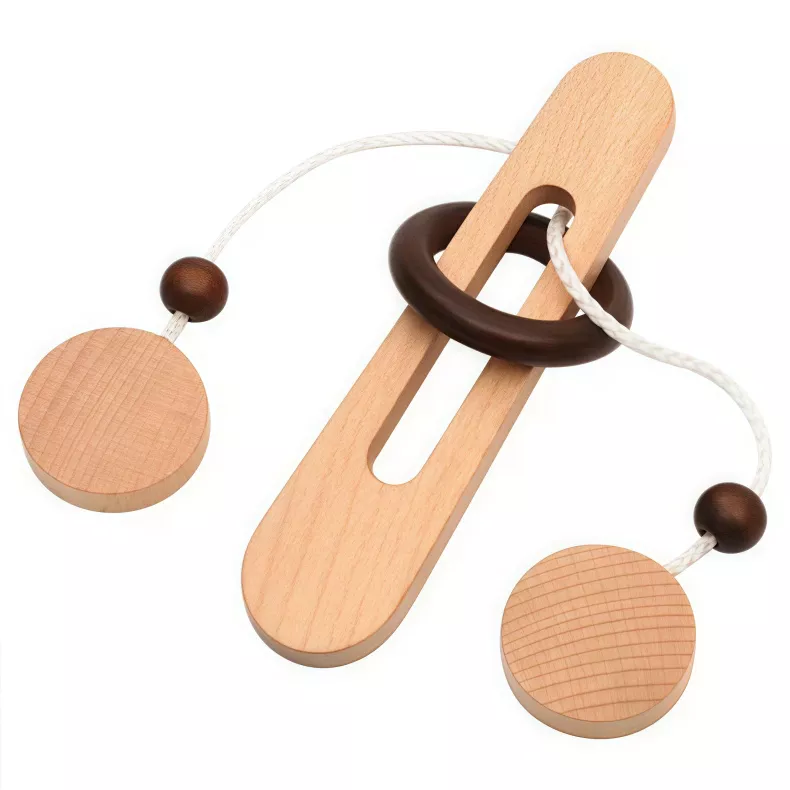
Similarly, the Tricky Wooden Ring Puzzle ($12.89) bridges the gap between a “box” and a “disentanglement” puzzle. It’s about finding the hidden pathway to free a ring. It’s elegant, minimalist, and at under thirteen dollars, it’s a perfect stocking stuffer or “thank you” gift.
Durability and Maintenance: Keeping the “Trick” Alive
One thing the marketing copy never tells you is that wooden puzzles are alive. I’ve had ghost-style trick boxes that worked perfectly in the dry winter but became impossible to open during a humid July. The wood swells, and those “ghost seams” become “stuck seams.”
If you’re serious about your collection, you need a tin of high-quality paste wax or a simple tea light candle. Rubbing a bit of wax on the sliding surfaces of something like the 6-in-1 Wooden Brain Teaser Set ($38.88) will keep the movements smooth for years. I’ve had my 6-in-1 set for three years, and a quick “waxing” every winter keeps the beechwood pieces from binding.
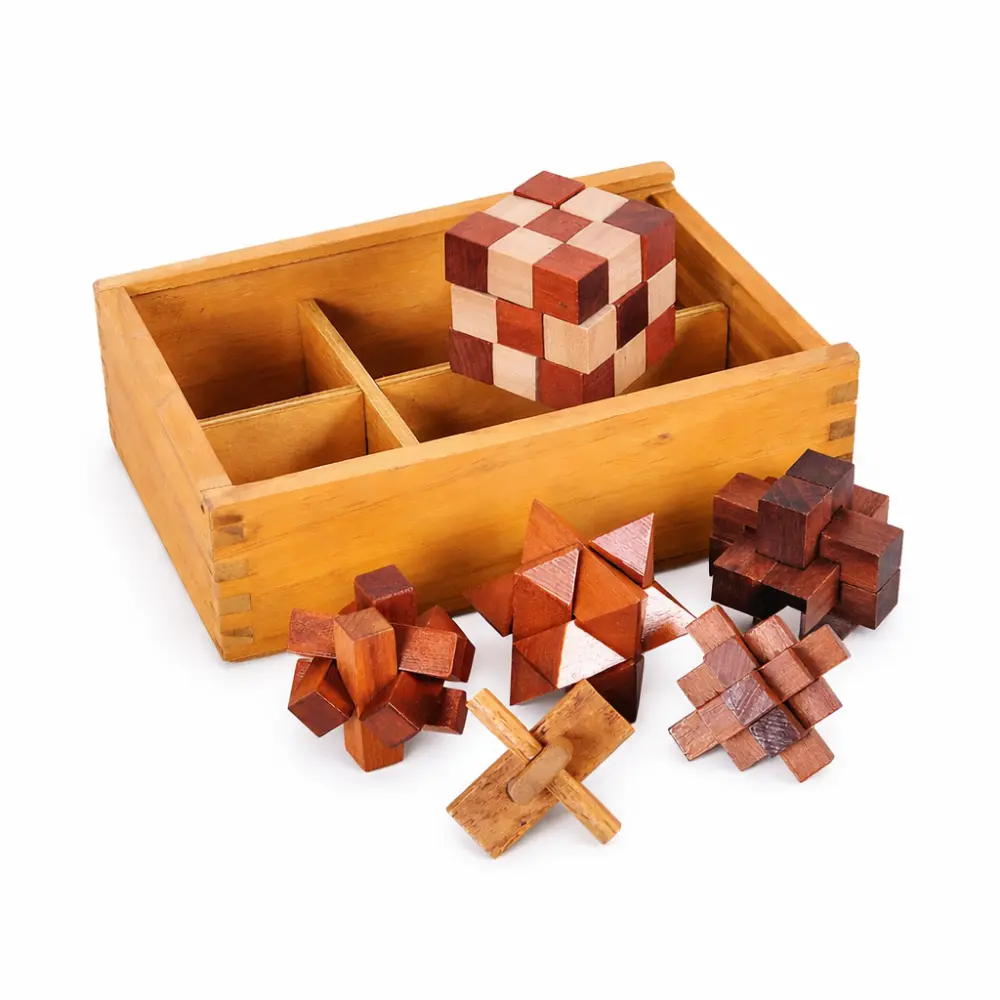
Speaking of sets, the 6 Piece Wooden Puzzle Key ($12.99) is another great example of minimalist durability. It’s just six pieces of hardwood, but the way they “click” together when properly aligned is incredibly satisfying. It’s a “Wu Wei” style of problem-solving—if you have to force it, you’re doing it wrong.
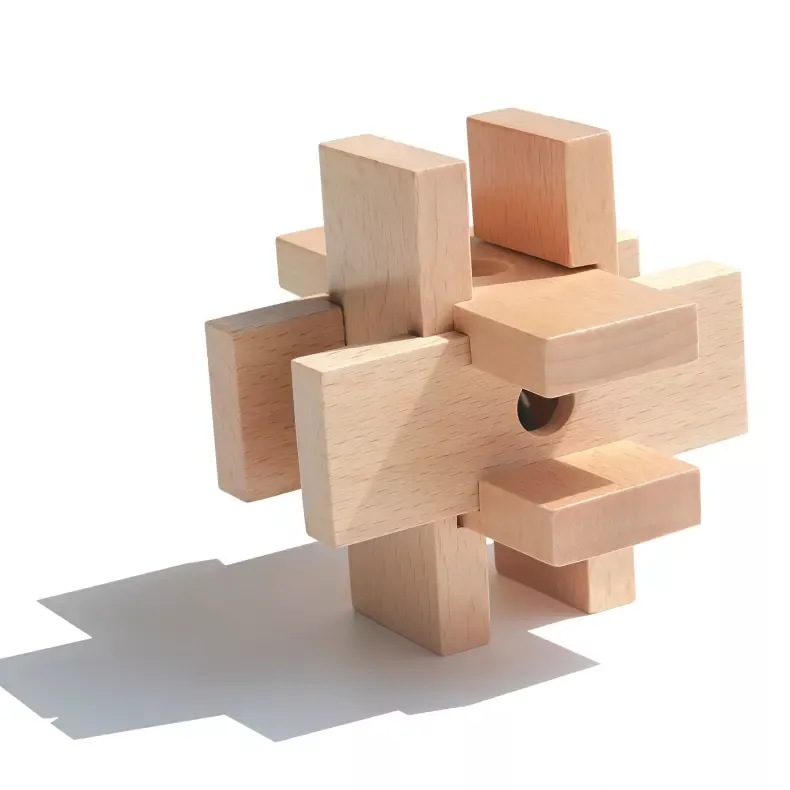
6 Piece Wooden Puzzle Key — $12.99
For a different kind of mental break, I often switch from mechanical puzzles to strategy-based tabletop games. It uses a different part of the brain—predictive logic rather than spatial reasoning—but the satisfaction of a “solved” state is much the same.
Quick-Reference Comparison Table
FAQ: Everything You Wanted to Ask (But Were Too Frustrated to Phrase)
How do I open a wooden puzzle box when it feels completely solid?
Most “stuck” boxes aren’t actually stuck; they are waiting for a specific physical orientation. Before you reach for a screwdriver, try the “gravity check.” Tilt the box in all six directions while gently trying to slide the panels. Often, an internal pin needs to drop out of a notch. If that fails, look for a “key” piece—a small section of the trim or a corner that moves independently. Some advanced ghost-style trick boxes even require you to blow into a specific hole to move a lightweight internal flap.
Are these boxes durable enough for kids?
It depends on the construction. A solid hardwood puzzle like the Wood Knot Puzzle ($16.99) can handle being dropped on a kitchen floor. However, the laser-cut kits like the 3D Wooden Puzzle Treasure Box ($29.99) are more delicate. They are made of plywood, and while they are sturdy once assembled, the individual gears can snap if a child tries to force the mechanism. I generally recommend solid wood for under-12s and kits for teens and adults.
Why are puzzle boxes so much more expensive than regular puzzles?
You’re paying for tolerances. A jigsaw puzzle is a 2D image cut into pieces. A wooden box puzzle is a 3D machine. The labor involved in ensuring that a sliding panel moves smoothly but remains “invisible” is significant. As Reddit users often point out, you are paying for the “engineering per square inch.” A cheap box will have loose seams and obvious gaps; a high-end box is a work of art that happens to be a game.
Can I hide a gift card or money inside these?
Yes, but check the internal dimensions! Many “brain teaser” boxes are smaller than they look in photos. The 3D Wooden Puzzle Safe with Combination Lock ($30.99) has plenty of room for cash or jewelry. However, something like the Luban Cube Puzzle ($21.99) is solid wood with no internal cavity. Always look for the word “compartment” or “treasure box” if your goal is gifting.
How do I put a puzzle back together after my kids took it apart?
This is the most common “emergency” I see in the hobby. If you don’t have the instructions, your best bet is to look for wear marks. Wood on wood leaves slight “tracks” over time. Follow the shiny spots. If you’re really stuck, many collectors post “re-assembly” videos on YouTube. I recommend taking a photo of each piece as you remove it during your first solve. It feels like cheating, but it saves hours of headache later.
Does solving puzzles actually help with brain aging?
There is legitimate research, including some cited in the National Institutes of Health database, suggesting that puzzle-solving enhances visuospatial cognitive abilities. It’s essentially a workout for your brain’s “mapping” software. Engaging with a wooden box puzzle forces you to hold a 3D model in your mind and manipulate it, which is far more taxing than a crossword or a digital game.
What is the best wood for a puzzle box?
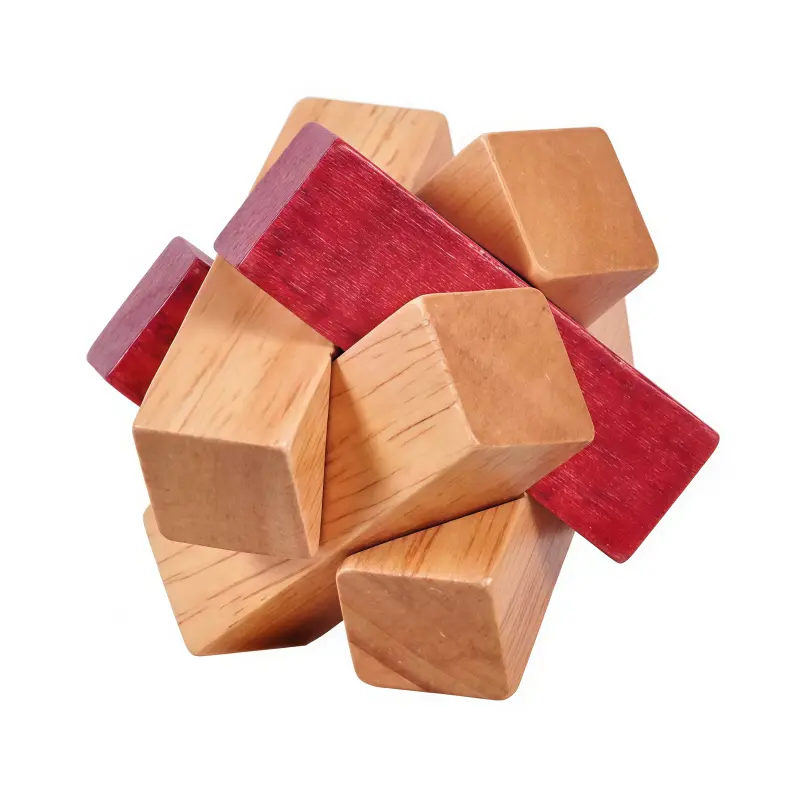
I prefer Beech or Walnut. Beech is dense and takes a fine edge, which is essential for those invisible seams. Walnut is beautiful and has a natural oiliness that helps panels slide. Plywood (used in most 3D kits) is great for precision but lacks the “soul” and longevity of solid hardwood. If you’re looking for a legacy piece, go for solid wood.
Why do some puzzles have a “burnt” smell?
That’s the smell of the laser cutter. Most modern wooden kits are cut with high-powered lasers that cauterize the wood. This leaves a dark edge and a campfire-like scent. It usually fades after a week or two. If it bothers you, a quick wipe with a damp cloth (not wet!) can remove the excess soot from the edges.
My puzzle is stuck. Should I use WD-40?
NO. Never use liquid lubricants like WD-40 or oil on wood. The wood will absorb the liquid, swell, and become permanently jammed. If a puzzle is sticking, use dry lubricants like graphite (pencil lead) or candle wax. If it’s stuck because of humidity, put it in a sealed container with some silica gel packets for a few days to dry it out.
What’s the difference between a “Trick Box” and a “Sequential Discovery” puzzle?
A trick box usually requires one or two clever moves to open. A sequential discovery puzzle is a journey—you might find a hidden tool inside the first compartment that you then have to use to unlock the second compartment. They are the “Escape Rooms” of the puzzle world. They are significantly more expensive but offer a much deeper narrative experience.
Are there “unsolvable” wooden puzzles?
Technically, no. But there are puzzles designed to be “mean.” Some use internal ball bearings that only move if you perform a very specific sequence of rotations (like a safe dial). If you’re not a fan of “blind” puzzles where you can’t see what’s happening, stick to the mechanical kits where the gears are visible.
How do I store my collection?
Keep them out of direct sunlight and away from heat vents. Sunlight will fade the wood and can cause thin panels to warp. A bookshelf in a climate-controlled room is perfect. I like to keep mine at eye level so I can grab one when I’m stuck on a difficult email or a coding problem.
What is “Wu Wei” problem solving?
It’s a Taoist concept of “effortless action.” In the context of the 6 Piece Wooden Puzzle Key ($12.99), it means that the solution should feel natural. If you are straining your muscles to move a piece, you are fighting the design. When you find the right path, the pieces should practically fall into place.
Can I build my own puzzle box?
Absolutely. Many hobbyists start by using surplus flooring or scrap hardwood. However, the tolerances are incredibly tight. If you’re off by even half a millimeter, the “trick” won’t work. I recommend starting with a kit like the 3D Wooden Puzzle Safe ($30.99) to understand the mechanics before trying to design your own from scratch.
Is it okay to look up the solution?
I’m a purist, so I say wait at least 48 hours. The most satisfying part of a wooden box puzzle is the “click” that follows an hour of confusion. If you look up the answer, you can never “un-see” it, and the puzzle loses its magic. If you must, look for “hints” rather than full walk-throughs.
The One Puzzle That Teaches You How All the Others Work
If you’ve read this far, you’re likely looking for a place to start. Every collection has a “Rosetta Stone”—the one piece that changes how you look at every other challenge. For me, that was a simple interlocking cube. It taught me that the most solid-looking objects are often the most fragile if you find the right pressure point.
The 3D Wooden Puzzle Treasure Box ($29.99) is my current recommendation for anyone entering the 2026 puzzle scene. It’s not just a box; it’s a mechanical autobiography of how secret compartments work. You’ll build the gears, you’ll sand the pins, and you’ll finally understand why that “ghost seam” is so hard to find.
If you find that the mechanical side of things is what really gets your brain firing, your next step should be exploring the advanced sequential discovery challenges that take this logic to its extreme. But for now, start with the wood. Put down the phone, clear your desk, and let your fingertips do the thinking. The secret is already there; you just have to stop trying so hard to find it.