The third time the brass pin slipped past my thumb, I set the box down and made coffee. My fingernails were slightly sore, and my patience was thinner than a laser-cut plywood sheet. This is the reality of the hobby: you aren’t just buying a decorative object; you are entering a non-verbal argument with a designer who lived decades, or even centuries, before you.
I’ve spent the better part of fifteen years testing over 200 mechanical puzzles, and the “puzzle box” remains the most psychologically complex category of them all. Unlike a jigsaw where the goal is visible, or a Rubik’s cube which is pure algorithm, a secret opening box is a test of observation. It is an invitation to look for what is hidden in plain sight.
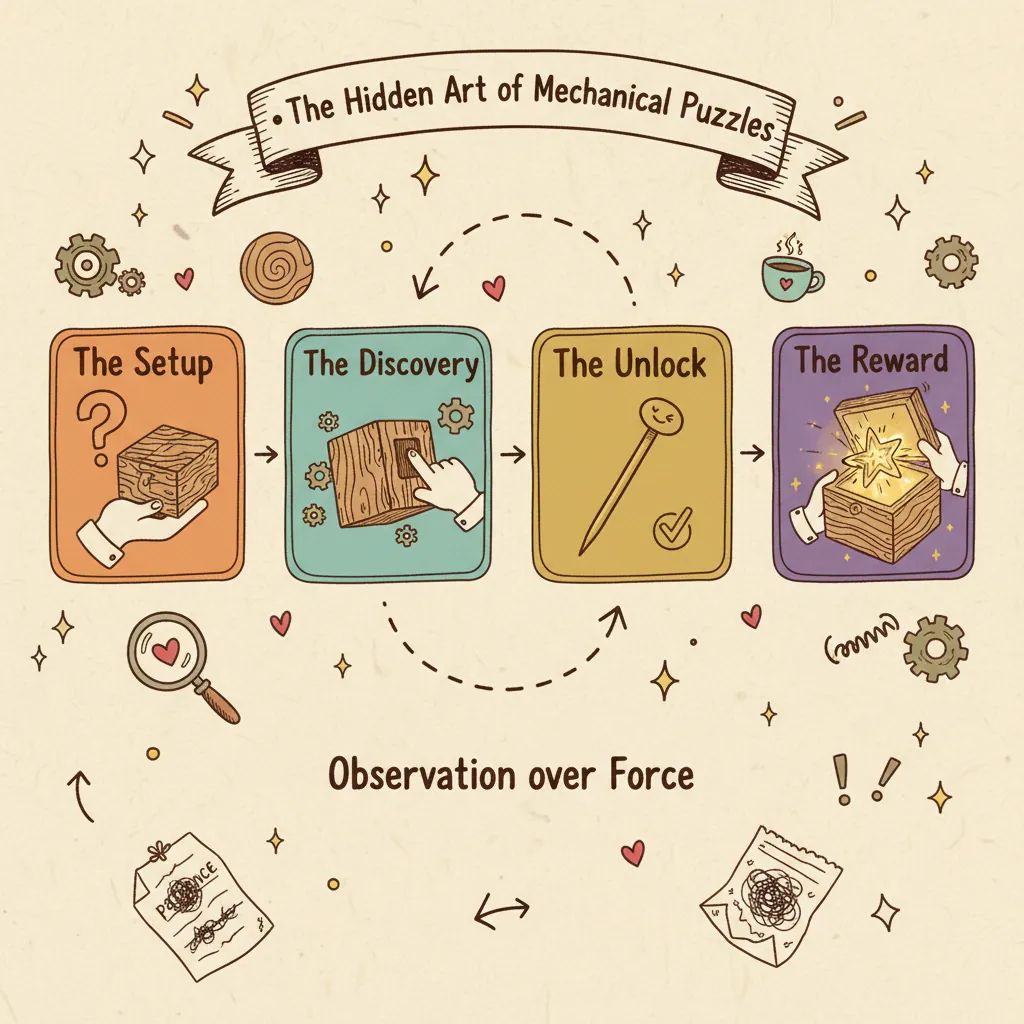
The core thesis of my collection—and this review—is simple: the best puzzle boxes punish impatience and reward observation. If you try to force a mechanism, you’ve already lost. But if you listen to the wood, feel the weight of the pins, and respect the tolerances, the box will eventually whisper its secrets to you.
The Anatomy of a Secret: What Defines a “Puzzle Box”?
Technically, a puzzle box is a container that cannot be opened through conventional means. It requires a specific sequence of moves—slides, rotations, tilts, or even magnetic triggers—to reveal its internal void. Historically, these were used for everything from storing jewelry to hiding Victorian-era love letters.
In my experience, the modern market is split into two camps: the “one-trick” boxes and the “sequential discovery” boxes. The one-trick variety relies on a single clever physical principle, like centrifugal force or a hidden gravity pin. The sequential discovery variety is a journey; you find a tool hidden in one compartment, which you then use to unlock a second compartment, and so on.
As I sat with the 3D Wooden Puzzle Treasure Box ($29.99) last week, I was reminded of why the “box” format is so compelling. There is a primal satisfaction in the “click” of a locking mechanism finally yielding. It’s a feeling of mastery over the physical environment that a digital game simply cannot replicate.
Why Your First Solve Will Likely Be an Accident
Most beginners approach a new acquisition by shaking it. This is usually a mistake. While shaking can tell you if there are loose internal components, it can also jam delicate wooden gears. I’ve seen more than one high-end box ruined because a user thought “mechanical challenge” meant “test of strength.”
Actually, the first time you open a complex box, it often feels like a fluke. You’re sliding panels, trying to find a seam, and suddenly—snap—it’s open. You didn’t solve it; you stumbled upon the solution. The real solve happens the second time, when you attempt to close it and realize you don’t actually know what you did. This is where the cognitive development for all ages really kicks in. You have to reverse-engineer your own luck.
3D Wooden Puzzle Treasure Box
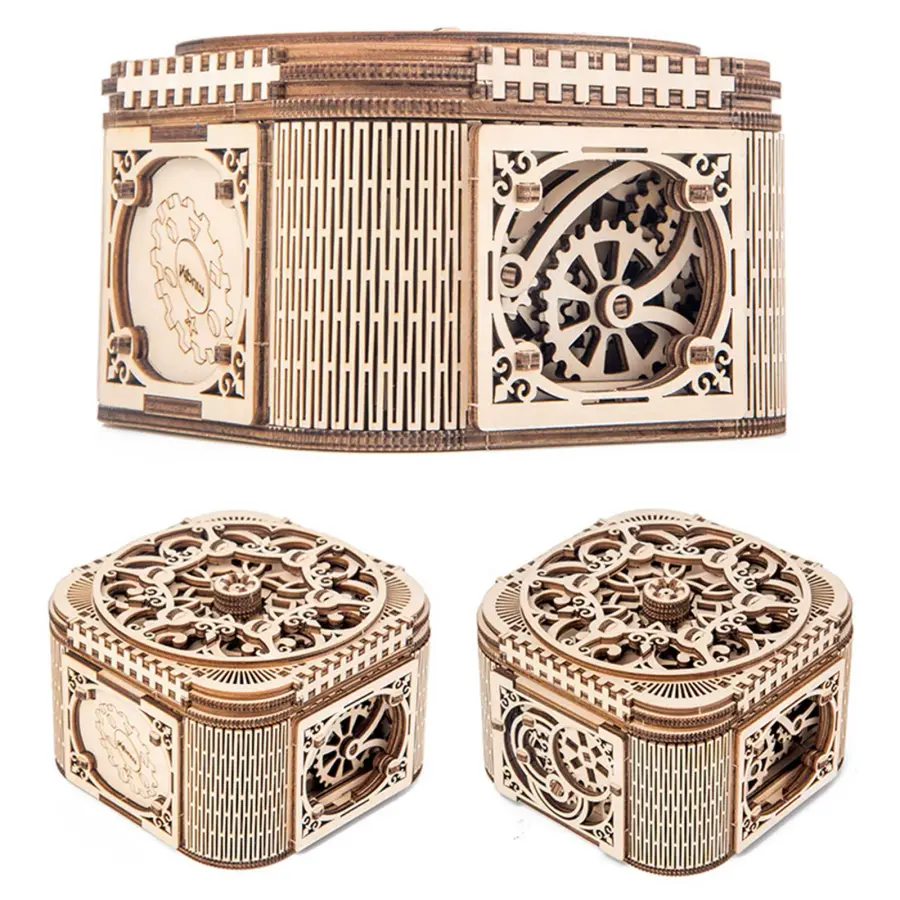
The 3D Wooden Puzzle Treasure Box is the quintessential “entry-level but impressive” mechanical kit. Priced at $29.99, it bridges the gap between a static model and a true trick box. What I love about this build is the visibility of the gears. You aren’t just guessing what’s happening inside; you are assembling the very teeth and cams that will eventually guard your items.
I spent about three hours on this one. The laser-cut pieces are precise, but you’ll want to keep some sandpaper or a bit of candle wax nearby for the gears. If they aren’t smooth during the build, they will haunt you during the solve. It’s a functional jewelry box once finished, but the real prize is the 150-200 piece assembly process that teaches you the basics of mechanical interlocking. It’s a solid choice for someone who wants to understand the “how” before they tackle the “where is the hidden button?” mystery.
Wooden Ferris Wheel Music Box Kit

If you prefer your puzzles to have a sensory payoff beyond just “it opened,” the Wooden Ferris Wheel Music Box Kit ($59.99) is a fascinating hybrid. It’s not a secret opening box in the traditional sense, but it utilizes the same complex joinery and gear-driven logic. Most music boxes I’ve tested are fairly flimsy, but this one uses two music movements to create a richer sound.
When I was winding the handle for the first time, I noticed the rotation was surprisingly smooth for a wooden kit. It’s a tribute to the 1893 World’s Fair engineering, and building it feels like a history lesson in miniature. The “puzzle” here is the assembly—getting those dual movements to sync without grinding. It’s priced at $59.99, which is higher than the average kit, but the complexity of the movement justifies the cost. For those who enjoy understanding the mechanics of secret compartments, this kit provides a masterclass in gear ratios.
The Materials Debate: Wood vs. Metal
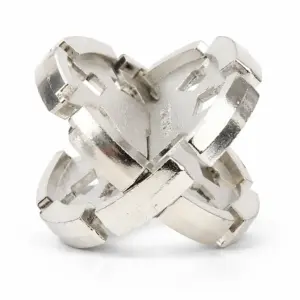
I often get asked if metal puzzles are “better” than wooden ones. The answer depends on what you value. Metal puzzles, like the Luban Lock Set 9 Piece ($39.99), offer a level of durability and precision that wood can’t match. You can feel the weight, the coldness of the material, and the near-zero tolerances.
However, wood has “give.” A wooden puzzle box feels alive. It changes with the humidity; it has a scent; it has a grain that can hide seams in a way that machined metal cannot. If you’re looking for extreme difficulty levels for veterans, you’ll find that wooden boxes often use the natural texture of the material to deceive the eye.
3D Wooden Perpetual Calendar Puzzle
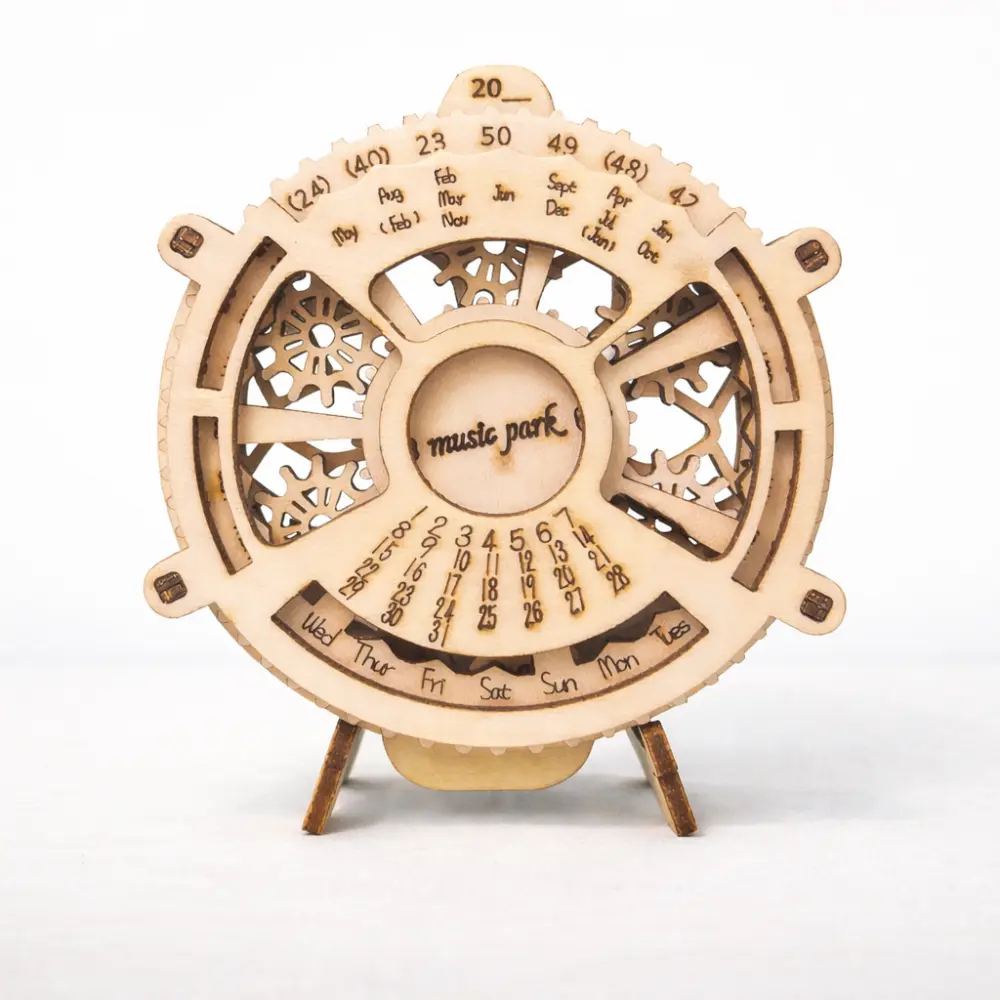
The 3D Wooden Perpetual Calendar Puzzle ($39.99) is less about “hiding” and more about “calculating.” I keep this one on my desk next to my monitor. It’s a working date calculator that you build yourself, spanning from 2023 to 2050. The challenge here isn’t finding a secret latch; it’s the mathematical alignment of the gears.
When I first assembled this, I was skeptical about whether a wooden gear system could accurately track dates for decades. But the logic is sound—it’s based on the same algorithms that have governed our calendars since the 16th century. For $39.99, it’s one of the most functional puzzles in my collection. It’s a great “fidget” piece for when you’re on a long Zoom call and need to engage your hands without losing focus on the conversation. It’s a different kind of brain teaser, one that rewards logic over trial-and-error.
The Peak Moment: The Unspoken Grammar of Mechanical Puzzles
After you’ve handled a few dozen of these, you start to notice something. There is a “grammar” to how designers think. If a box has a decorative inlay, one of those pieces is probably a slider. If the box is unusually heavy on one side, there’s likely a gravity-fed pin that needs to be tilted.
The “Peak Moment” for any collector is the first time you solve a box without actually looking at it. I remember sitting in a dark living room, just feeling the 3D Wooden Puzzle Treasure Box ($29.99) in my hands. I wasn’t looking for a seam; I was feeling for the slight “play” in the panels.
Most people assume the solve is about the eyes, but the data—and my own sore thumbs—suggests it’s about haptic feedback. This is actually a scientific principle. Edward Thorndike, a pioneer in behavioral psychology, used “puzzle boxes” to study how animals (and later, humans) learn through trial and error. He found that we don’t just “think” our way out; we interact until the environment changes, and then we remember that change.
When you feel that first panel move just a fraction of a millimeter, your brain releases a hit of dopamine that is more addictive than any video game. It’s the moment the object stops being a “thing” and starts being a “process.”
The “Not-Quite-Boxes” That Still Challenge the Brain
Not every mechanical puzzle needs to be a box to be satisfying. Sometimes, the “enclosure” is the puzzle itself. Take the Luban Lock Set 9 Piece ($39.99). These are traditional Chinese joinery puzzles. They don’t hold anything inside, but the way they interlock using only geometry is essentially the “DNA” of every puzzle box ever made.
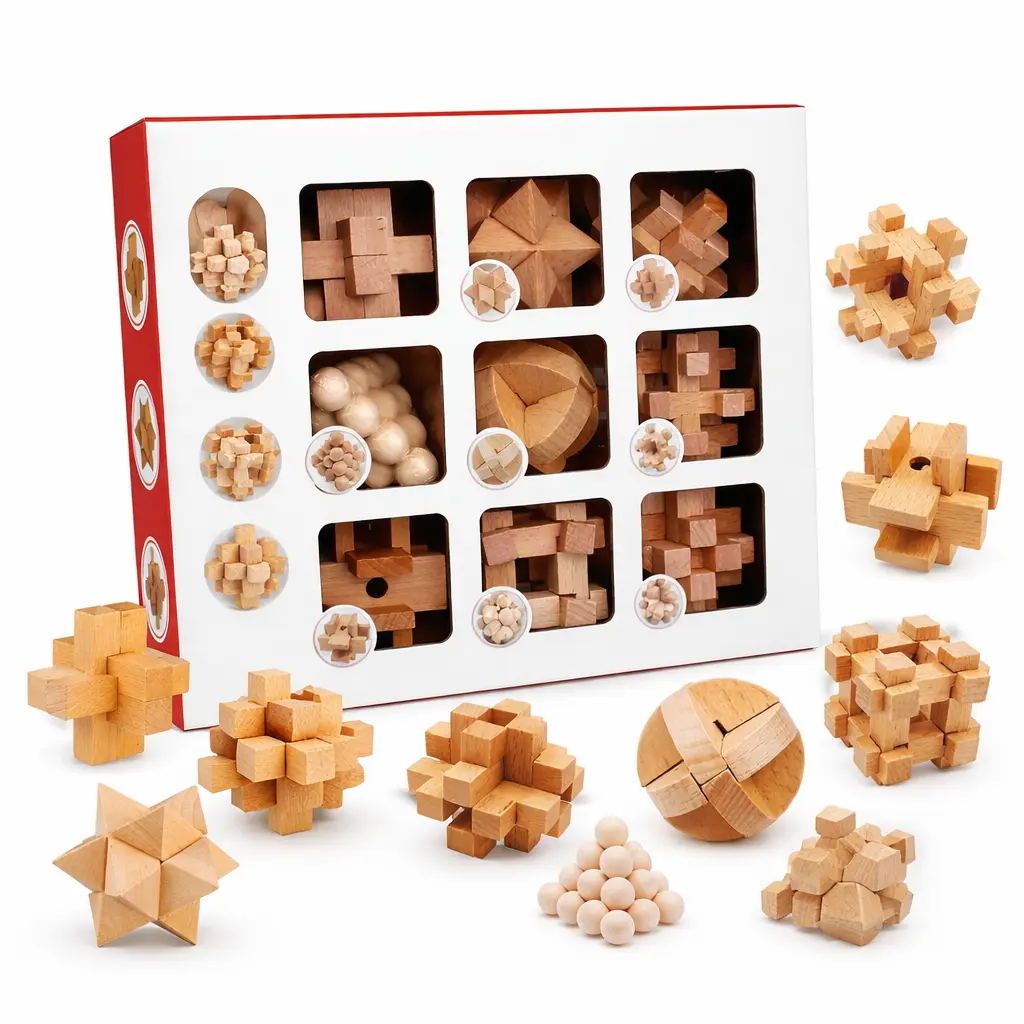
Luban Lock Set 9 Piece — $39.99
The Luban Lock Set 9 Piece is priced at $39.99 and is frankly, a nightmare for the disorganized. If you take all nine apart at once, you’re looking at a very long afternoon of frustration. I’ve had this set for years, and I still occasionally struggle to reassemble the more complex “pineapple” shapes. It’s the perfect “coffee table” puzzle—the kind you leave out for guests and watch them slowly lose their minds over.
If you find yourself getting too frustrated with the wooden joinery, I often recommend taking a break with something entirely different, like strategic tabletop games or even digital logic challenges, just to reset your spatial reasoning.
Layered Butterfly Wooden Music Box
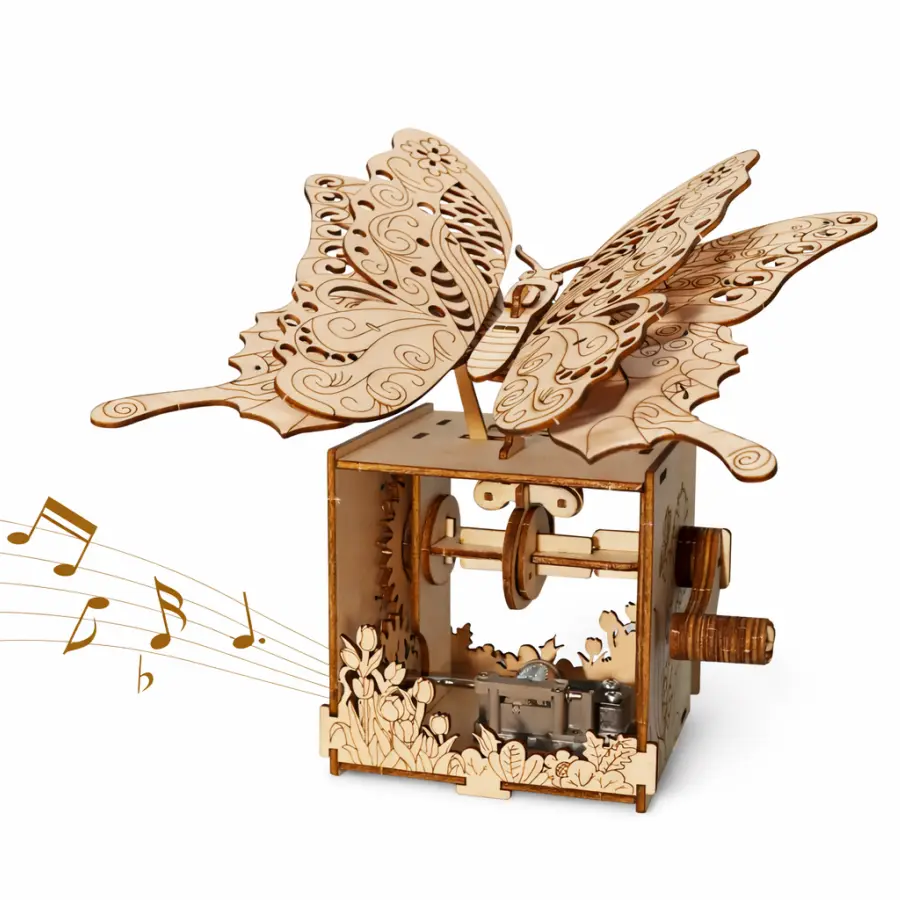
The Layered Butterfly Wooden Music Box ($28.99) is another mechanical gem. It’s a bit more whimsical than the heavy-duty boxes, but the fluttering wing mechanism is a great example of how rotary motion (the handle) is converted into linear motion (the wings).
I’ve put this one together with my niece, and it’s a great teaching tool. At $28.99, it’s an affordable way to show someone how a pinned cylinder plucks the teeth of a steel comb to make music. It’s not a “hard” solve, but it’s a “satisfying” build. The negative? The wood is a bit thinner than the Treasure Box, so you have to be careful during the “pop-out” phase of the assembly. If you snap a butterfly wing, you’re going to need some wood glue and a lot of patience.
For the Desk: Puzzles with a Purpose
I’m a big fan of puzzles that don’t just sit on a shelf gathering dust. If I’m going to spend three hours building something, I want it to earn its keep on my desk.

The Wooden Desk Organizer with Perpetual Calendar | Puzzle Pen Holder ($19.99) is a prime example. It’s a lower-difficulty build, but it’s incredibly practical. I’ve found that having a mechanical calendar on my desk actually helps me stay more “present” than just checking my phone. There’s something about physically rotating the gears to the current date that makes time feel more tangible. For under twenty dollars, it’s a great gift for a coworker who likes to fiddle with things during meetings.
3D Wooden Mechanical Pistol Kit

For those who want pure mechanical feedback, the 3D Wooden Mechanical Pistol Kit ($29.99) is a surprising amount of fun. It’s a 68-piece build that results in a functional rubber band “fidget” toy.
I’ll be honest: I didn’t expect much from this. I thought it would be a static model. But the “click-clack” of the slide is genuinely satisfying. It’s the same principle as a high-end bolt-action pen. At $29.99, it’s a cheap thrill, but the engineering of the trigger mechanism is surprisingly clever. It’s not a “puzzle box,” but it uses the same mechanical logic you’ll find in more complex secret opening challenges.
The Big Comparison: Which One Should You Buy?
When choosing your first (or next) piece, you need to decide if you want a Build, a Solve, or a Tool.
- The Build: Focuses on the assembly. The Galleon Ship 3D Wooden Puzzle Model Kit (check current pricing) is a beautiful example of this. It’s a 3D replica that looks stunning on a shelf.
- The Solve: Focuses on the mystery. The 3D Wooden Puzzle Treasure Box ($29.99) is the winner here.
- The Tool: Focuses on function. The 3D Wooden Perpetual Calendar Puzzle ($39.99) wins for utility.

The Galleon Ship 3D Wooden Puzzle Model Kit (check current pricing) is one of those kits that requires a steady hand. It’s not a “puzzle” you solve once it’s built, but the assembly is a multi-hour brain teaser in itself. The rigging and the hull curvature are particularly tricky. I’d recommend this for someone who already has a few builds under their belt.

If you want something even more ambitious, the Mechanical 3D Wooden Globe Puzzle ($28.88) is a fantastic intermediate project. It uses a gear-drive system to rotate the Earth. I’ve found that this one is particularly popular as a “family project.” It’s educational, mechanical, and looks like a vintage piece of decor once it’s finished. At just under twenty-nine dollars, it’s a lot of value for the build time.

Finally, for the person who loves “heavy machinery” in miniature, the 3D Wooden Puzzle Tanker Truck Kit ($22.99) offers a rugged, 3-axle build. It’s a tribute to American road haulage and features rolling wheels and opening doors. It’s a 3-5 hour build that doesn’t require any glue, which is always a plus in my book.
Frequently Asked Questions
How do I open a puzzle box if it’s stuck?
First, stop applying pressure. Most wooden boxes are sensitive to humidity. If the wood has swelled, the tolerances might be too tight. Try moving the box to a cooler, drier room for 24 hours. If it’s a mechanical kit you built yourself, double-check that you didn’t accidentally get glue on a moving part. I’ve found that a tiny drop of silicone lubricant or even a bit of graphite from a pencil can loosen a stubborn wooden slider. If you’re looking for understanding the mechanics of secret compartments, you’ll learn that most “stuck” boxes are actually just waiting for a specific orientation (like being held upside down).
Are these puzzles suitable for children?
It depends on the child, but generally, I recommend these for ages 12 and up. Younger children often lack the fine motor skills to handle delicate laser-cut pieces without snapping them. However, a project like the Layered Butterfly Wooden Music Box ($28.99) can be a great collaborative effort between an adult and a child. It’s a fantastic way to introduce cognitive development for all ages through hands-on engineering.
What is the difference between a trick box and a sequential discovery puzzle?
A “trick box” usually requires one or two hidden moves to open. It’s a “gotcha” puzzle. A “sequential discovery” puzzle is a multi-stage journey where you might find a key, then use that key to unlock a drawer, which contains a tool to unscrew a panel. Sequential discovery puzzles are generally much more expensive because they require more complex internal machining. For most hobbyists, a high-quality trick box like the 3D Wooden Puzzle Treasure Box ($29.99) provides the best balance of challenge and price.
Do I need glue or tools to assemble these kits?
Most modern 3D wooden puzzles, including everything from the 3D Wooden Puzzle Tanker Truck Kit ($22.99) to the Mechanical 3D Wooden Globe Puzzle ($28.88), are designed to be “snap-fit.” They use mortise-and-tenon joinery. You won’t need glue, but I highly recommend having a pair of tweezers and a small hobby knife to help remove pieces from the wooden sheets without splintering the edges.
How long does it typically take to solve a puzzle box?
For a medium-difficulty box, expect 20 to 45 minutes for the initial solve. However, the “solve” isn’t the whole story. If it’s a DIY kit, you’re looking at 2 to 6 hours of assembly time. I actually prefer the kits because you get to see the “magic” from the inside out. If you want a quick challenge, the Luban Lock Set 9 Piece ($39.99) offers several puzzles that can be solved in under 10 minutes—if you have the right spatial intuition.
Why are some puzzle boxes so expensive?
You aren’t just paying for wood or metal; you’re paying for the engineering and the tolerances. A box with a 0.1mm seam is much harder to manufacture than one with a visible gap. Some high-end Japanese Himitsu-Bako boxes can cost hundreds of dollars because they are handmade by master craftsmen. For the average consumer, the laser-cut kits we’ve discussed here offer about 90% of the experience for 10% of the price. If you’re ready for the deep end, check out extreme difficulty levels for veterans.
Can I store valuable items inside these boxes?
While they are “secret,” they are not safes. A determined person can simply break a wooden puzzle box to get inside. Use them for jewelry, spare keys, or small sentimental items. The 3D Wooden Puzzle Treasure Box ($29.99) is perfect for this, as it actually has a locking mechanism that feels secure, even if it’s made of wood.
What happens if I lose the instructions?
For the DIY kits, this can be a problem. Most manufacturers offer PDF versions on their websites. However, for the “solve” of a pre-assembled box, losing the instructions is actually a blessing. The whole point is to figure it out yourself! If you get truly stuck, the puzzle community on Reddit or YouTube is incredibly helpful—just search for the product name and “solution.”
Are wooden puzzles durable?
If handled with respect, yes. I have wooden puzzles in my collection that are over a decade old and still function perfectly. The key is to avoid “forcing” any movement. If it doesn’t want to slide, there’s a reason. Also, keep them out of direct sunlight, which can warp the wood over time.
Is puzzle solving actually good for your brain?
Yes, and there’s research to back it up. Engaging with mechanical puzzles has been shown to improve visuospatial reasoning and can even serve as a protective factor against cognitive decline. It’s a form of “active” entertainment, which is why I often suggest swapping an hour of scrolling for an hour of digital logic challenges or physical puzzle solving.
How do I choose between a metal and wooden puzzle?
If you want something tactile, warm, and often more complex in its “hiding” ability, go with wood. If you want something that feels like a precision instrument and will last forever, go with metal. The Luban Lock Set 9 Piece ($39.99) is a great way to experience the precision of metal-style logic in a wooden format.
Can I paint or stain my wooden puzzle kits?
You can, but be extremely careful. Paint adds thickness to the pieces, which can ruin the tight tolerances required for the gears to turn. If you want to customize your 3D Wooden Puzzle Tanker Truck Kit ($22.99), I recommend using a thin wood stain or markers rather than heavy acrylic paint. Always test on a scrap piece of the plywood first.
What is the best “first” puzzle box for a gift?
I always recommend the 3D Wooden Puzzle Treasure Box ($29.99). It’s the perfect price point, the build is rewarding, and the end result is a functional object that people actually want to keep on their dresser.
What 15 Years of Frustration and “Aha!” Moments Actually Taught Me
I started this article by telling you about my sore fingernails and my thin patience. But here’s the thing: once that box finally opened, I didn’t care about the two hours of frustration. I didn’t care that I had to make a second pot of coffee. All I cared about was that I had finally understood the “language” of the box.
Mechanical puzzles are one of the few things in 2026 that haven’t been “disrupted” by AI. You can’t ask a chatbot to feel the seam of a wooden panel for you. You can’t use an algorithm to sense the weight of a gravity pin. It is a purely human, purely physical interaction.
If you’re looking to start your own collection, or if you just need a break from the digital noise, start with the 3D Wooden Puzzle Treasure Box ($29.99). It taught me more about the relationship between logic and physical reality than any textbook ever could. It’s a small investment in your own focus and patience.
Once you’ve mastered the box, the next step is to see how these principles apply to other forms of logic. If you enjoyed the mechanical “dance” of the gears, you’ll find that strategic tabletop games offer a similar kind of mental satisfaction, just on a different battlefield. The world of mechanical puzzles is a rabbit hole—but it’s one well worth falling down.
The click of the latch is waiting. Are you patient enough to hear it?