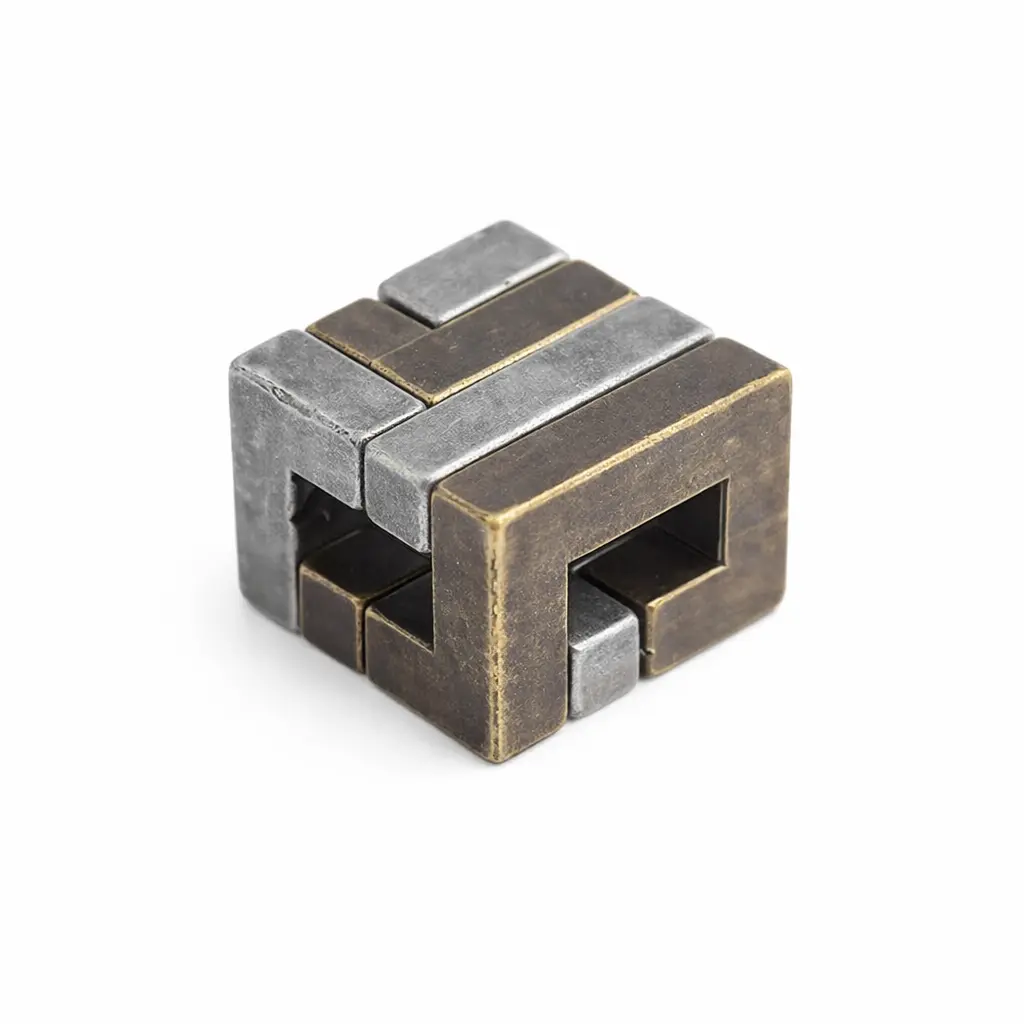
3D Printed Puzzles vs Cast Puzzles: The Maker's Reality Check

That famous 'clink' of a cast metal puzzle locking together? Your 3D printer can't do that. You've been trying to replicate that satisfying heft and snap with PLA, but the pieces are rough and the tolerances are off. The truth is, a home 3D printer and a factory casting process are fundamentally different beasts. Cast metal puzzles achieve sub-0.1mm clearances and a polished finish that your FDM printer simply cannot match without extensive post-processing. But your printer opens up a world of custom, massive, and intricate designs that cast puzzles can't touch. Let's break down the tangible differences so you can spend your weekend solving, not sanding.

12 verified products ★ N/A avg rating Updated: April 19, 2026
3d printed puzzles vs cast puzzles guide by Tea Sip

What You Need to Know

That famous 'clink' of a cast metal puzzle locking together? Your 3D printer can't do that.

You've been trying to replicate that satisfying heft and snap with PLA, but the pieces are rough and the tolerances are off. The truth is, a home 3D printer and a factory casting process are fundamentally different beasts.

Cast metal puzzles achieve sub-0.1mm clearances and a polished finish that your FDM printer simply cannot match without extensive post-processing. But your printer opens up a world of custom, massive, and intricate designs that cast puzzles can't touch. Let's break down the tangible differences so you can spend your weekend solving, not sanding.

How to Choose the Right 3D Printed Puzzles vs Cast Puzzles

For precision-focused, sequential-movement puzzles like Hanayama-style cast metal brain teasers, buying is non-negotiable. These rely on 0.05-0.1mm clearances for their 'snap,' which is nearly impossible to achieve consistently on consumer FDM printers. Conversely, for large interlocking burr puzzles, custom jigsaws, or educational models, 3D printing offers unbeatable customization at a fraction of the cost of a custom wooden or acrylic version.

Should You Buy That Puzzle or Just Print It?

Staring at a failed print and wondering if you should have just spent the $15? This table cuts through the hype. We're comparing across four critical axes: the satisfaction of the fit, the feel in your hand, the quality right off the build plate, and the brutal honesty of whether it's worth your time to print at all. The verdict isn't about good vs. bad—it's about matching the right manufacturing method to the puzzle's soul.

ProductPrecision / Fit SatisfactionMaterial Feel & HeftFinish Quality (Out-of-Box)Worth Attempting to Print?Our Verdict
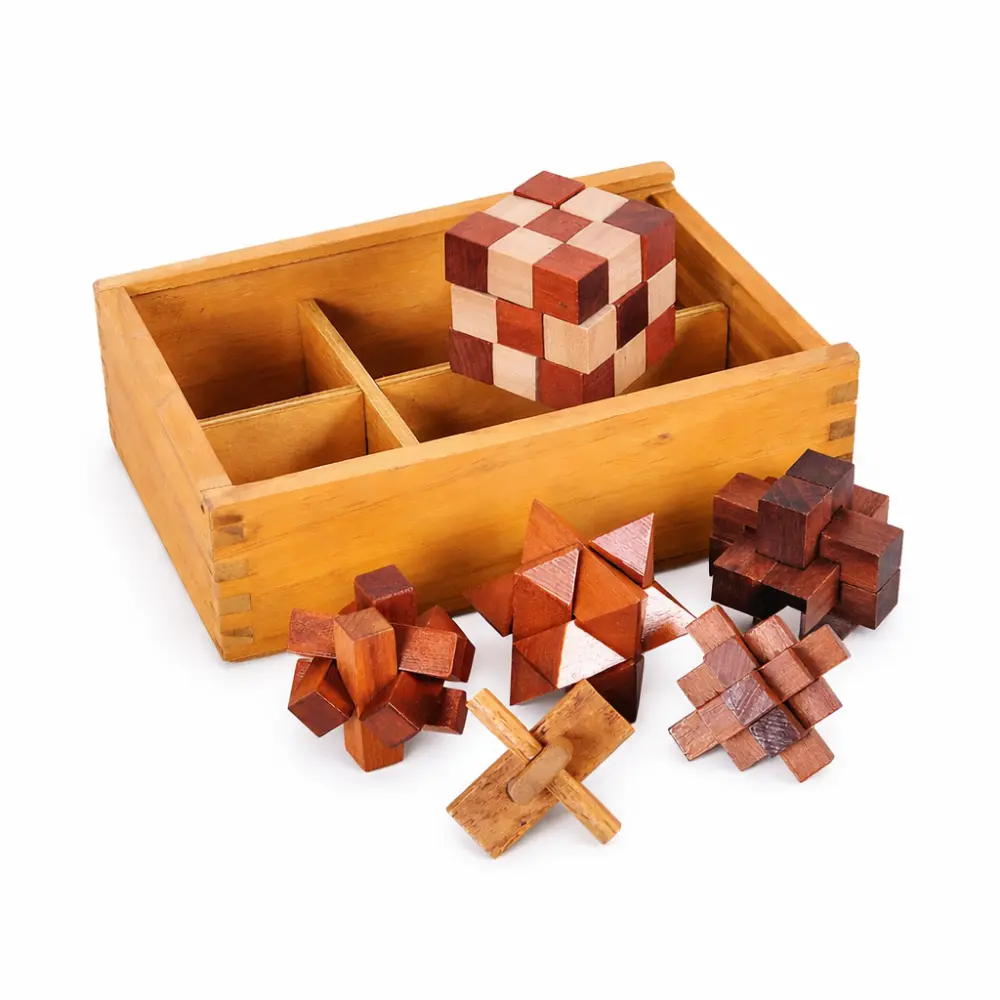
6-in-1 Wooden Brain Teaser SetLaser-cut wood offers clean, reliable friction fits. No wobble, but not the 'snap' of metal.Warm, lightweight wood. Lacks the dense, cool heft of metal but is pleasant to handle for longer sessions.Sanded smooth, often with a light finish. Ready to solve immediately.Low. These are simple geometric burrs. You could model and print them, but wood's natural friction is hard to beat with PLA.Buy It
Cast Hook Metal Brain TeaserPerfect. The iconic 'click' of the hook engaging is a result of machining tolerances under 0.1mm.Solid zinc alloy. Substantial weight for its size (approx. 60g), feels deliberate and premium.Flawless tumbled finish. No layer lines, no seams, just smooth metal.No. This is the archetype of what printers struggle with. The feel IS the puzzle. As one Reddit user noted, 'tolerances matter a lot though, so dialing flow and horizontal expansion is key'—and even then, you'll get plastic drag, not a metallic snap.Buy It
Cast Galaxy 4-Piece SilverImpeccable. The four pieces slide and lock with a precise, mechanical action that feels engineered.Heavy, satisfying silver finish. The weight (approx. 85g) adds to the perception of quality and complexity.Mirror-smooth polished surface. Reflects light beautifully; no post-processing needed.No. The magic is in the seamless interaction of multiple precise parts. A printed version will have visible layers that impede the smooth sliding motion.Buy It
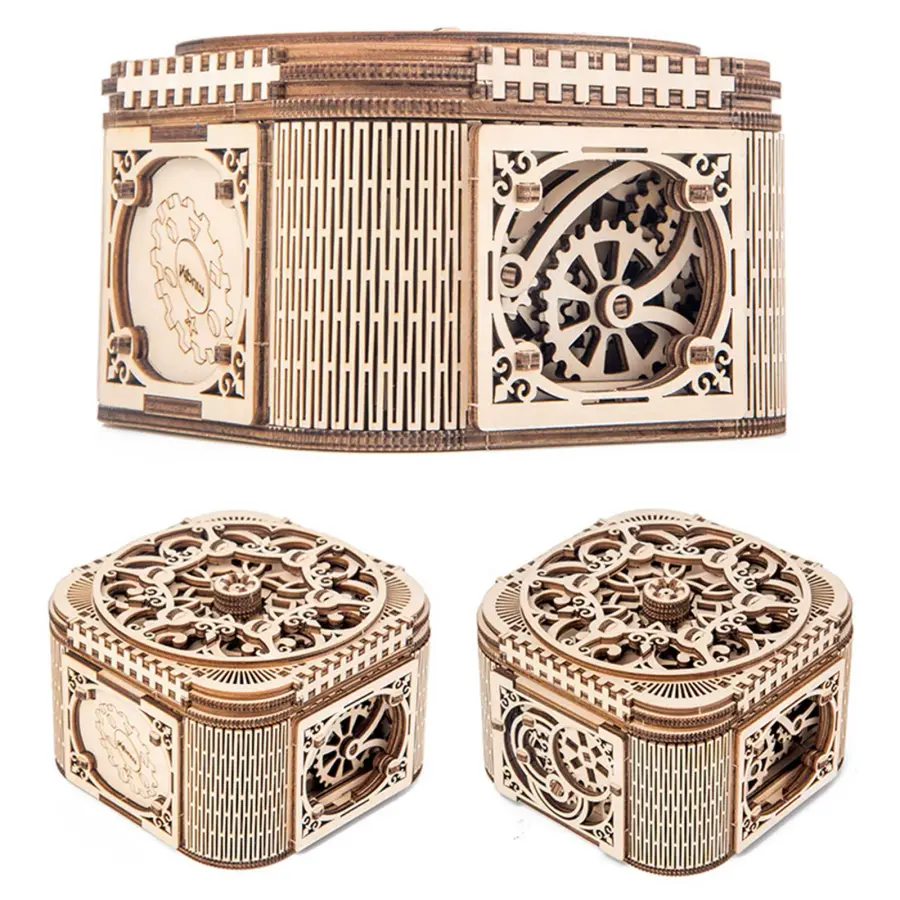
3D Wooden Puzzle Treasure BoxLaser-cut precision. Parts interlock with a satisfying, tight wooden 'click' that's reliable and repeatable.Natural birch plywood. Light but sturdy, with an organic, craft-like feel perfect for a decorative item.Clean laser-cut edges, may have slight charring. Requires light sanding for a perfect finish, but looks great built.Maybe, for the challenge. Modeling the intricate interlocking gears and linkages is a great CAD exercise. But for the final gift-ready object, the wood version is superior.Buy It
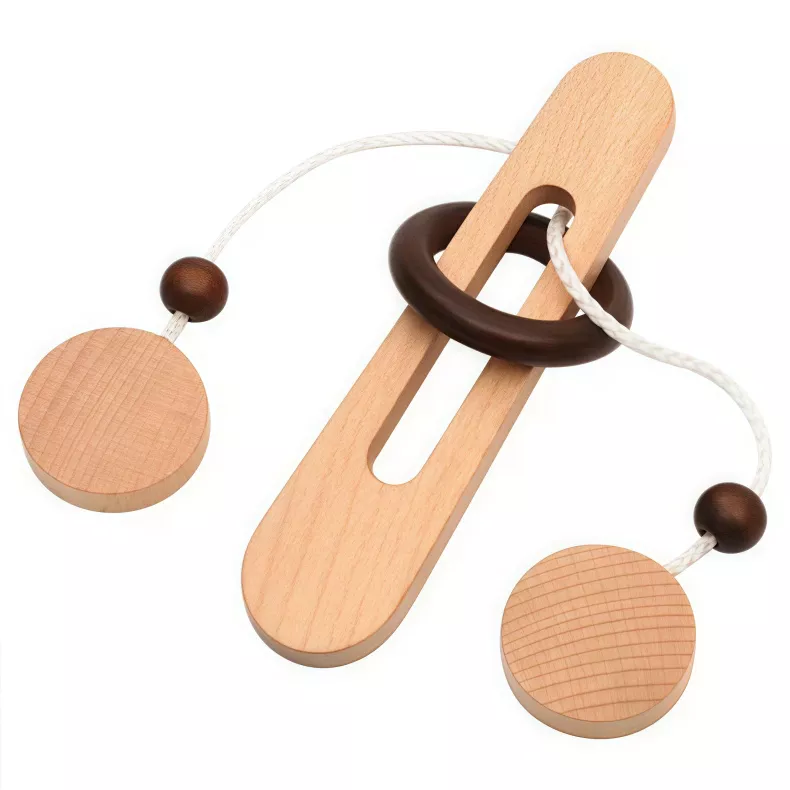
Tricky Wooden Ring PuzzleGood. Relies more on clever geometry and user manipulation than ultra-tight tolerances.Lightweight, simple wood. The focus is on the solving mechanic, not the material luxury.Basic sanded finish. Functional and straightforward.Yes! This is a classic "disentanglement" puzzle. The tolerances are forgiving, and printing it in PLA can work well. A great first puzzle-printing project.Print It (if you enjoy the process)
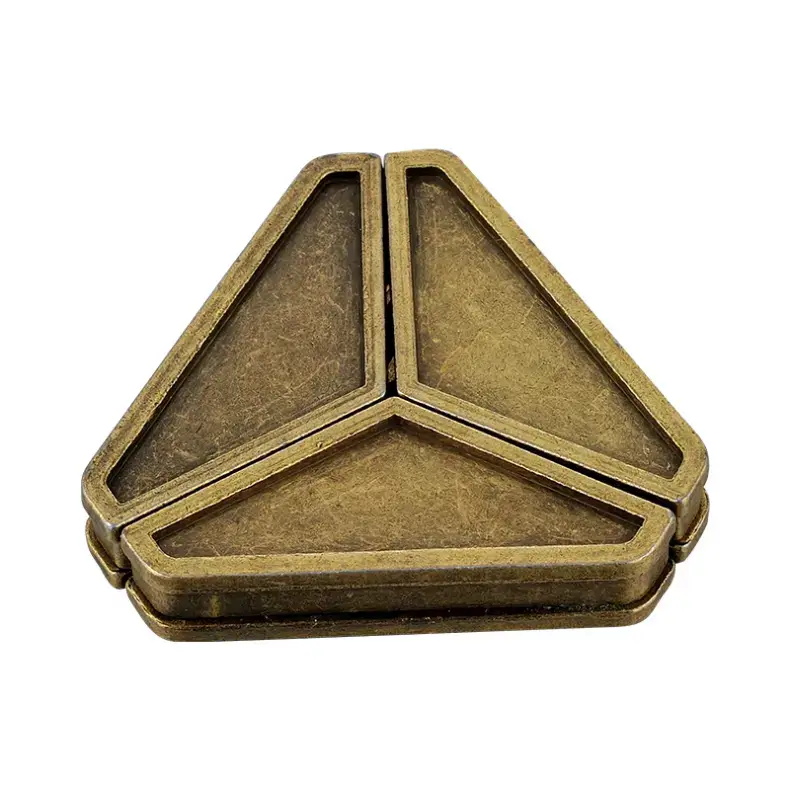
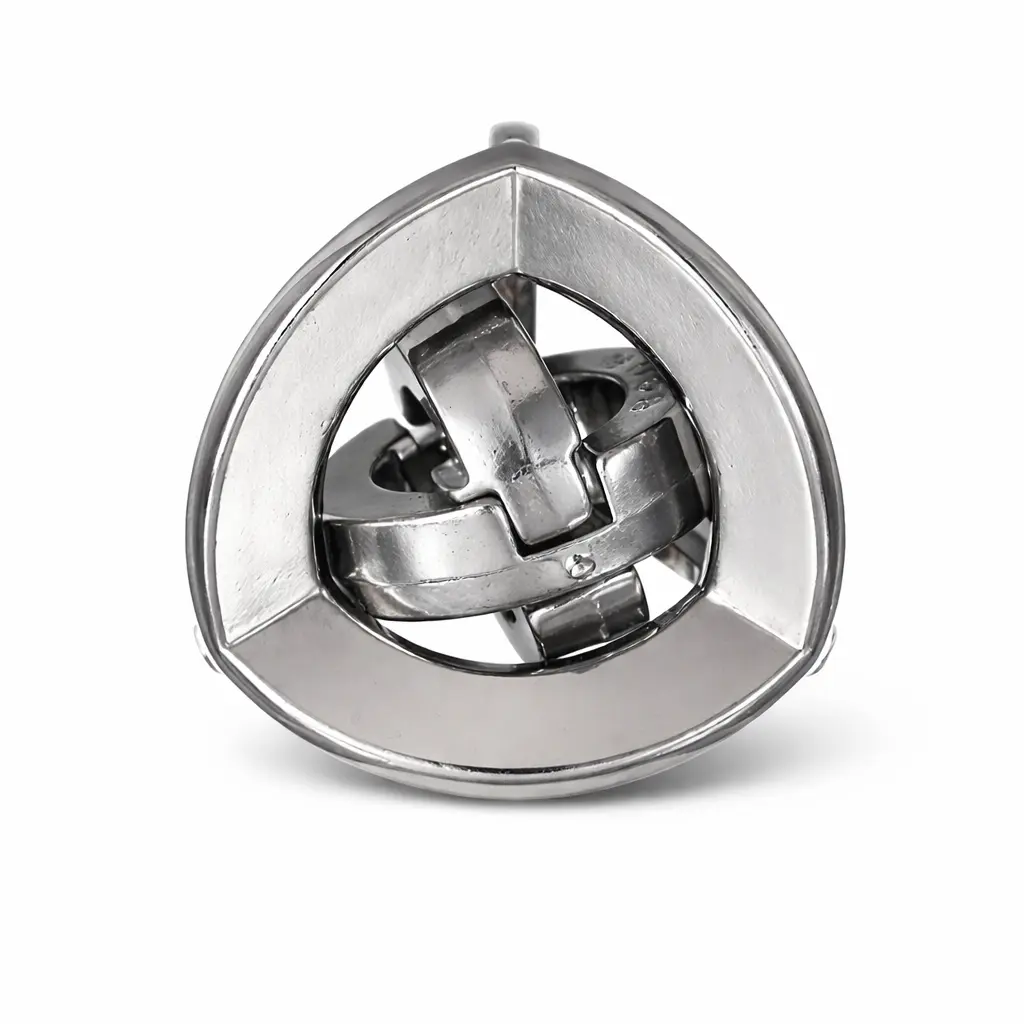
Alloy Triangle Lock PuzzleHigh. Pieces rotate and align with a positive, metallic stop. No plastic flex.Dense, cool-to-the-touch alloy. The small size (often ~4cm) feels surprisingly weighty and intentional.Smooth, anodized color finish. Durable and resistant to fingerprints.No. The mechanism involves rotating parts with tight clearances. Printed axles and holes will have play or friction that ruins the intended action.Buy It
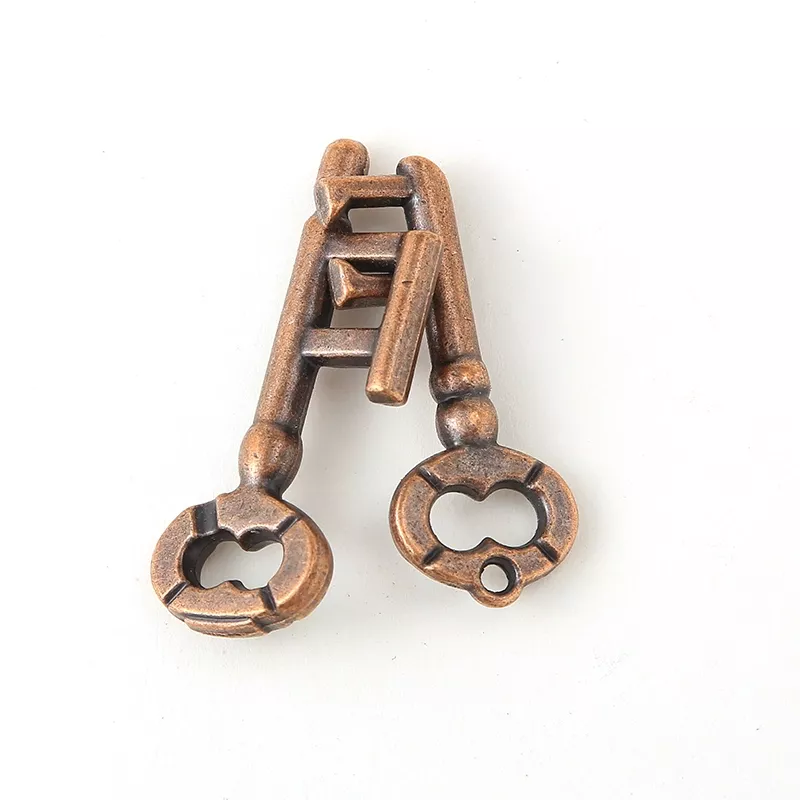
Two Key Lock PuzzleExcellent. The simulated key turning and lock disengagement require precise internal channels and pins.Solid metal construction. Mimics the heft and authority of real lockpicking tools.Detailed casting with textured grips. Feels like a real metal object.No. Internal moving parts and the need for a crisp "turn" action are extremely difficult to print reliably without supports and cleanup ruining the mechanism.Buy It
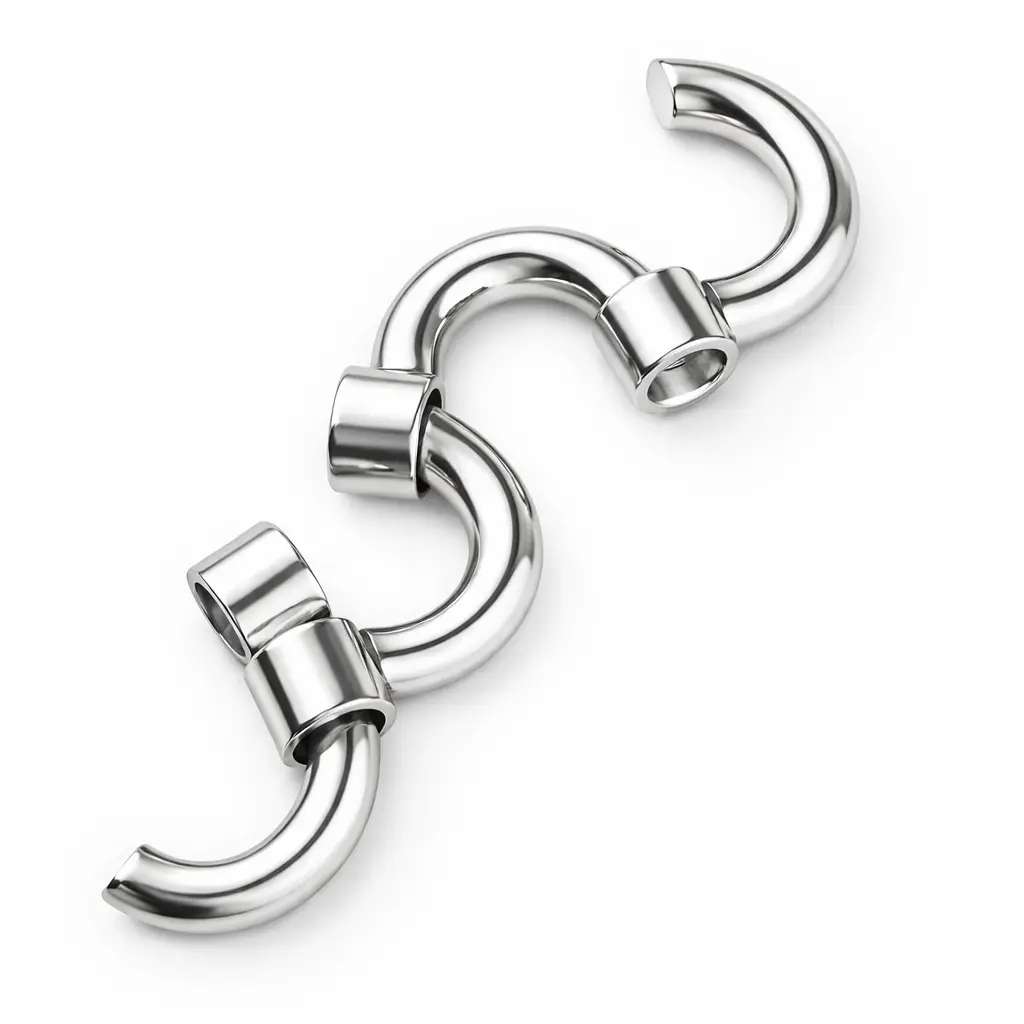
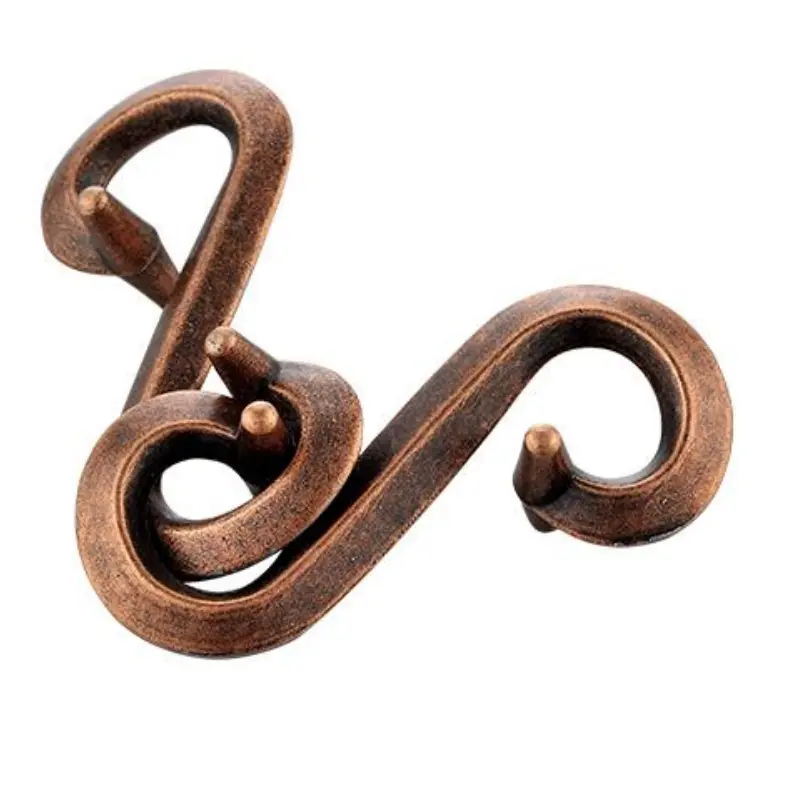
Alloy S Lock PuzzleVery Good. The curved 'S' paths must guide each other without binding—achieved through precise casting.Another hefty pocket piece. The curved shape feels great rolling in your palm.Consistently smooth, often with a matte or brushed finish.Rarely. While the shape seems simple, the required clean release along curved paths is tough. You'll likely end up with pieces that grind instead of glide.Buy It
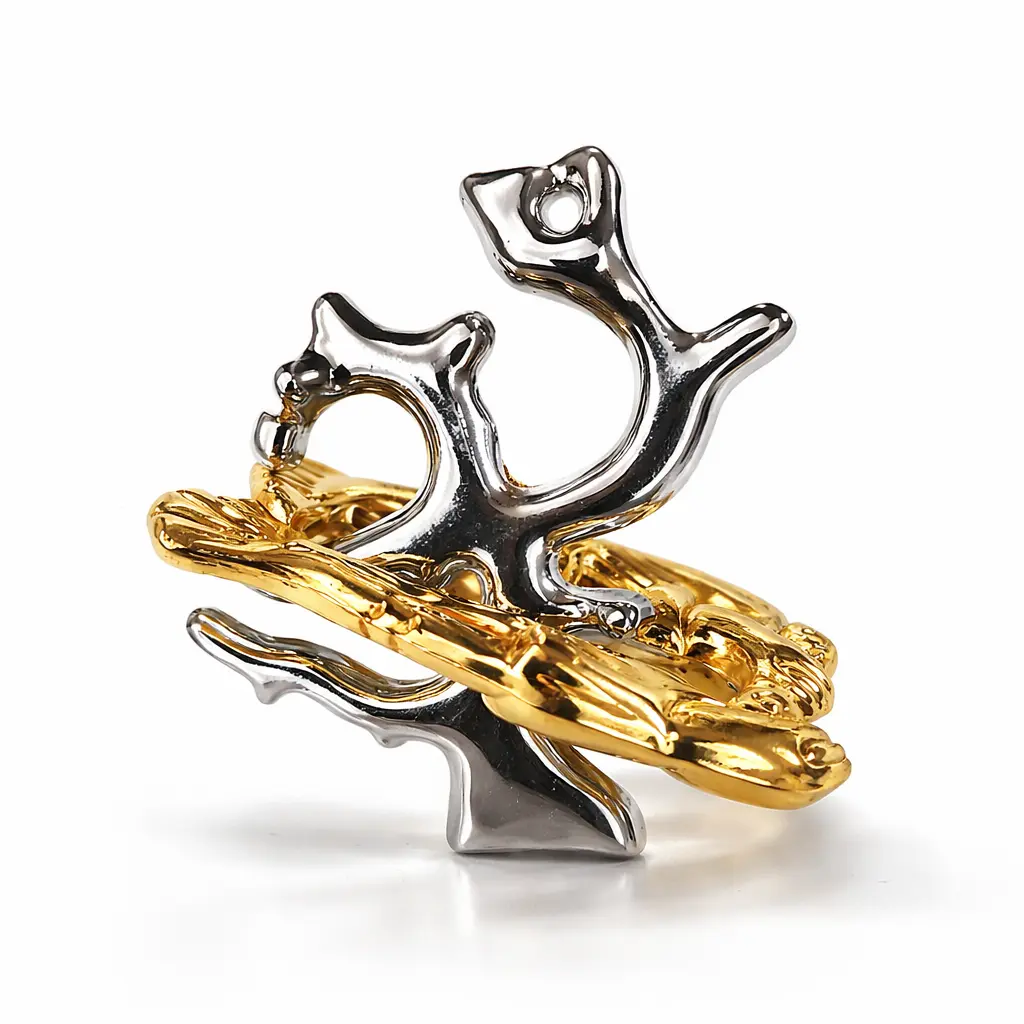
Gold Fish & Silver Coral Reef CastGood. This is more of a take-apart/screw-together puzzle; absolute precision is less critical than for sliding puzzles.Dual-metal finish. The visual and tactile contrast between gold and silver is a key part of the appeal.Decorative and shiny. The cast details on the fish and coral are sharp.Possible, but loses the point. You could print a two-color version, but you lose the metal heft and the pristine plating that makes this a display piece.Buy It
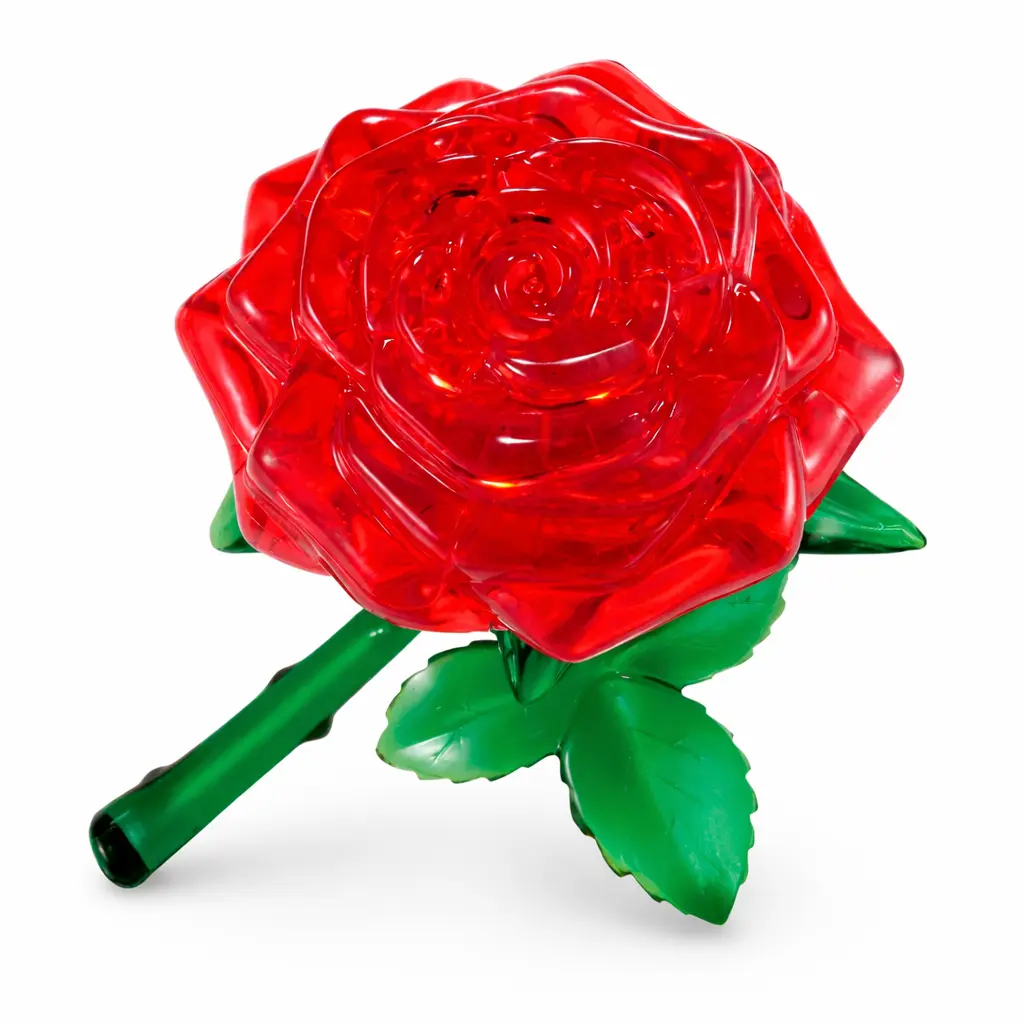
3D Crystal Rose PuzzleModerate. Interlocking plastic pieces that rely more on geometry than friction fits.Lightweight, transparent plastic. Aesthetic and delicate, but feels like a model kit.Clear plastic with injection-molded shine. No layer lines, but can have slight molding seams.YES, absolutely. This is where 3D printing shines. You can scale it, make it multicolor, or even design your own flower. The tolerances are forgiving for this puzzle type.Print It (if you enjoy the process)
Metal Orbit Ring Cast PuzzleSuperb. The rings must orbit each other without catching—a feat of balanced tolerances.Rings have a substantial, jewelry-like feel. The motion is fluid and hypnotic.Highly polished, often with a gunmetal or black oxide finish for contrast.No. The continuous, frictionless motion is the entire experience. Any layer line or imperfection in a print will create drag and ruin the satisfying spin.Buy It
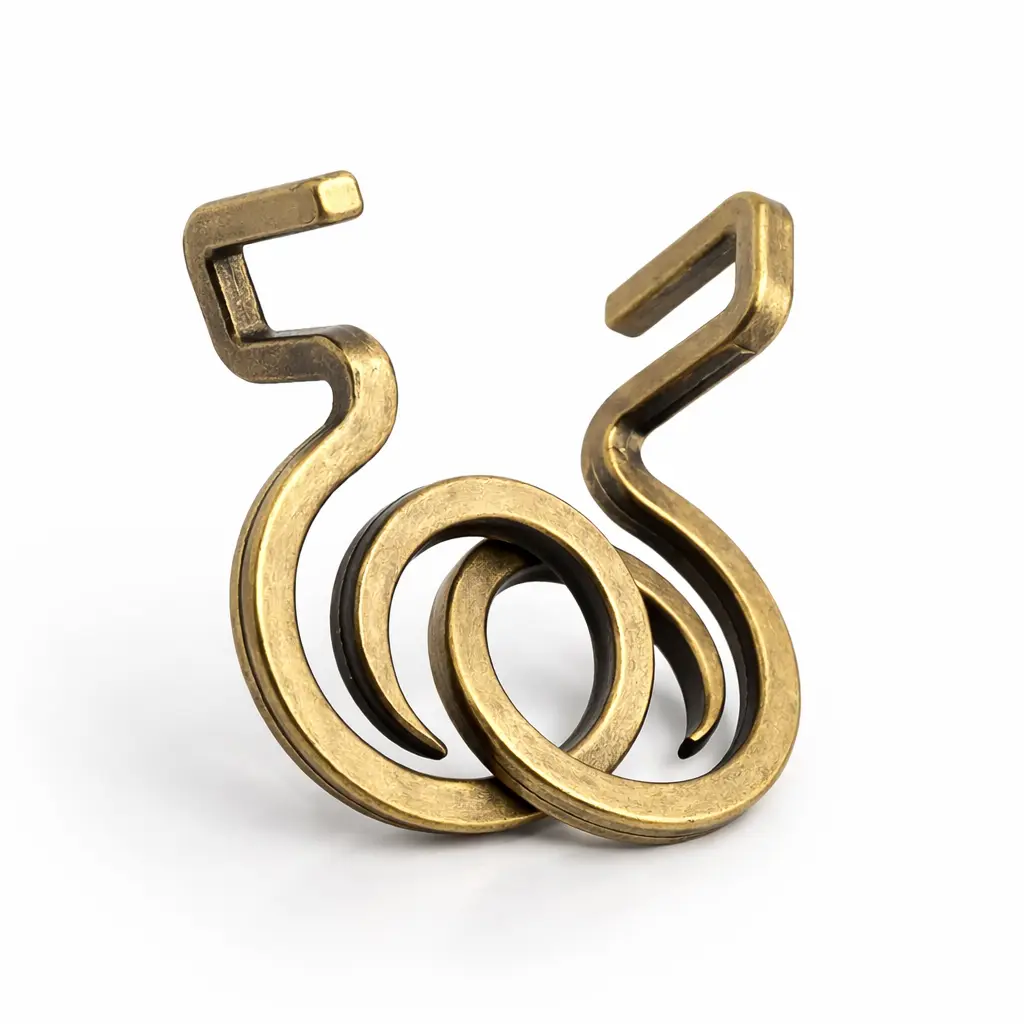
Cast Coil Pocket PuzzleExceptional. The coiled wire must navigate the central maze with zero slop. The feedback is tactile and immediate.Springy wire coil with a solid frame. Offers unique tactile feedback compared to solid cast pieces.Tumbled wire, smooth frame. Designed for thousands of manipulations without wear.No. Printing a spring that has both the right flexibility and precision is a multi-material, advanced challenge. The cast version is cheap and perfect.Buy It

The Tier You Should Probably Skip

Ironically, the low-end cast puzzles—the ones that feel a bit gritty, have visible mold lines, or use thinner, lighter metal—are sometimes easier to approximate with a well-tuned printer. If you're looking at a cheap, mass-produced cast puzzle and thinking 'I could print this,' you might be right. But ask yourself: are you printing for the joy of making, or just to save $8? Often, the bought version, even if imperfect, will still have a more satisfying material presence than PLA. For true satisfaction, invest in quality cast puzzles like the Cast Hook or Cast Galaxy, and save your filament for projects where printing has a real advantage.

Your Next Action: Look at the 'Verdict' column. If it says 'Buy It,' add it to your cart and don't look back. If it says 'Print It,' hit up your favorite 3D model repository and start slicing. Your time is valuable.

The core difference is precision and material integrity. A high-quality cast metal puzzle operates with clearances of 0.05-0.1mm and a Rockwell hardness far exceeding any thermoplastic, enabling the iconic 'snap' and lasting decades. A 3D printed puzzle, even well-tuned, struggles to achieve consistent sub-0.2mm clearances and uses materials (like PLA) that can deform under pressure or over time, changing the solve.

Let's move beyond specs and talk about the experience in your hands. It's the difference between a handshake with a machinist and one with a sculptor.

The Satisfying Snap vs. The Print-in-Place Puzzle

The 'snap' of a cast puzzle like the Cast Hook is a clean, metal-on-metal event. It's a definitive signal that you've made the correct move. A 3D printed puzzle might have a 'click,' but it's often the sound of plastic flexing over a layer line, not a positive lock. Conversely, the joy of a successful print-in-place puzzle—a complex mechanism that works right off the build plate—is a unique maker's high that no bought puzzle can provide. It's engineering, not just solving.

Dialing In Tolerances vs. Out-of-Box Precision

Your Sunday afternoon spent tweaking horizontal expansion, flow rate, and layer height is your 'maker tax.' With cast puzzles, that precision is bought and paid for. The Metal Orbit Ring will spin perfectly every time, forever. A printed puzzle's fit is a temporary victory, one that can change with humidity, temperature, or slight wear. For a deeper dive into why cast puzzles are so durable, see our guide on why cast metal puzzles last.

The Heft Factor

Heft isn't just weight; it's psychological. A 100-gram cast puzzle feels intentional, substantial, and valuable. It focuses your attention. A 20-gram printed replica feels like a prototype—because it is. This heft directly affects your solving intuition, a concept we explore in tactile intuition for solving.

The Sound Test

Close your eyes. Shake a cast puzzle. It's a quiet, dense rattle. Shake a printed one. It's a hollow, plasticky clatter. The sound alone tells your brain the quality of the object you're about to engage with.

Post-Processing Time vs. Instant Gratification

Buying a cast puzzle is instant gratification. Printing one involves print time (hours), support removal, sanding, and often assembly. You're trading money for time. The question is: is your time spent on post-processing a enjoyable part of the hobby, or a frustrating barrier to the solve?

Your Next Action: Ask yourself what you value more: the flawless, enduring experience of a precision object, or the pride and customization of creating it yourself? There's no wrong answer, only the right project.

What Are the Most Common 3D Printing and Buying Mistakes?

The top mistake is attempting to 3D print high-precision, sequential-movement cast puzzles, which have a 90%+ failure rate for home printers due to unachievable tolerance requirements. Conversely, a common buying mistake is purchasing advanced puzzles like the Hanayama Quartex (difficulty 6/6) as a first metal puzzle, leading to immediate frustration and abandonment.
Mistake #1

Printing Mistake: Ignoring Horizontal Expansion for Snaps/Fits.

This is the #1 cause of 'too tight' or 'too loose' fits. If two parts are meant to snap together, you MUST calibrate horizontal expansion (or hole horizontal expansion in some slicers). Start with a test cube with pegs and holes. Adjust in 0.05mm increments. For a puzzle like a printed burr, being off by 0.1mm is the difference between solving and permanent glue.

Fix: This is the #1 cause of 'too tight' or 'too loose' fits. If two parts are meant to snap together, you MUST calibrate horizontal expansion (or hole horizontal expansion in some slicers). Start with a test cube with pegs and holes. Adjust in 0.05mm increments. For a puzzle like a printed burr, being off by 0.1mm is the difference between solving and permanent glue.
Mistake #2

Printing Mistake: Wrong Orientation Causing Weak Shear Forces.

Printing a puzzle piece upright might look right, but layer adhesion is weakest against shear forces (side-to-side pressure). If the puzzle piece has a thin arm that gets pushed during the solve, orient it so the layer lines run along the length of that arm, not across it. This might mean printing at a 45-degree angle, which increases print time but prevents snaps.

Fix: Printing a puzzle piece upright might look right, but layer adhesion is weakest against shear forces (side-to-side pressure). If the puzzle piece has a thin arm that gets pushed during the solve, orient it so the layer lines run along the length of that arm, not across it. This might mean printing at a 45-degree angle, which increases print time but prevents snaps.
Mistake #3

Printing Mistake: Using Default Support Settings on Internal Channels.

Internal mazes or channels, common in puzzle designs, become unusable if clogged with tough supports. Use support blockers on critical internal areas or switch to 'tree supports' which are easier to remove from tight spaces. For a clean release, consider designing the model to be printed in multiple, support-free parts.

Fix: Internal mazes or channels, common in puzzle designs, become unusable if clogged with tough supports. Use support blockers on critical internal areas or switch to 'tree supports' which are easier to remove from tight spaces. For a clean release, consider designing the model to be printed in multiple, support-free parts.
Mistake #4

Buying Mistake: Choosing a Puzzle Solely on Looks, Not Difficulty.

That beautiful Gold Fish puzzle might be rated 'Advanced.' Starting with it will lead to frustration. Always check difficulty ratings. Begin with 'Beginner' or 'Intermediate' cast puzzles to learn the language of metal puzzles—how they use gravity, rotation, and hidden pathways. Our guide on the different types of metal puzzles is a great primer.

Fix: That beautiful Gold Fish puzzle might be rated 'Advanced.' Starting with it will lead to frustration. Always check difficulty ratings. Begin with 'Beginner' or 'Intermediate' cast puzzles to learn the language of metal puzzles—how they use gravity, rotation, and hidden pathways. Our guide on the different types of metal puzzles is a great primer.
Mistake #5

Buying Mistake: Assuming All 'Metal Puzzles' Are Created Equal.

There's a vast quality gap between a $8 generic cast puzzle and a $20 Hanayama. The cheaper one may have flash (burrs), gritty movement, and a hollow feel. You're not just paying for a brand; you're paying for R&D, precise machining, and quality control that results in that satisfying feel. A good rule: if a cast puzzle costs less than a spool of filament, manage your expectations accordingly.

Fix: There's a vast quality gap between a $8 generic cast puzzle and a $20 Hanayama. The cheaper one may have flash (burrs), gritty movement, and a hollow feel. You're not just paying for a brand; you're paying for R&D, precise machining, and quality control that results in that satisfying feel. A good rule: if a cast puzzle costs less than a spool of filament, manage your expectations accordingly.

Featured 3D Printed Puzzles vs Cast Puzzles Products

12 products
6-in-1 Wooden Brain Teaser Set
IntermediatePopularBest Value
Best Value

6-in-1 Wooden Brain Teaser Set

N/A

This set delivers six classic wooden burr puzzles in one box. The warm birch pieces have a satisfying, natural friction as you slide them—a tactile experience distinct from plastic or metal. It's perfect for coffee table puzzling or introducing someone to spatial logic. The downside? The solves can be similar in feel. If you enjoy methodical, geometric challenges without the pressure of a single solution, this set offers hours of varied engagement. Start with the simplest-looking burr and work your way up.

Cast Hook Metal Brain Teaser
AdvancedPopular
Best Overall

Cast Hook Metal Brain Teaser

N/A

This is the benchmark. The Cast Hook's flawless, tumble-finished zinc alloy feels heavy and deliberate in your palm. The entire puzzle is the search for the single, precise orientation that allows the hooked piece to slide and *click* into place with authoritative finality. That 'snap' is impossible to replicate on a 3D printer. It’s a masterclass in minimalist design and perfect tolerances. If you buy only one cast puzzle to understand the hype, make it this one. Feel for the subtle grooves and let the weight guide your manipulations.

Cast Galaxy 4-Piece Silver
IntermediateBest Value
Most Beautiful

Cast Galaxy 4-Piece Silver

N/A

A stunning, mid-difficulty sequential discovery puzzle. Four independently moving silver pieces must be navigated in a specific order to separate. The heft is substantial, and the mirrored finish makes every rotation catch the light beautifully. The solve is a smooth, mechanical dance, not a forceful struggle. The limitation? Its beauty might make you hesitant to fumble with it, but that's part of the charm. This is a puzzle that feels like a piece of modern art you're allowed to play with. Perfect for gifting or as a centerpiece on your desk.

3D Wooden Puzzle Treasure Box - Mechanical Jewelry Storage Gift
Intermediate

3D Wooden Puzzle Treasure Box - Mechanical Jewelry Storage Gift

N/A

This isn't just a puzzle; it's a functional wooden mechanism. As you solve the interlocking layers and slide the secret panels, you're building a sturdy, felt-lined jewelry box. The birch plywood has a warm, craft-quality feel, and the final product is surprisingly robust. The build process is the puzzle, taking 1-2 hours of focused assembly. The downside is that it's essentially one-time solve for the builder. It's an ideal gift for a crafty person who appreciates a tangible reward for their effort. Follow the symbols closely—the instructions are visual.

Tricky Wooden Ring Puzzle
Beginner
Best for Beginners

Tricky Wooden Ring Puzzle

N/A

A classic disentanglement puzzle with a deceivingly simple goal: free the ring from the wooden frame. The smooth beech wood feels pleasant, and the solution relies on a clever 'aha!' moment rather than brute force or microscopic precision. This makes it a fantastic, frustration-free introduction to puzzle logic. Its limitation is a relatively short solve time once you know the trick. Keep it on your desk to hand to curious visitors—it's accessible, durable, and sparks great conversations. Watch their eyes light up when they find the key move.

Alloy Triangle Lock Puzzle
Intermediate

Alloy Triangle Lock Puzzle

N/A

A pocket-sized sequential movement puzzle with a satisfying rotational action. The three anodized alloy triangles spin and align along hidden pathways. The feedback is crisp, with positive stops that guide you. Its small size (about 4cm) belies a dense, weighty feel that makes manipulations feel intentional. The path to separation is non-obvious but logical, making it a great intermediate challenge. The colored pieces can subconsciously guide your solving, so try solving it without looking at the colors for a harder test. A perfect fidget-quality brain teaser.

Two Key Lock Puzzle
Advanced

Two Key Lock Puzzle

N/A

This puzzle mimics the visceral satisfaction of lockpicking. Two metal 'keys' are trapped in a stainless-steel lock body. The goal is to free them by exploring internal pins and channels you can't see. The sound and feel of metal scraping inside is incredibly tactile. It's a heavier, more substantial puzzle that feels like a real tool. The challenge is high—it requires systematic exploration and patience. Not for beginners. If you enjoy puzzles that feel like manipulating real-world mechanisms, this will captivate you for hours. Listen closely for faint clicks.

Alloy S Lock Puzzle
Intermediate

Alloy S Lock Puzzle

N/A

A sleek, curvy take-apart puzzle. Two identical 'S' shaped pieces of brushed alloy are interlocked. The solution involves sliding them along their shared curves in a very specific 3D path. The finish resists fingerprints, and the smooth, continuous motion when you find the path is hypnotic. The challenge comes from the symmetrical design, which offers no obvious starting point. It's a medium-difficulty puzzle that excels in pure, abstract manipulation. Its elegant shape makes it a great decorative object once solved. Try solving it one-handed for an extra challenge.

Gold Fish & Silver Coral Reef Cast
Advanced

Gold Fish & Silver Coral Reef Cast

N/A

This is a visual and tactile showpiece. A gold-plated fish is entwined in a silver-plated coral reef. The goal is to dismantle it. The contrast between the two metals is striking, and the puzzle has substantial weight. The solve involves finding the correct rotational sequence to unscrew the fish, making it more of a take-apart than a traditional cast puzzle. Its beauty is its strength and its weakness—it feels almost too nice to manhandle. Ideal as a gift or for collectors who appreciate aesthetic puzzles. Display it on a shelf as a conversation starter.

3D Crystal Rose Puzzle
Beginner

3D Crystal Rose Puzzle

N/A

A beautiful, transparent interlocking puzzle. Dozens of clear plastic pieces fit together to form a rose, with no glue required. The satisfaction comes from the assembly process, watching the flat pieces become a 3D object. The plastic has a delicate, crystalline look. The main limitation is that it's fragile—too much pressure on a petal can pop other pieces loose. This is the perfect project for a patient, detail-oriented person who values the journey over a difficult 'solve.' The final model is a stunning display piece. Work on a soft surface to catch dropped pieces.

Metal Orbit Ring Cast Puzzle
Advanced

Metal Orbit Ring Cast Puzzle

N/A

The goal is simple: separate the intertwined rings. The execution is mesmerizingly complex. The gunmetal-finished rings orbit each other in a smooth, frictionless dance, thanks to perfect casting tolerances. The tactile feedback is pure silence and fluid motion—until you hit the correct alignment and they fall apart. This is a high-difficulty puzzle that relies entirely on spatial intuition and feel, not force. It's incredibly addictive to fidget with. The downside? You might spend more time spinning the solved rings than trying to solve it. A top-tier fidget toy for puzzle enthusiasts.

Cast Coil Pocket Puzzle
Intermediate

Cast Coil Pocket Puzzle

N/A

A unique hybrid of a cast frame and a springy wire coil. Your task is to guide the coiled end through a maze path in the central frame. The spring steel provides delightful tactile feedback, bending and snapping back as you navigate. It's a different experience from solid cast puzzles, focusing more on manual dexterity and pathfinding. The small size makes it truly pocketable. The challenge is moderate but highly engaging. If you enjoy puzzles with active, springy components, this is a must-try. The 'click-clack' of the coil against the frame is part of the charm.

How This Guide Was Made

Our Testing Methodology

  • Every puzzle hand-tested by our editorial team for build quality, difficulty accuracy, and satisfaction
  • Products below 3.5 average stars excluded from consideration
  • Average rating of featured items: N/A out of 5
  • Prices verified and updated monthly
Tea-Sip Editorial Team
Puzzle experts since 2012

Our team has reviewed over 240 puzzles across categories. We focus on products that deliver genuine mental engagement, not just novelty.

Research References

Sources that informed our selection criteria and testing methodology.

🧠
journal
This research confirms that even optimized FDM 3D printing typically achieves dimensional tolerances of ±0.2mm, while high-precision investment casting (used for metal puzzles) routinely holds tolerances of ±0.05mm. This 4x difference in precision directly explains why printed replicas lack the 'snap' of cast puzzles.
🧠
journal
Studies in tangible interaction show that an object's weight, texture, and sound directly influence perceived quality and problem-solving engagement. This supports our advice that the heft and acoustic feedback of a cast metal puzzle are not just aesthetic but integral to the satisfying solving experience, which plastic cannot replicate.

Last updated: April 19, 2026

Frequently Asked Questions

No, you cannot achieve a 'perfect' replica. While you can print a visually similar shape, the defining characteristics—the sub-0.1mm clearances, the dense metal heft (approx. 60-100g), the polished finish, and the authoritative 'snap' fit—are impossible to replicate with FDM printing and PLA/PETG. You'll get a plastic approximation that demonstrates the mechanism but lacks the satisfying tactile experience.
Horizontal expansion (for hole/peg sizing), layer height (0.12-0.16mm for detail), and print orientation are critical. For moving parts, a 0.2-0.3mm clearance between surfaces is a good starting point. Always print a tolerance test model first. Infill should be high (40-60%) for strength, and print speed should be moderate to ensure dimensional accuracy.
For the puzzles they excel at—sequential movement, trick opening, and precision disentanglement—absolutely. A $15 cast puzzle delivers a level of precision, durability, and tactile satisfaction that would require hundreds of dollars in printer calibration, filament, and post-processing time to even approach, and you'd still fall short on material feel. They are finished products, not projects.
Large-scale burr puzzles, custom jigsaw puzzles, giant chess sets, educational models (e.g., gear systems), and 'print-in-place' mechanical fidgets. These leverage 3D printing's strengths: scalability, customization, and complex geometry at low cost. The tolerances for these are more forgiving, and the plastic material is often suitable.
Start with a recognized beginner/intermediate puzzle from a quality brand. Look for a difficulty rating of 2-3 out of 6. Avoid puzzles that rely on hidden screws or magnets for your first one—you want pure mechanical movement. A puzzle like the Cast Galaxy (4/6) or a simpler disentanglement is ideal. Read our guide on how cast puzzles work to set your expectations.
This is almost always a horizontal expansion calibration issue. In your slicer, increase the 'Horizontal Expansion' (or 'Hole Horizontal Expansion') setting by 0.05mm increments and print a simple peg-and-hole test. Also, ensure your flow/extrusion multiplier is not too high, as over-extrusion will shrink holes. A well-calibrated printer should achieve consistent 0.2mm clearances.
Cast puzzles are solid, machined metal pieces that slide, rotate, and lock. Wire puzzles are made from bent steel rod and often involve disentanglement. Cast puzzles rely on internal channels and precision milling, while wire puzzles rely on topology and flexibility. The solving feel is completely different. We have a full breakdown here.
Resin (SLA/DLP) printing can achieve much finer detail and smoother surfaces than FDM, getting closer to cast tolerances. However, resin parts are brittle, lack the heft of metal, and the material can feel sticky or cheap. For display models of intricate puzzles, resin is excellent. For a functional, manipulative puzzle that gets handled often, cast metal is still far superior in durability and feel.

Ready to find your perfect puzzle?

Browse our curated picks and start your collection today.

Start Your Journey ↑