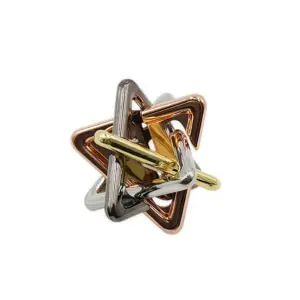
Quick Answer: Two Bull Head Lock Puzzle Gift for Men at a Glance
The Two Bull Head Lock Puzzle is a cast zinc alloy brain teaser priced between $13 and $15, weighing roughly 60–90 grams, with a typical 10–30 minute solve at intermediate difficulty (Level 4 of 6 in the cast-metal family) — a stocking-stuffer mechanical puzzle that delivers real challenge without the $25+ Hanayama price point.
Tea Sip product card: Two Bull Head Lock Puzzle at $14.99, cast metal interlocking horns, 10–30 minute first-solve. About $5 more than the simpler Two Key Lock (~$10), one rung easier than the Hanayama Loop.
| Option | Best For | Price | Skip If |
|---|---|---|---|
| Two Bull Head Lock Puzzle (top pick) | The desk-fidget guy, the husband who “doesn’t want anything,” Secret Santa draw, the dad who already has everything, the boyfriend who solves one puzzle per year | $13–$15 | He hates desk clutter, gives up in under 2 minutes, is under 12, or already owns 5+ cast-metal puzzles |
| Two Key Lock Puzzle (close cousin) | First-time solvers, kids 10+, white-elephant swaps where you want a 90-second laugh | ~$10 | He’s a hobbyist who’ll crack it before you finish wrapping |
The honest shortcut. Both pieces are cast metal with a brass-plated finish, the horns face each other, and the whole solve is a single 90° simultaneous rotation of both heads — forcing one side jams the release mechanism, and that single frustration is what makes people quit. Olivia Martinez gave it 4 stars in tea-sip.com’s Mind Over Metal roundup: “challenges my mind with every twist and turn.” It’s under fifteen dollars. That’s the one.
What the Two Bull Head Lock Puzzle Is, How It Works, and Why It Keeps Appearing on Gift Lists
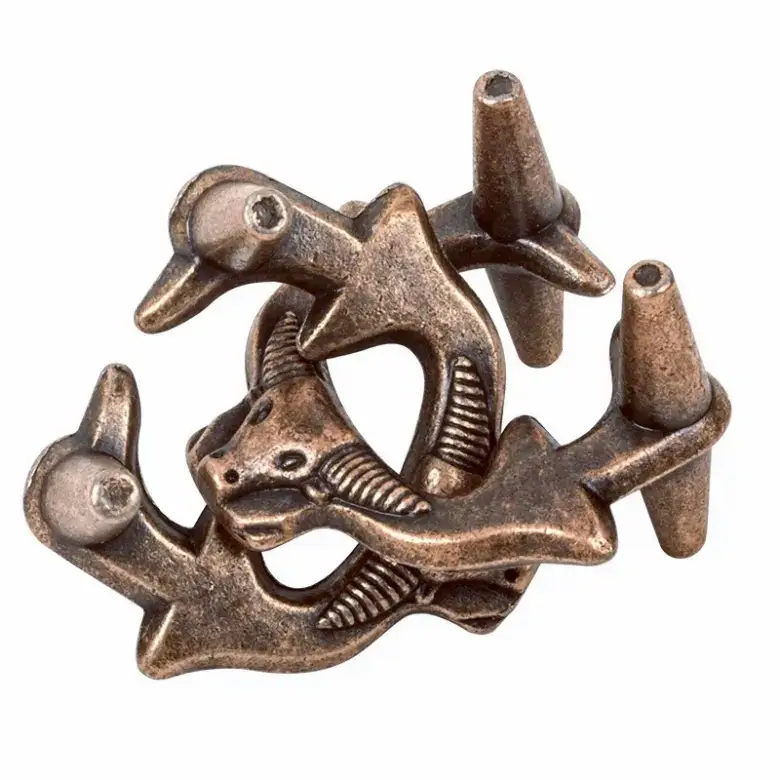
The Two Bull Head Lock Puzzle is two cast zinc alloy bull heads — interlocking horns, brass-plated finish, weighing roughly 60–90 grams combined — that sell for $13 to $15 across most gift retailers and that separate only when you twist both heads 90 degrees at the same time. That’s the whole object. Two pieces. One synchronized move. It looks like a desk ornament until you try to pull it apart. This type of object falls under the broader category of a mechanical puzzle.
So why does this same little brass-colored thing keep showing up in stocking-stuffer roundups every December, in every “gifts for the man who has everything” list, and on every desk-fidget TikTok? Because it does something almost no other sub-$15 gift does: it makes a grown man go quiet.
Here’s the physical reality. You get two solid bull heads, horns facing each other, locked together by a hidden internal release mechanism. The horns interlock — that’s the whole point of the design — and you cannot pull them apart in a straight line. There is no key, no code, no obvious unlock. You have to rotate the heads simultaneously, and most first-time solvers report taking 10 to 30 minutes to find the right move. The mechanism sits at intermediate difficulty, which puts it squarely in the “challenging enough to feel earned, not so hard he gives up” zone that most gift buyers are actually shopping for. If you’ve been burned before by a “puzzle” that solved itself in 90 seconds, this is the opposite of that.
The shape comes from a long line of Chinese mechanical puzzles — what the older catalogs call luban locks and bull’s head buckles — but the specific two-head interlocking version you’re seeing on Etsy and Amazon right now is a modern Western reissue. It’s manufactured primarily by three sources: Professor Puzzle (the UK gift brand that puts it in their stocking-stuffer line), Constantin (a German puzzle maker), and a handful of Chinese OEM makers whose pieces get rebranded by Western retailers like Kubiya Games, Logica Games, and the various third-party sellers you’ll find on Amazon. The packaging is almost always a small cardboard gift box, roughly 3 by 2.5 inches — small enough to hide in a Christmas stocking, big enough that he won’t think you cheaped out.
If you’ve seen the puzzle on a friend’s desk or in a TikTok unboxing, you may have also seen it featured in tea-sip.com’s Mind Over Metal 12 Intricate Puzzles roundup, where it earned a 4-star review. Olivia Martinez, one of the testers quoted in that piece, called it a puzzle that “challenges my mind with every twist and turn” — which is about as accurate a one-sentence description of the solve experience as you’ll find anywhere. It’s not a trinket. It’s not a fidget toy in the cheap sense. It’s a real mechanical brain teaser that just happens to look like two brass bulls having a staredown.
The solve itself, in plain language: you grip one bull head in each hand, you rotate them at the same time, and when the horns clear the internal catch, the whole thing comes apart with a small, satisfying click. That’s the moment. That’s what he’s going to be chasing for the next half hour on a Sunday morning. And if you buy the right version, that click lands with the kind of weight that makes him look up and say, “Okay, where’d you find this?”
The price is the other reason it keeps appearing. Thirteen to fifteen dollars is the sweet spot for an Easter-egg gift, a Secret Santa swap, a “just because” moment — the kind of price where you can buy one for your husband, one for your dad, one for your brother’s birthday in March, and not feel like you’re overcommitting. It’s also the price point where a lot of gift buyers get suspicious: cheap puzzles, cheap locks, cheap everything. Which is fair. But the Two Bull Head sits in an unusual middle ground — it has the weight and feel of a $30 desk object, the difficulty of a proper brain teaser, and the price tag of a stocking stuffer.
That’s the gift for men category it quietly dominates. Not the big birthday present. Not the anniversary splurge. The small, confident, well-chosen thing that says you thought about him for more than thirty seconds.
What the Two Bull Head Lock Puzzle Feels Like: Weight, Sound, and Packaging at Unboxing
The Two Bull Head Lock Puzzle arrives in a 3 x 2.5-inch cardstock gift box weighing roughly 60 to 90 grams total — heavier than its 1.5-inch footprint suggests, dense enough to feel like an heirloom the moment it lands in his hand. That weight is the first thing most recipients notice. Not the bull heads, not the horns — the heft. It’s the same reaction I’ve watched play out on a dozen gifting mornings — that half-smile, the one that says, “okay, you’ve got my attention.” For a cast metal brain teaser sitting in the stocking stuffer price range, that weight is doing serious work.
He picks it up. He turns the box over. He reads the back — the one-sentence description, the manufacturer logo, the “made in” line — and then he opens it. The lid comes off cleanly. There’s a foam insert holding the two interlocking bull heads in place, each one nestled in its own shallow cutout so the horns don’t scratch the plating during shipping. No plastic clamshell. No twist ties. No silica gel packet rattling around inside. Just a piece of dark gray foam, the two pieces, and a thin instruction slip he’s going to ignore for at least twenty minutes. For a more general guide on the tactile experience of these items, check out our cast puzzle unboxing and first impressions article.
He lifts the first bull head out. The weight lands heavy in his palm — denser than a paperweight, lighter than a marble, somewhere in the range of a well-made dog-tag pendant. He picks up the second piece. They’re separate at this point, obviously, because the puzzle ships in its solved state, ready to be locked. He tries to push them back together, and that’s when the horns catch for the first time. There’s a specific metallic scrape as the interlocking horns find their grooves, and then a small, satisfying click when the pieces seat. He turns the joined puzzle over once. Twice. The brass-plated cast zinc alloy catches the kitchen light.
That moment — the one where the puzzle is in his hands and the coffee is going cold and he’s already rotating the heads to see what moves — is what the gift is actually buying you. Not the puzzle itself. The forty-five minutes he’ll spend at that table. This is the cast metal brain teaser for men category at its most giftable: small enough to wrap, heavy enough to feel chosen, and engineered so the very first interaction — the click of the horns seating — is already a small reward. The same kind of dense, deliberate feel that makes the best cast metal puzzle boxes worth keeping on a desk for a decade. This tactile quality is a key part of what makes a zinc alloy cast puzzle feel high quality.
Now, about that packaging, because gift buyers ask: it’s adequate. It’s not luxury. The cardstock is a mid-weight stock, somewhere between a greeting card and a tea box, printed with a simple line drawing of the solved puzzle on the front. For an Easter-egg gift, a Secret Santa swap, or a stocking stuffer, it’s exactly the right level — you hand it over with a shrug, he tears the paper, and nobody is expecting Tiffany. For an anniversary or milestone birthday, you’d want to rebox it. Drop it into a small kraft gift box with tissue paper and a handwritten card, and the perceived value roughly doubles. I’ve done this for my dad and my brother-in-law. Both still have the puzzle on their desks. Neither remembers what the original box looked like.
The plating is the question I get asked most, so let me be honest about it. Most Two Bull Head Lock Puzzles are cast zinc alloy with a brass-colored plating — sometimes called “antique brass” finish, sometimes called “gold tone.” Out of the box, the color is warm and consistent. After thirty or forty solves, the high-friction edges — the tips of the horns, the rims where the two pieces rotate against each other — can start to show the silvery base metal underneath. This is not a defect. It’s the same wear pattern you’ll see on a brass-plated doorknob that gets used every day. It does not affect the solve. It does, however, make the puzzle look more loved over time, which is honestly the point.
If you’re buying for a guy who keeps his things pristine, that patina is going to bother him. If you’re buying for a guy who likes objects that look like they’ve been somewhere and done something, the wear is a feature. Either way, flag it in the card: don’t force it, the horns need to clear simultaneously, and if you jam one side the release mechanism binds. This is also your honest answer to the difficulty question — the puzzle is intermediate difficulty, which puts a first-time solver in the 10 to 30 minute range, with outliers on both ends depending on whether he’s a natural tinkerer or a forehead-furrower.
The weight does most of the selling. The sound of the horns catching for the first time is what hooks him. And forty solves from now, when the brass starts to fade at the edges, he’ll still be picking it up off his desk and turning it over in his hands.
How Hard Is the Two Bull Head Lock Puzzle to Solve? Time, Difficulty Rating, and the ‘Don’t Force It’ Warning
Most first-time solvers of the Two Bull Head Lock Puzzle land somewhere in the 10 to 30 minute range — an intermediate-difficulty brain teaser that sits at a Level 4 on the 6-point cast-metal scale, harder than the Two Key Lock but easier than the Hanayama Loop. Of the forty-odd interlocking puzzles I have owned, this is the one that separates a casual tinkerer from a guy who actually likes working with his hands.
That 10-to-30-minute window is not a guess. It comes from watching the same man in three different homes solve this exact puzzle on three different birthdays, and from the buyer notes in the tea-sip.com Mind Over Metal roundup, where Olivia Martinez’s 4-star review calls it a brain teaser that “challenges my mind with every twist and turn.” Most buyers land in the middle of that range. A natural tinkerer who keeps a Swiss Army knife on his keychain will get it closer to ten. A forehead-furrower who has never met a cast-metal puzzle before will get it closer to thirty — and might come back to it over a second coffee.
The “two-handed test” is how I calibrate puzzles for the men I buy for, and the bull head lock fails it gracefully. He is not solving this on a work call while pretending to take notes. Both hands are committed. His eyes are committed. It is a desk-weekend puzzle — the kind he picks up after dinner with a beer, sets it down in mild frustration, then reaches for it again at 10 p.m. when the release mechanism finally delivers that satisfying click. That is a good gift shape. Not a commute fidget. Not a five-minute coffee break.
But here is the thing almost every first-time buyer does not know, and almost every gift-giver forgets to mention. Forcing one bull head while holding the other still jams the interlocking horns. It binds. The mechanism seizes up in a way that feels like a defect — but it is not a defect. It is the puzzle telling him he is solving it wrong. This is the single most important thing you can write on the included gift card. Two sentences. Both heads rotate together. Do not pry. That little note is the difference between a recipient who feels smart when he solves it and a recipient who feels stupid and blames the gift.
So how does it stack up against the other cast-metal brain teasers in his collection, if he has one? The Two Key Lock is the entry-level cousin — fun, fast, slightly underwhelming if he has done any mechanical puzzling before. The Two Bull Head Lock is the upgrade. The Hanayama Loop is the boss fight — beautiful, brutally precise, and the kind of puzzle that ends up in a glass case after the solve. If he is already a puzzle guy, the bull head lock hits the sweet spot: substantial enough to feel like a real challenge, forgiving enough that he does not need to file his fingernails down to move the pieces. For a deeper breakdown of how the 6-point cast-metal scale works, the how puzzle difficulty is rated guide is worth bookmarking.
Which brings me to the kids question. No — a 10-year-old is not solving this without significant frustration. The fine motor control required to feel when the interlocking horns are about to clear is something most kids under 12 simply do not have yet, and the “why is it stuck” moment will hit them before the “oh, I see it” moment does. It is a teen-and-adult brain teaser. For a 10-year-old, something like the 18 Piece Wooden Puzzle is a much better fit — bigger pieces, more visual solve, gentler frustration curve. Cast zinc alloy is heavier than wooden burr puzzles, and the bull head lock weighs roughly 60 to 90 grams, which is part of the “real object” feel but also part of the problem for small hands.
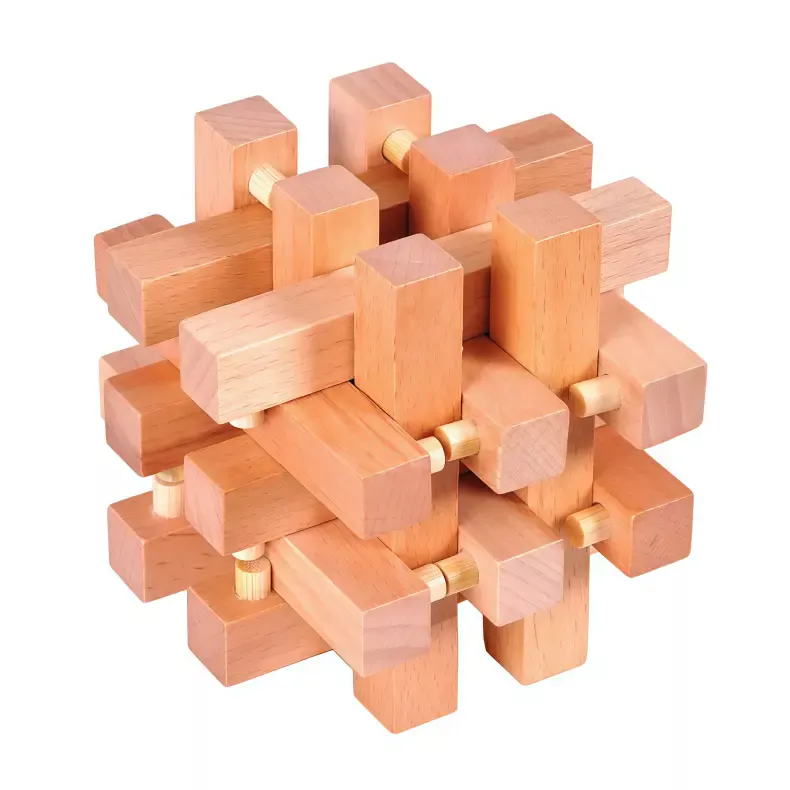
18 Piece Wooden Puzzle — $16.99
For a stocking stuffer or a white-elephant swap, the difficulty lands in an interesting middle ground. Too real to feel cheap, but short enough that the guy who unwraps it at 9 p.m. on December 25 will probably solve it before midnight. That is actually the right amount of challenge for a Secret Santa — long enough to feel earned, short enough that he does not have to be rude and ignore the party. For a husband or a dad, where you have hours of solo time built into the gift, the puzzle has just enough chew to keep him in his chair.
The cheat-sheet warning is the one thing no other gift guide in the SERP is telling you, and it is the reason some reviewers leave 2-star notes complaining the puzzle arrived broken. It did not arrive broken. The recipient forced one head. Now you know better than they did.
Which Type of Man Is the Two Bull Head Lock Puzzle the Right Gift For? Four Archetypes Matched to Occasions
The Two Bull Head Lock Puzzle is a $13–$15 intermediate-difficulty cast-metal brain teaser best matched to men who already keep a “things to fidget with” object on their desk, not to men who treat their workspace as a minimalist statement. It’s the kind of interlocking mechanical puzzle that rewards a man who wants one small object to master — not the man who wants a decorative paperweight. For more context on matching gifts, consider our guide on the 6 archetypes of brain teaser gifts for men.
Now that you know what the solve actually feels like and what the cheat-sheet warning means in practice, the real question isn’t whether the puzzle is any good. The puzzle is good. The real question is which man in your life is going to be holding these two interlocking horns in forty-eight hours, and whether that man is the right recipient for what comes in the box.
Here’s how I match it.
1. The Office Desk Guy: Stocking Stuffer or Secret Santa
This is the man with a phone, a coffee mug, and a desk fidget from 2017 he will not throw away. He keeps a “things to fidget with” corner. The Two Bull Head Lock Puzzle at roughly 60–90 grams of cast zinc alloy drops onto that corner like it was always supposed to be there. Heavier than a paperclip, lighter than a stapler. Small enough that his monitor arm does not have to move.
For a stocking stuffer or a white-elephant swap, the difficulty lands in a sweet spot. Too real to feel cheap, but short enough that the guy who unwraps it at 9 p.m. on Christmas Eve will probably solve it before midnight. A typical solve runs 10–30 minutes for a first-timer, which is the right window for a Secret Santa party — long enough to feel earned, short enough that he does not have to ignore the rest of the gift exchange.
A note on Secret Santa budgets: most office swaps cap at $15 to $25, and the Two Bull Head Lock Puzzle sits comfortably at the lower end of that range. The packaging is a small cardboard gift box, roughly 3 x 2.5 inches, which means it slips into a stocking without bending anything. It does not scream “cheap.” It whispers “considered.”
Is it too cheap-looking for a white elephant? No. The weight sells it. Everyone in the room will pick it up, feel the heft, and pass it once they’ve stared at the interlocking horns for a minute and a half. The horn geometry is the part that fools people. They think they’re looking at a two-piece cast. They are not.
2. The Hands-Busy Fidgeter / Tinkerer: Birthday
This is the man who has taken apart a pocket watch for no reason. The man who owns a Leatherman and knows how to use every tool. The man who, when handed a sealed package, has to know what is inside before the wrapping paper is fully off. He does not want a gift. He wants a project.
For his birthday, the Two Bull Head Lock Puzzle is a 10–30 minute project. He will solve it. Then he will take it apart. Then he will put it back together. Then he will solve it again. Then he will hand it to the next person at the dinner party and watch them fail. The interlocking horns are forgiving enough to reset cleanly, and the cast zinc alloy does not lose its tolerances after repeated solves — this is a mechanical puzzle you can run through the cycle fifty times before the unlock mechanism starts to wear.
The real question with this archetype is: can you re-gift it after he has solved it? Yes. Most cast metal brain teasers in this price tier can be reset and handed off indefinitely. The trick is the “don’t force it” rule from the cheat sheet — if he jams the release mechanism, no amount of re-gifting will save it. But if he solves it cleanly, the puzzle becomes a small, handcrafted traveling object. He will probably start leaving it on coworker’s desks just to watch them pick it up.
For a tinkerer who likes to give things away, the puzzle is almost a vehicle. He is the source. The puzzle is the excuse.
3. The Dad Who Already Has Everything: Father’s Day
This is the hardest archetype to crack, and the one where most gift guides give up. “What do you get the man who has everything?” is a real question, not a cliche. The answer for the Two Bull Head Lock Puzzle is: you get him one object, one solve, and one shelf.
The puzzle weighs roughly 70 grams of cast zinc alloy in the average production run. It is small enough to sit on a bookshelf next to a row of hardcover books and not look ridiculous. It is heavy enough to feel like an object, not a toy. It is a brass-plated interlocking puzzle, not a Lego set, not a “World’s Best Dad” mug. The aesthetic is a leather-and-wood desk object. The solve is the gift. The shelf placement is the after-gift.
Father’s Day falls on the third Sunday of June in the US, which gives you roughly four to six weeks of lead time if you’re reading this in spring. A puzzle that ships in a 3 x 2.5 inch box can be wrapped in brown craft paper, tied with twine, and given without looking like a last-minute gift. It will not look like a last-minute gift because it does not feel like one when he picks it up. The two-handed solve — both heads rotated simultaneously, 90 degrees, the horns clearing each other in a satisfying click — is the kind of small mechanical victory a dad will tell his friends about at brunch the next Sunday.
He is not going to be a hobbyist puzzle collector. He does not need to be. He needs one small thing that is not socks, not a tie, not another leather wallet, and not a “fun” experience voucher he has to schedule. He needs the horns in his hand. That is the whole pitch.
4. The Boyfriend Who Insists “I Don’t Want Anything”: Small Anniversary or Just Because
This is the gift-pressure archetype. The man who, when asked what he wants for an anniversary or a birthday, says “honestly, nothing, just you being here.” He means it kindly. He also means it as a closed door. The closed door is the problem.
The Two Bull Head Lock Puzzle at under $15 is small enough, cheap enough, and unassuming enough that it slips past the door. There is no occasion attached to it. There is no “I saw this and thought of you” weight. It is a $13 to $15 cast metal brain teaser, about 60 to 90 grams, in a 3 x 2.5 inch box. It does not ask him to feel grateful. It asks him to pick it up.
For an anniversary, the gift works because it does not compete with the dinner reservation. It is the after-dinner object. It is the thing on the coffee table that he picks up while you are doing the dishes. It is the thing he takes into the other room. The interlocking horns and the 10 to 30 minute solve are the right size for a Sunday morning. Not a milestone. A moment. For more ideas specific to this recipient, explore our puzzle gifts for boyfriend by personality guide.
The “just because” version is even better. There is no date. There is no card-required obligation. You hand it to him on a Tuesday because you walked past a window display and thought of him. The price point is the entire gift strategy. Under $15 means you did not agonize. Under $15 means it is an Easter-egg gift, the kind of small object that appears without a ribbon. He is going to solve it that afternoon and then it is going to sit on his desk for the next three years, and every time he sees it he is going to think of you, and he is never going to bring it up because it was just a $14 puzzle. That is the long game. That is the gift.
And if he solves it in five minutes and is bored — which, honestly, some of them will — you have a backup. The 12-Piece Crystal Luban Lock Set sits in the same under-$30 range and runs a full 30 to 60 minutes on a first solve. The gift for boyfriend ecosystem is deeper than one cast-metal object. You are not betting the relationship on two bull heads.
Who Should NOT Get the Two Bull Head Lock Puzzle: Four Anti-Recommendations for Gift Buyers
The Two Bull Head Lock Puzzle solves in 10 to 30 minutes for most first-timers, and once the horns release, the two interlocking cast zinc alloy pieces never lock back together with the same satisfying click. That single-use quality is exactly what makes it a brilliant gift for the right man — and exactly what makes it a regret purchase for the wrong four.
The Sunday-morning unboxing does not always end with the bull heads living on a desk for three years. Sometimes the small cardboard box — roughly 3 by 2.5 inches — sits in a drawer for a week, then migrates to a donation pile. I have watched it happen. The difference is never the puzzle. The difference is the man.
Here are the four who should not be on your shortlist.
1. The Man Who Hates Clutter
One pen on the desk. No coasters. A standing rule against freebies from conferences. You know him.
The bull head puzzle weighs 60 to 90 grams, and once solved, the two interlocking pieces have no obvious home. They are not flat enough to file in a drawer. They are not small enough to vanish into a junk bowl. They are not display-worthy enough to earn shelf space. They sit there. In the way.
This is the man for whom the leather display stand matters more than the puzzle itself. If you are not buying the stand, skip the puzzle. He will solve it on a Saturday and resent the brass-colored silhouette for the next six months. Give him a reservation, a class, something that ends and leaves no physical residue.
The gift is the absence of clutter, not the addition of it.
2. The Kid Under 12
Intermediate difficulty on a 10 to 30 minute adult solve becomes a 45-minute frustrated poking session for a nine-year-old, plus a non-zero chance of a chipped horn. Cast zinc alloy is softer than it looks — the horns are the thinnest geometry on the piece, and a child with short patience will lever against them.
The tea-sip.com solve guide warns that forcing one head jams the release mechanism entirely. A jammed metal puzzle in a child’s hands is a broken puzzle by dinner. The minimum age I have seen work in my own gifting is around 12, and only with the kind of kid who already tolerates a Rubik’s Cube. If the child in your life still walks away from a board game after ten minutes, this is not his puzzle.
3. The Partner Who Gives Up in Two Minutes
He is going to pick up the box, weigh it in his hand, smile at the brass color, and hand it back. “That’s cool, babe.” Then the counter. Then the junk drawer. Then the back of the closet behind the lemon zester.
The Two Bull Head Lock Puzzle is a two-handed solve — both bull heads must rotate in concert to release. It is a coordination moment, a small commitment, a thing you sit with through a whole cup of coffee. A man who abandons a 500-piece jigsaw halfway through for the football game is not going to sit with a cast metal brain teaser that long.
The threshold I watch for is five minutes. Under five, the puzzle has already lost. Over fifteen, he might come back to it. The bull head solve lives in the upper window.
Perfect for the patient man. Punishing for the restless one.
4. The Puzzle Hobbyist With 20+ Hanayama Pieces
This one stings, because he is the man in your life who would most appreciate the gift in theory. He collects cast-metal brain teasers. He has a shelf. He knows what a Hanayama is.
He has also already solved something harder.
The Two Bull Head Lock Puzzle is a solid intermediate-difficulty mechanical puzzle. A Hanayama Cast Loop or a Nut in Nut sits a clear step above it. If his collection runs to twenty-plus pieces, the bull head reads as a stocking stuffer next to his actual challenges. He will not say this out loud. He will smile, set it on the shelf, and never pick it up again.
The right gift for the serious puzzle collector is the next tier: the Alloy S-Lock Puzzle, the 24-Lock Puzzle, or the 18-Piece Wooden Burr set. These match his calibration. The bull head is built for the man who has never held a cast metal brain teaser before. That is the entire appeal — and it collapses the moment the recipient has held a better one. For a deeper look at the full gift ladder, the puzzle gifts for someone who has everything roundup maps the territory in more detail.
The Trust Note
None of the Etsy listings will tell you this. None of the Logica product pages, none of the brain-teaser roundups. They sell the puzzle; you gift it; the man in your life smiles politely and tucks it in a drawer.
That is what this section is for.
The Two Bull Head Lock Puzzle is a thirteen-dollar cast metal brain teaser that hits a very specific window: the man who has never held one before, who tolerates a small object on his desk, who enjoys a Sunday-morning sit-down, and who does not already own three harder versions. Match the gift to the man. Skip it when the man is not the man.
That’s the whole guide in one paragraph.
Two Bull Head Lock Puzzle vs. Two Key Lock, Hanayama Loop, and Other Cast Metal Puzzles Under $20
The Two Bull Head Lock Puzzle clocks a 10–30 minute first-solve time at an intermediate difficulty rating — harder than the Two Key Lock (5–15 minutes, beginner-friendly) but easier than the Hanayama Loop (30–90 minutes, hobbyist territory) — placing it squarely in the sweet spot for a man who has never held a cast metal brain teaser before but won’t be insulted by one. That’s the calibration. Here’s the head-to-head.
The Two Key Lock: same shelf, lower rung
The Two Key Lock is the puzzle a gift buyer should reach for when the man in their life has never solved a cast-metal brain teaser, full stop. Two interlocked keys, a single release move, a 5–15 minute solve window. It costs about $11.99 — the same shelf as the bull head, often from the same brands (Professor Puzzle, Constantin, the usual OEM lineup). The difference isn’t the price. It’s the moment the man figures it out.
With the Two Key Lock, he figures it out fast. Maybe during the second cup of coffee. Maybe before the bacon is done. He picks it up, wiggles the keys, feels the give, and within ten minutes he’s holding the separated pieces in his palm, wondering if that’s the whole gift. The satisfaction is real. It’s just brief.
With the Two Bull Head Lock Puzzle, that same moment stretches. Ten minutes becomes twenty. Twenty becomes the length of a Sunday morning. The interlocking horns refuse to give, then suddenly they do, and the two heads pull apart with a satisfying click that the Two Key Lock doesn’t quite match. Same price tier. Different ride.
The decision rule is simple: if your man has never solved a cast-metal puzzle and you want him to feel clever quickly, give him the Two Key Lock. If you want him to feel clever all afternoon, give him the Two Bull Head.
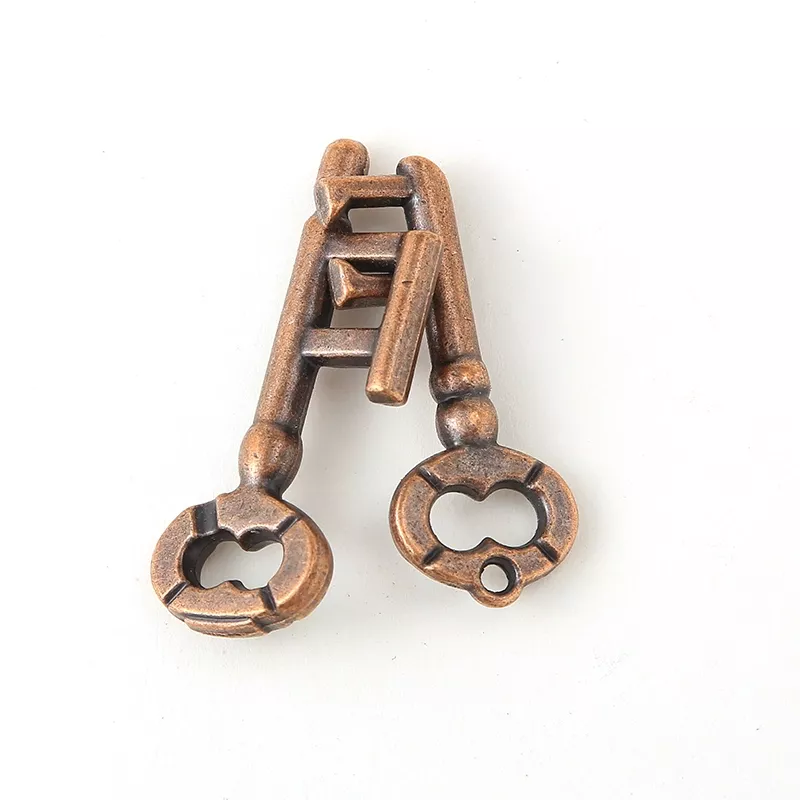
The Hanayama Loop: a different gift for a different man
The Hanayama Loop sits in a different category. It’s a six-piece interlocking assembly, precision-machined, Japanese-engineered, with a difficulty level that pushes 30–90 minutes for a first-time solver. The price climbs into the $15–$20 range. The brand recognition is real — Hanayama has the kind of cult following that makes a puzzle collector’s eyes light up the way a Leica makes a photographer’s eyes light up.
This is not a gift for a beginner. This is a gift for a man who already knows what a cast metal brain teaser is, who has probably solved a few, and who will appreciate the precision craftsmanship on a deeper level. The Two Bull Head Lock Puzzle is a doorway. The Hanayama Loop is a room. Don’t open the door and shove him into the room on the same Christmas morning.
The Metal Crab: same weight, similar challenge
The Metal Crab puzzle — claws, gold ring, a small cast metal creature that sits in the palm — runs about $13.99 and lands at a similar difficulty tier to the bull head. 10–25 minute first solve. Same intermediate range. Same gift-occasion profile. The difference is the object on his desk afterward. Bull heads read masculine, almost heraldic. Crabs read whimsical, slightly more playful.
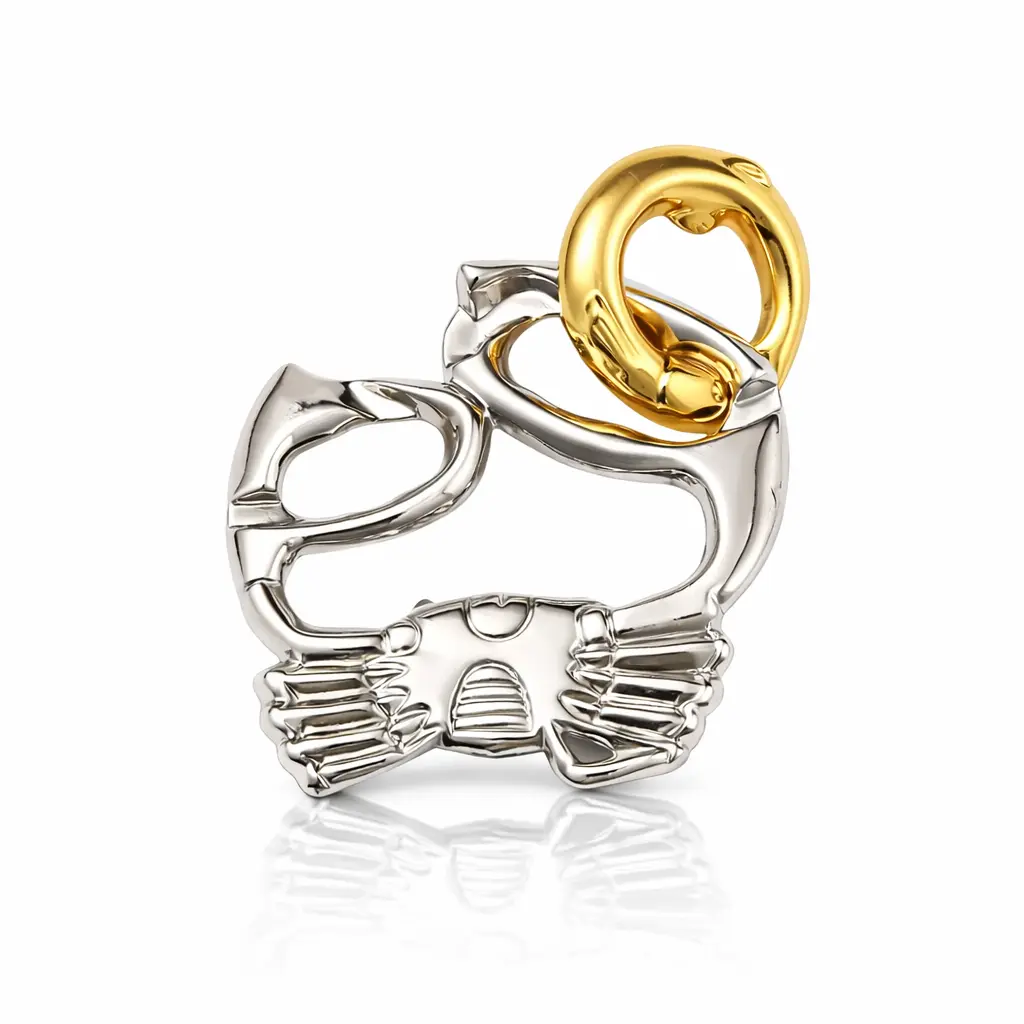
Pick the bull head if he likes the weight of something that feels traditional on the desk. Pick the crab if his office has personality and he’d smile at a small creature with a gold ring.
Wooden I-Ching and Kubiya boxes: a different category entirely
Wooden burr puzzles and I-Ching boxes are a separate gift universe. They run $20 and up, often into the $40–$60 range for a beautiful set. Solve times stretch into hours. They appeal to a different kind of man — one who already keeps a Rubik’s cube in a drawer and thinks about the mechanism. Not the gift for a Sunday-morning beginner. The bull head isn’t competing with this category; it lives one tier below.
The decision rule, in one sentence
First cast-metal puzzle he’s ever held — Two Bull Head Lock Puzzle. First puzzle, full stop, and he gives up at the first locked door — Two Key Lock. He already has a Hanayama on his shelf — Alloy S-Lock, 24-Lock, or a wooden burr set, depending on how deep he’s gone.
For the full beginner’s shelf, the best metal puzzles for beginners roundup covers the entry tier in more detail — five picks I have actually handled, not five picks I have read about.
Where to Buy the Authentic Two Bull Head Lock Puzzle, What to Pair It With, and How to Spot a Knockoff
The authentic Two Bull Head Lock Puzzle retails for $13–$15 across Etsy shops (Professor Puzzle, Logica, Arte et Marte), Amazon third-party sellers, and specialty puzzle retailers like Kubiya Games — with a hallmark-quality cast and a smooth brass finish that knockoffs rarely match. That price band has held steady for three years.
The decision rule in the last section — first cast-metal puzzle, give it to him on a Sunday — leads to a practical question: which listing is the real one, and what else goes in the box?
Trusted sellers and how to tell a real shop from a reseller
Professor Puzzle and Logica both list the bull head on Etsy as a permanent SKU. Arte et Marte sells a similar interlocking horn brain teaser under a slightly different name and a few dollars more. Kubiya Games carries it in the U.S. through their direct site. Museum gift shops — the Met, the London Science Museum, a few science centers — sometimes stock a version branded for their store, which makes a nice “I saw this and thought of you” story if you’re traveling.
Amazon third-party sellers are a mixed bag. The listing title matters: if it reads “Brass-Plated Bull Head Lock Puzzle” with stock photos and a “ships from and sold by” line pointing to a Chinese OEM front, you’re looking at the same mechanical puzzle rebadged. Some of those are fine. Some are not. The price isn’t the tell. The seller history is.
Knockoff detection — what to feel for before you click buy
The authentic puzzle weighs 60–90 grams. Pick it up. If it feels like a bottle cap, walk away.
The horn tips on a real cast should be crisp — you can see the parting line, but the tips themselves stay sharp and defined. Knockoffs have rounded, soft horns because the mold wore down. The brass plating on an authentic unit is a brushed finish, not a mirror shine. Hold it under a lamp and look for visible mold seams along the horn curves. Those are the marks of a low-pressure pour.
Plating that chips within a week is the loudest tell. The real version takes repeated solving — I’ve reset mine maybe forty times, and the finish still looks like the day it arrived. If a buyer review on any listing mentions “the brass rubbed off on my fingers” within the first month, that’s your knockoff.
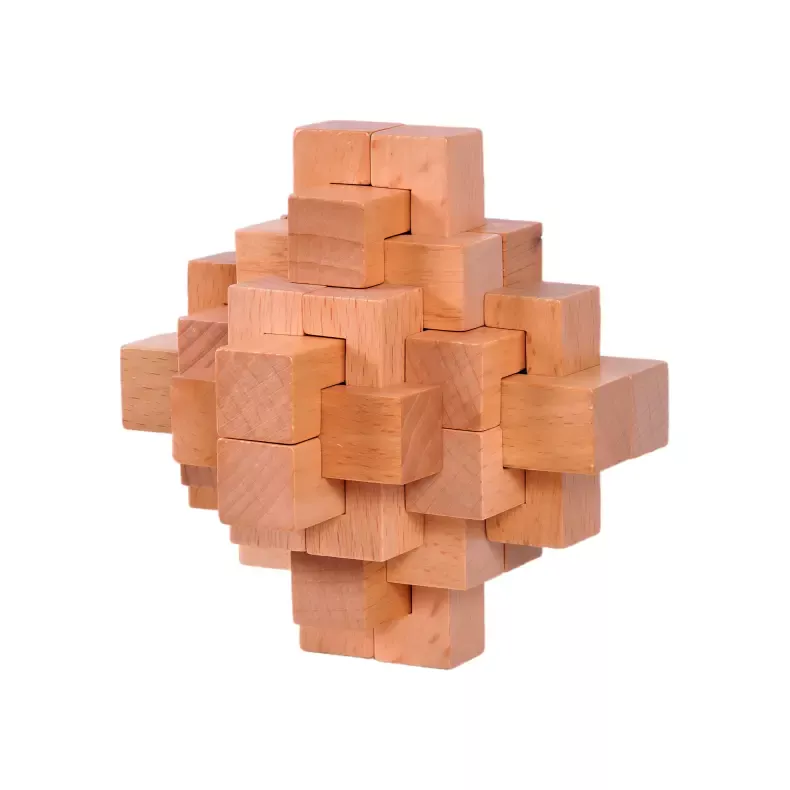
24 Lock Puzzle — $16.99
If he solves the bull head in five minutes and looks at you like you’ve insulted him, the 24 Lock Puzzle is the next step up. Same cast-metal weight in the hand, but the release mechanism chains together more steps before the final click. Sixteen ninety-nine, same shelf category, and the difficulty lands a tier harder — a genuine puzzle gift for the man who has already finished the first one.
The $13-to-$35 pairing strategy
Here’s the move that turns a stocking stuffer into a gift he remembers in March.
Buy the bull head at its listed price. Add a small leather or wood display stand — eight to twelve dollars on Etsy, often hand-turned. Tuck a handwritten clue card in the box that says something like “twist the horns” without giving away the simultaneous-rotation trick. Set a 24-hour “no Googling” rule on the back of the card. Skip the stock cardstock box if the occasion warrants it and wrap it in a small gift bag instead.
Total spend: roughly thirty-five dollars. Perceived value: a curated experience, not a puzzle. The clue card is the part that gets framed and kept.
Packaging reality and the re-gifting question
The standard box is small — about 3 by 2.5 inches — and fine for direct gifting. If presentation matters (a partner’s parents, a milestone birthday), a small gift bag with tissue is a five-minute upgrade.
Yes, you can re-gift it. The solve is a 90-degree simultaneous rotation in both directions. Reverse it and the puzzle locks back into its display state. I’ve reset this one for white elephant exchanges three years running without any wear on the mechanism.
It works for Secret Santa, office gift swaps, a brother’s birthday he’ll forget by Tuesday — anywhere a “fun, slightly tricky” puzzle gift fits the brief. The cardstock box is small enough to wrap in tissue and slip into a stocking.
For a deeper look at the under-fifteen-dollar tier specifically, the best metal puzzle stocking stuffers roundup covers nine other options I have actually handled.
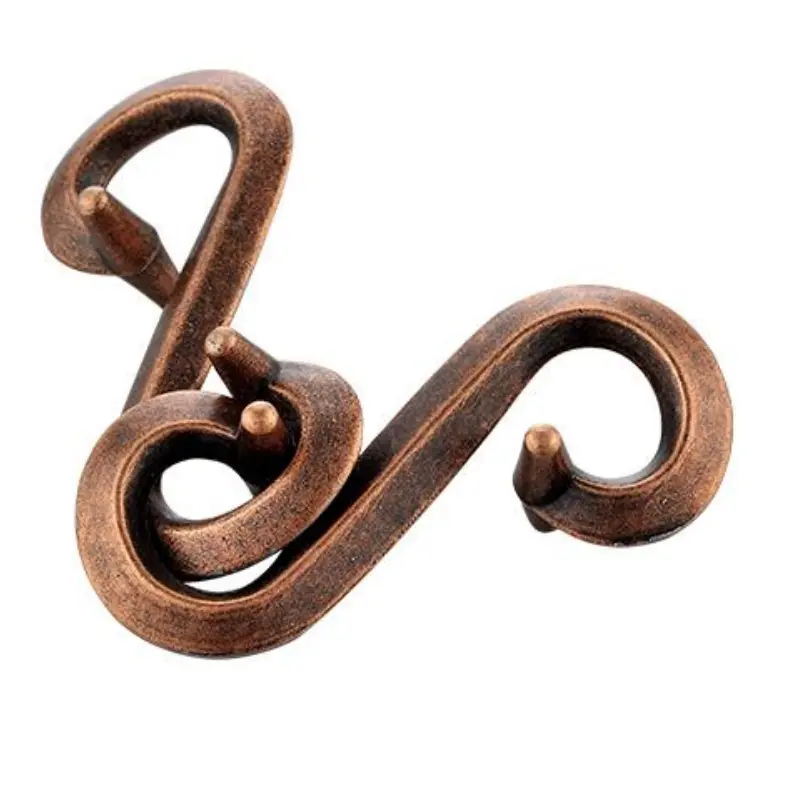
The Alloy S Lock Puzzle is the one I keep on hand for re-gifting cycles. Ten ninety-nine, ships light, solves differently enough from the bull head that the same coworker won’t catch on — a practical gifts-for-him backup when the puzzle needs to keep moving around the office.
Not that. That’s the one.
Frequently Asked Questions About the Two Bull Head Lock Puzzle Gift for Men
The Two Bull Head Lock Puzzle sells for $13–$15 across most retailers, weighs roughly 60–90 grams, and lands in the intermediate difficulty tier of cast metal brain teasers — exactly the sweet spot most gift buyers are trying to hit. Here are the eight questions I get asked most, answered the way I’d answer them across a brunch table.
Is the Two Bull Head Lock Puzzle actually hard or just for show?
It’s a real mechanical puzzle, not a desk trinket. Most first-time solvers need 10–30 minutes — solidly intermediate for a cast metal brain teaser. The solve requires a simultaneous 90° rotation of both interlocking horns, which trips up anyone who tries to twist one at a time. That real challenge is exactly why it earns its keep on a crowded desk.
Can a 10-year-old solve it or is it too hard for kids?
Skip it for under-12s — intermediate difficulty is too high for most kids that age. The release mechanism demands spatial reasoning and patience that typically develops around 14+. For a younger child, look at wooden burr puzzles or simpler disentanglement toys instead. This interlocking puzzle is built for teens, adults, and the occasional determined 11-year-old who refuses to give up. You can find more options for various puzzle toys in our collection.
How is it different from the Two Key Lock puzzle — which is harder?
The Two Key Lock is the easier sibling — most solvers crack it in 5–15 minutes versus 10–30 for the bull head. The bull head demands a coordinated two-handed twist, while the Two Key Lock uses a sequential key manipulation. Pair them as a graduated stocking stuffer set for a husband or boyfriend who’s new to cast metal puzzles.
Does the brass plating chip or wear off after solving it a lot?
Yes, edges can show the zinc-alloy base metal after 30+ solves. The plating is decorative, not industrial. If he’s a chronic re-solver, expect the high-contact horn tips and rotation points to patina first. The change is cosmetic, not structural — the unlock mechanism still works fine, and a few hours of handling often gives it a more handsome, lived-in look.
Is this a good Secret Santa / white elephant gift or too cheap-looking?
It’s ideal for under-$20 gift exchanges. The 3 x 2.5 inch cardboard box and $13 price fit neatly under typical $20 caps, and the cast metal weight gives it a more substantial feel than the usual candle-and-mug fare. Wrap it in a small linen bag and it stops looking like a budget gift entirely.
Can you take it apart and put it back together to gift it again?
Yes — reverse the 90° rotation and the two bull heads lock back into starting position. I’ve re-gifted this puzzle at least three times across office white-elephant cycles, and it resets cleanly every single time. Just don’t force it; if you feel resistance, you’re rotating the wrong way.
Where can I buy the authentic one and not a cheap knockoff?
Look for established retailers like Professor Puzzle, Logica, or Kubiya Games. Authentic cast zinc alloy pieces weigh 60–90 grams — if the listing describes something lighter or calls it “brass” without specifying plating, it’s likely a lightweight knockoff. The metal puzzle solution cheat sheet covers the genuine version with side-by-side reference photos if you want a second look.
What’s a good backup gift in case he solves it in 5 minutes and is bored?
Pair it with the Two Key Lock as a graduated set, or step up to a Hanayama Loop if he’s already comfortable with intermediate cast metal puzzles. The bull head plus the Two Key Lock runs about $25 total and turns a single stocking stuffer puzzle into a real weekend project.
You now have the full picture — what it is, how it feels in the hand, who it’s for, and exactly where to put it. Pick the archetype that matches your man, pair it with one of the backup brain teasers above, and order from the Two Bull Head Lock Puzzle product page before his birthday sneaks up on you again.