The third time the internal brass pin slipped past my thumb, I set the box down and made coffee. It was 11:45 PM on a Tuesday, and I was being outsmarted by a piece of laser-cut plywood that cost less than my lunch. This is the reality of hunting for wooden puzzle box solutions: you aren’t just fighting a physical object; you’re fighting your own impatience.
Most people approach a trick box like a locked door—they want to force it. But wood is a living medium. It expands with humidity, it wears down with friction, and it rewards the person who stops pulling and starts listening. After testing over 200 mechanical puzzles, I’ve realized that the best designs don’t hide the solution; they distract you from it.
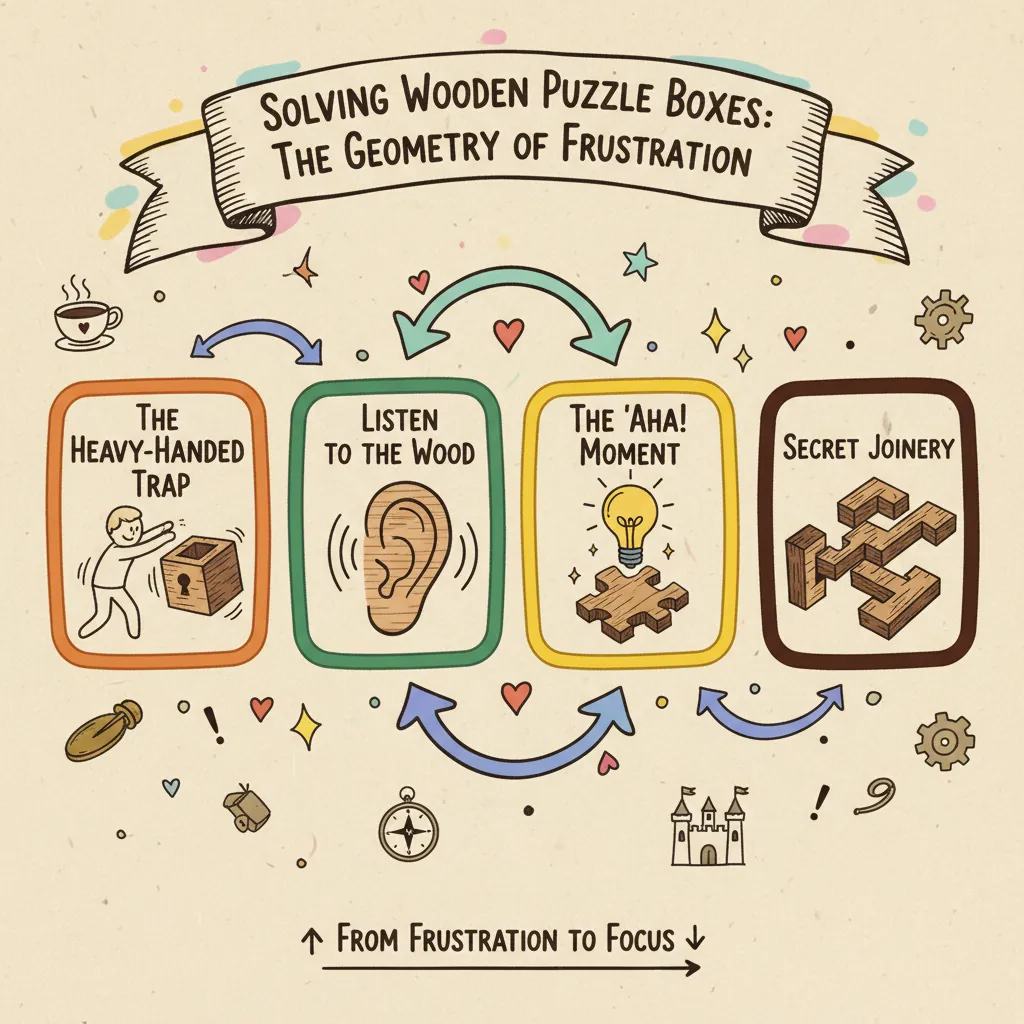
The thesis of my collection, and this review, is simple: The most satisfying wooden puzzles punish the heavy-handed and reward the observant. If you’re looking for a way to sharpen your focus or just want a desktop object that makes people look twice, you need to understand the “click.” It’s that moment when three hours of frustration vanishes into a single, elegant movement.
The Geometry of Frustration: Why Traditional Joinery Still Wins
Before we get into the gears and magnets of modern kits, we have to talk about the classics. Long before laser cutters existed, Chinese carpenters were using mortise-and-tenon joints to create structures that held together without a single nail. This isn’t just history; it’s the DNA of the modern puzzle box.
Luban Lock Set 9 Piece
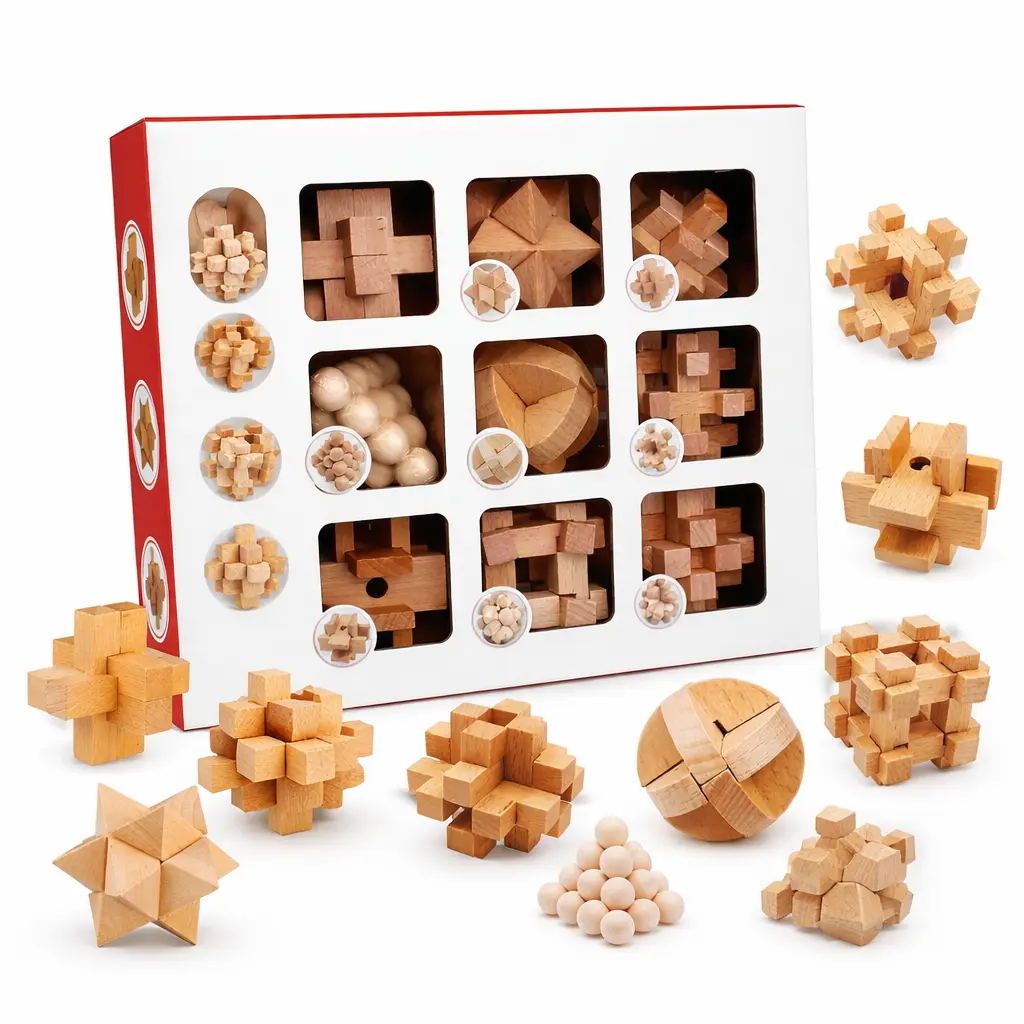
Luban Lock Set 9 Piece — $39.99
The Luban Lock Set 9 Piece ($39.99) is essentially a masterclass in 2,500 years of Chinese engineering. When you first hold one of these, it feels like a solid chunk of wood. There’s no obvious “start” point. I spent forty minutes on the first piece of this set just trying to find the “key” block—the one piece that has just enough wiggle room to slide out and collapse the entire structure.
What I love about this set is the lack of “cheating.” There are no hidden magnets or spring-loaded pins here. It is pure geometry. If you can’t solve it, it’s because you haven’t visualized the internal voids correctly. It’s a humbling experience for anyone who thinks they have high spatial reasoning. I often recommend this set to people who want to understand foundational principles of timber-based enigmas before moving on to more complex mechanical boxes.
The “Aha!” Moment: When Physics Becomes the Key
There is a specific category of wooden puzzle box solutions that drives people absolutely insane: the centrifugal solve. You’ll see it on Reddit forums all the time—someone has a box with a ball inside, or a lid that won’t budge no matter how much they shake it.
The secret? Don’t shake it. Spin it.
Many boxes use internal pins that are held in place by gravity or light friction. By placing the box on a flat surface and spinning it rapidly, centrifugal force pulls those pins outward into recessed pockets, clearing the path for the lid to slide. I remember handing a similar “trap box” to my brother-in-law. He spent twenty minutes trying to pry it open with a credit card. I took it back, gave it a quick spin on the coffee table, and it clicked open instantly. The look on his face is exactly why we buy these things.
This type of learning the delicate art of non-destructive entry is what separates a casual hobbyist from a veteran. You start to look for the “trick” rather than the “break.”
3D Wooden Puzzle Safe with Combination Lock
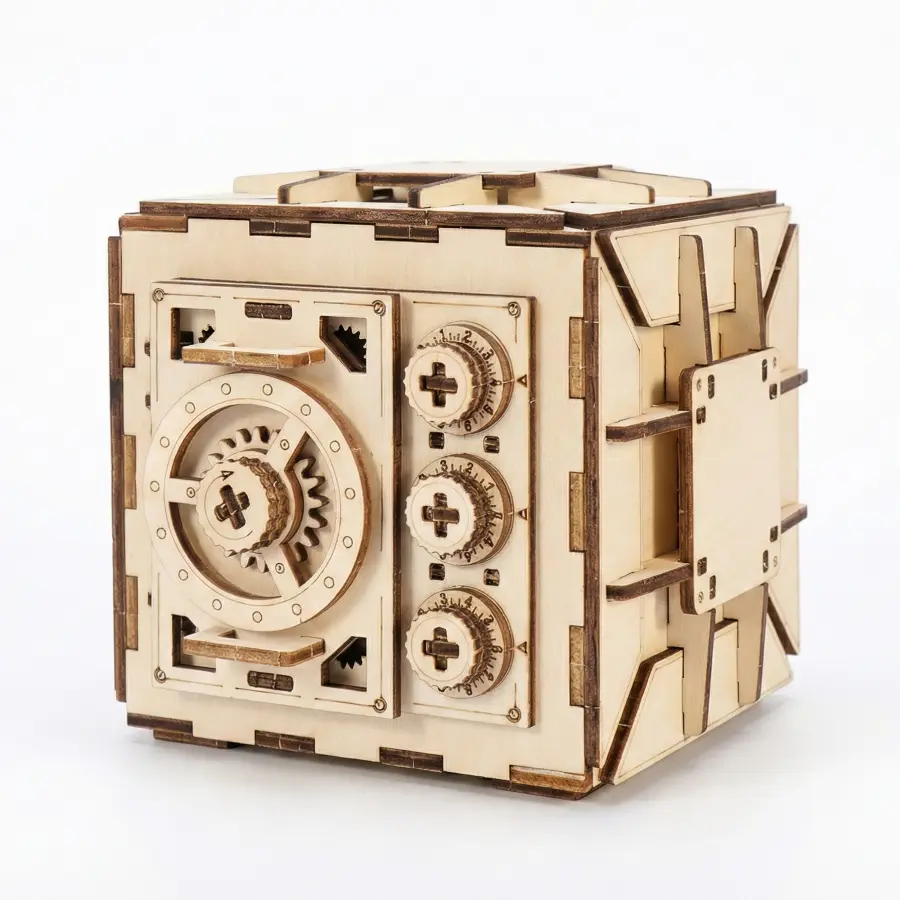
If you want that mechanical payoff without the mystery of hidden pins, the 3D Wooden Puzzle Safe with Combination Lock ($30.99) is the logical next step. This isn’t just a box you solve; it’s a box you build. With 111 pieces, it takes about 90 minutes to assemble, and that’s where the real education happens.
Most people buy this for the functional 3-digit lock, but the real joy is watching the gear system engage as you turn the dial. It’s a transparent look at how a real safe works. My only gripe? The plywood can be a bit “grabby” if you don’t wax the gears during assembly. I keep a tea light candle on my workbench and rub a little wax on every moving tooth. It makes the final operation feel like butter. It’s the kind of project that provides a neurological dopamine hit when a mechanism finally yields to your command.
The Peak: The Secret Language of Wood
Here is the insight that most “top 10” lists won’t tell you: A wooden puzzle is a conversation between the maker and the solver. When you’re stuck, you have to ask, “What did the designer want me to feel?”
If a piece is slightly loose, that’s rarely a manufacturing defect. It’s a hint. In the world of Yosegi-zaiku, the traditional Japanese art of parquetry used in puzzle boxes, the “key” is often hidden behind a decorative inlay that looks identical to the rest of the box. You have to develop a “puzzle thumb”—a way of sliding your finger over the surface to feel for the one panel that has 0.5mm of travel.
I’ve found that advanced solvers often graduate to sequential discovery boxes that hide tools inside themselves. You find a small stick, which unlocks a drawer, which contains a key, which opens the main compartment. It’s a narrative experience.
3D Wooden Puzzle Treasure Box
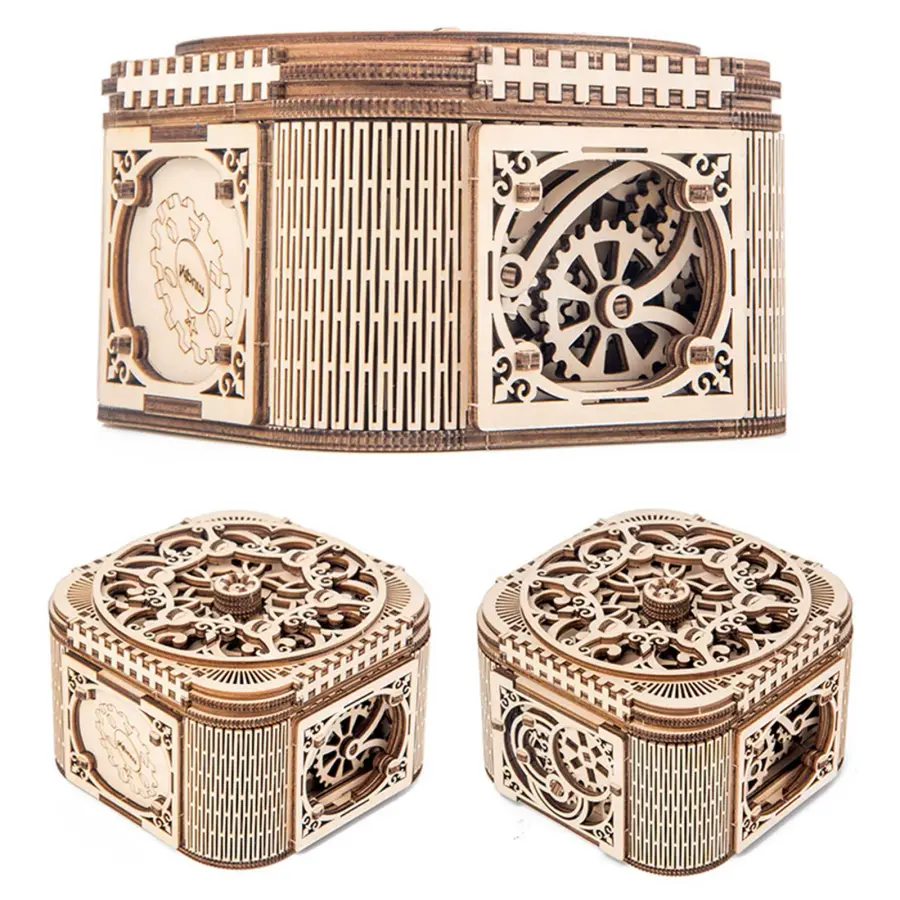
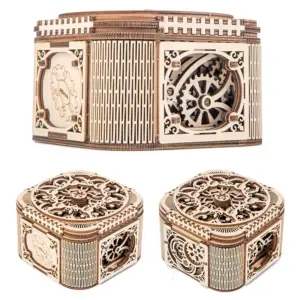
The 3D Wooden Puzzle Treasure Box ($29.99) is the poster child for this “visible complexity.” Unlike the Safe, which hides its guts, the Treasure Box puts the gears on full display. It’s a 150-200 piece build that results in a jewelry box that opens with a mesmerizing, synchronized movement of laser-cut petals.
I’ve had this on my desk for three weeks, and it’s the first thing every visitor touches. There is something deeply satisfying about the weight of the lid and the way the gears mesh. It’s a great example of the cognitive benefits of engaging with complex mechanical assemblies. If you’re looking for a gift that looks more expensive than it is, this is the one. Just be prepared to spend a solid afternoon on the build; it’s not something you want to rush while watching TV.
Aesthetics vs. Mechanics: The Desk Toy Dilemma
Not every puzzle needs to be a “box” in the traditional sense. Sometimes the “solution” is just the act of assembly. For many of us, the appeal is the 3D model that remains on the shelf afterward. This is where the “mechanical kit” side of the hobby shines.
3D Wooden Cello Puzzle Model Kit

Take the 3D Wooden Cello Puzzle Model Kit ($29.99). This isn’t a “trick” box where you hide a ring. The challenge here is the precision of the build. It uses Victorian-style engravings and steampunk gears to turn a musical instrument into a piece of kinetic art.
The “solution” here is patience. The curved lines of the cello body are achieved through “living hinges”—thin wood with laser-cut slits that allow it to bend without breaking. If you force it, you’ll hear a snap that will ruin your day. But if you follow the rhythm of the build, you end up with a stunning desktop piece. I often suggest these types of models when someone wants to engage the whole household in a collaborative solve, as the visual progress is very rewarding for kids and adults alike.
Beyond the Box: Interlocking Enigmas
If you find that your brain prefers pure logic over mechanical assembly, the “interlocking” category is your bread and butter. These are the puzzles that Wikipedia classifies as mechanical puzzles—objects where the goal is to disassemble and reassemble pieces that seem impossible to separate.
6 Piece Wooden Puzzle Key
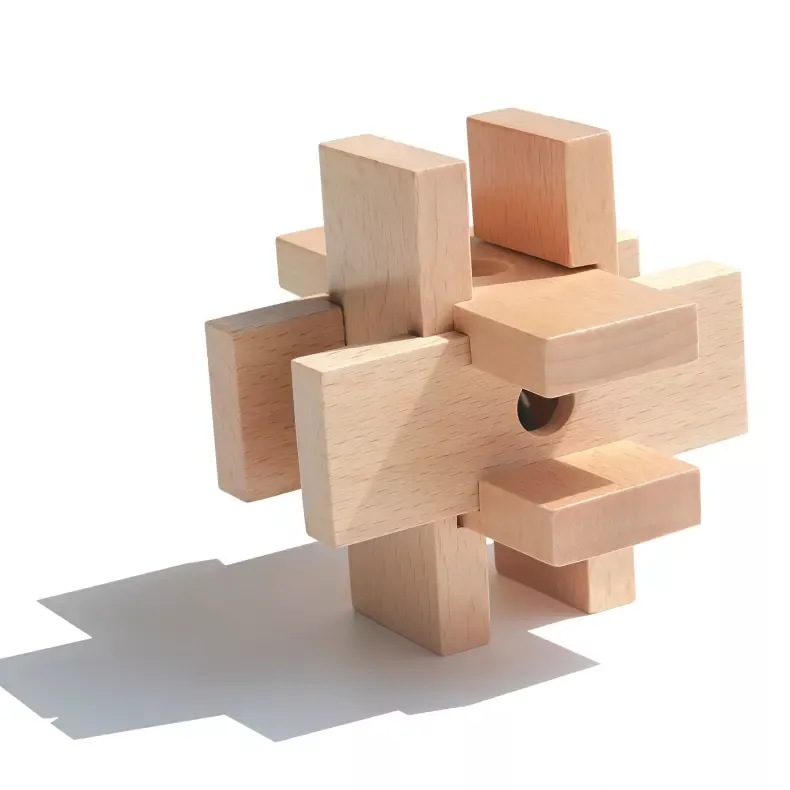
The 6 Piece Wooden Puzzle Key ($12.99) is a perfect “fidget” puzzle. It’s small enough to keep in a jacket pocket and cheap enough to give away once you’ve mastered it. The solution relies on a principle called “Wu Wei”—or effortless action. If you try to pull the pieces apart, they lock tighter. If you relax your grip and let the pieces find their own path, the “key” piece eventually drops. It’s a great way to take a digital logic break with some old-school pixelated challenges that don’t involve a screen.
The Twin Star Puzzle
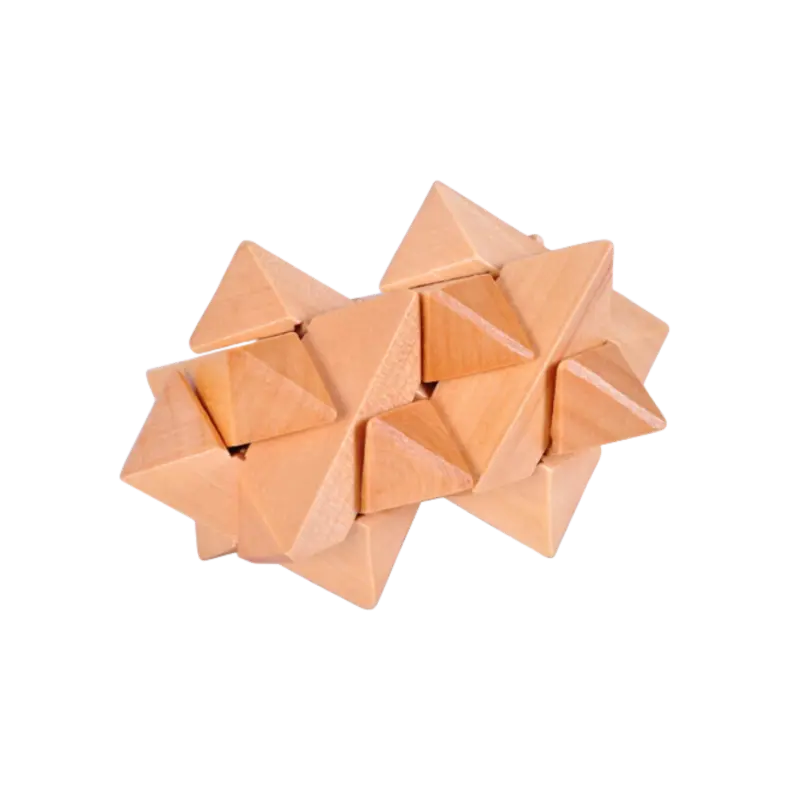
For something a bit more substantial, The Twin Star Puzzle ($17.88) uses 11 pieces to create a complex star shape. This one is a nightmare to put back together. Taking it apart is easy; the “solution” is the reassembly. It teaches you about the “core” of a puzzle—the central piece that everything else relies on. I’ve seen people spend hours on this, only to realize they have one piece left over that doesn’t fit anywhere. It’s a brutal lesson in planning.
Niche Interests: From Tankers to Castles
Sometimes we just want something that looks cool. The hobby has expanded recently into very specific themes—steampunk, military, and even fantasy. These are less about “solving” a mystery and more about the tactile satisfaction of the build.

The 3D Wooden Puzzle Tanker Truck Kit ($22.99) is a rugged, 3-axle configuration that feels surprisingly solid once finished. It’s a 3-5 hour build, and while it doesn’t have a “hidden compartment,” the rolling wheels and opening doors offer a mechanical feedback that is hard to find in plastic models.
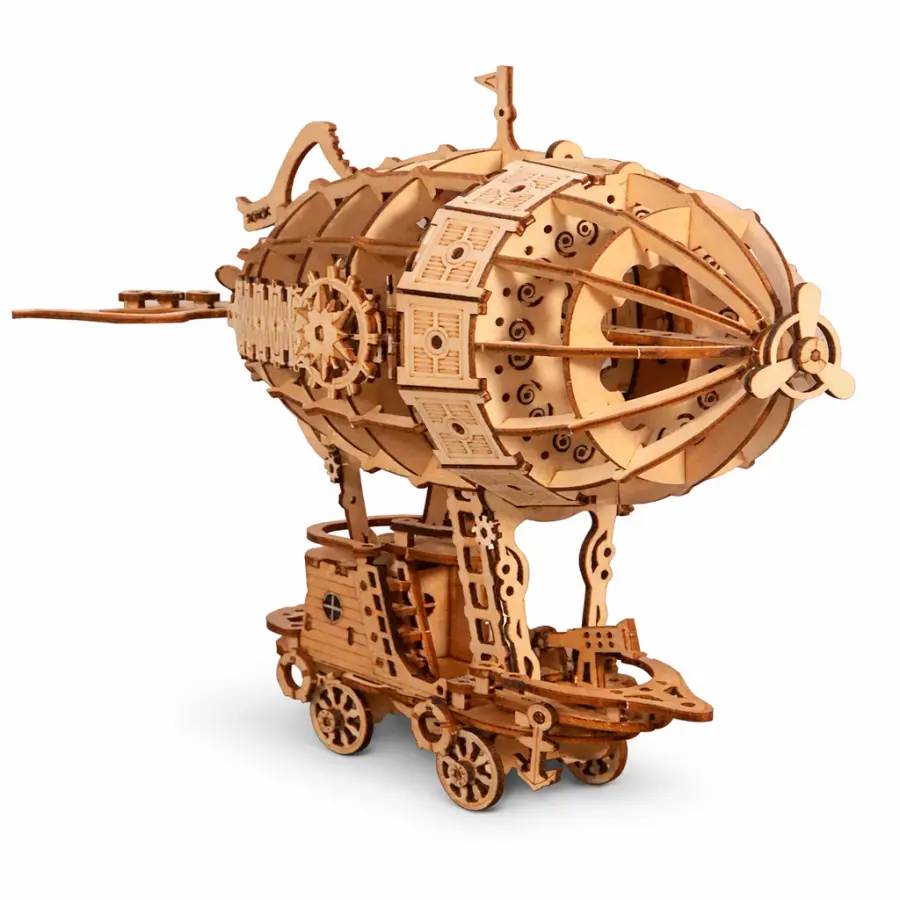
Similarly, the Steampunk Airship 3D Wooden Puzzle ($26.66) is a one-hour build that imagines a Jules Verne-style flying machine. It’s the perfect “gateway” puzzle for someone who isn’t sure if they have the patience for a 200-piece safe. If you find yourself getting bored with the airship, you might need to test your spatial awareness in a different competitive format to reset your brain.
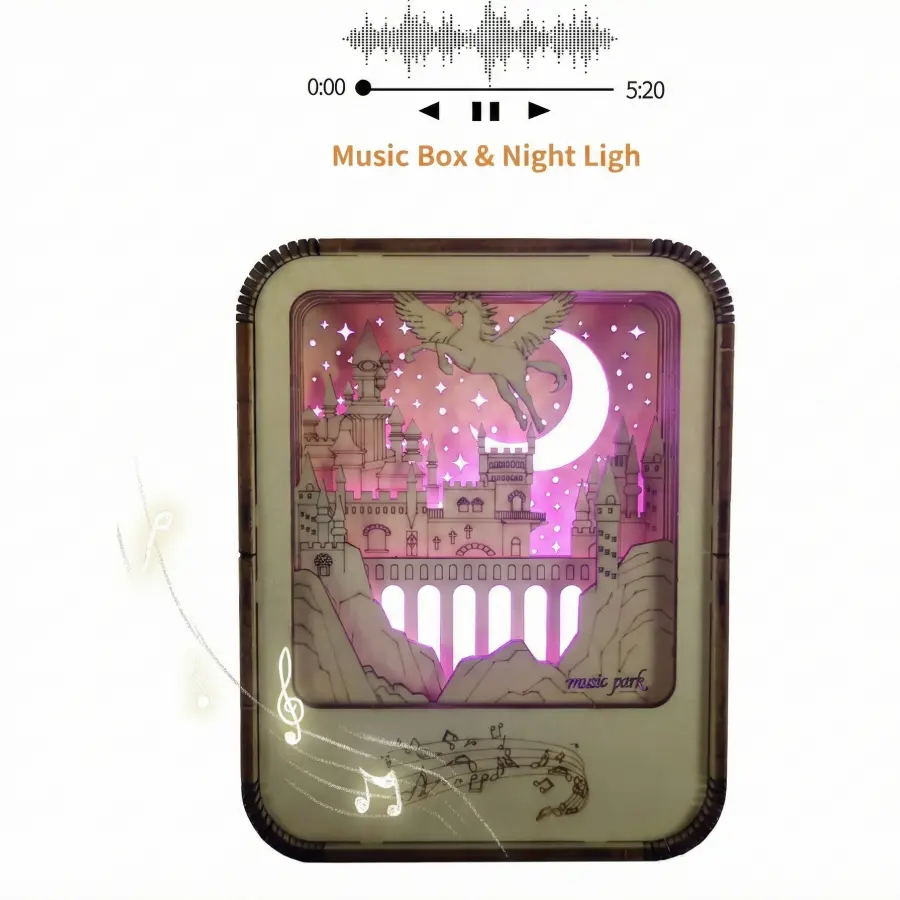
For a more atmospheric experience, the DIY Castle Music Box Night Light Shadow Box Kit ($33.99) combines a 28-piece build with LED lighting and a mechanical music box. It’s less of a “brain teaser” and more of a “mood piece.”

And for the history buffs, the Galleon Ship 3D Wooden Puzzle Model Kit (check current pricing) recreates the vessels of the Age of Exploration. It’s a snap-fit plywood project that looks great on a bookshelf next to a comprehensive breakdown of modern secret stash containers.
Quick-Reference Comparison Table
FAQ: Everything You Wanted to Ask (But Were Too Frustrated to Type)
How do I open a wooden puzzle box that seems stuck?
First, check for humidity. Wood swells. If a box has been in a damp basement, the tolerances might be too tight. Try putting it in a dry room or a sealed container with silica gel packets for 24 hours. Second, check for the “spin solve.” Place it on a flat surface and spin it like a top. If you hear a “clink,” that’s a centrifugal pin moving. Finally, look for the “sliding panel.” Most Japanese-style boxes require you to slide a specific side panel before the lid moves. Don’t force it—if it’s not moving, you haven’t found the right part yet.
Are these puzzles suitable for children?
Most 3D wooden kits are rated for ages 14 and up. This isn’t because of the difficulty of the logic, but the fragility of the pieces. A 10-year-old has the brainpower to solve a Luban Lock Set, but they might lack the fine motor control to avoid snapping a laser-cut gear in the Treasure Box. If you’re working with a younger child, make it a collaborative project.
What is the best way to maintain a wooden puzzle?
Beeswax is your best friend. For any puzzle with moving gears or sliding panels, apply a tiny amount of wax to the contact points. Avoid liquid oils or WD-40, as these will soak into the wood and cause it to swell or discolor. Keep them out of direct sunlight, which can make the wood brittle and fade the laser-etched details.
I lost the instructions. How do I solve my box?
YouTube is the ultimate repository for wooden puzzle box solutions. Search for the specific name of your box + “solution.” However, I recommend trying the “blind solve” first. Feel the weight—does something shift when you tilt it? That’s a gravity pin. Is there a hole that looks like it needs a tool? Look for a piece of the box that detaches to become that tool.
Why are some boxes so much more expensive than others?
It comes down to the wood and the method. Mass-produced laser-cut plywood kits like the Safe are affordable because of automated manufacturing. Hand-crafted Himitsu-Bako (Secret Boxes) from Japan use exotic woods and intricate parquetry, often taking weeks to complete. You’re paying for the artisan’s time and the quality of the timber.
Do these puzzles actually help with brain health?
While I’m not a doctor, I can tell you that solving these requires a mix of “fluid intelligence” and “working memory.” You have to hold a 3D map of the internal mechanism in your head while testing external movements. It’s a great way to stay sharp and move away from the passive consumption of digital media.
What should I do if a piece breaks during assembly?
Most high-quality kits include a few “spare” parts for the most fragile pieces (like small gears or pins). If you snap a major structural piece, a tiny drop of wood glue and a clamp (or a rubber band) will usually fix it. Wait at least two hours for the glue to fully cure before trying to fit that piece back into the assembly.
Is there a “universal” solution to puzzle boxes?
No, and that’s the point. However, 80% of boxes fall into three categories: sliding panels, centrifugal/gravity pins, or sequential discovery (finding a hidden tool). If you master those three concepts, you can solve almost anything.
Can I use these boxes to hide valuables?
The 3D Wooden Puzzle Safe and Treasure Box are great for keeping small items away from prying eyes, but remember: they are made of wood. They won’t stop a thief with a hammer. They are “security through obscurity” and “security through annoyance.”
Why wood instead of metal?
Metal puzzles (like the Hanayama series) are fantastic, but wood has a warmth and a “give” that metal lacks. Wood feels like it has a soul. There’s also the acoustic element—the “clack” of two pieces of hardwood meeting is far more satisfying than the “clink” of zinc alloy.
How long do these take to solve?
A simple 6-piece burr might take ten minutes. A complex sequential discovery box can take months. For the kits mentioned here, the “solve” is usually the assembly time, which ranges from 1 to 5 hours.
Can I paint my wooden puzzle?
You can, but be extremely careful. Paint adds thickness. If you paint the sliding tracks of a puzzle box, it will likely seize up and never open again. If you want to add color, use a thin wood stain or alcohol-based markers that soak into the grain rather than sitting on top of it.
The Final Click
The first time I successfully opened a 12-step Japanese puzzle box, I didn’t feel like a genius. I felt like I had finally learned how to listen. The wood had been telling me the answer the whole time—I was just too busy trying to force the lid.
If you’re just starting out, don’t go for the most expensive, most complex box you can find. Start with something that teaches you the mechanics of the craft. The 3D Wooden Puzzle Treasure Box ($29.99) is my top pick for a reason: it’s the perfect balance of assembly challenge and mechanical payoff. It taught me more about gear ratios and friction than any textbook ever could.
Next, you might want to explore the extreme variations of the classic ghost box logic to see how far this rabbit hole really goes. Just remember: when the wood stops moving, you stop pushing. Take a breath, make some coffee, and wait for the click. It’s coming.