Quick Answer: 3D Crystal Puzzle Gift for Doctor: Engraved or Build-It?
Quick Answer: Choose a 3D engraved crystal keepsake when the gift is a personalized desk display tied to a doctor’s specialty. Choose a BePuzzled-style 3D crystal jigsaw puzzle when the doctor prefers an active build and a screen-free desk object they assemble themselves.
A 3D crystal puzzle is two different products sharing one keyword. This side-by-side shows where each one fits.
| Buyer criterion | 3D engraved crystal keepsake | BePuzzled-style 3D crystal jigsaw |
|---|---|---|
| What it is | Laser-etched crystal with anatomical or photo imagery | Interlocking plastic pieces forming a 3D object |
| Recipient interaction | Viewed on desk or shelf | Built piece by piece, then displayed |
| Best occasion | Graduation, retirement, thank-you, milestone | Holiday, thank-you, get-well, casual appreciation |
| Specialty tie-in | Yes — ophthalmology, gastroenterology, and similar | No — the “tie” is the build itself |
| Skill required | None | Light; step-by-step solutions included in-box |
Three checks that change the pick:
- Does the occasion call for permanence? Graduation and retirement favor a keepsake. A holiday or casual thank-you works either way.
- Is the doctor a solver or a collector? A doctor who already keeps puzzles, models, or board games on their desk or shelf is signaling that another build is welcome; a desk dominated by framed certificates and family photos points toward a display object instead.
- Do you need specialty imagery? If yes, an engraved crystal is the only path. If a general desk ornament works, the jigsaw fits a typical doctor-gift budget and stays small enough for a desk.
For a build-it gift sized for a doctor’s workspace, the 3D Crystal Apple Puzzle is the top starting pick.
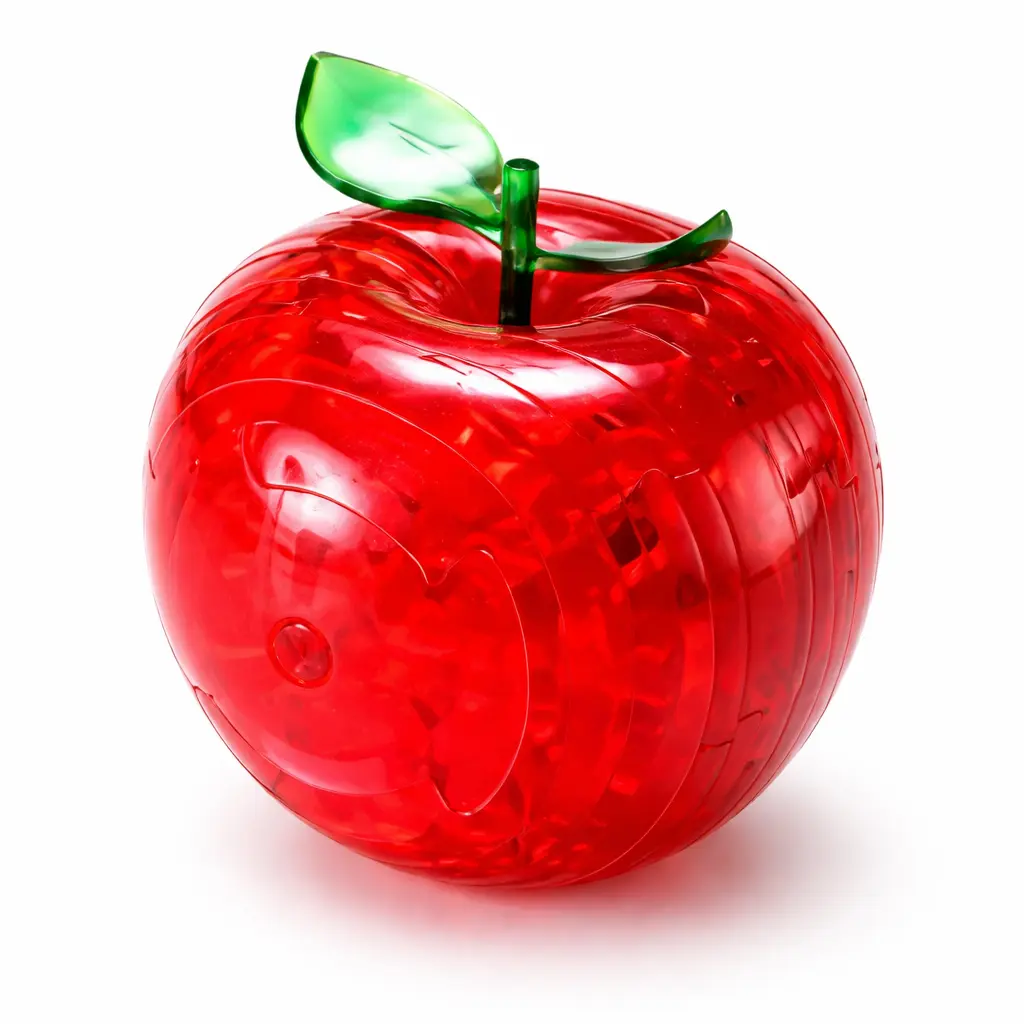
A closer look at the build experience is in the 3D Crystal Apple Puzzle build guide.
01. 3D Crystal Puzzle vs. 3D Engraved Crystal: What “Crystal Puzzle” Actually Means
A 3D crystal puzzle and a 3D engraved crystal keepsake are two different products sold under the same search term. The puzzle is an active build project you snap together from interlocking plastic pieces. The keepsake is a solid crystal block with a 2D image laser-etched to look three-dimensional. Pick the puzzle when the doctor wants a hands-on activity; pick the keepsake when you want a finished desk display tied to their specialty.
Both products use the word “crystal,” both appear in gift searches, and both are marketed to doctors. That overlap is why the SERP feels confusing. The two items share no manufacturing process, no packaging format, and no use case once the box is opened. One is a build experience. The other is a finished object with medical or anatomical imagery permanently etched inside a block of crystal.
Type A: The BePuzzled-style 3D crystal jigsaw puzzle
This is a translucent plastic three-dimensional jigsaw puzzle that assembles into a 3D object — an apple, a rose, a skull, a swan, The Thinker, a hedgehog. The pieces are colored, interlocking, and glossy. Build difficulty is signaled by piece count, with verified BePuzzled designs running from 43 pieces (The Thinker) to 55 pieces (Hedgehog), and additional licensed-character designs (Maleficent at 74 pieces, Stitch at 44 pieces, and similar forms) following comparable piece counts in the broader resale market. The original 3D Crystal Puzzle line from BePuzzled ships with step-by-step solutions printed in the box and posted on the brand site, so a stuck solver is not stranded.
For a doctor gift, this category works when the buyer wants to give a screen-free activity. The completed object sits on a desk or shelf afterwards, but the value is in the assembly, not the engraving. It is a “solved” gift — the recipient builds it, then displays it.
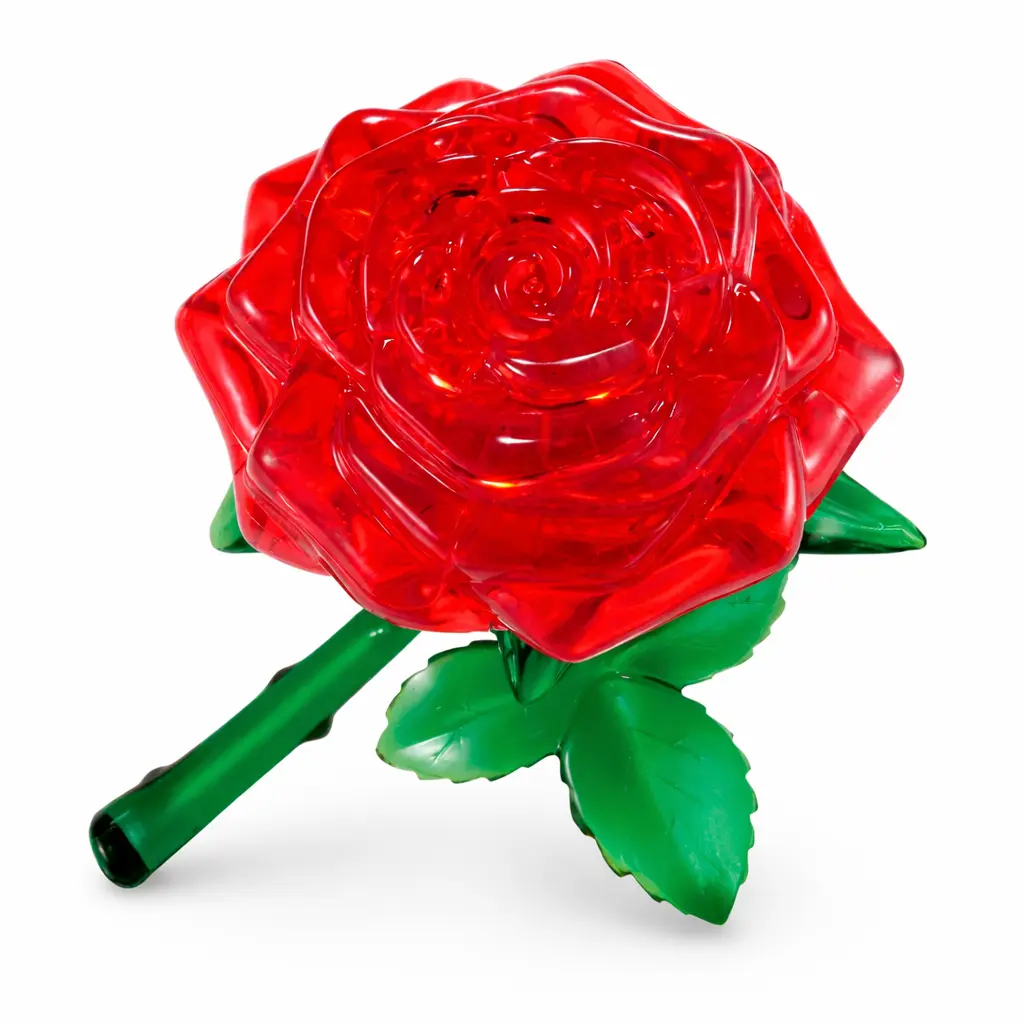
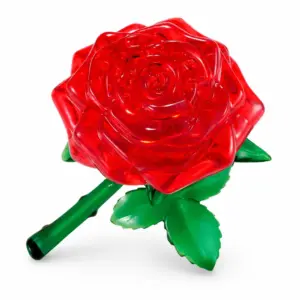
3D Crystal Rose Puzzle — $19.99
Type B: The 3D engraved crystal keepsake
This is a solid block of crystal (rectangular, cube, or shaped) with a two-dimensional image laser-etched inside it. The image is rendered to give a depth illusion, hence “3D.” The subject is usually a photo, a logo, an anatomical structure, or specialty-themed art. The product arrives finished; there is nothing to assemble.
Marketplace listings lean heavily on doctor-specialty hooks. Amazon carries products like the “Eye Art For An Ophthalmologists | 3D Engraved Crystal Keepsake” and the “Intestine 3D Engraved Crystal Keepsake | Gift For Gastroenterologist” — both positioned as collectibles, souvenirs, and home decor for medical professionals. These items are “displayed” gifts: the recipient unboxes, sets them on a shelf, and that is the end of the interaction.
The one check that separates them on any listing
Before you buy, scan the product description for one of two phrases.
- If you see “interlocking pieces,” “piece count,” or “step-by-step solutions,” it is a 3D crystal jigsaw puzzle (Type A). Build it, then display it.
- If you see “laser-etched,” “engraved crystal,” or “3D photo crystal,” it is a keepsake (Type B). It arrives finished.
This single check resolves the SERP confusion and prevents the common buyer mistake of expecting a build experience from a block-shaped keepsake, or expecting specialty medical imagery from a plastic puzzle apple. Once the two product types are separated, the occasion — graduation, retirement, thank-you, board exam, holiday, get-well — and the doctor’s personality decide which one fits. That matching work happens next.
02. Match the Gift to the Occasion: Graduation, Retirement, Thank-You, Board Exam, Holiday, Get-Well
Now that the two product types are separated, the occasion — not the recipient’s personality — usually decides which one fits. Write the moment down first, then match the product type to it. Use this occasion-by-occasion map to narrow the SERP before you browse listings.
Medical school graduation. The standard gift for a newly minted MD or DO is a 3D engraved crystal tied to their specialty — an eye etched for an ophthalmologist, an intestine for a gastroenterologist, a heart for a cardiologist. Amazon and Etsy both list specialty keepsakes in this format, with documented examples like the “Eye Art For An Ophthalmologists” 3D engraved crystal and the “Intestine 3D Engraved Crystal Keepsake” available on each marketplace. For a graduate who has not yet chosen a specialty, a generalist keepsake with a stethoscope, caduceus, or anatomical motif reads as appropriate without guessing wrong. Skip the build-it option here — the graduate has enough to assemble.
Residency match or board exam. This is the one occasion where the build-it option earns its place. An interlocking plastic 3D jigsaw puzzle serves as a screen-free focus ritual during a high-stress waiting period, giving a recipient a contained, finishable project between study blocks. BePuzzled’s numbered pieces and step-by-step solutions, walked through in the BePuzzled 3D crystal puzzle guide, mean the recipient does not need to be a self-described “puzzle person” to finish it.
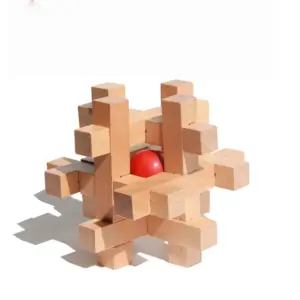
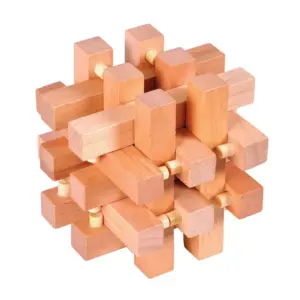
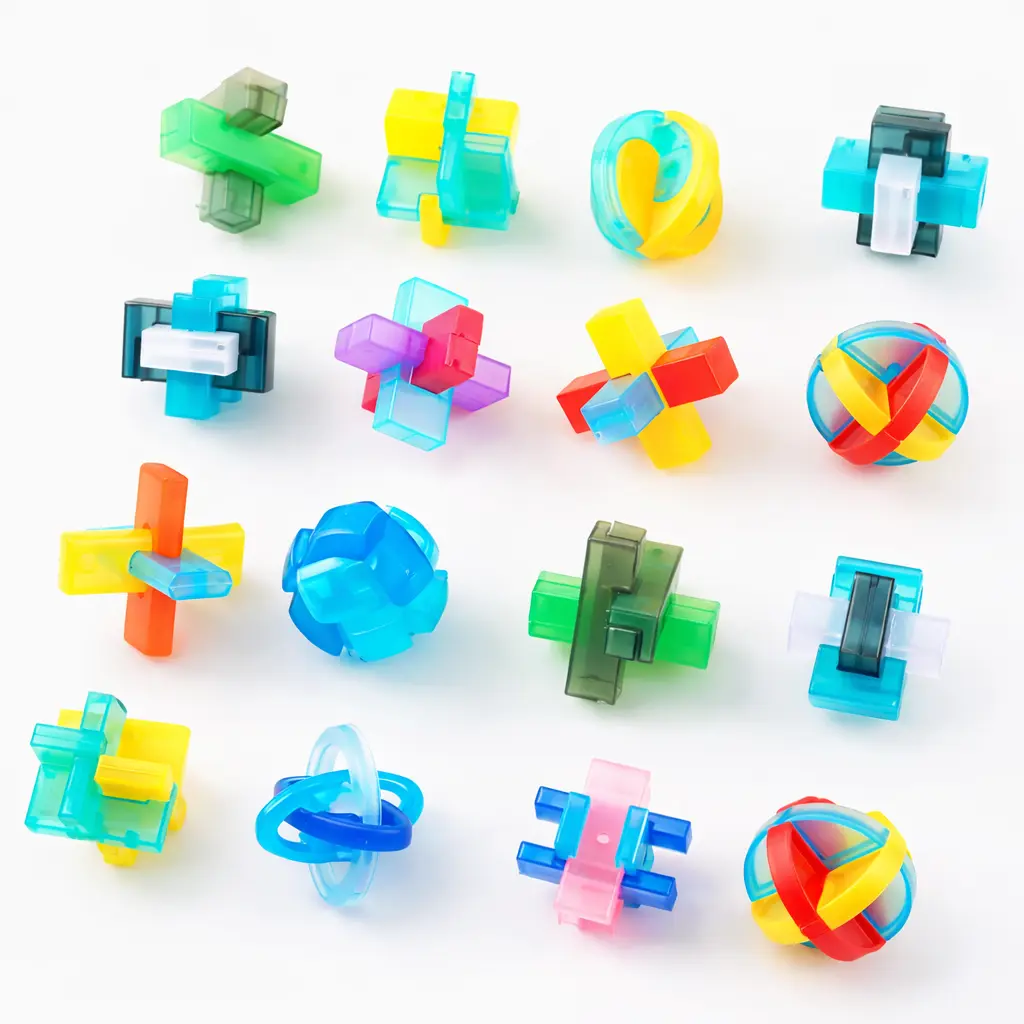
For the board-exam window specifically, the 12 Piece Crystal Luban Lock Set fits the same brief: a series of small, solvable mechanical puzzle challenges that can be picked up between study blocks and put down again without losing progress. A closer look at the engineering tradition and design is in the 12-piece crystal Luban lock set deep dive.
Retirement. A larger 3D engraved crystal with the doctor’s name, specialty, and years of service functions as a career capstone. The piece is heavier, the engraving more detailed, and it earns a permanent place on a home mantel or office shelf rather than a busy desk. Specialty imagery is appropriate here — the retired doctor no longer needs the gift to be “useful.” It needs to be commemorative. Step-by-step solutions have no role at this milestone.
Thank-you for a referring or attending physician. A small desk-engraved crystal is the right scale. The gift acknowledges the relationship without overcommitting. Avoid large statement pieces; the gesture should fit on a corner of an already-busy desk. A custom-engraved line of text — “With gratitude, the [Family Name]” — turns a generic keepsake into a personal one.
Holiday (Christmas, end-of-year). Either product type works. The tiebreaker is the recipient’s personality — covered in the next section. The seasonal occasion is a license to choose the more playful option, like a crystal apple or rose puzzle, for a doctor who already has the engraved specialty pieces on display. Budget becomes the next constraint; check the product page for the current listed price before committing.
Get-well from a patient or family member. Keep it small. A compact engraved crystal with a simple message, or a stethoscope-themed 3D jigsaw, signals care without turning the hospital room into a shrine. Specialty imagery is usually the wrong choice here because the doctor’s specific subspecialty may be unknown to the giver. And keep the box size manageable — a large crystal has no place on a hospital tray table.
The next check. Write the occasion on a sticky note before you start browsing. Match the sticky note to a product type using the map above. Then verify the listing with the one-line check from the previous section — “interlocking pieces” or “laser-etched.” If the listing fails the match, move on. Simple.
03. Match the Gift to the Doctor’s Personality: Active Solver vs. Desk-Display Appreciator
Once the occasion is on the sticky note, the next check is the recipient’s home. The personality test is simple: look at what the doctor already keeps, and the product type picks itself. Two profiles cover most gift recipients, and they map cleanly to the two products competing under “3D crystal puzzle.”
Profile A: The active solver. This is the doctor with a board-game shelf, a half-built model on the kitchen table, or a brainteaser on the nightstand. Buy them something to build. A BePuzzled-style 3D crystal jigsaw with interlocking pieces gives them a focused, screen-free build, and the finished shape is small enough to earn a shelf spot. Anatomical shapes (skull, heart), abstract geometric forms, and object-shaped puzzles all fit; specialty pride is optional here. A build-it gift says “I know how you spend a Sunday afternoon,” which is the message this profile responds to.
For a build that lands squarely on a doctor’s desk, a clear object-shape works well. A 3D Crystal Apple Puzzle sits in the standard BePuzzled-style category — interlocking transparent pieces, a finished form that doubles as paperweight or shelf display, and a build experience that does not require specialty knowledge from the giver.
For doctors who prefer a tactile, one-at-a-time rhythm — solve a single lock, set it down, pick up the next — a 12-piece crystal Luban lock set covers a different challenge type than the visual apple assembly.
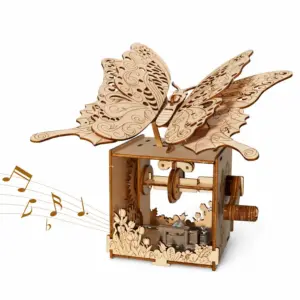
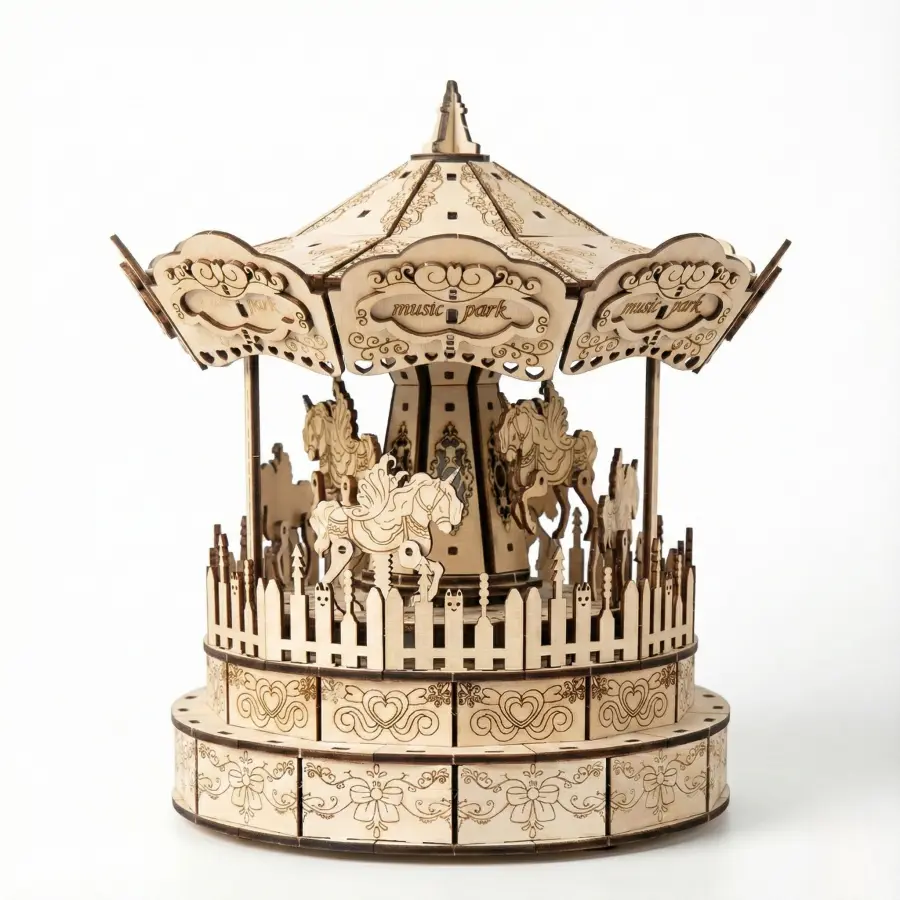
For doctors who already own the standard 3D crystal shapes, a wooden mechanical build broadens the challenge. The 3d Wooden Carousel Music Box sits in the same “build, then display” category but trades plastic for wood and adds a working musical mechanism at the end — a finished object that pulls double duty as a desk conversation piece. For a wider range of wooden mechanical builds beyond the carousel, the 3D wooden jigsaw puzzles for adults guide covers a broader shape and challenge range than the crystal-puzzle category alone.
Profile B: The desk-display appreciator. This is the doctor whose office holds framed diplomas, a family photo, a small piece of art, and not much else competing for attention. For this profile, the gift is the object on the shelf, not the act of solving. A 3D engraved crystal keepsake with their specialty imagery, name, or graduation year carries more weight than another thing to assemble. Laser-etched medical shapes (eye for ophthalmologists, intestine for gastroenterologists) and personalized name plaques fit this profile directly.
The one observable check. Stand in their office or imagine it: are solved puzzles already on the shelf, or is the shelf reserved for diplomas and photos? That single observation resolves the decision. If shelves hold built objects, the build is welcome. If shelves hold certificates, the engraved crystal lands better. A bare desk with no personality cues at all is the hardest case — default to engraved, because a displayed keepsake is harder to misjudge than a build the recipient may never start.
The next action. Before you browse, text a family member or scroll the doctor’s social media for a photo of their desk or bookshelf. One picture answers the question in a way that no product description can. If no photo is available, ask a direct question: “What’s the last puzzle or model you finished?” A confident answer signals Profile A. A polite deflection signals Profile B. The next section maps the Profile A and Profile B decisions onto specific medical specialties.
04. Specialty-Specific Crystal Gifts: What Exists for Each Medical Field
The Profile A and Profile B split from the last section maps directly onto specialty coverage, because the product you can actually buy depends on the doctor’s field. Two specialties have ready-made 3D engraved crystal options: ophthalmology (eye) and gastroenterology (intestine). Most other fields have no specialty-specific engraving on the major marketplaces and require a generalist shape or a BePuzzled-style build instead.
The two coverage tiers. Laser-etched anatomical imagery is a narrow catalog, not a broad one. The listings cluster around the most recognizable organs. A 3D engraved crystal eye is sold specifically for ophthalmologists, and a 3D engraved crystal intestine is sold specifically for gastroenterologists. If your doctor practices one of those two fields, the decision is largely made for you: the engraved option fits, and the personalization is built into the listing’s title. No custom file upload is required to tie the gift to the recipient’s work.
The gap that covers most doctors. Surgeons, GPs, internists, pediatricians, psychiatrists, dermatologists, cardiologists, neurologists, oncologists, anesthesiologists, radiologists, and OB-GYNs do not have widely listed specialty-specific 3D engraved crystal products in the current marketplace results. That is a coverage gap, not a search failure. A buyer who types “cardiologist 3D engraved crystal” will mostly see generic heart shapes, not cardiology-specific engravings. The realistic options for these fields are:
- A generalist engraved shape that still signals medicine: heart, apple, rose, or a stethoscope silhouette if available
- A personalized name-and-title plaque with no anatomical imagery
- A BePuzzled-style interlocking 3D crystal jigsaw (skull, apple, rose, or another brain teaser shape) that reframes the gift around the build rather than the specialty
The one observable check before you buy. Run the specialty name through a marketplace search with the exact phrase “3D engraved crystal [specialty]” before defaulting to a generalist shape. If a specialty-specific listing appears, buy it. If only generic shapes appear, the field sits in the gap, and the gift should pivot to a personal name engraving, a generalist medical shape, or a buildable puzzle. This single search takes under a minute and prevents the common mistake of gifting a generic heart to a cardiologist or a generic brain to a neurologist when something more specific exists, or more often, confirming that nothing more specific exists and the shape should be generalist.
The next action for the gap fields. Once the search confirms no specialty-specific listing, decide between a 3D engraved crystal keepsake and a buildable puzzle using the same Profile A or Profile B test from the previous section. A surgeon who displays awards and certificates on the wall is a Profile B buyer, and a generalist engraved shape or a name plaque will land. A family physician who unwinds with hands-on hobbies in the evening is more likely Profile A, and a BePuzzled-style interlocking puzzle reframes the gift as engagement rather than decoration. The specialty coverage gap does not eliminate either path. It removes the shortcut of a field-specific listing and forces the buyer back onto the personality test.
The verification step buyers should run. Before checkout, confirm three things on the product page: the listed shape matches the recipient’s specialty or generalist intent, the personalization field accepts the doctor’s name and title exactly as intended, and the dimensions are consistent with the intended display location. The product page is the only place these specifics are verified; marketplace titles often compress them. A two-minute page check is the difference between a gift that lands and one that misses by an inch.
Summary of the decision rule. If the doctor’s specialty is ophthalmology or gastroenterology, a 3D engraved crystal specialty listing is the direct answer. If the specialty is anything else, search first, then fall back to a generalist engraved shape, a personalized plaque, or a buildable puzzle based on Profile A or Profile B. The specialty coverage map has only two specific entries today, and recognizing that early saves a buyer from scrolling through dozens of irrelevant listings and from settling on a generic shape that could fit any profession.
05. Decision Table: 3D Engraved Crystal vs. 3D Crystal Jigsaw Across Six Buyer Criteria
When the specialty list comes up empty, the choice between a 3D engraved crystal keepsake and a BePuzzled-style 3D crystal jigsaw comes down to six observable criteria. Pick the keepsake when the doctor prefers a displayed object and you have a photo or message to embed. Pick the jigsaw when the doctor prefers an active build and you have nothing to personalize.
The side-by-side table below compares the two product types across the dimensions a buyer actually evaluates. Where the supplied evidence does not support a specific number, the What to Check column points the buyer to the listing rather than invent a value.
| Criterion | 3D Engraved Crystal Keepsake | BePuzzled-Style 3D Crystal Jigsaw | What to Check |
|---|---|---|---|
| Physical form | Solid crystal block with a laser-etched image suspended inside (anatomical, photo, or text) | Interlocking plastic pieces that snap together to form a 3D object | Confirm the material on the listing; the crystal and plastic versions are visually similar in photos but different in hand |
| What the recipient does with it | Unwraps and places it on a surface; no assembly required | Reads the step-by-step solutions included in-box or online and assembles the model | Check the stated age rating on the listing; build complexity varies by piece count |
| Personalization method | Photo, name, title, or message etched inside the crystal at the vendor | Pre-designed shape only (Apple, Thinker, Hedgehog, Duck, Skull, and similar forms); no name or image added by the buyer | If personalization matters, the engraved format is the only option of the two |
| Where it is typically displayed | Desk, shelf, or display cabinet as a keepsake or home decor object | Displayed after assembly as a collectible; the assembly is the experience | Confirm dimensions against the intended display spot before checkout |
| Approximate recipient age-appropriateness | Described in vendor listings as a collectible and home decor item with no age floor stated | Recommended for puzzlers age 12 and up per the BePuzzled product description | Verify the age guidance on the specific listing, since piece count and difficulty vary by model |
| What the buyer provides | A photo, a name, a specialty, or a short message for the vendor to etch | Nothing beyond the purchase; the puzzle ships pre-designed and ready to build | If you want a “from” inscription, only the engraved format accepts buyer-supplied content |
The single next action. Identify the criterion in the table that matters most to your recipient, displayed-and-personalized or built-and-solved, and let that criterion decide the product type. A keepsake is the right call when the gift should say something specific to the doctor. A jigsaw is the right call when the gift should do something specific to the doctor. Both are defensible choices once that one criterion is named.
Frequently Asked Questions
The decision framework is settled: pick a 3D engraved crystal keepsake when the gift should reference the doctor’s specialty, and pick a 3D crystal jigsaw when the gift should occupy the doctor’s hands. The answers below draw from verified product listings and the evidence ledger.
1. What’s the difference between a 3D crystal puzzle and a 3D engraved crystal keepsake?
A 3D crystal puzzle in the BePuzzled tradition is an interlocking plastic assembly with step-by-step solutions included in-box, recommended for puzzlers age 12 and up. A 3D engraved crystal keepsake is a solid crystal block with a laser-etched image inside, sold through specialty vendors that take the buyer’s photo, name, or message at order. One is built; the other is displayed. The shared word “crystal” is what makes the SERP confusing.
2. Is a 3D crystal puzzle an appropriate gift for a doctor?
Yes, when the doctor is the kind of person who solves things. The active-solver profile — the doctor with puzzles, models, or hands-on hobbies already in their routine — maps directly onto a desk-sized assembly challenge. For doctors who prefer recognition over recreation, an engraved crystal with their specialty imagery is the more professional read.
3. Are there 3D crystal gifts made for specific medical specialties?
Yes for engraved crystals. Verified marketplace listings show ready-made options for ophthalmologists (etched eye) and gastroenterologists (etched intestine), with most other fields falling into a generalist category. For 3D jigsaw puzzles, specialty-tied options are rarer; most are shape-based. Specialty-specific engraving also requires longer lead times, so confirm the vendor’s turnaround before ordering close to the occasion.
4. What kind of crystal gift works for a doctor’s medical school graduation, and how much should I spend?
Grad
Where to Start
If the recipient and occasion checks above match, start with 3D Crystal Apple Puzzle. Check the current product page for the specifications that matter to your choice.
Sources and verification
- Product details and current specifications: Tea-Sip product page
Last updated: August 13, 2026