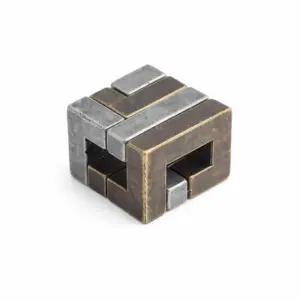
Quick Answer
A 3D Crystal Apple Puzzle is the strongest opening move for a software-developer gift — the apple silhouette reads as design-aware, sits low on a desk, and assembles quickly — and the pick shifts if the recipient prefers a mechanical logic challenge, collects a specific fandom, or has no room for a separate light base.
The three filters used below:
- Theme fit. The assembled shape should signal something a coder would actually display — geometric, code-adjacent, or a recognized silhouette — not a generic cartoon animal.
- Desk-display footprint. A finished puzzle that fits between a monitor and a notebook outranks one that demands a shelf.
- Piece-count challenge. Realistic for 30–60 minutes at a cluttered adult desk, not a multi-day build.
| Theme / sub-interest | Tea-Sip pick | Why it reads developer-appropriate | What to check |
|---|---|---|---|
| Iconic geometric silhouette (logo-adjacent) | 3D Crystal Apple Puzzle | Clean translucent shape, low-profile desk display piece | Assembled dimensions and exact piece count on the product page |
| Translucent collectible, decorative | 3D Crystal Rose Puzzle | Display-forward aesthetic, reads as art-object not toy | LED base sold separately — confirm before gifting |
| Mechanical logic / lockbox | 12 Piece Crystal Luban Lock Set | “Solve the mechanism” framing matches a tinkerer’s instinct | Piece count and solved-state dimensions |
| Brain-teaser logic, math-adjacent | 7 Color Soma Cube Puzzle or 54-T Cube Puzzle | Classic discrete-puzzle geometry, repeatable solves | That a logic puzzle (vs. a build) matches the recipient’s play style |
| Time-based display, desk clock | 3D Wooden Puzzle Clock DIY Kit or 3D Wooden Perpetual Calendar Puzzle | Functional desk object once assembled | Whether the recipient will enjoy the clock-assembly step, not just the finished dial |
| Mechanical motion / kinetic | 3D Wooden Carousel Music Box or 3D Zodiac Owl Mechanical Clock Puzzle | Engineering-flavored assembly, visible moving parts on the desk | Footprint and noise level for an open office |
| LEGO-adjacent miniature build | 3D Wooden Mechanical Pistol Kit or 3D Wooden Cello Puzzle Model Kit | Building a recognizable object from precision-cut parts | That the theme matches the recipient’s specific interests |
Skip these unless the recipient’s taste is already confirmed: cartoon animals, generic licensed characters the buyer doesn’t know the recipient collects, and any puzzle sold as a kids’ product line. The category itself isn’t childish, but the wrong theme-fit makes it read that way — the avoidable mistake this shortlist is built to prevent.
01. What Makes a 3D Crystal Puzzle ‘Developer-Appropriate’
A 3D crystal puzzle is developer-appropriate when its design signals something a coder would actually display, not when it is generically “cool.” For a software developer who already has a mechanical keyboard, a desk figurine, and a novelty USB, the wrong puzzle theme reads as a gift that didn’t try. The right one earns its place on a shared or home office desk.
The category itself is not the problem. A mechanical puzzle is a discrete object solved through physical manipulation — a thing to build, hold, and display, not a one-use toy. What makes the gift land is whether the recipient recognizes the shape, the challenge, and the display footprint as their own. Filter every option through three checks before adding to cart.
Theme fit is the first filter. A software developer is statistically more likely to display a puzzle shaped like a galaxy, a geometric solid, a machine, or a recognizable architecture — something that reads as a signal in a peer or visitor’s eye. They are less likely to display a cartoon animal that happens to be made of translucent plastic, regardless of how pretty the plastic is. Before opening the catalog, scan the recipient’s desk or public profile for a recognizable shape preference: do they have space imagery, math posters, machine schematics, or a specific fandom object visible? That single observation narrows the catalog from the full list to a handful of candidates.
Desk-display footprint is the second filter. A 3D crystal puzzle earns its keep only if it survives a cluttered adult desk. A piece that fits in a palm and sits low enough to live next to a monitor will stay put; anything taller than a coffee mug, or wider than a laptop, will get relocated to a shelf within a week. Translucent acrylic shows every fingerprint and dust speck, so the surface near the display needs to be wipeable. Check the product page for the exact dimensions of any piece before buying — the listed photo rarely conveys true scale.
Piece-count challenge is the third filter. A three-dimensional jigsaw puzzle has no single standardized piece count, and the category ranges from small builds to multi-evening projects. For a busy adult assembling on a cluttered desk in roughly 30–60 minutes, the sweet spot sits in the middle band: enough pieces to feel like a build, few enough to finish in one sitting. Pieces at the high end push into projects that compete with sprint cycles and may never get completed; pieces at the low end read as a keychain. The middle band is the gift.
The concrete next action before buying: photograph the recipient’s current desk, screenshot their GitHub profile or social avatar, and write down one shape, one fandom, and one object they already keep visible. If a puzzle in the catalog matches two of the three, it is a strong candidate. If it matches none, skip it — even if the listing page is persuasive.
A compact translucent piece like the 3D Crystal Apple Puzzle hits all three filters at once: a recognizable shape that nods to a tech brand many developers have shipped for or used daily, a desk-friendly footprint, and a piece count that fits a single-evening build. The listed price is $18.88 — confirm the current price and any LED base option on the product page before checkout.
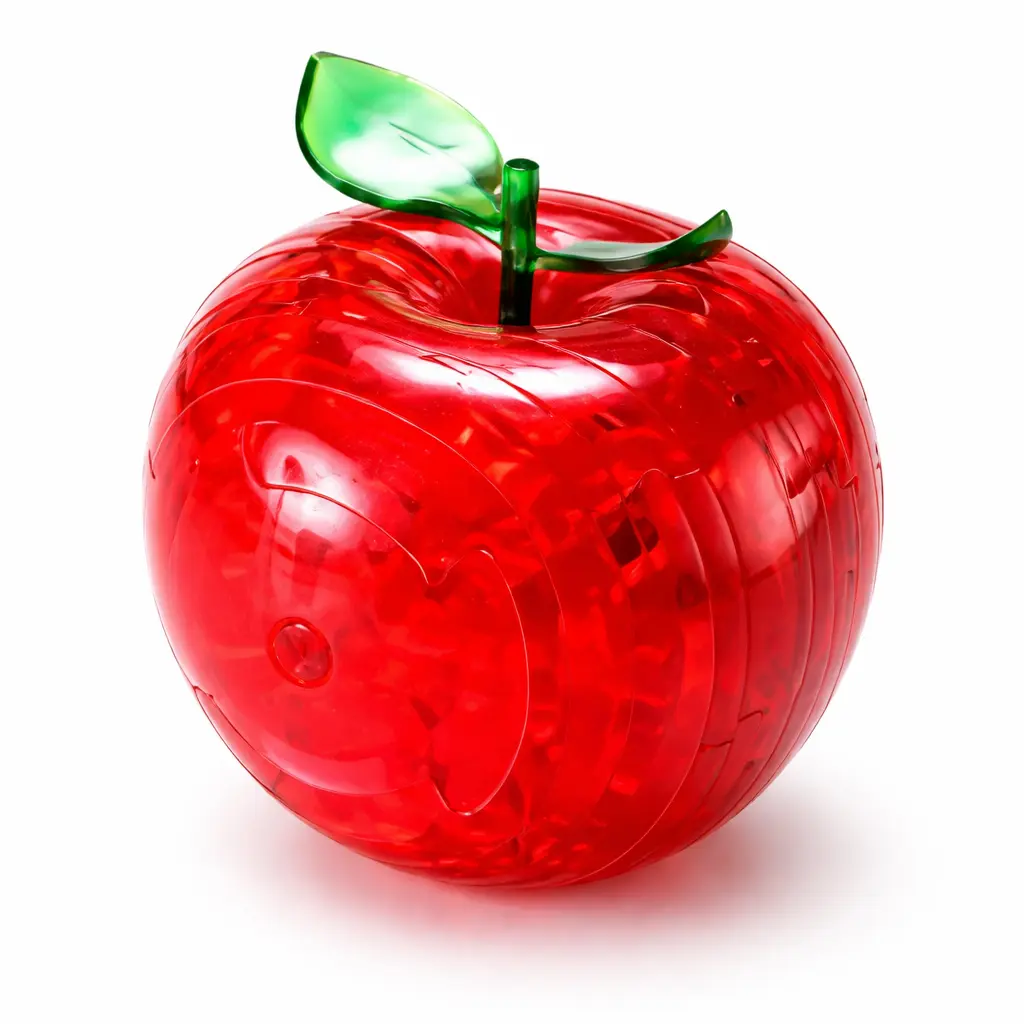
For readers who want the broader desk-puzzle landscape beyond the crystal category, this roundup of desk puzzles curated specifically for software developers offers a wider shortlist across materials and difficulty bands.
02. Theme-by-Theme Matchup: Which Puzzle Categories Line Up with Developer Sub-Interests
Theme fit is the first filter because the puzzle’s silhouette is the first thing the recipient sees. A 3D crystal puzzle earns its place on a developer’s desk when its outline signals something the recipient already cares about — a planet, a geometric form, a machine, a fandom logo — rather than a generic cartoon shape that could belong to any gift aisle. Below is a category-by-category map built around one question: would a software developer keep this on the desk after assembling it?
Galaxy and space themes
Space-themed crystal puzzles — planets, rockets, lunar landers — score well with the subset of developers who follow spaceflight, astronomy feeds, or science-fiction. The Saturn and Earth silhouettes read as grown-up objects, not toys. Translucent plastic catches desk lighting in a way that mimics a glowing planet, which is the display payoff a tinkerer is actually looking for. Skip this if the recipient has zero interest in space — a Saturn model on an uninterested developer’s shelf reads as the buyer guessing.
Geometric and mechanical-disassembly themes
Geometric and mechanism-based crystal puzzles hit the math-and-logic center of developer culture. These are the items where the assembly itself — the way notched acrylic pieces interlock — is the appeal. The translucent material shows the internal structure in a way wood puzzles can’t, which is exactly the “I can see how this works” payoff a tinkerer enjoys.
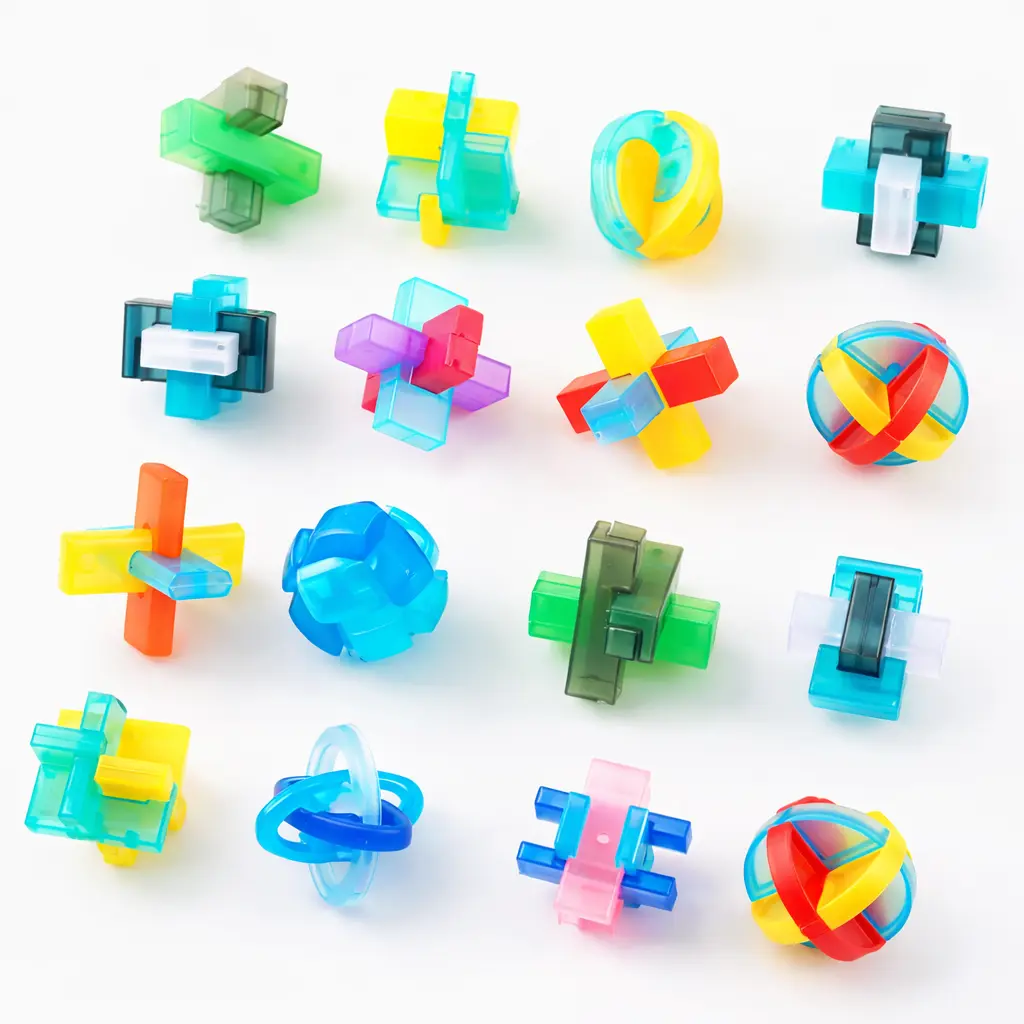
The 12 Piece Crystal Luban Lock Set is the clearest theme-fit in this category: it presents disassembly as the puzzle, with the solved state being a small object the recipient can pick up and re-solve on a coffee break. For a developer who already solves logic puzzles in code form, the same problem translated into a hand-held object is a more direct match than a cartoon-shaped build.
Robot and machine themes
Robot and machine-shaped crystal puzzles tap the developer-adjacent audience that follows robotics demos, watches mechanism videos, or collects model kits. Translucent plastic suits a robot especially well because the internal “skeleton” becomes part of the visual story. Skip this if the recipient has stated they find humanoid figures distracting — a small-but-valid taste filter that the buyer’s instinct usually handles correctly.
Animal and cute-character themes
This is the category most likely to miss with a software developer. Cute animal crystal puzzles — pandas, bears, cartoon characters — are designed for a different shelf, and most developers will assemble one politely, smile, and quietly retire it to a drawer. The shape does not read as desk art the way a planet or geometric form does, and the assembly challenge is usually the lowest in this category. Don’t buy a cartoon animal if the recipient has no documented interest in plushies, kawaii collectibles, or specific character IP. A small number of developers do collect this material; for the rest, this is the wrong aisle.
Branded IP and licensed characters
Licensed IP — sci-fi vehicles, superhero logos, franchise ships — is the most variable category. A Death Star or Saturn silhouette outperforms a generic cartoon character on a tech-professional desk because the outline is something the recipient recognizes before they read the box. The same logic works for any fandom the recipient has already displayed at home: if their monitor shelf holds a spaceship model, a crystal version in the same silhouette will land. Skip this if the buyer’s only knowledge of the recipient is a generic “they like sci-fi” — fandom specificity is the filter, and guessing wrong produces the same polite-smile-and-shelve outcome as a cartoon animal.
Architectural and structural themes
Architectural crystal puzzles — buildings, bridges, monuments — appeal to the LEGO-adjacent builder who enjoys seeing a structure resolve from flat pieces. This category is a safe match when the recipient is known to own construction sets, model kits, or architectural books. The challenge level tends to be higher because structural stability matters, which suits a tinkerer willing to spend 45–60 minutes at the desk. For readers cross-shopping build kits, this side-by-side of how wooden mechanical puzzles compare to LEGO Technic builds maps the same decision onto a different material.
A display-priority alternative
Some crystal puzzles trade theme fit for pure display value. A floral or ornamental form sits in this lane — the translucent material catches light beautifully, and the finished shape works as desk art, but the silhouette is not developer-specific. For a developer who already curates a tidy desk display and simply wants a translucent object that reads as a display piece, the theme-fit map is the wrong filter to apply.
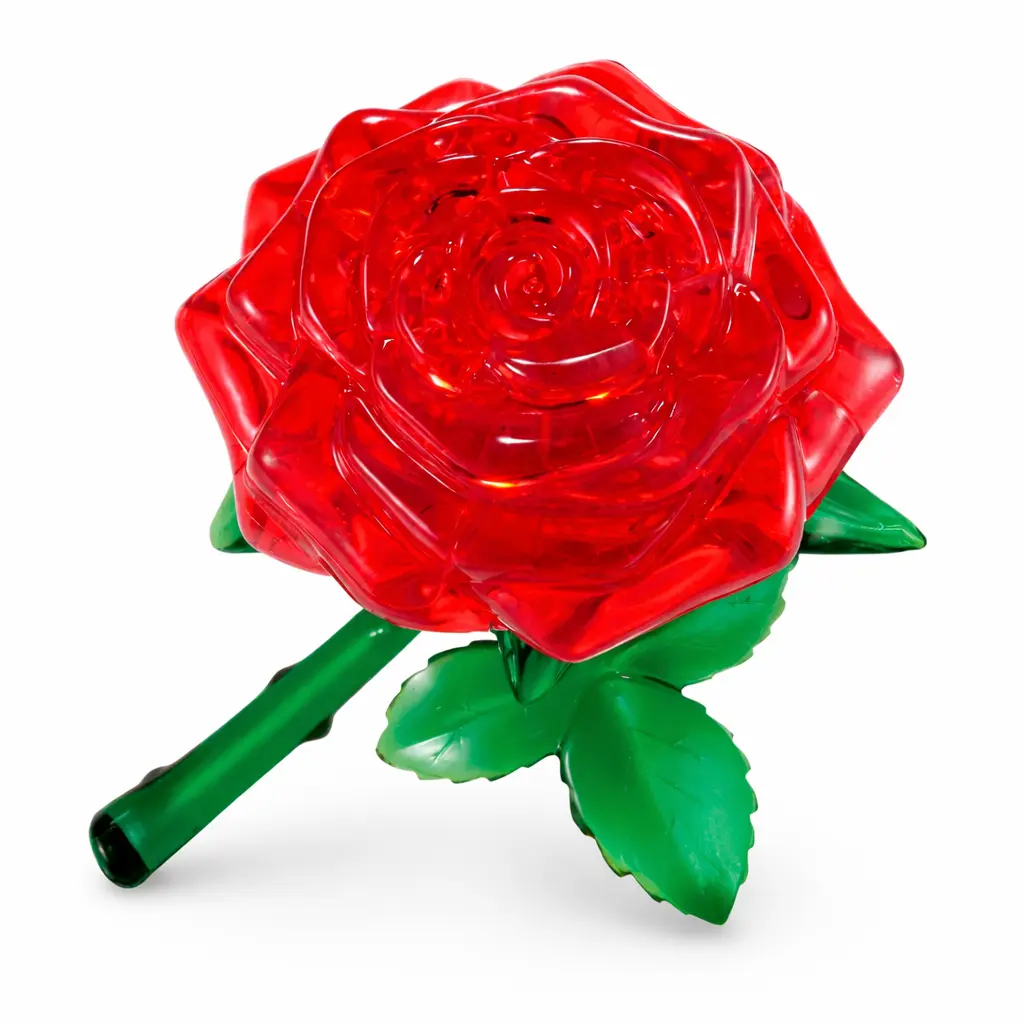
3D Crystal Rose Puzzle — $19.99
The 3D Crystal Rose Puzzle fits this narrower use case: the form is decorative rather than technical, but the translucent finish and small desk footprint match what an aesthetic-minded recipient is shopping for.
The theme-fit map is the buying filter most catalogs skip. Before checking piece count, LED base compatibility, or price, ask whether the finished silhouette is something the recipient would display if it weren’t a puzzle at all. If the answer is no, the gift fails the first test.
03. Quick Decision Table: 6 Puzzle Types Mapped to the Three Filters
Use this table to shortlist by theme before checking piece count, so the buyer can act on theme-fit first and verify mechanics second. Theme fit is the filter that decides whether a developer will leave the finished puzzle on the desk or quietly shelve it; piece count and LED base compatible status only refine that initial decision.
| Theme | Best For | Why It Works | What to Check |
|---|---|---|---|
| Galaxy / Space | Developers with a side interest in space, sci-fi, or astronomy | A recognizable silhouette — Saturn, Death Star, rocket — reads as ‘tech culture’ rather than ‘kids’ gift’; the round, glowing form pairs naturally with an LED base | Whether the LED base is included or sold separately; finished dimensions against the recipient’s monitor shelf |
| Geometric / Math | Programmers drawn to clean forms, symmetry, or Apple-aesthetic minimalism | A pure geometric shape (sphere, polyhedron, fruit form) doubles as a display piece; the translucent finish signals tinkerer taste without words | Piece count vs. the recipient’s patience; the 3D Crystal Apple Puzzle is a clean minimal-form example — see also the crystal puzzles organized by decor style for display value list |
| Robot / Machine | Hobbyist builders, mechanical keyboard fans, or anyone who likes visible engineering | The ‘how it works’ aesthetic matches a developer’s bias over ‘how it looks’; snap-fit mechanical kits feel like a tinkerer’s reward | Whether assembly uses glue or snap-fit; snap-fit is more gift-friendly for an adult without a workshop |
| Animal / Cute | Skip this category unless the recipient has a documented soft spot | Cartoon animals almost always register as ‘kids’ gift’ on a shared or home office desk; the silhouette is a stronger signal than the box copy | If the recipient has specifically asked for a panda, cat, or rabbit, use it; otherwise default to geometric or robot |
| Branded IP | Developers who openly display fandom (Star Wars, Marvel, gaming) | A licensed character signals shared cultural literacy and reads as intentional desk decor rather than a random impulse buy | Confirm the IP is one the recipient actually watches or plays; avoid ‘cute’ mascots that drift back into kids’ territory |
| Architectural | Engineers, architects, or developers who lean toward physical-world systems | Architectural forms (clock, building, vehicle) signal ‘maker’ identity and survive the office-desk filter even without an LED base | Assembled dimensions; these kits often need 2–4 hours of focused assembly and a clear table — not a 30-minute coffee break |
Read the table top to bottom as a priority order: galaxy, geometric, and robot are the three theme categories most likely to land with a software developer; architectural is a strong fourth when the recipient leans maker; branded IP is conditional on known fandom; animal/cute is the default skip. That priority order is the developer-adjacent filter the broader catalogs skip — the same licensed and animal options, re-ranked by which silhouette a programmer is more likely to leave on a shared desk.
Two refinements sit on top of theme fit. First, piece count: a 30–50 piece puzzle usually lands in 30–60 minutes for an adult on a cluttered desk, which is the realistic ceiling for a busy developer. Anything above 100 pieces crosses into ‘weekend project’ territory and changes the gift’s character from desk display to shelf art. Second, the LED base: most translucent 3D crystal puzzles are sold separately from the light base, and the finished puzzle looks visibly incomplete without one — a common ‘I didn’t know’ mistake. Check the product page for whether a base is included or listed as an add-on before checkout.
For most non-developer buyers, the simplest path is to pick the table row that matches what you already know about the recipient, then use the piece count and LED base notes to settle the exact choice.
04. Piece-Count Realism and the LED-Base Gotcha
Piece count is the second filter because it controls whether the recipient finishes the puzzle in one sitting. For a software developer with a cluttered dual-monitor desk, a 30–50 piece translucent puzzle typically lands in 30–60 minutes of focused assembly — the realistic ceiling before context-switching wins. Anything above 100 pieces crosses into weekend-project territory and changes the gift from a desk display to shelf art.
A 3D crystal puzzle (the clear acrylic, bevel-edged category) is a mechanical puzzle solved by snapping precision-cut pieces into a fixed 3D form; a three-dimensional jigsaw puzzle is a separate lineage built from flat die-cut pieces that curve into a sphere or figurine with no single standardized piece count. Both produce a display piece, but the crystal puzzle line is the one that reads as desk-worthy rather than toy-shelf, which is why the theme-fit filter from the earlier sections leans hardest into geometric, galaxy, and fruit-and-flower shapes in that range.
Translucent material is the reason piece count and light matter. Without a backlight, a finished crystal puzzle reads as a glossy shape — attractive, but visibly incomplete. The LED base is what sells the “office desk artifact” impression: the same 3D apple or rose that looks like a paperweight in daylight becomes a glowing object at 6 p.m. when the monitor light drops. Most translucent 3D crystal puzzles, including the Bepuzzled-style designs, ship without the light base; it is sold separately, and the gift looks like a missed step without it. This is the single most common “I didn’t know” buying mistake in the category, and the broader catalog pages do not flag it.
A practical check before checkout: open the product page and search for “LED,” “light base,” or “display stand” in the description. If the puzzle is listed under a “Puzzle Toys” category and the base is named as a separate SKU, treat the base as part of the gift total. If the listing already includes a base or shows the assembled puzzle on a lit stand in the main photo, no add-on is needed. The light trick that saves your sanity during crystal puzzle assembly walks through how a lit workspace changes the assembly experience itself, not just the final display.
Piece count also reframes who the gift is for. A tinkerer who already builds mechanical keyboards or mods firmware on weekends will treat a 40-piece crystal apple as a 20-minute warm-up; a developer who hasn’t held a non-screen puzzle since childhood needs the 30-piece end of the range, ideally with one or two large stable pieces that hold the structure early. Skipping this calibration is how an intended desk display becomes a half-built ornament on a shelf for six months.
For a software developer specifically, the practical next action is: pick a translucent design from the theme-fit shortlist (geometric, galaxy, robot, or a single-fruit shape), confirm the piece count sits between roughly 30 and 60, and resolve the LED base in the same order. The piece count keeps the assembly honest, and the light base is what turns the finished object into something the recipient will actually leave on the desk.
Frequently Asked Questions
The shortlist works when piece count and LED base are resolved before checkout. These are the practical questions buyers ask once they’ve narrowed to a translucent design — the checks that decide whether the finished object stays on a developer’s desk or ends up in a drawer.
Are 3D crystal puzzles too childish for a software developer?
It depends on the shape, not the material. A translucent geometric form, galaxy design, or single recognizable object (a planet, an apple) reads as desk decor the way a sculptural paperweight does. A cartoon character in the same plastic line reads as a kids’ toy regardless of piece count. The piece count and LED base do the heavy lifting for the “adult” framing — a 40-piece build on a lit base is a different object than the same shape bought off-peg. Skip the cartoon animal line if you don’t know the recipient’s taste; the category carries a default-association tax that geometric and galaxy designs don’t.
How hard are 3D crystal puzzles to assemble for an adult?
A 30–60 piece crystal puzzle is a 30–60 minute build for an adult with a clear workspace. Pieces click together without glue, but the joints are exact, so a tilted desk slows things down. If the recipient is a modder or tinkerer, a 100+ piece design (galaxy globes, large architectural shapes) becomes a weekend project, not an evening one. Start with a 30–40 piece crystal apple or rose if you have no reference for their patience.
Do I need to buy a separate LED light base for a 3D crystal puzzle?
Usually yes, and this is the most common “I didn’t know” buying mistake. Most translucent crystal puzzles ship without a light base — the box contains the pieces and nothing else. The base is a separate add-on, and the finished puzzle looks flat without it. Confirm the listing states the base is included, or budget for one. The base is what turns a finished plastic object into something the recipient actually leaves on the desk.
Which 3D crystal puzzle designs look best on an office desk?
Low-footprint, single-subject designs display the best. A 4–6 inch crystal apple, galaxy globe, geometric cube, or stylized planet fits on a monitor stand or shelf without crowding a keyboard. Skip the tall architectural builds if the recipient has dual monitors or a small footprint — they’ll displace the mug or headphone stand, and the design stops reading as a sculpture and starts reading as clutter.
How many pieces should I pick for someone who’s never done one?
30 to 40 is the honest starting range. The build finishes in one sitting, the structure forgives a rotated joint, and the recipient gets a finished display object without a 90-minute project. A 60+ piece count is the right call only for a builder type (mechanical keyboards, LEGO, modding) — otherwise the box sits unopened because the assembly reads as a chore, not a reward.
Are 3D crystal puzzles better gifts than LEGO sets for developers?
They serve different jobs. A crystal puzzle delivers a translucent, light-catching display object for a minimal desk. A LEGO set delivers a longer build and a visible fandom statement (architecture, Star Wars, botanical). For a developer who values desk minimalism, the crystal puzzle is the lower-footprint choice; for one who already collects LEGO, the set is the lower-risk one. The decision is really about which signal the recipient wants on the desk.
Can a 3D crystal puzzle be disassembled and reassembled, or is it one-time?
The translucent plastic puzzles in the Bepuzzled-style lines are designed for one assembly and one display. Joints are tight but not locked, so careful disassembly is possible, but repeated builds loosen the click-fit and the structure starts to wobble. Treat it as a single-build display piece, not a repeatable hand puzzle. For a repeatable hand challenge, the metal disentanglement and lock puzzles in the same product family (like the 12 Piece Crystal Luban Lock Set) are the better gift.
What is the difference between a 3D crystal puzzle and a 3D jigsaw puzzle?
A 3D jigsaw uses flat die-cut pieces that snap into a 3D form, usually an architectural model, vehicle, or globe. A 3D crystal puzzle uses injection-molded translucent plastic pieces that click together on a hidden internal frame. The jigsaw asks for matching edges and orientation; the crystal puzzle asks for following a click-fit sequence around a skeleton. For a developer who likes sequential logic, the crystal puzzle fits; for one who prefers spatial matching, the 3D jigsaw fits. The desk end-product looks similar, but the assembly mechanic — and the patience each one rewards — is different.
The next step
Pick the translucent design that matches the recipient’s sub-interest (geometric for the math-leaning, galaxy for the space-leaning, single-fruit for the minimalist), confirm the piece count sits in the 30–60 range, and resolve the LED base in the same order so the gift lands complete. The 3D Crystal Apple Puzzle is the starting point for a minimalist, tinkerer-calibrated build — check the product page for current price and whether the light base is included or sold separately before checkout.
Where to Start
If the recipient and occasion checks above match, start with 3D Crystal Apple Puzzle. Check the current product page for the specifications that matter to your choice.
Sources and verification
- Product details and current specifications: Tea-Sip product page
Last updated: August 27, 2026