Quick Answer
Yes, a 3D wooden puzzle is a good gift for an autistic adult when it offers sensory fit, difficulty match, and a predictable build. The top pick is the 12 Piece Crystal Luban Lock Set: 12 snap-fit pieces, satisfying click, and repeat-play value. Skip it for fine-motor-averse recipients. The same selection logic applies to interlocking mechanical puzzles in this gift category.
Three checks run through this guide: sensory fit, difficulty match, and build experience. Each maps to a design choice you can verify on the product page or by handling the puzzle in person.
| Check | What to verify | Why it matters |
|---|---|---|
| Sensory fit | Piece finish, surface texture, click sound, absence of strong smells | Avoids overstimulation and tactile aversion |
| Difficulty match | Piece count, step count, whether the build is repeatable | Calibrates between a 15-minute calm task and a multi-day project |
| Build experience | Snap-fit vs. glue, reusability, display value, packaging noise | Removes common sources of frustration |
The starting point for most gifting situations is a compact, repeatable mechanical puzzle with a defined solve path. The 12 Piece Crystal Luban Lock Set fits that brief: 12 interlocking pieces, satisfying click feedback, and an endpoint that resets and rebuilds as often as the recipient wants.
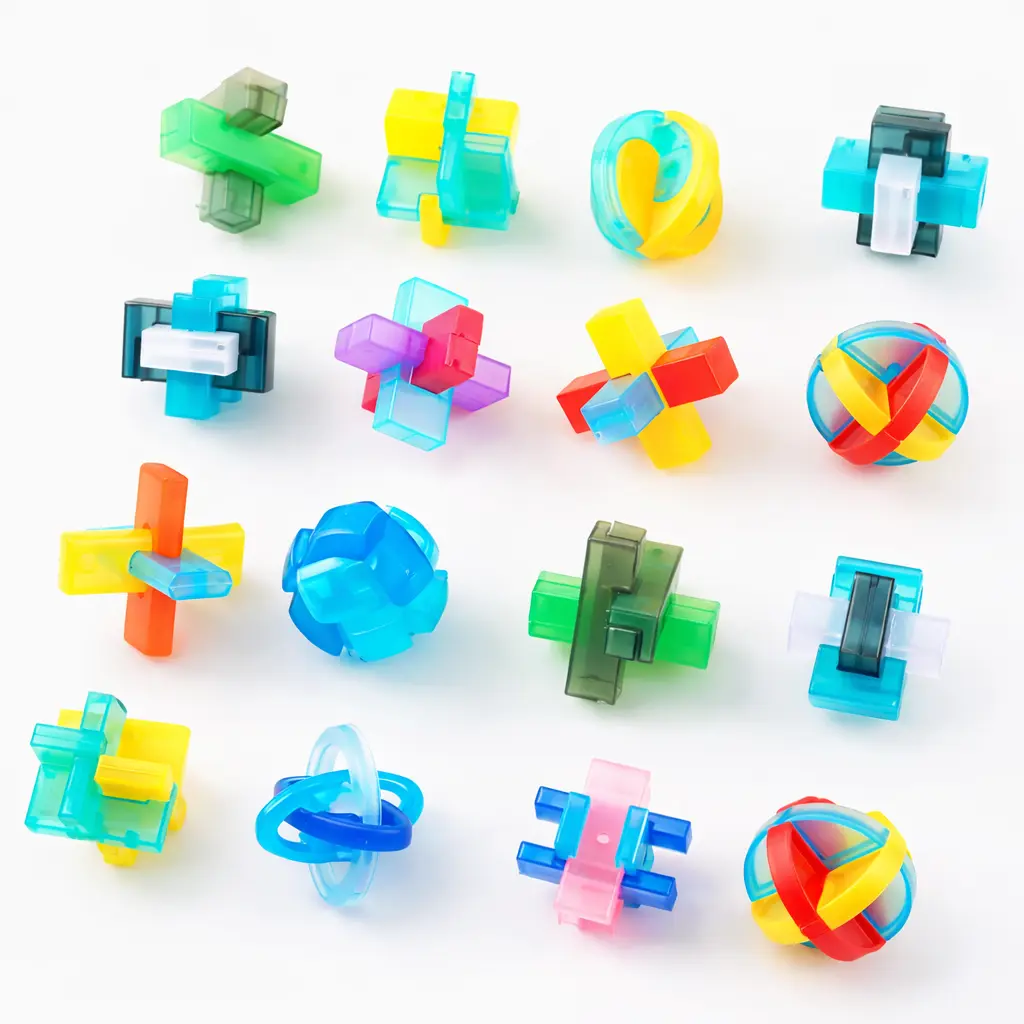
Quick filter before you commit:
- Solo, screen-free focus → a mechanical lock or brain-teaser set is a safe pick.
- Longer project with display value → wooden model kits fit better.
- Strong smell or texture sensitivities → confirm the finish is sealed, not raw, and check the return policy.
01. Why a 3D Wooden Puzzle Can Fit an Autistic Adult’s Sensory and Executive-Function Profile
A 3D wooden puzzle fits many autistic adults because the mechanics of the activity align with how their attention and sensory systems tend to work. A mechanical puzzle, where the solution involves moving or manipulating a physical object (Wikipedia: Mechanical puzzle), gives the hands a structured job and the brain a defined endpoint. The activity asks for no social performance, no time pressure, and no screen.
The filter above named the most common reasons this gift gets returned: wrong difficulty, wrong sensory profile, wrong format. Here is why those filters hold up.
The sensory case: tactile feedback without overstimulation
A wooden puzzle, or a wooden-style mechanical lock set, gives the hands a clear, repeatable surface. A fidget toy, in the broader sense, is an object used to support focus and self-regulation through tactile engagement (Wikipedia: Fidget toy). A 3D wooden puzzle sits in a similar role, with a defined goal attached: not just the motion, but a finished object at the end.
The sensory checks are concrete. A sealed finish (lacquered, oiled, or coated) reads as smooth and predictable to the touch. Raw or splintery edges can interrupt focus with a single rough pass. A confident snap-fit click is satisfying. A loose wobble after assembly is not. Before purchase, read the material description for “laser-cut” or “pre-finished” language, and skip sets that describe DIY sanding unless the recipient enjoys that step.
Piece size matters too. Adult hands and fine motor coordination do better with pieces large enough to find on a table and chunky enough to grip. Very small interlocking parts can pull the activity away from calming focus and into frustration, especially when the recipient processes tactile input intensely. This is one reason a 12- or 18-piece mechanical lock set often suits an autistic adult better than a 200-piece miniature with hairline tolerances.
The executive-function case: predictable steps, visible progress, no social performance
Executive function covers the mental skills involved in planning, starting, and finishing a task. A 3D wooden puzzle, or a mechanical lock challenge, lowers several of the usual demands. The steps are visible: each piece either fits or it does not. Progress is measurable: the shape in your hands grows toward a recognizable form. The endpoint is defined: the model is complete, or the lock releases.
There is no timer, no audience, and no performance of competence for anyone watching. For an adult who finds unstructured time heavy, or who experiences initiation friction on open-ended tasks, a bounded project with a clear finish line is a useful, low-stakes, hyperfocus-friendly format. This is also why many autistic adults gravitate toward jigsaw puzzles, model kits, and mechanical disentanglement puzzles as solo screen-free downtime rituals.
The “is this condescending?” objection
This is a fair question and worth addressing directly. The category is not child-coded. Many of the most popular adult puzzles, including mechanical lock sets, brain-teaser cubes, and wooden model kits, are designed for grown-up hands, budgets, and patience levels. The 12 Piece Crystal Luban Lock Set, for instance, is built as a graded challenge: each lock is a separate problem, the pieces are adult-sized, and the finished set sits on a shelf as a quiet display of skill rather than a toy chest item.
For a recipient who enjoys complex models, the gift reads as respect for their interest. For a recipient who finds complex models overwhelming, a simpler 15-to-30-minute brain-teaser reads as respect for their energy. The condescending version of this gift ignores the recipient’s actual interests. The respectful version matches the difficulty, theme, and format to who they are.
Stimming-adjacent repetition
A quieter benefit is the rhythmic motor engagement of assembly. Many autistic adults describe repetitive hand activity as regulating in a way that conversation or screen time is not. A 3D wooden puzzle offers this without any social context. The hands move through the same grip, the same rotation, the same click. The activity does not require explaining, justifying, or pausing to talk about what you are doing.
This is also why repeatable puzzles work well. A mechanical lock can be taken apart and reassembled, again and again, without the experience wearing out. The reward is in the motion, not in novelty.
The next section turns this reasoning into a concrete feature checklist: which design details to look for, which to avoid, and how to read a product page before you click buy. For a wider survey of puzzle toys for autistic adults with sensory needs, a separate review applies the same criteria to a broader shortlist.
02. Which Design Features Support Sensory Needs and Which to Avoid
Prioritize laser-cut plywood with sanded edges, calibrated snap-fit tolerance, and a matte or natural finish. These features produce predictable tactile feedback, low odour, and an assembly that does not break under frustration. Glossy varnish, strong-smelling glue, and undersized tabs are the three design choices that turn a calming gift into a stressful one.
The checklist below maps five observable design details to a sensory outcome. A non-autistic shopper can run through it before clicking buy.
Piece thickness and edge finish. A plywood thickness of roughly 3 mm is the common standard for adult wooden puzzles and tends to survive repeated handling. Edges should be cleanly sanded with no visible laser char. Rough edges are not just uncomfortable; they read as poor quality and can discourage the recipient from picking the puzzle up again. Before buying, look for close-up photos of the edges, or ask the seller if the photos only show the finished model.
Snap-fit versus glue-required. Snap-fit assembly is the lower-friction option. The pieces click together without adhesive, so there is no chemical smell, no waiting for parts to set, and no failure point if the builder pauses mid-project. Glue-required kits are not categorically bad, but they add an extra step that can become a sticking point for a recipient who dislikes strong odours or who has limited patience for prep. For a first-time gift in this category, snap-fit is the safer default.
Repeatability. A mechanical lock or brain teaser that disassembles cleanly can be solved many times. A decorative model built once and placed on a shelf is a different kind of gift. Both are valid. The question is which one the recipient would rather have. For a stimming-adjacent use case, a repeatable puzzle is the better fit. For someone who wants a display object, a one-time build is fine.
Audible click quality. The sound a piece makes when it seats is part of the sensory experience. A firm, clear click is satisfying. A floppy or rattly click feels cheap and can undermine the calming quality of the build. This is hard to judge from a product page, which is one reason a multi-piece brain-teaser set is useful; the recipient can test one puzzle, see if the click feels right, and move on to another.
Surface finish. Matte or natural wood absorbs light and feels warmer to the touch. High-gloss varnish can feel chemically slick, reflect overhead lighting in a way some autistic adults find harsh, and trap fingerprints. Where the product page mentions a finish, matte or unfinished is usually the sensory-friendly choice.
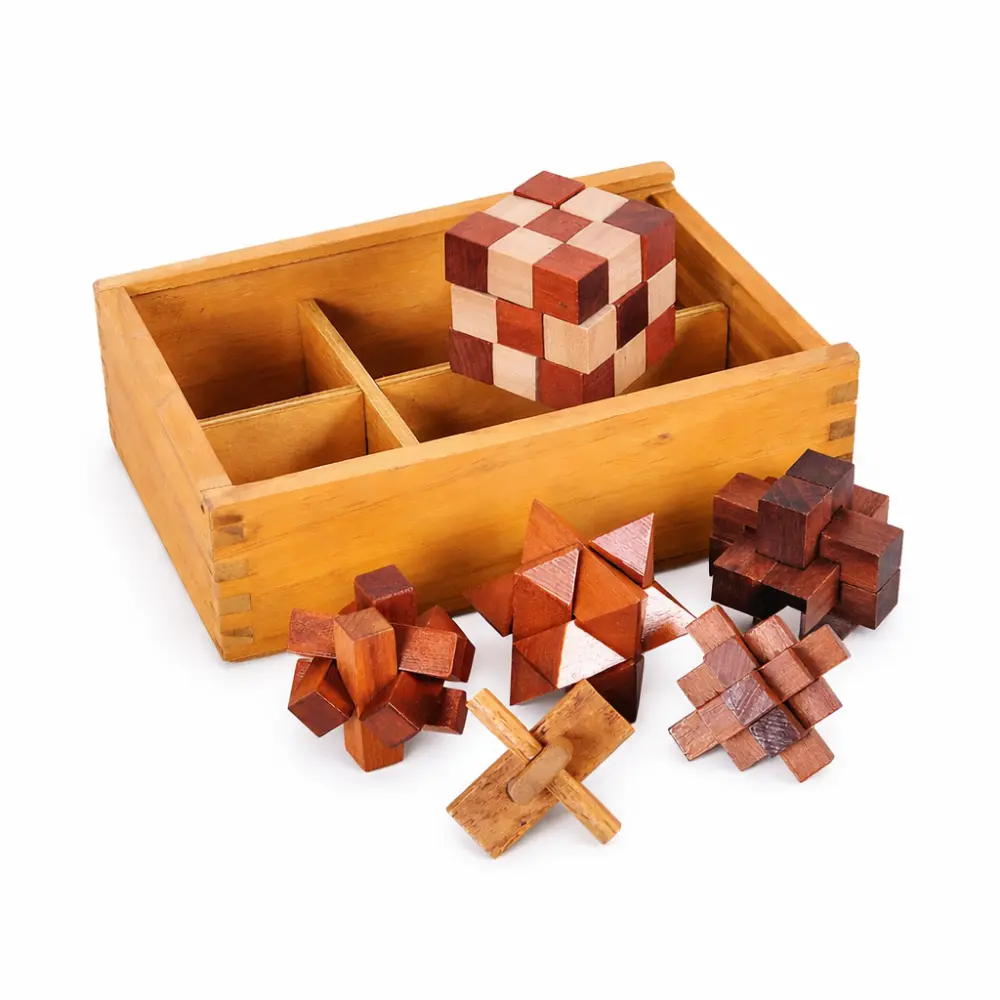
What to avoid, and why:
- Tiny parts under roughly 1.5 cm. Hard to manipulate, easy to lose, and a choking concern for any adult who mouths objects.
- Fragile tabs thinner than 2 mm. They snap under frustration and turn a solvable puzzle into a broken one.
- Loud plastic packaging. Difficult to open quietly and immediately sets the wrong tone before the puzzle is even touched.
- Required glue with a strong solvent smell. Adds an avoidable sensory barrier and a step that can stall the build.
A practical next step: open the product page of any candidate puzzle and look for the five checklist items above. If the photos do not show edges, thickness, or finish, ask the seller. A product page that cannot answer these questions is usually a product that does not pass them either.
The next section moves from features to the recipient: how to match difficulty and theme to the person who will actually receive the gift.
03. How to Match Difficulty and Theme to the Recipient
Once the feature checklist is passed, the next decision is difficulty and theme. Match piece count and build time to the recipient’s current tolerance: beginner builds finish in 15 to 30 minutes for a calming task, while advanced builds invite 2 to 8 hour hyperfocus sessions. Pick the build that fits how the recipient actually spends a free evening, not the build that looks most ambitious on the shelf.
Two difficulty profiles, two gift paths
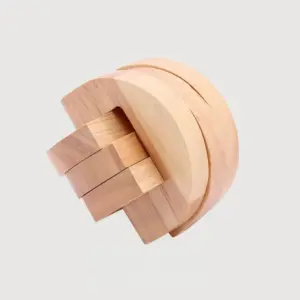
The first profile is the calming-task builder. The recipient wants a low-stakes, screen-free reset between work blocks, or a quiet activity for a noisy household evening. For this profile, a compact interlocking puzzle with roughly 12 to 18 pieces and a forgiving snap tolerance is the right match. A single Luban Sphere Puzzle, for example, lands in this range: small enough to finish in a sitting, tactile enough to repeat, and visually quiet on a desk. The set-and-solve cycle becomes a brief ritual rather than a project.
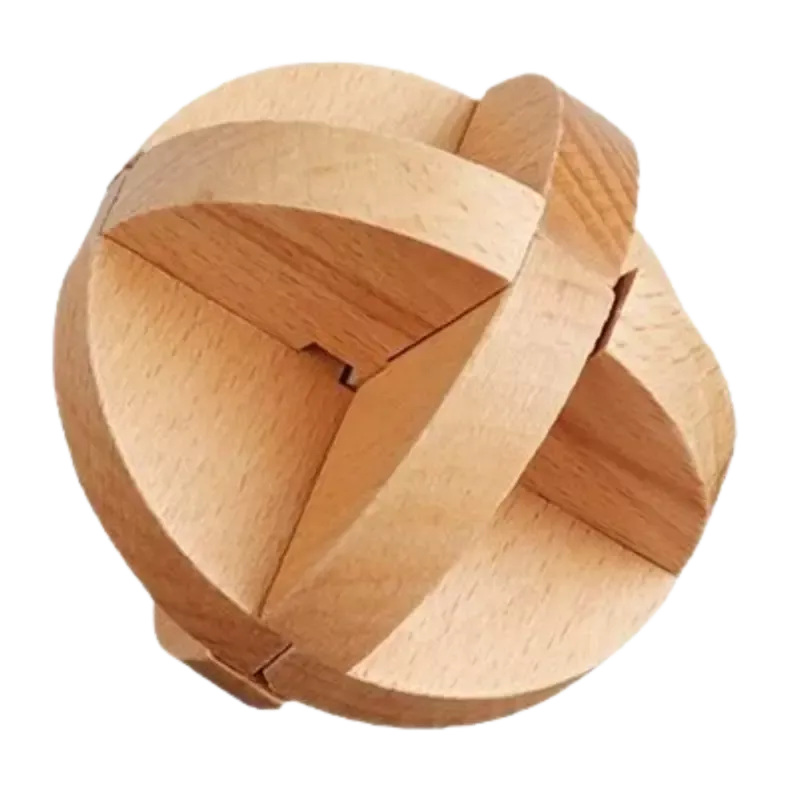
Luban Sphere Puzzle — $16.99
The second profile is the hyperfocus builder. The recipient regularly settles into a long, uninterrupted session and enjoys watching a model take shape over days. For this profile, a build with more pieces, a longer sequence of sub-assemblies, and a defined endpoint suits the moment. A multi-piece interlocking set such as the 54‑T Cube Puzzle is the right shape: a long arc of progress, a visible final form, and a finished object worth keeping on a shelf or desk.
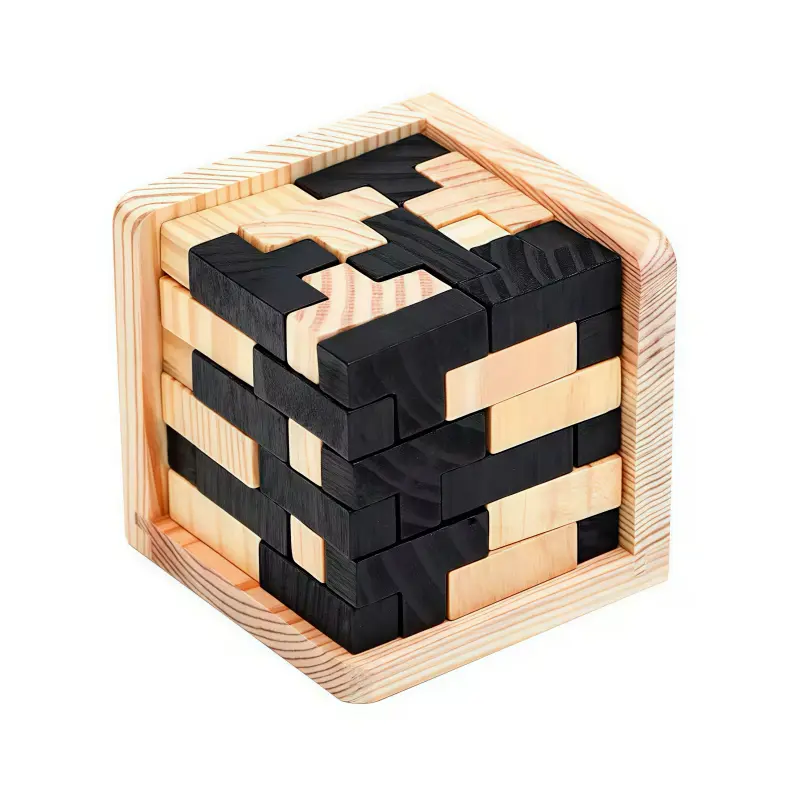
54‑T Cube Puzzle — $18.99
Theme matters as much as difficulty
Difficulty gets the build started; theme is what keeps it going. A recipient with a strong special interest in marine life, locomotives, cathedral architecture, or clockwork will engage with a matching model far more deeply than with a generic shape. A theme that overlaps an existing interest turns the build from a task into a deepening of an interest the recipient already values. A theme that misses the interest turns the same build into background noise.
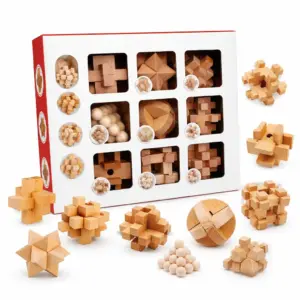
When the recipient’s interests are not well known, abstract geometric interlocking puzzles are the safer default. They are theme-neutral, they display cleanly on a desk, and they reward repeat solving rather than one-time assembly. This is where a multi-format set earns its price: variety lets the recipient self-select the next build without a second purchase.
The frustration risk, and how to reduce it
The most common failure mode is a build that stalls halfway because a tab breaks or a step becomes unclear. Two checks reduce this risk. First, choose a build with a forgiving tab tolerance, where pieces seat with a positive click rather than requiring force. Second, choose a finished object that is worth displaying even half-assembled, so a paused project still has a place on a shelf. A clock kit, a treasure box, and a mechanical model all satisfy this second check. A flat geometric form does not.
For readers who want a single gift that covers both profiles, the highest-leverage choice is a coordinated set that pairs a short calming puzzle with a longer display piece, so the recipient can pick the build that matches the day. The 12 Piece Crystal Luban Lock Set sits in that range: compact, varied, and themed around a recognizable mechanical tradition rather than a children’s toy. It is the top recommendation for a gift that needs to work as both a focus ritual and a kept object.
One practical next step: write down the recipient’s current free-evening habit in one sentence, then choose the profile it matches. Use the habit, not the wish, to set the difficulty. For a ranked survey of the best 3D wooden puzzles for adults in 2025, a separate roundup applies the same sensory and difficulty criteria to a wider shortlist.
04. How to Read a Product Listing When It Has No Sensory or Design Language
Once difficulty is set, the next move is to read the listing well enough to confirm the build matches the decision. Most 3D wooden puzzle listings advertise piece count and theme, not sensory details. Translate the marketing language into a sensory check before you buy: every descriptor should answer a question about touch, sound, force, or finish. If a listing leaves two or more of those questions unanswered, the listing is a starting point, not a decision.
The table below maps the phrases you are most likely to see in a product page to what they usually mean for a sensory-aware buyer. The right-hand column is where the real decision happens: each row ends with a check you can run on the photo, the description, or a direct question to the seller.
| Listing Says | It Usually Means | Sensory-Verdict | What to Check |
|---|---|---|---|
| Premium birch plywood | Smoother raw material, less grain raise | Likely smoother edges, but not guaranteed | Zoom into photos for sanding marks; ask whether edges are hand-sanded or laser-cut only |
| No glue needed | Snap-fit tabs or slot joinery | Calibrated tolerance, but tolerance varies by batch | Ask whether tabs seat with a positive click or require firm thumb pressure |
| Real wood | Natural material, not MDF or plastic | Variable texture and smell batch to batch | Check for visible grain, knots, and whether the finish is sealed or raw |
| 200+ pieces | Long build, often multi-session | Demands sustained executive function | Look for an estimated build time, not just a piece count |
| Recommended age 14+ | Adult-coded complexity and part size | Suitable for adult hands and attention | Confirm the smallest part is above any pica-risk threshold if relevant |
| DIY assembly | Hands-on, tool-light build | Tactile engagement, low setup overhead | Check the tool list; a single included tool is gentler than a hobby knife |
| Decorative or display piece | Finished object meant for a shelf | Worth keeping even if the build is paused | Confirm the build is stable standing, both mid-assembly and at the end |
| Eco-friendly finish | Water-based or low-VOC sealant | Lower smell load, fewer fumes | Ask the seller directly whether the smell is strong out of the package |
Treat any phrase that lacks a matching sensory answer as a flag, not a dealbreaker. A listing that says “intricate” without explaining how the pieces join is asking you to trust the brand on tab tolerance. A listing that says “no glue, tab-and-slot, calibrated to 0.3 mm” is giving you a check you can verify against the finished photos or a short seller reply.
Two final checks before checkout. First, look for a photo of the finished object at a useful size rather than a clean render. Renders hide tab fit, edge finish, and grain variation that a real photo would expose. Second, look for a customer question or review that describes the actual build rather than the gifting occasion. Comments about how the snap-fit feels, how the pieces smell, or how long the build took are far more useful than comments about how the box looked under wrapping paper.
If the listing cannot answer three or more rows in the table without a guess, look at a different product in the same cluster. Wooden Luban lock sets tend to be described in mechanical terms already, so the table checks are easier to run on them than on themed model kits that lean on story-led marketing.
One practical next step: open the 12 Piece Crystal Luban Lock Set product page and run it through the table before you close the tab. If three rows check out, the buy is a sensory-informed decision rather than a vibes-based one.
05. Real Selection Risks Most 3D Wooden Puzzle Listings Do Not Mention
Now that the product page has passed your sensory and difficulty checks, four practical risks can still derail the gift on opening day. They are choking-sized parts, strong chemical smells from glue or varnish, fragile tabs that snap under frustration, and noisy clamshell packaging. Each one has a short pre-purchase or pre-wrapping check a non-autistic buyer can run without guessing.
Risk 1: Choking-sized parts. If the recipient mouths objects, has pica, or lives in a shared setting where small parts are a concern, compare the smallest piece against a fist-sized reference before checkout. Look for kits with larger interlocking pieces rather than many small parts, and verify by looking at the product photos with a ruler reference or asking the seller for a listed piece dimension. If the listing does not give a measurement, choose a different product in the same cluster where the size is stated.
Risk 2: Strong chemical smells. Wood itself has a mild scent. Glue residue, varnish, or laser-cut smoke smell is a different matter, and some autistic adults are highly sensitive to chemical off-gassing. An open-box smell test is the cleanest check; if buying online, look for reviews that mention smell rather than only the build quality. If there is any doubt, air the kit out in a separate room for 24 to 48 hours before wrapping, and store it in a paper bag rather than sealed plastic.
Risk 3: Fragile tabs that snap under frustration. A tab that is too thin or cut too deep will break the first time a frustrated grip twists it. Look for tab-thickness photos in customer reviews, or ask the seller for a photo of a piece held sideways. Comments that describe the snap-fit feel are more useful than comments about how the box looked. A wooden Luban lock with thicker pieces tends to tolerate a firm grip better than thin laser-cut plywood.
Risk 4: Noisy clamshell packaging. Vacuum-formed plastic shells snap loudly when pried open, and that single sound can spike anxiety for a sound-sensitive adult on what is supposed to be a calm unwrapping. Plan to repackage the puzzle into a soft cloth drawstring bag or a simple cardboard box with tissue paper before wrapping. It also signals that the gift was chosen with the recipient in mind rather than handed over in factory packaging.
One practical next step: run these four checks against the 12 Piece Crystal Luban Lock Set listing before you finalize the order. If one check fails or cannot be verified, the same cluster offers several alternatives with similar mechanics and clearer sensory language.
Frequently Asked Questions
The packaging check above is one detail, and the rest of the gift can still fail on sensory, difficulty, or safety grounds once the box is open. The questions below cover the practical worries that usually arrive at this point in a purchase. Each answer gives a verification step a non-autistic buyer can run before ordering.
Is a 3D wooden puzzle condescending to give an adult?
No, when the build is adult-coded. Many autistic adults collect mechanical puzzles the way others collect books. The clues are listed difficulty, material weight, and whether the finished object is display-worthy. The 12 Piece Crystal Luban Lock Set at $28.88 sits in the same gift category as a quality desk toy, not a nursery item. If the packaging shows cartoon graphics, look elsewhere.
What if the recipient gets frustrated and quits halfway?
A midway quit is not a failure of the gift. It is a signal to keep two things in mind. Choose a puzzle that can be set down and resumed without losing progress, which rules out glue-based kits. Avoid thin laser-cut tabs that snap under a firm grip; a thicker piece tolerates a frustrated hand better. A snap-fit Luban lock can be returned to its box and tried again on another day with no parts lost.
Do these puzzles have strong smells from glue or varnish?
Some do, some do not. Pre-assembled and snap-fit puzzles generally have a faint material scent that fades within a day or two. Glue-based kits carry a stronger adhesive smell. If the recipient is smell-sensitive, prefer a snap-fit design and read recent reviews for any mention of off-gassing on first opening. If the listing does not address it, the seller can usually confirm before shipping.
Are there choking or safety concerns for adults who mouth objects or have pica?
Yes, and this is one of the few absolute deal-breakers. A standard puzzle contains small pieces that can be mouthed or swallowed. The 12 Piece Crystal Luban Lock Set has individual interlocking components that are not appropriate for a recipient who mouths objects. A safer alternative is a single solid block such as the 6-in-1 Wooden Brain Teaser Set, which has no separable small parts. Confirm with the recipient’s support network before ordering.
Can the puzzle be taken apart and rebuilt, or is it one-time?
Most wooden and crystal Luban lock sets are designed for repeat play. The same pieces reassemble into the same shape many times, which is part of the appeal for an adult who enjoys routine and repetition. Glue-based wooden model kits are one-time builds. The product listing should state whether the puzzle is repeat-play or single-use. When the listing is silent, a quick message to the seller will confirm it.
What if the recipient experiences sensory overload partway through the build?
The fix is a format that lets the recipient stop and resume without losing place. Snap-fit locks and brain-teaser cubes satisfy this; glue-based kits do not, because paused glue joints do not survive a restart. Where smell is part of the overload, reboxing the kit in a paper bag and returning to it on another day is usually enough. Repetition across short sessions is often better for an overload-prone adult than a single long session.
How do I match difficulty to the recipient?
Published piece count is a rough proxy, not a guarantee. A 12-piece Luban lock can be harder than a 50-piece snap-fit kit because each piece must seat in a specific order. For a beginner who wants a 15 to 30 minute task, a low-piece-count Luban lock such as the 12 Piece Crystal Luban Lock Set at $28.88 is a sensible entry point. For a hyperfocus-capable builder, the 6-in-1 Wooden Brain Teaser Set at $38.88 offers longer sessions. When in doubt, ask the seller for the listed solve-time range before paying.
Where to Start
If the recipient and occasion checks above match, start with 12 Piece Crystal Luban Lock Set. Check the current product page for the specifications that matter to your choice.
Still comparing options? Compare the same decision criteria across the Tea-Sip product range rather than restarting the search from scratch.
Sources and verification
- Product details and current specifications: Tea-Sip product page
Last updated: August 24, 2026