Quick Answer: The Right Pick for Your Situation
For a father-in-law, pick a 3D wooden puzzle that matches a known interest — vehicles, clocks, music boxes, tools, or travel — at a complexity that feels like a project rather than homework, and built to display once finished. The right pick changes with his hobby and how close you are. Three situation-matched picks follow.
Match the pick to the situation:
- You know his hobby. A themed mechanical model — vintage motorcycle, cuckoo clock, music box, or retro vehicle. The finished object signals you thought about him, not that you grabbed a generic present.
- He’s not a tinkerer, or you only know him casually. A wooden brain teaser set he solves one piece at a time, at his desk, no glue, no multi-day build.
- The relationship is newer, or you’re unsure of his taste. A no-glue, moderate kit in a safe form — treasure box, classic lock, compact vehicle. Effort visible, risk low.
01. Match the Puzzle to an Interest You Already Know Him By
Pick a theme you can already name without guessing — a vehicle he drives, a workshop he keeps, a mantel clock he winds, a trip he still talks about. A themed kit reads as effort. A generic model reads as a guess. For a father-in-law you don’t know intimately, the safest path is a kit whose subject you could describe to a stranger in one sentence.
The five-theme interest-match checklist is the first filter. Each theme signals something different about the giver, and the in-law context makes that signal more important than the difficulty of the build.
Vehicles — cars, trucks, motorcycles, campervans. Cars are a safe bet. Almost every adult man has an opinion about at least one vehicle, and a finished wooden model of a vintage motorcycle or retro campervan is the kind of object that ends up on a shelf rather than in a drawer. A Makememento product listing describes a 60th-birthday retro campervan kit, an example of how vehicle themes get used to mark a milestone in a way that feels personal without being intimate. The signal: you remembered a story he told.
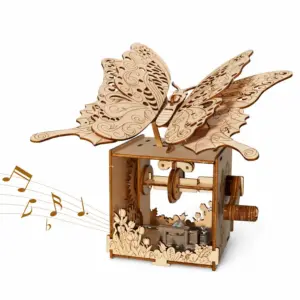
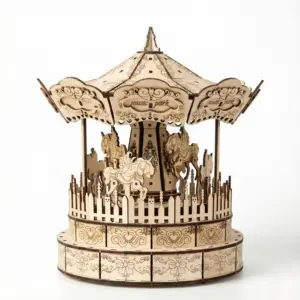
Music boxes and instruments. A working music box kit — a carousel, a violin, a cello — is a display piece first and a puzzle second. The build teaches the mechanism, the finished object plays a tune. The signal: you thought about where this will live in his house, not just whether he’ll enjoy the build.
Clocks. Cuckoo clocks and mechanical clock kits take longer to build and require patience with moving parts, but the finished piece is functional, not decorative. The signal: you trust him with a project, which is a more confident choice than a trinket.
Tools and mechanical motion. Gears, linkages, pistons, and winding mechanisms read as “tinkerer.” Pick this theme only if he’s the type who fixes things on weekends. For a casual recipient, the assembly can feel like work rather than leisure.
Travel and architecture. A landmark silhouette — a cathedral, a bridge, a lighthouse — is the most personal theme because it implies a shared reference. Skip this if you don’t actually share one. A generic Eiffel Tower reads as filler; a specific tower he once showed you a photo of reads as thought.
A separate category sits beside the five: brain teaser sets, where the theme is the challenge itself rather than a subject. These are the right answer when you can’t name an interest at all, because the kit supplies the variety.
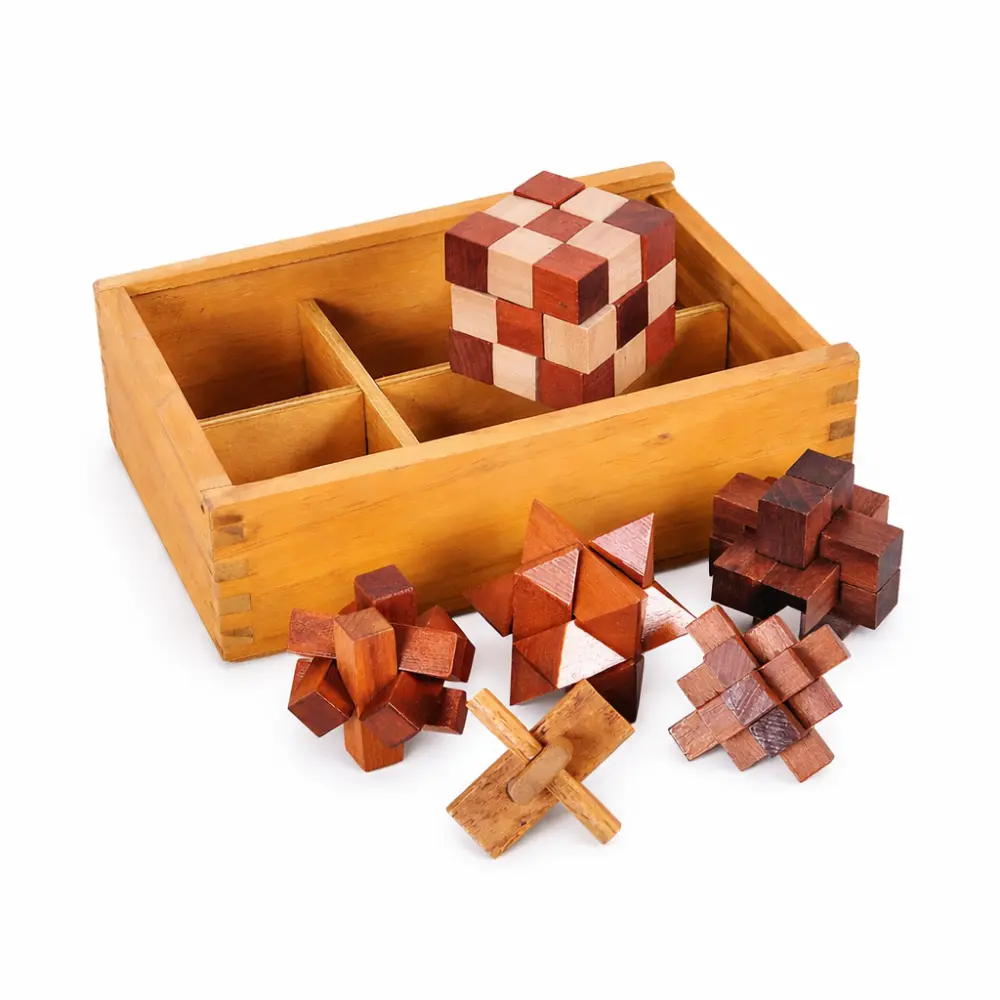
A 6-in-1 Wooden Brain Teaser Set gives him six different solves across one set, so the gift works even if his interest is “puzzles” rather than a specific subject. He finishes one, he reaches for the next. The compact size keeps it on a desk rather than buried in a closet.
Personalization as a quiet signal. A Creative Crafthouse product page describes a 3-puzzle gift set with custom engraving available, an example of how a kit becomes a keepsake when his name or a date is added. Don’t force personalization onto a new relationship — but in a closer one, an engraved wooden puzzle box or lock set moves the gift from “thoughtful” to “I planned this.” Verify whether the seller does the engraving in-house or through a third party, and check the lead time before committing.
Safe themes versus risky ones. Stay with vehicles, music, clocks, workshop tools, neutral architecture, and brain teasers. Avoid religious iconography, politically charged symbols, country flags, and anything tied to a specific sports rivalry unless you know his view. The wrong theme doesn’t just miss — it creates a moment your partner will hear about for years.
Decision table — by interest theme:
| Theme | What it signals | Mechanism to look for | Display value | What to check before buying |
|---|---|---|---|---|
| Vehicles (car, motorcycle, campervan) | “I remembered what you like” | Static or rolling wheels, no-glue build | High — shelf, desk, mantel | Finished dimensions, glue requirement, whether wheels actually turn |
| Music boxes / instruments | “I pictured this in your home” | Wind-up music movement, removable parts | High — display + sound | Tune quality, whether movement is mechanical or battery, durability of the crank |
| Clocks (mantel, cuckoo, perpetual) | “I trusted you with a project” | Visible gears, pendulum, hand-wound movement | Very high — functional object | Accuracy, whether it needs batteries, how fragile the hands are |
| Tools / mechanical motion | “I see you as a tinkerer” | Gears, pistons, winding key, linkages | Medium-high — interactive | Whether moving parts loosen over time, tools required, assembly time estimate |
| Travel / architecture | “I remember a story you told” | Static silhouette, sometimes modular | High — conversation piece | Material, display footprint, whether it’s a known landmark or generic |
| Brain teasers / locks | “I respect your mind” | Sequential discovery, hidden compartments | Medium — desk object, replayable | Difficulty range, number of puzzles, whether they disassemble and reassemble cleanly |
The next decision is harder than the theme. It is the complexity of the build, and that one depends on how much of a tinkerer you believe he actually is.
02. Choose the Right Complexity for a Relative Who May Not Call Himself a Tinkerer
A tinkerer is someone who has finished a similar project. If you have never seen him complete one, default to medium complexity: an evening-to-weekend build with roughly 100–300 pieces, step-by-step instructions, and no glue or extra tools required. The gift should read as considerate, not as homework.
Complexity is the one variable that quietly decides whether the puzzle becomes a project he returns to or a box he shelves. Theme is what shows you thought of him. Difficulty is what proves you also thought of him. Get it wrong and the gift doesn’t just disappoint — it becomes a small social obligation he has to thank you for twice.
Match the build to the relationship stage
Your closeness to him should shift the difficulty, not the theme.
- Newer in-law, or you only see him on holidays: Aim for a clearly achievable kit he can finish in one sitting. A spatial brain teaser or sequential-discovery puzzle — one he can complete, then leave on the desk — sends the right message. It says “I respected your time” rather than “I assigned you a project.”
- Years of family dinners behind you, and you’ve seen what he keeps on his shelf: You can push into 300+ piece mechanical models — clock movements, winding vehicles, multi-stage builds. He has already shown you he finishes things.
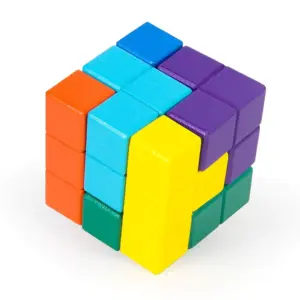
A compact cube like the 54‑T Cube Puzzle sits in the first category: a self-contained spatial challenge, no tools, no glue, finished in one sitting. For a father-in-law you don’t know intimately, that is the safer gift.
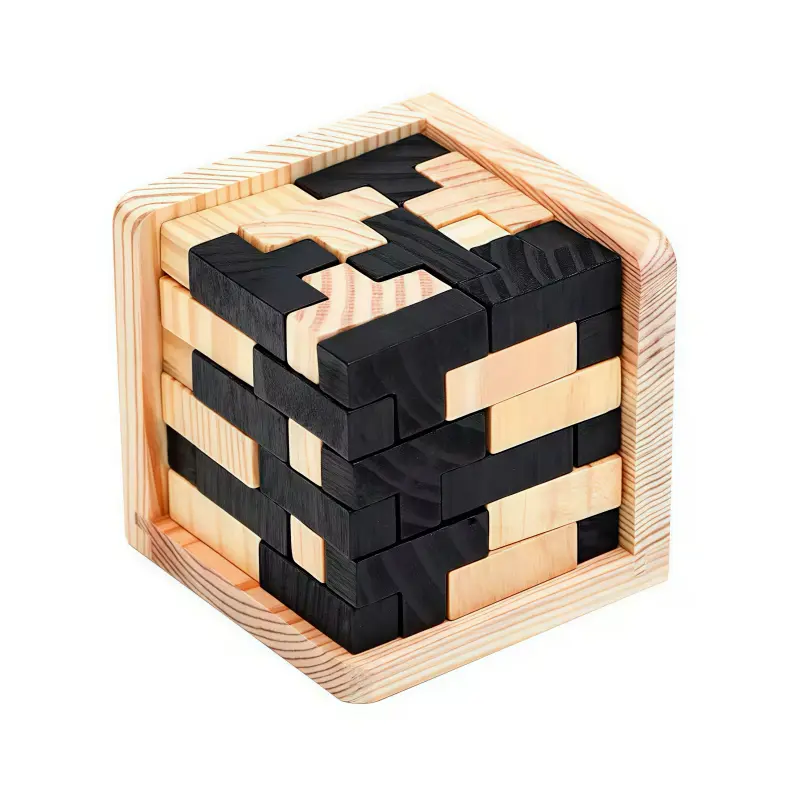
54‑T Cube Puzzle — $18.99
Read complexity from the product page, not the marketing copy
Three signals tell you almost everything about how hard a kit will be:
- Stated assembly time. Anything from two to six hours is a safe “one weekend” range. Under two hours reads as trivial; over ten hours is a serious commitment you should only take on if you know he likes long projects.
- Tools required. Laser-cut wooden kits in the Rokrgeek collection are explicitly designed to assemble without glue, following step-by-step instructions. If a listing says “no glue, no tools needed,” expect an easier ride. If it lists a craft knife, sandpaper, or wood glue, assume more fiddly work and a longer cleanup.
- Customer photos of completed builds. Listings that include several user-submitted shots of the finished model — not just the render on the box — tell you how forgiving the tolerances really are. If no one has posted a finished photo, that itself is a signal.
Glue vs. no-glue, in plain terms
No-glue builds rely on precision-cut slots and tabs that lock together by friction. They are cleaner to assemble, easier to disassemble if he wants to rebuild or display the pieces, and they make the gift feel like a kit rather than a craft project.
Glue-required models tend to be larger, more sculptural, and more permanent — the kind of object that lives on a mantel. For an in-law gift, no-glue is almost always the safer call unless you specifically know he enjoys longer, messier projects and already keeps craft supplies on hand.
The one practical next step
Before you commit, open the product page and confirm three things: the listed assembly time, whether any tools or adhesives are required, and whether real customer photos of a finished build appear in the listing. If all three check out — the build is bounded, the kit is self-contained, and real buyers have shown it completed — the difficulty is almost certainly right for a father-in-law gift. For a broader comparison of themed models across difficulty levels, see the 7 best wooden 3D puzzles for adults.
03. Pick a Puzzle Built to Be Displayed, Not Shelved in a Closet
Those checks caught complexity. Display needs a different filter. Most 3D wooden puzzles become dust-catchers within a month — the few that survive on a shelf share four traits: finished size that reads from across the room, material quality that does not yellow or chip, moving parts that stay aligned, and an aesthetic that fits a real room. Miss any of those, and the gift is a craft project, not a display piece.
Size: big enough to read, small enough to keep
The customer photos you were checking in the last section are useful here for a different reason. Look at the finished model in the frame, not the box. Roughly 20 to 30 centimeters finished is the sweet spot for a desk or shelf object — large enough to be a presence, small enough to keep. One Yeahlifestyle gift listicle specifically cites a finished 3D wooden bike at 27 centimeters long as a deliberate display reference, which lines up with that range. Anything under 15 centimeters tends to read as a trinket; anything over 35 centimeters usually needs a dedicated surface he may not have.
Material quality: what the cut edges tell you
Laser-cut plywood is the standard for serious kits. The cut edges should look clean and pale, not charred or fuzzy. The faces should have a consistent grain with no patches of rough fiber. If the product page shows only renders — computer-generated images of the finished model — and no one has posted a photo of an actual assembled kit, the material is unverified. Treat the listing as a guess and check another model.
Moving parts: the structural test
Any model with doors, wheels, gears, or a working mechanism needs to stay aligned after assembly. This is where cheap kits fail. Look for customer images of the mechanism in motion, or at least a clear side-on photo of the finished model. A clock whose hands wobble, a music box whose lid does not sit flush, a safe whose door does not close clean — these are not display pieces. They are projects he will quietly retire.
Finished aesthetic: would it survive in his actual room?
This is the hardest check, because it depends on his taste. A vintage motorcycle model in mahogany tones will live happily in a study with leather chairs. A bright-painted carousel music box is a different bet — fun, but not every study can carry it. For an in-law gift, the safer call is something neutral and architectural — a clock, a calendar, a treasure box — over something playful or themed. If the product page does not show the finished model staged in a real interior, assume the manufacturer has not tested it against one.
A set, not a single object: a different display strategy
One way to sidestep the single-large-object problem is to give a smaller set of pieces he can arrange on a tray, a bookshelf, or a desk corner. A multi-piece lock set works this way: each piece is a small finished object, and the collection as a whole reads as a deliberate display rather than a single fragile build. The trade-off is that the pieces are smaller and the project is shorter, so the wow of assembly is lower — but the “he actually keeps it” rate is higher.
The one-minute display check
Before you buy, run this on the product page: scroll to the customer photos. Is the finished model shown on a shelf, a desk, or in a hand at a recognizable scale? If yes, the manufacturer — and other buyers — have already answered the display question for you. If every image is a render or a flat-lay on a white background, the model has not been tested in a real room, and you are guessing.
04. Safe Themes vs Risky Themes for an In-Law Relationship
Default to neutral, hobby-linked themes when you don’t know a father-in-law well, and skip any design that reads as a statement about his identity. A vintage vehicle, a clock mechanism, a brass instrument, or a piece of architecture signals thought without overstepping. Religious iconography, partisan symbols, and niche sports allegiances are a gamble unless you’ve already seen them in his home.
A display-worthy model from the last section can still miss the mark if the theme sends the wrong social signal. The puzzle may be beautiful, the mechanism may work, and the wood may be heirloom-grade — but if the design announces something about him that he hasn’t announced himself, the gift reads as a presumption rather than a kindness. The one-minute rule: a safe theme is one he would happily point to and explain; a risky theme is one he’d quietly put away.
Safe themes — scan in under 30 seconds:
- Vehicles (cars, motorcycles, tractors, vintage campers) — hobby-neutral, broadly appealing, strong display value
- Instruments and music boxes — signals taste without politics
- Clocks, calendars, and mechanical motion pieces — “useful after assembly” is a strong in-law signal
- Architecture and landmarks — read as cultured, rarely contested
- Tools, workbenches, and workshop objects — appeals to a “fixer” identity that’s easy to guess
- Abstract geometric forms, marble runs, brain-teaser boxes — no theme at all, which is sometimes the safest choice
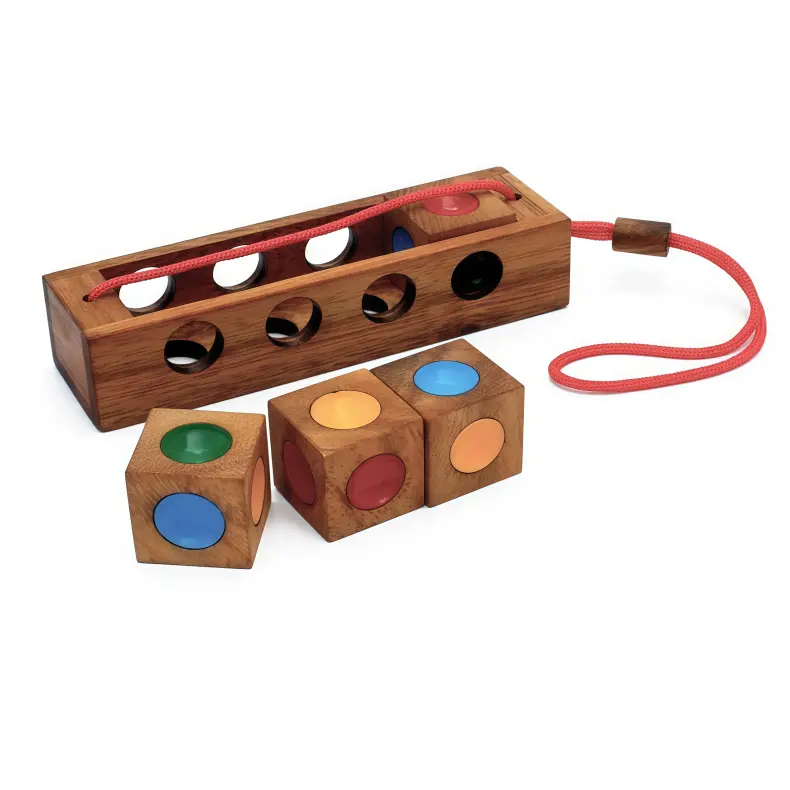
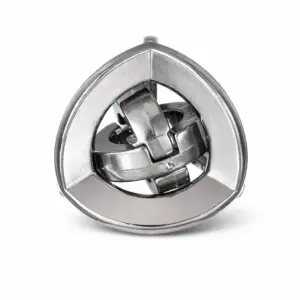
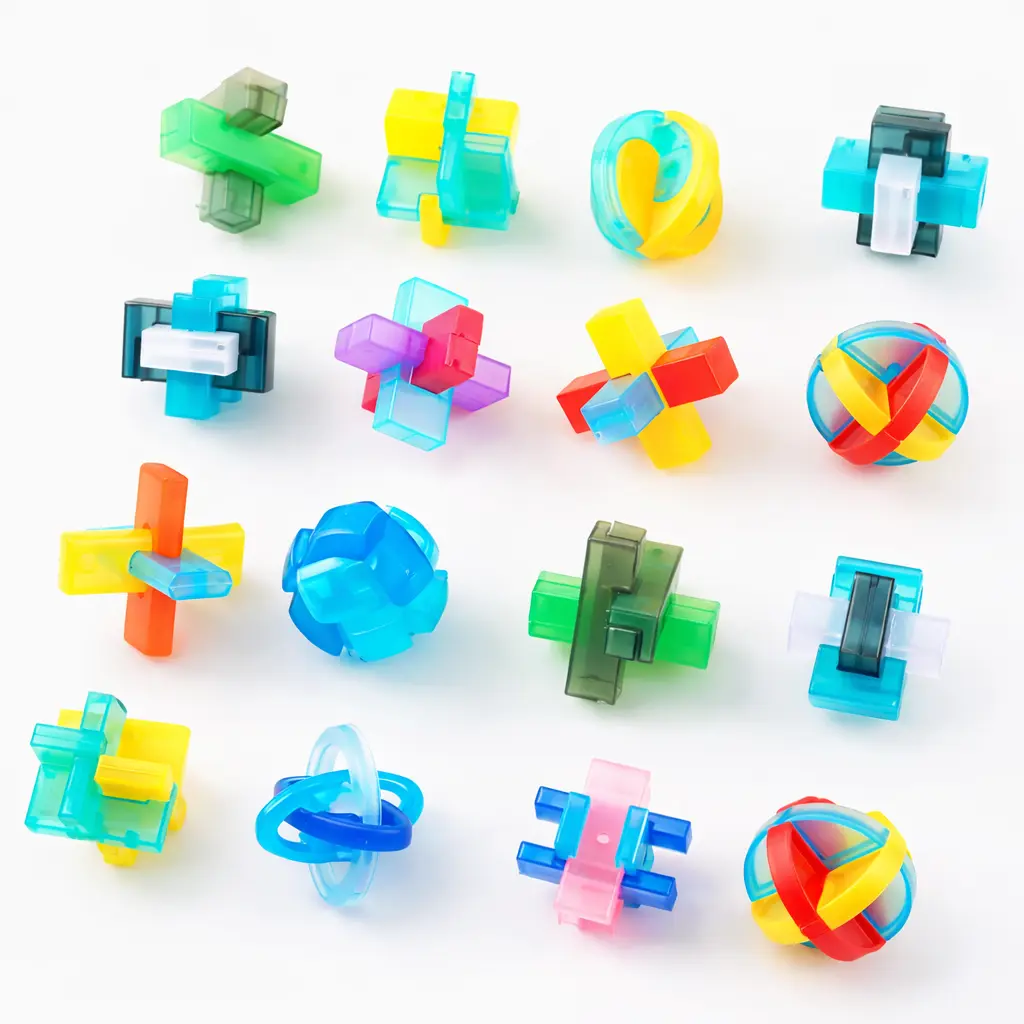
Kongming Lock Color Match — $16.99
Risky themes and what they cost you:
- Religious iconography — misreads as a comment on his faith; awkward to return
- Partisan or political symbols — even subtle ones read louder than you intend
- Niche sports allegiances — only safe if you’ve watched games with him
- Country or regional flags — fine in a hotel, fraught in a living room
- Drinking, gambling, or “man cave” humor — lands as a joke about his lifestyle
- Family-themed gifts (children, grandchildren, wedding imagery) — too intimate unless the relationship already runs warm
The social cost of a risky theme isn’t a refund; it’s the small flinch when he opens it. That flinch is what the article is trying to prevent.
One practical check before you commit: text your partner. A single message — “Would Dad like a [theme], or is there a version of that which would land better?” — closes 90% of the social gap in under a minute. The theme check is not about fear; it’s about the difference between a gift that says I thought about you and one that says I guessed.
05. No-Glue vs Glue-Required, and Where to Buy One That Actually Arrives on Time
Once the theme is settled, the next decision is mechanism. For a father-in-law who may not identify as a tinkerer, choose a no-glue laser-cut kit with step-by-step instructions; reserve glue-required models for builders you have already watched complete a project. The build itself becomes part of the gift, and a kit that fights the recipient halfway through turns a thoughtful present into a chore.
The distinction matters in practical terms. Rokr designs kits that “assemble without glue following step-by-step instructions” — parts slot or tab together, and the printed manual carries the load. UGears markets its 3D wooden puzzles as made from “eco-friendly and 100%-natural high-grade” wood, with a similar tab-and-slot approach that removes the messy, intimidating step of applying adhesive. Both categories let a non-builder finish in one or two sittings without owning a hobby knife or wood glue.
For an in-law gift specifically, the no-glue path solves a social problem the theme check cannot. Glue means setting up a workspace, waiting for parts to dry, and risking a lopsided result he feels obligated to display. No-glue kits let him build at the kitchen table, finish the model, and move it to a shelf the same evening. That short, complete arc is what makes the gift read as a finished success rather than a deferred project.
A 9-piece lock set fits the no-glue philosophy and works as a compact, low-pressure entry point — something he can finish in an evening and leave on his desk as a conversation piece.
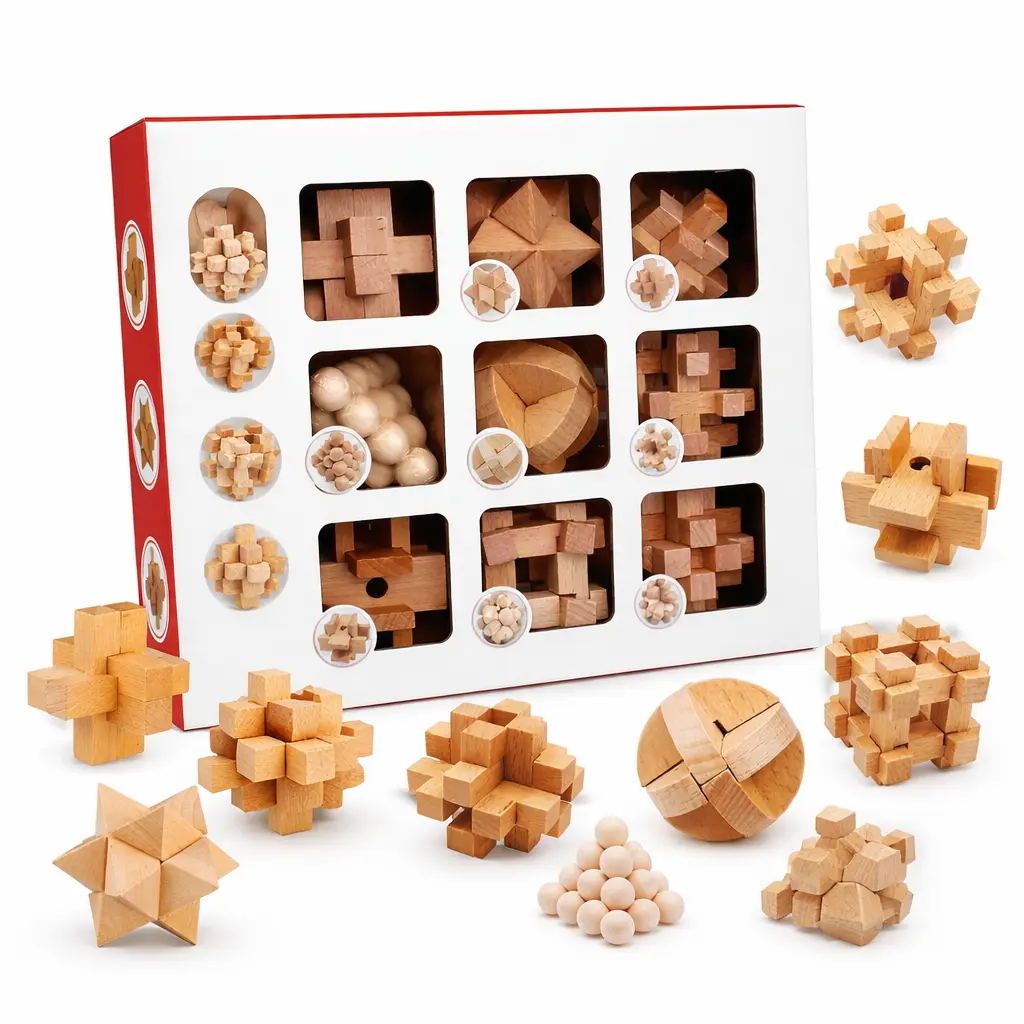
Luban Lock Set 9 Piece — $39.99
For the father-in-law gift, the stronger primary recommendation is the 6-in-1 Wooden Brain Teaser Set. Multiple small puzzles in one box mean he can try one, walk away, and return without losing momentum. The no-glue construction keeps the entry cost low — no workspace setup, no waiting for parts to set. The universal 6-step method for 3D wooden puzzles applies to each puzzle in the set, so he can follow the same sequence used in other laser-cut kits. Check the product page for current price and to confirm the kit ships with a printed manual or a reliable QR-linked PDF, since instructions are the difference between a relaxing build and a frustrating one.
Now the unglamorous part: where to actually buy it. A kit that arrives two days after his birthday, or in a crushed box with a missing gear, undoes every careful decision above. Three things to verify on the retailer’s product page before you check out:
- Stated shipping window. Look for a delivery range, not a vague “ships in X days.” A retailer willing to commit to a date range has a predictable fulfillment pipeline.
- Return policy. A 30-day window is the floor for an in-law gift. If the theme misreads or a part arrives broken, you want a path that doesn’t require an awkward explanation.
- Packaging notes. Kits with fragile tabs need a rigid mailer, not a soft envelope. Customer photo reviews often reveal this before you buy.
Tea Sip lists current pricing and shipping details on each product page, which is the right place to verify before committing to a date on your calendar. A common-sense rule: order early enough that a one-week shipping delay won’t matter. The gap between “ready to ship” and “actually arrived” is where most in-law gift anxiety lives.
The simplest rule covers most cases: a no-glue laser-cut kit in a theme you can defend, ordered with enough lead time that a shipping delay won’t matter, from a retailer whose return policy you’d actually use. Everything else — piece count, wood tone, exact dimensions — is secondary. The 6-in-1 Wooden Brain Teaser Set hits that rule cleanly: no glue, clear instructions, desk-sized, and priced as a considered-but-not-ostentatious in-law gift. See the product page for current pricing and to confirm the kit ships with everything listed before you set a delivery deadline.
Frequently Asked Questions
These final questions cover the hesitations that come right before checkout — the ones that decide whether a themed wooden kit feels like a thoughtful gesture or a generic grab.
Is a 3D wooden puzzle an appropriate gift for a father-in-law, or is it too casual?
Appropriate, with a caveat. A themed kit reads as “I thought about you” rather than “I grabbed something off a shelf,” which is the social register in-law gifting lives in. The caveat: avoid designs that feel like toys (bright primary colors, cartoon proportions, children’s book themes). A wooden model kit with moving parts or a finished display piece signals adult intent without crossing into over-personal territory like monogrammed cufflinks would.
What kind of 3D wooden puzzle works for a father-in-law who isn’t really a tinkerer?
Pick a no-glue laser-cut kit with a themed payoff he recognizes. Vehicle models, clock kits, and mechanical music boxes all work because the finished object reads as intentional decor. The assembly itself is guided by step-by-step instructions, so patience matters more than prior experience. Skip high-dexterity sequential discovery puzzles — those are for people who already call themselves puzzlers.
How do I pick a difficulty level when I don’t know his skill?
Default to a build in the 2–4 hour range. That window is long enough to feel like a project, short enough that frustration doesn’t set in if the instructions are set down for a week. Kits marketed as “entry-level” or “beginner” usually land here. Check the product page for an estimated assembly time before buying.
How long does it actually take to build one of these?
Most themed kits in the 100–400 piece range take 2–6 hours of focused time, often spread across a weekend. Smaller Luban-style brain teasers can be solved in 15–30 minutes per puzzle, which makes them easy to drop into a conversation. The product page should list an estimated time; if it doesn’t, that itself is a buying signal.
Can these be displayed after building, or do they fall apart?
Most laser-cut wooden models with snap-together joints hold their shape indefinitely on a shelf or desk. The risk is humid environments, which can swell the joints and cause cracks. The verification step: check customer photos on the product page, not just manufacturer renders. A finished clock, music box, or vehicle model that buyers show on a bookshelf is a good sign.
Where do I buy one that arrives on time and doesn’t look cheap?
Buy direct from a specialist whose product page lists dimensions, piece count, and a clear return policy. Tea Sip carries themed kits and brain teaser sets with current pricing and shipping details on each product page. Avoid generic marketplace listings where the same kit appears under three different brand names and the photos don’t match the actual wood tone.
A 3D wooden puzzle earns its place as an in-law gift when the theme matches something he already cares about, the complexity respects his time, and the finished piece earns shelf space. The 6-in-1 Wooden Brain Teaser Set covers the brain-teaser angle at a price point that reads as considered without overspending. See the product page, confirm the current details, and order with enough lead time that shipping doesn’t add stress to what should be a simple decision.
Where to Start
If the recipient and occasion checks above match, start with 6-in-1 Wooden Brain Teaser Set. Check the current product page for the specifications that matter to your choice.
Sources and verification
- Product details and current specifications: Tea-Sip product page
Last updated: August 22, 2026