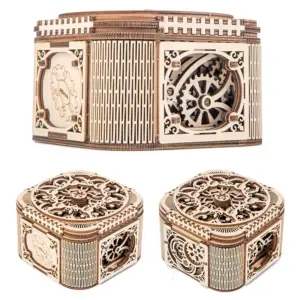
Quick Answer: 3D Wooden Puzzle Gift for Mother in Law: Match by Personality
A 3D wooden puzzle works as a mother-in-law gift when it doubles as home decor she will actually display — choose a brain-teaser set for a hobbyist MIL, a mechanical music box for a sentimental MIL, or a 3D assembled decorative model for a decor-focused MIL. The wrong match is a puzzle that is too childlike, too generic, or too intimate (family-name signs, unless your relationship warrants it). Match the puzzle to her personality, not to a price tag, and the gift lands as thoughtful without overstepping.
The mother-in-law relationship has its own social rules: a gift that signals effort and taste — not sentimentality or generic-checklist warmth — is what most buyers in this position actually need. Three recipient profiles cover the majority of cases: the decor-focused MIL (her home is curated, she rearranges shelves), the sentimental MIL (she keeps cards, photographs handmade items), and the hobbyist MIL (she enjoys a mental challenge or hands-on projects in retirement).
Quick decision table: 5 puzzle subtypes by MIL fit
| Puzzle subtype | Display quality | Sentiment level | Skill required | Relationship closeness | Price range |
|---|---|---|---|---|---|
| Brain-teaser set (e.g., 6-in-1 Wooden Brain Teaser Set) | High — desk-worthy | Low–Medium | Medium | Any (safe pick) | ~$38 |
| Mechanical music box | High — shelf display | High | Medium | Established | ~$44 |
| 3D assembled decor model (carousel, instrument) | Very high | Medium | Low–Medium | Any | $25–$45 |
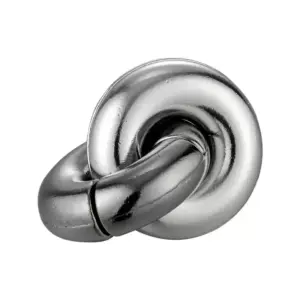
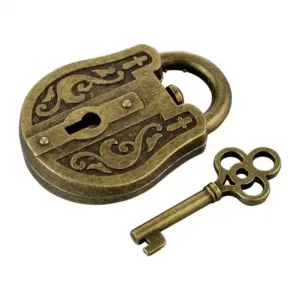
| Luban lock / disentanglement set | Medium — interactive | Low | Medium–High | Any (safe pick) | $17–$40 |
| Personalized family-name sign | High | Very high | None | Long-term / close only | Varies |
Pick by personality, not by price.
01. Match the 3D wooden puzzle to her home and her personality
Match the puzzle to what she already keeps on her shelves or in her hands, not to the date on the calendar. A decor-focused MIL and a hobbyist MIL want fundamentally different gifts even when the price is identical. Look around her home first — what is already displayed, what is tucked in a drawer, what she reaches for on a slow afternoon — then choose the puzzle subtype that fits what you see.
The decor-focused MIL: pick a finished display piece she will not have to dust
A decor-focused MIL treats her shelves and side tables like a small museum. She rotates objects seasonally, rejects anything that does not match the palette, and quietly re-gifts things that feel “off.” The wrong gift for her is a kit she has to build and then decide where to put. The right gift arrives looking like a finished object.
- Wooden flower bouquet (orchid, rose, tulip, sunflower sets): A craft blogger who gave a 3D wooden flower puzzle to her own mother-in-law noted that the recipient “likes artificial flowers as they are much easier for her to look after these days” — flowers that last, no watering, no petals to clean up. The Robotime beginner guide echoes the same logic: a wooden flower is “kept forever,” unlike a real bouquet that wilts within a week.
- 3D night light puzzle: A subtle alternative when her home runs modern, neutral, or Scandinavian. The light is the display; the puzzle is the assembly story she tells once.
- Statement mechanical model (carousel, cello, perpetual calendar): A larger piece for the woman who has the shelf space and the habit of collecting one beautiful object per occasion.
The test for the decor-focused profile is simple: would she buy this for herself with her own money? If yes, you have matched her taste, not just your budget.
The sentimental MIL: pick something that signals a memory, not a transaction
A sentimental MIL keeps the birthday cards, frames the school photos, and remembers who gave which mug three Christmases ago. The wrong gift is something impressive but emotionally flat — a gear-driven model she admires once and forgets. The right gift has a small emotional hook: it plays, it glows, it holds something, or it quietly references a date that matters.
- Mechanical music box (carousel, instrument): The closest a non-personalized puzzle gets to a keepsake. The mechanism does something after assembly — it plays — which makes it feel alive on the shelf rather than static. For a closer look at how music box kits differ across skill level and price, see wooden music box kits tested from beginner to pro.
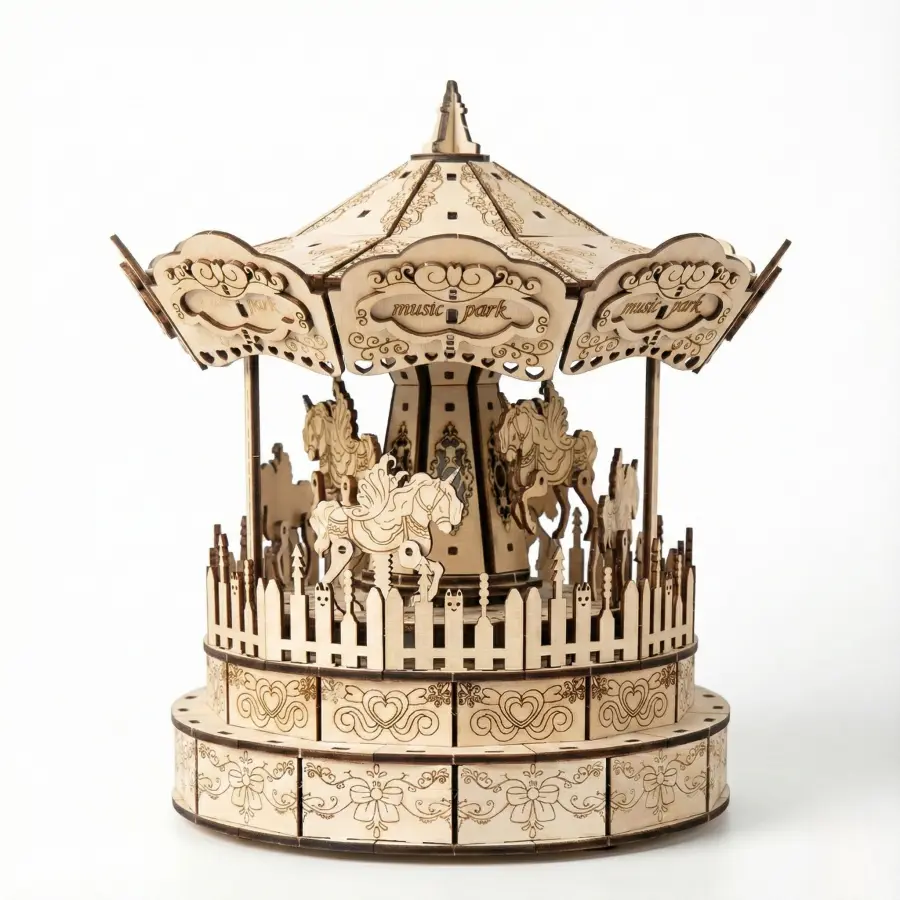
- Treasure box or jewelry storage model: A puzzle that, once assembled, holds a small object inside — a place to keep something of hers, not yours.
- Perpetual calendar with a personal date: Becomes sentimental when you quietly set a date that matters to her (wedding anniversary, the year she became a grandmother) and write it into the card.
The test for the sentimental profile: will she show this to a friend within a week and tell the story of who gave it to her? If yes, the gift has landed.
The hobbyist MIL: pick something she will keep reaching for, not something she will frame
A hobbyist MIL is the easiest profile to buy for and the easiest to get wrong. She likes a mental challenge, has the patience for it, and is unlikely to put a finished puzzle on a shelf — she will dismantle it, solve it again, and probably lend it to a friend. The wrong gift is a display piece she admires once. The right gift is interactive, replayable, and small enough to live on a coffee table or a desk.
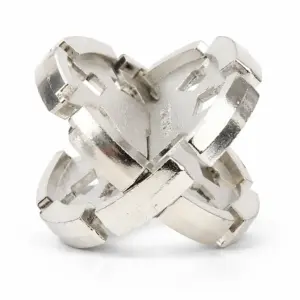
The top pick for this profile is a wooden brain-teaser set, because a single set covers a range of difficulty and never feels like a “one and done” object.
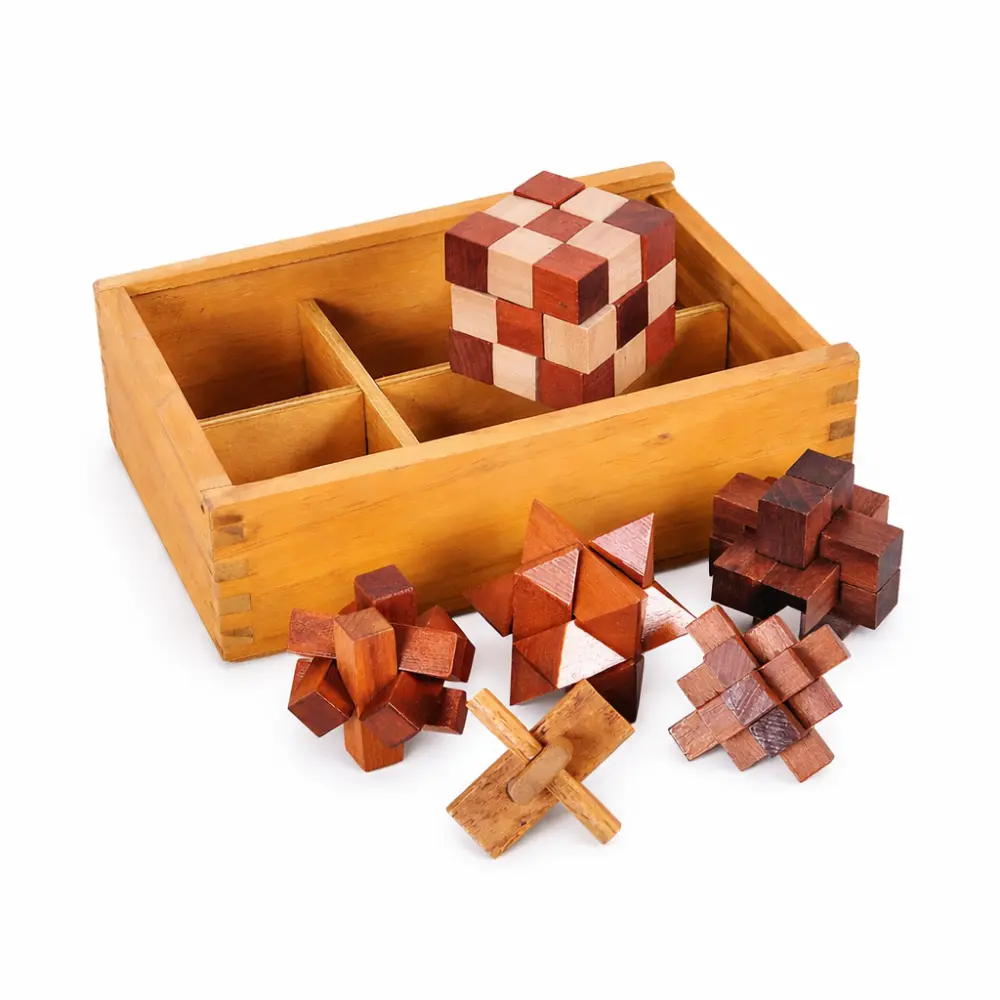
Other strong matches in the hobbyist profile:
– Disentanglement and Luban lock sets (such as the Kongming Lock Color Match): Compact challenges for the MIL who keeps a puzzle in her handbag or on her desk.
– Soma cube and 54-T cube: Quiet, geometric challenges that suit a retired teacher, engineer, or lifelong puzzler.
– Marble run or mechanical safe kit: A longer weekend “build” for the MIL who likes assembling more than solving, and who will enjoy explaining how it works to a grandchild.
The test for the hobbyist profile: will she reach for it again in a week? If yes, you have bought her a habit, not a one-time object.
Pick by personality, and the price stops being the hard part.
02. What to check before you buy a 3D wooden puzzle gift
You matched her personality, and the price is no longer the hard part. The next five minutes of clicking should save you from a box she never opens. Before checkout, verify five observable things on the product page: finished display size, estimated assembly time, whether tools are included, the display-versus-play intent, and the seller’s return or replacement policy. Each one is a fast check you can run in under a minute. Together, they separate a thoughtful gift from a beautiful object she quietly tucks into a closet and never mentions.
Finished display size, not packaged size. Listings often quote the shipping box. Look for the assembled dimensions in centimeters or inches, and picture those numbers on her coffee table or mantel. A wooden flower bouquet that finishes at 15–20 cm fits a side table; a 30+ cm mechanical clock needs a mantel or shelf with room around it. If her home runs minimal or she lives in a smaller space, lean compact — a tabletop brain-teaser set or a small music box will get daily use; an oversized display piece may stay in its box because there is no spot for it.
Estimated assembly time, stated honestly. Reputable listings give an estimated build time, often phrased as a range like “a few hours” or “a weekend project.” Avoid listings that say only “easy assembly” with no number — that phrase usually means the seller has not timed the build. If you are pre-assembling the gift, time matters even more — a long build is a project, not a Saturday morning, and you want to know that before you commit. If she is assembling it herself, ask whether she enjoys a longer build or would rather open a finished piece. Both are valid; they lead to different products on the same category page.
Tools included or tools required. Most quality 3D wooden puzzles are laser-cut from birch plywood, with parts engineered for tight fits that need little to no sanding. Still, some kits call for glue, a craft knife, or tweezers that are not in the box. Check the “what’s in the box” line; if tools are not listed, assume you will need to supply them or contact the seller before placing the order. This is also where you can spot a vague listing — a serious seller lists the contents of the box, not just a stylized product photo and a tagline.
Display versus play intent. A music box, perpetual calendar, or night light is a display piece with a function. A Soma cube, 54-T cube, or Luban lock is a play piece. A mechanical safe, treasure box, or marble run is both. Your personality pick from the previous section should already tell you which side of this line you are on — a decor-focused MIL needs display, a hobbyist MIL needs play, a sentimental MIL needs both. Getting this wrong is the fastest way to buy something she admires once and never touches again, even if you nailed the personality match.
Return, replacement, and lead time. Laser-cut pieces can occasionally crack in transit or arrive missing. Check whether the seller ships replacement parts, and how long a custom or personalized order takes to produce. A birthday in three weeks is not the moment to discover a four-week production window. The product page should answer both questions before you place the order; if it does not, that silence is itself a signal to look elsewhere.
Pick by what she will do with it after the box is gone, and the rest takes care of itself.
03. When is a personalized or family-name puzzle appropriate for a mother-in-law?
A personalized or family-name puzzle is appropriate for a mother-in-law only when three conditions are met at once — the relationship has years of closeness behind it, she calls you by your first name rather than a formal title, and the family dynamic already treats you as an insider rather than a guest. If any of those three signals is missing, a non-personalized puzzle is the safer default and the more thoughtful choice. The rule sounds strict because the failure mode is loud: a custom-engraved family tree or last-name sign that misreads the relationship is the kind of gift she smiles at on the spot and quietly stores in a closet.
The years-of-closeness check. Personalization signals permanence and shared identity. A mother-in-law who has only been one for a year or two is still feeling out the relationship; a name, a birth-flower cluster, or a “Family Established” date can land as presumptuous rather than warm. Ask yourself whether she would write a similar message to you on your own birthday card. If the answer is no, the puzzle itself can be beautiful without carrying her family’s name on it. The Robotime beginner guide frames the wooden flower as a keepsake your mother or mother-in-law “will be able to keep it forever,” and a keepsake does not need a name to last. A non-personalized flower puzzle, night light, or music box carries the same lasting quality without the intimacy tax.
The name-or-title check. How she addresses you in conversation and in cards is the clearest single signal. “Dear [first name]” on a birthday card is a green light. “[Title] and [first name]” is a yellow light — proceed with the safest personalization, like a monogrammed initial or a birth-flower month, and avoid the full family name. “Mrs. [Partner’s last name]” on the envelope is a red light — stick to non-personalized display pieces only. This is the rule of thumb the SERP does not provide, and it is the one that prevents the most common MIL-gift misstep.
The insider-vs-guest check. The third signal is whether she includes you in family rituals — group photos on the holiday card, a seat at the family table, a standing group chat. If you are already inside the inner circle, a family-name puzzle confirms what she already knows. If you are still a respected outsider, a custom sign can feel like you are claiming a belonging she has not yet offered.
The safe default for the unsure buyer. A non-personalized 3D wooden puzzle — a flower bouquet, a carousel music box, or a brain-teaser set — is the thoughtful-without-overstepping choice that fits any relationship tier. A puzzle from the Tea-Sip wooden puzzle collection, such as the 3D Wooden Carousel Music Box or the 6-in-1 Wooden Brain Teaser Set, gives her something she can display or play with without her needing to perform a reaction to your name on the wood. Personalization can come later, once the relationship has earned it. Pick the puzzle that fits her personality first; let the engraving wait until the relationship asks for it.
04. Should you give the puzzle assembled or as a kit?
Once you have matched the puzzle to her personality and decided the personalization level, there is one more question: should she receive it finished or build it herself? Pre-assemble the puzzle when the gift is meant to be a display piece she will unbox and place on a shelf; give it as a kit when the relationship supports a shared project and you can be present for the build. The format of the gift is part of the gift.
The decision is about what the puzzle represents to her. A finished object says “I chose this for you.” An unassembled kit says “I want to do this with you.” Those two messages land very differently on a mantel, and the difference matters more with a mother-in-law than with almost any other recipient.
The decor-focused MIL wants the assembled version. This is the woman who would choose a vase over a craft project, who redecorates seasonally, who would rather receive a finished sculpture than an afternoon of fiddling with tabs. Wrap it with tissue, place it in a box she can open without instructions, and let the object speak for itself. A 3D Wooden Carousel Music Box presented as a finished centerpiece is a keepsake; the same box handed over as a kit of punch-out pieces becomes a chore. For a decor-focused recipient, you are the assembler, and the build is your contribution, not hers.
The hobbyist MIL wants the kit. This is the woman with a project table, a drawer of craft tools, a soft spot for brain teasers and mechanical things. For her, the build is the gift. A 6-in-1 Wooden Brain Teaser Set handed over with the instruction sheet and a “let’s try one together” invitation becomes a memory you co-author, not a present she evaluates alone. The kit becomes a reason to spend an hour together, which is often what she actually wants from you.
The cue that picks between them is whether she already has hobbies that involve building, solving, or tinkering. A woman who does crossword puzzles over breakfast, who keeps a Sudoku book in her bag, who has a sewing room or a model-train corner, will enjoy the kit. A woman who reads biographies, gardens, hosts dinner parties, and frames family photos wants the finished object. The build is a gift only when the recipient enjoys building.
Assembly time is the second planning layer. Most 3D wooden puzzles take several hours to a full evening of patient work, with small parts, tabs, and a manual that benefits from good light and a flat table. If you plan to pre-assemble, build in two to three evenings before the occasion, and if it is your first time with this puzzle type, a walk through the universal 6 step method for solving 3D wooden puzzles can save you from a wobbly shelf piece on the day. A rushed build undermines the whole gesture. If you cannot finish it in time, the kit is the honest option, and a note that says “I thought we could build this together” reframes the kit as an invitation rather than a compromise.
Pick the format that matches her, not the format that is faster for you.
05. 3D wooden puzzle subtypes compared for a mother-in-law gift
Once the assembled-vs-kit question is settled, the next filter is which 3D wooden puzzle subtype actually fits her. Five categories dominate the shelf, and they differ on the dimensions that matter most for a MIL gift: how the finished object looks on her shelf, how sentimental the gesture reads, how much skill the build demands, how close the relationship needs to be, and what the realistic price window is.
| Subtype | Display Quality | Sentiment Level | Skill Required | Relationship Closeness Fit | Price Range |
|---|---|---|---|---|---|
| Wooden flower bouquet | High — vase-ready home decor | Medium-High (keepsake romance) | What to check: piece count and tab tolerance before assuming “easy” | Safe for any MIL; sentimental pull grows with closeness | What to check: most kits list $20–$50; confirm finished size vs. her vase |
| 3D night light puzzle | High — functional ambient decor | Medium | What to check: LED wiring adds one step beyond a standard build | Safe for any MIL; low intimacy risk | What to check: verify LED source, cable, and finished dimensions |
| Mechanical music box | High — heirloom feel, sound adds presence | High (sensory, keepsake) | What to check: moving parts raise difficulty; check piece count | Closer relationships; sentiment can read as intimate | What to check: $30–$60+ typical; verify music mechanism is replaceable or sealed |
| Brain-teaser & marble-run sets | Medium — desk or shelf display, often interactive | Medium-Low (utility-driven) | What to check: piece count and mechanism type before assuming difficulty | Safe for any MIL; ideal for a hobbyist who already likes mechanical puzzles | What to check: 6-in-1 Wooden Brain Teaser Set is $38.88; marble-run kits trend higher; confirm before ordering |
| Book nook | Very High — statement shelf piece | Medium | What to check: large piece count, longer build, more chances to stall | Established MIL relationship; reads as a major gift | What to check: $40+ typical; confirm shelf depth and finished width |
The brain-teaser category is where the 6-in-1 Wooden Brain Teaser Set earns the #1 spot for a hobbyist MIL. Six compact wooden challenges in one box, repeatable, desk-friendly, and $38.88 (check the product page for the current price). As a class of mechanical puzzle — an object designed to be manipulated in a specific way to achieve a goal — the gift is about the challenge, not about names or family labels, which keeps it safe for newer or more formal in-law relationships where personalization could overreach.
For a MIL who already has a desk set or has more shelf room, the marble-run format gives her something to watch, restart, and show off — a gift that earns its place by being touched, not just displayed.
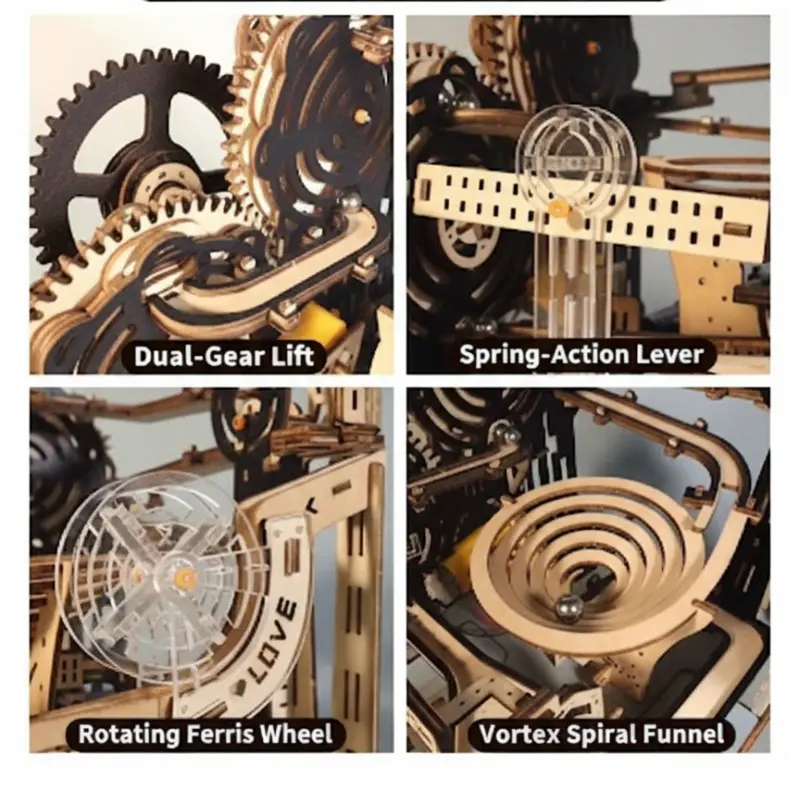
Electric Wooden Marble Run Kit — See current price
Where to Start
If the recipient and occasion checks above match, start with 6-in-1 Wooden Brain Teaser Set. Check the current product page for the specifications that matter to your choice.
Sources and verification
- Product details and current specifications: Tea-Sip product page
Last updated: August 23, 2026