Quick Answer: 3D Wooden Puzzle Gift for Remote Workers: A Desk-Fit Guide
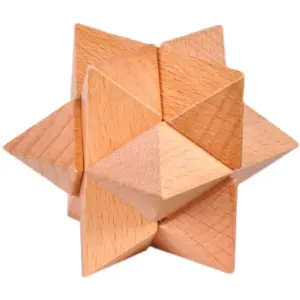
For a remote worker, the right 3D wooden puzzle is a quiet, display-worthy kit that fits a 1–2 sq ft desk zone and finishes in 20–90 minutes — pick a gear-driven model for the engineer, a music box for the sentimental gift-giver, and a Kumiki-style brain teaser for the budget buyer. The starting pick that fits the most remote desks is the 12 Piece Crystal Luban Lock Set at $28.88.
Four desk-fit checks filter every recommendation: footprint, sound, camera-friendly look, session length. A puzzle that wins on fun but loses on desk fit is the wrong gift for someone who works from home.
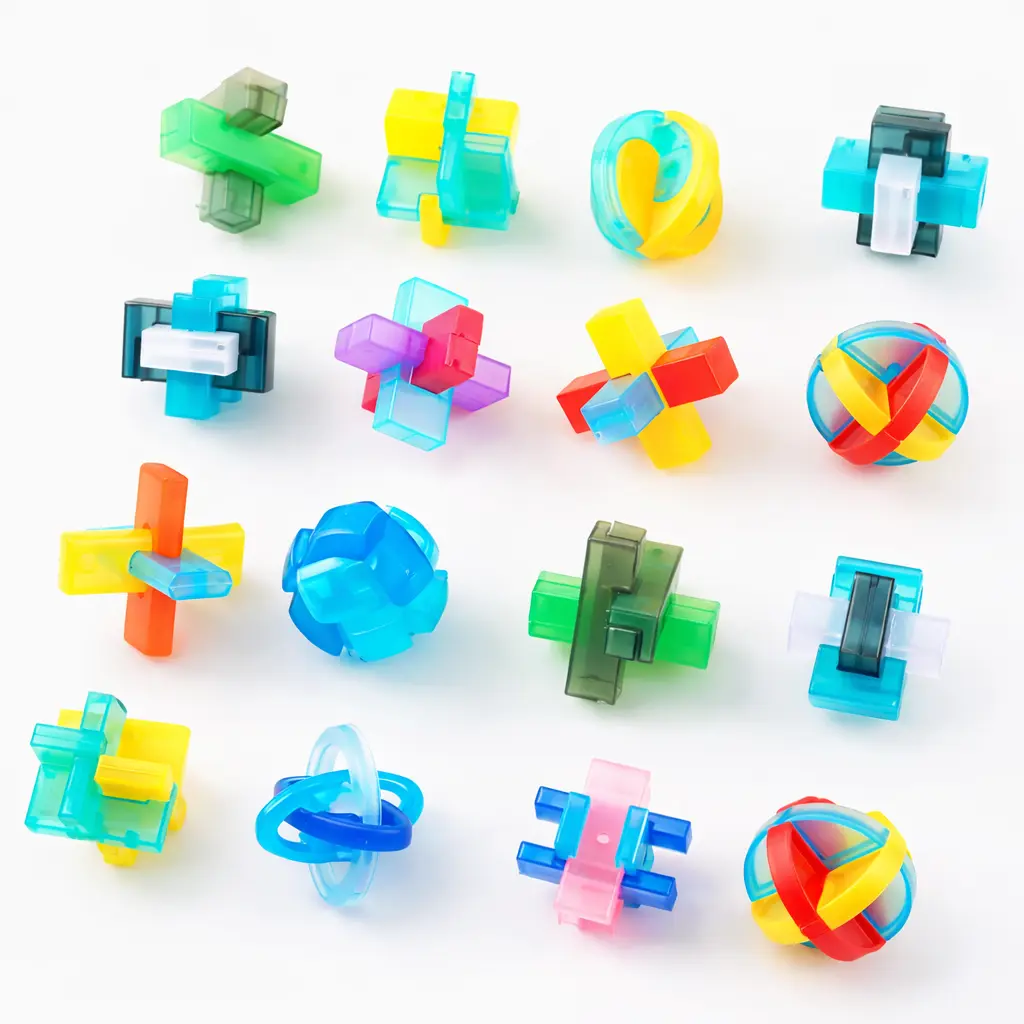
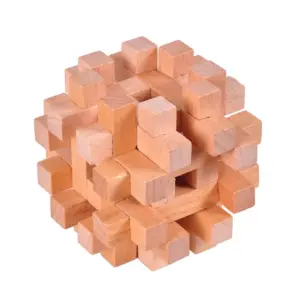
A Luban lock set fits the gift problem: 12 interlocking pieces, quiet by construction, coffee-mug desk footprint, finished builds sit on a shelf without cluttering the camera frame. Silent during a 20-minute micro-break. Silent in storage. The difference between a gift that earns a permanent desk spot and one that ends up in a drawer.
Decision Table: Which Puzzle Type Fits Which Remote Worker
| Remote worker type | Best puzzle match | What to check before buying |
|---|---|---|
| Engineer / builder | Gear-driven or mechanism kit | Footprint when assembled; parts stay within the camera frame |
| Manager / focus-reset buyer | Silent interlocking (Luban / Kumiki) | Solvability time per piece; storage box included |
| Creative / display-first | Music box or themed model | Look on camera; size of finished display |
| New hire / welcome gift | Compact brain teaser set (under $25) | Whether pieces stay together between sessions |
This table is the shortcut. If the recipient has a one-square-foot desk zone and shares an open floor on calls, start with a silent interlocking set and a closed storage box. Check the product page for current pricing on any specific kit.
01. The Four Desk-Fit Checks Every Remote-Worker Puzzle Must Pass
A 3D wooden puzzle earns a permanent spot on a working desk only when it passes four observable tests: it must fit a 1–2 sq ft zone, stay silent during calls, look intentional in a camera frame, and finish inside a single break window. Skip any one of these and the kit migrates to a drawer within a week. The next sections break down each check, why it matters, and what the reader can verify before clicking “buy.”
Check 1 — Footprint: Does the kit and its finished build fit the desk zone?
The first check is physical space, not difficulty. A working desk in a home office rarely offers more than a coffee-mug-sized clear area between a monitor, a keyboard, and a notebook. If the unassembled kit needs the entire desk surface during building, the recipient will not build it during work hours — and the gift loses its function as a micro-break tool.
Measure the assembled build against the visible area behind the recipient’s shoulder on a video call. If the finished puzzle rises above monitor height or extends past the laptop’s side bezel, it will dominate the camera frame and pull the viewer’s eye. A finished piece that sits below monitor height and within the camera’s natural border functions as background decor rather than clutter.
The reader can verify footprint by checking the product page’s listed dimensions and comparing them to the recipient’s monitor stand height. For kits that ship in a decorative box, confirm the box footprint — because the box is what actually lives on the desk between sessions.
Check 2 — Sound: Will the mechanism survive a meeting on mute?
The second check is acoustic. Remote workers spend hours in shared or recorded calls where any unexpected sound — a click, a whir, a spring release — becomes a problem. Puzzles fall into three sound categories: silent interlocking (Luban locks, Kumiki brain teasers, Soma-style cubes), music box mechanisms (tuned chime, audible only when the box is opened), and gear-driven models (continuous mechanical motion that may tick or whir if a gear sticks).
Silent interlocking puzzles pass the meeting test by construction. The recipient can pick up a piece, work a solve mid-call on mute, and no one on the call will hear it. Music box puzzles pass when not in use but become audible the moment the box is opened — fine for a solo lunch break, risky during a 10 a.m. status update. Gear-driven models need the most caution; some run silently, others produce a soft tick, and the reader should verify by checking the product page or asking the seller before buying for a meeting-heavy recipient.
No clicking. No whirring. No awkward apology mid-sentence.
Check 3 — Camera-friendly look: Does the finished build read as intentional?
A 3D wooden puzzle in a camera frame either looks like decor or looks like clutter. The difference is rarely about price or brand — it is about silhouette, material, and whether the finished piece has a defined shape. A solved Luban lock sitting on a small wooden tray reads as a deliberate object. A half-finished kit with loose pieces scattered across the desk reads as a project left mid-stream.
The on-camera test is simple: imagine the finished puzzle placed one foot behind the recipient’s shoulder during a video call. If the silhouette is recognizable (a geometric form, an animal, a vehicle, a functional object), it passes. If the shape is ambiguous or the material looks like raw craft wood, it fails the test and the recipient will move it out of frame.
This is also why the “finished display” category outperforms the “redo-it fidget” category on a working desk. A one-time build that becomes desk decor earns its space. A puzzle that gets taken apart and reassembled every hour needs storage between sessions and competes for the same desk surface as a notebook.
Check 4 — Session length: Does the build fit a 20–90 minute break window?
The fourth check is time. Remote workers structure their day around meetings, and the breaks between meetings are short — usually 15 to 60 minutes. A kit that requires four hours of uninterrupted focus will not get built. A kit that finishes in 20 to 90 minutes fits the calendar.
Most 3D wooden puzzles in the desk-toy category fall into this range by design, but the reader should verify. The product page’s listed assembly time, the piece count, and the difficulty level together indicate whether the build is a single-session project or a weekend one. A 9 to 12 piece interlocking set typically finishes in 20 to 40 minutes for an average solver. A 200+ piece mechanical model kit may require several sessions and a dedicated work surface.
Match the assembly time to the recipient’s schedule. A manager with back-to-back 30-minute breaks needs a kit that finishes in one slot. A creative with longer focus blocks between deep-work sessions can handle a longer build — and may prefer it.
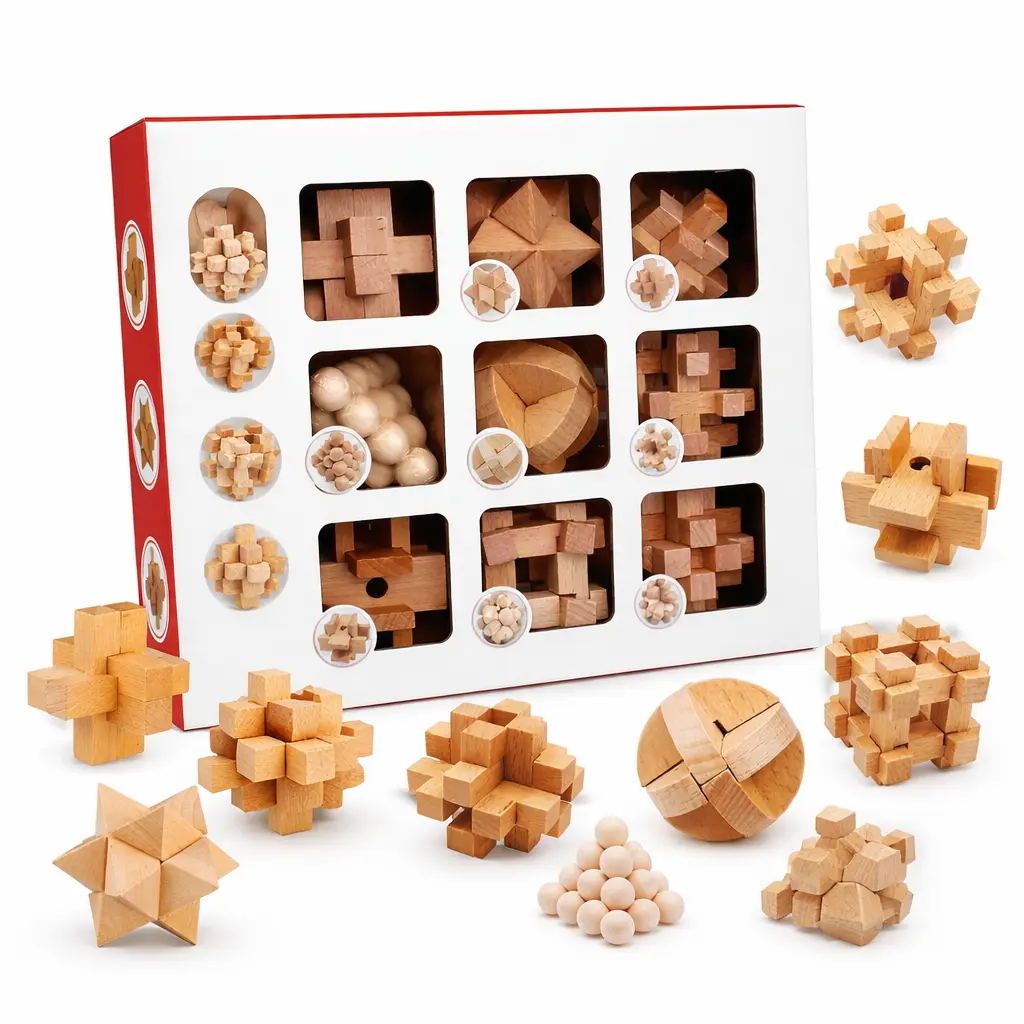
Luban Lock Set 9 Piece — $39.99
Putting the four checks together
The four checks are not a ranking — they are a filter. A kit that passes all four earns the desk. A kit that fails any one check is a risk. For most remote workers, the silent interlocking category (Luban locks, Kumiki-style brain teasers) passes all four by default: small footprint, no sound, recognizable silhouette, short assembly. Gear-driven and music box kits pass three of four and require a closer look at the failing criterion. The next section explores why silent interlocking puzzles work specifically as a micro-break between meetings, and where the other categories fit. Readers comparing a wider tested desk toys for remote workers category can apply these same four checks to non-puzzle mechanisms like mechanical spinners or quiet desk gadgets.
02. How a 3D Wooden Puzzle Functions as a Micro-Break During Deep Work
Use a 3D wooden puzzle as a micro-break only when the next work block is short and clearly bounded — a 20-minute assembly between meetings passes the test, a 90-minute build mid-project does not. The break has to end before the next cognitive demand begins, or the puzzle stops functioning as a reset and starts functioning as a delay.
A fidget toy, in the plain definition, is an object a person handles to focus attention or relieve stress. A 3D wooden puzzle sits at the more involved end of that category — not a silent spinner for idle hands, but a brief, tactile task with a defined endpoint. The endpoint matters more than the marketing language suggests. Phone scrolling during a meeting lull has no endpoint; the thumb keeps moving until the calendar pings. A puzzle either gets solved in the available window or it gets set aside with a clear sense of “back to that later.” That closure is what makes the reset work.
The comparison to phone scrolling is worth drawing out because the two habits look similar on the desk. Both involve looking down at something small. Both occupy the hands. But the cognitive load runs in opposite directions. Scrolling asks for almost nothing — pattern recognition, thumb coordination, the low-grade pull of refresh. A puzzle demands a small, bounded problem: how do these pieces interlock, what does the mechanism need next, where does this notch go. The recipient moves from the open loop of an unfinished meeting to the closed loop of a solvable object, and that closed loop is what lets the next block of work begin cleanly.
The Quick Answer block at the top of this guide pegged the useful finish time at 20 to 90 minutes. That range is the practical zone where a puzzle earns its keep on a working desk. Under 20 minutes, the recipient finishes before the break is really over and the puzzle becomes a snack instead of a meal. Over 90 minutes, the build starts to feel like a project, which is the wrong frame for a desk accessory. The 7 Color Soma Cube Puzzle fits the lower end of that window — a compact cube that solves in a single sitting and then sits on the desk as a quiet object afterwards, returning to the camera frame without needing a second session.
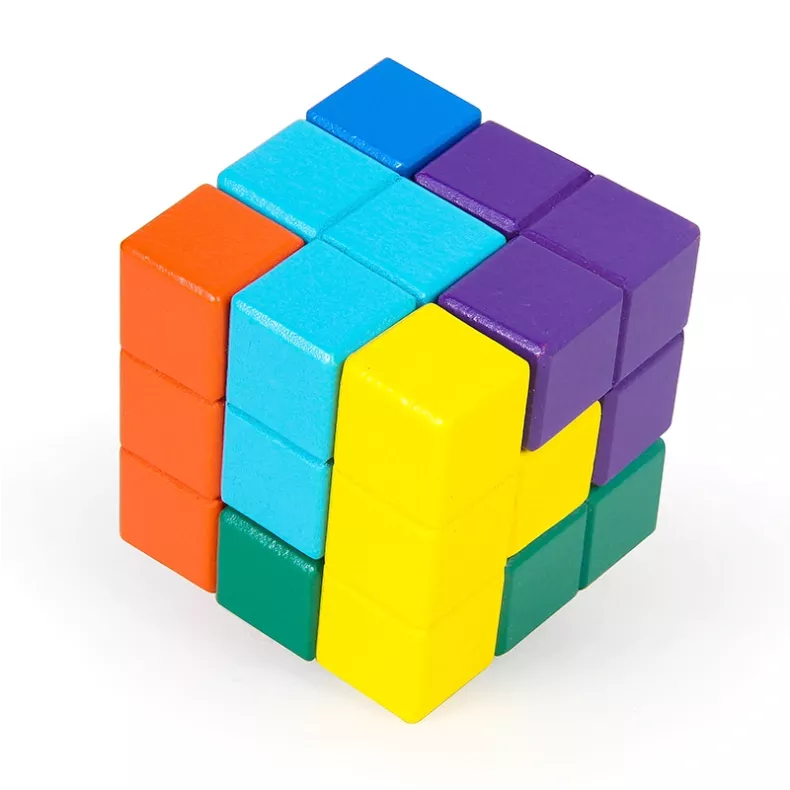
7 Color Soma Cube Puzzle — $21.88
The mechanical-puzzle framing helps here too. A mechanical puzzle, in the standard definition, is a puzzle requiring ingenuity to disassemble or solve. The recipient is not coloring or fidgeting passively during the break — they are running a small, self-contained problem-solving loop. For most remote workers, that loop is the actual point of the gift. The puzzle is an excuse to step out of one mode of thinking and into another without leaving the chair, and the desk footprint stays small enough that the workspace resets as soon as the puzzle is set down.
There is a clear failure case worth naming. The puzzle stops being a break substitute when there is no real break to begin with. Reaching for a Luban lock because the next meeting starts in four minutes is fine. Reaching for a Luban lock because the deliverable is overdue is not — that is avoidance dressed up as recovery, and no desk accessory fixes it. The placement rule below is designed to keep that distinction visible to the gift-giver before purchase.
Here is the next action: keep the puzzle in the camera frame, not behind it. Place it on the desk in the line of sight between the keyboard and the second monitor — the spot where a hand would reach for it during a meeting-mute moment, but where it is also visible to the camera. If the recipient is comfortable having it on camera, the puzzle has passed a hidden fifth check that runs underneath the four earlier ones: it looks intentional in the frame. If the recipient moves it off-camera every time a call starts, the puzzle is a private fidget and the gift has missed the on-camera test. That single placement is the cheapest way to evaluate whether the kit fits the recipient’s work identity before moving on to a more expensive recommendation.
The next section shifts from whether the puzzle works as a micro-break to which puzzle type matches which remote work personality — engineer, manager, creative, new hire — using the four desk-fit checks as the filter.
03. Matching Puzzle Type to Remote Worker Personality
A 3D wooden puzzle fits a remote worker when its mechanism matches how the recipient actually uses downtime at the desk — gear-driven for the engineer who wants visible motion, music box for the manager who needs a quiet sentiment object, Kumiki interlocking for the new hire learning a new role, and a finished display model for the creative who wants a camera-ready piece.
The four desk-fit checks from the previous section now do double duty: they filter out the wrong kits, and they reveal which puzzle type belongs on which desk. The same mechanism lands differently depending on the recipient, and the mismatch shows up within a week of unboxing. A gear-driven kit that delights an analyst may make a director wince; a display model that flatters a designer’s camera may bore an engineer by Tuesday.
The engineer / analyst. A mechanical keyboard, a notepad, and a visible second monitor showing logs or dashboards. The desk already signals a preference for things that move on purpose. A gear-driven 3D wooden puzzle is the match because the mechanism does something observable — it turns, clicks softly, and demonstrates cause and effect. The puzzle earns its place by behaving like the rest of the desk. A Kumiki interlocking lock would also suit this profile, since the satisfaction is in disassembly logic rather than display. Avoid anything purely decorative; the engineer reads a non-moving decorative kit as visual noise.
The manager / director. Tighter camera frame, cleaner desk, shorter downtime squeezed between one-on-ones and reviews. The puzzle that fits is a quiet one: no clicking, no whirring, no mechanism that draws the eye mid-meeting. A music box puzzle works here, because the recipient opens it privately, hears a short melody, and the rest of the day is unaltered. The mechanism is contained. A finished display model also fits because it asks nothing of the manager after the build. What fails this profile is a fidget-style interlocking puzzle that demands repeated micro-decisions; the manager’s micro-decisions are already spoken for.
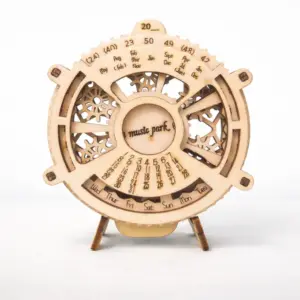
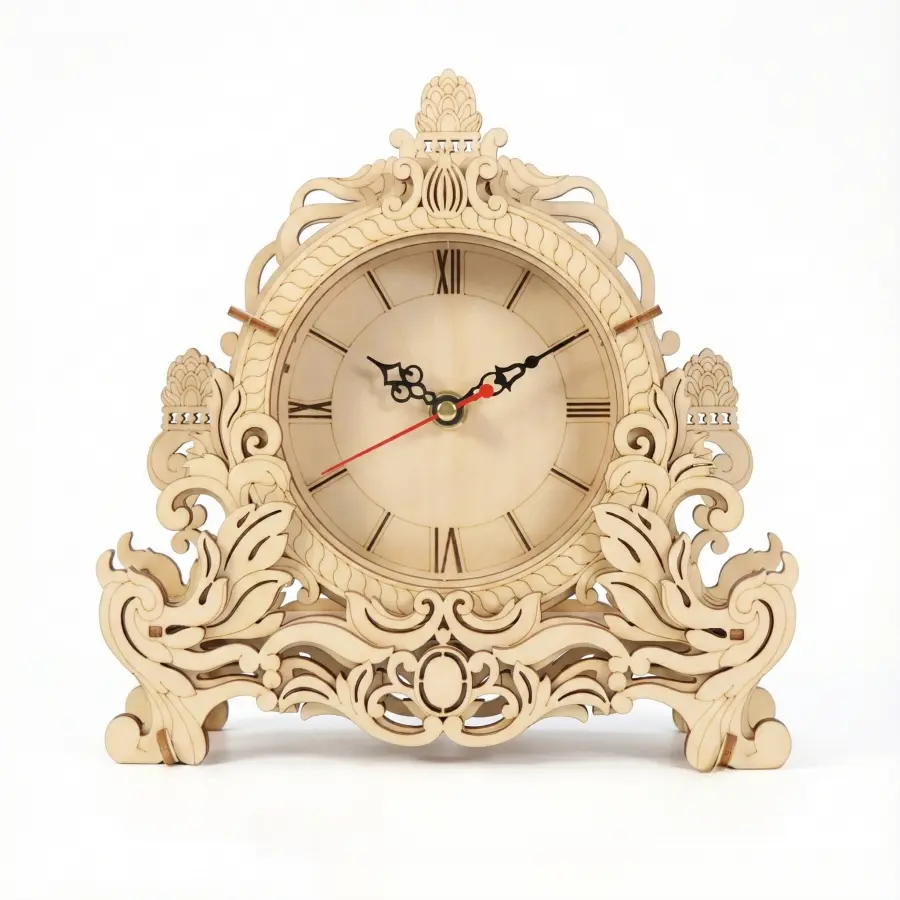
The creative / designer. The camera frame is the entire point. The creative’s puzzle is selected for how it looks on screen, and the build process is secondary. A finished display model — a clock, a perpetual calendar, a sculpture that holds its own on a shelf behind the keyboard — is the fit. The recipient may never re-assemble it; the object is the gift. A clock kit in particular converts the puzzle from a one-time project into a permanent camera prop.
The new hire / onboarding teammate. Still learning the role, the team, and the meeting cadence. A Kumiki-style interlocking puzzle is the right register: small enough for a laptop bag, challenging enough to fill a lunch break, and visually quiet enough to sit on a borrowed desk without claiming territory. A Luban-style lock set is the most recognizable version of this — an interlocking kit that rewards short sessions and is easy to put down mid-thought. The 12 Piece Crystal Luban Lock Set is the clearest match for this profile: portable, displayable, and short enough to finish in one sitting. A multi-puzzle set expands the surface area for the same logic, useful if the recipient likes variety within the same mechanism family.
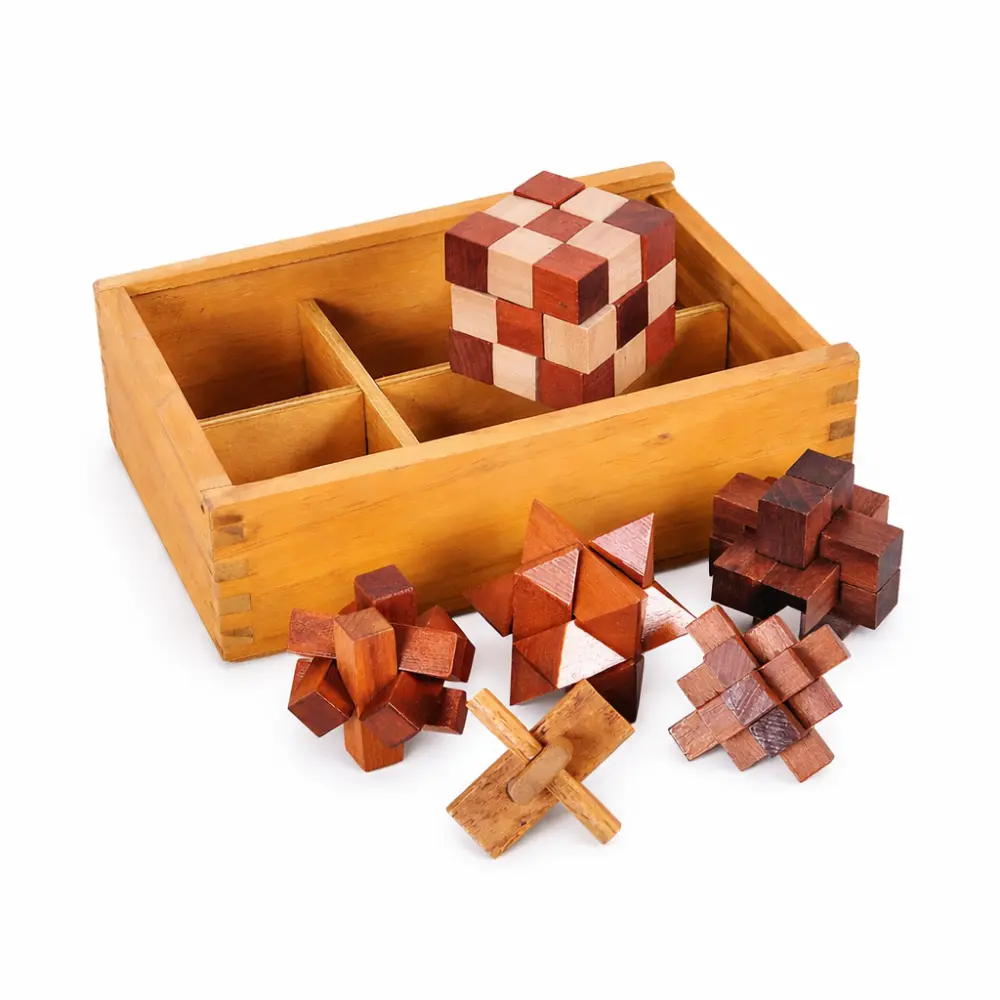
The ‘finished display’ vs ‘redo-it fidget’ contrast. A finished display puzzle — a clock, a music box, a perpetual calendar — has a hard endpoint. It is built once, and then it lives on the desk as decor. A redo-it fidget puzzle — a Kumiki lock, a brain teaser — has no endpoint. It invites the hand back. On a working desk, the finished display wins the on-camera test; the redo-it fidget wins the micro-break test. Choosing between them is a question of whether the gift is for the camera or for the hand, and that question is the one to ask before any other check is applied. The personality profile is the tiebreaker when the four desk-fit checks pass equally on both types.
04. Decision Table: Puzzle Mechanism vs. Desk Scenario
The mechanism inside the puzzle decides whether the gift serves the camera or the hand. Interlocking and spatial puzzles stay silent and invite repeated solving between meetings. Music box and gear-driven kits add gentle motion or sound but finish as display pieces on the desk. Combination-lock and clock kits deliver a single, satisfying solve and then sit as decor. Match the mechanism to the recipient’s desk habit before price, piece count, or brand recognition.
Once the display-versus-fidget question is answered, the noise budget becomes the next filter. A puzzle that lives on a working desk must stay a quiet mechanism during a video call — even a soft gear tick can read as distracting when it sits inside the camera frame. The table below sorts common mechanisms by their best desk scenario, their meeting-mute suitability, and the concrete check the buyer should run before purchasing.
| Mechanism | Best Desk Scenario | Noise Level | What to Check |
|---|---|---|---|
| Interlocking (Luban / Kumiki) | Micro-break between meetings; visible in camera frame after solve | Silent — no moving parts | Verify piece count and difficulty; some sets are quick solves, others take an evening |
| Spatial / Soma-style | Short focus reset; hand fidget for the analytical personality | Silent | Confirm the solved form holds its shape and can be left on the desk as a small object |
| Music Box | Sentimental gift; display piece off-camera or as background prop | Audible only when wound and opened | Check that the melody is listed on the product page and that winding is manual, not automatic |
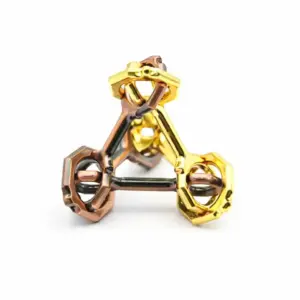
| Gear-Driven / Mechanical | Engineer recipient who wants visible moving parts | Subtle gear sound during demonstration only | Confirm the kit includes a winding key or crank and that gears mesh without lubrication |
| Combination Lock / Safe | Display piece with a single reveal; doubles as storage for small items | Silent until the dial is turned | Check the combination count and whether the box opens cleanly without forcing pieces |
| Display Model (Vehicle, Instrument, Calendar) | On-camera decor once built; conversation piece | Silent | Verify finished dimensions — large kits can exceed a 1 sq ft desk footprint |
Two checks catch most mismatches. First, desk footprint: a finished perpetual calendar or gear clock will outgrow a laptop-and-monitor workspace, so measure the available surface before ordering. Second, the re-do test: a Luban lock or brain teaser that takes two minutes to disassemble fits a five-minute meeting gap; one that takes forty minutes is an evening project, not a micro-break, and the recipient will shelve it rather than reach for it between calls.
The single buying action is this. Decide display or re-do first, pick the mechanism that matches, then verify the two checks above on the product page. The top pick for a re-do micro-break puzzle on a remote worker’s desk is the 12 Piece Crystal Luban Lock Set — its interlocking pieces disassemble and reassemble in minutes, stay silent in any camera frame, and finish as a small geometric object that looks professional next to a keyboard. For a display-oriented alternative that also passes the noise budget, the 3D Wooden Puzzle Clock DIY Kit and the Layered Butterfly Wooden Music Box shift the same mechanism logic toward a one-time build that becomes background decor during calls. Readers looking to compare a wider set of tested wooden 3D puzzle options for adults can extend this shortlist with additional mechanism types in the same price band.
Frequently Asked Questions
Pick a puzzle by mechanism first, then verify two things on the product page: a finished footprint under 1 sq ft, and a noise profile that stays below an open-mic meeting. The questions below cover what comes up after that filter.
Are 3D wooden puzzles quiet enough to use during a video call?
Interlocking brain teasers and Luban-style locks make effectively no sound during assembly — only faint wood-on-wood contact. They are the mechanism class to keep within reach during a call. Gear-driven kits and music boxes, by contrast, belong off the desk during meetings.
How long does it take to assemble a 3D wooden puzzle?
It depends on the mechanism. Re-do interlocking puzzles (Luban locks, Soma cubes) run 2–15 minutes per cycle. One-time model kits — clocks, calendars, music boxes — typically run 1–4 hours across one or two sittings. The product page lists the builder’s estimate, which is the figure to verify.
Is a 3D wooden puzzle appropriate as a gift for a coworker?
Yes, when the mechanism matches the desk. Skip brightly painted novelty kits; choose neutral wood tones and geometric shapes that read as a desk object, not a toy. The 6-in-1 Wooden Brain Teaser Set covers multiple difficulty levels in one box and presents as a workspace accessory.
What’s the difference between a Kumiki-style puzzle and a 3D wooden model kit?
Kumiki puzzles are interlocking assemblies you disassemble and re-solve repeatedly — the reward is the solve itself. A 3D wooden model kit is a one-time build that becomes a display object (clock, calendar, music box). Kumiki fits the engineer personality; a model kit fits the creative who wants background decor.
Do 3D wooden puzzles need glue?
Most interlocking puzzles and Kumiki locks are glue-free by design. Many model kits include a small tube of wood glue for joints. The “what’s in the box” line on the product page is the verification step before ordering.
What makes a puzzle look professional on camera rather than childish?
Neutral wood tones, geometric form, and a finished footprint under 1 sq ft. Brightly painted kits, cartoon figures, or oversized builds read as toys in a Zoom background. Mechanical clocks and perpetual calendars pass the on-camera test — the 3D Wooden Puzzle Clock DIY Kit is a clean reference.
What’s a good remote-work gift under $50?
The 7 Color Soma Cube Puzzle ($21.88), the 12 Piece Crystal Luban Lock Set ($28.88), and the Luban Lock Set 9 Piece ($39.99) all sit under $50 and pass the desk-fit checks. For a display build in the same range, the 3D Wooden Puzzle Clock DIY Kit at $26.99 converts the kit into permanent desk decor.
The next step: open the 12 Piece Crystal Luban Lock Set product page, confirm the piece count and material match your recipient, then check the listed price before placing the order.
Where to Start
If the recipient and occasion checks above match, start with 12 Piece Crystal Luban Lock Set. Check the current product page for the specifications that matter to your choice.
Sources and verification
- Product details and current specifications: Tea-Sip product page
Last updated: August 23, 2026