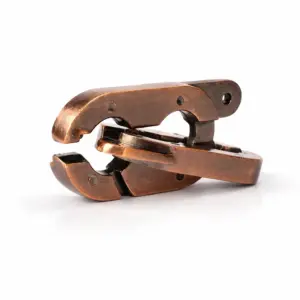
Quick Answer: Cast Metal Puzzle Gift for Mother in Law: How to Choose
A cast metal puzzle earns its place as a mother-in-law gift when the mechanism matches her puzzle experience and the piece can live on a shelf or desk afterward, not just in a drawer. The safest starting pick is a compact disentanglement-style cast metal brain teaser in the $13–$16 range, because it is no-tools-required, fits in one hand, and stays on display. Three checks narrow the choice: mechanism type, cast weight and finish, and whether to include the printed solution.
For most buyers — especially an adult child-in-law choosing for a partner’s mother they see a few times a year — the dominant gift scenario is: she is curious but not a regular puzzler, the piece will likely sit on a side table or desk, and the gift needs to read as polished, not as homework. That profile points to one mechanism family over the others.
Three conditions that change the pick:
- She already keeps a puzzle on her desk or coffee table. Choose an interlocking or burr-style cast piece that holds its shape permanently; skip anything that looks like a toy.
- She has arthritis, hand fatigue, or limited grip strength. Choose a no-tools-required disentanglement puzzle with smooth cast edges; avoid small pin-and-key mechanisms.
- You are still early in the relationship. Choose a moderate-difficulty piece and include a small card with the solution path; an unsolvable-feeling gift can read as a test rather than a kindness.
Decision Table: Mechanism Types at a Glance
| Mechanism type | What it feels like in hand | Best for | What to check before buying |
|---|---|---|---|
| Disentanglement (hook, loop, ring) | One smooth piece, two interlocked parts, repeated try-and-rotate motion | A non-puzzler who wants a calm, repeatable challenge | Cast weight, smooth finish on the ends, no sharp parting lines |
| Interlocking burr or cast assembly | Several solid pieces that lock together with visible precision | A recipient who already solves crosswords or jigsaws | Piece count, that all parts are solid cast (not hollow shell) |
| Sequential discovery / puzzle lock | A box or lock where each step opens the next | Someone who enjoys “unwrapping” a single object over time | Number of steps, whether tools are required to reset |
| Display-style cast sculpture puzzle | A decorative figure that doubles as a low-difficulty puzzle | A shelf or desk setting where looks lead and play follows | Patina, plating durability, whether the puzzle action is incidental |
The hero pick for this scenario is a disentanglement-style cast metal brain teaser because it is the most display-friendly, the most forgiving for first-time puzzlers, and the least likely to be solved once and forgotten. If the relationship is warm and you know she enjoys a challenge, step up to an interlocking cast piece; if you are still early in the bond, stay with the disentanglement form and a printed solution card.
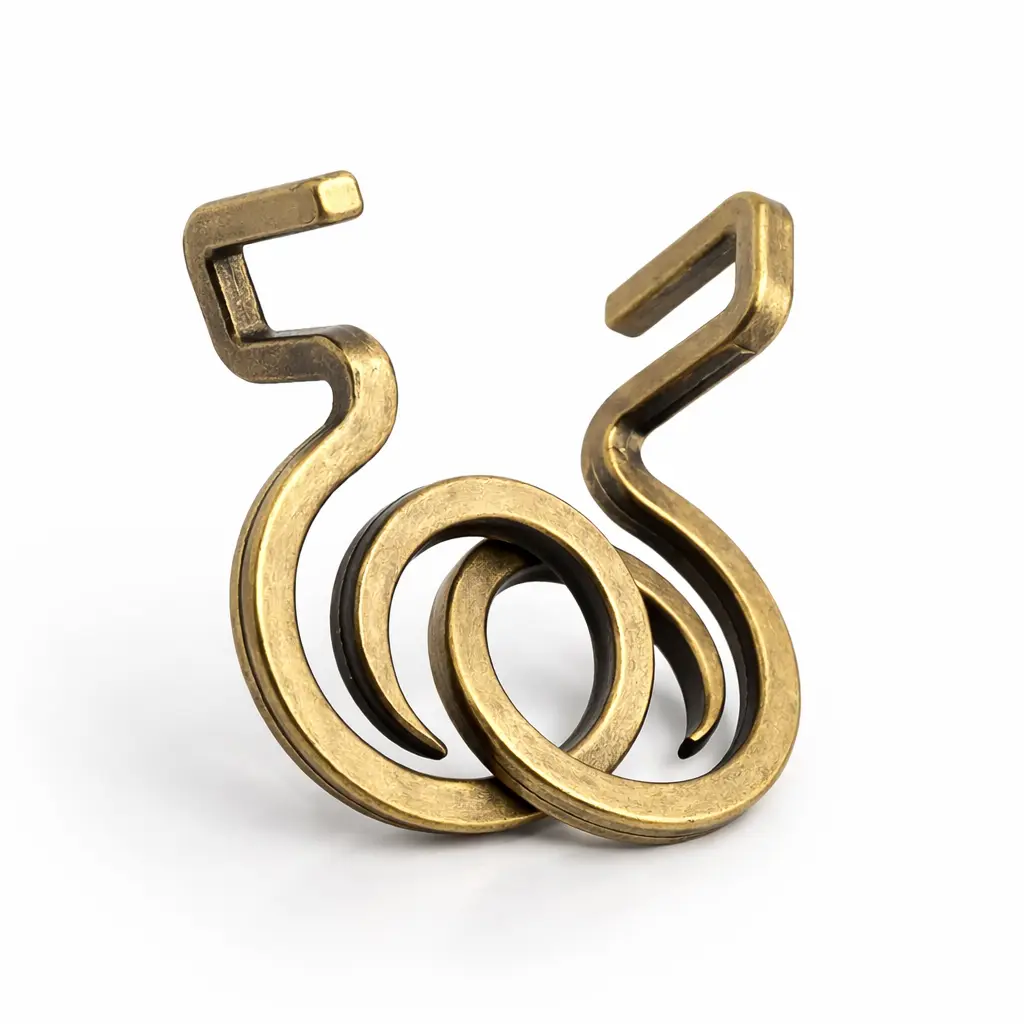
One check before you buy: confirm the piece is solid cast (weighty, cool to the touch) rather than a thin plated shell, because cast metal ages into a soft patina while plating chips and reads as cheap within a season. The Cast Hook Metal Brain Teaser sits at $13.99 and matches the dominant gift profile above; for the full mechanism-type breakdown and how each reads as a gift, the six types of metal puzzles guide maps every category to a recipient type.
01. Which Cast Metal Puzzle Mechanism Matches Her Puzzle Experience
Match the mechanism to the woman, not the wrapper. A cast metal puzzle earns its place on her shelf or desk when the solving action matches what she already enjoys doing with her hands — and the four families below cover every gift scenario you’re likely to face. A disentanglement puzzle reads as elegant. A multi-piece burr reads as a challenge. The right pick depends on her puzzle experience and your relationship comfort with giving her something to think about.
The four mechanism families you’ll encounter
A mechanical puzzle, as the term is used across the category, is a puzzle whose pieces are physical objects, typically requiring ingenuity to separate or reassemble. Within that broad definition, the cast metal pieces sold as gifts sit in one of four families, each with a different feel in the hand and a different read on a shelf.
Interlocking puzzles are built from cast or machined pieces that lock together through shaped notches, slots, or catches. The action is disassembly, not puzzle-box opening. In the hand, interlocking pieces feel weighty and architectural, and the “aha” moment arrives when a single hidden seam or rotation releases a stuck piece. Interlocking puzzles suit the mother-in-law who likes jigsaws, tinkering, or wooden burr puzzles — someone who enjoys taking things apart to see how they were put together.
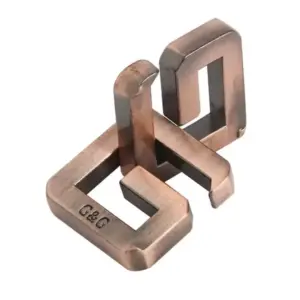
Disentanglement puzzles involve separating two interlocked objects without forcing or breaking them. A ring, hook, or chain that appears impossibly tangled must be coaxed along a specific path to release. The action is continuous, not staged: she works, reworks, and works again until the path reveals itself. Disentanglement puzzles read as elegant desk objects because most of them sit flat, take up no more space than a coffee cup, and return to their tangled state for another attempt. For a closer look at how the solve usually feels in the hand and the typical shapes these puzzles take, the guide on what disentanglement puzzles actually are covers the form in more detail. They are almost always no-tools-required, which makes them the safer default for older hands. The Metal Orbit Ring Cast Puzzle is a clean example of this family — two cast metal rings that look inseparable until the right slide frees them, then she can reset and try again. This format suits a woman who likes jewelry, fidget objects, or screen-free desk focus; it rewards patience over raw logic.
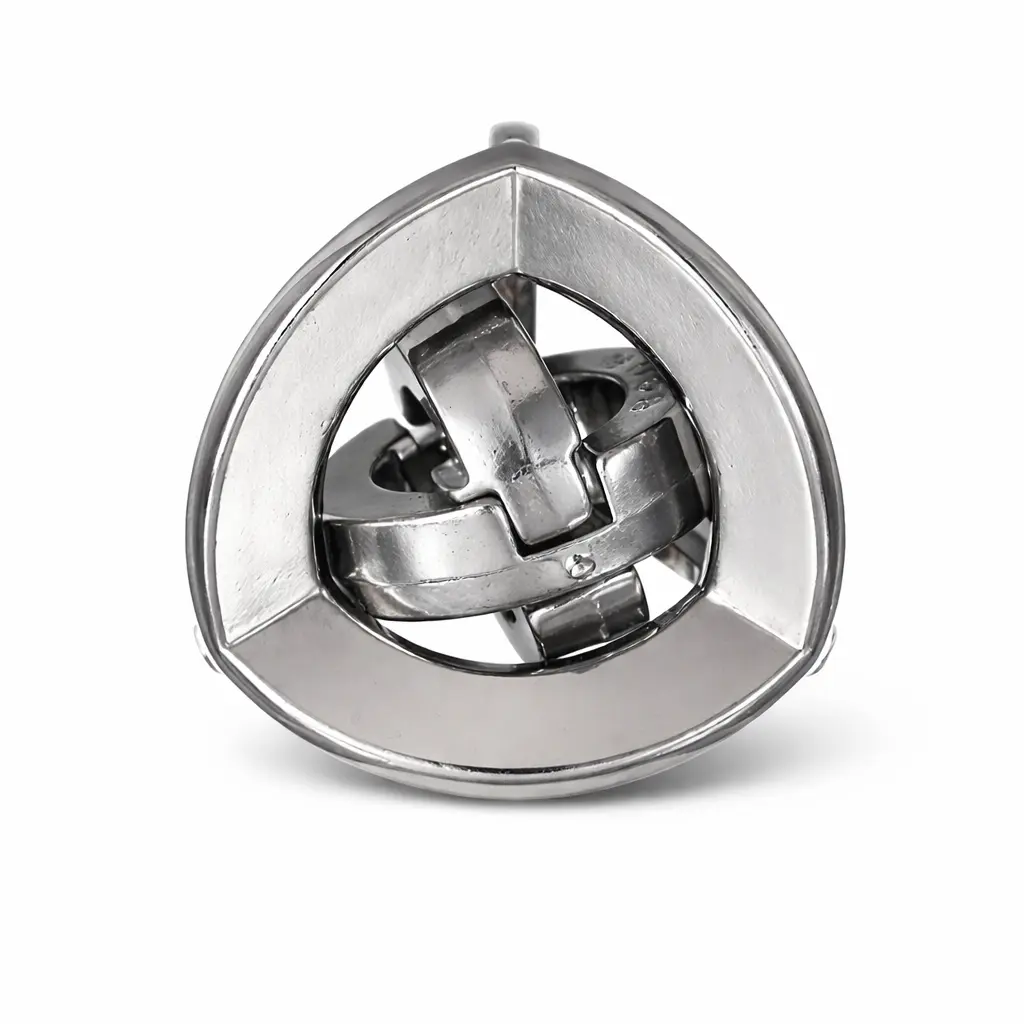
Burr puzzles — named for the wooden six-piece classic — extend the interlocking family into higher piece counts and longer solve paths. A cast metal burr is heavier, more display-worthy on a shelf, and harder to put down once a piece moves. Burrs suit a mother-in-law who already does crosswords, sudoku, or jigsaw puzzles and has asked for “something harder” — they signal respect for her mind without tipping into puzzle-collector territory. Difficulty is the loudest message a gift puzzle sends, and a burr is the clearest way to say “I think you’ll enjoy the long form.”
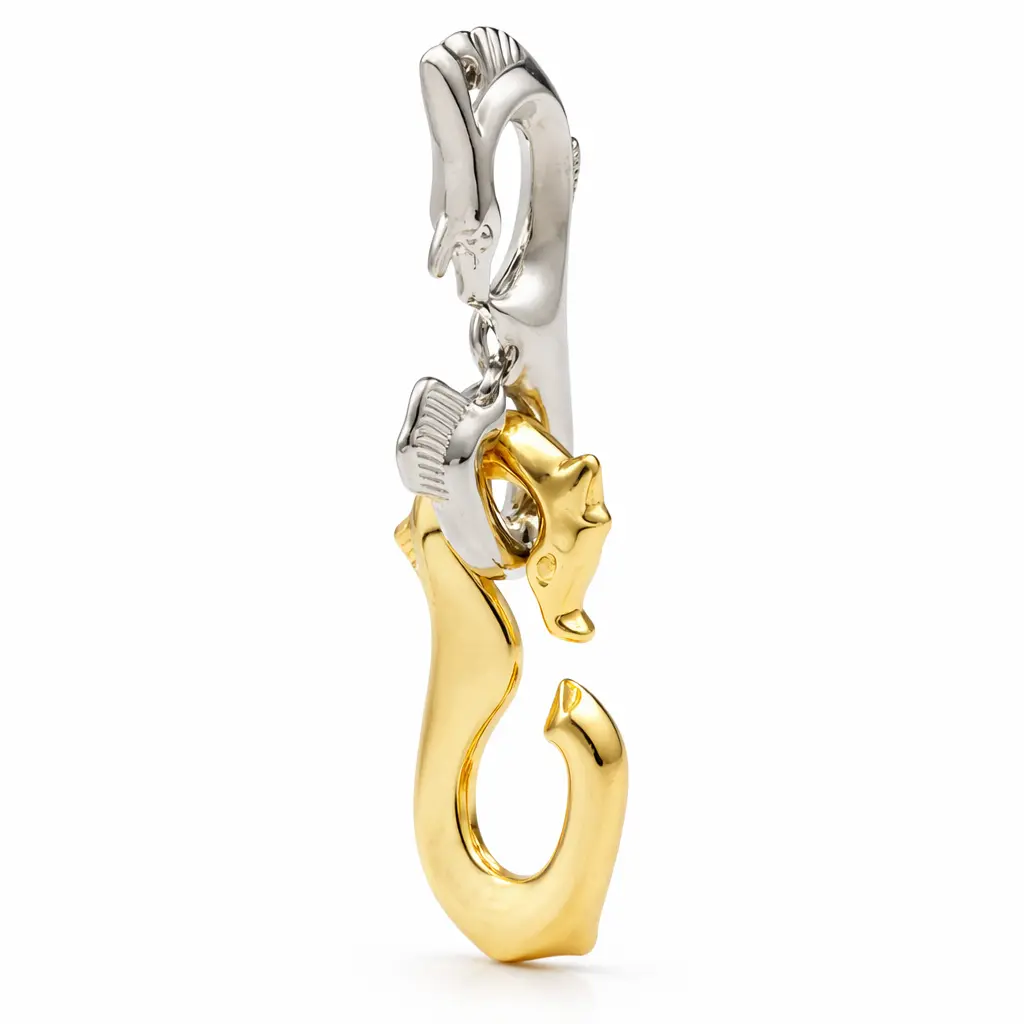
Sequential discovery puzzles open through a chain of small finds: a hidden button, a sliding panel, a key you have to locate before you can use it. Cast metal versions of this family include lock-key combinations and themed pieces where the recipient must work out the order of operations. They are the most “gift-shaped” mechanism because unboxing, discovering, and progressing feel ceremonial. The Dual Seahorse Gold & Silver Brain Teaser is a representative two-tone piece: it sits as a decorative object on a side table and asks for a sequence rather than a single move. This family fits the mother-in-law who enjoys a short story before bed, a mystery novel on holiday, or any small ritual with a beginning, middle, and end. The display footprint is small, the cast weight reassuring, and the patina it develops over time is part of the appeal.
Match the mechanism to her profile
| If she… | Best mechanism family | Why it reads right |
|---|---|---|
| Enjoys jewelry, fidget objects, or small desk rituals | Disentanglement | Reset-friendly, elegant, no-tools-required |
| Likes jigsaws, tinkering, or wooden burrs | Interlocking / burr | Disassembly suits a hands-on mind |
| Reads mystery novels or short stories | Sequential discovery | Built-in narrative arc, decorative form |
| Doesn’t do puzzles but values quiet focus | Single-piece disentanglement | Low commitment, returns to shelf |
One check before you choose: watch how she handles objects around you for a week — does she fidget with jewelry clasps, snap lids repeatedly, leave a sudoku on the kitchen counter? That observation, not her age, is the strongest signal of which mechanism will land.
02. What Physical Characteristics to Check Before You Buy
Now that the mechanism type is set, the physical gift itself is the next decision. Choose a solid cast metal puzzle over a coated or plated one when the gift needs to age gracefully on her shelf — solid cast shows weight in the hand, develops a patina over years, and survives repeated handling, while plated pieces can flake at the contact points within months. The checks below narrow the choice from “any metal puzzle” to one that will earn permanent shelf space in her home.
Solid cast beats coated alloy
Solid cast metal has a uniform density throughout the piece. Coated or plated alloy feels lighter because a thin shell of finish sits over a cheaper base, and the seam where the plating ends is where wear begins. Two simple checks on a product page: the listed material should name a specific alloy (zinc alloy, brass, cast iron), and the weight for a palm-sized piece should sit in a range that feels substantial rather than keychain-light. Anything described only as “metal” or “metal alloy” without naming the base is worth asking the seller about directly. For a deeper look at what separates a quality cast piece from a thin one, this guide on what makes a zinc-alloy cast puzzle feel high quality in the hand walks through the same comparison in more detail.
Weight in hand signals the gift
A disentanglement puzzle that weighs next to nothing reads as a keychain, not a keepsake. When comparing two similar mechanism types, the heavier piece almost always wins for a mother-in-law gift — cast weight communicates value without the seller having to claim it. Confirm the product page lists a specific weight in grams or ounces before you buy; if only dimensions are given, that’s a soft signal that weight wasn’t part of the design. As a rough anchor, a palm-sized cast metal puzzle that feels substantial in the hand rather than keychain-light tends to be more comfortable to hold across a full solve session.
Finish, patina, and how metal ages
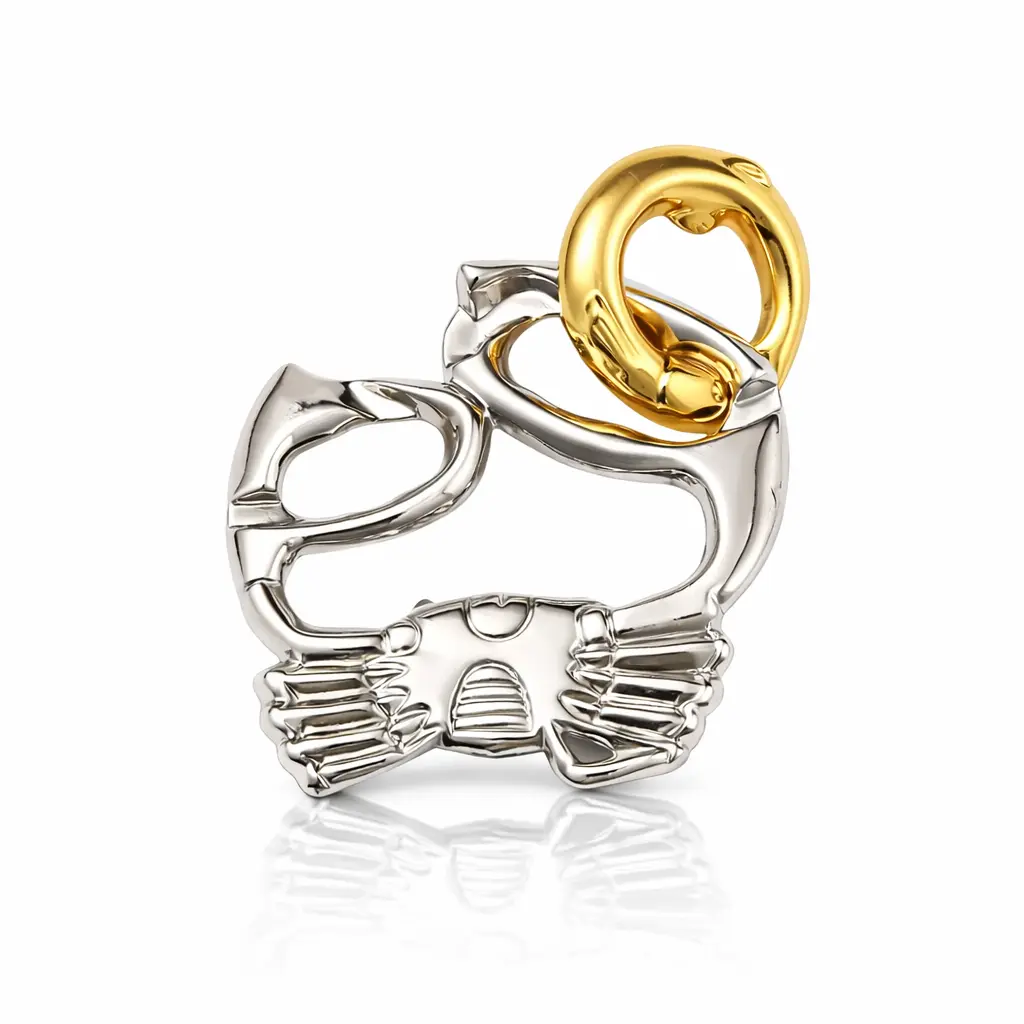
Solid cast brass and bronze develop a patina over years — a soft darkening that many recipients find desirable, the way a leather handbag or a copper pot ages. The patina is the gift slowly becoming hers, and on a display shelf it reads as character rather than wear. Zinc alloy castings hold their original finish longer but won’t develop the same warmth; the trade-off is consistency versus depth. Plated pieces are the real risk: a brass-colored coating over a zinc base can wear at the contact points where fingers repeatedly grip, revealing a different color underneath and dating the gift visibly. If the listing says “antique bronze finish” without specifying whether the bronze is solid or plated, that’s a question to ask before purchase.
No-tools-required is the safer default
Some burr and sequential-discovery puzzles ask for a small tool, a magnet, or precise finger pressure that can be hard on stiff or arthritic hands. For a mother-in-law gift where you don’t know her hand comfort firsthand, default to no-tools-required mechanisms — disentanglement, single-piece interlocking, and cast hook puzzles all qualify. A piece she can solve comfortably with both hands signals respect for her ability rather than testing it, and removes a friction point that has nothing to do with the gift itself.
Display footprint
The last check is where it will live. A palm-sized disentanglement piece (roughly two to four inches) makes a display-worthy fit for a desk corner, a bookshelf second row, or a coffee table tray without crowding. A multi-piece burr or sequential discovery puzzle often needs a small stand or a box to stay organized, which adds visual clutter and asks her to find storage. If her home runs minimal, a single sculptural piece — one object, one shelf — lands better than a puzzle that requires accessories to keep tidy. Also note that darker finishes (antique bronze, oxidized brass) show fingerprints less than polished silver-tone, which matters if the piece will sit on a surface she touches often. A disentanglement puzzle that resets itself invites repeated handling, which is why it earns shelf space rather than becoming a solve-once-and-store object.
One check before you buy: confirm the listed material names a specific alloy, the weight for a palm-sized piece sits in a substantial range, the mechanism requires no tools, and the piece will fit on the surface where she’ll actually keep it. Those four points on the product page separate a shelf-worthy gift from a drawer-bound one.
03. How Puzzle Difficulty and Etiquette Signal Respect
The message a puzzle sends depends as much on the solve as on the silhouette. A puzzle that frustrates before the first move reads as a test; a puzzle she can hold, twist, and solve in fifteen minutes reads as a gesture of warmth. Match the difficulty to the relationship comfort and her tolerance for being challenged by you specifically — that single choice carries more weight than the piece itself.
The “is it too hard?” etiquette test is the one most guides skip entirely. Giving a difficult puzzle to a mother-in-law carries an implicit claim: that you trust her patience, her persistence, and her time. For a mother-in-law you have known for years, that trust is often welcome — it reads as confidence in her mind. For one you are still getting to know, the same difficulty can read as a presumption, as if you were evaluating her. (If you want a frame for how that difficulty is usually measured, how puzzle difficulty is actually rated walks through the standard scale.) A reasonable rule: if you would not hand her a novel in a foreign language and say “enjoy,” do not hand her a notoriously difficult burr puzzle and say “good luck.” Pick something she can approach in a single sitting, on her own or with a quiet hint from you.
When does a harder puzzle actually land well? When the recipient has a known puzzle habit, or when the relationship has a built-in shorthand for play. A mother-in-law who does crosswords at the kitchen table, who keeps a Sudoku app on her phone, or who has a visible collection of small brainteasers already on her shelf is signaling that she enjoys a challenge. For her, a slightly harder disentanglement piece — one that requires a few minutes of turning and a small “aha” — reads as respect for her habits rather than condescension. A mechanical puzzle, by definition, asks for ingenuity to separate or reassemble its pieces, so any level of solve is built on the same core skill. The key is whether the difficulty is in the movement (a clean disentanglement that takes patience but never trickery) rather than in the instruction-following (a small assembly that punishes an unsteady grip).
The harder etiquette call is the printed solution. Most cast metal puzzles come with a folded instruction sheet that includes, somewhere toward the back, the move-by-move solution. Including it tells her you want her to succeed, that you have removed the worst-case outcome (an unsolvable gift that lives in a drawer in mild shame). Not including it tells her you believe she will work it out. For a mother-in-law, the safer default is to include the instructions — and to mention, when you hand it over, that the solution is there if she wants it but that you are curious how far she gets first. That phrasing does two things at once: it protects her pride, and it leaves room for her to call or text you when she solves it, which is the moment a puzzle gift becomes a small relationship ritual rather than a static object.
A lock-style puzzle that opens to reveal a message sits at a comfortable middle of the etiquette map. It is sequential — she discovers the steps one at a time — and it gives her a built-in reveal moment, which softens the difficulty because the goal is visible from the start.
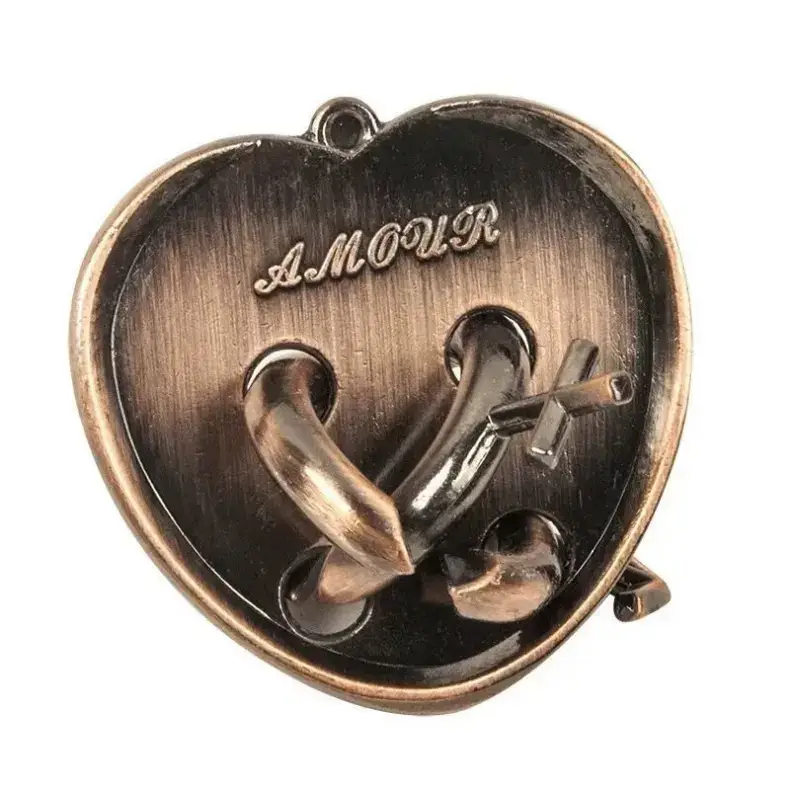
The Cupid’s Arrow Heart Lock Puzzle is a sequential-discovery piece at a listed $12.98, which is low enough to include alongside another small gift without making the puzzle itself the entire gesture. Its arrow-and-heart imagery carries a warmth that a pure disentanglement puzzle cannot — a useful option when the relationship calls for something that reads as affectionate rather than purely cerebral. A lock puzzle of this scale usually resolves quickly once the first step clicks, which puts it firmly in the warm, not the test, category.
One check before you gift: decide whether you want the puzzle to read as a challenge or as a gesture, and if you would describe your relationship with your mother-in-law as warm, playful, or still finding its rhythm, lean toward the gesture. Difficulty is a message — make sure it is the one you mean to send.
04. Should the Puzzle Stay on Her Shelf or Go in a Drawer
Pick a cast metal puzzle that earns a visible spot on a shelf or desk when its mechanism invites repeated handling or its form reads as sculpture; choose one that goes in a drawer when the solve itself is the point and the object has no ornamental life after it.
The decision turns on two observable traits: whether the puzzle can be reset to its starting position, and whether the form looks like something she would willingly leave on a coffee table between uses. A disentanglement puzzle like the Cast Hook Metal Brain Teaser checks both boxes — it can be untangled and re-tangled indefinitely, which places it in the same family as a paperweight or a worry stone, a handheld thing one returns to during a phone call or a quiet evening. A desk-side cast metal puzzle of this kind reads as a personal artefact rather than a single-use gift, and a fidget toy is, by definition, an object designed to be picked up and manipulated repeatedly, not solved once and filed away. That repeatability is what turns a cast metal piece from a task into a small, screen-free ritual she can keep within arm’s reach.
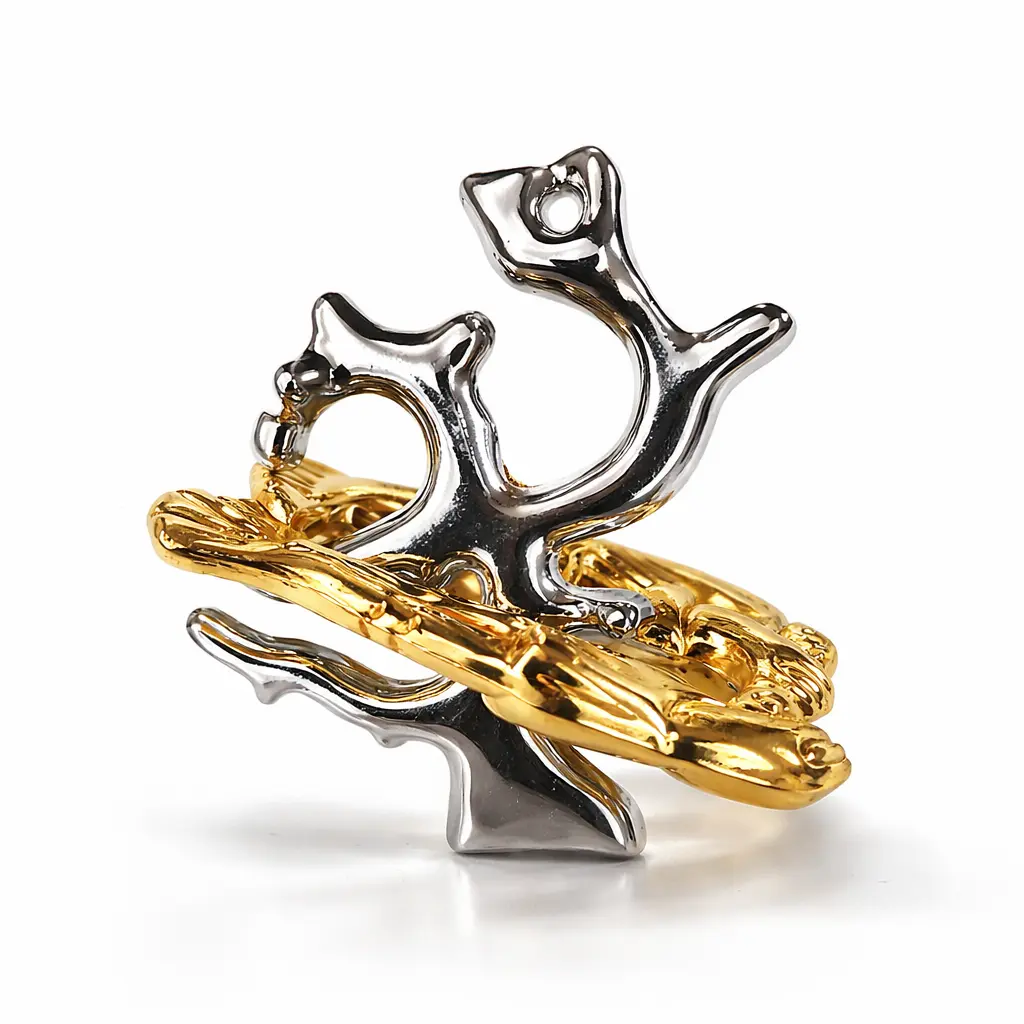
Cast pieces with figurative form — fish, crab, heart, arrow — earn shelf space because the silhouette does decorative work even when the mechanism is solved. The Gold Fish & Silver Coral Reef Cast is a clear example: its form keeps working as a small sculpture long after the pieces separate, which is the test for whether a puzzle functions as decor rather than as a one-time task that quietly disappears into a side table.
A burr puzzle, by contrast, usually solves once, then gets photographed and stored. That is not a failure — many recipients enjoy a one-solve puzzle precisely because the challenge has a defined ending and a clean conclusion. It does mean, though, that the buyer should not expect the object to live on a coffee table. If display value matters more than replay value, a figurative cast metal piece with a moderate-difficulty mechanism is the more durable shelf candidate, because its silhouette outlives the moment the last piece clicks into place.
For a fuller look at pieces that work as both decor and challenge, the roundup of cast metal puzzles that act as decor and challenge on a coffee table maps this trade-off across several mechanisms and may help you visualise the footprint each one will leave on her shelf.
One check before you gift: ask whether you would be comfortable seeing the puzzle on her shelf every time you visit, because the gift will quietly announce that judgment long after the wrapping paper is gone.
Frequently Asked Questions
The shelf-or-drawer decision sits alongside a few others that determine whether a cast metal puzzle lands well with a mother-in-law. Match the mechanism to her puzzle habits, verify the cast weight and finish on the product page, and confirm whether the solution card ships with the box before wrapping — these three checks settle most of the questions buyers ask at checkout.
Is a cast metal puzzle appropriate for an older woman?
Yes, when the mechanism is no-tools-required. Disentanglement puzzles, simple interlocking rings, and compact figurative cast pieces rely on hand manipulation rather than fine tool work. Avoid tight-tolerance burrs. A useful check: ask whether she can open a stubborn jar lid; if yes, most no-tools cast puzzles will be in range.
How do I know if she’ll actually use the puzzle?
Three observable signals help. Does she keep small objects on a desk or side table already? Does she enjoy crosswords, jigsaws, or similar quiet focus activities? Ask her partner what she does with her hands during long phone calls — the answer reliably predicts whether a hand puzzle will land or stay tucked in a drawer.
Should I give a hard puzzle or an easy puzzle?
A moderate-difficulty puzzle is the safer mother-in-law choice. Too easy reads as patronising; too hard can read as a test. The middle band — one that asks for a few sittings of focus rather than a single quick click — signals respect for her intelligence without turning the gift into homework. When her puzzle experience is unknown, default toward the easier end of moderate, because a solved puzzle always outranks an abandoned one.
Do I include the printed solution?
Keep the manufacturer’s solution card tucked in the box. It reassures a first-time solver that the puzzle is solvable and removes the small social risk of asking a family member for help on a gift you chose. If the puzzle has none, check the product page for a downloadable guide, and verify it before wrapping so the experience is clean on the day.
What is the difference between a Hanayama-style cast puzzle and a cheaper cast metal puzzle?
Brand-name cast puzzles are known for consistent internal tolerances, durable finishes, and a proper box with a solution card. A cheaper cast piece may share the visual language — gold or silver finish, compact form, figurative shape — but tolerances and patina behaviour will differ over time. The buyer-visible check: weight in hand, finish quality, and packaging.
What puzzles look good on a shelf or coffee table?
Display-worthy puzzles share three traits: a recognisable silhouette, a finish that takes a patina rather than flaking, and a compact footprint. Figurative cast pieces — a hook, a seahorse, a heart, a koi — read as objects first and puzzles second, which is the visual register that earns permanent shelf space in a living room.
Are cast metal puzzles too hard for someone who doesn’t do puzzles?
Not if the mechanism is chosen with care. A simple disentanglement or two-piece interlocking cast puzzle can be solved by a first-time puzzler in under an hour, often much less — closer to a quiet evening project than a test of skill. A low-difficulty disentanglement often gives a first-time puzzler a new habit; a high-difficulty burr often ends up shelved after one frustrating attempt.
One closing check: confirm the cast weight and finish notes on the product page match the recipient’s habits, and order with enough lead time to wrap and present without rushing. The decision is mostly made by this point — the last job is to let the gift arrive looking like you thought it through, because you did.
Where to Start
If the recipient and occasion checks above match, start with Cast Hook Metal Brain Teaser. Check the current product page for the specifications that matter to your choice.
Sources and verification
- Product details and current specifications: Tea-Sip product page
Last updated: August 23, 2026